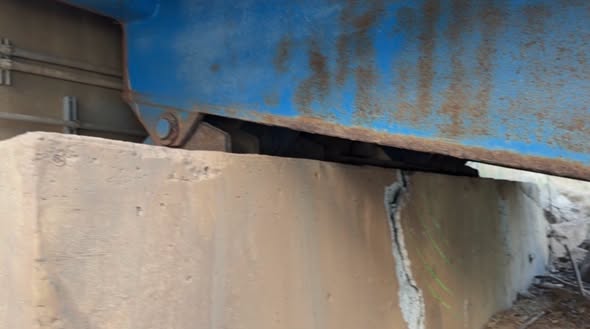
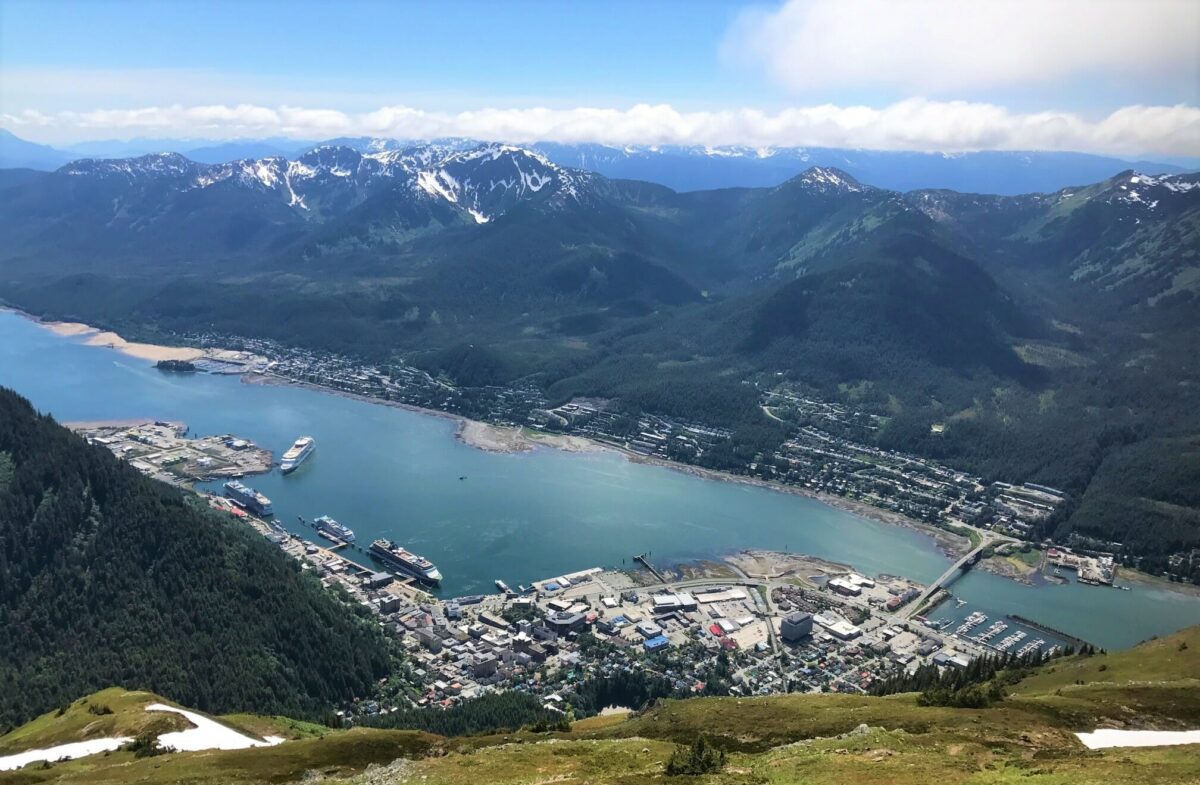
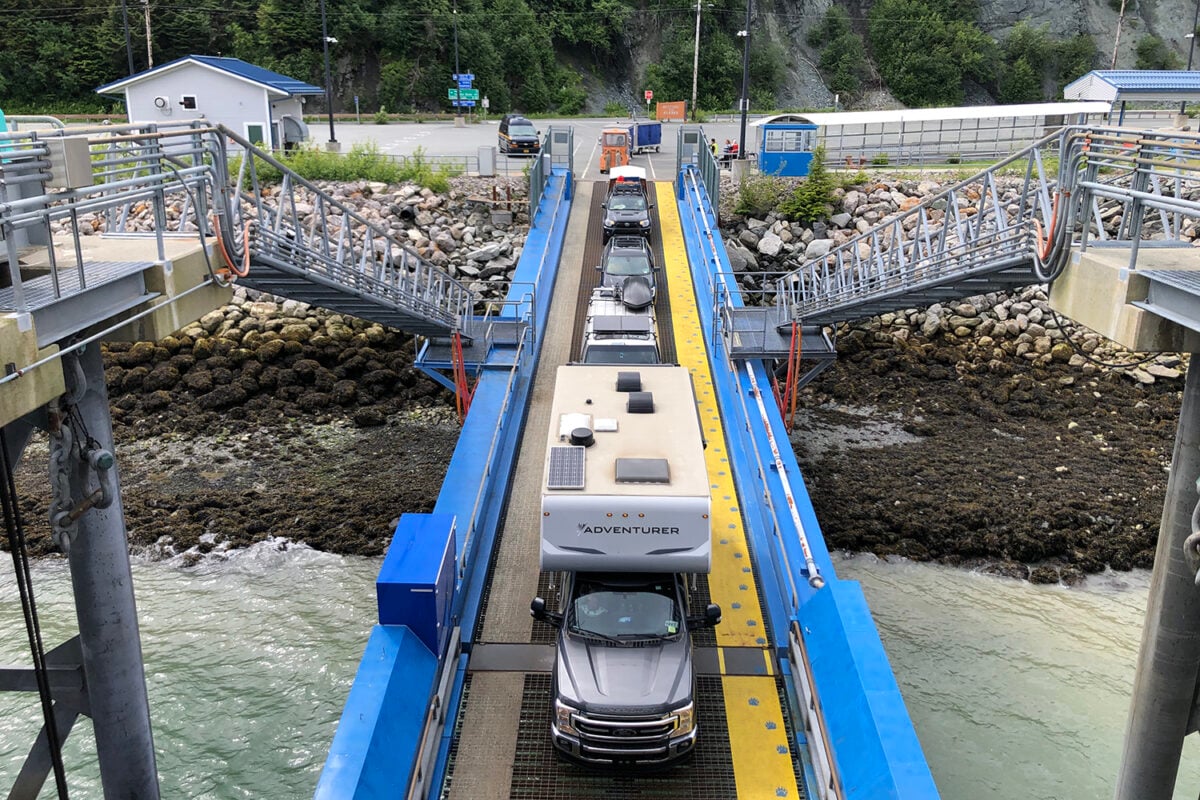
NOTN- Ferry service to Skagway has been suspended indefinitely after officials discovered major structural damage to the state-owned ferry dock.
The Alaska Department of Transportation and Public Facilities announced Saturday that there would be no service to Skagway for the “foreseeable future” while crews assess the damage.
Below is a portion of the notice issued by DOT;
“Due to major structural damage at the Alaska Marine Highway System (AMHS) docking facility in Skagway, the Skagway port is closed until further notice. All ferry service to and from Skagway is suspended for the foreseeable future.
The safety of our passengers and crew is always our highest priority, and operations will only resume once the facility is fully secure.
AMHS terminal agents are actively reaching out to passengers with existing reservations to assist with refunds, alternative travel plans, and rerouting options.
DOT is working with Hamilton Construction on a temporary repair, but there is no timeline yet for when ferry service will resume.
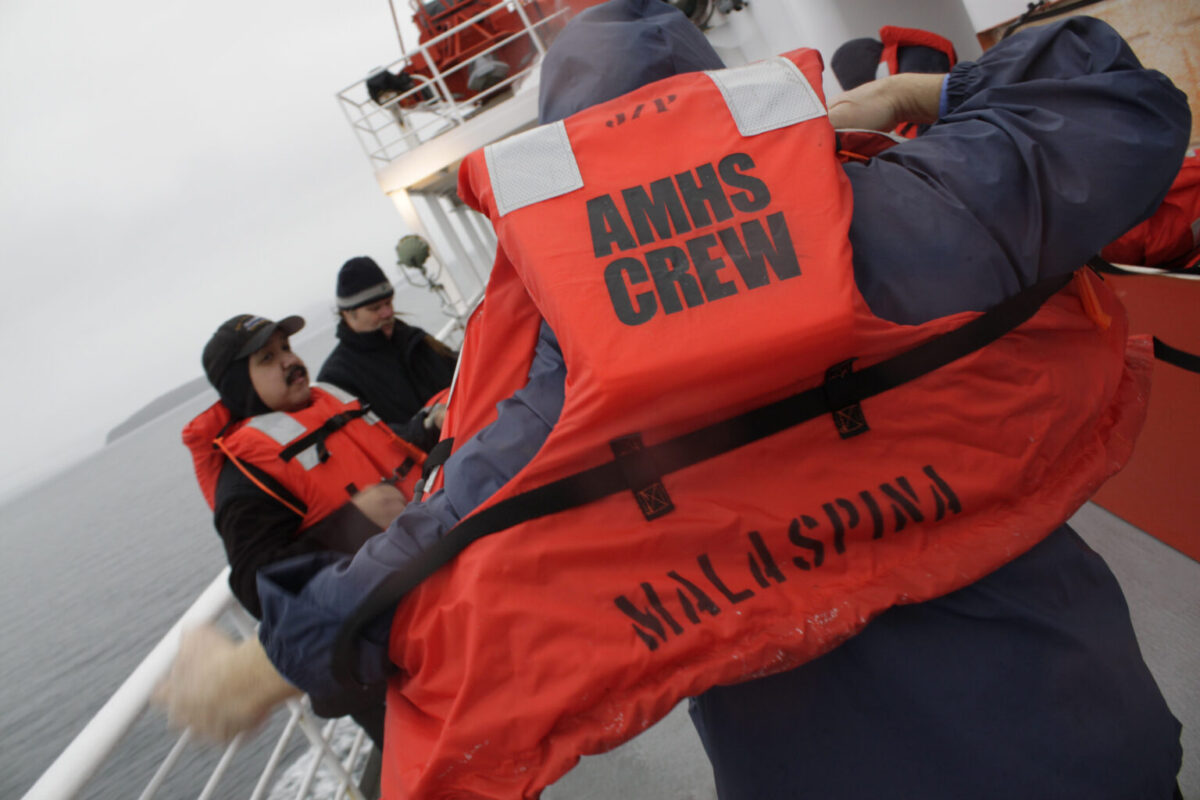
A crewman aboard the Alaska Marine Highway System ferry Malaspina dons a life jacket during a rescue boat drill Monday, Nov. 24, 2014 in Lynn Canal.
(James Brooks photo)
By: James Brooks, Alaska Beacon
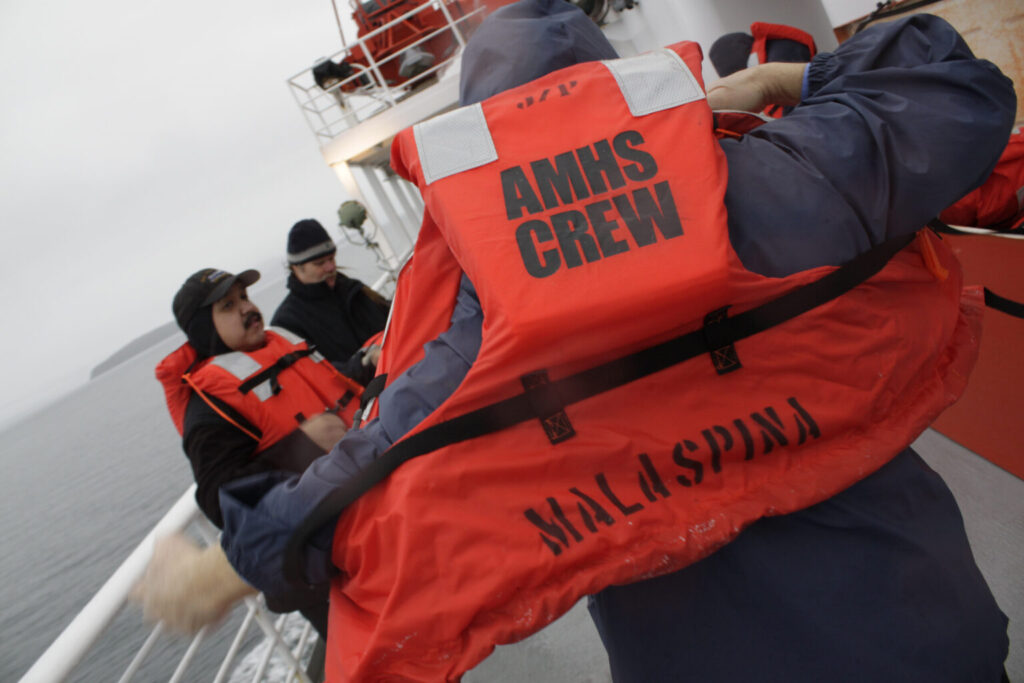
A crewman aboard the Alaska Marine Highway System ferry Malaspina dons a life jacket during a rescue boat drill Monday, Nov. 24, 2014 in Lynn Canal.
(James Brooks photo)
The state of Alaska is looking for someone to take the Matanuska, one of the first three ships built as part of the Alaska Marine Highway System after statehood.
In a public notice published Friday afternoon, the Alaska Department of Transportation and Public Facilities said it is now looking for “interested parties regarding the opportunities to dispose of the vessel in a manner that honors its historic significance while allowing it to continue serving Alaska in new innovative ways.”
DOT is primarily looking for people or groups interested in operating the Matanuska “as a museum vessel, maritime training ship, tourism or hospitality venue, community facility, research platform, heritage site, or other maritime or public-serving use,” according to a detailed document accompanying the public notice.
Any applicant would have to demonstrate that they have the financial resources necessary to take care of the ship.
Retired ferries are notoriously expensive to operate, and idealistic plans for other ships have repeatedly fallen apart. The former Washington state ferry Kalakala was turned into a cannery in Kodiak, recovered and towed back to Washington, but fell derelict and almost sank into a canal before being scrapped in 2015.
Built in 1963, the Matanuska served as an active ferry for almost 60 years and still has a gold-painted funnel indicating its status as the “Queen of the Fleet,” the oldest operating ship in state service.
Despite that honor, the Matanuska has been out of regular service for at least three years, and has been laid up in Ketchikan for use as a “hotel ship” by the ferry system. Last year, DOT officials said the ferry system lacked the money needed to return the ship to service, and they recommended fully retiring it.
Proposals for the Matanuska’s future are due to DOT by 2 p.m. April 14.
“Letters of interest proposing scrapping, dismantling, or scuttling the vessel may be submitted for informational purposes,” the agency said, but for the time being, it’s looking at ideas to reuse the ship.
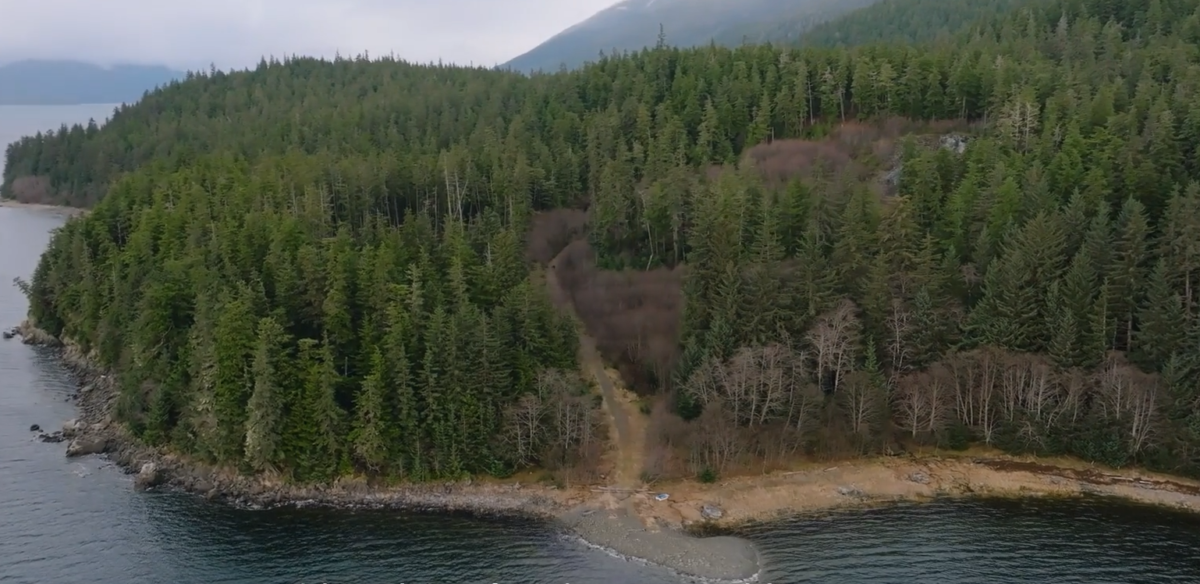
NOTN- Conservation and land trust leaders are raising alarms over a $28.5 million state-backed Ferry Terminal and Ore facility at Cascade Point, saying it’s advancing without key environmental review or tribal consultation and could reshape the region’s important cultural and ecological areas.
“This project kind of came up internally from DOT emails in 2019 and has moved at breakneck speed. In the last couple of years, there’s been a Memorandum of Understanding signed between Goldbelt, those are the land owners at Cascade point and the DOT.” Said Stacy Unzicker Mining Campaigner for Southeast Alaska Conservation Council, “So that would be, not only a ferry terminal, but a shared mixed use dock with an Ore dock in Berners Bay. There’s a lot of other places that money could be spent that would benefit not just Juneauites and people from Haines and Skagway, but all of Southeast Alaska, who’ve really been gutted with inconsistencies with ferry service.”
The proposal would create a mixed-use facility at Cascade Point in Berners Bay, combining a ferry terminal with an ore dock to serve a potential mine at Herbert Glacier, about 12 miles away. The funding comes from leftover money originally appropriated for the Juneau Access Road project.
Tyler Breen, an Environmental Policy Analyst with the Conservation Council, said state officials committed the money before completing the permitting, tribal consultation and federal environmental review processes that are supposed to inform whether and how such a project proceeds.
“On February 12, we gave testimony to the State House and Senate, outlining that the $28.5 million contract commits funds for this state to have momentum on this project in advance of the consultation and permitting processes that are intended to inform whether a project should happen.” Breen said, “So tribal consultation has not yet happened. By committing that $28.5 million in advance of assessing these baseline studies and doing the processes of assessing potential alternatives, they’ve constrained the potential outcome. That is, from my perspective as a policy analyst, a grave oversight.”
Tribal consultation as well as Clean Water permitting, have not been completed, the group said.
The Southeast Alaska Land Trust, which conserves about 280 acres downriver of the proposed mining expansion at Herbert Glacier, is backing the conservation council’s push for a more public comment and conversation.
Unzicker described Berners Bay as the “breadbasket of Juneau,” a place where Indigenous communities and local residents have long fished, hunted and recreated. The area supports herring runs, salmon streams and habitat for brown bears, moose and wolverines.
“These are clean, Lingít lands, specifically Wooshkeetaan lands in Berners Bay,” Unzicker said. “People actively go there to subsist and harvest from the sea and the land. We need to protect our anadromous fish because they’re the bounty that keeps giving, and mines are only there for a short time.”
In recent legislative testimony, a regional transportation official said 92% of public comments submitted during a comment period opposed the Cascade Point proposal, attributing much of that opposition to “fear of the unknown.” Conservation advocates dispute that characterization, saying the public is reacting to the information that has been made available.
“We want to make it vociferously clear that we are quite aware of everything that there has been transparency on,” Unzicker said, adding that the group is trying to maintain a constructive working relationship with transportation officials. “We believe they want to do good work, and we appreciate the ways they keep Alaska moving. We also want to make sure people aren’t getting lost in political agendas.”
To broaden the discussion, the Southeast Alaska Conservation Council and Southeast Alaska Land Trust are hosting a public event today from 6 to 8 p.m. at the Juneau Arts and Culture Center.
The first panel will feature tribal representatives speaking about their lineal connections to the land and the lack of consultation, followed by a second panel with conservation staff, a naturalist and a civil engineer taking questions from the public.
Organizers plan to livestream the event on the conservation council’s YouTube channel, with staff moderating comments so residents in communities such as Haines and Skagway can participate remotely.
“Please help us make sure that the decision makers, CBJ, legislators, DOT, all of these decision makers, need to hear from us really broadly about how this will impact us.” Unzicker said.
NOTN- A proposed ferry terminal at Cascade Point near Juneau is drawing increasing criticism from Alaska lawmakers and the public alike, who are question its cost, planning and long-term benefit to the state’s struggling ferry system.
“I’m really struggling when we talk about the Cascade Point project and a few of these other proposed items, to understand how, from that statewide perspective, we’re investing the amount of money we’re investing into these projects.” Said Representative Ashley Carrick, “Why this? I’d like this money to stay in Southeast and be reinvested back into the Marine highway system in some way. But when you talk about there being controversy and welcoming the dialog, it doesn’t seem to jive with the fact that the dollars are already dedicated towards this project. So the discussion seems to be sort of moot and after the fact.”
Ryan Anderson, Commissioner for the Department of Transportation and Public Facilities said, “When we are looking at that balance between the cost of a ferry, I view it as the time of a person, so if you can reduce the time you have to be on the ferry by hours, I see that as a value. We’re constantly looking for ways for operational efficiency.”
The Department of Transportation has already begun spending money on the project despite what lawmakers call unresolved issues, including plans for fresh water, sewage handling and access for walk-on passengers.
“They have a sort of big concept of a plan,” Kiehl said. “You shouldn’t start spending money before you’ve worked that stuff out.”
An economic analysis completed earlier this year concluded the project would not pay for itself within a reasonable time frame, Kiehl said. Lawmakers are also concerned that the terminal would not reduce operating costs for the Alaska Marine Highway System, which has faced years of service cuts and budget challenges.
“The other thing that’s super weird is, We really use a lot fewer of Alaskans dollars if we put the projects through the federal process, 9 national dollars for every 1 Alaska dollar.” He said, “I want to be able to promise you that I’m using your money as efficiently as I can. Well DOT has decided to do this with 100% Alaska dollars, no federal money in it.”
The Marine Highway Operations Board has formally opposed the project, and Kiehl said many legislators share those concerns.
“I have a huge number of colleagues who are just saying, this is crazy.” Kiehl said, “When I talk to DOT, and I say, show me the homework, and I get the dreaming stage, that’s tough defense to play.”
Supporters of a proposed ferry terminal at Cascade Point point to a partnership with Goldbelt Inc. as a key advantage, but Alaska lawmakers say the collaboration has not resolved broader concerns about the project.
“I guess most folks in the legislature are really questioning, is a second ferry terminal in Juneau, the way to go? Does it save us money long term? Does it make the ferry system more efficient long term?” Kiehl said.
NOTN- Juneau officials are watching state decisions closely as local government prepares for what could be a difficult budget season.
Christine Woll, chair of the City and Borough of Juneau Assembly’s Finance Committee, said the committee is preparing for the upcoming budget process.
“We’ve been going line by line, through what we typically fund, and asking a lot of questions. And so last night, we invited some of our partner agencies in to talk to us, and did a deep dive into their budget.” She said.
Those groups included Travel Juneau, which handles tourism marketing for the city, and the Juneau Community Foundation, which administers grant programs supporting local social services. The city typically provides about $1.5 million annually to each organization, Woll said.
“Given that, we’ll likely be thinking about cutting some services over the next few months, we want to make sure we understand what they’re up to and the impact of the dollars that we put in.” Woll said.
The committee also heard from the Small Business Development Center, which receives a smaller amount of city funding but provides coaching and support to local small businesses.
The Juneau Assembly has not taken a formal position on the proposed Cascade Point ferry terminal project, which is being considered by state lawmakers today.
“The assembly has not taken a position on Cascade Point. We probably don’t all agree on it is part of the reason. Obviously it’ll have an impact on our city, so we’re interested to see what happens.” Said Woll, “Personally, I’m not convinced that it’s the best use of state resources, especially because we do have a struggling ferry system, but the assembly has basically said, we know this matters, but if we’re not all going to be unanimous in our decision, we’ll wait and see how things play out.”
Questions about state spending priorities extend to Gov. Mike Dunleavy’s proposed fiscal plan, which includes a statewide sales tax. Woll said the Assembly is still deciding whether to take a specific position on the proposal.
“We’re still deciding whether we want to take a specific stance on his fiscal proposal around sales tax. We have taken a position in the past that I think is going to be presented to the Legislature today. We are figuring out how we fund our state budget; it is going to require a broad-based tax of some sort, and so we are supportive of that.” Said Woll, “I know there are folks with some concerns about if it is a sales tax, as proposed by the Governor, because, of course, the city has a sales tax, and that’s usually about 50% of our general income. The challenge is, if the state also has a sales tax that takes away some of our local control, we wouldn’t be able to decide who gets exemptions.”
Woll mentioned the Governor’s proposed sales tax might also make it harder for voters to approve future municipal taxes.
“Voters have to approve our local city sales tax. So if the state puts a tax on top of that, it just makes it less likely that the voters will support a city tax. So that definitely makes me a little nervous.” She said.
The Assembly is expected to continue its budget discussions in the coming weeks.
Cars drive aboard the Alaska Marine Highway System ferry Hubbard on June 25, 2023, in Haines. (Photo by James Brooks)
By: James Brooks, Alaska Beacon
Cars drive aboard the Alaska Marine Highway System ferry Hubbard on June 25, 2023, in Haines. (Photo by James Brooks)
Alaska’s state ferry system is at risk of a partial or total shutdown this summer due to the failure of the federal government to issue a key annual grant.
“Currently right now, we have a shortfall in our budget,” said Dom Pannone, director of program administration and management for the Alaska Department of Transportation and Public Facilities, to members of the Senate Finance Committee during a Monday morning hearing.
Money from the Federal Transit Administration’s rural ferry program pays for almost half of the Alaska Marine Highway System’s operating expenses, but the administration failed to open its annual grant process in fiscal year 2025, which ended Sept. 30.
The ferry system’s budget runs according to the calendar year. Last spring, the Alaska Legislature and Gov. Mike Dunleavy budgeted $171 million for the 2026 ferry budget. Of that, almost $78 million was supposed to come from the rural ferry program.
Without that money, the system could be forced to tie up its ships in midsummer, at the peak of the state’s annual tourist season.
“Right now, we have a federal chaos problem,” said Sen. Jesse Kiehl, D-Juneau and a member of the Senate Finance Committee.
Ryan Anderson, commissioner of the state DOT, said his agency is “looking at several options” to prevent a shutdown of the ferry system.
If a federal grant isn’t delivered, DOT would make significant changes to the summer ferry schedule, which is slated for release in May.
Anderson said the state could “dispose of the Matanuska,” the state’s oldest active ferry, which has been tied up dockside as a “hotel ship” because of maintenance costs.
The ferry Kennicott, coming out of drydock, or the Columbia, another old mainline ferry, could be tied up as a hotel ship instead of the Matanuska, he said.
On Monday, neither DOT officials nor state legislators could say why the Federal Transit Administration has failed to make grants available.
“What is going on in Washington, D.C.? That’s always a tough thing to work with,” Anderson said.
U.S. Sen. Lisa Murkowski, R-Alaska, secured almost $1 billion in the 2021 Infrastructure Investment and Jobs Act bill for the rural ferry program, which was written in a way to steer much of the money to Alaska.
By text after Monday’s hearing, Murkowski spokesman Joe Plesha said the Federal Transit Administration told her office it will release the FY26 ferry grants this spring, but did not give a timeline. “We are directly engaged with the FTA and working to advance the release of this grant funding as soon as possible,” Plesha said.
When Murkowski got the ferry language signed into law, it was the first time the federal government had significantly funded operational expenses for Alaska’s ferry system.
“In this particular case, it can actually pay for the operations of those (ferry) vessels,” Anderson said, noting that includes operating costs like crew and fuel. That billion dollars was to be spread across five years, and the program disbursed more than $252 million nationwide in FY22, $170 million in FY23 and $194 million in FY24.
Alaska received more than five-sixths of the total distribution in that time, something that allowed Gov. Mike Dunleavy to divert state dollars to other parts of Alaska’s annual budget.
Alaska DOT estimates that about $410 million remains available for the federal government to disburse.
In each of the three prior grant years, it took between 152 and 199 days from the time the grant application period opened to the time the grant was awarded.
That timeline means that even if federal transit officials were to open the grant process tomorrow, a decision might not be made before the arrival of the summer ferry schedule in May.
Dunleavy and the Legislature could extend the timeline by changing the ferry system’s budget calendar so that it starts July 1 along with all other state agencies, but if there’s still no federal money, that would just extend operations until January 2027, and then the system would face a $150 million cliff instead of a $78 million one.
Sen. Bert Stedman, R-Sitka, said that finding “backfill” money will be difficult in either case.
“Our budgets are getting tighter and taking away the flexibility the (finance) committee has to backfill some of these holes, and this particular hole could be significant, pushing $80 million,” he said.
The ferry funding issue could persist even if the federal transit authority resumes paying grants, because its ferry operations program is set to expire this year.
“What happens when that grant money is gone?” asked Sen. Mike Cronk, R-Tok.
“This year, the surface transportation reauthorization is up for renewal,” Anderson said. “This, we understand, is part of that discussion: Will the rural ferry program continue over the next subsequent four years?”
Anderson said that even if Congress renews the program, the current Alaska-favorable rules might be rewritten.
“Other states are very interested in this program as well because they have a lot of similar challenges,” he said. “Nationwide, there’s support for a program such as this. The questions that are out: How will the rules be rewritten, and how competitive will the program be? That will be the challenge.”
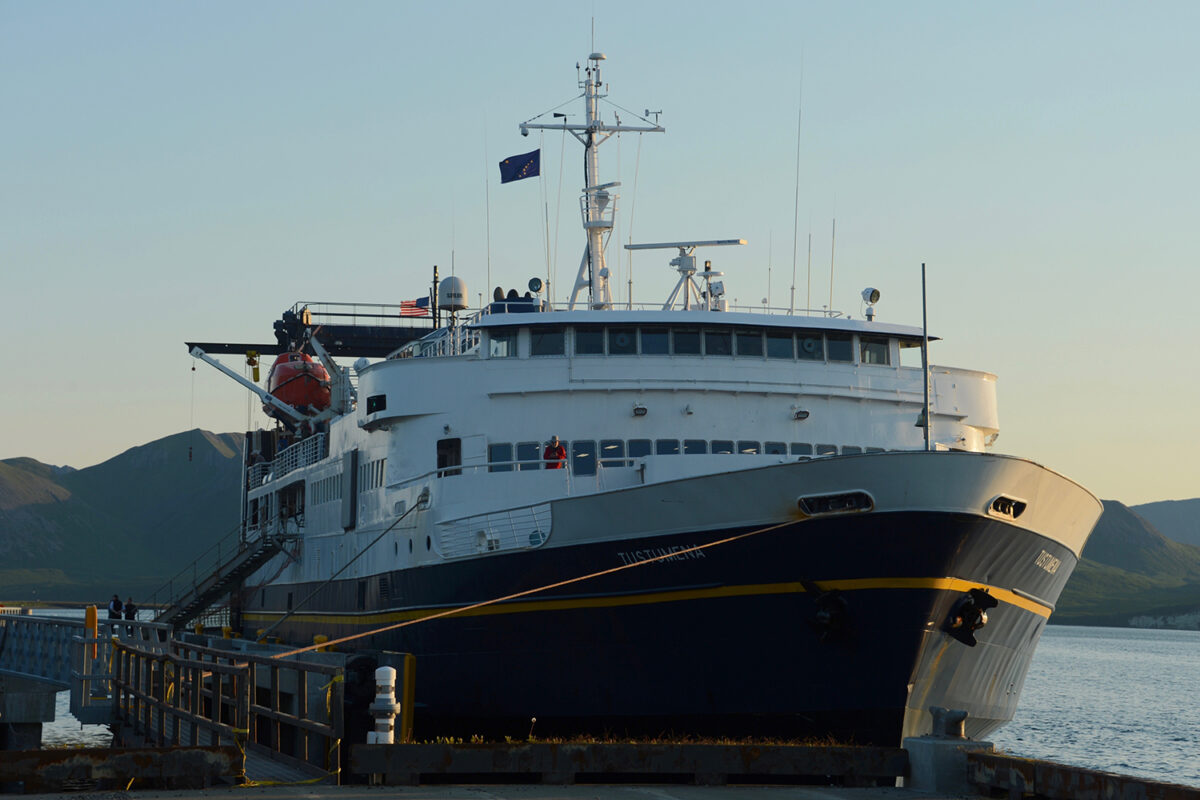
The ferry Tustumena is seen July 20, 2021, in southwestern Alaska. (James Brooks photo)
By: James Brooks, Alaska Beacon
The ferry Tustumena is seen July 20, 2021, in southwestern Alaska. (James Brooks photo)
After more than a decade of planning, design and false starts, the state of Alaska is once more attempting to build its first new mainline ferry in decades.
On Jan. 23, the Alaska Department of Transportation and Public Facilities began advertising for shipyards interested in building a replacement for the Tustumena, which sails between Homer, Kodiak and Unalaska on the longest, most remote state ferry route in the United States.
The new ship must be built in the United States and is expected to cost well over $325 million, based on a prior estimate provided by the state to the federal government and inflation since that 2022 projection.
The current bid listing states only that the “engineer’s estimate is greater than $100,000,000.”
The final operational requirements include a 330-foot-long ship with a range of 4,000 nautical miles, and a capacity of 250 passengers and 28 crew plus 58 vehicles.
A computer-generated mockup of the new Tustumena replacement ferry is seen in an undated image published by the Alaska Department of Transportation and Public Facilities. (DOT image)
The federal government is expected to pay for the majority of the project, which has been a state priority since 2013.
The Tustumena, variously nicknamed “Rusty Tusty” and “Trusty Tusty,” entered service in 1964.
The years and the rough seas of the North Pacific have taken their toll: In 2012, age-related problems sidelined the ship for months, cutting Kodiak off from the state road system. After an extended stay in drydock, it returned to service, but the experience caused the state to begin planning and designing a replacement.
Plunging oil prices and vanishing state revenue caused legislators and then-Gov. Bill Walker to slash the state’s budget, which put the replacement project on the back burner, and the Tustumena remained in service.
In 2016, part of the ship’s hull cracked badly enough that the Alaska Marine Highway System stopped sailing it in strong storms.
Subsequent repairs allowed the ship to return to full service, but the state renewed its efforts to replace the Tustumena. In late 2018, just as Walker was leaving office, the state signaled that it would soon begin soliciting bids for a replacement ship.
“The request for proposals will be issued in January 2019 and a ship builder should be selected by June-July 2019,” DOT said at the time.
Gov. Mike Dunleavy, who entered office in December 2018, froze the Tustumena replacement project and similar large-cost state projects as part of a new round of cost-cutting, and in his first years, he significantly cut the budget of the state ferry system, precluding it from going out to bid. By the end of 2021, the Dunleavy administration had relaxed its position on the Tustumena and named it a priority.
Ferry system officials said they would start a new bidding process in 2023, but that never came to pass. Plans for new bids in 2024 and 2025 also never came about.
In the meantime, the ship and its propulsion system were repeatedly redesigned, and the Tustumena is now intended to use a diesel-electric drive capable of cruising at 15 knots in moderate, 8-foot seas during the winter, with a maximum speed of 18 knots.
The Cold Bay dock is seen in 2021 during a visit by the ferry Tustumena. (Photo by Sean Maguire/contributed image)
The Alaska Department of Transportation and Public Facilities is planning a new dock at Cold Bay, one of the most remote stops on the state ferry system’s route map.
More than 600 miles southwest of Anchorage, on the Alaska Peninsula, the town of just 56 people is the gateway to the Izembek National Wildlife Refuge and home to a 10,000-foot runway used as an emergency stop for trans-Pacific flights.
Cold Bay is a stop on the ferry route between Kodiak and Dutch Harbor, but the dock serves more than ferries — it connects the town with ships that supply groceries, water and almost everything else it needs.
State surveys have found that the existing dock “is nearing the end of its serviceable life and is at risk of failing.”
Most of the funding for the new dock is expected to come from the federal government; the Infrastructure Investment and Jobs Act passed by Congress during the Biden administration included $43.4 million for the dock, and the state will contribute another $8.7 million in matching funds.
The final cost of the dock may be higher than that; inflation has driven the cost of all construction projects higher than they were in 2023, when the federal government awarded a construction grant.
Under DOT’s timeline, the project will go out to bid in spring 2027, with construction beginning the following year, and projected to be completed in 2029.
The new dock is expected to be large enough to support the planned replacement for the ferry Tustumena.
One public meeting about the project has already taken place; a second is planned for Tuesday evening, Dec. 16, by Zoom.
Sen. Jesse Bjorkman, R-Nikiski, speaks Wednesday, April 23, 2025, on the floor of the Alaska Senate. (Photo by James Brooks/Alaska Beacon)
In a Friday hearing, members of the Alaska Senate spoke critically about a proposed new ferry terminal in Juneau, questioning why the project would be worth its multimillion-dollar cost.
Earlier this year, state legislators planned to divert $62 million from a variety of transportation projects in order to pay for the state share of federal transportation grants worth between $500 million and $600 million.
Lawmakers included the diversion in their budget for the year, but Dunleavy vetoed the maneuver, saying that the “funding is either still obligated in the original project or has been fully expended and is unavailable for reappropriation.”
That left legislators’ spending plan partially unfunded.
One of lawmakers’ biggest targets this past spring was DOT’s plan to build a new ferry terminal in Juneau, roughly 30 miles north of the existing terminal in Auke Bay, in Juneau at a place called Cascade Point, which would shorten ferry runs to Haines and Skagway.
Legislators sought to divert $37 million from an account intended to fund that new terminal, but Dunleavy vetoed the transfer and the Department of Transportation subsequently signed a $28.5 million contract for work on the terminal.
In October, the state’s ferry advisory board concluded that the project likely did not make economic sense.
“Do you agree with that study?” asked Sen. Jesse Bjorkman, R-Nikiski, during Friday’s hearing of the Senate Transportation Committee.
“Can you please make the case to the Alaska people why you think investing this money … in the Cascade Point project makes fiscal sense for Alaskans?”
Anderson responded that “as a public agency, we’re more than economics. In this case, there’s this idea of saving people time with a much shorter run, saving money, the cost of operating that ship, we’re saving fuel. It’s less carbon emissions. I mean, there’s a lot of good benefits to shorter ferry runs.”
Lawmakers don’t have the votes to override the governor’s vetoes, which means that when they reconvene in January, they’ll have to come up with a new way to fund construction work this summer.
According to documents presented to the committee on Friday, the Alaska Department of Transportation has “deferred” about 25 projects 1-3 years “to remain within available match.”
Without new money, “fewer projects will move to contract award, limiting construction activity.”
Ryan Anderson, commissioner of the Alaska Department of Transportation and Public Facilities, told the transportation committee that his agency is prioritizing “shovel ready” projects, those that are about to go to construction.
“As we go and prioritize projects through this year, we’ll continue that action, and we’ll be ready. That’s really how we’re looking at this program,” he said.