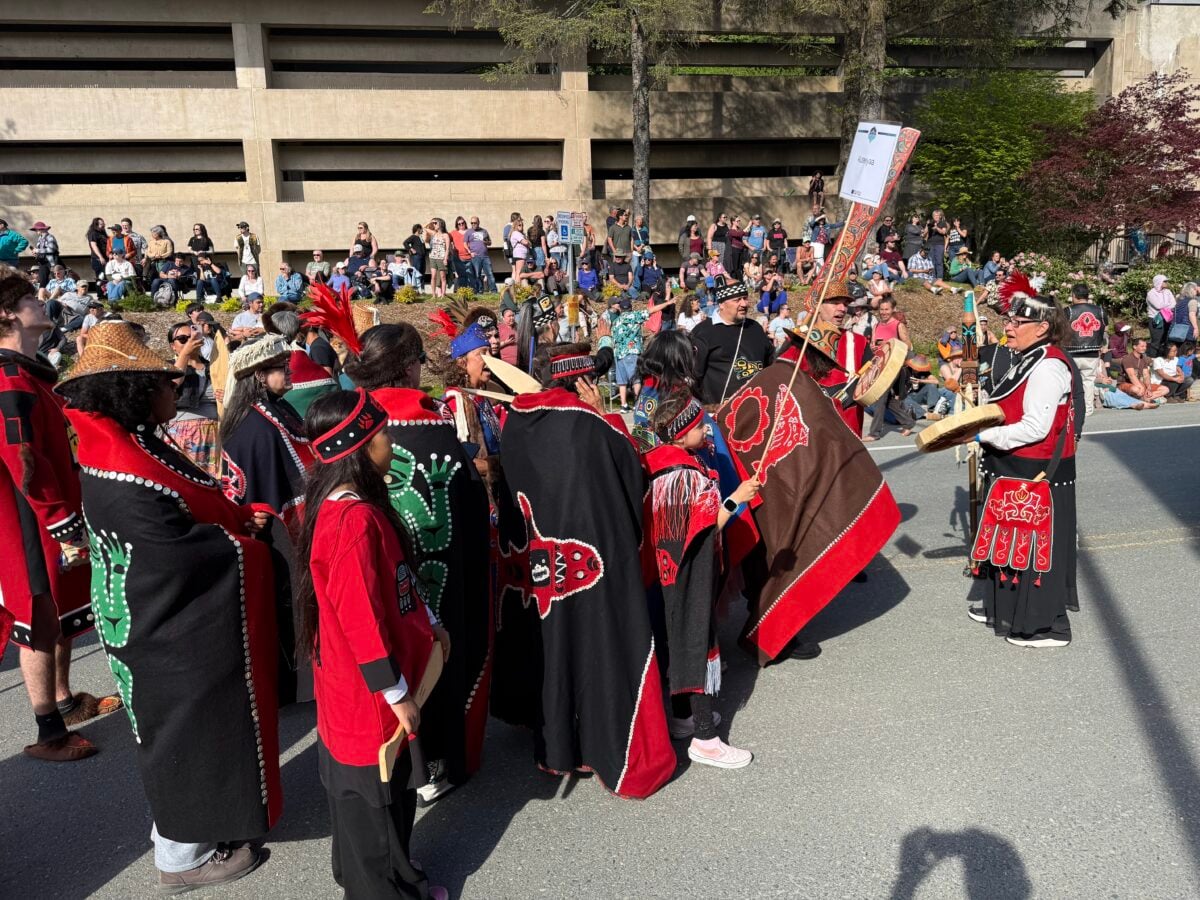
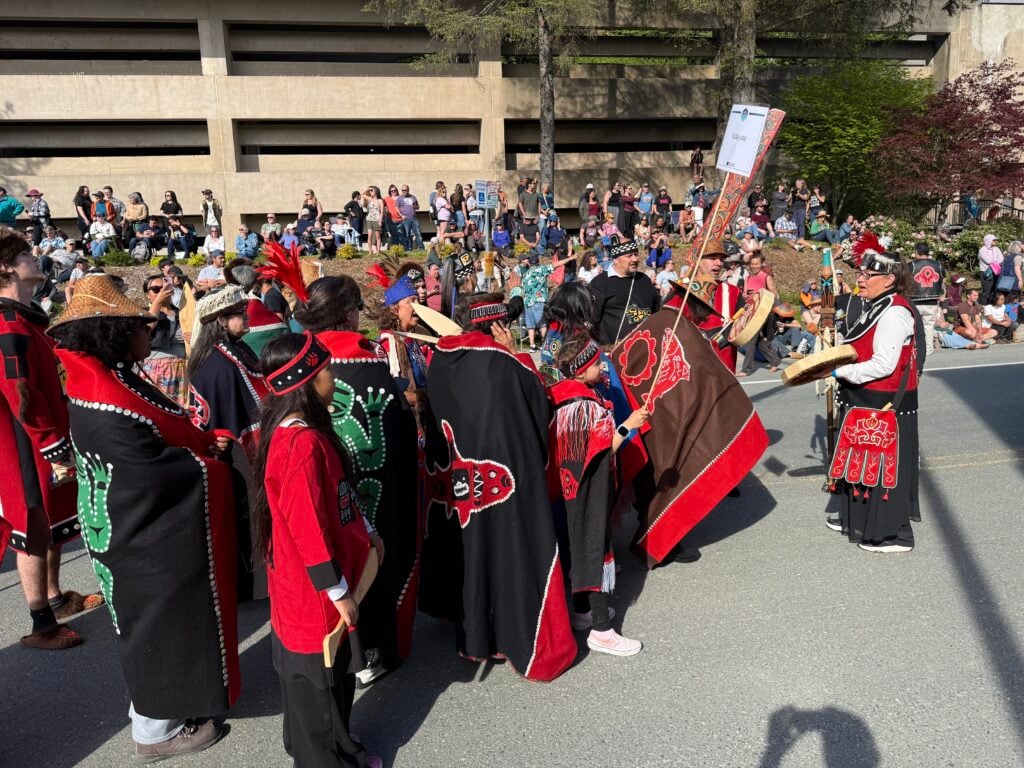
NOTN- One of Alaska’s largest cultural gatherings is officially underway this evening as Celebration 2026 opens in Juneau.
Organized by Sealaska Heritage Institute, this event brings together more than 1,800 dancers from 34 dance groups and is one of the largest gatherings of Tlingit, Haida and Tsimshian peoples in the world.
This year’s theme is “Enduring Strength,” honoring the resilience and cultural survival of Indigenous peoples throughout Southeast Alaska.
The Grand Entrance took place 5 p.m. downtown, kicking off four days of traditional dance, art exhibits, Native foods, cultural demonstrations and community events.
Celebration continues through Saturday with a final parade, and will be broadcast statewide with KTOO public Television, and streamed live online by SHI. So even if you can’t be here for Celebration, you can still participate in the event.
Photo Capture from Sealaska’s Youtube livestream
Celebration began in 1982 and remains a powerful expression of culture, heritage and community.
"I voted" stickers are seen on display in the headquarters offices of the Alaska Division of Elections in Juneau on Tuesday, Nov. 12, 2024. (Photo by James Brooks/Alaska Beacon)
By: James Brooks, Alaska Beacon
“I voted” stickers are seen on display in the headquarters offices of the Alaska Division of Elections in Juneau on Tuesday, Nov. 12, 2024. (Photo by James Brooks/Alaska Beacon)
Seventeen people have registered as candidates for Alaska governor in this fall’s election, though the final slate won’t be set until June 27, the withdrawal deadline. Only four will advance in the Aug. 18 primary.
The deadline to register as a candidate was 5 p.m. Monday. Former state Sen. Lesil McGuire and former Gov. Bill Walker, both running as independents, were among those who registered on the last day.
The field of candidates, which includes 11 Republicans, three Democrats and three independents, is especially large this year. Incumbent Gov. Mike Dunleavy is term-limited and unable to run for another term.
Unless they withdraw, all of the 17 candidates will compete in the Aug. 18 statewide open primary election. Voters will each pick one candidate, and the top four vote-getters, regardless of party, will advance to the November 3 general election.
In November, voters will rank those final four candidates in order of preference using ranked-choice voting. The winner will take office at noon Dec. 7 for a four-year term.
Dahlstrom had raised a relatively small amount of money since her announcement, according to preliminary campaign finance disclosures.
Two other independents, Jessica Faircloth and Gregg Brelsford, and one Republican, Bruce Walden, also declined to register as candidates despite filing preliminary paperwork.
Because a gubernatorial candidate must have a lieutenant governor candidate as a running mate, the days before the filing deadline brought a flurry of announcements.
Former Alaska attorney general Treg Taylor, running as a Republican, announced businesswoman Candice English as his lieutenant governor choice. Self-funded Republican candidate Matt Heilala picked former Wasilla Rep. Jesse Sumner, a fellow Republican.
On the Democratic side, Sen. Matt Claman of Anchorage picked healthcare executive Sarah Skeel, and former state Rep. Jonathan Kreiss-Tomkins chose current Anchorage Assembly member Zac Johnson.
If a lieutenant governor candidate drops out before June 27, the candidate for governor can pick someone new to replace them. If a candidate for governor drops out, the lieutenant governor candidate may replace them and pick a new lieutenant governor.
Candidates for Governor
Former state Sen. Tom Begich (Democratic) with Lt. Gov. candidate Julia Hnilicka (Democratic)
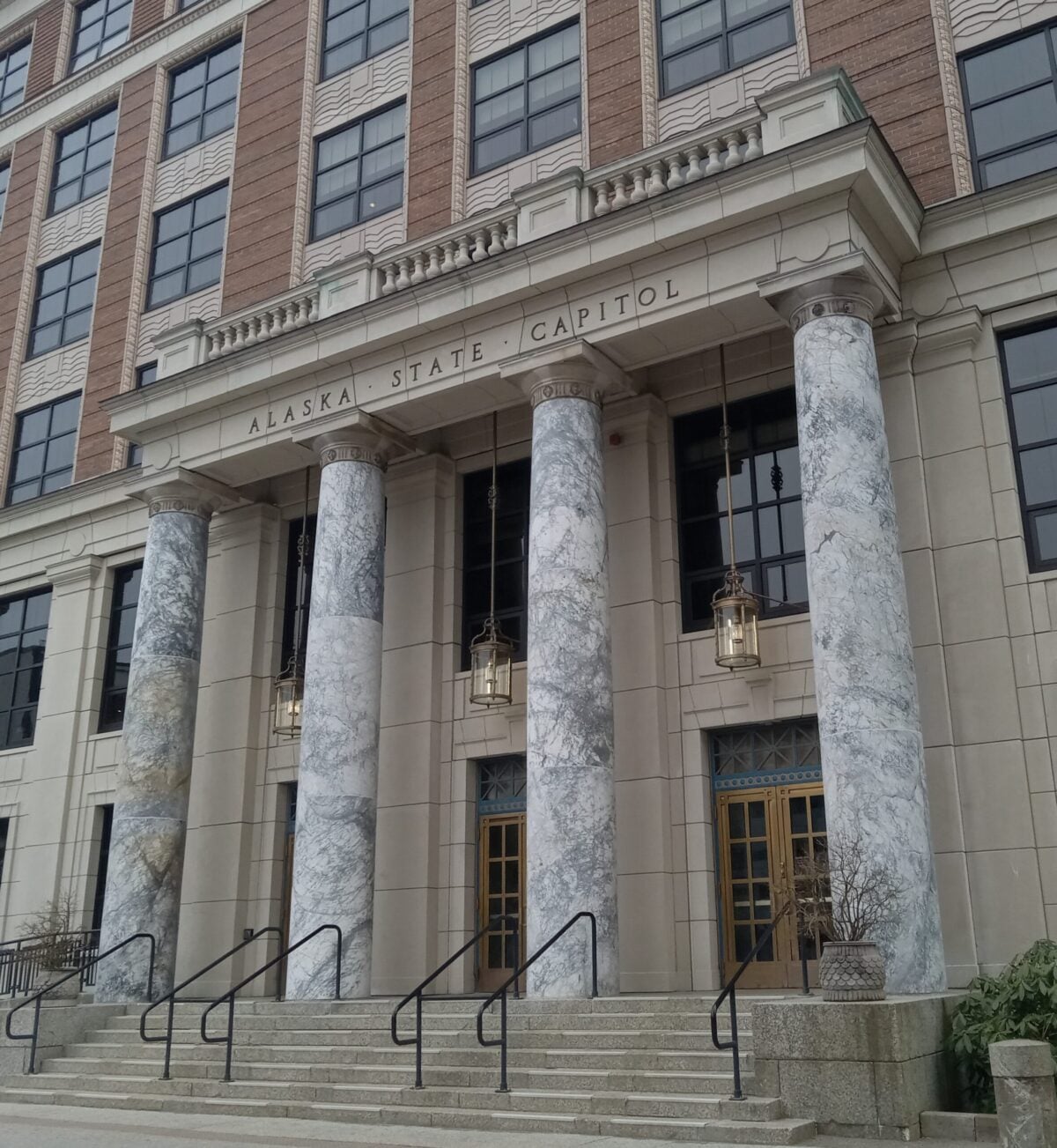
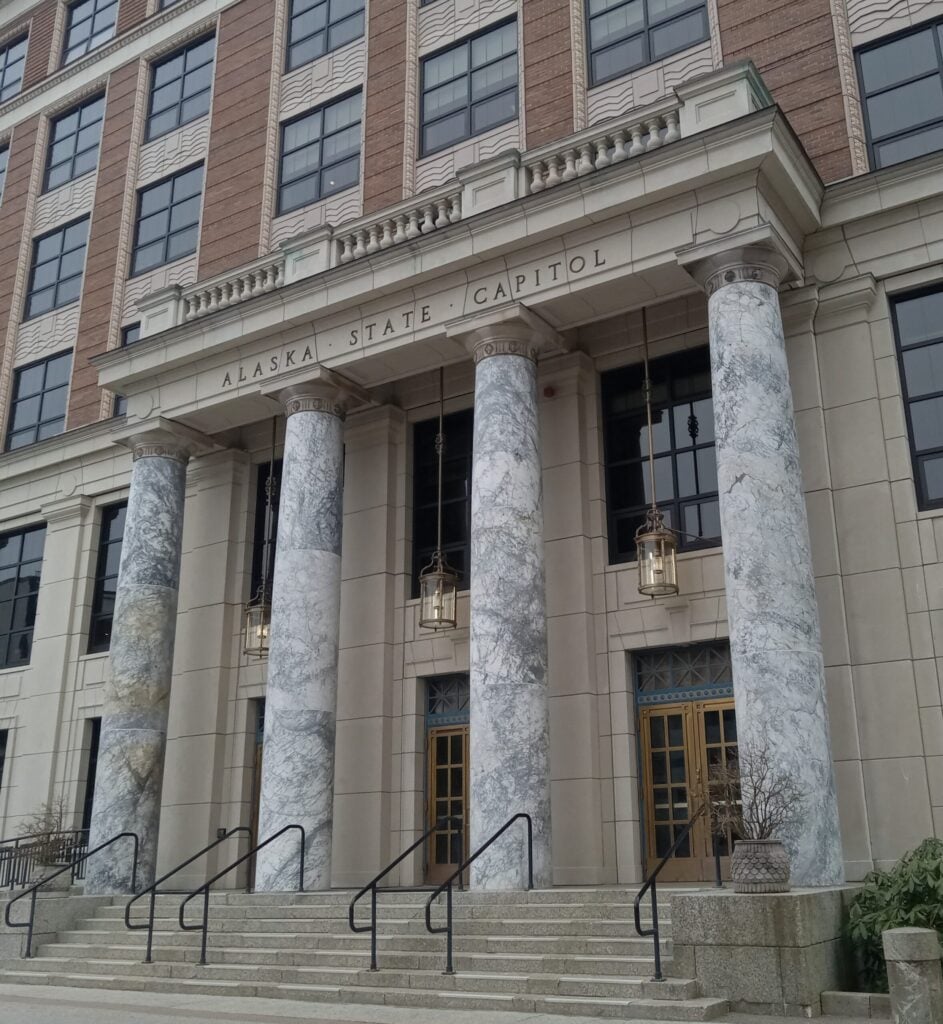
The Alaska State Capitol in downtown Juneau.
(Photo by Greg Knight/News of the North)
The Alaska State Capitol in downtown Juneau. (Photo by Greg Knight/News of the North)
NOTN- Alaska lawmakers are in a 30-day special session to weigh a sweeping tax break for the proposed North Slope natural gas pipeline.
Juneau Sen. Jesse Kiehl, said the governor’s bill would shift the project away from the current 20-mill petroleum property tax structure and toward a volume-based tax on gas flowing through the line. He said the proposal amounts to roughly a 90% tax cut that would last as long as the pipeline operates.
“That’s one of the things we’re working on.” He said, “The governor’s proposal is about a 90% tax cut, and the governor’s proposal lasts as long as the pipeline lasts. They will not need that, right? They will not need that, past, heaven knows, past year 20 when you got almost all your debt paid off.”
Kiehl said some early tax relief is reasonable for a multibillion-dollar project that will not generate revenue immediately, but he questioned the size and duration of the proposed break.
“During the regular session, we couldn’t seem to get as many numbers, real numbers, as we needed, so we’re working on that.” He said, “A big gas line could be a huge project for the state, big for the state’s economy, a lot of jobs when it gets built. The other thing we have to make sure of is that we also protect the treasury, because the risk with these things is cost overruns, right? The oil pipeline cost could be more than double what they planned on.”
Lawmakers are seeking more complete data from project backers to determine how large a tax incentive is necessary and how long it should last.
While the gas line would not deliver gas to Southeast Alaska, Kiehl said the region’s benefit would come from new state revenues that fund public services, including schools and state troopers.
“The benefit we get from Alaska gas going to market is some money in the treasury to pay for public services, all the things we need. So, we’ve got to make sure that we watch those risks.” He said.
Kiehl also added that if the state grants a substantial property tax break, it will also need to ensure money flows to local governments along the route, such as Anchorage, Kenai and Fairbanks. Those communities would face increased demand for schools, law enforcement, road work and other services during construction.
The governor’s bill was introduced midway through the regular session and has already been vetted by House and Senate resources committees. The measure is now before the finance committees, which Kiehl said will use the full 30 day special session to scrutinize the fiscal impacts and negotiate possible changes.
If project backers do not provide the information lawmakers are seeking, he said, the Legislature could choose to “cut our losses and expenses and gavel out,” ending the special session without approving the package.
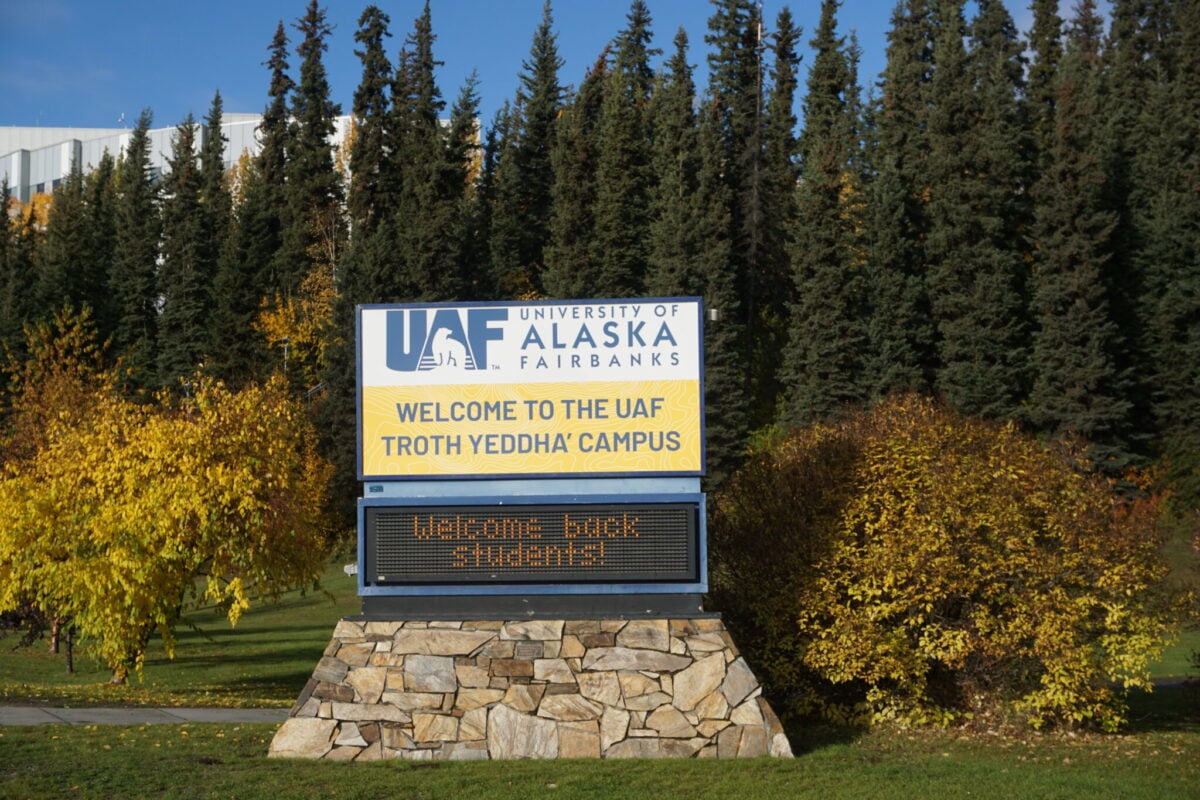
The sign at the entrance to the University of Alaska Fairbanks campus welcomes students on Sept. 20, 2023. (Photo by Yereth Rosen/Alaska Beacon)
Officials with the University of Alaska have tapped the commander of the U.S. Army 11th Airborne Division’s Arctic Aviation Command as the new permanent chancellor of the University of Alaska Fairbanks.
Russel “Russ” Vander Lugt is seen in an undated photo (Photo courtesy of the University of Alaska)
Col. Russell “Russ” Vander Lugt was selected from four finalists after an eight-month search process. He will be the top executive of Alaska’s leading research institution, which describes itself as “America’s Arctic university.” He will replace interim chancellor, and former U.S. Ambassador to the Arctic, Mike Sfraga, who succeeded former chancellor Dan White who announced his retirement in May of last year.
Vander Lugt is a senior U.S. Army officer, an Arctic scholar and UAF alumni, with over two decades of executive leadership experience, according to a university announcement on May 27. He has served as commander of the 11th Airborne Division’s Arctic Aviation Command at Fort Wainwright in Fairbanks since Aug. 2024.
“I’m humbled to be selected to lead the University of Alaska Fairbanks during this pivotal time,” Vander Lugt said in a statement with the announcement.
“I look forward to leading through trust, transparency, and teamwork as we see Alaska and the Arctic transformed through education, research, and public service. I’m committed to building on the strong foundation Chancellors Sfraga and White have established, and working closely with university leadership and governance to support and advance UAF’s mission,” he said.
Vander Lugt will step into the permanent chancellor role on Sept. 8. Sfraga’s last day was Friday, and university officials have selected Larry Hinzman, director of the UA Arctic Leadership Initiative, to serve as interim chancellor through the summer.
Vander Lugt has had a long career with the U.S. Army in various roles in Alaska, where he is stationed in Fairbanks, and across the U.S. His resume lists deployments to Europe and the Middle East.
He served in executive leadership roles that include the Alaskan Command, a division of the U.S. Northern Command, the 601st Aviation Support Battalion, and the 1st Stryker Brigade Combat team. He also taught history and military leadership as an assistant professor at the U.S. Military Academy at West Point and was a professor of military science and department chair at Embry-Riddle Aeronautical University in Prescott, Arizona.
He holds a master’s degree and doctoral degree in Arctic and Northern Studies at the University of Alaska Fairbanks, which he completed in 2022.
Vander Lugt’s hire is the latest in major leadership changes in the University of Alaska system — former UA president Pat Pitney retired last month and former university attorney Matt Cooper was named as her successor. Cooper will begin as university president in early August, and Michelle Rizk, vice president of university relations and chief strategy, planning and budget officer, is serving as interim president. Cheryl Siemers was appointed permanent chancellor of the University of Alaska Anchorage in March, after serving as interim chancellor since the retirement of former chancellor Sean Parnell last year.
Vander Lugt’s base salary will be $309,000, according to the university’s announcement.
The University of Alaska Fairbanks serves roughly 7,500 students. It employs more than 800 faculty and nearly 2,000 staff across urban and rural campuses in Fairbanks, Kotzebue, Nome, Bethel and Dillingham.
Former Gov. Bill Walker and his wife Donna wave campaign signs on Aug. 15, 2022, at the intersection of Northern Lights Boulevard and the Seward Highway in Anchorage. Walker is a fan of the state’s new ranked-choice system. (Photo by Yereth Rosen/Alaska Beacon)
Former Alaska Gov. Bill Walker said Thursday that he is considering whether to formally file as a candidate for governor on Monday, the deadline to enter the 2026 race.
Walker and former Department of Revenue Commissioner Randy Hoffbeck filed letters of intent with the Alaska Public Offices Commission on Thursday, a necessary step before officially registering as candidates with the Alaska Division of Elections.
Both would run as independents if they decide to register, Walker said.
“We’ll meet a few times more over the weekend,” Hoffbeck said. “We both feel very strongly that we need to raise the level of discussion on a (state) fiscal plan and the gasline, but our consideration is: Can we move the needle? Is this the best use of our time and resources?”
The deadline to file as a candidate in this year’s statewide elections is 5 p.m. Monday. If Walker formally becomes a candidate, he would be the 19th in this year’s race.
Walker, elected as an independent in 2014, served four years in office. When he ran for re-election, a scandal involving then-lieutenant Gov. Byron Mallott caused Mallott to resign less than a month before Election Day 2018. Walker suspended his re-election campaign, and Republican Mike Dunleavy went on to be elected, defeating Democratic candidate Mark Begich in the process.
Walker ran for re-election in 2022 against Dunleavy and Democratic candidate Les Gara. Dunleavy won that race but is term-limited and cannot run again. That’s led to a wide field of options for the 2026 election.
“There’s a flavor for everybody, no question about that,” Walker said.
During his term in office, Alaska experienced a sharp drop in oil prices that led to a fiscal crisis. Walker slashed the state’s budget and vetoed a portion of the 2015 Permanent Fund dividend, becoming the first governor in state history to do so.
Since then, successive editions of the state Legislature have set the annual dividend amount themselves, rather than using a formula.
During Walker’s term, he proposed a comprehensive state fiscal plan that would have shifted Alaska away from a reliance on oil revenue, but lawmakers failed to adopt it.
In his final year, legislators approved one aspect, an annual transfer from the Alaska Permanent Fund to the state treasury. That transfer is now the No. 1 source of general-purpose revenue for the state, used for dividends and services alike.
By phone on Thursday, Walker said he was concerned about a state fiscal plan in 2014, and he still is.
“They got some of it passed but not enough of it,” he said, referring to the proposal he made while in office, “and so we need a fiscal plan. I haven’t heard a lot of discussion on the campaign trail from (other candidates) about what they’d do on the fiscal side, and — well, I’m not a very good spectator when there’s work to be done.”
Hoffbeck, who would serve as Walker’s lieutenant governor, was his revenue commissioner from 2014 through 2017, when he resigned to become an interim minister, working at churches whose ministers had recently departed.
“It won’t be an easy job, but you know, we can sit back on the sideline and just complain, or we can get involved and actually try and do something, and I think that’s kind of where Bill and I are at,” Hoffbeck said. “I like being retired, I like what I’m doing right now, but I’m also frustrated with what I’m hearing and seeing, and so, I guess at some point in time you’ve got to stop talking and do something.”
In addition to the surprise possible return of Bill Walker, the last days before the candidate filing deadline have brought a flurry of lieutenant governor candidate announcements.
Democratic candidate Tom Begich announced former U.S. Department of Agriculture official Julia Hnilicka as his running mate on Wednesday, while Republican candidate Adam Crum declared former healthcare CEO Robert Craig as his choice for lieutenant governor on Thursday morning.
Hours after that, Democratic candidate Matt Claman said Sarah Skeel, former chief administrative officer of Providence Alaska Medical Center, would be his lieutenant governor pick. Independent candidate Meda DeWitt has scheduled an announcement event on Saturday.
If a gubernatorial candidate does not have a registered lieutenant governor candidate by 5 p.m. Monday, they are ineligible to run.
Registered candidates have until June 27 to drop out. If a candidate for governor withdraws, the lieutenant governor candidate may take their spot and pick a new lieutenant governor. A lieutenant governor candidate who withdraws may be replaced with another.
Candidates for Governor
Former state Sen. Tom Begich (Democratic) with Lt. Gov. candidate Julia Hnilicka (Democratic)
NOTN- Juneau’s got a busy few weeks ahead as the city prepares for the arrival of the 2026 Canoe Journey and continues discussions on the Fiscal Year 2027 budget.
The Central Council of the Tlingit and Haida will welcome canoes ashore Tuesday, June 2, during the 2026 Canoe Journey Landing in Juneau ahead of Celebration.
Community members, families and visitors are invited to gather for the event.
One landing is scheduled for 1 p.m. at the Áak’w Kwáan Landing at the Auke Village Recreation Area. Parking at Auke Rec is limited, and shuttle service will run from the University of Alaska Southeast between 11 a.m. and 3 p.m.
A second landing is planned for 2 p.m. at the Huna Totem Corp. lot at Egan Drive and Whittier Street downtown.
Celebration begins June 3-6, held by Sealaska Heritage Institute, the theme this year is “Enduring Strength.”
Several city meetings are also scheduled Wednesday, June 3.
The Juneau Commission on Sustainability will hold a regular meeting at noon via Zoom. The Eaglecrest Board Sales and Communications Committee also meets at noon by Zoom.
Later in the day, The Assembly Finance Committee will meet at 5:30 p.m. in Assembly Chambers, with participation also available through Zoom and YouTube livestream, this is ahead of the June 8 Assembly meeting, which city officials say is the final opportunity for public input on the proposed Fiscal Year 2027 budget before adoption.
On May 20, the Assembly Finance Committee adopted nearly $4.7 million in proposed reductions to the budget. The reductions included cuts to partner agency grants, capital projects, city services and the restricted budget reserve.
The Assembly also introduced four ordinances May 27 that would amend the city’s Sales Tax code and generate additional tax revenue.
Those ordinances will also be discussed during the June 8 meeting.
The Assembly must adopt a final budget by June 15.
FILE - North America's tallest peak, on Aug. 12, 2025, in Denali National Park and Preserve, Alaska. (AP Photo/Becky Bohrer,File)
FILE – North America’s tallest peak, on Aug. 12, 2025, in Denali National Park and Preserve, Alaska. (AP Photo/Becky Bohrer,File)
AP- Rescuers are trying to reach four climbers who fell on Alaska’s Mount McKinley, North America’s tallest peak, the National Park Service said Thursday.
The climbers’ conditions weren’t immediately known following the fall, which was reported to Denali National Park and Preserve rangers overnight, and rangers were seeking a weather window to allow them to reach the area by helicopter, a statement from the agency said. The four climbers were part of a seven-person team.
The three others climbing attended to those who fell, and then returned to camp, the statement says. The fall occurred near Denali Pass, at about 18,200 feet (5,547 meters). The climbers returned to an area known as high camp around 17,000 feet (5,181 meters), the statement says. McKinley stands at about 20,310 feet (6,190 meters).
Park officials have been in contact with the three climbers, said Scott Carr, a park service spokesperson. He said additional information would be released “if and when it becomes appropriate.”
Over the years, many climbing injuries and deaths have occurred on the traverse between the high camp and Denali Pass, mainly resulting from unprotected falls, according to the park.
Park rangers and mountain guides install and maintain snow pickets — which are used to help build anchors for extra protection on areas like steep slopes — between the high camp and Denali Pass, the park says. Climbers are urged to have their own pickets in case the protection placed by rangers and guides is missing.
Weather conditions didn’t improve the way rescuers had hoped. Carr said late Thursday that conditions throughout the day had been variable, with low cloud ceilings and limited visibility, and that authorities were still awaiting an opportunity to safely fly.
“Helicopter operations will start when a weather window opens up,” he said.
A typical climbing season for Mount McKinley begins in late April and continues into mid-July, according to the park. There were 516 climbers on the mountain as of Thursday, Carr said by email.
On Wednesday, two climbers as part of a separate incident were evacuated from the mountain by helicopter around 11 p.m., but the park service said it did not have additional information to share.
The following article has been written by the President and CEO of Goldbelt Inc. and is not a neutral news report.
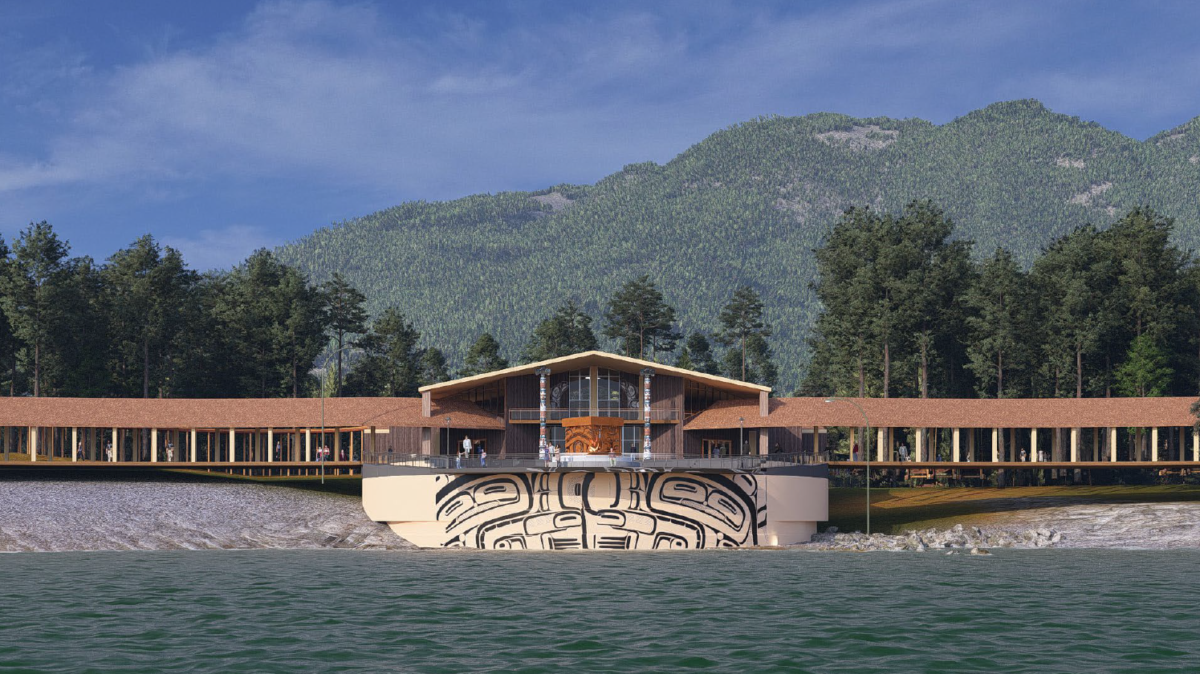
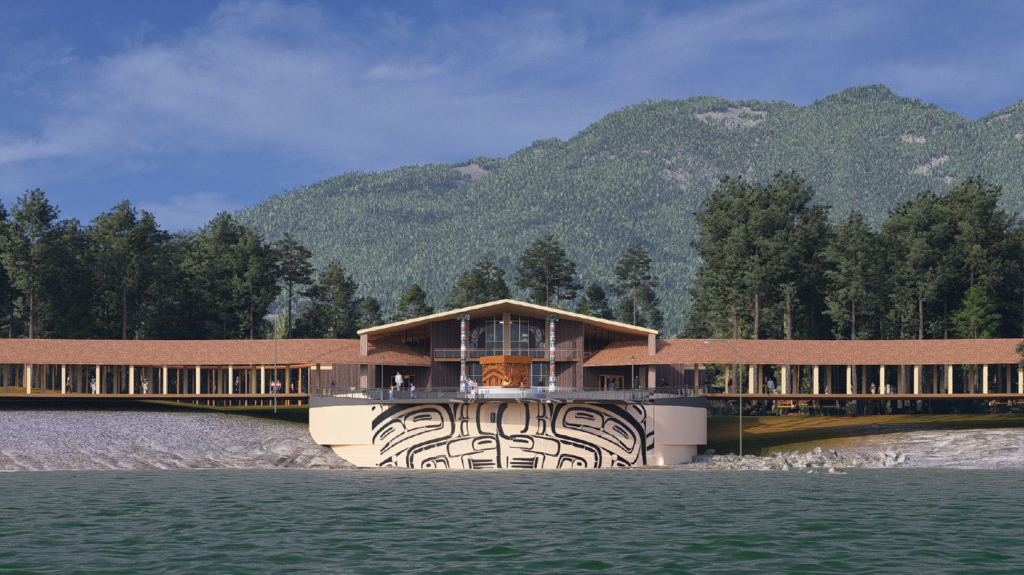
The Goldbelt Aani Concept Image, provided by Goldbelt Inc.
Juneau is at an inflection point. Rising costs, aging infrastructure, and shrinking resources are forcing tough decisions about whether our community will remain sustainable for the next generation. Goldbelt will lead a path to prosperity.
Goldbelt was created through the Alaska Native Claims Settlement Act (ANCSA), legislation that resolved Indigenous land claims by creating corporations, instead of reservations, and returning select lands to Alaska Native people through regional and village corporations. As Juneau’s Alaska Native corporation, we selected parcels from our ancestral homelands that were important to our people and that we are responsible for stewarding these ancestral lands today.
Under ANCSA, these lands are not taxed until they are developed. That structure was designed to support long-term economic opportunity for Alaska Native people and to keep Native land in Native hands.
As Juneau’s Alaska Native corporation (ANC), owned by Tlingits of the Áak’w Kwáan and T’áaku Kwáan, Goldbelt’s responsibility is to the Indigenous people who make up our shareholder base. Our shareholders will always be our top priority. Unlike a publicly traded company, our responsibility does not end with dividends. It includes building systems and infrastructure that support our shareholders and the broader community.
As an example, when Goldbelt invested $10 million in a revenue-sharing agreement with the City and Borough of Juneau on the Eaglecrest gondola project, it did so because it was a strong investment for our shareholders. It also reflects an investment in our community. We believe that a prosperous Juneau depends on a sustainable, year-round outdoor recreation facility at Eaglecrest.
The Goldbelt Aaní port project on the backside of Douglas is another example of investment that serves our stakeholders while supporting the community. The port reflects decades of planning by Goldbelt and its shareholders for development of our ANCSA lands. Not only will it create local jobs and produce profits that remain here in Juneau, the project will enhance borough infrastructure with upgraded utilities and a new wastewater treatment facility on Douglas Island.
Once developed, the port is expected to become one of Juneau’s largest taxpayers. That revenue supports schools, infrastructure and the services residents rely on every day. Sustainable, thoughtful development supports jobs, strengthens the economy and contributes to a stable tax base.
Goldbelt is a forever company supporting people who have been here since time immemorial. We are here to stay and to contribute to Juneau’s long-term economic stability because this is where our people live. We operate businesses around the world, but our headquarters and our home are in Juneau. We invest our profits in Juneau’s future. As an Alaska Native corporation, those investments stay with our people and our lands, adding long-term value for locals instead of flowing to outside investors.
Goldbelt wants to help build a future where families choose to stay in Juneau, where people have confidence in the economy, where children are raised, and people invest in their future now and forever.
Author bio
McHugh Pierre is President and CEO of Goldbelt, Inc., Juneau’s Alaska Native corporation, owned by Tlingit shareholders of the Áak’w Kwáan and T’áaku Kwáan.
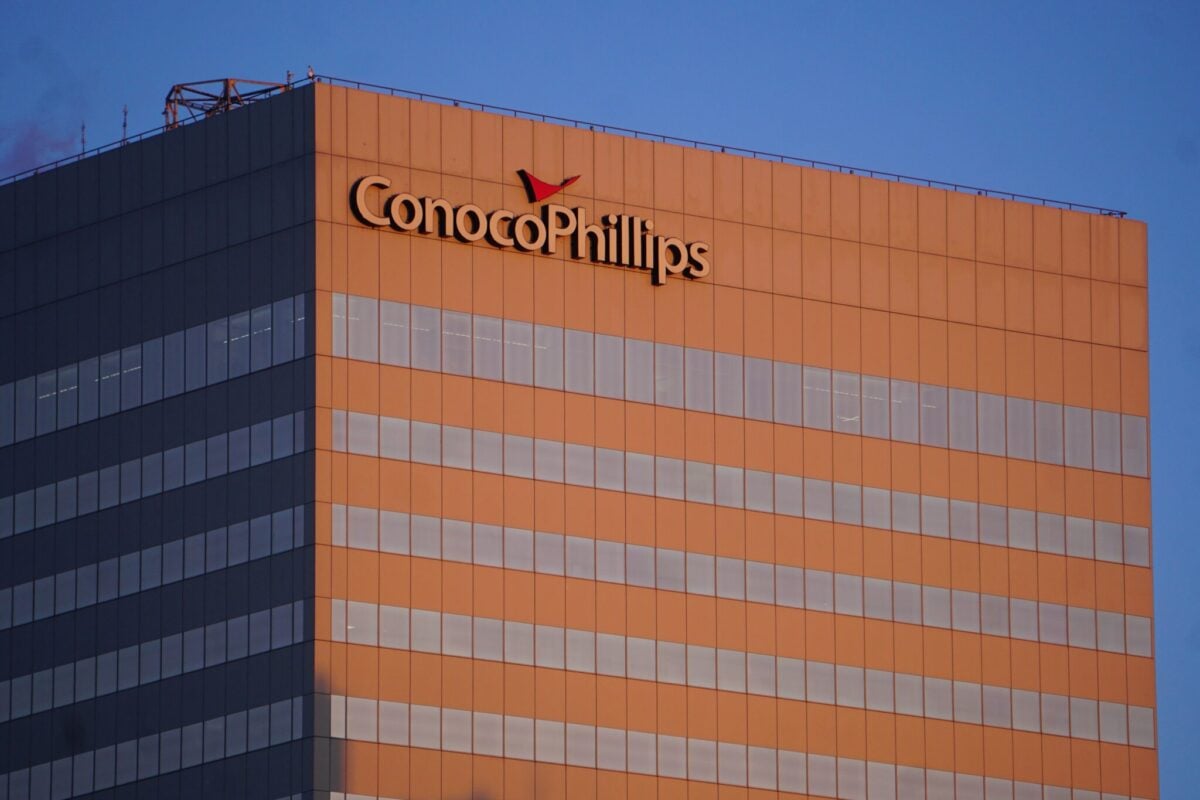
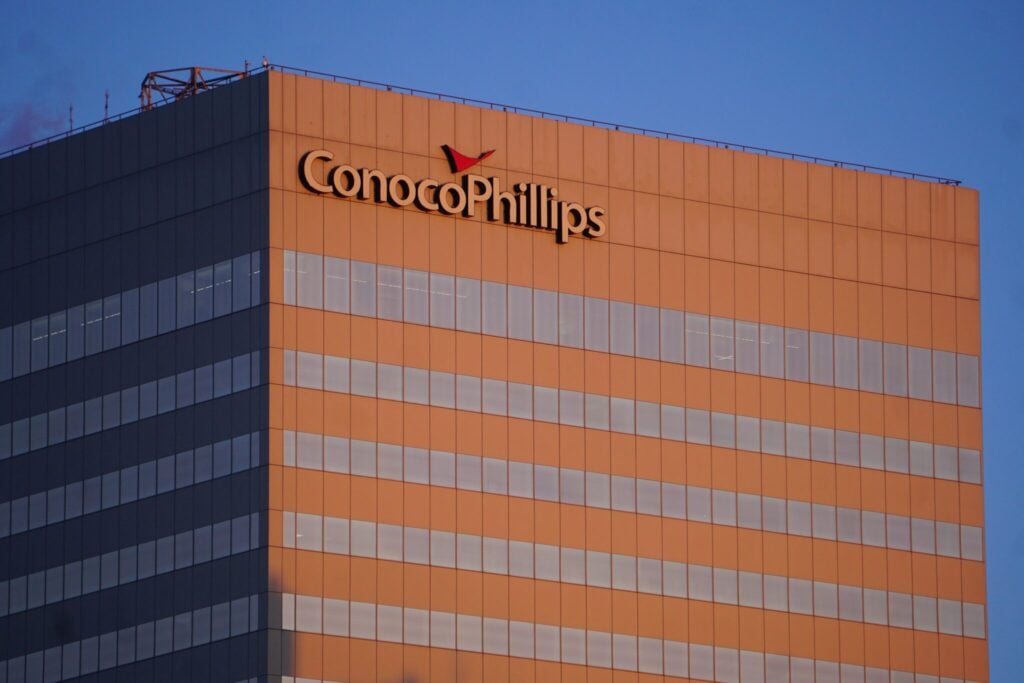
Late-afternoon sunlight bathes the ConocoPhillips building in downtown Anchorage on March 10, 2026. A legal dispute over confidentiality of data from exploratory wells drilled by ConocoPhillips in the National Petroleum Reserve in Alaska came down to interpretations of the federal Naval Petroleum Reserves Production Act. The Alaska Oil and Gas Conservation Commission is seeking to release the information publicly, and an appeals court ruled in the state’s favor. (Photo by Yereth Rosen/Alaska Beacon)
The state of Alaska has the right to make public data from exploration wells drilled by ConocoPhillips in the National Petroleum Reserve in Alaska, an appeals court has ruled.
The 9th Circuit Court of Appeals ruling, issued Wednesday, overturns a 2023 decision by U.S. District Court Judge Sharon Gleason that allowed well data to remain under wraps.
At issue is a collection of wells drilled in the reserve, which is federal territory. ConocoPhillips argued that data confidentiality is explicitly guaranteed in federal law and that federal law supersedes state law, but the appeals justices disagreed.
On the National Petroleum Reserve, “Alaska has its own authority to gather — and disclose — data collected from oil and gas exploration, authority that it exercised even before Congress opened the Reserve to private exploration,” the appeals court ruling said.
The Indiana-sized National Petroleum Reserve is of keen interest to energy companies. It is underlain by a formation called the Nanushuk, the source of oil for ConocoPhillips’ huge Willow project, which is under development, the Santos-operated Pikka project, which recently started production, and other prospects. A lease sale held in the reserve in March, the first since 2019, drew a record $163 million in high bids.
Under state law, data from exploratory oil and gas wells is to be disclosed publicly after those wells are completed. State law provides for a 24-month period of confidentiality, after which the AOGCC is to make the data publicly available, unless the Department of Natural Resources commissioner grants an exemption to keep the information confidential for a longer period.
After ConocoPhillips’ request for a DNR exemption was denied, the company in 2022 sued the Alaska Oil and Gas Conservation Commission to keep the data confidential.
ConocoPhillips argued that the federal Naval Petroleum Reserves Production Act expressly prevents the AOGCC and Gas Conservation Commission from disclosing data from the wells, which were drilled on federal leases.
Gleason’s March 8, 2023, ruling came to a slightly different conclusion that nonetheless backed ConocoPhillips. She found that the federal law implicitly protects data confidentiality, despite state law.
The appeals court judges agreed that the federal law has no explicit restriction on state release of well data, but they drew a different conclusion from that finding than Gleason did.
For the state, the appeals court ruling is a victory that is good for future development, Acting Attorney General Cori Mills said in a statement.
“Alaska relies heavily on our resources and resource development. We are also stewards of those resources for the citizens of Alaska. Alaska’s law both allows resource development now, and encourages further development and exploration in the future. We’re pleased that the Ninth Circuit recognized that federal law has not overridden Alaska’s balanced approach,” Mills said.
ConocoPhillips is still considering its next steps, a company spokesperson said. “ConocoPhillips Alaska, Inc. has received the court’s decision and is evaluating it. ConocoPhillips Alaska, Inc. has not decided on whether to appeal the decision,” company spokesperson Megan Olson said by email.
The well data that is the subject of the case remains confidential, according to court documents. Confidentiality has been maintained all the time that the court case has been active.
CBJ- The City and Borough of Juneau Assembly is nearing the end of the Fiscal Year 2027 budgeting process. Below is an update on the budget actions that took place last week, as well as the next steps required before the Assembly’s June 15 deadline to finalize the budget.
The Assembly reviewed, discussed and took action on 21 proposed expenditure reductions to get to a final budget for FY2027.
The nearly $4.7M in reductions includes a combination of one-time and recurring reductions to partner agency grants, capital projects and CBJ services and programming, including:
$770,000 in cuts to Partner Agency Grants
Reductions to Travel Juneau, Juneau Economic Development Council, the Alaska Committee and Alaska Heat Smart
$1M in cuts to Capital Projects
The Gastineau Avenue Widening & Turnaround project
$507,1000 in cuts to CBJ Services, Operations and Programming
Operational reductions to the City Museum, Parks & Recreation’s Landscaping division and Arboretum, and Administration.
$2.7M in cuts to the Restricted Budget Reserve
$247,000 added as a one-time subsidy to Gastineau Human Services through Bartlett Regional Hospital
These reductions are not final. They were included in the amended FY2027 budget and moved to the June 8 Assembly Meeting. The public can provide testimony at the June 8 meeting before the Assembly adopts the final budget.
The Assembly Finance Committee also took action on the following:
An ordinance establishing the Mill Levy (9.92 mills including debt service) for property taxes was moved to the June 8 Assembly Meeting for public hearing and adoption.
CBJ’s independent auditors will provide the FY25 Audit Presentation, including their findings and recommendations. The Assembly will also discuss the proposed sales tax ordinances and general obligation bonds on schools and utilities. There will be an update on the Cost Allocation Plan.
The Assembly will host its final public hearing on the FY 2027 budget. To testify, participants can come to the Assembly Chambers and sign-up. For remote participation, testifiers will need to call the Clerk’s Office at 907-586-5278 by 4 p.m. on the day of the meeting and indicate the topic they will speak on.
The Assembly will make any needed amendments and adopt a CBJ Budget Ordinance, Mill Levy Ordinance and Capital Improvement Project Resolution (as amended).