Hacker using laptop. Lots of digits on the computer screen.
By: Haley Lehman, Alaska Beacon
Hacker using laptop. Lots of digits on the computer screen.
The Federal Bureau of Investigation released a report Thursday that showed Alaskans lost nearly $40 million in cyber crime in 2025.
Special Agent in Charge Matthew Schlegel of the FBI Anchorage Field Office said it is the highest financial loss ever reported in Alaska for such crimes.
“Behind these numbers are real people – Alaskan families who lost hard-earned savings, retirement funds, and financial security,” he said in a news release.
Americans lost nearly $21 billion in cyber crimes in 2025, according to the FBI Internet Crime Report issued by the Internet Crime Complaint Center.
This chart outlines IC3 loss trends over a 10-year period for Alaska, with reported losses exceeding $158 million. (FBI graph)
Alaskans reported the 2025 losses in 3,202 complaints to the Internet Crime Complaint Center, making it the highest financial losses ever reported in Alaska in one year. Losses went up by $13.6 million since 2024.
The FBI encouraged people to identify red flags of a potential scam to protect themselves from cyber threats and crime.
“To combat this ever-evolving threat, it has never been more important for residents and businesses to be diligent with cybersecurity, electronic interactions, and safeguarding personal and financial information,” Schlegel said.
The greatest losses in Alaska were from investments-related fraud, confidence or romance fraud, compromised business emails and tech support scans. Approximately 482 Alaskans lost more than $18 million to cryptocurrency crimes.
According to the report, 20% of Alaskans who reported losses from internet crimes were 60-years-old and older who lost $16.2 million.
President Donald Trump issued an executive order on March 6 directing officials to develop a plan to prevent, disrupt, investigate and dismantle Transnational Criminal Organizations in order to stop cyber-enabled criminal activity.
“Cybercrime, fraud, and predatory schemes are draining American families of their life savings, stealing the benefits of years of work, and destroying the lives of our youth,” Trump wrote in the order.
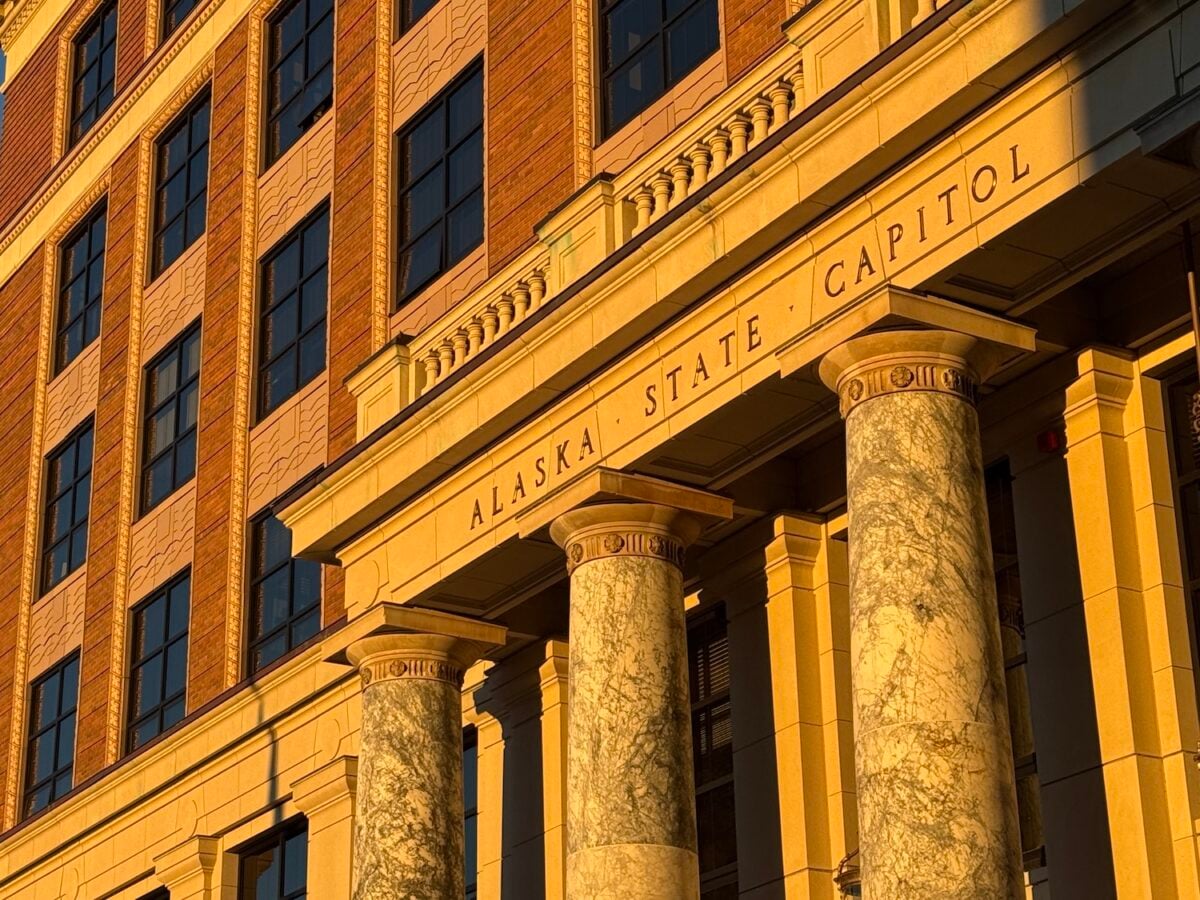
The Alaska State Capitol is illuminated by the rising sun on the morning of Friday, Jan. 23, 2026. (James Brooks photo/Alaska Beacon)
By: Corinne Smith, Alaska Beacon
The Alaska State Capitol is illuminated by the rising sun on the morning of Friday, Jan. 23, 2026. (James Brooks photo/Alaska Beacon)
The Senate Finance Committee on Wednesday proposed an operating budget for the next fiscal year, with a $1,000 Alaska Permanent Fund dividend plus $150 energy relief payment per eligible Alaskan.
The committee’s draft budget takes a more conservative approach to uncertainty around the state’s revenue forecast for next year — driven by rising oil prices due to the Iran war – than the proposed budget passed by the Alaska House passed earlier this month, and eliminates the deficit.
State forecasters have projected a $500 million boost in state revenues, and senators have expressed caution around state spending and a willingness to focus funds to tackle aging infrastructure and deferred maintenance, particularly upgrading school facilities.
“The most fundamental thing we have to remember is that the state doesn’t have the resources to do all the things we need to do and that Alaskans need us to do,” said Sen. Jesse Kiehl, D-Juneau, a member of the finance committee on Thursday. He said the greatest challenge for the Legislature is prioritizing.
“And so I think we did that effectively,” Kiehl said. “I think it makes a few really crucial, really targeted investments.”
The Senate’s draft budget removed the House’s proposed $158 million one-time education funding boost, and instead appropriates up to $100 million for K-12 schools subject to oil revenues averaging $95 per barrel for the rest of this fiscal year ending on June 30.
Alaska has no personal income or state sales tax, and so roughly 60% of state funds for the general purpose budget comes from the Alaska Permanent Fund, the state’s sovereign wealth fund currently valued at $86.3 billion, and roughly 30% comes from state oil revenues.
The draft Senate operating budget is based on an average of $73 per barrel for the next fiscal year starting in July, whereas the House draft budget is based on an average $75 per barrel projection.
The draft budget contains some changes to the House version and additions across departments. It would double funding for disaster relief to $48 million, and increase fire suppression funding from $47.5 million to nearly $61 million. It funds an additional $29 million for school districts and $20 million for communities to offset rising fuel and energy costs; $30 million for community assistance programs; $5.3 million toward a renewable energy fund; $3.5 million for the Alaska Marine Highway system’s ferry maintenance and staff salary increases. It also boosts funds for public employees retirement from $75 million to $106 million, and increases funds for teachers’ retirement system from $157 million to $164 million, among others.
The budget also contains $650,000 for a state audit of the Alaska Department of Corrections to evaluate cost drivers, as the department’s budget has ballooned in recent years.
Kiehl said while he’d like to see more investment in services like in the state’s foster care system, homelessness programs, energy and schools, he said the state can’t bank on unknown revenues.
“We have to be careful not to treat a temporary boost in the price of oil, which will probably last more than a year as though it were permanent, increase. That’s not responsible,” he said.
Senate Minority Leader Sen. Mike Cronk, R-Tok and a member of the finance committee, said he’d like to see a more conservative budget, but he also wants to avoid a large supplemental budget as seen this year. He said he supports the budget based on an average $73 per barrel estimate.
“I’m pretty comfortable with that number. I just don’t want to be back in that same position as we have this year, where we are $500 million upside down for supplemental,” he said.
Cronk said he supports targeted funding for renewable energy projects, education and deferred maintenance for schools, rather than expanding state department budgets. “I just think we should focus on making sure we have a fiscally responsible budget all around and not adding money to programs that continue in future budgets.”
The budget also includes a number of supplemental items, or costs incurred this year outside the budget. Those include $5.2 million for Alaska Pioneer Homes, $1.25 million for Village Public Safety Officer operations, $1.5 million for the Department of Law’s criminal division, $543,000 for court settlements and $4 million to defend a lawsuit challenging the state’s health care system for inmates in the corrections system.
Cronk said while he would like to see a maximum Permanent Fund dividend, it’s not possible within the state’s current financial picture.
“The whole PFD issue is very controversial, no matter which way we go on it,” he said. “We should be paying a full PFD, but the budget, the numbers, don’t allow that right now.”
The Senate’s draft budget overall cuts nearly $450 million from the operating budget, compared to the House draft version. However, the Senate’s proposal leaves $50 million of headroom for additional expenses next year, but that’s after accounting for a $360 million capital budget for state infrastructure projects. The Senate passed a nearly $250 million capital budget on Tuesday, which is now being debated in the House where likely additional projects will be added.
The proposed budget, unveiled as amendments to House Bill 263 will continue to be debated in the Senate Finance Committee and further amendments are due by Friday, before going before the full Senate for a vote.
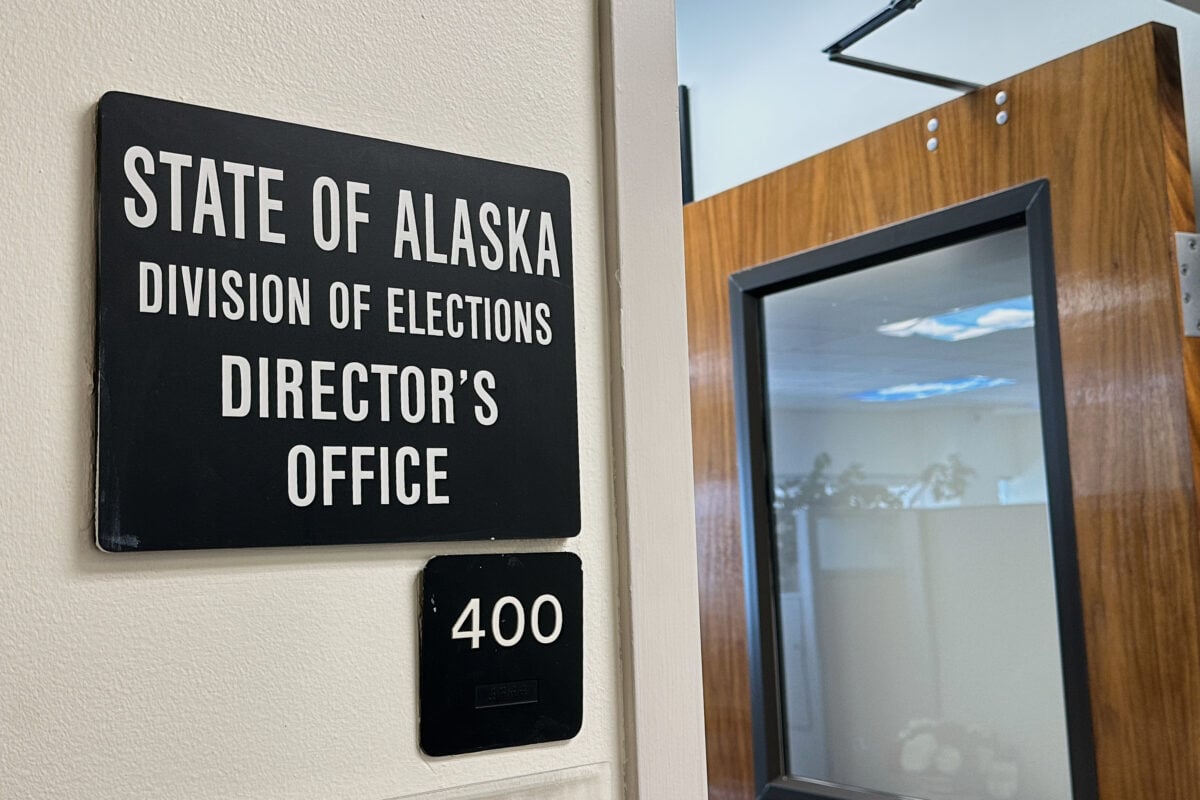
FILE - A sign hangs outside the director's office of the Alaska Division of Elections, March 19. 2026, in Juneau, Alaska. (AP Photo/Becky Bohrer, File)
FILE – A sign hangs outside the director’s office of the Alaska Division of Elections, March 19. 2026, in Juneau, Alaska. (AP Photo/Becky Bohrer, File)
AP-Voting and civil rights groups sued Alaska elections officials Wednesday, alleging that their sharing of the state’s full voter registration list with the U.S. Department of Justice violates the state constitution.
Alaska is one of at least 12 states that has provided or said it would provide detailed information about its voters — including date of birth, driver’s license number or partial Social Security number — to the Trump administration, according to the Brennan Center. Alaska and Texas also signed agreements when they shared data in which the department outlined plans for its own analysis of voter files, its plans to flag voter list issues and directions for removing voters deemed ineligible.
Several other states provided the data, but refused those agreements, as part of a wide-ranging effort by the Justice Department to obtain detailed voter data from every state. Some elections officials have expressed concern the information being sought could be used by the Trump administration to search for possible noncitizens.
The Alaska lawsuit was filed in state court against state Division of Elections officials by the League of Women Voters of Alaska and Alaska Black Caucus. It alleges the handing over of personal data on the voter list violates the right to privacy under the state constitution. It also says the memorandum of understanding violates due process by allowing the Justice Department to flag voters for removal “without any apparent notice or process for impacted voters to challenge those decisions.”
The lawsuit names as defendants Republican Lt. Gov. Nancy Dahlstrom, who oversees the division, and division Director Carol Beecher.
Sam Curtis, a spokesperson with the state Department of Law, said by email that it would be premature to comment on specific claims raised in the lawsuit. But Curtis said the department has previously explained in public hearings that state law “expressly permits the sharing of this information for authorized governmental purposes. That statute is on the books, and we will defend it.”
“Alaska statutes contain numerous provisions that allow the sharing of otherwise non-public or confidential information with law enforcement,” Curtis said.
The plaintiffs are represented by the American Civil Liberties Union of Alaska, ACLU Voting Rights Project and the Electronic Privacy Information Center.
The Justice Department has sued at least 30 states and the District of Columbia to try to force the release of the data, according to a tally by the Brennan Center. Judges have rejected those efforts in California, Massachusetts, Michigan, Oregon and most recently, Rhode Island. A judge in Georgia dismissed a Justice Department lawsuit after ruling it had been filed in the wrong city. It was subsequently refiled.
In the Rhode Island case, Justice Department attorneys acknowledged the department was seeking unredacted voter information so it could be shared with the Department of Homeland Security to check citizenship status.
In addition to the state court lawsuit in Alaska, at least four federal lawsuits have been filed around the U.S. seeking to stop the Justice Department from collecting information from unredacted voter registration files or to prevent states from taking steps to cancel or suspend people’s voter registrations based on the federal project.
During a legislative hearing in Alaska last month, Rachel Witty, an attorney with the state Department of Law, told lawmakers the state had a “compelling interest” to comply with the federal request.
“To ensure the integrity of elections, there was a mutual interest in maintaining voters rolls that were accurate and current,” she said.
The Alaska lawsuit describes the process under state law for maintaining voter rolls and states that there are only limited circumstances under which a voter’s registration can be promptly canceled — “upon death or conviction of a felony involving moral turpitude.” It says that while elections officials have said they will only remove voters “to the extent allowed by state and federal law,” that interpretation is “irreconcilable with the plain language” of the agreement signed with the Justice Department.
The plaintiffs are asking a judge to void the agreement and require the elections division to make “reasonable efforts” to ensure the immediate destruction by the Justice Department of any hard copies and electronic versions of the list that was shared.
“Rather than fiercely defending the rights of Alaska’s voters, our Division of Elections acceded to federal overreach,” Eric Glatt, legal director for the ACLU of Alaska, said in a statement. “Now, we are asking the court to step in and ensure that DOE upholds its constitutional and legal obligations to Alaskans.”
NOTN- Juneau Assembly members are bracing for tough budget decisions as they begin sorting through a broad list of possible service reductions and revenue changes intended to close some future funding gaps.
The Assembly Finance Committee met last night and members reviewed a “service reduction summary” outlining dozens of options, from closing one of the city’s public pools to trimming grants and changing how the city handles criminal prosecutions.
Finance Committee Chair Christine Woll, stressed that no cuts were being adopted yet, but said the Assembly must narrow the list so staff can focus their limited time.
“I know we’ve gotten lots of emails, as we expected, because these are pretty startling to see.” She said, “But you can’t look at our finances and not start discussing some of these things, that’s where we’re at. My intent today is not that we are voting on any things, we’re going to focus our discussion on where we need more information from staff to move forward in this process. At some point, we’re going to have to start reducing this list.”
City Manager Katie Koester and Finance Director Angie Flick said they will compile a memo for the committee’s April 29 meeting, answering questions and attempting to attach firmer cost estimates to selected ideas. Many items currently have no fixed dollar amounts attached, particularly those unlikely to produce savings by fiscal year 2027.
“Thank you all for working on a task that’s hard and not fun and probably nauseating in the process.” Said Flick.
Several of the highest‑profile possibilities involve facilities and recreation, such as potentially “Mothballing” one or both municipal pools, with members requesting analysis of which pool to close, impacts on user groups and staffing, and whether organized swim clubs could help operate a facility.
“Mothball means truly close the facility, not permanently, but we would keep it in warm status.” Said Koester, “We would keep it so that it could be turned back on, essentially. And so there would be an expense to that.”
Members also discussed changes at the Mount Jumbo facility and the Dimond Park Field House, including what services they provide, who uses them and how closures or relocations would affect maintenance workloads.
The final big ticket item on the list is, options for the Juneau City Museum, including what minimum operating space staff believe is needed and whether the city can legally divest parts of the collection.
The committee also debated whether to shift misdemeanor prosecutions back to the state, city staff say this could save roughly the cost of operating a pool but would reduce Juneau’s autonomy over criminal justice.
Members requested additional information in several other areas:
How higher utility rates and reduced general fund support are affecting a growing backlog of infrastructure projects, and scenarios for splitting funding between utility customers and street work.
A breakdown separating mandatory or grant‑funded travel from discretionary trips, including which portions fall on the general fund.
As well as discussions around Bartlett Regional Hospital- whether a city subsidy is necessary, and Animal Control- adding cat licensing, which members believe could offset animal control costs.
“When you start making policy around animals, this could very well be the time we’re looking for every penny and dime, So if people feel strongly like we’re looking for all the pennies then fine.” Said Assembly Member Alicia Hughes-Skandijs, ” I just know that when you get animals involved, and maybe this would be the time, because they’d get overpowered by people who don’t want their facilities closed, but it just usually bogs down the process. Anytime you bring people’s pets into it, it usually just goes nuts.”
The committee also asked for analysis of leasing the largely underused Douglas fire station.
Most empowered‑board budgets, including docks and harbors and the airport are advancing as proposed by their respective boards.
Members also weighed a series of foregone revenue options, places where the city may be losing money where they could be gaining.
The Committee reviewed a pared-down list of revenue ideas that identified 47 potential sources of foregone revenue.
One early focus was a possible property tax on commercial vessels, where Flick said the city lacks the data to estimate how much revenue could be raised.
On new revenue options, members discussed a potential business license program and local registration requirements, but agreed those ideas would not generate money in time for FY 2027.
“We move to instruct staff to bring back additional information on these two new revenue options to the finance committee after the budget process.” Said Neil Steininger.
There were no objections.
Later in the meeting, the panel advanced an ordinance to renew Juneau’s 3% temporary sales tax on the October ballot.
“Previously, we asked the body if you wanted to have an ordinance drafted to put on the ballot in October, a renewal of the 3% sales tax. And your answer was yes. And so in the packet tonight, is a draft ordinance.” Said Flick, “It has all the same intent language on how the 3% is split as we did.”
Mayor Beth Weldon described this as roughly one-third of the city’s operating budget. The draft measure will move to the full Assembly for scheduling and a future public hearing at a later date, but the public should expect to see this before June.
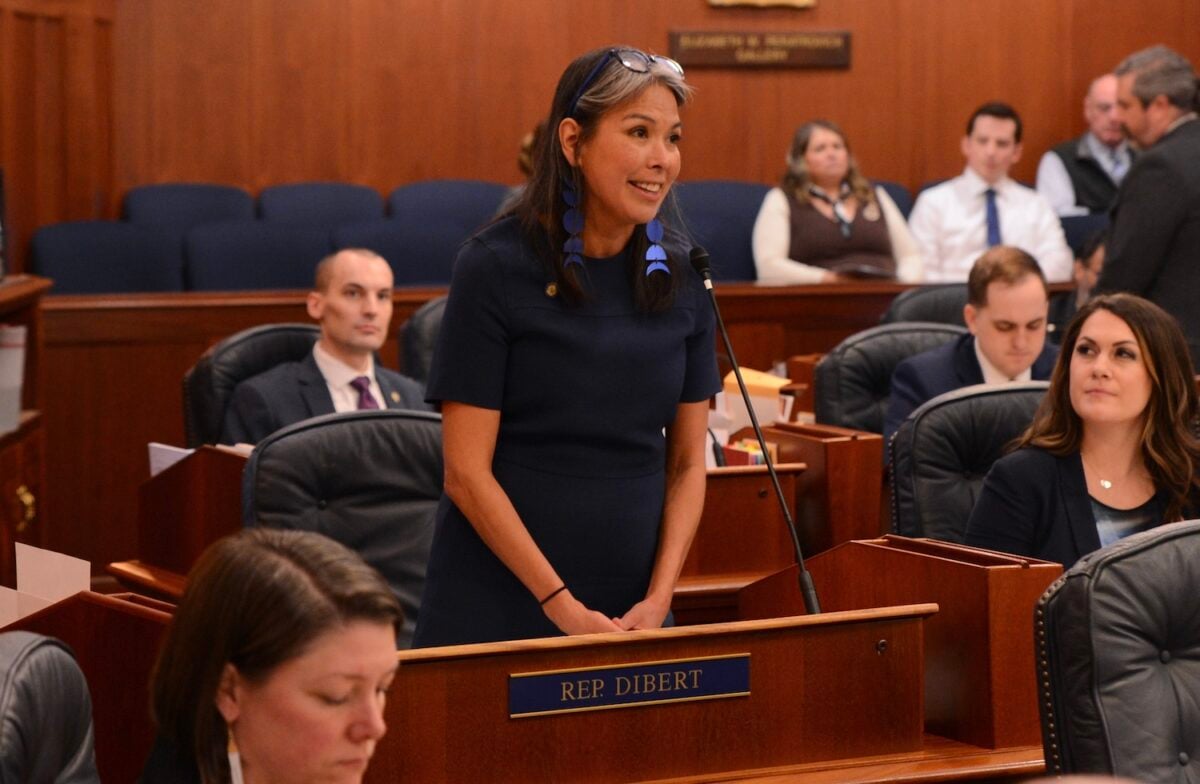
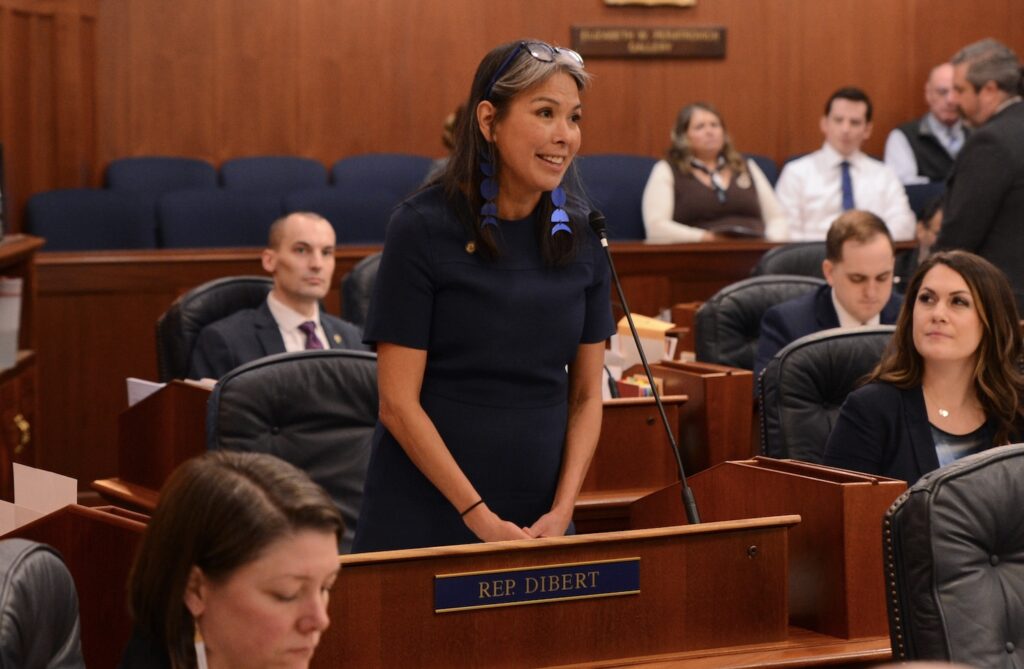
Rep. Maxine Dibert, D-Fairbanks, speaks Monday, Jan. 27, 2025, on the floor of the Alaska House of Representatives. (Photo by James Brooks/Alaska Beacon)
By: Haley Lehman, Alaska Beacon
Rep. Maxine Dibert, D-Fairbanks, speaks Monday, Jan. 27, 2025, on the floor of the Alaska House of Representatives. (Photo by James Brooks/Alaska Beacon)
The Alaska House of Representatives advanced a bill Wednesday that aims to address a lack of oversight for minors treated at psychiatric facilities in Alaska. The bill would mandate an annual report on conditions and treatment at such facilities from the state’s Health Department, as well as unannounced biannual inspections.
Rep. Maxine Dibert, D-Fairbanks and the bill’s sponsor, said the measure is a necessary step to increase accountability around the treatment of minors in psychiatric hospitals in the state, amid constituent concerns.
“These are not sweeping mandates, they are basic expectations of transparency, of communication and accountability of our youth here in Alaska,” she said on Wednesday.
The bill passed the House of Representatives with 37 yes votes. Three legislators were absent. It has been transmitted to the Senate for consideration.
The bill would also guarantee patients confidential telephone or video communication with a parent or guardian for two hours per week and require the Department of Health to notify a patient’s parent or legal guardian when seclusion or restraint is used within 72 hours.
The annual report would include information about the total uses of seclusion or restraint, findings of facility inspections and data on the number of minors who received residential care at psychiatric hospitals.
Dibert cited a 2004 investigation by the Disability Law Center of Alaska that found 261 episodes of seclusion and restraint over three months in psychiatric institutions, which the organization called “quite high.”
The United States Department of Justice issued a report in December 2022 that found that Alaskan youth are institutionalized in psychiatric hospitals and psychiatric residential treatment facilities at higher rates and for longer periods than minors in other states as a result of a lack of available and accessible community-based mental health services, violating the Americans with Disabilities Act.
Rep. Genevieve Mina, D-Anchorage and Chair of the House Health and Social Services Committee, voiced her support for the bill and drew attention to a finding by the DOJ that identified gaps in community-based services in Alaska.
Community-based services include home-based family treatment for early intervention services, intensive case management and crisis services, according to the DOJ.
“We have to face the reality that many of these kids are in these institutionalized settings because we have underinvested in our home and community based services in this broader continuum of care,” Mina said.
“The dearth of community-based services in Alaska is so pronounced and widespread that institutional placement has become, for many behavioral health service providers in the state, the default option to which they refer children with long-term behavioral health need,” DOJ investigators wrote in 2022.
According to the DOJ, more than 800 Alaskan children received behavioral health services in a psychiatric institution in 2020. Approximately a third of the patients were Alaska Native and parents reported to the DOJ concerns about separating their children from their culture while in residential treatment. In addition to four psychiatric residential treatment facilities in Alaska, the state sends children to 17 out of state psychiatric residential treatment facilities.
Rep. Justin Ruffridge, R-Soldotna, told legislators that the bill provides oversight and accountability that legislators are expected to institute.
The bill received support from the Alaska Federation of Natives, Lives in the Balance, a nonprofit that advocates for the fair treatment of children, Dot Lake Village, Citizens Commission on Human Rights, an organization that aims to eradicate abuse in mental health settings, and Aleutian Pribilof Islands Association.
The Department of Health estimated in a fiscal note that it would cost approximately $222,800 annually for a full-time nurse consultant to perform inspections, conduct interviews with patients and conduct investigations and for two nurse consultants to attend trauma informed care and cultural awareness training.
Sen. Matt Claman, D-Anchorage, speaks Wednesday, April 23, 2025, on the floor of the Alaska Senate. (Photo by James Brooks/Alaska Beacon)
By: Corinne Smith, Alaska Beacon
Sen. Matt Claman, D-Anchorage, speaks Wednesday, April 23, 2025, on the floor of the Alaska Senate. (Photo by James Brooks/Alaska Beacon)
With only four weeks left of the legislative session, the Senate Judiciary Committee has merged several bills into a wide-ranging omnibus crime bill. Even with the tight timeline, some lawmakers are optimistic about its chances for passage before the end of the session.
The new draft omnibus crime package combines ten bills ranging from raising the age of consent to increasing criminal penalties for AI-generated child sexual abuse material into one large bill supporters hope will have the momentum to pass both the House and the Senate in the next 28 days.
The Senate Judiciary Committee chair Sen. Matt Claman, D-Anchorage, introduced the 55-page omnibus bill on Friday, saying the bills have a stronger prospect as a package.
“I think that increases the likelihood we’ll be able to pass it,” he said in an interview on Monday.
With one month to go in the second year of the two-year legislative cycle, this is the last opportunity for bills to be passed by the 34th Legislature.
The draft omnibus crime bill was added to House Bill 239, sponsored by House Majority Leader Rep. Chuck Kopp, R-Anchorage, who spoke in support at the hearing on Friday.
“This bill has grown, it’s gone from the sports car to the school bus” he said. “Policies I all support as a bill sponsor.”
Gov. Mike Dunleavy sponsored two bills included in the omnibus package, but did not respond to a request for comment on Tuesday.
The bills included are in various stages. Some have passed the House, while others are being considered by various committees in the House and Senate. Several lawmakers who sponsored bills now included in the omnibus package agreed that politically it could increase chances of passage by May 20.
Rep. Sarah Vance, R-Homer, sponsored a bill that would create state felony penalties for AI-generated child sexual abuse material. It unanimously passed the House last month.
“I’m excited that it’s included in the omnibus bill, because that shows intent by the Senate to pass the bill,” Vance said on Monday. “So I have great confidence that it will cross the finish line.”
But Claman, who is running for governor, has drawn public criticism for the process of how the omnibus crime bill was put together this session.
Advocates for raising the age of consent — along with the Anchorage Daily News editorial board — criticized Claman for holding a bill to raise the age of consent to 18 in the Senate Judiciary Committee, which passed unanimously by the House last year, in order to be included in the omnibus bill. Critics urged Claman and the committee to pass the bill and allow it to move forward as a stand alone bill toward a full Senate vote and final passage.
Claman has argued that despite limited time left in the session, the bills included have been vetted and the combination package will garner more support among legislators and the governor to pass in the last few weeks of the session.
“I’ve been in the Legislature now since 2015, and so in the last 11 years, we’ve passed 11 different bills relating to public safety,” he said. “So I think there are ten different measures that we put into the bill, and if we tried to do them all individually, probably wouldn’t get them all passed.”
Claman pointed to an omnibus crime bill, House Bill 66, enacted in 2024, with support from Gov. Mike Dunleavy and across political affiliations. “That’s certainly, I think, the best example,” he said. “So I do have confidence we’ll get it passed.”
Rep. Andrew Gray, D-Anchorage, speaks Friday, April 26, 2024, on the floor of the Alaska House of Representatives. (Photo by James Brooks/Alaska Beacon)
Rep. Andrew Gray, D-Anchorage, sponsored House Bill 101, the bill that would raise the age of consent from 16 to 18 years old. Backed by advocates for sexual violence prevention, he said the change in law is essential for protecting teens from sexual exploitation and abuse. Under current law, it’s legal for an adult to have sex with a 16 or 17 year old. But when they are assaulted, teens must prove that they did not consent.
Despite previous disagreement and pushing for a stand alone bill, Gray said Monday he will back the omnibus crime bill in order to see the law changed.
“If that happens, inside an omnibus crime package that has other bills that are also worthy of passage, I’m fine with that,” he said. “I just want the policy to change.”
The draft omnibus crime bill now contains ten bills that previously stood alone:
House Bill 239 — would increase criminal penalties for hit and run incidents so that drivers that cause a death and knowingly failing to stop and render assistance, and establishes mandatory sentencing of four to seven years for a first hit and run felony conviction
House Bill 101 — would raise the age of consent from 16 to 18 years old, with provisions to allow consent to sex with someone up to six years older than them. The draft bill also allows 16 and 17 year olds to consensually exchange sexual or explicit messages within the six year close-in-age gap without penalties.
Senate Bill 247 — would create state criminal penalties for creating AI-generated images or video that depicts sexually explicit or obscene content involving anyone under 18 years old
House Bill 62 — Sponsored by Gov. Mike Dunleavy, the bill would establish a statewide tracking system for sexual assault examination kits, expedite processing times, and ensure that survivors can privately monitor the status of their own kit.
Senate Bill 100 — Also sponsored by the governor, and would establish the crime of organized theft, including mail theft and medical record theft
House Bill 242 — would redefine criminal law to prohibit any sexual contact or assault by a health care worker during professional treatment, changing the current law which only applies to patients being unaware of sexual contact or assault for criminal charges to apply.
Senate Bill 17 — would establish the crime of airbag fraud for knowingly selling, installing or manufacturing a counterfeit airbag in a vehicle
House Bill 81 — would establish minor marijuana related convictions to remain confidential on individuals personal records, under certain criteria
House Bill 384 — would expand confidentiality agreements between victims and service providers by updating the definition of “victim counseling center” to include tribal organizations
Senate Bill 233 — would reassign the Controlled Substances Advisory Committee from being administered by the Department of Law to the Department of Commerce, Community and Economic Development.
The new version of Vance’s bill focused on AI-generated child sexual abuse material included in the bill is closer to her initial proposal. Social media controls for minors added by the House were stripped out of the Senate version. Vance said she supports the amended version given First Amendment protections around social media.
“I think that was a wise decision right now, because Alaskans are very mixed on how they feel that we should address social media,” Vance said.
Rep. Sara Hannan, D-Juneau, is the sponsor of House Bill 242, and said she supports her bill being included in the Senate omnibus, but she is still pushing to advance her standalone bill in the House.
Rep. Sara Hannan, D-Juneau, speaks on the House floor on Apr. 13, 2026. (Photo by Corinne Smith/Alaska Beacon)
“I need people who didn’t serve on the two committees that heard it in the House to understand it,” she said, as the Senate draft will come back to the House for a concurrence vote. “It still helps to educate on the issue.”
Hannan’s legislation follows a high profile case in Juneau last year where the court dropped several charges against a chiropractor because under current law part of the legal definition of sexual assault by a medical provider requires the alleged victim to be unaware the assault is happening.
“Right now, the victim needs to be unaware, and the perpetrator needs to know that they are unaware,” Hannan said Tuesday. “So to change that in statute, I think is an important policy statement for us to make.”
Hannan said significant policy bills typically take several years to get through the Legislature, with public input, debate and support gathering. But she expressed confidence in the support for the omnibus crime bill in the weeks ahead.
“We’re running the clock down,” she added. “The only downside, from my perspective, is the advocates and the victims that were directly involved in the case that inspired this bill. You know, they get more acknowledgement when it’s the standalone bill… But in the end, if the goal is to change the policy, there’s no downside to it.”
The Senate Judiciary Committee will continue to hold hearings on the crime bill this week and its members have until Friday to introduce amendments before it advances to the Senate floor for a vote. Claman said he expects that to be in the last week of April.
Children pick up their school lunches. (Photo by Amanda Mills/Centers for Disease Control and Prevention)
The Alaska Senate passed a bill Monday that would ban public schools in Alaska from serving certain food dyes in school breakfasts or lunches.
Lawmakers expressed concerns that certain petroleum-based food dyes in processed foods have unhealthy side effects on children.
Sen. Bill Wielechowski, D-Anchorage, the sponsor of Senate Bill 187, said Monday, “We like to sell our petroleum to fuel our cars and generate our power plants, not to feed our kids.”
Wielechowski pointed to studies that suggested that artificial dyes are linked to increased hyperactivity, inattentiveness and allergic reactions in children.
The bill would ban red dyes Nov. 3 and No. 40, yellow dyes No. 5 and No. 6, blue dyes No. 1 and No. 2 and green dye No. 3.
The U.S. Department of Health and Human Services and the U.S. Food and Drug Administration announced a campaign in April 2025 to eliminate synthetic dyes from the U.S. food supply by the end of 2027 and to authorize natural color alternatives. Alaska proposes banning the same food dye in schools that HHS and the FDA are working with the food industry to eliminate.
The bill received strong support from Alaska Community Action on Toxics and opposition from the International Association of Color Manufacturers, which maintains that synthetic dyes are safe for consumers.
Carlee Johnson McIntosh, Petersburg School District food service director, wrote in a letter to legislators that the bill aligns with work the school district is already doing to remove synthetic dyes from school meal programs. She said the bill would not create a significant burden for the school district.
“Schools should be environments where students are set up for success, and access to nutritious meals plays an important role in that success,” Johnson McIntosh wrote. “Establishing these standards in state law would demonstrate Alaska’s ongoing commitment to student health, regardless of potential shifts at the federal level.”
The bill passed the Senate with 19 yes votes. Sen. Donny Olson, D-Golovin, was excused absent.
If it passes the House and becomes law, it would go into effect in January 2028. Alaska would join states including Arizona, California, Delaware, Louisiana, Virginia and West Virginia in banning artificial food dyes in schools.
Sen. Loki Tobin, D-Anchorage, speaks in the Alaska Senate on Monday, April 28, 2025. (Photo by James Brooks/Alaska Beacon)
By: Haley Lehman, Alaska Beacon
Sen. Loki Tobin, D-Anchorage, speaks in the Alaska Senate on Monday, April 28, 2025. (Photo by James Brooks/Alaska Beacon)
The Alaska Senate advanced a resolution Monday to preserve three work visas to support Alaska’s economic security.
Alaska relies on J-1 visas to fill teacher positions, H-1B visas for highly skilled workers and the H-2B program for temporary nonagricultural workers in tourism, health care and seafood processing industries and for teachers.
Sen. Löki Tobin, D-Anchorage, said that Senate Joint Resolution 28, “puts Alaska on the record in support of these programs to fill jobs here in our state.”
The Trump administration raised the fee for highly skilled worker visas from $5,000 to $100,000 in September 2025.
Tobin said Monday that school districts in Alaska cannot absorb those costs and utilize the H-1B visa program to hire international teachers.
The Alaska House of Representatives passed a resolution in March urging the Trump administration to waive the $100,000 visa fee for international teachers. It was sponsored by Rep. Alyse Galvin, I-Anchorage.
According to Jennifer Schmitz, director of the Alaska Educator Retention and Recruitment Center, 20 school districts in Alaska employed 232 educators with J-1 visas and 341 educators with H-1B visas in 2025.
Alaska’s senior U.S. Senator, Republican Lisa Murkowski, introduced legislation in March that would exempt teachers from non-processing related fees for H-1B visas. U.S. Republican U.S. Sen. Dan Sullivan is a cosponsor.
The visa programs support other jobs, too. Marilyn Usibelli, owner of Black Diamond Resort Co. in Healy, wrote to legislators in March that J-1 visa holders play an essential role in staffing seasonal jobs in Alaska with lawful, reliable temporary workers.
“Despite extensive local recruitment, the small year-round population in the Denali Borough simply cannot meet the seasonal demand. J-1 participants fill critical roles that allow us to maintain safe, high-quality operations, support other local businesses, and contribute to the broader Denali-area economy,” Usibelli wrote.
The resolution passed the Senate with 19 yes votes with Sen. Donny Olson, D-Golovin, absent
Sandy Snodgrass gives a presentation on her advocacy work and raising awareness of the dangers of fentanyl at the Alaska State Capitol on Apr. 15, 2025. (Photo by Corinne Smith/Alaska Beacon)
An Anchorage mother whose son died from a fentanyl overdose is continuing to champion national and statewide action to raise awareness around the dangers of the synthetic opioid and prevent future deaths.
On Wednesday, Sandy Snodgrass was recognized with a legislative citation of honor at the Alaska State Capitol by Anchorage Democratic Senator Bill Wielechowski for her advocacy work.
In December, Snodgrass attended the signing of a package of legislation, including Bruce’s Law, which directs federal funds toward youth education and community-based treatment and recovery programs. It’s named after her son who died in 2021 and was sponsored by Alaska’s U.S. senators and signed by President Donald Trump.
Sandy Snodgrass is honored with a legislative citation by Sen. Bill Wielechowski for her advocacy work to raise awareness around the dangers of fentanyl on Apr. 15, 2026. (Photo by Corinne Smith/Alaska Beacon)
“This is a different world we live in with fentanyl now,” Snodgrass said in a lunchtime presentation after receiving the award. “We live in a world where one pill, one half pill can kill you. And it’s not a tolerance, you know, it’s one time and you can die.”
Trained as a clinical psychologist, Snodgrass founded the Alaska Fentanyl Response Project aimed at raising awareness about overdose deaths, particularly among young people, sharing stories of those who have died and advocating for legislation and resources for prevention and addiction treatment.
“I talk about it as a three legged stool,” she said. She described demand reduction, law enforcement and treatment as the three legs of the stool. “And if we don’t do all three, the stool will fall over,” she said.
She said her focus is demand reduction. “So I am not law enforcement,” she added. “I don’t have a treatment center. But I did have a child that died from fentanyl poisoning, and so I can tell my story to anybody, anywhere, anytime.”
“You can never die from an illicit drug if you never try an illicit drug,” she said.
Snodgrass’ son, Robert Bruce Snodgrass, died at the age of 22 in 2021, during a wave when Alaska saw the highest increase in opioid deaths nationwide, a 75% increase from 2020 to 2021, according to the U.S. Centers for Disease Control and Prevention.
Fentanyl is a synthetic opioid, clinically prescribed for pain, and is more potent than other opioids like morphine or heroin. As little as two milligrams — an amount the size of a few grains of salt — can be fatal.
The Alaska wave of fentanyl deaths peaked in 2023, according to state data, with 357 reported deaths. Last year, there were 245 deaths reported from 2024 to 2025, according to the most recently available data, with the majority in Anchorage.
Sandy Snodgrass holds a photo of her son Bryce, who died from a fentanyl overdose in 2021. President Donald Trump signed the photo when he signed a package of legislation, including Bruce’s Law, to direct funding to prevention education and treatment and recovery programs in Dec. 2025. Snodgrass is seen at the Capitol on Apr. 15, 2026. (Photo by Corinne Smith/Alaska Beacon)
Thousands more non-fatal overdoses were reported each month, with many surviving thanks to the use of emergency naloxone, known as Narcan, a life-saving drug that can quickly reverse an opioid overdose.
She said it’s a difficult message to convey the risks to young people, like her son.
“Bruce was an Alaskan boy, through and through — all the Alaskan things. He was a free solo mountain climber. He was a certified mountain guide. He was an extreme sport, high adrenaline young man, just like so many of our Alaskan boys and girls, he lived on the edge and loved it,” she said.
She said she thought she’d get a call about him being injured in some kind of rock climbing accident. “That’s not the call I got. He was safe out there. He was not safe less than a mile away from our home in Anchorage,” she said.
Snodgrass said she’s glad to see law enforcement investigating more fentanyl overdose deaths as drug induced homicides, and recent legislative action to increase criminal penalties to second degree murder. But she said she recognizes it can be accidental.
“That guy, whoever gave my son the drugs, is almost as much a victim as my son is. He likely didn’t know there was fentanyl. He likely didn’t want to kill my son. He did not do it intentionally. But that’s what happened. So I don’t call it ‘accidental overdose,’ I call it poisoning,” she said.
She said she mentioned the idea of fentanyl as a “chemical weapon” and a “weapon of mass destruction” to President Trump when they met in the Oval Office in December — weeks later he issued an executive order designating fentanyl as a weapon of mass destruction.
It directs attorneys general to pursue prosecutions of fentanyl sales, including manufacturing, distribution and illicit sale of precursor chemicals, and directs the military and Department of Homeland Security to consider fentanyl in its response to chemical incidents and to conduct counter-fentanyl operations.
Snodgrass cited estimates of hundreds of people dying across the U.S. every day from overdoses. An August 2025 estimate by the CDC showed 77,648 drug overdose deaths occurred in the 12 months ending in March 2025. Fentanyl remains the leading cause of overdose deaths.
“We’ve got to change that,” she said. “It’s as if a jet airliner, a jumbo jet airliner, was crashing in this country every single day, day after day after day.”
Sandy Snodgrass gives a presentation on her advocacy work and raising awareness of the dangers of fentanyl at the Alaska State Capitol on Apr. 15, 2025. (Photo by Corinne Smith/Alaska Beacon)
Snodgrass said she’s especially focused on doing more school presentations and raising awareness in rural Alaska, which she said drug dealers target for the high retail prices for fentanyl.
“When this reached my son in Anchorage, I was shocked, and the fact that it’s now reaching our rural communities to the extent that it is, is shocking,” she said, citing recent deaths in Nome, Dillingham and Togiak.
“I could not get over the statistics in Togiak of the number of seizures that the DEA was making, 3,000 pills at a time in a backpack on a plane to Togiak. Togiak has 800 people in it. It just was terrifying to me,” she said.
“It devastates the community to lose even one person. And so the numbers coming out of those rural communities are terrifying. They’re horrible, and it just keeps happening,” she said.
Snodgrass said she’s supportive of Senate Bill 288, sponsored by Sen. George Raucher, R-Sutton, that would require opioid abuse and prevention curriculum for students in grades 6 through 12, during an annual drug awareness week known as Red Ribbon Week. It’s currently being considered by the Senate Education Committee.
“They’re innocuous little pills, unless someone tells you that pill is going to kill you, or could potentially kill you,” Snodgrass said. “It’s a little blue pill, and it looks harmless, and you may take it to change the way you feel. That’s all they’re doing. And so the only thing I can do as one person is keep telling that story over and over and over again, and so that’s what I’m here to do.”
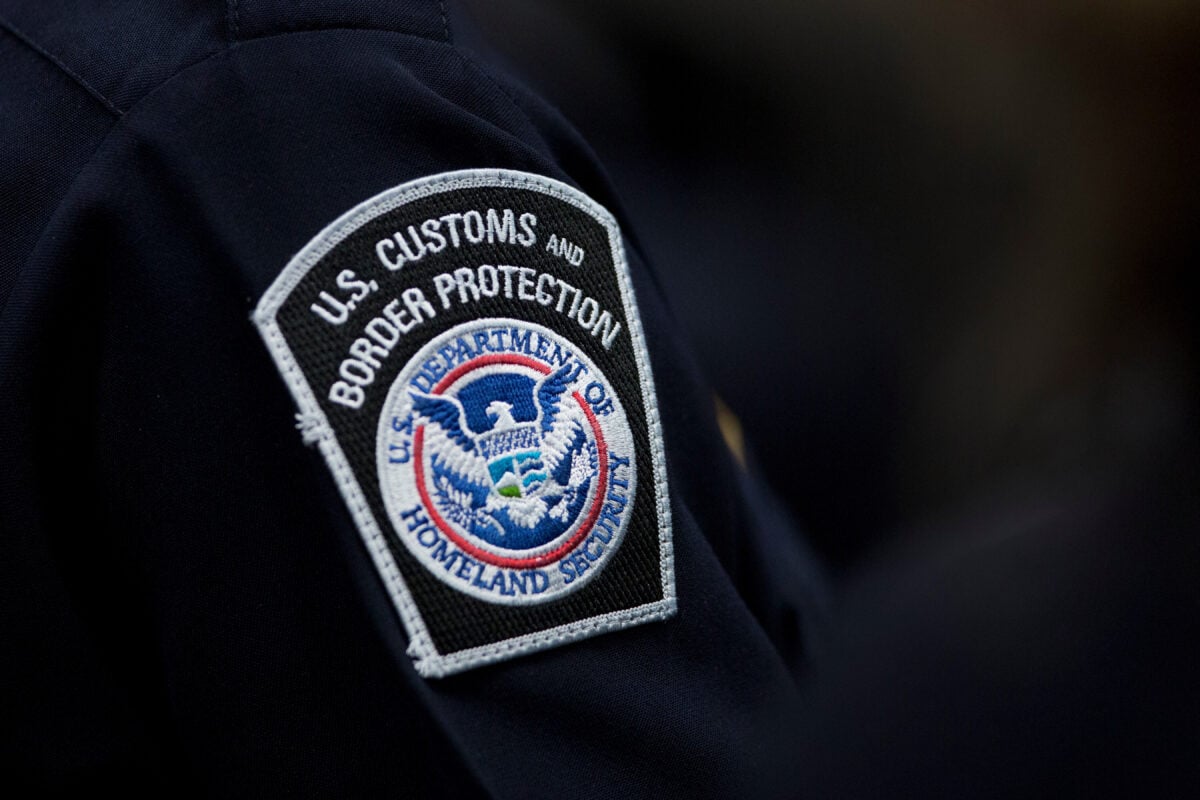
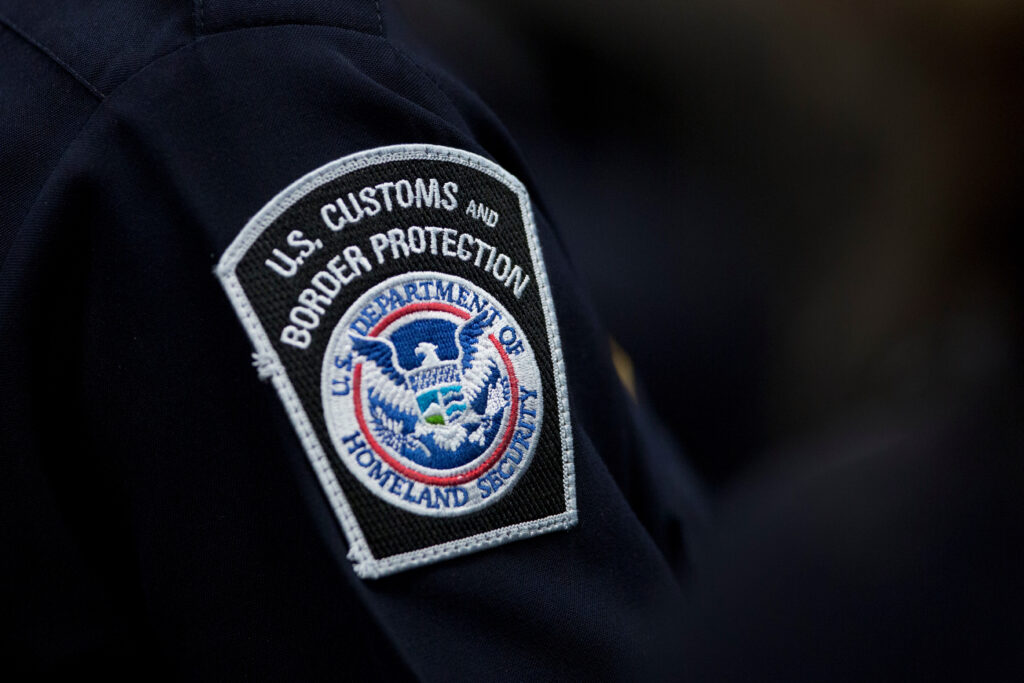
FILE - A customs agent wears a patch for the U.S. Customs and Border Protection agency, Oct. 27, 2017, at John F. Kennedy International Airport in New York. (AP Photo/Mark Lennihan, file)
FILE – A customs agent wears a patch for the U.S. Customs and Border Protection agency, Oct. 27, 2017, at John F. Kennedy International Airport in New York. (AP Photo/Mark Lennihan, file)
AP-A refund system for businesses that paid tariffs which the U.S. Supreme Court ruled President Donald Trump imposed without the constitutional authority to do so is scheduled to launch Monday.
Importers and their brokers will be able to begin claiming refunds through an online portal beginning at 4 a.m. Alaska time, according to U.S. Customs and Border Protection, the agency administering the system.
It’s the first step in a complicated process that also might eventually lead to refunds for consumers who were billed for some or all of the tariffs on products shipped to them from outside the United States.
Companies must submit declarations listing the goods on which they collectively put billions of dollars toward the import taxes the court subsequently struck down. If CBP approves a claim, it will take 60-90 days for a refund to be issued, the agency said.
The government expects to process refunds in phases, however, focusing first on more recent tariff payments. Any number of technical factors and procedural issues could delay an importer’s application, so any reimbursements businesses plan to make to customers likely would trickled down slowly.
In a 6-3 decision, the Supreme Court on Feb. 20 found that Trump usurped Congress’ tax-setting role last April when he set new import tax rates on products from almost every other country, citing the U.S. trade deficit as a national emergency that warranted his invoking of a 1977 emergency powers law.
Customs and Border Protection said in court filings that over 330,000 importers paid a total of about $166 billion on over 53 million shipments.
Not all of those orders qualify for the first phase of the refund system’s rollout, which is limited to cases in which tariffs were estimated but not finalized or within 80 days of a final accounting.
To receive refunds, importers have to register for the CPB’s electronic payment system. As of April 14, 56,497 importers had completed registration and were eligible for refunds totaling $127 billion, including interest, the agency said.
System requires accuracy
Meghann Supino, a partner at Ice Miller, said the law firm has advised clients to carefully list in their declarations all of the document numbers for forms that went to CBP to describe imported goods and their value.
“If there is an entry on that file that does not qualify, it may cause the entire entry to be rejected or that line item might be rejected by Customs,” she said.
Supino thinks the portal going live will require composure as well as diligence.
“Like any electronic online program that goes live with a lot of interest, I would expect that there might be some hiccups with the program on Monday,” she said. “So we continue to ask everyone to be patient, because we think that patience will pay off.”
Nghi Huynh, the partner-in-charge of transfer pricing at accounting and consulting firm Armanino, said most companies claiming refunds will have imported a mix of items, and not all will qualify right away.
“It’s about having a clear process in place and keeping track of what’s been submitted and what’s been paid, so nothing falls through the cracks,” she said. “Each file can include thousands of entries, but accuracy is critical, as submissions can be rejected if formatting or data is incorrect.”
Patience with the process
Small businesses have eagerly awaited the chance to apply for refunds. Brad Jackson, co-founder of After Action Cigars in Rochester, Minnesota, said he starting compiling records and preparing to enter information into the system the minute CPB announced the launch date.
The company imports cigars and accessories from Nicaragua and the Dominican Republic. Last year, it paid $34,000 in tariffs and absorbed much of the cost instead of raising customer prices, Jackson said.
Last spring, he had a two-week delay in a shipment due to a missing document, so he is being more careful with refund documents, he said.
“My main concern is the turnaround time,” Jackson said. “A refund process that takes several months to complete doesn’t solve the cash flow problem that it is supposed to fix.”
Will consumers see refunds?
Tariffs are paid by importers, and some companies pass on the tax costs to consumers via higher prices.
The system starting up Monday will refund tariffs directly to the businesses that paid them, which are not obligated to share the proceeds with customers. However, class-action lawsuits that aim to force companies, ranging from Costco to Ray-Ban maker Essilor Luxottica, to reimburse shoppers are winding their way through the U.S. legal system.
Individuals may be more likely to receive refunds from delivery companies like FedEx and UPS, which collected tariffs on imports directly from consumers. FedEx has said it would return tariff refunds to customers when it receives them from the CPB.
“Supporting our customers as they navigate regulatory changes remains our top priority,” FedEx said in a statement. “We are working with our customers as CBP begins processing refunds and plan to begin filing claims on April 20.”