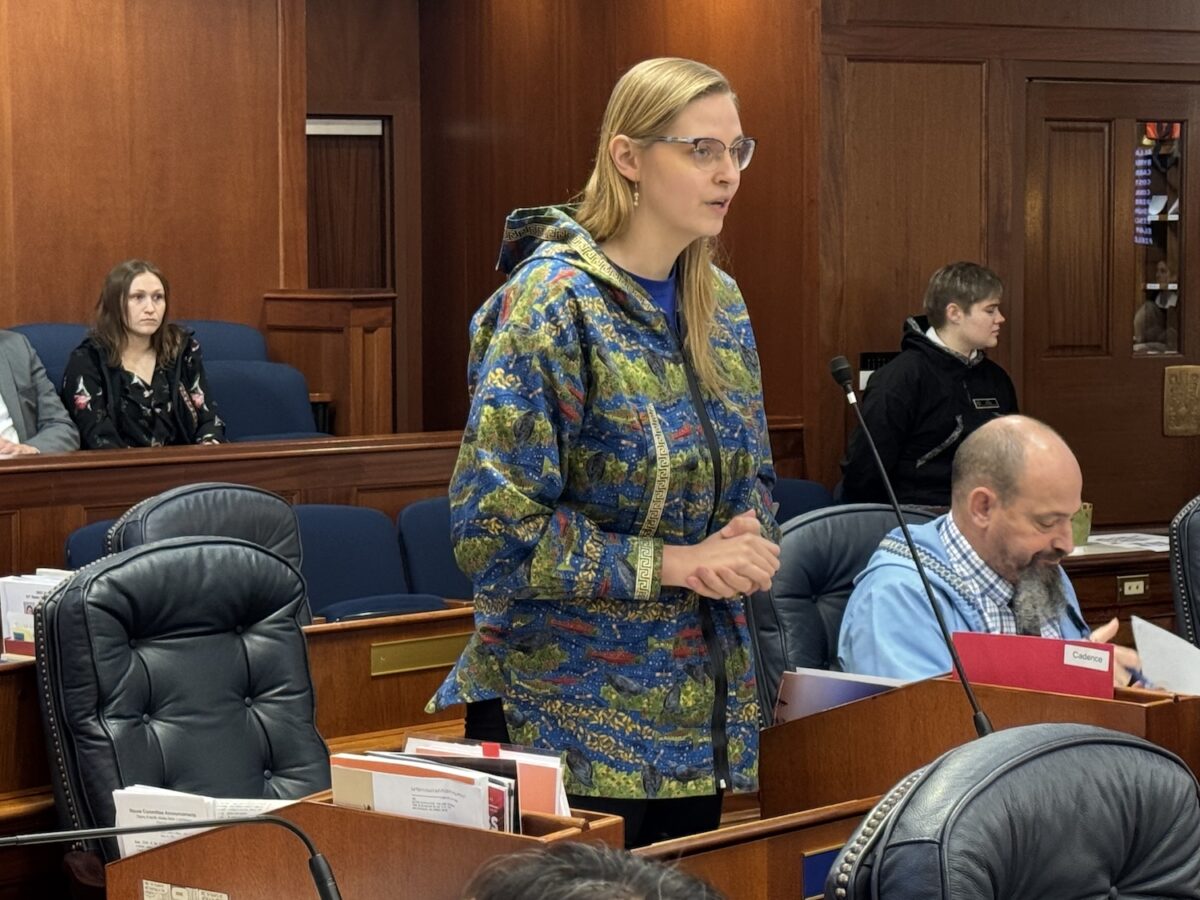
Sen. Elvi Gray-Jackson, D-Anchorage, talks to a colleague on the floor of the Alaska Senate, Wednesday, May 1, 2024. (Photo by James Brooks/Alaska Beacon)
By: James Brooks, Alaska Beacon
Sen. Elvi Gray-Jackson, D-Anchorage, talks to a colleague on the floor of the Alaska Senate, Wednesday, May 1, 2024. (Photo by James Brooks/Alaska Beacon)
Alaska public school students would be required to learn hands-only CPR under a proposal advancing through the state legislature.
In a 19-0 vote on Wednesday, the Alaska Senate approved Senate Bill 20, which requires the Alaska Department of Education and Early Development to “adopt curricula to instruct public school students on hands-only cardiopulmonary resuscitation.”
Sen. Robert Yundt, R-Wasilla, was absent from the vote.
Existing state law says that each state school district is “encouraged” to teach CPR; the new bill, if approved by the House and Gov. Mike Dunleavy, would change CPR to a requirement.
The department said in a fiscal note that it will be able to implement the new requirement at no additional cost to the state.
“It’s time for Alaska to align with the growing national standard that ensures students learn these life-saving CPR techniques,” said Sen. Elvi Gray-Jackson, D-Anchorage and the sponsor of the bill.
Heart diseases are the No. 2 cause of death in Alaska, according to the latest available state statistics. CPR can be used to keep someone’s blood flowing if they experience sudden cardiac arrest. That can triple a victim’s chances of survival, Gray-Jackson said, noting that CPR has even been used in the Capitol on occasion.
SB 20 advances to the House for further consideration. A companion measure, House Bill 92, is in the House Education Committee and has not yet been heard.
Rep. Ashley Carrick, D-Fairbanks, talks on the floor of the Alaska House of Representatives on Friday, Feb. 6, 2026. (James Brooks photo/Alaska Beacon)
By: James Brooks, Alaska Beacon
Rep. Ashley Carrick, D-Fairbanks, talks on the floor of the Alaska House of Representatives on Friday, Feb. 6, 2026. (James Brooks photo/Alaska Beacon)
The University of Alaska may soon be legally required to provide itemized bills to students and give them more notice of fee increases.
The Alaska House of Representatives voted 36-3 on Friday to pass House Bill 176 and send it to the Senate for further consideration.
Rep. Ashley Carrick, D-Fairbanks, introduced the bill in the House and said it is “meant to provide greater transparency and accountability for all of my fellow Nanooks, Seawolves and Whales out there,” referring to the state’s universities by their mascots.
“With House Bill 176, it is our hope that we are able to provide more information to students and those that may be helping them to pay their bills about what it is that they are paying for and how those dollars will be spent,” she said.
The legislation received bipartisan support in the House.
“As a mom of two college students, it is important to see what is going on with their tuition because I’m paying for their tuition,” said Rep. Jamie Allard, R-Eagle River.
No one spoke against the bill on the floor, but afterward, Rep. Justin Ruffridge, R-Soldotna and one of three “no” votes, said he didn’t think the bill was necessary.
“I just think government does some things that could be solved with five or six conversations,” he said.
The University of Alaska said in a fiscal note that it believes it can implement the changes without any additional cost to its budget.
The bill has been referred to the Senate Education Committee, which has not yet scheduled it for a hearing.
Student, Maddie Bass and school board member Steve Whitney testifying before the Joint Education Committee. Photo courtesy of Gavel Alaska.
By: Grace Dumas, News of the North
District leaders and student advocates from across Alaska testified this morning at a joint Education Committee hearing with both the House and the Senate.
One thing all districts had in common, despite the unique challenges facing schools from Fairbanks to Yakutat, was a call for reliable school funding.
Public schools are funded through Average Daily Membership or ADM, this is the count of enrolled students each year, it can take months to fully process, with an accurate count generally unavailable during budget making.
Testifiers say school funding is a “guessing game.” With districts often creating their budgets with no concrete data.
Some schools have classes that span multiple age groups, bloated class sizes that spread teachers thin, and testifiers say it’s, “costing the state excellence.”
Another commonality between all districts was concern for teacher turnover.
Testifiers said teachers are not compensated fairly to adjust for the rising cost of living in the state, and they are not provided an adequate retirement package which creates an incentive to stay in Alaska.
“I don’t know where the state is going to save all kinds of money by not giving our children the education they need.” said testifier Strong from Chatham school district.
15-year old Maddie Bass from Juneau described growing up in what she called an “underfunded district” where teachers routinely sent home lists of supplies so students could fully participate in class.
“I have never had the opportunity to learn in a classroom that was funded enough to have materials for everyone.” she said, “even with recent consolidations in my district, which caused the firing of multiple teachers, the cutting of programs and more, there is not enough.”
Bass, whose father taught in Alaska schools, said she has watched educators in her district work multiple jobs, struggle to secure adequate health care and has watched her father go to school sick because there were not enough substitute teachers.
She added that, as a teenager, she should not be missing class to “testify in front of legislators” to ask for funding so her teachers can afford to live and students can receive a full education.
“So I’m asking you, please do as much as you can for me, for my teachers, and so my little sister will not have to stand up here and testify when she goes to high school in four years,” she said.
Testifiers thanked legislators for the increase in the Base Student Allocation, but that recognition came with a plea for more stability moving forward.
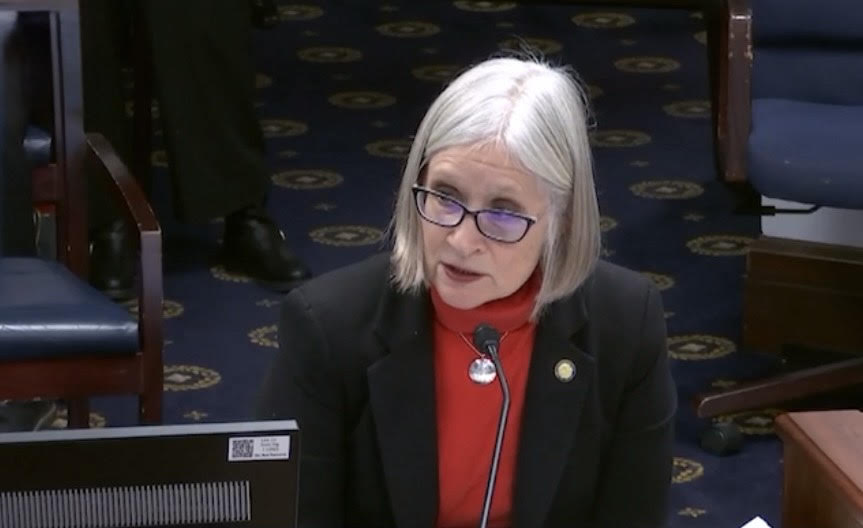
Representative Andi Story presenting to the House Education Committee, Screengrab courtesy of Gavel Alaska and KTOO
NOTN- A bill heard at 8 A.M this morning would overhaul how public schools are funded by changing how students are counted for state aid.
House Bill 261, rewrites large portions of the state’s public school funding statutes.
“We force school districts to budget in such an irrational way.” Said Representative Andi Story, “This backwards budgeting consumes a great deal of valuable time to reshuffle numbers, from personal experience this causes great pain in the community.”
In the full text of House Bill 261, available on The Alaska State Legislature Website, the measure is intended to stabilize school funding particularly through enrollment declines.
The biggest change in the bill is how Alaska calculates average daily membership, or ADM, which is the student count used to determine state education funding.
According to the Alaska Department of Education and Early Development, the ADM is a count of enrolled K-12 students taken for 20 days ending the last Friday in October of each year, the ADM is adjusted due to a few factors including school size, district cost, and special needs.
Under the bill, districts would generally receive funding based on the higher of their most recent student count or a three-year average.
“Alaska should create a 3 year averaging approach statewide to replace the current Hold Harmless Provision.” Story said during her presentation.
The Hold Harmless Provision currently protects school funding if their ADM drops by 5% or more each year, which allows the previous year’s student count to be used as a base to mitigate a drop in funding.
“It could also provide districts with greater stability and planning.” Story said, “As districts would not be so concerned about unexpected changes in enrollments at the October count period. About 19 states use an approach that either averages, combines or provides the better of multiple years of student counts.”
The bill also alters how districts are funded following school consolidations or closures, it would allow temporary offsets to soften funding losses over a period of several years.
The bill would also restrict districts from reopening schools too quickly after consolidation.
HB 261 also changes or revises how special education funding is calculated, particularly for students who require intensive services.
Using the above 3 year count, districts that identify additional students requiring intensive services midyear would be eligible for retroactive funding.
The bill applies to school districts statewide and does not directly increase the base student allocation, which is the per-student dollar amount set separately by the Legislature.
The Juneau School District office in downtown Juneau.
(Photo courtesy City & Borough of Juneau)
The Juneau School District office in downtown Juneau. (Photo courtesy City & Borough of Juneau)
NOTN- The Juneau School District is seeking public input as it begins its search for a new superintendent, asking parents, staff, students and community members to weigh in on priorities and desired leadership qualities.
First reported by the Juneau Independent, the district released an online feedback survey Wednesday, designed to guide the Board of Education as it recruits candidates to lead the district.
Participants are asked to describe strengths of the Juneau community and school district that prospective superintendents should know, as well as the most significant challenges facing the district.
The survey also asks respondents to identify the qualities, skills and characteristics they believe are necessary for the next superintendent to be successful.
In addition, respondents are asked to rate the importance of various areas of experience, including prior superintendent experience, work as a classroom teacher, familiarity with Alaska’s public education system, knowledge of school finance and facilities, and understanding of the district’s culture and community.
District officials say the feedback will help inform the board’s decision-making as it evaluates candidates and determines what leadership qualities best align with the district’s needs.
Current Superintendent Frank Hauser will be stepping down June 30, he said this when asked what he was most proud of in his tenure as Superintendent, “I think that we’ve done a lot of great work here, the Juneau school district staff, are some of the best staff in the world. Consolidation was hard, those are really tough decisions. But I think looking at the future, we’re on much better financial footing.” He said, “There are still challenges with the budget, but I think putting together a fiscal plan that is more focused, and having opportunities for kids, and even through the consolidation, being able to maintain those opportunities for our students and still see growth, those are the things I’m really proud of. We made it through, and we’re in a better position than we were going in.”
What will Superintendent Hauser do next? He says he’s not sure yet, but he hopes it will continue to include advocacy for education in the state.
“I have spent the last 28 years in public education, advocating for public education, I’m Alaska educated, and I will continue to advocate for public education. I don’t know in what capacity that will be right now, but it is something that I believe in.”
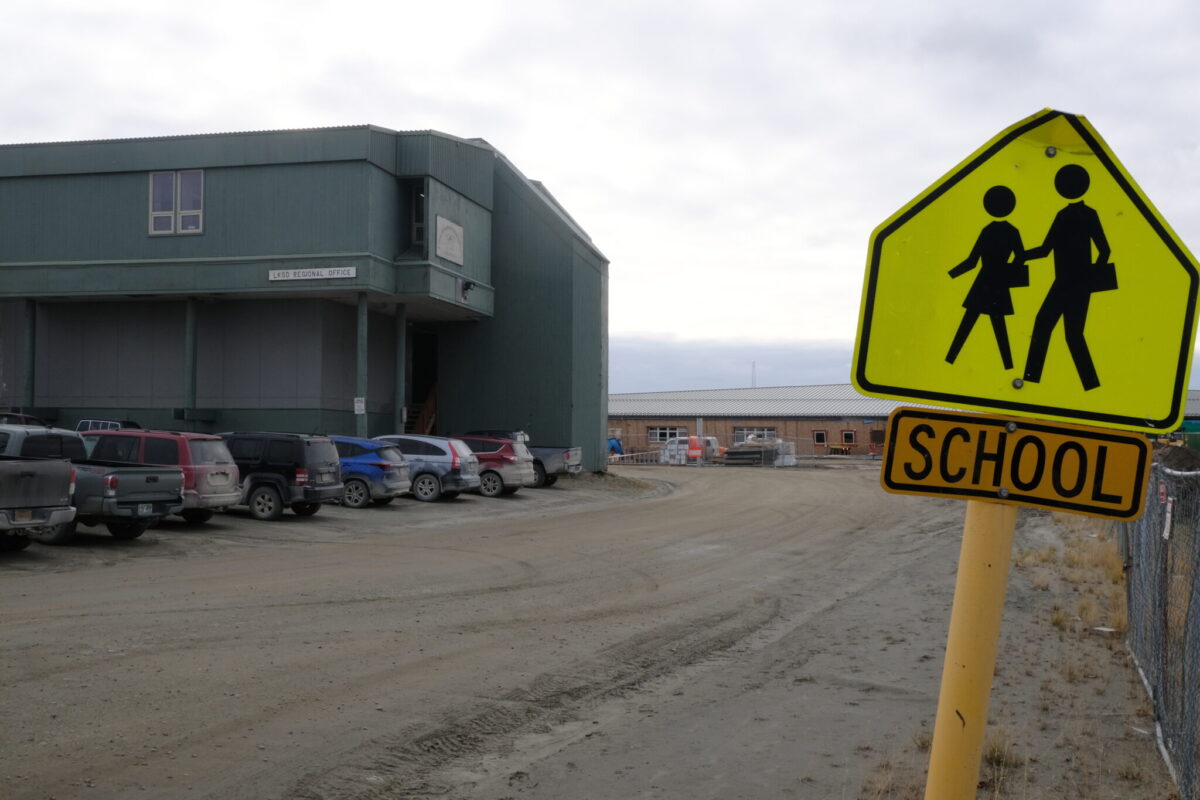
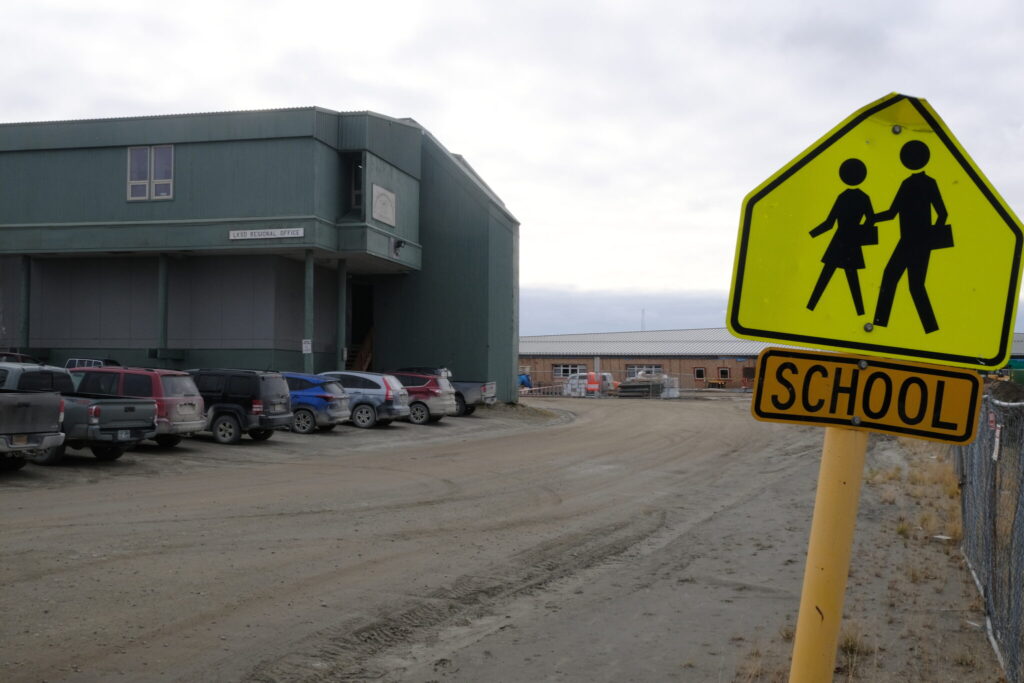
A road sign marks the road towards the Lower Kuskokwim School District offices and the Bethel High School. October 9, 2023. (Photo by Claire Stremple/Alaska Beacon)
While Alaska school districts are seeing improvements in kindergarten to third grade students’ reading proficiency, which officials credit to the Alaska Reads Act, some districts are struggling to access state managed funds for a federal grant program aimed at supporting literacy programs, teacher development, and student learning.
School districts awarded CLSD grants in 2025
Alaska Gateway School District
Aleutians East Borough School District
Anchorage School District
Bering Strait School District
Bristol Bay Borough School District / Chugach School District
Copper River School District
Cordova City School District
Dillingham City School District
Galena City School District
Iditarod Area School District
Kake City School District
Kashunamiut School District
Kenai Peninsula Borough School District
Kodiak Island Borough School District
Kuspuk School District
Lake and Peninsula Borough School District
Lower Yukon School District
Mount Edgecumbe High School
North Slope Borough School District
Northwest Arctic Borough School District
Petersburg Borough School District
Pribilof School District
Southeast Island School District
Yakutat School District
Yukon Flats School District
Yukon–Koyukuk School District
Lawmakers with the House Education Committee heard from two district superintendents about the successes and challenges of the Comprehensive Literacy State Development grant program — which in 2024 awarded $50 million to Alaska schools over five years.
In 2025, roughly half of Alaska’s districts, or 27 school districts, qualified for these grant funds administered through the Alaska Department of Education and Early Development, according to the department.
The program is aimed at advancing literacy for children from birth through 12th grade students, including pre-literacy skills, reading and writing. The program focuses on districts with disadvantaged children, including those living in poverty, English language learners and students with disabilities.
While all Alaska districts are required by state law to implement the Alaska Read’s Act, the policy did not come with additional state funding, said Rep. Rebecca Himschoot, I-Sitka, co-chair of the education committee, in an interview on Monday. She said some districts are struggling to fund the kindergarten through third grade reading initiatives. “I would like to see us supporting schools so that everybody gets the support they need to implement the law the way it was written,” she said.
The program isn’t new, but it has more money and it’s funding more districts now. In 2019, nearly one third of Alaska districts were awarded $25 million over five years, according to DEED.
“The literacy grant is a really powerful tool that is going to help the districts that it’s in, a lot,” Himschoot said. “I’ve heard a lot of gratitude from superintendents about having this opportunity for those who have it, but we did hear about some bumps in the rollout of it.”
District officials’ testimony prompted Himschoot to send a list of questions to DEED about how the grant is managed.
Michael Robbins, superintendent of the Bristol Bay Borough School District, which serves approximately 135 students, said the grant has been crucial for implementing the Alaska Reads Act, particularly supporting teachers’ training professional development, which helps retention. “The grant supports training, coaching and leadership development grounded in research-based instruction, including the science of reading,” he said.
“It creates consistency across classrooms in schools, helps prevent problems before they grow, and ensure that limited resources are utilized where that matters most,” Robbins said.
But Robbins said in implementing the grant, districts need more “clear, timely and reasonable guidance around allowable use of grant funds” from DEED.
He said the district would like to use the money for professional services vendors to provide training to teachers, and funding to attend conferences. “The approval process has been particularly cumbersome as some districts have had to resubmit their application multiple times, which takes valuable time from our grant leaders and administrators, as well as delaying the implementation of important activities,” he said.
Officials with DEED did not attend the legislative hearing, but department spokesperson Bryan Zadalis said by email on Monday that the department recognizes the importance of clear guidance, which is communicated through multiple channels including webinars and office hours. “DEED also aligns state-level guidance with federal updates as they are released to ensure accuracy and compliance, which can at times require sequencing information rather than issuing it prematurely,” he said.
In addition, Robbins, who formerly served as the superintendent of the Ketchikan Gateway Borough School District, said that that district did not qualify for grant funding. “The need was there, but the resources are not,” he said. “We need to find ways for all districts and all students to have access to the same level of support and opportunity.”
Robyn Taylor is superintendent of the Petersburg School District which serves approximately 420 students, and was awarded $350,000 per year through the grant program. She testified to lawmakers and echoed the need for equity in supporting reading programs across Alaska’s school districts. She said Petersburg still continues to have challenges with implementing the Alaska Reads Act, which she called “a real tension.”
“In Petersburg alone, between FY 25 and FY 26 we eliminated one of our three elementary reading interventionist positions, positions that were directly supporting Reads Act implementation and student outcomes,” she said. She said the district was told that CLSD funds were for supplementing programs not replacing funding.
“(The) restriction makes it difficult to use this grant to maintain positions or systems that are already working but are no longer financially sustainable under current funding structures,” she said.
Taylor and Himschoot both emphasized that districts who did not qualify for funding need support with the administrative work to apply. They said some schools should have easily qualified for the funding, but didn’t in part because they lack proper documentation of their students’ need for free or reduced school meals, which is one of the federal poverty guidelines. “It’s not that they don’t have kids in need,” Himschoot said. “It’s that they haven’t been identified through the paperwork, because they don’t have the capacity in their district to go chase that down.”
Zadalis said the grant process is a competitive one. He said the primary source of education funding is through the state’s funding formula, but districts may also access state or federal funding through other grants focused on literacy efforts.
Taylor said Petersburg students are making gains in reading proficiency, and the district is committed to continuing improvements beyond the grant cycle. “What we are asking for is greater flexibility, clearer and earlier guidance,” she said. “And increased trust in districts to make decisions that reflect local context and student needs.”
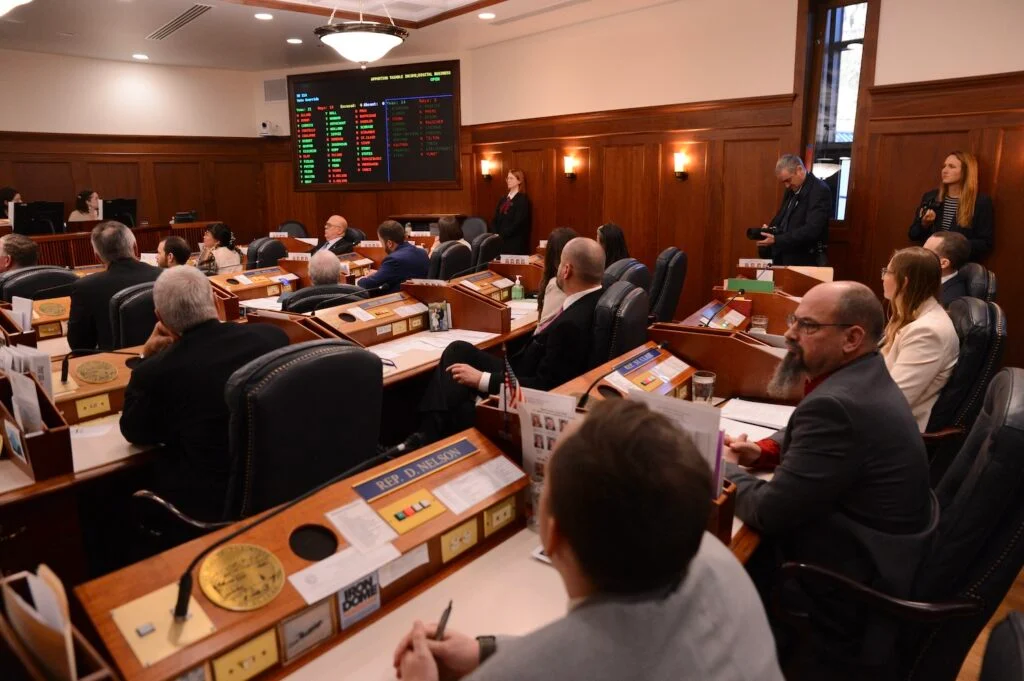
Members of the Alaska House of Representatives and Alaska Senate watch as the final vote on Gov. Mike Dunleavy’s veto of Senate Bill 113 is displayed on the voting board in the House on Thursday, Jan. 22, 2026. (Photo by James Brooks/Alaska Beacon)
Republicans in the Alaska Legislature voted down a new funding source for public school programs Thursday as they sustained Gov. Mike Dunleavy’s veto of Senate Bill 113.
The vote on overriding the governor was 35-25, 10 votes short of the 45 needed for an override. All of the “no” votes came from Republicans in the House and Senate minority caucuses. Those voting no included some legislators, such as Sen. Rob Yundt, R-Wasilla, who had strongly supported the bill last year.
If SB 113 had been enacted, the bill would have shifted some corporate income tax payments from other states to Alaska.
The result was expected to be between $25 million and $65 million per year in new revenue for the state treasury, and the bill called for much of that money to go to programs that help young children learn how to read and to career-technical education programs that teach Alaskans non-college trades.
Dunleavy vetoed the bill last fall, saying he was unwilling to approve any tax measure that was not part of a comprehensive, long-term plan intended to balance state revenue and expenses.
Under the Alaska Constitution, the veto needed to be taken up during the first five days of the regular session if lawmakers wanted to override it.
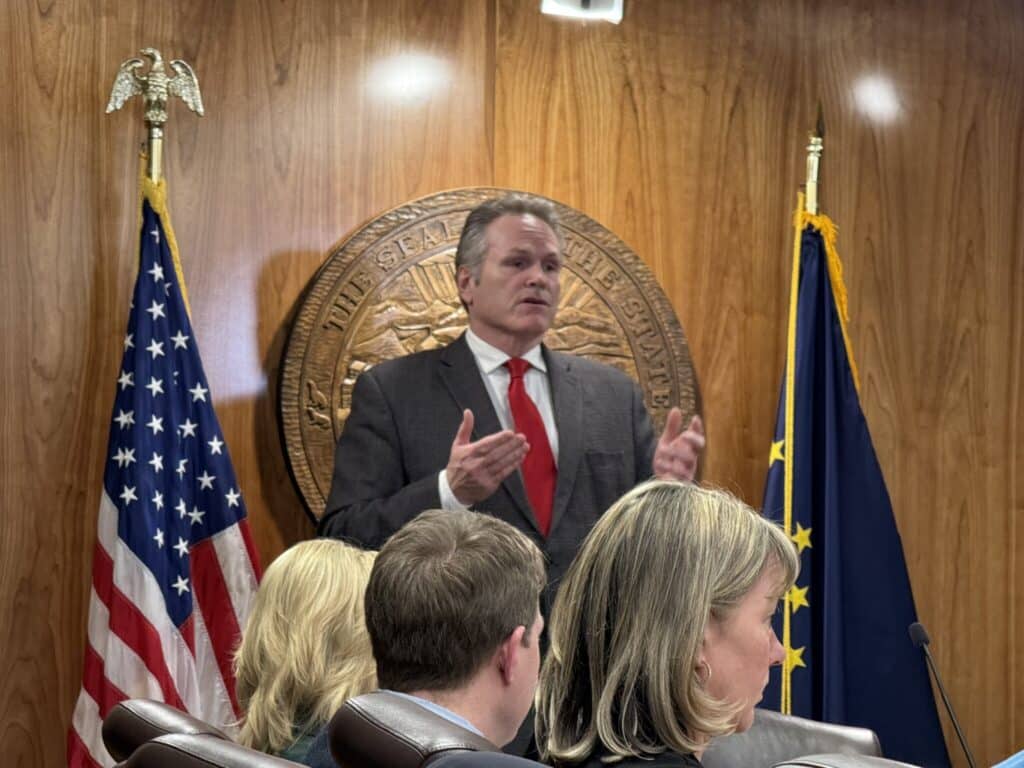
Alaska Gov. Mike Dunleavy speaks during a cabinet meeting on Wednesday, Jan. 21, 2026. (Photo byJames Brooks/Alaska Beacon)
Alaska Gov. Mike Dunleavy is expected this evening to detail his plans for a long-term plan to balance Alaska’s expenses and revenue.
“There will be a temporary, seasonal sales tax concept put forward for discussion with the legislature,” Dunleavy said Wednesday during a cabinet meeting open to reporters.
Will state lawmakers approve that idea?
“I don’t have the answer to that until we start having discussions,” he said.
Since 2015, Alaska’s annual budget process has frequently been snarled by low oil prices that have made it difficult for legislators and governors to balance the state’s books without spending from savings.
Alaska relies on oil revenue for almost a third of its general-purpose revenue, and for most of the past decade, the price of North Slope crude has been relatively low.
Alaska has never had a statewide sales tax, and it hasn’t had a statewide income tax since 1980.
Since 2018, the state’s No. 1 source of general-purpose revenue has been the proceeds of the Alaska Permanent Fund, followed by oil.
Dunleavy’s proposal will mark a major shift for the governor, who is term-limited and in the final year of his second term. For his first seven years in office, the governor has attempted to resolve the long-term imbalance in state finances by cutting services and spending.
On the rare occasions that legislators have passed new tax measures, Dunleavy has vetoed them, saying he will accept no tax bills that are not part of a complete fiscal solution.
The governor is expected to unveil his proposal for a complete solution on Thursday. He said he views any tax measures as a temporary “bridge” until the North Slope begins producing more oil and a proposed trans-Alaska natural gas pipeline comes to fruition.
“The proposal and the fiscal plan has multiple components, and basically what it is, it’s a road map to inject stability, especially over the next five years when revenue is not quite what will be in the out-years,” he said.
In addition to proposing a statewide sales tax, the governor is expected to propose bills changing oil taxes and the Permanent Fund dividend.
“There’s always room for negotiation, but there’s two sides. That (goes) both ways,” he said.
Dunleavy’s remarks came during a Wednesday cabinet meeting that saw the leaders of state departments praise Dunleavy and point to ways in which the state’s position has improved since he entered office.
Crime is down, commissioners said, statewide employment is expected to reach a new historic high this year, and the state’s gross domestic product is also up.
Alaska remains near the bottom of national rankings in educational performance and violent crime, but Dunleavy said he wanted to emphasize that many of the state’s problems are improving.
“We wanted to make sure that people in Alaska know that … there’s a lot happening. These people are working hard. State employees are working hard. There’s a lot going on,” Dunleavy said. “It is a safer place. Is it the safest place in the country? No. That’s a motivator to keep going. We are creating more jobs. Can we, should we, do better? Absolutely. Keep going.”
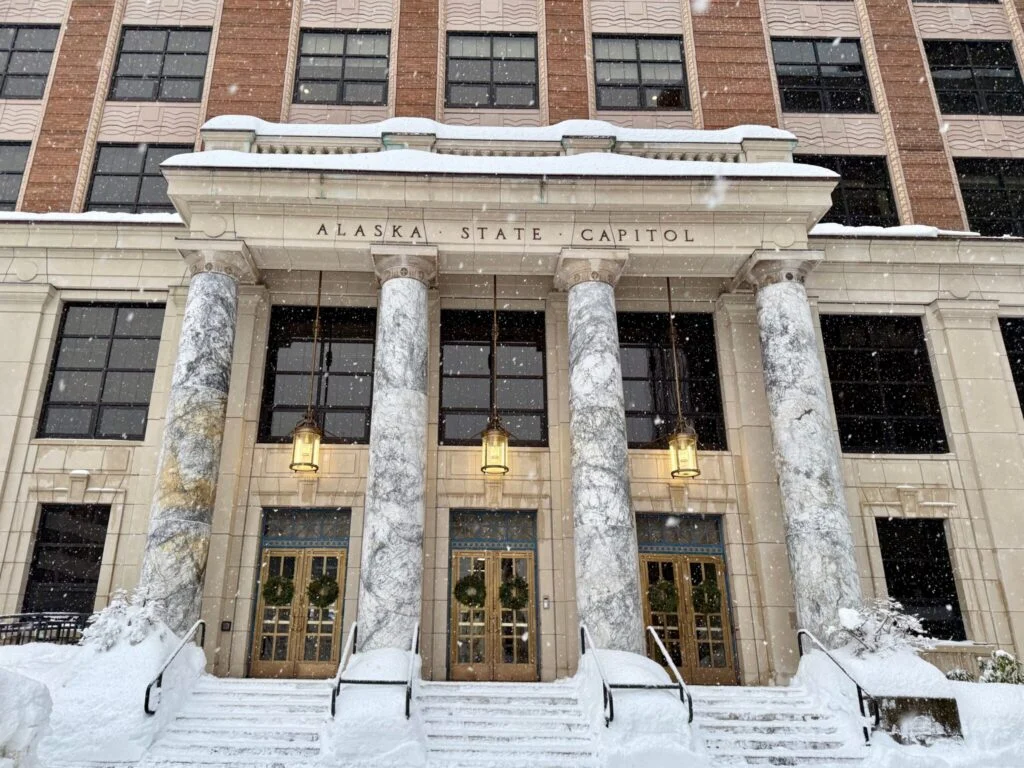
Snow falls around the Alaska State Capitol in Juneau on Dec. 31, 2025. (Photo by Claire Stremple/Alaska Beacon)
Alaska schools, students and education funding will continue to be in focus in the 2026 legislative session set to begin on Jan. 20, but early signs show they are unlikely to be at the center of the political spotlight as they were last year.
Gov. Mike Dunleavy will not be pursuing education policy changes this year, according to a spokesperson with his office on Friday. Instead, he will focus on a state fiscal plan and the proposed development of the Alaska LNG gas pipeline, his office said.
Those policy changes were at the heart of Dunleavy’s objection to increased education funding last year, and he said they were essential to boosting student achievement. He called a special session in August for lawmakers to address his policy items, but legislators took no action other than overriding two of his vetoes.
One of those veto overrides was an historic win for education advocates: it restored a $700 increase to per student funding, known as the base student allocation, adding $50.6 million in education funding to the state’s budget.
Yet many Alaska school districts continue to face steep budget deficits, and struggle to address the rising cost of operations, school maintenance, teacher retention and lost of federal funding. The Anchorage School District — the state’s largest district — is grappling with an $80 million shortfall, however the district and the union representing teachers reached a tentative agreement over the weekend on a new three-year contract. There may also be changes on the federal level because the Trump administration has promised to dismantle the U.S. Department of Education.
Sen. Löki Tobin, D-Anchorage, and chair of the Senate Education Committee, said it is still unclear whether lawmakers will again take action this year to increase education funding through the base student allocation. Tobin also co-chairs the special task force on education funding created this year.
“It is difficult to know what the body is willing to do at this point in time,” Tobin said, as lawmakers are in transit back to Juneau this week, and caucuses are meeting to discuss policy priorities.
But Tobin said she anticipates some kind of funding increase to help districts keep up with inflation. “Inflation continues to be a pressing issue in the state, and we don’t want the gains we made by increasing the basic allocation by $700 this last budget cycle to diminish because of inflation,” she said.
Rep. Andi Story, D-Juneau is co-chair of the House Education Committee and agreed an inflation adjustment is a major priority. “We don’t want to lose any ground,” she said in an interview Friday, pointing out the increase to the BSA only added $20 per student more than the year before.
Dunleavy told reporters in December he hoped the legislature would pass a bill to launch a pilot program for schools run by Alaska Native tribes, known as tribal compacting, introduced last year. Tobin said the initiative is a priority, and said she supports tribal compacting statewide and wants to see greater tribal consultation and engagement throughout all districts.
Tobin said members of the task force recently made a visit to a school in Fairbanks with one of three boilers working — in subzero temperatures — and a plan to evacuate students if the last one failed. “That’s 726 students that will be displaced. It will be a huge hit to the Fairbanks education community,” she said. “It has the potential to really harm our students’ learning and what we need to do in Juneau, during this 34th legislature, to set us up for a long term solution on rebuilding our schools, is very much at the forefront of my mind.”
Tobin co-chairs the task force on education funding, which was established this spring to conduct an 18-month study and create policy recommendations for how the state funds schools. Members have expressed interest in a wide variety of policy initiatives: from revisiting the school funding formula, to investigating chronic absenteeism, to student performance and accountability measures, and policy changes sought by the governor like open enrollment and reading incentive programs. They are slated to deliver their recommendations at the start of the next legislative session in 2027.
Tobin said task force members have made visits to schools in Fairbanks, the Matanuska-Susitna, Anchorage and Kenai Peninsula boroughs, and have plans to visit Skagway, Juneau, Bethel and Western Alaska.
Republican leaders of the Senate and House minority caucuses did not respond to interview requests on their priorities for education.
Veto override for additional education funding still in question
Lawmakers could also take up another veto override vote within the first five days of the session. Last year, lawmakers passed a corporate tax bill tied to online sales in Alaska that could generate up to $65 million in revenue that would go to fund career and technical education and K-12 reading improvement programs. Dunleavy vetoed it in September.
Whether lawmakers will take up the override vote next week is unclear. At least 40 of 60 legislators are needed to override the governor’s veto within the first five days of the legislative session.
Tobin and Story, as education committee chairs, said the override vote and restoring additional education dollars is essential, especially for reading, and funding programs instituted by the Alaska Reads Act.
House Speaker Rep. Bryce Edgmon, I-Dillingham, said via text that the Majority caucus is meeting to discuss legislative priorities this weekend. “Protecting education and public safety items in the budget along with other core services will be a priority in an environment that will be fiscally constrained,” he said.
Edgmon did not confirm whether an override vote would take place, as of Thursday.
Students begin their first day of school at the Tlingit Culture, Language and Literacy program at Harborview Elementary School in Juneau on Aug. 15, 2025 (Photo by Corinne Smith/Alaska Beacon)
It was a difficult and consequential year for Alaska schools, educators and students.
While Alaska lawmakers passed the first significant education funding increase since 2011, the state rode a federal funding rollercoaster as funds were frozen, released, disputed and appealed.
Western Alaska students and families also endured the devastating storm disaster of Typhoon Halong. Hundreds of students, as well as teachers, were displaced from their homes and forced to move and adapt to new schools across the state.
Here are some of the top stories of the year:
A state education funding fight culminated when the Alaska State Legislature passed a historic override of a veto by Gov. Dunleavy to enact a boost to per student funding for K-12 schools in a one-day special session in August.
Education was the top priority of the Legislature and Gov. Dunleavy this year, and an embattled topic throughout the legislative session, with an ongoing dispute around funding for schools and education policy changes sought by the governor to address lagging school performance and test scores.
Gov. Dunleavy vetoed two education funding bills during the session, citing a lack of policy changes he favored to boost homeschool and charter school options, and address test scores. In April, he vetoed a bill increasing the BSA by $1,000, calling it a “joke” and insisting that policy changes be included. Legislators introduced and passed another bill increasing funding by $700 per student in late April. In an effort to compromise, they included many of the governor’s priority items, including charter school changes, incentives for reading programs, and establishing an education task force to recommend further education policy changes.
Sen. Loki Tobin, D-Anchorage, holds her hand to her chest on Saturday, Aug. 2, 2025, after the close vote on overriding Gov. Mike Dunleavy’s veto of education funding. (James Brooks photo/Alaska Beacon)
Dunleavy vetoed the education funding increase out of the final budget in June. The legislature came back in August to override the veto. It was the first time since 1987 that Alaska lawmakers have overridden an appropriations veto by a sitting governor.
School officials said the additional $50.3 million in per student funding, known as the base student allocation, is essential to help maintain class sizes, hire and retain teachers, and create stability for students.
“We’re extremely excited. A lot of our administrators were texting and very excited about getting it overturned today, so that made Valdez very happy,” said that city’s school superintendent, Jason Weber, in August after the veto override vote.
The Trump administration froze millions in funding for Alaska schools, later releasing some funds. But Alaska is also embroiled in an ongoing dispute with the U.S. Department of Education around impact aid, which could cost the state $80 million
Over the summer, as school districts grappled with uncertainty around a state funding increase, the Trump administration announced a freeze of over $46 million in funds for Alaska schools, including for instruction and migrant education programs, which support students who miss class due to seasonal work like fishing. The Anchorage, Fairbanks North Star Borough, and the Kuspuk school districts joined a nationwide lawsuit challenging the withholding of congressionally approved funds as unlawful.
“These are not extras. These are the programs that give our students a chance,” said Kuspuk School Superintendent Madeline Aguillard. “When the federal government walks away from its obligation, it is not a delay. It is denial. Denial of access. Denial of progress. Denial of the futures our students have a right to pursue.”
The empty playground at Pearl Creek Elementary School is seen on June 3, 2025. The Fairbanks North Star Borough School District decided to close the school at the end of the academic year. (Photo by Yereth Rosen/Alaska Beacon)
In late July, the federal government released $5 billion of the $6.8 billion in K-12 funding.
The state is involved in an ongoing dispute with the U.S. Department of Education, which claims the state has failed a disparity test – allowing no more than a 25% gap between the highest and lowest funded schools. The state has appealed the finding, with over $80 million in federal impact aid at stake. A decision is expected in 2026.
The Trump administration also froze more than $6 billion in congressionally-approved funding for adult education and workforce development funding in July. In Alaska, it prompted immediate cuts to programs and staff layoffs. The state had been awarded over $1.1 million in grants last year, and the frozen funds in July were a shock to programs and students that included GED classes, literacy and civic education, English language classes and workforce development.
Hundreds of students, as well as teachers, were displaced by the devastation of Typhoon Halong from Western Alaska and relocated to schools around the state.
The devastation of Typhoon Halong forced an estimated 2,000 residents to evacuate Western Alaska communities in the largest mass evacuation in state history, and education officials across districts worked quickly to re-enroll students and provide support services at schools across the state.
More than one hundred students relocated to Bethel, remaining in the regional hub of Western Alaska and the Lower Kuskokwim School District. An estimated 140 students enrolled in the Anchorage School District, which worked to keep storm displaced students together, including enrolling a number of students at the Yup’ik immersion program at College Gate Elementary School. ASD also provided transportation from emergency shelters, health services, meals and translation services for Yup’ik speaking families.
“They’re going through trauma and it’s going to take a lot of work. But we’re going to put that in, because these kids are worth it,” said Anchorage Superintendent Jharrett Bryantt at an Oct. 21 school board meeting. “And they deserve a wonderful education that we want to offer them, in ASD, for as long as they’d like to be here.”
Other students re-enrolled in schools where they relocated across the state, including in Nenana and Fairbanks areas, the Kenai Peninsula, Matanuska-Susitna Valley Borough, as well as boarding schools like Mt Edgecumbe High School. Teachers and staff displaced by the storm also were re-assigned, with the majority staying in the Lower Kuskokwim School District, according to the superintendent.
Many of the district’s 22 village schools also served emergency shelter to residents as Typhoon Halong hit, and as relief centers in the days and weeks after the storm as the recovery effort got underway.
An Alaska Air National Guard C-17 Globemaster III, assigned to the 176th Wing, arrives at Joint Base Elmendorf-Richardson, Alaska, with approximately 300 evacuated residents from western Alaska, Oct. 15, 2025. (Alaska National Guard photo by Alejandro Peña)