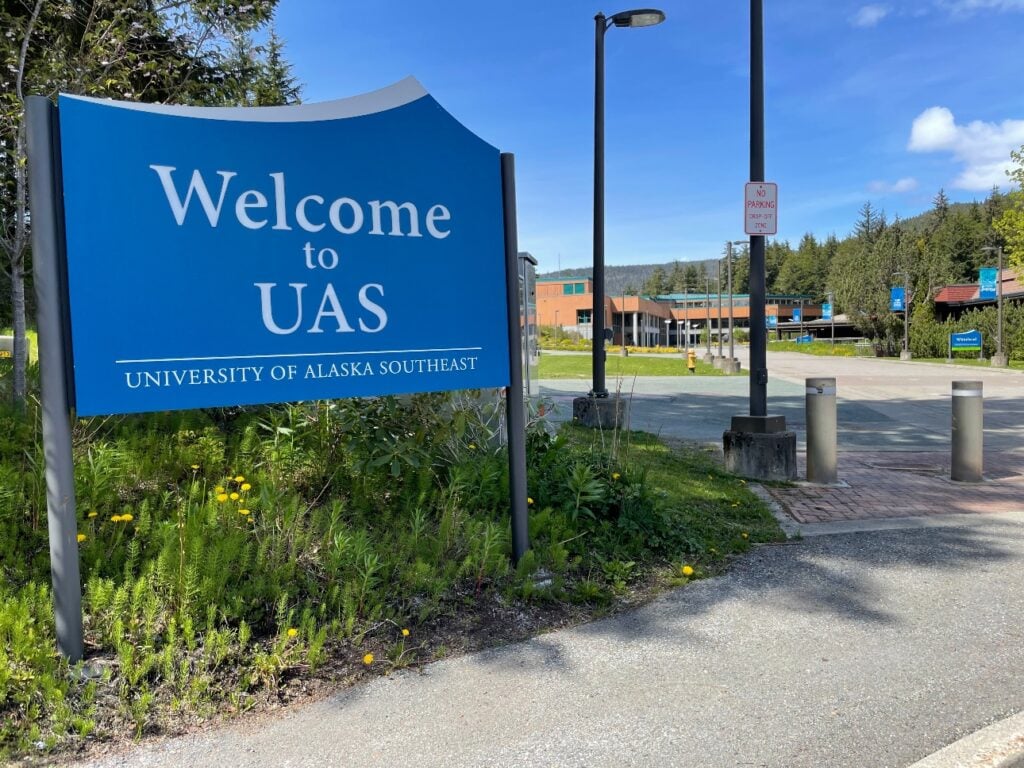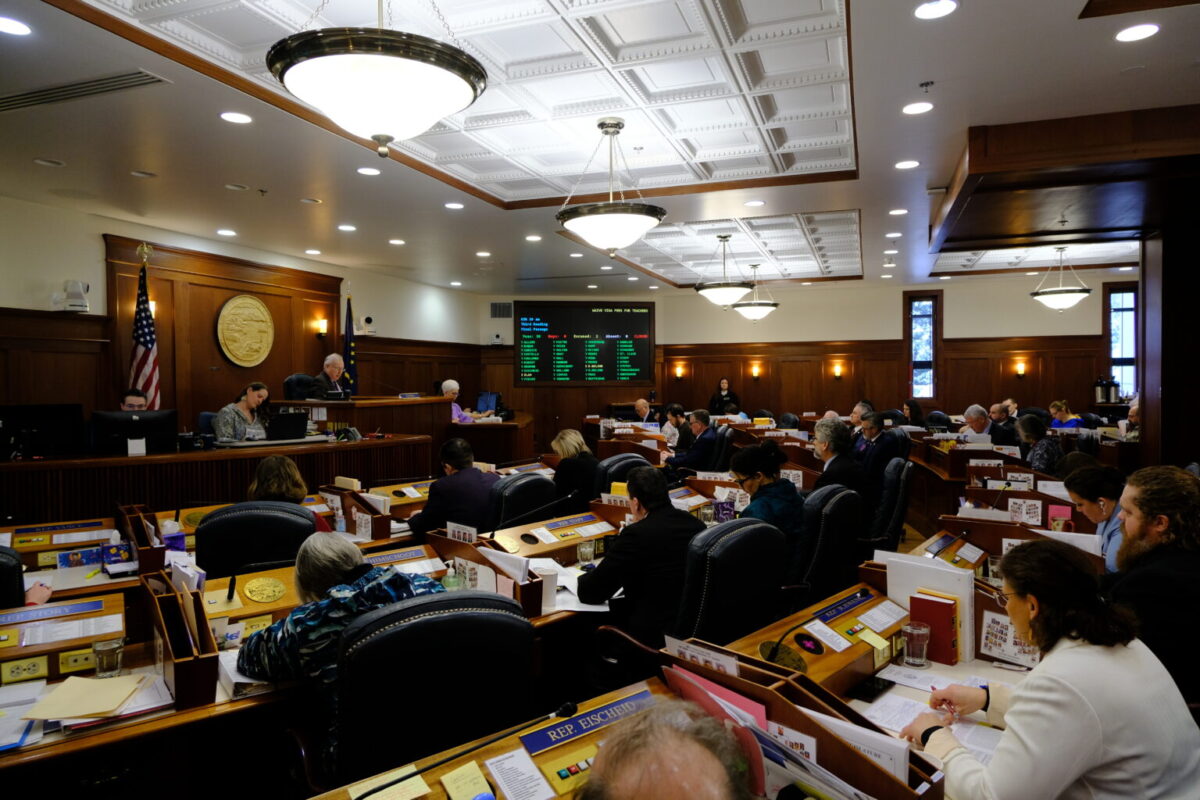
NOTN- The Juneau School Board has selected Shawn Arnold as the next superintendent of the Juneau School District, according to an announcement.
Arnold currently serves as principal of Thunder Mountain Middle School and previously led Thunder Mountain High School. He has also worked as the district’s director of student services.
Before coming to Juneau in 2021, Arnold served as superintendent of both the Valdez City School District and Nome Public Schools.
In a statement, Arnold said he was honored to be chosen for the role.
“Juneau is my home, and I care deeply about this community, our students and the staff who serve them every day,” Arnold said. “Together, we will focus on supporting our staff, strengthening relationships and ensuring that Juneau’s schools remain a source of pride in our community.”
The selection follows a three-month search process led by the Juneau School Board with assistance from national recruiting firm McPherson and Jacobson. The process included community surveys, meetings with stakeholders and public candidate forums.
Arnold was selected from a group of finalists that also included Dr. Carlee Simon and Kevin Shipley.
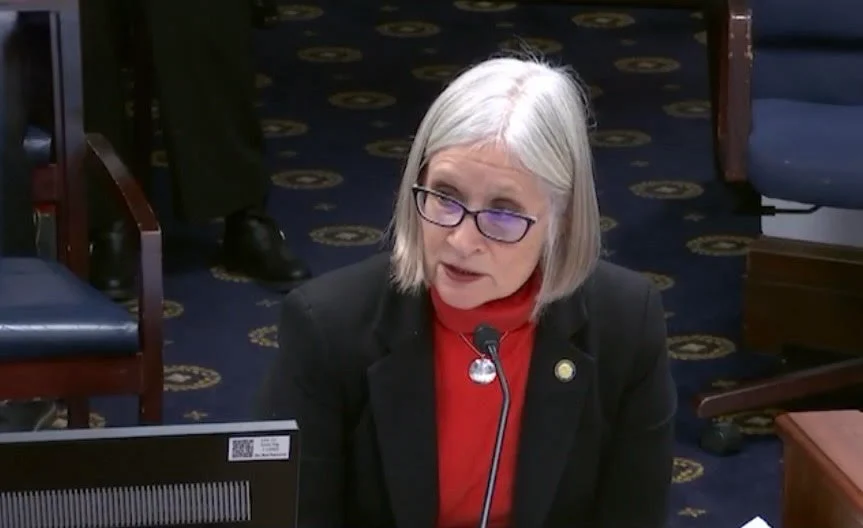
Representative Andi Story presenting to the House Education Committee, Screengrab courtesy of Gavel Alaska and KTOO
NOTN- Alaska lawmakers are weighing a proposal to let school districts use a three-year average of student counts or the prior year’s enrollment to calculate state funding.
This bill, supporters say would give districts more certainty as they build budgets and issue teacher contracts.
“We force school districts to budget in such an irrational way.” Said Representative Andi Story, “This backwards budgeting consumes a great deal of valuable time to reshuffle numbers, from personal experience this causes great pain in the community.”
The biggest change in the bill is how Alaska calculates average daily membership, or ADM, which is the student count used to determine state education funding.
According to the Alaska Department of Education and Early Development, the ADM is a count of enrolled K-12 students taken for 20 days ending the last Friday in October of each year, the ADM is adjusted due to a few factors including school size, district cost, and special needs.
Under the bill, districts would generally receive funding based on the higher of their most recent student count or a three-year average.
“Alaska should create a 3 year averaging approach statewide to replace the current Hold Harmless Provision.” Story said during her presentation.
The Hold Harmless Provision currently protects school funding if their ADM drops by 5% or more each year, which allows the previous year’s student count to be used as a base to mitigate a drop in funding.
“It could also provide districts with greater stability and planning.” Story said, “As districts would not be so concerned about unexpected changes in enrollments at the October count period. About 19 states use an approach that either averages, combines or provides the better of multiple years of student counts.”
Under the framework discussed at today’s House Education Committee meeting, if the policy took effect July 1, 2026, districts could choose a three-year average from the 2022, 2023 and 2024 October counts, or they could use the single-year count from 2025 once that data is finalized.
That choice, according to Story, would allow growing districts to lean on their most recent numbers, while stable or declining districts might favor a three-year average that smooths out drops.
Lawmakers on the panel pressed for more data on how the change would affect different districts over time. Story said she plans to bring back a committee substitute incorporating feedback and allowing further amendments.
Cheryl Siemers began her role as interim chancellor of the University of Alaska Anchorage on May 16, 2025, succeeding chancellor Sean Parnell. (UAA Photo)
The University of Alaska president appointed Cheryl Siemers to the permanent role as University of Alaska Anchorage chancellor, following ten months serving as interim chancellor, the university announced on Wednesday.
UA President Pat Pitney appointed Siemers to the interim role last May after former Alaska governor Sean Parnell retired, and then extended her tenure in October. Pitney said the decision followed an extensive hiring process, and after reviewing the four finalists and community and stakeholder feedback, decided to extend Siemer’s interim term to provide “needed certainty and consistency at the leadership level.”
Siemers will step into the permanent chancellor role on March 8. UAA serves an estimated 12,000 students on the Anchorage campus, at the Kenai Peninsula College, Kodiak College, Matanuska-Susitna College and Prince William Sound College.
“She’s been embraced by the UAA community, and it’s clear that her continued leadership will provide critical institutional stability and forward momentum,” Pitney said in a statement with the announcement on Wednesday.
“Cheryl has been a steady hand at the wheel for UAA; her commitment to the institution, community partnership, leading enrollment growth, and enthusiastic support for UAA’s dual mission vocational and workforce training make her the ideal person to continue leading UA’s largest institution,” Pitney said.
A spokesperson for the university said that Siemers’ salary information as chancellor was not immediately available on Wednesday.
Siemers thanked the university for its confidence in her leadership.
“I am grateful for the opportunity to continue to serve our students, faculty, staff and university community,” Siemers said in a statement on Wednesday. “Stepping into the permanent role now offers the opportunity to extend continuity with a long-term strategic focus to ensure that the progress we’ve made together accelerates forward.”
Prior to the UAA interim chancellor position, Siemers served as the director of UAA’s Kenai Peninsula College. She joined the college in 2002, and taught as an adjunct then full-time faculty member in the Department of English, then as assistant director before becoming director of the college. She holds a master’s in English from UAA and a Ph.D. in rhetoric and linguistics from Indiana University of Pennsylvania.
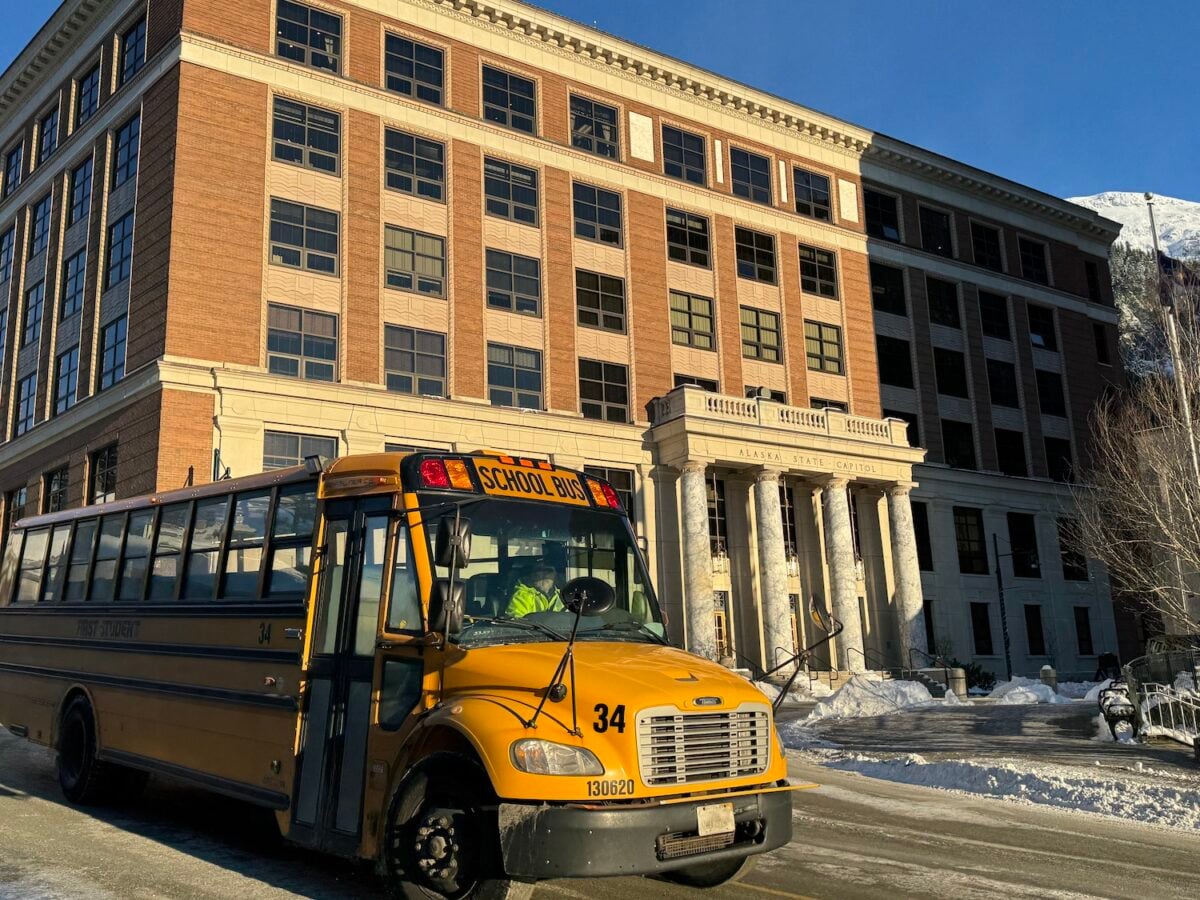
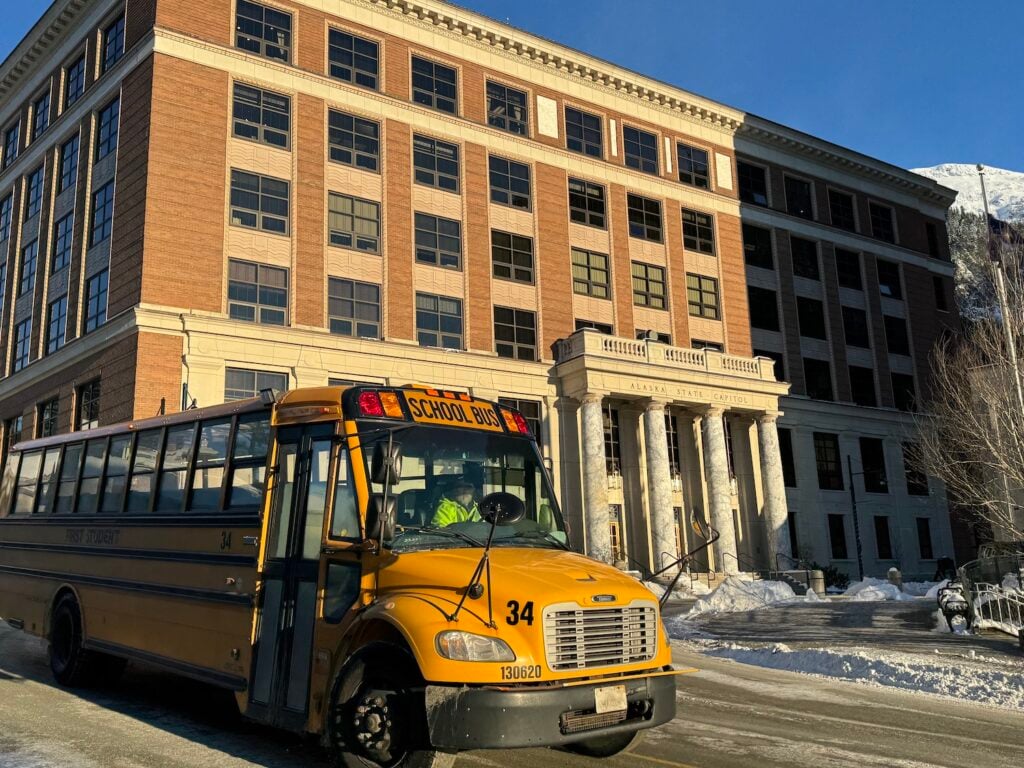
A school bus drives in front of the Alaska State Capitol on Monday, Feb. 3, 2025. (Photo by James Brooks/Alaska Beacon)
By: Corinne Smith, Alaska Beacon
A school bus drives in front of the Alaska State Capitol on Monday, Feb. 3, 2025. (Photo by James Brooks/Alaska Beacon)
Alaska lawmakers introduced new legislation in the House of Representatives that would raise the state’s per student funding for schools. They say it is critical to help school districts struggling with rising costs and ballooning deficits.
The House Education Committee introduced House Bill 374 on Wednesday. It would raise the state’s per student funding, known as the base student allocation, by $630 per student. That would increase the current per student total — from $6,660 to $7,290. Lawmakers increased the BSA by $700 per student last year.
“We can’t lose ground right now,” said Rep. Rebecca Himschoot, I-Sitka and co-chair of the House Education Committee on Wednesday. “We continue to look at all the different ways to support the schools, and the BSA is one way to do it.”
Rep. Rebecca Himschoot, I-Sitka, speaks in favor of a veto override on House Bill 69 on Tuesday, April 22, 2025. (Photo by James Brooks/Alaska Beacon)
The education funding increase would total $158.6 million statewide, and Himschoot said it would offer districts more stability by raising funds within the state’s complex funding formula.
Rep. DeLena Johnson, R-Palmer and House Minority Leader, expressed skepticism at adding state funding for schools this year. “No discussion about adding additional money can be had without deciding what program you want to cut,” she said Wednesday.
Himschoot said lawmakers decided on the $630 per student figure after assessing the current budget deficits of the state’s five largest districts by student population. The proposed funding increase would provide a partial stopgap for those budget shortfalls.
The Anchorage School District is facing a $90 million budget deficit, and is advancing plans to close three schools and cut 500 teachers and staff. The Matanuska-Susitna Borough School District is confronting a $23 million deficit, and considering closing three schools. The Kenai Peninsula Borough School District is looking at an $8.5 million budget shortfall and considering ways to cut costs. The Juneau School District has a $6.7 million budget shortfall.
Pearl Creek Elementary School is seen on June 3, 2025. The Fairbanks North Star Borough School District decided to close the school at the end of the academic year. (Photo by Yereth Rosen/Alaska Beacon)
While the Fairbanks North Star Borough School District has a current budget surplus of $2.5 million this year, that comes after it closed three schools last year — totaling seven school closures in the last five years, Himschoot noted.
“They have class sizes approaching 40 in the high school and 26 in their elementary schools even now. And they’ve downsized a lot of different staff, including a total of 300 teaching positions since 2019,” she said. “So they’ve had to do … some challenging things in their district to get to the black.”
Himschoot noted the state has revenue challenges but said lawmakers should make education a priority.
Last year, lawmakers faced a bitter political battle with Gov. Mike Dunleavy who twice vetoed education funding increases, citing the need for education policy changes to improve student outcomes. Lawmakers overrode Dunleavy’s veto and passed a $700 per student increase with some policy items, but the governor then vetoed its funding. Legislators then returned for a special session and voted to override the budget line veto. That resulted in an additional $51 million for schools.
Alaskans who supported the override of Gov. Mike Dunleavy’s education funding veto applaud as legislators leave the House chambers on Saturday, Aug. 2, 2025. (James Brooks photo/Alaska Beacon)
Minority Leader Johnson, whose district includes the east side of the Matanuska-Susitna Borough, including Palmer, Butte and Lazy Mountain, said after the funding increase last year districts should manage their budgets accordingly.
“We added a significant amount of money last year,” she said. “I think that we need to take a little while to let the districts figure out what they actually need, and let that money go through the process. If they have to make corrections, I don’t know what to say — if they have to close schools — they have to do whatever they have to do to manage their budget.”
Newly appointed House Minority Leader Rep. DeLena Johnson, R-Anchorage and House Minority Whip Rep. Justin Ruffridge speak with reporters on the first day of the second session of the 34th Legislature on Jan. 20, 2026 (Photo by Corinne Smith/Alaska Beacon)
Johnson expressed concern that the state is reckoning with a projected deficit, as lawmakers await a state revenue forecast due out in March. “We’re in deficit spending, and I don’t know where the money’s going to come from. And I think we need to have a lot more data on school spending,” she said.
School officials, teachers and students have testified to the House Education Committee this year that state funding has not kept pace with classroom needs, particularly with rising costs for keeping schools open, including fuel, insurance and transportation, as well as deteriorating school facilities.
The proposed state education funding increase would help fill some of those gaps, and prevent more severe cuts to teachers and classrooms, said Rep. Andi Story, D-Juneau.
“I want families to know that we care about education in the state of Alaska, and you can raise your kids here and they’re going to have a decent education. And so I think we have to seriously look at what investment is that going to take from the state,” she said Wednesday.
Himschoot said that BSA increase is one important step, and lawmakers are open to negotiating with members of the minority caucuses and the governor’s office to make it happen. “Everyone has schools in their district,” she said. “People call it a fight for the BSA. I prefer to call it a dance.”
Rep. Alyse Galvin at the Alaska House Education Committee presenting HJR39, photo courtesy of Gavel Alaska
NOTN- Alaska lawmakers are urging the federal government to waive steep new fees on H-1B visas for international teachers, warning that hundreds of classrooms could be left without educators if school districts are forced to absorb the added costs.
On Monday, the Alaska House Education Committee heard testimony on House Joint Resolution 39, which calls on the state’s congressional delegation to seek an exception to a recent presidential proclamation that imposes a $100,000 annual fee per H‑1B visa holder.
Many Alaska districts, particularly in rural and remote communities, rely heavily on international teachers to fill longstanding vacancies.
Rep. Alyse Galvin, the sponsor of HJR 39, told the committee the resolution is meant to give U.S. Sen. Dan Sullivan and the rest of Alaska’s delegation a stronger hand in Washington, D.C.
“We are unfortunately without enough educators before students, and so we are facing a really tough time in recruitment and retention of teachers, especially in rural and remote communities. Many school districts across Alaska use international recruitment to fill our school vacancies, with cases of international hires filling 60% of the total teaching staff in western Alaska.” Said Galvin, “We heard last week about how hard they’re working to grow our own teachers, we are still facing this gap. Our H-1B teachers are very important to us, and with the most recent proclamation by the President, we now have an imposition of a $100,000 fee for any employer who is hiring H-1B, so any new ones coming in will be having to face that cost, at least our school districts will and this is insurmountable.”
Galvin said some districts also face deep budget holes, including an estimated $90 million deficit for the Anchorage School District alone and more than $200 million in combined shortfalls across the state. Many districts have already exhausted their reserves, she said.
The committee also heard from Dr. Lisa Parady, executive director of the Alaska Council of School Administrators, who said Alaska employs 573 international teachers, including 341 on H‑1B visas.
“Alaska is already facing a severe teacher shortage, at the start of the school year, we had at last report, 345, first day teacher vacancies, which equates to thousands of Alaska students beginning school without a teacher. Many Alaska districts, especially rural and remote communities, struggle annually to fill critical positions. International educators are not a luxury, without these educators, class sizes increase, course offerings shrink, student services are reduced, student outcomes suffer.” Said Parady.
Some lawmakers used the hearing to argue that while HJR 39 may help in the short term, it does not solve deeper problems with Alaska’s teacher workforce.
Rep. Andi Story, who co-chaired the committee Monday, heard concerns about pay and retirement. Galvin noted that unlike other states, Alaska does not have a single statewide pension system for all educators, and cited research that found Alaska’s average teacher salaries are roughly 30% lower than those in Washington state.
HJR 39 would not change the law, but would formally express the Legislature’s support for waiving or exempting Alaska school districts from the new visa fees.
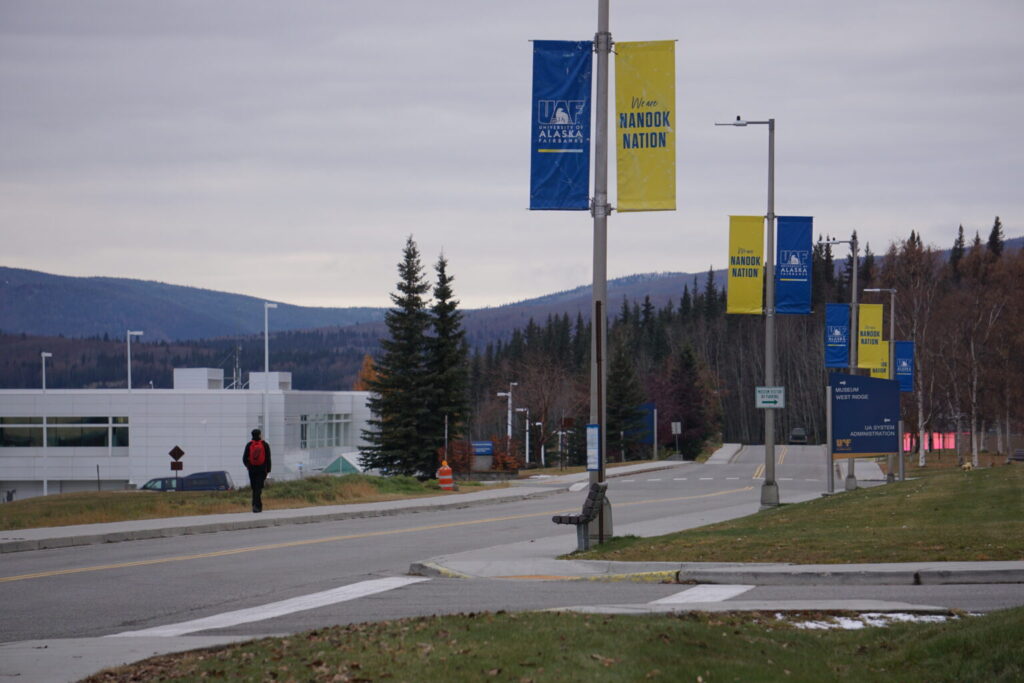
Student walks along West Ridge at the University of Alaska Fairbanks campus on Oct. 10, 2024. (Photo by Yereth Rosen/Alaska Beacon)
The University of Alaska Board of Regents says the university will continue the policy to ban references to “DEI,” or “diversity, equity and inclusion,” enacted last year, despite a federal court ruling that struck down the policy and the U.S. Department of Education agreeing to drop an appeal.
Jonathon Taylor, a spokesperson for the university, said even though the policy was struck down, “the direction of enforcement and potential risk has not gone away.”
Last year, the Trump administration issued a “Dear Colleague” letter to all pre-K through 12 schools, colleges and universities who receive federal funding outlining its opposition to diversity initiatives it called discriminatory, and threatened to withhold federal funds from schools if they had diversity or equity programs.
As a result, the board moved quickly to comply, approving a policy on Feb. 21, 2025 to scrub references to DEI and affirmative action from all university programs and operations, job titles and office names. At the time, Ralph Seekins, chair of the Board of Regents, defended the policy, saying the action to remove DEI language as committing to “equal opportunity” for everyone.
Several education and civil rights groups filed lawsuits and a federal court blocked the directive in April. This week, a New Hampshire federal judge dismissed the case, following a January agreement by both parties and the Department of Education to drop its appeal. The ruling invalidates the directive, and prevents the government from enforcing it. Plaintiffs celebrated the court’s move, with some saying it was a victory for free speech and academic freedom.
Taylor confirmed that the UA Board of Regents had no immediate plans to change or rescind the policy for the University of Alaska.
“The Dear Colleague Letter from February 2025 has indeed been struck down by the courts, and the Department of Education has declined to appeal,” Taylor said by email.
“However, the federal administration’s policy goals and concerns that led to the letter – including what they see as discriminatory DEI practices, and attempts to tie enforcement to federal funding – have not changed. Federal agencies can still pursue similar goals through other legal or regulatory means and have demonstrated an intent to focus oversight or investigations on what they see as DEI-related policies and programs using mechanisms other than agency guidance (the original Dear Colleague letter),” he wrote.
Taylor said the board enacted the policy to mitigate risks of federal funding being withheld. He said the board has had to “balance their concern about the potential medium- and long-term regulatory and funding risks to which UA may be exposed with the University’s unchanging and unwavering commitment to equal access, equal opportunity, and no discrimination, as well as free speech, academic freedom, and freedom of expression.”
Taylor added that overall, UA has so far been effectively able to “weather the storm” of federal funding cuts, grant freezes and terminations. As of September, and most recently available data, UA had roughly $530 million in active federal grants. There has been $24.6 million, or 4.6% that have been delayed, frozen or terminated.
The item was not on the Board of Regents’ February meeting agenda, scheduled for two days this week in Dillingham, at the University of Fairbanks’ Bristol Bay campus.
But several university faculty weighed in during public comment to the board on Monday.
Jill Dumesnil, a professor of mathematics at the University of Southeast and president of the largest faculty union, United Academics, called on board members to create updated guidance following the ruling.
“Many faculty are still experiencing a chilling effect on our campuses. Some fear retaliation or punishment for teaching or discussing DEI-related subject matter, others just feel uncomfortable, unsupported and unwelcome,” she said.
“Teaching about race, racism, inequality and related issues, continues to be lawful, supporting students in a way that acknowledges racial or ethnic identities continues to be lawful,” she added. “Schools may continue operating programs that encourage diversity, equity and inclusion in accordance with existing law, and the Dear Colleague letter and the certification requirement cannot be enforced against educators or schools.”
Michael Navarro, a professor of marine fisheries at the University of Alaska Southeast, and co-chair of the Belonging, Empowerment, Access, Representation and Safety Committee, known as UAS BEARS, made a plea to the board to rescind the anti-DEI motion.
“As a direct result of this board decision, UAS has lost faculty and staff and some students question the university’s commitment to their success and safety on campus,” he said.
“Despite the anti-DEI motions, reaffirmation towards maintaining a welcoming environment and honoring Alaska Native culture and heritage, after this motion, many people now feel less welcome or even unwelcome, and are not testifying today because they don’t feel safe to do so.”
Taylor, with the university, said as of now the board does not have plans to take up the issue but continually accepts written comments from the public. “The Board continues to receive testimony both in support of and in opposition to last year’s motion, and takes that feedback into consideration when setting meeting agendas,” he said.
To date, the University of Alaska Fairbanks has taken the hardest hit with federal funding cutbacks — of the $24.6 million in grants delayed, frozen or terminated, approximately $20 million has been at UAF, including $8.8 million terminated for funded programs for Alaska Native and Native Hawaiian students last year. The Trump administration has terminated $4 million in grant funding at the University of Alaska Anchorage, Taylor confirmed, and no federal grant funding has been frozen at the University of Alaska Southeast.
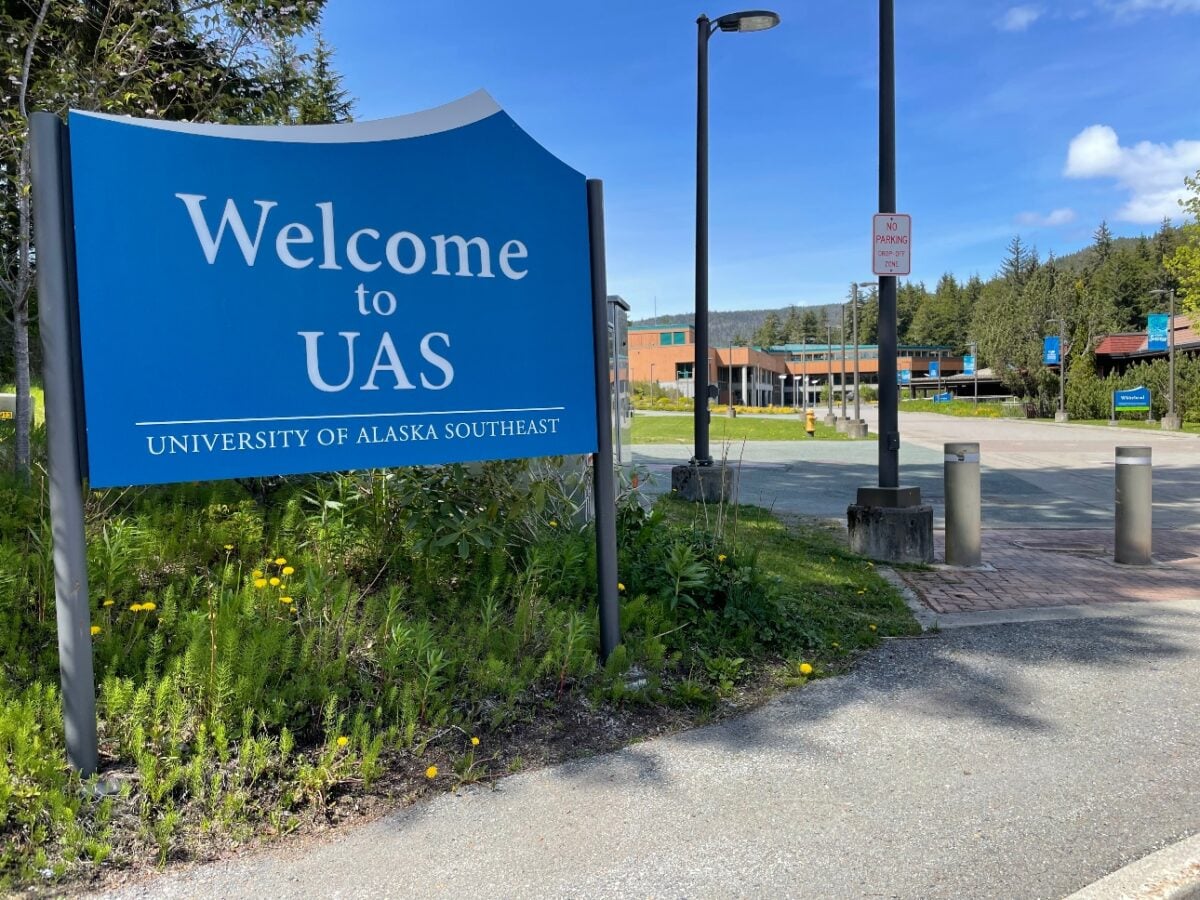
The University of Alaska Southeast campus in Juneau as seen on May 25, 2022. (Photo by Lisa Phu/Alaska Beacon)
NOTN- The University of Alaska is asking state lawmakers for millions in additional funding next year, saying the money is needed to stabilize operations, cover rising costs and address campus safety and student mental health needs.
University officials outlined their fiscal year 2027 budget request Monday to the Alaska House Finance Subcommittee.
The university’s highest priority for FY27 is a $15.2 million increase in unrestricted general funds for employee compensation.
University officials said the request would fund a 3% raise for union and nonunion employees under negotiated agreements, that’s about 1,100 faculty members, 640 adjunct faculty and roughly 420 graduate employees covered under union contracts. Another approximately 2,700 nonunion staff would also receive a 3% increase
“President Pitney has always tried to ensure that we have a very disciplined negotiation, and we want to respect the legislative process. we’re presenting numbers that are viable in the grand scheme of things, knowing the budget pressures that exist within the state.” Said University Liaison Chad Hutchison.
Officials said 53% of the university’s operating budget goes toward employee compensation, with much of the remainder paying for contracted services like food and custodial work.
The compensation request also includes funding to address rising health care costs. The university estimates $4.8 million in increased costs for health coverage, while the governor’s proposed budget includes $3 million so far.
Beyond pay raises, the university is seeking money for public safety across campuses. At the Anchorage campus, officials said the university police department is significantly understaffed.
“To put this in context, last year, we had about 500 police reports that resulted in cases that required a lot of police officer time.” Said Ryan Buchholdt, the Vice Chancellor for University of Alaska Anchorage, “When we look at Department of Justice statistics we should be in the realm of about 30 police officers minimum, if we start thinking about leaves and training and injuries we should probably be closer to the 44 realm. We have 15 police officers.”
The university is also requesting $900,000 for student mental health services.
“This committee will remember that the students had brought that to many of your members when they visited the capital, it is my expectation based on conversations we’ve been having with the students that they’ll probably bring those requests again, mental health services are a very high need when it comes to our students across all three campuses.” Said Hutchison.
The university reports about 20,500 students statewide, describing itself as a primary workforce provider for Alaska’s economy.
The Alaska State Capitol is seen behind other buildings on Tuesday, Feb. 10, 2026, in downtown Juneau. (James Brooks photo/Alaska Beacon)
By: James Brooks, Alaska Beacon
The Alaska State Capitol is seen behind other buildings on Tuesday, Feb. 10, 2026, in downtown Juneau. (James Brooks photo/Alaska Beacon)
The Alaska Legislature on Wednesday approved a 30-day extension for the state of disaster covering the fall 2025 storms that battered the state’s west coast.
The extension allows the state to continue spending money from its disaster response fund as it continues cleanup and repair efforts from two storms in October. Hundreds of Alaskans were displaced by the disasters, which devastated coastal communities.
The Alaska Senate approved the extension in a 19-0 vote on Monday, but the extension nearly failed in the Alaska House after members of the House’s Republican minority caucus raised procedural issues on Wednesday and said members of the majority were not following state law.
The extension was included in Senate Concurrent Resolution 12, which retroactively approves extensions issued since October and allows the governor to spend more from the state’s disaster response fund.
“Doing this as a resolution is dangerous, I think it’s a mistake, and I’m not even certain that it’s legal,” said House Minority Leader DeLena Johnson, R-Palmer.
Johnson and other Republicans said that under their interpretation of state law, legislators would need to approve the spending via a bill, not a resolution.
A legislative attorney, writing in a Feb. 2 memo to Speaker of the House Bryce Edgmon, I-Dillingham, said, “when the legislature means to take action having a binding effect on those outside the legislature, including extending a disaster declaration, the legislature must enact a bill in a special or regular session rather than using the less formal resolution process.”
Johnson was rebutted by House Rules Chair Louise Stutes, R-Kodiak and a member of the House’s majority coalition.
“This is not new money,” she said. “This is money that has been (in the fund) and is being allowed to be appropriated out. … it’s been agreed upon that maybe this wasn’t the optimum way. Nothing’s perfect. We’re moving forward. We are trying to do the best we can as quickly as we can. Time is of the essence, so I ask you to ask yourself: Do you want to be right in how it is done, or do you want to do the right thing when there’s a question?”
The House vote was 22-18, with Rep. Will Stapp, R-Fairbanks, joining the 21 members of the House’s coalition majority in support. All other members of the House Republican minority voted against the resolution.
As debate opened, Rep. Nellie Unangiq Jimmie, D-Toksook Bay, became choked up as she described the disaster, which devastated her district and resulted in the largest peacetime evacuation in state history.
“Today, months later, 340 of our neighbors remain without permanent houses. Mr. Speaker, we are Yup’ik. Our people have lived in this delta for thousands of years. We know storms. We know water. We know loss,” she said. “We have lived on this coast for thousands of years, and we’ve survived ice ages, epidemics, colonization. We’ve survived by adapting, sharing, by refusing to abandon our homes, but you can’t really live when your home floats 10 miles out to sea, when your fuel tanks that heat your home in winter are submerged in salt water.”
On Jan. 28, Gov. Mike Dunleavy requested permission to spend $20.5 million from the disaster response fund, up $5.5 million from a prior request.
When federal money is added to that tally, the total amount is $39.25 million.
More spending is expected.
Last week, the director of the Alaska Division of Homeland Security and Emergency Management said that the Federal Emergency Management Agency has estimated at least $125 million in state and federal costs related to the storm disaster.
“The declaration allows state agencies to continue their emergency response and to extend state funds as needed,” said Rep. Andy Josephson, D-Anchorage and co-chair of the House Finance Committee.
Rep. Justin Ruffridge, R-Soldotna, took issue with the fact that after Dunleavy declared a state of disaster in October, the Speaker of the House and Senate President approved subsequent 30-day extensions without consulting legislators.
“I think we should have called ourselves in (to special session), or the third floor should have called us in (to special session) to take up this very important issue,” Ruffridge said.
“What precedent does this set for the presiding officers to make the decisions before us on our behalf?” he asked. “What power do we give the executive by allowing disaster declarations to continue without (the House) or the (Senate) taking up that order of business?”
Rep. Dan Saddler, R-Eagle River, said he worries that failing to follow proper procedure could leave disaster relief vulnerable to legal challenge.
“We put the reliability of that relief at question if this is not done right,” he said.
The day after the vote, Ruffridge said members of the minority have drafted a bill that would fix the problems they see, and that bill is being reviewed by legislative attorneys.
House Majority Leader Chuck Kopp, R-Anchorage, said legislative attorneys have reviewed the majority’s plan.
“We have had our legal department tell us that this passes muster,” he said during the debate.
After the vote, Kopp’s office was unable to provide a legal memo to that effect but said he had received verbal advice.
Josephson, wrapping up debate, said the majority was working in good faith with Dunleavy to get the money out the door quickly.
“Given the urgency of the matter, we’re trying to cooperate with the executive branch,” he said.
Sen. Elvi Gray-Jackson, D-Anchorage, talks to a colleague on the floor of the Alaska Senate, Wednesday, May 1, 2024. (Photo by James Brooks/Alaska Beacon)
By: James Brooks, Alaska Beacon
Sen. Elvi Gray-Jackson, D-Anchorage, talks to a colleague on the floor of the Alaska Senate, Wednesday, May 1, 2024. (Photo by James Brooks/Alaska Beacon)
Alaska public school students would be required to learn hands-only CPR under a proposal advancing through the state legislature.
In a 19-0 vote on Wednesday, the Alaska Senate approved Senate Bill 20, which requires the Alaska Department of Education and Early Development to “adopt curricula to instruct public school students on hands-only cardiopulmonary resuscitation.”
Sen. Robert Yundt, R-Wasilla, was absent from the vote.
Existing state law says that each state school district is “encouraged” to teach CPR; the new bill, if approved by the House and Gov. Mike Dunleavy, would change CPR to a requirement.
The department said in a fiscal note that it will be able to implement the new requirement at no additional cost to the state.
“It’s time for Alaska to align with the growing national standard that ensures students learn these life-saving CPR techniques,” said Sen. Elvi Gray-Jackson, D-Anchorage and the sponsor of the bill.
Heart diseases are the No. 2 cause of death in Alaska, according to the latest available state statistics. CPR can be used to keep someone’s blood flowing if they experience sudden cardiac arrest. That can triple a victim’s chances of survival, Gray-Jackson said, noting that CPR has even been used in the Capitol on occasion.
SB 20 advances to the House for further consideration. A companion measure, House Bill 92, is in the House Education Committee and has not yet been heard.
Rep. Ashley Carrick, D-Fairbanks, talks on the floor of the Alaska House of Representatives on Friday, Feb. 6, 2026. (James Brooks photo/Alaska Beacon)
By: James Brooks, Alaska Beacon
Rep. Ashley Carrick, D-Fairbanks, talks on the floor of the Alaska House of Representatives on Friday, Feb. 6, 2026. (James Brooks photo/Alaska Beacon)
The University of Alaska may soon be legally required to provide itemized bills to students and give them more notice of fee increases.
The Alaska House of Representatives voted 36-3 on Friday to pass House Bill 176 and send it to the Senate for further consideration.
Rep. Ashley Carrick, D-Fairbanks, introduced the bill in the House and said it is “meant to provide greater transparency and accountability for all of my fellow Nanooks, Seawolves and Whales out there,” referring to the state’s universities by their mascots.
“With House Bill 176, it is our hope that we are able to provide more information to students and those that may be helping them to pay their bills about what it is that they are paying for and how those dollars will be spent,” she said.
The legislation received bipartisan support in the House.
“As a mom of two college students, it is important to see what is going on with their tuition because I’m paying for their tuition,” said Rep. Jamie Allard, R-Eagle River.
No one spoke against the bill on the floor, but afterward, Rep. Justin Ruffridge, R-Soldotna and one of three “no” votes, said he didn’t think the bill was necessary.
“I just think government does some things that could be solved with five or six conversations,” he said.
The University of Alaska said in a fiscal note that it believes it can implement the changes without any additional cost to its budget.
The bill has been referred to the Senate Education Committee, which has not yet scheduled it for a hearing.