A single caribou stands in 2019 amid cottongrass and other tundra plants near the Hulahula River in the Arctic National WIldlife Refuge. (Photo by Alexis Bonogofsky/U.S. Fish and WIldlife Service)
The federal government has agreed to permanently loosen rules for oil and gas lease sales in the Arctic National Wildlife Refuge, according to a draft settlement agreement filed this week in the U.S. District Court for the District of Alaska.
Adam Gustafson, an attorney with the U.S. Department of Justice, said in a statement that the agreement “means more oil leasing, more domestic energy, and more independence from foreign sources of energy.”
The document filed this week would settle lawsuits filed by the state of Alaska and its investment bank over the 2025 Arctic National Wildlife Refuge oil lease sale that drew no bids.
That sale, mandated by a 2017 law, took place after the Biden administration restricted the available acreage. The Alaska Industrial Development and Export Authority and the state of Alaska sued over the Biden-era limits.
This week’s agreement states in part that the federal government will not limit oil and gas leasing in ANWR until oil and gas equipment covers at least 2,000 acres in the refuge’s coastal plain.
“The 2017 Tax Act does not authorize (the Bureau of Land Management) to deny or unreasonably limit development of production and support facilities to the Coastal Plain until 2,000 surface acres are covered by production and support facilities,” it states in part.
That’s a small fraction of the size of the leases being put up for sale but could represent a significant length of pipeline and a large number of drilling pads.
AIDEA and the state remain in court against the federal government over the result of a 2021 ANWR lease sale. AIDEA won leases during that sale, but the Biden administration canceled those leases, then attempted to re-sell the affected land during the 2025 sale.
The ANWR leasing program overall has been challenged by a coalition of environmental groups, and that case also remains in court.
By email on Tuesday, an AIDEA spokesperson said it would be accurate to call the new agreement a victory for AIDEA and Alaska because it “includes a clear admission that the … Lease Sale ‘violated the 2017 Tax Act by preventing meaningful leasing, exploration, and development of oil and gas on the Coastal Plain, as Congress mandated.’”
Through a spokesman, acting Alaska attorney general Cori Mills noted that while Alaska’s attention has recently focused on a successful lease sale in the National Petroleum Reserve-Alaska to the west of the Prudhoe Bay oil field, the state continues to be interested in ANWR, which is to the east.
The new settlement agreement increases the odds that ANWR will stay open to drilling even when a new president comes after Trump.
“While the State is ecstatic about the progress in the NPR-A, we cannot lose sight of the potential in ANWR. The problem is not a lack of potential or even lack of infrastructure; it is the lack of a stable investment climate without burdensome and unnecessary strings attached,” Mills said by email.
“The last administration did everything they could to shut down development in ANWR that our congressional delegation and numerous state administrations had fought long and hard for. But that doesn’t have to be the future. We are grateful that the federal government recognizes the unlawful actions taken previously and was willing to enter into the settlement and essentially admit the error,” she said. “There is still hope that ANWR can provide economic prosperity and crucial resources for local communities, the state, and the nation.”
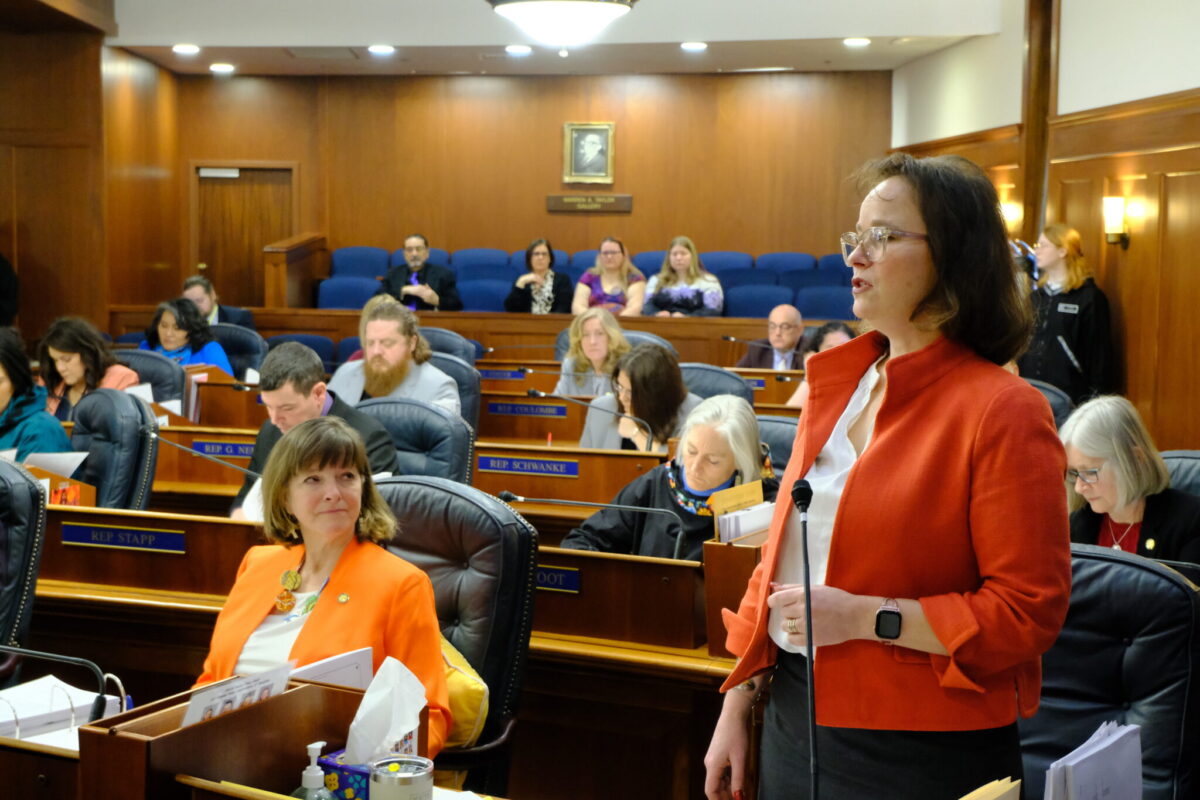
Rep. Sarah Vance, R-Homer, speaks on the House floor on Feb. 27, 2026. (Photo by Corinne Smith/Alaska Beacon)
A legislative ethics committee found that Homer Republican Rep. Sarah Vance violated Alaska ethics law when she used official legislative letterhead to publicly condemn a Homer News story last September. The story was about a local vigil she helped organize for Charlie Kirk, a right-wing political activist who was assassinated last year.
The House Subcommittee on the Select Committee on Legislative Ethics launched a probe into Vance’s conduct after receiving 18 ethics complaints from September to December last year. On June 26, the seven-member ethics committee, by a majority vote, found probable cause that Vance violated the Legislative Ethics Act “by using Alaska State Legislature letterhead for a nonlegislative purpose, for involvement in or support of or opposition to partisan political activity.”
The committee determined that Vance’s use of official legislative letterhead violated Alaska statute that states that legislators may not use “public funds, facilities, equipment, services, or another government asset or resource for a nonlegislative purpose, for involvement in or support of or opposition to partisan political activity.”
The committee determined no corrective reaction is warranted, other than adhering to the authorized use of official legislative letterhead in the future.
Vance opposed the ethics committee’s decision, saying in an interview on Wednesday her letter was not partisan activity and it was within her free speech rights to communicate with constituents. “I respectfully disagree,” she said. “The letterhead is mine, and my free speech should not be limited on how I can speak on behalf of my constituency.”
At issue in the probe is how Vance responded to a Homer News story published on September 17, 2025 that covered a local vigil for Charlie Kirk. Kirk was shot and killed at a public event on a college campus in Utah the week before. One suspect was arrested and is currently standing trial. Kirk was a vocal ally of President Donald Trump focused on mobilizing conservative students on college campuses, and many conservative supporters staged vigils and events around the country to memorialize him.
Vance wrote to the newspaper’s publisher, Sound Publishing, Inc. owned by Carpenter Media Group, an international chain, on her official legislative letterhead condemning the coverage of the Homer vigil. She also posted the letter to her official legislative Facebook page. The story described Kirk as a “far-right activist and Christian-Nationalist icon,” and described his views as “often racist” and “controversial,” characterizations to which Vance objected.
“In the letter Representative Vance expressed her displeasure with portions of the content of the article and her perception that the Homer News is biased, engages in partisan rhetoric and political talking points,” the committee wrote in their decision.
The committee identified several key phrases in her letter that violated Alaska statute, including that Vance noted a “growing movement to boycott” the Homer News that she said would result in potential financial repercussions. “If the paper continues to treat community events as opportunities for partisan spin, the consequence will be financial as well as reputational,” Vance wrote.
The committee members invited Vance to answer questions and appear before them, but she filed a request to dismiss the ethics investigation and declined to appear. On June 26, the committee held a public hearing with public comment, then moved to a nearly four hour executive session before announcing the majority vote finding probable cause that Vance violated ethics law.
Rep. Kevin McCabe, R-Big Lake, one of two House members on the committee, penned a dissenting opinion, which the committee issued with the decision. He questioned whether the authority of ethics law extends to official letterhead and defended Vance’s First Amendment right to free speech.
The committee dismissed three other statutory violations cited in complaints, related to political fundraising and campaigning, legislative employee political parties and campaigning, and donations. The 18 complaints are confidential, and were not made public with the decision.
In an interview, Vance said she believes the complaints were politically partisan and should have been dismissed. She said she is aware of the ethics rules barring the use of letterhead for campaigning for a specific candidate or fundraising. She rejected the finding that her letter was politically partisan.
“I called out the media for being biased and engaging in partisan activity, that doesn’t make me partisan, that’s just providing accountability,” she said. “Just like when I write letters to the Board of Fish for not following the public process, and I call them to account and say ‘you need to take a look at this and redo your actions.’ It’s the same advocacy on behalf of my constituents.”
Vance said she was expressing her free speech right and communicating with constituents with her letter and on her social media page. She said that includes noting the potential boycott and financial repercussions for the Homer News.
“I wanted them to know the seriousness of what was happening with their paper that had been for a long time, and it wasn’t a threat, it was just saying ‘you need to know what’s going on.’ I meant it more informational, but people perceived it differently,” she said.
Vance said she is still deciding whether to appeal or take further action on the issue.
Nationwide, Kirk’s killing prompted a pressure campaign by Republicans and conservatives to clamp down on language deemed critical of Kirk. A Reuters investigation found more than 600 people were fired, suspended or investigated for comments about Kirk’s death within the first two months of his killing. Some have successfully sued for First Amendment retaliation and have received large settlements or monetary damages.
The fallout from Vance’s letter was significant, though it was not mentioned in the ethics committee’s decision.
In response to Vance’s letter, the management of Sound Publishing, Inc. and parent-company Carpenter Media Group changed the story, removing some of the language Vance objected to without consulting the reporter or editor at the Homer News, who later resigned over the decision.
In a joint letter, four reporters and editors with the Homer News and the Peninsula Clarion — also owned by Carpenter Media Group — said they did not have a problem with Vance’s criticisms, but voiced strong objections to the management changing a story “at the behest of a local official.” They called the decision a betrayal of the journalists on staff and the company’s integrity.
“We believe this destroys the credibility the public has placed in us as reporters and editors,” they wrote. The group said they could not continue doing their job knowing the possibility of future pressure from an elected official could result in stories being changed without their consultation.
Vance said she was surprised that the publisher responded and changed the article, and learned later that reporters and editors were not consulted.
“It was never my intent for anyone to lose their job or to create a disagreement within the inner workings of the paper, but what it did do that was highlighted by those articles is it revealed there were long term issues that had been going on for quite some time,” she said.
“People say that I bullied and intimidated the media, I don’t believe that for one minute,” Vance said. “Sound Publishing is a pretty big corporation, and it was never my intent to bully, but just to say ‘no, this is wrong. You need to be aware of what’s going on in this community.’ And I’m going to speak up on behalf of my constituents, because their voice has been drowned out down here.”
Jake Dye, one of the reporters that quit the Peninsula Clarion, said by email on Wednesday that voters will decide whether they approve of Vance’s actions in the November election where she is running for re-election in House District 6. He said Vance’s comments implying financial repercussions crossed a line and “represents a problematic effort to explicitly intimidate the press.”
He said he doesn’t blame Vance for what happened and said Sound Publishing and Carpenter Media management are responsible for their response.
“There are three fewer journalists on the Kenai Peninsula today than there were a year ago,” Dye wrote. “That’s not because Vance wrote a letter, but because our corporate overlords chose to fold under her pressure and let down the talented people they employed to do reporting in the state.”
According to the proposed ordinance, when an officer-involved shooting occurs that causes death or serious injury to an officer or someone else, Juneau Police Department would release body-worn camera footage no later than 30 days after the incident. (Photo courtesy City & Borough of Juneau website)
(Photo courtesy City & Borough of Juneau website)
The Juneau Police Department says a recent Southeast Alaska Cities Against Drugs Task Force investigation resulted in an arrest and the seizure of suspected fentanyl, methamphetamine and cocaine, below is JPD’s press release.
JPD- On June 24, 2026, members of the Southeast Alaska Cities Against Drugs (SEACAD) Task Force executed a search warrant on a box van in the 9000 block of Gee Street in Juneau as part of an ongoing narcotics trafficking investigation.
The investigation began in late May 2026 after investigators identified the location as a source of fentanyl distribution within the community. During the execution of the search warrant, investigators contacted and arrested 39-year-old Jonathan Henry Smith of Juneau.
Search of the vehicle associated with Smith resulted in the seizure of the following suspected controlled substances:
Approximately 17 grams of fentanyl
Approximately 54 grams of methamphetamine
Approximately 44 grams of cocaine
Total estimated street value of seized narcotics: $23,600
Smith was arrested and lodged at the Lemon Creek Correctional Center on the following charges:
Four counts of Misconduct Involving a Controlled Substance in the Second Degree, a Class A Felony
One count of Misconduct Involving a Controlled Substance in the Third Degree, a Class B Felony
The SEACAD Task Force remains committed to disrupting the trafficking and distribution of illegal narcotics throughout Southeast Alaska. This investigation highlights the continued cooperation between local, state, and federal law enforcement agencies working together to protect our communities from the harmful impacts of illegal drugs.
SEACAD, Southeast Alaska Cities Against Drugs, is a regional task force comprised of municipal police departments from Juneau, Ketchikan, Sitka, Haines, Skagway, Petersburg, Hoonah, Wrangell, Craig, and Yakutat, the Alaska State Troopers, Federal Bureau of Investigation, Drug Enforcement Administration, United States Postal Inspection Service, and Coast Guard Investigative Service. Together, they work to investigate drug importation and distribution in the Southeast Alaska region.
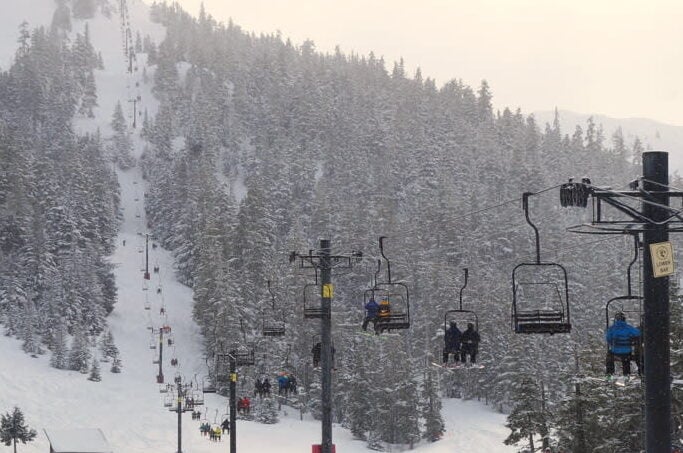
CBJ- The Eaglecrest Board of Directors is pleased to announce the selection of Julie Jackson Piper as the next General Manager of Eaglecrest Ski Area. Piper was appointed to the role at the July 7 Eaglecrest Board special meeting.
“I am excited to welcome Julie Jackson Piper back to Eaglecrest as our ski area’s general manager,” said Brandon Cullum, Eaglecrest Board President. “Julie is the right person to lead our staff, support the board, and help inspire confidence with the Assembly as we move into the 2026/2027 ski season and work to address Eaglecrest’s longer-term sustainability concerns.”
Piper is currently employed as the Recreation Manager for the City of Richland, Washington, where she has served in that role since 2018. Her prior experience includes being the Aquatics Manager for the City and Borough of Juneau and Youth & Community Outreach Coordinator & Snowsports School Supervisor at Eaglecrest. Piper also has a Bachelor of Science in Ski Area Business Management from Northern Michigan University.
“I am honored to join Eaglecrest’s dedicated staff and engaged Board of Directors as we build upon the mountain’s remarkable legacy,” Piper said. “Together, we have an incredible opportunity to strengthen our connection with the community, enhance the year-round mountain experience, and ensure Eaglecrest continues to thrive for generations as we begin its next 50 years.”
Piper will begin her new role on August 31, 2026 and be paid an annual salary of $134,014.40.
The Eaglecrest General Manager is selected and supervised by the Eaglecrest Board. Following an initial applicant screening by the City and Borough of Juneau Human Resources Department, the Board Human Resources Committee interviewed candidates remotely before selecting a finalist for an in-person interview at the Eaglecrest Board meeting last week.
For more information, contact Dallas Hargrave, CBJ’s Human Resources/Risk Management Director, at dallas.hargrave@juneau.gov or 907-586-0225.
Fireweed blooms on either side of the trans-Alaska pipeline near mile post 86, Dalton Highway in 2006, two years after the 2004 Dall City fire. (Photo by Craig McCaa/BLM Alaska)
If built as proposed, the trans-Alaska natural gas pipeline is expected to create thousands of jobs. Many, if not most, will go to people who don’t live in Alaska.
A six-year-old study, commissioned by the Alaska Gasline Development Corp. as part of the project’s environmental statement, says “an estimated 22 to 68 percent of the construction jobs would likely be filled by non-residents, depending on the construction year.”
The difference is likely because specialty jobs needed during construction — pipeline welders, for example — aren’t common in Alaska. Last year, more than 42% of all welding jobs in the state were held by nonresidents, according to figures published by the Alaska Department of Labor and Workforce Development.
Joelle Hall, president of the Alaska AFL-CIO, said that while new hires might not all be Alaskans, they will have the opportunity to become Alaskans, just as the builders of the trans-Alaska oil pipeline system did.
“There will be, just as it was on TAPS — most of those were not Alaskans, they became Alaskans. That’s one of the opportunities to look at here,” she said.
As the Alaska Legislature debates a multibillion-dollar tax break for the pipeline project, legislators are considering whether to tie that tax break to labor requirements that could require pipeline developers to hire more Alaskans.
Last month, the Alaska Senate voted 16-4 to mandate a certain level of apprentice hiring, something that could increase the number of jobs available to new Alaskans or those starting to learn a trade.
The latest version of the tax-break bill, released last week by legislative negotiators, eliminates that mandate but requires project-labor agreements that maximize opportunities for Alaskans who already have needed qualifications, said Sen. Jesse Kiehl, D-Juneau and author of the apprentice hiring proposal.
Hall said she hopes the apprenticeship mandate returns, but even if it doesn’t, the project would offer young Alaskans a chance to be trained as electricians, plumbers and in other construction-related trades.
They would be able to keep those skills and replace retiring construction workers.
“We are going to have such an opportunity to get these jobs … and then they can go on to full careers,” Hall said. “The graying of the construction workforce is such a big problem, and this is an opportunity to change that graying.”
Current estimates suggest the project would create a large number of temporary and permanent jobs but significantly fewer than were created by the trans-Alaska oil pipeline in the 1970s.
“I’ve read that during the development stage, there’ll be something like 12,000 jobs attached to this project,” said Speaker of the House Bryce Edgmon, I-Dillingham, in a June 27 hearing.
Adam Prestidge, president of Glenfarne Alaska, jumped in.
“Just to clarify, when we talk about jobs created, it’s approximately 7,000 for the construction of the pipeline, an additional 5,000 for the construction of the LNG facility. When it goes into full operation, you’re looking at a much lower number, around 1,000 permanent, 1,500 permanent operational jobs,” he said.
Tim Fitzpatrick, a spokesman for Glenfarne Alaska, confirmed the figures by email and added: “These are direct jobs and these numbers do not include additional indirect jobs. Glenfarne has not provided an update to the in-state/out-of-state estimates.”
In 1978, the Alaska Department of Labor concluded that more than 23,000 people were simultaneously employed at the peak of oil pipeline construction.
As currently planned, the gas pipeline project would be built in two phases, with the pipeline first and supporting infrastructure second. That means the 12,000 jobs expected by the project won’t come all at once, and peak employment will be well below what happened during the oil pipeline boom.
In addition, Alaska’s population is much larger than it was during the 1970s, further diluting the impact of construction employment. Last year, the state had 321,500 workers in January and 360,000 in July — the boom created by pipeline employment will be smaller than the one that already occurs each summer with tourism and fishing jobs.
What would be different is the value of each job — lawmakers are planning to mandate agreements that would require workers be paid high wages.
“There’s going to be a level of rearranging of the workforce that’s going to be pretty dramatic. If you’re a guy working at the Jiffy Lube, you could probably go … and be dispatched to do the same job on the pipeline and make vastly more money,” Hall said.
A successful project would create permanent, high-paid jobs.
“Project operation would require about 980 permanent personnel per year,” AGDC estimated in 2020, predicting that most jobs would be based in Anchorage and would go to in-state residents.
For the moment, those benefits remain hypothetical, and the state’s 1978 study provides an inadvertent cautionary note.
“Construction of the proposed gas pipeline project is planned to begin in 1981 – less than three years from now,” it said. “Alaska citizens and lawmakers are now meeting to lay out guidelines in preparation for pipeline construction in an attempt to maximize stable growth and to minimize the disruption which will result from such a large scale construction project.”
NOTN- The Eaglecrest Board will hold a special meeting this afternoon to consider the lone finalist for the ski area’s next general manager.
The meeting will run from 12:30 to 1:30 p.m. and will be held online only through Zoom, with the agenda available on the City and Borough of Juneau’s Civic Clerk webpage.
The finalist? Former Eaglecrest manager Julie Jackson Piper.
Piper previously worked at Eaglecrest from 2009 to 2015 and later managed Juneau’s public pools before becoming recreation manager for Richland, Washington. She was also a finalist for the position in 2024, finishing as the runner-up.
Her potential hiring comes during a challenging period for Eaglecrest, which has faced financial losses, equipment failures and closure uncertainty after the city canceled plans for a new gondola project because of soaring costs.
Currently the City and Goldbelt are discussing a potential partnership such as a long term lease.
Additional information on the meeting and other public meetings is available through the CBJ public meetings calendar.
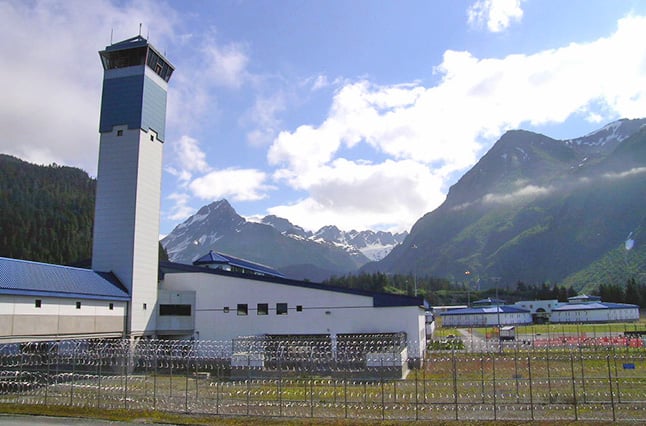
Spring Creek Correctional Center is seen in an undated photo. (Photo courtesy of Alaska Department of Corrections)
Alaskans who have been wrongfully convicted can now apply to claim Alaska Permanent Fund dividends that were withheld while they were incarcerated, under a new law.
The Alaska Legislature passed Senate Bill 167 by a combined vote of 58 to 2, and Gov. Mike Dunleavy allowed the bill to pass into law without his signature last month.
Under current Alaska law, those who are incarcerated or sentenced as a result of a felony or certain combination of misdemeanor convictions are ineligible for the Permanent Fund dividend. The amount equivalent to those dividends is deposited into a restorative justice fund each year.
Under the new law, past dividends will be granted to people whose convictions were vacated or reversed, or those who had charges against them dismissed. People who were found not guilty after their case was retried are also eligible. Individuals whose charges were dropped as part of a plea agreement in another criminal case would not be eligible.
Exonerees have two years after a dismissal or not guilty finding — or two years after the bill’s effective date — to apply for the past dividends through the Permanent Fund dividend office with the Alaska Department of Revenue. The bill is set to take effect on September 16.
Sen. Scott Kawasaki, D-Fairbanks, speaks Friday, Feb. 7, 2025, on the floor of the Alaska Senate. (Photo by James Brooks/Alaska Beacon)
Sen. Scott Kawasaki, D-Fairbanks, sponsored the bill and told lawmakers at a May hearing that the state has a responsibility to those the justice system has failed.
“When an Alaskan has been wrongfully convicted, and then later has had their judgment vacated or reversed, then the state must go beyond merely unlocking the cell,” he said. “We have a duty to make amends for those who have endured an injustice under our laws.”
Prior to the law’s passage, Alaska was one of 12 states that did not provide compensation for wrongful convictions, according to a sponsor statement prepared by Kawasaki’s office. Many states provide financial compensation, or college tuition or job training assistance for exonerees.
Kawasaki said it’s a small step to restore dividend payments. “These funds represent a loss of personal property during that period of time,” he said. “(The bill) is about restoration and not compensation, because really the amount of time that a person has been behind bars can just never be repaid.”
The bill was supported by the Tanana Chiefs Conference and non-profit advocacy groups, including the Alaska Innocence Project and After Innocence, a national advocacy non-profit that provides post-release assistance for those wrongfully convicted.
Jon Eldan, the executive director of After Innocence, said in an interview Monday that the restored PFD money is helpful.
“Because people who have been incarcerated for crimes they didn’t commit typically face a wide range of barriers to rebuilding their lives after that horrible experience, and money helps,” he said. “And so not only is it good because it’s something that is due to them, but also because every dollar matters when you are trying to come back from having your liberty taken away.”
The number of Alaskans who have been wrongfully convicted, or who may be innocent and are in the process of fighting their prior conviction to be overturned is unknown.
The National Registry of Exonerations is a national database of false convictions compiled by Michigan State College of Law, University of Michigan Law and University of California Irvine Newkirk Center for Science and Society. The registry lists over 4,300 wrongful convictions since 1989 nationwide, including nine known cases in Alaska. Those nine cases represent a total of 76 years of incarceration.
“How many more people in Alaska who are incarcerated are factually innocent? And the difficult part is we don’t know,” Eldan said. “Except when these cases resolve in a systemic finding that their conviction needs to be overturned, and have the charges dismissed, etc. and so we don’t know what we don’t know.”
The most infamous cases of wrongful conviction in Alaska are known as the Fairbanks Four — when Marvin Roberts, Eugene Vent, George Frese and Kevin Pease were wrongfully convicted for the killing of a teenager, John Hartman, in 1997. The four Alaska Native men served 18 years in prison each, and were exonerated in 2015 when another man confessed to the killing.
Researchers with the National Registry of Exonerations point to a variety of factors that contribute to wrongful convictions, including police and prosecutorial misconduct, like concealing evidence and witness tampering, false or misleading forensic science, eyewitness testimony or confessions, or inadequate legal defense.GET THE MORNING HEADLINES.SUBSCRIBE
Black and Indigenous people are disproportionately arrested and incarcerated nationwide. Researchers with the National Registry of Exonerations estimate Black Americans are seven times more likely than white Americans to be falsely convicted of crimes.
In Alaska, while Alaska Native people make up less than 20% of the state’s population, they made up 40% of the prison population last year.
“We see an over-representation in our prisons of people of color and minority groups,” Eldan said. “So I wouldn’t be surprised at all — although the numbers are quite small in Alaska, so far, in terms of identified wrongful conviction or innocence cases — to find an over-representation of minority groups, including Alaska Natives.”
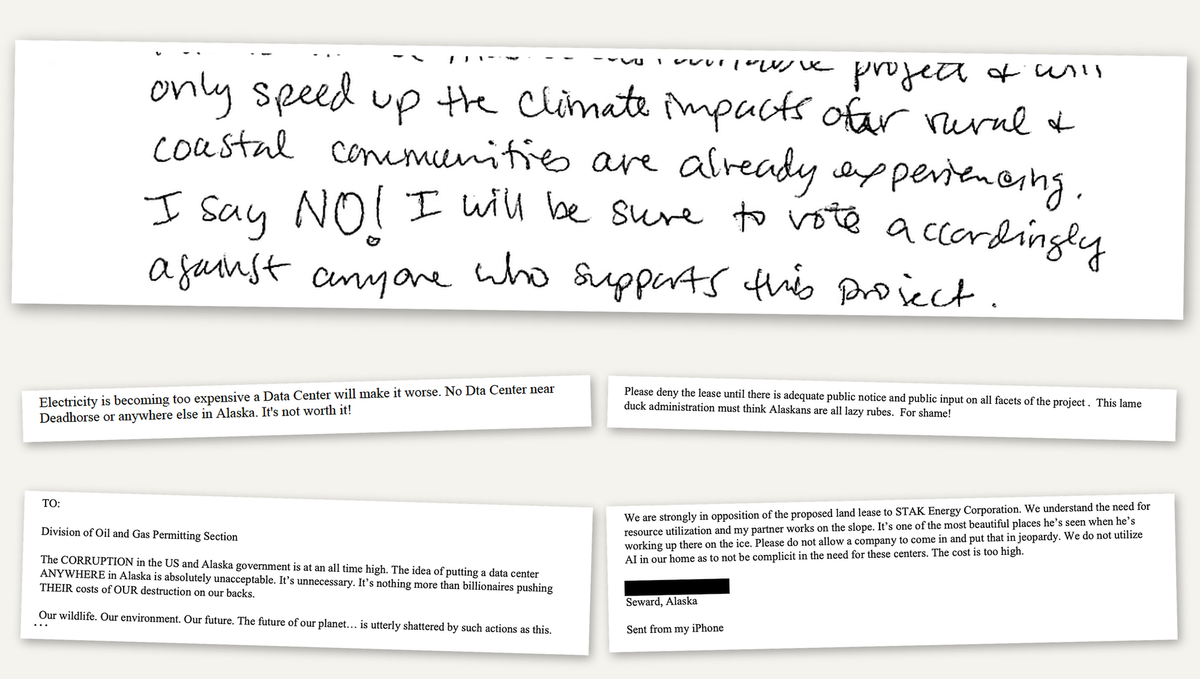
A selection of comments filed with state land managers on a proposed lease of Alaska public lands for a data center project on the North Slope. (Image from Nathaniel Herz/Anchorage Press)
Opposition is pouring in against a large data center and power plant proposed for Alaska’s North Slope, as Gov. Mike Dunleavy’s administration considers whether to approve a 50-year lease of state land to the project’s developer.
More than 500 public comments were received before a preliminary deadline set by the Alaska Department of Natural Resources, according to copies of the messages released by the agency.
Fewer than a dozen comments endorsed the project. The vast majority were opposed, often in harsh or strident terms — with subject lines like “HELL NO! To ANY DATA CENTERS” and “NO AI”. One commenter noted explicitly that their message had been written “with my own brain and fingers typing,” rather than generated by artificial intelligence.
“Please incorporate some AI (Alaskan intelligence) into making this decision,” wrote one commenter, who described data centers as “the abandonment of both nature and humanity.”
Comments were initially due to the department’s Division of Oil and Gas in mid-June; the agency has since extended the deadline an extra month, to July 17, due to “the volume of comments received, public interest and requests for extension,” spokesperson Sean Clifton wrote in an email.
Once the deadline passes, the agency will assess the comments before it makes a final decision on the proposed land lease, Clifton said.
An official with Stak Energy, the Anchorage-based company that applied for the lease, said in an emailed statement that the business “is committed to being a responsible steward of the land entrusted to us” and has proposed the lease in an area “far removed from any local communities.”
“Our initial assessment is that the vast majority of the comments are form letters lacking substance other than reflecting an individual’s point of view,” said the official, John Boyle, Stak’s chief strategy officer, who previously served as commissioner of Alaska’s natural resources department from 2023 to 2025. Boyle added: “Some of the comments are more substantive and will be addressed in due course.”
The natural resources department released copies of the comments to the Anchorage Press/Northern Journal after it also released them to Stak, though the agency redacted names and other identifying information.
The company is planning a major development that would use abundant natural gas from nearby North Slope oil fields to run power plants that could support artificial intelligence and cloud computing, according to documents it submitted to the state.
The project, which Boyle said would cost more than $10 billion, would occupy roughly one square mile just off the Dalton Highway, some 25 miles south of the North Slope oil hub of Deadhorse. Its generators could produce a gigawatt or more of power, which is some 30% more than the peak demand of urban Alaska’s entire grid.
Boyle, in his message, stressed that Stak would be focused on generating power and selling it to large-scale computing companies known as “hyperscalers” — and would not operate data centers itself.
“And while we anticipate hyperscalers providing the commercial foundation for our power plant build, Stak will be able to provide power to any entity interested in purchasing it,” he said.
Stak’s project, if built, would be the first large data center development in Alaska. In its lease-related documents, the company said its plans were drafted to avoid the backlash against the industry that’s erupted in other states — where advocates have increasingly protested projects’ land use, pollution and water consumption.
Average annual temperatures at the proposed project site, according to Stak, are 12 F, meaning that the development is expected to need 10% or less of the amount of water that typical data centers use for cooling. There are also no cities or villages within 50 miles of the proposed development except for Deadhorse — an industrial center populated by oil industry employees who live in work camps during multi-day shifts, then fly home.
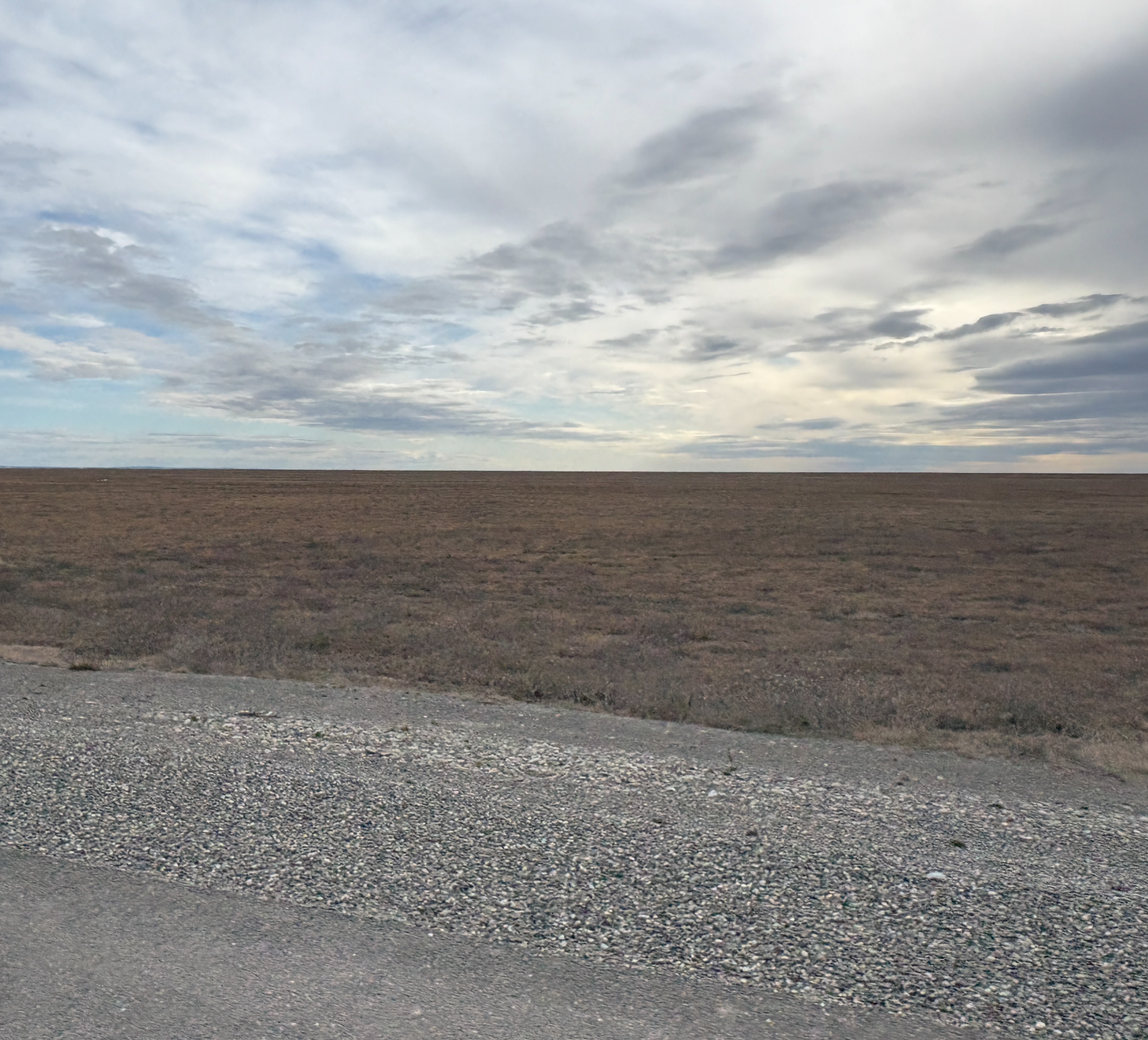
Stak Energy is proposing to lease an area near this stretch of tundra, on Alaska’s North Slope near the Dalton Highway, to operate natural gas generators that would power a large data center. (Nathaniel Herz/Anchorage Press)
The few positive comments made some of those points. “The location pretty well leaves NIMBY out of the equation,” one commenter said. “I’m all for this application and this project.”
Other comments against the development used identical language and appeared to stem from templates distributed by opponents. Formal opposition or messages of concern also came in from groups including the Northern Alaska Environmental Center, the Alaska Public Interest Research Group and the Alaska chapter of a sportsman’s group called Backcountry Hunters and Anglers.
But many other messages objecting to the project were unique and written by individuals from across the state — from Kodiak and Kotzebue to Seward, Valdez and the North Slope village of Nuiqsut. Those critics were not sold on Stak’s pitch, and expressed themselves in terms ranging from reasoned and factual to strident and misinformed.
Some commenters, for example, argued that Stak’s project and natural gas consumption would have the effect of raising electricity prices for other Alaskans — many of whom also get their power from natural gas plants.
But the North Slope oil fields are hundreds of miles from urban Alaska and disconnected from the state’s power grid, meaning that sales of fuel to Stak would have no direct impact on city-dwellers’ electricity prices.
Others, meanwhile, made factually supported assertions — among them that data centers running on fossil fuels would accelerate climate change, and that the pad that Stak plans to build on the tundra would require huge quantities of gravel, a scarce resource on the North Slope that’s also used by villages and oil developers.
Still others kept their objections short and succinct — and sometimes cheeky.
“No,” was one commenter’s full message, though they added a postscript: “You may build one in Canada though.”
Nathaniel Herz welcomes tips at natherz@gmail.com or (907) 793-0312. This article was originally published in Northern Journal, a newsletter from Herz. Subscribe at this link.
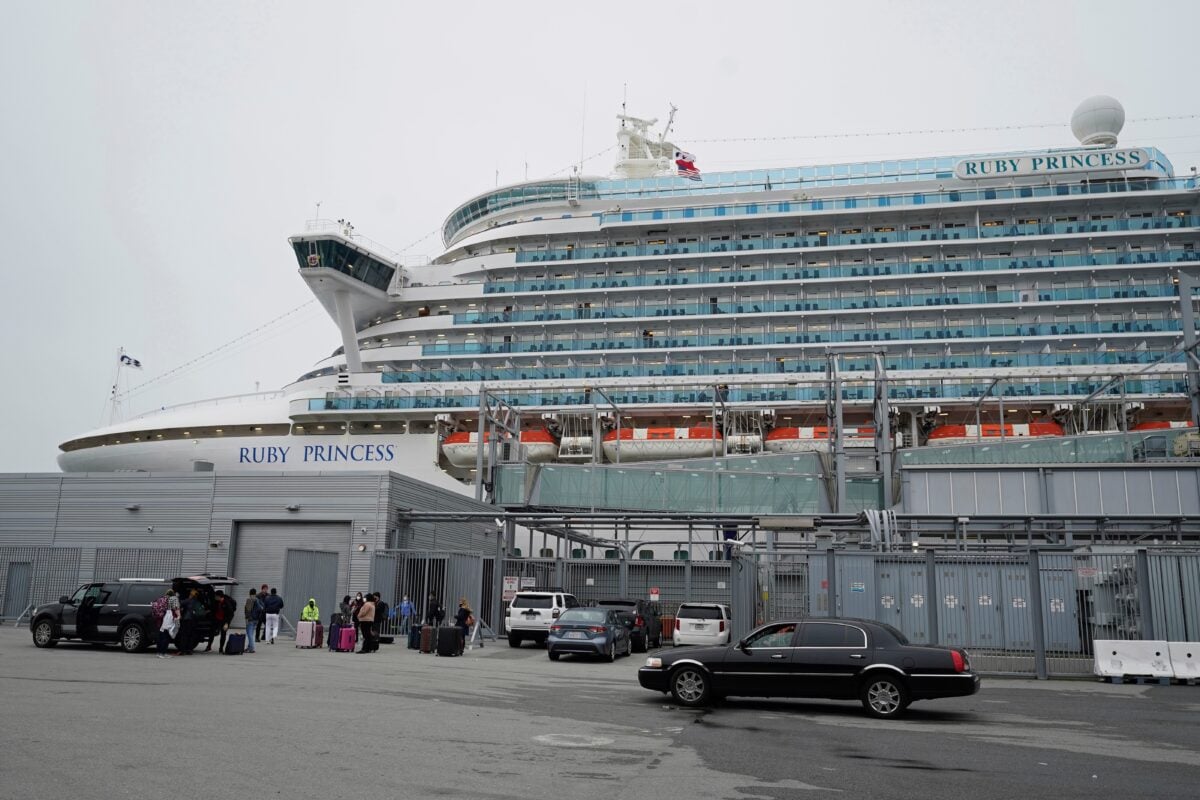
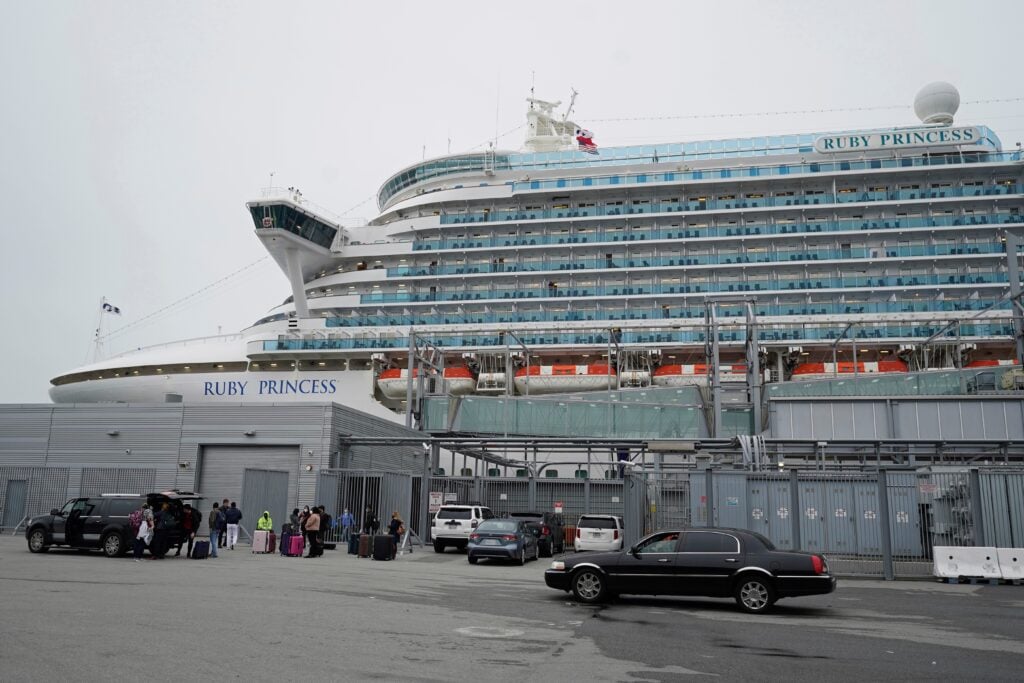
FILE - The Ruby Princess is docked in San Francisco, Thursday, Jan. 6, 2021. (AP Photo/Eric Risberg, File)
FILE – The Ruby Princess is docked in San Francisco, Thursday, Jan. 6, 2021. (AP Photo/Eric Risberg, File)
AP- More than 120 passengers and crew members on a Princess Cruises ship that docked in San Francisco on Thursday were infected with a stomach virus while on their voyage, federal health officials said.
The Ruby Princess was on a 20-day round trip journey from San Francisco to Canada and Alaska when 102 passengers and 23 crew members were stricken by norovirus, the U.S. Centers for Disease Control and Prevention said.
Norovirus is highly contagious, often spread by food or on surfaces, particularly in crowded conditions. It is a short-lived illness for many people, but can be dangerous for people with underlying health conditions, young children and those aged 65 and older.
Symptoms include sudden onset of vomiting, diarrhea and stomach pain that can last three days, according to the CDC.
The outbreak on the Ruby Princess, which set sail on June 12, was reported to the CDC on Saturday, officials said, adding that not all the infected people were sick at the same time or when the ship arrived or left port.
There were 3,032 passengers and 1,144 crew members on the Ruby Princess voyage, the CDC said.
Princess Cruises said in a statement that the ship’s crew responded promptly and implemented “enhanced sanitation protocols across the ship.”
The ship will be thoroughly cleaned and disinfected before departing on its next trip later Thursday, the company said.
So far this year, there have been seven illness outbreaks reported on cruise ships in the CDC’s jurisdiction, mostly from norovirus, health officials said.
Most norovirus outbreaks occur when people who are already infected spread the virus to others by direct means, such as through sharing food or utensils. Outbreaks can also be spread through food, water or contaminated surfaces.
Washing hands frequently is key to preventing a norovirus infection, especially after using the bathroom or before eating and drinking. It is best to use soap and water, scrubbing and washing for at least 20 seconds. Hand sanitizer alone doesn’t work well against norovirus, the CDC said.
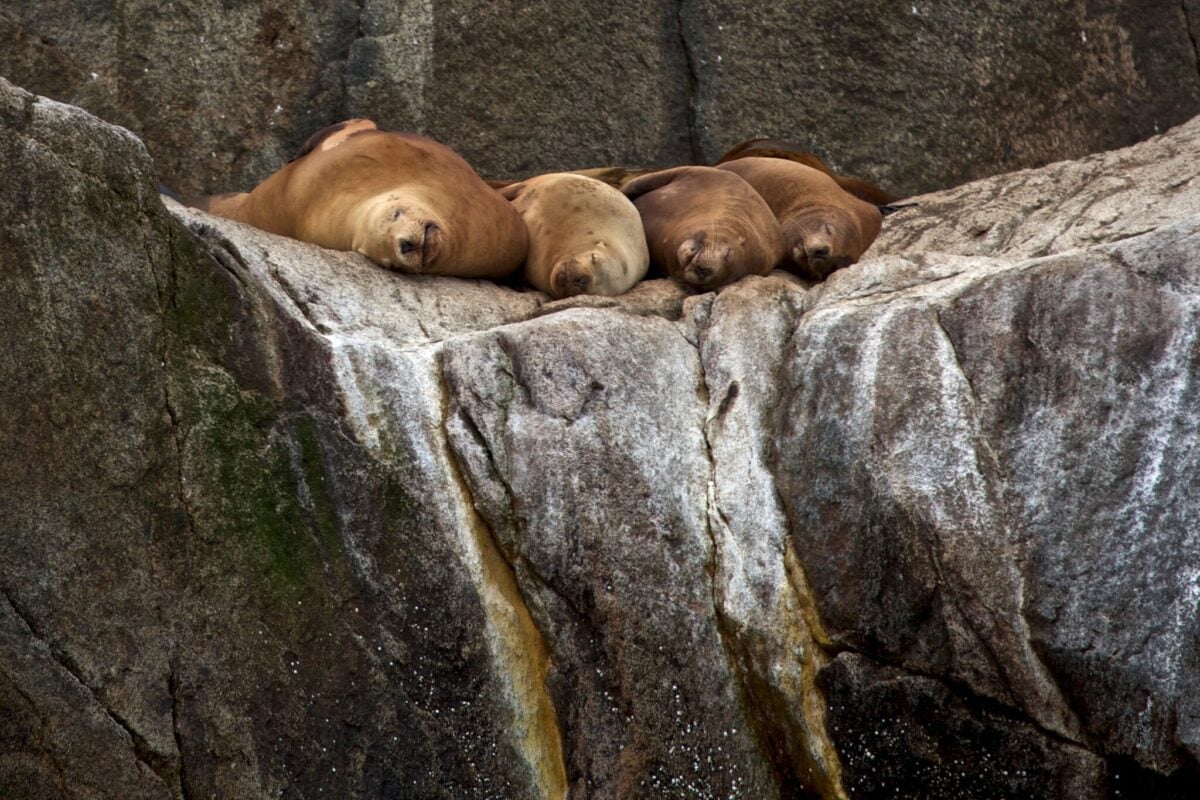
Steller Sea lions rest on a rocky ledge in Kenai Fjords National Park on July 31, 2013. The western population of Steller sea lions is listed as endangered, and fishery managers have imposed protection to limit the impacts to the animals from commercial seafood harvest. (Photo by Kaitlin Thoresen/National Park Service)
Federal regulators plan to reevaluate fishing closure boundaries established to protect endangered Steller sea lions in Alaska, part of a national Trump administration push to cut regulation of U.S. commercial seafood harvests.
The Steller sea lion protections are among a series of rules that the administration is seeking to relax or change to carry out a mandate from President Donald Trump to increase catches, reduce regulation and ensure that the nation is “the world’s dominant seafood leader.”
The recommended changes were released on Thursday by the National Oceanic and Atmospheric Administration’s Fisheries service and are in response to Trump’s 2025 executive order titled “Restoring American Seafood Competitiveness.” They could affect oceans from New England and the Caribbean to the tropical Pacific and the Bering Sea.
Several months of public consultations resulted in a list of recommendations that “we believe will reduce burdens on domestic fishing, increase production, stabilize markets, improve access, and enhance economic profitability,” NOAA Fisheries Assistant Administrator Eugenio Piñeiro Soler said in a statement.
Steller sea lions in Alaska have suffered a population decline that extended over several decades.
The no-fishing zones intended to protect them are established around sea lion rookeries, places where the animals gather to mate and raise their pups, and major haul-out sites. There are also transit restrictions in areas where the sea lions gather, as well as seasonal harvest limits on fish that are known to be Steller sea lion food: Atka mackerel, Pacific cod and pollock.
Named for naturalist Georg Wilhelm Steller, who sailed to Alaska with explorer Vitus Bering in the 18th century, Steller sea lions are the largest of the “eared seals,” a category that includes all sea lions and fur seals.
A Steller sea lion is seen in 2013 in Alaska. (Photo provided by NOAA Fisheries)
The entire population, which ranges from Japan to California but is concentrated in Alaska, was listed as threatened in 1990. Seven years later, the population was divided; the western population from Prince William Sound to the Aleutians, which has had the most dramatic losses, was listed as endangered while the eastern population remained classified as threatened. By 2013 the eastern population had recovered sufficiently to warrant de-listing, but the western population remains classified as threatened and continues to face threats, according to NOAA Fisheries.
After Trump issued the executive order in April of 2015, NOAA Fisheries solicited comments from the regional fishery management councils and other organizations, as well as the general public.
The North Pacific Fishery Management Council, which manages harvests in federal waters off Alaska, responded to the solicitation with 20 recommended regulatory changes. Those included some changes to harvest timing, some changes to allocations among quota holders and some new allowances for record-keeping. A change to Steller sea lion protections was not on the list.
To Oceana, an environmental group focused on marine issues, the language in the NOAA list of recommendations was a bit vague, but any review of Steller sea lion conservation measures “must be grounded in the law and the best available science,” said Lauren Hynes, a marine scientist who is the organization’s North Pacific campaign manager.
“The western distinct population of Steller sea lions remains endangered, and recovery goals have not been met. If anything, more must be done to conserve and recover this vulnerable population and to protect their habitat and prey,” Hynes said by email.
Other Alaska-focused changes in the list of recommendations released Thursday by NOAA Fisheries were some tweaks to sablefish rules.
Trump has already taken other actions that overturn environmental protections to enable more commercial fishing in U.S. waters.