A black bear clings to a tree trunk in Wrangell-St. Elias National Park and Preserve in this undated photo. (Photo provided by the National Park Service)
Rep. Garret Nelson, R-Sutton, chased a black bear away from Rep. Julie Coulombe, R-Anchorage, in front of the Alaska State Capitol during a late-night encounter this week.
“It was a real safari night,” Nelson said on social media.
According to Coulombe, she was walking toward the Assembly Building, home to apartments used by legislators, when she saw the bear approaching her on Wednesday night.
“I am not good with bears. They freak me out,” she said by phone on Friday.
Nelson, who had just climbed in a ride-sharing car, asked the driver to stop, got out of the car and bluff-charged the bear, holding his cellphone in front of him to film the encounter.
Nelson posted the video on social media afterward, jokingly writing, “Just attack the bear first! You can get your free life advice with me whenever you want. It might end up with a serious injury (maybe death)….yes. But as my brother Geremy says, if you come out with a good story, it’s worth it.”
His ride-sharing driver posted a separate, similar video that corroborated the event.
Asked about the incident by phone, Nelson confirmed that he isn’t encouraging people to run at bears.
“I’m not advising people to randomly charge bears. I just weighed the risk and figured that one I outweighed that bear by probably 150 pounds, and he was already on his way out,” Nelson said.
Bear sightings are common in downtown Juneau during the spring, summer and fall, including near the state Capitol. Earlier this month, a downtown Juneau resident shot a bear out of a tree, injuring it. The Alaska Department of Fish and Game later killed the animal.
The department recommends that people who encounter a bear in the wild should “avoid it and give the bear every opportunity to avoid you.”
Coulombe said the bear was trotting toward her before Nelson got out of the car, started filming and chased the animal away.
“All I could think of was I was just going to run back into the Capitol because, I mean, I had really nowhere else to go,” she said.
Afterward, Coulombe said, “I was like, ‘My hero.’ He was so proud of himself. ‘You know, I saved you, Julie. I say I saved you,’ and he did.”
Nelson said that while the situation worked out for him, his tactics shouldn’t be repeated.
“Don’t charge bears. This is a do as I say, not as I do situation,” he said.
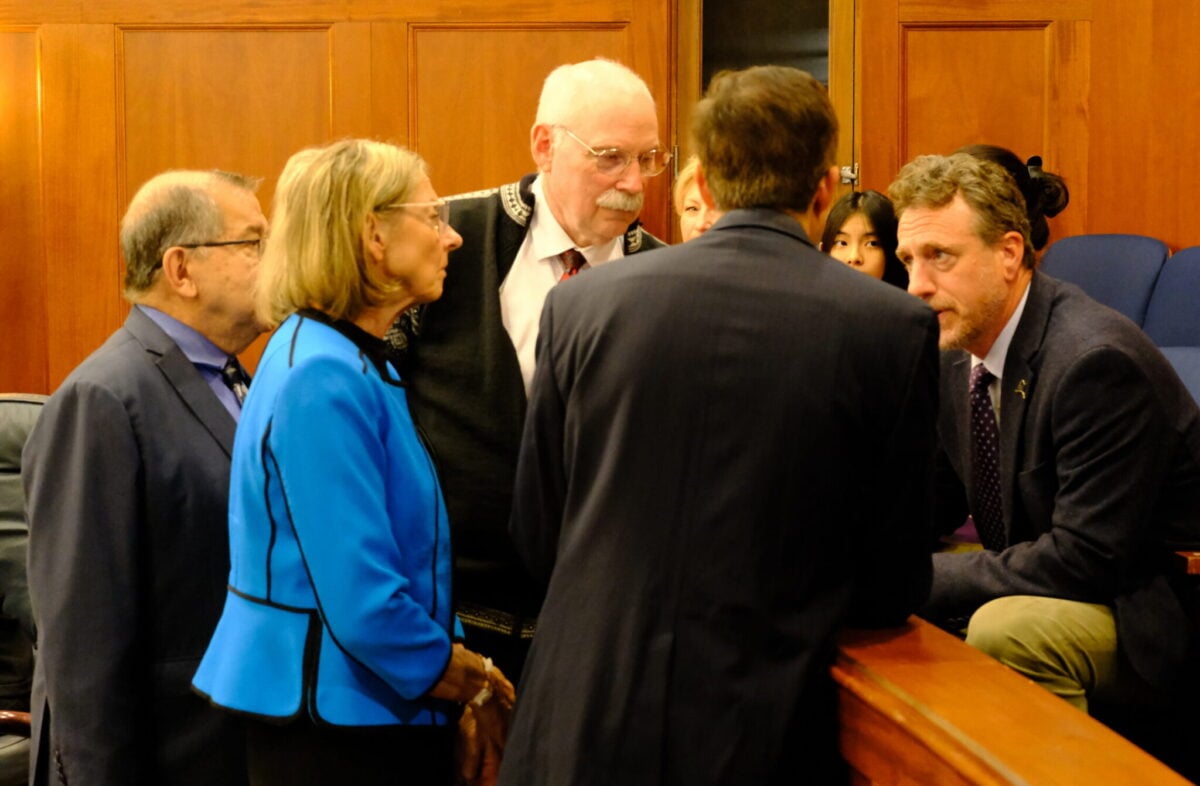
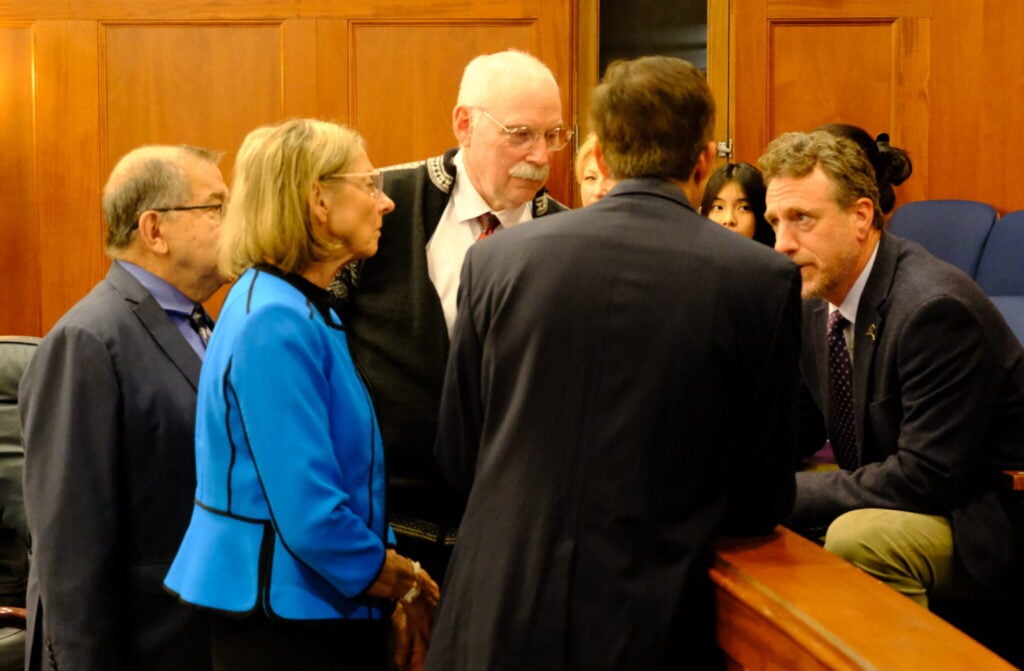
State senators crowd around Matt Kissinger, commercial director of the Alaska Gasline Development Corp., shortly before lawmakers voted Thursday, July 16, 2026, on a compromise version of a tax break intended to benefit the trans-Alaska natural gas pipeline. (Corinne Smith photo/Alaska Beacon
On Wednesday, one day before the Alaska Legislature voted on a multibillion-dollar tax break for the proposed trans-Alaska gas pipeline, Rep. Calvin Schrage, I-Anchorage, gave the pipeline’s lead developer a sneak preview of the bill.
For weeks, Schrage had been in charge of negotiating a compromise version of the tax break that could get approval from the state House, Senate and Gov. Mike Dunleavy.
He walked Glenfarne Alaska President Adam Prestidge through the compromise, explaining section by section how skeptics in the state Senate had given ground on labor issues and project timing. Skeptics also were no longer insisting that the pipeline be subject to a revised tax on privately held oil and gas firms.
Given those changes, Schrage asked: Could Glenfarne support the bill?
According to Schrage, Prestidge said it could, and Glenfarne would publish a news release to that effect.
Glenfarne disputes Schrage’s account, and that difference in perspectives appears to have contributed to a failed vote on Thursday that killed the bill — and possibly with it, the current version of the gas pipeline project.
“The governor’s probably in a bad mood,” said Sen. Bert Stedman, R-Sitka, “but he was definitely told on several occasions when we were negotiating this bill that this is our last and final offer. The bill goes down, it’s dead. There’s no playing around.”
Glenfarne has repeatedly said that changes to the state’s petroleum property tax are needed in order to get financing for the pipeline project, which is expected to cost as much as $54.5 billion.
The bill wouldn’t have guaranteed a pipeline, but as Rep. Will Stapp, R-Fairbanks, said earlier this year, the lack of a bill would guarantee not having a pipeline.
The tax break would require the state and local governments to forgo more than $10 billion in revenue over 30 years, and some legislators are skeptical of the proposal. Getting their votes required a compromise.
A tax revision, variously called an “S Corp tax” or “pass-through entities tax” would apply certain income taxes to some companies that don’t currently pay them. It was included in the pipeline bill to win the votes of skeptical lawmakers, but prior versions of the tax have drawn opposition and led to an impasse.
On Thursday, after Schrage told fellow lawmakers that Glenfarne supported the new version, a bipartisan, bicameral committee voted 4-2 to advance it to the full House and Senate.
No news release came, and Schrage talked to Prestidge again.
Hilcorp, an oil and gas firm owned by billionaire businessman Jeffery Hildebrand, is the operator of the Prudhoe Bay and Point Thompson oil and gas units on the North Slope. Those units would supply gas for the pipeline that Glenfarne intends to build.
Hilcorp is also the company that would be most affected by the revised tax.
“What I heard from Glenfarne is that Hilcorp told them that if they came out in support of the bill, that they would make all their contractual negotiations impossible for them, and essentially threatened to use their future negotiations, which they knew they would have to enter into, to leverage them and and make things incredibly difficult,” Schrage said.
After Thursday’s committee vote, pro-development groups issued a statement asking legislators to vote down the revised bill, citing the tax revision and its potential effect on natural gas prices in the state.
“When you tax entities that are providing you with a commodity, it will increase the end cost of said commodity,” said Steve Wackowski, president and CEO of the Alaska Oil and Gas Association, a trade group that signed the statement.
Before the state Senate voted on Thursday afternoon, lawmakers there learned that Glenfarne and the Alaska Gasline Development Corp. — a state-owned firm developing the pipeline with Glenfarne — might have issues with the S Corp provision after all.
AGDC owns 25% of the gas line project, while Glenfarne owns 75%.
They called for a brief break in order to talk with Prestidge and Matt Kissinger, the commercial director of AGDC, in private.
Kissinger told senators that AGDC was fine with gasline-related provisions of the bill but had no comment on the pass-through provision because AGDC isn’t a tax-paying entity.
“They wouldn’t touch that with a 10-foot pole because they answer to the (governor),” said Sen. Bert Stedman, R-Sitka on Friday.
By phone to senators on Thursday, Prestidge said Glenfarne opposed the S Corp provision.
Members of the 14-person Senate majority caucus left that meeting with no agreement on whether or not to pass the bill. It ultimately passed the Senate by a single vote after Sen. Matt Claman, D-Anchorage, changed from “no” to “yes.”
Before the House could vote, Gov. Mike Dunleavy issued a statement saying he opposed the latest version of the bill and would veto it if it passed the House.
No veto was needed: Only 19 members of the House voted for the bill, two short of what was needed to advance it.
Only one of the House’s 21 Republicans — Rep. Louise Stutes, R-Kodiak — voted for the bill; all of the House’s Democrats and independents voted for it. That flipped a vote on a prior version, when opposition came from a handful of Democrats and independents.
Several Republicans who voted against the bill said they did so because it would affect companies that are drilling for oil and gas in Cook Inlet — Hilcorp, as well as HEX and Furie. Armstrong Oil and Gas, a firm active on the North Slope, would also be affected.
Partially because of corporate secrecy and partially because of the haste with which the compromise advanced, there was no information on how much each company would pay.
In addition, members of the all-Republican House minority caucus were excluded from the closed-door negotiating that led to the compromise bill. The exact text of the final version came as a surprise to them.
“All of a sudden, we would have a tax on our three most important companies, which would be Hilcorp, HEX, and Armstrong,” said Rep. Kevin McCabe, R-Big Lake. “I think (voting no) was the right thing to do, and my whole caucus apparently agrees, as well as the Senate minority.”
Schrage, who voted for the bill, disagreed.
“The bill worked for Glenfarne and would have allowed them to keep moving the project forward and given them a shot. They were happy and pleased with the work product. I don’t think they ever loved the S Corp provision, but it didn’t harm them. And it was only when Hillcorp came in to essentially leverage the parties at play that everything fell apart,” Schrage said afterward.
Glenfarne disputes Schrage’s account of what occurred, calling it “misleading and incorrect.”
“Glenfarne didn’t take a position on a bill we hadn’t seen, and once we saw the bill we immediately opposed it, including our June 19 statement to the media. This tax increases commercial and economic uncertainty in Alaska for the whole industry working together to support this project and bring energy relief. A $16 project energy price cap and tax-driven cost increases make project economics increasingly challenged,” said spokesman Tim Fitzpatrick by email.
Fitzpatrick’s statement refers to a clause in the gas pipeline bill that caps the price of natural gas for Alaskans. If taxes rise on Hilcorp, it could then raise the price of North Slope gas it sells into the pipeline, making it difficult for Glenfarne to meet the required price, said those familiar with the issue.
“It’s frustrating that Hillcorp has so much influence over the state of Alaska,” said Sen. Lyman Hoffman, D-Bethel on Friday. “Glenfarne or the governor wouldn’t stand up to them for the better interests of the state of Alaska.”
Schrage says he has phone records and text messages to back up his account.
“I think the evidence is pretty clear,” Schrage said. “The governor, Glenfarne and minority Republicans all indicated support for the bill passed out of the conference committee minus the closure of the passthrough entity tax loophole which the entire AKLNG project was exempted from. Given that exemption and the support for the rest of the bill, what possible reason would Glenfarne have to oppose the bill other than pressure from Hilcorp?”
Sen. Bill Wielechowski, D-Anchorage, took to social media on Thursday to accuse Dunleavy of working for “a Texas billionaire,” the owner of Hilcorp.
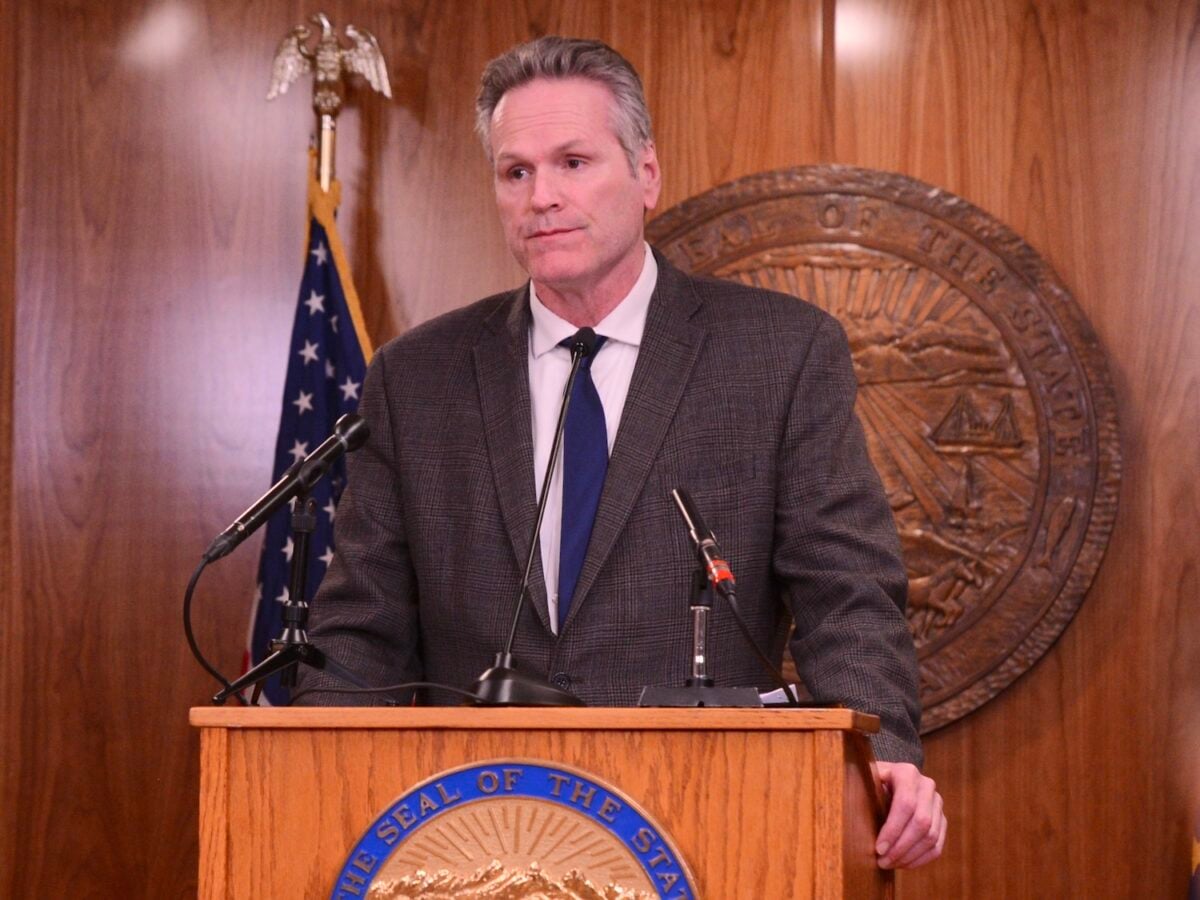
“Yeah, that’s bulls**t. OK, that’s bulls**t. He’s just — and you could quote me, that’s bulls**t. OK, he’s a bulls**tter,” Dunleavy said of Wielechowski, speaking to reporters after a news conference on Thursday evening. “He is one of a handful in the Senate and the Democrats that are going to try and kill this gas line for the very people they purport to represent — poor people, single moms with kids — that their bills are going through the roof. Why doesn’t he give a rip about them? Why doesn’t he care about them?”
“Why is he insisting on an S Corp in this bill?” Dunleavy asked.
Because Dunleavy would veto a standalone bill, Wielechowski said afterward.
“The reason that it hasn’t been passed is because he’s threatened to veto it, and you need 45 votes to override that, and there’s zero chance we’re going to get it,” Wielechowski said.
Alaska is facing a long-term deficit, with spending on services and the Permanent Fund dividend expected to greatly exceed the amount of available revenue. Legislators have been trying since 2017 to pass a bill containing the S Corp provision.
Dunleavy has vetoed numerous standalone tax bills, saying repeatedly that he will not approve any that are not part of a comprehensive plan to bring state expenses and revenue into line over the long term.
“He’s killed all of the new revenue bills that we’ve offered,” said Sen. Cathy Giessel, R-Anchorage.
“This is a huge gap in our revenue stream. It is an inequality in our tax structure,” she said, noting that other oil companies pay the tax that Hilcorp would pay. “How is it that Conoco and Exxon have been able to pay this tax and still continue to explore on the North Slope?”
Dunleavy said insisting on an S Corp provision in the gas pipeline bill amounts to hostage-taking.
“So you can’t get an S corp bill passed that’s unvetted, that nobody really knows what it does, unless you hold the people hostage with a gas bill? Well, that’s a representative for you. That’s a senator for you. That’s pretty sad, to be perfectly honest with you,” he said. “Pretty sad.”
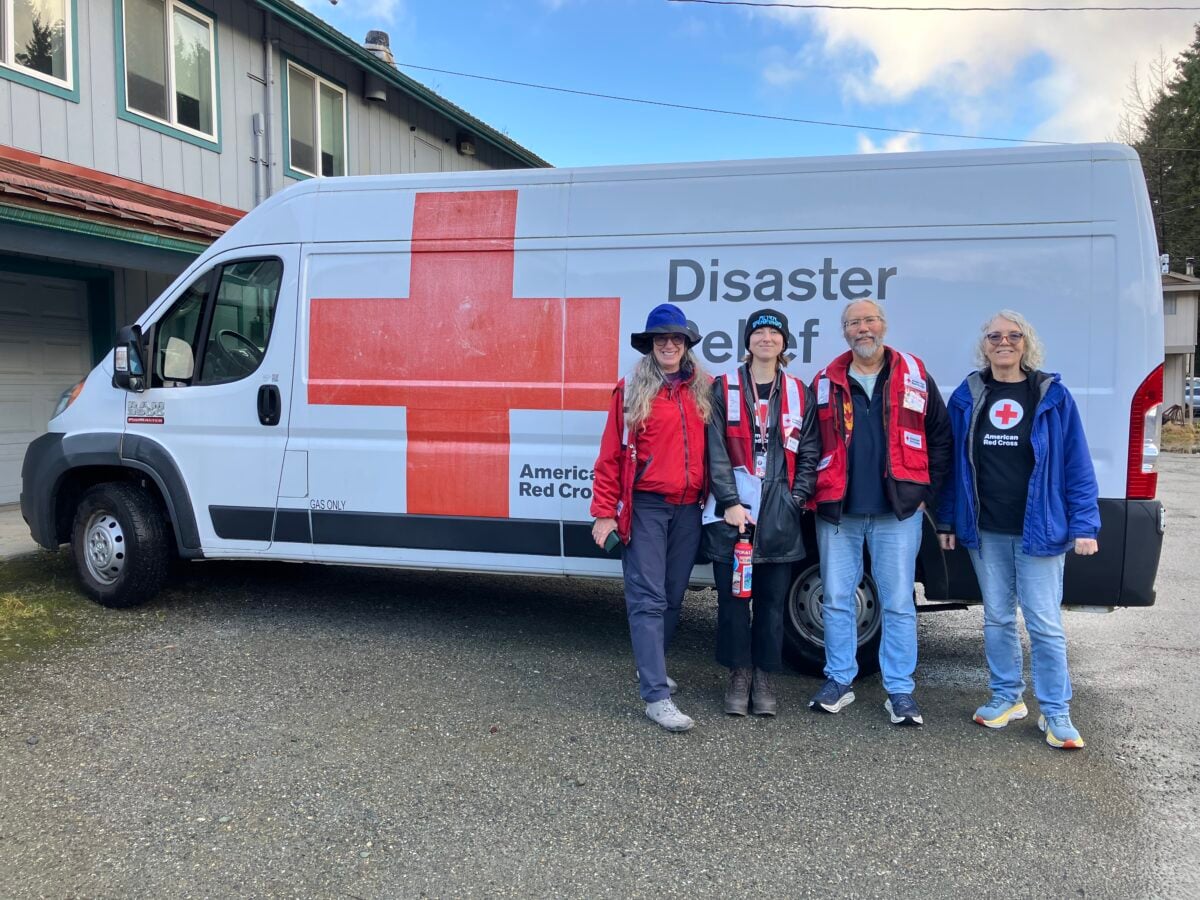
CBJ-The American Red Cross will host a free workshop and resource fair on Sunday, July 19 at the Mendenhall Valley Library. The event is designed to help older adults, individuals with access or functional needs, and medically fragile persons prepare for emergencies.
The event begins at 12 p.m. with a presentation, available both in-person and online, followed by a planning workshop and resource fair from 1 to 3 p.m.
Attendees will have the opportunity to build an individualized disaster plan, complete an emergency contact card, learn how and where to safely store important documents and more.
Registration is free and available online at bit.ly/4vZJlPL. Information for virtual attendance will be provided upon registration
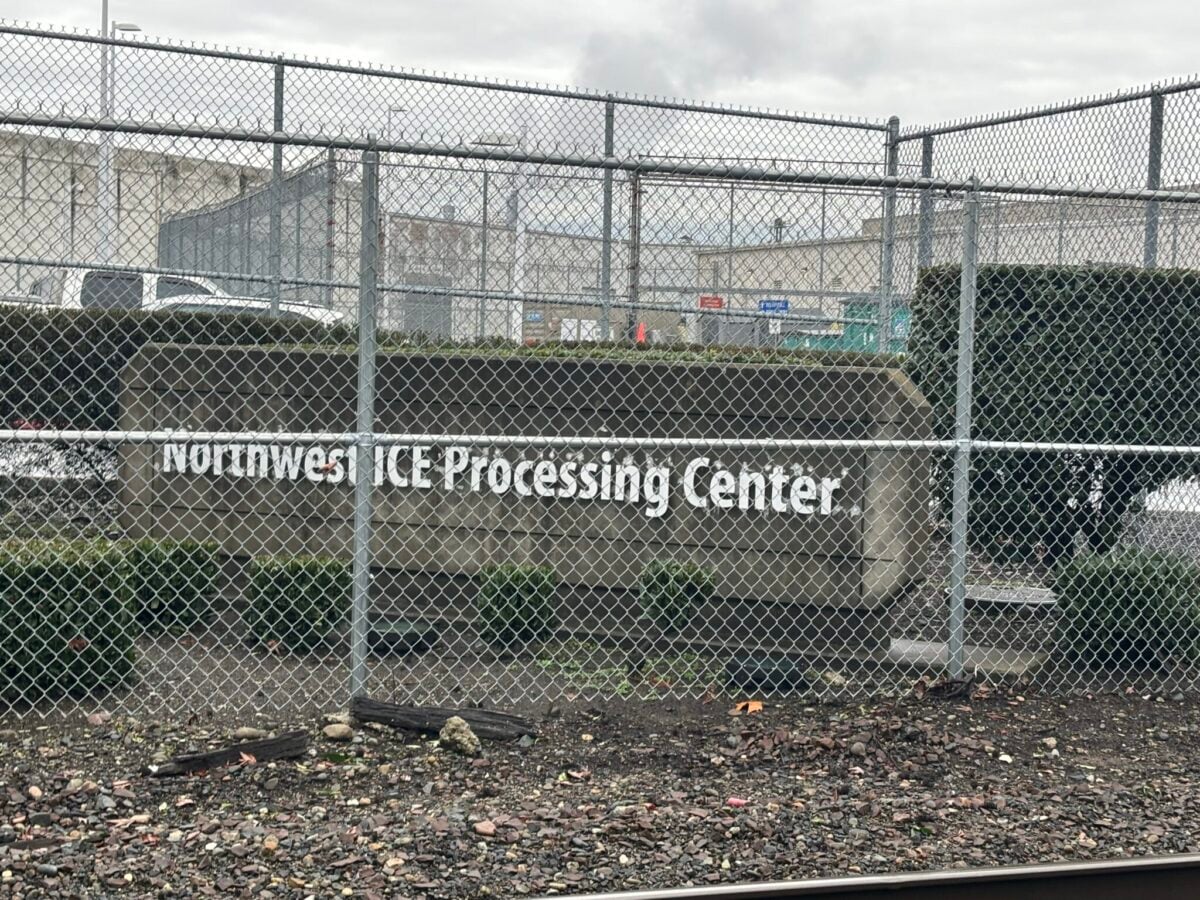
The Northwest ICE Processing Center in Tacoma, which is one of the largest immigrant detention facilities in the western U.S. (Grace Deng/Washington State Standard)
U.S. Immigration and Customs Enforcement arrested an Alaska state attorney in Anchorage and is holding him in an ICE detention facility in Washington state, according to an agency spokesperson.
Shucheng Yang, a 32-year-old Chinese national, was arrested in Anchorage on July 10.
“Yang violated the terms of his admission and is a deportable alien,” said Jason Chudy, an ICE Public Affairs officer, by email on Thursday. He said Yang is currently detained in the Northwest ICE Processing Center in Tacoma, Washington, pending immigration proceedings.
Yang is an attorney with the Alaska Department of Law’s labor, business and corporations section, according to the state employee database. Yang was admitted to the Alaska Bar Association and licensed to practice law in the state in June 2025. A spokesperson for the department declined to respond to questions about his immigration status, employment status or work authorization when hired, saying the department does not comment on personnel matters.
Chudy declined to say how Yang violated the terms of admission into the country. “To be clear, work authorization does NOT confer legal status in the United States,” he said in the email.
He referred further questions about Yang’s work authorization to the U.S. Citizenship and Immigration Services. A spokesperson for USCIS referred the question back to ICE, and said the agency does not comment on individual immigration cases.
The state requires applicants to self-disclose their employment eligibility and work authorization through the I-9 verification process during hiring, according to the Alaska Department of Administration, as reported by Alaska News Source.
There are no state criminal charges against Yang, according to court records. Yang pleaded no contest on June 26 for a speeding citation.
A spokesperson for the Municipality of Anchorage confirmed the Anchorage Police Department issued the traffic ticket on April 25. “They have had no other interaction with Mr. Yang since April,” said Nora Morse, communications director for the municipality, by email on Thursday.
“The Anchorage Police Department does not ask for someone’s immigration status as part of a routine traffic stop,” Morse said.
A spokesperson for the ACLU of Alaska said they were trying to get in touch with Yang’s attorney, and had no other information on his case.
The Alaska Department of Corrections contracts with ICE to hold detainees in Alaska under an agreement with the U.S. Marshals. A spokesperson confirmed that Yang was detained in Alaska for two days after his arrest until he was transferred on July 12.
DOC has held 17 people arrested by ICE since June 1, and 73 people since the beginning of the calendar year, according to spokesperson Betsy Holley on Thursday.
The Alaska House of Representatives on Thursday voted down a multibillion-dollar tax break for the proposed trans-Alaska natural gas pipeline project. Glenfarne LLC, the project’s lead developer, has said the tax break is necessary for it to obtain financing from banks and equity investors.
The Alaska Senate voted 11-8 to approve a compromise version of House Bill 381, which contains the tax break. But after that vote and as the House gaveled in, Dunleavy announced he would veto the bill if it were to pass.
In a statement on social media, the governor said a provision that applies a corporate income tax to certain kinds of privately owned oil and gas companies “raises serious concerns.”
Legislators are meeting in a second 30-day special session devoted to HB 381, and Dunleavy said he will call the Legislature into a third session starting July 27.
After the governor’s message was read on the House floor, only 19 members of the House voted in favor of the bill. Twenty-one votes were needed to approve it.
Many of those who voted against the bill spoke against the provision identified by the governor, with Rep. Dan Saddler, R-Eagle River, calling it a “parasite” within a bill intended to benefit the gas pipeline.
The provision came at the insistence of state senators who said it was necessary for the bill to earn their votes.
“If you want a gas line, everybody’s got to compromise, and I think that’s ultimately what you saw today,” said Sen. Bill Wielechowski, D-Anchorage and one of the most vocal advocates of the provision questioned by the governor.
After the governor’s announcement, Senate President Gary Stevens, R-Kodiak, said he was unsure how the Senate would proceed in the next special session.
The bill could be referred back to the Senate Resources Committee, chaired by Sen. Cathy Giessel, R-Anchorage and a leading project critic. The Senate Finance Committee could consider the issue further.
Senators could simply take no action and wait for the current Legislature to end and Dunleavy to leave office in December.
“I sort of feel you need to go to the next Legislature,” Stevens said.
First gas expected before 2030, developer says
As currently planned, the Alaska LNG project would include three separate subprojects, built in two stages. Altogether, the project is expected to cost as much as $54.5 billion, making it one of the largest natural gas projects in the world.
Gas would be pumped from North Slope wells to a processing plant on the North Slope, then down a pipeline to an export facility on the Kenai Peninsula.
Developers expect to reach a final investment decision on the project’s first phase this year. It would include the pipeline, part of the North Slope processing plant and part of the export facility.
Initially, the export facility would function in reverse, as a place for Alaska to import natural gas for local use while the pipeline is under construction.
Adam Prestidge, president of Glenfarne Alaska, told state senators on June 3 that after the final investment decision, it should take about three years for construction and commissioning before gas begins flowing through the pipeline to in-state residents.
The second, export phase of the project would take several more years to complete.
Switching from a property tax to a gas tax
The main intent of the bill is to replace Alaska’s 2% petroleum property tax with a lower tax on gas shipped through the pipeline.
The pipeline is exempt from the tax during construction, but the state would start collecting taxes when gas begins flowing. Glenfarne has said that’s a problem because it won’t begin making money until exports begin several years later.
Glenfarne executives have said they cannot get financing to build the pipeline unless the tax is changed.
That led Gov. Mike Dunleavy to propose the tax change in March. Legislators were unable to pass the bill by the time the regular legislative session ended in May, and Dunleavy has now called lawmakers into special session twice to get it done.
Because petroleum property taxes mostly go to municipalities, the amount received by cities and boroughs during that period would drop by another $5.3 billion.
Proponents of the change have focused on the benefits, rather than the lost revenue. Without the reduction, the pipeline cannot be built, they say. If the pipeline isn’t built, the state and municipalities get nothing.
“We want Alaskan gas for the Alaskan people, instead of Canadian gas for Alaskan people, instead of imports,” said Rep. Kevin McCabe, R-Big Lake, on the House floor. “It means the world to our people…lowered heating bills, a stronger economy.”
While proponents of the tax break have run a “Build the Line” ad campaign insinuating that the tax reduction would guarantee a pipeline, some state legislators say there is a low chance of a pipeline, even if the tax break becomes law.
Members of the conference committee tasked with negotiating a final compromise AKLNG tax bill from House and Senate versions, debate the bill on July 16, 2026, before moving it to a vote before the full House and Senate. (Photo by Corinne Smith/Alaska Beacon)
“This has been billed as the bill that either makes a pipeline be built or does not make a pipeline be built, and that just really is not true,” said Rep. Justin Ruffridge, R-Soldotna.
No ‘better shot’ at compromise, drafter says
The House and Senate passed different versions of HB 381 in June, sending the bill to a six-member multipartisan conference committee tasked with negotiating a compromise.
For weeks, the key point of contention has been whether or not the bill will also include the erasure of a tax exemption for “pass-through corporations,” generally large companies that are owned privately and not traded on public markets.
In Alaska, erasing that exemption would affect the oil and gas company Hilcorp, which operates the vast Prudhoe Bay oil field, among other work in the state.
It also would raise taxes on the proposed gas pipeline.
On Thursday morning, the conference committee adopted a new version of HB 381 that specifically exempts “income of an Alaska liquefied natural gas project” from the revised tax.
That would include all three segments of the pipeline project. But it was unclear whether it would cover gas shipments between the wellhead and the North Slope processing plant.
“It will be up to the Department of Revenue to determine the scope of that exemption,” said legislative attorney Emily Nauman, answering a question from Ruffridge.
The revised bill also delays the start of the tax until 2029. Affected companies would be required to submit an “informational tax return” the year before the tax starts.
That would give the state better information about how much money the tax will raise and whether the proposed tax rate needs to be changed.
Rep. Calvin Schrage, I-Anchorage, chaired the conference committee.
Rep. Calvin Schrage speaks on the House floor in support of the compromise AKLNG gas line tax bill in July 19, 2026. (Photo by Corinne Smith/Alaska Beacon)
“I don’t think, frankly, that we’re going to get a better shot at this,” he said before the House vote.
“I don’t think you’re going to get closer alignment between the different factions on this issue than you are going to get today.”
While the conference committee consulted with Glenfarne, the Dunleavy administration and the Alaska Gasline Development Corp., it didn’t discuss the bill at length with members of the House’s 19-person, all-Republican minority caucus.
Ruffridge, the minority caucus representative on the conference committee, said he received the final copy of the bill only 30 minutes before the meeting that adopted it.
On the House floor, members of the House minority lambasted the final version.
“In my opinion, this process was neither transparent nor collaborative,” said Rep. Frank Tomaszewski, R-Fairbanks and a member of the minority.
One member of the Democratic-independent-Republican coalition majority in the House also voted against the bill.
House Majority Leader Chuck Kopp, R-Anchorage, alluded to the way the pass-through tax would impact Hilcorp. Changing its taxes, he said, would deter future drilling because it would create uncertainty about what additional changes might be made in the future.
“From my perspective, that’s what’s killed this iteration of the bill,” Gov. Dunleavy said about the pass-through tax.
Climate protesters and oil advocates opposed the compromise
On Thursday morning, a small group of demonstrators gathered on the steps of the Capitol to protest the gas line and the proposed tax break. Protest signs called for investment in renewable energy instead of fossil fuels to help combat climate change, and called the megaproject a “pipedream” and a “scam.”
Protesters gather outside the Capitol on July 16, 2026, as lawmakers consider a tax cut for the proposed AKLNG gas line project. (Photo by Corinne Smith/Alaska Beacon)
“I’m really concerned about the cost to the state and to the communities that would be impacted by the project,” said Sally Schlichting, a Juneau resident. “Especially by these proposed tax breaks. I just think it’s horrendous to forego all that revenue for so long, and I feel like there’s very little guarantee this project will ever happen.”
Schlichting said she’s concerned that Alaska is giving up too much, and the project developer Glenfarne has not disclosed who is investing or how much.
“I just think this is the most wrong-headed way of approaching resource development,” she said. “We don’t fund our education. We are running out of money, and Alaskans own the resources, and we deserve to receive the revenue from it — and not later, now.”
Another Juneau resident, Emily Kane, called the project a “boondoggle,” and said she also came out to protest the project’s climate change impacts.
“I am very concerned about the habitability of the planet if we don’t seriously dial down fossil fuels,” she said. “I know young adults who are choosing to not have children, and it just really breaks my heart — this selfishness about not thinking about future generations.”
A group of pro-development organizations, including the Alaska Oil and Gas Association, Alaska Support Industry Alliance, Alaska Chamber of Commerce and Resource Development Council, briefly found themselves on the same side as the protesters.
After the conference committee passed its compromise version of HB 381, they sent a letter to legislators, urging them to vote down the conference committee compromise.
Rebecca Logan, CEO of the Support Industry Alliance, said by phone that the pass-through tax would hit companies that are drilling for gas in Cook Inlet, at a time when the region is running short.
“The gasline is our future, but what we’ve got right now, we can’t hurt,” she said.
A bumper sticker on a car parked in Midtown Anchorage on June 29, 2026, expresses support for the Glenfarne-Alaska Gasline Development Corp. plan for natural gas pipeline tax concessions. (Photo by Yereth Rosen/Alaska Beacon)
A few months from now, if developers of the proposed trans-Alaska natural gas pipeline move forward with the project, they will ask Alaskans for something between a few hundred million and a billion and a half dollars.
The request is optional, but if the state doesn’t chip in, Alaska’s 25% ownership of the pipeline will dwindle to a smaller fraction, and any profits will similarly shrink.
Two other requests for cash could come as soon as next year, to first fund a gas treatment plant on the North Slope and then a natural gas export facility on the Kenai Peninsula.
As state lawmakers debate a multibillion-dollar tax break for the pipeline project this week, a confidential memo and legislative testimony show the break won’t be the last financial request from Alaskans.
Keeping the state’s 25% ownership of the Alaska LNG project will cost at least $4 billion, according to estimates from the Alaska Department of Revenue.
If the state spends that money, and if the project is built and sells gas as planned, the department estimates the state will earn more than $21 billion through 2062, almost five times its initial investment.
But there’s a risk: if the pipeline project costs more than expected, the state of Alaska will be asked to pay more.
“We have reserved the option for the state of Alaska to elect to invest or not,” Frank Richards, president of the Alaska Gasline Development Corp., told the Senate Finance Committee on June 4. “The project will proceed forward without the state investment, but we wanted to give the state that opportunity should it elect to, eyes wide open.”
A potential investment for the state
Last year, the Gasline Development Corporation, a state-owned company charged with building the gas pipeline project, sold the lead role in the project to Glenfarne, a private multinational developer.
According to a confidential memo analyzing the deal, Glenfarne agreed to pay $10 million and fund the project’s development until the “Final Investment Decision,” the point at which investors start to put down money and contracts go out for construction.
Glenfarne has 75% ownership of 8 Star Alaska, the parent company of the pipeline project. The state — through AGDC — has 25% ownership. AGDC’s ownership share stays the same regardless of how many new investors come into the project.
But ownership of 8 Star Alaska may not mean much.
The Alaska LNG project includes three separate “subprojects” — a gas treatment plant on the North Slope, the pipeline itself and an export terminal on the Kenai Peninsula.
Each of those subprojects is its own subsidiary company, and not all of the subproject profits will go back to 8 Star Alaska.
“The real value is down in the three subsidiaries of 8 Star,” said Sen. Cathy Giessel, R-Anchorage, in a July 2 podcast interview.
Right now, each subsidiary is subject to the same 75-25 ownership split as 8 Star, but that changes at FID, when other investors put in their money.
At that point, said Matt Kissinger, AGDC’s commercial director, there will be enough money to build each subproject, but the state will have the opportunity to push out other investors and preserve its 25% ownership.
“All the investors will be in; they’ll all be committed, and then we’ll have 180 days for the state to decide to back them out of some of their commitment,” he said.
According to a draft analysis of last year’s Glenfarne-AGDC deal, AGDC has “the right to invest in up to 25%, but not less than 5%, of each sub-project at FID.”
The 5% minimum — if AGDC takes any share at all — was negotiated with Glenfarne, Kissinger said, because if the state is going to push out another investor, it needs to do so for a meaningful amount.GET THE MORNING HEADLINES.SUBSCRIBE
Part or all of the 25% buy-in could be taken by AGDC. The state could buy in directly, or another state-owned corporation like the Alaska Industrial Development and Export Authority, Alaska Railroad or the Alaska Permanent Fund Corp. could do so.
If the state and public corporations don’t reach the 25% maximum, then Alaska residents, Alaska Native corporations and other in-state companies would have a chance to take some or all of the remainder.
On June 25, the AGDC board voted unanimously to approve the creation of a subsidiary that will allow individual Alaskans to invest in the project through AGDC.
“No more funds are required by the State of Alaska to invest for this project to proceed forward, it’s just that we have the option to, and if Alaskans want the opportunity to invest, that’s the structure that we’re going to set up for them,” Richards told the board.
AGDC and Glenfarne expect the pipeline subproject to reach FID this year. The gas treatment plant and the export facility FIDs are expected no sooner than 2027.
Department of Revenue estimates a $4.4 billion cost
Keeping the state’s share of the project at 25% is likely to be expensive. Glenfarne estimated last month that building the pipeline alone will cost as much as $16.9 billion.
In an example scenario AGDC presented to legislators last month, the company suggested developers could take out loans for 70% of that cost.
The Alaska Department of Revenue is independently using that percentage for its baseline predictions, too.
The developers could cover the remaining 30% by selling part of the pipeline subsidiary.
If the state wants to keep 25% ownership of the whole project, that would mean buying 25% of that 30%.
Using some assumptions, “that would result in $4.4 billion in nominal terms that would be required to invest in the project,” said Dan Stickel, the Department of Revenue’s chief economist, on May 21.
That’s on top of the tens of billions of dollars in production taxes, property taxes, royalties and fees that the state would receive regardless of whether or not it takes an additional ownership share.
What happens if Alaska doesn’t buy in?
“That (25% ownership) will definitely be diluted. That’s the mechanism that was designed,” Kissinger told state lawmakers.
AGDC’s scenario, presented to legislators on June 4, suggested 8 Star Alaska would keep 35% of the pipeline subsidiary. AGDC would have a quarter of that 35%, or 8.75% of any profits after debts are paid.
If 8 Star Alaska keeps less than that 35%, then the state’s quarter would shrink correspondingly.
While investing in the project increases the potential profits, there’s also a risk, said Sen. Bert Stedman, R-Sitka, on June 16. If the project costs more than expected, the state and other investors would have to pay more money to keep their share of the project.
“If the state wishes to take that risk, and if the state wishes to be a paying member of the project … you would be paying 25% of any of the investment dollars coming in to maintain that,” Kissinger said on June 3.
Where would Alaska get the money?
Current state law allows AGDC to borrow money without legislative approval.
“Right now, under the current statutes, AGDC has extremely broad bonding authority. We can raise revenue bonds — provided there is no recourse back to the state — without any further approvals,” Kissinger said on June 26.
What’s a revenue bond?
The Alaska Constitution severely limits the kinds of government borrowing that the state is responsible for and must repay through taxes. Corporations like AGDC can instead issue revenue bonds, which are repaid by the corporation’s profits. There’s no obligation for the state to bail out a corporation that can’t pay its bond holders.
The current version of the gasline tax break being considered by state lawmakers would limit AGDC’s borrowing power.
Legislators would have to meet within 90 days — possibly in special session — to approve any bonds.
The Alaska Department of Revenue would be required to analyze the investment and make a recommendation to legislators.
Another funding possibility is that the state could offer things instead of money in order to pay for its share of the project.
“What we’re hoping to do is to utilize state materials, state assets, to be able to provide to the project in lieu of cash,” Richards told the House Finance Committee on May 27. “The gravel that will be used for access road and pipe bedding and pipe backfill and pipe storage yards and camp facilities represents about 20 million cubic yards of material, so that has a value of roughly $60 million and if we are able to then utilize that value and gain equity, then that would be a non-cash option that we would like to exercise for the state.”
In an interview on Tuesday, Richards said the state could also offer the land that the pipeline will use. Instead of paying something like $9 million per year in rent to the Department of Natural Resources, the state could simply deed the land to the pipeline operator and receive a share of the pipeline subsidiary in return.
Lawmakers could also appropriate money directly from the state treasury to AGDC in order to fund the project.
Rep. Andy Josephson, D-Anchorage, said on May 21 that in order to come up with the money for the 25% investment, the state’s independent financial adviser recommended overdrawing the earnings reserve of the Alaska Permanent Fund.
“I know that’s sacrilege to talk about, and it’ll be left for the next Legislature … but $4 billion is something this state could probably borrow or find, I guess,” he said.
“This is such a significant decision for what I call the re-electeds,” said Josephson, who is retiring and not running for re-election. “If they don’t do it, they could be chastised for decades and remembered for not doing it, but if the project has significant cost overruns, they could be chastised for that.”
“I would agree, it’s a very significant decision,” Stickel said.
Speaking June 19 on the floor of the state Senate, Sen. Jesse Kiehl, D-Juneau, said he is terrified of what might happen if the state invests and there is a cost overrun that requires more money to complete the project.
“Does it go bankrupt, and we just leave it? Nobody in this room is that naive. There’s one deep pocket around this project. There’s one entity that’s had a 50 year dream of building the pipe. There’s one place you can go for billions and billions of dollars,” he said.
Left unsaid was the name of the Alaska Permanent Fund.
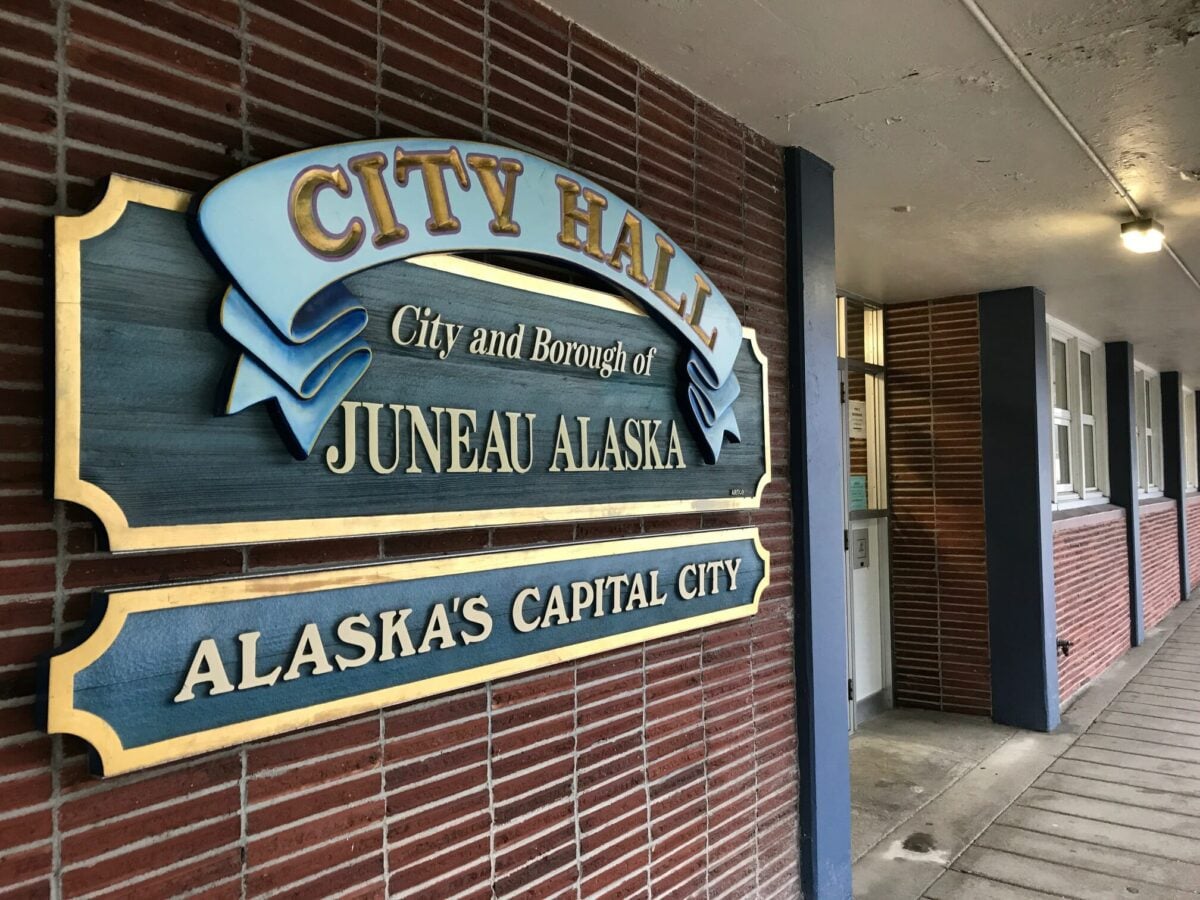
NOTN- City manager Katie Koester told the Assembly of the Whole Monday evening, that the Burns Building renovation, or the new City Hall is delayed and will not allow offices to move out of temporary space by year‑end as planned.
“We are not going to be able to move out of the Marine View building or this building by the end of the calendar year as we had originally hoped, so we have entered into an additional six-month lease with Marine View. We anticipate the project to be complete by May.” Koester said.
Bids are still being received; alternates in the bid package total about $1.3 million for items such as flooring, ceiling work and mechanical controls. The city has signed a six‑month lease extension for its space at Marine View, and Koester warned that lease costs and schedule slippage could draw on project contingency.
Koester said they may request additional funding or transfer from the lands fund if needed and will update the Assembly when bid results are finalized and a construction award is required.
The Assembly also moved forward with two parallel paths to dispose of the current City Hall at 155 Heritage Way after extended discussion.
Members voted to advance an ordinance for a sealed competitive bid sale with a $2.5 million minimum and also directed staff to prepare a negotiated‑sale ordinance for consideration with the Sealaska Heritage Institute’s $1.5 million proposal.
Members cited community and year‑round benefits from a cultural use, but others pushed to test market interest through bids.
“Not everything can be quantified, so I weigh the value of having a known entity being in this space.” Said Assembly member Maureen Hall, “I see the quandary. Do we open it up for a bid and go with the highest bidder, or see what it is and then scale back to an entity that’s going to provide year-round benefit and additional benefit to the community as far as sharing of resources.”
The twin approach schedules both options for the same public‑hearing timeline so the Assembly can weigh competitive offers against a negotiated community proposal.
An early voting site is seen on Monday, Aug. 1, 2022 at the State Office Building in Juneau, Alaska. (Photo by James Brooks/Alaska Beacon)
By: Corinne Smith, Alaska Beacon
An early voting site is seen on Monday, Aug. 1, 2022 at the State Office Building in Juneau, Alaska. (Photo by James Brooks/Alaska Beacon)
Alaska’s primary election just over a month away, and the deadline to register to vote in that election is Sunday July 19.
Alaska’s primary election is Tuesday August 18, when voters will mark their ballots to choose among candidates for governor, legislators in the Alaska House and Senate, and representatives in the U.S. House and U.S. Senate. A sample of the primary ballot can be found on the Alaska Division of Elections website.
The top four vote-getters in the primary will advance to the general election on November 3.
To register to vote in the primary election, eligible voters must be at least 18 years old within 90 days of registering, a U.S. citizen and an Alaska resident. They may not be registered to vote in another state. Voters must be a resident in Alaska and the district in which they seek to vote for at least 30 days before the election.
Language assistance is available with voting information and ballots available in Tagalog, Inupiat, Cup’ik and Yup’ik variations. Language assistance is available at every stage of the voting process, and can be requested from the division.
Naturalized U.S. citizens are eligible to vote, but U.S. nationals and non-citizens are not allowed to vote.
Individuals who have been convicted of a felony involving moral turpitude are ineligible to vote in all elections until the date they are unconditionally discharged. That means they have completed their sentence and are no longer in Alaska Department of Corrections’ custody or supervision, which includes halfway houses, sentenced electronic monitoring, probation or parole. Once an individual is unconditionally discharged, they can re-register to vote if they otherwise meet eligibility requirements.
Residents are automatically registered to vote or their voter registration information is updated when they apply for the Alaska Permanent Fund dividend. Residents have 30 days to opt out if they do not wish to register.
Individuals are considered Alaska residents if they reside in the state and intend to remain a resident or if they leave the state and have an intention to return. Active duty military members and family are exempt from the intent to return requirement and can register and vote by absentee ballot.
Residents can register to vote online, by mail or in-person at regional Division of Elections Offices, Division of Motor offices, Division of Vocational Rehabilitation offices, participating Tribal government offices, Legislative Information Offices, United States Armed Forces Voter Assistance Offices, Division of Public Assistance agencies, city or borough clerk’s offices, participating public libraries, or voter registrars.
Residents need a current Alaska driver’s license or state ID to register or update voter registration. After registration, eligible voters will be issued an Alaska Voter ID card within four to six weeks.
Residents can apply to vote by absentee mail-in ballot by August 8 for the primary, and by October 24 for the general election. Eligible voters can apply by email, fax or in-person. Ballots must be postmarked by election day.
Regional elections offices will open for absentee and early voting in the primary election on Sunday August 16.
Alaska Gov. Mike Dunleavy talks to reporters during a news conference on Monday, May 19, 2025. (Photo by James Brooks/Alaska Beacon)
By: James Brooks, Alaska Beacon
Alaska Gov. Mike Dunleavy talks to reporters during a news conference on Monday, May 19, 2025. (Photo by James Brooks/Alaska Beacon)
Amid a series of disagreements with lawmakers in the state House and Senate, Alaska Gov. Mike Dunleavy has set a record for the most vetoes by an Alaska governor during a single two-year Legislature.
Through Friday morning, Dunleavy had vetoed 29 of the 115 bills passed by the 34th Alaska Legislature.
The previous record, 25 vetoes, was held by Gov. Tony Knowles in the 19th Alaska State Legislature, which ran from 1995 through 1996.
Dunleavy’s record is particularly notable because the number of bills passed by the Legislature has dropped precipitously in recent years.
During the 19th Legislature, Knowles’ vetoes accounted for 8.9% of all bills passed by lawmakers. Dunleavy’s vetoes cover more than 25% — one in four — of all bills passed by the 34th Legislature.
Dunleavy is a Republican. During his first six years in office — the 31st, 32nd and 33rd Legislatures — either the state House or Senate was controlled by a solidly Republican majority. During the 34th, both the House and the Senate have been controlled by coalition majorities where Democrats and independents hold some leadership roles.
The Beacon asked the governor’s office why the governor has vetoed so many bills during the 34th Legislature and whether there is a fundamental disagreement between the Legislature and governor.
“The fact that Governor Dunleavy has vetoed a few more bills in a legislative session than previous governors does not necessarily indicate a fundamental disagreement between the executive and legislative branches,” said Jeff Turner, the governor’s communications director, by email. “Governor Dunleavy has always evaluated legislation on a bill-by-bill basis.”
Senate President Gary Stevens, R-Kodiak, and Speaker of the House Bryce Edgmon, I-Dillingham, declined to speak at length about the vetoes issue because legislators are currently negotiating with the governor on perhaps the biggest bill of the 34th Legislature: A multibillion-dollar property tax break benefiting the developer of the proposed trans-Alaska natural gas pipeline.
Legislators may vote next week on whether to send a revised version of the tax break to the governor for approval.
Dunleavy has said he opposes the current version being discussed by a legislative conference committee. Asked this week whether he would veto the bill, he told Alaska’s News Source that it would be “tough” for him to accept it in its current form.
Eight other bills are awaiting the governor’s consideration. Those include House Bill 14, a comprehensive insurance bill; and House Bill 249, which changes the procedure for turning a car over to an insurance company after a wreck.
The governor has until Monday to act on HB 14 and until July 20 to act on HB 249.
The Legislature has not yet sent six other bills to the governor for action. Under the Alaska Constitution, that means the clock for final action has not begun.
While Dunleavy has the record for the most vetoes in a two-year Legislature, he does not hold the career record.
Gov. Jay Hammond, who served as governor from 1974 through 1982, issued 74 vetoes, the most of any governor during their career. Knowles vetoed 69 bills during his eight years in office. Gov. Bill Egan, who served 12 years in office, vetoed 56 bills. Dunleavy, who will leave office in December, has thus far vetoed 44.
Those figures do not include line-item vetoes in budget bills.
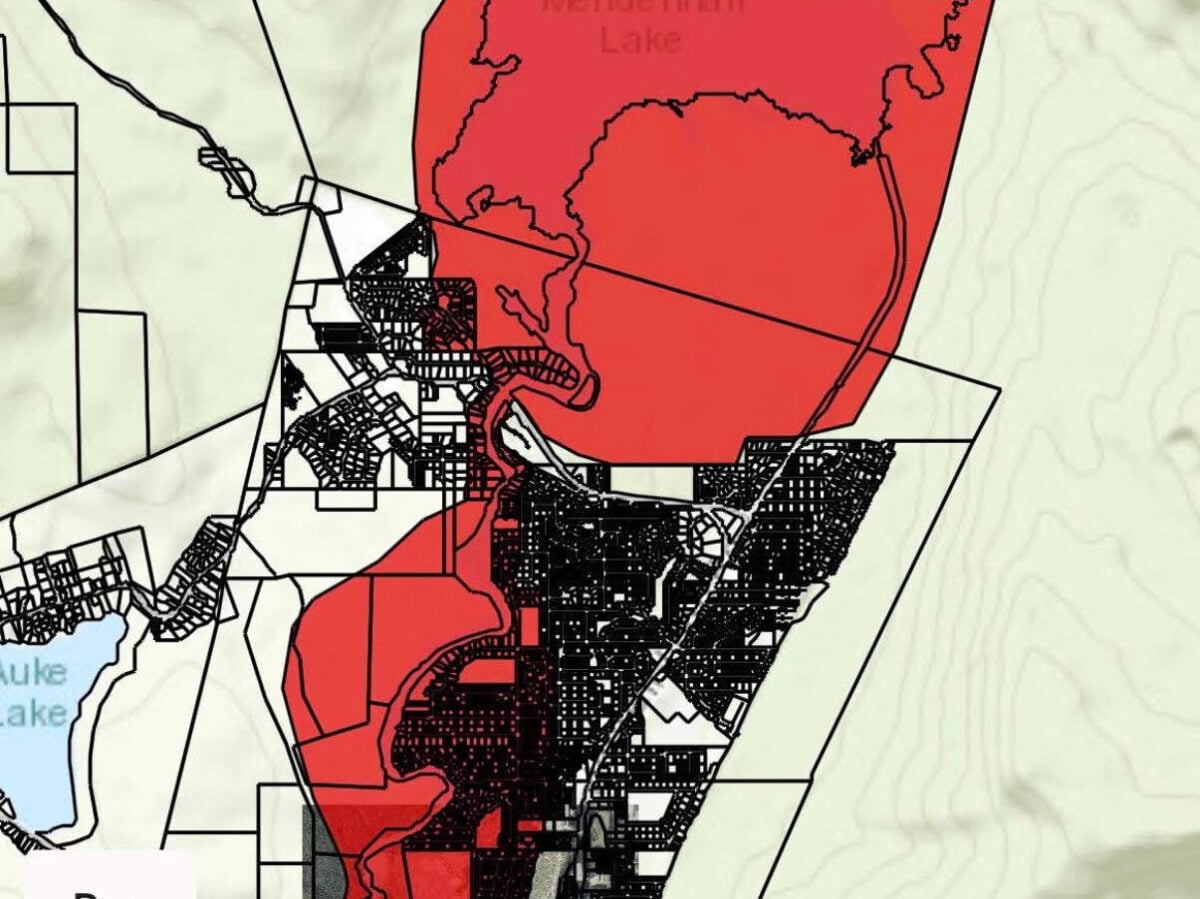
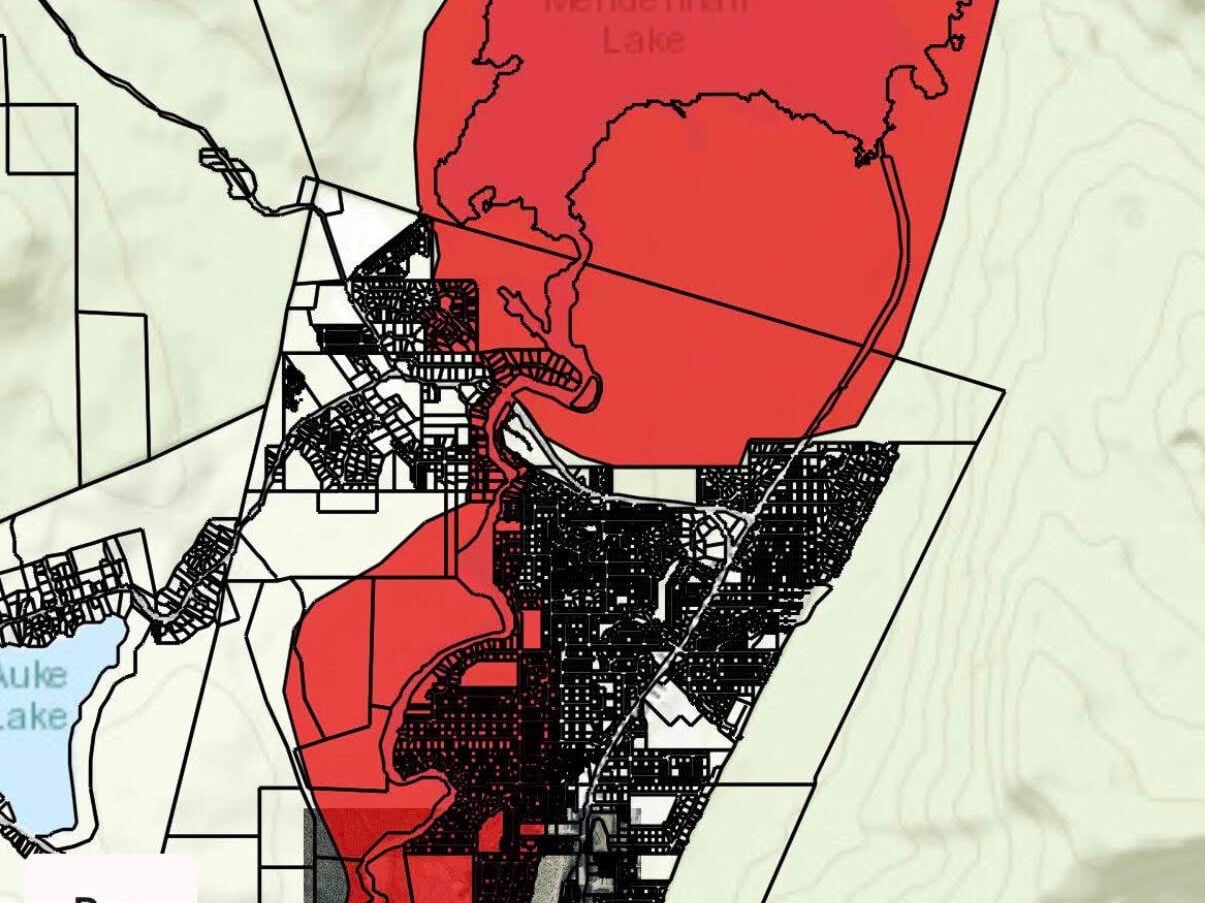
Portion of the brand new evacuation maps released by CBJ ahead of 2026 flood season
NOTN- Local, tribal, state and federal officials say Juneau is better protected but still at risk as the community braces for another glacial lake outburst flood from Suicide Basin in early August.
City Manager Katie Koester at a media briefing this morning, emphasized to reporters and media outlets that the purpose of the meeting as well as upcoming community events surrounding flood protection work is all about keeping residents informed and prepared ahead of this year’s Glacial Lake Outburst Flood, or GLOF.
She said the key takeaway however, was the need to evacuate during the event.
“We’ve done a lot to prepare for this event and we really appreciate the partnership with the Army Corps of Engineers in installing essentially between the city and the Army Corps $45 million worth of protective infrastructure for this year.” Koester said, “Nevertheless, it’s an unpredictable event, and if we have a breach, it will be a flash flood, and it will be very dangerous.”
The National Weather Service says Suicide Basin water levels are tracking close to 2024. Senior service hydrologist Aaron Jacobs said the basin is about 90 feet below the spillway and is most likely to fill between Aug. 1 and Aug. 9.
Forecasts point to a major flood similar to last year if the basin releases at full volume.
“We’re very close to the levels that we were seeing in 2024 and typically we’ll see about a three foot rise in normal inflow into the basin, and so right now we are about 90 feet below that spillway.” Jacobs said, “Right now that’s about 30 days out before we could see a full basin, and on our monitoring page we do update the conditions weekly, and if we see any other conditions change, we will update it more frequently.”
The City and Borough of Juneau has expanded its evacuation advisory zone to cover just over 1,900 residences, up from about 1,000 last year, based on new evacuation maps that account for blocked roads and responder access. Residents will be guided through a “ready, set, go” framework with Wireless Emergency Alerts, siren-style phone notifications and door hangers in affected neighborhoods.
“In years past, the CBJ and Unified Command have used inundation maps to communicate the risk from from potential flooding and the need to evacuate this year.” Said Emergency Programs Manager Ryan O’Shaughnessy, “We’ve worked really closely with all of our partners to plan for all scenarios, including the potential failure of the HESCO system. Our evacuation map this year, you’ll notice, has a lot more straight lines than an inundation map, and is generally aligned with streets and infrastructure, and the reason for that is we wanted to include areas that may not be directly inundated, but where access or travel, including by first responders, may be compromised. So in other words, if we wouldn’t be able to get to you during a breach scenario, or if you may not be able to get to safety, we are recommending that you evacuate.”
Engineers say roughly $45 million in temporary flood protection including HESCO barriers and a large pump system is now in place along the river through a partnership between the city and the U.S. Army Corps of Engineers.
“We have a very high level of confidence in the HESCO barriers, but this is a dynamic event… we really want to stress for folks to evacuate during this event,” said O’Shaughnessy.
Information on evacuation maps, sandbag events, and alerts is available on the Juneau Flood Ready page at juneau.gov.