Categories
Featured Juneau News Juneau Local Ketchikan Local News Feeds Sitka Local

Another bust year for Yukon River king salmon returns, sonar counters show

By: James Brooks, Alaska Beacon

 Whole troll-caught king salmon offered for sale is seen on June 23 at New Sagaya Market in Anchorage. (Photo by Yereth Rosen/Alaska Beacon)

Last year, Alaska and Canada set a new, lower goal for the number of king salmon returning up the Yukon River and into Canada’s Yukon Territory. 

Now, fish counters show 2025 returns have again failed to meet that lower target after missing in 2024 as well.

Through Aug. 28, when officials at the Alaska Department of Fish and Game stopped counting, an estimated 23,806 Chinook salmon — informally known as kings — had been counted by workers at the sonar site at Eagle, just west of the Yukon border.

Under international agreements, the United States is supposed to allow a minimum number of fish to travel upriver and into the Yukon to maintain the king salmon run and allow fishing in the territory.

Last year, following years of poor returns, officials in Alaska and Canada agreed to restrict king salmon fishing, including Indigenous subsistence fishing, of king salmon on the river until escapement — the number of king salmon crossing into Canada — exceeds 42,500 fish.

The ultimate goal of the agreement is to rebuild the number of king salmon returning until 71,000 kings reach Canada each summer. 

This year’s figures are slightly lower than they were last year, when 24,183 kings reached Canada, but are nearly double the low of 2022, when only an estimated 12,025 kings returned.

King salmon returns on the Yukon River have steadily declined since 2017, when 73,313 fish passed the sonar at Eagle. 

Attention now falls on the Yukon River’s much larger chum salmon run, which is also expected to fail international treaty obligations. As of Sept. 7, ADF&G estimates 276,000 fall chums in the Yukon River, less than a third of the historical run size.

“A run size below 300,000 fall chum salmon is not anticipated to be large enough to meet U.S. tributary goals or Canadian treaty objectives for fall chum salmon,” the department said in an estimate published Tuesday.

As a result of the shortfall, subsistence fishing for chum salmon, a vital part of Alaska Native traditional culture, continues to be suspended. 

Changes in deep-ocean conditions caused by climate change, warming river conditions caused by climate change, commercial fishing, and endemic disease have all been cited as possible reasons for the declining salmon runs.
Categories
Featured Juneau News Juneau Local Ketchikan Local Music News Feeds Sitka Local

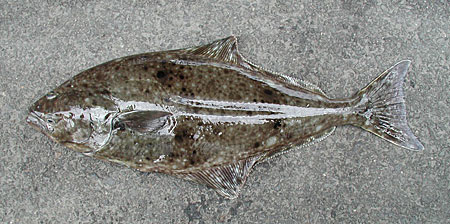
Five Southeast Alaska fishermen indicted in illegal halibut harvesting conspiracy

Pacific Halibut out of water, photo courtesy of Alaska Fish and Game

Five commercial fishermen from Alaska and Washington have been indicted by a federal grand jury, accused of conspiring to illegally harvest more than 10,000 pounds of halibut over a four-year period near Yakutat.

According to the U.S. Attorney’s Office, the fishermen, Jonathan Pavlik, 43, of Yakutat; Vincent Jacobson, 51, of Yakutat; Kyle Dierick, 36, of Yakutat; Michael Babic, 42, of Cordova; and Timothy Ross, 58, of Washington, each face federal charges under the Lacey Act, a law that prohibits illegal wildlife trafficking.

Prosecutors say the five men, all experienced commercial fishermen, took part in a conspiracy between 2019 and 2023 to violate halibut fishing rules tied to Individual Fishing Quotas, a system designed to sustainably manage halibut harvests in Alaskan waters.

The indictment alleges that Pavlik conspired separately with each of the other defendants to land halibut without being on board their vessels for the full duration of the fishing trips, a violation of federal regulations.

The indictment alleges that Pavlik, Jacobson, Dierick, Babic, and Ross intentionally falsely reported that the halibut caught was creditable to their respective Individual Fishing Quota (IFQ) permit balances, which is a permit any individual commercially fishing for halibut in the waters off Alaska is required to have. Pavlik and the three co-conspirators are responsible for over 10,700 pounds of illegally harvested halibut.

In a separate incident last fall, Pavlik allegedly sold over 9,600 pounds of illegally caught halibut that was fished aboard a vessel called the Bad Intentions and then transferred to another vessel, New Era, in an effort to conceal its origin before landing it for sale.

Pavlik faces 14 felony charges, including four counts of conspiracy, five counts of unlawful sale, and five counts of false labeling under the Lacey Act. Jacobson, Dierick, Babic, and Ross each face one count of conspiracy.

If convicted, each defendant could face up to five years in prison and fines of up to $250,000 per count. Court appearances are scheduled in the coming weeks before U.S. Magistrate Judge Matthew M. Scoble in Anchorage.

The investigation was led by NOAA Fisheries’ Office of Law Enforcement, Alaska Division, with support from the Alaska Wildlife Troopers. Assistant U.S. Attorneys Seth Brickey and Mac Caille Petursson are prosecuting the case.

An indictment is a formal accusation and not evidence of guilt. All defendants are presumed innocent unless proven otherwise in a court of law.

Categories
Featured Juneau News Juneau Local Ketchikan Local News Feeds Sitka Local

Alaska fisher in bitter crab case hit with $1.18 million fine for unrelated water pollution

By: Yereth Rosen, Alaska Beacon

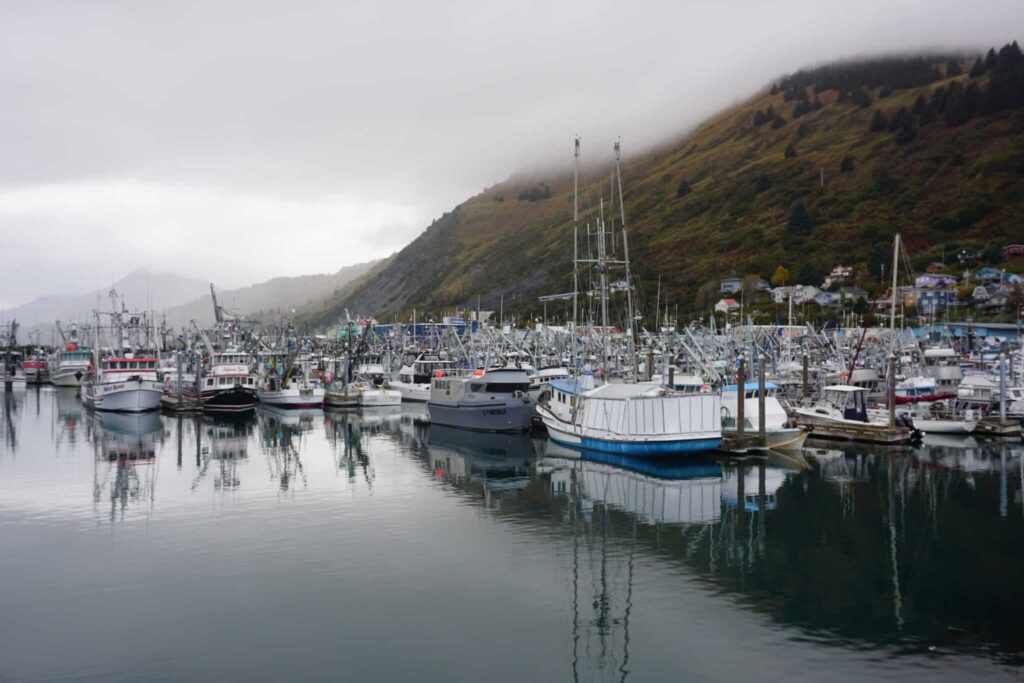
Low clouds hang over Kodiak’s St. Paul Harbor on Oct. 3, 2022. A Coast Guard response to a distress call from a fish tender sinking in the Kodiak harbor led to the discovery that oily bilge water was being discharged from the vessel, in violation of the Clean Water Act. (Photo by Yereth Rosen/Alaska Beacon)

A longtime Alaska fisher who was sentenced in May to a year in jail for illegally exporting crab, much of it disease infected, has now been ordered to pay $1.18 million in penalties for unrelated water pollution charges.

Corey Potter and the companies he managed  — the vessel Knot EZ, Aleutian Tendering LLC and the Alaska Tendering Company LLC — were ordered to pay the combined penalty in a default judgment issued on Thursday by U.S. District Court Judge Sharon Gleason.

The penalty was for repeated discharges of oily bilge water, which violated the Clean Water Act, according to court documents.

Potter had not responded to the charges, which were detailed in a complaint filed on Oct. 24, or appeared in court on the case, according to the U.S. Coast Guard and federal prosecutors. That triggered the default judgment by Gleason.

Potter’s previous case concerned thousands of pounds of king crab he and his partners harvested in Southeast Alaska and took directly to Washington state. Alaska law requires that all crabs commercially harvested in waters off Alaska be landed and processed within the state. Part of the reason for that is to ensure quality and marketability.

The Knot EZ, seen in this undated photo, had been illegally discharging oily bilge water over multiple fishing seasons, federal prosecutors said. The vessel operated as a tender, delivering harvested fish from catcher vessels to processors. It was owned by Corey Potter, a longtime Alaska fisher sentenced in May to jail time for illegal out-of-state shipment of king crab, much of which was infected with bitter crab syndrome. (Photo provided by the U.S. Coast Guard)
 The Knot EZ, seen in this undated photo, had been illegally discharging oily bilge water over multiple fishing seasons, federal prosecutors said. The vessel operated as a tender, delivering harvested fish from catcher vessels to processors. It was owned by Corey Potter, a longtime Alaska fisher sentenced in May to jail time for illegal out-of-state shipment of king crab, much of which was infected with bitter crab syndrome. (Photo provided by the U.S. Coast Guard)

Instead, a significant percentage of the catch that Potter and his associate brought to Washington state was infected with bitter crab syndrome. The parasitic disease, which is linked to warming waters, kills crabs and makes their meat unpalatable, though not toxic to humans.

The water pollution case against Potter is separate. It stems from a Coast Guard rescue of the Knot EZ, which was sinking in Kodiak Harbor in July of 2022. The Knot EZ operated as a tender, a vessel that delivered fish from harvesters to processors, according to court documents.

Guardsmen who responded to the Knot EZ’s distress call discovered that the vessel had an illegal discharge system that was pumping oily bilge water directly into the sea, according to the complaint. Crew members hired by Potter admitted that the illegal bypass system was used daily, according to the complaint.

The vessel was declared to be unfit for service, and subsequent investigation discovered a long-running pattern of such violations in past fishing seasons as well, according to the complaint.

While neither Potter nor his companies responded to the Clean Water Act charges, a public defender representing him in the crab case asked for leniency, based on his age and on the financial hardships he has already endured. Potter, 64, “has been reduced to relying upon family for assistance and has no viable means to support himself,” said the defense presentencing memorandum in that case, which was filed on May 6.

Categories
Featured Juneau News Juneau Local Ketchikan Local News Feeds Sitka Local

A rare whale was spotted for the first time in Southeast Alaska

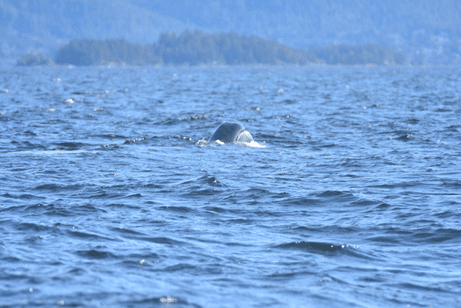
First sighting of subadult bowhead whale on March 27, 2024 at 11:45 am in Sitka Sound, Alaska, USA (57.06N, 135.53W). Credit: Ellen Chenoweth from the vessel Pioneer. NOAA Fisheries MMPA/ESA Permit No. 24378.

NOTN- Scientists in Sitka Sound observed a Bowhead whale, a first for Southeast Alaska, and only the second documented sighting in the eastern North Pacific.

Bowhead whales are one of the few whale species that reside almost exclusively in Arctic and subarctic waters experiencing seasonal sea ice coverage,.

Of all large whales, the bowhead is the most adapted to life in icy water. Adaptations to this environment include an insulating layer of blubber that can be up to 1.6 feet thick.

according to a scientific paper released by NOAA, the crew was using a 25-foot motorboat in Sitka Sound to photograph and identify humpback whales that had been observed bubble-net feeding in the area. Humpback whales are often present in large numbers in Sitka Sound in March, feeding on pre-spawn herring. 

They also spotted gray whales, likely feeding on herring eggs near shore. After identifying several humpback whales in smaller groups, the crew was heading back to Sitka when they spotted another whale. 

The vessel slowed to photograph this whale, but it didn’t appear to be a humpback. The whale was small, visible only by its head and jaw, which had a distinct arch. The crew took two photos before the whale submerged. 

according to NOAA, the whale, identified by experts through photographs, exhibited unusual behavior. It was only observed with its head and jaw visible as it surfaced to breathe. Over the next month, additional sightings of the whale were reported. No feeding or social behaviors were noted, and on only one occasion was the back—which lacked a dorsal fin—visible.

“This sighting is important because it is a first for a pretty big region,” said Ellen Chenoweth, lead author on the study from the University of Alaska Fairbanks. “This is the first documented sighting of a bowhead whale in Southeast Alaska. It’s not the furthest south they have been seen, but it’s very notable because of how far it is from its typical range. It raises a lot of questions about what was going on with this animal that we can’t answer.” 

NOAA researchers say this rare visit may be linked to ecosystem shifts like sea ice loss, which could push more Arctic species farther south.

“We know of only two previous observations of bowhead whales in the North Pacific,” said Kim Shelden. “In 1969, a subadult male bowhead whale was captured and died in Osaka Bay, Japan. In 2016, a young bowhead whale was photographed skim feeding near British Columbia, Canada. This specific bowhead whale sighting in March 2024 may be an indicator of rapid changes occurring in the Arctic,” said Shelden.

Categories
Featured Juneau News Juneau Local Ketchikan Local News Feeds Sitka Local

Gov. Dunleavy vetoes bipartisan bill supporting Alaska fishing businesses

Commercial fishing boats are lined up at the dock at Seward’s harbor on June 22, 2024. (Photo by Yereth Rosen/Alaska Beacon)

NOTN- Governor Mike Dunleavy has vetoed a bipartisan bill that aimed to expand loan access for small commercial fishing businesses in Alaska, legislation that passed the Legislature by a vote of 59–1.

Senate Bill 156, sponsored by Senator Jesse Kiehl , would have enabled the Alaska Commercial Fishing and Agriculture Bank (CFAB) to offer low-interest loans for permit holders in the state’s fishing industry. It also authorized the Department of Commerce, Community, and Economic Development to invest in CFAB through the purchase of nonvoting, preferred shares, using funds left over from a now-defunct aviation loan program.

“That’s a weird move. First because it built on work I helped him do last year,” Sen. Kiehl said in a Facebook post Thursday. “I was glad to help Alaskans, and even took pains to share credit with the governor.”

The veto halts what advocates called a targeted solution to help permit-holding fishers refinance debt under more stable terms, a tool supporters say could have strengthened Alaska’s seafood economy and reduced the risk of permit loss in the face of rising interest rates.

“With our fisheries being dominated by outside special interests, this bill was designed to help struggling AK fishermen by providing competitive loans to help them buy permits, vessels and gear.” Senator Bill Wielechowski said in a post on X.

Kiehl expressed disappointment at the veto, noting the bill’s near-unanimous support across party lines. “Strange way to run a state,” he said.

The bill posed little to no costs to the state, according to legislative analysis.

The governor’s office has not yet released a public explanation for the veto.

Categories
Featured Juneau News Juneau Local Ketchikan Local News Feeds Sitka Local

Federal court upholds State control in Cook Inlet salmon fishery dispute

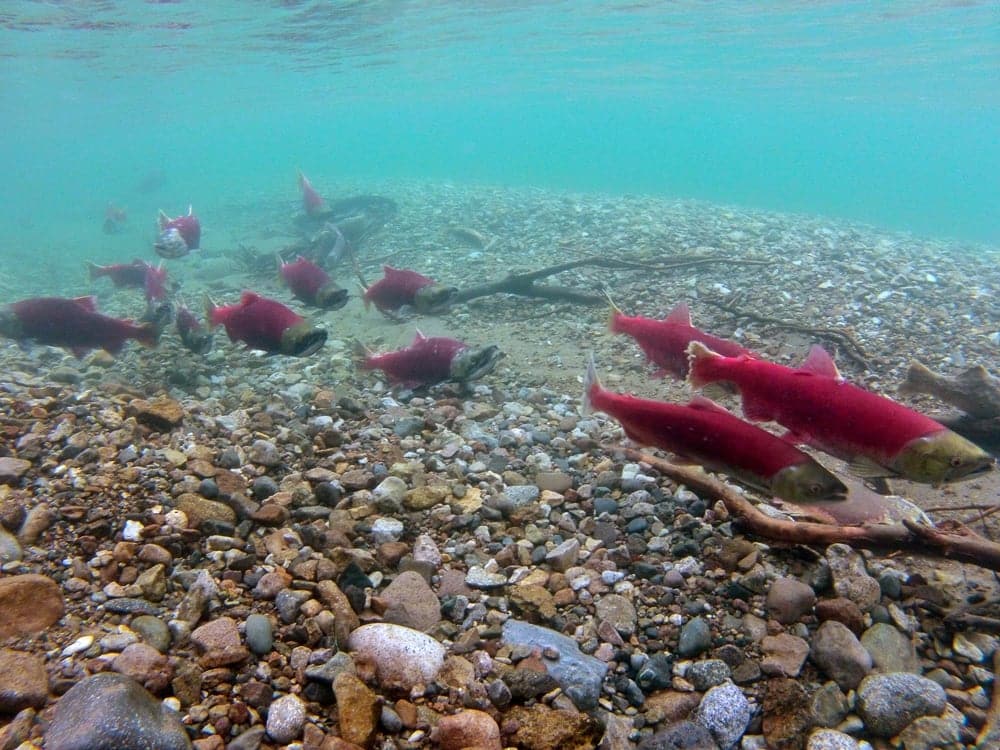
Sockeye salmon at Tazimina Lake. NPS Photo / D. Young. 2013

U.S. District Judge Sharon Gleason has sided with Alaska in a contentious case about who gets to control salmon fishing in certain waters.

Gleason upheld the National Marine Fisheries Service’s (NMFS) adoption of Amendment 16 to the federal salmon fishery plan for the Cook Inlet Exclusive Economic Zone (EEZ). The ruling confirms that NMFS is not obligated to regulate salmon fishing in state waters.

Opponents of Amendment 16 had argued that the measure violated the Magnuson-Stevens Act, which is the primary law governing marine fisheries in U.S federal waters and was created to prevent overfishing, rebuild depleted fish stocks and protect marine eco systems.

Opponents also argued the measure violated the Administrative Procedure Act (APA), a law that governs how federal agencies can create and enforce rules, claiming that NMFS should be required to manage salmon stocks across their full range or everywhere that salmon swim, including within state-managed nearshore waters.

The court disagreed. Judge Gleason affirmed that the MSA permits NMFS to manage fisheries as distinct units, and that the Cook Inlet EEZ salmon fishery qualifies. The decision also reinforced that NMFS’s jurisdiction is limited to federal waters, which begin three miles offshore.

Attorney General Treg Taylor praised the decision, calling it “a victory for Alaska and our salmon fishery.” He added, “It upheld the state’s rights and responsibilities to managing our waters. I want to congratulate the hard work and dedication of our Department of Law attorneys, especially Aaron Peterson, who have been tirelessly defending Alaska’s interests.”

Categories
Featured Juneau News Juneau Local Ketchikan Local News Feeds Sitka Local

Invasive Green Crab spotted in Ketchikan for the first time

News of the North- The invasive European green crab has been confirmed on beaches along the Ketchikan road system for the first time. The species was first detected in Alaska in July 2022 by the Metlakatla Indian Community on Annette Island, who have since spearheaded local and regional responses.

The green crab is considered one of the most invasive species in the marine environment. It has few predators, aggressively hunts and eats its prey, destroys seagrass, and outcompetes local species for food and habitat. It has been documented that green crab devour juvenile king crab as well as juvenile salmon. They also destroy eelgrass habitat that larval fish use to hide from predators, and outcompete Dungeness crabs for food and habitat. Green crab could potentially damage Alaska’s multi-billion dollar fisheries industries, especially for salmon, crab, and mariculture operations.

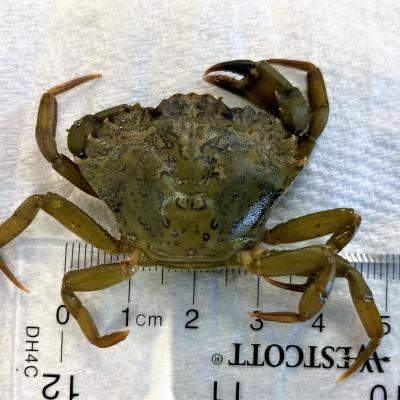
Southeast Alaska Tribal Ocean Research, Alaska Fish & Game, and Alaska Sea Grant provide public resources about European green crabs in Southeast Alaska including detection, identification, and impact information, The best way to identify green crab is to count the spines. There are 5 spines behind the eye on each side of the shell.

Green crabs live on rocky shores, cobble beaches, sandflats and tidal marshes. They can often be found near eelgrass beds or other shoreline vegetation. Green crabs tolerate a wide range of water salinity and temperature. They can also survive upstream of river mouths in some estuarine environments. 

Report your sightings via the ADF&G Invasive Species Reporter or by calling the Invasive Species Hotline: (877) INVASIV ((877) 468-2748). If you locate invasive green crab on Annette Islands Reserve, you can call (907) 886-FISH to make a report.