Categories
Featured Juneau News Juneau Local Ketchikan Local News Feeds Sitka Local

‘Explosion’ of invasive European green crabs reported in Southeast Alaska

By: Yereth Rosen, Alaska Beacon

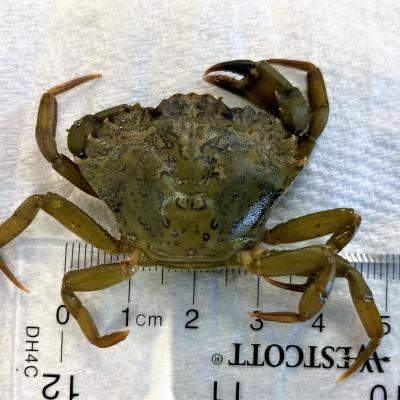
The carapace, or upper shell, of an invasive European green crab and a live live green crab are shown in this undated photo. Ever since Alaska’s first green crabs were found on Annette Island in 2022, numbers have exploded and the invaders have spread north. (Photo by Linda Shaw/National Oceanic and Atmospheric Administration Fisheries Service)

When a young Sealaska intern walking a beach in July 2022 found the first evidence of European green crab presence in Alaska – a discarded shell on a beach on Annette Island in the state’s far southeast corner – it was an ominous sign about the invasive species’ northward spread.

Since then, the Metlakatla Indian Community, the tribe based on Annette Island, and its partners, which include Alaska Sea Grant, have found not just more shells, but live invasive crabs. Discoveries numbered just a handful at first, then dozens, then hundreds, then thousands.

This year, the Metlakatla tribe’s team has trapped more than 40,000 of them on and around Annette Island, a representative said.

“This year we’ve had a complete explosion of green crab — over seven new locations on Annette Island we found green crab, and eight new locations off Annette Island,” said Nicole Reynolds, an environmental specialist working with the tribe, in a presentation at a three-day Anchorage meeting on invasive species in Alaska this week.

The more than 40,000 crabs removed this year compares to last year’s total of 1,800, Reynolds said.

European green crabs are small, usually measuring no more than 4 inches wide, but they  are powerful forces of destruction. They mow down eelgrass beds that are vital habitat for salmon and other native species. And they gobble up native marine life like juvenile salmon, clams, mussels and juvenile Dungeness and other crabs that are important to commercial and subsistence harvests.

“They’ll eat the baby crabs. They’re meaner and tougher than the Dungeness,” Reynolds said during a break in the annual Alaska Invasive Species Partnership Workshop.

European green crabs have already spread north of Annette Island. Last year, they were found at Gravina Island, and this summer they were found by participants in a local university class at beaches in Ketchikan that lie about 30 miles north of the initial Annette Island discovery site.

Just this month, they were found at Etolin Island, Reynolds said. Etolin Island is roughly 60 miles northwest of the city of Ketchikan, making it the northernmost North America discovery to date.

And now European green crabs appear to be entrenched in Alaska waters for good, Reynolds and Genelle Winter, a grant administrator with the tribal government, told the workshop audience.

That means the fight against green crabs will also have to be long-term, Winter said, with a permanent staff and a strategy of what is known as “functional eradication.” That is an eradication strategy that accepts the reality of the invaders’ presence in some places, but tries to keep them out of other places with resources that are most important to protect.

Nicole Reynolds and Genelle Winter of the Metlakatla Indian Community pose on Oct. 28, 2025, with a sticker bearing European green crab design created by a local artist, Elizabeth Anderson. The crab face was made intentionally angry and mean-looking, helping send the message about the destruction caused by this invasive species. Reynolds and Winter presented information at the annual Alaska Invasive Species Partnership Workshop in Anchorage about the Tribe's work to combat the spread of European green crabs. The first discovery of the crabs in Alaska was in 2022 at Annette Island in the far southeast corner of the state, and they have proliferated in Alaska waters since then. (Photo by Yereth Rosen/Alaska Beacon)
Nicole Reynolds and Genelle Winter of the Metlakatla Indian Community pose on Oct. 28, 2025, with a sticker bearing a European green crab design created by local artist, Elizabeth Anderson. The crab face was made intentionally angry and mean-looking, to help send the message about the destruction caused by this invasive species. Reynolds and Winter presented information at the annual Alaska Invasive Species Partnership Workshop in Anchorage about the Tribe’s work to combat the spread of European green crabs. The first discovery of the crabs in Alaska was in 2022 at Annette Island in the far southeast corner of the state, and they have proliferated in Alaska waters since then. (Photo by Yereth Rosen/Alaska Beacon)

Such a strategy involves “focusing all our efforts on protecting the most vital subsistence and commercial resources,” she said.

Conditions in Alaska waters, the farthest-north spots in North America where the crabs have spread, do not faze the invaders, DNA analysis shows. For that information, the tribe consulted with an expert, Carolyn Tepolt of the Woods Hole Oceanographic Institute. Tepolt has also been investigating the genetics of green crabs that have invaded Washington state.

Tepolt’s analysis found that the green crabs in Alaska are a genetic blend of those in Washington and British Columbia, diverse enough to persist in the more northern waters, Reynolds said.

“She even called it a ‘super-crab’ just because of how perfectly genetically suited it is for the environment in Southeast Alaska,” Reynolds said.

European green crabs have been altering North American marine ecosystems for a long time.

They were first found in East Coast waters in the early 1800s, likely carried there in ship ballast water. The first West Coast discovery was in 1989 in San Francisco Bay. Since then, they have been spreading north up the Pacific coast. They were first confirmed in British Columbia in 1999 and continued moving up that Canadian province’s coast before being found at Annette Island three years ago.

Beyond the accidental releases through ballast water, scientists say warming conditions are aiding the spread of green crabs. Larvae are more likely to survive in warmer waters brought on by climate change and weather events like El Nino cycles.

The 2023-2024 El Nino, which warmed Alaska waters, is a possible factor in this year’s explosion of green crabs in Southeast Alaska, the Metlakatla tribal representatives said.

Warmer temperatures than those that used to be normal in Alaska marine waters are known to encourage green crab proliferation.

study by Danish scienetists that was published in September identifies a temperature range that appears ideal for the crabs. At temperatures of 12.5 to 16.6 degrees Celsius, or 54.5 to 61.9 degrees Fahrenheit, European green crab abundance peaked, the scientists found.

Average temperatures in Southcentral Alaska’s Cook Inlet were within that range this August, an indication that conditions would be suitable for green crabs if they somehow reach that area.

Nicole Reynolds, an environmental specialist with the Metlakatla Indian Community, shows a photo stored on her phone of an unusual-looking European green crab collected this year. The Tribal government is at the forefront of the campaign to try to control the spread of the invasive species, which eats native species and damages habitat used by fish. Reynolds presented information about the Tribe's work at the annual Alaska Invasive Species Partnership Workshop in Anchorage. (Photo by Yereth Rosen/Alaska Beacon)
Nicole Reynolds, an environmental specialist with the Metlakatla Indian Community, shows a photo stored on her phone of an unusual-looking European green crab collected this year. The Tribal government is at the forefront of the campaign to try to control the spread of the invasive species, which eats native species and damages habitat used by fish. Reynolds presented information about the Tribe’s work at the annual Alaska Invasive Species Partnership Workshop in Anchorage. (Photo by Yereth Rosen/Alaska Beacon)

Preparations are already underway in Alaska for what experts believe is an inevitable spread north from the Southeast region.

In Southcentral Alaska’s Kachemak Bay, over 700 miles northwest of Ketchikan, residents this summer deployed over 60 traps in what was effectively a pre-invasion drill. The program was a cooperative effort of the Kachemak Bay National Estuarine Research Reserve, the Seldovia Village Tribe and its council member, Michael Opheim, and the U.S. Fish and Wildlife Service.

There and elsewhere, a big part of the fight against green crab infestations is public education.

European green crabs can be identified by the array of bumps on their shells. They have five sharp spikes on either side of their eyes and three lobes in between their eyes. Despite their name, they are not always green – they can be red, yellow or mottled. Some of those found by her team have even been blue, Reynolds said.

To help boost awareness, local Tsimshian artist Elizabeth Anderson has designed a green crab logo – with an angry face to reinforce the message that the species is a bad actor, Winter said.

In Metlakatla, awareness appears to be keen already, including among some of the youngest residents.

“The other day, the mayor was driving down the street and got flagged down by two little kids. And they said, ‘We found some green crab! We know its green crab because it’s 5-3-5,’” Winter said during the workshop presentation. The numbers reference the array of shell bumps on a green crab. “Those little kids absolutely knew how to identify the European green crab.”

Those crabs, found at a beach right in front of town, were stashed in a plastic bag and added to this year’s count, Winter said.

Aside from identifying, trapping, counting, measuring and analyzing the European green crabs, the inundated community faces another challenge: what to do with thousands of unwanted invaders.

In Metlakatla, the ultimate destination is the community compost heap. That is a good end use, Reynolds said. “They add heat to the compost, and because it’s cold and wet in Southeast, it’s actually really helpful to have more heat,” she told workshop attendees.

On the East Coast and elsewhere, some of the eradication work involves eating the invaders. Experts say they have little meat but can be useful for making soups. One organization, Greencrab.org, has compiled recipes and sells a cookbook and T-shirts with a catchy slogan: “If you can’t beat them, eat them.”

European green crab specimins preserved in plastic are displayed on Oct. 28, 2025, at the annual Alaska Invasive Species Partnership Workshop in Anchorage. Although they are called green crabs, they come in different colors, and heat can turn their shells orange. (Photo by Yereth Rosen/Alaska Beacon)
European green crab specimens preserved in plastic are displayed on Oct. 28, 2025, at the annual Alaska Invasive Species Partnership Workshop in Anchorage. Although they are called green crabs, they come in different colors, and heat can turn their shells orange. (Photo by Yereth Rosen/Alaska Beacon)
Categories
Featured Juneau News Juneau Local Ketchikan Local News Feeds Sitka Local

Alaska fisher in bitter crab case hit with $1.18 million fine for unrelated water pollution

By: Yereth Rosen, Alaska Beacon

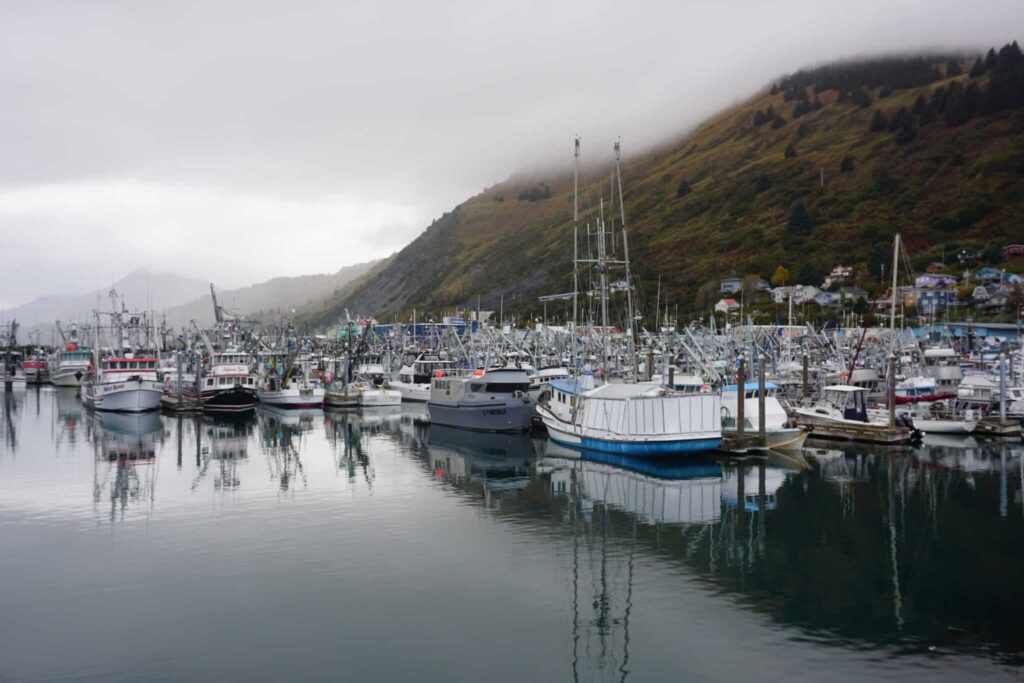
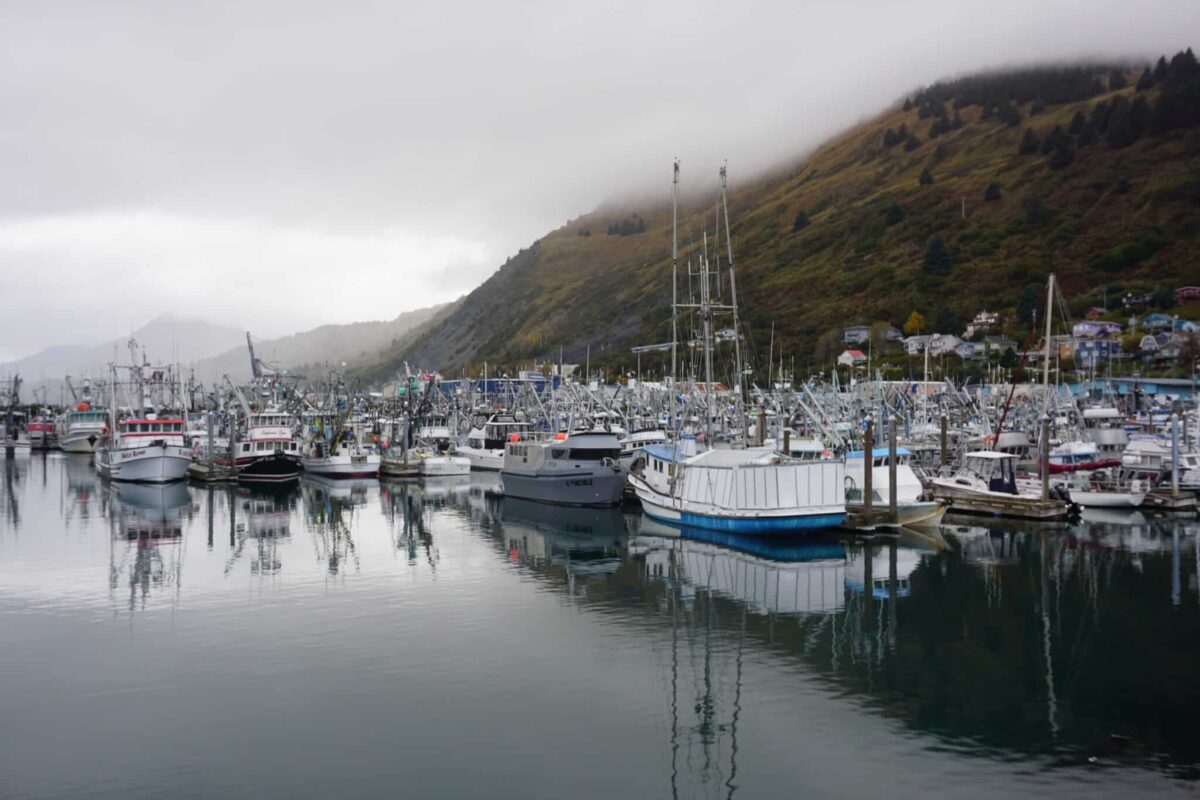
Low clouds hang over Kodiak’s St. Paul Harbor on Oct. 3, 2022. A Coast Guard response to a distress call from a fish tender sinking in the Kodiak harbor led to the discovery that oily bilge water was being discharged from the vessel, in violation of the Clean Water Act. (Photo by Yereth Rosen/Alaska Beacon)

A longtime Alaska fisher who was sentenced in May to a year in jail for illegally exporting crab, much of it disease infected, has now been ordered to pay $1.18 million in penalties for unrelated water pollution charges.

Corey Potter and the companies he managed  — the vessel Knot EZ, Aleutian Tendering LLC and the Alaska Tendering Company LLC — were ordered to pay the combined penalty in a default judgment issued on Thursday by U.S. District Court Judge Sharon Gleason.

The penalty was for repeated discharges of oily bilge water, which violated the Clean Water Act, according to court documents.

Potter had not responded to the charges, which were detailed in a complaint filed on Oct. 24, or appeared in court on the case, according to the U.S. Coast Guard and federal prosecutors. That triggered the default judgment by Gleason.

Potter’s previous case concerned thousands of pounds of king crab he and his partners harvested in Southeast Alaska and took directly to Washington state. Alaska law requires that all crabs commercially harvested in waters off Alaska be landed and processed within the state. Part of the reason for that is to ensure quality and marketability.

The Knot EZ, seen in this undated photo, had been illegally discharging oily bilge water over multiple fishing seasons, federal prosecutors said. The vessel operated as a tender, delivering harvested fish from catcher vessels to processors. It was owned by Corey Potter, a longtime Alaska fisher sentenced in May to jail time for illegal out-of-state shipment of king crab, much of which was infected with bitter crab syndrome. (Photo provided by the U.S. Coast Guard)
 The Knot EZ, seen in this undated photo, had been illegally discharging oily bilge water over multiple fishing seasons, federal prosecutors said. The vessel operated as a tender, delivering harvested fish from catcher vessels to processors. It was owned by Corey Potter, a longtime Alaska fisher sentenced in May to jail time for illegal out-of-state shipment of king crab, much of which was infected with bitter crab syndrome. (Photo provided by the U.S. Coast Guard)

Instead, a significant percentage of the catch that Potter and his associate brought to Washington state was infected with bitter crab syndrome. The parasitic disease, which is linked to warming waters, kills crabs and makes their meat unpalatable, though not toxic to humans.

The water pollution case against Potter is separate. It stems from a Coast Guard rescue of the Knot EZ, which was sinking in Kodiak Harbor in July of 2022. The Knot EZ operated as a tender, a vessel that delivered fish from harvesters to processors, according to court documents.

Guardsmen who responded to the Knot EZ’s distress call discovered that the vessel had an illegal discharge system that was pumping oily bilge water directly into the sea, according to the complaint. Crew members hired by Potter admitted that the illegal bypass system was used daily, according to the complaint.

The vessel was declared to be unfit for service, and subsequent investigation discovered a long-running pattern of such violations in past fishing seasons as well, according to the complaint.

While neither Potter nor his companies responded to the Clean Water Act charges, a public defender representing him in the crab case asked for leniency, based on his age and on the financial hardships he has already endured. Potter, 64, “has been reduced to relying upon family for assistance and has no viable means to support himself,” said the defense presentencing memorandum in that case, which was filed on May 6.

Categories
Featured Juneau News Juneau Local Ketchikan Local News Feeds Sitka Local

Invasive Green Crab spotted in Ketchikan for the first time

News of the North- The invasive European green crab has been confirmed on beaches along the Ketchikan road system for the first time. The species was first detected in Alaska in July 2022 by the Metlakatla Indian Community on Annette Island, who have since spearheaded local and regional responses.

The green crab is considered one of the most invasive species in the marine environment. It has few predators, aggressively hunts and eats its prey, destroys seagrass, and outcompetes local species for food and habitat. It has been documented that green crab devour juvenile king crab as well as juvenile salmon. They also destroy eelgrass habitat that larval fish use to hide from predators, and outcompete Dungeness crabs for food and habitat. Green crab could potentially damage Alaska’s multi-billion dollar fisheries industries, especially for salmon, crab, and mariculture operations.

Southeast Alaska Tribal Ocean Research, Alaska Fish & Game, and Alaska Sea Grant provide public resources about European green crabs in Southeast Alaska including detection, identification, and impact information, The best way to identify green crab is to count the spines. There are 5 spines behind the eye on each side of the shell.

Green crabs live on rocky shores, cobble beaches, sandflats and tidal marshes. They can often be found near eelgrass beds or other shoreline vegetation. Green crabs tolerate a wide range of water salinity and temperature. They can also survive upstream of river mouths in some estuarine environments. 

Report your sightings via the ADF&G Invasive Species Reporter or by calling the Invasive Species Hotline: (877) INVASIV ((877) 468-2748). If you locate invasive green crab on Annette Islands Reserve, you can call (907) 886-FISH to make a report.