By: Alex Brown, Stateline
The Trump administration is removing protections from the key places where endangered species live, saying states can keep the areas safe.
But experts say states aren’t equipped for the task.
Earlier this month, the Trump administration finalized a major change to the Endangered Species Act, rolling back protections for the forests, wetlands, deserts and other critical habitats that many plants and animals rely on.
The new rule will open many landscapes to development, logging, mining and oil and gas drilling. Wildlife officials — in both conservative and liberal states — had expressed strong concerns about the proposal, saying it would threaten their plans to safeguard endangered species.
But federal officials framed the decision as a move to give “freedom” to state leaders to manage wildlife without burdensome federal regulations.
States that wish to continue protecting habitats can do so under state law, the Interior Department and other federal agencies wrote in their lengthy new regulations.
But legal experts and wildlife veterans say that almost no states have endangered species laws on the books that allow state officials to prevent habitat destruction in the name of saving wildlife.
While many states have laws to stop poaching and direct killing of wildlife, the protection of nesting trees, spawning streams and other resources has long fallen to the federal Endangered Species Act and the agencies that enforce it.
“It’s not going to be a situation where the states can easily just jump in here and fill the void,” said Robert Anderson, who served as solicitor for the Department of the Interior during the Biden administration. “It’s not going to help states, and it’s going to make it worse for the species.”
Many wildlife experts also noted that state wildlife agencies are already underfunded as it is. Taking on the massive regulatory system that prevents developers and extractive industries from destroying critical habitat would require far more resources than those agencies have available.
A coalition of environmental groups and tribal nations have filed lawsuits challenging the federal rollback.
The ‘harm’ rule
On July 10, the federal departments of Interior and Commerce announced they had finalized a rule rescinding the longstanding definition of “harm” under the Endangered Species Act.
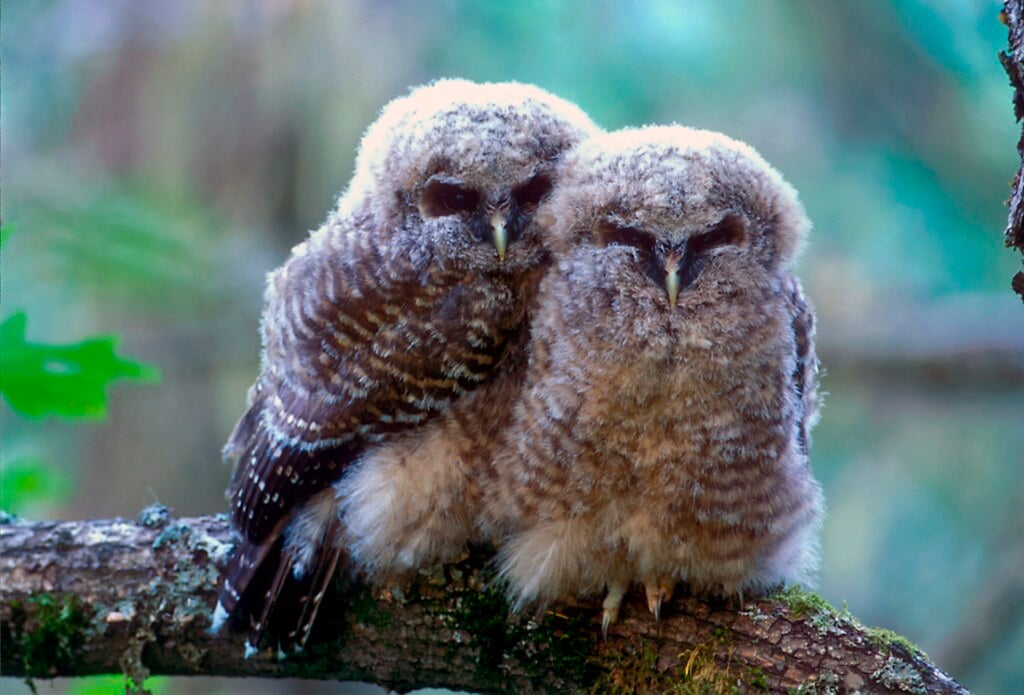
For decades, federal officials have scrutinized logging projects that would cut old-growth trees where owls build their nests, and agriculture operations that diverted water from streams where salmon return to spawn.
But now, the feds are pivoting to a much more limited definition of “harm.” Only actions that directly injure or kill the animals themselves will be considered a violation of endangered species law.
“You can destroy the resources a species requires as long as you don’t do it when the species is at home,” said Karrigan Börk, a law professor and director of the Center for Watershed Sciences at the UC Davis Institute of the Environment. “If you drain a salmon river during the summer when the salmon aren’t in it, ultimately it has the same impact of killing off that whole species.”
In its announcement, the Trump administration framed the move as restoring the “original intent” of the Endangered Species Act and reducing regulations that punished people for “indirect or speculative impacts” to wildlife.
The Interior Department did not respond to a Stateline interview request.
A 2019 study published in Conservation Science and Practice of species added to the list of endangered species from 1975 to 2017 found that only 17% of them faced threats from direct killing, while 81% faced habitat loss.
“It’s common sense that we can’t save a species unless we save the places that they live,” said Jane Davenport, senior attorney at Defenders of Wildlife, a nonprofit conservation group that is planning to sue the federal government over the change. “This is an attempted death blow to the Endangered Species Act.”
Some industry groups praised the move. The American Petroleum Institute and other oil and gas groups said in public comments that they supported the effort to limit habitat protections, but expressed concern that the Trump administration’s move to rescind the “harm” definition without issuing a new interpretation could allow a future president or the courts to issue a more expansive reading of the law.
The groups cited Supreme Court Justice Antonin Scalia’s dissenting opinion in a landmark 1995 case that upheld habitat protections under the Endangered Species Act.
“‘Harm’ must involve a direct injury to a particular animal,” the groups wrote, arguing that it “cannot result indirectly from habitat modification nor can the term apply to a population of animals.”
States’ role
In public comments after the rule was initially proposed, wildlife agency leaders from both liberal and conservative states said the change would be a blow to their conservation efforts.
The proposed rule would have “dire consequences,” wrote Bruce Kreft, chief of the conservation and communications division with the North Dakota Game and Fish Department. “Eliminating habitat protection will lead to further population declines and, ultimately, an increase in the number of species needing (Endangered Species Act) protection.”
Wildlife officials in Arizona, Georgia, Louisiana, New Mexico, New Jersey, Vermont and Wyoming also expressed concern about the loss of habitat protections, as did the Association of Fish & Wildlife Agencies, a nonprofit that represents state wildlife managers.
Of the public comments reviewed by Stateline, only Alaska’s wildlife agency leader offered wholehearted support for the change.
In response to those concerns, federal officials wrote in their rulemaking decision that the change “does not alter the ability of States to implement their own conservation programs or to regulate habitat impacts under State law.”
But wildlife experts say states cannot replicate the habitat protections that federal law provided. Although most states have their own state-level endangered species laws, they’re largely focused on poaching or direct killing of animals.
“The state-level endangered species acts are wildly variable in what they’re supposed to cover and are uniformly under-resourced and under-enforced, because the federal Endangered Species Act has been the real baseline since the 1970s,” said Börk, the UC Davis professor.
Chris Servheen, who served as grizzly bear recovery coordinator for the U.S. Fish and Wildlife Service for 35 years, worked closely with state wildlife agencies in that position.
“It’s really disingenuous to say if states want to protect habitat, they can do so,” he said. “That’s not their role, that’s not what they do. States manage the take (killing) of the animals directly related to hunting or trapping or something like that. The federal agencies manage the land base.”
According to a 2024 analysis from the National Caucus of Environmental Legislators, only eight states plus Puerto Rico require the designation of critical habitats under their laws to protect endangered species.
California appears to be the only state with a process under state law to account for damage to wildlife habitat and require developers to offset those impacts, such as funding a restoration project nearby, said Becca Madsen, restoration economy director with the Environmental Policy Innovation Center.
“(States) don’t have this layer of federal regulations and staff and the consistency of how it’s been regulated for decades,” she said. “Now they’ve got to create their own processes and permitting and data and guidance. It’s a lot.”
Even if states were to pass laws and invest in programs to protect wildlife habitat, they would be unable to enforce those measures on federal land. Across the West, federal public lands cover vast swaths of many states and provide critical habitat for many species. If the U.S. Forest Service were to permit a logging operation on old-growth forest under the new “harm” definition, state wildlife officials could do nothing to stop it.
Meanwhile, some advocates are doubtful that state lawmakers have an appetite to take on the regulatory role once handled by the feds.
“Most state legislatures are pretty strongly captured by development and real estate interests,” said Kate Groetzinger, communications director with the Center for Western Priorities, a conservation group. “The political bar to putting something like this in place at the state level is a lot higher than it was when the Endangered Species Act was passed.”
Going to court
Last week, a coalition of environmental groups filed a lawsuit challenging the “harm” rule. A pair of tribes in Washington state filed their own lawsuit, asserting that the decision will infringe on tribal fisheries that the federal government is obligated to protect under treaty agreements.
Some legal experts expect a flood of lawsuits over specific proposed projects.
“Courts are going to have to figure out on a case-by-case basis what’s covered and what’s not covered,” said Börk, the UC Davis professor. “It’s going to lead to widespread confusion over the next decades over what’s illegal or legal, and it’s going to make it harder for developers and landowners to know whether they have liability or not.”
Some advocates expressed concern that the lawsuits challenging the Trump administration could make it to the conservative Supreme Court, which could then permanently enshrine an interpretation of the Endangered Species Act that fails to protect habitat. That would leave a future administration powerless to undo the change, unless Congress were to rewrite the law.
But some see no real alternatives.
“I’d be worried if it got to the Supreme Court, but the alternative is just acquiescence, which I don’t think is a good idea,” said Anderson, the former Interior solicitor.
Editor’s note: This story was updated to correct the spelling of Chris Servheen’s name. Stateline reporter Alex Brown can be reached at abrown@stateline.org.
This story was originally produced by Stateline, which is part of States Newsroom, a nonprofit news network which includes Alaska Beacon, and is supported by grants and a coalition of donors as a 501c(3) public charity.