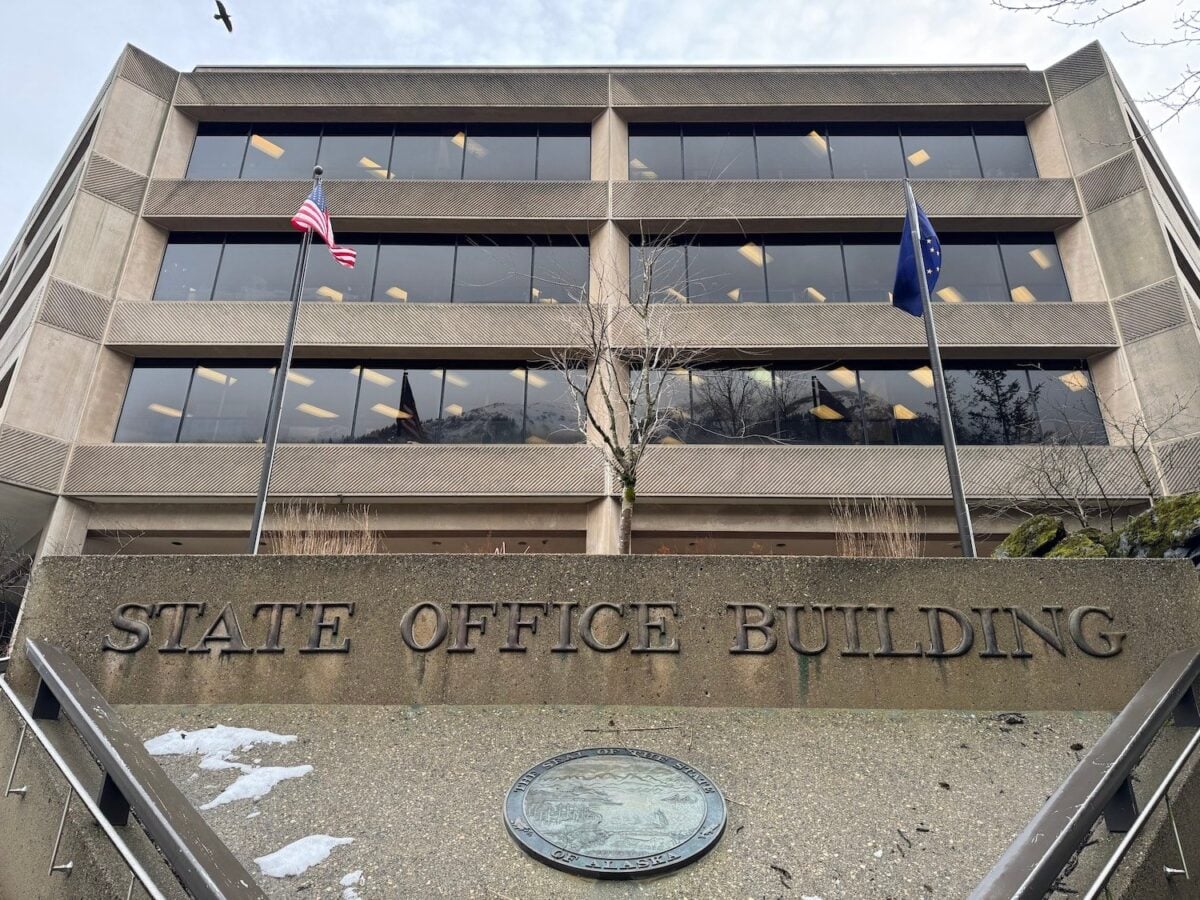
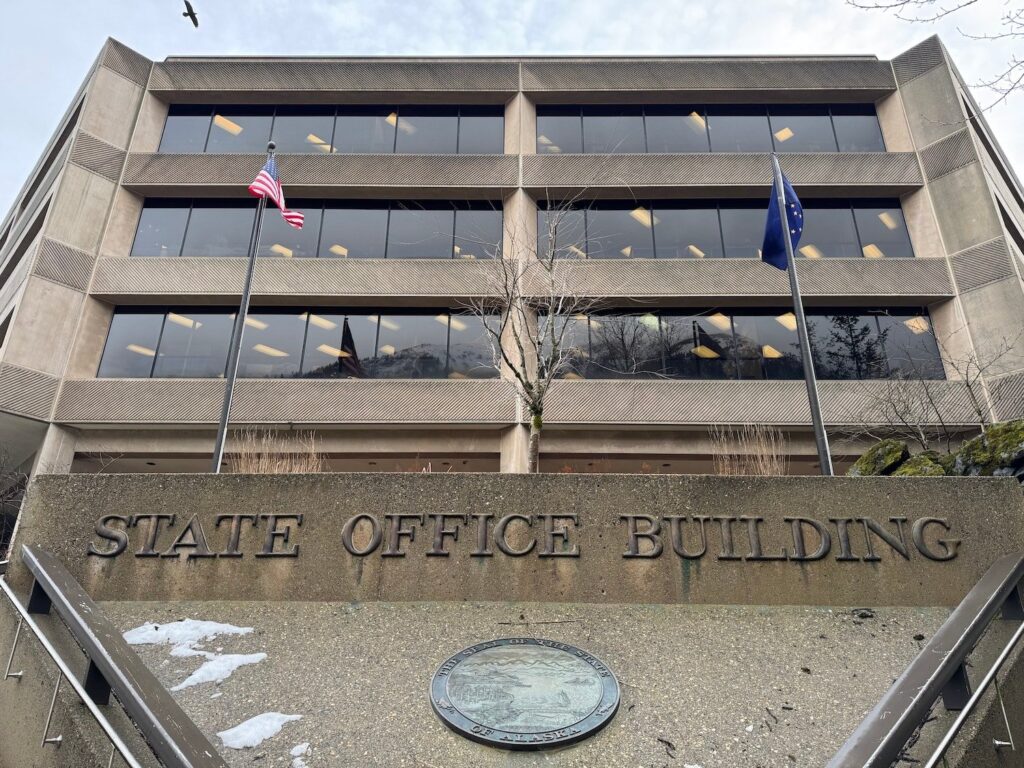
The State Office Building in Juneau is seen on Thursday, Feb. 20, 2025. (Photo by James Brooks/Alaska Beacon)
By: James Brooks, Alaska Beacon
The State Office Building in Juneau is seen on Thursday, Feb. 20, 2025. (Photo by James Brooks/Alaska Beacon)
In a new administrative action, Gov. Mike Dunleavy is ordering “efficiency reviews” of state agencies and asking departments to use artificial intelligence software as part of an effort to identify budget cuts.
The reviews will take place annually, according to Dunleavy’s new administrative order, published Monday, and would become part of the state’s annual budget process.
The reviews will initially focus on “grants to non-State of Alaska entities” and “accounts payable,” according to a copy of the text available online.
The reviews are intended to “identify potential savings” and “improve efficiency of operations” but also will include recommendations for the state to contract out services rather than performing them in-house.
“Alaskans expect their government to deliver essential services in the most efficient and responsible way possible,” Dunleavy said in a written statement announcing the administrative order. “This order ensures we prioritize critical needs, eliminate waste, and safeguard the state’s financial stability.”
Some prior outsourcing efforts by the Dunleavy administration have seen state services assigned to call centers outside Alaska, drawing opposition from union officials and legislators.
A second order, also released Monday, calls for the state to significantly reduce the number of regulations it has on the books.
Notably, the order says that the state should speed permitting for projects regulated by the Alaska Department of Natural Resources, Department of Environmental Conservation and Alaska Department of Fish and Game.
That could mean automatically approving projects even if their environmental review hasn’t been completed according to timelines required by the state, the order says.
Dunleavy leaves office on Dec. 6, 2026. The order says that the state should “reduce the number of regulatory requirements by 15% by Dec. 31, 2026, and 25% (cumulative) by Dec. 31, 2027.”
A liaison with each state department will be required to provide quarterly updates on that goal to the governor’s office.
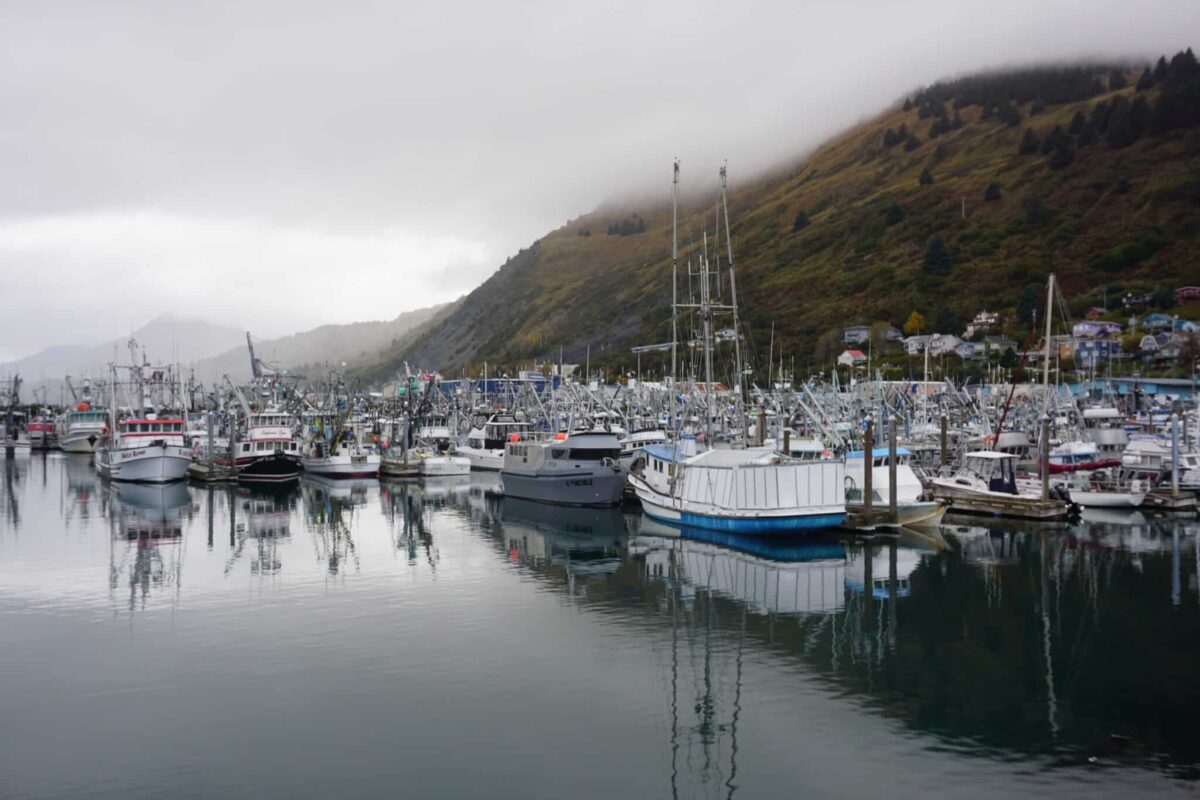
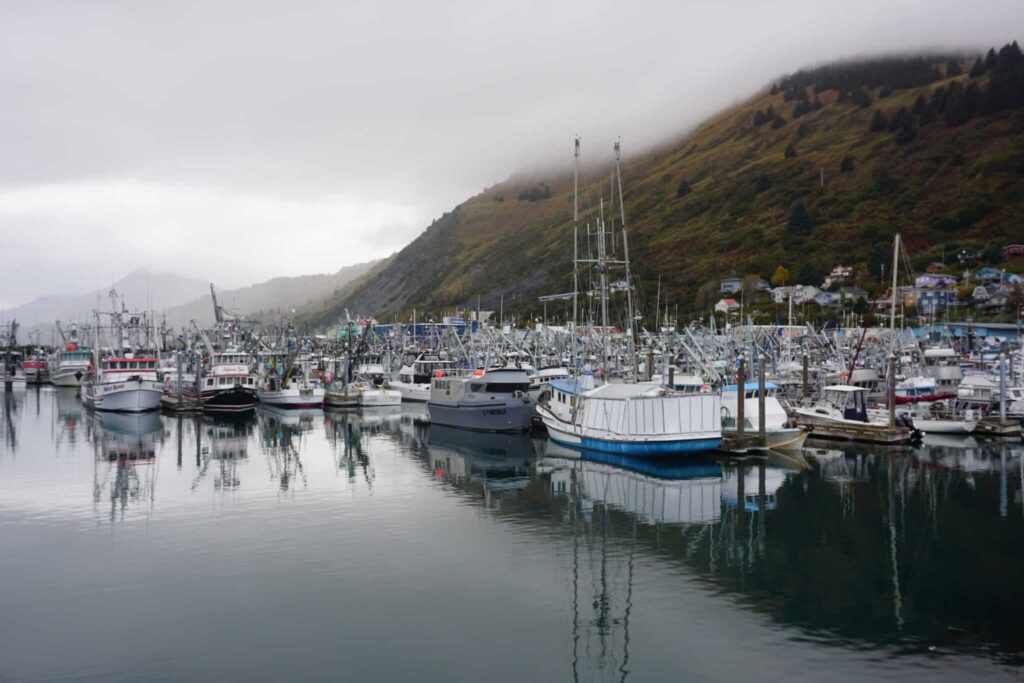
Low clouds hang over Kodiak’s St. Paul Harbor on Oct. 3, 2022. A Coast Guard response to a distress call from a fish tender sinking in the Kodiak harbor led to the discovery that oily bilge water was being discharged from the vessel, in violation of the Clean Water Act. (Photo by Yereth Rosen/Alaska Beacon)
A longtime Alaska fisher who was sentenced in May to a year in jail for illegally exporting crab, much of it disease infected, has now been ordered to pay $1.18 million in penalties for unrelated water pollution charges.
Corey Potter and the companies he managed — the vessel Knot EZ, Aleutian Tendering LLC and the Alaska Tendering Company LLC — were ordered to pay the combined penalty in a default judgment issued on Thursday by U.S. District Court Judge Sharon Gleason.
The penalty was for repeated discharges of oily bilge water, which violated the Clean Water Act, according to court documents.
Potter had not responded to the charges, which were detailed in a complaint filed on Oct. 24, or appeared in court on the case, according to the U.S. Coast Guard and federal prosecutors. That triggered the default judgment by Gleason.
Potter’s previous case concerned thousands of pounds of king crab he and his partners harvested in Southeast Alaska and took directly to Washington state. Alaska law requires that all crabs commercially harvested in waters off Alaska be landed and processed within the state. Part of the reason for that is to ensure quality and marketability.
The Knot EZ, seen in this undated photo, had been illegally discharging oily bilge water over multiple fishing seasons, federal prosecutors said. The vessel operated as a tender, delivering harvested fish from catcher vessels to processors. It was owned by Corey Potter, a longtime Alaska fisher sentenced in May to jail time for illegal out-of-state shipment of king crab, much of which was infected with bitter crab syndrome. (Photo provided by the U.S. Coast Guard)
Instead, a significant percentage of the catch that Potter and his associate brought to Washington state was infected with bitter crab syndrome. The parasitic disease, which is linked to warming waters, kills crabs and makes their meat unpalatable, though not toxic to humans.
The water pollution case against Potter is separate. It stems from a Coast Guard rescue of the Knot EZ, which was sinking in Kodiak Harbor in July of 2022. The Knot EZ operated as a tender, a vessel that delivered fish from harvesters to processors, according to court documents.
Guardsmen who responded to the Knot EZ’s distress call discovered that the vessel had an illegal discharge system that was pumping oily bilge water directly into the sea, according to the complaint. Crew members hired by Potter admitted that the illegal bypass system was used daily, according to the complaint.
The vessel was declared to be unfit for service, and subsequent investigation discovered a long-running pattern of such violations in past fishing seasons as well, according to the complaint.
While neither Potter nor his companies responded to the Clean Water Act charges, a public defender representing him in the crab case asked for leniency, based on his age and on the financial hardships he has already endured. Potter, 64, “has been reduced to relying upon family for assistance and has no viable means to support himself,” said the defense presentencing memorandum in that case, which was filed on May 6.
Sen. Bert Stedman, R-Sitka, stands in the Senate Finance Committee room on April 24, 2025. Stedman is sponsoring a bill that would create an Alaska flood insurance system that would be an alternate to the Federal Emergency Management Agency’s national insurance program. (Photo by Yereth Rosen/Alaska Beacon)
As the Trump administration shrinks and even considers eliminating the Federal Emergency Management Agency, the Alaska Legislature is considering a substitute for one of the agency’s key functions.
A bill introduced by Sen. Bert Stedman, a Republican from the Southeast city of Sitka, would establish an Alaska flood authority and an Alaska flood insurance fund. As far as he knows, it would make Alaska the only state with its own flood insurance, Stedman said.
The veteran state lawmaker said his measure, Senate Bill 11, stems from his dissatisfaction with FEMA and its flood policies, feelings that predated the agency’s possible demise in the Trump era.
The federal agency is, for now, the only source of flood insurance in Alaska, as private carriers that offer policies elsewhere in the country do not operate in the state’s small market, Stedman said.
But Alaskans overall pay much more into the FEMA insurance pool that they receive, he said.
“There’s a cost factor involved here, with Alaska residents subsidizing the Mississippi Delta and the Gulf Coast and East Coast and all that compared to our losses,” Stedman said.
FEMA’s rules about insurance and assistance, which are aimed at flood-prone flat Lower 48 areas, are another source of irritation for Stedman. In Lower 48 areas, FEMA encourages communities to avoid building along coastlines, but in Southeast Alaska, where steep mountains rise from the water’s edge, there are few options for moving inland, he said. An only-in-Alaska flood program could consider local conditions and local governments’ zoning rules rather than FEMA national guidelines, he said.
The Trump administration’s antipathy toward FEMA and its mission has given his bill more urgency, he said.
“It’s reasonably likely that there’ll be significant changes to FEMA coming out of Washington, from restructuring to possibly elimination, so the timing of this bill might be, by happenstance, timely,” he said.
The bill moved through committees this year and is due for more work next year’s session, including an examination of funding options. If a system is established, Stedman said, it could potentially be expanded to another type of disaster that is occurring with increasing frequency in warming Alaska: landslides. There is no specific landslide insurance available in Alaska, Stedman noted.
That may be of interest to Jason Amundson and Eran Hood, University of Alaska Southeast scientists who are focused on glacial outburst flood risks. Though immersed in their project at Mendenhall Glacier, they do not live in the path of the meltwater. Rather, both live in the city’s downtown area, which clings to the lower slopes of steep mountains. There, avalanches and landslides pose the most serious risks.
“There’s hazards everywhere in Juneau,” Hood said.
This story has been supported by the Solutions Journalism Network, a nonprofit organization dedicated to rigorous and compelling reporting about responses to social problems, http://solutionsjournalism.org.
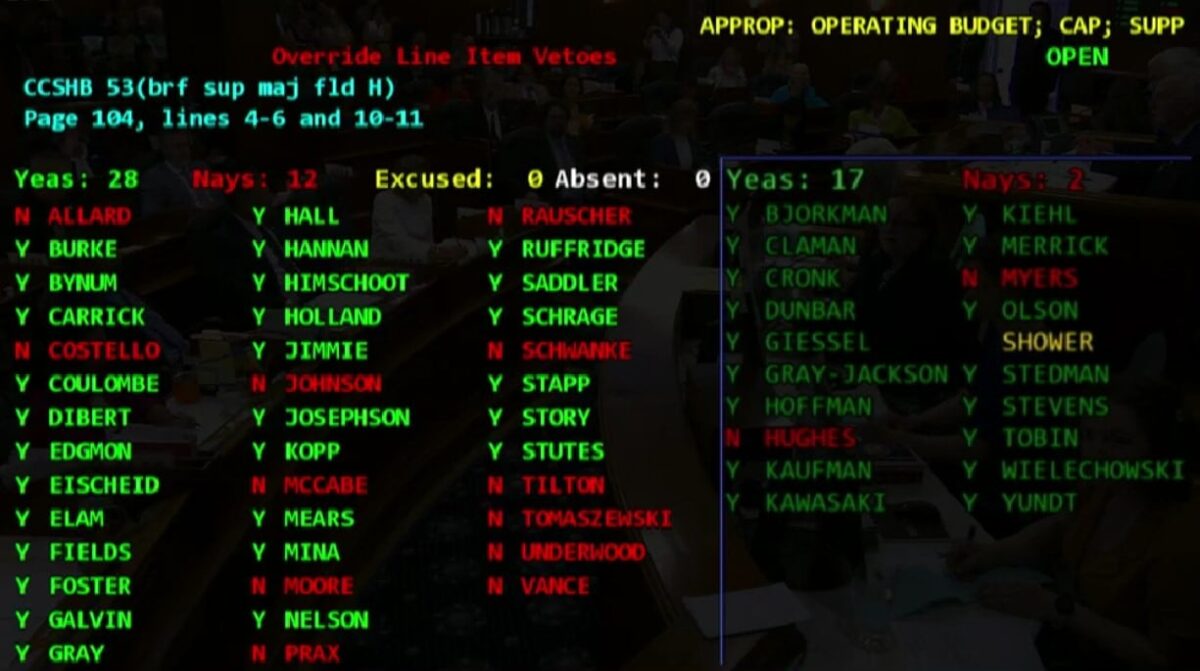
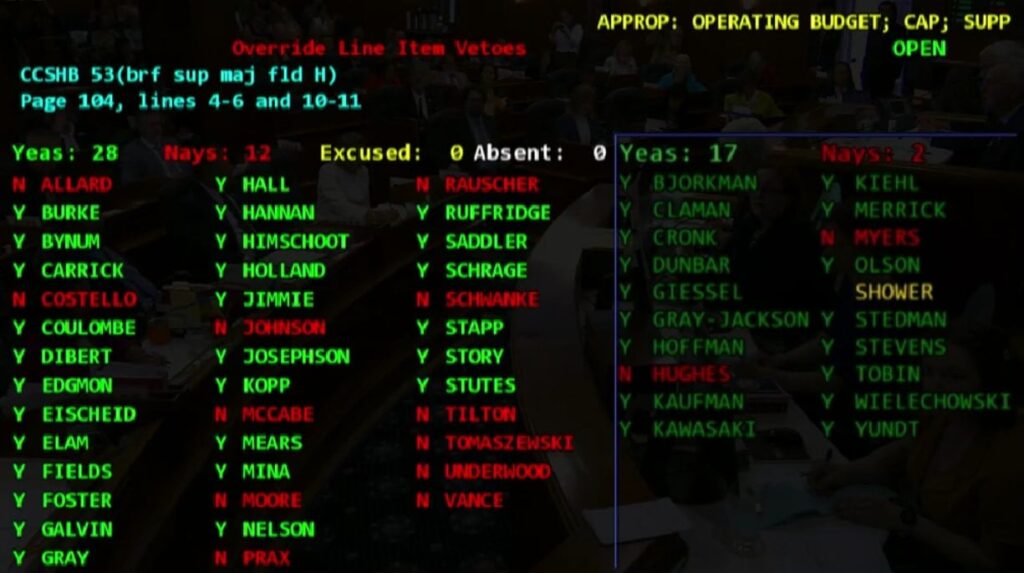
The joint session voted 45-14 in favor of overriding Gov. Mike Dunleavy’s veto of public school funding. (Image courtesy Gavel Alaska)
Meeting in special session, Alaska lawmakers have overridden Governor Mike Dunleavy’s veto of more than $50 million in public school funding.
The 45–14 vote hit the exact threshold needed to override a budget veto, restoring what would have been a 5.6% cut to school districts and providing a modest funding boost.
In Juneau, the veto would have had the effect of a $1.4 million loss.
Lawmakers also overrode Dunleavy’s veto of Senate Bill 183, a measure requiring the Department of Revenue to share details of oil tax settlements with legislative auditors.
The special session was originally called by the governor to press for education reform and create a statewide Department of Agriculture, two ideas lawmakers have already rejected.
Instead, legislative leaders focused solely on the veto overrides and adjourned until August 19.
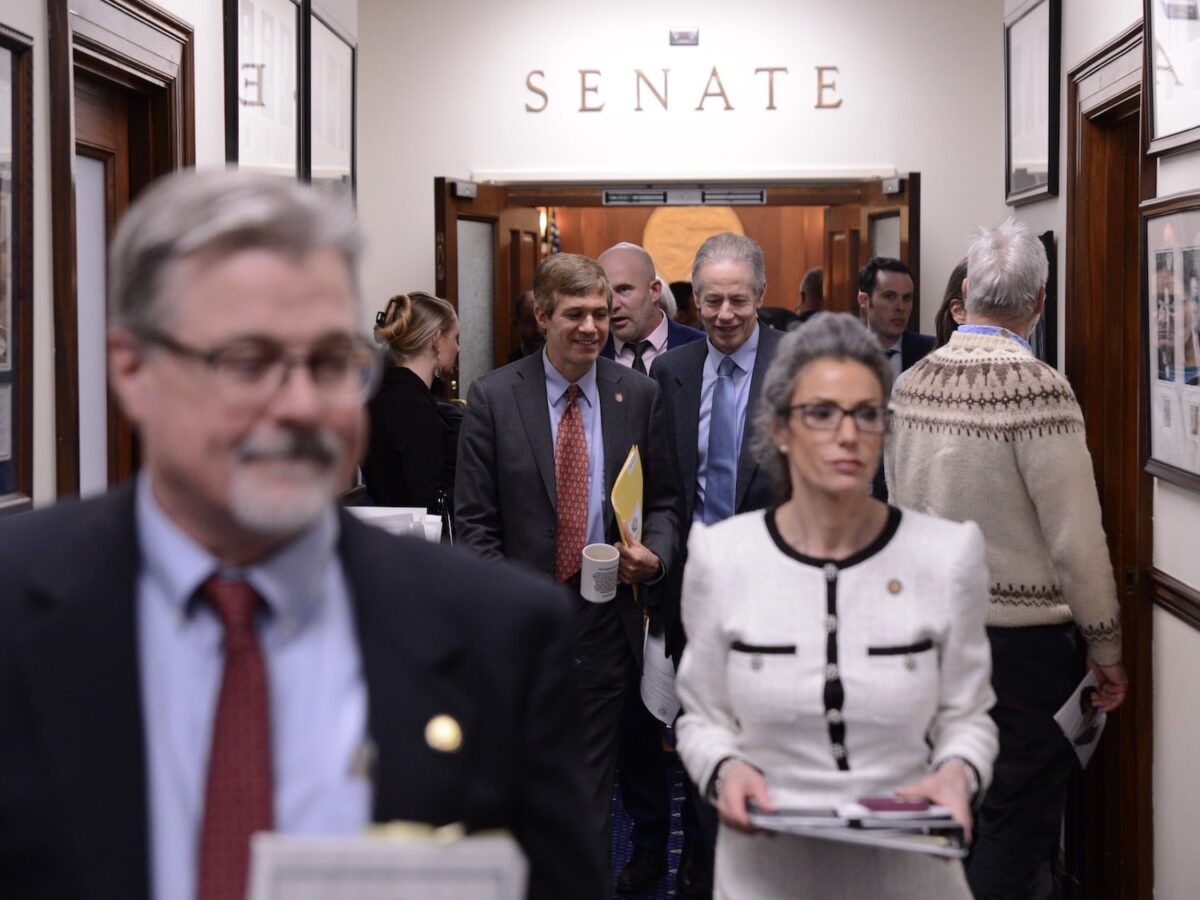
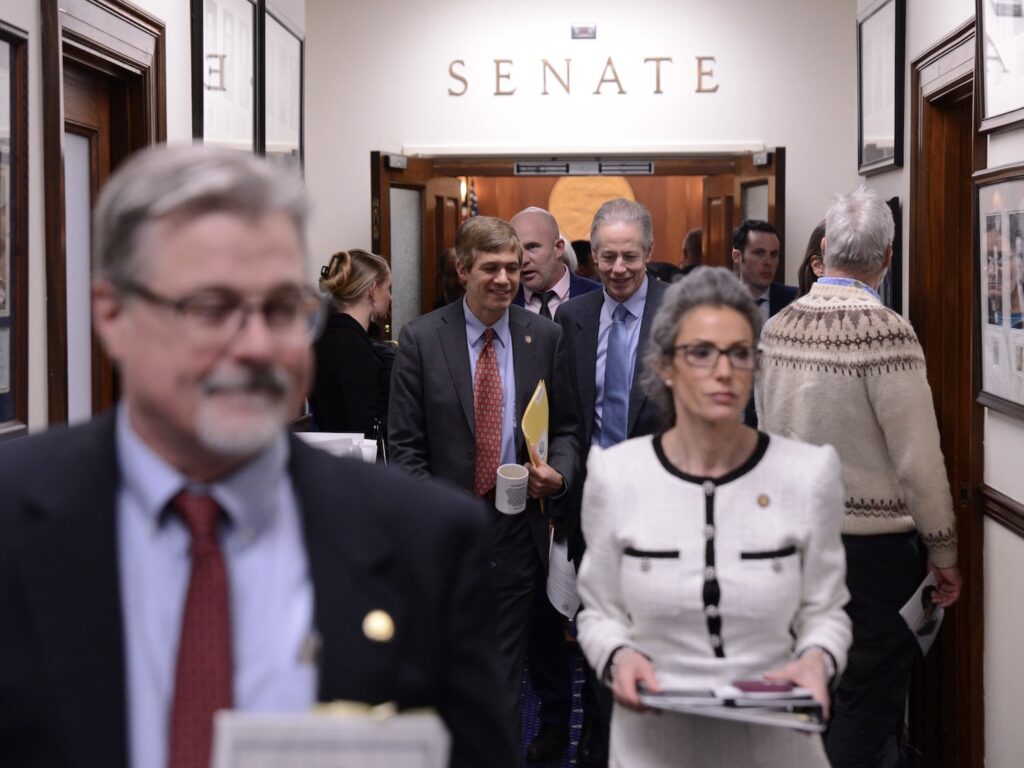
Members of the Alaska Senate leave the Senate chambers on Monday, April 28, 2025. (Photo by James Brooks/Alaska Beacon)
By: James Brooks and Corinne Smith, Alaska Beacon
Members of the Alaska Senate leave the Senate chambers on Monday, April 28, 2025. (Photo by James Brooks/Alaska Beacon)
Alaska lawmakers are scheduled to meet at 10 a.m. in Juneau for a special session of the Alaska Legislature. You can watch live online on Gavel Alaska.
Why is the Legislature meeting in a special session?
Gov. Mike Dunleavy called the special session. The official agenda says that it will involve legislation about education policy and a proposed Alaska Department of Agriculture.
Will legislators actually do that?
No.
What are they doing instead?
They’re going to vote on overriding at least some of the vetoes the governor has made since the regular legislative session ended in May.
No. 1 on the list is the governor’s decision to veto about $51 million in funding for public schools. The No. 2 item is the bill that would require the Alaska Department of Revenue to provide lawmakers with additional information about tax settlements between oil companies and the state. Lawmakers believe the state may be settling tax disputes for far less than they’re worth, costing the state millions.
Some legislators are interested in taking up other vetoes as well, including the governor’s decision to cancel a ban on payday loan lending, his decision to veto money for transportation projects, and his vetoes of bills affecting police dogs and teacher housing, among others.
Will those overrides succeed?
It’s too close to call. The Alaska Constitution says votes from 45 of 60 legislators are needed to override a budget veto. In May, 46 legislators voted in favor of overriding the governor’s decision to veto a bill that increases the state’s public school funding formula.
That was the first time since 2002 that legislators voted to override the veto of a sitting governor.
It isn’t clear whether everyone who voted in favor of that first override will vote in favor of the second.
Overriding a policy bill veto, like the one dealing with the tax settlements, takes 40 votes.
Will everyone be there?
Probably not. Some conservative Republicans had said they would stay away from the session in a show of support for the governor’s vetoes. Immediately after calling the special session, Dunleavy asked them to be absent for the first five days because an absence is as good as a “no” vote when it comes to a veto override.
He later changed his position, asking lawmakers to begin meetings about his stated agenda on Sunday, and some Republicans changed course and said they will attend the session, after all. It wasn’t clear whether all have done so, but it isn’t likely to affect the vote total on the potential override.
Sen. Forrest Dunbar, D-Anchorage, is in favor of an override and had been expected to be unavailable because of military service overseas. He ended up getting a special leave of absence and is flying back from Europe. Sen. James Kaufman, R-Anchorage, is flying back from Vietnam to attend. Other legislators have canceled family plans and postponed business trips.
How long will this take?
On the low end, a few hours. On the high end, a few days. Officially, the special session can last for up to 30 days, but legislators have said they won’t use all that time.
In some previous special sessions, legislators have left Juneau without formally closing the special session, just in case they need to come back. Those special sessions ended after the 30th day.
How much will this special session cost?
Based on historical costs, the estimated cost for a special session is $30,000 per day, according to the Legislative Affairs Agency, the Legislature’s nonpartisan support agency. But that cost depends on the duration and scope of the special session, said Jessica Geary, the agency’s executive director, by email on Tuesday.
“Many legislators had to change summer travel plans to attend the special session, and many of them purchase their own travel and submit for reimbursement. At this point we don’t have any concrete cost estimates and won’t know until the special session concludes,” she said.
Geary said legislators have up to 60 days to submit reimbursements for expenses like hotel lodging, transportation and airfare, staffing, expenses, and so the agency will have a total cost by October.
Legislators receive an annual salary of $84,000 per year. The 57 members that live outside of Juneau are entitled to receive a “per diem” amount of $332 per day to cover expenses.
If lawmakers don’t take up the governor’s ideas, are they dead?
No. Legislators have created a task force to consider education policy changes, including those from the governor. One idea supported by the governor is open enrollment — allowing a student to move between different schools and school districts, regardless of where they live. That will be considered by the task force, which meets Aug. 25.
Legislators are also considering a bill that would create the Alaska Department of Agriculture. That bill is broader than the governor’s initial plans; for example, it would include sea farms (formally known as aquaculture), which are the fastest-growing agricultural sector in Alaska.
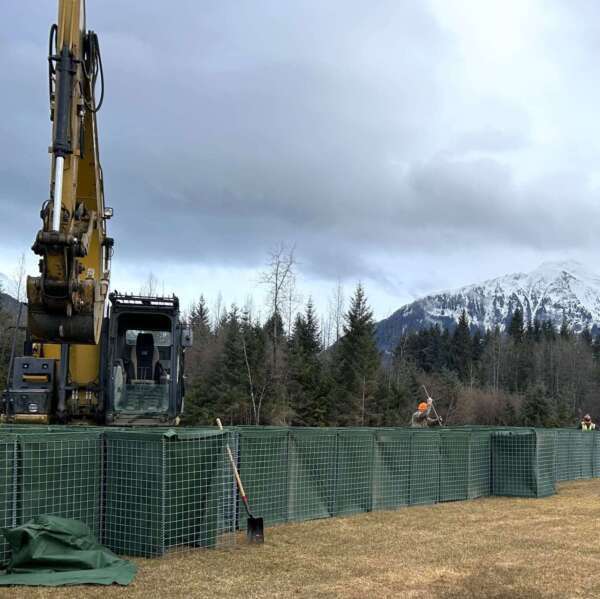
Photo provided by CBJ following the installation of the HESCO barrier project
Photo provided by CBJ following the installation of the HESCO barrier project
NOTN- Deputy Mayor Greg Smith joined KINY’s morning show on Thursday to recap Wednesday’s joint flood initiative meeting, discussing long-term solutions for flooding caused by the Mendenhall Glacier’s Suicide Basin.
In the short term, HESCO barriers remain the primary line of defense for vulnerable neighborhoods.
“We’re approaching historical release times” said Smith, “I mean, of course, everyone is crossing their fingers and just hoping for the best possible outcome.”
The Army Corps emphasized that a more permanent solution—such as a levee around Mendenhall Lake, is likely necessary. But planning and engineering such infrastructure takes time.
“they’re doing studies, but they need to know, you know, what is the risk from Suicide basin, in 5 years, what’s the risk in 50 years? There are more basins back up behind the glacier, and they need to know what those situations could be.” He said, “There’s a lot of factors that go into it. So for them to engineer a viable, long-term solution that will not fail, it does take time. We’ve heard them say it’s probably the top issue for the Army Corps in the state of Alaska.”
A federally funded technical study is underway, and officials hope that data from current modeling and previous floods will help shorten the usual multi-year timeline.
Still, even an expedited timeline might take seven years or more, but Smith says he’s optimistic about that timeline.
“The fact that we just got federal money to do this technical study is tremendous.” Said Smith.
With the Alaska Legislature back in town for the special session, Smith urged residents to take the opportunity to raise the issue with state lawmakers.
“I think some of the takeaways for people, is letting our congressional staff or congressional delegation know the importance.”
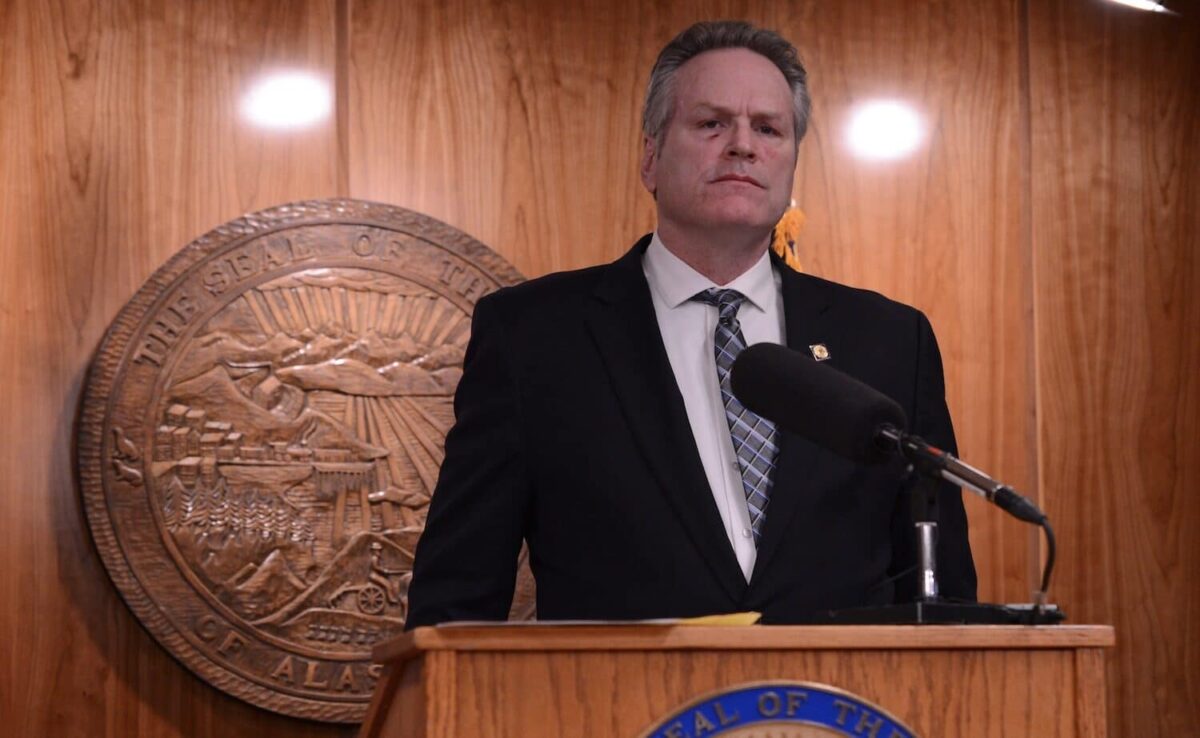
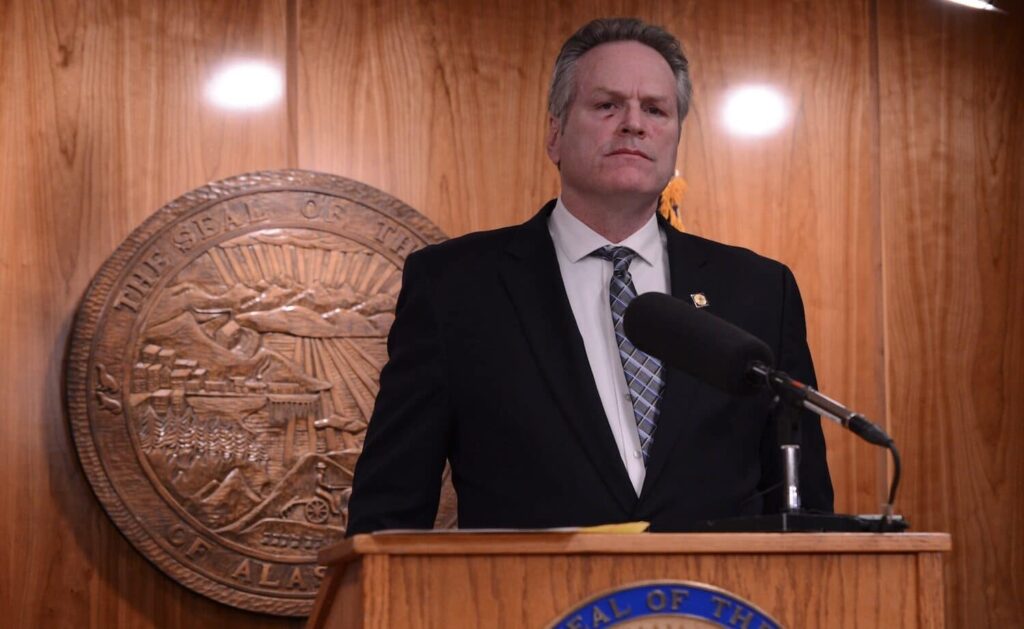
Alaska Gov. Mike Dunleavy speaks during a news conference on Friday, March 15, 2024. (Photo by James Brooks/Alaska Beacon)
Alaska Gov. Mike Dunleavy speaks during a news conference on Friday, March 15, 2024. (Photo by James Brooks/Alaska Beacon)
NOTN- The Alaska Legislature will reconvene in Juneau on Saturday for a special session called by Gov. Mike Dunleavy, with two major items on the agenda: education reform and the creation of a new Department of Agriculture. But lawmakers are also preparing to challenge some of the governor’s recent vetoes, including cuts to public school funding.
Under Alaska’s constitution, when the governor calls a special session, he sets the subjects lawmakers may address.
“He has, apparently, a new education bill. Most of it is stuff that we have seen before, that he’s proposed before, and that has not had a lot of support.” Said Juneau Senator Jessie Kiehl, “And the other thing he wants to take another crack at is creating an Alaska Department of Agriculture. We have a Division of Agriculture. He wants it to be its own State Department.”
But overriding vetoes may take center stage during the first five days of the session, a constitutionally limited window for legislators to reverse the governor’s decisions.
At the top of the list: restoring approximately $51 million in statewide public school funding that Dunleavy vetoed.
That override will require a three-quarters majority, or 45 votes.
“It is the highest, toughest veto override threshold in all 50 states or any of the territories.” Said Senator Kiehl, “I have talked to colleagues all over this state, Republicans, Democrats, rural, urban and the agreement is our schools are hurting, and they need that money.”
Lawmakers are also considering overriding a veto of a bipartisan bill that would empower the Legislative Auditor to review oil tax enforcement practices
That override will require two-thirds of the Legislature, or 40 votes.
In addition to the override votes, lawmakers may consider a commercial fishing bill and discuss items in the governor’s education package through the new legislative Education Task Force.
A recent report suggested that Dunleavy had asked some minority Republicans to stay home in an effort to block override votes. Kiehl said he believes most lawmakers plan to attend.
“My understanding is that in the last week or so, the governor has come the other way and said, everybody, go ahead and be there.” He said, “The Constitution has some rules for how you do your job when you raise your right hand as a legislator elected by the people and take on this duty, I don’t believe in cutting work when I’m on the job, I think the vast majority of my colleagues feel the same way.”
Bill introductions are scheduled for the session’s opening day, August 2, with hearings requested to begin Sunday, Aug. 3.
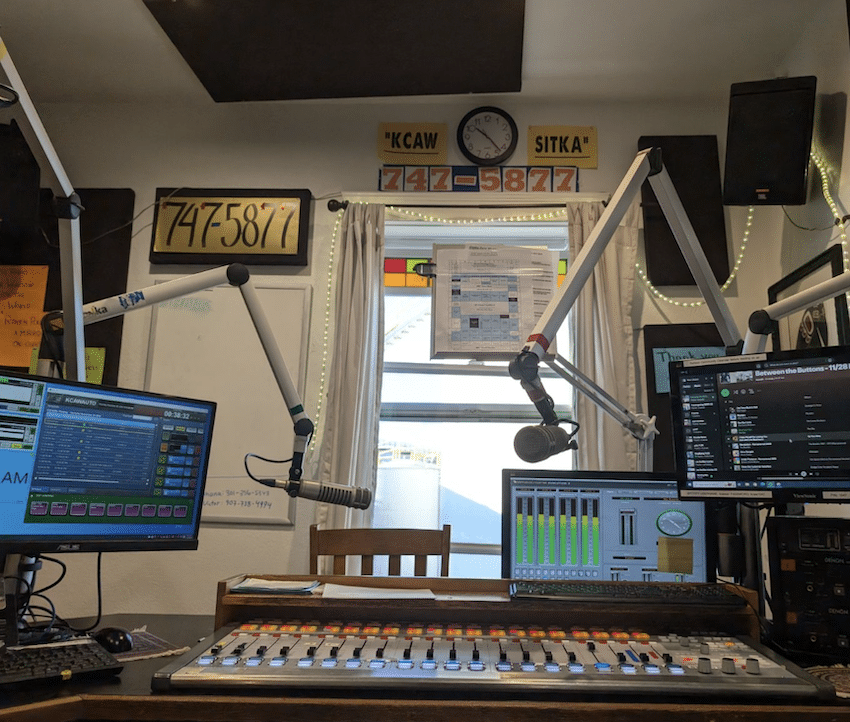
KCAW in Sitka is one of more than two dozen public radio stations broadcasting across Alaska. (Photo by Nathaniel Herz/Northern Journal)
On July 17, Congress voted to eliminate federal funding for public media across the United States.
The cuts, called a “rescission” in Congress-speak, are huge: They will take away some $1 billion that the federal government had previously allocated for the next two years to the Corporation for Public Broadcasting, which provides funding for national outlets like NPR and PBS as well as local radio and television stations with much smaller budgets.
That funding is essential to many of Alaska’s local news outlets. It’s no exaggeration to say that losing that money — which was slated to be delivered starting September 30 — threatens the very existence of some stations that provide news coverage and other programming, like emergency alerts, around the state.
To get a sense of how local radio and television stations are responding — and what their leaders expect in the months ahead — Northern Journal correspondent Max Graham sent some questions to two longtime public media employees in rural Alaska: Sage Smiley, news director at KYUK in Bethel; and Lauren Adams, general manager at KUCB in Unalaska.
Below are their responses, lightly edited for brevity.
What have the last few days been like for you and your colleagues? How are you feeling?
Sage Smiley: We’ve spent seven months facing – and trying to publicly push back on – an increasingly likely existential threat to public broadcasting. It’s been exhausting, and demoralizing.
Beyond the threat to our jobs, or even to this station we care so much about and where we’re trying to serve the communities of the Yukon-Kuskokwim Delta, it’s incredibly concerning and challenging to see the attack on journalism and on that pillar of democracy that this and other actions by the Trump administration represent.
In a way, though, rescission of funds has been deeply motivating to the news staff. We may be in the unique position of defining the end of a chapter of KYUK’s newsroom history, and want to do the best job we can, for as long as we can, serving the mission of KYUK and its newsroom.
Lauren Adams: On the day that the vote took place, KUCB’s entire staff was working to inform our community about a tsunami evacuation following a large earthquake in the region. Our entire community, including the fishing industry workers, were evacuated to high ground. Our emergency response went off without a hitch, and we worked in tandem with our community’s public safety department. It was a huge affirmation of our connection to the community and our important mission.
That night, I was very happy to hear U.S. Sen. Lisa Murkowski speak about KUCB on the Senate floor in defense of Corporation for Public Broadcasting funding. It was incredibly disappointing that her colleagues didn’t hear the message and that they voted in favor of the rescission.
The following days were really low! There was a sadness and a heaviness in the office that I haven’t experienced before. I know my staff was concerned about the future of their jobs and we met as a group the following day to talk through their concerns.
I told them that we will have to make changes in the future but for now we will use reserves to keep our essential services up and running and those services depend on having people on the payroll. In short, we aren’t cutting staff right now.
In my case, I am beyond frustrated and dismayed looking at a budget that’s just not going to balance this year without severe cuts. The federal funding cut comes on the heels of already lean years, given the lack of funding from the state of Alaska, which was eliminated under Gov. Mike Dunleavy.
One silver lining has been seeing donations come in every day from people all across the country expressing their support for the work we do. While the funds won’t fill the gap made by the elimination of federal funding, the sentiment and the comments have been a real morale boost for all of us.
Could you help readers understand how significant federal funding is for your station? What proportion of your budget does it account for, and what does it pay for?
Smiley: KYUK is both a radio and a television station, called a dual licensee, so we receive two community service grants each year from the Corporation for Public Broadcasting. Together, those grants represent about 70% of KYUK’s operating funds – over $1 million. That money pays for everything from salaries to equipment to travel on bush planes for reporting.
Adams: Federal funding last fiscal year was over $280,000, over 40% of our total budget. We had it budgeted at $289,602 for this fiscal year, which started on July 1. That was 45% of this year’s projected budget. There is no replacement for these funds. Our community is small but residents support us in substantial ways already. We estimate that about 8% of people in Unalaska are KUCB donors and also support us through daily non-monetary acts of generosity. We have consistently done well with local fundraising allowing us to match federal funds with local income. But we can’t expect community members to fill this gap: It’s just not possible.
Funding from the Corporation for Public Broadcasting supports KUCB’s local news content, a comprehensive community calendar, emergency alerts, health and safety information and government accountability through live broadcasts and streaming of municipal meetings.
What are your expectations for your station moving forward?
Smiley: KYUK has been a community institution broadcasting to the Yukon-Kuskokwim Delta for over 50 years, committed from the beginning to uplifting Yup’ik voices. Our call letters, Y-U-K, were picked because Yuk means “real person” in Yugtun, the Yup’ik language. Our ultimate goal is to stay on the air, which we have to do to keep our licenses. KYUK is unique and incredible – the only station I’m aware of in the state broadcasting news and public affairs that provides shows bilingually on a daily basis – and we want to preserve that legacy of support for Yup’ik language and culture, however possible.
The entrance to KYUK in Bethel. (Photo by Nathaniel Herz/Northern Journal)
Adams: We had a reporter leave the station in June to fill a Report for America position in Texas. Because I was concerned about funding, I chose not to post that position until we had a better sense of federal dollars. That means we started the fiscal year with a little financial breathing room, but also with a newsroom that was down by a quarter of our former reporting capacity. Thankfully, we have a summer news intern funded by Alaska organizations promoting journalism and community development. When she leaves next month, our community will start to notice the reduction in news coverage, which is unavoidable.
At this point, I don’t know exactly what we will sound like. We will have to meet with our board of directors and with community leaders to make changes under their guidance. I imagine that we will have to sacrifice some of our daily news coverage during times when we have a lot going on.
For instance, we are going into our municipal election season and this is a mayoral election year. I am confident that we will hold our usual forums and we will produce a voter guide as we do every year. This is an important responsibility for us because we employ the only reporters in the community. But if our staff is doing this work, we will have to give up the other stories and newscasts in order to prepare for the forums. We need to be mindful of not burning out staff by just piling more work on the two remaining members of the news team.
We are lucky because our studio is located in a municipal building and the rent is free. We also receive an operations grant from the City of Unalaska. Because of this, I don’t fear that our station will go dark. My bigger concern is that we will be more of a repeater station, playing statewide content instead of local content, and that we won’t have the staff to cover the region’s news and events and we won’t be as effective during an emergency.
I imagine news of the lost funding has brought up, or will bring up, some pretty tough conversations at your station about programming cuts and layoffs. Could you shine some light on those discussions if you’ve already had them? Or are you still waiting and seeing what the full impacts will be?
Smiley: There’s a lot that’s still unclear, and I would say that at this point, KYUK’s future is also unclear. Seventy percent of our funding will cease to exist at the end of the federal fiscal year on September 30. That’s catastrophic. We may have to make drastic cuts to staff in order to keep providing basic broadcasting to the communities we serve.
Adams: We are hoping to hold off on layoffs for at least six months using reserves. In the meantime, we will strip our station budget down as much as possible while maintaining as much of our essential content – local news and information – as possible.
Places where we can cut immediately include syndicated programming, interconnection costs, travel, training, dues and subscriptions, computer hardware and software purchases, internet and phone, and potentially utilities. In the future we might turn off broadcast television and focus on our radio operations, but this is a hard choice that requires giving up a broadcast license that we have held locally for 50 years.
I’ve heard some talk that potential funding from philanthropists could make up for the lost federal spending. Is that really a possibility? Or are there other funding alternatives that are giving you hope?
Smiley: Our fall fundraiser usually brings in around $50,000, and our federal grants are 20 times that. As an ardent lover of the public broadcasting system, I would be overjoyed if a philanthropist decided to fund the network in perpetuity. But I don’t think that’s realistic, or a real solution. The whole point of the public broadcasting system is the system, and the commitment of the United States government to supporting that egalitarian, deeply democratic, equal-access system. It’s the fact that public broadcasting reaches 99% of Americans. It’s that it’s free, and available practically everywhere. A patchwork solution, one that doesn’t preserve the entirety of the system, isn’t going to address what will be lost more broadly.
Adams: I am in one of the most remote corners of the state and I might not be the one to ask about major philanthropy donors and the advocacy efforts. We have a small staff and all of us are working daily to keep our systems up and running and to provide the services that our community relies on. I don’t have the resources to go after major donors. At the statewide level, I think we are all doing our best to try to envision a future where there’s increased funding from philanthropists and donors. I don’t know how quickly this could come together or how sustainable the model would be.
I think that federal funding filled a need, and we were a great fit for the funds because we brought crucial health and safety services to our remote community. I am not aware of a viable long term substitute for Corporation for Public Broadcasting funds.
With that said, I would love to see restoration of public media funding in our state budget. We’ve always received bipartisan support for state funding until the line gets vetoed by the governor. Maybe given the new funding circumstances, and the real need for the services that public broadcasters provide in Alaska, we could see restoration of some state funding.
I also know from years of experience at KUCB that building a station’s relationship with a community, and establishing an award-winning news team, takes a lot of time and effort. I also know that while it’s slow to build, it’s very quick to erode. With reduced news staff, fewer editors, reduced equipment maintenance, and cuts to our services, we will see a spiral of reduced local income.
Could you highlight recent work at your station — whether news reporting or other programming — that wouldn’t have been possible without federal funding and that illustrates the importance of your station to your community?
Smiley: Everything you see on KYUK’s website is supported by federal funding. Our calendar of fisheries openers. The local newscasts in Yugtun and English. Yup’ik Word of the Week. Decades-worth of archival television material from throughout the Delta. Our call-in shows: Fish Talk, River Watch, Talkline, Yuk to Yuk, the Birthday Line. Live coverage of high school basketball games. City Council meetings.
And then there’s all the stuff that goes out over the radio but isn’t necessarily online: radio programming the funding allows us to license, search and rescue messages, boil water notices, public service messages from the local and state governments, emergency alerts.
Adams: Again, I think that the tsunami response earlier this month is an amazing example of the work we do locally — work that is only possible with federal funding. Unalaska is a volcanic island in the middle of a chain of volcanoes, and we experience extreme weather pretty frequently. Emergency alert procedures are essential and a very real part of the work we do.
Additionally, we are the only newsroom located in the Aleutian region. The reporting work that our staff does every day is essential. While cutting syndicated programming wouldn’t hurt our community because yes, we have internet in Unalaska and can get our national news and our music programming from a variety of sources, there is no replacement for the unique daily news and information that KUCB provides. We broadcast every city council meeting, ensure transparency of local government, highlight the arts and culture events that make Unalaska a unique and vibrant place to live, and provide fisheries and science reporting from an important port surrounded by some of the most productive fishing grounds on earth.
Northern Journal contributor Max Graham can be reached at max@northernjournal.com. He’s interested in any and all mining related stories, as well as introductory meetings with people in and around the industry.
This article was originally published in Northern Journal, a newsletter from Nathaniel Herz. Subscribe at this link.
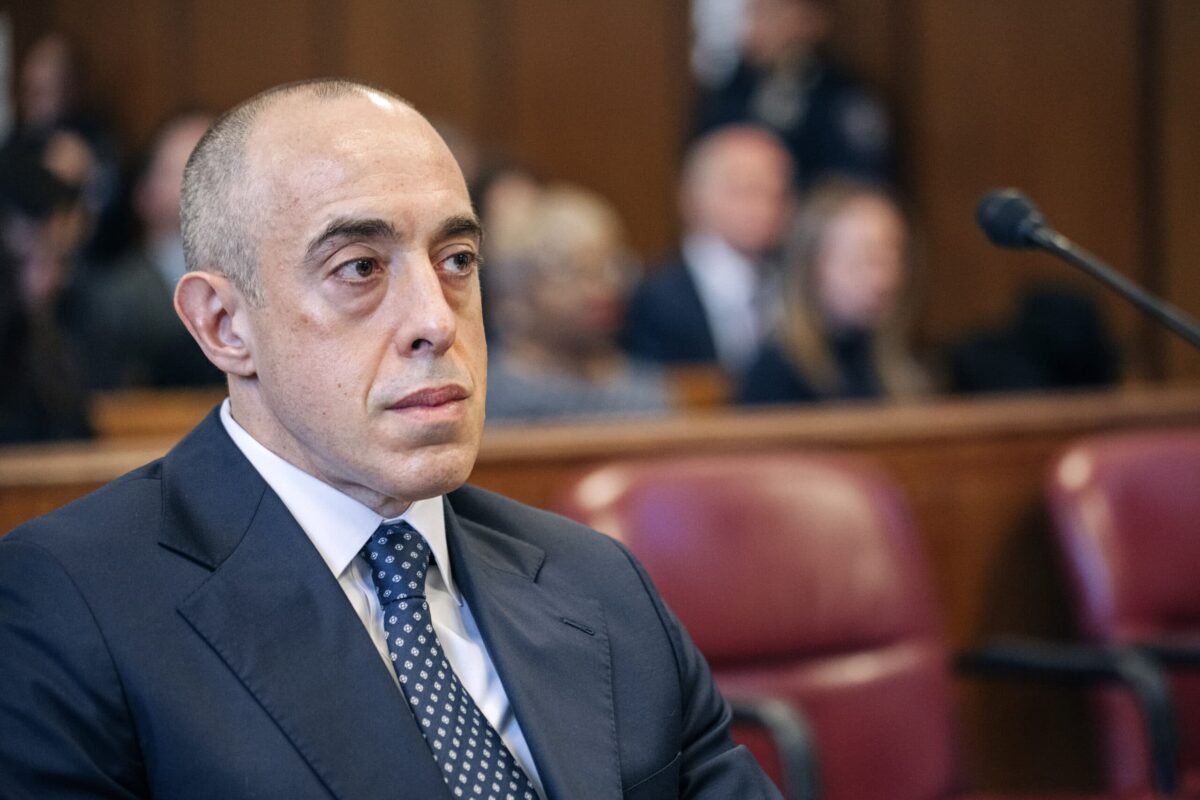
FILE - Emil Bove, attorney for former US President Donald Trump, sits Manhattan criminal court during Trump's sentencing in the hush money case in New York, Jan. 10, 2025. (Jeenah Moon/Bloomberg via AP, Pool, File)
FILE – Emil Bove, attorney for former US President Donald Trump, sits Manhattan criminal court during Trump’s sentencing in the hush money case in New York, Jan. 10, 2025. (Jeenah Moon/Bloomberg via AP, Pool, File)
AP- The Senate confirmed former Trump lawyer Emil Bove 50-49 for a lifetime appointment as a federal appeals court judge Tuesday as Republicans dismissed whistleblower complaints about his conduct at the Justice Department.
A former federal prosecutor in the Southern District of New York, Bove was on Trump’s legal team during his New York hush money trial and defended Trump in the two federal criminal cases. He will serve on the 3rd U.S. Circuit Court of Appeals, which hears cases from Delaware, New Jersey and Pennsylvania.
Democrats have vehemently opposed Bove’s nomination, citing his current position as a top Justice Department official and his role in the dismissal of the corruption case against New York City Mayor Eric Adams. They have also criticized his efforts to investigate department officials who were involved in the prosecutions of hundreds of Trump supporters who were involved in the Jan. 6, 2021, attack on the Capitol.
Democrats have also cited evidence from whistleblowers, a fired department lawyer who said last month that Bove had suggested the Trump administration may need to ignore judicial commands — a claim that Bove denies — and new evidence from a whistleblower who did not go public. That whistleblower recently provided an audio recording of Bove that runs contrary to some of his testimony at his confirmation hearing last month, according to two people familiar with the recording.
The audio is from a private video conference call at the Department of Justice in February in which Bove, a top official at the department, discussed his handling of the dismissed case against Adams, according to transcribed quotes from the audio reviewed by The Associated Press.
The people spoke on the condition of anonymity because the whistleblower has not made the recording public. The whistleblower’s claims were first reported by the Washington Post.
None of that evidence has so far been enough to sway Senate Republicans — all but two of them voted to confirm Bove as GOP senators have deferred to Trump on virtually all of his picks.
Democrats say Bove’s confirmation is a ‘dark day’
Senate Democratic Leader Chuck Schumer, D-N.Y., said that Bove’s confirmation is a “dark day” and that Republicans are only supporting Bove because of his loyalty to the president.
“It’s unfathomable that just over four years after the insurrection at the Capitol, when rioters smashed windows, ransacked offices, desecrated this chamber, Senate Republicans are willingly putting someone on the bench who shielded these rioters from facing justice, who said their prosecution was a grave national injustice,” Schumer said.
Republican Sens. Susan Collins of Maine and Lisa Murkowski of Alaska voted against Bove’s confirmation. “I don’t think that somebody who has counseled other attorneys that you should ignore the law, you should reject the law, I don’t think that that individual should be placed in a lifetime seat on the bench,” Murkowski said Tuesday.
At his confirmation hearing last month, Bove addressed criticism of his tenure head-on, telling lawmakers he understands some of his decisions “have generated controversy.” But Bove said he has been inaccurately portrayed as Trump’s “henchman” and “enforcer” at the department.
In a letter to the Senate Judiciary Committee released Tuesday evening just before the vote, Bove said he does not have the whistleblower’s recording but is “undeterred by this smear campaign.”
A February call emerges as evidence
Senators at the Judiciary Committee hearing asked Bove about the February 14 call with lawyers in the Justice Department’s Public Integrity Section, which had received significant public attention because of his unusual directive that the attorneys had an hour to decide among themselves who would agree to file on the department’s behalf the motion to dismiss the case against Adams.
The call was convened amid significant upheaval in the department as prosecutors in New York who’d handled the matter, as well as some in Washington, resigned rather than agree to dispense with the case.
According to the transcript of the February call, Bove remarked near the outset that interim Manhattan U.S. Attorney Danielle Sassoon “resigned about ten minutes before we were going to put her on leave pending an investigation.” But when asked at the hearing whether he had opened the meeting by emphasizing that Sassoon and another prosecutor had refused to follow orders and that Sassoon was going to be reassigned before she resigned, Bove answered with a simple, “No.”
In a letter to Senate Judiciary Committee Chairman Chuck Grassley, R-Iowa, Bove defended his testimony as accurate, noting that the transcript of the call shows he didn’t use the word “reassigned” when talking to the prosecutors.
At another moment, Bove said he did not recall saying words that the transcript of the call reflects him as having said — that whoever signed the motion to dismiss the Adams case would emerge as leaders of the section.
But in the letter to Grassley, Bove said he did not intend to suggest that anyone would be rewarded for submitting the memo but rather that doing so would reflect a willingness to follow the chain of command, something he said was the “bare minimum required of mid-level management” of a government agency.
Republicans decry ‘unfair accusations’
Grassley said Tuesday that he believes Bove will be a “diligent, capable and fair jurist.”
He said his staff had tried to investigate the claims but that lawyers for the whistleblowers would not give them all of the materials they had asked for until Tuesday, hours before the vote. The “vicious rhetoric, unfair accusations and abuse directed at Mr. Bove” have “crossed the line,” Grassley said.
The first whistleblower complaint against Bove came from a former Justice Department lawyer who was fired in April after conceding in court that Kilmar Abrego Garcia, a Salvadoran man who had been living in Maryland, was mistakenly deported to an El Salvador prison.
That lawyer, Erez Reuveni, described efforts by top Justice Department officials in the weeks before his firing to stonewall and mislead judges to carry out deportations championed by the White House.
Reuveni described a Justice Department meeting in March concerning Trump’s plans to invoke the Alien Enemies Act over what the president claimed was an invasion by the Venezuelan gang Tren de Aragua. Reuveni said Bove raised the possibility that a court might block the deportations before they could happen. Reuveni claims Bove used a profanity in saying the department would need to consider telling the courts what to do and “ignore any such order,” Reuveni’s lawyers said in the filing.
Bove said he has “no recollection of saying anything of that kind.”
In a packed meeting Monday night, the Juneau Assembly approved key measures, including a proposed seasonal sales tax structure and the city’s Hazard Mitigation Plan, while deferring several bond issues and continuing deliberation on ranked-choice voting.
Deputy City Manager Robert Barr said one of the most significant decisions was the approval of a revised seasonal sales tax ordinance, which will now head to the October ballot for voter consideration.
“The idea is to have a lower sales tax in winter months and a higher sales tax in summer months.” Barr explained, “and the Assembly did, ultimately pass the ordinance with some amendments.”
One amendment, introduced by Deputy Mayor Greg Smith, lowers the winter sales tax rate further, from 2.5% to 2%. Including the existing temporary 1% tax, which is renewed by voters every five years, the total off-season rate would be 3%.
The Assembly also passed the final draft of the All-Hazard Mitigation Plan, following public testimony, much of it centered on landslide risk.
“At the end of the day, the Assembly did pass the resolution.” Said Barr “So the next steps for that plan is that it will go on to the state and then to FEMA for adoption, and we’re hopeful that that will happen in time for us to be able to apply for grant opportunities that are coming down the line.”
The plan is key to unlocking federal funding opportunities, including hazard mitigation grants.
Deliberations also continued on ranked-choice voting, with the Assembly choosing to send the matter back to the Committee of the Whole for further discussion.
“There’s three or so ranked choice voting options that they’ve been working their way through. They’re all pretty complex.” Said Barr “And again, my general sense of the body last night is they just wanted more time to think, discuss and hear public input on those three options before deciding what to do.”
Barr encouraged residents to stay engaged and informed by signing up for Juneau’s emergency alert and notification system, which also offers general civic updates.
“Beyond that, looking at our agendas when they come out, usually on Thursdays before the next week’s meetings.” He said, “People can find those on juneau.org.”
This article has been corrected to adjust the winter sales tax from from 2.5% to 2%, rather than 3.5% as previously written.