Categories
Featured Juneau News Juneau Local Ketchikan Local News Feeds Sitka Local

As Alaska Legislature convenes education task force, lawmakers have different views of where to go

By: James Brooks, Alaska Beacon

Students begin their first day of school at the Tlingit Culture, Language and Literacy program at Harborview Elementary School in Juneau on Aug. 15, 2025 (Photo by Corinne Smith/Alaska Beacon)

The Alaska Legislature opened an 18-month study of the state’s troubled public education system on Tuesday as lawmakers convened the first meeting of their Task Force on Education Funding, established by law this spring. 

Alaska’s public schools rank among the worst in the country according to national standardized testing data, and members of the bipartisan, bicameral task force have been charged with identifying ways to improve performance by changing the way schools are funded and manage their students.

Legislative leaders have said the task force will also have the opportunity to examine funding for schools and ways to address rising costs of transportation, utilities, insurance and maintenance. 

Members of the task force will hold a series of hearings and discussions before drafting recommendations for new laws that legislators might implement. Those recommendations must be delivered before lawmakers arrive at the Alaska Capitol in January 2027.

Gov. Mike Dunleavy called legislators into a special session to address education issues, but lawmakers have ignored that call and are not planning to hold formal meetings before the special session ends at the end of the month. Legislative leaders have said they prefer to work through the task force instead.

Dunleavy is term-limited and will be out of office by the time the task force’s recommendations are complete.

“The current state of Alaska’s education is not where we’d like it to be, but I know that we can get to a better place if we all work together, we find common ground, and we build upon what we agree upon,” said Sen. Löki Tobin, D-Anchorage and co-chair of the task force.

But on Monday, it appeared that finding that common ground could be difficult, as task force participants identified different areas they prefer to focus upon.

“John Muir said that when we try to pick out anything by itself, we find it hitched to everything else in the universe. The same is true in education,” said Rep. Rebecca Himschoot, I-Sitka. If we take steps to improve teacher quality, that has an impact on the classroom. If we take steps to make sure kids are fed, that has an impact. If we take steps to make sure that we have the right ratios of teachers with students. All of these things have impacts.”

Rep. Justin Ruffridge, R-Soldotna, said he would like the task force to consider how it measures results. What standardized tests, if any, should be used to consider performance?

“I think accountability broadly is a place that I hope to go, and I hope that the (Alaska Department of Education and Early Development) can have some input on that,” he said.

Sen. Jesse Kiehl, D-Juneau, suggested that the task force should be “looking at how we empower local government” to deal with education decisions, while Sen. Mike Cronk, R-Tok, said he wants to make sure the task force is “focusing on policies like the READS Act,” which was a bipartisan bill intended to improve reading performance among younger students.

“We are seeing success in that, and those are the kind of policies we need,” he said.

This year, lawmakers voted to increase the base student allocation, core of the state’s per-pupil funding formula, but Ruffridge suggested that lawmakers need to examine other aspects of the formula to see whether they are delivering the intended results.

Alaska, for example, multiplies the base student allocation for students with “intensive needs” and those in rural Alaska.

“It’s a scary proposition to open up the foundation formula, but I think it’s something that we are really tasked with doing in this group,” he said, adding that the state has failed to properly maintain school facilities, particularly in rural Alaska.

Cronk, in prior comments, said he also is concerned about school maintenance. In most of Alaska, proper maintenance depends on funding from the state government.

“If we want to continue to have (stable) education funding, us as a collective group need to create a fiscal plan for this state,” he said. 

“I’m hoping that if we’re talking about funding, that should be our goal as part of this, to make sure that we can come up with something so we do have a level funding for all the government services,” Cronk said. 

A legislative task force in 2021 did draft a long-term state plan to bring expenses and revenue into balance, but lawmakers have not adopted any legislation suggested by that task force.

The next meeting of the education task force is scheduled for Oct. 30 in Juneau.

Categories
Featured Juneau News Juneau Local Ketchikan Local News Feeds Sitka Local

Advocates’ panel warns federal changes could deepen strain on Alaska’s Medicaid system

shot of medicaid insurance card

NOTN- A community panel will gather today at Centennial Hall to discuss sweeping federal health care changes that could significantly affect Alaskans’ access to coverage.

The event, hosted by AK Advocates, will run from 5:30 to 7:30 p.m. and will focus on the impact of recent federal legislation on Medicaid, Medicare, and the Affordable Care Act’s Health Insurance Marketplace.

Medicaid is a state and federal partnership that provides health care to people who do not have the income to purchase their own health insurance.

Panelists said Alaska faces unique challenges because of its high costs and limited workforce. The new federal law requires Medicaid eligibility checks every six months instead of annually, adds work requirements for recipients, and lets temporary premium tax credits for Marketplace plans expire at the end of 2025.

“We are a very expensive state to provide healthcare in, said Kim Champney, executive director of the Alaska Association on Developmental Disabilities, “you have to travel to see specialists, workforce is very limited, so our state has really struggled, I think, to keep up with the cost of Medicaid.”

In Alaska, where the Division of Public Assistance is still struggling with post-pandemic backlogs in food stamp and Medicaid processing, officials warn the added workload could further strain the system.

“These policy changes are going to result in fewer people having health insurance,” said Teri Tibbett, the panel’s coordinator and moderator, “So what are we as a community, what are we going to do when we have so many people that are going to be uninsured, the people who are going to not have Medicaid anymore, the people that are not going to have health insurance through the Marketplace? What are we going to do as a community to help those folks get their health care?”

Anton Rieselbach, a program associate with the Juneau Economic Development Council, warned that ending the expanded tax credits could cause Marketplace premiums to expand. “The big takeaway here is that a lot of individuals are going to see their monthly premium costs balloon significantly, especially those individuals who fall in their income level above 400% of the federal poverty line, essentially, in 2021 the eligibility for premium tax credits was expanded to higher income earners, and that is going away. So a lot of individuals are going to be seeing their premiums balloon by over $1,000 per month, potentially, which is going to have devastating effects on the health care.”

Panelists said they hope the discussion will help Alaskans understand the changes, prepare for rising costs, and organize advocacy efforts. “The bill has passed, we can’t stop that,” Champney said. “Now we can really influence implementation. And so I think talking through that as a community, how do we partner and collaborate and advocate so that we make sure people get what they need.”

The panel is free and open to the public.

Categories
Featured Juneau News Juneau Local Ketchikan Local News Feeds Sitka Local

Alaska’s education funding task force will have it’s first meeting today

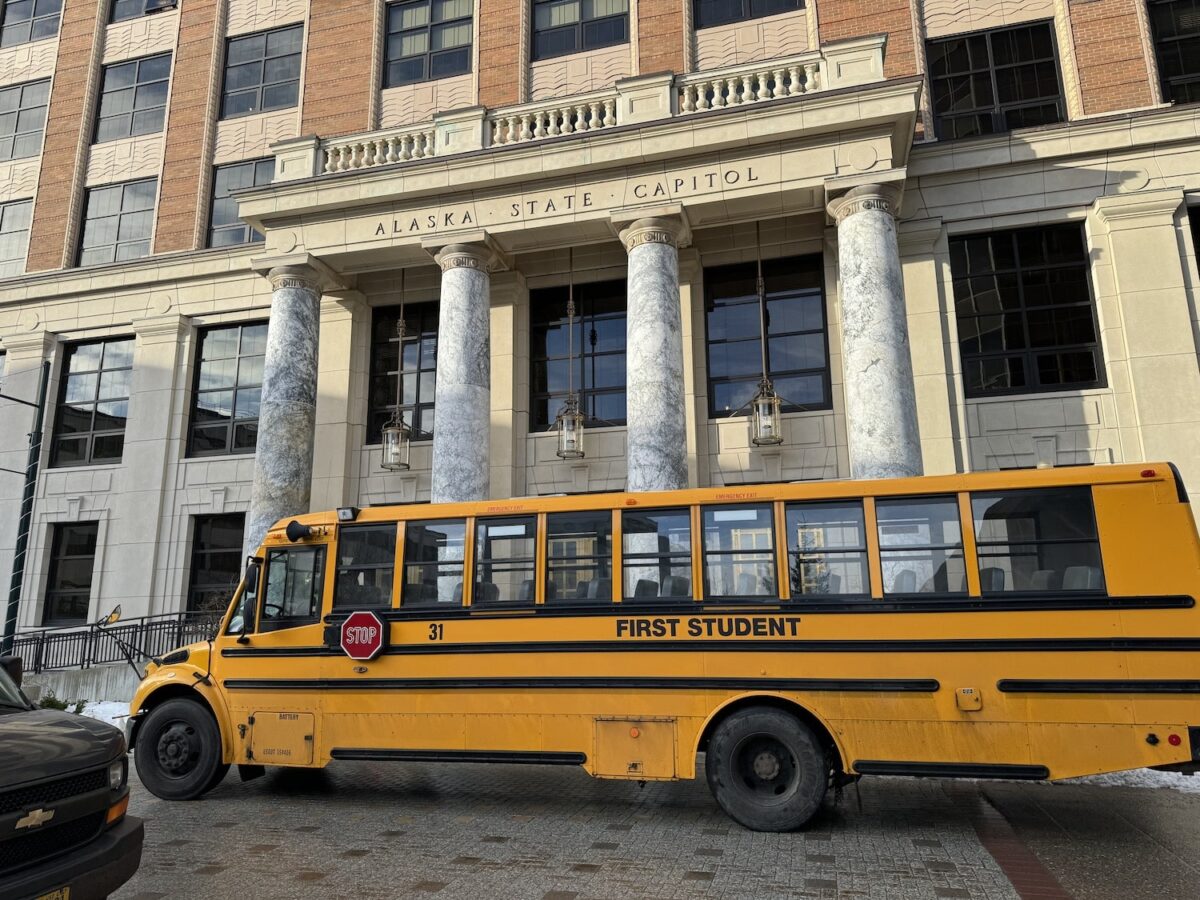
A school bus passes in front of the Alaska Capitol on Tuesday, Feb. 6, 2024. (Photo by James Brooks/Alaska Beacon)

NOTN- Alaska lawmakers will hold the first meeting of the Education Task Force today, beginning a 17-month process to evaluate the state’s approach to school funding and policy.

The task force, is charged with producing a report to the full legislature that will examine education funding formulas as well as policy items championed by the governor and other lawmakers.

“it’s a really broad mandate.” Said Juneau Senator Jessie Kiehl, we’ll look at education funding, look at some policy issues, including several that were on the governor’s wish list, and and really dig in.”

The Education Task force is described as multipartisan, with both democratic and republican leaders starting work this August.

“We’re going to bring in a lot of information, a lot of experts, and see if we can figure out what the state needs to do, to really improve education stability, education funding and outcomes for Alaska kids.” said Kiehl.

The panel’s creation stems from House bill 57, and is part of Alaska’s ongoing political and financial discussions surrounding education.

“This task force was in the bill that the Governor vetoed, that Bill had, of course, most importantly, the funding stabilization, but then it also had a number of education policy things that the governor wanted, some legislators wanted,” Kiehl said,”The governor’s veto, he said, was because he didn’t get all of the policy pieces he wanted. One of the things this task force is going to look into is some of those policy pieces that just did not have support in the legislature.”

Task force members said they will revisit some of those disputed policy proposals while focusing on long-term solutions to strengthen education in Alaska.

Categories
Featured Juneau News Juneau Local Ketchikan Local News Feeds Sitka Local

Alaska Bar Association recommends disgraced former federal judge be prohibited from practicing law

By: James Brooks, Alaska Beacon

Former U.S. District Court Judge Joshua Kindred speaks at his Dec. 4, 2019, Senate Judiciary Committee confirmation hearing in Washington, D.C. (U.S. Senate Judiciary Committee video screenshot)

The Alaska Bar Association has voted to recommend that former U.S. District Court Judge Joshua Kindred be disbarred in Alaska.

Kindred, appointed by President Donald Trump to serve as a federal judge here, resigned last year from the federal bench after investigators found that he had a “sexualized relationship” with a clerk who became a prosecutor and lied about it to a senior judge and investigators, and maintained a hostile workplace for law clerks.

Since that investigation, additional improprieties connected to the U.S. attorney’s office have come to light.

On Thursday, the bar association’s board of governors voted without dissent to recommend that Kindred be disbarred, forbidden from practicing law in the state. The bar association regulates attorneys across Alaska.

The board’s recommendation will go to the Alaska Supreme Court, which must make the final determination. No date has been set for when the court will consider the issue.

Kindred, whose law license is “inactive” according to the bar association’s database, did not participate in the investigation that preceded Thursday’s hearing, said Rebecca Patterson, president of the bar association’s board.

Louise Driscoll, assistant counsel for the bar association, said the association received “lots of calls” when the investigation into Kindred was revealed to the public.

Typically, she said, the association prefers to act when a grievance is filed by someone other than the association’s own counsel, but in this case, the association’s counsel filed the grievance itself in November.

The subsequent investigation, she said, was slowed by the fact that Kindred didn’t respond to requests for a response to the grievance. He no longer lived at his address on file. He had left the federal court. Former acquaintances didn’t know where he was.

Eventually, Driscoll said, a process server found Kindred sitting on the couch at his mother’s house. 

“It was Mr. Kindred’s mother who answered the door and accepted service, but you could see Mr. Kindred on the sofa, so he was on notice,” she said.

Even then, Kindred didn’t respond, and in June, a committee recommended that Kindred be disbarred.

Driscoll said the committee considered it “very serious” that Kindred had lied to federal investigators about his activities.

“Lawyers are expected to be honest, and the members of the public have a reason to consider that they will be dealing with honest counsel,” she said.

Kindred’s actions, she added, have caused real harm — there are dozens of cases whose outcomes are now in doubt because Kindred failed to disclose conflicts of interest.

In addition, Kindred’s resignation has left only one active judge on Alaska’s district court bench.

“There’s been grievous harm,” Driscoll said of Kindred’s actions.

In a footnote to the disbarment recommendation, the committee said, “We enter our decision not with any joy. It is our collective hope Mr. Kindred can recover emotionally, financially and physically notwithstanding the hardships Mr. Kindred confronts.”

On Thursday, after Driscoll’s suggestion, the board of governors deleted that footnote.

Kindred, they concluded, should receive no more special courtesy than any other attorney facing the same accusations.

Categories
Featured Juneau News Juneau Local Ketchikan Local News Feeds Sitka Local

Flood damage could cost up to $1 million, City officials say they’re working towards a long-term solution

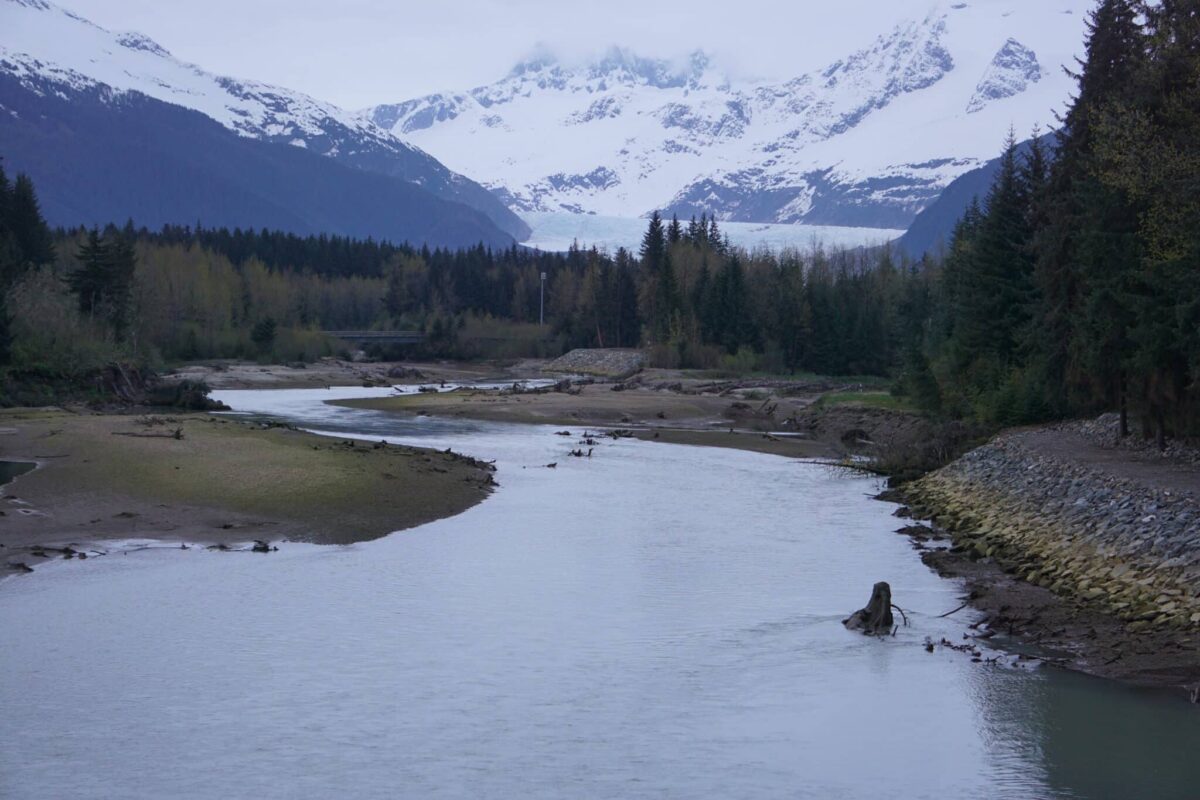
Mendenhall Glacier, photo courtesy of Alaska Beacon

NOTN- Juneau officials reflected on the city’s response to this month’s glacial outburst flood, saying while the emergency actions were effective more work is needed to strengthen protections.

Deputy City Manager Robert Barr said “We’ve been getting a fair amount of expressions of concern that we’re early in congratulating the people that worked on it, expressing our appreciation and thanks, and we have, because it was a great response to a tragic event. At the same time, I think we are all capable of holding two truths at once, we have work to do. We have a long road ahead of us, the barrier project was far from perfect.”

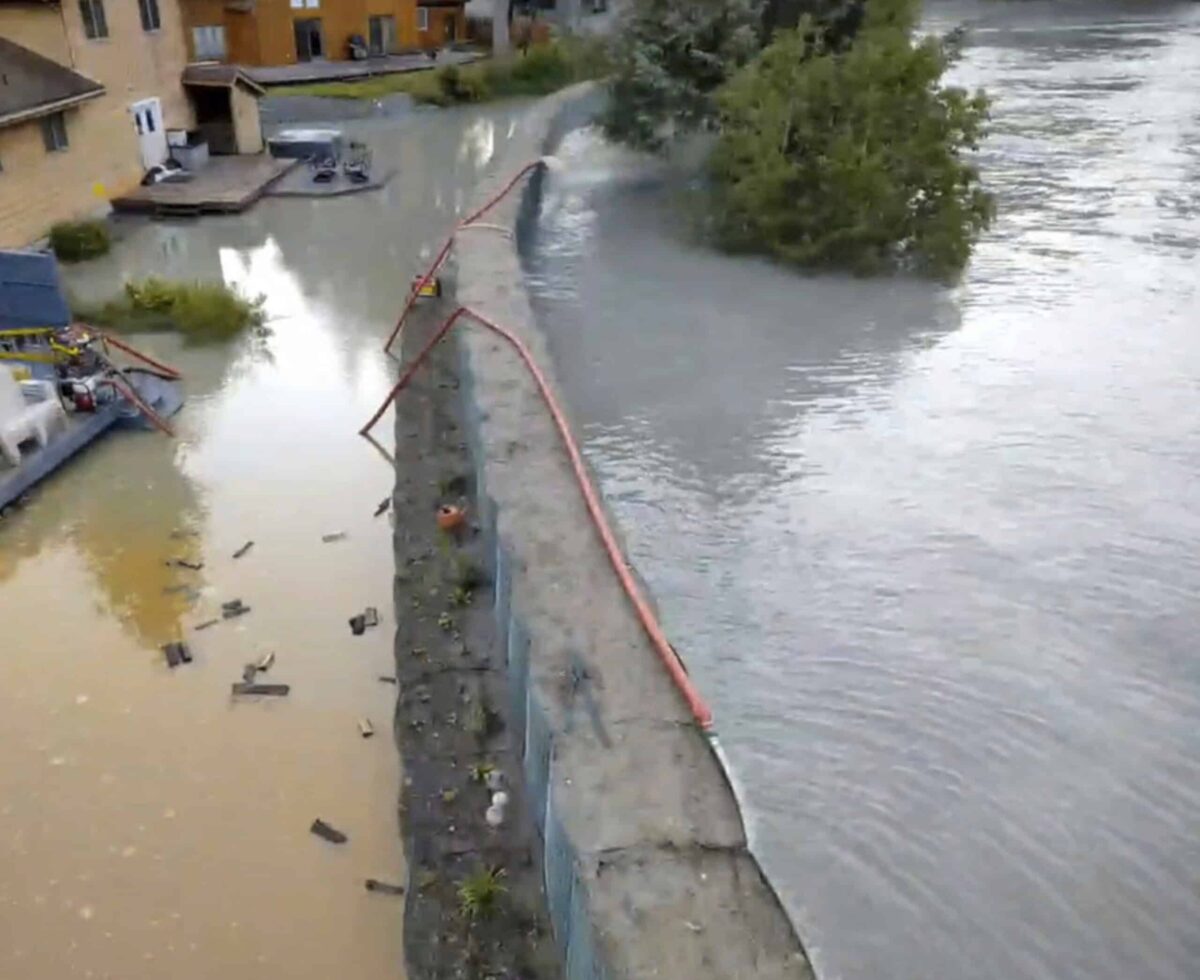
Following a damage assessment of the city, it was revealed that 16 houses experienced minor water damage while six homes suffered major impacts, primarily on View Drive.

Juneau Mayor Beth Weldon said damage repairs could cost up to a million dollars. “We’re not standing around patting ourselves on the back. We’re just thankful that the houses didn’t get flooded to the number that happened last year, and we are continuing to look for not just another phase of our short term, but also our long term solution.”

The U.S. Army Corps of Engineers says the temporary flood barriers helped protect Juneau neighborhoods during last week’s flood.

The Corps shipped more than 37,000 feet of barrier wall, 112,000 sandbags, and other materials from Illinois to Juneau, where they were placed in phases along 2.5 miles of the river.

Floodwaters peaked at 16.6 ft., the highest on record.

“The HESCO worked.” Said Mayor Weldon, “and yes, there’s water in people’s yards on the other side, but the difference in height is pretty tremendous.”

Categories
Featured Juneau News Juneau Local Ketchikan Local News Feeds Sitka Local

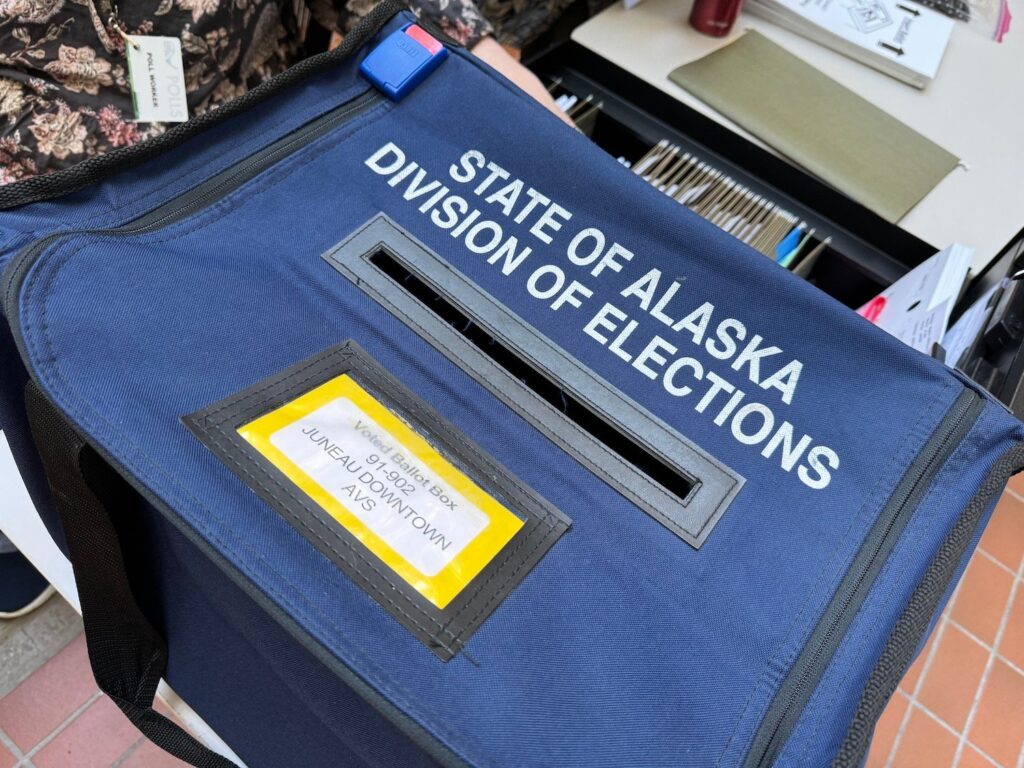
Ranked Choice voting ordinance advances to November hearing

An early voting station is set up in the atrium of the State Office Building in Juneau, Alaska on Monday, Aug. 5, 2024, the first day of early voting for the 2024 Alaska primary election. (Photo by James Brooks/Alaska Beacon)

NOTN- Juneau’s proposal to adopt ranked choice voting in municipal elections is headed for another public hearing in November.

Deputy City Manager Robert Barr said the Assembly held its first hearing on the measure last night and advanced it to the Nov. 3 meeting.

“We had our first public hearing on it last night.” Said Barr, “an information release went out yesterday as well to help people understand how it would work in local elections.”

Under the proposal, voters could rank candidates in single-seat races, like for mayor or assembly. If no one wins a majority outright, the lowest-ranked candidates are eliminated and ballots are redistributed until one candidate secures over 50 percent.

The change would not apply to multimember races, like the school board, which would stay under the current system.

Juneau Mayor Beth Weldon said testimony so far has been split for and against the proposal.

“We had four people, two for it and two against it.” Said Weldon,”We’re keeping that on our radar.”

The city is weighing potential benefits and considerations, saying ranked- choice voting could add more consistency for voters and may increase the number of people willing to run for office, however they also note transitioning to a new election process could be difficult on voters and election staff, and counting could be more complex than the current voting system.

Categories
Featured Juneau News Juneau Local Ketchikan Local News Feeds Sitka Local

Alaska legislators have largely departed Juneau, but special session continues until Aug. 31

By: Corinne Smith, Alaska Beacon

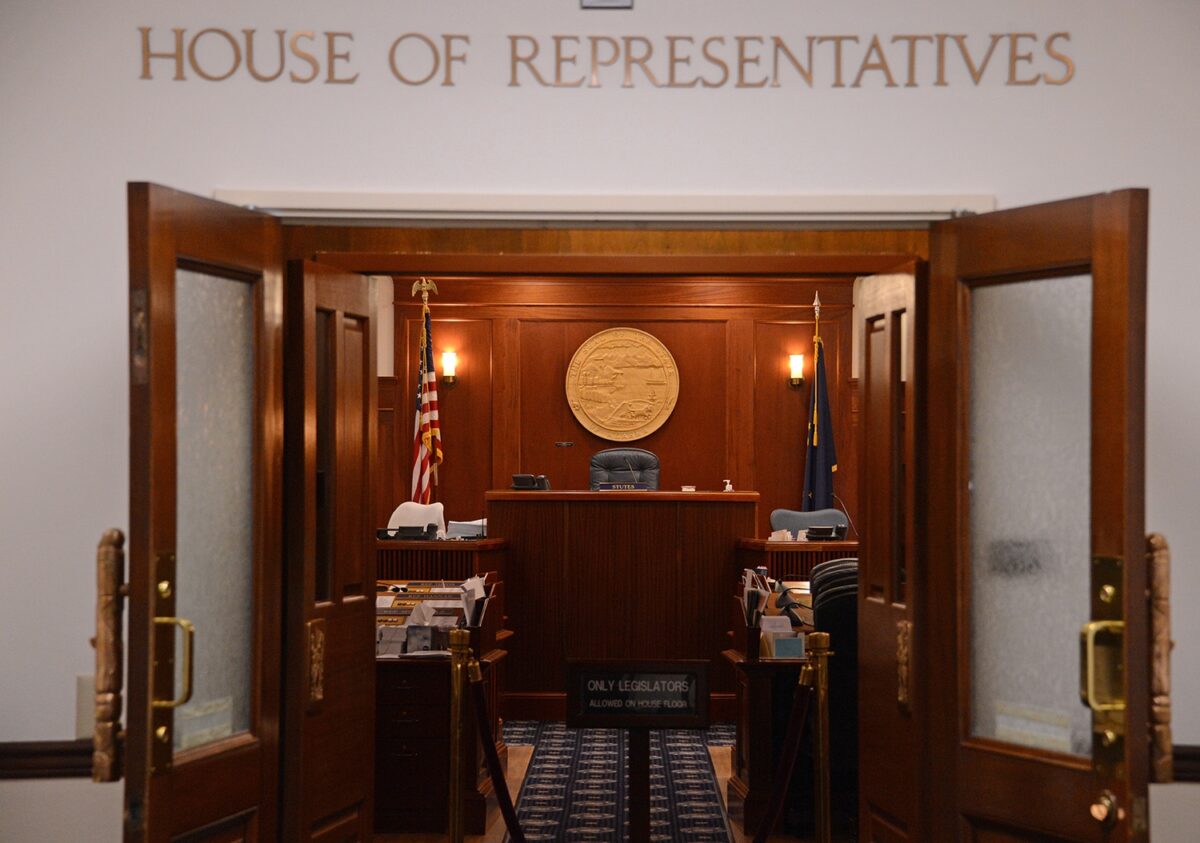
The House chambers are seen on Friday, May 13, 2022 at the Alaska State Capitol in Juneau, Alaska. (Photo by James Brooks/Alaska Beacon)

The Alaska State Legislature is planning a brief session without taking any action on Tuesday, and legislative leaders say they’ve already completed their intended work for the special session, which ends on Aug. 31.

Gov. Mike Dunleavy called the 30-day session, which began on Aug. 2, for legislators to address his education policy priorities and to create a new Alaska Department of Agriculture. The Legislature convened — one senator flying back from U.S. National Guard duty in Poland — and within hours voted to override two of the governor’s vetoes. Lawmakers then adjourned until Tuesday. 

Legislators voted to leave the session open and not officially close out the special session to prevent Dunleavy from calling them into another one. 

On Tuesday, just “a handful” of legislators are expected to be present for what’s known as a “technical session,” said House Speaker Rep. Bryce Edgmon, I-Dillingham, reached by phone Monday in his district. 

Edgmon said he was planning to fly back to Juneau to facilitate proceedings in the House on Tuesday, but said it will be brief. 

He said the Legislature’s votes to override two of the governor’s vetoes, including restoring $51 million for K-12 schools, was a success – and their only goal for the special session. 

“But the specter of the governor calling us right back in seems to be very prominent,” Edgmon said. “And we had to do what we had to do in terms of allowing members to go back home, go back to their districts, not being Juneau, drawing per diem, costing the state money — with the stated intention, of course, of looking at the governor’s bills, continuing to consider the governor’s bills and the subject matter next session, as we started to do last session.”

The governor introduced three bills on Aug. 2, related to education policy, and Edgmon said they have been referred to related committees. 

Edgmon said he’s had no communication from the governor’s office since the veto override votes. 

“I wish we had a better relationship with the governor, to where we could plan things out, work jointly in terms of any outcomes for a special session. The governor is acting unilaterally, which, of course, is his prerogative, should he choose. But that does not bode well in terms of any kind of a positive result for special session,” he said. 

Jeff Turner, the governor’s communications director, said by email Monday, “lawmakers should not need an incentive to improve public education policy,” and that it was the Legislature’s decision to not take up the governor’s bills during this special session. 

Turner pointed to the governor’s comments on an Anchorage-based commercial radio show on Aug. 14, where Dunleavy criticized the Legislature’s veto override restoring school funding, and said additional funding is “not going to change the performance outcomes.”

The House and Senate are scheduled to gavel in at 10 a.m. on Tuesday. 

A new joint legislative education funding task force is scheduled to hold its first meeting on Aug 25, where its six members are expected to examine how the state funds schools, as well as Dunleavy’s educational policy items.

Categories
Featured Juneau News Juneau Local Ketchikan Local News Feeds Sitka Local

Juneau Mayor details flood damage

This drone image provided by the City and Borough of Juneau shows flooding from a release of water and snowmelt at Mendenhall Glacier covered some roads and threatened homes along the Mendenhall River in Juneau, Alaska on Wednesday, Aug. 13, 2025. (City and Borough of Juneau via AP)

Juneau Mayor Beth Weldon provided more details following a damage assessment of the city’s recent glacier lake outburst flood, revealing that 16 houses experienced minor water damage while six homes suffered major impacts, primarily on View Drive.

“16 houses were affected, and what affected means is they had water in their garage that they could just vacuum up, or water in their crawl space, but there was no damage to insulation or sheet rock or anything like that.” Said Mayor Weldon, “25 minor, so that means water in their house or their garage affected something besides just being able to shop Vac, but did not go up past outlets in the wall.”

The U.S. Army Corps of Engineers says temporary flood barriers helped protect Juneau neighborhoods during last week’s flood.

The Corps shipped more than 37,000 feet of barrier wall, 112,000 sandbags, and other materials from Illinois to Juneau, where they were placed in phases along 2.5 miles of the river.

Floodwaters peaked at 16.6 ft., the highest on record.

Of the 751 homes above the 17-foot flood line, most remained unaffected by recent flooding. The city’s HESCO barriers largely performed as intended, though some areas experienced water seepage and tree damage.

Mayor Weldon says there were about 6 homes with major damage. “of those six major, five are on View Drive. So we know that View Drive is still a dilemma for us.” she also stated about 23 homes were unverified.

Categories
Featured Juneau News Juneau Local Ketchikan Local News Feeds Sitka Local

Trump and Putin shake hands to kick off their summit on the war in Ukraine

President Donald Trump greets Russia’s President Vladimir Putin Friday, Aug. 15, 2025, at Joint Base Elmendorf-Richardson, Alaska. (AP Photo/Julia Demaree Nikhinson)

JOINT BASE ELMENDORF-RICHARDSON, Alaska (AP) — President Donald Trump and Russia’s Vladimir Putin kicked off their Alaska summit with a warm handshake on Friday, greeting each other like old friends before heading into hours of discussions that could reshape the war in Ukraine and relations between Moscow and Washington.

After descending from Air Force One, Trump applauded as Putin approached along a red carpet. They gripped hands for an extended period of time, with both men smiling, and Putin eventually grinned and pointed skyward, where B-2s and F-22s — military aircraft designed to oppose Russia during the Cold War — flew overhead to mark the moment at Joint Base Elmendorf-Richardson.

Reporters nearby yelled, “President Putin, will you stop killing civilians?” and Russia’s leader put his hand up to his ear but didn’t answer. Trump and Putin then both climbed in the U.S. presidential limo, with Putin grinning widely as the vehicle rolled past the cameras.

The pair’s chumminess, while not altogether surprising considering their longtime friendly relationship, was striking given the bloodshed and suffering in the war Putin started in Ukraine — the biggest land war in Europe since World War II. It was likely to raise concerns from Ukrainian President Volodymyr Zelenskyy and European leaders, who fear that Trump will primarily focus on furthering U.S. interests and fail to press hard for Ukraine’s.

Zelenskyy and European leaders were excluded from Friday’s meeting, and Ukraine’s president was left posting a video address in which he expressed his hope for a “strong position from the U.S.”

“Everyone wants an honest end to the war. Ukraine is ready to work as productively as possible to end the war,” he said, later adding, “The war continues and it continues precisely because there is no order, nor any signals from Moscow, that it is preparing to end this war.”

The summit was a chance for Trump to prove he’s a master dealmaker and peacemaker. He and his allies have cast him as a heavyweight negotiator who can find a way to bring the slaughter to a close — something he used to boast he could do quickly.

For Putin, it was an opportunity to try to negotiate a deal that would cement Russia’s gains, block Kyiv’s bid to join the NATO military alliance and eventually pull Ukraine back into Moscow’s orbit.

Not meeting one-on-one anymore

White House press secretary Karoline Leavitt said the previously planned one-on-one meeting between Trump and Putin was now a three-on-three discussion including Secretary of State Marco Rubio and special envoy Steve Witkoff. Putin was joined by Foreign Minister Sergey Lavrov and foreign affairs adviser Yuri Ushakov.

The change indicates that the White House is taking a more guarded approach than it did during a 2018 meeting in Helsinki, when Trump and Putin met privately just with their interpreters for two hours and where Trump shocked the world by siding with the Russian leader over U.S. intelligence officials on whether Russia meddled in the 2016 campaign.

Trump and Putin began their discussions Friday by sitting with their aides in front of a blue backdrop printed with “Alaska” and “Pursuing Peace.” Putin and Trump are expected to hold a joint press conference at the end of the summit.

There are significant risks for Trump. By bringing Putin onto U.S. soil — America bought Alaska from Russia in 1867 for roughly 2 cents per acre — the president is giving him the validation he desires after his ostracization following his invasion of Ukraine 3 1/2 years ago. Zelenskyy’s exclusion is a heavy blow to the West’s policy of “nothing about Ukraine without Ukraine” and invites the possibility that Trump could agree to a deal that Ukraine does not want.

Any success is far from assured since Russia and Ukraine remain far apart in their demands for peace. Putin has long resisted any temporary ceasefire, linking it to a halt in Western arms supplies and a freeze on Ukraine’s mobilization efforts, which are conditions rejected by Kyiv and its Western allies.

Trump said earlier in the week there was a 25% chance that the summit would fail, but he also floated the idea that if the meeting succeeds he could bring Zelenskyy to Alaska for a subsequent meeting with himself and Putin.

Trump has also expressed doubts about getting an immediate ceasefire, but he has wanted a broad peace deal done quickly. That seemingly echoes Putin’s longtime argument that Russia favors a comprehensive deal to end the fighting, reflecting its demands, and not a temporary halt to hostilities.

Trump has offered shifting explanations for his meeting goals

Trump previously characterized the sit-down as “ really a feel-out meeting.” But he’s also warned of “very severe consequences” for Russia if Putin doesn’t agree to end the war.

Trump said before arriving in Alaska that his talks with Putin will include Russian demands that Ukraine cede territory as part of a peace deal. He said Ukraine has to decide, but he also suggested Zelenskyy should accept concessions.

“I’ve got to let Ukraine make that decision. And I think they’ll make a proper decision,” Trump told reporters traveling with him to Alaska.

Trump said there’s “a possibility” of the United States offering Ukraine security guarantees alongside European powers, “but not in the form of NATO.” Putin has fiercely resisted Ukraine joining the trans-Atlantic security alliance, a long-term goal for Ukrainians seeking to forge stronger ties with the West.

Gen. Alexus Grynkewich, NATO’s supreme allied commander Europe, is in Alaska to provide “military advice” to Trump and Defense Secretary Pete Hegseth, according to a senior NATO military official who wasn’t authorized to speak publicly and spoke on the condition of anonymity. His presence is likely to be welcomed by European leaders who have tried to convince Trump to be firm with Putin and not deal over Kyiv’s head.

Potentially far-reaching implications

Foreign governments are watching closely to see how Trump reacts to Putin, likely gauging what the interaction might mean for their own dealings with the U.S. president, who has eschewed traditional diplomacy for his own transactional approach to relationships.

The meeting comes as the war has caused heavy losses on both sides and drained resources. Ukraine has held on far longer than some initially expected since the February 2022 invasion, but it is straining to hold off Russia’s much larger army, grappling with bombardments of its cities and fighting for every inch on the over 600-mile (1,000-kilometer) front line.

Alaska is separated from Russia at its closest point by just 3 miles (less than 5 kilometers) and the international date line.

Joint Base Elmendorf-Richardson was crucial to countering the Soviet Union during the Cold War. It continues to play a role today, as planes from the base still intercept Russian aircraft that regularly fly into U.S. airspace.

Categories
Featured Juneau News Juneau Local Ketchikan Local News Feeds Sitka Local

US housing secretary visits Alaska to gather insights into urban and rural challenges

By: Yereth Rosen, Alaska Beacon

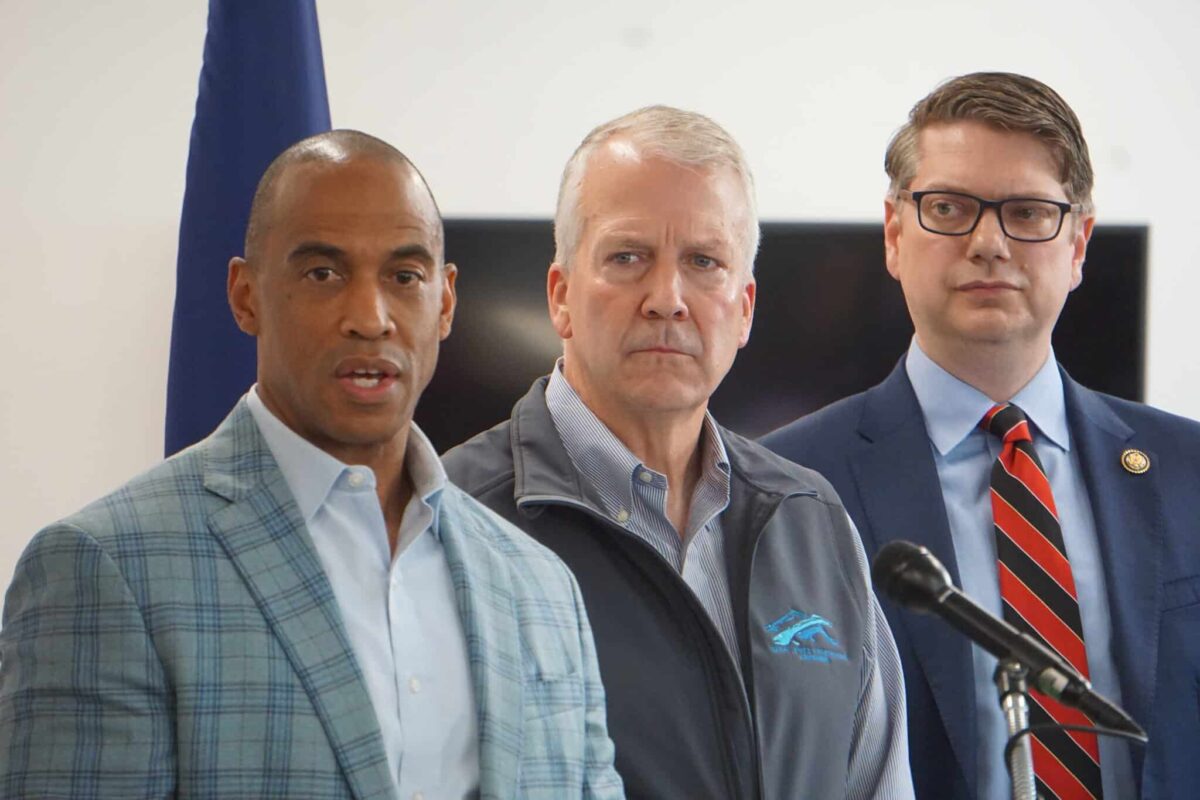
Scott Turner, secretary of the U.S. Department of Housing and Urban Development, speaks at a news conference on Tuesday in Anchorage. With him is U.S. Sen. Dan Sullivan, R-Alaska, and U.S. Rep. Nick Begich, R-Alaska. Turner is one of several Trump administration cabinet members who have traveled to Alaska this summer. (Photo by Yereth Rosen/Alaska Beacon)

The secretary of the U.S. Department of Housing and Urban Development, visiting Alaska this week, said he hopes to learn about challenges facing both the state’s urban centers and remote rural communities.

“I came here to be a great listener, to understand the needs of the people of Alaska, to understand the challenges of the people of Alaska and particularly when it comes to homelessness and affordable housing,” Scott Turner, the Trump administration’s HUD secretary, said at a news conference Tuesday in Anchorage.

Turner is among several Trump administration cabinet members touring Alaska this summer.

He spent part of Tuesday meeting with Anchorage municipal officials who discussed the challenges of homelessness in the state’s largest city.

It is a national issue, Turner said.

That 770,000 people identified as homeless in the nation “is unacceptable to me, it’s unacceptable to my colleagues and I know it’s unacceptable to you,” he said.

In Alaska, he said, almost 2,700 people are homeless, with about 1,700 of them in Anchorage. “That’s something that we want to attack and eradicate,” he said.

Those numbers show that past efforts by HUD to address homelessness have not been effective, said Turner. To make his point, he referred to his background as a professional football player.  

“One of the things that holds you accountable in the NFL is called game film,” he said. “You can say what you want to on Sunday during the game. You can say, ‘Well, I did the right thing,’ but on Monday, the film will tell the story, and the film does not lie.”

On Wednesday, Turner was touring Bethel, in Western Alaska, to learn about rural Alaska housing problems.

Crowding is a dire concern in rural communities, according to the Alaska Housing Finance Corp., a state agency. Conditions are most severe in the Yukon-Kuskokwim Delta region, where Bethel is located, according to AHFC. Crowded conditions are linked to poor health, including transmission of respiratory diseases like COVID-19.

Turner said HUD wants to add 7 million more units of affordable housing to the national supply and is focused on reducing regulations that reduce housing access in rural areas as well as in urban areas.

Sen. Dan Sullivan, R-Alaska, accompanied Turner and asserted at the news conference that overregulation by HUD is one of the major impediments to housing availability and quality in rural parts of the state.

“You can send all the money you want to rural Alaska, but it’s so smothered in red tape that it costs a million bucks to build a duplex. One duplex. A lot of that, I think, is self-inflicted,” Sullivan said.

Other analysis identified different problems for rural Alaska housing.

The high cost of energy in rural communities, which are unconnected to larger power grids, is one problem that for years has been cited as a key factor making rural Alaska housing unaffordable.

However, the budget reconciliation bill passed by Congress at the end of June, along with various actions by the Trump administration, has created new barriers to renewable energy development in rural Alaska and elsewhere.

Climate change has also exacerbated rural Alaska’s housing crisis, according to reports by government agencies.

A 2019 statewide assessment by the Denali Commission found that 144 rural communities are threatened by increased erosion, flooding, permafrost thaw or some combination of those factors.

More frequent flooding in the Yukon-Kuskokwim region, for example, is attributed to climate change and has affected housing quality and safety.

But the Trump administration is seeking to halt in-state policies intended to mitigate and adapt to climate change, including those in Alaska.

The administration also abolished the Federal Emergency Management Agency’s Building Resistant Infrastructure and Communities program. The program provided grants to help communities prevent damage from natural disasters, many of which are linked to climate change.