Categories
Alaska News Featured Juneau News juneau Juneau Local Juneau Local Ketchikan Local News Feeds Sitka Local

Flood advocates push for faster long-term solutions as threat of GLOF approaches

A drone image shows widespread flooding in the Mendenhall Valley on Tuesday morning. (Image courtesy of Rich Ross)
A drone image shows widespread flooding in the Mendenhall Valley. (Image courtesy of Rich Ross/2024)

NOTN- Residents affected by recurring glacial lake outburst floods in Juneau are calling for a faster path toward a long-term flood mitigation solution, arguing that years of annual preparation, uncertainty and recovery are taking a growing toll on the community.

Members of Juneau Flood Solution Advocates gathered recently at Chapel by the Lake to hear updates from scientists studying Suicide Basin as well as mining industry leaders to discuss potential solutions for reducing the threat posed by floods along the Mendenhall River.

The grassroots group formed in 2024 following major flooding in the Mendenhall Valley. Since then, members have worked to support neighbors, coordinate resources and advocate for permanent flood mitigation measures.

“We can’t do this every year,” said Debbie Penrose Fisher, a member of the group, “Whatever it takes to get this expedited on a fast track, and to include local experts, that’s the path to the finish line. Folks are exhausted, and they’re exhausted from the equipment, the noise, the intrusion on their property, to the anxiety of preparing, and we just want a solution.”

Many residents have expressed frustration with the timeline for a permanent solution. The U.S. Army Corps of Engineers has been studying several long-term mitigation options, including a proposed tunnel that would continuously drain water from Suicide Basin to reduce the likelihood of catastrophic releases.

Fisher said some residents would like to see additional expertise brought into the discussion, including mining industry engineers with experience in large-scale tunneling and earth-moving projects.

“The mining industry can do this. They do this all the time,” Fisher said, “The challenge is that, and the city is working really hard to protect us, The Corp is saying six plus years until a long term solution, and even recently are back to 10 to 15 years. We can’t wait that long. We can’t. Our push is to get the mining industry into a conversation with the Corps, so together they can solve this.”

At the same time, city officials say the challenge remains unprecedented and requires balancing safety, environmental concerns, costs and regulatory requirements.

“There is no playbook for how to address glacial lake outburst flooding in an urban area,” Said Deputy City Manager Robert Barr in an email response to News of the North, “For every decision, we and our counterparts at other agencies are having to balance public safety considerations, cost and fiscal considerations, and the regulatory processes that bound any mitigation actions.”

Officials said they understand residents’ concerns and are continuing to gather public input through community meetings and outreach efforts. Many of the same questions being asked by residents are also being asked by city leaders, including what future floods may look like, what would happen if temporary flood barriers fail and how permanent solutions can be implemented as quickly and safely as possible.

The city has invested heavily in temporary flood protection measures, including the installation and reinforcement of HESCO barriers along vulnerable sections of the river. Officials say those efforts helped reduce damage during a larger flood event last year compared with the devastating flooding experienced in 2024.

“Nature always has the potential to humble us,” Barr said. “No human-created solution to a natural phenomenon is going to be perfect.”

He emphasized that current projects are intended to reduce risk while longer-term solutions are evaluated.

The city also noted that the flood threat is unlike any faced by another urban community worldwide.

“This hazard does not occur in any other urban area in the world,” officials said. “Which is why it is so critical for us all to be working together and pulling in the same direction. The way our community has come together to research and learn about the science and potential solutions is impressive. It wasn’t too long ago where we became a community full of knowledge and understanding about things like antigens and antibodies, PCR tests and vaccines. Today, we’ve learned more than we ever thought we would about glacial dynamics, dams, levees, bank armoring, and tunnels. I’m optimistic, with all of the people and agencies tackling this problem, we’ll get to a solution as quickly as possible.”

While no definitive timeline has been established for a permanent solution, city officials said the situation remains fluid and pledged to keep residents informed as new information becomes available.

Upcoming public engagement opportunities include a Community Flood Preparedness Training event scheduled for July 11 at Dimond Park and a July 20 Committee of the Whole meeting, where U.S. Army Corps of Engineers officials are expected to provide updates on ongoing studies and mitigation efforts. Officials encouraged residents with questions or concerns to contact the city at floodresponse@juneau.gov or reach out to their Assembly representatives

Categories
Alaska News Featured Juneau News juneau Juneau Local Juneau Local Ketchikan Local News Feeds Sitka Local

Alaska’s minimum wage set to increase on July 1, thanks to ballot initiative

By: Yereth Rosen, Alaska Beacon
Fliers posted at the University of Alaska Anchorage’s Avis Alaska Sports Complex on June 25, 2026, advertise summer job openings and internships for students. Even though the positions are entry-level, temporary or internships, posted hourly pay rates on some fliers are above $20 an hour. (Photo by Yereth Rosen/Alaska Beacon)

Starting next week, Alaska’s lowest-paid workers will be entitled to more money.

On July 1, the state’s minimum wage will rise to $14 an hour, a $1 bump from the current level. The increase is the result of a voter-approved ballot initiative that mandated paid sick leave, as well as stepped-up minimum wages.

The first increase took pay up to $13 an hour last year, and next year, the minimum wage is scheduled to rise to $15 an hour. In subsequent years, the state’s minimum wage is to rise with the inflation rate, under the voter-approved initiative.

Salaried workers are also covered by the minimum wage increase. Under state reuglations, minimum pay for salaried workers, with some exceptions, must be at least twice the hourly minimum wage, based on a 40-hour workweek.

Just how many workers will be affected by next week’s mandated pay increase is unclear.

Dan Robinson, research chief at the Alaska Department of Labor and Workforce Development, believes that there will be relatively few people affected by the change.

“This will not change very much because the situation for workers for a while now has been that employers have had to pay higher wages,” Robinson said.

Even a $14-an-hour wage for what are normally low-paid jobs was not high enough for many employers to attract workers, he said.GET THE MORNING HEADLINES.SUBSCRIBE

That is not because of any boom in available jobs in Alaska. The state’s picture is static, Robinson noted. Gains in private sector employment have been almost exactly offset by losses in government employment, mostly because of federal job losses, according to the state’s most recent analysis.

Rather, it is a product of demographic factors, including continued net-outmigration, meaning more people leaving Alaska than moving into the state. As of last year, Alaska had 13 consecutive years of net-outmigration, a post-World War II record.

Other factors shaping the labor force are Alaska’s aging population and immigration curbs.

Overall, there are “fewer people here seeking work than at other points in our history,” Robinson said. “So it’s kind of a feedback loop.”

The minimum wage increases are expected to affect more people in future years, when they are tied to inflation, he said.

A different perspective was offered in 2024 by the National Employment Labor Project, a nonprofit pro-labor advocacy group.

Prior to that year’s election, the organization estimated that 31,000 people in Alaska would earn more if the state’s minimum wage were raised. More women than men would see the benefits, since women are more likely to be in minimum wage-paying jobs, according to the analysis.

Robinson said the Department of Labor and Workforce Development does not have solid numbers on how many workers are earning minimum wage or anything closer to it.

The department does have information showing pay rates for different economic sectors and job categories, though that is also incomplete because it relies on surveys.

Alaska’s lowest-paid workers, based on those survey results, are in the food preparation and service sector, according to the Department of Labor and Workforce Development’s analysis. Within that sector, median hourly wages range from $12.65 for waiters and waitresses to $25.09 for chefs and head cooks, according to the survey data.

Alaska is among four states and more than two dozen municipalities with scheduled minimum wage increases going into effect in July. And by the end of the year, 88 jurisdictions across the country will have raised their minimum wages, according to the National Employment Labor Project.

As of Jan. 1, 20 states had minimum wages that were higher than Alaska’s $13-an-hour rate, according to the U.S. Department of Labor. Next week’s increase in Alaska, along with phased-in increases elsewhere, may change those rankings a bit.

The nation’s highest state minimum wage is in the District of Columbia, at $17.95 an hour, according to the U.S. Department of Labor. There are eight states with either no state-imposed minimum wage or a minimum wage that is lower than $7.25 an hour, the federal minimum, according to the department.

Categories
Alaska News Featured Juneau News juneau Juneau Local Juneau Local Ketchikan Local News Feeds Sitka Local

Alaska judge hears arguments in appeal of state striking Dan J. Sullivan from U.S. Senate race

By: Corinne Smith, Alaska Beacon

Dan Sullivan of Petersburg (left) filed to run against Republican incumbent U.S. Sen. Dan Sullivan. (Campaign photo by Dan Sullivan and photo of the senator by Corinne Smith/Alaska Beacon)

An Anchorage judge heard oral arguments on Thursday in a case poised to decide whether the Alaska Division of Elections has the authority to remove a candidate with the same name as the incumbent from the race for U.S. Senate. 

The court is expediting the case and a decision is expected Friday. Any appeals are expected to be before the Alaska Supreme Court on Monday, ahead of a looming deadline for the division to print primary ballots no later than noon on Tuesday, June 30. 

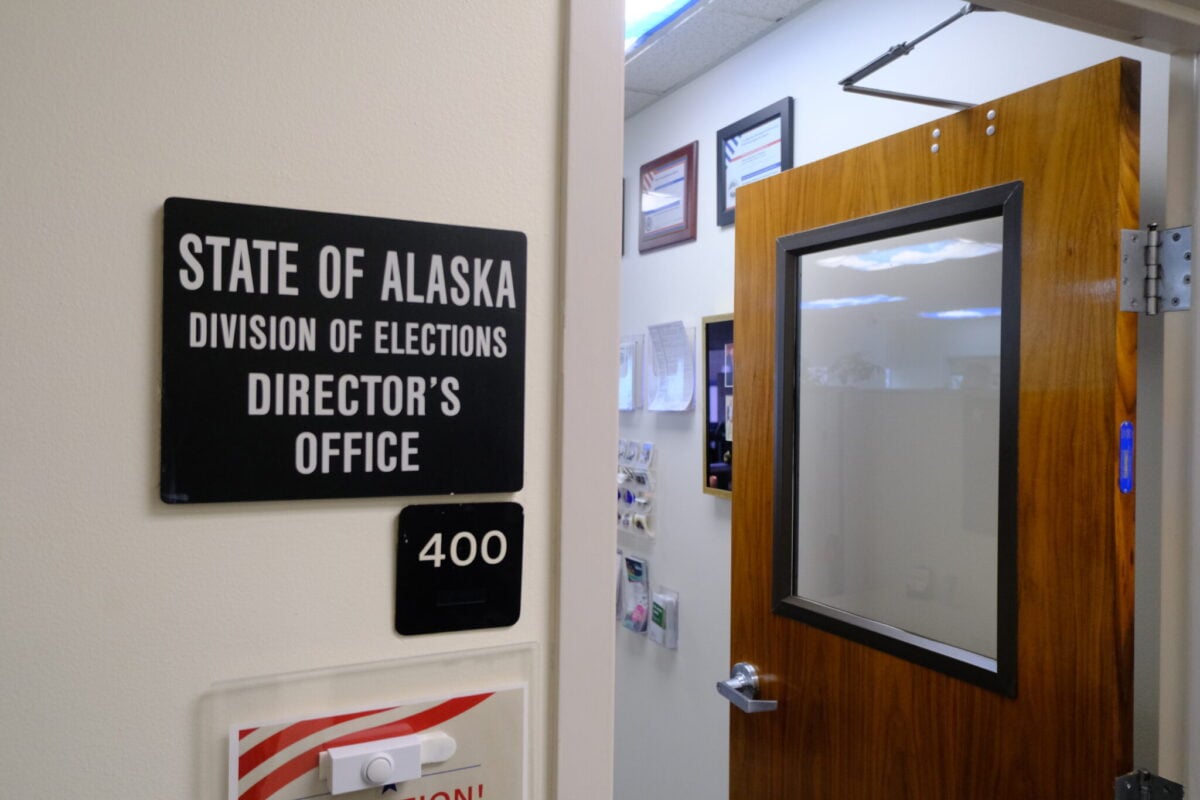
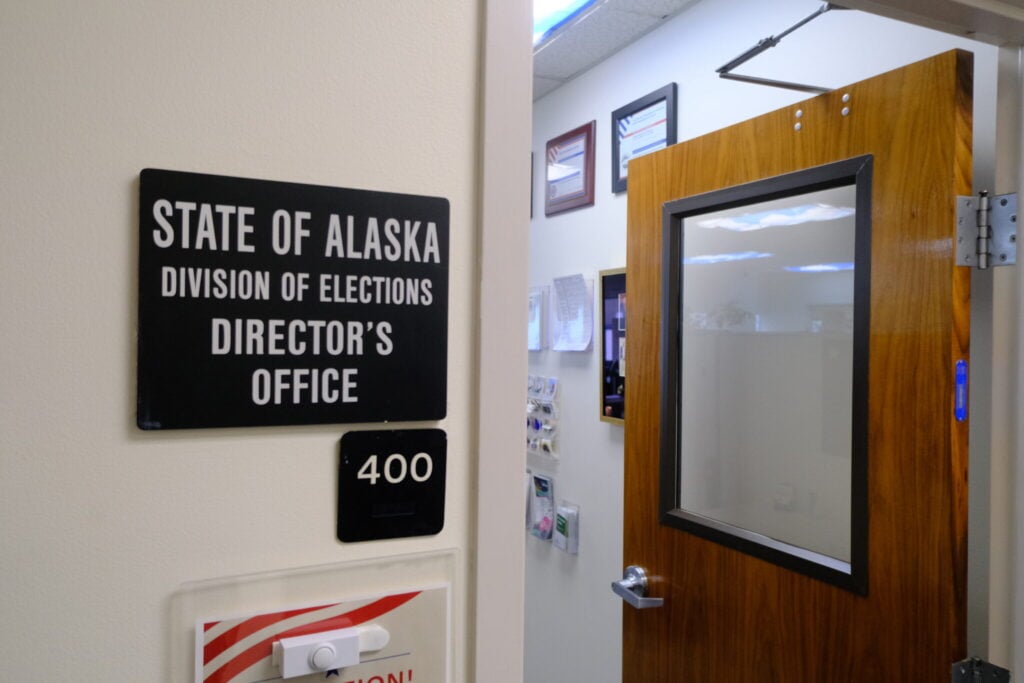
The division made the unprecedented decision to remove Dan J. Sullivan, a retired teacher from Petersburg, from the ballot on June 15, citing a “preponderance of evidence” the candidate had not filed a “good faith candidacy” and filed with the purpose to “confuse or mislead” voters. 

Sullivan appealed that decision, saying he meets all eligibility requirements to run for office. He challenged the state’s decision as unlawful, and requested the court overturn the decision and restore his candidacy on the Alaska ballot for U.S. Senate. 

In opening arguments, attorneys for the Division of Elections defended the decision to disqualify Sullivan from the ballot. They said the state has a duty to protect voters from confusion, and that the state is not obligated to place a candidate on the ballot where evidence shows t

Sullivan was one of sixteen candidates to file to run for one of Alaska’s U.S. Senate seats, challenging Republican incumbent U.S. Sen. Dan Sullivan in the high-stakes election that could determine the control of the U.S. Senate after the November elections. One candidate has withdrawn since then, leaving 14 challengers, including former Democratic U.S. Rep. Mary Peltola. The November election results will determine a candidate for a six-year term. 

Critics of Sullivan said he was trying to confuse voters to the benefit of Peltola, the Democratic front-runner. Officials with the Peltola campaign and the Alaska Democratic Party have said they have no affiliation with either Sullivan. 

Attorneys representing the Petersburg Sullivan and the Alaska Division of Elections went head to head in livestreamed Superior Court hearing, where over 300 viewers tuned in but others were not able to watch the stream. Officials with the court later apologized calling it a “record-breaking” livestream and posted a recording on their website.

Jeffrey Robinson, representing Sullivan, opened his argument reiterating that Sullivan met all the constitutional requirements to run for office: at least 30 years old, a U.S. citizen, and an inhabitant of Alaska if and when elected.

Jeffrey Robinson, an attorney for Dan J. Sullivan, argues his appeal case in Anchorage Superior Court on June 25, 2026. (Screenshot of court livestream)

“Mr. Sullivan unambiguously meets each of these criteria,” Robinson said. “As seen in previous cases, states are not allowed to add to those qualifications.”

He cited the case where the Alaska Democratic Party sought to remove Eric Hafner, a U.S. House candidate imprisoned out of state, and the division did not investigate his motives but found he met the qualifications to run for office. Robinson argued the state has subjectively and unlawfully added additional criteria for Sullivan, including restrictions on his perceived political goals, how he presents his name, campaign and his party affiliation. 

“Here the division imposed a substantive mental state-based qualification for U.S. Senate candidates in Alaska, and then it cynically and arbitrarily determined that Mr. Sullivan did not meet that qualification,” he said. 

Robinson said it’s up to political campaigns to distinguish candidates and educate voters. He agreed the division has the authority to make sure candidates appearing on the ballot do not confuse voters, and noted that there are state regulations that offer solutions, like adding middle initials. But he said there are no “good faith” requirements, nor any other regulations that would give the division such broad authority to look at a candidate’s motives for office. 

“They have no explicit authority in situations like this to even look into a candidate’s motives. Any subjective standard for candidates imposed by the division necessarily erodes the trust of voters,” he said. “If this standard were to apply, the director could challenge any or disqualify any potential reasons of personal dislike, or that the candidate may lose to their preferred candidate.”

Arguing for the Division of Elections, attorney Chris Murray said the division has the authority to review candidates and make sure the ballot is not presented in a way that would be confusing to voters.

Chris Murray, a state attorney for the Alaska Division of Elections, argues against the appeal of Dan J. Sullivan in Anchorage Superior Court on June 25, 2026. (Screenshot of court livestream)
Chris Murray, an attorney for the Alaska Division of Elections, argues against the appeal of Dan J. Sullivan in Anchorage Superior Court on June 25, 2026. (Screenshot of court livestream)

In this case, he said the division director, Carol Beecher, reviewed complaints against the candidate filed by the Alaska Republican Party and the National Republican Senatorial Committee, which works to elect Republicans, that say his name, party affiliation and campaign materials mimic the incumbent’s. Murray said Beecher found that Sullivan “accentuated the similarity” between himself and Sen. Sullivan. 

“She was stuck with the preponderance of the evidence pointing to this being a declaration of candidacy filed for the purpose of seeking office, but a declaration of candidacy filed for an ulterior purpose to cause voter confusion,” he said. “The director does not have the ability to permit that.”

Murray said in the Hafner case, there was no complaint filed prior to the primary on Hafner’s candidacy. He said the division has authority to review complaints and determine whether candidates made a “proper filing” before the primary, which they did for Sullivan.

“So where’s the line? The line is: the decision on qualification has to be made before somebody is placed onto the primary ballot, that is where Alaska law, that’s where the ‘properly filed’ comes in, that’s when there’s discretion in the Division of Elections — but that’s when the Division of Election decides who goes on the ballot, it’s before the primary election, that case was after the primary election,” he said. 

Judge Thomas Matthews asked Murray how the division would handle the situation of three Dan Sullivans, in a hypothetical situation where a former Anchorage mayor, Dan A. Sullivan decided to enter the U.S. Senate race.

Superior Court Judge Thomas Matthews presides over the appeal case brought by Dan J. Sullivan challenging the Division of Elections decision to disqualify him for running for U.S. Senate on June 25, 2026. (Screenshot of court livestream)

Murray said a “genuine candidate” would seek to distinguish himself from other candidates, and the division could use a middle initial or notation like “challenger” or “nonincumbent” on the ballot.

“I would say that if you were dealing with all of them, and all of them were trying to get on the ballot in order to win, I think they would all be cooperatively participating in a process where they could be effectively distinguished from each other, so as to avoid voter confusion. That’s not what we have here,” he said. 

Judge Matthews asked if there was a way to effectively distinguish the two Dan Sullivans.

Murray said he did not believe that is the division’s responsibility if the candidate’s goal is to confuse voters. “Where the confusion is the goal, Your Honor, we don’t believe the division is under an obligation to try and mitigate it or accommodate it,” he said. “The court could order that the division implement some method to distinguish him, and I’ll say right now, we don’t think a middle initial is sufficient.”

Murray also argued the court ruling would be an important precedent for the division to administer elections.

“If this decision is not affirmed, and it turns out that the court holds that Alaska is just simply powerless, and the division is powerless to stop this sort of behavior, we’re going to be inviting more of this,” he said.

Judge Matthews said he will announce a ruling by Friday, and it could be after business hours.

Attorneys for Sullivan also filed a stay with the court to delay the division printing primary ballots until a final decision is ruled on by the courts. Matthews said he would consider the petition.  

After the ruling, both parties are expected to appeal before the Alaska Supreme Court on Monday.

Categories
Alaska News Featured Juneau News juneau Juneau Local Juneau Local Ketchikan Local News Feeds Sitka Local

Dunleavy vetoes some health and education increases approved by Alaska lawmakers

By: James Brooks, Alaska Beacon

Gov. Mike Dunleavy speaks to reporters at a news conference in Juneau on June 19, 2026. (Photo by Claire Stremple/Alaska Beacon)

Alaska Gov. Mike Dunleavy canceled funding increases for a variety of state health and education programs on Wednesday, vetoing a combined $57.8 million in general-purpose money from state budget bills passed by the Legislature.

Under the Alaska Constitution, the governor has the ability to eliminate or reduce individual line items from the budget. Dunleavy struck $20 million in extra funding for cities and boroughs, $11.25 million to increase Medicaid payments to health care providers, $6.4 million to help child care centers find workers, $2 million for the state’s seafood marketing program, $3 million for tourism marketing, and more. 

The governor did not veto most of a $300 million one-time bonus that lawmakers approved for Alaska’s public schools. He did cancel $3.7 million for Head Start grants, not quite a fifth of the proposed grant budget, and funding for a proposed public education spending adequacy study.

The governor’s vetoes were spread across the state’s operating budget, capital budget and mental health budget, the three bills that determine funding for state services in the fiscal year that starts July 1 and ends June 30, 2027.

It is the lowest amount of vetoes of any year in Dunleavy’s tenure. Last year, the governor initially vetoed a higher amount, but it was reduced after a successful veto override by lawmakers.

Altogether, Alaska will spend about $6.6 billion in general-purpose money during FY27, a figure that’s up by almost $600 million from the budget approved in spring 2025, according to figures published Wednesday by the Office of Management and Budget.

While high oil prices brought in more revenue than anticipated, they also burdened state agencies, local government and school districts with extra costs.

In response, Dunleavy said, the approved budget includes some extra funding for school districts around the state that are coping with high energy costs.

“While the state realized additional revenue, those same price pressures placed a real burden on school districts, particularly in rural Alaska. This budget makes targeted, responsible use of a temporary revenue increase to stabilize school facilities and address energy costs,” he said in a statement.

Earlier this year, legislators and the governor enacted a supplemental budget bill that added hundreds of millions in general-purpose spending to the FY26 budget; the FY27 supplemental will not be decided until next spring. 

When federal funding and fee-funded programs are included, the FY27 budget totals about $16.4 billion, including $782 million earmarked for the Permanent Fund dividend. Overall spending is up by about $1.2 billion from last spring. 

Entering the year, Dunleavy proposed to spend more than $1.5 billion from state savings accounts in order to pay a Permanent Fund dividend estimated at about $3,800 per recipient.

Legislators turned down that proposal, ultimately deciding on a $1,200 payment that includes a $1,000 dividend and a $200 one-time bonus.

Lawmakers avoided spending from savings altogether because the Iran War increased North Slope oil prices in March. 

Those high prices caused Alaskans to pay more individually, but they also generated hundreds of millions of dollars in extra revenue for the state treasury.

Categories
Alaska News Featured Juneau News juneau Juneau Local Juneau Local Ketchikan Local News Feeds Sitka Local

Confidential document guided Alaska senators working on natural gas pipeline tax break

By: James Brooks, Alaska Beacon

Members of the Senate Finance Committee convene on the first day of a special legislative session on the proposed LNG gas line project on May 27, 2026. (Photo by Corinne Smith/Alaska Beacon)

Last year, a state-owned Alaska corporation transferred leadership of the proposed trans-Alaska natural gas pipeline project to a private developer.

Now, a newly revealed draft of the agreement between the state-owned Alaska Gasline Development Corp. and Glenfarne, the private developer, shows that if the project fails to go forward under certain conditions, the state could be required to pay in order to retake control of the project.

The contract between AGDC and Glenfarne has never been published and remains confidential, but a handful of state senators obtained a leaked draft copy during debates over the size and scope of a $16 billion tax break intended to benefit the pipeline project.

The draft offers the best glimpse to date about the relationship between the state-owned AGDC and Glenfarne, which together are pursuing a multibillion-dollar effort to sell natural gas from the North Slope.

“It’s a significant document. It should be taken seriously,” said Sen. Bert Stedman, R-Sitka.

As legislators debated the bill containing the tax break this month, the leaked document inspired some members of the Senate to amend the legislation. Meanwhile, the document stayed secret from other senators, members of the House and Alaskans overall.

Gov. Mike Dunleavy and members of the House criticized the Senate’s version of the tax-break bill, calling it unacceptable. The governor and House lawmakers said they prefer a separate version passed by the House.

“I don’t know how the document got out to people that it got out to, but somehow it did, and quite frankly, thank God it did,” said Sen. Bill Wielechowski, D-Anchorage.

When the Beacon asked AGDC and Glenfarne about the document and its contents, each said they are bound by a confidentiality rule and cannot discuss them.

“We believe Glenfarne can deliver something enormously important for the state: reliable and affordable energy, thousands of jobs, and the opportunity to finally unlock the value of North Slope natural gas for future generations of Alaskans,” said Tim Fitzpatrick, a spokesman for Glenfarne, by email. “Business documents are protected as a matter of ethical and good faith principles. For that reason, rather than any document specifics, the inappropriate distribution of draft AGDC materials is very disappointing.”

With the House and Senate having passed different versions of the tax-break legislation, lawmakers are negotiating a compromise that could come as early as the first week of July and as late as never.

If the bill advances, the protections inspired by the leaked document could be preserved, diluted or removed entirely.

“The structure of the state’s agreements that could leave Alaskans paying for something is something Alaskans should know,” said Sen. Jesse Kiehl, D-Juneau.

“I’m worried, and I don’t have full information, so we’re doing the best we possibly can,” he said.

Details of the confidential document

The document obtained by the senators dates from a key point in the pipeline project’s history. 

Glenfarne announced in January 2025 that it had an agreement with AGDC to take over the project. The two companies said on March 27 of that year that Glenfarne would take the leading role.

That timing indicates the draft obtained by lawmakers and the Beacon was written relatively late in the process and may be close to the final version.

“My impression is that it is a highly refined draft,” Stedman said.

By email, AGDC president Frank Richards said it was written by an AGDC staff member for the corporation’s board of directors.

“The document you reference is a confidential memorandum meant for use by the AGDC Board to make an informed decision on a significant business partnership to move the Alaska LNG Project forward. Alaska LNG has made historic progress in the past fourteen months and development momentum continues,” he wrote.

Glenfarne officials have testified that they will allow legislators who sign non-disclosure agreements to examine financial documents. Members of the Senate Finance Committee have said in hearings that they are unwilling to accept that precondition.

In public statements and in testimony to the Legislature, Glenfarne Alaska president Adam Prestidge has said that the tax break under discussion by the Legislature is critically needed to attract financial support from banks and investors. 

Richards reiterated that by email.

“AGDC has identified that Alaska’s oil and gas property taxes are very high compared to other jurisdictions where LNG facilities are built and need to be lowered to help the Alaska LNG Project be competitive to attract capital investment and achieve (final investment decision),” he wrote.

With an officially estimated construction price of between $44.5 billion and $54.5 billion, the project — formally named Alaska LNG or AKLNG — would be one of the largest natural gas projects on Earth.

Under current law, Alaska would levy a 2% property tax on that project when it finishes construction. Legislators are considering whether to replace that tax with a tax on natural gas pumped through the pipeline. The resulting tax break would be worth about $16 billion over the project’s first 30 years of operation.

Alaska would still receive royalties and production taxes from natural gas sold through the pipeline, and it would receive assorted other fees as well, such as the proceeds of carbon dioxide sequestration.

Altogether, the state treasury stands to earn as much as $800 million per year for 30 years. That’s on top of the economic benefits caused by having thousands of extra workers in the state to build the pipeline, and potentially cheaper natural gas for residents and local industries.

As explained in public and in the confidential document, AKLNG would be built in two phases. The first phase would include a “764-mile, 42-inch-diameter pipeline” from the North Slope “into the Southcentral Alaska gas pipeline system.”

Coupled with a small gas treatment facility on the North Slope, that first phase would provide gas for in-state use by Alaskans.

Because the pipeline will not be built before Southcentral Alaska begins running out of gas, the confidential agreement also calls for AGDC and Glenfarne to build a gas import facility together.

Once the pipeline is operating, the partnership would use that equipment for exports.

The second phase would involve connecting the pipeline to the Prudhoe Bay and Point Thomson oil and gas fields, plus construction of a larger gas treatment facility and a liquefied natural gas export facility on the Kenai Peninsula “capable of (exporting) up to 20 million tons per annum.”

The pipeline, North Slope facility and Kenai Peninsula facility are each considered “sub projects” under the agreement between AGDC and Glenfarne.

“Glenfarne will negotiate contracts for construction, equipment, materials, and gas supply,” the document states. “No projects can create an obligation for AGDC or the State of Alaska without prior approval by AGDC or the State of Alaska, respectively.”

Currently, lawmakers are considering whether to restrict AGDC’s ability to borrow money without input from the Legislature. The House version of the tax-break bill would allow AGDC to borrow without permission, but lawmakers could halt the borrowing. The Senate version would require AGDC to ask permission first.

When AGDC and Glenfarne reach a final investment decision — a last decision on whether to build at all — there will be new development agreements that determine the ownership of each subproject. 

Ownership would be split among any investors, AGDC and Glenfarne.

In presentations to the Legislature, AGDC officials explained that while the state currently owns 25% of the project, that share will be diluted on each subproject as investors are brought on board. The state will only keep its 25% share if it invests more money. 

The confidential draft agreement says Glenfarne must reach “clawback milestones” to continually prove that it is operating in good faith.

If AGDC decides Glenfarne hasn’t met a milestone — such as signing a binding agreement to sell natural gas to a particular customer — it could seek to retake the project. That may require AGDC to pay.

The structure of the state’s agreements that could leave Alaskans paying for something is something Alaskans should know.

– Sen. Jesse Kiehl, D-Juneau

If Glenfarne disputes AGDC’s assessment, the two parties would consult a third party. 

AGDC isn’t required to repurchase Glenfarne’s part of the project, but if it does, Glenfarne would be the one proposing the price, “based on the value Glenfarne has added to the company.”

AGDC could dispute that price, and if it does, an “independent investment bank” would determine the final amount.

Senators familiar with the confidential draft said this language was new to them, and they see it as a potential financial liability. 

Under the draft agreement, confidentiality is required

In the 15 months since AGDC transferred 75% of the pipeline project to Glenfarne, the companies’ financial and legal arrangements have been kept confidential.

That secrecy is required by the draft agreement, but it has aggravated legislators and slowed work on the issue. 

“We are trying to craft legislation to protect the state’s interests, and we’ve been put in a position where we have had to guess what is in the contract or not in the contract in order to protect our interests. That is an awful place to be as a state and as a legislature,” Wielechowski said.

Secrecy between Alaska’s state-owned corporations and their investment partners isn’t unprecedented, nor are controversies over that secrecy. 

The Alaska Permanent Fund Corp., for example, is exempt from state public records laws and keeps the details of its investments secret. That fact drew public and legislative ire when the corporation launched a $200 million in-state investment program.

The APFC eventually disclosed a list of in-state investments and wound down the in-state program after several years, citing poor performance.

Elsewhere, investors have favored states that keep their deals secret and exempt from public records laws. 

When it comes to the gas pipeline, Glenfarne released an updated estimate for the project’s cost earlier this month, but state lawmakers still don’t have all the financial information they’ve been seeking, including estimates about the project’s profitability.

The confidential draft states that AGDC would share profits with Glenfarne and other partners, but lawmakers don’t know what that share would be or how the project’s economics would change under the tax break being discussed by legislators.

The Alaska Department of Revenue has provided public estimates, but Glenfarne and AGDC have not.

“On the whole, it gets down to the level of information that we need to make good decisions, and we have a little bit more than we had when the bill came out of the House, but we are still pretty short,” said Sen. Jesse Kiehl, D-Juneau and one of the lawmakers who had access to the document.

How we reported this article

The Beacon obtained the draft agreement discussed in this article on Friday from a source who does not work for the Legislature and was able to compare it with a separate paper copy the following day. 

The text of the copies was identical, though the paper copy — used by a senator — had its control number and other identifying information clipped out. The senator said they would be shredding their copy after the examination.

We do not know who originally leaked the document, whether there were multiple leakers, or why they shared the document.

After verifying the document, the Beacon called and emailed Glenfarne on Monday about its contents and sent a list of questions by email when asked to do so.

AGDC’s Frank Richards responded by email. Glenfarne officials spoke on the phone but were not willing to be quoted directly, and provided a written statement. 

Richards asked for a copy of the “document or documents” the Beacon had. The Beacon declined to send that document — and we are declining to post it in this article — because even with control numbers and other identifying information redacted, it could still contain language that would allow the source to be identified.

The Beacon did not receive answers to all of its questions, including details about how much has been spent on the project to date and possible partnerships with companies mentioned in the draft agreement.

Lawmakers have concerns over the clawback 

Senators familiar with the confidential agreement said they don’t recall when they first received it, in part because they initially overlooked its importance. 

Sen. Cathy Giessel, R-Anchorage, said she became aware of the draft when her aide, Paige Brown, read through it.

“It wasn’t actually until the last couple weeks that … I found it in a pile of my desk and said, “‘Paige, look this over, I think there might be some stuff in here,’ and she started flagging sections, and we started looking at it more closely,” Giessel said.

Stedman said that when he first saw the document, “I was struggling, quite frankly, on how to handle it.”

He briefly considered releasing it to the general public.

“I actually thought about putting it on the table, and I didn’t do it … because it’s marked confidential. It’s highly sensitive,” he said.

The clawback section drew senators’ attention. Members of the Senate majority have been openly concerned about the risks to the state if the project doesn’t go forward or is only partially built.

In a Senate Finance hearing on June 16, members of the Senate Finance Committee grilled AGDC consultant Matt Kissinger and Glenfarne Alaska president Adam Prestidge with questions drawn from the draft.

“There is no scenario where we will ask the state for money,” Prestidge said under questioning.

The state will be given a chance to invest money in the project, he said, but “even the state investment option is an option to the state that doesn’t come with a formal request or pressure from Glenfarne.”

Prestidge didn’t mention the clawback, so Stedman went a different direction: “Was there preliminary discussions when all this came together, about any exit strategies and purchases, buybacks, any of that stuff?” he asked.

“There is a different provision around making the developer leave, which would require a payment, but as far as the developer quitting themselves and no longer pursuing diligent development efforts, no, there was never even a discussion of a payment in regards to that,” Kissinger said, alluding to the clawback but not explicitly stating it.

Afterward, Stedman said he wasn’t pleased with the answers.

“It’s hard sitting at the table when you knew some of the answers weren’t as direct and accurate as they should be,” he said. 

Days later, the Senate rewrote the tax break bill. One of its amendments — adopted by a 14-6 vote, with all members of the majority voting yes — states that if the project does not go forward, the developer must transfer all of the project’s assets back to AGDC within six months “at no cost to the corporation or the state.”

Another amendment, adopted by an identical 14-6 vote, requires AGDC and Glenfarne to report any relationships with foreign companies. 

One section of the confidential agreement states that Glenfarne will work with Canadian natural gas firm Enbridge on the proposed import terminal. Another section says Glenfarne will talk with South Korean conglomerate Hanwha Group and Japan’s Inpex about the export terminal.

The document also provided senators with a definition of “final investment decision” as determined by AGDC and Glenfarne.

That mattered, Stedman said, because if legislators used a different definition for that term than AGDC and Glenfarne did, any law covering the term might be ineffective.

Dismay from AGDC’s president

Before the Senate voted on the pipeline tax break, some members of the Senate Majority invited AGDC president Richards into the office of Senate President Gary Stevens, R-Kodiak, and told him what they had.

None of the participants in that meeting were willing to discuss it in depth.

Richards said by email that he was “dismayed” when senators told him last week.

“I think you’ll find AGDC is very concerned about this document,” Stedman said this week, “and potential liability exposure between them and Glenfarne.”

Richards said AGDC’s board is considering an investigation.

“The protection of confidential information is specifically and purposefully allowed in AGDC’s statutes to fulfill the corporation’s mission to deliver North Slope natural gas for the benefit of Alaskans,” he said by email.

While the Capitol has a reputation for information leaks, the text of the document stayed closely held, even as rumors about its existence spread.

I have not liked this process where we are working in the dark and we are not getting information that we need to protect the state’s interests. We are being forced to just guess where the landmines are, guess where the pitfalls are. I don’t like being in that situation at all, and every Alaskan should be concerned about that.

– Sen. Bill Wielechowski, D-Anchorage

Each of the three co-chairs of the House Finance Committee said they had not seen the document. Rep. Neal Foster, D-Nome, said he had heard about it, though.

“I just know there’s something out there, and everybody was kind of getting excited,” he said.

Foster said the document was never discussed in deliberations within the House Finance Committee nor was it discussed among members of the House’s majority coalition.

Sen. James Kaufman, R-Anchorage, and Senate Minority Leader Mike Cronk, R-Tok, are on the Senate Finance Committee and said they had not seen the draft.

Even some Senate majority members said they had not seen it.

“Is that the secret document everyone’s talking about?” said Sen. Kelly Merrick, R-Eagle River, when asked.

“I have not seen that, and I don’t care to see it. I don’t want to be responsible for confidential information,” she said.

Members of the state House and Senate are scheduled to meet July 1 and may consider a compromise tax break on that day.

A preliminary meeting is scheduled for 2 p.m. Friday. 

Even if the confidential Glenfarne-AGDC agreement becomes more widely known, senators said lawmakers will be crafting a compromise with incomplete information.

“I have not liked this process where we are working in the dark and we are not getting information that we need to protect the state’s interests,” Wielechowski said. “We are being forced to just guess where the landmines are, guess where the pitfalls are. I don’t like being in that situation at all, and every Alaskan should be concerned about that.”

Categories
Alaska News Featured Juneau News juneau Juneau Local Juneau Local Ketchikan Local News Feeds Sitka Local

Alaska legislators probe decision to remove candidate from the ballot

By: Corinne Smith, Alaska Beacon

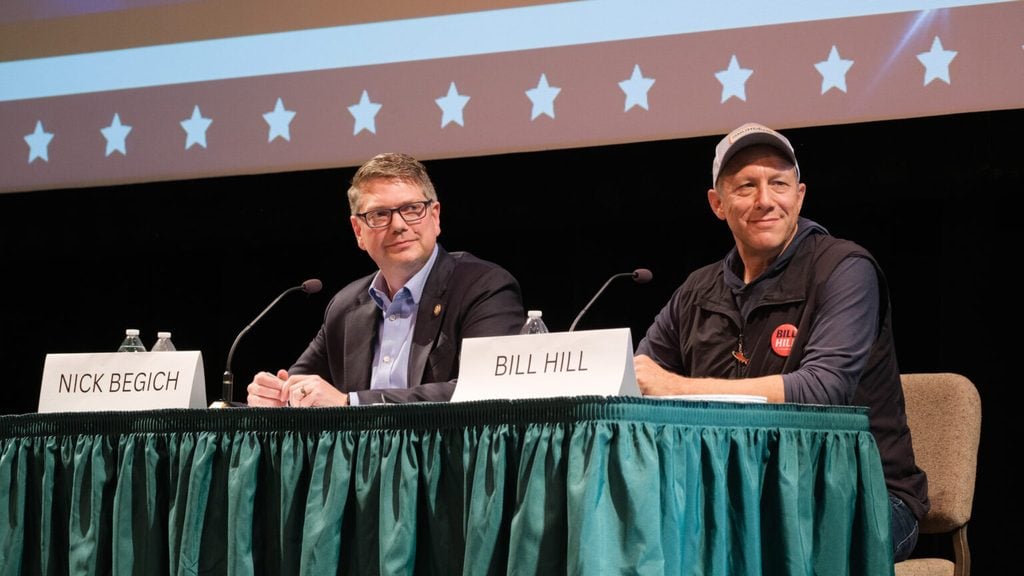
Members of the Alaska House Judiciary and State Affairs committees held an investigatory hearing on Monday about the state’s decision to remove a candidate from the U.S. Senate election with the same name as the incumbent  — Dan Sullivan.

The Division of Elections announced that Dan J. Sullivan, a retired teacher from Petersburg, was not eligible to run for the U.S. Senate. It cited complaints from the incumbent and Republican groups when it decided his candidacy was not in “good faith,” and aimed at confusing voters with the incumbent U.S. Sen. Dan Sullivan. The division cited a state regulation that forbids the Division of Elections from listing a candidate’s name “in a manner that is confusing or misleading to voters or compromises the fairness or neutrality of the ballot.”

But some lawmakers questioned the decision and the division’s authority to remove the challenger candidate. An attorney representing the Alaska Legislature issued a legal memo Wednesday saying the decision to disqualify the candidate was likely unlawful, since he did not violate the U.S. Constitution’s qualifications to run for office. 

The hearing took place as Dan Sullivan of Petersburg filed an appeal of the state’s decision to disqualify him from the ballot on Monday, taking the issue before a state superior court. In the complaint, Sullivan defended his eligibility and challenged the division’s decision to remove him. He argues the action is unlawful, and is asking the court to overturn the decision and restore his name on the ballot for the August primary.

Lawmakers held a hearing in Anchorage to investigate the division’s decision. Division officials declined to appear so the committee relied on testimony from attorneys.  

Judiciary committee chair Rep. Andrew Gray, D-Anchorage, opened Monday’s hearing by saying the issue under scrutiny was not the particular candidate or his motives, but about the limits of the division’s authority and whether that authority is being applied fairly.

“What authority does the Division of Elections have to remove a candidate from the ballot, and has that authority been exercised consistently?” Gray said. “Those questions matter because public confidence in elections depends on more than accurate vote counting. It depends on the public’s confidence that the rules are applied equally to everyone.” 

Gray cited a previous case where the candidate’s political motives and eligibility were challenged, but the state took a different stance. When the Alaska Democratic Party sought to remove Eric Hafner, a U.S. House candidate imprisoned out of state, the division defended his right to run for office. The Alaska Supreme Court allowed him to remain on the ballot. Hafner is running for the seat again this year. Gray emphasized the difference in the state’s approach.

“When a government agency departs from positions it has taken in previous cases, the public deserves an explanation,” Gray said. “And when a government agency removes the candidate from the ballot, the public deserves a very clear explanation.”

Lawmakers called the hearing and requested the division director, Carol Beecher, appear and participate in providing further information and an explanation for removing Sullivan. Beecher declined last week, citing the division’s work preparing the ballot scheduled to be printed on June 28. 

Legislators then issued a rare legislative subpoena and served Beecher on Sunday to compel her to appear before the committee. 

Empty chairs for tesifiers at a June 22, 2026, hearing in Anchorage on candidate qualification. The hearing was held by the House State Affairs and House Judiciary committees. Seated in the background are Rep. Steve St. Clair, R-Wasilla, and Rep. Ky Holland, I-Anchorage. (Photo by Yereth Rosen/Alaska Beacon)

On Monday, Lt. Gov. Nancy Dahlstrom, who oversees the state’s election system, issued a letter again declining to appear and threatening legal action. 

“If you refuse, we may have no choice but to seek to quash the subpoena in court due to the unreasonable timeframe provided and the lack of urgency while the appeal period is still pending,” Dahlstrom wrote.

Gray noted that division officials gave Sullivan of Petersburg only one day to respond to questions, and then removed him from the ballot four days later. He announced at the hearing that they had rescinded the subpoena and agreed that elections officials would participate in another investigative hearing scheduled for July 22.

On Monday, the committee heard from several attorneys with experience working on elections issues, including Andrew Dunmire, a legislative attorney who wrote a legal memo saying the division’s actions were likely unconstitutional. 

Dunmire wrote that under the U.S. Constitution, there are three qualifications for federal candidates: they must be at least 30 years old, a U.S. citizen for at least nine years and an inhabitant of the state when elected. He said, as seen in previous cases, states are not allowed to add to those qualifications. 

“The US Constitution is the supreme source of law in our country, and there’s no administrative regulation that can override a constitutional requirement,” he said. 

Lawmakers discussed the state regulation cited by elections officials which prohibits the division from placing names on the ballot “in a manner that is confusing or misleading to voters or compromises the fairness or neutrality of the ballot.”

Several Republican members of the committee defended the division’s actions, including Rep. Mia Costello, R-Anchorage, who said the division has a responsibility to protect the ballot from confusing or misleading voters. 

“The division does have a responsibility to determine whether or not the voters are being misled, whether it has to do with how long they’ve lived here, whether it has to do with their name,” Costello said, and questioned whether Sullivan’s motives should be further investigated by the U.S Department of Justice or the Federal Elections Commission. 

“I hope that this issue is resolved, so that anybody who wants to run for office in the state of Alaska can do it, but they cannot do it in a manner that is going to confuse or undermine the importance of elections,” she said.

But Dunmire, with Legislative Legal Services, said while the state can investigate allegations of campaign misconduct, the division has no authority to investigate a candidate’s motives in running for office. 

“It is not the division’s role, they have no explicit authority in situations like this to look into a candidate’s motivations,” he said. 

Dunmire noted state regulation has rules for when two candidates with the same name appear on the ballot. Candidates’ names would appear with a middle initial, in this case the challenger as “Dan J. Sullivan,” and the incumbent as “Dan S. Sullivan.”

Hollis French, a former state senator and prosecutor, was invited to testify before the committee and did not mince words. 

“I don’t think you would need any special legal training to smell a rat here,” French said. “If a prisoner with no ties to the state of Alaska in New York state can be put on the ballot for federal office in the state of Alaska, I think the Division of Elections is sort of foreclosed from then on, from engaging in what they’ve engaged in this case.”

French said as a prosecutor, it’s nearly impossible to prove someone’s motives. He emphasized the division can take steps to distinguish the two names on the ballot, and then it’s up to candidates to campaign and appeal to voters. 

“There’s a way to designate that in a neutral manner on the ballot, and then put the burden on the candidates to remind everybody that they’re the Dan Sullivan from Fairbanks or the Dan Sullivan with an S, or the Dan Sullivan with a J,” he said. 

Rep. Ashley Carrick, D-Fairbanks and chair of the House State Affairs Committee, said she was highly concerned about a subjective standard for candidates imposed by the division that may erode the trust of voters. 

“I think there’s a clear risk in the longer term future to the Division of Elections and Alaska’s election integrity if we see mistakes or differences of opinion in how this authority to investigate can be utilized,” she said. 

“And really, truly, my biggest concern here is that if ‘good faith,’ as was stated in the memo from the Division of Elections, becomes an additional implicit standard for candidacy, Alaska will have added more than just an additional requirement. We will have functionally added a subjective standard for qualification to run for office.”

Demonstrators gathered outside the Alaska Division of Elections in Downtown Juneau and broadcast the House Judiciary Committee's hearing in protest of the decision to remove a candidate from the ballot they said was an abuse of power and compromising election integrity on June 22, 2026. (Photo by Corinne Smith/Alaska Beacon)
Demonstrators gathered outside the Alaska Division of Elections in Downtown Juneau and broadcast the House Judiciary Committee’s hearing in protest of the decision to remove a candidate from the ballot they said was an abuse of power and compromising election integrity on June 22, 2026. (Photo by Corinne Smith/Alaska Beacon)
Categories
Alaska News Featured Juneau News juneau Juneau Local Juneau Local Ketchikan Local News Feeds Sitka Local

Nonprofit foundation gifts Alaska Legislature 16 apartments in Juneau

By: James Brooks, Alaska Beacon

This eight-plex apartment complex in Juneau, seen Thursday, June 18, 2026, will be purchased by the Juneau Community Foundation and donated to the Alaska Legislature under a plan approved Wednesday by lawmakers. (Claire Stremple photo/Alaska Beacon)

The Juneau Community Foundation is giving the Alaska Legislature 16 two-bedroom apartments as part of a long-term effort to keep the state’s capital in Juneau.

Members of the House-Senate Legislative Council voted unanimously to accept the apartments, which are spread across two four-plexes and one eight-plex in the Starr Hill and Chicken Ridge neighborhoods, respectively.

The new acquisition follows the Legislature’s acceptance of the Assembly Building by a similar donation in 2022. That building has 33 apartments for legislators and is regularly in use.

Under the terms of the donation, the Juneau Community Foundation will buy the three new buildings, renovate them and turn them over to the Legislature once the renovations are complete.

Fifty-seven of the Legislature’s 60 members do not live permanently in Juneau; there will be 49 legislative housing units when the renovations finish.

Reed Stoops, a lobbyist, is a member of the board of the Juneau Community Foundation and helped organize the latest housing donation.

“Basically any kind of improvement that will make the Legislature function better in Juneau, we’ll do,” he said.

The ultimate goal is to give the Legislature more housing options to keep legislative sessions in Juneau, “especially during a special session like this,” he said.

Juneau is visited by more than 1.5 million tourists per year in the summer, and housing becomes scarce between April and September. Historically, legislators and staff have struggled to find housing for special sessions that take place during the summer.

The Legislature hasn’t yet decided how much rent it will charge legislators who live in the new apartments. Legislators living in the Assembly Building are charged market-rate rents based on the size of the apartment.

“Many on this council are strongly supportive and excited about Juneau Community Foundation’s donation, and just really thankful for it,” said Rep. Ashley Carrick, D-Fairbanks and a member of the Legislative Council.

“Juneau is an incredibly welcoming community, and this is just yet another example of why we should keep the capital in Juneau,” she said.

Categories
Alaska News Featured Juneau News juneau Juneau Local Juneau Local Ketchikan Local News Feeds Sitka Local

Dead endangered Fin Whale found on cruise ship bow in Seward; Investigation underway

Images credit: Kaiti Grant/Alaska SeaLife Center

NOTN- A dead fin whale was discovered draped over the bow of a cruise ship when it arrived at the dock in Seward on Friday, prompting a federal investigation and an animal autopsy to determine how the endangered whale died.

The whale, a 61-foot adult female, was found on the ship’s bow after the vessel arrived in the port on June 19. A local marine towing company later moved the whale to a nearby beach, where biologists are conducting a necropsy, or animal autopsy.

Officials are working with the Alaska SeaLife Center to examine the whale and determine its cause of death. Preliminary findings indicate the whale was pregnant at the time of its death.

Authorities have asked the public to avoid the beach where the necropsy is taking place, citing safety concerns and the need for researchers to have adequate space to collect samples and conduct the examination.

The NOAA Fisheries Office of Law Enforcement has opened an investigation into the incident. Officials are asking anyone with information about the whale’s death to contact the agency’s 24-hour enforcement hotline at 800-853-1964.

Fin whales are listed as endangered under the Endangered Species Act. They are the second-largest animals on Earth and can grow to more than 80 feet in length.

Officials also reminded the public that it is illegal to collect tissue, baleen or any other part of the whale without authorization. An exception exists for Alaska Natives who are collecting tissue or parts for subsistence purposes or use in traditional handicrafts, as allowed under federal law.

Categories
Alaska News Featured Juneau News juneau Juneau Local Juneau Local Ketchikan Local News Feeds Sitka Local

Dunleavy vetoes nine bills, but Alaska lawmakers override two in special session flurry

By: James Brooks, Alaska Beacon

Sen. Elvi Gray-Jackson, D-Anchorage, speaks in favor of the veto override on Senate Bill 41 on Friday, June 19, 2026. Watching at left is Rep. Louise Stutes, R-Kodiak. (James Brooks photo/Alaska Beacon)

Alaska Gov. Mike Dunleavy extended his record-high veto rate Thursday by vetoing nine of the 82 bills passed by lawmakers in the second year of the 34th Alaska State Legislature.

Among the vetoed bills were measures that would have provided mental health lessons to kids in public schools, created a retirement plan for private-sector workers who don’t have one and updated the state’s corporate income tax system.

Two of the vetoed bills — one expanding the power of pharmacists and the other covering the state’s board of engineers and architects — were put into law Friday after lawmakers overrode the governor.

Dunleavy has now vetoed or attempted to veto almost one-fifth of all bills passed by the 34th Legislature. Other governors have issued more vetoes, but none have vetoed a higher proportion of bills than Dunleavy.

Pharmacists’ powers expanded

State legislators voted 43-17 on Friday to override Dunleavy’s veto of House Bill 195, which gives pharmacists more authority to prescribe medicines and conduct simple medical tests. Forty votes were needed.

Rep. Genevieve Mina, D-Anchorage, spoke in favor of the override, saying the bill will enable Alaskans to get cheaper medical care from pharmacists instead of more expensive providers.

Rep. Zack Fields, D-Anchorage, offered an example: For a parent with a child suffering from strep throat after their pediatrician had closed for the day, going to an urgent care clinic might cost hundreds of dollars, and an emergency room visit could cost thousands. 

“This bill allows a parent to take their child to a pharmacy” and get a strep throat test, he said. 

“We have a growing number of families in Alaska that cannot afford health insurance. If they can’t take their kid to a pharmacy, they’re just not going to get treated,” he said.GET THE MORNING HEADLINES.SUBSCRIBE

Some antiabortion advocates lobbied against the bill, saying they believe the bill could allow pharmacists to more easily dispense abortion-inducing drugs.

Rep. Jamie Allard, R-Eagle River, spoke to that point, but Rep. Mike Prax, R-North Pole and a strong antiabortion advocate himself, said that information is incorrect.

Alaska law limits who may perform an abortion in the state, Prax said.

“It just simply isn’t an issue, and therefore the benefits of this bill clearly outweigh any of the risks,” he said.

Interior designers added to architecture board

Lawmakers also overrode Dunleavy’s veto of House Bill 314 by a 45-15 margin. Forty votes were needed.

A revised version of a bill Dunleavy vetoed last year, HB 314 will regulate some aspects of interior design in the state by adding them to the State Board of Architects, Engineers, and Land Surveyors. 

The bill also renewed the board’s legal authority, and when Dunleavy vetoed HB 314, it could have at least temporarily eliminated the board as a side effect. While the duties of the board would have been assumed by the Alaska Department of Commerce, Community and Economic Development, lawmakers said they did not want to eliminate the board just as the state considers a state-spanning natural gas pipeline.

No extra oversight for for kids’ psychiatric facilities

Forty of the Legislature’s 60 members are needed to override the veto of a policy bill, and legislators failed to reach that threshold on three votes Friday due to the opposition of Republican lawmakers.

On House Bill 52, which would require increased oversight of youth psychiatric facilities, the vote was 36-24. The bill, from Rep. Maxine Dibert, D-Fairbanks, was introduced in response to reports of widespread problems at North Star psychiatric hospital in Anchorage.

If enacted, the bill would have required unannounced state inspections of facilities like North Star and reports on the use of physical and chemical restraints on children, among other items.

In his veto message, the governor said that while he supports oversight, he believes the bill duplicates what the state is already empowered to do.

No mental health education in public schools

Despite an impassioned speech from Sen. Elvi Gray-Jackson, D-Anchorage, the Legislature declined to override Dunleavy’s veto of Senate Bill 41, which would have required the Alaska Department of Education and Early Development to draft a mental health curriculum in the same way that it has a physical education program.

https://alaskabeacon.com/2026/05/15/alaska-legislature-approves-plan-for-mental-health-education-in-schools/embed/#?secret=skcAPQuB3I#?secret=pH0ddaP23e

Local districts would have been responsible for implementing that curriculum.

The override vote was 38-22, two votes short of what was needed.

The issue, Gray-Jackson told legislators Friday, is nothing short of a matter of life and death. 

Alaska has the highest suicide rate in the nation, she said, and “in many rural communities, suicide rates are nearly four times that the national average. Teaching our students how to recognize mental health challenges, to seek help and support one another, is one of the most basic and meaningful steps we can take to address this crisis.”

In his veto message, the governor said, “this bill places the state in the role of imposing upon school districts to mandate the development of mental health education at a time when districts are already working to meet existing requirements.”

“Decisions about sensitive classroom instruction, especially instruction involving a student’s mental and emotional health, should remain as close as possible to parents, local school boards, and communities,” he said.

Gray-Jackson lambasted that statement, saying it repeated “false” and “harmful” misinformation from “online blogs and commentators.”

“SB 41 didn’t remove parents from the conversation, it didn’t strip authority from local school boards, it didn’t replace community values with a one-size-fits-all mandate,” she said. 

“The reality is much simpler,” Gray-Jackson said. “The governor vetoed a bill with the potential to save lives in every community represented in this chamber, and I can’t emphasize that enough.”

No retirement plans for minimum-wage workers

Legislators failed by a single vote to override Dunleavy’s veto of Senate Bill 21, which would have provided state-run retirement plans for workers in businesses that do not currently offer retirement benefits.

The program under SB 21, similar to efforts already launched by other states, would have principally affected minimum-wage workers and those in small businesses. Unless they opt out, eligible workers would have had 5% of their paychecks automatically deducted and deposited into an investment account managed by the state.

In his veto message, the governor said he opposes a mandate, even with an opt-out provision.

“Although employees may opt out, the bill relies on automatic enrollment and places employers in the middle of a state-run investment program. Alaska businesses should not be required to

administer or facilitate retirement savings accounts created by the State when private retirement

and investment options are already available,” Dunleavy wrote.

The vote on an override was 39-21, with Rep. Kevin McCabe, R-Big Lake, casting the last and decisive vote to sustain the governor’s decision.

No updates to corporate or tobacco taxes

Of the governor’s nine vetoes, legislators declined to vote on four, permitting them to stand without a vote. 

Dunleavy vetoed two bills — House Bill 280 and Senate Bill 24 — saying that he is unwilling to approve tax changes without a comprehensive fiscal plan that brings state expenses and revenue into line over the long-term.

Both bills had been passed in different forms by prior editions of the Legislature and were also previously vetoed by Dunleavy. If SB 24 had been enacted, it would have imposed Alaska’s first tax on e-cigarette products. HB 280 would have modernized the state’s corporate income tax system, taking tax revenue for online sales from other states to the Alaska treasury by declaring that sales to Alaskans take place in Alaska, not at the location of a warehouse or computer server operated by the seller.

House Bill 23, also vetoed by the governor, would have subjected nonprofit businesses to the authority of the Alaska State Commission for Human Rights, which handles discrimination complaints against employers.

“While I support protecting Alaskans from unlawful discrimination, this bill expands the commission’s reach over nonprofit employers, including charitable, educational, and religious organizations. That expansion creates uncertainty for small community organizations and risks unnecessary administrative proceedings and litigation,” the governor wrote in his veto message.

The last of the vetoes, Senate Bill 258, would have forbidden the state from signing computer software deals that lock in the state to a particular company or limit the software to a particular geographic area.

The governor’s veto message said in part that the “bill places rigid statutory limits on how the State and political subdivisions may contract for software in a highly technical and rapidly changing marketplace.”

“Software licensing, cybersecurity requirements, cloud services, support, hosting, and pricing

models are complex and often negotiated together. Restricting those negotiations in statute could reduce flexibility, limit access to needed products, and increase costs for agencies and local governments,” he wrote.

Categories
Alaska News Featured Juneau News juneau Juneau Local Juneau Local Ketchikan Local News Feeds Sitka Local

Alaska House rejects Senate’s LNG gas line bill, lawmakers say negotiations will continue

By: Corinne Smith, Alaska Beacon

The Alaska House convened for a third special session and voted to reject a Senate version of a tax break bill for the proposed AK LNG gas line project on June 20, 2026. (Photo by Corinne Smith/Alaska Beacon)

The Alaska House of Representatives on Saturday rejected a Senate-drafted multibillion-dollar tax break for a proposed trans-Alaska natural gas pipeline project, as members of the House declined to abandon a different proposal they drafted.

Members of the House voted down the Senate’s revised bill 12-28, nine votes short of what was needed to adopt the Senate plan. In a separate 0-16 vote, the Senate declined to abandon its version in favor of the House’s plan. Lawmakers will now convene a conference committee with representatives from both bodies to hammer out a compromise agreement.

In an interview following the House vote, House Speaker Bryce Edgmon, I-Dillingham, said objections within the House varied, and lawmakers with the conference committee need time to evaluate the changes.

“Given the breadth and just the wide range of things that happened to House Bill 381 in the Senate last night, you know, we’re going to take that vehicle and use it as a starting point going forward, and we’re going to work very diligently and also with a strong sense of resolve to try to bring it all to an agreement,” Edgmon said. 

Lawmakers agreed to reconvene for potential final votes on July 1.

Members of the all-Republican House Minority Caucus huddle behind the Capitol ahead of a vote to reject the Senate's version of a tax break bill for the proposed AK LNG gas line project on Saturday, June 20, 2026. (Photo by Corinne Smith/Alaska Beacon)
Members of the all-Republican House Minority Caucus huddle outside the House chamber behind the Capitol ahead of a vote to reject the Senate’s version of a tax break bill for the proposed AK LNG gas line project on Saturday, June 20, 2026. (Photo by Corinne Smith/Alaska Beacon)

While conference committees typically negotiate behind closed doors, Edgmon said there will be public meetings as well. 

Lawmakers said negotiations would begin soon but there was no confirmed schedule for the conference committee. 

From the House, the conference committee will include Edgmon, Reps. Calvin Schrage, I-Anchorage, and Justin Ruffridge, R-Soldotna. From the Senate, the committee includes Sens. Lyman Hoffman, D-Bethel, Bert Stedman, R-Sitka, and Mike Cronk, R-Tok.

At issue is the size and scope of a tax break for the proposed trans-Alaska natural gas pipeline project, known as Alaska LNG.

As currently proposed, the project would include construction of a 807-mile gas line from the North Slope to Cook Inlet, in phase one. In phase two, it would include a new large gas-treatment plant on the North Slope and an export facility on the Kenai Peninsula to export gas internationally.

The House passed the bill with a larger tax break on June 12. The Senate revised the bill, reducing the size of the tax break and passed a variety of changes on Friday, with a smaller tax break on the gas tax, known as the alternative volumetric gas tax, and a plan for gradual increases in tax over time. 

Senators also included a variety of changes to the bill, including a previously contentious provision voted down by the House this spring to levy corporate income taxes on privately-owned oil and gas companies that currently do not pay them. That would apply to Hilcorp and Glenfarne, the company developing the LNG project. 

The Senate also included amendments to the bill seeking more protections for the state and Alaskans: one an amendment would limit the gas price cap for residents in Southcentral Alaska to rise with inflation and prohibiting developers from passing on cost overruns to Alaskans; a labor-related proposal would require the pipeline builders to pay prevailing wages in the state and employ Alaskans and apprentices. An amendment would require Glenfarne and developers to disclose their ties to foreign companies. Another amendment declared that if pipeline developers abandon their efforts, the project will return to the state at no cost. Currently Glenfarne owns 75% of the project while the remaining 25% is held by the state-owned Alaska Gasline Development Corp. Glenfarne could not seek a buyout from the state if it failed to move forward with the project.

The Senate imposed deadlines on the project, mandating construction of the pipeline and phase one to be completed no later than 2032, and phase two to be done no later than 2036.

The Alaska Senate convened for the third special session on June 20, 2026, voting to move a tax break bill for the proposed AK LNG gas line project to a conference committee. (Photo by Corinne Smith/Alaska Beacon)

Late Friday night, Gov. Mike Dunleavy voiced objections to the Senate’s version of the bill, saying there were “serious questions about all the amendments.” 

Friday was the last day of a 30-day special session devoted to the gas pipeline project. Dunleavy has proclaimed another 30-day special session, which began Saturday, and legislators spent the morning taking procedural actions that allow them to resume work without interruption.

Dunleavy urged lawmakers to work quickly, but four senators were excused absent from Saturday’s votes, and members of the House rapidly left the Capitol on Saturday afternoon in order to catch flights home from Juneau.

Edgmon said he expects negotiations with the governor’s office to continue. 

“If he’s not involved, and that’s going to make the pathway ahead problematic,” he said.

A spokesperson for Dunleavy’s office said on Saturday that the governor supports the bill moving forward to a conference committee.  

“Governor Dunleavy is encouraged by House and Senate leadership’s decision to send HB 381 to a conference committee,” said Jeff Turner, Dunleavy’s communications director, by email. “It’s an opportunity for both bodies to agree on a version of the bill that can incentivize the Alaska LNG Project while still providing steady, predictable revenue to communities along the pipeline corridor using a volumetric tax mechanism.”

The governor and members of the House were particularly opposed to the corporate income tax provision.

House Majority Leader Chuck Kopp, R-Anchorage, joined a news conference with Gov. Mike Dunleavy on June 19, 2026. (Photo by Claire Stremple/Alaska Beacon)

“It is considered economically counterproductive at the moment the state is trying to attract final investment decisions on phase one and phase two of the gas pipeline,” House Majority Leader Rep. Chuck Kopp, R-Anchorage, said on the House floor ahead of Saturday’s vote, adding that he believes the provision undercuts certainty and competitiveness of the project. 

“These amendments were not vetted or extensively explained on the other body’s floor, and we do not yet know their full impact,” Kopp added.  

But Sen. Bert Stedman, R-Sitka, who co-chairs the Senate Finance Committee said lawmakers still need more financial information from Glenfarne to determine if that’s the case, and to determine the project’s economic viability.  

“They still haven’t clearly delineated how much benefit or burden the property tax existing structure actually is on it,” Stedman said after the Senate vote. “Even if we made no property tax on the gas line, it does not make it economic. It helps economics, it does not get it over the hurdle.” 

“We gotta protect the treasury, that’s our job,” Stedman added. “If you’re going to give concessions, they need to show us why they need them, and the impact.”

If legislators do not adjourn early, the new special session is set to end on July 19.

James Brooks contributed to this story.