NOTN- Local officials are warning residents of imminent flooding, with the river crest now predicted to occur earlier than previously anticipated, potentially before noon tomorrow.
Sabrina Grubitz, Tlingit and Haida Public Safety Manager and incident commander for the 2025 flood response, announced this evening that the National Weather Service has moved up the flooding timeline by four to six hours. Flooding could begin as early as 8 AM.
“Tomorrow we are looking somewhere before noon, and certainly, if individuals have not evacuated the flood zone at this point in time, they’re highly encouraged to evacuate immediately and get out of out of that area.” Said Grubitz, “We could see flooding as as early as eight or so, so making sure that individuals are prepped and ready before they go to sleep tonight.”
The situation is developing rapidly, and officials stress the importance of taking immediate precautions to ensure personal safety.
AP- Residents in some parts of Juneau prepared to evacuate ahead of what could be a record surge of flooding as rainwater and snowmelt in a huge basin dammed by Alaska’s Mendenhall Glacier started to flow downstream toward the capital city.
Officials in recent days have been warning people in the flood zone to be ready to evacuate. On Tuesday morning they confirmed water had started escaping the ice dam, with flooding expected late Tuesday and on Wednesday. They advised people in the city’s flood zone to leave.
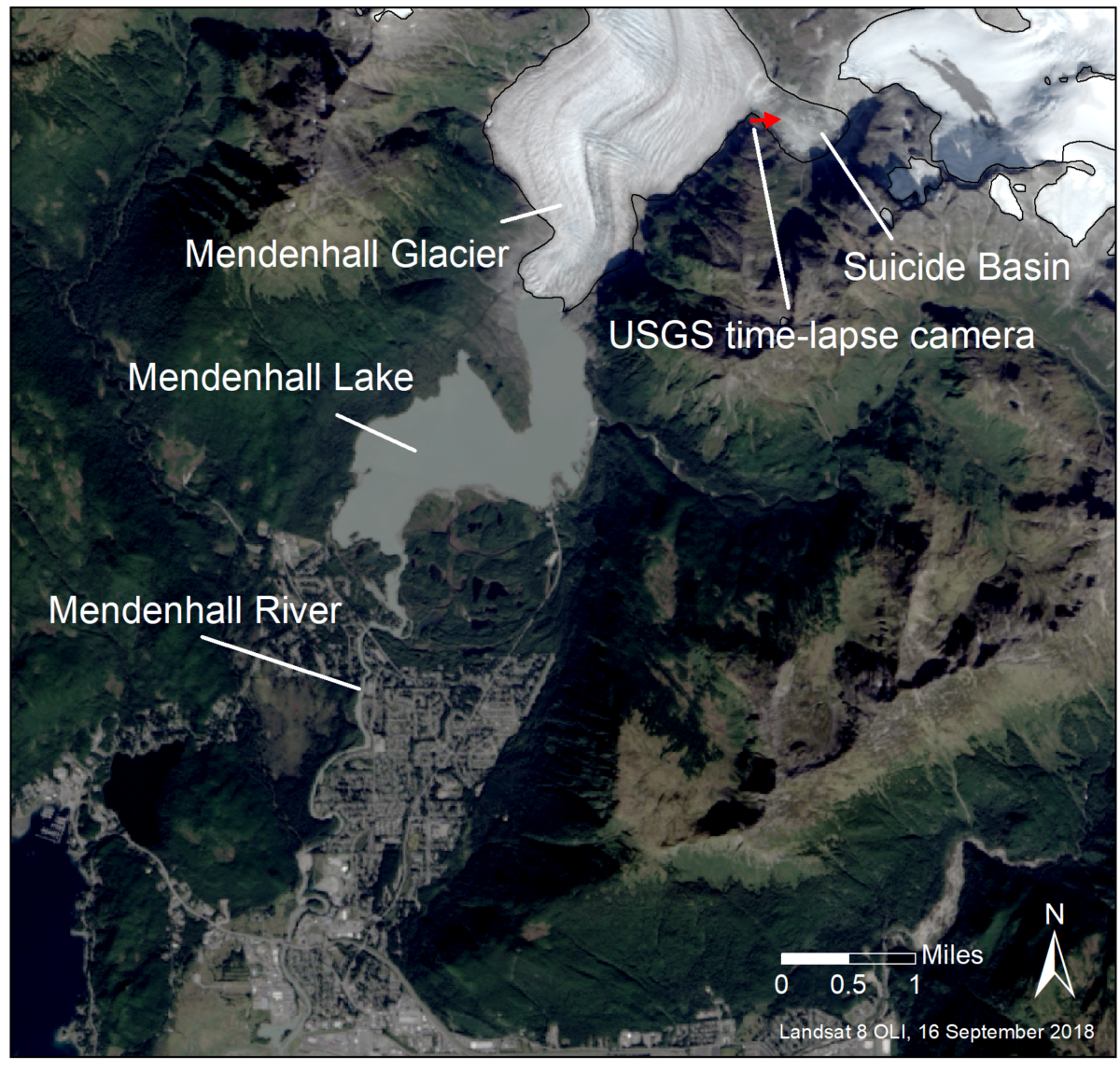
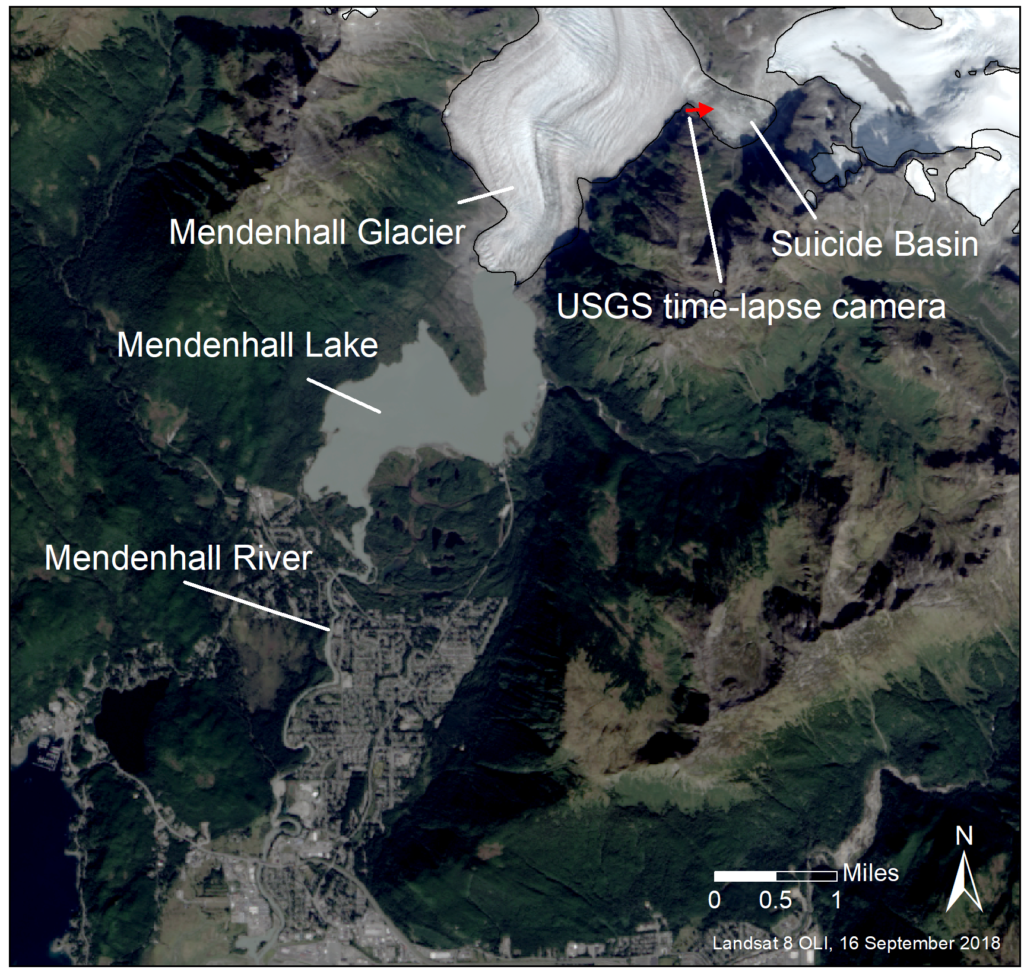
The Mendenhall Glacier is about 12 miles (19 kilometers) from Juneau and is a popular tourist attraction due to its proximity to Alaska’s capital city and easy access on walking trails. Homes on the city’s outskirts are within miles of Mendenhall Lake, which sits below the glacier, and many front the Mendenhall River.
The water that’s being released in the glacial outburst is flowing into the river, putting homes that are closest to the river at risk. The National Weather Service said it expected flooding to peak at 4 p.m. local time Wednesday.
“This will be a new record, based on all of the information that we have,” Nicole Ferrin, a weather service meteorologist, told a news conference Tuesday.
Flooding from the basin has become an annual concern, and in recent years has swept away houses and swamped hundreds of homes. Government agencies installed temporary barriers this year in hopes of protecting several hundred homes in the inundation area from widespread damage.
The thinning, retreating glacier in southeast Alaska acts as a dam for Suicide Basin, which fills each spring and summer with rainwater and snowmelt. The basin itself was left behind when a smaller glacier nearby retreated.
When the water in the basin builds up enough pressure, it forces its way under or around the ice dam, entering Mendenhall Lake and eventually the Mendenhall River.
Before the basin reached the limit of its capacity and began overtopping, the water level was rising rapidly — as much as 4 feet (1.22 meters) per day during especially sunny or rainy days, according to the National Weather Service.
The threat of so-called glacier outburst flooding has troubled parts of Juneau since 2011. In some years, there has been limited flooding of streets or properties near the lake or river.
But 2023 and 2024 marked successive years of record flooding, with the river last August cresting at 15.99 feet (4.9 meters), about 1 foot (0.3 meters) over the prior record set a year earlier, and flooding extending farther into the Mendenhall Valley. This year’s flooding was predicted to crest at between 16.3 and 16.8 feet (4.96 to 5.12 meters).
A large outburst can release some 15 billion gallons of water, according to the University of Alaska Southeast and Alaska Climate Adaptation Science Center. That’s the equivalent of nearly 23,000 Olympic-size swimming pools. During last year’s flood, the flow rate in the rushing Mendenhall River was about half that of Niagara Falls, the researchers say.
City officials responded to concerns from property owners this year by working with state, federal and tribal entities to install a temporary levee along roughly 2.5 miles of riverbank in an attempt to guard against widespread flooding. The installation of about 10,000, four-foot (1.2-meter) tall barriers is intended to protect more than 460 properties from flood levels similar to last year, said Nate Rumsey, deputy director with the city’s engineering and public works department.
The U.S. Army Corps of Engineers is at the start of what’s expected to be a yearslong process of studying conditions in the region and examining options for a more permanent solution. The timeline has angered some residents, who say it’s unreasonable.
Outburst floods are expected to continue as long as the Mendenhall Glacier acts as an ice dam to seal off the basin, which could span another 25 to 60 years, according to the university and science center researchers.
NOTN- Water has begun spilling from Suicide Basin, prompting a flood warning for the Mendenhall Lake and River.
The National Weather Service confirmed the release began at about 9:30 a.m. after coordinating with science partners monitoring the basin.
“As of this morning, we noticed that the totals for the basin were starting to drop a lot more, very exponentially. So we looked into the Mendenhall Lake as well as the laser gage, and we sent someone up there to ground truth it in a helicopter.” Said the National Weather Service, “As of the past hour, we have decided to call it and send out the warning for the glacial release.”
Suicide Basin, a side basin of the Mendenhall Glacier, has produced annual glacial lake outburst floods since 2011, including a record event on Aug. 6, 2024. The most recent release before this week occurred Oct. 20, 2024.
“Now that it’s releasing, it’s going to release a lot more right off the bat, and then kind of level out more as it gets less full.” Said a National Weather Service representative, “The crest height is expected to be around Wednesday afternoon, and because of all the rainfall that we’ve had recently, we are expecting to have either near record levels or record levels.”
Residents in flood-prone areas are urged to follow the latest advisories from local officials and the National Weather Service.
NOTN-Juneau’s Unified Command is preparing residents for the anticipated , Suicide Basin release that could cause flooding along the Mendenhall River.
Once water begins to spill from the basin, the National Weather Service will issue a flood warning, and the Unified Command will send evacuation advisories through multiple channels.
City and school district officials are preparing for possible closures affecting all Juneau schools, even though only three are located along the river. The district said closures could last as long as the evacuation advisory remains in effect.
Juneau Mayor Beth Weldon says they are moving through the evacuation as if the HESCO Barriers – which are placed along Mendenhall river – aren’t there.
“We’re assuming that they will work.” Said Mayor Weldon “We did this all with the Army Corps of Engineers, they were quite excited about them working, and we’re hopeful that things will be much better than last year. But again, it’s still a flood area, so we are asking people evacuate.”
If the advisory is issued before the school day begins, classes will be canceled. If flooding is expected during the day, at-risk schools may release students early or relocate them to safe sites for parent reunification. Guardians and emergency contacts must provide photo ID to pick up students.
In some cases, bus riders who live in the evacuation area but attend schools elsewhere may be taken to a central pickup point outside the flood zone rather than back into affected neighborhoods.
FILE - U.S. President Donald Trump meets with Russian President Vladimir Putin at the G-20 Summit on July 7, 2017, in Hamburg, Germany. (AP Photo/Evan Vucci, File)
FILE – U.S. President Donald Trump meets with Russian President Vladimir Putin at the G-20 Summit on July 7, 2017, in Hamburg, Germany. (AP Photo/Evan Vucci, File)
AP- The U.S.-Russia summit in Alaska is happening at a site where East meets West — quite literally — in a place familiar to both countries as a Cold War front line of missile defense, radar outposts and intelligence gathering.
Whether it can lead to a deal to produce peace in Ukraine more than 3 1/2 years after Moscow’s invasion remains to be seen.
Here’s what to know about the meeting between Russian President Vladimir Putin and U.S. President Donald Trump, the first summit in four years:
When and where is it taking place?
The summit will take place Friday in Alaska, although where in the state is still unknown.
It will be Putin’s first trip to the United States since 2015, for the U.N. General Assembly in New York. Since the U.S. is not a member of the International Criminal Court, which in 2023 issued a warrant for Putin on war crimes accusations, it is under no obligation to arrest him.
Is Zelenskyy going?
Both countries confirmed a meeting between only Putin and Trump, even though there were initial suggestions that Ukrainian President Volodymyr Zelenskyy might be part of it. But the Kremlin has long pushed back against Putin meeting Zelenskyy -– at least until a peace deal is reached by Russia and Ukraine and was ready to be signed.
Putin said last week he wasn’t against meeting Zelenskyy “but certain conditions need to be created” for it to happen and were “still a long way off.”
That raised fears about excluding Ukraine from negotiations. Ukrainian officials last week talked with European allies, who stressed that peace cannot be achieved without Kyiv’s involvement.
What’s Alaska’s role in Russian history?
It will be the first visit by a Russian leader to Alaska, even though it was part of the czarist empire until 1867, the state news agency Tass said.
Alaska was colonized by Russia starting from the 18th century until Czar Alexander II sold it to the United States in 1867 for $7.2 million. When it was found to contain vast resources, it was seen as a naïve deal that generated remorse and self-reproach.
After the USSR’s collapse, Alaska was a subject of nostalgia and jokes for Russians. One popular song in the 1990s went: “Don’t play the fool, America … give back our dear Alaska land.”
Sam Greene of King’s College London said on X the symbolism of Alaska as the site of a summit about Ukraine was “horrendous — as though designed to demonstrate that borders can change, land can be bought and sold.”
What’s the agenda?
Trump has appeared increasingly exasperated with Putin over Russia’s refusal to halt the bombardment of Ukrainian cities. Kyiv has agreed to a ceasefire, insisting on a truce as a first step toward peace.
Moscow presented ceasefire conditions that are nonstarters for Zelenskyy, such as withdrawing troops from the four regions Russia illegally annexed in 2022, halting mobilization efforts, or freezing Western arms deliveries. For a broader peace, Putin demands Kyiv cede the annexed regions, even though Russia doesn’t fully control them, and Crimea, renounce a bid to join NATO, limit the size of its armed forces and recognize Russian as an official language along with Ukrainian.
Zelenskyy insists any peace deals must include robust security guarantees for Ukraine to protect it from future Russian aggression.
Putin has warned Ukraine it will face tougher conditions for peace as Russian troops forge into other regions to build what he described as a “buffer zone.” Some observers suggested Russia could trade those recent gains for territory still under Ukrainian control in the four annexed regions annexed by Moscow.
Zelenskyy said Saturday that “Ukrainians will not give their land to the occupier.”
But Trump said Monday: “There’ll be some land swapping going on. I know that through Russia and through conversations with everybody. To the good, for the good of Ukraine. Good stuff, not bad stuff. Also, some bad stuff for both.”
What are expectations?
Putin sees a meeting with Trump as a chance to cement Russia’s territorial gains, keep Ukraine out of NATO and prevent it from hosting any Western troops so Moscow can gradually pull the country back into its orbit.
He believes time is on his side as Ukrainian forces are struggling to stem Russian advances along the front line amid swarms of Moscow’s missiles and drones battering the country.
The meeting is a diplomatic coup for Putin, isolated since the invasion. The Kremlin sought to portray renewed U.S. contacts as two superpowers looking to resolve various global problems, with Ukraine being just one.
Ukraine and its European allies are concerned a summit without Kyiv could allow Putin to get Trump on his side and force Ukraine into concessions.
“Any decisions that are without Ukraine are at the same time decisions against peace,” Zelenskyy said. “They will not bring anything. These are dead decisions. They will never work.”
European officials echoed that.
“As we work towards a sustainable and just peace, international law is clear: All temporarily occupied territories belong to Ukraine,” European Union foreign policy chief Kaja Kallas said. “A sustainable peace also means that aggression cannot be rewarded.”
NATO Secretary General Mark Rutte said Sunday he believed Trump was “making sure that Putin is serious, and if he is not, then it will stop there.”
“If he is serious, then from Friday onwards, the process will continue. Ukraine getting involved, the Europeans being involved,” Rutte added.
Since last week, Putin spoke to Chinese leader Xi Jinping, Indian Prime Minister Narendra Modi, Brazilian President Luiz Inácio Lula da Silva, as well as the leaders of South Africa, Kazakhstan, Uzbekistan, Belarus and Kyrgyzstan, the Kremlin said.
That suggested Putin perhaps wanted to brief Russia’s most important allies about a potential settlement, said pro-Kremlin analyst Sergei Markov.
Ukrainian forces are increasing the intensity of long-range drone strikes deep into Russia, according to data released by Moscow, ahead of Friday's planned meeting between Presidents Donald Trump and Vladimir Putin in Alaska.
Ukrainian forces are increasing the intensity of long-range drone strikes deep into Russia, according to data released by Moscow, ahead of Friday’s planned meeting between Presidents Donald Trump and Vladimir Putin in Alaska. (Photo courtesy ABC News)
LONDON – Ukrainian forces are increasing the intensity of long-range drone strikes deep into Russia, according to data released by Moscow, ahead of Friday’s planned meeting between Presidents Donald Trump and Vladimir Putin in Alaska.
Russia’s Defense Ministry reported downing another 59 Ukrainian drones overnight into Monday morning, with Moscow Mayor Sergei Sobyanin reporting that at least nine craft were shot down en route to the capital.
Russia’s federal air transport agency, Rosaviatsiya, reported temporary restrictions on flights at airports in Penza, Nizhny Novgorod, Kaluga, Volgograd and Saratov during the overnight attacks.
Monday’s figures bring the total number of long-range Ukrainian drones claimed shot down by Russian forces in August to 1,337 — with a daily average of more than 121 drones each day.
Moscow only provides data on the number of drones it claims to have shot down, and not the overall number of Ukrainian craft launched. Neither Ukraine nor Russia provide public information on the scale of their own cross-border drone attacks.
In July, the total number of Ukrainian drones claimed downed over the course of the month was 3,008, with an average of just over 97 craft per day.
Ukraine’s air force, meanwhile, said Russia launched 100 drones into Ukraine overnight into Monday morning, of which 70 were intercepted or suppressed.
Thus far in August, the intensity of Russian strikes on Ukraine appear to have eased. The first 11 days of this month have seen Moscow launch a daily average of 74 drones and one missile into Ukraine, compared with record-breaking July figures of 201 drones and around six missiles per day.
Ukrainian President Volodymyr Zelenskyy and his officials have said Kyiv will continue and expand its long-range strikes in an effort to force Moscow to the negotiating table.
“They in Russia must clearly feel the consequences of what they are doing against Ukraine,” the president said in a statement posted to Telegram in May. “And they will. Attack drones, interceptors, cruise missiles, Ukrainian ballistic systems — these are the key elements. We must manufacture all of them.”
It is not clear whether Zelenskyy will attend Friday’s summit in Alaska. There, Trump and Putin are expected to discuss proposals to secure a ceasefire and potentially to end Russia’s full-scale invasion, which it launched in February 2022.
Zelenskyy has insisted that any negotiations must include Ukraine. Kyiv will also not officially cede any territory, accept limitations on its armed forces, or jettison its ambitions to join NATO and the European Union, Zelenskyy has said.
Putin, though, is demanding that Ukraine cede several regions — not all of which are controlled by Russian troops — in the south and east of the country, accept curbs on the size and sophistication of its military and be permanently excluded from NATO.
Russia’s demands, Zelenskyy has said, constitute an attempt to “partition Ukraine.”
Ukrainian Presidential Press Service on June 27, 2024, in which Ukrainian President Volodymyr Zelensky looks on during a signature ceremony of Agreement on Security Cooperation and Long-term Support between Ukraine and Estonia during the European Council Summit. )Ukrainian Presidential Press Service/POOL/Sputnik/AFP via Getty Images)
Speaking from the White House on Friday, Trump suggested a settlement could include “some swapping of territories.”
Zelenskyy swiftly rejected the proposal, saying Ukraine “will not give Russia any awards for what it has done” and that “Ukrainians will not give their land to the occupier.”
On Monday, Zelenskyy appealed for more pressure on the Kremlin. “Russia is prolonging the war and therefore deserves stronger pressure from the world,” he wrote on Telegram.
“Russia refuses to stop the killings and therefore should not receive any rewards or benefits,” he added.
Sam Russell, Assistant Chief of Administration at CCFR, talks through flood mitigation efforts at August 11 meeting
NOTN- Unified Command is ramping up flood preparations in Juneau, issuing evacuation advisories for at-risk neighborhoods, completing key flood barriers, and closing trails and parks as water levels continue to rise.
in a meeting at the Juneau Police Department, the multi-agency response involving the City and Borough of Juneau, Central Council of the Tlingit & Haida, and state and federal partners told media they were focused on safety, protecting infrastructure, and providing timely public information.
Officials moved the response from “ready” to “set” phase this week, meaning residents in potential inundation zones should be prepared to leave if conditions worsen.
Responders urged residents to have a go-bag ready, review evacuation plans, and sign up for alerts.
Teams are distributing door hangers with QR codes linking to flood maps and emergency updates, and a hotline staffed by responders went live.
The Red Cross has opened an evacuation shelter at Floyd Dryden Gymnasium.
Construction crews have completed Phases 1 and 1A of the HESCO barrier system along the Mendenhall River, but Phase 1B remains on hold due to the lack of property agreements with private landowners.
Closures are also in effect for the pedestrian bridge at Diamond Park, parts of the Montana Creek Trail system, the Brotherhood Bridge Trail, and the Nugget Falls Trail at the glacier. Additional trail closures will be triggered as the lake rises, including the paved Egan Drive path near Brotherhood Bridge once water reaches 10 feet.
Alaska Electric Light & Power plans targeted power cuts in areas that flood, including specific lift stations. Neighborhoods protected by HESCO barriers will not lose power unless inundation occurs. Water and sewer service is not expected to be disrupted.
School officials are coordinating closely with Unified Command and may close schools, release students early, or cancel classes depending on flood warnings from the National Weather Service.
Real-time modeling and flood forecasts are available at JuneauFlood.com.
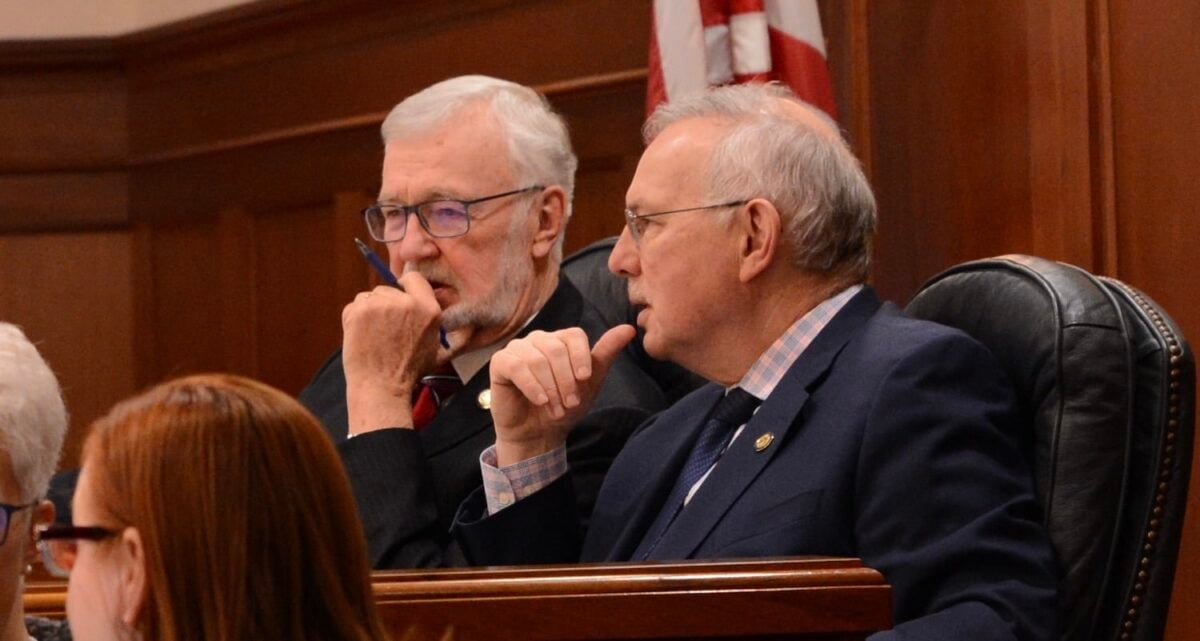
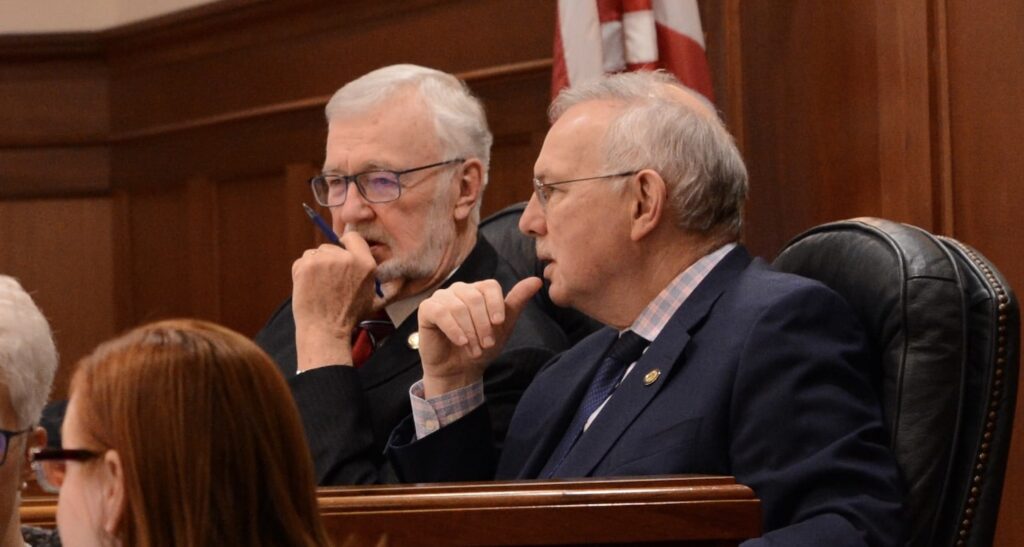
Senate President Gary Stevens, R-Kodiak, and Speaker of the House Bryce Edgmon, I-Dillingham, await an address from U.S. Sen. Lisa Murkowski, R-Alaska, on Tuesday, March 18, 2025. (Photo by James Brooks/Alaska Beacon)
By: James Brooks, Alaska Beacon
Senate President Gary Stevens, R-Kodiak, and Speaker of the House Bryce Edgmon, I-Dillingham, await an address from U.S. Sen. Lisa Murkowski, R-Alaska, on Tuesday, March 18, 2025. (Photo by James Brooks/Alaska Beacon)
Alaska Gov. Mike Dunleavy’s move to establish a state Department of Agriculture during the ongoing legislative special session appears to be turning into a fight over executive power, and it could be ultimately decided by the courts.
Last week, as the special session opened in Juneau, Dunleavy signed an executive order intended to establish the Alaska Department of Agriculture by moving parts of the Alaska Department of Natural Resources into a separate agency.
Alaska is one of only two states without a cabinet-level agriculture department, and Dunleavy has said he wants to create one in order to help the growth of farming in the state. Creating a cabinet-level agriculture department was the top priority of a state “food security” task force in 2022 intended to encourage farming here.
The governor’s order would take effect Jan. 1 and is almost identical to one Dunleavy issued this spring.
Under the Alaska Constitution, lawmakers can stop an executive order if they vote to dismiss it within 60 days. Legislators did just that with the spring order, voting 32-28 in March to deny the governor’s original order.
At the time, and since then, legislators have said that they prefer to enact a state department via law because it allows them to include their own ideas and comments of the public.
“The problem with an executive order is that we can’t amend an executive order,” said Senate President Gary Stevens, R-Kodiak, “and there’s some things that I think folks want to do.”
This month, when Dunleavy repeated the order, legislators refused to accept it.
Stevens and Speaker of the House Bryce Edgmon, I-Dillingham, said in a letter to the governor that introducing an executive order during a special session is unconstitutional, and that repeating an already disallowed order is also unconstitutional.
“This falls in the category of so many things during Dunleavy’s tenure as governor, where he has tried to push the boundaries with the Legislature. And we’re at the point now where we’re tired of being pushed around,” Edgmon said by phone on Friday.
Jeff Turner, the governor’s communications director, said by email on Friday that the letter still stands as the governor’s view and nothing has changed since then.
“His sort of threat to go ahead anyway is a little disconcerting,” Stevens said. “The legislative process, though long … winds up with a better answer because the public will have a chance to testify in the committee hearings, and we’ll all have a chance to discuss it and try to figure out the best way going forward. Unfortunately, an executive order is really sort of a ham-handed way to organize a new department. I really hope the governor allows us to move ahead and do it on our own through the legislative process.”
Legislators could meet in joint session and again vote down the governor’s executive order, but doing so would be an implicit acknowledgement that the governor has the ability to issue a valid executive order during a special session.
“We’ve heard that from our legal folks,” Stevens said, “that establishing a precedent like that could be dangerous in the future. Any governor then could do something without the Legislature really being involved. … and so we’re really concerned about precedents.”
Those differing positions have created a standoff: Legislators are refusing to accept the order as valid, and the governor’s office has said that if legislators don’t vote it down, Dunleavy will take that as acceptance. He said he will go ahead with plans to create the department on Jan. 1.
If he does that, Stevens said that the issue is likely to go to the courts.
Edgmon said that lawmakers are prepared to stand their ground.
“The Legislature believes its decision to send the executive order back to the governor is based on firm ground, and we fully intend to defend our institution’s ability to do its work,” he said.
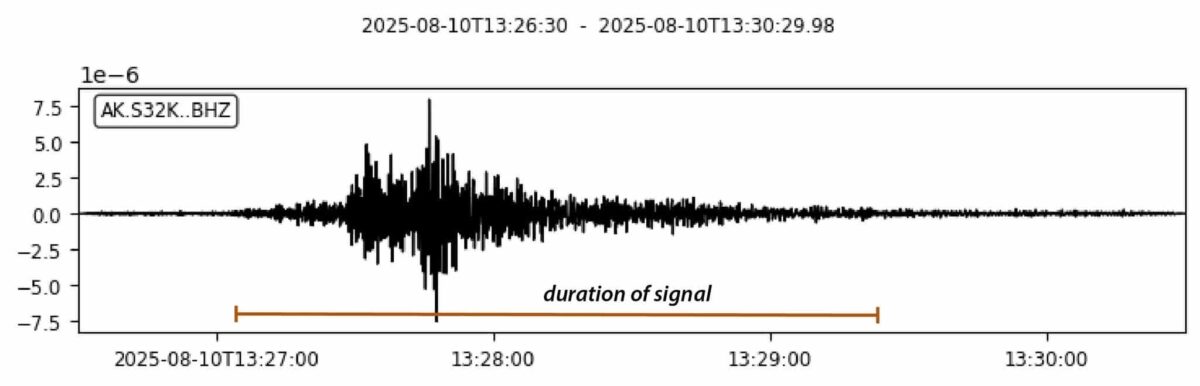
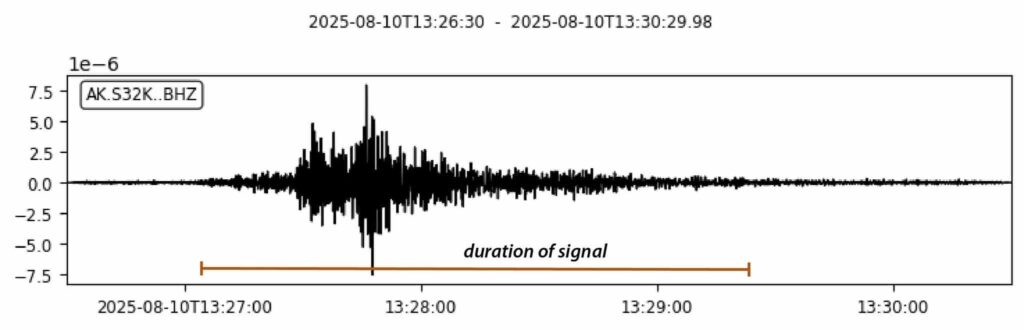
NOTN- A Landslide struck around Endicott Arm, just South of Juneau early Sunday, producing 10 to 15 foot waves according to the Alaska Earthquake Center, they say the waves were observed across the region.
According to the Alaska Earthquake Center the local Tsunami rolled through Endicott Arm just after 5:30 AM following a significant landslide in the region, where several tens of millions of cubic meters of rock struck the water.
NOTN- Suicide Basin has begun overtopping and could release floodwaters within one to six days, officials say.
The City and Borough of Juneau, the Central Council of the Tlingit & Haida, and local weather agencies are monitoring the basin closely and will issue an alert when the release begins.
Residents in potential inundation zones are urged to finish last-minute preparations, confirm evacuation plans, and assemble go-bags.
Forecast data is available at JuneauFlood.com, and residents can sign up for emergency alerts by texting CBJ to 38276.