Categories
Alaska News Featured Juneau News juneau Juneau Local Juneau Local Ketchikan Local News Feeds Sitka Local

City budget Passes, more cuts loom if revenue does not increase next year

City Hall packed with Juneau residents ready to testify on the FY27 budget, courtesy of CBJ

NOTN- The Juneau Assembly held an extensive meeting last night on the FY27 budget, it was also the last opportunity for public testimony.

During the meeting, city leaders moved ahead with a strained city budget that still trims popular services, including reduced funding for the Juneau Douglas City Museum, the closure of Mount Jumbo Gym, reduced funding for Travel Juneau and Jensen Olsen Arboretum.

It does however preserve both pools, the Diamond Park Fieldhouse and the Douglas Fire station.

Early in the evening officials approved a major change to the city’s sales tax code, raising the cap on single-item purchases to $50,000.

The final version also keeps a lower effective cap in place for most vehicle purchases.

“The situation that we find ourselves in is drastic.” Said Finance Chair Christine Woll, “If we pass the budget that we have put forward tonight, we will have passed a balanced budget, but only because we have eliminated all of our savings to do so. And next year we will look at a $7 million deficit that we will have not have savings to fill.”

Woll warned that without new revenue, the city could be forced to consider closing pools, Eaglecrest Ski Area, the city museum and other services next year.

The Assembly also passed separate measures to tax more onboard cruise ship sales, end a $30 online filing credit for businesses, and advanced debate on repealing a sales tax exemption for travel agent commissions, which small tour operators say would amount to double taxation.

Public testimony earlier in the meeting again targeted the planned $9 million demolition of Telephone Hill, with residents urging the Assembly to redirect that money to schools, housing and cultural institutions instead.

“I urge the assembly to take the $9 million that has been earmarked for the demolition and site work of Telephone Hill and diverted into something that the people want and need, that money belongs to the people of Juneau, and we should get a say in how it is used.” Said Joshua Adams.

Before passage of the FY 2027 budget, residents turned out in force to defend the Juneau‑Douglas City Museum.

“At a time when indigenous land acknowledgements are being removed from public places across the country, this assembly chooses to read one at the start of every meeting. By doing so, you honor a vital part of Juneau’s history, but we must ask ourselves, are we just talking the talk, or are we willing to walk the walk? Just as families cherish their history through heirlooms and photos, our community preserves our identity through the Juneau Douglas City Museum.” Said testifier Jean Mcbride.

Residents warned that deep staff cuts would “devastate” programs, erode public trust and jeopardize thousands of volunteer hours and donated artifacts.

“We’ve all been to the City Museum, and we all love the City Museum. Why in the dickens are you cutting half of its operating budget?” One testifier, Chuck Cohen said, “It doesn’t make any sense. It’s a very small percentage of a very large budget, and we have to get rid of the main director of the museum and the person responsible for public participation, that’s public participation by our children and by ourselves. I think you folks are very short-sighted.”

An effort to fully restore museum funding failed.

“I know that it’s not a large amount. I don’t know how much of an impact it will have, but I don’t feel right asking the community to give up so much.” Said Assembly Member Nano Brooks.

Members “begrudgingly” as Woll put it, passed the roughly $545 million budget, but they still did not meet their goal to cut $2 million in costs.

“I don’t want to make this cut. I don’t, I believe everything everyone said about what the impact will be long term for the museum, even if we want to live in a world where we get to bring the City Museum back, the same thing’s going to happen with Travel Juneau and Eaglecrest, they are going to suffer for the cuts that we are, right now, planning on making to them.” Woll said, “Our fund balance right now is one bad sales tax quarter away from having no funds to deal with our expenses, let alone a major natural disaster or other disaster, and we live in an uncertain world, and that’s what our fund balance is for.”

In a separate 5-4 vote, the Assembly also rejected a to shift $360,000 in marine passenger fees away from security and restroom costs at two private cruise docks and into a seawalk expansion project.

Some members argued cruise companies already collect enough in dock fees to cover those services and said residents don’t understand why the city isn’t “getting more benefit from the industry”

The Assembly moved ahead with a lower property tax rate, the long-term capital improvement plan, and several flood and wastewater projects backed by state revolving fund loans.

“This ordinance sets the mill rate at 9.29” Said City Manager Katie Koester.

With flood season approaching, officials are inviting residents to a public flood preparedness open house tonight, as they weigh costly long‑term protections for riverfront neighborhoods.

Representatives from the U.S. Army Corps of Engineers, the City and Borough of Juneau, the National Weather Service and the Central Council of the Tlingit & Haida Indian Tribes of Alaska will meet with residents  at 6 p.m. at Thunder Mountain Middle School to discuss risks and answer questions.

Officials said they are moving ahead on a “midterm solution” while reinforcing existing defenses this year, but warned that conditions and plans continue to shift.

The city expects annual maintenance for temporary Hesco barriers could run $6 million to $12 million, a cost that could drop if sheet piling is installed as a stronger, permanent river reinforcement.

Categories
Alaska News Featured Juneau News juneau Juneau Local Juneau Local Ketchikan Local News Feeds Sitka Local

Alaska gas pipeline developer offers concession, proposes to cap natural gas costs for Alaskans

By: James Brooks, Alaska Beacon

Members of the Senate Finance Committee convene on the first day of a special legislative session on the proposed LNG gas line project on May 27, 2026. (Photo by Corinne Smith/Alaska Beacon)

The firm developing the proposed trans-Alaska natural gas pipeline has proposed limiting the price for natural gas sold through the pipeline to Alaskans. 

If accepted by legislators, the limit would prevent the cost of gas from rising if the pipeline costs more than expected.

The new proposal from pipeline developer Glenfarne comes as the Alaska Legislature continues meeting in a 30-day special session, considering a major tax break to support the AKLNG pipeline project. That project aims to build an 807-mile pipeline to bring natural gas from the North Slope to Cook Inlet for export and in-state use.

A price cap could resolve one sticking point in negotiations over the proposed tax break, but with half of the special session gone, a variety of other issues remain unresolved.

Those include basic elements about the tax break, including its size and length, as well as how municipal governments will be compensated for the impacts of construction, which is expected to bring as many as 12,000 new workers to the state temporarily.

The House Finance Committee is expected to begin voting on possible solutions to those issues next week.

Natural gas is the primary fuel for home heating and electricity in Southcentral Alaska, but  officials estimate that by the end of the decade, local production from gas fields beneath Cook Inlet will be insufficient to meet demand.

Prices are already rising, and several gas-import projects have been proposed. The AKLNG pipeline is another possible solution, but because the pipeline and supporting infrastructure are so large, the project would need to also sell gas overseas in order to offset costs.

If the pipeline is built but no exports take place — something that could happen if the pipeline costs more to build than expected — the Alaska Department of Revenue has estimated that AKLNG gas would be much more expensive than imported gas.

In legislative hearings, that risk has caused some lawmakers to question the project.

Speaking to the Senate Finance Committee on Wednesday, Glenfarne Alaska LNG president Adam Prestidge said the company is on the verge of finalizing a firm, 30-year contract with Enstar, the largest natural gas utility in Southcentral Alaska.

That fixed-price arrangement would guarantee natural gas at no more than $16 per MMBtu, a measurement of heat capacity. 

If the pipeline costs more than expected, cost overruns would not be passed on to consumers, said John Sims, Enstar’s president, when speaking to the House Finance Committee on Monday.

“Enstar’s agreement has a fixed price, and Enstar does not care if the project goes over cost. It does not impact in any way, shape, or form the price that we would be charging customers as a fixed price,” he said.

Rep. Alyse Galvin, I-Anchorage, immediately responded to Sims’ comment.

“A lot of us are very excited to say, yes, I 1,000% support this, because I want to keep low prices,” she said.

Capped price would be cheaper than imported gas

The figure given by Prestidge is equivalent to about $16.59 per thousand cubic feet of natural gas, using a standard conversion. That is cheaper than the forecast price of imports.

Dan Stickel, chief economist for the Alaska Department of Revenue, told legislators in late May that the department’s estimate for the cost of imported gas in 2033 — AKLNG’s planned completion date — “came to about $17 per thousand cubic feet price range.” 

Sims told legislators on Monday that Enstar currently expects a “total, all-in cost between $16-22” per thousand cubic feet for imported gas. 

Enstar’s current cost of gas is $10.80 per thousand cubic feet, but that will rise in coming years as production declines in Cook Inlet. 

The $16 per MMBtu figure is a maximum, Prestidge said. If the pipeline is developed according to plan, exports would subsidize the cost of in-state gas, dropping it as low as $5 per MMBtu, he said.

Glenfarne’s $16 figure could rise with inflation, Prestidge said, but it wouldn’t be affected by cost overruns on building the pipeline.

Prestidge told the Senate Finance Committee that Glenfarne is open to applying a price cap on gas sold to other utilities and industries that might use natural gas.

“Glenfarne is supportive of language being added to any property tax bill that prohibits cost overruns on the project from being borne by either the state or the regulated ratepayers who are buying gas off the pipeline,” he said.

While a final deal between AKLNG and utilities is subject to approval by regulators, a price cap would directly address legislators’ concerns about affordability.

“I think putting that (cap) in a bill would provide a ton of reassurance, because it substantially mitigates your risk in a low-volume scenario,” said Rep. Zack Fields, D-Anchorage.

Sen. Kelly Merrick, R-Eagle River, listened in person to Prestidge on Wednesday.

“I don’t know if $16 is the perfect cap, but it’s addressing a significant concern and protecting Alaska ratepayers,” she said.

Long-awaited pipeline cost estimate met with mixed reaction 

On the same day that Prestidge discussed the price cap, he also disclosed updated cost estimates for the pipeline project, saying the first phase of the project is now expected to cost between $13.2 billion and $16.9 billion. 

Building facilities needed for gas exports would raise the cost to between $44.5 billion and $54.5 billion, Glenfarne estimates.

Legislators have previously criticized a lack of updated cost estimates, saying their absence is hampering their ability to work on a tax break.

Sen. James Kaufman, R-Anchorage, said the new data and the proposed cost cap “was kind of a tipping point” in discussions.

“I think it gives us more information to do our due diligence,” said Sen. Lyman Hoffman, D-Bethel and co-chair of the Senate Finance Committee.

Alaska currently levies a 2% tax on oil and gas property. Cities and boroughs are permitted to claim some or all of that tax on property within their boundaries. 

To incentivize AKLNG investors, Dunleavy proposed replacing the property tax with an “alternative volumetric tax” of 6 cents per thousand cubic feet of gas shipped through the pipeline. The change would effectively result in a 90% tax break, and there would be no tax during construction, because gas isn’t yet being shipped. 

The impact of the switch would be heaviest on municipalities. They would have to deal with the consequences caused by having thousands of extra people living nearby, but they would have little (or no) new tax revenue to cover the resulting costs.

The North Slope Borough funds most of its services through the petroleum property tax and has opposed Dunleavy’s proposed change.

Rep. Robyn Niayuq Frier, D-Utqiagvik, represents the North Slope. She has deep concerns about the switch to a volume-based tax and thinks Glenfarne’s new cost estimates are still too low. 

“I think there are a lot of people who are having these conversations who think that there’s no way this is actually going to happen, that this is a pipe dream,” she said of the pipeline project.

The House and Senate Finance committees are considering whether to set the natural gas tax at something like 40 cents per thousand cubic feet — or higher — and how long the switch from a property tax to a volumetric tax should last. 

That would reduce the size of the break that Dunleavy requested and increase the amount the state and boroughs would collect in revenue.

Dunleavy has suggested that the new tax should last the life of the project. Other legislators, including Frier and Sen. Bert Stedman, R-Sitka, are suggesting shorter terms. 

Lawmakers are also debating the size of a proposed “impact fund” that Glenfarne would provide to cover the costs that cities and boroughs would incur as thousands of workers gather to build the pipeline.

Legislators also haven’t decided what communities would be eligible for the fund or how the money would be distributed.

The House Finance Committee is scheduled to begin debating the unresolved issues on Monday and could advance a bill to the House floor as soon as the second half of next week. 

The Senate could take up that measure on the week of the 15th, but with the special session ending on June 19, there’s a real risk that legislators will run out of time before they decide the multibillion-dollar issues at stake.

“We have to find a product that meets the polar opposite forces that are out there,” said Speaker of the House Bryce Edgmon, I-Dillingham.

“The needle’s not been threaded yet, and if we don’t get the needle threaded … I think ultimately, then the 30 day special session is — I don’t know what’s going to happen. I just, quite frankly, don’t know.”

Categories
Alaska News Featured Juneau News juneau Juneau Local Juneau Local Ketchikan Local News Feeds Sitka Local

23rd Celebration officially begins with joyful opening ceremony

NOTN- One of Alaska’s largest cultural gatherings is officially underway this evening as Celebration 2026 opens in Juneau.

Organized by Sealaska Heritage Institute, this event brings together more than 1,800 dancers from 34 dance groups and is one of the largest gatherings of Tlingit, Haida and Tsimshian peoples in the world.

This year’s theme is “Enduring Strength,” honoring the resilience and cultural survival of Indigenous peoples throughout Southeast Alaska.

The Grand Entrance took place 5 p.m. downtown, kicking off four days of traditional dance, art exhibits, Native foods, cultural demonstrations and community events.

Celebration continues through Saturday with a final parade, and will be broadcast statewide with KTOO public Television, and streamed live online by SHI. So even if you can’t be here for Celebration, you can still participate in the event.

Photo Capture from Sealaska’s Youtube livestream

Celebration began in 1982 and remains a powerful expression of culture, heritage and community.

Categories
Alaska News Featured Juneau News juneau Juneau Local Juneau Local Ketchikan Local News Feeds Sitka Local

Lawmakers press for details on Governor’s tax cut plan for pipeline project

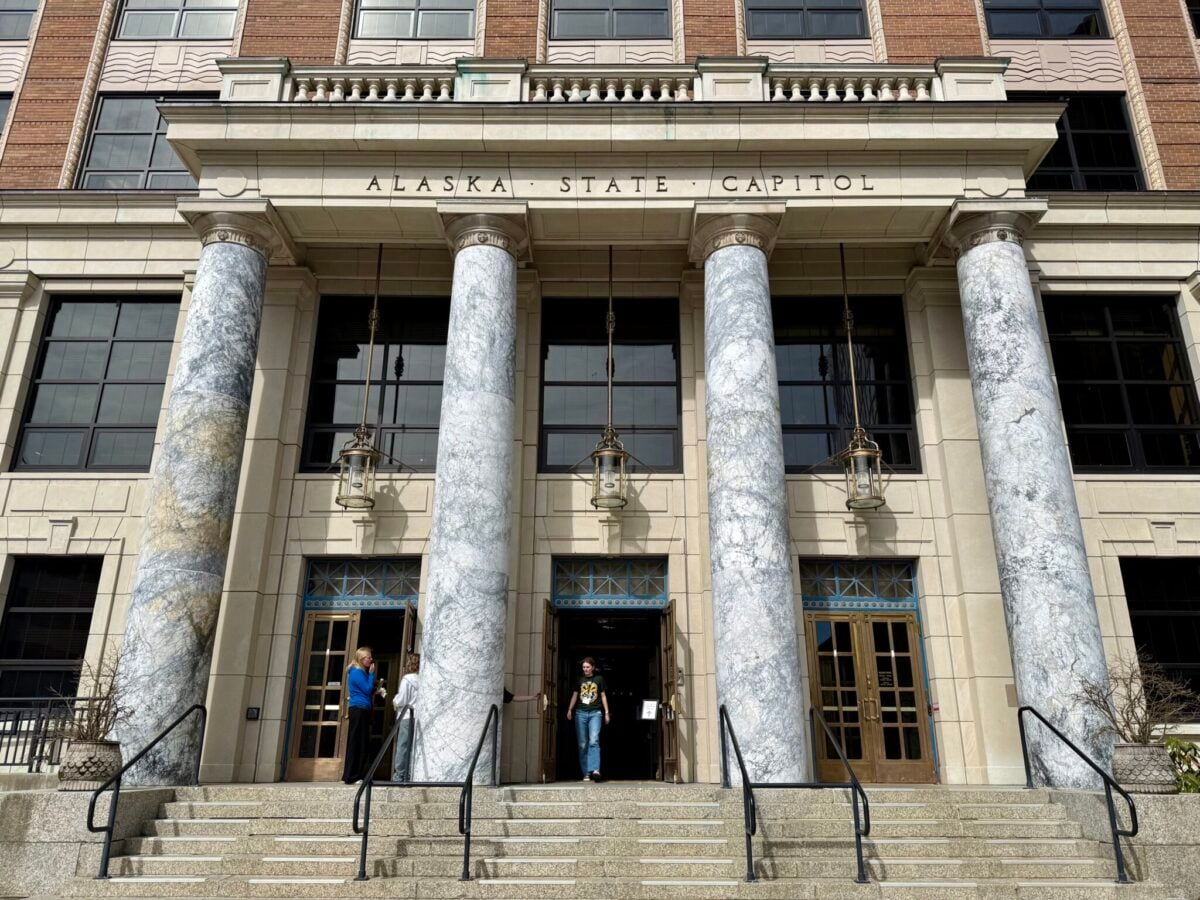
The Alaska State Capitol in downtown Juneau. (Photo by Greg Knight/News of the North)
The Alaska State Capitol in downtown Juneau.
(Photo by Greg Knight/News of the North)

NOTN- Alaska lawmakers are in a 30-day special session to weigh a sweeping tax break for the proposed North Slope natural gas pipeline.

Juneau Sen. Jesse Kiehl, said the governor’s bill would shift the project away from the current 20-mill petroleum property tax structure and toward a volume-based tax on gas flowing through the line. He said the proposal amounts to roughly a 90% tax cut that would last as long as the pipeline operates.

“That’s one of the things we’re working on.” He said, “The governor’s proposal is about a 90% tax cut, and the governor’s proposal lasts as long as the pipeline lasts. They will not need that, right? They will not need that, past, heaven knows, past year 20 when you got almost all your debt paid off.”

Kiehl said some early tax relief is reasonable for a multibillion-dollar project that will not generate revenue immediately, but he questioned the size and duration of the proposed break.

“During the regular session, we couldn’t seem to get as many numbers, real numbers, as we needed, so we’re working on that.” He said, “A big gas line could be a huge project for the state, big for the state’s economy, a lot of jobs when it gets built. The other thing we have to make sure of is that we also protect the treasury, because the risk with these things is cost overruns, right? The oil pipeline cost could be more than double what they planned on.”

Lawmakers are seeking more complete data from project backers to determine how large a tax incentive is necessary and how long it should last.

While the gas line would not deliver gas to Southeast Alaska, Kiehl said the region’s benefit would come from new state revenues that fund public services, including schools and state troopers.

“The benefit we get from Alaska gas going to market is some money in the treasury to pay for public services, all the things we need. So, we’ve got to make sure that we watch those risks.” He said.

Kiehl also added that if the state grants a substantial property tax break, it will also need to ensure money flows to local governments along the route, such as Anchorage, Kenai and Fairbanks. Those communities would face increased demand for schools, law enforcement, road work and other services during construction.

The governor’s bill was introduced midway through the regular session and has already been vetted by House and Senate resources committees. The measure is now before the finance committees, which Kiehl said will use the full 30 day special session to scrutinize the fiscal impacts and negotiate possible changes.

If project backers do not provide the information lawmakers are seeking, he said, the Legislature could choose to “cut our losses and expenses and gavel out,” ending the special session without approving the package.

Categories
Alaska News Featured Juneau News juneau Juneau Local Juneau Local Ketchikan Local News Feeds Sitka Local

Former Alaska Gov. Bill Walker files for possible run in 2026 governor’s race

By: James Brooks, Alaska Beacon

 Former Gov. Bill Walker and his wife Donna wave campaign signs on Aug. 15, 2022, at the intersection of Northern Lights Boulevard and the Seward Highway in Anchorage. Walker is a fan of the state’s new ranked-choice system. (Photo by Yereth Rosen/Alaska Beacon)

Former Alaska Gov. Bill Walker said Thursday that he is considering whether to formally file as a candidate for governor on Monday, the deadline to enter the 2026 race.

Walker and former Department of Revenue Commissioner Randy Hoffbeck filed letters of intent with the Alaska Public Offices Commission on Thursday, a necessary step before officially registering as candidates with the Alaska Division of Elections.

Both would run as independents if they decide to register, Walker said.

“We’ll meet a few times more over the weekend,” Hoffbeck said. “We both feel very strongly that we need to raise the level of discussion on a (state) fiscal plan and the gasline, but our consideration is: Can we move the needle? Is this the best use of our time and resources?”

The deadline to file as a candidate in this year’s statewide elections is 5 p.m. Monday. If Walker formally becomes a candidate, he would be the 19th in this year’s race.

Walker, elected as an independent in 2014, served four years in office. When he ran for re-election, a scandal involving then-lieutenant Gov. Byron Mallott caused Mallott to resign less than a month before Election Day 2018. Walker suspended his re-election campaign, and Republican Mike Dunleavy went on to be elected, defeating Democratic candidate Mark Begich in the process.

Walker ran for re-election in 2022 against Dunleavy and Democratic candidate Les Gara. Dunleavy won that race but is term-limited and cannot run again. That’s led to a wide field of options for the 2026 election.

“There’s a flavor for everybody, no question about that,” Walker said.

During his term in office, Alaska experienced a sharp drop in oil prices that led to a fiscal crisis. Walker slashed the state’s budget and vetoed a portion of the 2015 Permanent Fund dividend, becoming the first governor in state history to do so.

Since then, successive editions of the state Legislature have set the annual dividend amount themselves, rather than using a formula.

During Walker’s term, he proposed a comprehensive state fiscal plan that would have shifted Alaska away from a reliance on oil revenue, but lawmakers failed to adopt it. 

In his final year, legislators approved one aspect, an annual transfer from the Alaska Permanent Fund to the state treasury. That transfer is now the No. 1 source of general-purpose revenue for the state, used for dividends and services alike.

By phone on Thursday, Walker said he was concerned about a state fiscal plan in 2014, and he still is.

“They got some of it passed but not enough of it,” he said, referring to the proposal he made while in office, “and so we need a fiscal plan. I haven’t heard a lot of discussion on the campaign trail from (other candidates) about what they’d do on the fiscal side, and — well, I’m not a very good spectator when there’s work to be done.”

Hoffbeck, who would serve as Walker’s lieutenant governor, was his revenue commissioner from 2014 through 2017, when he resigned to become an interim minister, working at churches whose ministers had recently departed.

“It won’t be an easy job, but you know, we can sit back on the sideline and just complain, or we can get involved and actually try and do something, and I think that’s kind of where Bill and I are at,” Hoffbeck said. “I like being retired, I like what I’m doing right now, but I’m also frustrated with what I’m hearing and seeing, and so, I guess at some point in time you’ve got to stop talking and do something.”

In addition to the surprise possible return of Bill Walker, the last days before the candidate filing deadline have brought a flurry of lieutenant governor candidate announcements.

Democratic candidate Tom Begich announced former U.S. Department of Agriculture official Julia Hnilicka as his running mate on Wednesday, while Republican candidate Adam Crum declared former healthcare CEO Robert Craig as his choice for lieutenant governor on Thursday morning.

Hours after that, Democratic candidate Matt Claman said Sarah Skeel, former chief administrative officer of Providence Alaska Medical Center, would be his lieutenant governor pick. Independent candidate Meda DeWitt has scheduled an announcement event on Saturday.

If a gubernatorial candidate does not have a registered lieutenant governor candidate by 5 p.m. Monday, they are ineligible to run. 

Registered candidates have until June 27 to drop out. If a candidate for governor withdraws, the lieutenant governor candidate may take their spot and pick a new lieutenant governor. A lieutenant governor candidate who withdraws may be replaced with another.

Candidates for Governor

  • Former state Sen. Tom Begich (Democratic) with Lt. Gov. candidate Julia Hnilicka (Democratic)
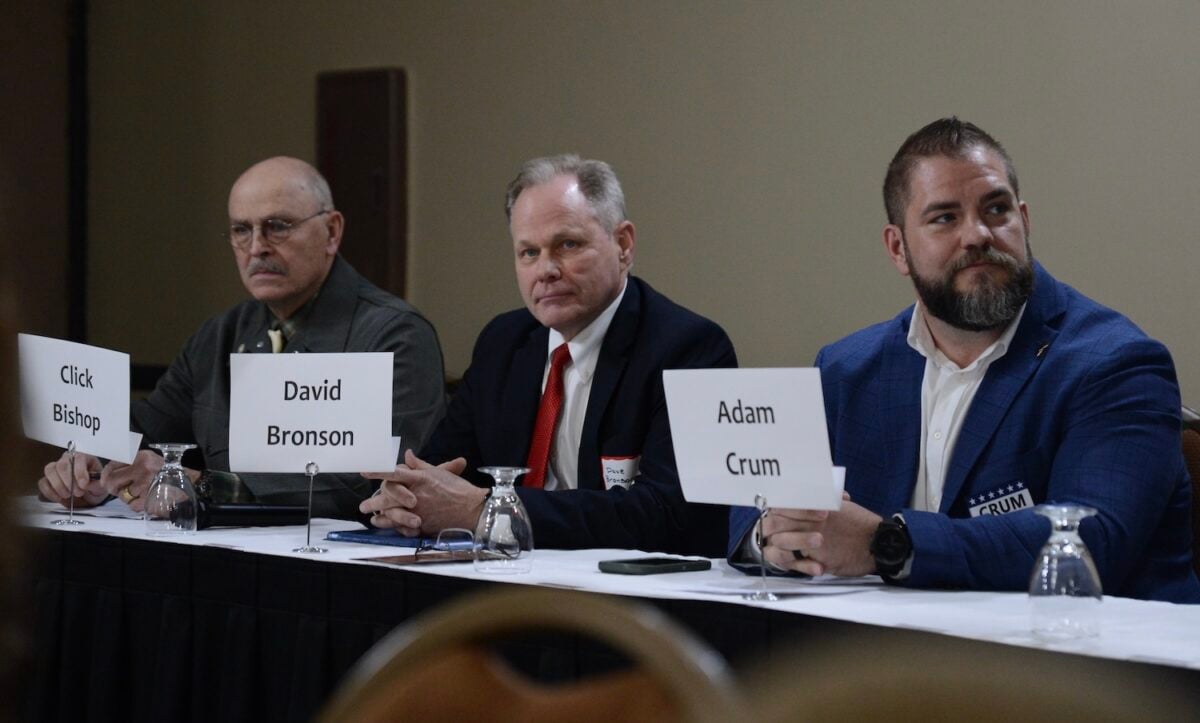
  • Former state Sen. Click Bishop (Republican) with Lt. Gov. candidate Greta Schuerch (independent)
  • Former Bristol Bay Borough manager Gregg Brelsford (independent)
  • Former Anchorage Mayor Dave Bronson (Republican) and Lt. Gov. candidate Josh Church (Republican)
  • Former state revenue commissioner Adam Crum (Republican) and Lt. Gov. candidate Robert Craig (Republican)
  • Current state Sen. Matt Claman (Democratic) and Lt. Gov. candidate Sarah Skeel (Democratic)
  • Lt. Gov. Nancy Dahlstrom (Republican)
  • Matanuska-Susitna Borough Mayor Edna DeVries (Republican)
  • Organizer Meda DeWitt (independent)
  • Kasilof resident Jessica Faircloth (independent)
  • Anchorage podiatrist and state medical board member Matt Heilala (Republican)
  • Former state Sen. Shelley Hughes (Republican) with Lt. Gov. candidate Blake Gettys
  • Former state Rep. Jonathan Kreiss-Tomkins (Democratic)
  • Author Hank Kroll (Registered Republican) with Lt. Gov. candidate Tommy Nicholson (Undeclared)
  • Angoon resident and former teacher James William Parkin IV (Republican) with Lt. Gov. candidate Ramadhani Greer (Democratic)
  • Former Attorney General Treg Taylor (Republican)
  • Palmer resident Bruce Walden (Republican)
  • Former Gov. Bill Walker (independent) with Randy Hoffbeck (independent)
  • Businesswoman Bernadette Wilson (Republican) with Lt. Gov. candidate Mike Shower (Republican)

Categories
Alaska News Featured Juneau News juneau Juneau Local Juneau Local Ketchikan Local News Feeds Sitka Local

Conditions of 4 climbers who fell on Mount McKinley unknown as rescuers try to reach them

FILE – North America’s tallest peak, on Aug. 12, 2025, in Denali National Park and Preserve, Alaska. (AP Photo/Becky Bohrer,File)

AP- Rescuers are trying to reach four climbers who fell on Alaska’s Mount McKinley, North America’s tallest peak, the National Park Service said Thursday.

The climbers’ conditions weren’t immediately known following the fall, which was reported to Denali National Park and Preserve rangers overnight, and rangers were seeking a weather window to allow them to reach the area by helicopter, a statement from the agency said. The four climbers were part of a seven-person team.

The three others climbing attended to those who fell, and then returned to camp, the statement says. The fall occurred near Denali Pass, at about 18,200 feet (5,547 meters). The climbers returned to an area known as high camp around 17,000 feet (5,181 meters), the statement says. McKinley stands at about 20,310 feet (6,190 meters).

Park officials have been in contact with the three climbers, said Scott Carr, a park service spokesperson. He said additional information would be released “if and when it becomes appropriate.”

Over the years, many climbing injuries and deaths have occurred on the traverse between the high camp and Denali Pass, mainly resulting from unprotected falls, according to the park.

Park rangers and mountain guides install and maintain snow pickets — which are used to help build anchors for extra protection on areas like steep slopes — between the high camp and Denali Pass, the park says. Climbers are urged to have their own pickets in case the protection placed by rangers and guides is missing.

Weather conditions didn’t improve the way rescuers had hoped. Carr said late Thursday that conditions throughout the day had been variable, with low cloud ceilings and limited visibility, and that authorities were still awaiting an opportunity to safely fly.

“Helicopter operations will start when a weather window opens up,” he said.

A typical climbing season for Mount McKinley begins in late April and continues into mid-July, according to the park. There were 516 climbers on the mountain as of Thursday, Carr said by email.

On Wednesday, two climbers as part of a separate incident were evacuated from the mountain by helicopter around 11 p.m., but the park service said it did not have additional information to share.

Categories
Alaska News Featured Juneau News juneau Juneau Local Juneau Local Ketchikan Local News Feeds Sitka Local

Appeals court says Alaska has the right to make ConocoPhillips oil well data public

By: Yereth Rosen, Alaska Beacon

Late-afternoon sunlight bathes the ConocoPhillips building in downtown Anchorage on March 10, 2026. A legal dispute over confidentiality of data from exploratory wells drilled by ConocoPhillips in the National Petroleum Reserve in Alaska came down to interpretations of the federal Naval Petroleum Reserves Production Act. The Alaska Oil and Gas Conservation Commission is seeking to release the information publicly, and an appeals court ruled in the state’s favor. (Photo by Yereth Rosen/Alaska Beacon)

The state of Alaska has the right to make public data from exploration wells drilled by ConocoPhillips in the National Petroleum Reserve in Alaska, an appeals court has ruled.

The 9th Circuit Court of Appeals ruling, issued Wednesday, overturns a 2023 decision by U.S. District Court Judge Sharon Gleason that allowed well data to remain under wraps.

At issue is a collection of wells drilled in the reserve, which is federal territory. ConocoPhillips argued that data confidentiality is explicitly guaranteed in federal law and that federal law supersedes state law, but the appeals justices disagreed.

On the National Petroleum Reserve, “Alaska has its own authority to gather — and disclose — data collected from oil and gas exploration, authority that it exercised even before Congress opened the Reserve to private exploration,” the appeals court ruling said.

The Indiana-sized National Petroleum Reserve is of keen interest to energy companies. It is underlain by a formation called the Nanushuk, the source of oil for ConocoPhillips’ huge Willow project, which is under development, the Santos-operated Pikka project, which recently started production, and other prospects. A lease sale held in the reserve in March, the first since 2019, drew a record $163 million in high bids.

Under state law, data from exploratory oil and gas wells is to be disclosed publicly after those wells are completed. State law provides for a 24-month period of confidentiality, after which the AOGCC is to make the data publicly available, unless the Department of Natural Resources commissioner grants an exemption to keep the information confidential for a longer period.

After ConocoPhillips’ request for a DNR exemption was denied, the company in 2022 sued the Alaska Oil and Gas Conservation Commission to keep the data confidential.

ConocoPhillips argued that the federal Naval Petroleum Reserves Production Act expressly prevents the AOGCC and Gas Conservation Commission from disclosing data from the wells, which were drilled on federal leases.

Gleason’s March 8, 2023, ruling came to a slightly different conclusion that nonetheless backed ConocoPhillips. She found that the federal law implicitly protects data confidentiality, despite state law.

The appeals court judges agreed that the federal law has no explicit restriction on state release of well data, but they drew a different conclusion from that finding than Gleason did.

For the state, the appeals court ruling is a victory that is good for future development, Acting Attorney General Cori Mills said in a statement.

“Alaska relies heavily on our resources and resource development. We are also stewards of those resources for the citizens of Alaska. Alaska’s law both allows resource development now, and encourages further development and exploration in the future. We’re pleased that the Ninth Circuit recognized that federal law has not overridden Alaska’s balanced approach,” Mills said.

ConocoPhillips is still considering its next steps, a company spokesperson said. “ConocoPhillips Alaska, Inc. has received the court’s decision and is evaluating it. ConocoPhillips Alaska, Inc. has not decided on whether to appeal the decision,” company spokesperson Megan Olson said by email.

The well data that is the subject of the case remains confidential, according to court documents. Confidentiality has been maintained all the time that the court case has been active.

Categories
Alaska News Featured Juneau News juneau Juneau Local Juneau Local Ketchikan Local News Feeds Sitka Local

Alaska Legislature approves civics education requirement for all Alaska high schoolers

By: Corinne Smith, Alaska Beacon

 Speaker of the House Bryce Edgmon, I-Dillingham, presides over the Alaska House of Representatives on Monday, May 18, 2026. (James Brooks photo/Alaska Beacon)

Civics education would be included among graduation requirements for all Alaska high schoolers, under a bill passed by the Alaska Legislature in the final hours of the legislative session last week. 

The new requirement aims to bolster Alaska students’ knowledge and understanding of the U.S. government and civic responsibilities. It comes amid declining public trust in government, the bill’s sponsor, Senate President Gary Stevens, R-Kodiak, told the Alaska Beacon last month.

Senate President Gary Stevens, R-Kodiak, is seen ahead of a vote on the operating budget on May 7, 2026. (Photo by Corinne Smith/Alaska Beacon)

Students would have three options to choose from to complete the requirement: complete and pass a semester of civics curriculum, pass a civics exam or complete a civics project-based assessment.

Lawmakers passed Senate Bill 23 by a combined vote of 57 to 3. The bill now goes before Gov. Mike Dunleavy to sign, veto or allow it to pass into law without his signature. 

Under the proposal, school districts would be able to develop civics curriculums based on open-access, no cost resources provided by the Alaska Department of Education and Early Development across 14 areas of government and public affairs:

  • the founding history of the United States, including foundational documents and the principles of government of the United States; federalism, including the role and operations of local, state and national governments;                                                                                             
  • the institutions of the United States government, including the responsibilities of the executive, legislative and judicial branches;                                            
  • the rights and responsibilities of United States citizenship;                                      
  • civil liberties and civil rights;                                                                  
  • the Constitution of the State of Alaska and the Constitution of the United States;                                                                                                    
  • political parties and interest groups;                                                             
  • campaigns and elections;                                                                           
  • the United States Congress;                                                                        
  • domestic policy;                                                                                  
  • foreign policy;                                                                                  
  • comparative systems of governments used globally and by Alaska Native people;                                                                                                          
  • international relations; and                                                                      
  • major issues facing local, state and the United States governments.

The initiative comes at a time when the United States is seeing a growing public distrust in government and deepening political polarization. A survey last year by the non-partisan Pew Research Center found public distrust is at one of its lowest points in the nation’s history, with just 17% of respondents saying they trust the federal government to “do what is right.” 

Stevens declined to comment on the bill passing the Legislature when asked at the Capitol on Wednesday. He said he would wait to comment after the governor’s decision on the bill. Lawmakers have passed 114 bills in this two-year legislative term. But Dunleavy has vetoed 12 bills so far and will consider dozens more in the next few weeks. 

Lawmakers are in a high-stakes 30-day special session called by Dunleavy to discuss potential state property tax relief for  the proposed Alaska LNG gas line project. The special session is expected to go to June 21.

Categories
Alaska News Featured Juneau News juneau Juneau Local Juneau Local Ketchikan Local News Feeds Sitka Local

Special session on Gov. gasline bill takes place in both Anchorage and Juneau

Alaska Gov. Mike Dunleavy speaks during a news conference on Friday, March 15, 2024. (Photo by James Brooks/Alaska Beacon)

NOTN- Alaska lawmakers will continue holding hearings this week during a 30 day special session on Senate Bill 2001, and separately House Bill 381, the governor-backed gas pipeline tax proposal tied to the proposed Alaska LNG project.

The Alaska State Senate Finance Committee is scheduled to meet today, Thursday and Friday at 9 a.m. in Juneau to hear presentations and discussion on the bill.

Today and Thursday’s hearings will include presentations from consulting firm GaffneyCline. Friday’s meeting is also focused on continued review of the legislation.

The House met yesterday, and will continue work this week in Anchorage.

Governor Mike Dunleavy called the special session after lawmakers failed to pass a gasline bill during the regular session, lawmakers received the governor’s proposal on day 80 of 120.

The governor is pushing for larger tax breaks and incentives for the project’s developers.

According to reporting from the Alaska Beacon following an Energy Conference in Anchorage, state and local governments would eliminate 90% of the property tax that would be levied on gasline-related infrastructure in exchange for future opportunities to tax natural gas as it moves through the yet-to-be-built system.

Though legislators are currently sitting on both sides of the fence, some argue the proposal would reduce future revenue for both the state and local governments along the pipeline route.


Categories
Alaska News Featured Juneau News juneau Juneau Local Juneau Local Ketchikan Local News Feeds Sitka Local

Airport security fast-lane system known as CLEAR could be coming to Alaska

By James Brooks, Alaska Beacon

Sen. Scott Kawasaki, D-Fairbanks, speaks Friday, Feb. 7, 2025, on the floor of the Alaska Senate. (Photo by James Brooks/Alaska Beacon)

The Alaska Legislature has approved a state driver’s license data-sharing bill that would allow some travelers to speed through security at airports in Alaska.

On Wednesday, the Alaska Senate voted unanimously to approve Senate Bill 237, from Sen. Scott Kawasaki, D-Fairbanks. Because the House voted to pass the bill 40-0 on Tuesday, the Senate’s vote sends the bill to Gov. Mike Dunleavy for final approval or veto.

As originally drafted by Kawasaki, SB 237 would have only allowed the state Division of Motor Vehicles to share driver’s license information with “a nonprofit organization, governmental, or tribal entity.”

That would allow Alaskans to apply for a replacement Social Security card over the internet. Currently, someone who needs a replacement must visit an office in Juneau, Anchorage or Fairbanks in person. 

Alaska is the only state that does not allow residents to get a replacement card online.

In the House, Rep. Steve St. Clair, R-Wasilla, proposed an amendment that would allow the state to share driver’s license data with “an entity participating in the Transportation Security Administration’s Registered Traveler Programs.”

That includes CLEAR, a for-profit company that offers fast-lane service at airport security checkpoints across the country.

“There’s actually a contract between CLEAR and the (Anchorage) airport right now, they just can’t do anything or share data until we pass legislation saying that they can,” St. Clair said. 

House lawmakers approved that amendment unanimously.

At the urging of Rep. Andrew Gray, D-Anchorage, lawmakers also amended the bill with a section that will allow Alaskans to store digital copies of their driver’s licenses on their smartphones. 

If a police officer performs a traffic stop, that digital copy would be valid ID.

That amendment was originally a separate bill, House Bill 180, from the Office of the Governor. 

“For anyone who lives their life on their phone, this would be a wonderful convenience that the administration would like to offer,” Gray said.

That amendment passed the House by a 38-2 vote, and SB 237 proceeded toward a final vote in the Legislature without opposition.