Categories
Alaska News Featured Juneau News juneau Juneau Local Juneau Local Ketchikan Local News Feeds Sitka Local

Alaska natural gas pipeline dreams stretch over half a century

By: Yereth Rosen, Alaska Beacon

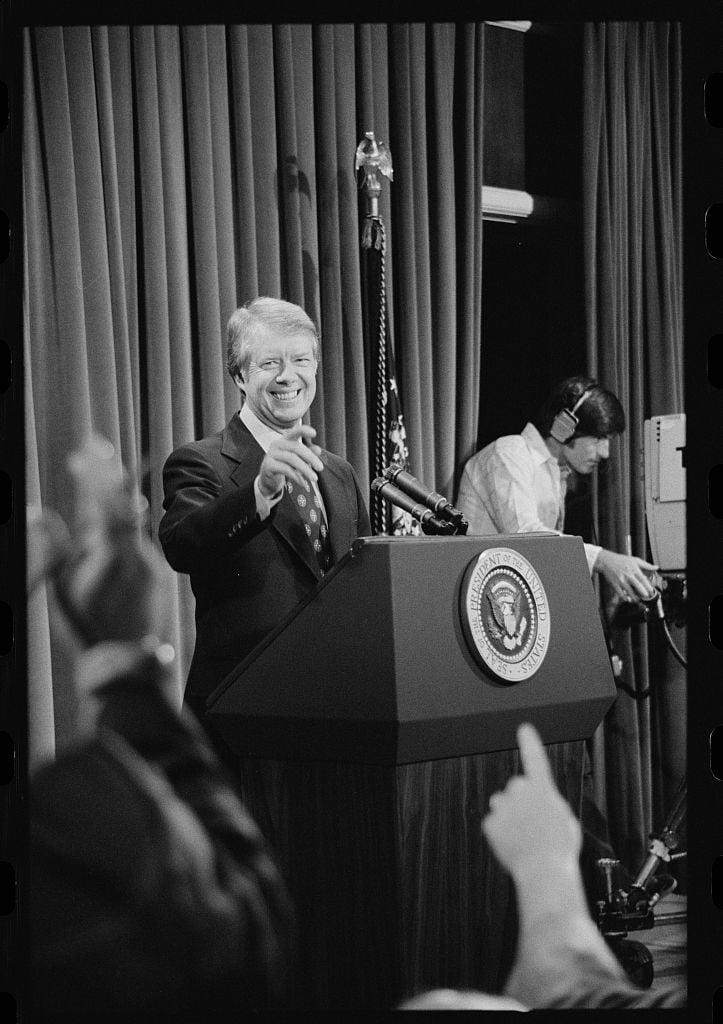
President Jimmy Carter takes questions at a press conference on June 30, 1977. (Photo by Marion Trikosko/Provided by the Libarary of Congress)

The president of the United States urged lawmakers to do everything they can to make the long-desired Alaska natural gas pipeline a reality.

“It is in the national interest to bring Alaskan gas reserves to market at the lowest possible price for consumers,” the president said in an official message. “Every effort must be made to ensure timely completion of the pipeline at the lowest possible cost consistent with Federal regulatory policies.”

The president was Jimmy Carter. The year was 1979. The Alaska natural gas pipeline project was already several years old, with official presidential approval issued two years earlier. The 4,748-mile pipeline project, which Carter touted as “the largest privately financed energy project ever undertaken,” was to be completed by 1984 at a cost of $10 billion to $15 billion, according to the approved plans.

That project never happened, nor did any of the other iterations of an Alaska natural gas pipeline plan that followed.

Now, five decades later, Gov. Mike Dunleavy is describing an alternate version of the yet-unbuilt pipeline as an imminent megaproject.

“For decades and decades and decades, this gasline project has been a dream of many Alaskans. And we’re closer today than we ever have been,” he said in comments posted on Facebook on May 29.

As Carter did, Dunleavy uses superlatives to describe the plan. “That project will be the largest on the face of the earth, probably the largest in terms of investment ever,” he said in opening remarks on May 19 at the Alaska Sustainable Energy Conference in Anchorage.

Dunleavy has called the legislature into a special session to consider sweeping tax concessions that he says are necessary to make the project work economically. His plan, which the legislature is considering, would eliminate nearly all of its state and municipal property taxes on project-related infrastructure in exchange for the promise of a share of the revenues once gas starts flowing through the line.

The current project sponsor is Glenfarne LLC, a New York- and Houston-based company founded in 2011. Glenfarne, a privately held investment and management company specializing in energy, entered the Alaska gas pipeline history last year when it acquired 75% of a project promoted by the state-owned and state-financed Alaska Gasline Development Corp. It has never built or operated a major natural gas pipeline or LNG facility.

Glenfarne says the project would cost between $44.5 billion and $54.5 billion.

Decades of proposals

The Glenfarne plan, for a phased-in pipeline to carry natural gas from the North Slope to a liquefaction plant in Cook Inlet, is the latest in a long series of pipeline plans and campaigns that emerged over the past half century.

The oil fields on Alaska’s North Slope that have been producing since 1977 also hold vast quantities of natural gas, as is common in petroleum basins. Known natural gas reserves on the North Slope, mostly at Prudhoe, total about 35 trillion cubic feet, and experts say there is certainly more natural gas to be discovered.

So far that gas has been considered “stranded” — too isolated to be marketable. Instead of being sold to utilities or other users, the gas that is brought to the surface with oil produced on the North Slope is reinjected into the reservoirs, where it helps build pressure that will enable more oil recovery. Each day, about 8 billion cubic feet of natural gas has to be reinjected, an amount equivalent to the daily natural gas consumption in Japan in 2024.

A map shows various Alaska natural gas pipeline routes proposed as of 2011. (Map from the Congressional Research Service publication, "The Alaska Natural Gas Pipeline: Background, Status, and Issues for Congress," by Paul W. Parfomak, Specialist in Energy and Infrastructure Policy,June 9, 2011)
A map shows various Alaska natural gas pipeline routes proposed as of 2011. (Map from the Congressional Research Service publication, “The Alaska Natural Gas Pipeline: Background, Status, and Issues for Congress,” by Paul W. Parfomak, Specialist in Energy and Infrastructure Policy, June 9, 2011)

The prospect of selling that gas tantalized Alaskans and the energy industry and inspired a wide range of proposals that have come and gone over the past decades.

Some proposals were for overland pipelines through Canada, as the Carter-approved plan proposed. The main alternatives to the Canada route have been plans for an “all-Alaskan” line taking gas from Prudhoe to Valdez, the site of the trans-Alaska oil pipeline marine terminal, or to Cook Inlet for processing into liquefied natural gas to be transported by tanker vessel. Other plans proposed shorter lines delivering to in-state markets and an over-the-top route that would skim the Arctic coast before connecting with a Mackenzie Delta pipeline in the Northwest and Yukon Territories — a Canadian project that, like Alaska gasline, never materialized.

There have been plans for projects that would skip the pipeline construction altogether. In the early 2000s, BP experimented with a gas-to-liquids technology that might produce synthetic oil that could be shipped down the existing trans-Alaska pipeline. BP set up a facility in Nikiski for the project but closed it in 2009. Two pending proposals, one from a company called Qilak and another from a company called Polar LNG, call for natural gas deliveries directly from the North Slope by icebreaker. Even those are not new; the icebreaker idea was considered in the 1980s by Arco Alaska.

Gas pipeline records filing shelves in the Alaska Resources Library and Information Services, seen on June 8, 2026, inlude the multi-volume draft environmental impact statement and final environmental impact statement on the Alaska Stand Alone Gas Pipeline, known as ASAP. (Photo by Yereth Rosen/Alaska Beacon)

Also dating back to the mid-20th century are various task forces, commissions, coordinating offices, approved state and federal legislation, enthusiastic support from presidents, completed environmental impact statements and completed permits. There were various tentative agreements with oil producers, major corporations and Asian governments for participation the project. There were numerous special sessions of the Alaska Legislature — and, at the urging of project sponsors, financial inducements assembled by the state and federal governments.

list of projects that surfaced through 2021 is available from the Alaska State Library, though it comes with a caveat: “It does not purport to be complete.”

Not one foot of gas pipeline has been laid, but plenty of space is taken up on Alaska library shelves by rows and rows of studies and reports produced since the 1970s.

Records from 1975 Federal Power Commission proceedings on the porposed El Paso Alaska Company natural gas pipeline project fill several shelves in the Alaska Resources Library nad Information Services at the University of Alaska Anchorage campus. Even before the trans-Alaska oil pipeline was completed, El Paso was seeking to build a parallel pipeline to carry North Slope natural gas to a liquefaction facility at tidewater. President Jimmy Carter chose an overland pipeline plan to run through Canada instead of El Paso's LNG project. (Photo by Yereth Rosen/Alaska Beacon)
Records from 1975 Federal Power Commission proceedings on the porposed El Paso Alaska Company natural gas pipeline project fill several shelves in the Alaska Resources Library nad Information Services at the University of Alaska Anchorage campus. Even before the trans-Alaska oil pipeline was completed, El Paso was seeking to build a parallel pipeline to carry North Slope natural gas to a liquefaction facility at tidewater. President Jimmy Carter chose an overland pipeline plan to run through Canada instead of El Paso’s LNG project. (Photo by Yereth Rosen/Alaska Beacon)

Dunleavy insists that the Glenfarne project is different, though he conceded in a May 21 presentation that “people have heard about this project forever.”

In a presentation at the Sustainable Energy Conference in AnchorageDunelavy cited numerous factors that he said made the current plan different from past failed plans.

He listed energy disruptions caused by the war in Iran and Russia’s invasion of Ukraine, the rise of technologies that have dramatically increased the need for energy, the impending shortage of Cook Inlet natural gas that has long fueled Southcentral Alaska, the permits that the Alaska Gasline Development Authority already secured — plus the ardent support of President Donald Trump, who has pushed for aggressive resource development in Alaska since he returned to the White House in January of 2025.

“When you get all the geopolitical stuff that’s changed the world and then you get Trump 2.0 in here and data farms and cryptocurrency and electrification, it’s a different project,” Dunleavy said at the conference.

But Larry Persily, a veteran Alaska journalist and past head of the federal gas pipeline coordinating office that was originally established by President George W. Bush in 2004, sees a lot of wishful thinking surrounding the Glenfarne plan.

“We want to think it’s different. We want the pipeline. We want the revenues. We want the jobs. And we want the promise of affordable energy,” Persily said.

He cited ongoing “pep rallies” to help convince people that things are different this time, like the June 2 event hosted by the Greater Fairbanks Chamber of Commerce.

“We have a sales job, and it’s ginned up a lot of enthusiasm — misplaced, I believe,” he said.

Past optimism

A folding map that was part of a Yukon Pacific promotional flier shows the planned route for a pipeline from Prudhoe Bay to Valdez, where natural gas was to be liquefied. The map was published in the 1990s. (Photo by Yereth Rosen/Alaska Beacon)

Of the past plans, Persily said, the most similar to Glenfarne’s proposal was the Yukon Pacific plan for a LNG project, which emerged in the 1980s.

Yukon Pacific’s Trans-Alaska Gas System, also referred to as TAGS, envisioned a gas pipeline paralleling the trans-Alaska oil pipeline to a liquefaction plant in Valdez, from where tanker vessels would take LNG to Asian markets. The estimated price tag was $12 billion.

The Yukon Pacific plan was vetted through two environmental impact statements, one for the pipeline and one for the terminal. The company had permits in hand, including long-term federal and state right of way authorizations.

It had backing of the Bush and Clinton administrations. It had popular support, including from two-time Gov. and former U.S. Interior Secretary Wally Hickel, who founded Yukon Pacific in 1981 but relinquished his shares in the company to avoid any conflict of interest. It had some major corporate backing; in 1988, Yukon Pacific became a subsidiary of the CSX Corp., a major railway, transportation and real estate owner and operator.

What it lacked was economics to justify construction. The project was never built.

‘My way is the highway’

In the late 1990s and early 2000s, the spotlight shifted from the LNG option back to the overland route through Canada.

Democrat Tony Knowles, elected in 1994 and reelected in 1998, concluded that the route through Canada was the most likely. He used a catchy phrase to describe his choice: “My way is the highway.”

Gov. Tony Knowles, a Democrat, served from 1994 to 2002. Knowles concluded that an overland pipeline through Canada to deliver North Slope natural gas to the Lower 48 states was the most viable gasline option. (Photo provided by the Alaska State Library)

He championed legislation and issued executive orders to encourage development. He proposed using $17 billion in railroad bonds for the project. And, like others before, he spoke confidently about the prospects for bringing the pipeline to reality.

“I believe Alaskans can be on the working end of a shovel building a natural gas pipeline within two years. After two decades of false starts and broken dreams, the economic and political stars are finally aligned in our favor. Natural gas is the fuel of the 21st century,” Knowles said in his Jan. 10, 2001, state of the state address.

Industry officials made similarly optimistic statements.

A month prior to Knowles’ state of the state speech, Dick Olver, then chief executive of BP Exploration and Production, predicted gas deliveries within seven years.

“It is no longer a question of ‘if’ North Slope gas will be commercialized, but ‘when’ and ‘how,’” Olver said in a Dec. 5, 2000, speech to the Alaska Support Industry Alliance, a trade group for oilfield service companies. “We believe ‘when’ will be no later than 2007, and there are three exciting options for bringing North Slope gas to market at the present time,” he said, going on to summarize the overland pipeline, LNG concept and gas-to-liquids options being considered by BP at the time.

Frank Murkowski, who served for 22 years in the U.S. Senate before becoming the governor who succeeded Knowles, exuded similar optimism.

“This administration has brought the long-held dream of construction of an Alaska natural gas pipeline to the threshold of reality,” Murkowski said in a Jan. 20, 2006, speech to the Alaska Support Industry Association’s Meet Alliance conference.

Gov. Frank Murkowski, who served from 2002 to 2006.. (Photo provided by the Alaska State Library Historical Collection)
Gov. Frank Murkowski, a Republican who served from 2002 to 2006 after a long career in the U.S. Senate, pushed for a deal with the North Slope oil producers that would keep oil taxes unchanged for decades. He said that was to provide “fiscal certainty” needed to make the gas pipeline a reality. (Photo provided by the Alaska State Library Historical Collection)

Murkowski’s efforts focused on a deal with the three North Slope producers — BP, ConocoPhillips and Exxon Mobil — for what was then a $20 billion project. Murkowski said the producers needed “fiscal certainty,” not just on natural gas taxes but on oil taxes.

Like Dunleavy, Murkowski called the legislature into special session to approve tax concessions he said were urgently needed to make the gas pipeline a reality. “We have been waiting 30 years,” he said in a speech at the start of what turned out to be two special sessions on the topic.

The idea of locked-in oil taxes was not popular and, according to several legislators, contrary to the Alaska constitution.

Sarah Palin, elected governor later that year, took a different approach, a state license for which companies would compete. She sponsored a bill called the Alaska Gasoline Inducement Act, or AGIA, which lawmakers approved in 2007. Lawmakers meeting in a special session the following year approved the Palin administration’s proposal to award the license — which came with a pledge of up to $500 million in state cost reimbursement — to TransCanada. Palin signed the bill on Aug. 27, 2008, officially granting the license.

The following week, after she was selected as the vice presidential candidate on the national Republican ticket, Palin portrayed the gas pipeline as a fait accompli. 

“I fought to bring about the largest private-sector infrastructure project in North American history. And when that deal was struck, we began a nearly $40 billion natural gas pipeline to help lead America to energy independence,” Palin said at her Sept. 3, 2008, acceptance speech at the Republican National Convention in Minneapolis. “That pipeline, when the last section is laid and its valves are opened, will lead America one step farther away from dependence on dangerous foreign powers that do not have our interests at heart.”

Gov. Sarah Palin delivers her acceptance speech on Sept. 3, 2008, at the Republican National Convention at the Xcel Energy Center om Minneapolis. (Photo by Toni L. Sandys/The The Washington Post via Getty Images)
Gov. Sarah Palin delivers her acceptance speech on Sept. 3, 2008, at the Republican National Convention at the Xcel Energy Center om Minneapolis. In her speech, she said the Alaska natural gas pipeline project was underway. (Photo by Toni L. Sandys/The The Washington Post via Getty Images)

TransCanada’s AGIA plan fizzled, as did a competing plan pursued by ConocoPhillips and BP called Denali.

The fracking resolution that flooded the Lower 48 with cheap natural gas made an overland route through Canada less attractive than an LNG project delivering to Asian markets.

The iterations that rose from the ashes of AGIA, pursued through the administrations of Gov. Sean Parnell and Gov. Bill Walker, were new versions of the previously proposed LNG plans, including some attempts involving TransCanada and the major oil producers. The idea of keeping the project entirely in Alaska had some popular appeal in the state, as encapsulated in a bumper sticker seen in the early 2000s that proclaimed “CANADA my ass/it’s ALASKA’s GAS.”

Leadership of the project ultimately fell to the Alaska Gasline Development Corp., a state entity created by the legislature in 2010 in response to concerns about dwindling Cook Inlet gas supplies. AGDC’s takeover came in spite of a 2002 Department of Revenue report concluding that state ownership “would not likely improve the feasibility of the project or be valued by private sector project sponsors.”

AGDC in 2020 won authorizations from the Federal Energy Regulatory Commission to build and operate the LNG project, the same approval that Yukon Pacific received decades earlier.

State concessions demanded

As with Glenfarne, past project sponsors have argued that tax or other financial concessions are needed to make massive investment in a gasline worthwhile.

Those arguments date back to the 1970s, when the Northwest Alaska Pipeline Co., the main sponsor of the Carter administration-approved overland gas pipeline through Canada, requested that the state issue $1 billion in bonds to pay for the project.

John McMillan, the company’s chief executive, was dissatisfied at the time with the administration of then-Gov. Jay Hammond.

Glenfarne CEO Brendan Duval speaks on May 21, 2026, at the Alaska Sustainable Energy Conference in Anchorage, while Gov. Mike Dunleavy listens. (Photo by Yereth Rosen/Alaska Beacon)

“Regarding the State of Alaska, we must confess to a sense of frustration. While the State is the principal beneficiary of this project and will realize more direct and indirect benefits from its construction and the sale of the Prudhoe Bay gas than anyone else, we have been unable to develop any positive progress with the State which would materially assist in the development of a financial plan to move the project forward,” McMillan said in prepared statements delivered on Oct. 15, 1979, to a U.S. Congressional committee.

While lawmakers in the Frank Murkowski era rejected the governor’s idea of linking oil taxes to the long-desired gas pipeline, their changes to the oil tax system led to federal bribery and political corruption convictions and jail time for several lawmakers and others, including Bill Allen, the chief executive of what was at the time the state’s largest oilfield service company.

BP, a party to the Murkowski negotiations and, later, a partner with ConocoPhillips in the Denali gas pipeline proposal, left the state in 2020 after selling off all its Alaska assets to Hilcorp.

Matt Kissinger and Frank Richards of the Alaska Gasline Develoment Corp. prepare to testify to the House FInance Committee on May 27, 2026, in Anchorage.. Richards is AGDC's president and Kissinger is AGDC's venture develoment manager. The hearing was conducted as part of a special session called by Gov. Mike Dunleavy. Kissinger and Richards tesified in favor of property-tax concessions sought by Glenfarne, now the majority partner in the Alaska natural gas pipeline project. Dunleavy has argued that the tax concessions are the needed to make the pipeline project viable. (Photo by Yereth Rosen/Alaska Beacon)
Matt Kissinger and Frank Richards of the Alaska Gasline Develoment Corp. prepare to testify to the House FInance Committee on May 27, 2026, in Anchorage. Richards is AGDC’s president and Kissinger is AGDC’s venture develoment manager. The hearing was conducted as part of a special session called by Gov. Mike Dunleavy. Kissinger and Richards tesified in favor of property-tax concessions sought by Glenfarne, now the majority partner in the Alaska natural gas pipeline project. Dunleavy has argued that the tax concessions are the needed to make the pipeline project viable. (Photo by Yereth Rosen/Alaska Beacon)

Because of the AGIA provisions, the state wound up reimbursing TransCanada about $327 million from 2010 to 2015, accoring to one legislative tally. The state paid out another $65 million in late 2015 to acquire the company’s remaining share in the project. The buyout gave the Alaska Gasline Development Corp. access to the Canadian company’s engineering studies and other documents.

Altogether, Persily said, the state has spent more than $1 billion in the past 25 years on the yet-to-be-built gas pipeline.

That does not include items like the cost of the current special legislative session or the $500,000 that the just-passed state budget for the next fiscal year appropriated to the Department of Revenue to adjust the tax system to accommodate Glenfarne’s desired near-elimination of property taxes. 

Sen. Bill Wielechowski, D-Anchorage, is among the lawmakers considering whether additional financial concessions that Glenfarne is seeking are justified. The deliberations follow a long history of unfulfilled gasline promises, he noted.

“I don’t think anyone’s opposed to giving them the tax break as long as they need it,” Wielechowski said of Glenfarne’s plan. “We’re just struggling with the lack of information and the feeling that we’ve been burned in the past.” 

James Brooks contributed to this story.

The sun sets at Prudhoe Bay on March 23, 2018. (Photo provided by the U.S. Bureau of Land Management)
The sun sets at Prudhoe Bay on March 23, 2018. The North Slope holds vast amounts of known natural gas reserves that have inspired numerous plans for natural gas megaprojects over the decades. (Photo provided by the U.S. Bureau of Land Management)
Categories
Alaska News Featured Juneau News juneau Juneau Local Juneau Local Ketchikan Local News Feeds Sitka Local

Proposed Alaska gas pipeline has a narrow window of viability, estimates suggest

By: James Brooks, Alaska Beacon

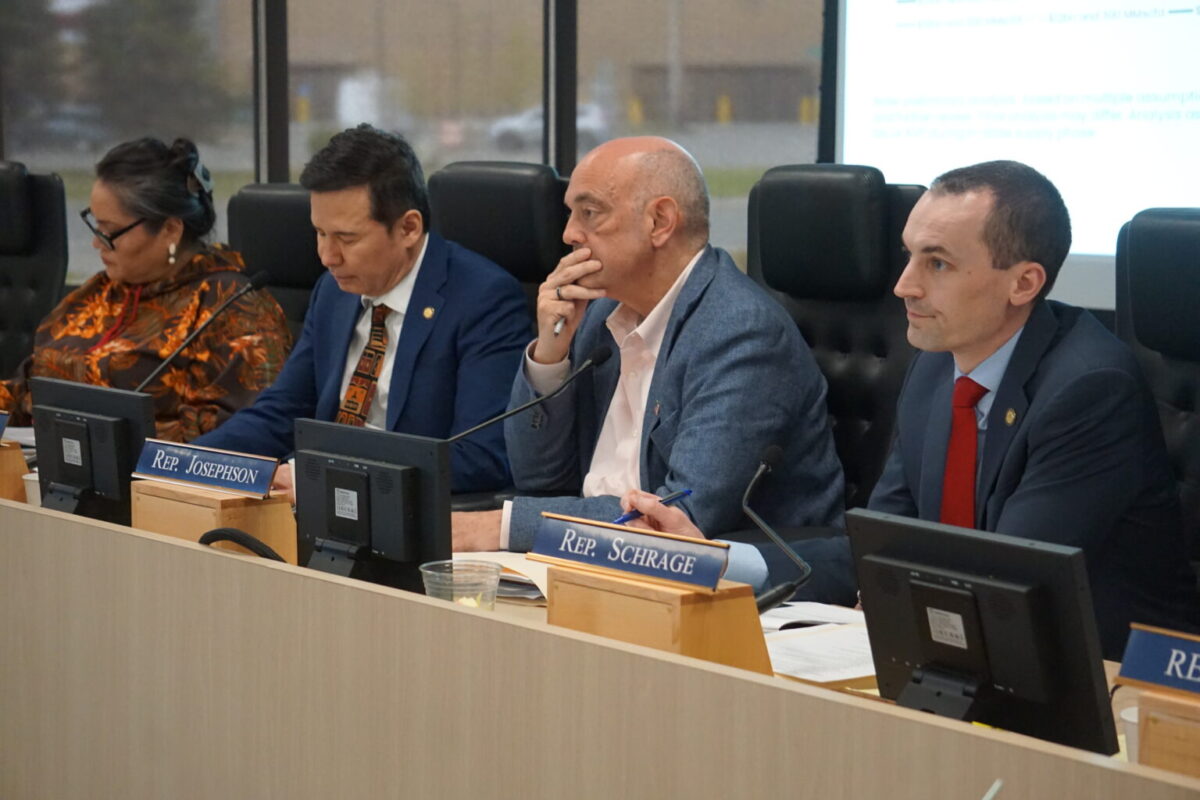
Rep. Nellie Unangiq Jimmie, D-Toksook Bay, Rep. Neal Foster, D-Nome, Rep. Andy Josephson, D-Anchorage, and Rep. Calvin Schrage, I-Anchorage, listen to Nick Fulford, senior director for gas, LNG and energy transition at GaffneyCline Energy Advisory, at a May 26, 2026, House Finanance Committee hearing in Anchorage. (Photo by Yereth Rosen/Alaska Beacon)

The proposed trans-Alaska natural gas line faces a narrow road to profitability, even with Gov. Mike Dunleavy’s proposed multibillion-dollar tax break, according to estimates presented to state legislators.

The more the pipeline costs, the more its builders will need to charge for gas shipped through it in order to make money. But if the cost of Alaska gas is too high, it isn’t competitive with gas from other sources around the world. 

On Tuesday, members of the House Finance Committee met for the second time in a 30-day special session devoted to discussing the tax break.

Nick Fulford of GaffneyCline, the Legislature’s hired analyst for the pipeline project, said previously published financial modeling by the Alaska Department of Revenue remains the best public look at whether the project pencils out financially.

“The main question really is: How much bigger and how much more capital cost can the project support before it becomes uneconomic,” he said. 

Nick Fulford, senior director for gas, LNG and energy transition at GaffneyCline Energy Advisory, speaks to the House Finance Committee at a May 26, 2026, hearing in Anchorage. (Photo by Yereth Rosen/Alaska Beacon)

In 2018, officials with the Alaska Gasline Development Corp. suggested that building a pipeline from the North Slope to Cook Inlet — plus large industrial processing plants on either end — would cost roughly $43.4 billion, including money earmarked for possible cost overruns.

Since then, the official cost has risen only slightly, to $46.2 billion, but many state lawmakers have said they are skeptical of that figure, because it does not seem to account for inflation.

Glenfarne, a multinational corporation that now owns 75% of the pipeline project, has not disclosed an updated figure.

Rep. Alyse Galvin, I-Anchorage, said that when she uses the Consumer Price Index to judge how much the cost has grown, it’s significant.

“When I look at cost adjustment, just using CPI, just a straight cut through, that brings us to $57 (billion) to $60 billion,” she said during Tuesday’s hearing.

“I would say it seems highly likely that it would be more than $46 billion given the general inflation that we’ve seen,” Fulford said.

Rep. Alyse Galvin, I-Anchorage, poses a question to Nick Fulford, senior director for gas, LNG and energy transition at GaffneyCline Energy Advisory, at a May 26, 2026, House Finanance Committee hearing in Anchorage. Next to her is Rep. Frank Tomaszewski, R-Fairbanks. Photo by Yereth Rosen/Alaska Beacon)

Publicly available estimates suggest gas could be bought from North Slope producers between $1 and $2 per thousand cubic feet. That’s what’s technically known as the “upstream price.”

In a scenario where the pipeline costs Galvin’s suggested figure, the state’s tax laws don’t change to help the project and the upstream price is $1.50 per thousand cubic feet of gas, the Department of Revenue estimates that an end buyer in Japan could expect to pay more than $11 per thousand cubic feet.

That’s likely a problem for the pipeline project, because according to GaffneyCline’s estimates, the average contract price in Japan over the past 10 years has been $10.41 per thousand cubic feet — less than what the Alaska project would have to charge to earn its expected profit target.

Under a tax change proposed by the governor, the end buyer’s price would drop to about $10.40, using Galvin’s cost estimate and the $1.50 upstream price.

But if the cost of upstream gas rises, or if the cost of the pipeline rises, even the governor’s proposed tax break isn’t enough to keep the project economically competitive.

Fulford, speaking to the House Finance Committee, said he thinks Asian LNG prices will rise in the coming years, possibly offsetting any rising costs and keeping the project viable.

But he also acknowledged that with so many unknowns, it’s not clear where the project becomes uneconomic.

“The question is … if the price of LNG goes up and if the capital cost goes up, then where’s that sort of tipping point where the project can still go ahead, even if it’s a much higher capital cost?” he said.

Under Dunleavy’s proposal, the state’s existing petroleum property tax would be largely replaced by a tax on gas that moves through the pipeline. 

Speaking last week in Anchorage, Glenfarne CEO Brendan Duval said the governor’s proposed change is necessary for Glenfarne to get financing for the project.

“It won’t be financeable in the form that we’re trying to do it without the tax stabilization law,” he told the Anchorage Daily News.

Legislators appear favorable to the general idea, but they don’t know what tax rate to use for the “alternative volumetric tax,” as it is formally known.

Dunleavy has proposed 6 cents per thousand cubic feet of gas. House and Senate lawmakers are each considering different, higher rates.

They’re also considering mandatory impact payments to compensate cities and boroughs that collectively would lose out on $14 billion in property taxes through 2063 if the governor’s plan is adopted. A mandatory natural gas spur line to Fairbanks is also being discussed. As currently planned, the pipeline runs to the west of Fairbanks.

Rep. Calvin Schrage, speaking Tuesday, said legislators are working with a large amount of uncertainty, and that is slowing their work.

“If we could eliminate some of these variables and have it known, it would really help us in figuring out where this might be going, but we don’t have that right now,” he said. “What this is ultimately showing is that under our current tax structure, there’s a very small window of break-even profitability for a developer.”

Categories
Alaska News Featured Juneau News juneau Juneau Local Juneau Local Ketchikan Local News Feeds Sitka Local

Special session on Gov. gasline bill takes place in both Anchorage and Juneau

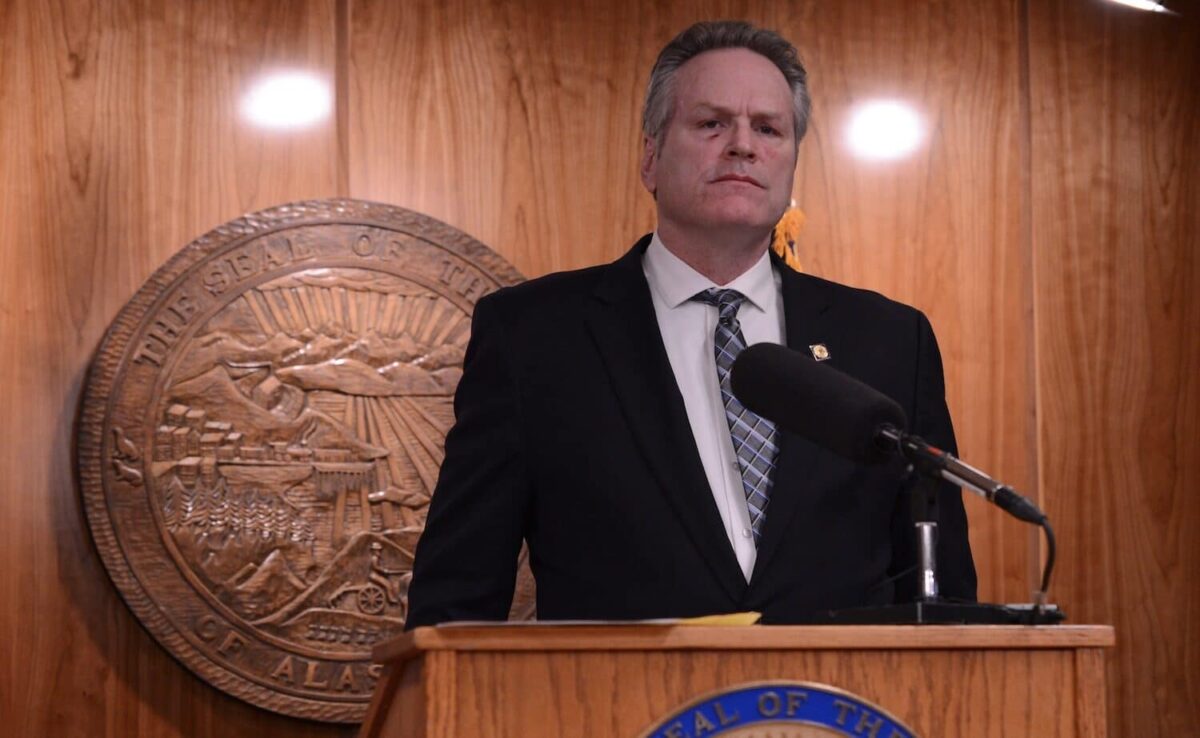
Alaska Gov. Mike Dunleavy speaks during a news conference on Friday, March 15, 2024. (Photo by James Brooks/Alaska Beacon)

NOTN- Alaska lawmakers will continue holding hearings this week during a 30 day special session on Senate Bill 2001, and separately House Bill 381, the governor-backed gas pipeline tax proposal tied to the proposed Alaska LNG project.

The Alaska State Senate Finance Committee is scheduled to meet today, Thursday and Friday at 9 a.m. in Juneau to hear presentations and discussion on the bill.

Today and Thursday’s hearings will include presentations from consulting firm GaffneyCline. Friday’s meeting is also focused on continued review of the legislation.

The House met yesterday, and will continue work this week in Anchorage.

Governor Mike Dunleavy called the special session after lawmakers failed to pass a gasline bill during the regular session, lawmakers received the governor’s proposal on day 80 of 120.

The governor is pushing for larger tax breaks and incentives for the project’s developers.

According to reporting from the Alaska Beacon following an Energy Conference in Anchorage, state and local governments would eliminate 90% of the property tax that would be levied on gasline-related infrastructure in exchange for future opportunities to tax natural gas as it moves through the yet-to-be-built system.

Though legislators are currently sitting on both sides of the fence, some argue the proposal would reduce future revenue for both the state and local governments along the pipeline route.


Categories
Alaska News Featured Juneau News juneau Juneau Local Juneau Local Ketchikan Local News Feeds Sitka Local

Pipeline-for-pension deal falls apart as the Alaska Legislature’s regular session nears end

By: James Brooks, Alaska Beacon

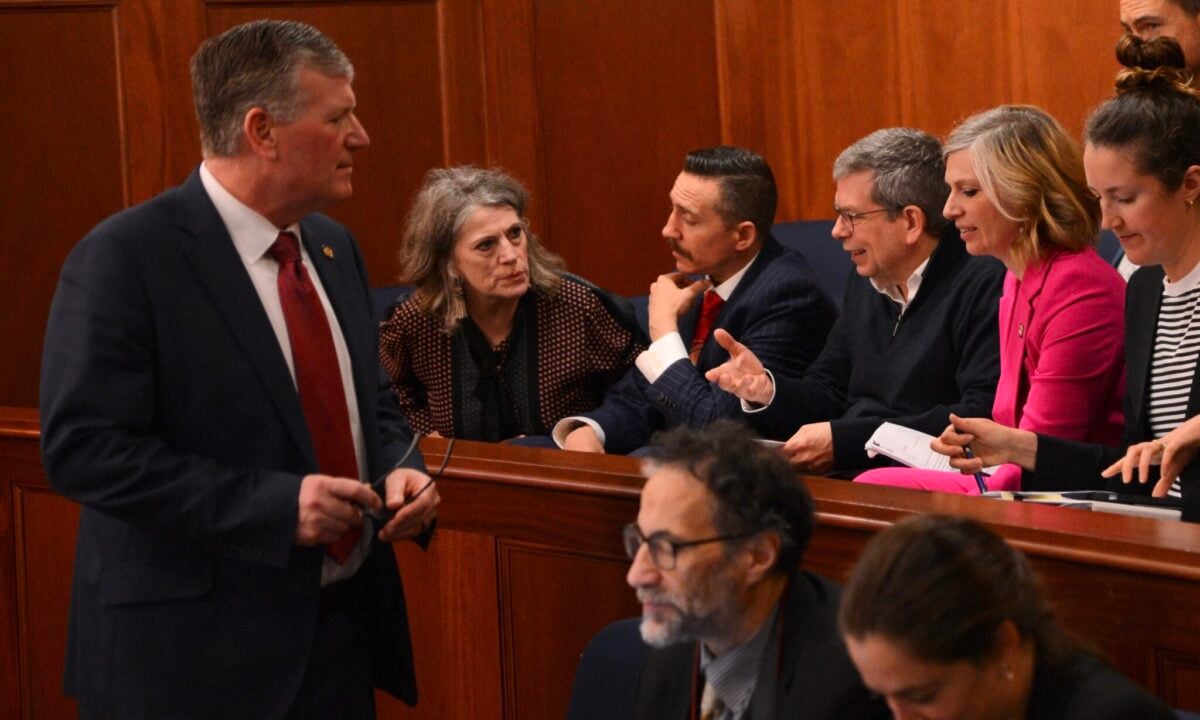
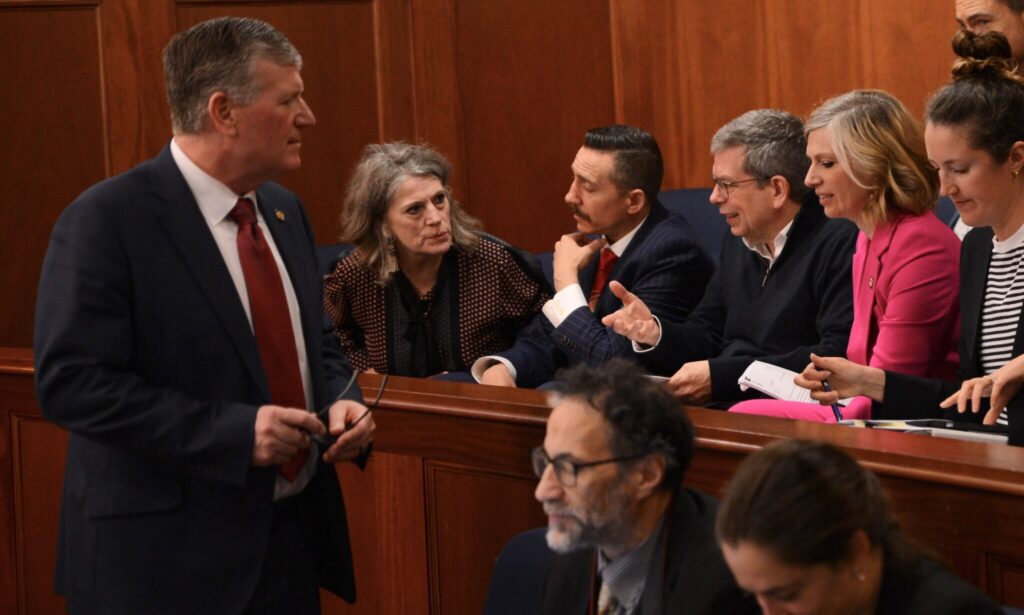
At left, House Majority Leader Chuck Kopp, R-Anchorage, talks with experts on the proposed trans-Alaska natural gas pipeline during a break in debates Monday, May 18, 2026. To Kopp’s immediate right is Joelle Hall of the Alaska AFL-CIO. At center, gesturing, is former U.S. Sen. Mark Begich, now an adviser to Gov. Mike Dunleavy. (James Brooks photo/Alaska Beacon)

A high-stakes quid pro quo deal fell apart in the Alaska Capitol on Monday as legislators failed to approve a tax break for the proposed trans-Alaska natural gas pipeline and Gov. Mike Dunleavy vetoed a bill that would have restored public pensions in the state.

The failure leaves public employees with a 401(k)-like retirement system and legislators likely to head into a special session for further work on a gas pipeline bill.

Rep. Chuck Kopp, R-Anchorage and the Legislature’s lead negotiator on the planned deal, said on Monday night that “the pension was a good vehicle to help get people there and be more conciliatory towards this gasline legislation than they otherwise would have been. Now that the governor has vetoed the pension, I expect the conciliatory attitudes will suffer.”

Monday was the deadline for Dunleavy to enact or veto House Bill 78, which would have created a new pension plan for Alaska’s public employees. Alaska has not offered a pension since 2006, when lawmakers closed the pension plan to new employees after an actuarial error led to significant underfunding. 

Days ahead of Monday’s veto deadline, Dunleavy offered a deal to legislators — pass a tax break for the proposed gas pipeline, and he would allow the pension bill to become law.

“We said we wanted the gasline bill passed in an acceptable form to the governor’s desk before the deadline on the (defined benefit) bill,” said Jeff Turner, the governor’s communications director. “At that point, he could allow a (defined benefit) bill to go into law.”

Dunleavy told reporters at a news conference earlier this month that the gas pipeline bill should be the Legislature’s top priority.

In March, he introduced two identical bills, one in the House and one in the Senate, with his ideas. Legislators have since held dozens of hearings on those ideas.

If enacted, the governor’s proposal would largely exempt the gas pipeline and supporting infrastructure from state and local property taxes levied on petroleum property. In place of the property tax, the state would levy a tax on gas transported by the pipeline.

The pipeline’s lead developer, multinational firm Glenfarne, has said the change is necessary for it to successfully obtain financing needed to build the pipeline project.

Alaska LNG, as it is known, would ship gas through an 800-mile pipeline, from the North Slope to Southcentral Alaska. As currently planned, the first phase of the project would deliver gas to Alaskans in 2029 and the second phase would allow foreign exports by 2031.

While state legislators generally support the idea of a pipeline, they have balked at the governor’s planned tax breaks, particularly because Glenfarne has thus far declined to provide new estimates for the cost of construction or its expected cost of gas when the pipeline is complete.

That has made it impossible for them to determine whether the proposed tax break is too large, too small, or just right. 

Rep. Chuck Kopp, R-Anchorage, speaks Monday, May 18, 2026, on the floor of the Alaska House of Representatives. (James Brooks photo/Alaska Beacon)

House and Senate each took the governor’s ideas and amended them. Both increased the proposed gas tax — formally known as an “alternative volumetric tax” — mandated construction of a spur line to Fairbanks and required Glenfarne provide early payments to communities affected by pipeline construction.

Senators went further, proposing price controls on gas shipped through the pipeline to Alaskans, an end to a tax exemption that would benefit Glenfarne, and small increases to the state’s oil taxes.

With both bills far from completion, Kopp began negotiating with the governor’s office on a possible compromise.

Kopp has been supporting a pension revival for a decade, and sought a deal that would accomplish two personal goals that also are among the legislative majorities’ top priorities.

On Monday, after days of work, he introduced a compromise gas pipeline proposal as an amendment to Senate Bill 180. That bill was originally written as a one-sentence change to state law pertaining to liquefied natural gas import terminals.

Kopp’s amendment, 22 pages long, was adopted, and House lawmakers began debating, one after another, hours of amendments to Kopp’s amendment. 

In the back of the House chambers, advisers to the governor — who have been working closely with Glenfarne — provided feedback on whether each amendment was acceptable. 

From left to right, Reps. Jeremy Bynum, R-Ketchikan, Neal Foster, D-Nome, and Robyn Niayuq Frier, D-Utqiagvik, talk about an amendment to the gas pipeline bill on Monday, May 18, 2026. (James Brooks photo/Alaska Beacon)

One amendment from Rep. Robyn Niayuq Frier, D-Utqiagvik, derailed that process. Adopted on a 21-19 vote by the House, it would allow the North Slope Borough to negotiate directly with Glenfarne on taxes.

Frier represents the North Slope Borough, and because the project’s large gas treatment plant would be located there, the borough would lose a disproportionate amount of tax revenue with a switch from property taxes to the alternative volumetric tax.

“The amendment was completely necessary,” Frier said afterward, explaining that the borough had been asking for it.

The Kenai Peninsula Borough, planned site of the export terminal, accepted the alternative tax, and lawmakers from that region did not propose amendments similar to Frier’s.

Frier said North Slope officials talked with all of the stakeholders, with the governor’s office and Glenfarne.

“We always knew this was going to be an issue, and I don’t understand why this is such a big deal. They could have been negotiating. They should have been negotiating,” she said. 

Frier said that rather than try to push through a major bill in a single day, she would like to see lawmakers focus on House Bill 381, the House’s gasline bill, in a 30-day special session.

“We need to do the proper vetting, we need the modeling, we need it to go through the Department of Revenue. … We need people to weigh in, not trying to shove this in at the last minute. This is not good process,” she said.

Lawmakers in favor of Kopp’s compromise were unable to quickly reverse Frier’s amendment, and the Senate adjourned shortly after 10 p.m., leaving no avenue for Kopp’s amendment to pass through the Capitol on Monday.

Kopp said afterward that he had negotiated a deal to sidestep Frier’s amendment, but with the Senate adjourned until after the window to veto the pension bill, he said the governor was uninterested. 

“He feels like the outcome has to be 100% controlled. … The House was in position to send over a good gasline bill. The governor simply did not care, because he had to have it in the bag. To me, that’s disappointing, and to me that was very shortsighted,” Kopp said.

With the deal dead, the House adjourned for the day just after 10:30 p.m. The governor’s veto message arrived in the House clerk’s office shortly afterward, at 10:39 p.m.

Alaska Gov. Mike Dunleavy’s legislative director, Jordan Shilling (left) and his deputy legislative director, Forrest Wolfe, watch as assistant legislative director Victoria Schoenheit delivers the veto message for House Bill 78 to the House clerk on Monday, May 18, 2026. (James Brooks photo/Alaska Beacon)

“I share the Legislature’s goal of strengthening recruitment and retention for Alaska’s public workforce,” the governor said in his veto message. “However, House Bill 78 contains unresolved legal, tax, administrative, and fiscal issues that create uncertainty for the State, employers, employees, and the retirement systems themselves.”

Kopp, visibly frustrated, sat in his office after the House’s adjournment.

“He has no allies in the Senate that can help him on the gasline. I was his No. 1 ally in the entire Legislature,” Kopp said, “and he killed the pension bill that I carried. That was his thank you to me. So, I’ll remember that.”