Categories
Alaska News Featured Juneau News juneau Juneau Local Juneau Local Ketchikan Local News Feeds Sitka Local

Businesses can claim refunds starting Monday for Trump tariffs declared unconstitutional

FILE – A customs agent wears a patch for the U.S. Customs and Border Protection agency, Oct. 27, 2017, at John F. Kennedy International Airport in New York. (AP Photo/Mark Lennihan, file)

AP-A refund system for businesses that paid tariffs which the U.S. Supreme Court ruled President Donald Trump imposed without the constitutional authority to do so is scheduled to launch Monday.

Importers and their brokers will be able to begin claiming refunds through an online portal beginning at 4 a.m. Alaska time, according to U.S. Customs and Border Protection, the agency administering the system.

It’s the first step in a complicated process that also might eventually lead to refunds for consumers who were billed for some or all of the tariffs on products shipped to them from outside the United States.

Companies must submit declarations listing the goods on which they collectively put billions of dollars toward the import taxes the court subsequently struck down. If CBP approves a claim, it will take 60-90 days for a refund to be issued, the agency said.

The government expects to process refunds in phases, however, focusing first on more recent tariff payments. Any number of technical factors and procedural issues could delay an importer’s application, so any reimbursements businesses plan to make to customers likely would trickled down slowly.

In a 6-3 decision, the Supreme Court on Feb. 20 found that Trump usurped Congress’ tax-setting role last April when he set new import tax rates on products from almost every other country, citing the U.S. trade deficit as a national emergency that warranted his invoking of a 1977 emergency powers law.

Although the court majority did not address refunds in its ruling, a judge at the U.S. Court of International Trade determined last month that companies subjected to IEEPA tariffs were entitled to money back.

Not all taxed imports immediately eligible

Customs and Border Protection said in court filings that over 330,000 importers paid a total of about $166 billion on over 53 million shipments.

Not all of those orders qualify for the first phase of the refund system’s rollout, which is limited to cases in which tariffs were estimated but not finalized or within 80 days of a final accounting.

To receive refunds, importers have to register for the CPB’s electronic payment system. As of April 14, 56,497 importers had completed registration and were eligible for refunds totaling $127 billion, including interest, the agency said.

System requires accuracy

Meghann Supino, a partner at Ice Miller, said the law firm has advised clients to carefully list in their declarations all of the document numbers for forms that went to CBP to describe imported goods and their value.

“If there is an entry on that file that does not qualify, it may cause the entire entry to be rejected or that line item might be rejected by Customs,” she said.

Supino thinks the portal going live will require composure as well as diligence.

“Like any electronic online program that goes live with a lot of interest, I would expect that there might be some hiccups with the program on Monday,” she said. “So we continue to ask everyone to be patient, because we think that patience will pay off.”

Nghi Huynh, the partner-in-charge of transfer pricing at accounting and consulting firm Armanino, said most companies claiming refunds will have imported a mix of items, and not all will qualify right away.

“It’s about having a clear process in place and keeping track of what’s been submitted and what’s been paid, so nothing falls through the cracks,” she said. “Each file can include thousands of entries, but accuracy is critical, as submissions can be rejected if formatting or data is incorrect.”

Patience with the process

Small businesses have eagerly awaited the chance to apply for refunds. Brad Jackson, co-founder of After Action Cigars in Rochester, Minnesota, said he starting compiling records and preparing to enter information into the system the minute CPB announced the launch date.

The company imports cigars and accessories from Nicaragua and the Dominican Republic. Last year, it paid $34,000 in tariffs and absorbed much of the cost instead of raising customer prices, Jackson said.

Last spring, he had a two-week delay in a shipment due to a missing document, so he is being more careful with refund documents, he said.

“My main concern is the turnaround time,” Jackson said. “A refund process that takes several months to complete doesn’t solve the cash flow problem that it is supposed to fix.”

Will consumers see refunds?

Tariffs are paid by importers, and some companies pass on the tax costs to consumers via higher prices.

The system starting up Monday will refund tariffs directly to the businesses that paid them, which are not obligated to share the proceeds with customers. However, class-action lawsuits that aim to force companies, ranging from Costco to Ray-Ban maker Essilor Luxottica, to reimburse shoppers are winding their way through the U.S. legal system.

Individuals may be more likely to receive refunds from delivery companies like FedEx and UPS, which collected tariffs on imports directly from consumers. FedEx has said it would return tariff refunds to customers when it receives them from the CPB.

“Supporting our customers as they navigate regulatory changes remains our top priority,” FedEx said in a statement. “We are working with our customers as CBP begins processing refunds and plan to begin filing claims on April 20.”

Categories
Alaska News Featured Juneau News juneau Juneau Local Juneau Local Ketchikan Local News Feeds Sitka Local

Socioeconomic status a key factor in understanding Alaska test data, lawmakers hear

Haley Lehman, Alaska Beacon

An empty classroom at Juneau-Douglas High School: Yadaa.at Kalé in Juneau, Alaska (Photo by Lisa Phu/Alaska Beacon)

A professor at Furman University told the Alaska Legislature Task Force on Education Funding Wednesday afternoon that standardized test results might not be the most appropriate set of data on which to base education policy decisions.

During a routine presentation on the National Assessment of Educational Progress, known as the Nation’s Report Card, Paul Thomas backed a principle that legislators should not make decisions about students and schools based on a single standardized test.

“The key to understanding test data in Alaska is the information on poverty,” Thomas said.

Alaska’s NAEP scores of fourth- and eighth- grade Alaskans ranked lower than the national public in mathematics and reading in 2024. According to the Nation’s Report Card, approximately 69% of students performing below the 25th percentile are economically disadvantaged while economically disadvantaged students make up 48% of Alaskan students.

“Education policy and socioeconomic policy are really strongly connected,” Thomas said. “Test scores are a reflection of the socioeconomic status of the students.”

State education officials led legislators through a practice test of the Alaska System of Academic Readiness, commonly referred to as the AK STAR. Each fall, winter, and spring, Alaskan students in grades 3-9 take the MAP Growth assessment and each spring, Alaskan students take the AK STAR.

Kelly Melin, who works for the Department of Education and Early Development’s Assessments and Standards Administration, said the state’s standardized tests are designed to satisfy federal requirements set forth in the Every Student Succeeds Act.

“We’ve taken the power of an interim assessment and the need for a summative assessment as was dictated through ESSA and connected those to come up with what we have as AK STAR,” Melin said.

Kelly Manning, the department’s Director of Innovation and Education Excellence, said that the purpose of assessments is to measure the state’s ability to close the achievement gap and measure students’ ability to read at grade level by the third grade.

Statewide, about 33% of students tested at or above grade level expectations in language arts and 32% in math in 2025. Students in ninth grade demonstrated the greatest need for support in language arts and math.

The esting window for Alaska students closes on May 1. AK STAR results will be available to school districts in July and statewide in the fall.

Categories
Alaska News Featured Juneau News juneau Juneau Local Juneau Local Ketchikan Local News Feeds Sitka Local

Alaska Senate committee advances draft capital budget, boosting funds for school maintenance

By: Corinne Smith, Alaska Beacon

Sen. Lyman Hoffman, D-Bethel, is seen in the Senate Finance Committee on Tuesday, April 25, 2023. A co-chair of the Senate Finance Committee, Hoffman is in charge of the state’s capital budget. (Photo by James Brooks/Alaska Beacon)

The Alaska Senate Finance committee advanced a draft capital budget on Tuesday that would put nearly $250 million toward state facilities and maintenance projects next year.

The draft budget adds $88 million to Gov. Mike Dunleavy’s proposed capital budget of $159 million, with the largest additions going toward K-12 schools and university facilities maintenance. 

That was a focused effort by the finance committee, said co-chair Sen. Bert Stedman, R-Sitka, who called funding for education facilities maintenance a “heavy concentration” on Wednesday. 

Earlier this year, students and school officials testified to lawmakers that decades of deferred maintenance has reached crisis levels — with many rural school districts in particular grappling with deteriorating facilities, failing water and sewer systems — which they say is degrading student and staff morale. Lawmakers have expressed support and increased funding in recent years, but point to Gov. Mike Dunleavy’s history of vetoes as a roadblock for funding education.  

The Senate draft includes $57.8 million in additional funding toward K-12 school maintenance through the Alaska Department of Education and Early Development and $17 million toward the University of Alaska. It also includes $5.7 million for the Alaska Court System’s facilities and $8 million for community infrastructure and workforce development programs through the Alaska Department of Commerce, Community, and Economic Development. 

The Legislature relies on state ranked lists to prioritize where to direct funding to capital projects for K-12 schools, the university system and the court system. 

For K-12 schools, the state’s current major maintenance list totals over $400 million needed for 103 school projects and repairs. Stedman said he recognized this year’s capital budget will only fund a fraction of those.

“Hopefully we get a quarter of it done, or something like that, but it’d be nice to retire the entire list,” Stedman said. 

The draft budget would fund the top 15 school projects on the list, plus funds for three other schools in need of emergency fuel tank repairs. The top projects range from roof and boiler replacements to septic systems, fire suppression and safety upgrades in schools from Fairbanks to the Aleutian Islands. 

In order to distribute funds more widely, members of the finance committee reduced funding for one project in Galena, in the Western Interior of Alaska, from roughly $35 million to $5 million for renovations to the Sydney C. Huntington Elementary and High Schools. They also allocated $17 million towards rebuilding the school in Stebbins in Western Alaska, after it burned down in 2024.

Mt. Edgecumbe High School student housing in Sitka is seen on Oct. 6, 2025 (Photo by Corinne Smith/Alaska Beacon)
Mt. Edgecumbe High School student housing in Sitka is seen on Oct. 6, 2025. (Photo by Corinne Smith/Alaska Beacon)

The Senate draft also adds nearly $14 million in funding for the state-run Mt. Edgecumbe High School, which has been the focus of public attention and concern after a quarter of students disenrolled this year. The additional facilities dollars include $10 million to remodel the dining hall, $3.1 million to replace dorm windows, $460,000 to replace dorm furniture, $50,000 to replace mattresses and $125,000 to replace aging laundry machines. 

Finance members added $17 million to fund the top nine projects across the University of Alaska system — three projects each within the three major campuses. 

Sen. Jesse Kiehl, D-Juneau, serves on the finance committee and his district includes University of Alaska Southeast. He described the proposed funds as a “nickel” compared to the “colossal” deferred maintenance needs of the university system. 

“That’s been built by Legislatures and Boards of Regents for 40 years,” he said on Wednesday, adding that it is a shared responsibility to put funding towards repairs and upgrades.

“The Constitution makes them a separate body within the executive branch that puts a lot of responsibility on them, too, more than the general state government,” he said “So university major maintenance is its own huge problem.”

The draft budget also includes $5.7 million for upgrades to state court facilities, mostly targeted to Anchorage and Sitka. It contains nearly $10 million for workforce development programs geared at the construction and oil and gas sectors, including for the Fairbanks Pipeline Training Center and Alaska Vocational Technical Center in Seward. 

An amendment to add $25 million to the draft budget for the Port of Anchorage, sponsored by Sen. Kelly Merrick, R-Eagle River, was voted down on Tuesday by a 5 to 2 vote. 

Before voting against the proposal, finance co-chair Sen. Lyman Hoffman, D-Bethel, said during committee deliberations the priority this year is to fund as many school maintenance projects on the list as possible, saying “schools are falling apart” and must be maintained to prevent further deterioration.

“Students that are trying to learn deserve better,” Hoffman said. “And if we are not able to provide this major maintenance, we are going to see these schools continue to crumble, and the financial burden to the state of Alaska will be hundreds of millions of dollars to rebuild schools.”

More funding for school maintenance and other capital projects could be added by the Alaska House of Representatives, who will take up the draft budget bill after it’s approved by the Senate in the coming weeks.

Categories
Alaska News Featured Juneau News juneau Juneau Local Juneau Local Ketchikan Local News Feeds Sitka Local

Pilot on Ward Air plane rescued near Juneau

Ward Air Wheel Plane, courtesy of Ward Air

NOTN- A plane crash in Southeast Alaska sent one person to the hospital Thursday morning.

The U.S. Coast Guard received a report just after 10 a.m. of a downed aircraft near Shelter Island in Lynn Canal, KINY was sent a note from an internal source close to 12:00 p.m., as of yet the pilot’s condition has not yet been released.

The plane, operated by Ward Air, was carrying only the pilot.

The pilot was pulled from the water by another Ward Air seaplane and taken to a hospital for treatment, there are unconfirmed claims that the pilot may have suffered a head injury, though this is currently hearsay.

It’s been reported the plane was a float plane, but an unnamed source has said it was a Wheel Plane, specifically a CESSNA 206, KINY is unable to substantiate that claim, Ward Air representatives declined to comment when contacted by phone this afternoon.

The cause is currently under investigation.

Categories
Alaska News Featured Juneau News juneau Juneau Local Juneau Local Ketchikan Local News Feeds Sitka Local

Alaska House rejects Senate bid to impose corporate tax on privately owned oil companies

By: Corinne Smith, Alaska Beacon

 Rep. Alyse Galvin, I-Anchorage, speaks on the House floor on Apr. 13, 2026. (Photo by Corinne Smith/Alaska Beacon)

The Alaska House of Representatives on Monday rejected a bill passed by the Senate that would have applied state corporate income taxes to privately owned oil and gas companies that currently do not pay them. Supporters said the bill would have generated up to $100 million in new revenue for Alaska.

The proposal would have required companies licensed as S corporations or as limited liability companies to pay state corporate income taxes for profits earned in the state, which they currently do not pay. The largest company affected would have been Hilcorp, a privately run Texas-based company that operates the Prudhoe Bay oil fields as well as most of the oil and gas operations in Cook Inlet.

The state does not levy a tax on income earned by S corporations and LLCs because their profits go to owners or shareholders. In many states, those people would pay personal income tax on the money, but Alaska does not have a personal income tax, so such companies avoid taxation on profits. Traditional corporations, or C corporations, are publicly traded and already subject to existing state tax law. 

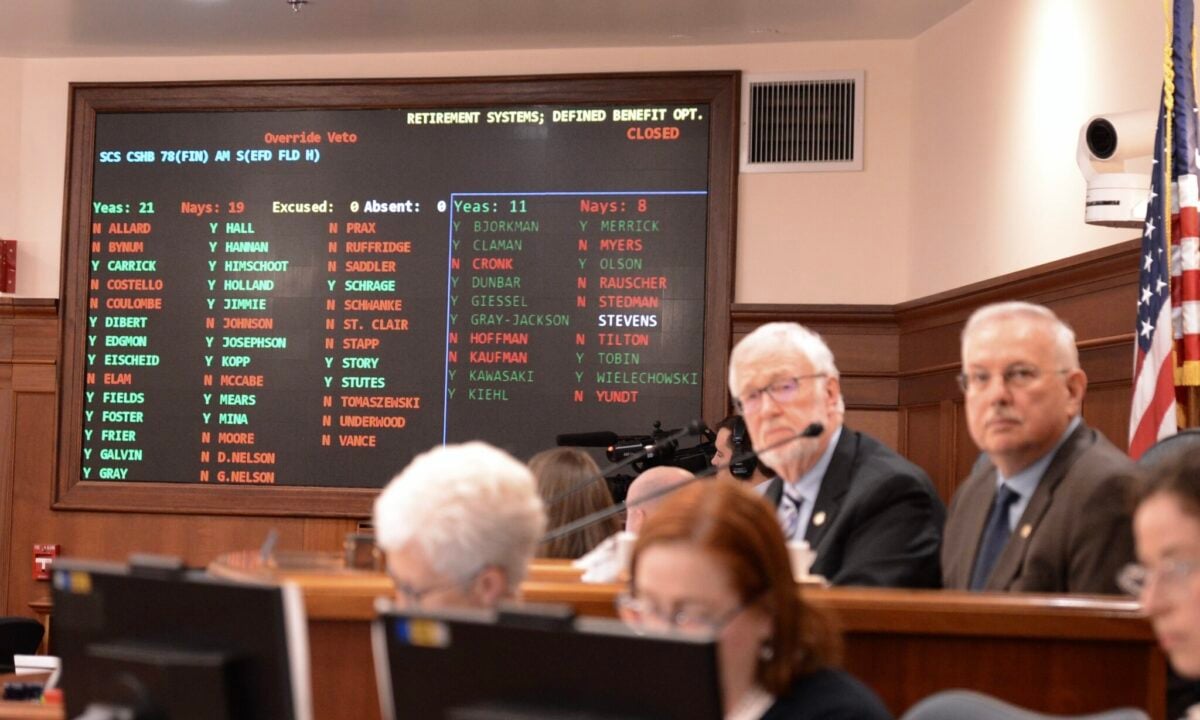
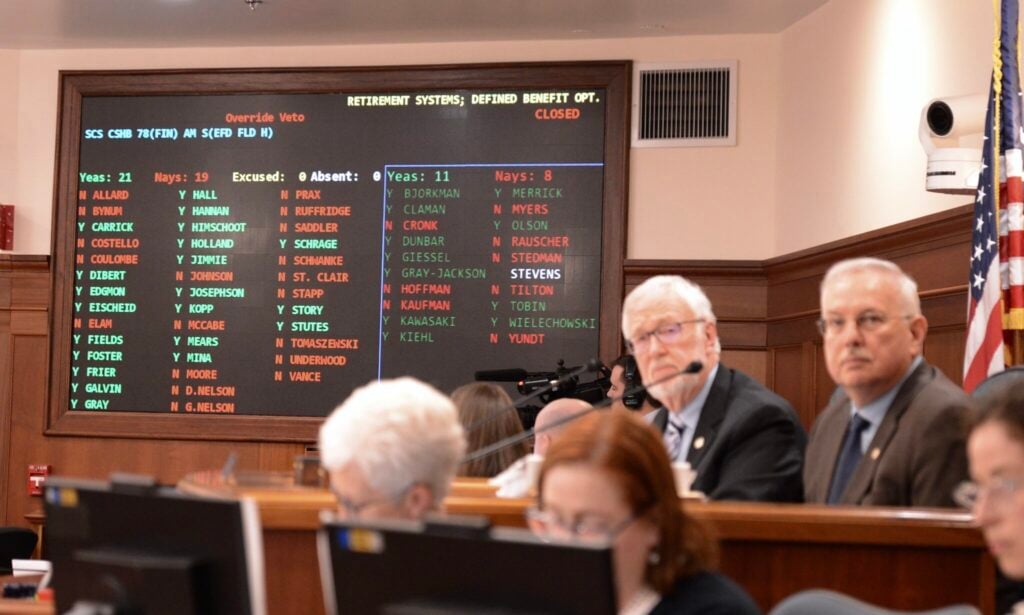
Four members of the multipartisan House majority caucus objected to the proposal, and split to join the all-Republican minority members to reject the Senate’s version of House Bill 194 by a 23 to 17 vote.

House Majority Leader Rep. Chuck Kopp, R-Anchorage, was among those to oppose the bill.

House Majority Leader Chuck Kopp, R-Anchorage, speaks on Monday, March 24, 2025, in favor of House Joint Resolution 11. (Photo by James Brooks/Alaska Beacon)

“This policy creates uncertainty at the exact moment Alaska needs more energy development,” Kopp said on Monday on the House floor. “These are the people that are actually keeping our energy crisis at bay right now.”

Kopp argued the change would potentially hamper new oil and gas development. “It’s been a cold winter in Southcentral and along the Railbelt, and this is at the same time we’re asking these folks to drill more, to produce and store more gas, to explore more and to sign long term gas contracts. So it seems shortsighted to hamstring gas producers when we need them to invest a lot more right now, just to keep our schools warm, our homes heated and our businesses going,” he said.

Anchorage Independent Rep. Alyse Galvin, and Democratic Reps. Carolyn Hall of Anchorage and Robyn Frier of Utqiagvik also joined the minority caucus to oppose the bill on Monday.

Anchorage Democrat Sen. Forrest Dunbar sponsored the amendment to levy the corporate tax on privately owned oil and gas companies on a bill that would have been a routine renewal of a state oil royalty lease agreement, which passed the Senate last month. 

Dunbar criticized the House decision in a Wednesday interview, saying it was a missed opportunity to bring in revenues for Alaska.

“They took potentially $100 million or more and rather than put it towards schools or the state of Alaska, they hand it to a billionaire in Texas. I think that was a mistake,” Dunbar said. “This is some of the lowest of low hanging fruit.” 

“So I’m very disappointed in their actions,” he added. “And frankly, I’m surprised that some of the members of my party voted the way they did.”

On Monday, Big Lake Republican Rep. Kevin McCabe argued against the bill saying a tax focused on specific corporations that could result in lawsuits against the state. “I would suspect that this will lead directly to the courts,” he said. “This is just plain wrong. We shouldn’t be doing this.”

Galvin, a member of the multipartisan majority caucus, said she opposed that the measure was added to the underlying bill, but said she sees the need for more revenue. “I do think that it’s confusing when we add one bill to another, and haven’t properly vetted (it),” she said.

Galvin said she has proposed legislation, House Bill 152, which would include the corporate income tax provision, as well as a 4% state income tax on individuals earning more than $150,000 and an annual $150 tax per Alaskan to help pay for state services like education. It’s now being considered by the House Finance Committee.

“In a bill that I’m working on, I’m certainly careful to not call out one company,” she said. “But we do need to look at fairness also in all of our taxation. And I think that there is a place for us to address this.”

Galvin also requested to be excused from the vote citing a conflict of interest, but there was an objection on the House floor and she was required to vote. She told the Anchorage Daily News her husband works for Great Bear Pantheon, an Alaska subsidiary of Pantheon Resources, a Texas-based oil and gas exploration company. 

Several members argued in support of strengthening corporate income taxes to provide much-needed revenues for Alaska.

Rep. Ky Holland, I-Anchorage is seen during debate on the operating budget on Apr. 13, 2026. (Photo by Corinne Smith/Alaska Beacon)

Rep. Ky Holland, I-Anchorage, supported the provision saying it was a defining moment for the Legislature to take action to address what he called the “Alaska disconnect” — being a resource rich state without capturing the economic value and benefits for residents.  

“I believe this is a defining question for many of us, who I think, recognize that our state has moved past looking for the fiscal cliff and is now out beyond it,” he said. “And it’s now time for us to decide, are we willing to take some difficult votes and take some difficult action?”

Holland said failing to change the tax code could create a scenario where other businesses incorporate as S corporations or LLCs to avoid corporate income taxes. “This bill offers a way to address a point of fairness in the taxation that we have,” he said.

The amended bill now returns to the Senate, which can remove or change the provision. Those acts could result in a conference committee made up of representatives from both chambers to reach agreement on the bill.

The original legislation was introduced by the governor and passed the Alaska House last year. It would renew a three-year oil royalty agreement between the state and Marathon Petroleum Corporation, for state owned oil to be processed at its refinery in Nikiski, on the Kenai Peninsula, valued at between $4 million and $18 million in state revenue. 

Several lawmakers in the House, including Kopp, said the company was no longer interested in the state contract, voiding the need for the legislation. A spokesperson for Marathon declined to comment on Wednesday, saying the company does not comment on its crude oil sourcing. 

Categories
Alaska News Featured Juneau News juneau Juneau Local Juneau Local Ketchikan Local News Feeds Sitka Local

Alaska House passes draft operating budget with a $1,500 PFD

By: Corinne Smith, Alaska Beacon

Reps. Calvin Schrage, I-Anchorage, Zack Fields, D-Anchorage huddle with members of the House majority caucus during a break in debates on the operating budget on Apr. 9, 2026. (Photo by Corinne Smith/Alaska Beacon)

The Alaska House of Representatives advanced a draft budget for the state’s operations next year, with a $1,500 Permanent Fund dividend for eligible Alaskans. It includes a nearly $158 million one-time funding boost for public schools and tens of millions for disaster relief, transportation and public assistance programs.

Members passed House Bill 263, the operating budget bill, along caucus lines by a 21 to 19 vote on Tuesday. 

Lawmakers spent four days debating amendments — additions, cuts and reallocations to the draft budget — on the House floor, amid deep political divides around state priorities, war-driven oil revenues and how to balance paying for government services versus distributing cash to Alaskans through the dividend. 

The draft budget now moves to the Senate for consideration, where it’s likely to be further revised. 

“I feel relieved,” said Rep. Andy Josephson, D-Anchorage and co-chair of the House Finance Committee that drafted the budget, after the vote on Monday.

Rep. Andy Josephson, D-Anchorage and co-chair of the House Finance Committee which drafted the operating budget, speaks to what's included in the budget on the House floor on Apr. 13, 2026. (Photo by Corinne Smith/Alaska Beacon)
Rep. Andy Josephson, D-Anchorage and co-chair of the House Finance Committee which drafted the operating budget, speaks to what’s included in the budget on the House floor on Apr. 13, 2026. (Photo by Corinne Smith/Alaska Beacon)

“But the difficulty we’re in is that overall, the war in Iran, which is most unfortunate, is very helpful to budgeting,” he said. “But the Alaska people are hurting more, right, particularly when it comes to fuel prices. So that’s a problem as well.”

As Alaska has no personal income tax or state sales tax, more than 60% of funds for the general purpose budget comes from an annual draw from the Alaska Permanent Fund and roughly 30% comes from state oil revenues. 

Lawmakers have been closely watching Alaska oil prices, as they surged in recent weeks due to the Trump administration’s war on Iran. State forecasters project a potential $500 million boost in state revenues next year, but lawmakers are divided on what that should mean for state spending.

The all-Republican House minority caucus advocated for putting money towards a statutory Permanent Fund dividend, but the multipartisan majority coalition pushed the balance towards spending on state services.

Members of the all-Republican minority caucus Reps. DeLena Johnson, R-Palmer, Justin Ruffridge, R-Soldotna, Dan Saddler, R-Eagle River, Frank Tomaszewski, R-Fairbanks are seen in the House during a break in the debate on the operating budget on Apr. 13, 2026. (Photo by Corinne Smith/Alaska Beacon)

The House draft operating budget made revisions to Gov. Mike Dunleavy’s proposed $7.75 billion budget unveiled in December, which included a $3,800 Permanent Fund dividend and a $1.8 billion draw from state savings. 

The House draft opted not to tap into the state savings account. The House draft does include a deficit of roughly $180 million, but that total may change depending on revisions in the Senate. 

Fairbanks Republican Will Stapp criticized the deficit as an “unfunded” budget. “It’s underwater,” he said Monday. 

The draft budget contains increased funding across divisions: nearly $158 million in a one-time funding increase for public education, including nearly $11 million earmarked for student transportation; $33.3 million for Medicaid rate increases; nearly $55 million for fire suppression and $38 million for disaster relief; $17.5 million in heating assistance; $23 million for Alaska Department of Corrections staffing and tens of millions in transportation, public assistance programs like child care, infant learning programs, senior services, public health and public safety grants, among others. 

House lawmakers rejected a roughly $3,800 Permanent Fund dividend proposed by the House Finance committee, which would have cost nearly $2.5 billion and was contingent on a draw from state savings, which requires approval of three-quarters of lawmakers.

House lawmakers instead approved a $1,500 Permanent Fund dividend that will cost the state $992 million. 

Members of the multi-partisan House majority caucus expressed support for the draft budget that focused on public programs and services to enhance future benefits. 

“Education, child care, parents-as-teachers, Head Start — moving upstream to try and give our youngest, our most precious resource in the state of Alaska, the best start that we can give them,” said Rep. Calvin Schrage, I-Anchorage, acknowledging that it is a balancing act for lawmakers. 

Republican minority legislators also proposed spending increases, which included $2 million for the Alaska Department of Public Safety to establish a new Trooper post in Talkeetna, and $2 million for a sport fish hatchery in Fairbanks. Both failed along caucus lines by a 21 to 19 vote. 

Minority Leader Rep. DeLena Johnson, R-Palmer, criticized the House draft budget in a statement following its initial approval on Monday.

Rep. DeLena Johnson, R-Palmer, speaks on the House floor on Apr. 13, 2026. (Photo by Corinne Smith/Alaska Beacon)
House Minority Leader Rep. DeLena Johnson, R-Palmer, speaks on the House floor on Apr. 13, 2026. (Photo by Corinne Smith/Alaska Beacon)

“The budget passed by the Majority is a betrayal of the Alaskans we were sent here to represent,” said Johnson. “While Alaskans face one of the most unaffordable years of their lifetimes, this Majority has chosen to fund government agencies at record levels, while leaving families and communities behind.”

Minority lawmakers introduced nearly 50 amendments on the House floor over three days, which varied from cutting additional funding for education, funds for teacher recruitment and for community and regional jails, to cutting travel budgets and reallocating public employee salaries for vacant positions to add funding for school maintenance. Most of them failed along caucus lines.

The minority’s most strident call was for a maximum Permanent fund dividend. 

“The removal of the statutory dividend that equates to removing $42.5 million dollars from the economy of my district,” said Rep. Sara Vance, R-Homer. 

While lawmakers refer to the statutory dividend of roughly $3,800 per Alaskan, in 2017 the Alaska Supreme Court ruled lawmakers may ignore the formula since it’s not in the state Constitution. Since then, legislators have typically reduced the dividend to balance state expenses and avoid drawing from savings. 

Boost to education funding

The House draft adds $158 million in one-time funding for Alaska schools, equivalent to an additional $630 per student. 

That’s in the case that various education bills that provide a sustained increase to per student funding, through state’s formula boosting the base student allocation, fail to pass this year. Those bills are currently under consideration in education committees. 

Lawmakers said they decided on the additional $630 per student after assessing the current deficits of the five largest school districts by student population. Many districts are grappling with decisions on school closures, staff cuts and increasing class sizes to address large budget shortfalls this month — including the potential closure of three schools in Anchorage, three schools in the Matanuska Susitna Borough, four schools on the Kenai Peninsula and two of the four elementary schools in Ketchikan. 

Josephson said one-time funding this year for schools seems to be more viable than an attempt to permanently raise the per student funding formula, given the governor’s history of vetoing education funding increases — including three vetoes last year alone, one which the Legislature overrode in a special session last August.

Members of the House huddle with staff members in deliberations on the operating budget on Apr. 9, 2026. (Photo by Corinne Smith/Alaska Beacon)
Members of the House majority huddle with staff members in deliberations on the operating budget on Apr. 9, 2026. (Photo by Corinne Smith/Alaska Beacon)

“It’s far from a panacea, right? It’s far from anything that is the real solution. But I think if superintendents had it, they’d be delighted to have it,” he said. 

Members of the House approved an amendment to earmark $10.9 million of that $158 million for school districts’ transportation for students, to help offset rising costs due to a war-driven rise in fuel prices.

Representatives from Northwest and Western Alaska objected to the transportation earmark, saying they were unsure if the funding would be allowed for student flights in their rural districts, which are off the road system. Rep. Jeremy Bynum, R-Ketchikan, sponsored the amendment, and said all districts would be eligible for their transportation of students, whether by road, air or ferry. It was approved by a 33 to 7 vote. 

Lawmakers also debated earmarking an additional $10 million from the remaining one-time education funding for career and technical education grants for school districts, but the proposal narrowly failed by a 20 to 20 vote. 

With a little over a month left in the legislative session, the House draft budget now goes to the Senate for consideration and likely further revisions.

On Monday, the Senate Finance Committee introduced a draft capital budget, a proposed $247 million for state facilities maintenance and construction projects, including for deferred maintenance of schools. The draft will go to the House for consideration in the coming weeks.

The legislative session is set to conclude on May 20. 

House Minority Leader Rep. DeLena Johnson, R-Palmer discusses procedure with House Speaker Rep. Bryce Edgmon, I-Dillingham and House clerks during debate on the operating budget on Apr. 13, 2026. (Photo by Corinne Smith/Alaska Beacon)

Correction: A previous version of this story incorrectly stated the governor’s budget proposal, it was $7.75 billion not million. 

Categories
Alaska News Featured Juneau News juneau Juneau Local Juneau Local Ketchikan Local News Feeds Sitka Local

SNAP work requirements don’t boost jobs, but drop participation, research finds

By: Kevin Hardy, Stateline

People shop for groceries at a Walmart store in Ohio. New research suggests SNAP work requirements won’t enhance employment and will push more people off of food assistance. (Photo by Marty Schladen/Ohio Capital Journal)

As states enact stricter work requirements for the federal food stamp program, a new analysis suggests those requirements won’t enhance employment and will push more people off of food assistance. 

The researchers conducted a review of studies on work requirements and concluded that “the best evidence shows they do not increase employment. Moreover, this research finds work requirements cause a large decrease in participation in SNAP.”

The research from The Hamilton Project, an economic policy initiative at the left-leaning Brookings Institution, comes at a time of major upheaval for the Supplemental Nutrition Assistance Program, or SNAP. Participation is already declining as states implement changes mandated by the president’s major tax and domestic policy law enacted last summer. 

Since the fall, states and counties that administer SNAP have been notifying residents who rely on food stamps that they must meet work requirements or lose their food assistance. Those changes affected exemptions to work requirements for older adults, homeless people, veterans and some rural residents, among others. 

Known as the One Big Beautiful Bill Act, the law mandated cuts to social service programs, including Medicaid and food stamps.

While SNAP enrollment is declining nationally, more people will likely lose food assistance as states continue to implement the work requirements and recertify participants, said Lauren Bauer, a fellow in economic studies at Brookings Institution and the associate director of The Hamilton Project. 

“Everything that we know about work requirements is that they do not increase employment among the groups that are subject to them,” she told Stateline. “All they do is make it more likely that they are disenrolled from the program. And so, should these work requirements continue to be rolled out and implemented, we would expect to see declining enrollment and no changes in employment.”

Bauer said the growing body of research on SNAP has changed her mind about its ability to affect employment. While food stamps reach millions of people each year, the program’s work requirements have proven ineffective, confusing and burdensome, she said. 

“I am now of the mind that SNAP should be an anti-hunger program, and there are many, many ways to do workforce development, career ladders, career training, job search — all of those things. That’s not an anti hunger program and it shouldn’t be associated with it.”

What’s more concerning to her is how the stricter work requirements will affect people who lose jobs in an economic downturn. Traditionally, SNAP has been one of the most effective social supports for the unemployed, helping people who lose their jobs quickly gain food assistance. But laid-off workers will increasingly be told they cannot receive benefits without working. 

“It’s just this dissonant, unhelpful interaction that you have with the government,” Bauer said. “I lost my job, I need food benefits. Well, you can only get food benefits if you have a job.”

At least 2.5 million low-income people, or 6% of those enrolled, have lost SNAP benefits since the legislation was signed into law, according to a study by the left-leaning Center on Budget and Policy Priorities published Wednesday.

Bauer said it’s unclear how much of that decline is directly related to the federal legislation. That’s because SNAP participation generally declines during times of economic prosperity and increases during downturns.

But the program is facing unprecedented changes: Under the new law, states have also lost funding for nutrition education programs, must end eligibility for noncitizens such as refugees and asylees, and will lose work requirement waivers for those living in areas with limited employment opportunities. States are also forced to cover more of the costs of the program. 

Earlier this week, a USDA spokesperson applauded the drop in SNAP participation, noting the program’s rolls had fallen below 40 million for the first time since the pandemic. The spokesperson told States Newsroom the program would continue “to serve those with the greatest need while also strengthening program integrity.”

Republicans, including  U.S. House Speaker Mike Johnson of Louisiana, have defended the legislative changes to SNAP, arguing they will help eliminate waste and fraud in the program.

In a June news release, he characterized SNAP as a “bloated, inefficient program,” but said Americans who needed food assistance would still receive it.

“Republicans are proud to defend commonsense welfare reform, fiscal sanity, and the dignity of work,” Johnson said in the release.

Stateline reporter Kevin Hardy can be reached at khardy@stateline.org.

This story was originally produced by Stateline, which is part of States Newsroom, a nonprofit news network which includes Alaska Beacon, and is supported by grants and a coalition of donors as a 501c(3) public charity.

Categories
Alaska News Featured Juneau News juneau Juneau Local Juneau Local Ketchikan Local News Feeds Sitka Local

Alaska Senate advances bill granting past PFDs to wrongfully convicted Alaskans

By: Haley Lehman, Alaska Beacon

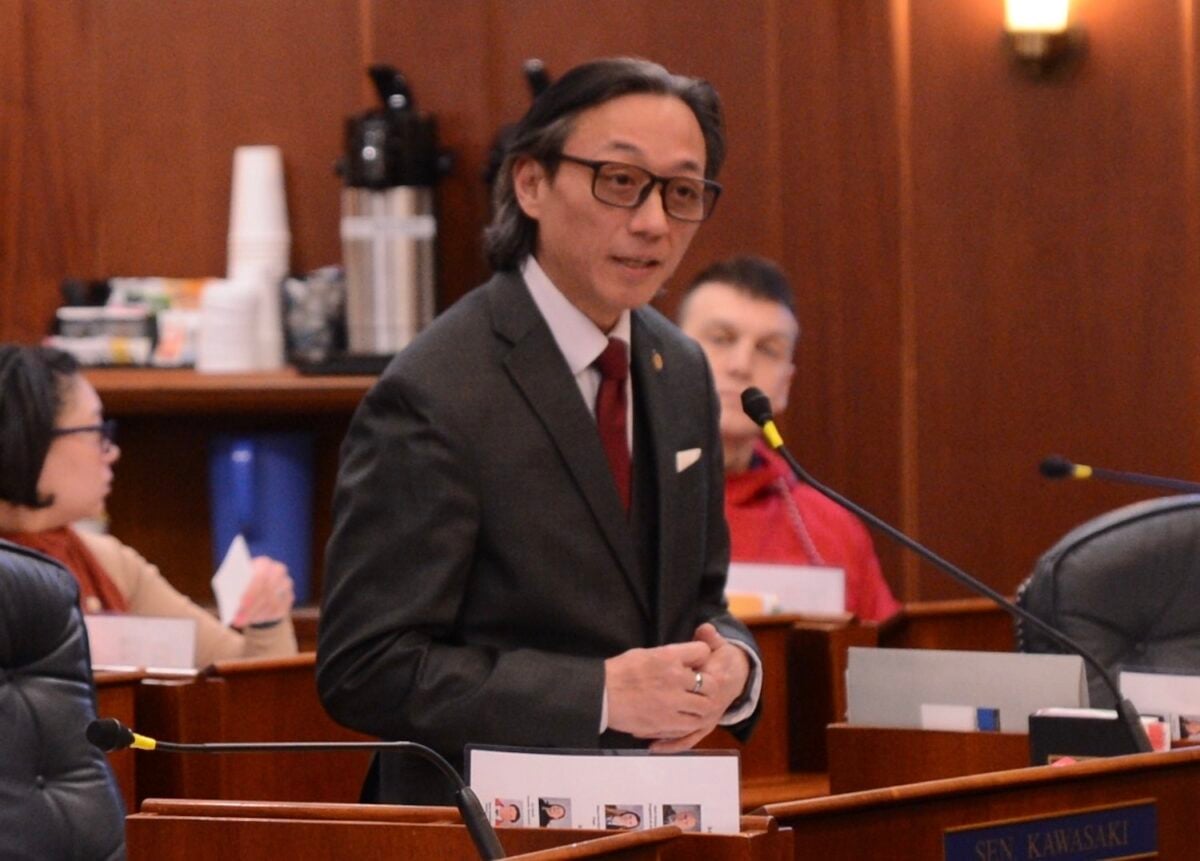
Sen. Scott Kawasaki, D-Fairbanks, speaks Friday, Feb. 7, 2025, on the floor of the Alaska Senate. (Photo by James Brooks/Alaska Beacon)

The Alaska Senate unanimously passed a bill Monday that would grant back Permanent Fund dividends to Alaskans whose convictions are vacated, reversed or dismissed.

Under current Alaska law, people who were sentenced or incarcerated as a result of a felony conviction or certain combinations of multiple misdemeanors forfeit their dividends that year and any following years of incarceration. An amount equivalent to the incarcerated person’s dividend is deposited into a restorative justice account.

Sen. Scott Kawasaki, D-Fairbanks, the sponsor of Senate Bill 167, said Monday, “The state has a duty and obligation to rectify harm done to those who might have been wrongfully convicted and to those who have been exonerated of a crime.”

The bill would grant past dividends to people whose charges were later dismissed or if their conviction was vacated, their case was retried and they were acquitted. Individuals who qualify would have one year after their charges were reversed or dismissed to apply. Individuals whose charges were dropped as part of a plea agreement in another criminal case would not qualify for back payment of dividends.

When Kawasaki served in the House of Representatives, he sponsored a similar bill in 2017 that passed in that chamber 38-1.

Kawasaki told the Senate that this change would impact “very few people annually,” and would provide a “modest, essential source of income.”

The Department of Revenue was not able to determine the fiscal impact of the proposed legislation since the Permanent Fund Dividend Division does not know how many Alaskans with past vacated sentences will apply for a past year’s dividends. Funding for past PFDs comes from a reserve for prior years’ dividends in the budget.

The bill received support from Tanana Chiefs Conference and the nonprofit After Innocence.

Kawasaki estimated last year that Marvin Roberts, Eugene Vent, George Frese and Kevin Pease, known as the Fairbanks Four, would receive approximately $103,450 in back PFDs after they were wrongfully incarcerated in connection with the 1997 death of John Hartman.

Categories
Alaska News Featured Juneau News juneau Juneau Local Juneau Local Ketchikan Local News Feeds Sitka Local

President Donald Trump calls for repeal of ranked choice voting in Alaska

By: Sean Maguire, Alaska Beacon

 President Donald Trump speaks to the media in the Oval Office at the White House on Sept. 2, 2025 in Washington, D.C. 

President Donald Trump on Friday called on Alaska voters to repeal ranked choice voting at the November election.

“The Wonderful People of Alaska desperately want to restore Free, Fair, and Honest Elections in their Great State, and get rid of their disastrous, and very fraudulent, “Ranked-Choice Voting,” Trump said on Truth Social.

An effort to repeal ranked choice voting in 2024 failed by just 737 votes. A separate repeal initiative, sponsored by figures aligned with the Alaska Republican Party, is set to appear on the 2026 general election ballot. 

Trump gave his “complete and total support” to supporters of the repeal effort, including U.S. Sen. Dan Sullivan and Congressman Nick Begich, both Alaska Republicans running for reelection in November. 

The president’s post was seized on by Republican candidates for Alaska statewide office who echoed his calls to strike down the voting system.

Alaska voters narrowly approved a ballot measure in 2020 that implemented ranked choice voting for state and congressional elections, alongside open primary elections and tougher campaign finance disclosure requirements. 

Ranked-choice voting in Alaska lets voters pick candidates in order of preference rather than choosing just one. If no candidate wins a majority of first-choice votes, the lowest-ranked candidate is eliminated and those votes are redistributed until someone surpasses 50% of votes.

However, the new election system has been controversial. Opponents argue that ranked choice voting is unnecessarily complicated, while supporters say it has led to more moderate and consensus candidates elected.

Ranked voting, open primaries and the tougher campaign finance disclosure requirements would all be struck down if the 2026 ballot measure is approved by a majority of voters.

Alaska for Better Elections is a group running voter education campaigns in support of retaining ranked choice voting and open primaries. Executive Director Juli Lucky said Alaska’s election system has allowed policymakers across the political spectrum to work together without fear of challengers in partisan primaries. 

“I think Alaskans will reflect on the results we’ve seen to decide whether our system of open primaries, ranked choice voting, and the strictest campaign finance laws in the country works for them,” Lucky said by text message after Trump’s post. “Ultimately, Alaskans created and enacted this system, and Alaskans will decide whether we keep it.”

Categories
Alaska News Featured Juneau News juneau Juneau Local Juneau Local Ketchikan Local News Feeds Sitka Local

Cruise companies to Alaska are avoiding a popular excursion to Tracy Arm after a massive landslide

This photo provided by the U.S. Geological Survey looks up Tracy Arm fjord to the terminus of the South Sawyer Glacier about 80 miles southeast of Juneau, Alaska, on Aug. 13, 2025, days after a landslide in the area. (John Lyons/U.S. Geological Survey via AP)

AP- For years, a popular part of many cruises in southeast Alaska has been sailing up Tracy Arm, a long, narrow fjord marked by steep mountains, glittering waterfalls and calving glaciers.

But this season, major cruise lines are skipping it. A massive landslide last summer sent parts of a glacier crashing into the water, generated a tsunami and pushed a wave high up the opposite mountain wall. Several companies opting out cited safety concerns with the still-hazardous slopes.

“Tracy Arm is the majestic princess, you know, she is the queen of fjords,” said travel agent Nate Vallier.

The destination cruise and tour companies have chosen as an alternative — nearby Endicott Arm and Dawes Glacier — is “still beautiful by any means, but it’s just not the same,” he said.

Tracy Arm, southeast of Juneau, is a roughly 30-mile (50-kilometer) fjord that features two tidewater glaciers — the North and South Sawyer — and wildlife, including seals and bears.

Early on Aug. 10, 2025, a landslide originating high on a slope above the toe of the South Sawyer, near the head of the fjord, sent water surging more than a quarter mile (more than half a kilometer) up the mountain wall opposite the slide and out Tracy Arm.

No ships were in the fjord, officials said, and no deaths or injuries were reported. But kayakers camped on an island near where Tracy and Endicott arms meet had much of their gear swept away by the rushing water.

Southeast Alaska, largely encompassed by a temperate rainforest, is no stranger to landslides. And while it’s long been known the fjord network in the Tracy Arm region has been susceptible, the slope that failed had not been identified as an active hazard before last summer’s collapse, said Gabriel Wolken, manager of the state’s climate and ice hazards program.

Scientists are working to understand not only what caused the slope to collapse but to understand what other hazards might exist in the fjord, he said.

The area remains unstable, said Steven Sobieszczyk, a U.S. Geological Survey spokesperson. Steep landslide areas continue to change for years after an initial slide, he said by email.

“Continued rockfall and small-scale sliding from the exposed landslide scar are expected and could impact the water, potentially causing a future localized tsunami,” he said.

Major cruise companies, including Holland America, Carnival Cruise Line and Royal Caribbean said in response to inquiries from The Associated Press that they are replacing a Tracy Arm visit with Endicott Arm. MSC Cruises, Virgin Voyages and regional tour company Allen Marine also are doing Endicott and Dawes Glacier instead. Norwegian Cruise Line said it does not have voyages sailing by Tracy Arm.

Endicott already has been a stop for some ships previously and an alternative when conditions in Tracy Arm, such as excess ice, have been unsafe.

Vallier, who owns the Alaska Travel Desk, said he would have liked cruise companies to give travelers more advance notice about itinerary changes.

After leaving Seattle, the first ships of the season are due April 21 in Ketchikan and in Juneau the following week.

Seeing a glacier — particularly a dynamic, calving glacier — is a bucket-list item for many tourists, and that’s what has made Tracy Arm so popular, he said. While the Mendenhall Glacier in Juneau is a major attraction for the capital city and cruise port, many visitors view it from across a large lake, and it has diminished or entirely retreated from view from some hiking overlooks.

Kimberly Lebeda of Wichita, Kansas, was excited when she booked tickets for a Tracy Arm excursion for her family last year. Lebeda, who researches areas she visits, said she was sold on the scenery.

But the night before the stop, they were told that due to ice in Tracy Arm, they would go up Endicott instead. Her family and others who’d booked the excursion got off the ship and onto a smaller boat with glass windows, abundant seating and snacks. They saw seals on ice floes, waterfalls and “a wall of ice” calve from Dawes Glacier, she said.

She called it “an amazing thing to witness.”

“Was it worth it? Yes, because I don’t know if I’ll ever get to do that trip again,” she said. “Again, I haven’t ever been to Tracy Arm so I can’t really compare. But to me, was it worth it and was it exciting? Absolutely.”