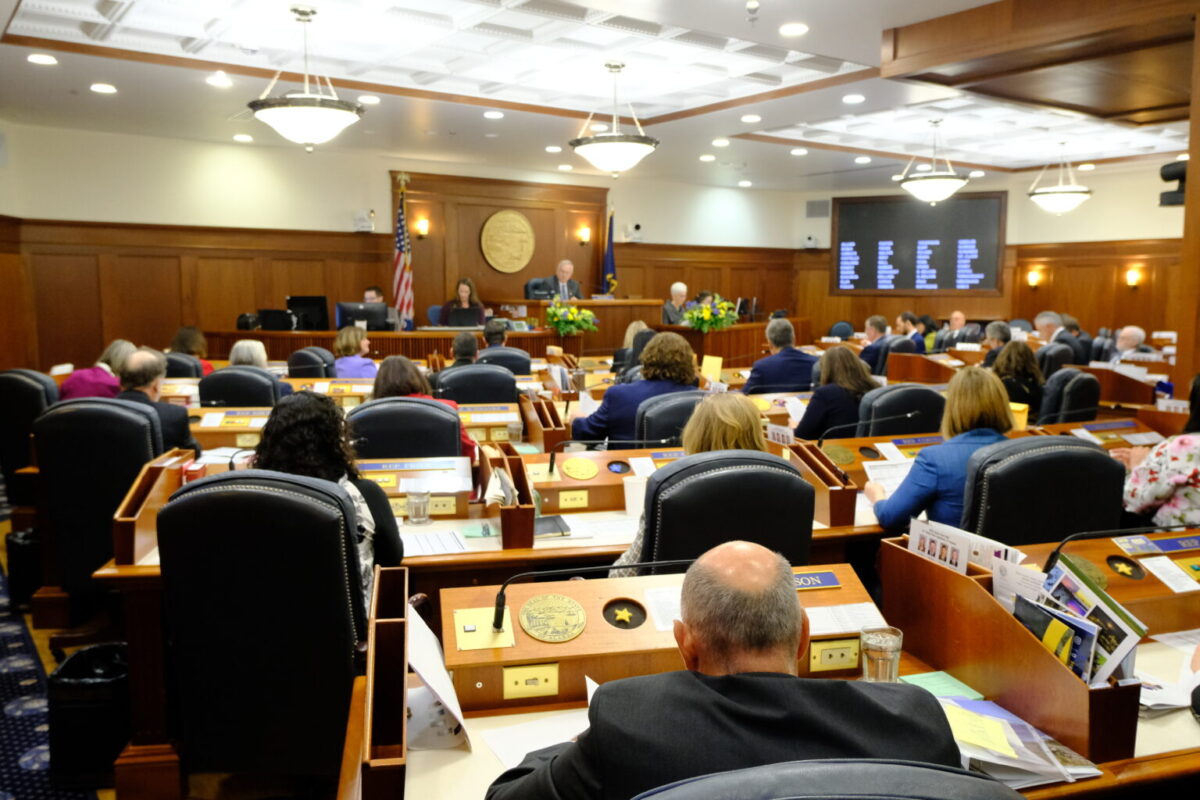
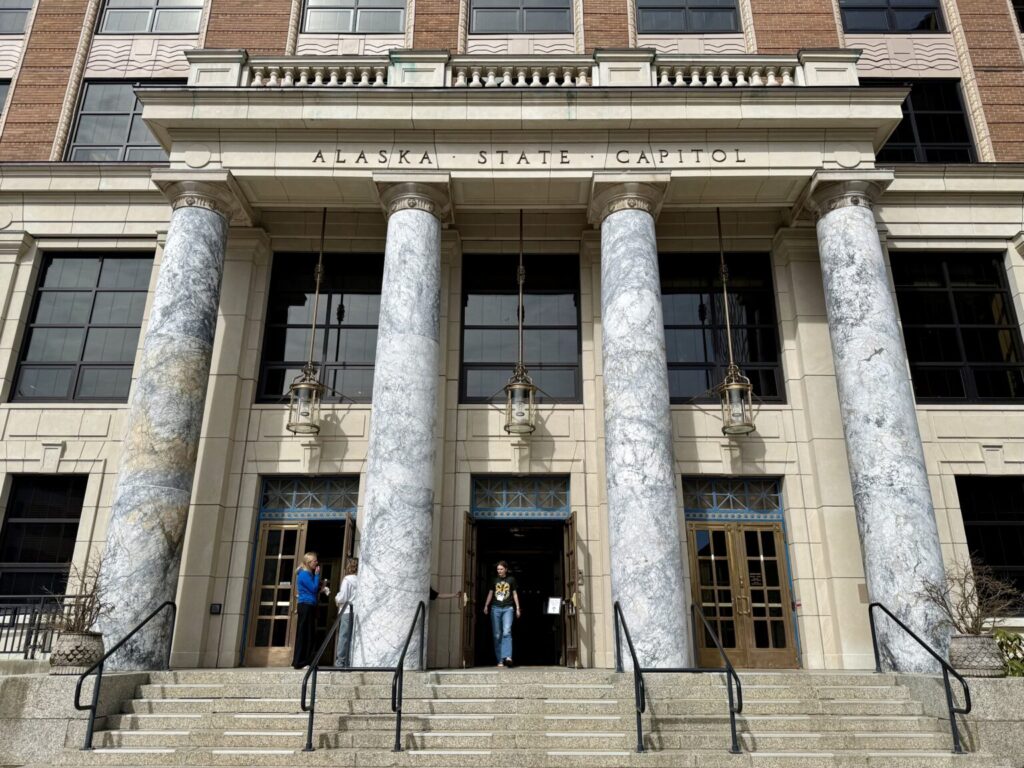
NOTN- A bill introduced in the Alaska Senate would repeal the state’s voter-approved 90-day limit on regular legislative sessions, arguing the restriction has failed to improve efficiency and has instead led to longer, more costly extended and special sessions.
“This bill repeals a law that was in place, it was a citizen’s initiative.” Said Senator Cathy Giessel, “This table certainly, understands more than anyone the complexity of the issues we face, and adjourning mandatorily by 90 days is unrealistic.”
Senate Bill 34 would eliminate a statute that shortened regular legislative sessions from up to 121 days to 90 days. The bill does not establish a new session length, allowing the Legislature’s flexibility to meet for the full duration allowed under the Alaska Constitution.
In a sponsor statement, the bill argues that the 90-day limit has proven “impractical”.
Since the measure took effect, lawmakers have completed their work within 90 days only a handful of times.
“The Alaska Legislature has completed its work within that timeframe on only three occasions.” The statement reads, “Two of these instances occurred in the early years of the measure’s adoption, and the third took place during the COVID-19 pandemic in 2020. However, these instances were exceptions, not the norm, and have highlighted the inherent flaws of the 90-day restriction.”
In most years, the Legislature has exceeded the 90-day limit and continued work through extended sessions or special sessions, sometimes well beyond the original constitutional limit of 121 days.
The statement says 90 day sessions have not reduced costs or improved productivity. Instead, it argues the deadline has contributed to rushed decision-making, repeated extensions and added expenses associated with convening additional sessions.
SB 34 does not automatically lengthen legislative sessions, but would remove the legal restriction.
“And with that the legislature can adjourn anytime it wants if it gets its business done.” Said Senator Lyman Hoffman.
Jonathan Kreiss-Tomkins is seen on Jan. 17, 2026, in Sitka, Alaska, in this photo provided by Kreiss-Tomkins. (Handout photo)
By: James Brooks, Alaska Beacon
Jonathan Kreiss-Tomkins is seen on Jan. 17, 2026, in Sitka, Alaska, in this photo provided by Kreiss-Tomkins. (Campaign handout photo)Jonathan Kreiss-Tomkins is seen on Jan. 17, 2026, in Sitka, Alaska, in this photo provided by Kreiss-Tomkins. (Handout photo)
Former state legislator Jonathan Kreiss-Tomkins, a Democrat from Sitka, is running for governor, he said Tuesday.
Kreiss-Tomkins, frequently known as “JKT,” served in the Alaska House of Representatives between 2013 and 2023. He becomes the 16th candidate and third Democrat to enter this year’s gubernatorial election.
Incumbent Gov. Mike Dunleavy is term-limited and unable to run for a third term.
In Alaska, the top four vote-getters, regardless of political party, advance from the August primary to the November general election. In November, Alaskans use ranked-choice voting to name their preferences.
Kreiss-Tomkins said he’s running because Alaska has big problems and he’s interested in solving them.
“I really enjoy working with people from diverse backgrounds and different viewpoints and perspectives to try to forge compromise and get things done,” he said.
While in the Legislature, Kreiss-Tomkins was a member of the bipartisan, bicameral fiscal working group that in 2021 drafted a plan intended to bring the state’s finances in line over the long term.
Though that plan was never enacted, its components resemble the fiscal plan introduced this year by Gov. Mike Dunleavy.
“We’re in a perpetual budget uncertainty,” Kreiss-Tomkins said, identifying the state’s fiscal situation as his No. 1 issue.
Since oil prices plunged in 2015, legislators and governors have struggled to balance Alaska’s budget on an annual basis, occasionally bringing the state to the brink of a government shutdown.
“We’re living and dying by the price of oil, and we have a structural budget deficit, so the state’s finances are not especially in order, and that is, I think, probably the highest-order problem,” Kreiss-Tomkins said.
He said Dunleavy hasn’t been able to work across party lines and hasn’t been successful with the Legislature. Kreiss-Tomkins contrasted that with his own experience as a member of a Democratic-independent-Republican coalition majority in the state House.
“I feel like we need that same spirit in the executive branch, and if we could have a governor and an executive with that approach and mindset … there’s a tremendous amount of good that we can get done for Alaska,” he said.
Kreiss-Tomkins said the campaign season will show how he differs from the other two Democrats in the race: former state Sen. Tom Begich, and current state Sen. Matt Claman.
When it comes to the number of other candidates in the race, Kreiss-Tomkins said it’s not a bad thing for Alaskans to have so many choices.
“Seeing so many people willing to run sort of reflects the importance of the election and the gravity of the problems facing Alaska,” he said, adding that he expects “some winnowing of the field as time goes on.”
Cars are driven on Fourth Avenue in downtown Anchorage on Oct. 7, 2024. (Photo by Yereth Rosen/Alaska Beacon)
Alaska’s population rose slightly between 2024 and 2025 and is now at its highest level since 2017, the Alaska Department of Labor and Workforce Development announced Wednesday.
Alaska had an estimated 738,737 people as of July 1, 2025, the department said in its annual state population estimate.
The rise comes despite a revision that erased thousands of international immigrants that the U.S. Census mistakenly believed had moved to Alaska.
Last year, relying on Census figures showing that thousands of people had migrated to Alaska from other countries, the department estimated Alaska’s population at more than 741,000 people.
Since then, and after prodding from Alaska state demographer David Howell, the Census Bureau retroactively lowered the number of international migrants that came to Alaska, and this year’s state population estimate is significantly lower than the one published last year.
“We think (that) is more accurate given that people crossing the southern border aren’t very often making their way to Alaska,” Howell said.
With the extra residents removed and a new baseline in place, the state’s population grew on a year-over-year basis because the number of births in the state exceeded the number of Alaskans who died.
That natural increase — births minus deaths — of 3,389 people was greater than the number of people who moved out of the state.
Between 2024 and 2025, 1,740 more people moved out of Alaska than moved here. It was the 13th consecutive year of negative net migration in Alaska, extending the longest streak of negative net migration since 1945.
Overall, the state’s population grew by 0.22%. That was less than the nation as a whole (0.5%). Compared with the other 49 states and the District of Columbia, Alaska’s population growth ranked 40th.
South Carolina (1.5%), Idaho (1.4%) and North Carolina (1.3%) had the highest growth rates among states. Vermont (-0.29%), Hawaii (-0.15%) and West Virginia (-0.07%) had the lowest and were among five states that posted population declines.
The U.S. Census Bureau has slightly different figures than the state — it estimated a 0.1% population gain between 2024 and 2025 — but the Alaska Department of Labor conducts surveys of military bases and group homes that the Census Bureau does not, Howell said. For that reason, he believes the state’s estimate is more accurate than the Census Bureau’s.
Overall, Howell said, Alaska seemed to simply extend existing population trends between 2024 and 2025.
“We’re continuing to see losses in the working-age population. … We’re really starting to see declines in the school-age population. It was growing slightly at the beginning of this decade, but at this point, there’s about 1,000 more 17-year-olds than there are 4-year olds. And so we’re just going through aging,” he said.
Alaska’s median age is 37.1, one and a half years older than it was at the start of the decade. Haines, the state’s oldest community, has a median age above 50.
As the state ages, the number of new births is dropping and the number of deaths is rising.
Howell and the Department of Labor and Workforce Development are predicting that the state’s population will start dropping steadily by the year 2050.
The number of births in the latest population estimate is the lowest since the trans-Alaska oil pipeline was built. The number of deaths dropped slightly last year, but Howell said there may be a morbid reason for that: The COVID-19 pandemic peaked in Alaska in 2021-2022 and may have killed elderly Alaskans who would have died later.
This year’s state population estimate retroactively updated the population change between 2021-2022, turning it from a small gain into a decline.
On a borough and city level, existing trends continued in the latest forecast. The Matanuska-Susitna Borough continues to be the fastest-growing large area of the state, the population of Anchorage is relatively flat, the Interior’s population is growing slightly and Southeast Alaska’s population is falling.
U.S. Rep. Mary Peltola, D-Alaska, speaks on Jan. 4, 2024, at a town hall meeting on the possible Albertsons-Kroger grocery merger. The meeting was held at the Teamsters Local 959 headquarters in Anchorage. Peltola said on Tuesday she has not decided whether to support her party's likely candidate, Vice President Kamala Harris. (Photo by Yereth Rosen/Alaska Beacon)
U.S. Rep. Mary Peltola, D-Alaska, speaks on Jan. 4, 2024, at a town hall meeting on the possible Albertsons-Kroger grocery merger. (Photo by Yereth Rosen/Alaska Beacon)
AP-Democratic former U.S. Rep. Mary Peltola said Monday that she would challenge Republican Sen. Dan Sullivan in this year’s midterm elections, vowing to shake up the establishment to make life more affordable for Alaskans.
“Life is difficult here, and we know that we have to take care of each other,” Peltola said in a video announcement.
Peltola, who is Yup’ik, was the first Alaska Native to serve in Congress. She won special and regular elections in 2022, defeating a field that included Republican former Gov. Sarah Palin. In 2024, she lost to Republican Nick Begich, who had also run in 2022.
Peltola focused on local concerns in her announcement, saying Alaska’s future depends on fixing the “rigged system in D.C. that’s shutting down Alaska, while politicians feather their own nests.”
She said the salmon and migratory birds that once filled the freezers of Alaska Native subsistence hunters are now harder to find, forcing families who live far from the state’s limited road system to rely on grocery stores for pricey staples, driven up by high transportation costs.
“It’s not just that politicians in D.C. don’t care that we’re paying $17 for a gallon of milk in rural Alaska,” she said. “They don’t even believe us. They’re more focused on their stock portfolios than our bank accounts.”
Although Democrats are hopeful about picking up seats in this year’s midterms, Alaska could prove to be difficult political terrain. Sullivan, a former state attorney general and natural resources commissioner, defeated the state’s last Democratic senator in 2014.
The Republican National Committee said Peltola became “a rubber stamp for the far-left the second she got to Washington.”
“Alaskans saw through her empty promises then showed her the door, and she’ll lose to Dan Sullivan who fights for Alaskans every day,” RNC spokesperson Nick Poche said in a statement.
While serving in Washington, Sullivan has been involved in military and resource development issues, and he was endorsed by then-President Donald Trump in the 2020 election.
“Senator Sullivan has spent years delivering real results for Alaska: historic investments in our state’s health care, major funding for our Coast Guard, helping protect those who can’t protect themselves and policies that are finally unleashing Alaska’s energy potential,” his campaign spokesperson, Nate Adams, said in an email to The Associated Press.
“His opponent,” Adams said, “served a term and a half in Congress where she didn’t pass a single bill. Alaskans deserve a senator with a proven record of getting things done, and the contrast couldn’t be clearer in this race.”
Peltola has long touted her ability to work across party lines, such as supporting the large Willow oil project on Alaska’s North Slope. She angered some Democrats in 2024 when she refused to endorse then-Vice President Kamala Harris in the presidential race won by Trump.
Peltola said Alaska’s Republican congressional delegation used to ignore partisanship and do what was right for the state, such as backing public media and disaster relief, and even invoked Republican former Sen. Ted Stevens.
“It’s about time Alaskans teach the rest of the country what Alaska First and, really, America First looks like,” Peltola said.
Alaska has open primaries and ranked choice voting in general elections. The top four vote-getters in the August primary regardless of party affiliation will advance to the November general election.
Rep. Nick Begich, R-Alaska, speaks during the commissioning ceremony for the Coast Guard icebreaker Storis on Sunday, Aug. 10, 2025, in Juneau, Alaska. (Photo by James Brooks/Alaska Beacon)
The U.S. House of Representatives voted 230-196 on Thursday to extend Affordable Care Act subsidies for three years and reverse massive cost increases that went into effect with the new year.
The reversal must still be approved by the U.S. Senate and President Donald Trump before becoming effective.
Alaska’s lone member of the House, Republican Rep. Nick Begich III, voted against the extension, as did 195 other Republicans.
Seventeen Republicans voted for the extension of subsidies that were enacted during the COVID-19 pandemic emergency, joining all of the chamber’s Democrats.
The House’s Republican leaders opposed the extension, but a handful of Republicans signed a petition in December to force a vote.
Begich did not sign that petition, and on Wednesday, he joined other Republicans in an unsuccessful procedural vote intended to block Thursday’s decision.
In a written statement explaining his vote on Thursday, Begich said extending subsidies would not fix the problems he sees with the Affordable Care Act, commonly known as Obamacare. “The health insurance system created by Democrats under Obamacare has proven completely unaffordable for the American healthcare customer,” the statement said. “An extension of Obamacare COVID subsidies does not fix what is broken.”
He said he would like to see reforms to the Affordable Care Act, without which he said the extension “has no credible pathway forward in the Senate.”
In December, Begich voted in favor of a Republican-proposed alternative to the extension. That alternative, which focuses on drug costs, would not stop or reverse the new cost increases and has thus far been rejected by the Senate.
The Congressional Budget Office reported that the alternative would reduce health insurance premiums for insured Americans but would also reduce the number of Americans who are insured.
“I remain committed to working on reforms that lower costs, expand access, and improve outcomes for all Americans,” Begich said in his statement. “Temporary extensions without meaningful reform are not the solution. Real reform that puts patients first is.”
In December, Alaska’s two U.S. Senators, Lisa Murkowski and Dan Sullivan — both Republicans — joined Senate Democrats in an unsuccessful attempt to advance a condition-free extension similar to the one passed by the House on Thursday.
That was a change in position for Sullivan, who had previously opposed extensions that were not coupled with changes to the Affordable Care Act.
Begich and Sullivan are each up for election this fall. Sullivan does not have a Democratic Party-backed opponent yet, but former U.S. House Rep. Mary Peltola is widely expected to enter the race this month.
Begich is being opposed by Anchorage pastor Matt Schultz. Alaska Democratic Party Chair Eric Croft said by email that Thursday’s vote will be a campaign issue in the fall.
“After allowing lifesaving ACA tax credits to expire on December 31, Nick Begich doubled down on his betrayal of Alaska families and blocked the extension of these credits,” he wrote. “We cannot afford these health care price hikes, and we won’t forget about Nick Begich’s betrayal this November.”
The tundra surrounding Bethel, Alaska turns red and gold in the fall. October 10, 2023. (Photo by Claire Stremple/Alaska Beacon)
A national support line for Native survivors of domestic violence and sexual assault has begun work to launch an Alaska-specific service.
Strong Hearts Native Helpline is a Native-led nonprofit that offers 24-hour, seven-day-a-week support for anonymous and confidential calls from people who have experienced domestic violence or sexual assault.
The line is staffed by Native advocates, but Strong Hearts Deputy Executive Officer Rachel Carr-Shunk said there are not yet any Alaska Native people answering phone calls.
That is set to change soon.
“Even though we’re a Native organization and all of our advocates are American Indian, we do recognize that there is a difference for our Alaska Native relatives who experience violence in that context, whether they live in a rural village or they just live in Alaska, which is a different experience,” she said.
Carr-Shunk expects the organization to launch the Alaska-specific line within the next calendar year, after building partnerships in the state.
“When Alaska Native survivors reach out, we want them to trust that they’re going to have someone who understands their experience as an Alaska Native person, or who understands that identity,” she said.
To that end, the organization has hired Anchorage-based Minnie Sneddy, who is originally from Hooper Bay. Sneddy is tasked with explaining Alaska’s regional differences and specific needs to the organization, as well as helping create a database of Alaska resources.
Sneddy has years of experience in behavioral health work and said that her career and life experience have shown her the lack of resources for people who face domestic violence and sexual assault — and how many of those people need mental health support.
“The years I lived in Hooper Bay, and here in Anchorage and Alaska, there’s so many (people) that need help and want help, but they feel like if they do come forward and get help, they get in trouble — not only with their families, but with OCS, Office of Children’s Services,” she said. “I feel like Strong Hearts Native Helpline can help at least allow a person to be heard, because the majority of time, people want to be heard. Everyone just wants to feel seen and be heard.”
Sneddy said she is reaching out to resources that already exist in the state, and Strong Hearts is working with the Alaska Native Women’s Resource Center to build out its state-specific service.
“We don’t have a voice, really, in the villages,” Sneddy said, adding that when abuse happens: “There’s no help for an individual. And if a woman decides to do something about it, she’s seen as a bad person.”
The Strong Hearts Native Helpline is available now for Alaskans, even though there are not yet Alaska Native advocates on the other end of the line. A full list of Alaska shelters and victim’s services providers can be found in the state directory at law.alaska.gov.
Audience watches a dance group perform at the Alaska Federation of Natives convention in October 2018 at the Dena’ina Convention Center in Anchorage, Alaska. (Photo from video by Joaqlin Estus/ICT)
State demographer David Howell said on Wednesday that the state estimate isn’t expected until at least Jan. 28 due to the lack of required data from the U.S. Census Bureau.
The estimate is typically published in the first full week of January by the Alaska Department of Labor and Workforce Development and reflects information as of July the previous year.
While the department uses Permanent Fund Dividend data to hone its guess, it also incorporates Census data published annually. That data, normally available by the start of the year, isn’t expected until Jan. 27, Howell said. That means the state’s estimate can’t be finalized.
The estimate is a barometer of the state’s economic and social health: When the state’s economy is booming and the Lower 48’s economy is stagnant, in-migration surges. When the opposite is true, more people leave the state than arrive.
Last year’s estimate showed 741,147 residents, the highest population since 2017, in part due to an unexpected surge in the estimated number of people moving to Alaska from outside the United States.
If the new estimate is on par or above last year’s figure, it could be a sign that the state’s decade-long economic malaise is ebbing.
This year’s estimate is also expected to incorporate an increase in military residents in and near Fairbanks, which could boost the Golden Heart’s population.
In the long run, Alaska’s population is expected to drop because a lack of new arrivals has caused the state’s average age to rise.
That leads to a drop in the number of new births and a rise in the number of elderly Alaskans. By 2050, the agency expects the state’s population to drop by about 2%.
The deadly landslide that crashed through the outskirts of Wrangell on the night of Nov. 20, 2023, is seen from the air on the following day. The landslide killed six people and blocked a major road, the Zimovia Highway. The slide was triggered by heavy rain carried north by an atmospheric river. (Photo provided by Alaska Department of Transportation and Public Facilities)
Future assessments of U.S. landslide hazards could include the study of risks posed by atmospheric rivers, which caused extreme precipitation that was linked to recent deadly slides in Southeast Alaska.
The added focus on atmospheric rivers is one of the main updates in a bill that would reauthorize the National Landslide Preparedness Act. The bill, sponsored by U.S. Sen. Lisa Murkowski, R-Alaska, passed the U.S. Senate on Monday and is now to be considered by the U.S. House.
Atmospheric rivers are long and transitory bands of moisture and heat, likened to rivers in the sky. They carry that moisture northward from more southern latitudes, and they can dump vast amounts of rain for several hours or even days.
“You can very rapidly saturate soils in the right conditions,” said Rick Thoman, a scientist with the Alaska Center for Climate Assessment and Preparedness at the University of Alaska Fairbanks.
When such large amounts of warm southern moisture hit the steep mountainous regions of Southeast Alaska, they can cause sudden downhill flows, Thoman said.
“It’s really that intense amount of rain that atmospheric rivers deliver that’s the link to landslides,” he said.
Numerous landslides in the United States have been triggered by atmospheric rivers’ extreme precipitation. Those events include the 2023 slide in Wrangell that killed six people, the 2020 slide in Haines that killed two people and the 2015 slide in Sitka that killed three people.
Extreme precipitation events from atmospheric rivers are tied to shallow-seated landslides such as the deadly events that struck Southeast Alaska in recent years. Other types of Alaska landslides are caused by more deep-seated slope failures triggered by glacial retreat, permafrost thaw or a combination of those forces.
Also passed on Monday by unanimous consent in the Senate was another Murkowski-sponsored and disaster-focused bill, the National Earthquake Hazards Reduction Program Reauthorization Act. That bill, co-sponsored by U.S. Sen. Alex Padilla, D-California, supports the federal program that maintains earthquake measurement resources and equipment and equipment and early warning systems.
“Earthquakes and landslides are active threats that have taken lives and damaged property across Alaska in recent years,” Murkowski said in a statement issued Tuesday. “Our passage of these bills puts us on track to ensure that federal agencies have the resources they need to help keep communities safe both back home and around the country. I thank my colleagues for working cooperatively to pass these measures and urge the House to take them up and send them to the President as soon as possible.”
Kim Kovol has accepted a job with the U.S. Department of Health and Human Services, Gov. Mike Dunleavy announced last week. Her last day working for the state was on Friday, and Tracy Dompeling, the department’s deputy commissioner, assumed the role of acting commissioner, the statement said.
The department’s primary divisions are the Division of Juvenile Justice, the Alaska Psychiatric Institute, the Alaska Pioneer Homes and the Office of Children’s Services.
Kovol was the first commissioner of the Department of Family and Community Services, which was created in 2022. Up to then, its functions were part of the Alaska Department of Health and Social Services. Through an executive order, Dunleavy split that department into two: the Department of Health and the Department of Family and Community Services.
In his statement, Dunleavy said Kovol was a “strong and dedicated leader” for the redesigned department. “As the first Commissioner of DFCS, she built a foundation focused on service, accountability, and support for Alaska’s most vulnerable populations. I thank her for her service and wish her every success in this next role,” he said.
Kovol said she was honored to have served in that role. “I am incredibly grateful to the staff, partners, and communities who have supported our work. Together, we have made meaningful progress for Alaska families, youth, and elders, and I will always be proud of what we have accomplished,” she said in the statement.
Kim Kovol, the first commissioner of the Alaska Department of Family and Community Services. The department was created in 2022 when the Department of Health and Social Services was divided into two entities: the Department of Health and the Department of Family and Community Services. Kovol’s last day working for the state was Jan. 2. She has taken a job with the U.S. Department of Health and Social Services. (Photo provided by the Alaska Department of Family and Community Services)
Kovol is the second Alaska department head to leave state service to join the Trump administration. Almost a year ago, Emma Pokon left her position as commissioner of the Department of Environmental Conservation to become the Pacific Northwest regional administrator for the U.S. Environmental Protection Agency.
Dunleavy in May chose Randy Bates to be the department’s new commissioner. Bates was formerly director of DEC’s Division of Water.
With Kovol’s departure, there are now five state departments with leaders who currently lack legislative approval.
In addition to Bates, Dunleavy has named commissioner-designees for the Department of Law and the Department of Natural Resources. Dunleavy in August named Stephen Cox, a former U.S. attorney in Texas, as Alaska’s attorney general, replacing Treg Taylor, a Republican who is running for governor.
Dunleavy also named John Crowther, a DNR veteran, as his choice to be permanent commissioner. Crowther became acting commissioner after John Boyle resigned from the position in October.
Bates, Cox and Crowther are subject to legislative confirmation after lawmakers convene later this month for their 2026 session.
The state Department of Revenue is currently being led by an acting commissioner, Janelle Earls, who assumed the job in August after Adam Crum left the commissioner post. Crum is another Republican candidate for governor.
Dunleavy has not yet named his choices for the commissioner posts at the Department of Revenue or the Department of Family and Community Services, said Jeff Turner, the governor’s spokesperson. Earls and Dompeling are currently acting commissioners and it is not clear whether the governor will name commissioner-designees for those positions, he said.
Dunleavy is in the last year of his second term. He is term limited and may not run for reelection.
NOTN- Juneau schools and City and Borough of Juneau offices will be closed today as a winter storm warning takes effect earlier than expected, with forecasters calling for heavy snowfall and hazardous road conditions across much of Southeast Alaska.
The City and Borough of Juneau announced that all CBJ offices and the Juneau School District will be closed.
City staff will work remotely where possible and remain available by phone or email. Officials are urging residents to limit travel to allow snow removal crews to operate safely and efficiently.
According to the National Weather Service, snow is beginning this morning for much of Southeast, and intensifing through the afternoon, with peak snowfall around midday.
Updated forecasts issued late Sunday moved winter storm warnings up in time for Juneau, Pelican, Gustavus, Hoonah and Angoon.
The weather service said Juneau could see between 8 and 14 inches of snow by this evening, Snow is expected to start out light and fluffy before transitioning to wetter snow later tonight, meaning residents can shovel snow early before the snow becomes wet and dense.
City officials are encouraging residents to avoid unnecessary driving and to check road conditions if travel is unavoidable.
The Juneau Police Department is also asking the public to report slick intersections or dangerous road conditions to its non-emergency line.
Snow removal crews from CBJ Streets and the Alaska Department of Transportation and Public Facilities have been working through the weekend to prepare for the storm.