Categories
Featured Juneau News Juneau Local Ketchikan Local News Feeds Sitka Local

Alaska school districts join lawsuit over Trump administration freeze of billions for education

By: Corinne Smith, Alaska Beacon

Pearl Creek Elementary School is seen on June 3, 2025. The Fairbanks North Star Borough School District decided to close the school at the end of the academic year due to budget cuts. (Photo by Yereth Rosen/Alaska Beacon)

Three Alaska school districts have joined a coalition from across the country — including school districts, teachers unions, parents and advocacy groups — suing the Trump administration for blocking $6.8 billion in congressionally approved education funding. 

The Anchorage, Fairbanks North Star Borough, and the Kuspuk school districts joined the lawsuit filed Monday in federal court. The suit challenges the withholding of funds as unlawful and unreasonable, as well as violating Congress’ authority and the separation of powers. 

“The lawless and last-minute withholding of federal education funds is not just a bureaucratic failure—it is a direct attack on our most vulnerable students. Less than a month before school starts, we’ve been forced to plan for cuts instead of preparing to serve children,” said Fairbanks Superintendent Luke Meinert in a statement announcing the lawsuit. 

The Trump administration has said it’s withholding the funds pending a review of the grant programs to ensure they align with the Republican president’s priorities, and to “prevent them from promoting a ‘left-wing’ agenda,” according to the lawsuit. 

For Alaska, an estimated $46.4 million was allocated across five grant programs, according to the Alaska Department of Education and Early Development. That includes funding to support migrant education, academic enrichment, English language learning, and other types of instruction, as well as teachers’ professional development. In addition, an estimated $1.1 million was withheld for adult education programs. 

According to the lawsuit, school districts nationwide are facing millions in budget shortfalls, and have had to “cancel orders for new curriculum, delay critical teacher training, pause contracts for services for English language learners, or take other actions to avoid incurring expenses that they cannot afford to pay without the money normally provided by the Formula Grant Programs.”

The Fairbanks North Star Borough School District serves more than 12,000 students across 33 schools, and has seen over $2.57 million frozen, according to the lawsuit.

“Without these Title program funds, nearly 200 education jobs are in jeopardy,” Meinert said. “Our classrooms will be less supported, and students will be left behind. This isn’t just fiscal irresponsibility—it’s a moral failure that jeopardizes the future of the very students federal law is meant to protect.”

The Kuspuk School District serves 320 students in nine schools across 12,000 square miles in Western Alaska — and has received national attention for its deteriorating school buildings and severe maintenance needs. It is facing over $180,000 in frozen funds.

 Students attend class in a Kuspuk elementary school. (Photo provided by the Kuspuk School District)

Among the grants frozen was funding to support teacher training, school supplies, enrichment programs and English language learning, including for over 130 staff. “Because English is not the first language for more than 60% of the district’s teaching staff, sustained … training has been critical to ensuring educators can effectively support English Learners across subjects and grade levels,” according to the lawsuit. 

Superintendent Madeline Aguillard said in a statement the programs are “not line items, they are lifelines” for students. 

“These are not extras. These are the programs that give our students a chance,” she said. “When funding is blocked, it does not just stall services. It dismantles the systems we have built to reach those most in need. When the federal government walks away from its obligation, it is not a delay. It is denial. Denial of access. Denial of progress. Denial of the futures our students have a right to pursue.” 

For Anchorage, the state’s largest district by population at more than 43,000 students in 94 schools, the frozen funds are estimated at $11.8 million.

In an interview last week on the district’s budget challenges ahead of the lawsuit, Superintendent Jharrett Bryantt said the funding freeze on July 1, at the start of the fiscal year was “severe,” particularly having just signed new contracts for teachers and staff. “If you offer somebody a role and no longer have the funds for it — it’s so unprecedented that the federal government would not essentially pay its bills on time because these monies were appropriated. This is not a budget reduction conversation. This is a executing the will of the Congress of conversation,” he said.

Anchorage Superintendent Jharrett Bryant (Photo provided by the Anchorage School District)
 Anchorage Superintendent Jharrett Bryantt (Photo provided by the Anchorage School District)

The freeze comes amid an ongoing state education funding debate with the Alaska State Legislature meeting for a special session on Aug. 2, as well as a dispute over local contributions to school funding. School officials said this combination of issues is devastating to public education in Alaska. Earlier this year, the Anchorage School District reported it had to lay off 42 staff positions, and cut more than $30 million in salaries, benefits and services.

Bryantt said the district had to immediately lay off five staff members following the funding freeze announcement, and transfer about a dozen more to alternate roles. “We can make sure that folks are employed. That’s my top priority, in addition to the continuity of our students’ learning,” he said, and recruiting and hiring teachers is an ongoing challenge. 

“Teachers are a national commodity,” he added. 

The lawsuit, filed in a federal court in Rhode Island, names the U.S. Office of Management and Budget, its director Russ Vought, the U.S. Department of Education and Secretary of Education Linda McMahon. It asks a judge to compel the department to release the funds.  

Alaska U.S. Sen. Lisa Murkowski joined nine other Republican senators in a letter to the Office of Management and Budget urging the department to release K-12 funds, as well as over $700 million for adult education programs.

Last week, the U.S. Department of Education announced it will release some of the withheld grants, an estimated $1.3 billion that goes to support after-school care and summer school programs, though it’s unclear when those funds will be received by districts. 
Categories
Featured Juneau News Juneau Local Ketchikan Local News Feeds Sitka Local

Actuarial review finds State pension plan would improve retention despite higher initial cost

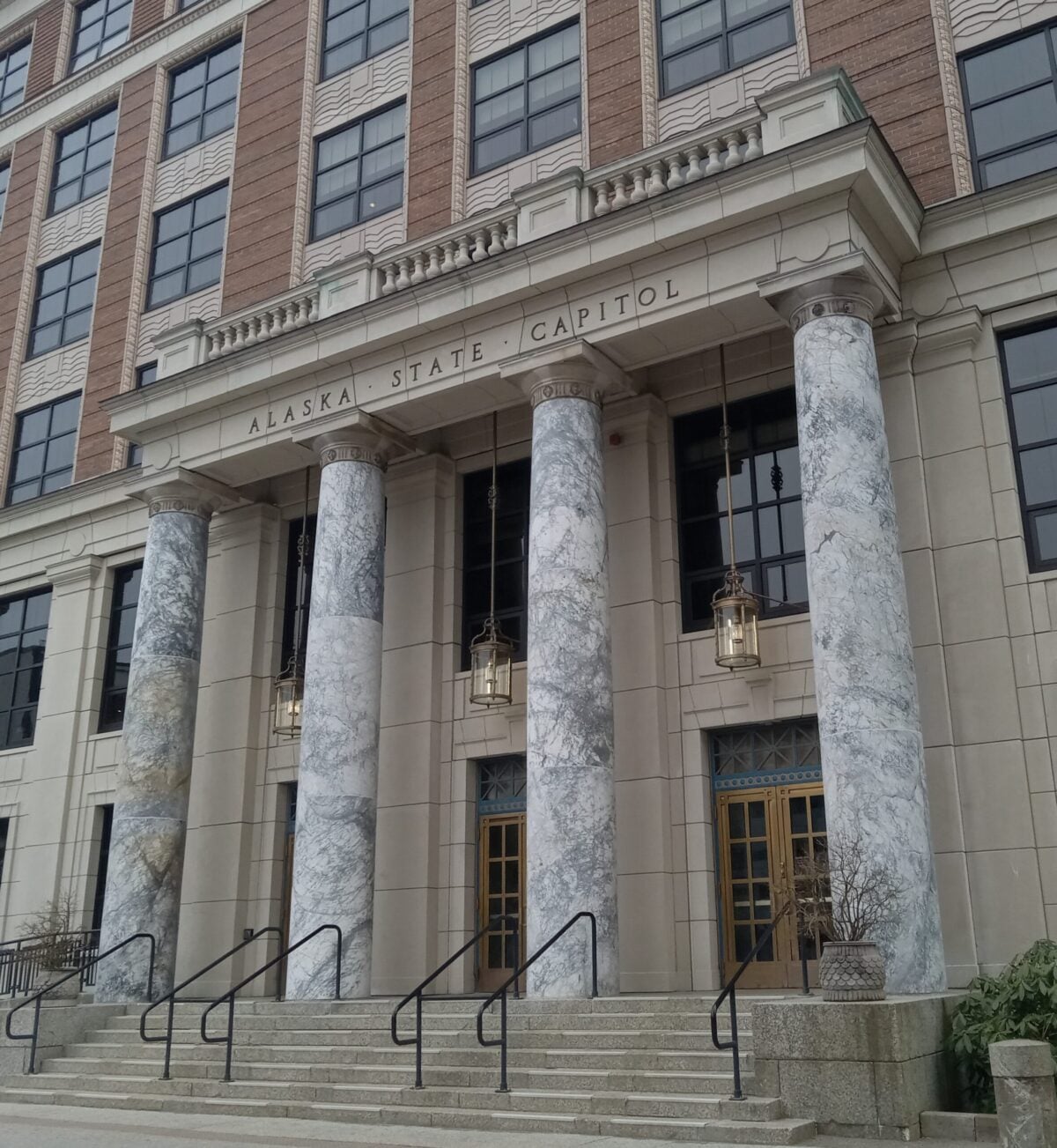
The Alaska State Capitol in downtown Juneau. (Photo by Greg Knight/News of the North)

A recent actuarial analysis presented to the Alaska House Finance Committee has renewed focus on legislation to restore a defined benefit pension for public employees, the analysis shows the plan could help retain workers despite a higher upfront price tag.

For years, efforts to reinstate pensions for state workers have faced a hurdle in Alaska law, which requires an actuarial review of any retirement legislation before it can advance to a floor vote. These reviews are often expensive and time-consuming, delaying legislative progress.

But advocates argue these studies are critical to ensuring any proposed pension system is fiscally sound.

This year, the state’s actuary delivered its report on House Bill 78 to lawmakers, outlining costs and potential long-term benefits of shifting from a defined contribution system similar to a 401(k), back to a traditional pension plan. The analysis found that defined benefit pensions provide more value to employees and improve workforce retention, which in turn raises overall payroll and long-term staffing stability.

“The actuary said That’s going to, almost single-handedly solve your retention problem.” Said Juneau Senator Jessie Kiehl.

The fiscal note for HB 78 estimates the pension plan would cost the state about $40 million in the first year, with expenses growing as more vacant state jobs are filled and employees remain longer.

But Kiehl says the predicted $76 million annual savings and increased revenues for public employers far outweighs the price tag up front.

“In the end, we save money. ” Kiehl said. “The state of Alaska is actually going to come out ahead, not only by having better trained, more effective public workers, but by having a more efficient government.”

Kiehl also specifically noted Juneau Police Department, who face poaching from Washington State Patrol, “when police officers at JPD have a pension, they don’t get poached by Washington State Patrol who come up here just about every summer, take our JPD officers to dinner and say, Hey, come on down. We’ll hire you, bring your experience and all the training the taxpayers of Juneau paid for, and by the way, you can earn a Washington state pension.”

The legislature is expected to take up the measure during the 2026 legislative session.

Categories
Featured Juneau News Juneau Local Ketchikan Local News Feeds Sitka Local

Alaska state senator, key vote on possible budget veto override, gets waiver from U.S. Army

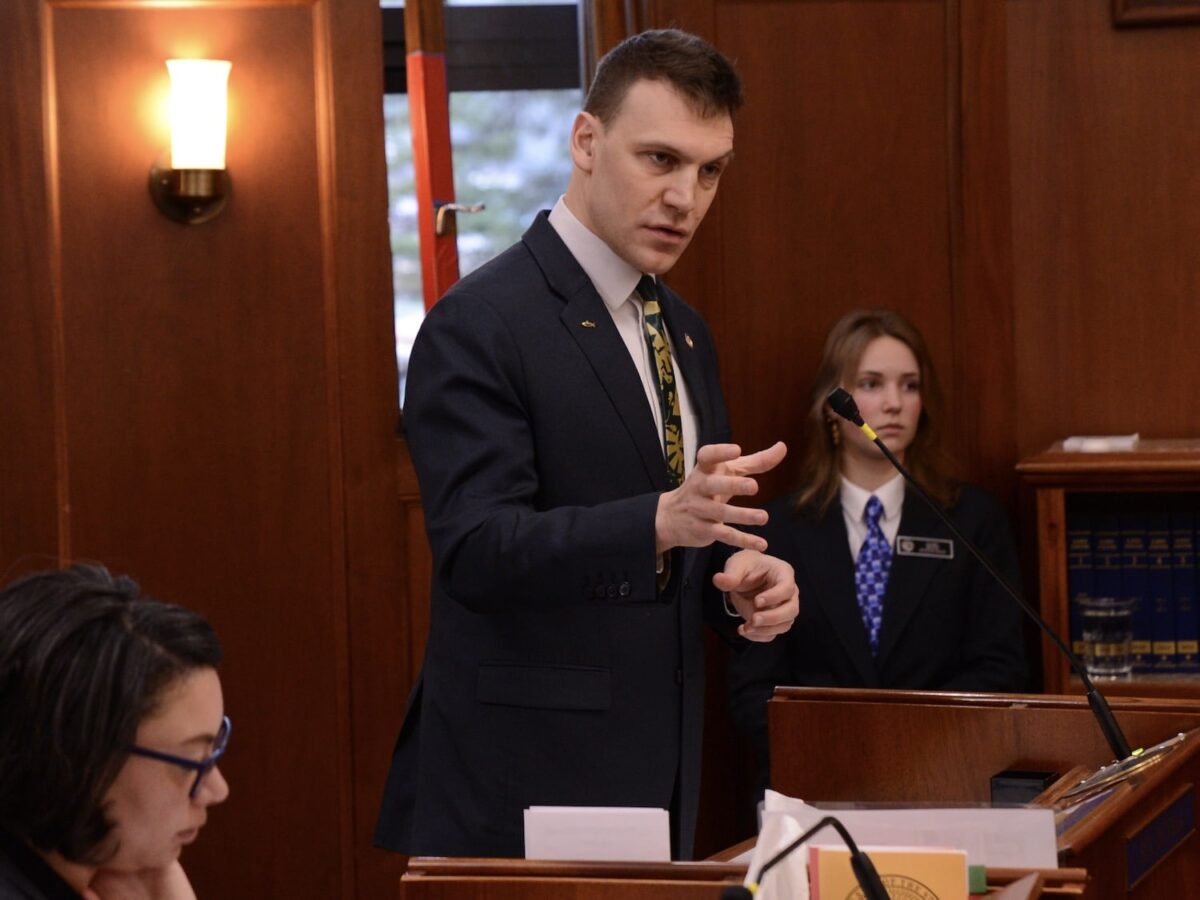
Sen. Forrest Dunbar, D-Anchorage, speaks in favor of Senate Bill 39, the payday loans bill, on Tuesday, April 15, 2025. (Photo by James Brooks/Alaska Beacon)

Anchorage Democratic Sen. Forrest Dunbar will be able to attend the Aug. 2 special session of the Alaska Legislature, he said late Tuesday in a post on Facebook.

Dunbar, a member of the National Guard, is deployed to Poland on active-duty service but received a federal waiver that will allow him to return to Alaska for legislative work.

Dunbar’s attendance is critical for lawmakers who hope to override Gov. Mike Dunleavy’s decision to veto millions of dollars in public school funding from this year’s state operating budget. Despite his attendance, the outcome remains uncertain, and Dunleavy has the option of canceling the session.

It takes 45 votes to override an Alaska governor’s budget veto, and Dunbar was one of 46 legislators who voted in May to reverse the governor’s decision to veto a bill increasing the state’s public school funding formula.

That formula is subject to the state’s annual budget process, and Dunleavy chose to only partially fund it, causing a wave of cuts to services at public schools across the state. Dunleavy had said he would not agree to the full funding increase without the Legislature adopting other policies he’s proposed.

Many legislators hoped to override that second veto in January, when the regular legislative session reconvenes, but Dunleavy called a special session for Aug. 2, forcing an early vote.

Writing on Facebook, Dunbar noted that he had previously requested to be excused from the Legislature during his National Guard service, “however, the Legislature obviously does not control the actions of the governor.”

Dunbar said he began seeking a formal waiver that would allow him to use his personal leave, pay for his own plane ticket, and return to the state for the special session.

“I am pleased to report that the commanding general to whom our unit now reports has indeed granted that request,” Dunbar wrote. “I plan to return to Alaska for the start of the special session, and I will be voting yes to override, so that our students have the funds they need to avoid catastrophic cuts to their schools.”

For weeks, it hadn’t been clear whether Dunbar would be able to obtain the rare dispensation needed to return to Alaska.

“In general, a service member on federal Title 10 mobilization orders is required to complete the full term of their deployment,” said Dana Rosso, a spokesperson for the Alaska National Guard, by email. “Any early release or temporary return would require approval through Department of Defense and U.S. Army channels and is only considered under exceptional circumstances — such as serious medical or family emergencies — while taking mission requirements and federal law into account.”

Rosso said there was no way for a state official — such as the governor or adjutant general — to issue the waiver.

“Any early release or temporary return would require approval through Department of Defense channels, typically at the Secretary of the Army or Secretary of Defense level,” he said. “These waivers are rare and only considered under extraordinary circumstances, such as serious medical issues, family emergencies, or extreme humanitarian situations.”

Dunbar’s chief of staff, Arielle Wiggin, said by email that it wasn’t clear until recently whether the commanding general of the U.S. Army’s V Corps — Lt. Gen. Charles Costanza — would grant the waiver.

Even with Dunbar’s attendance, it isn’t clear whether the governor’s budget veto will be overridden or sustained. 

In a closed-door meeting shortly after issuing a proclamation that called the session, Dunleavy asked members of the House’s Republican minority caucus to stay away from the first five days of the special session, the period when the Alaska Constitution requires any override vote to take place.

The date of the special session also coincides with the National Conference of State Legislatures, which several lawmakers were expected to attend.

Other legislators were scheduled to work or attend family events during the period.

Since the governor’s announcement, many have said they will be canceling their plans in order to attend the special session. Sen. James Kaufman, R-Anchorage, will return from a trip to Vietnam, he said, and vote in favor of the override.

Some Republicans aligned with Dunleavy on the issue, including Reps. Jamie Allard, R-Eagle River, and Kevin McCabe, R-Big Lake, have said they will follow his wishes and stay away.

Of the 46 legislators who voted this spring to override the governor’s veto of the education funding formula, all but a handful have committed to supporting a budget veto override as well.

Rep. Dan Saddler, R-Eagle River, said he will attend the special session but declined to say how he would vote on the budget issue. House Minority Leader Mia Costello, R-Anchorage, said she has not made up her mind. 

Republican Reps. Julie Coulombe and David Nelson of Anchorage, and Bill Elam of Nikiski, could not be reached by phone on Wednesday. 

The governor’s legislative director is keeping close track of the number of potential “yes” and “no” votes for a veto override, and it is possible that the governor could cancel the special session.

After Dunbar’s announcement, Alaska Democratic Party chair Eric Croft issued a statement calling the timing of the Dunleavy-called special session “one of Dunleavy’s many dirty tricks.”

“There is nothing Dunleavy won’t try to further his anti-education political agenda, including taking advantage of a legislator’s active commitment to the military. We’re grateful for Senator Dunbar’s service to our country’s security and Alaska. If not for his dedication to his constituency, we may have seen our persistent efforts to fund education fail yet again,” Croft said.

Asked about Croft’s comments, Dunleavy spokesperson Jeff Turner reiterated a statement that Dunleavy made on July 2, when he declared that the special session would be devoted to education reform and an executive order creating the new Alaska Department of Agriculture.

“Enacting a few necessary reforms to our public education system can elevate those children struggling in Alaska’s school system,” Dunleavy said at the time. “As elected officials we must do all we can to put the next generation on the path to a successful and prosperous future, and that starts with a solid public education.”

Categories
Featured Juneau News Juneau Local Ketchikan Local News Feeds Sitka Local

Former state legislator wins lawsuit that sought to enforce a clause of the Alaska Constitution

By: James Brooks, Alaska Beacon

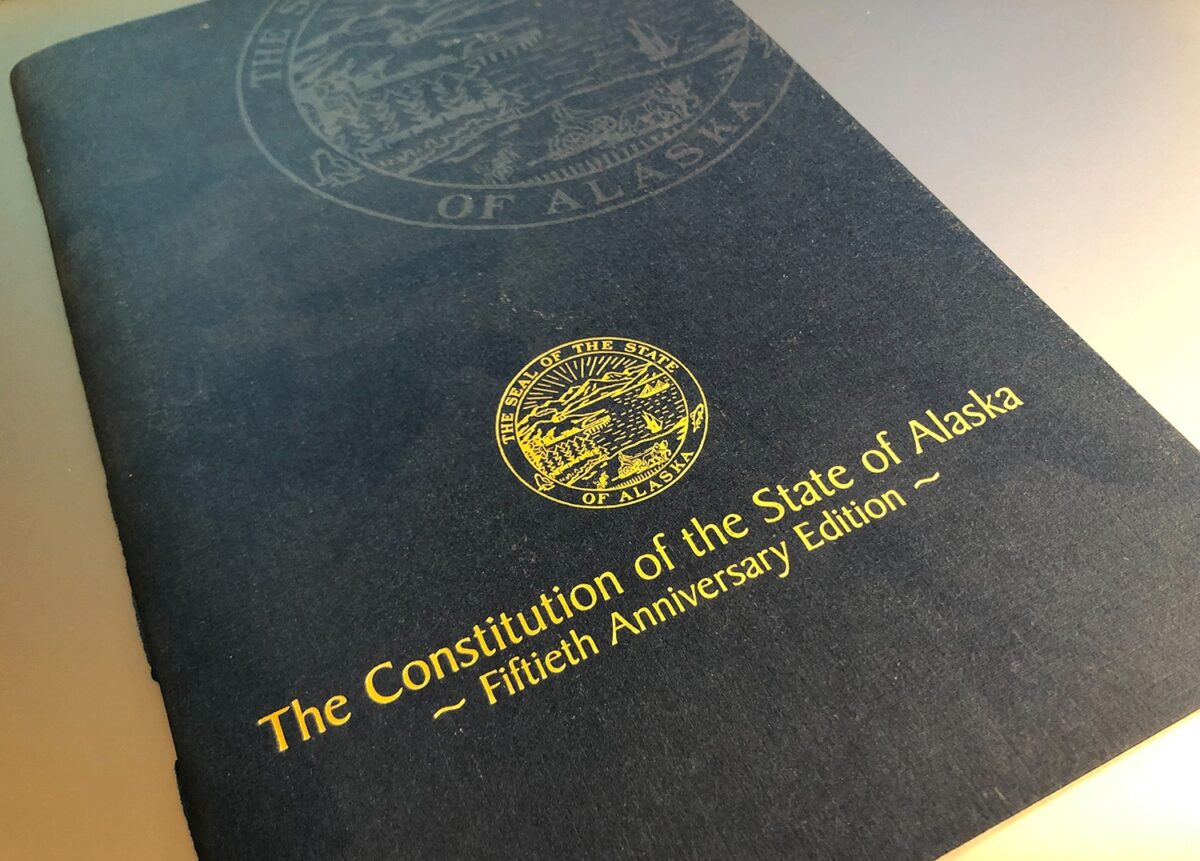
A copy of the Alaska Constitution is seen on Thursday, July 28, 2022. (Photo by James Brooks/Alaska Beacon)

Former state Rep. David Eastman has won his lawsuit against Gov. Mike Dunleavy and the state of Alaska, successfully challenging the governor’s decision to allow a bill to become law last year.

In the suit, Eastman — a Republican from Wasilla — challenged the constitutionality of Senate Bill 189, citing a clause of the Alaska Constitution that requires lawmakers to limit bills to a single subject.

In the final hours of the 2024 legislative session, lawmakers combined several other bills into SB 189. Dunleavy and the executive branch had no role in the crafting of the bill, but because the governor allowed the bill to become law without his signature, the suit named him as a defendant.

On Tuesday, Juneau Superior Court Judge Larry Woolford signed an order declaring that the bill “was passed by the 33rd Alaska Legislature in violation of Article II, Section 13 of the Alaska Constitution and is therefore void.”

Woolford’s order also awards Eastman $20,250 in costs and attorney fees. Eastman was represented in the suit by attorney Joe Geldhof.

The legal victory has limited immediate impact because lawmakers this year re-passed all the bills that were combined into Senate Bill 189. Woolford’s order “does not address and has no effect on subsequent legislation repealing and reenacting the provisions of SB 189.”

Its biggest impact may be to constrain current and future legislators, preventing them from repeating the kinds of legislative logrolling that have become commonplace in the final days of each two-year legislative cycle. 

Because bills die at the end of the legislative cycle and few bills pass both House and Senate, it has become common for lawmakers to make last-hours amendments that combine bills in an effort to speed them across the legislative finish line.

“We are pleased to have resolved the Eastman v. Dunleavy case, which challenged a bill on the grounds of violating the single subject rule,” Attorney General Treg Taylor said by email on Tuesday. 

“Following the filing of the lawsuit, the Department of Law sought to provide the Legislature with an opportunity to rectify this by breaking the bill into separate pieces of legislation. Fortunately, the Legislature successfully completed their work prior to the conclusion of the case, avoiding confusion on the laws enacted,” Taylor said.

No appeals are expected.

Categories
Featured Juneau News Juneau Local Ketchikan Local News Feeds Sitka Local

Dunleavy violated Alaska Constitution with appointment to judge-picking board, lawsuit alleges

By: James Brooks, Alaska Beacon

Nesbett Courthouse in downtown Anchorage on Oct. 7, 2024. (Photo by Yereth Rosen/Alaska Beacon)

A group that advocates in favor of Alaska’s nonpartisan judicial system has filed a lawsuit against Gov. Mike Dunleavy, alleging that he illegally appointed a member to the board that nominates candidates for the state’s judicial vacancies.

The suit, filed Wednesday in Anchorage Superior Court by Alaskans for Fair Courts, claims Dunleavy violated the constitution and state law when he picked John W. Wood — also named as a defendant — for a public seat on the Alaska Judicial Council.

Under the state constitution, the council consists of three non-attorneys picked by the governor and three attorneys selected by the Alaska Bar Association. In addition, whoever holds the office of chief justice of the Alaska Supreme Court sits as the council’s chair.

The council accepts applications for judicial vacancies, vets those applicants for merit using nonpartisan metrics, then submits a list of nominees to the governor for final selection.

Wood was picked for a non-attorney seat on the board but is a former attorney, making him ineligible to serve, the suit alleges. In addition, the suit says Wood is ineligible because he held a “position of profit” with the state when appointed in May.

State records show Wood has served as a state contractor, receiving more than $132,000 this year. The most recent payment is listed as June 6.

Alaskans for Fair Courts also claims that Wood is ineligible because he has not been confirmed by the Legislature. 

Wood was appointed during this year’s legislative session, but after lawmakers had voted on confirmations for the year, the suit claims, meaning that Wood’s appointment should not be considered a recess appointment subject to confirmation next year.

“If the governor were to appoint a (judge) nominee selected by a judicial council that is not properly constituted … the resulting legal deficiency … could subject actions taken by the new judge to challenge by litigants,” the suit claims.

It asks that the Anchorage Superior Court issue an order declaring that Wood is ineligible, and that his appointment is void.

In a written statement, Attorney General Treg Taylor said the state hasn’t yet been served with the lawsuit and can’t comment on the merits.

About the timing issue, Taylor said, “The Governor has the ability to appoint three members to the Judicial Council, and the Alaska Bar Association appoints the other three members to provide a 50/50 balance on the Council. The Council then nominates judges for the Governor’s selection with any ties on the Council being broken by the Chief Justice. It is important that the Council have this balanced perspective as it moves forward with its work. Having to wait almost a full year before seating a Governor’s appointee, as the Alaskans for Fair Courts argues, upsets that balance and doesn’t seem so fair.”

Dunleavy has seemingly violated the state constitution’s judicial nomination process before. 

In 2019, he failed to appoint a judge under the timeline required by the constitution, which was part of the basis of a failed attempt to recall him from office. In 2021, he called for the council to add a nominee in addition to the three it had forwarded to him for a seat on the Supreme Court. The constitution does not allow governors to appoint someone from outside of the council’s list of nominees. He ultimately did by the constitutional deadline in that instance.

Categories
Featured Juneau News Juneau Local Ketchikan Local News Feeds Sitka Local

Gov. Dunleavy vetoes bipartisan bill supporting Alaska fishing businesses

Commercial fishing boats are lined up at the dock at Seward’s harbor on June 22, 2024. (Photo by Yereth Rosen/Alaska Beacon)

NOTN- Governor Mike Dunleavy has vetoed a bipartisan bill that aimed to expand loan access for small commercial fishing businesses in Alaska, legislation that passed the Legislature by a vote of 59–1.

Senate Bill 156, sponsored by Senator Jesse Kiehl , would have enabled the Alaska Commercial Fishing and Agriculture Bank (CFAB) to offer low-interest loans for permit holders in the state’s fishing industry. It also authorized the Department of Commerce, Community, and Economic Development to invest in CFAB through the purchase of nonvoting, preferred shares, using funds left over from a now-defunct aviation loan program.

“That’s a weird move. First because it built on work I helped him do last year,” Sen. Kiehl said in a Facebook post Thursday. “I was glad to help Alaskans, and even took pains to share credit with the governor.”

The veto halts what advocates called a targeted solution to help permit-holding fishers refinance debt under more stable terms, a tool supporters say could have strengthened Alaska’s seafood economy and reduced the risk of permit loss in the face of rising interest rates.

“With our fisheries being dominated by outside special interests, this bill was designed to help struggling AK fishermen by providing competitive loans to help them buy permits, vessels and gear.” Senator Bill Wielechowski said in a post on X.

Kiehl expressed disappointment at the veto, noting the bill’s near-unanimous support across party lines. “Strange way to run a state,” he said.

The bill posed little to no costs to the state, according to legislative analysis.

The governor’s office has not yet released a public explanation for the veto.

Categories
Featured Juneau News Juneau Local Ketchikan Local News Feeds Sitka Local

Public broadcasting faces major cuts while Alaska tsunami warning highlights its value

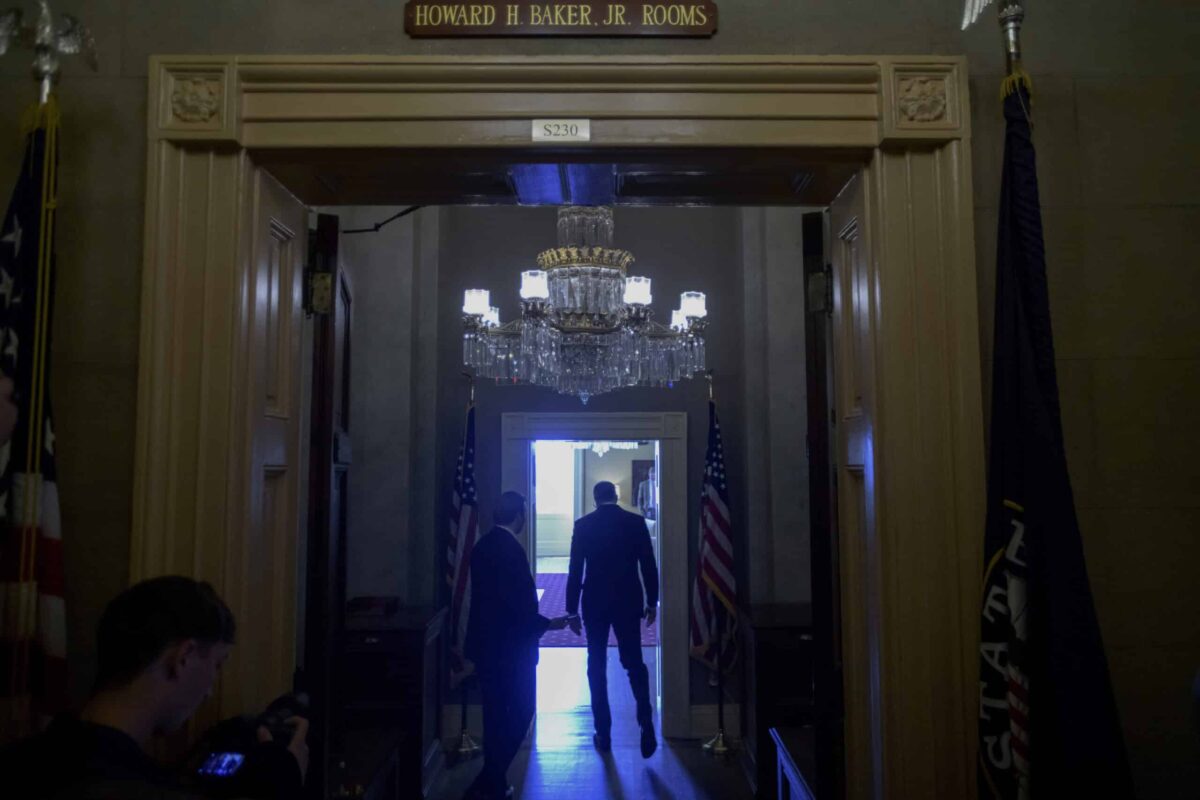
Senate Majority Leader John Thune, R-S.D., walks to his office from the Senate chamber as Senate Republicans vote on President Donald Trump’s request to cancel about $9 billion in foreign aid and public broadcasting spending, at the Capitol in Washington, Wednesday, July 16, 2025.(AP Photo/Rod Lamkey, Jr.)

AP- The Senate has passed about $9 billion in federal spending cuts requested by President Donald Trump, including deep reductions to public broadcasting and foreign aid, moving forward on one of the president’s top priorities despite concerns from several Republican senators.

The legislation, which now moves to the House, would have a tiny impact on the nation’s rising debt but could have major ramifications for the targeted spending, from the Corporation for Public Broadcasting to U.S. food aid programs abroad.

It also could complicate efforts to pass additional spending bills this year, as Democrats and even some Republicans have argued they are ceding congressional spending powers to Trump with little idea of how the White House Office of Management and Budget would apply the cuts.

The 51-48 vote came after 2 a.m. Thursday after Democrats sought to remove many of the proposed rescissions during 12 hours of amendment votes. None of the Democratic amendments were adopted.

Senate Majority Leader John Thune, R-S.D., said Republicans were using the president’s rescissions request to target wasteful spending. He said it is a “small but important step for fiscal sanity that we all should be able to agree is long overdue.”

But Senate Appropriations Committee Chairwoman Susan Collins, R-Maine, said the bill “has a big problem — nobody really knows what program reductions are in it.”

Collins and Sen. Lisa Murkowski, R-Alaska, joined Democrats in voting against the legislation. Kentucky Sen. Mitch McConnell, the former Republican leader, had voted against moving forward with the bill in a Tuesday procedural vote, saying he was concerned the Trump White House wanted a “blank check,” but he ultimately voted for final passage.

The effort to claw back a sliver of federal spending comes after Republicans also muscled Trump’s big tax and spending cut bill to approval without any Democratic support. The Congressional Budget Office has projected that measure will increase future federal deficits by about $3.3 trillion over the coming decade.

Lawmakers clash over cuts to public radio and TV stations

Along with Democrats, Collins and Murkowski both expressed concerns about the cuts to public broadcasting, saying they could affect important rural stations in their states.

Murkowski said in a speech on the Senate floor Tuesday that the stations are “not just your news — it is your tsunami alert, it is your landslide alert, it is your volcano alert.”

Less than a day later, as the Senate debated the bill, a 7.3 magnitude earthquake struck off the remote Alaska Peninsula, triggering tsunami warnings on local public broadcasting stations that advised people to get to higher ground.

The situation is “a reminder that when we hear people rant about how public broadcasting is nothing more than this radical, liberal effort to pollute people’s minds, I think they need to look at what some of the basic services are to communities,” Murkowski said.

The legislation would claw back nearly $1.1 billion from the Corporation for Public Broadcasting, which represents the full amount it’s due to receive during the next two budget years.

The corporation distributes more than 70% of the money to more than 1,500 locally operated public television and radio stations, with much of the remainder assigned to National Public Radio and the Public Broadcasting Service to support national programming.

Sen. Mike Rounds, R-S.D., said he secured a deal from the White House that some funding administered by the Interior Department would be repurposed to subsidize Native American public radio stations in about a dozen states.

But Kate Riley, president and CEO of America’s Public Television Stations, a network of locally owned and operated stations, said that deal was “at best a short-term, half-measure that will still result in cuts and reduced service at the stations it purports to save, while leaving behind all other stations, including many that serve Native populations.”

Republicans face a Friday deadline

Collins attempted to negotiate a last minute change to the package that would have reduced the cuts by about $2.5 billion and restored some of the public broadcasting and global health dollars, but she abandoned the effort after she didn’t have enough backing from her Republican colleagues in the Senate and the House.

The House has already shown its support for the president’s request with a mostly party line 214-212 vote, but since the Senate amended the bill, it will have to go back to the House for another vote.

The bill must be signed into law by midnight Friday for the proposed rescissions to kick in. If Congress doesn’t act by then, the spending stands.

Categories
Featured Juneau News Juneau Local Ketchikan Local News Feeds Sitka Local

GOP members of US Senate protest Trump freeze of $6.8B in school funding

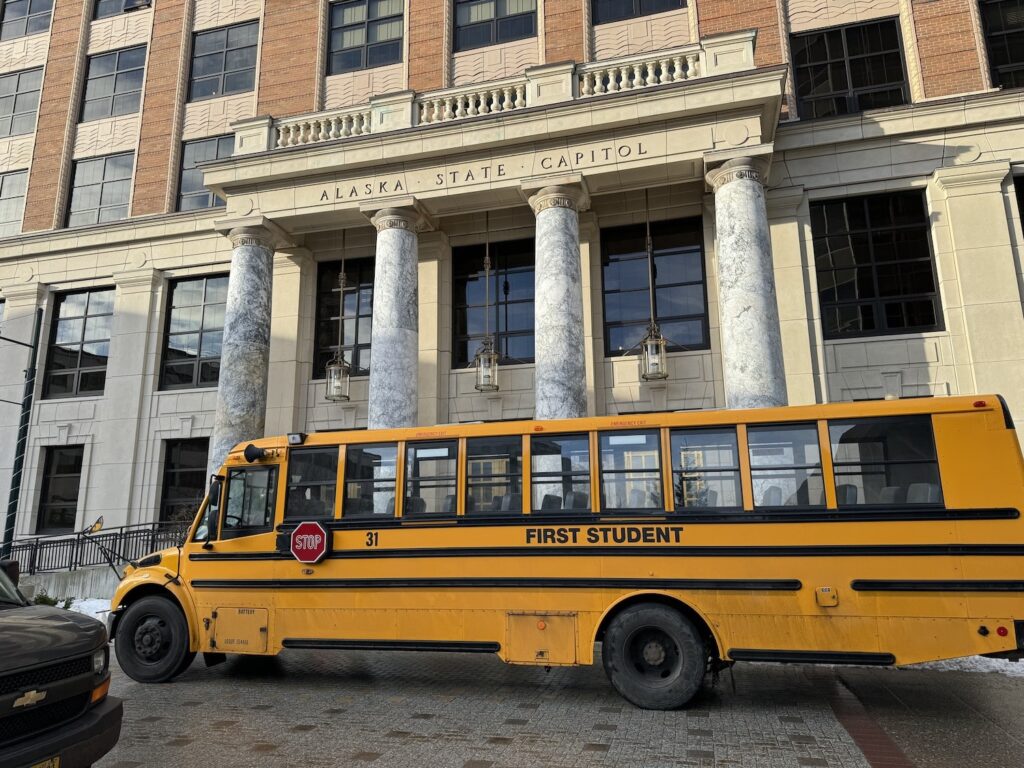
A school bus passes in front of the Alaska Capitol on Tuesday, Feb. 6, 2024. (Photo by James Brooks/Alaska Beacon)

By: Shauneen Miranda, States Newsroom

Republican members of the U.S. Senate called on Office of Management and Budget Director Russ Vought in a letter Wednesday to release the $6.8 billion in funds for K-12 schools that the Trump administration is withholding.

The letter marked a major friction point between President Donald Trump and influential lawmakers in his own party as his administration tests the limits of the executive branch’s authority in clawing back federal dollars Congress has already appropriated. Every state has millions in school funding held up as a result of the freeze.

Wednesday’s letter came after the Supreme Court temporarily cleared the way earlier this week for the administration to carry out mass layoffs and a plan to dramatically downsize the Department of Education that Trump ordered earlier this year.

Just a day ahead of the July 1 date when these funds are typically disbursed as educators plan for the coming school year, the Education Department informed states that it would be withholding funding for several programs, including before- and after-school programs, migrant education and English-language learning, among other initiatives.

“Withholding these funds will harm students, families, and local economies,” wrote the 10 GOP senators, many of them members of committees that make decisions on spending. Sen. Shelley Moore Capito, a West Virginia Republican and chair of the Senate Appropriations Subcommittee on Labor, Health and Human Services, Education, and Related Agencies, led the letter.

Sen. Susan Collins of Maine, chair of the broader Senate Appropriations Committee, also signed onto the letter, along with: Sens. Katie Britt of Alabama, Lisa Murkowski of Alaska, John Boozman of Arkansas, Mitch McConnell of Kentucky, Deb Fischer of Nebraska, John Hoeven of North Dakota, Mike Rounds of South Dakota and Jim Justice of West Virginia.

“The decision to withhold this funding is contrary to President Trump’s goal of returning K-12 education to the states,” the senators wrote. “This funding goes directly to states and local school districts, where local leaders decide how this funding is spent, because as we know, local communities know how to best serve students and families.”

States Newsroom has asked the Office of Management and Budget for comment on the letter.

Meanwhile, a slew of congressional Democrats and one independent — 32 senators and 150 House Democrats — urged Vought and Education Secretary Linda McMahon in two letters sent last week to immediately release the funds they say are being withheld “illegally.”

Democratic attorneys general and governors also pushed back on these withheld funds when a coalition of 24 states and the District of Columbia sued the administration earlier this week. 

Categories
Featured Juneau News Juneau Local Ketchikan Local News Feeds Sitka Local

Trump administration freeze of millions for adult education prompts layoffs, cuts for Alaska

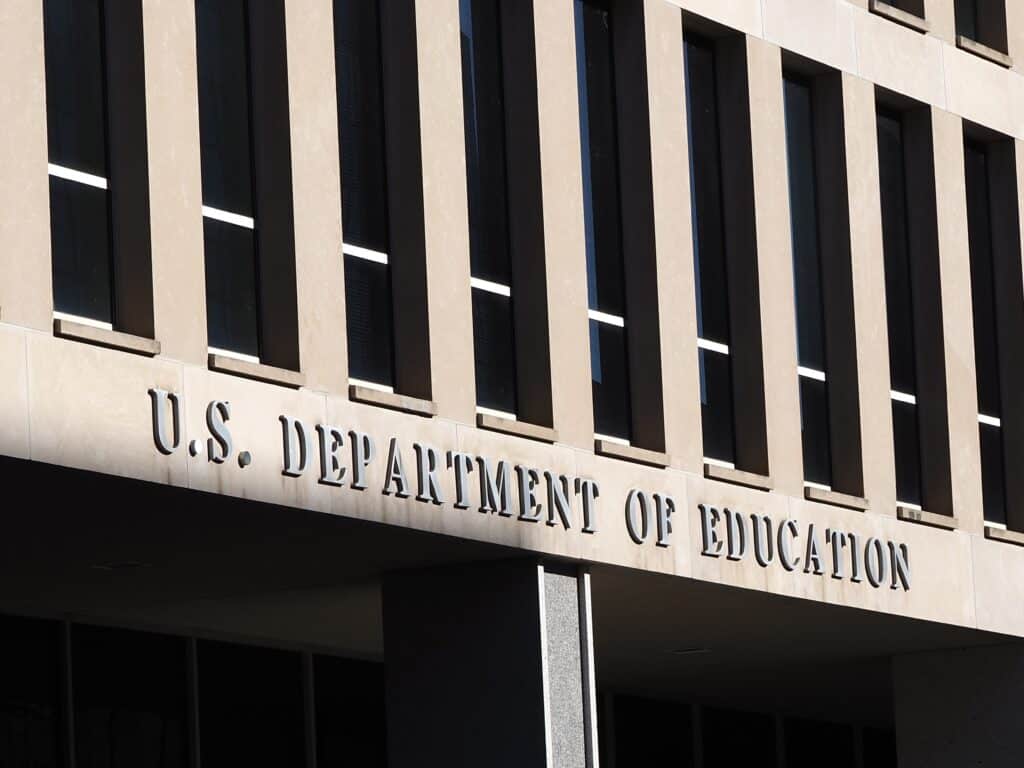
The Lyndon Baines Johnson Department of Education Building pictured on Nov. 25, 2024. (Photo by Shauneen Miranda/States Newsroom)

By: Corinne Smith, Alaska Beacon

Federal funds for adult education services were among those blocked by the Trump administration on July 1, causing immediate cuts to Alaska adult education and workforce development programs and staff layoffs.

The U.S. Department of Education has withheld more than $6 billion in congressionally approved grants for education, including over $629 million for adult education basic grants, and more than $85 million in adult integrated English literacy and civics education grants. The administration has said that it’s withholding the federal funding to review the grant programs to ensure they align with the Republican president’s priorities. 

Adult education can range from classes that help adults learn basic literacy to programs that assist students in gaining certificates equivalent to high school diplomas, and can teach skills that are essential to performing certain jobs. 

Alaska had over $1.1 million allocated as part of an adult education basic grant, according to the Alaska Department of Labor and Workforce Development, which administers the grants. A department spokesperson said on Tuesday the grant amounts for English literacy and civics education this year were not available, but the state received more than $99,600 last year. 

The withheld funds means immediate cuts to services for Alaska adult learners and staff layoffs, according to grant recipients.

“We were definitely blindsided,” said Lucie Magrath, executive director of the Literacy Council of Alaska, a Fairbanks-based nonprofit that provides adult education programs, including adult literacy, English language learning, civics and General Educational Development, or GED, preparation classes. 

Magrath said an estimated $180,000 in federal funding, or over half of their budget, was impounded, causing immediate cuts to services and staff layoffs. While the organization did not identify the number of layoffs in an interview last week, the Fairbanks Daily News-Miner has since reported that there were five layoffs. 

“So we are having to make some pretty drastic decisions with staffing and programming,” she said in a phone interview on Thursday. “We likely will not be able to serve nearly as many people this year, and we’re making staffing cuts right now.”

The organization provides in-person and virtual instruction and mentoring to adult learners in Fairbanks, as well as in villages in the Interior and Western Alaska, stretching from the Yukon Flats to the Yukon-Kuskokwim Delta. 

They also have a workforce development program, the Pathways Program, serving youths and young adults ages 16 to 24, and run the used bookstore Forget-Me-Not Books in Fairbanks, which provides revenues for its programs, jobs training and employment. 

Shelby Cooke is the assistant executive director of the Literacy Council of Alaska, and said it’s difficult to fill such a large funding gap, especially on such short notice, and Alaskans will be impacted. 

“The real detriment is to our students and Alaskans who need that GED credential to go to work, or maybe they’re a super-skilled person in their native tongue, but they need enough English to be able to navigate a job interview,” she said. “Those are the folks that are suffering, and in turn, our economy suffers too.”

Magrath said some programs will be suspended immediately. It’s possible that these suspensions will be temporary, as her organization figures out its next steps. “We’re looking at restructuring some of our programs just to be able to use the resources that we have to the maximum impact for our community and our students,” she said. “So we have a lot to figure out right now.”

Southeast Regional Resource Center, a nonprofit educational services agency that provides a variety of services statewide, including adult education, English language learning and workforce development programs. In addition, SERRC provides educational and business services to school districts, including special education programs, human resources and grant administration. 

“We do have some state funds, and so we’ve had to modify our budget just off what we know we have for funding — for state funds — and we are looking at having to reduce our staffing,” said Chris Reitan, its executive director, in a phone interview Thursday. He said the organization is looking at cutting at least two staff positions and a few part-time positions. “So we are concerned about the ability to have the same level of impact.”

Reitan said the federal funding freeze withheld over $86,600 for adult education programs in Southeast Alaska, and over $64,000 in the Aleutians region.

Chris Reitan, executive director, SERRC, said SERRC’s program served 112 students last year in the areas of GED support, English language learning and workforce development across the state. 

“Number one, adult education provides a kind of a lifeline for Alaskans seeking to improve their lives, and it also helps strengthen our state’s workforce,” he said, and will have an immediate impact on adult learners, “which then could immediately impact their ability in regards to getting good-paying jobs, their ability to provide for their families, their ability to contribute to their local communities.” 

He added: “I see this as being a significant impact across the state, in regards to our citizens being able to have the opportunity to better themselves.” 

SERRC and the Literacy Council of Alaska are two of 14 adult education programs across the state with grant funding administered by the Alaska Department of Labor and Workforce Development. A department spokesperson, Adam Weinert, said by email that the department has continued to award available state matching funds for the programs, totaling more than $1.9 million. 

“Sub-grantees were informed that we were moving forward at this time with state funding only,”  Weinert said of the programs. “Once federal funding is released, we will move forward with a budget modification to provide for the federal funding.”

The full impact of how the freeze will affect some programs in the long term remains unclear. 

The University of Alaska system has several adult education programs, funded in part by federal funds, as well as state and local funding. Jonathan Taylor, the university’s director of communications, said by email Monday that “discussions are ongoing” around funding but those programs are scheduled to continue.

Taylor said at the University of Alaska Fairbanks, the Bristol Bay Adult Education program will start up in August with funding from Bristol Bay Economic Development Corp.

Within the University of Alaska Anchorage, there are adult education programs at Kodiak College, serving the Kodiak Island Borough; Kenai Peninsula College, serving the Soldotna, Homer and Seward regions; and Prince William Sound College, serving the Valdez, Cordova and Copper Basin regions. 

“We have received assurances that all three will receive some sort of funding this year,” Taylor said. “To our knowledge, the state will initiate these awards using either state funding or federal funding it has access to. If additional Federal Funds become available, the state will amend the agreements to make up to the original intended funding amount. Currently, this is an active endeavor and ongoing discussion with the state.”

Categories
Featured Juneau News Juneau Local Ketchikan Local News Feeds Sitka Local

Juneau’s proposed changes to city code could increase arrests of unhoused residents

The Juneau Assembly has proposed updates to the city’s disorderly conduct laws, tightening rules around blocking sidewalks, public disturbances, and behavior in public spaces.

The focus of the new updates- making it easier for the Juneau Police Department to arrest individuals, particularly unhoused individuals for disruptive actions in public areas.

The ordinance adds language allowing police to intervene when people stand, walk, or camp in places like sidewalks, stairwells, parking lots, and garages.

“We had a long conversation about the community impacts of public camping, and that was probably the longest agenda item that we discussed.” Said Deputy Manager Robert Barr, “it would make it a bit easier for our police department officers to do some enforcement activity that they already do.”

Deputy City Manager Robert Barr said the changes bring city code in line with state law, removing steps that currently delay enforcement, which lie within officers arresting individuals for trespassing rather than disorderly conduct.

“Our first course of action whenever we’re engaged in that sort of activity with folks who are unhoused, is to try and connect to resources and seek voluntary compliance.” Said Barr, “but sometimes it’s not possible.”

Alaska already grapples with its growing unhoused population, Juneau currently operates under a “dispersed camping” policy for its homeless population, allowing camping on unimproved public land as long as it minimizes impact and doesn’t violate specific regulations like blocking public rights-of-way.

Juneau Police cleared the unhoused encampment on Teal street back in June, Barr said the assembly asked to bring back more information at a future meeting, likely the next Committee of the Whole, on creating a shelter safety zone in the Teal Street area, “just to investigate whether other tools that we could implement would protect our social service providers out there.” said Barr.

Juneau has had the highest average sale price for a single-family home in the state for the past two years and a report from the Department of Labor and Workforce Development, shows that housing costs are nearly half of most Alaska residents’ annual income.

These proposed updates come amid nationwide trends, with the Supreme court ruling that cities can ban people from sleeping and camping in public places last year.