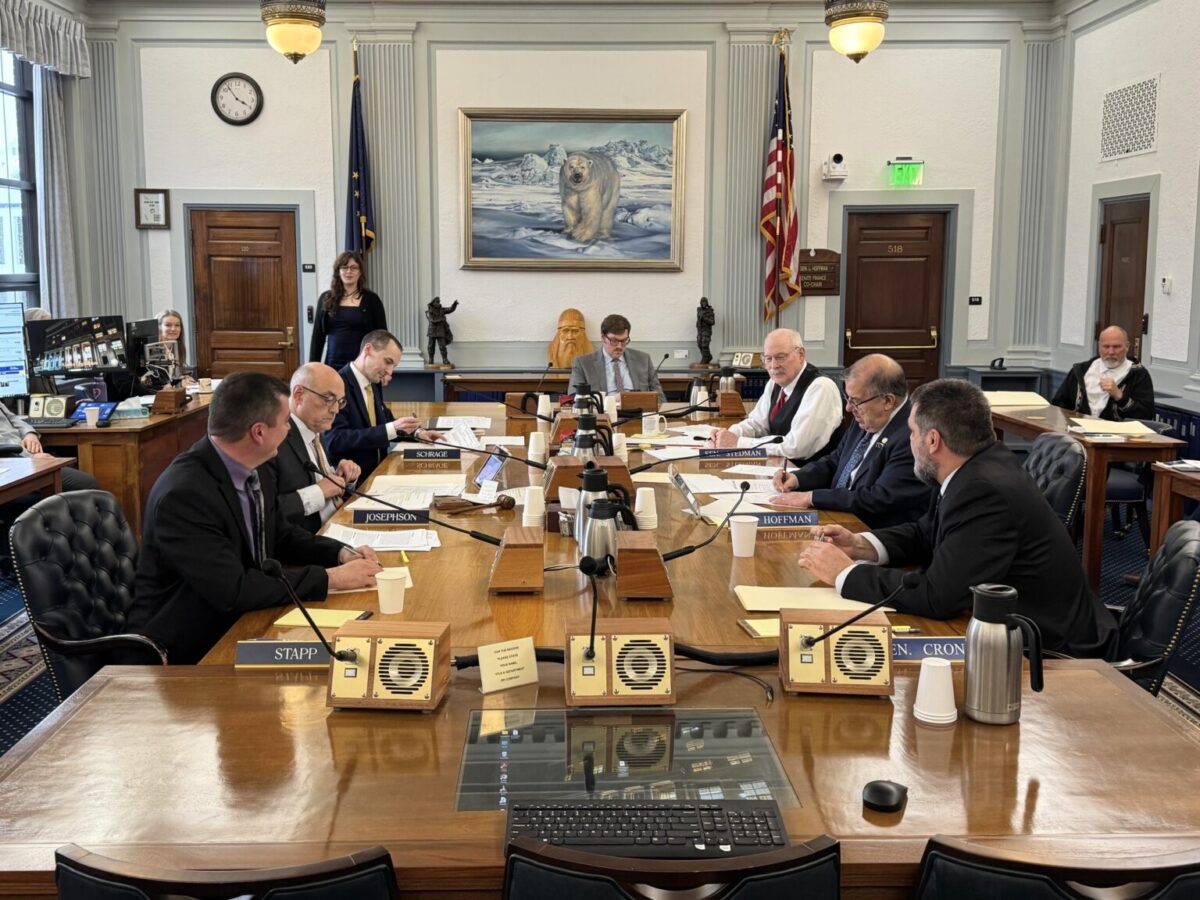
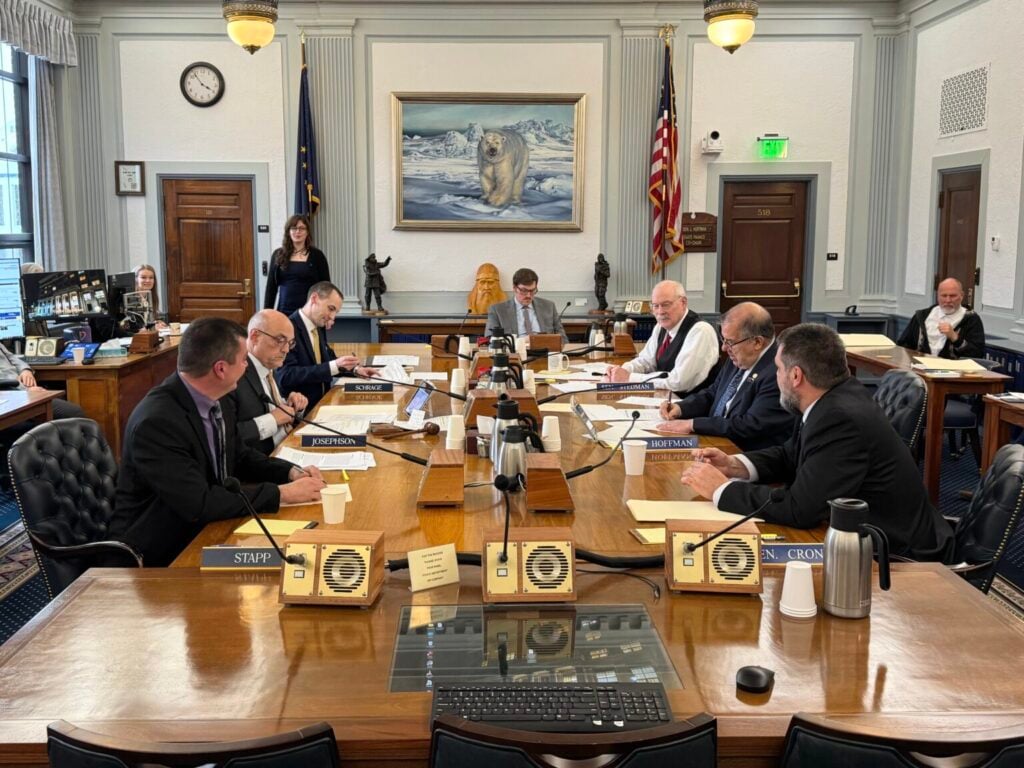
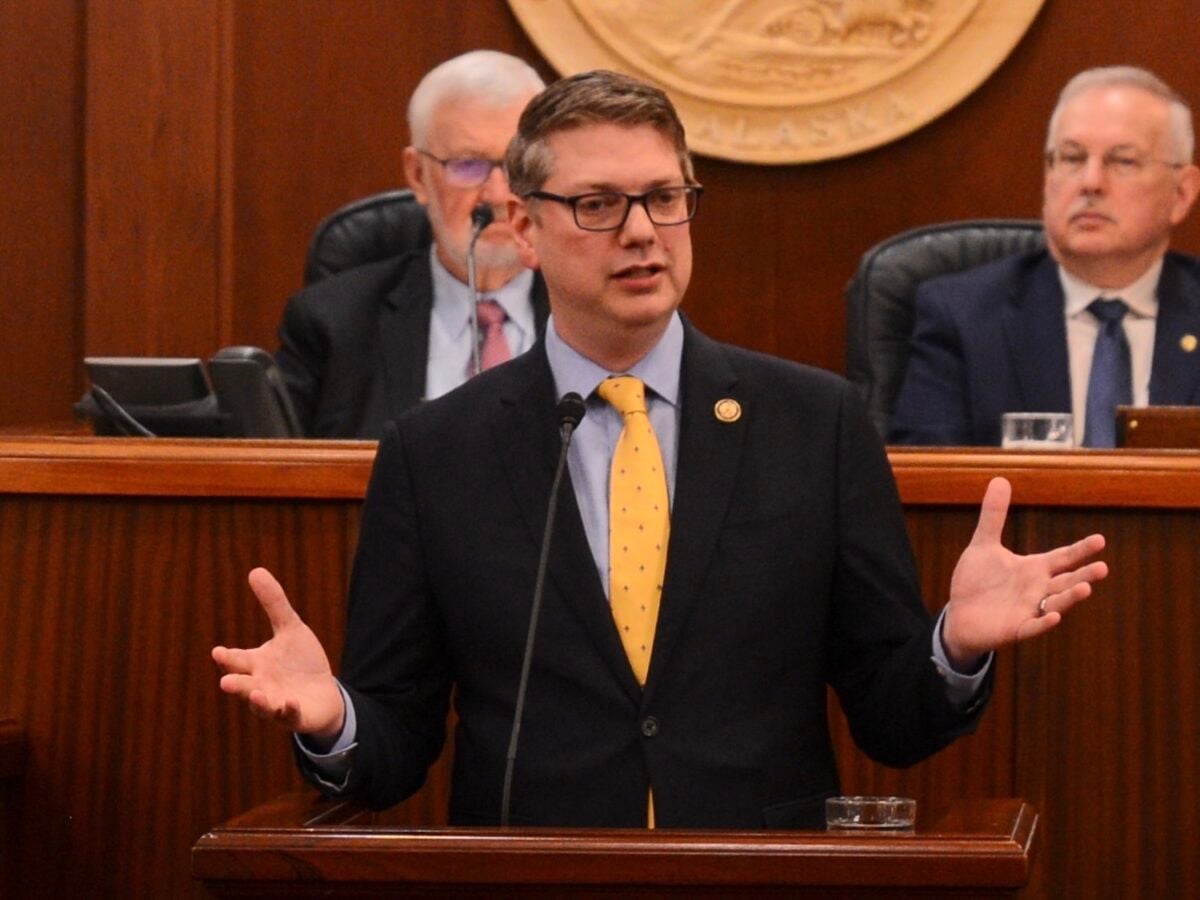
Members of the bicameral conference committee charged with writing a compromise supplemental budget sign the final documents on Monday, March 23, 2026, at the Alaska Capitol in Juneau. (James Brooks photo/Alaska Beacon)
By: James Brooks, Alaska Beacon
Members of the bicameral conference committee charged with writing a compromise supplemental budget sign the final documents on Monday, March 23, 2026, at the Alaska Capitol in Juneau. (James Brooks photo/Alaska Beacon)
The Alaska Legislature is preparing to re-vote on a key spending bill that will cover millions of dollars in disaster response and construction projects in the current fiscal year.
On Monday, a bicameral conference committee voted 5-1 to send an amended version of the bill to final votes in the House and Senate. Those votes may take place Wednesday.
The state’s fast-track supplemental budget contains $449.3 million in spending — expenses accrued since legislators and Gov. Mike Dunleavy adopted the state budget last year.
Legislators are separately working on a budget for the next fiscal year, which begins July 1. A vote on that is expected at the end of the legislative session in May.
The supplemental budget bill includes $70.2 million to unlock grant-funded construction projects principally paid for by the federal government — a major lobbying priority for the state’s construction industry.
It also includes tens of millions for the state response to last year’s wildfire season and millions more as a down payment for the state’s response to ex-Typhoon Halong, which devastated Western Alaska last fall.
The new spending would largely be paid for with new revenue the state expects because of higher oil prices caused by the Iran war.
As long as prices remain high through June 30, the end of the fiscal year, legislators expect there will be enough general-purpose money to cover the expenses, plus a smaller package of budget amendments already proposed by Dunleavy.
Those amendments arrived too late to be added to the supplemental bill.
If oil prices don’t match expectations, the bill contains language that would allow the state to use the Constitutional Budget Reserve, the state’s principal savings account, to cover the difference plus $20 million in “headroom.”
That clause may run into problems in the House, where the 19-person House Republican minority caucus has voted several times against spending from the reserve.
It takes 30 votes in the House and 15 in the Senate to spend from the reserve; while the Senate has met that threshold and is expected to do so again this week, it isn’t clear whether the House will do so.
The 21-person, predominantly Democratic coalition that controls the House would need to attract at least nine minority votes, and in earlier votes, it was unable to do so — something that forced the bill into a bicameral conference committee for further negotiations.
Rep. Will Stapp, R-Fairbanks and the minority’s negotiator on the conference committee, was the only lawmaker to vote against the revised bill on Monday, saying he doesn’t believe any kind of spending from the reserve is necessary at this point.
Members of the House majority have argued that allowing reserve spending — if necessary — would provide surety for construction businesses making summer plans.
They have also argued that time is of the essence: Delaying action on the bill would mean those companies might have to defer purchasing and hiring decisions ahead of the summer construction season.
Members of the House minority argued that as previously written, the bill would have allowed members of the majority to direct the spending of hundreds of millions from the reserve, even if it wasn’t needed to balance the supplemental budget.
That version was cut to less than $375 million in spending, an attempt to attract minority votes, but while that approach worked in the Senate, it did not succeed in the House.
When the House failed to pass the reserve vote, lawmakers there sent the bill to the conference committee for further work.
While that committee was able to finalize a draft compromise, it won’t be clear until later whether that compromise can pass out of the Legislature.
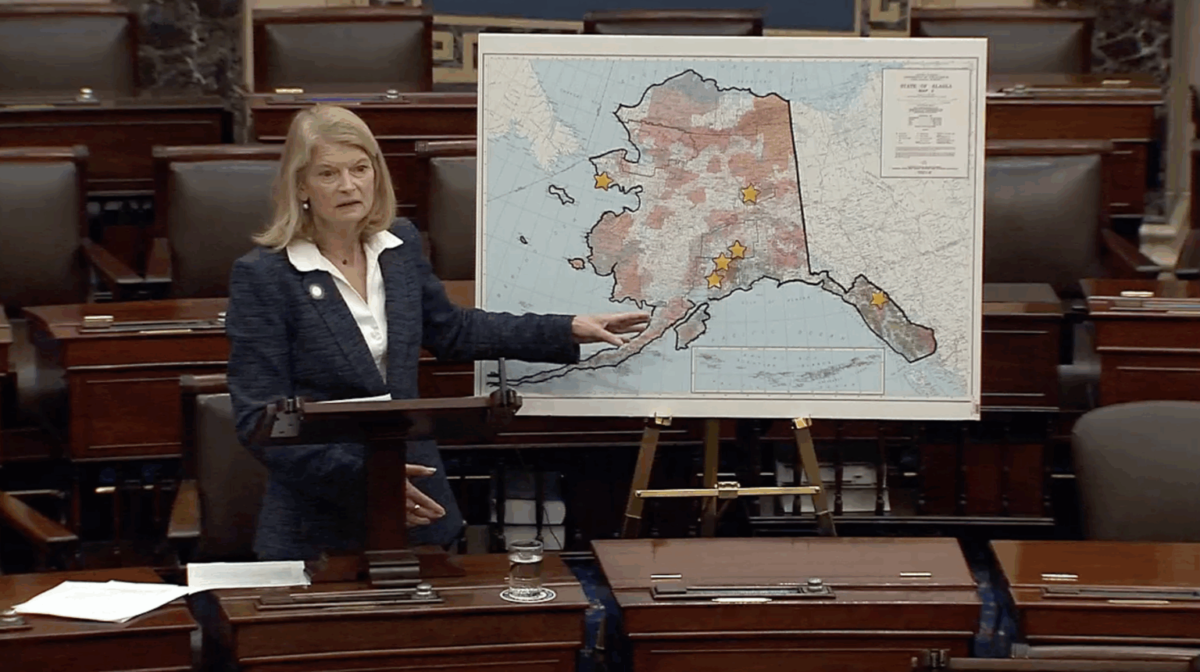
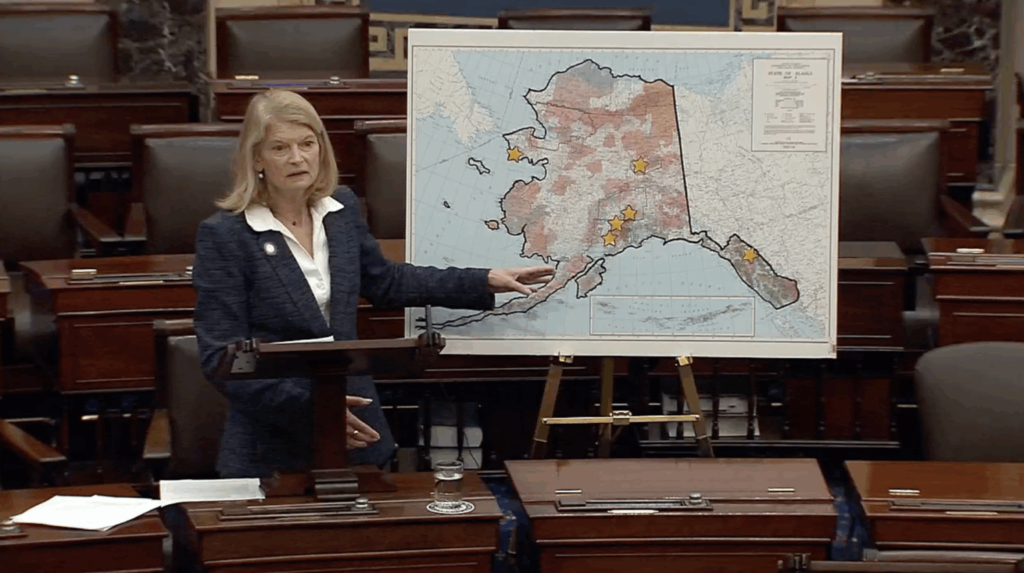
U.S. Sen. Lisa Murkowski, R-Alaska, speaks Thursday, March 19, 2026, on the floor of the U.S. Senate, in this screenshot of a video broadcast by the Senate. (Screenshot)
An elections bill being debated by the U.S. Senate could cost thousands of Alaskans the ability to vote in this year’s elections, Sen. Lisa Murkowski said Thursday in a lengthy speech on Capitol Hill.
The SAVE America Act, supported by President Donald Trump and most congressional Republicans, is ostensibly intended to prevent noncitizens from voting in American elections, but its implementation could prevent many Americans from being able to vote.
“While disenfranchisement may not be the intent of the SAVE America Act … I think that we will see that. In fact, I fully expect it to be an outcome of this,” Murkowski said.
The act would require that voters present photo ID when they vote, and that people present documentary proof of citizenship when they register to vote. That would mean presenting proof of citizenship in person at an elections office or other specially licensed state license.
“This would be a major, major departure from how most Alaskans currently register to vote,” Murkowski said.
In 2024, about 29,000 Alaskans registered to vote. Most of those — 25,000 or so — would have run into problems if the current bill had been law at that time, she said.
Most of Alaska’s voter registrations are done online or through the state’s motor-voter or PFD voter process. The bill could allow citizenship verification, but it’s not clear how that would happen, Murkowski.
Mandating in-person registration would have big effects in Alaska.
Some other state agencies might also be able to accept that proof, but the bill’s requirements take effect immediately, and it contains no funding for states to make changes that would allow remote offices to verify ID.
In practice, that means the bill would require rural residents to fly to urban Alaska, Murkowski said.
In addition, anyone seeking to register would have to have either a passport — roughly 50% of Alaskans don’t have one, Murkowski said — or some other form of appropriate ID.
Alaska driver’s licenses wouldn’t be good enough to register to vote, nor would most tribal IDs, because they don’t specifically label someone as a citizen or not.
The bill allows someone to self-certify their citizenship if they sign an affidavit, but that clause only applies if the person has already made “reasonable efforts” to obtain a copy of a valid ID.
It isn’t clear what that means, Murkowski said.
The bill also would end Alaska’s practice of allowing anyone to cast an absentee ballot for any reason. It would restrict absentee voting to a subset of specifically identified voters, including people living out of the state where they are registered to vote.
Murkowski said she hasn’t seen evidence that these kinds of measures are needed to address a small-scale problem.
Voting by noncitizens is rare in Alaska. A report obtained by the Alaska Beacon through a public records request showed 70 possible cases since 2015. At least 11 people on that list have been charged in state court.
“That’s basically seven a year,” Murkowski said.
“You look at what we’re trying to chase here with this balance — with disenfranchising so many who would be faced with almost insurmountable challenges in order to register or vote — I look at this and on balance, it doesn’t weigh,” she said.
Earlier this year, Rep. Nick Begich III, R-Alaska, voted in support of the bill as it passed out of the House, saying afterward that he doesn’t think it will be hard to comply with the bill.
Sen. Dan Sullivan, R-Alaska, has said he supports the act despite its ramifications for the state.
“I do think that having the ability to show an ID and proof of citizenship to keep elections safe is important, and it’s supported by the vast majority of Americans,” he said in response to a question during a February forum hosted by the Juneau Chamber of Commerce.
At that forum, he was confronted by an angry attendee who questioned how he could speak on Elizabeth Peratrovich Day, a state holiday honoring an Alaska Native civil rights leader, and support a bill that would have detrimental effects on Alaska Native voters.
“I have a very, very, very strong record as it relates to the franchise for our people, in particular, the Alaska Native community,” he said, referring to actions he took during the 2010 Alaska election, when he served as attorney general.
“I think voting, in my view, should be easy, but cheating on voting should not be,” Sullivan said.
While Sullivan has said he supports the bill, he also told reporters last month that he doesn’t support overriding the Senate’s filibuster to pass it.
In practice, the filibuster means that the bill would require 60 votes, not 50 and the vice president, to advance through the Senate.
With all of the Senate’s Democrats and Murkowski opposed to the SAVE Act, the bill — at least as of Friday — lacks the support it needs to become law.
Alaska U.S. Senators Lisa Murkowski and Dan Sullivan (Alaska Beacon file photos)
Alaska’s Republican U.S. senators are pushing the Trump administration to waive a recently hiked visa fee for all public school employees.
The Trump administration raised the fee for highly skilled workers visas, known as the H-1B visa program, from $5,000 to $100,000 per visa in September. That has consequences for Alaska school districts, which have grown to rely on international hiring to fill teaching and staff positions.
“As soon as this proclamation was released last year, I have been sounding the alarm with the administration about the importance of the H-1B visa program to Alaska’s school districts,” U.S. Sen. Lisa Murkowski said in a prepared statement announcing the bill.
Murkowski introduced legislation in the U.S. Senate on Mar. 12, saying it would help alleviate financial strain for Alaska’s school districts. U.S. Sen. Dan Sullivan signed on as a cosponsor of the bill on Tuesday.
The H-1B visa program provides non-immigrant visas for U.S. employers to recruit highly skilled workers, with at least a bachelor’s degree, in fields such as healthcare, technology or education. The visa is valid for up to six years.
“Our public school classrooms have been facing a staffing crisis for years, but teachers in Alaska on H-B visas have been instrumental in bridging that shortage and serving our students with talent and care,” Murkowski wrote. “This legislation offers a commonsense exemption that will ensure Alaska’s schoolchildren have access to more high-quality educators while keeping class sizes reasonable.”
The Alaska House of Representatives introduced a resolution this month urging the visa waiver for teachers.
There are close to 600 international teachers working in Alaska and 341 of them use H-1B visas, according to data provided by the Alaska Council of School Administrators, which assists districts in recruitment and hiring.
“In some rural districts, visa teachers make up 50% to nearly 80% of the teaching staff,” said Lisa Parady, the council’s director, in a statement with the bill’s announcement. “School districts already invest $6,000 to $12,000 per teacher to recruit and sponsor educators through the H-1B visa process. Adding a $100,000 federal visa fee has made it financially impossible for many districts to continue hiring the teachers their students depend on.”
Alaska districts are also in the process of hiring teachers for next year, and officials say the fee imposes an impossible financial barrier.
Cyndy Mika, superintendent of the Kodiak Island Borough School District, said in a written statement with the bill’s announcement that nearly 20% of teachers district wide — and 75% of village teachers — are international hires through visa programs.
“These educators are not replacing American teachers—we simply do not have applicants for these positions,” she said. “Without access to international educators, districts like Kodiak will struggle to fill classrooms and provide consistent learning environments for students.”
The situation is exacerbated in Alaska’s rural districts by recent additional restrictions on the J-1 visa program, which requires visa-holding teachers to be placed in areas with access to health care services, transportation and other public services.
Tammy Dodd, superintendent of the Bering Strait School District, said in a statement the new J-1 visa restrictions put rural districts at a unique disadvantage.
“So the H-1B visa is the only choice,” she said. “The Bering Strait School District employs 86 international teachers, which is roughly 40% of certified staffing. With the new fee in place, the district would be unable to replace those positions with international hires.”
Murkowski sent a letter of concern to the former U.S. Sec. Kristi Noem with the Department Homeland Security, which administers the visa program. Noem responded in a letter on Dec. 15 shared by the senator’s office. Noem wrote that some exemptions are possible.
“Exceptions to the $100,000 payment are extremely rare and are granted only in extraordinarily compelling circumstances. Petitioning employers may seek an exception by sending their request,” Noem wrote.
“Evidence should support the alien worker’s presence in the United States as an H-1B worker is in the national interest, no American worker is available for fill the role, the alien worker does not pose a threat to security or welfare of the United States, and requiring the petitioning employer to pay the $100,000 payment would significantly undermine the interests of the United States,” she wrote.
Jennifer Schmitz, director of the Alaska Educator Retention and Recruitment Center, a division of the Alaska Council of School Administrators, said by email Monday that some districts have sought individual exemptions from DHS for teachers with pending H-1B visa applications, but have received no response and no timeline from the department.
Economist Dan Stickel talks to the Alaska House Finance Committee on Monday, March 16, 2026. (James Brooks photo/Alaska Beacon)
By: James Brooks, Alaska Beacon
Economist Dan Stickel talks to the Alaska House Finance Committee on Monday, March 16, 2026. (James Brooks photo/Alaska Beacon)
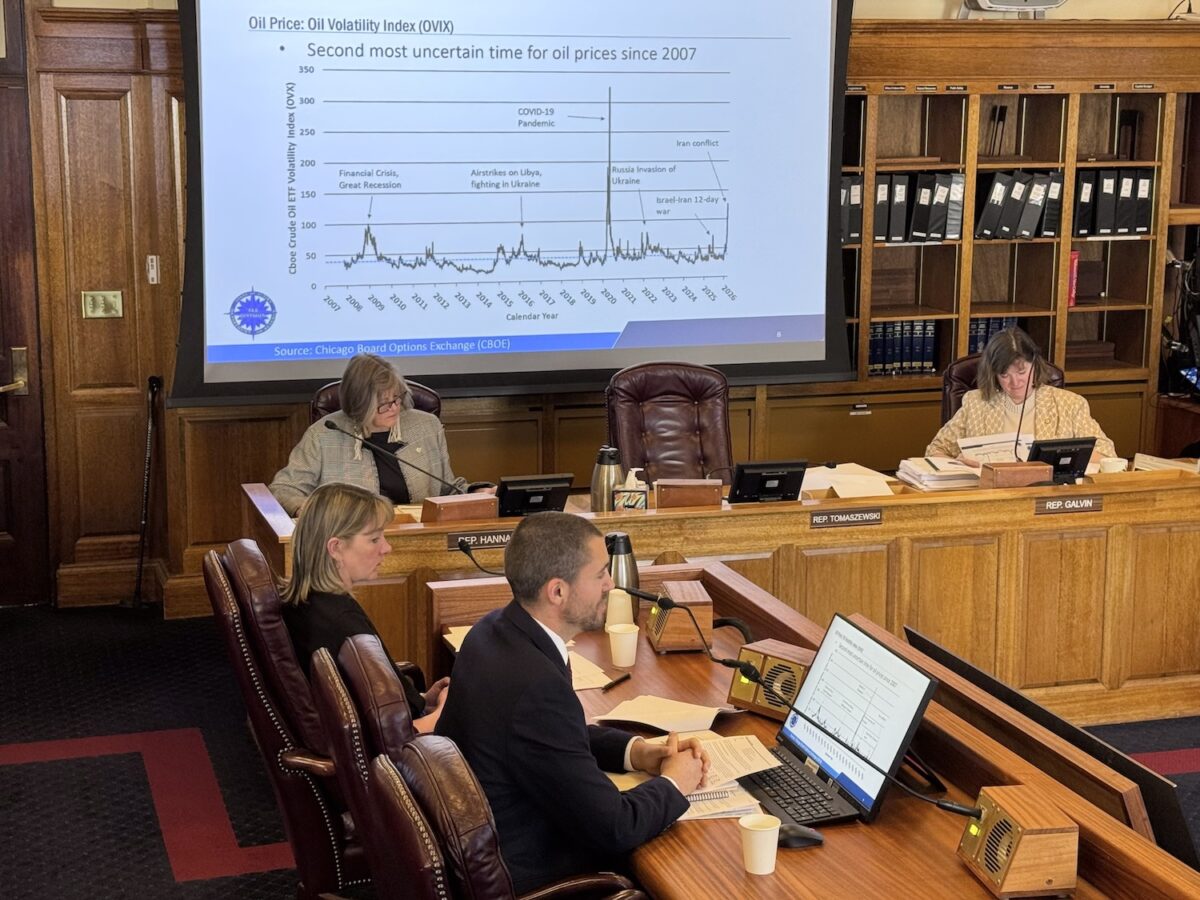
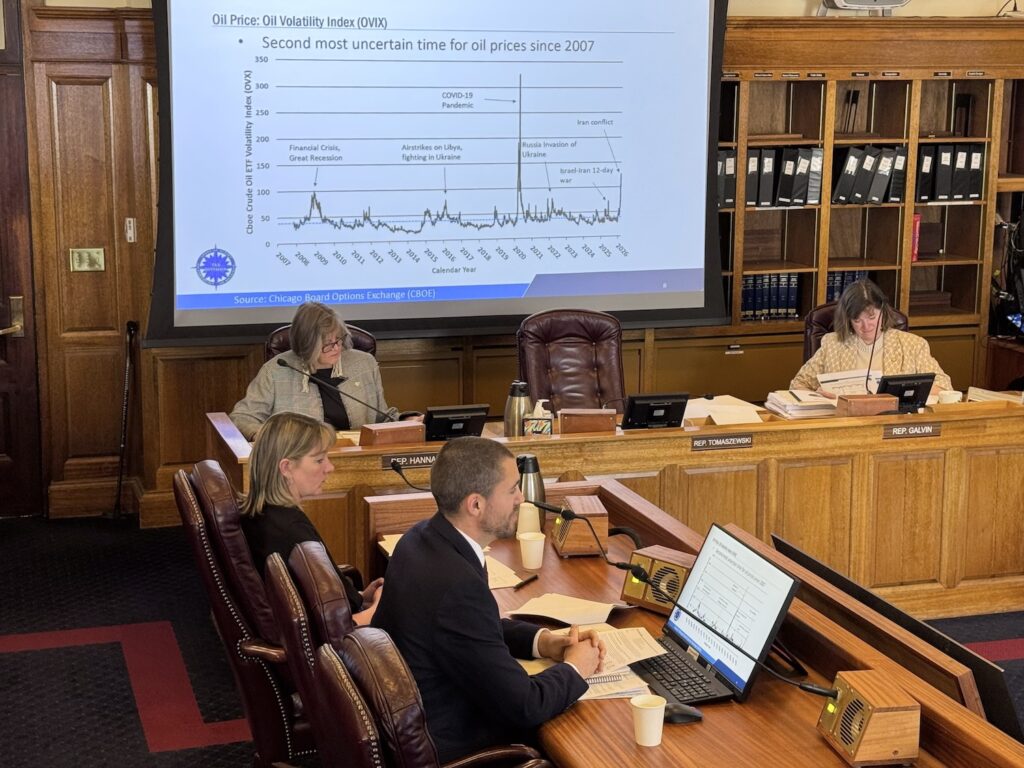
The U.S.-Israeli war against Iran has left oil markets more uncertain than they were during the Great Recession, a state expert told the Alaska Legislature on Monday.
In a pair of hearings, Alaska Department of Revenue economist Dan Stickel told state legislators that the volatility of global oil markets is the second-highest on record, leaving future forecasts particularly unreliable.
“The level of uncertainty around future prices in the oil markets now is higher than during the peaks of the Great Recession in 2008-2009 and it’s higher than the Russian invasion of Ukraine, and it’s higher than any of the COVID spikes other than the initial April 2020 spike,” he said during a Monday morning hearing of the Senate Finance Committee.
“The message here is to plan for the possibility that revenue doesn’t come in exactly at what we forecast for the next couple of years,” Stickel said.
Oil is the second-largest source of general-purpose revenue for the Alaska state budget, and Stickel’s testimony came days after the department released a new Alaska revenue forecast showing $545 million more in current-year revenue than projected in the fall. Most of that higher prediction is due to the price of oil.
That forecast has snarled relations in the Alaska House of Representatives, which has repeatedly postponed discussion of a bill that would fund a variety of amendments to the fiscal year 2026 budget passed by lawmakers and Gov. Mike Dunleavy last spring.
On Monday, after more than two hours of acrimonious debate, House legislators again declined to take up the bill.
Soon after the House adjourned its floor session, Stickel testified in front of the House Finance Committee, and told lawmakers that “the level of certainty that we will hit our exact forecast is low.”
As he spoke, on the other end of the Capitol’s fifth floor, the Senate Finance Committee was simultaneously hearing from Office of Management and Budget director Lacey Sanders, who said the governor’s office was requesting another $18 million in spending for the current fiscal year.
Altogether, the governor has requested almost $427 million in additions to the budget. Add in additional spending proposed by lawmakers, and there’s only about a $30 million difference between the new revenue forecast and the additions proposed by the governor and legislators.
At the latest forecast prices, said Rep. Calvin Schrage, I-Anchorage, a $2 change in the average price of a barrel of North Slope oil is worth $30 million.
He asked Stickel what the odds were that the forecast misses low by more than $2.
“Roughly a slightly less than 50% chance that we come in more than $2 below the forecast,” Stickel said, then alluded to the fact that there’s a similar chance of coming in above the forecast.
“The level of certainty that we will hit our exact forecast is low in either direction,” he said.
Currently, members of the House majority are advocating that legislators unlock the state’s principal savings account to provide surety for some of those budget additions.
Doing so would avoid problems if oil prices turn out to be lower than forecast.
But spending from the Constitutional Budget Reserve, the state’s principal savings account, requires 30 votes in the House and 15 votes in the Senate.
The House’s multipartisan coalition majority has 21 members, which means they need support from the all-Republican House minority caucus.
Members of that group have been arguing against unlocking the budget reserve right now, saying that the new forecast and the current balance of the state’s general-purpose accounts demonstrate it isn’t needed.
In addition, as currently written, the supplemental budget bill in the House would allow spending from savings regardless of the price of oil. That could allow the majority to dictate extra spending even if prices stay high.
The Senate has already approved spending from the Constitutional Budget Reserve, and on Monday morning, Sen. Bert Stedman, R-Sitka and co-chair of the Senate Finance Committee, said a draw from the reserve would act as a “safety net.”
Sen. Lyman Hoffman, D-Bethel, said senators don’t intend to spend dollars from savings unless it is needed.
“If they are not needed, they will stay in the CBR,” he said, adding that without permission to spend from savings, there’s a chance that lawmakers would need to return in August to fix budget problems in a special session.
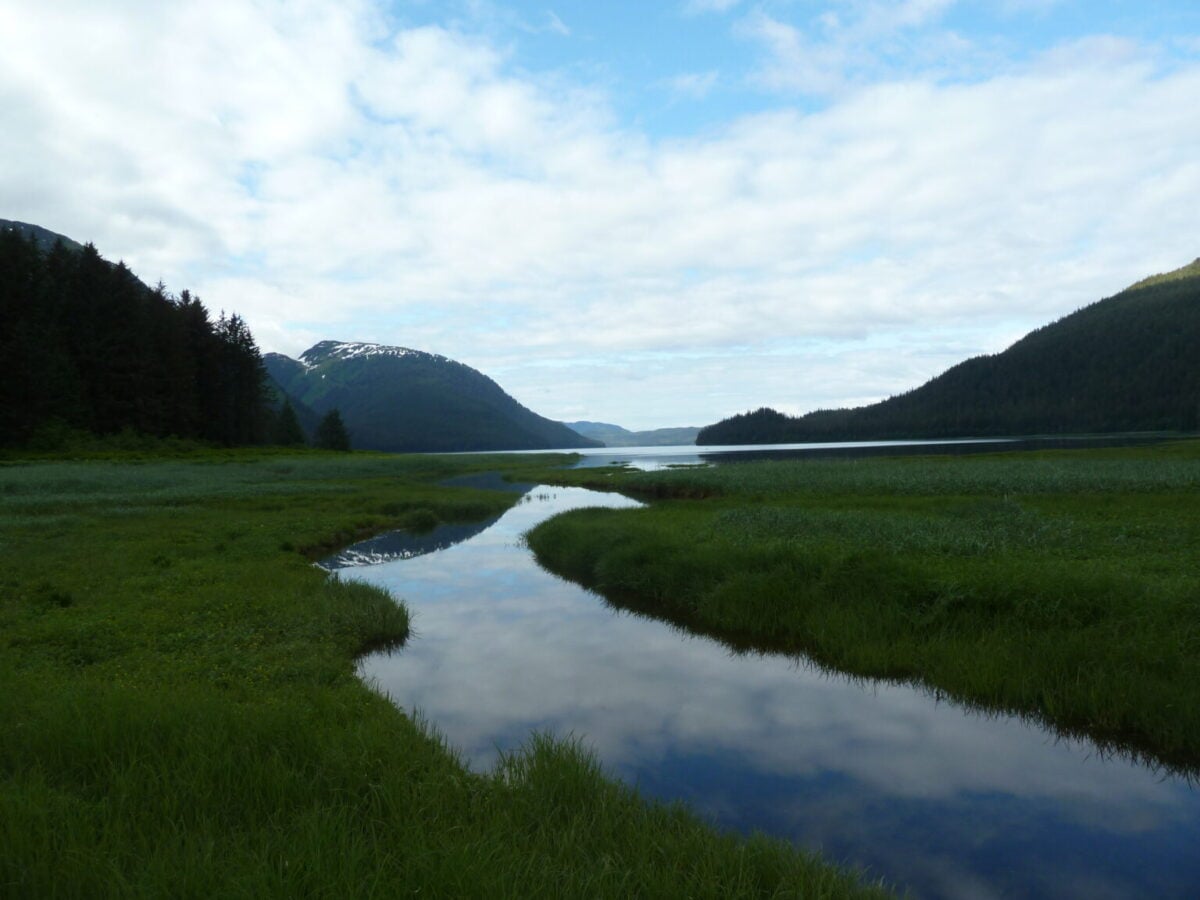
A stream reflects the clouds on June 20, 2011, in Kootznoowoo Wilderness, Admiralty Island National Monument, Tongass National Forest, Alaska. (Forest Service photo by Don MacDougall)
A federal judge in Alaska has rejected a lawsuit that sought to reinstate a management plan that would allow heavier logging in the world’s largest temperate old-growth rainforest.
The result leaves an Obama-era management plan in place, but it could be short-lived: The administration of President Donald Trump is already at work on a new plan that could allow more logging in Alaska’s Tongass National Forest.
In an order published Friday, Judge Sharon Gleason dismissed the lawsuit filed by Viking Lumber, Alcan Timber and the Alaska Forest Association.
The three groups sued the U.S. Department of Agriculture — the parent organization of the U.S. Forest Service — last year, alleging in part that the federal Tongass Timber Reform Act of 1990 required the Forest Service to offer enough timber sales to meet market demand.
Gleason ruled otherwise, finding that TTRA does not impose “a mandatory duty” on the Forest Service to ensure that market demand is met by Tongass timber sales.
“Whether the harvest levels are designed to actually meet market demand is a discretionary agency action, not a mandatory requirement imposed by the TTRA on the Forest Service,” she wrote.
Gleason also declined to take up plaintiffs’ argument about whether the Forest Service violated the Administrative Procedures Act, and she ruled that a 2021 announcement about Tongass strategy did not amount to formal rulemaking under law. She did not analyze whether it would have met legal standards if it had been a formal rulemaking process.
Plaintiffs were represented by Pacific Legal Foundation, which on Friday said that the Forest Service’s approach has been devastating to plaintiffs.
Kyle Griesinger, a spokesperson for the foundation, said that even with a new management plan in the works, the case isn’t moot because the old plan remains in effect until superceded.
“And, moreover, the Forest Service has not lived up to the 2016 plan so any new plan they may not live up to is no guarantee for our clients,” he said.
Marlee Goska, an attorney for the Center for Biological Diversity, agreed that last week’s ruling still has merit.
Goska was one of several attorneys who represented tribal, tourism, fishing and environmental groups that intervened on the side of the Department of Agriculture.
“I don’t think we have enough information yet to say the Forest Service is going to implement what the plaintiffs want. And certainly we’ll fight tooth and nail to stop that from happening,” she said of the upcoming plan change.
Goska added that last week’s ruling is important because it shows that the Forest Service does not have to meet market demand under existing law, and it shows that federal law doesn’t draw a distinction between old-growth harvests and new-growth ones.
“To the extent this administration and the Forest Service might be thinking about saying the TTRA mandates large old-growth timber sales to meet market demand, the court has already said that is incorrect,” she said.
Gleason published a final judgment on Friday. Plaintiffs have 30 days to file an appeal.
U.S. Rep. Nick Begich III, R-Alaska, speaks to a joint session of the Alaska Legislature on Tuesday, March 10, 2026. (James Brooks photo/Alaska Beacon)
By: James Brooks, Alaska Beacon
U.S. Rep. Nick Begich III, R-Alaska, speaks to a joint session of the Alaska Legislature on Tuesday, March 10, 2026. (James Brooks photo/Alaska Beacon)
The filing deadline for this year’s Alaska Permanent Fund dividend is March 31, and if Rep. Nick Begich III has his way, this year’s dividend will be tax free.
On March 3, Alaska’s lone member of the U.S. House introduced a bill that would exempt the dividend from federal taxes.
When Begich mentioned it during his address to state lawmakers this week, it garnered a standing ovation in the state Capitol.
Begich said afterward that passing the bill into law “is going to be a lift,” but in his first year as a Representative, Begich has found an unusual amount of success. On the day he introduced the tax-free dividend measure, he had a sixth prime-sponsored bill pass the U.S. Senate and advance to President Donald Trump.
Those six bills include two Congressional Review Act resolutions that repealed regulations adopted by the administration of President Joe Biden.
When members of Alaska’s Congressional delegation speak to the Legislature, it’s usually a platform to talk about their recent accomplishments, and Begich had plenty to talk about this year.
The number of bills he passed through Congress in his first year is a record, his office said.
According to the Center for Effective Lawmaking, when Begich’s sixth bill becomes law, he will tie former Rep. Rick Renzi, R-Arizona, for the most bills that became law in a freshman term.
The 119th Congress still has several months to run, and if Begich manages a seventh, he would set the record.
“No other House freshman in our data (going back to 1973) had six or more,” said Colin Achilles, the center’s associate director, by email.
At least some of Begich’s success is attributable to groundwork laid by his immediate predecessors, Democratic Rep. Mary Peltola and Republican Rep. Don Young.
He’s also received help from Alaska’s two senators, Republicans Lisa Murkowski and Dan Sullivan, who have been able to guide his legislation through the Senate after passing the House.
Begich’s House-and-Senate passed bills to date include:
A legal change making it easier for disabled Alaska Natives to qualify for some federal aid programs;
A measure repealing Biden-era limits on oil and gas leasing within the Arctic National Wildlife Refuge;
A law that distributes extra land to Alaska Native village corporations by eliminating an inactive trust;
A bill granting land to the Alaska Native village corporation for Saxman, in Southeast Alaska;
And a bill extending the amount of time that Alaska Native Vietnam War veterans or their families have to pick grants of federal land.
While the measures repealing Biden-era actions advanced along party lines, taking advantage of Republican control of the House, Senate and Presidency, Begich’s other bills have gotten unanimous support in the House, from Democrats and Republicans alike.
Speaking to the Alaska Legislature, Begich said that “not every bill is a touchdown pass, but every bill puts (points) on the board. We are getting points on the board for the state of Alaska, and we will continue to look for opportunities to do that.”
After his speech, he acknowledged that the dividend bill is something closer to a deep pass than a short run down the middle, but it helps to be ready for an opportunity.
“You have to have these bills in existence in order for them to have an opportunity to pass. And sometimes a must-pass piece of legislation will show up, and you’ll have an opportunity to attach a priority for your district,” he said. “In our case … we wanted to make sure that we had this in the clip ready to go. When that opportunity arrives, sometimes it happens faster than you think it will. Sometimes it takes a while, but you have to have the legislative text ready to go for the moment that arrives, and that’s what we’re doing on that bill.”
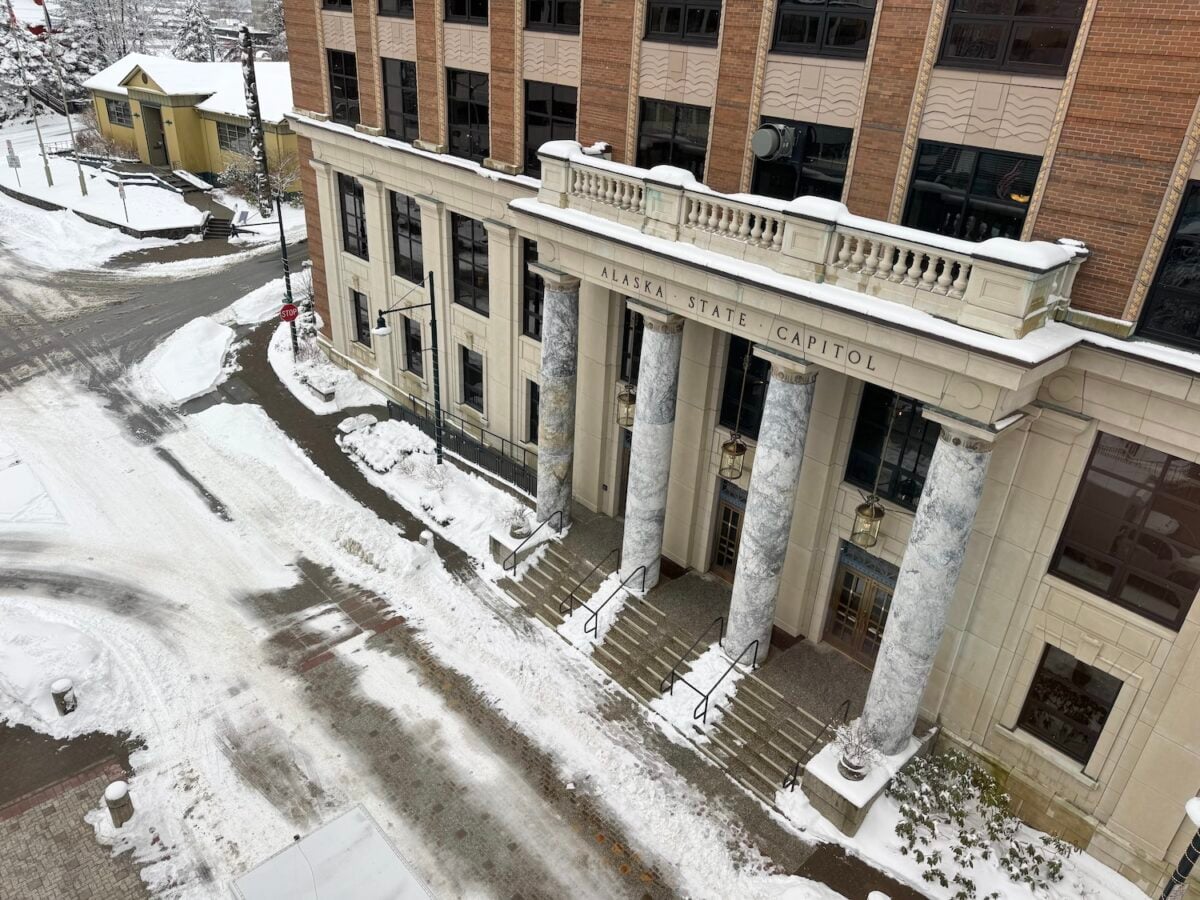
The Alaska State Capitol is seen on Wednesday, March 4, 2026. (James Brooks photo/Alaska Beacon)
By: Corinne Smith and James Brooks, Alaska Beacon
The Alaska State Capitol is seen on Wednesday, March 4, 2026. (James Brooks photo/Alaska Beacon)
A potential $500 million windfall is giving the Alaska House of Representatives a headache.
On Friday, the Alaska Department of Revenue released a forecast predicting that the state of Alaska will collect hundreds of millions of dollars more oil revenue by June 30 than previously expected.
That forecast landed in the middle of an ongoing debate over whether or not to spend from savings to cover almost $530 million in extra expenses, largely added by Gov. Mike Dunleavy, to the state budget since last spring.
The Senate approved a proposal to pay for roughly three-quarters of those expenses and it is now in the state House, awaiting a vote that could come as soon as Monday.
Tensions rose on Friday, with no agreement among House lawmakers on how to pay for the proposal.
The House is led by a 21-person multipartisan coalition whose members have been urging fast action on the issue. They say it is particularly important to fund $70 million for the state’s transportation projects to unlock more than $630 million in additional federal funding.
Without sure money, majority lawmakers say projects can’t go out to bid and construction firms can’t make purchasing and hiring decisions.
The majority wants to use the state’s Constitutional Budget Reserve, a savings account, to provide guaranteed funding.
The majority can pass a bill on its own, but it can’t spend from savings on its own. It takes 30 members of the House and 15 from the Senate to approve spending from the Constitutional Budget Reserve, the state’s principal savings account.
The Senate has already given that approval, but in the House, at least nine members of the 19-person, all-Republican House minority would have to support the majority, and so far, they’re not willing to do that.
Part of that reluctance is because as currently written, the supplemental budget bill allows lawmakers to spend up to $373.6 million from the reserve regardless of whether or not the war-caused bonus becomes real.
If oil prices stay high and the reserve money isn’t needed, the majority could spend it on other things without further input from the minority. That’s because it takes only 21 votes to advance a budget bill.
The money would return to the reserve only if it was unspent at the end of the fiscal year.
If lawmakers don’t spend from savings and the Iran war ends unexpectedly quickly, causing oil prices to fall, the minority could vote to spend from savings later to fill the gap.
The result is an ironic set of circumstances — Trump has said that the war will be short, but minority House Republicans’ action is effectively a bet on a long war.
Minority members say they’re being fiscally responsible. So do members of the majority, who add that there’s an opportunity cost for any delay — Alaska construction companies can’t make plans for the summer until they know what projects they’ll need to build.
Majority members also expressed frustration that the supplemental budget was largely requested by the governor, who they say has been absent in negotiations.
In addition, legislators and Gov. Dunleavy could also find themselves with a problem if oil prices fall after legislators have adjourned for the summer.
Legislators typically write budgets based on forecasts from the Department of Revenue, but this year’s forecast is especially uncertain, the department said.
Rep. Calvin Schrage, D-Anchorage, co-chair of the House Finance Committee and a member of the majority, said he’s skeptical of banking on the forecast.
“I have a lot of concern over budgeting based on that forecast, because that’s all it is. It’s a forecast. It’s not realized money, it’s not money in hand,” he said Friday.
“Even with this optimistic forecast, you are just barely, maybe able to balance the budget — if everything goes perfect. We still don’t have additional supplementals,” he said, referring to more budget amendments that could be requested by the governor.
Schrage said lawmakers will be scrutinizing the forecast in the coming days and weeks, and he said there’s still the possibility the Legislature may need to draw from savings.
But minority Republicans said they considered drawing from savings fiscally irresponsible.
“Taking a draw from our savings account to put into the general fund to fund things that were, by all accounts and purposes, able to be funded without it would have been irresponsible,” said Rep. Justin Ruffridge, R-Soldotna, on Friday.
House Minority Leader DeLena Johnson, R-Anchorage, said she’s confident in the forecast projections. “There’s some actuals there too. So I’m very comfortable with actuals, and I also know, if there’s changes, we can come in and we can come in and make them, and make a different vote. I’m not as worried about that.”
Speaker of the House Bryce Edgmon, I-Dillingham, expressed frustration at the delay.
“This is pure politics. We should have had the supplemental budget funded. A long time ago,” he said. “The House Majority coalition prioritized the funding of the entire package that was proposed by the governor. Every single item came from the governor. And so here we are, you know, in a really precarious state, because we’re at the point where every week that goes by gets us a week closer to that federal match not being achieved for the summer construction season.”
Edgmon and other majority legislators have voiced frustration about “moving goal posts” on the budget bill. While there are more than $530 million in proposed additions, the bill in front of House lawmakers contains only three-quarters of that amount because majority members wanted to attract members of the minority for the savings vote.
The remainder will still have to be addressed later, regardless of what happens in the upcoming vote.
Edgmon said it’s not clear to him what the Republican minority wants in exchange for a budget reserve vote.
“We don’t know what the ask is,” he said. “But it’s all about leverage, and unfortunately, it’s falling on the shoulders of a lot of smaller contractors around the state.”
As of Friday afternoon, it appeared as if the budget bill was on course to pass, but without approval to spend from savings.
If that occurs, the state of Alaska will be in the awkward position of hoping for a war long and difficult enough to keep oil prices high for months.
The Alaska State Capitol is seen on Monday, March 9, 2026. (James Brooks photo/Alaska Beacon)
By: James Brooks, Alaska Beacon
The Alaska State Capitol is seen on Monday, March 9, 2026. (James Brooks photo/Alaska Beacon)
The Alaska Senate voted unanimously Wednesday to spend more than $300 million from savings and reverse some of Gov. Mike Dunleavy’s most recent budget vetoes.
In a pair of 20-0 votes, the Senate approved a bill that would spend $373.5 million from the Constitutional Budget Reserve to pay for a variety of expenses and fill a deficit in the current budget year.
“This is money to fund the budget that was passed last year for things that the governor already spent on,” said Sen. Bill Wielechowski, D-Anchorage.
The bill now goes to the House, which failed last month to approve the needed spending from the budget reserve.
Among the expenses in the new supplemental budget bill is $70.2 million needed to unlock federal transportation grants. Dunleavy vetoed that funding last year amid a dispute with the Legislature about the proper source of the money.
Also in the bill is $98.7 million for the state’s wildfire response fund and up to $75 million for the disaster relief fund. That latter figure is dependent upon negotiations with the federal government about who will pay for the response after ex-Typhoon Halong devastated southwest Alaska last year.
The largest single item in the bill is $129.6 million needed to refill the state’s higher education investment fund, which was used to cover expenses due to a separate veto-involved dispute between the Legislature and governor.
That fund covers scholarships paid to Alaska high school students who meet academic standards and attend in-state schools.
The Senate-passed bill is significantly smaller than a $531 million version that had been previously considered. It shrank at the urging of the Senate’s six-person, all-Republican minority caucus.
It takes three-quarters of the House and three-quarters of the Senate — 30 Representatives and 15 senators, respectively — to spend from the budget reserve.
That’s a high hurdle, particularly because the Senate’s bipartisan majority caucus has just 14 members and the House’s multipartisan majority has just 21 members.
In both cases, compromises with the all-Republican House and Senate majorities are needed to spend from the reserve.
On Monday, the Senate pulled the supplemental budget bill from its schedule with no advance notice. Sen. Lyman Hoffman, D-Bethel, said at the time that the Senate Majority had unexpectedly lost a minority vote it needed to spend from the reserve.
That spurred hours of closed-doors negotiations between the Senate minority and members of the majority.
Since the United States and Israel started bombing Iran on Feb. 28, the price of oil — and, in turn, Alaska’s potential oil revenue — has risen, giving legislators another way to erase a looming deficit.
“We went over and talked with (the Senate Finance Committee) co-chairs and just said, ‘Hey, obviously, the price of oil is changing,’” said Senate Minority Leader Mike Cronk, R-Tok.
At the minority’s urging, the co-chairs removed almost $150 million from the bill — extra spending for state prisons, money for Medicaid, and millions in backup “headroom” for unforeseen expenses, among other items.
Cronk said the items removed during the compromise discussions could come back later, in the state’s regular budget bill, and the goal was to create “a real supplemental fast track” bill.
According to figures provided by staff for Hoffman, if Alaska North Slope oil prices average roughly $75 per barrel between now and June 30, the end of the state’s fiscal year, the state will earn enough oil revenue to pay for the removed items without spending from savings.
Since the start of the legislative session, construction companies have been lobbying for quick passage of a supplemental budget bill because they fear losing hundreds of millions of dollars’ worth of federally funded construction projects scheduled to take place as soon as this summer.
The Alaska Department of Transportation and Public Facilities has disputed the need for early funding, and on Wednesday, Sen. George Rauscher, R-Sutton, attempted to strike that item from the supplemental budget.
He withdrew his proposed amendment after encountering opposition, saying he was satisfied with the smaller bill on the floor.
“We’ve come down a long way from $500 million,” he said.
After the Senate voted on Wednesday morning, members of the House majority attempted to call a vote to confirm the Senate’s changes.
Members of the House minority objected, and the vote is now scheduled later, at 2:30 p.m. Thursday.
House Minority Leader DeLena Johnson, R-Palmer, said members of the minority wanted to wait until Friday, when a new state revenue forecast is expected.
“We’re talking about a $300 million draw. We may not need to take that full amount out of savings when we have money coming in,” she said, referring to the way the price of oil has surged during the Iran war.
Asked whether the new, lower draw from the reserve is more acceptable to members of the minority, Johnson said she wasn’t sure yet.
“There’s probably a number that’s better than others, but I mean, as low as possible is our number,” she said.
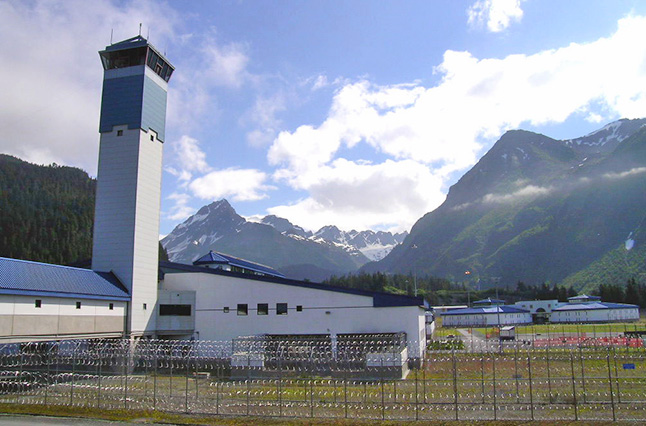
Spring Creek Correctional Center is seen in an undated photo. (Photo courtesy of Alaska Department of Corrections)
The Dunleavy administration has proposed a $523 million budget for the Alaska Department of Corrections for the next fiscal year, which House lawmakers with a finance subcommittee advanced without substantial changes last week.
It’s the largest corrections budget proposal to date, according to state data. It includes just over $514 million requested in state funding, $475.5 million of which is unrestricted general funds for the agency’s 13 state prisons and jails and estimated 2,127 employees. DOC officials expect an additional $9.3 million in federal funding for inmates held on federal charges.
The Department of Corrections has become one of the state’s most expensive departments in recent years. This year the Department of Health, which has requested $1.1 billion in unrestricted general funds, and the Department of Education and Early Development, which has requested $1.4 billion, would spend more. The Permanent Fund dividend could also be a bigger expense — if the state pays out a $1,000 dividend like last year, it would cost the state $660 million.
While the number of people in Alaska’s prisons and jails has remained relatively consistent, costs are soaring. Last year, DOC officials reported that state corrections booked nearly 26,000 people and just over 16,000 unique individuals, so roughly 9,000 people were repeat offenders. DOC also held nearly 450 people in involuntary commitments, which is for those who are deemed a danger to themself or others, or gravely disabled as a result of mental illness. The state cost for incarcerating an individual is an average of $223 per day.
Initially, corrections officials submitted a $500 million budget request, but later added an additional request for $20 million for staffing and inmate transportation, and $3.3 million for healthcare and medical staffing.
The proposed budget breaks down to roughly 60% for state prison institutions, lawmakers heard on Feb. 24. Roughly 20% is for health and rehabilitation, 10% for pretrial, probation and parole, 4% for administration, 3% for maintenance and operations and just 0.4% to administer the Board of Parole.
Costs to staffing Alaska’s prisons have ballooned in recent years, along with healthcare costs for an aging inmate population and increasing health needs, DOC officials told members of a House finance subcommittee for corrections.
“Staffing being the first, and then the second being our medical costs,” Jen Winkelman, corrections commissioner, told lawmakers. “The fees for medical in Alaska is through the roof, and every single individual that’s coming to us — that we don’t know we’re going to be getting — have significant medical issues.”
DOC has a 11.5% staff vacancy rate statewide, according to a spokesperson in February. DOC officials told lawmakers that recruitment and retention is an ongoing challenge, especially because prisons must be staffed 24/7.
DOC reports staffing and decade of ‘policy changes’ as major cost drivers
April Wilkerson, deputy commissioner for the department, told lawmakers in a presentation on Feb. 24 that DOC officials analyzed the budget over the last ten years, and saw a total increase of an estimated $182 million for operational costs in that time. She said roughly one third of cost increases since fiscal year 2016 were driven by employee contracts, salary and benefit increases.
April Wilkerson, deputy DOC commissioner, and Kevin Worley, DOC administrative services director answer questions from lawmakers on the department’s budget on Feb 12, 2026. Jen Winkelman, DOC commissioner is seen in the audience. (Photo by Corinne Smith/Alaska Beacon)
“Collective bargaining agreements, salary adjustments and health insurance changes — that makes up over 30% of the growth of the general funds within the department’s budget, which is outside of the department’s control,” Wilkerson said.
Wilkerson said an estimated 40% of cost increases have been due to “policy changes” from the Legislature. She pointed to the repeal of Senate Bill 91 enacted in 2020, when lawmakers increased prison sentences for most felonies and misdemeanors, and increased penalties for violating conditions of release. She also pointed to the state’s increased contributions to employees’ retirement benefits in 2022.
Lawmakers asked DOC officials for policy recommendations to curb costs across the department. Rep. Donna Mears, D-Anchorage, also asked the commissioner to address the problem of the department spending over its allocated budget.
“Funds allocated to DOC last year included cuts that the department just said, ‘Nope, we can’t do that.’ I think on a larger basis, there needs to be more discussions about that,” Mears said. “There’s this tension between the executive branch and requests for the department to make cuts, and that’s not happening.”
DOC officials reported all 13 state prisons spending over budget for the fiscal year ending in June, resulting in the department requesting an additional $20 million from the legislature to cover personnel costs, plus an estimated $3 million to cover health care costs.
Winkelman said the department had to partially make up for legislative cuts in their budget last year. A department spokesperson confirmed the supplemental budget request makes up for a $13.8 million reduction made by lawmakers last year.
Winkelman told lawmakers the department has not been able to fill its vacancies, which has resulted in high overtime costs. She said DOC has had to manage a legislative directive to cut costs by closing a housing unit at Spring Creek Correctional Center in Seward. “We were tasked with closing a housing unit, and we did that, and it is not achieving the savings, and as a matter of fact, it’s bottlenecked some of our population management,” she said.
Winkelman also pointed to unexpected health care costs for inmates as a driver of the department’s increased budget need. “We just recently had an inmate leave us that was with us for a year, that cost us over a million dollars in medical. We didn’t plan for that. We didn’t know that she was going to have that much of a cost associated. So going back to your question, and not being able to achieve some of these,” she said, referring to state budget allocations. “Because we don’t know what’s going to come through the back door.”
Winkelman recommended the creation of a new task force to tackle the question of how to curtail and manage the corrections budget.
“We were going to need some sort of a task force with other agencies, with the legislature, with law enforcement,” Winkelman said. “Some sort of a group to take a look at the broader system to figure out which policy changes are going to make that difference in order for us to be able to stay within our means.”
Rep. Ky Holland, D-Anchorage, said he found the proposal concerning: “If a task force is needed, why aren’t all the folks that are doing these jobs coming together and doing the work of a task force? Why do we have to somehow create that and then fund it?”
Holland said it was difficult for him to see that lawmakers are required to pay increasing budgets for DOC because of legal staffing requirements and said he wished the state’s education system had the same safeguards. “I wish we could tell our teachers that they had a maximum class size of the number of students that they had in a classroom because we had a standards council that had the force of law,” he said.
Winkelman said DOC officials are trying to address the budget challenges. “We are constantly at the table trying to figure out how to solve this, if you will,” she said.
She then walked back the task force idea, and said hiring a consultant could be another option. “I think our recommendation is to maybe hire a consultant, hire an expert in this world, to kind of take all the pieces together,” she said.
Winkelman acknowledged Holland’s concerns about the state’s financial pressure with competing budget priorities, and said she understands the corrections budget is eating into funding for schools.
“Right now, above working for the Department of Corrections for 25 years and fighting this battle, I’m a mom with two kids in school, and that’s most important,” she said. “I’m fighting this battle every day of how expensive Corrections is, and I know it is taking from our school systems.”
House members with the finance subcommittee for corrections heard several weeks of presentations about the department’s budget and asked questions of DOC officials. Rep. Mike Prax, R-North Pole, introduced several amendments to the budget, proposing millions in cuts until the department could provide further explanation on how the items would be spent and fulfill the department’s goals. But the committee voted them down before advancing the budget proposal without changes.
The corrections budget now moves to the full House Finance Committee for further consideration.
Brian Jackson, elections program manager for the Alaska Division of Elections, holds an SD card containing results from Alaska's Aug. 16, 2022 state primary. The cards and paper ballots from the primary are shipped to state elections headquarters in Juneau after the election. (Photo by James Brooks/Alaska Beacon)
By: James Brooks, Alaska Beacon
Brian Jackson, elections program manager for the Alaska Division of Elections, holds an SD card containing results from Alaska’s Aug. 16, 2022 state primary. The cards and paper ballots from the primary are shipped to state elections headquarters in Juneau after the election. (Photo by James Brooks/Alaska Beacon)
The head of the Alaska Division of Elections will not share legal advice that led to the state’s decision to send an extended voter list to the U.S. Department of Justice.
Alaska is one of only two states — Texas is the other — to hand over the data since the administration asked all 50 states last year. Ten others have said they plan to comply, according to records kept by the Brennan Center, a critic of the administration’s request.
Neither elections officials nor the Alaska Department of Law have explained why the state voluntarily complied with the request and signed the memo, or how compliance fits within the Alaska Constitution’s right to privacy.
That state’s Secretary of State said in a letter to federal officials that filings in a lawsuit showed that the department had shared sensitive information, including Social Security numbers, with “unauthorized persons,” and as a result, he could not guarantee that Idahoans’ identities would be safe.
In a pair of legislative hearings this week, Alaska lawmakers were unable to learn why Lt. Gov. Nancy Dahlstrom, Beecher, and the Alaska Department of Law reached a different conclusion.
Sen. Bill Wielechowski, D-Anchorage, grilled Beecher during a Wednesday hearing, pressing her to release the legal advice she received before the Division of Elections turned over its voter list.
“This is an issue of grave concern for hundreds of thousands of Alaskans, and you have the ability to provide us with those documents. You have the ability to waive any potential privilege. Would you be willing to do that?” he asked.
“At this point, I am not willing to waive that privilege,” she said.
Sen. Elvi Gray-Jackson, D-Anchorage, asked Beecher whether the department made a mistake by sharing the voter data and signing the memo that would allow the federal government to single out individual Alaskans.
“I do not, at this juncture, believe that the division made a mistake in signing the MOU,” she said.
This week’s toughest questions came from Democratic lawmakers. Beecher and Dahlstrom are both Republicans, and Dahlstrom is also a candidate for governor in this fall’s elections.
Republican lawmakers were generally silent in this week’s hearings.
Rep. Andrew Gray, D-Anchorage and chair of the House Judiciary Committee, said he was “in an awkward position” and reached out to a variety of experts in an attempt to avoid bias in a hearing he held on Monday.
During that hearing, Rep. Kevin McCabe, R-Big Lake, said he sees the state’s compliance as something like following the speed limit.
“When the federal government makes a law, we’re expected to follow it … it’s the federal government’s job, through whomever, to ensure that law is followed, and from what I understand, the federal government was merely attempting to make sure that Alaska followed the National Voter Registration Act,” he said.
The information transmitted to the Department of Justice goes beyond the publicly available voter information purchasable from the Division of Elections for $20.
It contains personally identifying information, such as birthdates, driver’s license numbers and partial Social Security numbers.
In a legal analysis performed last month, legislative attorneys called the DOJ’s request “unprecedented” and said the division’s handover would be legal only if the federal government requested the information “in compliance with federal law” and used “the information only for governmental purposes authorized under law.”
As of Wednesday, three separate federal judges — in Oregon, California and Michigan — have ruled that the federal government’s request is not in compliance with federal law.
Of the 48 states and the District of Columbia that have been asked for their voter lists, 29 and DC are fighting the federal government in court. The federal government has won none of those cases to date.
Legislative attorney Andrew Dunmire said he is also unaware of any federal law that allows the federal government to single out individual voters for removal from voter lists, as the MOU states.
On Wednesday, Beecher said the Department of Justice has not yet requested that any voters be removed from Alaska’s list. In addition, Dahlstrom said in December that the state would comply with the MOU only if the federal government’s actions are legal.
But with the Alaska Department of Law and the Division of Elections stonewalling legislators, it isn’t clear what the state considers a legal request.
Speaking to legislators this week, former Alaska attorney general Bruce Botelho advised lawmakers to continue searching for the legal advice given to elections officials by the Alaska Department of Law.
He also suggested that legislators consider filing a lawsuit to have the agreement with the Department of Justice declared illegal.