Categories
Featured Juneau News juneau Juneau Local Juneau Local Ketchikan Local News Feeds Sitka Local

Alaska House passes nearly $500M budget deficit bill, amid split support for Dunleavy spending

By: Corinne Smith, Alaska Beacon

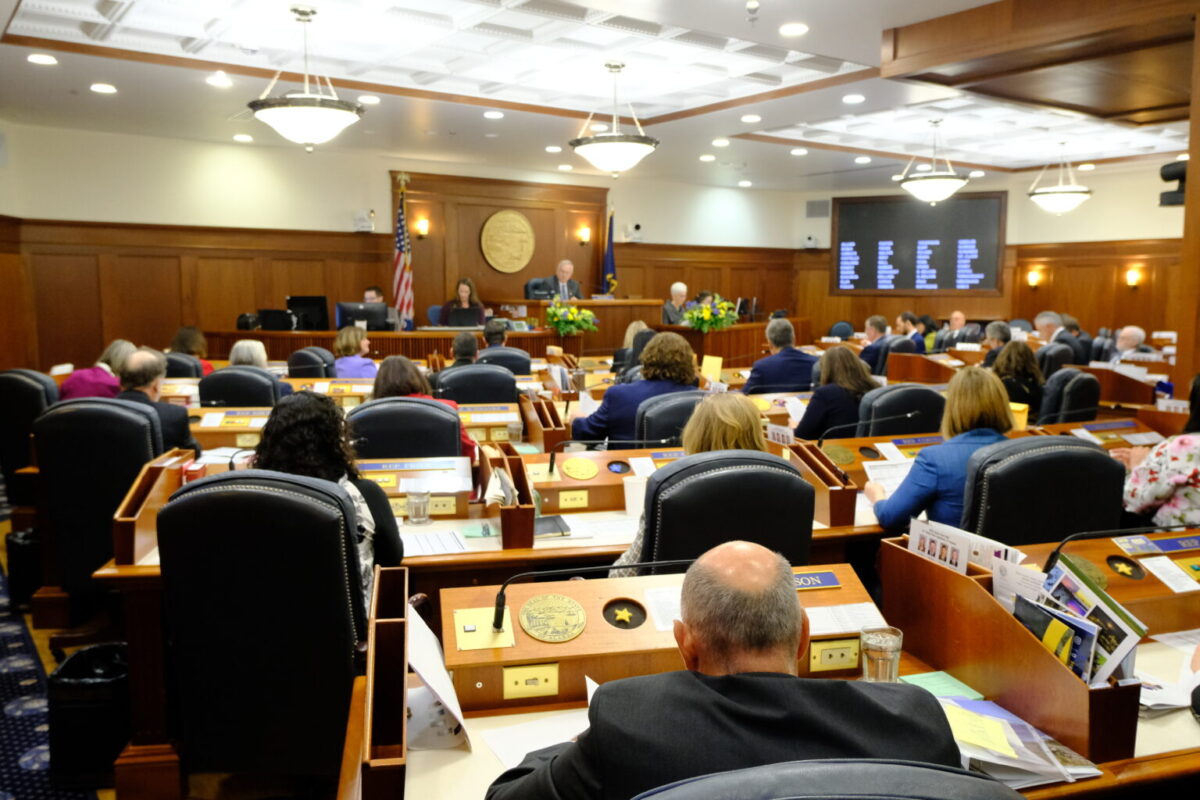
Members of the Alaska House of Representatives convene on the first day of the second session of the 34th Alaska State Legislature on Jan. 20, 2026 (Photo by Corinne Smith/Alaska Beacon)

The Alaska House of Representatives advanced a nearly $500 million supplemental budget bill to address the state’s budget deficit — one of the largest budget shortfalls to date — amid debate and scrutiny from Republicans who opposed drawing from a state savings account to pay for it, leaving the bill unfunded for now. 

Lawmakers passed House Bill 289, known as the supplemental budget, by a 24 to 16 vote on Monday, which is largely a routine process to address budget shortfalls and fund state government services and programs through the fiscal year that ends on June 30.

Top line items include an additional $40 million for disaster relief, following the devastation of the remnants of Typhoon Halong on Western Alaska; $55 million for last year’s million-acre wildfire season in the Interior of Alaska; $70 million in transportation funding to unlock $630 million in federal matching funds; $130 million for the Higher Education Investment Fund; $20 million for the Alaska Department of Corrections; and millions for public assistance including Medicaid, the Supplemental Nutrition Assistance Program, housing vouchers and senior benefits.  

But members of the Republican-led House Minority caucus raised concerns and frustration at the “fast tracked” budget bill, as well as expansion of spending and high costs for this year. While some members said a few items may be mandatory like funding disaster relief efforts and transportation, other spending items need further vetting and review. 

Voicing opposition, Republican members voted against immediately funding the roughly $490 million budget bill through the state’s principal savings account, the Constitutional Budget Reserve – which failed by a 24 to 16 vote on Monday. 

Unlocking the savings requires three quarters of the 40-person House, or 30 votes. Amid higher than expected state costs, and declining oil prices and state revenues, the Legislature must draw from the savings account to fund the state government. 

The budget bill is expected to advance to the Senate for further debate and possible amendments. But on Monday, Rep. Mia Costello, R-Anchorage, a member of the minority caucus, requested a re-vote, expected on Wednesday, which may change the final vote tally but is not expected to delay the bill. 

Historically, members of the minority have withheld support for the CBR vote until after the Senate approves the bill to maintain negotiating leverage. 

Rep. DeLena Johnson, R-Palmer who serves as the House Minority Leader, raised objections to what she called a rushed process in the House. 

“A rush through the budget without adequate scrutiny, in my opinion, without transparency, that’s not efficiency, that’s just courting failure, that’s just a rush to failure,” Johnson said. “And history has shown that rushed budgets often lead to unintended consequences.”  

Members of the multipartisan House Majority caucus called for lawmakers to support the budget bill, as requested by Dunleavy, and pay the state’s bills now.

Rep. Andy Josephson, D-Anchorage speaks on the supplemental budget bill on the House floor on Feb. 24, 2026. (Photo by Corinne Smith/Alaska Beacon)

“These obligations must be paid,” said Rep. Andy Josephson, D-Anchorage, who chairs the House Finance Committee, speaking on the House floor on Monday. “There’s nothing unusual. The size is unusual, but the fact that they were requested and filed is not unusual. They are obligations of the state. They are effectively binding contracts that must be paid. And the question is, when.”

Dunleavy first introduced the supplemental budget in December, and requested additional items up to last week, including $35 million more for disaster relief if the state fails a federal appeal and is denied a request for the Federal Emergency Management Agency to fund 90% of costs for the first three months of the typhoon disaster in October.  

Some items, like the $70 million federal transportation match, replace funds that Dunleavy vetoed last year — to the alarm of some lawmakers, union and construction industry groups because the money unlocks hundreds of millions of federal dollars. Lawmakers say it is time-sensitive to fund it in order to support the summer construction season. 

“I would say these are actually precise invoices, not a blank check,” said Rep. Chuck Kopp, D-Anchorage. “They’re ones that were already on the books, and we’ve already taken the responsibility to pay.”

Lawmakers also allocated nearly $130 million to repay the Higher Education Investment Fund, which in part funds student scholarships, in order to cover state expenses last year. 

Some Republicans questioned departments spending over what the Legislature appropriated last year, particularly the Alaska Department of Corrections, calling for more thorough oversight and transparency.

“We have departments who have come with us, who actually spent like drunken sailors last year,” said Rep. Jamie Allard, R-Eagle River. “We need to make sure that they’re reined in.”

Other lawmakers pushed back against critics for holding up the budget bill process.

“I feel like I’m in the Twilight Zone,” said Rep. Andrew Gray, D-Anchorage, on the House floor on Monday, in response to Republicans’ criticisms of Dunleavy’s budget request and administration spending. “And what I’ll say is that sometimes we just have to put our differences behind us. We have to collaborate, cooperate, and do what’s best for Alaska.” 

Following the House votes on Monday, House Speaker Rep. Bryce Edgmon, I-Dillingham, pointed out that the governor has not been involved in supporting the budget his administration has requested. “It’s quite interesting if this is a governor’s bill and the governor’s not involved at all in terms of promoting his own bill,” he said. 

Rep. Jeremy Bynem, R-Ketchikan, a member of the minority, raised concerns on the House floor but ultimately voted to support the budget bill and the savings draw. “It was a difficult, challenging vote for me,” he said of voting against his caucus. 

“I absolutely did not love the process we went through to get to where we were today. There are items in that (bill) I still have questions on,” he said. “The reality is that many of these items are things that we will have to take up and pay for.”

A spokesperson for Dunleavy’s office did not respond to a request for comment on the criticisms raised and lack of support from Republicans on the governor’s requested budget.

“The Alaska Constitution grants appropriation powers to the legislature, and that includes the CBR draw,” said Jeff Turner, communications director for Dunleavy. “The governor’s office is not part of any negotiations between the house caucuses.”

Categories
Featured Juneau News juneau Juneau Local Juneau Local Ketchikan Local News Feeds Sitka Local

Former Dunleavy recall leader is latest candidate for Alaska governor

By: James Brooks, Alaska Beacon

Meda DeWitt holds up a plant in this undated photo provided by the candidate. (Handout photo)

Six years ago, Meda DeWitt was seeking to recall Gov. Mike Dunleavy from office. Now, she’s looking to take his position.

Last week, DeWitt became the 17th person and second independent to file a letter of intent for Alaska’s gubernatorial race.

Speaking by phone, she said a majority of the candidates in the race are Republican and all working off the same talking points.

“We need somebody who isn’t owned by a specific party and required to use those talking points shared among all of the party, and really listen to Alaskans and get the job done,” she said.

DeWitt is a lifelong Alaskan, born and raised in the state. She is Tlingit from the Naanya.aayí clan in Wrangell, she is senior state manager for the Wilderness Society in Alaska and president of Yak-Tat K̲wáan Inc., the village corporation for Yakutat. 

traditional healer, she has 20 years of experience as a community and political organizer.

“I have experience in working with the different components that a community needs to thrive,” she said. “And I believe that our state has some hard realities that we need to address. You know, we need to address climate change. We have 141 communities that are going to have to be relocated.”

DeWitt said the state’s budget will need “some tough love” but that the next governor should also be prepared to support the base needs of what the state is supposed to provide its residents.

Asked why she believes she’s the best person to organize that, she said, “Well, Alaska needs a mom. My elders that I work with have asked me to run. Communities have asked me to run. My children have asked me to run. They believe that I can make a difference, and so I personally may never have just chosen on my own to step up into that space, but when you have your elders in your life that matter, your children in your life that matter, and your community in your life that matter, that ask you to do it, then you have to take the time to honor that.”

The recall campaign against Dunleavy launched in 2019, after the governor proposed sweeping budget cuts. It alleged a variety of illegal and incompetent acts.

Dunleavy’s attorney general rejected the campaign, stalling it until the following year, when it was interrupted by the COVID-19 pandemic emergency. The campaign ultimately fell short of the signatures needed to force a recall vote.

“He cut safety, he cut education, he cut elder benefits, he cut all of these things that underpin being able to live here and survive,” she said, recalling the campaign. “Alaska is hard to live in.”

She noted that Dunleavy now has the worst approval rating of any governor in the United States.

“The recall, even though we didn’t recall him, we did hold him in check. He knew that that was always looming there in the background for his entire eight years,” she said.

The next governor will have to deal with tough issues, DeWitt said. 

“We have to talk about ferries in Southeast,” she said. “We have to talk about coastal erosion on the West Coast, we have to talk about our oil and gas dependency and how that’s not healthy for us. Also, who’s talking about the fact that we ship in 95% of our food and goods?” 

DeWitt sees her campaign as one focused on issues that people are talking about.

“I think that this is a people’s campaign that’s going to take people power to do it, and I look forward to working with Alaskans in the process,” she said. “And I humbly ask for their support and their vote and to be given the opportunity to serve.”

Candidates for Governor

  • Former state Sen. Tom Begich (Democrat)
  • Former state Sen. Click Bishop (Republican)
  • Former Anchorage Mayor Dave Bronson (Republican) and Lt. Gov. candidate Josh Church (Republican)
  • Former state revenue commissioner Adam Crum (Republican)
  • Current state Sen. Matt Claman (Democrat)
  • Lt. Gov. Nancy Dahlstrom (Republican)
  • Matanuska-Susitna Borough Mayor Edna DeVries (Republican)
  • Organizer Meda DeWitt (independent)
  • Kasilof resident Jessica Faircloth (independent)
  • Anchorage podiatrist and state medical board member Matt Heilala (Republican)
  • Former state Sen. Shelley Hughes (Republican)
  • Former state Rep. Jonathan Kreiss-Tomkins (Democrat)
  • Author Hank Kroll (Registered Republican) with Lt. Gov. candidate Tommy Nicholson (Undeclared)
  • Angoon resident and former teacher James William Parkin IV (Republican)
  • Former Attorney General Treg Taylor (Republican)
  • Palmer resident Bruce Walden (Republican)
  • Businesswoman Bernadette Wilson (Republican) with Lt. Gov. candidate Mike Shower (Republican)
Categories
Featured Juneau News juneau Juneau Local Juneau Local Ketchikan Local News Feeds Sitka Local

Alaska’s Department of Corrections spent $24M over budget last year, mostly on staff overtime

By: Corinne Smith, Alaska Beacon

 This symbol is inside of the Alaska Department of Corrections office on Sept. 7, 2022, in Douglas, Alaska. (Photo by Lisa Phu/Alaska Beacon)

The Alaska Department of Corrections spent over $24 million more than the budget approved by the Legislature last year, with a large portion for staff overtime, raising alarm from lawmakers.

DOC officials submitted their additional budget request to the Legislature earlier this month, part of a routine budget process to account for state spending over the past year — but this year’s price tag for the state’s prison system is at a historic high.

The department requested an additional $20 million for staffing and overtime for last year at the state’s 13 prison and jail facilities. 

According to department data provided to the Senate Finance Committee on Thursday, there were 15 correctional staff that earned over $100,000 each in overtime pay last year, on top of salary and benefits. 

Two correctional officers at the Anchorage Correctional Complex worked over 2,000 hours in overtime last year — one officer topped the list working 2,770 hours of overtime, to earn a total of over $225,000 last year. 

DOC officials did not respond to questions about the department’s policies around overtime and mandatory overtime on Thursday, but a spokesperson said the department’s current vacancy rate is 11.5% statewide. In budget documents, DOC officials noted the additional funding was needed for minimal staffing requirements for “24/7 operational readiness.”

Sen. Bert Stedman, R-Sitka and co-chair of the Senate Finance Committee, said while the rising costs in DOC are well-known, going millions over budget is a problem as lawmakers grapple with declining state oil revenues and a growing list of state funding needs this year. 

“Their budget has been growing exponentially,” he said Thursday. “It’s not fair, because those funds that are being channeled in that direction could go elsewhere.”

DOC’s budget has seen increases year-over-year throughout Gov. Mike Dunleavy’s term, unlike other agencies who have sustained cutbacks. Since 2019, the state budget for DOC has increased 46% to over $437 million last year, according to state data.  

The $24 million in additional funds the agency requested also included $1.1 million for community residential treatment centers, or halfway houses, and $2.95 million in health care costs last year.

Sen. Mike Cronk, R-Tok, also serves on the Senate Finance Committee and expressed surprise and concern at the overtime hours presented to the committee on Thursday.

“That’s literally 100 hours a week. All year long,” he said, and questioned if people were running up overtime for a short time in order to retire or leave the department. “So it’s very concerning. You know, obviously I don’t blame anybody for it, but we have to figure out why this is happening, and we just have to do better. We have to be more efficient and make sure that we’re doing everything we possibly can to keep costs down.”

Stedman questioned the state’s contracts with the union representing correctional officers, the Alaska Correctional Officers Association, in accounting for the extensive overtime.

“My concern is maybe they ought to haggle a little bit better when they do their labor agreements, because this is definitely not appropriate for the public treasury to put up with, and it’s got to get corrected,” he said.

Representatives with the union did not immediately respond to emailed questions about lawmakers’ concerns on Thursday.  

Last year, over 9,800 people entered DOC custody in institutions or on supervised release on probation or parole, according to state data.

Categories
Featured Juneau News juneau Juneau Local Juneau Local Ketchikan Local News Feeds Sitka Local

Anchorage Republican spending lots of his own money in governor’s race, early campaign records show

By: James Brooks, Alaska Beacon

Matanuska-Susitna Borough Mayor Edna DeVries looks up at fellow Alaska Republican governor candidate Matt Heilala during a candidate forum on Feb. 11, 2026, in Juneau. (James Brooks photo/Alaska Beacon)

An Anchorage doctor and his wife have put almost $1.3 million of their own money into his campaign for Alaska governor, an extraordinary act that puts him atop early fundraising totals in figures published this week by the Alaska Public Offices Commission.

With more than $1 million remaining in the bank after early spending, Republican candidate Matt Heilala stands out among a field of candidates that expanded to 17 this week with the entry of community organizer Meda DeWitt. 

State law requires political candidates to disclose their financial support on an irregular basis; the next report isn’t due until July, so this week’s figures represent an early look at who might be a competitive candidate. 

Campaign fundraising doesn’t guarantee success at the polls, experts say, but it can act like  gas in a car’s tank: Even a campaign with a high-powered engine can fall short if it doesn’t have enough gas in the tank. 

‘Zero chance’ of getting elected without money

“Money is the mother’s milk of politics,” said Jim Lottsfeldt, an experienced Alaska campaign consultant. “I didn’t coin that phrase, but it is true. If you’re not raising sufficient money to float an organization, you have zero chance of getting elected.”

Lottsfeldt hasn’t signed a contract with any candidate in the race but was planning to personally host a fundraiser for Democratic candidate Jonathan Kreiss-Tomkins. 

Former Alaska attorney general Treg Taylor, another Republican candidate, reported having more than $724,000 in his campaign accounts as of Feb. 1, the reporting deadline for the information published this week. He also made a significant contribution to his own campaign — records show a $250,000 donation from Taylor to his campaign.

Both he and Kreiss-Tomkins stood out from the field in terms of dollars available to spend: The only other candidates who reported having more than $226,201 available were Heilala and Democratic candidate and current state Sen. Matt Claman.

Kreiss-Tomkins said in a news release that his campaign had raised more than $750,000 since entering the race this month; because he entered the race after Feb. 1, those figures were not included in this week’s APOC reports. 

It also wasn’t clear how much of that total he has already spent. Several candidates reported that they had already spent much of the money they raised since starting their campaigns.

Republican businesswoman Bernadette Wilson has raised almost $306,000 since becoming the third candidate to enter the governor’s race, but she has spent more than two-thirds of that total. Similarly, former state Sen. Click Bishop has spent more than half of the $283,605 he reported raising since he started his campaign last summer.

Anchorage doctor seeks to fill a niche

Heilala, the self-funded candidate, spent more than any other candidate in the early going but still has the largest stockpile of campaign cash.

By phone on Wednesday, he said he hopes to fill a niche on the ballot.

“A lot of people claim they want a non-politician, non-bureaucrat, but how do you raise funds if nobody knows who you are?” he asked. 

He said he and his wife have “worked our tail off” in their lives and have enough financial freedom to afford their spending. 

He said that while he is a podiatrist, he also is “a fairly diverse business guy.”

“And that’s where my success has come from — investing and property developing and a lot of other things,” he said.

Self-funding the campaign to such a large degree means they can’t be swayed as much by donors, he said.

Heilala is a member of the state medical board but hasn’t served in public office before. At a candidate forum in Juneau, he praised President Donald Trump and said that he and his wife are golfing buddies with the president. 

That they’re willing to spend so much of their own money shows they’re serious about their campaign, he said.

“From this point forward, it will be a little easier to get larger donors,” he predicted. 

Matt Larkin is president of Dittman Research, which conducts polls and advises candidates in Alaska. Early fundraising figures can “serve sort of the same function as a primary” election, he said.

“When you have this many candidates … it’s really hard for donors to make a decision on who they’re going to support. And what you’ll typically see is donors will kind of support maybe multiple candidates at this stage in small amounts, but they’re really kind of waiting to see who emerges,” he said. “And so, this first fundraising update, I think will probably narrow the field some.”

Among well-known candidates, incumbent Lt. Gov. Nancy Dahlstrom, a Republican, reported having just $4,880 in cash on hand, less than Matanuska-Susitna Borough Mayor Edna DeVries, another Republican candidate.

Former state Sen. Click Bishop reported $130,258 in cash on hand, putting him in the bottom half of candidates, but his list of donors was an unusually multipartisan list that included former state Sen. John Coghill, a conservative Republican from Nenana, and current state Sen. Jesse Kiehl, a progressive Democrat from Juneau, among others. 

Former state Rep. Joe Hayes, a Democrat, was a donor, as was Leslie Hajdukovich, a Republican who unsuccessfully challenged Hayes’ current employer — Democratic state Sen. Scott Kawasaki — in a 2024 Fairbanks Senate race. 

In Alaska, there are no limits on donations — for now

Alaska has no limits on the amount of money an individual can donate to a political campaign. The state’s prior limits were eliminated by the U.S. 9th Circuit of Appeals in 2021, and the state declined to appeal the decision.

The Alaska Legislature has not passed a bill to reimpose limits, but voters will be asked in August whether they want to approve a ballot measure that reimposes them

Those new limits would take effect after the November general election.

Several third-party groups registered with the public offices commission last month to support various candidates, but none have reported significant spending or donations.

In the 2022 race for governor, Republican Mike Dunleavy’s campaign spent more than $2 million. A supporting campaign backed by the Republican Governors Association, added almost $3 million in a parallel effort.

Independent Bill Walker’s campaign spent more than $2.4 million, and Democratic candidate Les Gara’s campaign spent almost $1.6 million. Republican Charlie Pierce, the fourth candidate, spent less than $150,000

Gara said that with early fundraising numbers, “you can get a sense for how hard somebody’s working, and I think that’s the most important thing.”

In general, Lottsfeldt said, “the reason you want this money is you need to spend it mostly when people are paying attention and are going to cast a ballot. And so that is really, mid-July through the third week in August.”

“Unfortunately for all the guys and women running for governor,” he said, “there’s this U.S. Senate iceberg floating in the middle of the channel.”

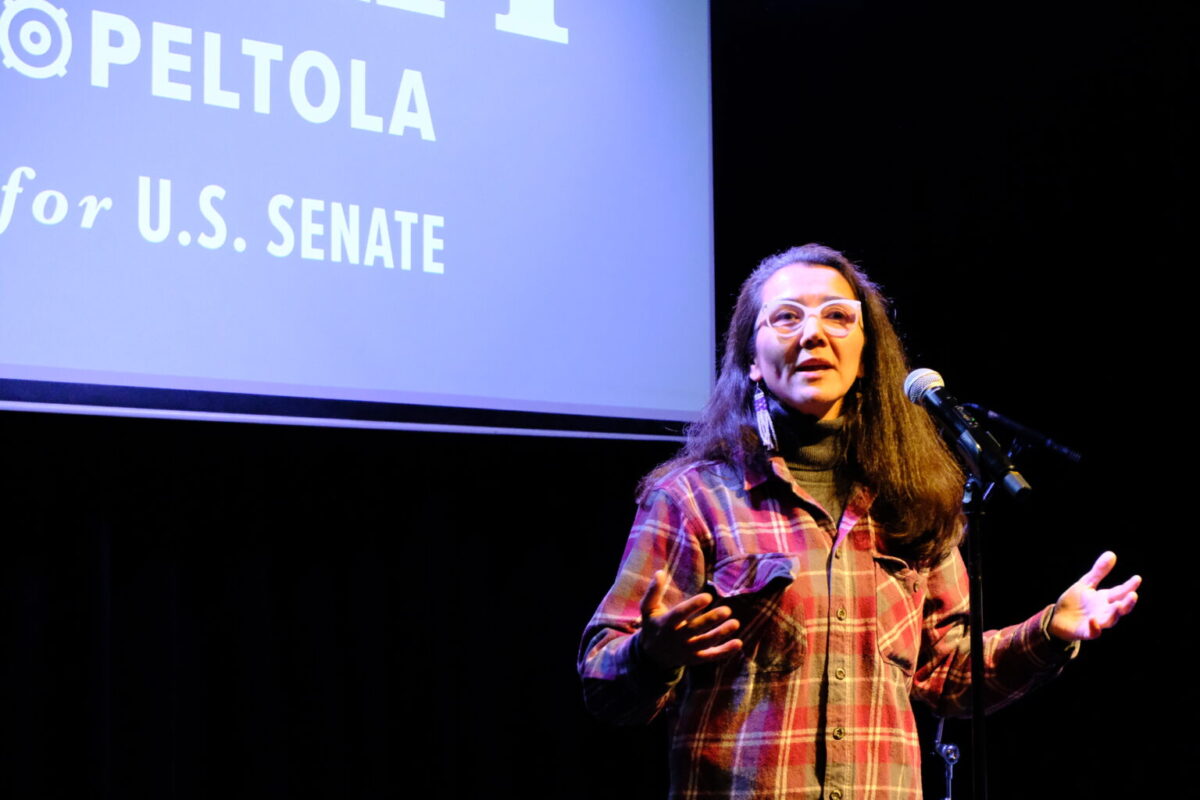
Lottsfeldt expects that the U.S. Senate race between Democrat Mary Peltola and Republican incumbent Dan Sullivan will take up most of the available TV and radio ad slots because those candidates will have more money and be able to outbid governor candidates. 

For that reason, he thinks a successful governor candidate will invest in things like yard signs, supporters going door-to-door, and other parts of a “field game.”

“It’s funny: Yard signs don’t win campaigns, but it is a marker of, ‘oh, that campaign is active. There’s people behind that. There’s enthusiasm. … Whether it’s a door stop, a yard sign, word of mouth, that is going to be huge when we have 16 people who are running.”

Even as Lottsfeldt talked, that number had already increased by one.

The deadline to sign up as a candidate is June 1. Candidates may drop out of the race as late as June 27. 

In Alaska, the top four finishers in the August primary, regardless of political affiliation, advance to the November general election, where voters use ranked choice voting to sort the candidates in order of preference and pick a winner.

Larkin, of Dittman Research, doesn’t have a contract with any candidate but has done polling on the governor’s race. While money is important, he said, “how you use that money is more important.”

“Increasingly, it’s the message that these candidates will go with will end up being the difference,” he said. “… I think the candidate with the best ideas is going to win this race, bottom line.”

Categories
Featured Juneau News juneau Juneau Local Juneau Local Ketchikan Local News Feeds Sitka Local

In legislative speech, Dan Sullivan reiterates support for Trump administration, denounces Democrats

By: James Brooks, Alaska Beacon

U.S. Sen. Dan Sullivan, R-Alaska, leaves the Alaska Legislature on Wednesday, Feb. 18, 2026, after his annual address to state legislators. (James Brooks photo/Alaska Beacon)

Facing a potentially difficult re-election campaign, U.S. Sen. Dan Sullivan came to the Alaska Legislature with praise for President Donald Trump’s administration and damnation for Democrats.

The Republican senator endured a gauntlet of protesters before he delivered his annual address to state lawmakers, saying his theme was an “Alaska comeback” brought about by the change between the Democratic presidency of Joe Biden and Trump’s Republican administration.

“We’re now beginning to see the beginnings of a real comeback and real progress on goals we’ve dreamed about collectively for decades,” he said, referring to the way the Trump administration has opened more parts of the North Slope to oil and gas drilling, and its stated support for a trans-Alaska natural gas pipeline.

Sen. Lyman Hoffman, D-Bethel, leads U.S. Sen. Dan Sullivan, R-Alaska, through a group of protesters in the Alaska Capitol on Wednesday, Feb. 18, 2026. Hoffman has endorsed Sullivan in this year’s U.S. Senate elections. (James Brooks photo/Alaska Beacon)

He reiterated his support for the Republican-drafted budget plan known as the Big, Beautiful Bill Act. It’s since been rebranded the “Working Families Tax Cuts Act.”

That plan calls for multiple oil and gas lease sales in Alaska, new military and Coast Guard construction in the state, and large personal tax cuts.

It also offered large one-time health care funding grants to compensate for a cut to Medicaid, cut federal food stamps and imposed work requirements for both programs. 

More Alaska-specific benefits in the Big Beautiful Bill were objected to by Senate Democrats and removed before the bill’s final passage, including a Medicaid increase that Sullivan had sought.

In his speech, Sullivan repeatedly criticized Democrats in the U.S. Senate.

“Alaskans should know who wants to help us and who wants to hurt us,” Sullivan said.

One of the legislators listening in the audience was state Sen. Forrest Dunbar, D-Anchorage.

“That was the most partisan speech I’ve ever heard a member of the congressional delegation give in the Alaska Legislature,” he said afterward.

“There was no critique of what the Trump administration has done in canceling projects in Alaska. There was no critique of what Trump has done, whether it comes to rule of law or democracy,” Dunbar said.

U.S. Sen. Dan Sullivan, R-Alaska, receives applause from the Alaska Legislature on Wednesday, Feb. 18, 2026, during his annual address to state legislators. (James Brooks photo/Alaska Beacon)

Also listening was state Sen. George Rauscher, R-Sutton. Afterward, Rauscher said he always appreciates the volume of Sullivan’s speeches and the range of subjects.

Did it feel like a campaign speech to him?

“If it felt like that, there’s probably a reason,” Rauscher said.

Until Sullivan was prompted by reporters and lawmakers, he didn’t address some of the nation’s most inflammatory issues, including the actions of Immigration and Customs Enforcement officers nationwide.

The day before Sullivan’s speech, ICE agents detained a Soldotna family, including a mother, two teenagers and a five-year-old.

Rep. Alyse Galvin, I-Anchorage, asked Sullivan about the incident. He responded that he hadn’t heard about it.

Answering reporters’ questions after his speech, Sullivan voiced soft disagreement with ICE policies nationwide, saying he supports deporting illegal immigrants with violent criminal records.

“I think that should be the focus of the administration’s efforts,” he said.

About ICE’s violent tactics in Minnesota, Sullivan said, “I put out statements, but also, importantly, weighed in with senior folks in the administration, saying, look, it’s really important to bring the temperature down on both sides — which ended up happening — and then very much that ICE needs to refine its techniques and tactics.”

Sullivan said he doesn’t believe protesters killed by ICE agents are “domestic terrorists,” as the White House has claimed.

“American citizens have the right to their Second and First Amendment rights, and I don’t think they should be targeted for that reason,” he said.

Categories
Featured Juneau News juneau Juneau Local Juneau Local Ketchikan Local News Feeds Sitka Local

Alaska Supreme Court upholds constitutionality of campaign ad disclosure statements

By: James Brooks, Alaska Beacon

Wooden gavel with books in background.

Alaska’s legally required campaign ad disclaimers do not violate the First Amendment, the state supreme court ruled Friday, deciding a six-year-old dispute between the Alaska Policy Forum and state campaign regulators.

Justice Dario Borghesan wrote the 61-page decision on behalf of the court, which ruled unanimously and upheld minor fines against APF that were issued by the Alaska Public Offices Commission five years ago.

At issue were a series of news releases, opinion pieces and a video embedded in the group’s website, all opposing ranked-choice voting. 

“We uphold the agency’s decision, concluding that the cited publications had to be reported and required a ‘paid for by’ disclosure,” Borghesan wrote. “We also hold that the statutory standards are not unconstitutionally vague because they give fair notice of what kind of speech must be reported and must contain a disclosure. And we conclude that the First Amendment challenges to these laws are unavailing.”

APF organized with a variety of groups across the country to produce the video embedded in its website, the opinion notes.

“APF did not just happen to find a video on the internet and share it on social media. APF engaged in discussions with organizations around the country to create a national coalition that developed or gathered content on ranked-choice voting and allowed APF to republish that content. Such efforts required significant time, and someone paid for that time. Alaskans have a genuine interest in knowing who,” the opinion states.

The case dates from 2020, when Alaskans voted to approve Ballot Measure 2.

That measure installed open primary elections, required disclosure of some political donations and installed ranked-choice voting in general elections. 

That system remains in place today but has been challenged by a new repeal initiative. A prior repeal effort failed in 2024.

In September 2020, Alaskans for Better Elections, a group that supports the current voting system, filed a complaint with the commission, stating that APF was violating state law because its statements on ranked-choice voting did not list their three top contributors, something required for campaign communications.

APF contended that its statements were about ranked-choice voting in general, not about Ballot Measure 2 in particular, because they didn’t specifically name the Alaska measure.

APOC commissioners disagreed and cited APF, requiring it to file disclosure forms but waiving fines. APF appealed to Superior Court Judge Frank Pfiffner, who ruled in the commission’s favor, finding that the commission “reasonably concluded that APF’s activities amounted to an express communication that was an exhortation to vote against (Ballot Measure 2).”

Pfiffner rejected technical arguments against the commission’s actions, the argument that state laws were improperly vague, the idea that the First Amendment gave APF a right to publish its material without a disclosure, and APF’s challenge to a state law that requires political groups to disclose contributions starting with the “first dollar” they spend.

Individuals are not subject to the same disclosure requirement. 

APF appealed to the Supreme Court, which heard oral arguments in September 2023 and ruled more than two years later.

In Friday’s order, Borghesan repeatedly refers to past rulings by the 9th U.S. Circuit Court of Appeals, which holds jurisdiction over Alaska. 

Relying on that precedent, the court concluded that given the context and language of APF’s communications, there was no other way to view them than as urging a particular vote in the 2020 campaign.

“In the context of an upcoming election in which ranked-choice voting is on the ballot,” Friday’s order states, a “video’s reference to a ‘push’ by ‘interest groups’ for ranked-choice voting and its call to ‘SAY NO TO RANKED CHOICE VOTING’ is a clear, albeit indirect, reference to voting against the Initiative.”

The Alaska Supreme Court’s ruling could be appealed to the U.S. Supreme Court.

“APF is disappointed by the decision,” said attorney Stacey Stone, who represented the group in court. “The ruling allows the state to treat protected educational speech about public policy as regulated campaign activity. That approach threatens to chill core First Amendment expression. We are reviewing the opinion carefully and evaluating our options.”

Attorney Scott Kendall represented Alaskans for Better Elections.

“Alaskans for Better Elections has been focused on campaign finance transparency since its founding. This victory affirms those values,” he said, explaining that the group is “very pleased with this outcome.”

Kendall noted that Alaskans have an interest in knowing who is funding ads in their elections.

“Hopefully, the Policy Forum will now comply with the law and disclose its donors, as it should have done years ago,” he said.

Categories
Featured Juneau News juneau Juneau Local Juneau Local Ketchikan Local News Feeds Sitka Local

At forum, Alaska’s Republican governor candidates split with Trump on Greenland

By: James Brooks, Alaska Beacon

From left to right, Click Bishop, Dave Bronson and Adam Crum, three of the 10 candidates at the Capital City Republican governor candidate forum, are seen on Wednesday, Feb. 11, 2026, at the Baranof Hotel in Juneau. (James Brooks photo/Alaska Beacon)

A fast-moving forum in Juneau on Wednesday hosted 10 of Alaska’s 12 Republican candidates for governor, but the size of the field in the hourlong event meant there was more flavor than meat in the soup du jour. 

All but two of the candidates effusively praised incumbent President Donald Trump, but despite that support, most said they disagree with his attempt to acquire Greenland and make it part of the United States.

As of Wednesday, 16 people have signed up to run for governor in this year’s election: 12 Republicans, 3 Democrats and an independent. 

The top four candidates in the August primary election will advance to the November general election, where voters will sort their choices using ranked choice voting. 

Incumbent Gov. Mike Dunleavy is term-limited and unable to run for a third term, leaving the seat open. 

Current Lt. Gov. Nancy Dahlstrom and author Hank Kroll were the only Republicans to not participate in Wednesday’s event, which was hosted by the Capital City Republicans on the night of their annual Lincoln Day dinner. Dahlstrom had a prior commitment and was unable to attend, organizers said. Kroll was not mentioned.

Asked to name their favorite Republican president other than Reagan and Lincoln, most of the 10 candidates said Trump, and some said they put him above Reagan and Lincoln.

“He’s the best president Alaska’s ever had,” said former attorney general Treg Taylor.

“I’d have taken a bullet for him,” said Bruce Walden, a former paratrooper.

“Trump has done more for Alaska than every president in our entire American history,” said former state Sen. Shelley Hughes.

Anchorage podiatrist and state medical board member Matt Heilala said he had to choose Trump because Heilala and his wife play golf with Trump.

Former state Sen. Click Bishop was an exception, naming Teddy Roosevelt, Dwight Eisenhower and Ronald Reagan as his favorite presidents. James William Parkin IV of Angoon said he doesn’t choose favorites and didn’t name a pick.

Asked whether Alaska should support the American acquisition of Greenland, Bishop was quick to say “no,” and most of the other candidates followed suit.

“I think we have enough problems here, and I’d like to see the federal government give us more support to develop our resources here,” said former state revenue commissioner Adam Crum.

Taylor said that “when my friend, the governor of Louisiana, Jeff Landry, was tapped to be the US envoy (to Greenland), I texted him and said, ‘What the heck? You don’t even know what it’s like to be cold.’ Ultimately, it’s a question for Greenland and self determination, but I’d be happy to talk to (Trump) about how we fit into the United States and the importance that we play in our economy and our strategic location.”

Matanuska-Susitna Borough Mayor Edna DeVries was the sole candidate who offered a different answer, saying, “Well, if I want President Trump to continue to love Alaska, I’m going to say yes.”

All but Bishop and Parkin said they intend to support the repeal of Alaska’s 2020 ballot measure, which installed open primary elections and a ranked-choice general election, as well as tougher disclosure requirements for political donations.

The candidates split when asked whether they think Alaska’s judges should be required to run for office or whether judges should be appointed, as in the existing system.

Bishop, Heilala and Hughes each said they think judges should be appointed, though Hughes called for more public members on the Alaska Judicial Council, which examines applicants and nominates candidates to the governor for appointment.

Former Anchorage Mayor Dave Bronson, Crum, DeVries, Parkin, Taylor, Walden and Wilson each said they think judges should be elected.

When asked which Alaska politician each candidate admires, most said either Ted Stevens or Don Young, longtime Republicans who served in the Senate and House, respectively.

“I don’t think hardly any of them,” Wilson said. “I think you have to get back to my great-uncle Wally (Hickel). … Nick Begich is also doing a hell of a job.”

Wilson served as a senior adviser to Begich’s 2024 election campaign.

Walden also chose Nick Begich. 

Asked whether Alaska should regulate artificial intelligence software, the candidates gave a variety of answers.

AI is sort of like a hammer, Walden said. “You can build a house with a hammer. You can also murder somebody with a hammer. If it’s used properly, it’s probably going to be all right, but yeah, we better regulate it big time,” he said.

Wilson said that if anyone on her campaign team is using AI, “they better not be.”

While it is a powerful tool and can be harnessed, she said there are serious concerns. “We have seen AI used to manipulate photos, especially against people running for office. We’ve seen it used to create comments that were never said. I think that we really need to pay attention to the damage that can be done for AI,” she said.

DeVries, at 83, is the oldest candidate in the field.

“I can remember when TV came in and how horrible that was going to be, right? It ended up — it can either be a blessing or a curse, and that’s the way I feel about AI,” she said.

Taylor, who said he used AI to help prepare his closing speech, said “Alaska is AI’s best friend” because the state is the source for critical minerals used in high-tech electronics.

“On the other side, AI is Alaska’s best friend,” because it could be used to make government functions more efficient, Taylor said.

“We have to responsibly deploy AI in state government to create those efficiencies, to create those savings, or we’re going to get left behind.”

Categories
Featured Juneau News juneau Juneau Local Juneau Local Ketchikan Local News Feeds Sitka Local

Federal government may seek removal of individual Alaskans from state voter rolls

By: James Brooks, Alaska Beacon

Reject stickers await ballot envelopes Wednesday, June 15, 2022 at the Division 1 office of the Alaska Division of Elections in Juneau, Alaska during counting for Alaska’s special U.S. House primary election. (Photo by James Brooks/Alaska Beacon)


When the state of Alaska turned over a copy of the state’s voter rolls to the Department of Justice in December, it also signed an agreement that allows the DOJ to ask the state to put individual Alaskans on track for removal from the state’s voter list.

Officially labeled a “confidential memorandum of understanding,” the document was signed Dec. 19 by Carol Beecher, director of the Alaska Division of Elections, and U.S. Assistant Attorney General Harmeet Dhillon.

Alaska is one of at least a dozen states that have signed similar documents, even as more states continue to fight the requests in court. 

In part, the document says “the Justice Department will securely notify you or your state of any voter list maintenance issues … i.e., that your state’s (list) only includes eligible voters.”

It goes on to state “that within forty-five (45) days of receiving that notice from the Justice Department of any issues … your state will clean its (list) by removing ineligible voters and resubmit the updated (list) to the Civil Rights Division of the Justice Department” to confirm that the state is following federal law.

Alaska’s signed agreement was obtained by the Alaska Beacon on Tuesday via a public records request.

Beecher and Kelly Howell, chief of staff to Lt. Gov. Nancy Dahlstrom, said the agreement does not allow DOJ to purge voters — a term that means removing them from the voter roll altogether.

Instead, the DOJ’s picks, if any, would be placed on the state’s inactive voter list. Anyone on that list must provide ID and have their identity verified if they wish to vote.

People on the inactive list are also placed on the state’s path to removal, a process that takes four years according to a timeline set by federal and state law

The agreement says in part that it was “entered into at your state’s request,” but by email, Dahlstrom’s office said that isn’t correct and that the Department of Justice provided the agreement.

The lieutenant governor is in charge of Alaska’s elections, and in a cover letter dated Dec. 19, she said the memo was “entered at the request of the Department of Justice” and state law.

That law, Dahlstrom said, “allows the Division of Elections to share voters’ confidential information with a federal government agency, such as the Department of Justice, provided it uses ‘the information only for governmental purposes authorized under law.’”

If the Department of Justice were to seek faster removal of Alaskans from the voter rolls, it could violate that clause.

Responding to questions from the Beacon, the lieutenant governor’s chief of staff said the state has not received any notices from the Justice Department about problems with its voter list, that no “ineligible voters” have been removed and that the state isn’t aware of any times when Alaska’s rolls were used for “pre-litigation or litigation purposes,” as defined in the agreement.

Concerns about states’ rights being overridden

The U.S. Supreme Court has repeatedly upheld the right of states to set the rules for local and state elections; changing voter rolls would represent a new expansion of powers by the Department of Justice.

Former Democratic state Sen. Tom Begich, posting about the issue on social media, said he is “outraged” by the agreement between the state and the federal government.

“That kind of federal interference threatens our constitutional right to run our own elections,” he said.

He later issued a statement calling on the Alaska Legislature to investigate the issue.

Dahlstrom, a Republican, is also a candidate for governor.

Writing in an opinion column published by the Juneau Independent on Friday, former Alaska Attorney General Bruce Botelho, a Democrat, said “it is alarming that the federal government has demanded” the copy of the voter roll with personally identifying information.

Nationally, at least 11 other states have signed agreements similar to the one signed by Alaska, according to federal court testimony in December over a lawsuit that challenged the state of California’s refusal to turn over its voter rolls to the federal government.

The text of Alaska’s agreement is almost identical to ones previously disclosed in court and by the American Civil Liberties Union in a lawsuit by the federal government against the state of Colorado.

“We will not comply with the Trump Department of Justice’s request for Coloradans’ sensitive voting information,” said Colorado Secretary of State Jena Griswold, a Democrat, in December. “The DOJ can take a hike; it does not have a legal right to the information. Colorado will not help Donald Trump undermine our elections and hurt the American people.”

Nationally, the federal government has sued more than two dozen states, including Colorado, that refused to send voter rolls to the federal government.

Those states generally have provided copies of publicly available rolls, but the federal government is seeking more detailed information, including lists of personally identifying information that may include birth dates, driver’s license numbers and Social Security numbers in part or whole.

“The manner in which the Department of Justice has acted makes clear that what is at stake is not voter integrity, but voter privacy,” Botelho said.

The Justice Department has said that its requests are necessary to make sure that states are following federal laws that require them to regularly maintain their lists and keep noncitizens from voting.

The Department of Justice has been sharing the voter rolls with the Department of Homeland Security, searching for noncitizens.

As of this week, federal judges had ruled against the Department of Justice in lawsuits covering Oregon, California and Michigan. The department has not prevailed in any case so far.

In the Oregon ruling, published on Feb. 5, Judge Mustafa Kashubhai wrote that the federal government cannot be trusted about its true motives.

“When Plaintiff, in this case, conveys assurances that any private and sensitive data will remain private and used only for a declared and limited purpose, it must be thoroughly scrutinized and squared with its open and public statements to the contrary,” he wrote.

Alaska-specific implications may be broad

The national ACLU has opposed the federal government’s requests in general. When contacted Friday about the Alaska memo, the Alaska chapter of the organization said it did not have immediate comment and was still researching the issue.

The agreement between the state of Alaska and the Department of Justice could have broad consequences here. 

Days before signing the agreement, the Alaska Division of Elections disclosed that dozens of noncitizens had accidentally been registered to vote by the Alaska Department of Motor Vehicles.

Under guidelines imposed by the Trump administration, those noncitizens could be deported, because federal law strictly prohibits noncitizens from registering to vote, and appearing on a voter list prompts special review when someone is attempting to become a citizen.

The state has also criminally charged 11 American Samoa-born Alaska residents for voting in state elections. People born in American Samoa are American nationals, but not citizens, and thus are ineligible to vote.

When the Alaska Beacon reviewed Division of Elections files that were turned over to the Department of Justice last year, it found 70 people labeled as noncitizens who either voted or attempted to vote in the state between 2015 and 2025.

Those people were on the state’s inactive voter list, which was not provided to the Department of Justice.

In addition, the violent federal crackdown against noncitizens in Minnesota and other states has ensnared many American citizens, indicating that the federal action is resulting in many false positives or is targeting Americans regardless of citizenship. 

Correction: The initial version of this article incorrectly stated that the memo would allow the Department of Justice to direct the purge of individual voters. It only permits DOJ to identify Alaskans for eventual removal and does not immediately prevent them from voting.

Categories
Featured Juneau News juneau Juneau Local Juneau Local Ketchikan Local News Feeds Sitka Local

Procedural objections almost stop Alaska Legislature from extending disaster declaration

By: James Brooks, Alaska Beacon

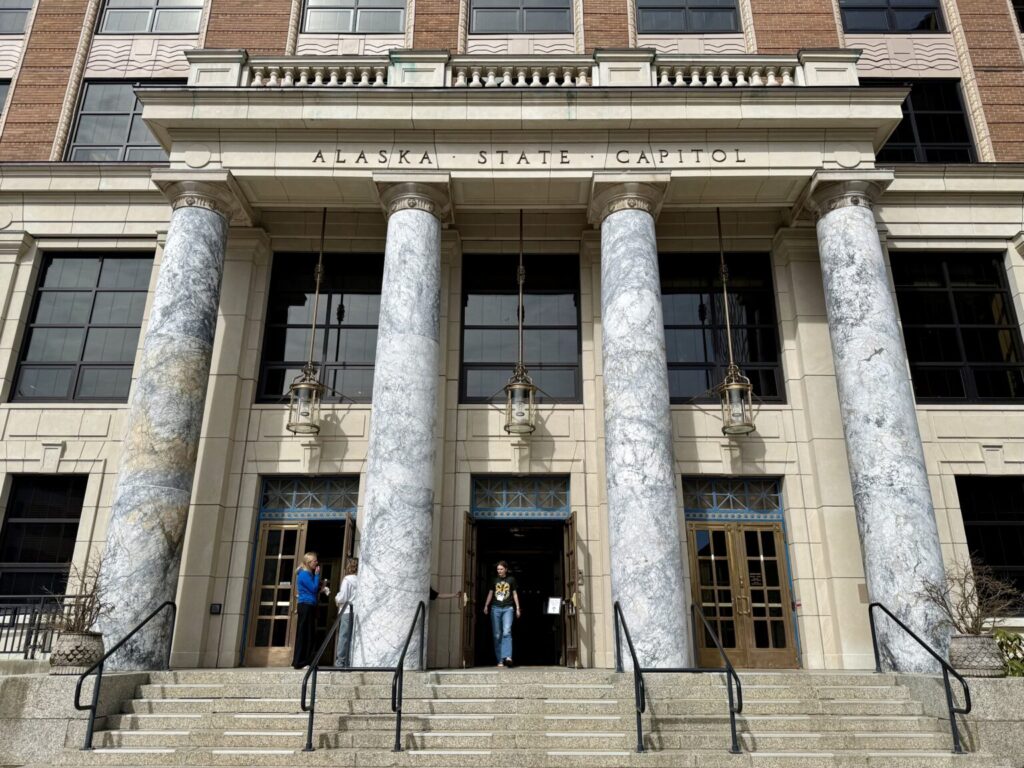
The Alaska State Capitol is seen behind other buildings on Tuesday, Feb. 10, 2026, in downtown Juneau. (James Brooks photo/Alaska Beacon)

The Alaska Legislature on Wednesday approved a 30-day extension for the state of disaster covering the fall 2025 storms that battered the state’s west coast.

The extension allows the state to continue spending money from its disaster response fund as it continues cleanup and repair efforts from two storms in October. Hundreds of Alaskans were displaced by the disasters, which devastated coastal communities.

The Alaska Senate approved the extension in a 19-0 vote on Monday, but the extension nearly failed in the Alaska House after members of the House’s Republican minority caucus raised procedural issues on Wednesday and said members of the majority were not following state law.

The extension was included in Senate Concurrent Resolution 12, which retroactively approves extensions issued since October and allows the governor to spend more from the state’s disaster response fund. 

“Doing this as a resolution is dangerous, I think it’s a mistake, and I’m not even certain that it’s legal,” said House Minority Leader DeLena Johnson, R-Palmer. 

Johnson and other Republicans said that under their interpretation of state law, legislators would need to approve the spending via a bill, not a resolution.

A legislative attorney, writing in a Feb. 2 memo to Speaker of the House Bryce Edgmon, I-Dillingham, said, “when the legislature means to take action having a binding effect on those outside the legislature, including extending a disaster declaration, the legislature must enact a bill in a special or regular session rather than using the less formal resolution process.”

Johnson was rebutted by House Rules Chair Louise Stutes, R-Kodiak and a member of the House’s majority coalition.

“This is not new money,” she said. “This is money that has been (in the fund) and is being allowed to be appropriated out. … it’s been agreed upon that maybe this wasn’t the optimum way. Nothing’s perfect. We’re moving forward. We are trying to do the best we can as quickly as we can. Time is of the essence, so I ask you to ask yourself: Do you want to be right in how it is done, or do you want to do the right thing when there’s a question?”

The House vote was 22-18, with Rep. Will Stapp, R-Fairbanks, joining the 21 members of the House’s coalition majority in support. All other members of the House Republican minority voted against the resolution.

As debate opened, Rep. Nellie Unangiq Jimmie, D-Toksook Bay, became choked up as she described the disaster, which devastated her district and resulted in the largest peacetime evacuation in state history.

“Today, months later, 340 of our neighbors remain without permanent houses. Mr. Speaker, we are Yup’ik. Our people have lived in this delta for thousands of years. We know storms. We know water. We know loss,” she said. “We have lived on this coast for thousands of years, and we’ve survived ice ages, epidemics, colonization. We’ve survived by adapting, sharing, by refusing to abandon our homes, but you can’t really live when your home floats 10 miles out to sea, when your fuel tanks that heat your home in winter are submerged in salt water.”

On Jan. 28, Gov. Mike Dunleavy requested permission to spend $20.5 million from the disaster response fund, up $5.5 million from a prior request.

When federal money is added to that tally, the total amount is $39.25 million.

More spending is expected. 

Last week, the director of the Alaska Division of Homeland Security and Emergency Management said that the Federal Emergency Management Agency has estimated at least $125 million in state and federal costs related to the storm disaster.

“The declaration allows state agencies to continue their emergency response and to extend state funds as needed,” said Rep. Andy Josephson, D-Anchorage and co-chair of the House Finance Committee.

Rep. Justin Ruffridge, R-Soldotna, took issue with the fact that after Dunleavy declared a state of disaster in October, the Speaker of the House and Senate President approved subsequent 30-day extensions without consulting legislators.

“I think we should have called ourselves in (to special session), or the third floor should have called us in (to special session) to take up this very important issue,” Ruffridge said.

“What precedent does this set for the presiding officers to make the decisions before us on our behalf?” he asked. “What power do we give the executive by allowing disaster declarations to continue without (the House) or the (Senate) taking up that order of business?”

Rep. Dan Saddler, R-Eagle River, said he worries that failing to follow proper procedure could leave disaster relief vulnerable to legal challenge.

“We put the reliability of that relief at question if this is not done right,” he said. 

The day after the vote, Ruffridge said members of the minority have drafted a bill that would fix the problems they see, and that bill is being reviewed by legislative attorneys.

House Majority Leader Chuck Kopp, R-Anchorage, said legislative attorneys have reviewed the majority’s plan.

“We have had our legal department tell us that this passes muster,” he said during the debate.

After the vote, Kopp’s office was unable to provide a legal memo to that effect but said he had received verbal advice.

Josephson, wrapping up debate, said the majority was working in good faith with Dunleavy to get the money out the door quickly.

“Given the urgency of the matter, we’re trying to cooperate with the executive branch,” he said.

Categories
Featured Juneau News juneau Juneau Local Juneau Local Ketchikan Local News Feeds Sitka Local

Alaska House approves university fee transparency act, sends it to state Senate

By: James Brooks, Alaska Beacon

Rep. Ashley Carrick, D-Fairbanks, talks on the floor of the Alaska House of Representatives on Friday, Feb. 6, 2026. (James Brooks photo/Alaska Beacon)

The University of Alaska may soon be legally required to provide itemized bills to students and give them more notice of fee increases.

The Alaska House of Representatives voted 36-3 on Friday to pass House Bill 176 and send it to the Senate for further consideration.

Rep. Ashley Carrick, D-Fairbanks, introduced the bill in the House and said it is “meant to provide greater transparency and accountability for all of my fellow Nanooks, Seawolves and Whales out there,” referring to the state’s universities by their mascots.

“With House Bill 176, it is our hope that we are able to provide more information to students and those that may be helping them to pay their bills about what it is that they are paying for and how those dollars will be spent,” she said.

The legislation received bipartisan support in the House.

“As a mom of two college students, it is important to see what is going on with their tuition because I’m paying for their tuition,” said Rep. Jamie Allard, R-Eagle River.

No one spoke against the bill on the floor, but afterward, Rep. Justin Ruffridge, R-Soldotna and one of three “no” votes, said he didn’t think the bill was necessary.

“I just think government does some things that could be solved with five or six conversations,” he said.

The University of Alaska said in a fiscal note that it believes it can implement the changes without any additional cost to its budget.

The bill has been referred to the Senate Education Committee, which has not yet scheduled it for a hearing.