NOTN- Juneau’s Recycling Center remains closed today and, according to CBJ, will remain closed indefinitely while critical replacement parts are shipped to the city to repair damaged equipment.
The center, has been closed due to problems with its recycling baler.
Recycleworks said parts have been ordered to repair the center’s baler, the parts are on the way to Juneau, but no timeline has been given for when repairs will be completed or when the center will reopen.
During the closure, staff are working on deferred maintenance projects and manually baling accumulated recyclable materials already on site.
The center closed through the city’s major snow storm, and when it reopened closed once more due to a surplus of recyclables.
The center serves as a primary drop-off location for community recycling and has experienced intermittent closures in recent years due to equipment and operational challenges .
City officials acknowledged the inconvenience for residents and said updates will be posted daily here, as repairs progress.
NOTN- The major topic discussed at the Committee of the Whole meeting last night was proposed changes to governance at Eaglecrest Ski Area, which has struggled for years with operational instability and deferred maintenance.
Juneau Mayor Beth Weldon said she introduced an ordinance that would shift the Eaglecrest board from an empowered governing body to an advisory role under a newly established City and Borough of Juneau Eaglecrest Recreation Area Department. The change would give the city more direct oversight over operations and capital investments.
“My ultimate goal is to try to save Eaglecrest. If anybody knows my history, both my kids grew up in Eaglecrest. In fact, my youngest son continued ski racing in college.” She said, “Eaglecrest is a great place to learn how to ski, but they have struggled with operational instability and management challenges for many years. So this tells me there’s a structural problem.”
She emphasized that the proposal is not a reflection on the current board, but rather an effort to ensure the ski area’s long-term survival.
“Currently, the board that we have is a very strong board, but despite having more year-round staff than ever before, Eaglecrest has still struggled with basic ski operations, amplified by long-term neglect of equipment and deferred maintenance.” Said Weldon, “And I think in order for Eaglecrest to survive, it needs a little shake-up, and the only shake-up we can really do is to have more city oversight.”
Without additional city control, Weldon warned, major repairs may not be financially feasible.
A joint meeting is scheduled for early March between the city’s Committee of the Whole and the Eaglecrest board to address these proposals and gather further input.
“We’re going to have a joint meeting where we’ll sit and talk to the Eagle Crest board, and then I think a couple weeks later, it’ll be back in front of the Committee of the Whole and we can decide what we change.” Said Deputy Mayor Greg Smith, “I’ve heard a lot about it. It shows how much people care about Eaglecrest.”
NOTN- What began as a simple solution to an overcrowded online buy-and-sell page has grown into one of Juneau’s most influential community forums.
The Juneau Community Collective, founded in March of 2014 by local resident Dan DeBartolo, now counts nearly 30,000 members and serves as a central hub for sharing information, asking for help and staying connected during emergencies and everyday life.
“So many people wanted to post all kinds of information about the community that wasn’t strictly about selling and buying.” Said DeBartolo, “So I just decided, we need to start up something else, initially, the page was called Juneau Community Concern, and that was early 2014, so we’ve been up for about 12 years now, but after a while, we switched to Juneau Community Collective, because it wasn’t just about people airing their concerns.”
Over the years, it has become a go-to resource during major events such as glacier outburst flooding, the recent winter storms and infrastructure disruptions, even a source for your local news outlets.
Members frequently use the page to report road conditions, locate lost pets or belongings and coordinate help during emergencies.
Reminiscing on favorite community posts and stories, DeBartolo said, “Somebody had a pet cat that had climbed up a tree, the cat did not want to come down, was up there for multiple days, the fire department was having a challenge getting involved. It became this big community interest piece where people had suggestions, people wanted to help these individuals just get their poor cat out of the tree. We were able to follow a story of somebody, in a town that really loves their pets, have their cat finally get rescued, and all the community support. I remember just feeling really good about having a space where people could discuss that and see it.”
Moderation has become an important part of maintaining the group, DeBartolo said.
As online discourse has grown more polarized, the Collective adopted clearer rules and more active moderation to keep discussions constructive.
“As the online space became more contentious, we needed to set very clear boundaries.” DeBartolo said, “By and large, the majority really appreciated that we spelled out what you could and couldn’t do on our page. We have those who feel it’s a little too strict sometimes, but it’s supposed to be as broad an appeal as possible, where people feel they can come in, air their concerns, or ask for help, ask questions and get those things solved.”
While the page is private to reduce spam and fake accounts, DeBartolo said membership is open to current residents, former Juneauites and those planning to move to the area, provided they follow the group’s guidelines.
Facebook’s attribution tools now clearly identify the Collective’s administrators, DeBartolo said this helps distinguish the official page from imitation groups.
“Imitation is the best form of flattery. I don’t know if the intention is flattery there, but I will tell you that if folks are worried that they’re in the authentic space that we have tried to create for this community, Facebook has allowed us to do something called attribution. So now, when you go look for Juneau Community Collective Official, which is at the back end, my name is actually on the page, and you can click on my name, and it tells you that the page has existed since 2014, you can see the authentic individual who’s actually responsible for the content on this page.” DeBartolo said, “What we see in a lot of other spaces, they don’t actually identify their moderators, or they use fake profiles. It’s very intentional. I will be transparent. My moderators will be transparent. So if you’re looking for a source you can trust, we want to be that.”
As the Collective continues to grow, DeBartolo says it’s mission remains focused on fostering connection rather than division.
“I don’t want our page to be about how people feel about national events. I want this to continue to be a place where you feel connected to Southeast Alaska, Feel connected to the Juneau community when you can’t get out and see them every day, when we have these situations like weather events that cut you off from in person communication.” DeBartolo said, “We want to be a source where you can have these discussions and feel that people are willing to help.”
NOTN- The City and Borough of Juneau is asking residents to weigh in on what city services matter most as officials prepare for budget cuts in the coming fiscal year.
CBJ is asking Juneau residents to take the CBJ Community Compass Survey before mid-February. Community feedback collected through this survey will help inform the CBJ assembly’s budgeting process this spring.
“What we hope to achieve is basically gathering community input to have a deeper understanding and depth of knowledge of the community values and priorities.” Said Juneau Mayor Beth Weldon, “And the other thing that we’d like to do is just increase awareness of our budget process and how that all works.”
Following the passage of Proposition 2 , which expanded sales tax exemptions in the October 7, 2025 Regular Municipal Election, significant reductions in sales tax revenue are expected and will likely require service-level cuts to the city’s annual budget.
CBJ officials say they seek to better understand community funding priorities and values, including where residents are willing to make tradeoffs and which services are critical to quality of life.
This effort will include an online survey, in-person workshops, and Assembly listening sessions.
“We’re also looking for one broad community listening session where we’ll take public testimony on the budget.” Said Weldon, “That, in a nutshell, is what we’re trying to do for our public engagement through this process, trying to figure out what the public sees as important, and trying to figure out some kind of consensus on where the cuts are going to come from.”
NOTN-Eaglecrest Ski Area officials say the resort continues to operate even with the extreme winter weather, closures, infrastructure problems and leadership turnover.
One of the most significant operational challenges for Eaglecrest has been a major water system failure beneath Fish Creek Lodge. Officials said the break was caused by aging infrastructure, not freezing, but repairs were complicated when a separate heating-system water line was damaged during initial work.
Contractors are now scheduled to install a supplemental water line, with hopes of restoring service next week. Water testing will be required before potable use can resume.
Mountain operations crews are continuing grooming and trail preparation as the snowfall allows, though mechanical issues with snowcats have slowed the progress.
Contractors are on site assisting with repairs. Plans are also being developed for snowmaking improvements and the possible return of night skiing.
According to the managers report released after the meeting last night, Eaglecrest has seen access improvements. For the 2025-26 season, the City and Borough of Juneau assumed responsibility for maintaining Fish Creek Road.
City crews are currently widening the road to improve traffic flow to the ski area.
Despite the continuous operational hurdles, the report discussed strong participation in snowsports programs. The ski area hosted three holiday camps with 125 students and launched its first multi-week programs in early January.
Thursdays meetings also brought notable leadership changes.
First reported by the Juneau Independent, General Manager Craig Cimmons resigned, after taking up the position on September 30 of 2024.
Board chair Hannah Shively stepped down for health reasons. Erin Lupro, a longtime employee and former acting general manager, was appointed interim general manager, with Cimmons assisting in the transition for up to 30 days.
Eaglecrest has faced financial strain as well, including a reported 40% drop in season pass sales and major projected deficits in the years leading up to the proposed gondola project.
On January 5, a report was presented during a Special Finance Committee Planning Meeting that shows Eaglecrest is facing mounting budget deficits.
Eaglecrest entered the current fiscal year with a budget deficit of $691,600, with the lowest previous fund balance in fiscal year 2006.
Under the current projections, the report estimates the fund balance could reach between negative $2.5 million and negative $3.0 million at the start of fiscal year 2027.
The mountain’s long-term financial planning is tied heavily to the proposed gondola project, but the first potential gondola related revenue is only expected in the final two months of fiscal year 2028.
Officials said additional updates on operations, infrastructure repairs and leadership transitions will be shared as the season continues.
Capital Transit, submerged in pooling water, photo courtesy of CBJ
NOTN- Winter is far from over, and the next phase of Juneau’s extreme winter weather is coming in the form of an atmospheric river, which is expected to bring heavy rain to Southeast Alaska through the weekend, and this is raising concerns about flooding as rain falls on to an already deep snowpack that has clogged storm drains, flooded roads and pooled on highways and strained local infrastructure.
The system is forecast to arrive late tonight and persist through early Saturday morning, according to the National Weather Service Juneau.
In Juneau, forecasters are predicting the storm will begin as snow and transition to rain Friday morning, totaling roughly 1 to 4 inches.
The rain will fall on the already deep snowpack across much of the central and northern Panhandle, increasing water pooling in streets and low-lying areas where blocked storm drains prevent proper runoff, there is also increased risk of possible isolated landslides for the southern panhandle.
Governor Mike Dunleavy has verbally approved Juneau’s disaster declaration, activating the state’s public assistance program.
Under the declaration, the state is assisting Juneau with clearing snow from roofs of critical public facilities, including schools, water treatment plants and Bartlett Regional Hospital.
Crews will also help dig out storm drains and fire hydrants to reduce flooding and maintain emergency access. However, officials emphasized that the assistance does not extend to private homes or businesses.
Emergency managers said conditions will continue to be monitored closely as the storm develops and additional updates will be issued as needed.
NOTN- Juneau schools and City and Borough of Juneau offices will be closed today as a winter storm warning takes effect earlier than expected, with forecasters calling for heavy snowfall and hazardous road conditions across much of Southeast Alaska.
The City and Borough of Juneau announced that all CBJ offices and the Juneau School District will be closed.
City staff will work remotely where possible and remain available by phone or email. Officials are urging residents to limit travel to allow snow removal crews to operate safely and efficiently.
According to the National Weather Service, snow is beginning this morning for much of Southeast, and intensifing through the afternoon, with peak snowfall around midday.
Updated forecasts issued late Sunday moved winter storm warnings up in time for Juneau, Pelican, Gustavus, Hoonah and Angoon.
The weather service said Juneau could see between 8 and 14 inches of snow by this evening, Snow is expected to start out light and fluffy before transitioning to wetter snow later tonight, meaning residents can shovel snow early before the snow becomes wet and dense.
City officials are encouraging residents to avoid unnecessary driving and to check road conditions if travel is unavoidable.
The Juneau Police Department is also asking the public to report slick intersections or dangerous road conditions to its non-emergency line.
Snow removal crews from CBJ Streets and the Alaska Department of Transportation and Public Facilities have been working through the weekend to prepare for the storm.
NOTN- The Juneau Assembly spent its Saturday retreat examining an estimated $11 million budget shortfall, Mayor Beth Weldon said it will take one to two years to fully understand as the city assesses the effects of recent voter-approved ballot measures.
“This is just an estimate because it will take us a year or two to figure out exactly what the ramifications of the ballot measures are, good or bad.” Weldon Said.
According to Weldon, about $4.4 million of the projected deficit is considered one-time cost.
The Assembly directed the manager to split reductions between delaying capital projects, including a planned waterfront museum, and pushing back one year of planned street work funded through the 1% temporary sales tax.
The remaining $6.6 million is tied to recurring costs. Weldon noted that additional financial pressures remain, including school district funding questions and outstanding police and fire labor contracts.
“To give people an idea of how big that is, when we did our priority list budgeting, all of our recreational facilities, everything together was $6 million. So we’re looking at some definitely cuts in service.” She said, “And on top of that, we also have to keep in mind that we have to have funding for glacial lake outburst floods and we have to have contracts out there for police and fire.”
To address the recurring shortfall, the city said it will tighten budget assumptions, such as eliminating long-vacant positions and delaying the launch of new programs, increase revenue, primarily through higher dockage fees and begin service reduction.
“We’re looking for community input on this, because this is where the community is going to feel it.” Weldon said.
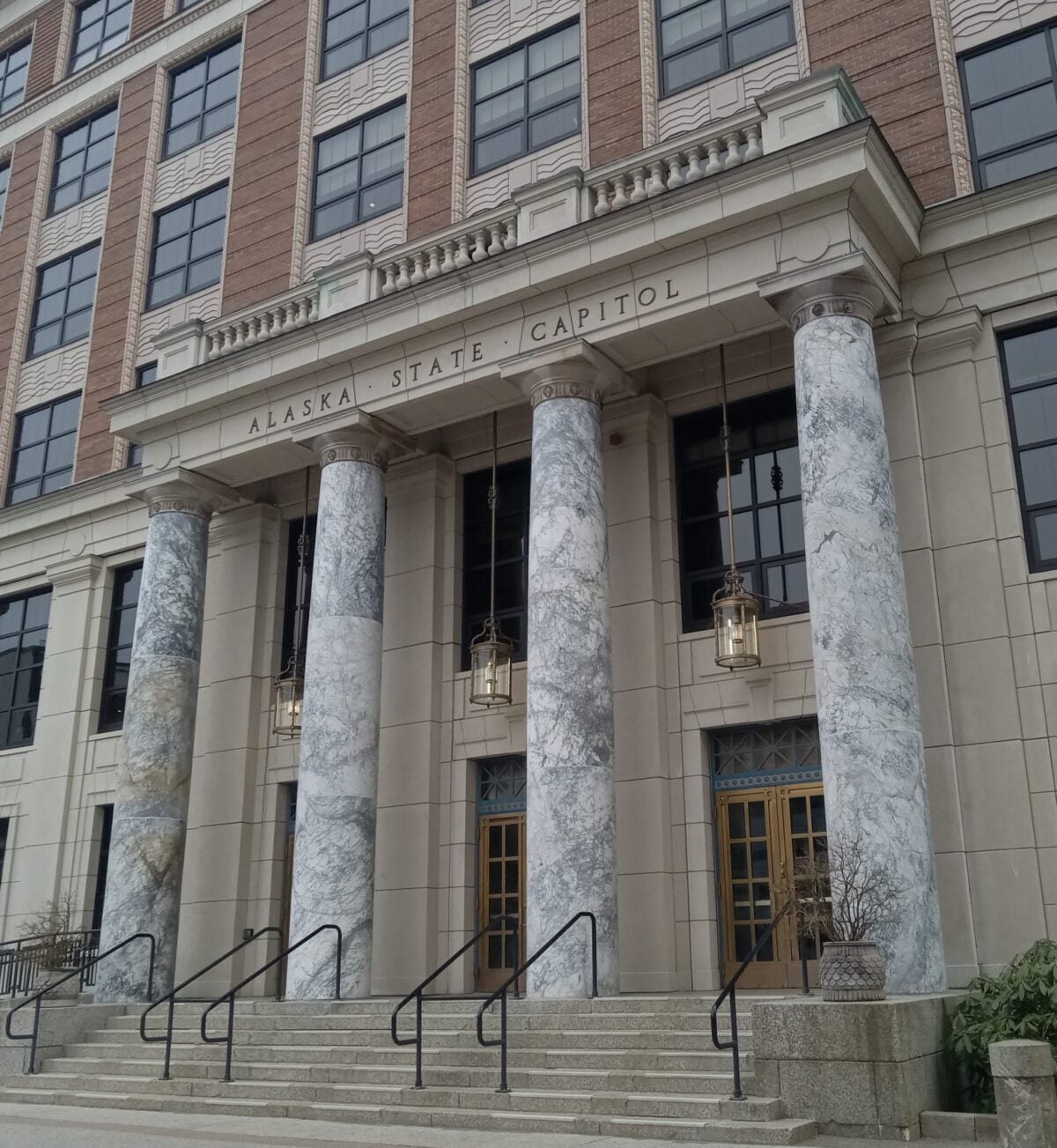
The Alaska State Capitol in downtown Juneau.
(Photo by Greg Knight/News of the North)
The Alaska State Capitol in downtown Juneau. (Photo by Greg Knight/News of the North)
NOTN- Juneau Mayor Beth Weldon said the city is finalizing its annual list of legislative funding priorities, shaped by months of committee work, public input and recommendations from numerous city boards and commissions.
“The planning commission, Systemic Racism Review Committee, General Commission on Sustainability, Utilities Advisory Board, Docks and harbours, Eagle Crest, Parks and Rec Advisory Committee, Historic Resources Committee, General School District and the General Commission on Aging, lots of hands have touched this list.” Weldon said.
The list, which guides Juneau’s requests to state lawmakers and Alaska’s congressional delegation, will be introduced to the full Assembly on Dec. 15 and is scheduled for a public hearing in January.
“What this list is, is it’s our priorities that we’re looking at, so it’s not all of our capital priorities by any stretch of imagination, but this is the list that we send to the State Delegation and the Federal Delegation in the hopes that there’s some money, either state money, which we know there’s not much of, or federal, that we can get help with. So again, this is not our complete list.” Weldon said.
The top projects on Juneau’s 2025 legislative priority list are; Mendenhall Glacier outburst flood response, North Douglas crossing, Mendenhall Wastewater Treatment Plant upgrades, Peterson Hill housing development, Juneau School District security and safety upgrades, Gold Creek flood control rehabilitation, prompted by flume failures, Bartlett Regional Hospital emergency department renovation, Statter Harbor wave attenuator project and Telephone Hill redevelopment.
Weldon said Juneau hopes to secure funding for even a portion of its top five projects. “We’ll be shocked to get any money on the top five. But you got to have a list for people to look at to help support you.” She said, “So this is to help our state delegates, who are having an open house today.”
The mayor encouraged residents to take advantage of the opportunity to speak with lawmakers during their open house at the state Capitol today.
Juneau Senator Jessie Kiehl added, “We’re opening up our offices from 11:30 to 1:00 today. We’ll have some snacks, some beverages, and good cheer.” He said, “Come on by the Capitol, just say hi. We don’t have an agenda, we don’t have a presentation, but we want to talk to you.”
A cruise ship emerges from a fog bank Monday, Aug. 28, 2023, in Juneau. (Photo by James Brooks/Alaska Beacon)
CBJ- The City and Borough of Juneau (CBJ) invites the public to submit proposals for how proceeds from the 2026 Marine Passenger Fee (MPF) are used. Proposals can be made via webform from December 1 to December 31, 2025. This annual process ensures that all members of the community can have a say in how fees from the cruise ship industry are reinvested in local business and services.
Various fees and taxes make up a $13 total fee per cruise ship passenger. These fees are designated to fund projects directly related to the visitor industry which enhance the tourism experience in Juneau and offset community impacts created by the cruise ship industry.
The use of these fees is constitutionally restricted. CBJ and Cruise Lines International Association (CLIA) settled a lawsuit in 2019 with an agreement that governs how and where CBJ spends the fees. CBJ therefore encourages project proposals that benefit cruise ship passengers as well as Juneau residents. For a full description of project eligibility, please see CBJ 69.20.120.
Exciting examples of past projects funded in part through the MPF include the Downtown Seawalk project, growing pedestrian access to Juneau’s waterfront, and improvements to Juneau’s wastewater systems, increasing utility effectiveness and efficiency for all of Juneau’s residents and visitors. For more details, please see the full list of FY26 projects & associated funding totals.
After the proposal period has ended, the City Manager will develop a draft recommendation list followed by a 30-day comment period that can be found on the Marine Passenger Fee Program website. All materials will then be submitted to the Assembly Finance Committee for review, and then to the Assembly for consideration during the upcoming budget cycle.
Proposals must be submitted by December 31 on the webform or the City Manager’s Office, attention Alexandra Pierce, 155 Heritage Way, Juneau, Alaska 99801.