Categories
Alaska News Featured Juneau News juneau Juneau Local Juneau Local Ketchikan Local News Feeds Sitka Local

Nominee for Alaska Police Standards Council defends conspiracy theories

Corinne Smith, Alaska Beacon

An Alaska State Trooper’s shoulder patch is seen on Thursday, Jan. 25, 2024. (Photo by James Brooks/Alaska Beacon)

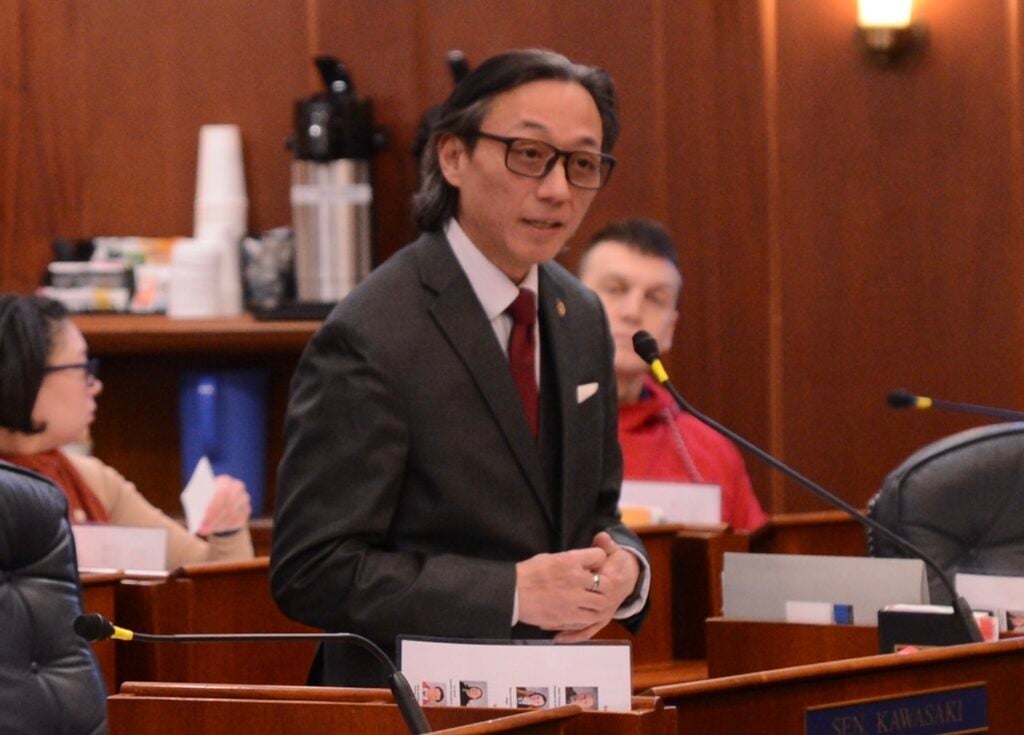
Members of the Senate Judiciary committee put questions to a governor’s nominee for the Alaska Police Standards Council about her social media posts during a confirmation hearing Wednesday. 

Veronica Lambertsen defended conspiracy theories around the Holocaust, blood-harvesting from children and the Jan. 6 insurrection at the U.S. Capitol.

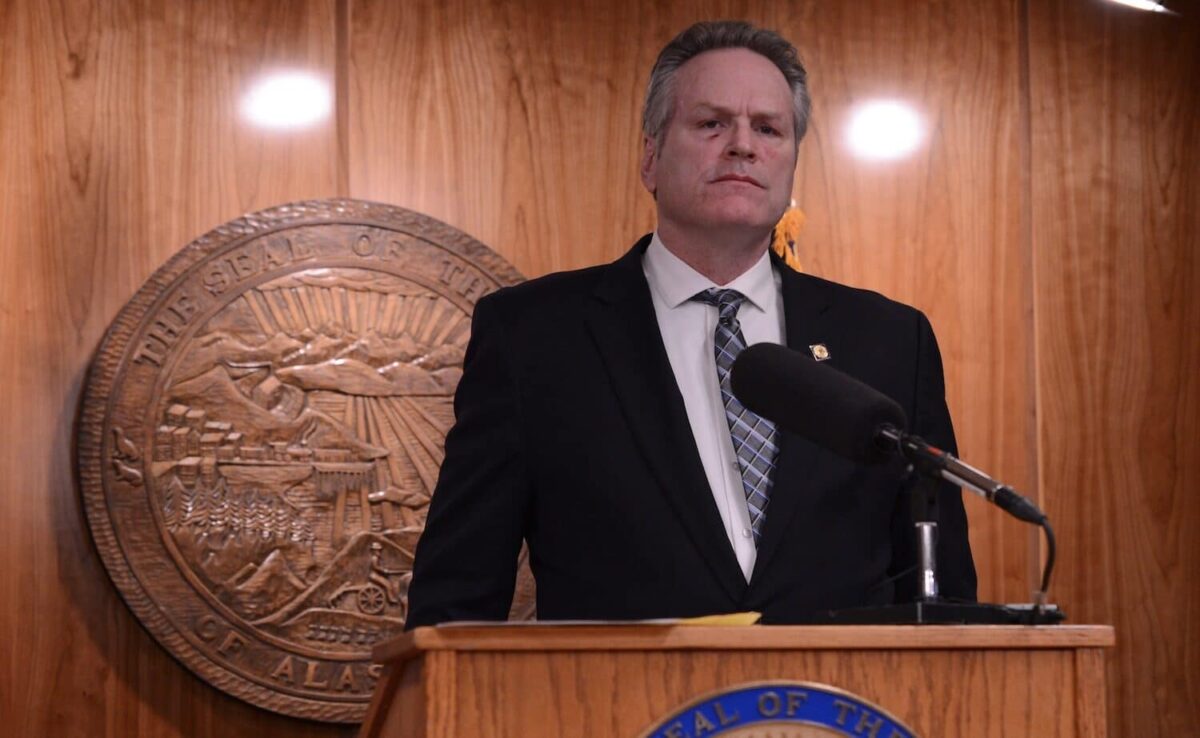
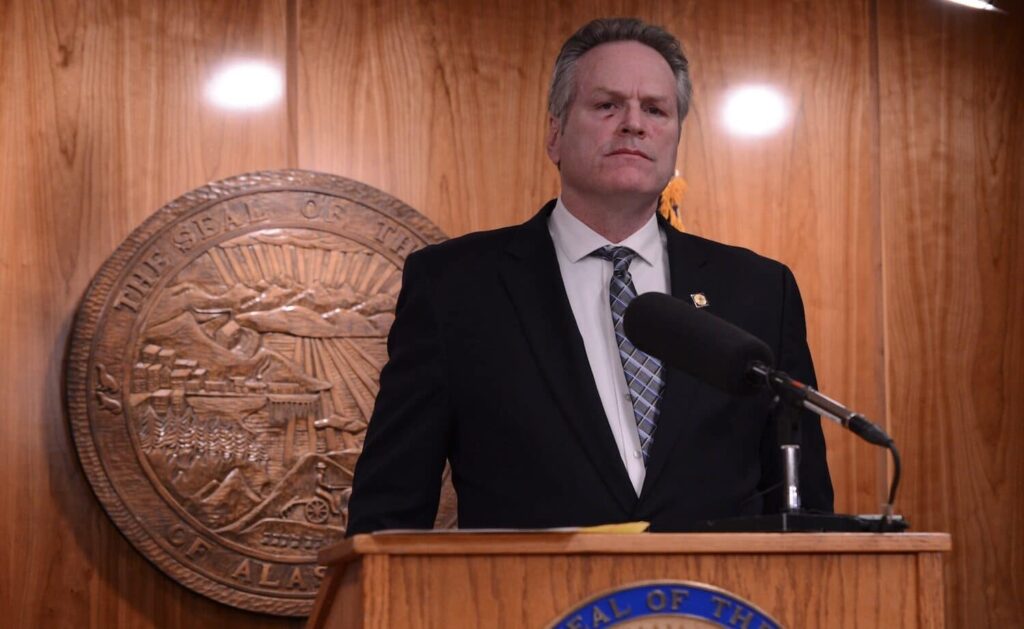
Lambertsen has been nominated by Gov. Mike Dunleavy to serve a three-year term representing one of four public seats on the 13-member Alaska Police Standards Council, which oversees law enforcement standards across the state.

Lambertsen has served on the council since being nominated in August, but her name was removed from the council’s website Thursday afternoon, following the hearing and media coverage of the posts.

Dunleavy’s office did not respond to a request for comment about her nomination, her social media posts and the removal of her name from the website on Thursday. 

Lambertsen is the owner and operator of a motel in Birch Creek, a small neighborhood in Turnagain Arm that is part of the municipality of Anchorage. She also serves as a voluntary member of the local Turnagain Arm Community Council, according to her resume.

Lawmakers in the House expressed skepticism in a hearing earlier this month and questioned Lambertsen’s experience, connections with law enforcement and eligibility for the seat.

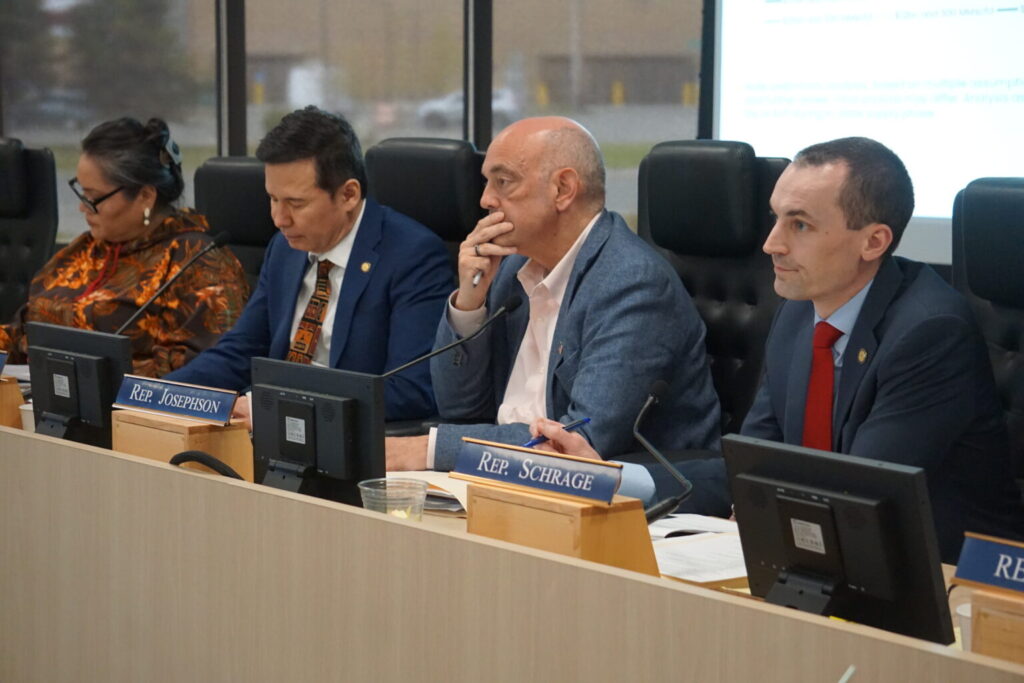
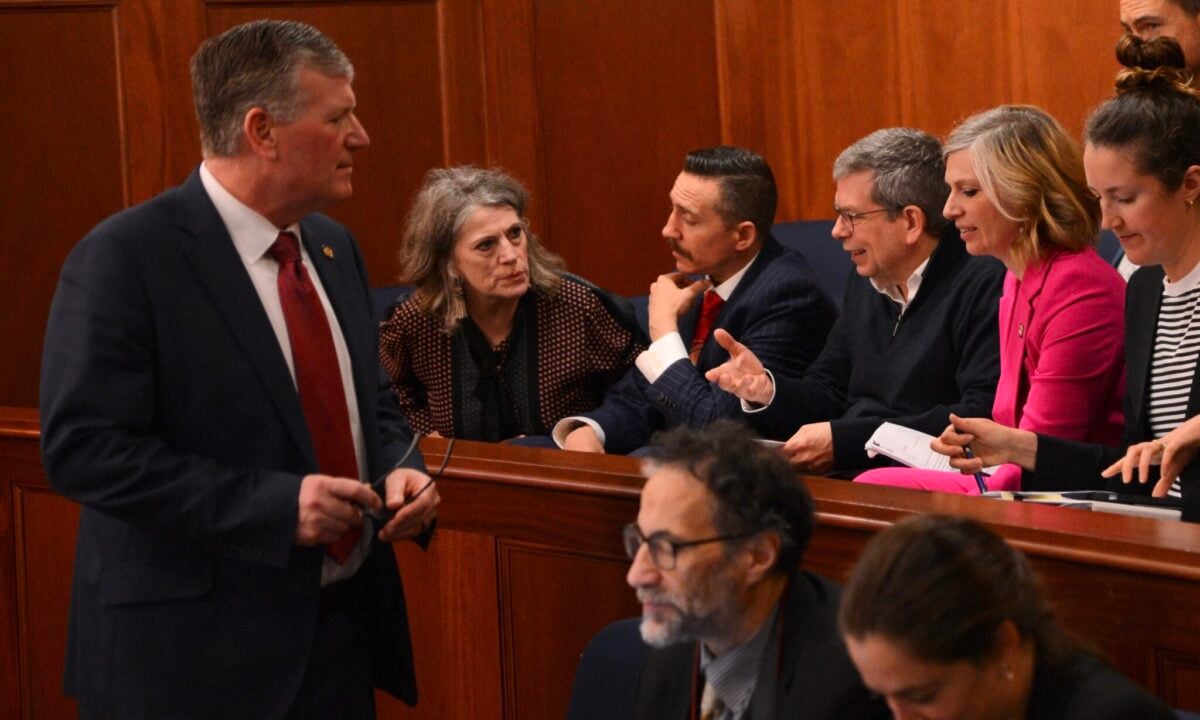
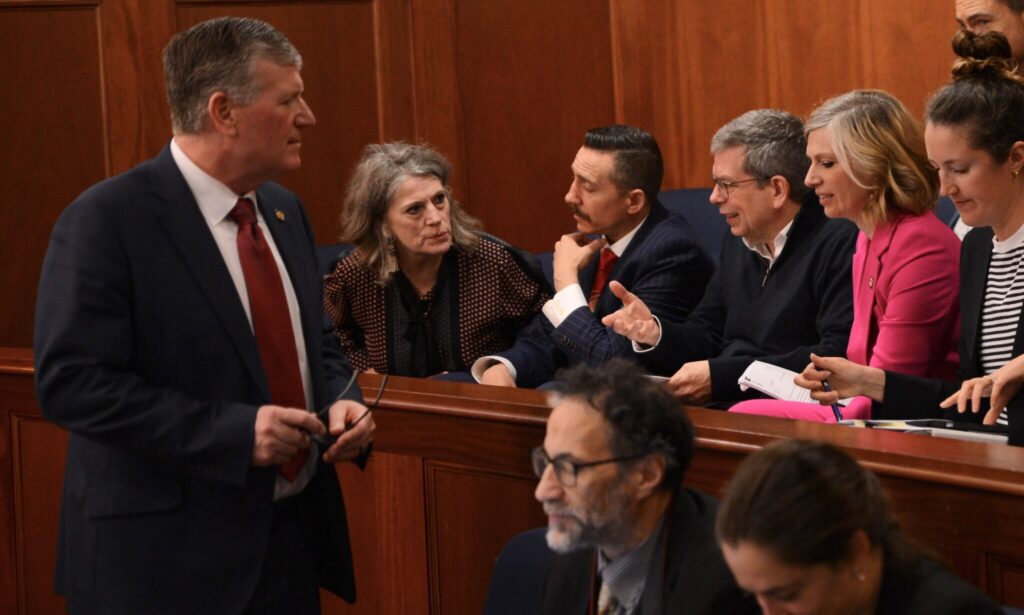
Sens. Matt Claman, D-Anchorage, and Löki Tobin, D-Achorage, are seen in a Senate Judiciary Committee hearing on Apr. 20, 2026. (Photo by Corinne Smith/Alaska Beacon)

In a second confirmation hearing on Wednesday, following questions about her background, chair Sen. Matt Claman, D-Anchorage, asked about several social media posts going back many years. 

“One of the postings that I saw was a posting that you didn’t believe the Holocaust was real,” Claman said. “Do you believe the Holocaust occurred during World War II?”

Lambertsen said it was a tragedy, but that she has questions. “Do I believe something happened at the Holocaust, and a tragedy and a lot of people died?” she said. “Yes, I believe that actually happened. Are we being told the true story about it all? No, I don’t believe we’re being told the true story about it all.”

“What do you believe is the true story?” Claman asked.

“That I don’t know yet,” she replied. 

The Alaska Police Standards Council is charged with setting and enforcing standards for law enforcement, including police, probation, parole and correctional officers. They’re also tasked with reviewing regulation and investigating misconduct, like officer discipline and use of force

A zip drive of selected posts from Lambertsen’s public Facebook page compiled by legislative staff and reviewed by the Alaska Beacon includes posts going back to 2021 related to a variety of conspiracy theories — questioning the shape of the Earth, the moon landing, the 2020 election results and the Jan. 6 insurrection, as well as posts related to the far-right internet conspiracy theory movement QAnon.

Claman asked about a QAnon claim that children are being harvested for a chemical called adrenochrome from their blood. 

After a long pause, Lambertsen responded similarly that she had questions. “From information I have seen and documentation that was provided the question that should be asked,” she said.

Claman said in an interview Thursday that he found the hearing troubling. “For this position, which really means you’re providing some degree of supervision and regulation of our public safety officers, I just have a lot of concerns, given her perspective,” he said. 

Lambertsen did not respond to a request for comment on Thursday. She told the Juneau Independent that what she posts on social media is separate from what’s involved in serving on the council.

Sen. Löki Tobin, D-Anchorage, raised the issue that Lambertsen may not be eligible to serve on a seat reserved for a member of the public from a rural district. Two of the four public seats are reserved for members representing communities with a population of 2,500 people or less.

“I think this is unfortunately a situation of where Ms. Lambertsen has been put into a seat that she is not qualified to hold based on statute and practice,” she said. “I would encourage Ms. Lambertsen to consider withdrawing her own name, as she is, in my estimation and read of the statute, not legal to sit in the seat.”

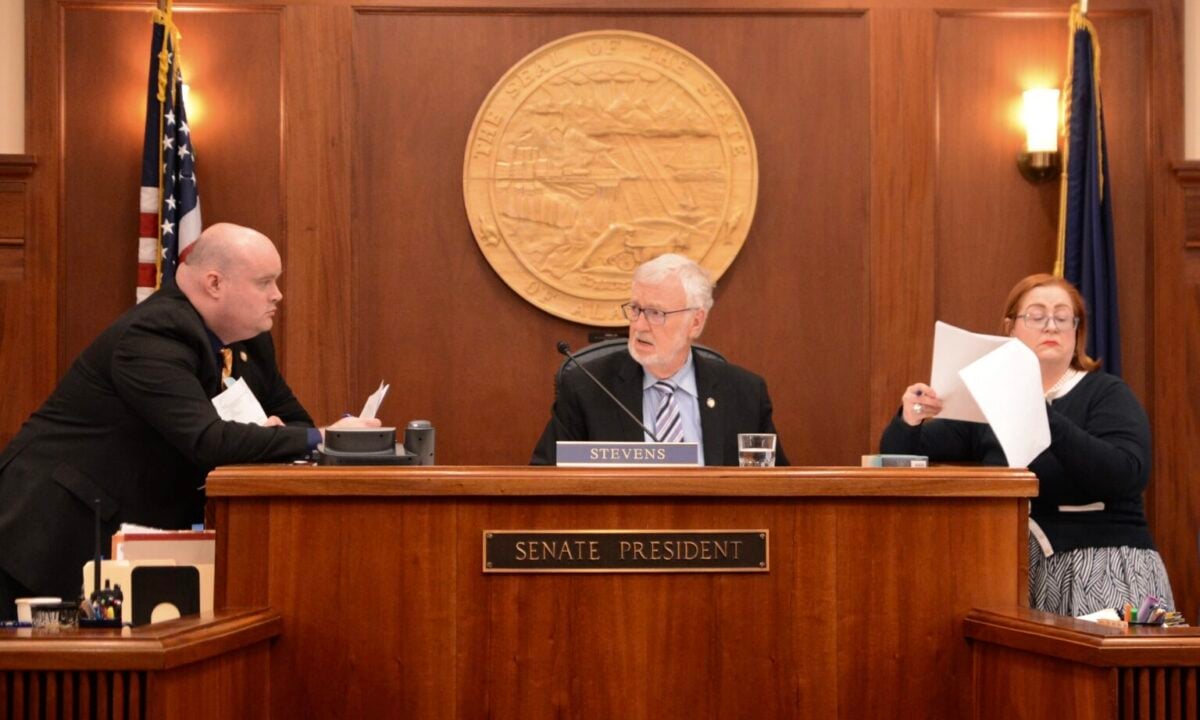
The Senate Judiciary Committee forwarded Lambertsen’s nomination on Wednesday to a vote by a joint session of the Legislature. But whether she will be considered is uncertain, as her name is no longer listed on the state website describing the council. 

A joint session for state appointments to boards and commissions, including for Attorney General Stephen Cox, is scheduled for May 7. 

Categories
Alaska News Featured Juneau News juneau Juneau Local Juneau Local Ketchikan Local News Feeds Sitka Local

Groups sue Alaska election officials, allege the sharing of voter data with DOJ was unconstitutional

FILE – A sign hangs outside the director’s office of the Alaska Division of Elections, March 19. 2026, in Juneau, Alaska. (AP Photo/Becky Bohrer, File)

AP-Voting and civil rights groups sued Alaska elections officials Wednesday, alleging that their sharing of the state’s full voter registration list with the U.S. Department of Justice violates the state constitution.

Alaska is one of at least 12 states that has provided or said it would provide detailed information about its voters — including date of birth, driver’s license number or partial Social Security number — to the Trump administration, according to the Brennan Center. Alaska and Texas also signed agreements when they shared data in which the department outlined plans for its own analysis of voter files, its plans to flag voter list issues and directions for removing voters deemed ineligible.

Several other states provided the data, but refused those agreements, as part of a wide-ranging effort by the Justice Department to obtain detailed voter data from every state. Some elections officials have expressed concern the information being sought could be used by the Trump administration to search for possible noncitizens.

The Alaska lawsuit was filed in state court against state Division of Elections officials by the League of Women Voters of Alaska and Alaska Black Caucus. It alleges the handing over of personal data on the voter list violates the right to privacy under the state constitution. It also says the memorandum of understanding violates due process by allowing the Justice Department to flag voters for removal “without any apparent notice or process for impacted voters to challenge those decisions.”

The lawsuit names as defendants Republican Lt. Gov. Nancy Dahlstrom, who oversees the division, and division Director Carol Beecher.

Sam Curtis, a spokesperson with the state Department of Law, said by email that it would be premature to comment on specific claims raised in the lawsuit. But Curtis said the department has previously explained in public hearings that state law “expressly permits the sharing of this information for authorized governmental purposes. That statute is on the books, and we will defend it.”

“Alaska statutes contain numerous provisions that allow the sharing of otherwise non-public or confidential information with law enforcement,” Curtis said.

The plaintiffs are represented by the American Civil Liberties Union of Alaska, ACLU Voting Rights Project and the Electronic Privacy Information Center.

The Justice Department has sued at least 30 states and the District of Columbia to try to force the release of the data, according to a tally by the Brennan Center. Judges have rejected those efforts in CaliforniaMassachusettsMichiganOregon and most recently, Rhode Island. A judge in Georgia dismissed a Justice Department lawsuit after ruling it had been filed in the wrong city. It was subsequently refiled.

In the Rhode Island case, Justice Department attorneys acknowledged the department was seeking unredacted voter information so it could be shared with the Department of Homeland Security to check citizenship status.

In addition to the state court lawsuit in Alaska, at least four federal lawsuits have been filed around the U.S. seeking to stop the Justice Department from collecting information from unredacted voter registration files or to prevent states from taking steps to cancel or suspend people’s voter registrations based on the federal project.

During a legislative hearing in Alaska last month, Rachel Witty, an attorney with the state Department of Law, told lawmakers the state had a “compelling interest” to comply with the federal request.

“To ensure the integrity of elections, there was a mutual interest in maintaining voters rolls that were accurate and current,” she said.

The Alaska lawsuit describes the process under state law for maintaining voter rolls and states that there are only limited circumstances under which a voter’s registration can be promptly canceled — “upon death or conviction of a felony involving moral turpitude.” It says that while elections officials have said they will only remove voters “to the extent allowed by state and federal law,” that interpretation is “irreconcilable with the plain language” of the agreement signed with the Justice Department.

The plaintiffs are asking a judge to void the agreement and require the elections division to make “reasonable efforts” to ensure the immediate destruction by the Justice Department of any hard copies and electronic versions of the list that was shared.

“Rather than fiercely defending the rights of Alaska’s voters, our Division of Elections acceded to federal overreach,” Eric Glatt, legal director for the ACLU of Alaska, said in a statement. “Now, we are asking the court to step in and ensure that DOE upholds its constitutional and legal obligations to Alaskans.”

Categories
Featured Juneau News juneau Juneau Local Juneau Local News Feeds

Finance Committee proposes renewing Juneau’s Temporary Sales tax during tough budget talks

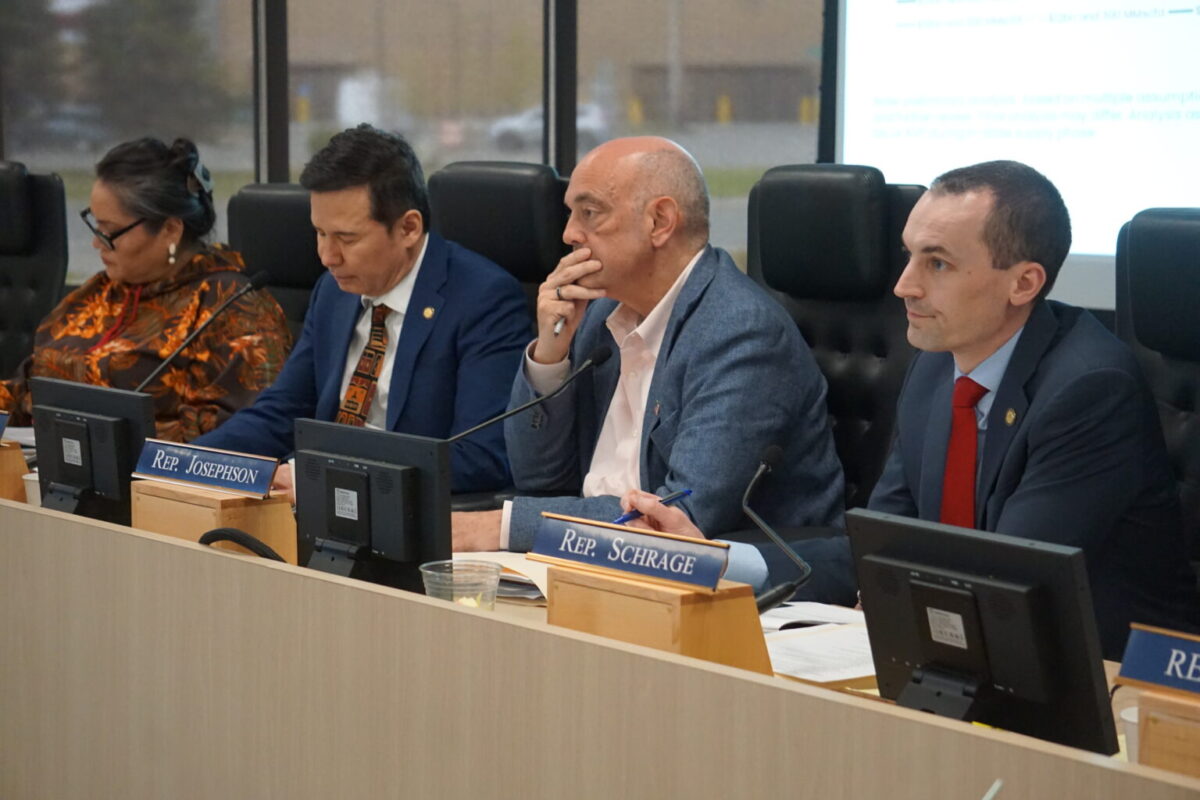
NOTN- Juneau Assembly members are bracing for tough budget decisions as they begin sorting through a broad list of possible service reductions and revenue changes intended to close some future funding gaps.

The Assembly Finance Committee met last night and members reviewed a “service reduction summary” outlining dozens of options, from closing one of the city’s public pools to trimming grants and changing how the city handles criminal prosecutions.

Finance Committee Chair Christine Woll, stressed that no cuts were being adopted yet, but said the Assembly must narrow the list so staff can focus their limited time.

“I know we’ve gotten lots of emails, as we expected, because these are pretty startling to see.” She said, “But you can’t look at our finances and not start discussing some of these things, that’s where we’re at. My intent today is not that we are voting on any things, we’re going to focus our discussion on where we need more information from staff to move forward in this process. At some point, we’re going to have to start reducing this list.”

City Manager Katie Koester and Finance Director Angie Flick said they will compile a memo for the committee’s April 29 meeting, answering questions and attempting to attach firmer cost estimates to selected ideas. Many items currently have no fixed dollar amounts attached, particularly those unlikely to produce savings by fiscal year 2027.

“Thank you all for working on a task that’s hard and not fun and probably nauseating in the process.” Said Flick.

Several of the highest‑profile possibilities involve facilities and recreation, such as potentially “Mothballing” one or both municipal pools, with members requesting analysis of which pool to close, impacts on user groups and staffing, and whether organized swim clubs could help operate a facility.

“Mothball means truly close the facility, not permanently, but we would keep it in warm status.” Said Koester, “We would keep it so that it could be turned back on, essentially. And so there would be an expense to that.”

Members also discussed changes at the Mount Jumbo facility and the Dimond Park Field House, including what services they provide, who uses them and how closures or relocations would affect maintenance workloads.

The final big ticket item on the list is, options for the Juneau City Museum, including what minimum operating space staff believe is needed and whether the city can legally divest parts of the collection.

The committee also debated whether to shift misdemeanor prosecutions back to the state, city staff say this could save roughly the cost of operating a pool but would reduce Juneau’s autonomy over criminal justice.

Members requested additional information in several other areas:

  • How higher utility rates and reduced general fund support are affecting a growing backlog of infrastructure projects, and scenarios for splitting funding between utility customers and street work.
  •  A breakdown separating mandatory or grant‑funded travel from discretionary trips, including which portions fall on the general fund.

As well as discussions around Bartlett Regional Hospital- whether a city subsidy is necessary, and Animal Control- adding cat licensing, which members believe could offset animal control costs.

“When you start making policy around animals, this could very well be the time we’re looking for every penny and dime, So if people feel strongly like we’re looking for all the pennies then fine.” Said Assembly Member Alicia Hughes-Skandijs, ” I just know that when you get animals involved, and maybe this would be the time, because they’d get overpowered by people who don’t want their facilities closed, but it just usually bogs down the process. Anytime you bring people’s pets into it, it usually just goes nuts.”

The committee also asked for analysis of leasing the largely underused Douglas fire station.

Most empowered‑board budgets, including docks and harbors and the airport are advancing as proposed by their respective boards.

Members also weighed a series of foregone revenue options, places where the city may be losing money where they could be gaining.

The Committee reviewed a pared-down list of revenue ideas that identified 47 potential sources of foregone revenue.

One early focus was a possible property tax on commercial vessels, where Flick said the city lacks the data to estimate how much revenue could be raised.

On new revenue options, members discussed a potential business license program and local registration requirements, but agreed those ideas would not generate money in time for FY 2027.

“We move to instruct staff to bring back additional information on these two new revenue options to the finance committee after the budget process.” Said Neil Steininger.

There were no objections.

Later in the meeting, the panel advanced an ordinance to renew Juneau’s 3% temporary sales tax on the October ballot.

“Previously, we asked the body if you wanted to have an ordinance drafted to put on the ballot in October, a renewal of the 3% sales tax. And your answer was yes. And so in the packet tonight, is a draft ordinance.” Said Flick, “It has all the same intent language on how the 3% is split as we did.”

Mayor Beth Weldon described this as roughly one-third of the city’s operating budget. The draft measure will move to the full Assembly for scheduling and a future public hearing at a later date, but the public should expect to see this before June.

“These are big, hard decisions,” Said Woll.

Categories
Alaska News Featured Juneau News juneau Juneau Local Juneau Local Ketchikan Local News Feeds Sitka Local

Alaska House advances bill addressing the treatment of minors in psychiatric facilities

By: Haley Lehman, Alaska Beacon

Rep. Maxine Dibert, D-Fairbanks, speaks Monday, Jan. 27, 2025, on the floor of the Alaska House of Representatives. (Photo by James Brooks/Alaska Beacon)

The Alaska House of Representatives advanced a bill Wednesday that aims to address a lack of oversight for minors treated at psychiatric facilities in Alaska. The bill would mandate an annual report on conditions and treatment at such facilities from the state’s Health Department, as well as unannounced biannual inspections.

Rep. Maxine Dibert, D-Fairbanks and the bill’s sponsor, said the measure is a necessary step to increase accountability around the treatment of minors in psychiatric hospitals in the state, amid constituent concerns. 

“These are not sweeping mandates, they are basic expectations of transparency, of communication and accountability of our youth here in Alaska,” she said on Wednesday.

The bill passed the House of Representatives with 37 yes votes. Three legislators were absent. It has been transmitted to the Senate for consideration.

The bill would also guarantee patients confidential telephone or video communication with a parent or guardian for two hours per week and require the Department of Health to notify a patient’s parent or legal guardian when seclusion or restraint is used within 72 hours. 

The annual report would include information about the total uses of seclusion or restraint, findings of facility inspections and data on the number of minors who received residential care at psychiatric hospitals.

Dibert cited a 2004 investigation by the Disability Law Center of Alaska that found 261 episodes of seclusion and restraint over three months in psychiatric institutions, which the organization called “quite high.”

The United States Department of Justice issued a report in December 2022 that found that Alaskan youth are institutionalized in psychiatric hospitals and psychiatric residential treatment facilities at higher rates and for longer periods than minors in other states as a result of a lack of available and accessible community-based mental health services, violating the Americans with Disabilities Act. 

Rep. Genevieve Mina, D-Anchorage and Chair of the House Health and Social Services Committee, voiced her support for the bill and drew attention to a finding by the DOJ that identified gaps in community-based services in Alaska.

Community-based services include home-based family treatment for early intervention services, intensive case management and crisis services, according to the DOJ.

“We have to face the reality that many of these kids are in these institutionalized settings because we have underinvested in our home and community based services in this broader continuum of care,” Mina said. 

“The dearth of community-based services in Alaska is so pronounced and widespread that institutional placement has become, for many behavioral health service providers in the state, the default option to which they refer children with long-term behavioral health need,” DOJ investigators wrote in 2022.

According to the DOJ, more than 800 Alaskan children received behavioral health services in a psychiatric institution in 2020. Approximately a third of the patients were Alaska Native and parents reported to the DOJ concerns about separating their children from their culture while in residential treatment. In addition to four psychiatric residential treatment facilities in Alaska, the state sends children to 17 out of state psychiatric residential treatment facilities. 

Rep. Justin Ruffridge, R-Soldotna, told legislators that the bill provides oversight and accountability that legislators are expected to institute.

The bill received support from the Alaska Federation of Natives, Lives in the Balance, a nonprofit that advocates for the fair treatment of children, Dot Lake Village, Citizens Commission on Human Rights, an organization that aims to eradicate abuse in mental health settings, and Aleutian Pribilof Islands Association.

The Department of Health estimated in a fiscal note that it would cost approximately $222,800 annually for a full-time nurse consultant to perform inspections, conduct interviews with patients and conduct investigations and for two nurse consultants to attend trauma informed care and cultural awareness training.

Categories
Alaska News Featured Juneau News juneau Juneau Local Juneau Local Ketchikan Local News Feeds Sitka Local

Alaska Senate committee unveils crime bill package in final weeks of the legislative session

By: Corinne Smith, Alaska Beacon

Sen. Matt Claman, D-Anchorage, speaks Wednesday, April 23, 2025, on the floor of the Alaska Senate. (Photo by James Brooks/Alaska Beacon)

With only four weeks left of the legislative session, the Senate Judiciary Committee has merged several bills into a wide-ranging omnibus crime bill. Even with the tight timeline, some lawmakers are optimistic about its chances for passage before the end of the session.  

The new draft omnibus crime package combines ten bills ranging from raising the age of consent to increasing criminal penalties for AI-generated child sexual abuse material into one large bill supporters hope will have the momentum to pass both the House and the Senate in the next 28 days. 

The Senate Judiciary Committee chair Sen. Matt Claman, D-Anchorage, introduced the 55-page omnibus bill on Friday, saying the bills have a stronger prospect as a package.

“I think that increases the likelihood we’ll be able to pass it,” he said in an interview on Monday. 

With one month to go in the second year of the two-year legislative cycle, this is the last opportunity for bills to be passed by the 34th Legislature. 

The draft omnibus crime bill was added to House Bill 239, sponsored by House Majority Leader Rep. Chuck Kopp, R-Anchorage, who spoke in support at the hearing on Friday.

“This bill has grown, it’s gone from the sports car to the school bus” he said. “Policies I all support as a bill sponsor.”

Gov. Mike Dunleavy sponsored two bills included in the omnibus package, but did not respond to a request for comment on Tuesday. 

The bills included are in various stages. Some have passed the House, while others are being considered by various committees in the House and Senate. Several lawmakers who sponsored bills now included in the omnibus package agreed that politically it could increase chances of passage by May 20. 

Rep. Sarah Vance, R-Homer, sponsored a bill that would create state felony penalties for AI-generated child sexual abuse material. It unanimously passed the House last month.

“I’m excited that it’s included in the omnibus bill, because that shows intent by the Senate to pass the bill,” Vance said on Monday. “So I have great confidence that it will cross the finish line.”

But Claman, who is running for governor, has drawn public criticism for the process of how the omnibus crime bill was put together this session. 

Advocates for raising the age of consent — along with the Anchorage Daily News editorial board — criticized Claman for holding a bill to raise the age of consent to 18 in the Senate Judiciary Committee, which passed unanimously by the House last year, in order to be included in the omnibus bill. Critics urged Claman and the committee to pass the bill and allow it to move forward as a stand alone bill toward a full Senate vote and final passage.

Claman has argued that despite limited time left in the session, the bills included have been vetted and the combination package will garner more support among legislators and the governor to pass in the last few weeks of the session. 

“I’ve been in the Legislature now since 2015, and so in the last 11 years, we’ve passed 11 different bills relating to public safety,” he said. “So I think there are ten different measures that we put into the bill, and if we tried to do them all individually, probably wouldn’t get them all passed.”

Claman pointed to an omnibus crime bill, House Bill 66, enacted in 2024, with support from Gov. Mike Dunleavy and across political affiliations. “That’s certainly, I think, the best example,” he said. “So I do have confidence we’ll get it passed.”

Rep. Andrew Gray, D-Anchorage, speaks Friday, April 26, 2024, on the floor of the Alaska House of Representatives. (Photo by James Brooks/Alaska Beacon)

Rep. Andrew Gray, D-Anchorage, sponsored House Bill 101, the bill that would raise the age of consent from 16 to 18 years old. Backed by advocates for sexual violence prevention, he said the change in law is essential for protecting teens from sexual exploitation and abuse. Under current law, it’s legal for an adult to have sex with a 16 or 17 year old. But when they are assaulted, teens must prove that they did not consent. 

Despite previous disagreement and pushing for a stand alone bill, Gray said Monday he will back the omnibus crime bill in order to see the law changed. 

“If that happens, inside an omnibus crime package that has other bills that are also worthy of passage, I’m fine with that,” he said. “I just want the policy to change.”

The draft omnibus crime bill now contains ten bills that previously stood alone:

  • House Bill 239 — would increase criminal penalties for hit and run incidents so that drivers that cause a death and knowingly failing to stop and render assistance, and establishes mandatory sentencing of four to seven years for a first hit and run felony conviction
  • House Bill 101 — would raise the age of consent from 16 to 18 years old, with provisions to allow consent to sex with someone up to six years older than them. The draft bill also allows 16 and 17 year olds to consensually exchange sexual or explicit messages within the six year close-in-age gap without penalties.
  • Senate Bill 247 — would create state criminal penalties for creating AI-generated images or video that depicts sexually explicit or obscene content involving anyone under 18 years old
  • House Bill 62 — Sponsored by Gov. Mike Dunleavy, the bill would establish a statewide tracking system for sexual assault examination kits, expedite processing times, and ensure that survivors can privately monitor the status of their own kit. 
  • Senate Bill 100 — Also sponsored by the governor, and would establish the crime of organized theft, including mail theft and medical record theft
  • House Bill 242 — would redefine criminal law to prohibit any sexual contact or assault by a health care worker during professional treatment, changing the current law which only applies to patients being unaware of sexual contact or assault for criminal charges to apply. 
  • Senate Bill 17 — would establish the crime of airbag fraud for knowingly selling, installing or manufacturing a counterfeit airbag in a vehicle 
  • House Bill 81 — would establish minor marijuana related convictions to remain confidential on individuals personal records, under certain criteria
  • House Bill 384 —  would expand confidentiality agreements between victims and service providers by updating the definition of “victim counseling center” to include tribal organizations
  • Senate Bill 233 — would reassign the Controlled Substances Advisory Committee from being administered by the Department of Law to the Department of Commerce, Community and Economic Development. 

The new version of Vance’s bill focused on AI-generated child sexual abuse material included in the bill is closer to her initial proposal. Social media controls for minors added by the House were stripped out of the Senate version. Vance said she supports the amended version given First Amendment protections around social media. 

“I think that was a wise decision right now, because Alaskans are very mixed on how they feel that we should address social media,” Vance said. 

Rep. Sara Hannan, D-Juneau, is the sponsor of House Bill 242, and said she supports her bill being included in the Senate omnibus, but she is still pushing to advance her standalone bill in the House.

Rep. Sara Hannan, D-Juneau, speaks on the House floor on Apr. 13, 2026. (Photo by Corinne Smith/Alaska Beacon)

“I need people who didn’t serve on the two committees that heard it in the House to understand it,” she said, as the Senate draft will come back to the House for a concurrence vote. “It still helps to educate on the issue.”

Hannan’s legislation follows a high profile case in Juneau last year where the court dropped several charges against a chiropractor because under current law part of the legal definition of sexual assault by a medical provider requires the alleged victim to be unaware the assault is happening. 

“Right now, the victim needs to be unaware, and the perpetrator needs to know that they are unaware,” Hannan said Tuesday. “So to change that in statute, I think is an important policy statement for us to make.”

Hannan said significant policy bills typically take several years to get through the Legislature, with public input, debate and support gathering. But she expressed confidence in the support for the omnibus crime bill in the weeks ahead. 

“We’re running the clock down,” she added. “The only downside, from my perspective, is the advocates and the victims that were directly involved in the case that inspired this bill. You know, they get more acknowledgement when it’s the standalone bill… But in the end, if the goal is to change the policy, there’s no downside to it.”

The Senate Judiciary Committee will continue to hold hearings on the crime bill this week and its members have until Friday to introduce amendments before it advances to the Senate floor for a vote. Claman said he expects that to be in the last week of April. 

Categories
Alaska News Featured Juneau News juneau Juneau Local Juneau Local Ketchikan Local News Feeds Sitka Local

Alaska Senate advances resolution asking federal policymakers to protect visa programs

By: Haley Lehman, Alaska Beacon

Sen. Loki Tobin, D-Anchorage, speaks in the Alaska Senate on Monday, April 28, 2025. (Photo by James Brooks/Alaska Beacon)

The Alaska Senate advanced a resolution Monday to preserve three work visas to support Alaska’s economic security.

Alaska relies on J-1 visas to fill teacher positions, H-1B visas for highly skilled workers and the H-2B program for temporary nonagricultural workers in tourism, health care and seafood processing industries and for teachers.

Sen. Löki Tobin, D-Anchorage, said that Senate Joint Resolution 28, “puts Alaska on the record in support of these programs to fill jobs here in our state.”

The Trump administration raised the fee for highly skilled worker visas from $5,000 to $100,000 in September 2025.

Tobin said Monday that school districts in Alaska cannot absorb those costs and utilize the H-1B visa program to hire international teachers.

The Alaska House of Representatives passed a resolution in March urging the Trump administration to waive the $100,000 visa fee for international teachers. It was sponsored by Rep. Alyse Galvin, I-Anchorage.

According to Jennifer Schmitz, director of the Alaska Educator Retention and Recruitment Center, 20 school districts in Alaska employed 232 educators with J-1 visas and 341 educators with H-1B visas in 2025.

Alaska’s senior U.S. Senator, Republican Lisa Murkowski, introduced legislation in March that would exempt teachers from non-processing related fees for H-1B visas. U.S. Republican U.S. Sen. Dan Sullivan is a cosponsor. 

The visa programs support other jobs, too. Marilyn Usibelli, owner of Black Diamond Resort Co. in Healy, wrote to legislators in March that J-1 visa holders play an essential role in staffing seasonal jobs in Alaska with lawful, reliable temporary workers.

“Despite extensive local recruitment, the small year-round population in the Denali Borough simply cannot meet the seasonal demand. J-1 participants fill critical roles that allow us to maintain safe, high-quality operations, support other local businesses, and contribute to the broader Denali-area economy,” Usibelli wrote.

The resolution passed the Senate with 19 yes votes with Sen. Donny Olson, D-Golovin, absent

Categories
Alaska News Featured Juneau News juneau Juneau Local Juneau Local Ketchikan Local News Feeds Sitka Local

Investigation into massage parlors in Alaska leads to arrests on felony sex trafficking charges

By: Haley Lehman, Alaska Beacon

An FBI Evidence Response Team collects and documents evidence at an alleged illicit massage parlor. (Image Courtesy of the FBI Anchorage Field Office)

Multiple law enforcement agencies arrested seven people in Anchorage and the Matanuska-Susitna Valley last week on charges of sex trafficking after a yearlong investigation found that multiple massage parlors were fronts for criminal enterprises.

“Human trafficking criminal enterprises operate in plain sight while victims are exploited for labor, services and commercial sex acts through force, fraud or coercion,” Matthew Schlegel, special agent in charge of the FBI Anchorage Field Office, said during a press conference Thursday.

Anchorage Police Department, Alaska State Troopers, the FBI Anchorage Field Office are part of a task force that investigates sex and human trafficking. Homeland Security Investigations, U.S. Customs and Border Protection, Army Criminal Investigation Division, the U.S. Coast Guard, Wasilla Police Department and the Anchorage Airport Police Department assisted in the investigation.

Officers searched Jasmine Spa, Zen Massage, Stream Health Spa of Wasilla, Phoenix Health Spa, Owl Health Spa, Renew Day Spa, Red House Massage of Anchorage and two Anchorage residences in connection with the investigation.

Law enforcement arrested Lee Merrill Van Ness, 72, of Anchorage, Terry Allen Volkman, 53, of Anchorage, Hui Zhang, 44, Hong Zhen Li, 51, of New York, Guoguo Zhang, 54, of Wasilla, Tuan Huynh, 34, of Anchorage, and Xiaotian Xiong, 40, of New York, on felony charges of sex trafficking.

Investigators collect evidence during an investigation into alleged illicit massage parlors. (Image courtesy of the Alaska State Troopers)

Alaska State Troopers Colonel Maurice Hughes said during a press conference Thursday that they targeted these illegitimate operations because they were exploiting individual and vulnerable adults. 

Hughes said that the victims were offered support and connected with resources.

“These individuals were not the focus of the investigation. They were the reason for the investigation,” he said.

Law enforcement identified massage parlors that advertised commercial sexual services online during the investigation. The investigation entailed undercover officers visiting various massage parlors and posing as customers looking for sex in exchange for money, a criminal complaint stated. Law enforcement allege that the seven people arrested harbored victims of human and sex trafficking and forced them to pose as masseuses.

The massage parlors may be linked to international organized crime organized out of Flushing, New York, and Monterey Park, California, according to charging documents. Law enforcement may file additional charges as the investigation continues.

Anchorage Police Chief Sean Case attributed the length of the investigation to the complex nature of the allegations.

Alaska Bureau of Investigation Commander Tony Wegrzyn said that investigators have “a mountain of evidence to go through.”

According to Wegrzyn, all victims were from outside of Alaska.

Categories
Alaska News Featured Juneau News juneau Juneau Local Juneau Local Ketchikan Local News Feeds Sitka Local

Anchorage mother drives national push to prevent fentanyl deaths

By: Corinne Smith, Alaska Beacon

Sandy Snodgrass gives a presentation on her advocacy work and raising awareness of the dangers of fentanyl at the Alaska State Capitol on Apr. 15, 2025. (Photo by Corinne Smith/Alaska Beacon)

An Anchorage mother whose son died from a fentanyl overdose is continuing to champion national and statewide action to raise awareness around the dangers of the synthetic opioid and prevent future deaths.

On Wednesday, Sandy Snodgrass was recognized with a legislative citation of honor at the Alaska State Capitol by Anchorage Democratic Senator Bill Wielechowski for her advocacy work. 

In December, Snodgrass attended the signing of a package of legislation, including Bruce’s Law, which directs federal funds toward youth education and community-based treatment and recovery programs. It’s named after her son who died in 2021 and was sponsored by Alaska’s U.S. senators and signed by President Donald Trump.

Sandy Snodgrass is honored with a legislative citation by Sen. Bill Wielechowski for her advocacy work to raise awareness around the dangers of fentanyl on Apr. 15, 2026. (Photo by Corinne Smith/Alaska Beacon)

“This is a different world we live in with fentanyl now,” Snodgrass said in a lunchtime presentation  after receiving the award. “We live in a world where one pill, one half pill can kill you. And it’s not a tolerance, you know, it’s one time and you can die.”

Trained as a clinical psychologist, Snodgrass founded the Alaska Fentanyl Response Project aimed at raising awareness about overdose deaths, particularly among young people, sharing stories of those who have died and advocating for legislation and resources for prevention and addiction treatment. 

“I talk about it as a three legged stool,” she said. She described demand reduction, law enforcement and treatment as the three legs of the stool. “And if we don’t do all three, the stool will fall over,” she said. 

She said her focus is demand reduction. “So I am not law enforcement,” she added. “I don’t have a treatment center. But I did have a child that died from fentanyl poisoning, and so I can tell my story to anybody, anywhere, anytime.”

“You can never die from an illicit drug if you never try an illicit drug,” she said. 

Snodgrass’ son, Robert Bruce Snodgrass, died at the age of 22 in 2021, during a wave when Alaska saw the highest increase in opioid deaths nationwide, a 75% increase from 2020 to 2021, according to the U.S. Centers for Disease Control and Prevention. 

Fentanyl is a synthetic opioid, clinically prescribed for pain, and is more potent than other opioids like morphine or heroin. As little as two milligrams — an amount the size of a few grains of salt — can be fatal. 

The Alaska wave of fentanyl deaths peaked in 2023, according to state data, with 357 reported deaths. Last year, there were 245 deaths reported from 2024 to 2025, according to the most recently available data, with the majority in Anchorage.

Sandy Snodgrass holds a photo of her son Bryce, who died from a fentanyl overdose in 2021. President Donald Trump signed the photo when he signed a package of legislation, including Bruce's Law, to direct funding to prevention education and treatment and recovery programs in Dec. 2025. Snodgrass is seen at the Capitol on Apr. 15, 2026. (Photo by Corinne Smith/Alaska Beacon)
Sandy Snodgrass holds a photo of her son Bryce, who died from a fentanyl overdose in 2021. President Donald Trump signed the photo when he signed a package of legislation, including Bruce’s Law, to direct funding to prevention education and treatment and recovery programs in Dec. 2025. Snodgrass is seen at the Capitol on Apr. 15, 2026. (Photo by Corinne Smith/Alaska Beacon)

Thousands more non-fatal overdoses were reported each month, with many surviving thanks to the use of emergency naloxone, known as Narcan, a life-saving drug that can quickly reverse an opioid overdose. 

She said it’s a difficult message to convey the risks to young people, like her son.

“Bruce was an Alaskan boy, through and through — all the Alaskan things. He was a free solo mountain climber. He was a certified mountain guide. He was an extreme sport, high adrenaline young man, just like so many of our Alaskan boys and girls, he lived on the edge and loved it,” she said.

She said she thought she’d get a call about him being injured in some kind of rock climbing accident. “That’s not the call I got. He was safe out there. He was not safe less than a mile away from our home in Anchorage,” she said.

Snodgrass said she’s glad to see law enforcement investigating more fentanyl overdose deaths as drug induced homicides, and recent legislative action to increase criminal penalties to second degree murder. But she said she recognizes it can be accidental. 

“That guy, whoever gave my son the drugs, is almost as much a victim as my son is. He likely didn’t know there was fentanyl. He likely didn’t want to kill my son. He did not do it intentionally. But that’s what happened. So I don’t call it ‘accidental overdose,’ I call it poisoning,” she said. 

She said she mentioned the idea of fentanyl as a “chemical weapon” and a “weapon of mass destruction” to President Trump when they met in the Oval Office in December — weeks later he issued an executive order designating fentanyl as a weapon of mass destruction.

It directs attorneys general to pursue prosecutions of fentanyl sales, including manufacturing, distribution and illicit sale of precursor chemicals, and directs the military and Department of Homeland Security to consider fentanyl in its response to chemical incidents and to conduct counter-fentanyl operations. 

Snodgrass cited estimates of hundreds of people dying across the U.S. every day from overdoses. An August 2025 estimate by the CDC showed 77,648 drug overdose deaths occurred in the 12 months ending in March 2025. Fentanyl remains the leading cause of overdose deaths. 

“We’ve got to change that,” she said. “It’s as if a jet airliner, a jumbo jet airliner, was crashing in this country every single day, day after day after day.”

Sandy Snodgrass gives a presentation on her advocacy work and raising awareness of the dangers of fentanyl at the Alaska State Capitol on Apr. 15, 2025. (Photo by Corinne Smith/Alaska Beacon)

Snodgrass said she’s especially focused on doing more school presentations and raising awareness in rural Alaska, which she said drug dealers target for the high retail prices for fentanyl.

“When this reached my son in Anchorage, I was shocked, and the fact that it’s now reaching our rural communities to the extent that it is, is shocking,” she said, citing recent deaths in Nome, Dillingham and Togiak. 

“I could not get over the statistics in Togiak of the number of seizures that the DEA was making, 3,000 pills at a time in a backpack on a plane to Togiak. Togiak has 800 people in it. It just was terrifying to me,” she said. 

“It devastates the community to lose even one person. And so the numbers coming out of those rural communities are terrifying. They’re horrible, and it just keeps happening,” she said. 

Snodgrass said she’s supportive of Senate Bill 288, sponsored by Sen. George Raucher, R-Sutton, that would require opioid abuse and prevention curriculum for students in grades 6 through 12, during an annual drug awareness week known as Red Ribbon Week. It’s currently being considered by the Senate Education Committee. 

“They’re innocuous little pills, unless someone tells you that pill is going to kill you, or could potentially kill you,” Snodgrass said. “It’s a little blue pill, and it looks harmless, and you may take it to change the way you feel. That’s all they’re doing. And so the only thing I can do as one person is keep telling that story over and over and over again, and so that’s what I’m here to do.”

Categories
Alaska News Featured Juneau News juneau Juneau Local Juneau Local Ketchikan Local News Feeds Sitka Local

Socioeconomic status a key factor in understanding Alaska test data, lawmakers hear

Haley Lehman, Alaska Beacon

An empty classroom at Juneau-Douglas High School: Yadaa.at Kalé in Juneau, Alaska (Photo by Lisa Phu/Alaska Beacon)

A professor at Furman University told the Alaska Legislature Task Force on Education Funding Wednesday afternoon that standardized test results might not be the most appropriate set of data on which to base education policy decisions.

During a routine presentation on the National Assessment of Educational Progress, known as the Nation’s Report Card, Paul Thomas backed a principle that legislators should not make decisions about students and schools based on a single standardized test.

“The key to understanding test data in Alaska is the information on poverty,” Thomas said.

Alaska’s NAEP scores of fourth- and eighth- grade Alaskans ranked lower than the national public in mathematics and reading in 2024. According to the Nation’s Report Card, approximately 69% of students performing below the 25th percentile are economically disadvantaged while economically disadvantaged students make up 48% of Alaskan students.

“Education policy and socioeconomic policy are really strongly connected,” Thomas said. “Test scores are a reflection of the socioeconomic status of the students.”

State education officials led legislators through a practice test of the Alaska System of Academic Readiness, commonly referred to as the AK STAR. Each fall, winter, and spring, Alaskan students in grades 3-9 take the MAP Growth assessment and each spring, Alaskan students take the AK STAR.

Kelly Melin, who works for the Department of Education and Early Development’s Assessments and Standards Administration, said the state’s standardized tests are designed to satisfy federal requirements set forth in the Every Student Succeeds Act.

“We’ve taken the power of an interim assessment and the need for a summative assessment as was dictated through ESSA and connected those to come up with what we have as AK STAR,” Melin said.

Kelly Manning, the department’s Director of Innovation and Education Excellence, said that the purpose of assessments is to measure the state’s ability to close the achievement gap and measure students’ ability to read at grade level by the third grade.

Statewide, about 33% of students tested at or above grade level expectations in language arts and 32% in math in 2025. Students in ninth grade demonstrated the greatest need for support in language arts and math.

The esting window for Alaska students closes on May 1. AK STAR results will be available to school districts in July and statewide in the fall.

Categories
Alaska News Featured Juneau News juneau Juneau Local Juneau Local Ketchikan Local News Feeds Sitka Local

Alaska Senate committee advances draft capital budget, boosting funds for school maintenance

By: Corinne Smith, Alaska Beacon

Sen. Lyman Hoffman, D-Bethel, is seen in the Senate Finance Committee on Tuesday, April 25, 2023. A co-chair of the Senate Finance Committee, Hoffman is in charge of the state’s capital budget. (Photo by James Brooks/Alaska Beacon)

The Alaska Senate Finance committee advanced a draft capital budget on Tuesday that would put nearly $250 million toward state facilities and maintenance projects next year.

The draft budget adds $88 million to Gov. Mike Dunleavy’s proposed capital budget of $159 million, with the largest additions going toward K-12 schools and university facilities maintenance. 

That was a focused effort by the finance committee, said co-chair Sen. Bert Stedman, R-Sitka, who called funding for education facilities maintenance a “heavy concentration” on Wednesday. 

Earlier this year, students and school officials testified to lawmakers that decades of deferred maintenance has reached crisis levels — with many rural school districts in particular grappling with deteriorating facilities, failing water and sewer systems — which they say is degrading student and staff morale. Lawmakers have expressed support and increased funding in recent years, but point to Gov. Mike Dunleavy’s history of vetoes as a roadblock for funding education.  

The Senate draft includes $57.8 million in additional funding toward K-12 school maintenance through the Alaska Department of Education and Early Development and $17 million toward the University of Alaska. It also includes $5.7 million for the Alaska Court System’s facilities and $8 million for community infrastructure and workforce development programs through the Alaska Department of Commerce, Community, and Economic Development. 

The Legislature relies on state ranked lists to prioritize where to direct funding to capital projects for K-12 schools, the university system and the court system. 

For K-12 schools, the state’s current major maintenance list totals over $400 million needed for 103 school projects and repairs. Stedman said he recognized this year’s capital budget will only fund a fraction of those.

“Hopefully we get a quarter of it done, or something like that, but it’d be nice to retire the entire list,” Stedman said. 

The draft budget would fund the top 15 school projects on the list, plus funds for three other schools in need of emergency fuel tank repairs. The top projects range from roof and boiler replacements to septic systems, fire suppression and safety upgrades in schools from Fairbanks to the Aleutian Islands. 

In order to distribute funds more widely, members of the finance committee reduced funding for one project in Galena, in the Western Interior of Alaska, from roughly $35 million to $5 million for renovations to the Sydney C. Huntington Elementary and High Schools. They also allocated $17 million towards rebuilding the school in Stebbins in Western Alaska, after it burned down in 2024.

Mt. Edgecumbe High School student housing in Sitka is seen on Oct. 6, 2025 (Photo by Corinne Smith/Alaska Beacon)
Mt. Edgecumbe High School student housing in Sitka is seen on Oct. 6, 2025. (Photo by Corinne Smith/Alaska Beacon)

The Senate draft also adds nearly $14 million in funding for the state-run Mt. Edgecumbe High School, which has been the focus of public attention and concern after a quarter of students disenrolled this year. The additional facilities dollars include $10 million to remodel the dining hall, $3.1 million to replace dorm windows, $460,000 to replace dorm furniture, $50,000 to replace mattresses and $125,000 to replace aging laundry machines. 

Finance members added $17 million to fund the top nine projects across the University of Alaska system — three projects each within the three major campuses. 

Sen. Jesse Kiehl, D-Juneau, serves on the finance committee and his district includes University of Alaska Southeast. He described the proposed funds as a “nickel” compared to the “colossal” deferred maintenance needs of the university system. 

“That’s been built by Legislatures and Boards of Regents for 40 years,” he said on Wednesday, adding that it is a shared responsibility to put funding towards repairs and upgrades.

“The Constitution makes them a separate body within the executive branch that puts a lot of responsibility on them, too, more than the general state government,” he said “So university major maintenance is its own huge problem.”

The draft budget also includes $5.7 million for upgrades to state court facilities, mostly targeted to Anchorage and Sitka. It contains nearly $10 million for workforce development programs geared at the construction and oil and gas sectors, including for the Fairbanks Pipeline Training Center and Alaska Vocational Technical Center in Seward. 

An amendment to add $25 million to the draft budget for the Port of Anchorage, sponsored by Sen. Kelly Merrick, R-Eagle River, was voted down on Tuesday by a 5 to 2 vote. 

Before voting against the proposal, finance co-chair Sen. Lyman Hoffman, D-Bethel, said during committee deliberations the priority this year is to fund as many school maintenance projects on the list as possible, saying “schools are falling apart” and must be maintained to prevent further deterioration.

“Students that are trying to learn deserve better,” Hoffman said. “And if we are not able to provide this major maintenance, we are going to see these schools continue to crumble, and the financial burden to the state of Alaska will be hundreds of millions of dollars to rebuild schools.”

More funding for school maintenance and other capital projects could be added by the Alaska House of Representatives, who will take up the draft budget bill after it’s approved by the Senate in the coming weeks.