NOTN- Juneau’s Recycling Center remains closed today and, according to CBJ, will remain closed indefinitely while critical replacement parts are shipped to the city to repair damaged equipment.
The center, has been closed due to problems with its recycling baler.
Recycleworks said parts have been ordered to repair the center’s baler, the parts are on the way to Juneau, but no timeline has been given for when repairs will be completed or when the center will reopen.
During the closure, staff are working on deferred maintenance projects and manually baling accumulated recyclable materials already on site.
The center closed through the city’s major snow storm, and when it reopened closed once more due to a surplus of recyclables.
The center serves as a primary drop-off location for community recycling and has experienced intermittent closures in recent years due to equipment and operational challenges .
City officials acknowledged the inconvenience for residents and said updates will be posted daily here, as repairs progress.
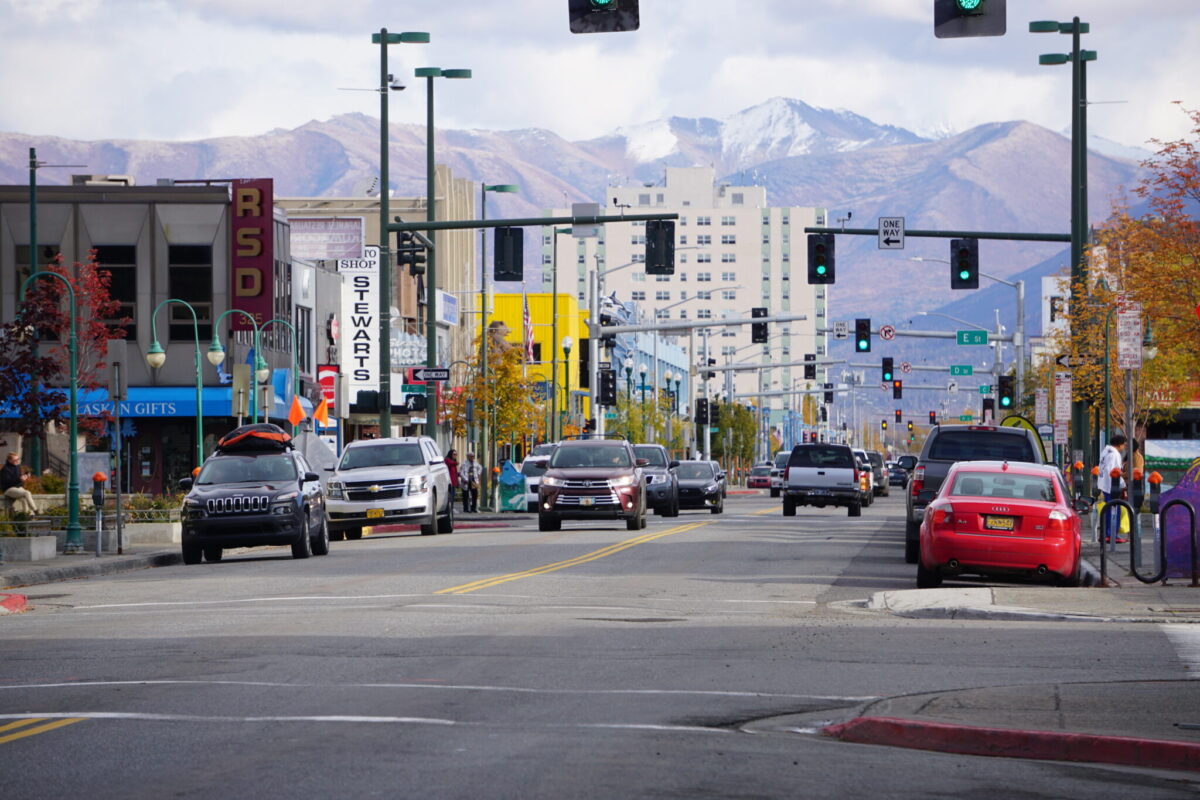
Cars are driven on Fourth Avenue in downtown Anchorage on Oct. 7, 2024. (Photo by Yereth Rosen/Alaska Beacon)
Alaska’s population rose slightly between 2024 and 2025 and is now at its highest level since 2017, the Alaska Department of Labor and Workforce Development announced Wednesday.
Alaska had an estimated 738,737 people as of July 1, 2025, the department said in its annual state population estimate.
The rise comes despite a revision that erased thousands of international immigrants that the U.S. Census mistakenly believed had moved to Alaska.
Last year, relying on Census figures showing that thousands of people had migrated to Alaska from other countries, the department estimated Alaska’s population at more than 741,000 people.
Since then, and after prodding from Alaska state demographer David Howell, the Census Bureau retroactively lowered the number of international migrants that came to Alaska, and this year’s state population estimate is significantly lower than the one published last year.
“We think (that) is more accurate given that people crossing the southern border aren’t very often making their way to Alaska,” Howell said.
With the extra residents removed and a new baseline in place, the state’s population grew on a year-over-year basis because the number of births in the state exceeded the number of Alaskans who died.
That natural increase — births minus deaths — of 3,389 people was greater than the number of people who moved out of the state.
Between 2024 and 2025, 1,740 more people moved out of Alaska than moved here. It was the 13th consecutive year of negative net migration in Alaska, extending the longest streak of negative net migration since 1945.
Overall, the state’s population grew by 0.22%. That was less than the nation as a whole (0.5%). Compared with the other 49 states and the District of Columbia, Alaska’s population growth ranked 40th.
South Carolina (1.5%), Idaho (1.4%) and North Carolina (1.3%) had the highest growth rates among states. Vermont (-0.29%), Hawaii (-0.15%) and West Virginia (-0.07%) had the lowest and were among five states that posted population declines.
The U.S. Census Bureau has slightly different figures than the state — it estimated a 0.1% population gain between 2024 and 2025 — but the Alaska Department of Labor conducts surveys of military bases and group homes that the Census Bureau does not, Howell said. For that reason, he believes the state’s estimate is more accurate than the Census Bureau’s.
Overall, Howell said, Alaska seemed to simply extend existing population trends between 2024 and 2025.
“We’re continuing to see losses in the working-age population. … We’re really starting to see declines in the school-age population. It was growing slightly at the beginning of this decade, but at this point, there’s about 1,000 more 17-year-olds than there are 4-year olds. And so we’re just going through aging,” he said.
Alaska’s median age is 37.1, one and a half years older than it was at the start of the decade. Haines, the state’s oldest community, has a median age above 50.
As the state ages, the number of new births is dropping and the number of deaths is rising.
Howell and the Department of Labor and Workforce Development are predicting that the state’s population will start dropping steadily by the year 2050.
The number of births in the latest population estimate is the lowest since the trans-Alaska oil pipeline was built. The number of deaths dropped slightly last year, but Howell said there may be a morbid reason for that: The COVID-19 pandemic peaked in Alaska in 2021-2022 and may have killed elderly Alaskans who would have died later.
This year’s state population estimate retroactively updated the population change between 2021-2022, turning it from a small gain into a decline.
On a borough and city level, existing trends continued in the latest forecast. The Matanuska-Susitna Borough continues to be the fastest-growing large area of the state, the population of Anchorage is relatively flat, the Interior’s population is growing slightly and Southeast Alaska’s population is falling.
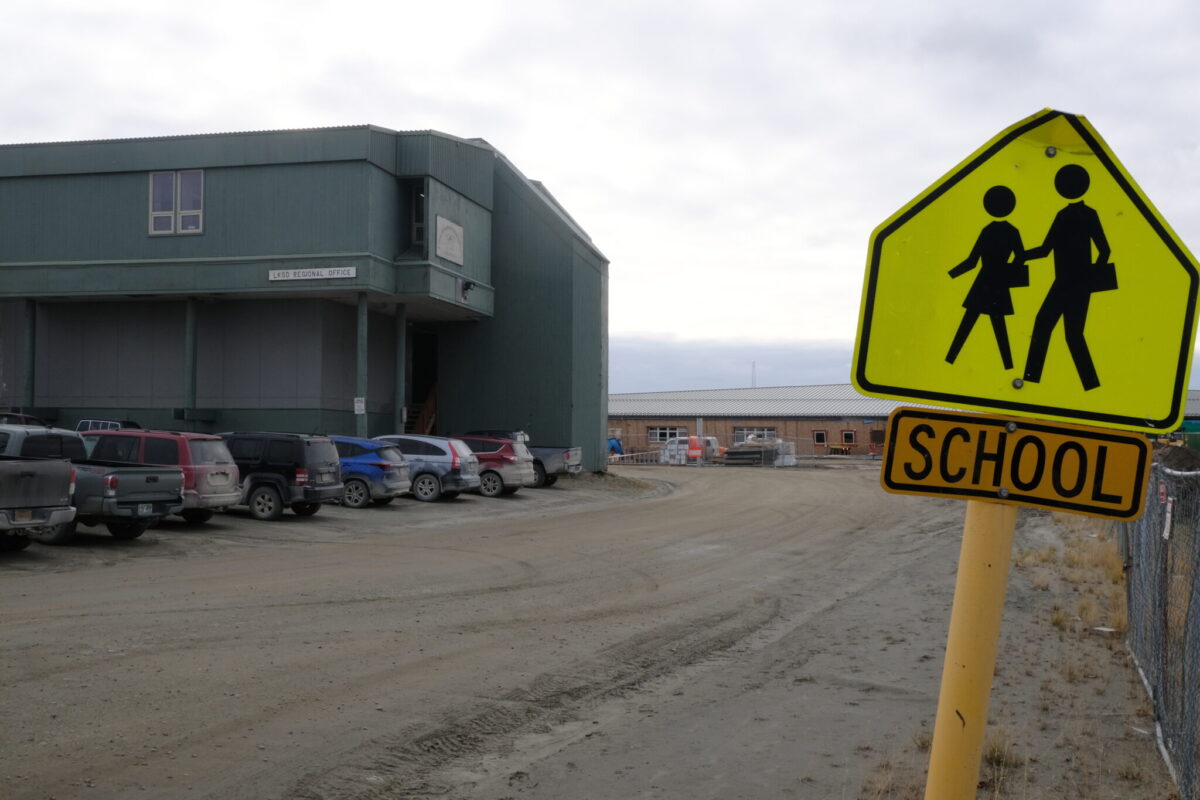
A road sign marks the road towards the Lower Kuskokwim School District offices and the Bethel High School. October 9, 2023. (Photo by Claire Stremple/Alaska Beacon)
While Alaska school districts are seeing improvements in kindergarten to third grade students’ reading proficiency, which officials credit to the Alaska Reads Act, some districts are struggling to access state managed funds for a federal grant program aimed at supporting literacy programs, teacher development, and student learning.
School districts awarded CLSD grants in 2025
Alaska Gateway School District
Aleutians East Borough School District
Anchorage School District
Bering Strait School District
Bristol Bay Borough School District / Chugach School District
Copper River School District
Cordova City School District
Dillingham City School District
Galena City School District
Iditarod Area School District
Kake City School District
Kashunamiut School District
Kenai Peninsula Borough School District
Kodiak Island Borough School District
Kuspuk School District
Lake and Peninsula Borough School District
Lower Yukon School District
Mount Edgecumbe High School
North Slope Borough School District
Northwest Arctic Borough School District
Petersburg Borough School District
Pribilof School District
Southeast Island School District
Yakutat School District
Yukon Flats School District
Yukon–Koyukuk School District
Lawmakers with the House Education Committee heard from two district superintendents about the successes and challenges of the Comprehensive Literacy State Development grant program — which in 2024 awarded $50 million to Alaska schools over five years.
In 2025, roughly half of Alaska’s districts, or 27 school districts, qualified for these grant funds administered through the Alaska Department of Education and Early Development, according to the department.
The program is aimed at advancing literacy for children from birth through 12th grade students, including pre-literacy skills, reading and writing. The program focuses on districts with disadvantaged children, including those living in poverty, English language learners and students with disabilities.
While all Alaska districts are required by state law to implement the Alaska Read’s Act, the policy did not come with additional state funding, said Rep. Rebecca Himschoot, I-Sitka, co-chair of the education committee, in an interview on Monday. She said some districts are struggling to fund the kindergarten through third grade reading initiatives. “I would like to see us supporting schools so that everybody gets the support they need to implement the law the way it was written,” she said.
The program isn’t new, but it has more money and it’s funding more districts now. In 2019, nearly one third of Alaska districts were awarded $25 million over five years, according to DEED.
“The literacy grant is a really powerful tool that is going to help the districts that it’s in, a lot,” Himschoot said. “I’ve heard a lot of gratitude from superintendents about having this opportunity for those who have it, but we did hear about some bumps in the rollout of it.”
District officials’ testimony prompted Himschoot to send a list of questions to DEED about how the grant is managed.
Michael Robbins, superintendent of the Bristol Bay Borough School District, which serves approximately 135 students, said the grant has been crucial for implementing the Alaska Reads Act, particularly supporting teachers’ training professional development, which helps retention. “The grant supports training, coaching and leadership development grounded in research-based instruction, including the science of reading,” he said.
“It creates consistency across classrooms in schools, helps prevent problems before they grow, and ensure that limited resources are utilized where that matters most,” Robbins said.
But Robbins said in implementing the grant, districts need more “clear, timely and reasonable guidance around allowable use of grant funds” from DEED.
He said the district would like to use the money for professional services vendors to provide training to teachers, and funding to attend conferences. “The approval process has been particularly cumbersome as some districts have had to resubmit their application multiple times, which takes valuable time from our grant leaders and administrators, as well as delaying the implementation of important activities,” he said.
Officials with DEED did not attend the legislative hearing, but department spokesperson Bryan Zadalis said by email on Monday that the department recognizes the importance of clear guidance, which is communicated through multiple channels including webinars and office hours. “DEED also aligns state-level guidance with federal updates as they are released to ensure accuracy and compliance, which can at times require sequencing information rather than issuing it prematurely,” he said.
In addition, Robbins, who formerly served as the superintendent of the Ketchikan Gateway Borough School District, said that that district did not qualify for grant funding. “The need was there, but the resources are not,” he said. “We need to find ways for all districts and all students to have access to the same level of support and opportunity.”
Robyn Taylor is superintendent of the Petersburg School District which serves approximately 420 students, and was awarded $350,000 per year through the grant program. She testified to lawmakers and echoed the need for equity in supporting reading programs across Alaska’s school districts. She said Petersburg still continues to have challenges with implementing the Alaska Reads Act, which she called “a real tension.”
“In Petersburg alone, between FY 25 and FY 26 we eliminated one of our three elementary reading interventionist positions, positions that were directly supporting Reads Act implementation and student outcomes,” she said. She said the district was told that CLSD funds were for supplementing programs not replacing funding.
“(The) restriction makes it difficult to use this grant to maintain positions or systems that are already working but are no longer financially sustainable under current funding structures,” she said.
Taylor and Himschoot both emphasized that districts who did not qualify for funding need support with the administrative work to apply. They said some schools should have easily qualified for the funding, but didn’t in part because they lack proper documentation of their students’ need for free or reduced school meals, which is one of the federal poverty guidelines. “It’s not that they don’t have kids in need,” Himschoot said. “It’s that they haven’t been identified through the paperwork, because they don’t have the capacity in their district to go chase that down.”
Zadalis said the grant process is a competitive one. He said the primary source of education funding is through the state’s funding formula, but districts may also access state or federal funding through other grants focused on literacy efforts.
Taylor said Petersburg students are making gains in reading proficiency, and the district is committed to continuing improvements beyond the grant cycle. “What we are asking for is greater flexibility, clearer and earlier guidance,” she said. “And increased trust in districts to make decisions that reflect local context and student needs.”
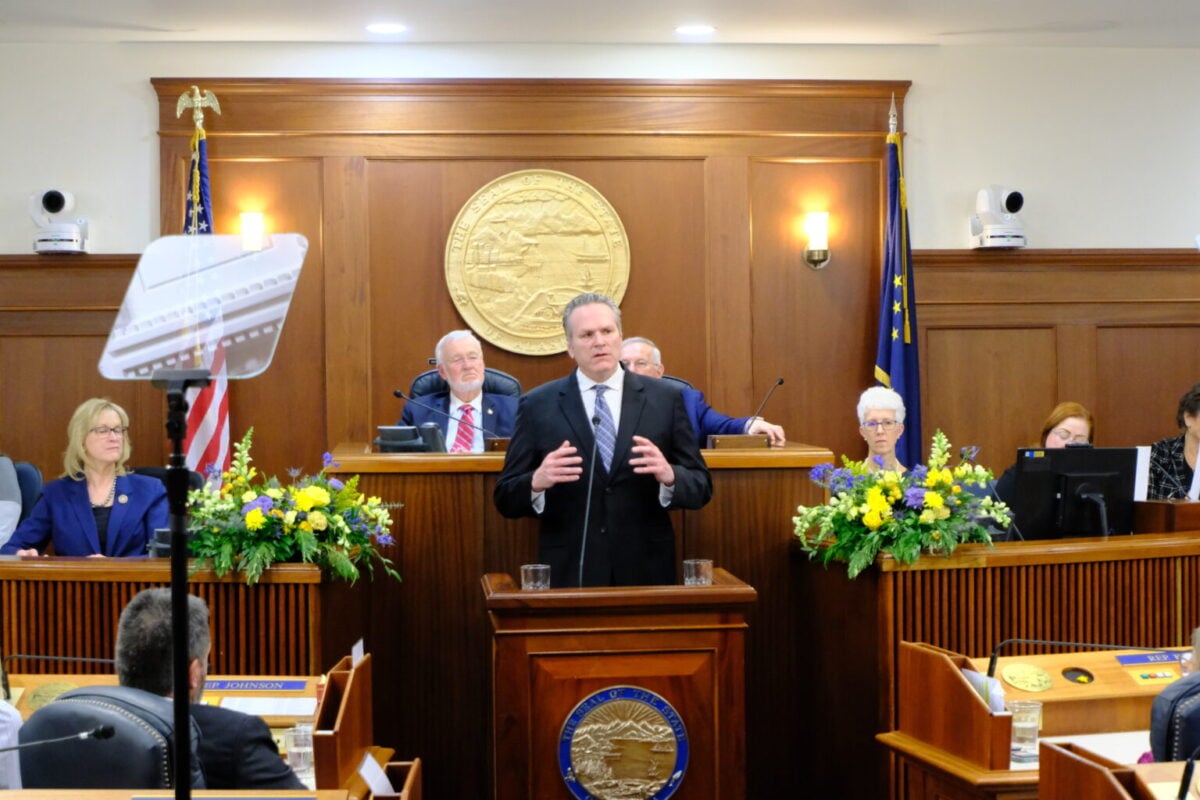
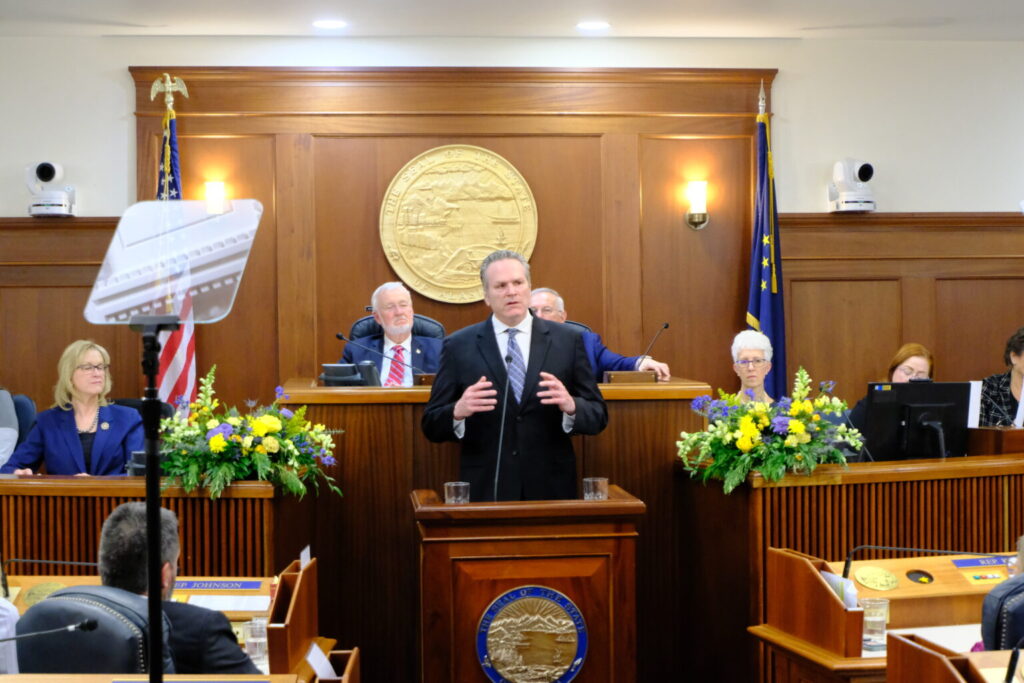
Gov. Mike Dunleavy gestures during his State of the State address on Jan. 22, 2026. (Photo by Corinne Smith/Alaska Beacon)
Gov. Mike Dunleavy has proposed a 4% statewide summer sales tax, effective through 2034, as part of his plan to bring Alaska’s state revenue and expenses in line for the long term.
If adopted, the sales tax would be Alaska’s first statewide, general-purpose levy since state legislators abolished Alaska’s income tax in 1980.
Alongside the tax bill, the governor has proposed a tighter state spending cap and a constitutional amendment that would guarantee a Permanent Fund dividend lower than scheduled by current law but above what legislators have approved in recent years.
“This comprehensive plan is designed to bridge the next seven years by stabilizing state finances, limiting spending growth, restoring a rules-based PFD, and sharing responsibility through targeted, time-limited revenue measures that support investment and predictability,” the governor wrote in a letter to state lawmakers.
Since 2015, persistently low oil prices and plateaued oil production from the North Slope have dogged state lawmakers who have struggled to balance Alaska’s need for services with the desire to pay large Permanent Fund dividends.
While most of Alaska’s general-purpose state revenue comes from the Alaska Permanent Fund, oil remains the No. 2 source of flexible spending money for the state, leaving the annual budget process subject to the vagaries of global markets.
Senate Bill 227, containing the bulk of the governor’s plan, was introduced on Monday and referred to the Senate Finance Committee for further discussion. An identical version will be introduced in the House on Wednesday.
The most fiscally consequential item in the bill is the sales tax, which would peak during the summer tourist season and drop to 2% between October and March.
That tax is expected to raise as much as $815 million per year for state services and the Permanent Fund dividend by Fiscal Year 2032.
Dunleavy’s proposed budget for the fiscal year that begins July 1 — fiscal year 2027 — is about $7.75 billion and has a deficit of almost $1.5 billion.
The Dunleavy administration expects that revenue from oil production and a proposed trans-Alaska natural gas pipeline will compensate for the phaseout of all the taxes in the long term.
Under SB 227, the state’s corporate income tax would fall to zero in 2031; the sales tax wouldn’t expire until 2034, leaving individual Alaskans paying higher tax rates than corporations for a period.
“Normally, sales tax is left to local governments. So I know it was a hot issue in Anchorage when the Mayor proposed that, so I think it is going to hit a lot of households,” said Sen. Lyman Hoffman, D-Bethel and co-chair of the Senate Finance Committee.
Sen. Bill Wielechowski, D-Anchorage, applauded Dunleavy on Monday for putting forward a fiscal proposal, even if he disagrees with some of the components.
“The governor’s putting out a bill. I commend him for that. He’s putting out, you know, he’s throwing out ideas. I give him credit for that,” he said.
Wielechowski and other legislators said they want to fully analyze what the governor is proposing before opining on it.
“There are a lot of parts to this bill, and the No. 1 thing for me — without a complete analysis — is it’s really unclear on how this is going to affect hard-working Alaskans,” said House Minority Leader DeLena Johnson, R-Palmer. “It is my No. 1 priority to make sure everyday Alaskans aren’t on the losing end of this.”
The Alaska Municipal League, which represents local governments across Alaska, is particularly interested in the governor’s proposal.
The League has previously said it would prefer a statewide income tax to a sales tax.
In almost every part of Alaska, except for Anchorage, sales taxes are a pillar of services.
Many cities and boroughs exempt certain things, like food and utilities. Under the Dunleavy proposal, the state would be in charge of collecting sales taxes and would remit money to cities and boroughs.
Local exemptions and sales tax caps could vanish in the process, with the state instead determining what is taxed and not.
“This is a 56-page bill that we are still going through. Sales tax is a major component of that, but sales tax shouldn’t be thought about independently from the other components,” said Nils Andreassen, director of the league.
In addition to the sales tax, SB 227 temporarily raises the state’s minimum oil tax, adds a surcharge of 15 cents per barrel of oil produced on the North Slope and adds part of the corporate sales tax update that Dunleavy vetoed last year.
Andreassen noted that regardless of its source, tax revenue flows into the state’s general fund for any number of uses.
“All taxes are connected at some level,” he said.
The governor’s plan for the Permanent Fund dividend, enclosed in a constitutional amendment proposal separate to SB 227, is similar to one he proposed in 2021.
Currently, the state’s No. 1 source of general-purpose revenue is an annual transfer from the Permanent Fund to the state treasury. In FY27, that transfer will be worth $4 billion.
The “50-50 dividend” proposed by the governor would reserve half of that transfer for dividends, or about $2 billion, if it were in place this year.
That amounts to roughly $3,200 per PFD recipient, based on the number of recipients in 2025.
Under a current, disused formula in place since the 1980s, the dividend would be about $3,800 per recipient.
That formula hasn’t been used since 2015, and lawmakers have instead set the amount by fiat, typically using a figure that can be paid with available revenue after services are covered.
Legislators can ignore formulas in state law because the state’s annual budget bill is a law, and when one law conflicts with another, the newer law takes precedence.
Putting a dividend formula in the constitution would bind future governors and legislatures, and put the dividend atop the annual budgetary priority list, alongside education and other constitutionally mandated functions.
Adopting a constitutional amendment requires two-thirds of the House, two-thirds of the Senate, and approval by voters in the next general election.
Alaskans have not adopted an amendment since 2004, and the Legislature hasn’t put one before voters since 2016.
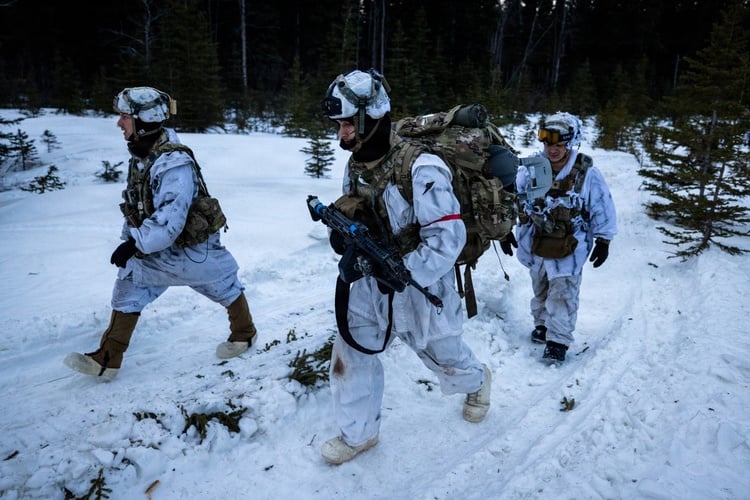
U.S. Army Soldiers with the 11th Airborne Division, load Air Force C-130 Hercules aircraft in preparation for deployment into the Joint Pacific Multinational Readiness Center’s 25-02 training exercise, Fairbanks, Alaska, Jan. 23, 2025. (U.S. Army Photo by Master Sgt. Justin P. Morelli)
A Democratic state lawmaker from Anchorage loudly denounced the actions of U.S. Immigration and Customs Enforcement’s surge in Minnesota while speaking on the Alaska House floor on Friday.
Rep. Andrew Gray, D-Anchorage, is a military veteran and co-chair of the Legislature’s Joint Armed Services Committee.
“The facts are that our government is out of control. Norms have been broken at an alarming rate, and the world is watching us in shock,” he said.
Gray’s remarks were met by loud desk-thumping — a form of applause — and came on a day when thousands of Minnesotans marched in subzero weather and held a general strike to show their opposition to ICE efforts in their state.
Tensions are particularly high after several shootings by federal officers, including one in which an officer killed a mother of three.
The remarks came one day before federal agents fatally shot another Minneapolis resident on Saturday, prompting nationwide protests throughout the weekend.
Up to 1,500 active-duty troops of the U.S. Army’s 11th Airborne Division, based in Anchorage, have been ordered to stand by for possible deployment to Minneapolis — Minnesota’s largest city — according to National Public Radio.
In those letters, Gray and Kawasaki say they are receiving “enquiries … from the Alaskan people” and pose a series of questions.
How long will the 11th Airborne be in Minnesota? How does a deployment fit in the division’s mission to defend the United States against foreign threats? Could soldiers be detaining suspected undocumented people? Would the 11th Airborne fight the Minnesota National Guard if Gov. Tim Walz activates it to defend protesters?
“Fifteen hundred active-duty soldiers may be sent from Alaska to Minnesota to protect ICE agents as they continue their efforts to arrest and detain suspected undocumented immigrants,” Gray said, “But who really needs the protection? Is it the ICE agents, or is it the folks who are terrified to leave their homes, to go to work, to pick their kids up from school or to actually show up at their immigration appointments?”
While Gray’s comments appeared to have the support of many legislators in the chamber — judging by the desk-pounding applause — there was at least one dissenting voice.
Rep. Jamie Allard, R-Eagle River, is a veteran, the spouse of a veteran, and a Latina, she said, explaining that she had also sent a letter to Gen. Cogbill, but her letter was to remind him that he is not legally obligated to answer the Legislature’s questions or testify in the Capitol.
Allard said she has been deployed overseas with the military and with the U.S. State Department.
“I experienced things when I worked for the US State Department, of women being abused, hit — watched them get their teeth knocked in, where I had to stand by and couldn’t do anything,” she said.
“We have a lot going on in our country, dividing, saying we’re this or we’re that. We’re all Americans, but it doesn’t mean that it’s okay to have riots across our country. If the military and the federal government and the Department of War and the 11th Airborne Division decide that it’s best to go to Minnesota, that’s what we need to do,” she said.
Allard’s comments were met by quieter but noticeable desk-pounding, with the loudest coming from Rep. Kevin McCabe, R-Big Lake.
He said afterward that he thinks Gray incorrectly described some aspects of ICE’s work in Minnesota. For example, Gray said ICE detained a five-year-old in Minnesota.
“There’s a little bit more to the story, McCabe said.
“We shouldn’t be messing around in another branch of the government in their bailiwick,” he said. “The worst people in Alaska to manage the National Guard is probably the state Legislature.”
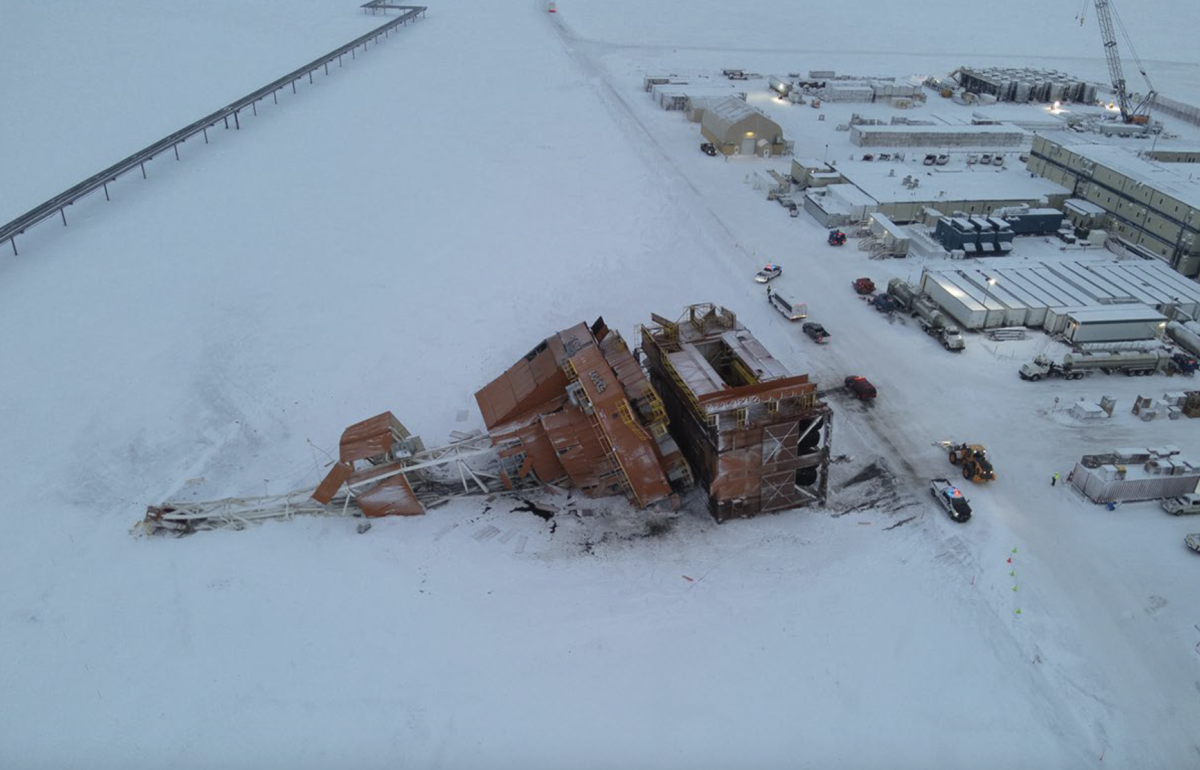
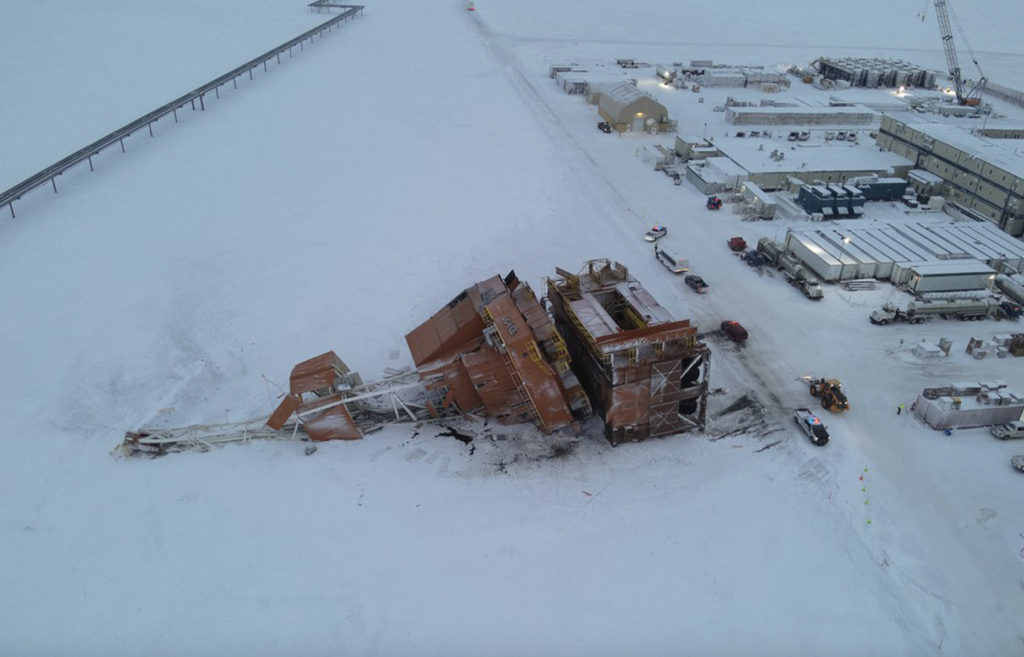
Rig 26 is seen in a photo distributed by the state of Alaska on Sunday, Jan. 25, 2026, two days after it fell onto its side while being transported on the North Slope. (Doyon Drilling photo/Alaska Department of Environmental Conservation)
A winter oil-drilling campaign planned by ConocoPhillips will proceed without interruption despite the dramatic wreck of an oil rig over the weekend.
Doyon 26, claimed to be the largest mobile oil drilling rig in the United States, toppled over while being transported along a gravel road on the North Slope on Friday afternoon. A video of the crash shows a small fire erupting as the structure tumbles onto the nearby tundra.
Eight people were treated for minor injuries, according to a Sunday report from the Alaska Department of Natural Resources, and up to 4,000 gallons of diesel fuel may have spilled.
The environmental effects of that spill, if any, are still being determined by that agency.
The rig, nicknamed “the Beast,” is owned by Doyon Drilling Inc. and was one of two that ConocoPhillips intended to use in the National Petroleum Reserve-Alaska, located west of Prudhoe Bay, this winter.
ConocoPhillips is developing the vast Willow project in the reserve and intended to use both Doyon 26 and another rig as part of its winter development work, said Brandi Sellepack, manager of the company’s exploration program, in a court affidavit published Monday morning. Most new construction on the North Slope occurs during winter, when the ground is frozen and can be traversed with less harm to the environment.
The oil company’s drilling program has been legally challenged in court by several environmental and local groups, and its attorneys included details of the incident in a notice to the judge hearing that challenge.
“After assessing the impact of the unfortunate loss of Doyon 26, ConocoPhillips’s current plan is to proceed with the full four-well exploration drilling program utilizing a substitute drilling rig, Doyon 142, which is capable of completing all of the planned drilling scope that Doyon 26 was scheduled to complete,” Sellepack said in the affidavit. “As the drilling program proceeds, ConocoPhillips will evaluate whether aspects of the program must be shortened based on this change of plans, such as, for example, the extent of datagathering from the wells and the length of any production testing. This change of plans will not increase the scope of any aspects of the drilling program.”
The company said an underground seismic surveying program — intended to reveal the scope of oil pockets in the area — was unaffected by the rig’s accident and will proceed on schedule.
Development of Willow is seen as critical for the state treasury, according to current forecasts. Oil produced from the project will result in billions of dollars in tax revenue for the state treasury, local governments, and the U.S. government.
At the same time, the project will have some effect on the local and global environment, both through construction and emissions that contribute to climate change.
Those side effects have been the topic of extended lawsuits, including one currently active in the U.S. District Court for the District of Alaska.
In its notice to the court, ConocoPhillips said it believes Friday’s accident is unrelated to the arguments raised in that case.
NOTN- City officials issued a high-risk avalanche evacuation advisory today as worsening weather conditions raised the likelihood of avalanches across all known slide paths.
The advisory, updated at 10:30 a.m., urges residents in at-risk areas to evacuate as increased snowfall, warmer temperatures and several inches of rain forecast at higher elevations are significantly heightening avalanche danger.
Officials stressed that the situation is rapidly evolving and could escalate further as weather conditions deteriorate.
Emergency response crews are staged and prepared to respond in the event of an avalanche at Thane road where DOT was scheduled to close the road at the avalanche gates at noon.
An emergency shelter is available at Centennial Hall, where the American Red Cross is prepared to provide mass care services, including meals, once formally activated. City officials said resources are in place to support evacuees should conditions worsen.
Pet sheltering is also available at Centennial Hall. Juneau Animal Rescue is offering additional emergency pet sheltering through its Safe-Keeping Program, and JAR and KTOO have created resources to help pet owners prepare for emergencies.
“‘It’s a substantial portion of downtown.” Said Deputy City Manager Robert Barr, “Downtown is the area that that we’ve been able to map. That doesn’t mean avalanche doesn’t exist elsewhere. folks should just be aware.”
Authorities urged residents to take precautions during the period of elevated avalanche risk, including avoiding travel beneath known avalanche paths, following all road and trail closures, and not stopping in avalanche runout zones. Residents were also advised to closely monitor official alerts and updates.
After storms or avalanche activity, officials warned people to stay clear of debris piles and runout areas and to wait for official reopening notices before resuming normal travel. Any observed avalanche activity should be reported to authorities.
Rep. Nick Begich, R-Alaska, speaks during the commissioning ceremony for the Coast Guard icebreaker Storis on Sunday, Aug. 10, 2025, in Juneau, Alaska. (Photo by James Brooks/Alaska Beacon)
The U.S. House of Representatives voted 230-196 on Thursday to extend Affordable Care Act subsidies for three years and reverse massive cost increases that went into effect with the new year.
The reversal must still be approved by the U.S. Senate and President Donald Trump before becoming effective.
Alaska’s lone member of the House, Republican Rep. Nick Begich III, voted against the extension, as did 195 other Republicans.
Seventeen Republicans voted for the extension of subsidies that were enacted during the COVID-19 pandemic emergency, joining all of the chamber’s Democrats.
The House’s Republican leaders opposed the extension, but a handful of Republicans signed a petition in December to force a vote.
Begich did not sign that petition, and on Wednesday, he joined other Republicans in an unsuccessful procedural vote intended to block Thursday’s decision.
In a written statement explaining his vote on Thursday, Begich said extending subsidies would not fix the problems he sees with the Affordable Care Act, commonly known as Obamacare. “The health insurance system created by Democrats under Obamacare has proven completely unaffordable for the American healthcare customer,” the statement said. “An extension of Obamacare COVID subsidies does not fix what is broken.”
He said he would like to see reforms to the Affordable Care Act, without which he said the extension “has no credible pathway forward in the Senate.”
In December, Begich voted in favor of a Republican-proposed alternative to the extension. That alternative, which focuses on drug costs, would not stop or reverse the new cost increases and has thus far been rejected by the Senate.
The Congressional Budget Office reported that the alternative would reduce health insurance premiums for insured Americans but would also reduce the number of Americans who are insured.
“I remain committed to working on reforms that lower costs, expand access, and improve outcomes for all Americans,” Begich said in his statement. “Temporary extensions without meaningful reform are not the solution. Real reform that puts patients first is.”
In December, Alaska’s two U.S. Senators, Lisa Murkowski and Dan Sullivan — both Republicans — joined Senate Democrats in an unsuccessful attempt to advance a condition-free extension similar to the one passed by the House on Thursday.
That was a change in position for Sullivan, who had previously opposed extensions that were not coupled with changes to the Affordable Care Act.
Begich and Sullivan are each up for election this fall. Sullivan does not have a Democratic Party-backed opponent yet, but former U.S. House Rep. Mary Peltola is widely expected to enter the race this month.
Begich is being opposed by Anchorage pastor Matt Schultz. Alaska Democratic Party Chair Eric Croft said by email that Thursday’s vote will be a campaign issue in the fall.
“After allowing lifesaving ACA tax credits to expire on December 31, Nick Begich doubled down on his betrayal of Alaska families and blocked the extension of these credits,” he wrote. “We cannot afford these health care price hikes, and we won’t forget about Nick Begich’s betrayal this November.”
NOTN-Eaglecrest Ski Area officials say the resort continues to operate even with the extreme winter weather, closures, infrastructure problems and leadership turnover.
One of the most significant operational challenges for Eaglecrest has been a major water system failure beneath Fish Creek Lodge. Officials said the break was caused by aging infrastructure, not freezing, but repairs were complicated when a separate heating-system water line was damaged during initial work.
Contractors are now scheduled to install a supplemental water line, with hopes of restoring service next week. Water testing will be required before potable use can resume.
Mountain operations crews are continuing grooming and trail preparation as the snowfall allows, though mechanical issues with snowcats have slowed the progress.
Contractors are on site assisting with repairs. Plans are also being developed for snowmaking improvements and the possible return of night skiing.
According to the managers report released after the meeting last night, Eaglecrest has seen access improvements. For the 2025-26 season, the City and Borough of Juneau assumed responsibility for maintaining Fish Creek Road.
City crews are currently widening the road to improve traffic flow to the ski area.
Despite the continuous operational hurdles, the report discussed strong participation in snowsports programs. The ski area hosted three holiday camps with 125 students and launched its first multi-week programs in early January.
Thursdays meetings also brought notable leadership changes.
First reported by the Juneau Independent, General Manager Craig Cimmons resigned, after taking up the position on September 30 of 2024.
Board chair Hannah Shively stepped down for health reasons. Erin Lupro, a longtime employee and former acting general manager, was appointed interim general manager, with Cimmons assisting in the transition for up to 30 days.
Eaglecrest has faced financial strain as well, including a reported 40% drop in season pass sales and major projected deficits in the years leading up to the proposed gondola project.
On January 5, a report was presented during a Special Finance Committee Planning Meeting that shows Eaglecrest is facing mounting budget deficits.
Eaglecrest entered the current fiscal year with a budget deficit of $691,600, with the lowest previous fund balance in fiscal year 2006.
Under the current projections, the report estimates the fund balance could reach between negative $2.5 million and negative $3.0 million at the start of fiscal year 2027.
The mountain’s long-term financial planning is tied heavily to the proposed gondola project, but the first potential gondola related revenue is only expected in the final two months of fiscal year 2028.
Officials said additional updates on operations, infrastructure repairs and leadership transitions will be shared as the season continues.
NOTN- All Juneau School District (JSD) schools will be closed today January 9, due to the weather.
A statement was released by JSD yesterday evening saying that for the safety of students, staff and families all classes, meetings and activities are cancelled.
City and Borough of Juneau engineers are continuing to monitor the roofs at CBJ facilities during the closures.
Thane Road will be closed at the avalanche gates beginning at noon today due to a high risk of avalanches. An avalanche advisory for all known slide paths also went into effect yesterday evening, and officials warn that hazardous conditions are expected to intensify over the coming days.
The Alaska Department of Transportation and Public Facilities announced the emergency closure for Thane Road, the closure is scheduled to be re-evaluated at 8 a.m. Saturday.
“The avalanche hazard is expected to remain high over the next few days,” DOT said in their social media post, “If a natural avalanche reaches the roadway, it is unlikely DOT&PF will be able to safely remove the avalanche debris until the hazard can be minimized from mitigation work or once the hazard has decreased naturally.”
At the same time, the City and Borough of Juneau warned that avalanche risk across the Mount Juneau slide paths remains high and is expected to significantly increase over the next few days.
An atmospheric system bringing warmer air and precipitation has raised concerns about destabilizing the deep snowpack that has built up over weeks of heavy snowfall. While the situation does not currently warrant an evacuation advisory, city officials said preparations are underway.
Officials said an emergency alert would be issued if an evacuation advisory is called.
Authorities are continuing to monitor avalanche conditions closely and emphasized that public safety remains the priority.
The city is bracing for heavy rain and potential the for more flooding of roadways and storm drains as an atmospheric river is expected to impact much Southeast Alaska into the weekend, weather officials are saying Juneau will see a transition to rain later today.