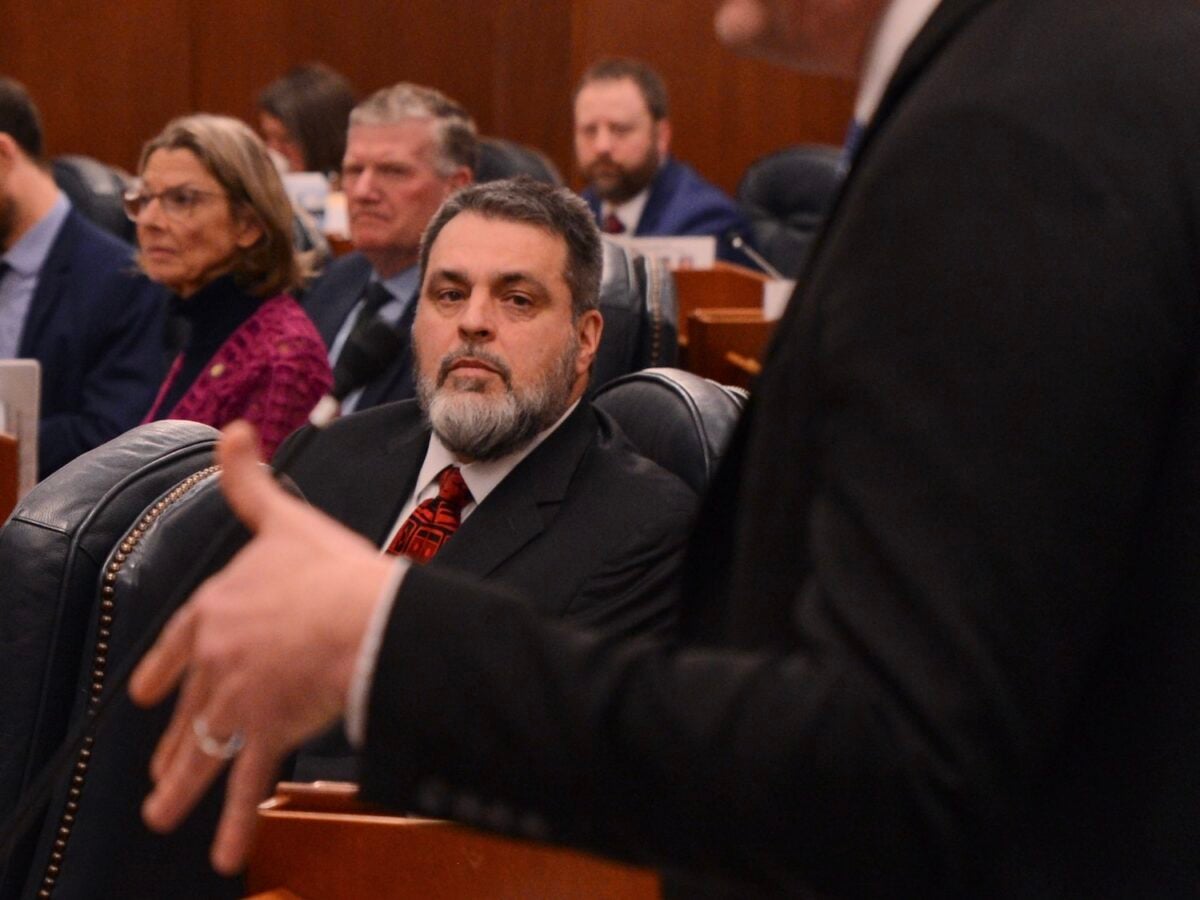
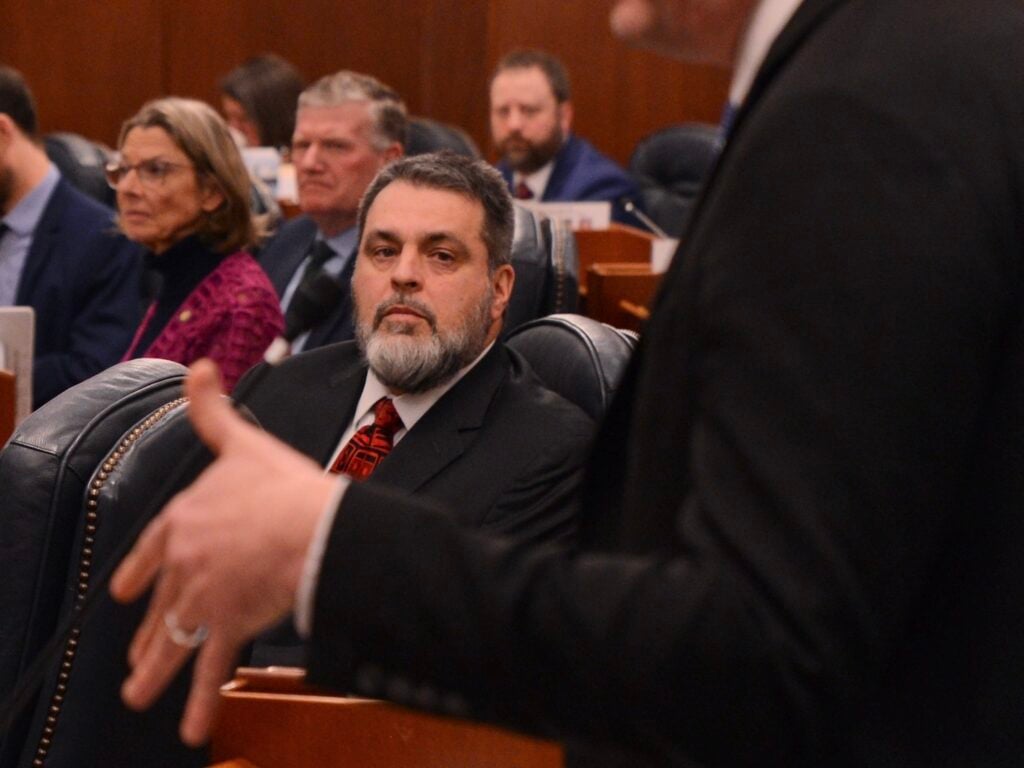
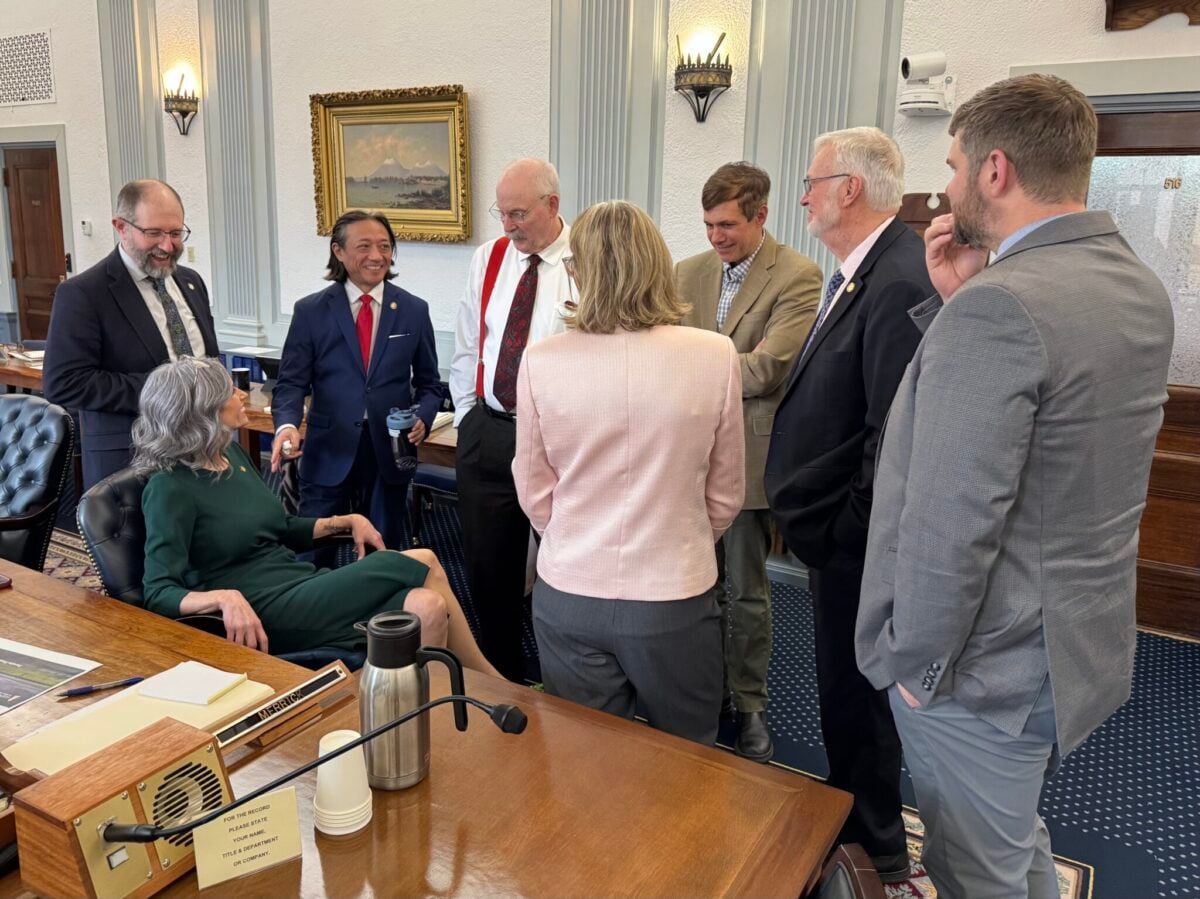
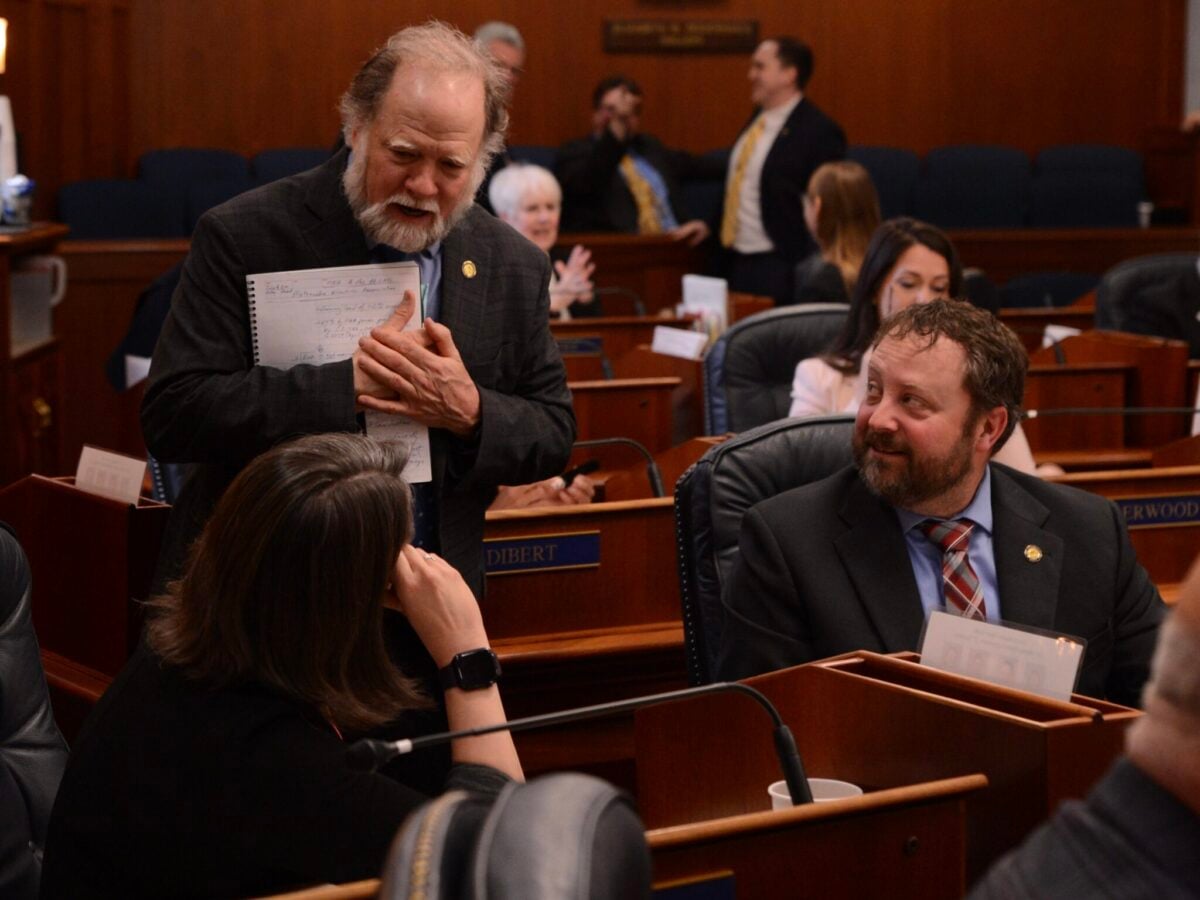
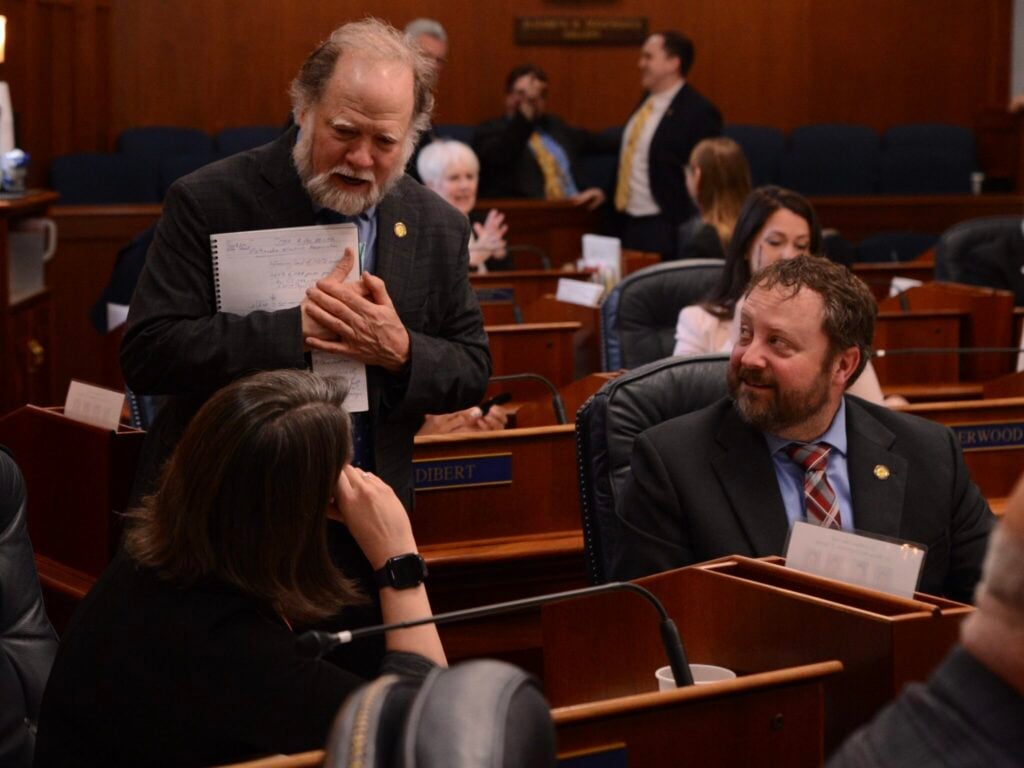
Senate Minority Leader Mike Cronk, R-Tok, listens to a speech by Rep. Will Stapp, R-Fairbanks, on Thursday, Jan. 22, 2026, during a joint session of the Alaska Legislature. (James Brooks photo/Alaska Beacon)
By: James Brooks, Alaska Beacon
Senate Minority Leader Mike Cronk, R-Tok, listens to a speech by Rep. Will Stapp, R-Fairbanks, on Thursday, Jan. 22, 2026, during a joint session of the Alaska Legislature. (James Brooks photo/Alaska Beacon)
The 14 members of Alaska’s Senate coalition majority met behind closed doors twice on Wednesday to decide the fate of a multibillion-dollar tax break for the proposed trans-Alaska natural gas pipeline.
The state House voted 34-5 on Friday to approve the break, which also has the approval of Gov. Mike Dunleavy and pipeline developer Glenfarne, but the tax break won’t become law unless it also has the approval of the Senate.
As of Wednesday afternoon, there were not 11 majority votes for the bill, which would replace a 2% property tax on the project with a tax on gas pumped through the line.
Under current law, the pipeline would generate $47 billion for the state and boroughs along the route through 2062, according to figures from the Alaska Department of Revenue.
The House-passed bill would drop that figure to about $31 billion. The $16 billion difference is the result of the switch from a property tax to a gas tax. The state would still collect production taxes, royalties and other fees.
Lawmakers are also interested in lowering natural gas costs for Alaska residents. If built as planned, the pipeline would provide in-state gas to the Railbelt at a rate cheaper than imports.
In a newsletter, Sen. Loki Tobin, D-Anchorage, became the latest lawmaker to voice opposition to the House’s version of the bill.
“A 90% tax cut for Glenfarne raises concerns that our state and local governments may not have enough funds to support essential services such as sanitation, schools, and roads, which directly impact our communities and families,” she wrote in part, referring to the property tax cut.
Glenfarne has said the bill is critical in order to obtain financing for the Alaska LNG project, which would build an 807-mile pipeline from the North Slope to Cook Inlet and major processing plants at either end of the line.
Senators are considering amendments to the House bill that could ease the bill’s passage in the Senate, but Glenfarne has warned the Senate Finance Committee against making big changes.
“We’re encouraged by the House progress and strong outcome and are optimistic the Senate will pass a bill that works for Alaska by helping enable this project,” said Tim Fitzpatrick, a spokesperson for Glenfarne.
On Wednesday, the Senate majority canceled a scheduled meeting of the full Senate and two scheduled meetings of the Senate Finance Committee, which is considering changes to the bill.
The next meeting of the full Senate is scheduled for 11 a.m. Thursday.
Lawmakers are in a 30-day special session that ends at 11:59 p.m. Friday. If they don’t pass the tax-break bill by that deadline, the bill will die.
Dunleavy could call legislators into another special session, and while the governor’s office declined to say whether he is prepared to do so, the six members of the Senate’s all-Republican minority caucus said they have seen a draft special-session proclamation.
In separate interviews, all six said they support the House version of the bill, with only minor technical fixes needed.
Sen. Robb Myers, R-North Pole, said that while the pipeline isn’t guaranteed to happen if the bill passes, it’s guaranteed to not happen if the bill doesn’t pass.
Sen. George Rauscher, R-Sutton, offered a similar position.
“Glenfarne has to have numbers that work, or they can’t build it. We can ask for anything we want — we can demand all the taxes — but in the end, if it isn’t built, we don’t get anything,” he said.
Senate Minority Leader Mike Cronk, R-Tok, called the majority’s 11-vote rule “pathetic.”
“We should all have the ability to cast a yes or no vote on this,” he said, noting that collectively, the minority’s six members represent more than 180,000 Alaskans.
Cronk said he believes the Senate will ultimately vote on the issue.
“I’m hoping we all get our chance to say yes or no. That’s what Alaskans expect. It shouldn’t be dictated by 11 people,” he said.
Cronk and Sen. Cathy Tilton, R-Wasilla, observed that the Senate Majority already broke its 11-vote rule during the regular session by calling up a pension bill, a medical licensing bill and a bill pertaining to gambling.
Despite Wednesday’s lack of action, Sen. Robert Yundt, R-Wasilla, remained optimistic, saying he believes the Senate will ultimately bring the pipeline issue to a vote.
“A majority of the state depends on natural gas. We’re either going to be using our own or importing, and when all is said and done, I think we’re going to be using our own,” he said.
CBJ- The Municipal Clerk’s Office is currently reviewing petition booklets and signatures submitted for the proposed Mill Rate Cap Change Charter Amendment Petition.
On June 17, the petitioners committee returned petition books containing 2,986 initial signatures. Under the CBJ Charter, 2,566 certified signatures are required for the petition to be certified. Clerk’s Office staff are now verifying signatures and reviewing petition booklets to determine whether the petition meets the certification requirements.
For the latest petition status and related documents, visit the https://juneau.org/clerk/elections or contact the Municipal Clerk’s Office at 907-586-5278 (Option 1).
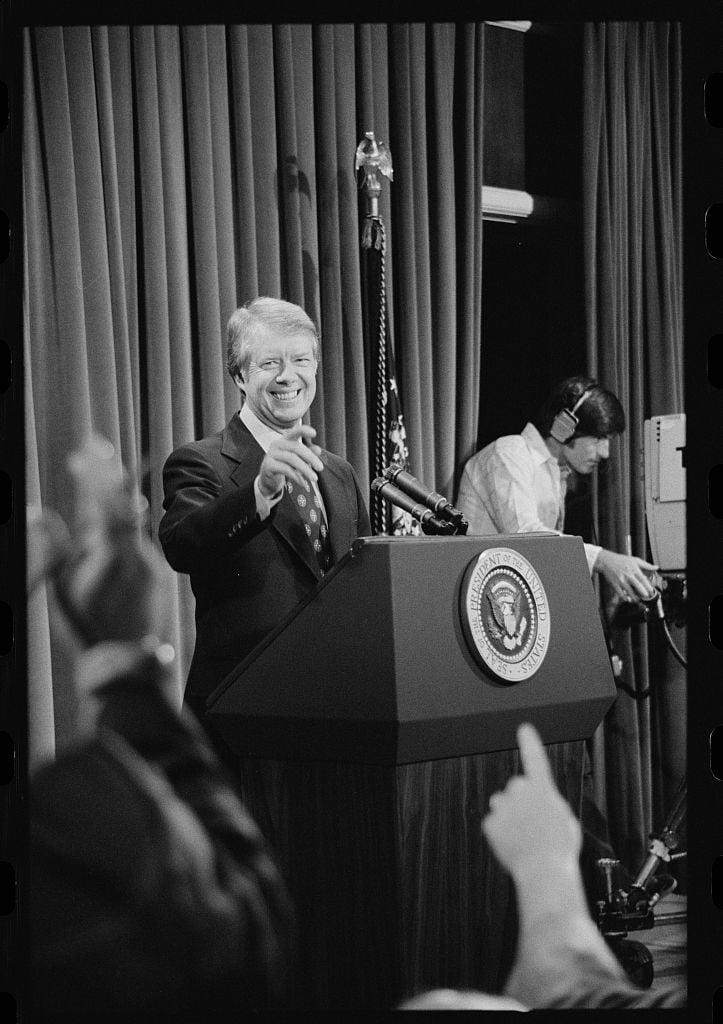
President Jimmy Carter takes questions at a press conference on June 30, 1977. (Photo by Marion Trikosko/Provided by the Libarary of Congress)
The president of the United States urged lawmakers to do everything they can to make the long-desired Alaska natural gas pipeline a reality.
“It is in the national interest to bring Alaskan gas reserves to market at the lowest possible price for consumers,” the president said in an official message. “Every effort must be made to ensure timely completion of the pipeline at the lowest possible cost consistent with Federal regulatory policies.”
The president was Jimmy Carter. The year was 1979. The Alaska natural gas pipeline project was already several years old, with official presidential approval issued two years earlier. The 4,748-mile pipeline project, which Carter touted as “the largest privately financed energy project ever undertaken,” was to be completed by 1984 at a cost of $10 billion to $15 billion, according to the approved plans.
That project never happened, nor did any of the other iterations of an Alaska natural gas pipeline plan that followed.
Now, five decades later, Gov. Mike Dunleavy is describing an alternate version of the yet-unbuilt pipeline as an imminent megaproject.
“For decades and decades and decades, this gasline project has been a dream of many Alaskans. And we’re closer today than we ever have been,” he said in comments posted on Facebook on May 29.
As Carter did, Dunleavy uses superlatives to describe the plan. “That project will be the largest on the face of the earth, probably the largest in terms of investment ever,” he said in opening remarks on May 19 at the Alaska Sustainable Energy Conference in Anchorage.
Dunleavy has called the legislature into a special session to consider sweeping tax concessions that he says are necessary to make the project work economically. His plan, which the legislature is considering, would eliminate nearly all of its state and municipal property taxes on project-related infrastructure in exchange for the promise of a share of the revenues once gas starts flowing through the line.
The current project sponsor is Glenfarne LLC, a New York- and Houston-based company founded in 2011. Glenfarne, a privately held investment and management company specializing in energy, entered the Alaska gas pipeline history last year when it acquired 75% of a project promoted by the state-owned and state-financed Alaska Gasline Development Corp. It has never built or operated a major natural gas pipeline or LNG facility.
Glenfarne says the project would cost between $44.5 billion and $54.5 billion.
Decades of proposals
The Glenfarne plan, for a phased-in pipeline to carry natural gas from the North Slope to a liquefaction plant in Cook Inlet, is the latest in a long series of pipeline plans and campaigns that emerged over the past half century.
The oil fields on Alaska’s North Slope that have been producing since 1977 also hold vast quantities of natural gas, as is common in petroleum basins. Known natural gas reserves on the North Slope, mostly at Prudhoe, total about 35 trillion cubic feet, and experts say there is certainly more natural gas to be discovered.
So far that gas has been considered “stranded” — too isolated to be marketable. Instead of being sold to utilities or other users, the gas that is brought to the surface with oil produced on the North Slope is reinjected into the reservoirs, where it helps build pressure that will enable more oil recovery. Each day, about 8 billion cubic feet of natural gas has to be reinjected, an amount equivalent to the daily natural gas consumption in Japan in 2024.
A map shows various Alaska natural gas pipeline routes proposed as of 2011. (Map from the Congressional Research Service publication, “The Alaska Natural Gas Pipeline: Background, Status, and Issues for Congress,” by Paul W. Parfomak, Specialist in Energy and Infrastructure Policy, June 9, 2011)
The prospect of selling that gas tantalized Alaskans and the energy industry and inspired a wide range of proposals that have come and gone over the past decades.
Some proposals were for overland pipelines through Canada, as the Carter-approved plan proposed. The main alternatives to the Canada route have been plans for an “all-Alaskan” line taking gas from Prudhoe to Valdez, the site of the trans-Alaska oil pipeline marine terminal, or to Cook Inlet for processing into liquefied natural gas to be transported by tanker vessel. Other plans proposed shorter lines delivering to in-state markets and an over-the-top route that would skim the Arctic coast before connecting with a Mackenzie Delta pipeline in the Northwest and Yukon Territories — a Canadian project that, like Alaska gasline, never materialized.
There have been plans for projects that would skip the pipeline construction altogether. In the early 2000s, BP experimented with a gas-to-liquids technology that might produce synthetic oil that could be shipped down the existing trans-Alaska pipeline. BP set up a facility in Nikiski for the project but closed it in 2009. Two pending proposals, one from a company called Qilak and another from a company called Polar LNG, call for natural gas deliveries directly from the North Slope by icebreaker. Even those are not new; the icebreaker idea was considered in the 1980s by Arco Alaska.
Gas pipeline records filing shelves in the Alaska Resources Library and Information Services, seen on June 8, 2026, inlude the multi-volume draft environmental impact statement and final environmental impact statement on the Alaska Stand Alone Gas Pipeline, known as ASAP. (Photo by Yereth Rosen/Alaska Beacon)
Also dating back to the mid-20th century are various task forces, commissions, coordinating offices, approved state and federal legislation, enthusiastic support from presidents, completed environmental impact statements and completed permits. There were various tentative agreements with oil producers, major corporations and Asian governments for participation the project. There were numerous special sessions of the Alaska Legislature — and, at the urging of project sponsors, financial inducements assembled by the state and federal governments.
A list of projects that surfaced through 2021 is available from the Alaska State Library, though it comes with a caveat: “It does not purport to be complete.”
Not one foot of gas pipeline has been laid, but plenty of space is taken up on Alaska library shelves by rows and rows of studies and reports produced since the 1970s.
Records from 1975 Federal Power Commission proceedings on the porposed El Paso Alaska Company natural gas pipeline project fill several shelves in the Alaska Resources Library nad Information Services at the University of Alaska Anchorage campus. Even before the trans-Alaska oil pipeline was completed, El Paso was seeking to build a parallel pipeline to carry North Slope natural gas to a liquefaction facility at tidewater. President Jimmy Carter chose an overland pipeline plan to run through Canada instead of El Paso’s LNG project. (Photo by Yereth Rosen/Alaska Beacon)
Dunleavy insists that the Glenfarne project is different, though he conceded in a May 21 presentation that “people have heard about this project forever.”
In a presentation at the Sustainable Energy Conference in Anchorage, Dunelavy cited numerous factors that he said made the current plan different from past failed plans.
He listed energy disruptions caused by the war in Iran and Russia’s invasion of Ukraine, the rise of technologies that have dramatically increased the need for energy, the impending shortage of Cook Inlet natural gas that has long fueled Southcentral Alaska, the permits that the Alaska Gasline Development Authority already secured — plus the ardent support of President Donald Trump, who has pushed for aggressive resource development in Alaska since he returned to the White House in January of 2025.
“When you get all the geopolitical stuff that’s changed the world and then you get Trump 2.0 in here and data farms and cryptocurrency and electrification, it’s a different project,” Dunleavy said at the conference.
But Larry Persily, a veteran Alaska journalist and past head of the federal gas pipeline coordinating office that was originally established by President George W. Bush in 2004, sees a lot of wishful thinking surrounding the Glenfarne plan.
“We want to think it’s different. We want the pipeline. We want the revenues. We want the jobs. And we want the promise of affordable energy,” Persily said.
He cited ongoing “pep rallies” to help convince people that things are different this time, like the June 2 event hosted by the Greater Fairbanks Chamber of Commerce.
“We have a sales job, and it’s ginned up a lot of enthusiasm — misplaced, I believe,” he said.
Past optimism
A folding map that was part of a Yukon Pacific promotional flier shows the planned route for a pipeline from Prudhoe Bay to Valdez, where natural gas was to be liquefied. The map was published in the 1990s. (Photo by Yereth Rosen/Alaska Beacon)
Of the past plans, Persily said, the most similar to Glenfarne’s proposal was the Yukon Pacific plan for a LNG project, which emerged in the 1980s.
Yukon Pacific’s Trans-Alaska Gas System, also referred to as TAGS, envisioned a gas pipeline paralleling the trans-Alaska oil pipeline to a liquefaction plant in Valdez, from where tanker vessels would take LNG to Asian markets. The estimated price tag was $12 billion.
The Yukon Pacific plan was vetted through two environmental impact statements, one for the pipeline and one for the terminal. The company had permits in hand, including long-term federal and state right of way authorizations.
It had backing of the Bush and Clinton administrations. It had popular support, including from two-time Gov. and former U.S. Interior Secretary Wally Hickel, who founded Yukon Pacific in 1981 but relinquished his shares in the company to avoid any conflict of interest. It had some major corporate backing; in 1988, Yukon Pacific became a subsidiary of the CSX Corp., a major railway, transportation and real estate owner and operator.
What it lacked was economics to justify construction. The project was never built.
‘My way is the highway’
In the late 1990s and early 2000s, the spotlight shifted from the LNG option back to the overland route through Canada.
Democrat Tony Knowles, elected in 1994 and reelected in 1998, concluded that the route through Canada was the most likely. He used a catchy phrase to describe his choice: “My way is the highway.”
Gov. Tony Knowles, a Democrat, served from 1994 to 2002. Knowles concluded that an overland pipeline through Canada to deliver North Slope natural gas to the Lower 48 states was the most viable gasline option. (Photo provided by the Alaska State Library)
He championed legislation and issued executive orders to encourage development. He proposed using $17 billion in railroad bonds for the project. And, like others before, he spoke confidently about the prospects for bringing the pipeline to reality.
“I believe Alaskans can be on the working end of a shovel building a natural gas pipeline within two years. After two decades of false starts and broken dreams, the economic and political stars are finally aligned in our favor. Natural gas is the fuel of the 21st century,” Knowles said in his Jan. 10, 2001, state of the state address.
Industry officials made similarly optimistic statements.
A month prior to Knowles’ state of the state speech, Dick Olver, then chief executive of BP Exploration and Production, predicted gas deliveries within seven years.
“It is no longer a question of ‘if’ North Slope gas will be commercialized, but ‘when’ and ‘how,’” Olver said in a Dec. 5, 2000, speech to the Alaska Support Industry Alliance, a trade group for oilfield service companies. “We believe ‘when’ will be no later than 2007, and there are three exciting options for bringing North Slope gas to market at the present time,” he said, going on to summarize the overland pipeline, LNG concept and gas-to-liquids options being considered by BP at the time.
Frank Murkowski, who served for 22 years in the U.S. Senate before becoming the governor who succeeded Knowles, exuded similar optimism.
“This administration has brought the long-held dream of construction of an Alaska natural gas pipeline to the threshold of reality,” Murkowski said in a Jan. 20, 2006, speech to the Alaska Support Industry Association’s Meet Alliance conference.
Gov. Frank Murkowski, a Republican who served from 2002 to 2006 after a long career in the U.S. Senate, pushed for a deal with the North Slope oil producers that would keep oil taxes unchanged for decades. He said that was to provide “fiscal certainty” needed to make the gas pipeline a reality. (Photo provided by the Alaska State Library Historical Collection)
Murkowski’s efforts focused on a deal with the three North Slope producers — BP, ConocoPhillips and Exxon Mobil — for what was then a $20 billion project. Murkowski said the producers needed “fiscal certainty,” not just on natural gas taxes but on oil taxes.
Like Dunleavy, Murkowski called the legislature into special session to approve tax concessions he said were urgently needed to make the gas pipeline a reality. “We have been waiting 30 years,” he said in a speech at the start of what turned out to be two special sessions on the topic.
The idea of locked-in oil taxes was not popular and, according to several legislators, contrary to the Alaska constitution.
Sarah Palin, elected governor later that year, took a different approach, a state license for which companies would compete. She sponsored a bill called the Alaska Gasoline Inducement Act, or AGIA, which lawmakers approved in 2007. Lawmakers meeting in a special session the following year approved the Palin administration’s proposal to award the license — which came with a pledge of up to $500 million in state cost reimbursement — to TransCanada. Palin signed the bill on Aug. 27, 2008, officially granting the license.
The following week, after she was selected as the vice presidential candidate on the national Republican ticket, Palin portrayed the gas pipeline as a fait accompli.
“I fought to bring about the largest private-sector infrastructure project in North American history. And when that deal was struck, we began a nearly $40 billion natural gas pipeline to help lead America to energy independence,” Palin said at her Sept. 3, 2008, acceptance speech at the Republican National Convention in Minneapolis. “That pipeline, when the last section is laid and its valves are opened, will lead America one step farther away from dependence on dangerous foreign powers that do not have our interests at heart.”
Gov. Sarah Palin delivers her acceptance speech on Sept. 3, 2008, at the Republican National Convention at the Xcel Energy Center om Minneapolis. In her speech, she said the Alaska natural gas pipeline project was underway. (Photo by Toni L. Sandys/The The Washington Post via Getty Images)
TransCanada’s AGIA plan fizzled, as did a competing plan pursued by ConocoPhillips and BP called Denali.
The fracking resolution that flooded the Lower 48 with cheap natural gas made an overland route through Canada less attractive than an LNG project delivering to Asian markets.
The iterations that rose from the ashes of AGIA, pursued through the administrations of Gov. Sean Parnell and Gov. Bill Walker, were new versions of the previously proposed LNG plans, including some attempts involving TransCanada and the major oil producers. The idea of keeping the project entirely in Alaska had some popular appeal in the state, as encapsulated in a bumper sticker seen in the early 2000s that proclaimed “CANADA my ass/it’s ALASKA’s GAS.”
Leadership of the project ultimately fell to the Alaska Gasline Development Corp., a state entity created by the legislature in 2010 in response to concerns about dwindling Cook Inlet gas supplies. AGDC’s takeover came in spite of a 2002 Department of Revenue report concluding that state ownership “would not likely improve the feasibility of the project or be valued by private sector project sponsors.”
AGDC in 2020 won authorizations from the Federal Energy Regulatory Commission to build and operate the LNG project, the same approval that Yukon Pacific received decades earlier.
State concessions demanded
As with Glenfarne, past project sponsors have argued that tax or other financial concessions are needed to make massive investment in a gasline worthwhile.
Those arguments date back to the 1970s, when the Northwest Alaska Pipeline Co., the main sponsor of the Carter administration-approved overland gas pipeline through Canada, requested that the state issue $1 billion in bonds to pay for the project.
John McMillan, the company’s chief executive, was dissatisfied at the time with the administration of then-Gov. Jay Hammond.
Glenfarne CEO Brendan Duval speaks on May 21, 2026, at the Alaska Sustainable Energy Conference in Anchorage, while Gov. Mike Dunleavy listens. (Photo by Yereth Rosen/Alaska Beacon)
“Regarding the State of Alaska, we must confess to a sense of frustration. While the State is the principal beneficiary of this project and will realize more direct and indirect benefits from its construction and the sale of the Prudhoe Bay gas than anyone else, we have been unable to develop any positive progress with the State which would materially assist in the development of a financial plan to move the project forward,” McMillan said in prepared statements delivered on Oct. 15, 1979, to a U.S. Congressional committee.
While lawmakers in the Frank Murkowski era rejected the governor’s idea of linking oil taxes to the long-desired gas pipeline, their changes to the oil tax system led to federal bribery and political corruption convictions and jail time for several lawmakers and others, including Bill Allen, the chief executive of what was at the time the state’s largest oilfield service company.
BP, a party to the Murkowski negotiations and, later, a partner with ConocoPhillips in the Denali gas pipeline proposal, left the state in 2020 after selling off all its Alaska assets to Hilcorp.
Matt Kissinger and Frank Richards of the Alaska Gasline Develoment Corp. prepare to testify to the House FInance Committee on May 27, 2026, in Anchorage. Richards is AGDC’s president and Kissinger is AGDC’s venture develoment manager. The hearing was conducted as part of a special session called by Gov. Mike Dunleavy. Kissinger and Richards tesified in favor of property-tax concessions sought by Glenfarne, now the majority partner in the Alaska natural gas pipeline project. Dunleavy has argued that the tax concessions are the needed to make the pipeline project viable. (Photo by Yereth Rosen/Alaska Beacon)
Because of the AGIA provisions, the state wound up reimbursing TransCanada about $327 million from 2010 to 2015, accoring to one legislative tally. The state paid out another $65 million in late 2015 to acquire the company’s remaining share in the project. The buyout gave the Alaska Gasline Development Corp. access to the Canadian company’s engineering studies and other documents.
Altogether, Persily said, the state has spent more than $1 billion in the past 25 years on the yet-to-be-built gas pipeline.
That does not include items like the cost of the current special legislative session or the $500,000 that the just-passed state budget for the next fiscal year appropriated to the Department of Revenue to adjust the tax system to accommodate Glenfarne’s desired near-elimination of property taxes.
Sen. Bill Wielechowski, D-Anchorage, is among the lawmakers considering whether additional financial concessions that Glenfarne is seeking are justified. The deliberations follow a long history of unfulfilled gasline promises, he noted.
“I don’t think anyone’s opposed to giving them the tax break as long as they need it,” Wielechowski said of Glenfarne’s plan. “We’re just struggling with the lack of information and the feeling that we’ve been burned in the past.”
James Brooks contributed to this story.
The sun sets at Prudhoe Bay on March 23, 2018. The North Slope holds vast amounts of known natural gas reserves that have inspired numerous plans for natural gas megaprojects over the decades. (Photo provided by the U.S. Bureau of Land Management)
Members of the Alaska Senate’s bipartisan majority talk during a break in the Senate Finance Committee meeting on the afternoon of Tuesday, June 16, 2026. (James Brooks photo/Alaska Beacon)
Because lawmakers are meeting in a special session that ends on Friday, even a short delay could kill the bill containing the tax break. Gov. Mike Dunleavy could also call legislators back into another special session on the issue.
The Senate is led by a 14-person coalition of Republicans and Democrats. An internal rule states that 11 of the coalition’s members must agree before a bill comes to the floor.
“We are not to the point of having 11 votes to get to the floor yet,” said Sen. Jesse Kiehl, D-Juneau.
On Tuesday evening, members of the Senate majority coalition met behind closed doors to discuss their next steps.
Senate President Gary Stevens, R-Kodiak, said that while some members of the majority are willing to support the bill as currently written, others are asking for significant amendments.
Sen. Bill Wielechowski, D-Anchorage and a noted critic of the bill, said he sees several points of contention, including basic things like the length and size of the proposed tax break.
The Senate Finance Committee, which is hearing the bill, could amend it to win over some reluctant senators, but that runs the risk of making the bill unacceptable to Glenfarne, the pipeline project’s lead developer.
Glenfarne officials have said that a tax break is necessary for it to obtain the financing for a project that it publicly expects to cost as much as $54.5 billion.
Speaking to the Senate Finance Committee on Tuesday morning, Glenfarne Alaska President Adam Prestidge warned senators to not shorten the terms of that tax break.
“If there were to be a shorter-term abatement that then ended and reverted back to 20 mills, it would severely challenge the economics of the project,” he said.
Under current laws, according to an analysis by the Alaska Department of Revenue, the state of Alaska would net $29.7 billion through 2062 if the gas pipeline and supporting infrastructure are built as planned. Boroughs along the route would share another $17.3 billion.
Under the House-passed bill, the state’s take drops to $23.4 billion, a decline of $6.3 billion. Boroughs’ share of the revenue drops to $7.5 billion, a drop of $9.8 billion.
Stevens said he doesn’t expect the bill to advance from the Senate Finance Committee to a vote of the full Senate before noon Thursday, the penultimate day of the special session.
On Tuesday evening, the committee scheduled a hearing for Thursday afternoon.
Senate Finance co-chair Lyman Hoffman, D-Bethel, said noon Thursday is “probably the earliest” time a bill could advance from the Finance Committee to the full Senate.
That’s a challenging timeline, said Sen. Forrest Dunbar, D-Anchorage, because lawmakers outside the finance committee can’t begin writing proposed amendments until they see what the finance committee does with the bill.
Dunbar said he doesn’t think the bill does enough to guarantee that the state’s oil revenue — the No. 2 source of general-purpose money for services and the Permanent Fund dividend — would be held harmless if the pipeline is built.
“I think the current version of the bill does not protect Alaska’s financial interests enough to get to the floor,” he said.
Sen. Jesse Bjorkman, R-Nikiski, is a member of the majority and generally supports the House-passed bill but thinks it needs some technical changes.
He’s not certain whether the majority will hold to the 11-vote rule.
If the 11-vote rule becomes a permanent obstacle, legislators who support the tax break could try to bring the bill to the floor for a vote with procedural motions. That would involve members of the majority cooperating with the six Republican members of the Senate’s all-Republican minority coalition, which has generally been supportive of the House bill.
If the bill advances to the floor and all six minority senators vote for the bill, only five majority senators would need to vote for it in order for it to pass.
Dunbar cautioned against that kind of maneuver, saying it could harm relationships between senators.
“It would make organizing another bipartisan majority less likely next year,” he said.
Gov. Mike Dunleavy has previously expressed support for Glenfarne’s positions. Thursday is the deadline for the governor to decide whether or not to veto several bills unassociated with the pipeline project.
Stevens declined to answer questions asking whether the governor’s actions on those bills could affect the majority’s decision on the pipeline project.
“Hopefully the governor’s getting the message that we want to see very few vetoes,” Stevens said.
The leaders of the House and Senate are tentatively planning a joint session on Friday morning to take up any veto overrides that lawmakers want to bring forward.
Sen. Scott Kawasaki, D-Fairbanks and a supporter of the pipeline, said no senator is explicitly saying that they will vote for the pipeline tax break if the governor allows their other bills to become law.
Still, there’s an implication in the Senate’s actions.
“Folks need to realize that if you want goodwill, you don’t veto everything that’s on the governor’s desk,” Kawasaki said.
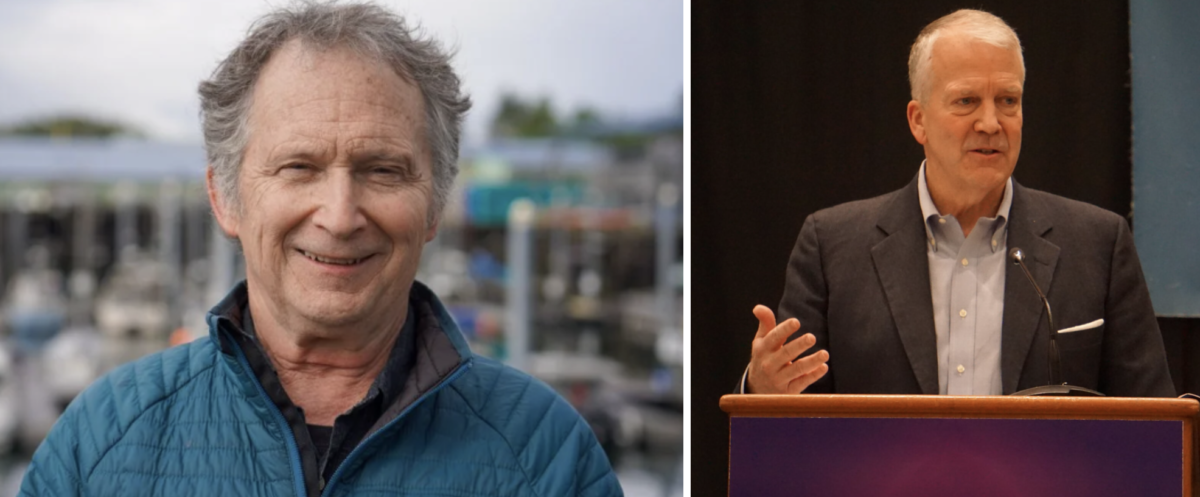
Dan Sullivan of Petersburg (left) filed to run against Republican incumbent U.S. Sen. Dan Sullivan. (Campaign photo by Dan Sullivan and photo of the senator by Corinne Smith/Alaska Beacon)
The Alaska Division of Elections announced Dan Sullivan of Petersburg is ineligible as a candidate for U.S. Senate and will be removed from the ballot. Officials said his filing was “for the purpose of confusing or misleading voters,” in a final decision issued on Monday.
Dan Sullivan, a retired teacher from Petersburg, filed to run as a Republican for the U.S. Senate in May, which drew immediate criticism and complaints from the Republican incumbent with the same name, U.S. Sen. Dan Sullivan, and Republican groups. The Petersburg Sullivan has defended his campaign as genuine.
The division’s ruling follows an investigation announced by Lt. Gov. Nancy Dahlstrom and a preliminary decision last week, citing two complaints by Republican groups, including the Alaska Republican Party, claiming Sullivan was ineligible. The complaints accused the Petersburg Sullivan of misrepresenting himself and intending to mislead voters to the benefit of the Democratic candidate, Mary Peltola.
In a letter on Monday, Carol Beecher, the elections division director, agreed with the complaints.
“On review of the complaints and other information in the Division’s possession, I conclude that your declaration of candidacy was not properly filed with the Division,” she wrote. “Because it was not filed in order to declare an actual good-faith candidacy for the office of United States Senator, but was instead filed with a purpose to confuse or mislead and to thereby compromise the ballot’s fairness or neutrality.”
Carol Beecher, the new director of the Alaska Division of Elections, answers questions from reporters on Thursday, Feb. 16, 2023. (Photo by James Brooks/Alaska Beacon)
A spokesperson for the Division of Elections declined to comment on the ruling, explain the other information cited in the letter, or say if similar scrutiny would be applied to the other 14 candidates running for U.S. Senate. “Consistent with our standard practice, we do not discuss ongoing reviews, investigations, or related proceedings,” said Stephen Kirch, public relations manager with the division, by email on Monday.
In the letter, Beecher cited the candidate’s filing under the name “Dan Sullivan” while his voter registration was under the name “Dan J. Sullivan, Jr.” as evidence of an attempt to mislead voters, calling it a “new nickname.”
She said Sullivan had mistakenly requested his name appear on the ballot as “Dan S. Sullivan,” the same name as the incumbent. “Indeed, you yourself appeared to be confused when you initially emailed the Division asking to be listed on the ballot as “Dan S. Sullivan.” “S” is Senator Sullivan’s middle initial, not yours,” she said.
She suggested he was seeking to confuse voters. Beecher raised the same issue with Sullivan registering as a Republican.
In an interview with the Alaska Beacon last week, Sullivan from Petersburg said he was previously affiliated with the Alaska Independence Party. After it disbanded last year, he decided to register and file his candidacy as a Republican, saying he identified as an “old school” centrist Republican like his father and grandfather.
Beecher acknowledged Sullivan had the right to change party affiliation under Alaska law, but rejected the filing as suspicious.
“Of course, under Alaska law, you are free to change your party affiliation. This said, that you chose to change your affiliation to the same political party — one you’d never affiliated with before — as the incumbent Senator immediately before filing a declaration of candidacy in which you asked to access the ballot under the same name – in a shortened form you’d never used before — as the incumbent Senator strongly suggests an intent to confuse yourself with the incumbent Senator rather than to distinguish yourself from him,” she wrote.
Beecher also said the Petersburg Sullivan’s campaign website and logo are similar to the incumbent’s, and said that appears to be “deliberate.” She cited a complaint by the National Republican Senatorial Committee, which works to elect Republicans, who accused the Petersburg Sullivan of working with a political consultant, Amber Lee, to misrepresent his campaign. Beecher did not name the consultant but said she was a “known longtime supporter of Democratic candidates.”
“This consultant’s work on your behalf is, in isolation, innocuous,” Beecher wrote. “Alongside the other facts I have catalogued in this letter, however, it suggests a determined effort and a deliberate attempt to use the similarity of your name to confuse Alaska voters in the upcoming primary election.”
Beecher said she had concluded that Sullivan had not filed in good faith and would be decertified from the election.
“I conclude that the preponderance of the evidence is that you chose this new nickname and party affiliation because that name and party affiliation happen to be the name and party affiliation of another candidate in the race,” she wrote.
The Petersburg Sullivan can appeal within 30 days or challenge the decision in Alaska Superior Court, according to the letter.
He did not respond to calls on Monday about whether he plans to appeal and challenge the ruling.
In a social media post on Sunday that celebrated his 70th birthday ahead of the ruling, the Petersburg Sullivan questioned the premise of the state’s investigation and threats to disqualify him from the ballot.
“Should every American be allowed to run for any political office if they are qualified? Should a candidate’s chances of winning an election disqualify them from trying? Should a person’s given name be a qualifier to be on a ballot? To me it’s not complicated,” he wrote. “I met the qualification and I entered this race because I am unhappy with the 12 year record of the current Senator and I feel we need a change. It’s that simple.”
Members with the re-election campaign for Republican incumbent Sen. Sullivan praised the decision on Monday, thanking Dahlstrom, who oversees Alaska’s elections.
“We thank Lieutenant Governor Dahlstrom for upholding that right and for ensuring Alaskans can choose their next senator without a sham candidate whose primary purpose was to confuse Alaskan voters, treat Alaskans with contempt, and rig the election for Peltola” said Billy Mackey, Senator Sullivan’s campaign manager, in an emailed statement.
Alaska Sen. Forrest Dunbar, D-Anchorage, said in a social media post Monday he had requested a legal review of the division’s decision, saying the reasoning “appears extremely weak.” In another post, Dunbar pointed to U.S. House Rep. Nick Begich III filing for office in 2024 under the same name as his grandfather who also served in the U.S. House, “Nick Begich.”
“I urge folks to set aside their partisan biases and think about the precedent this sets if it is allowed to stand, the authoritarian power we would be handing incumbent administrations to decide who is or is not permitted to run against them or their allies,” Dunbar wrote.
“This started out as sort of a funny curiosity (no offense to Dan J. Sullivan, whom I have never met or spoken to, and probably has good ideas for federal policy). But now the Department of Elections and Lieutenant Governor have made it much more serious — a question about whether or not fully qualified American citizens can appear on a ballot and exercise their First Amendment rights.”
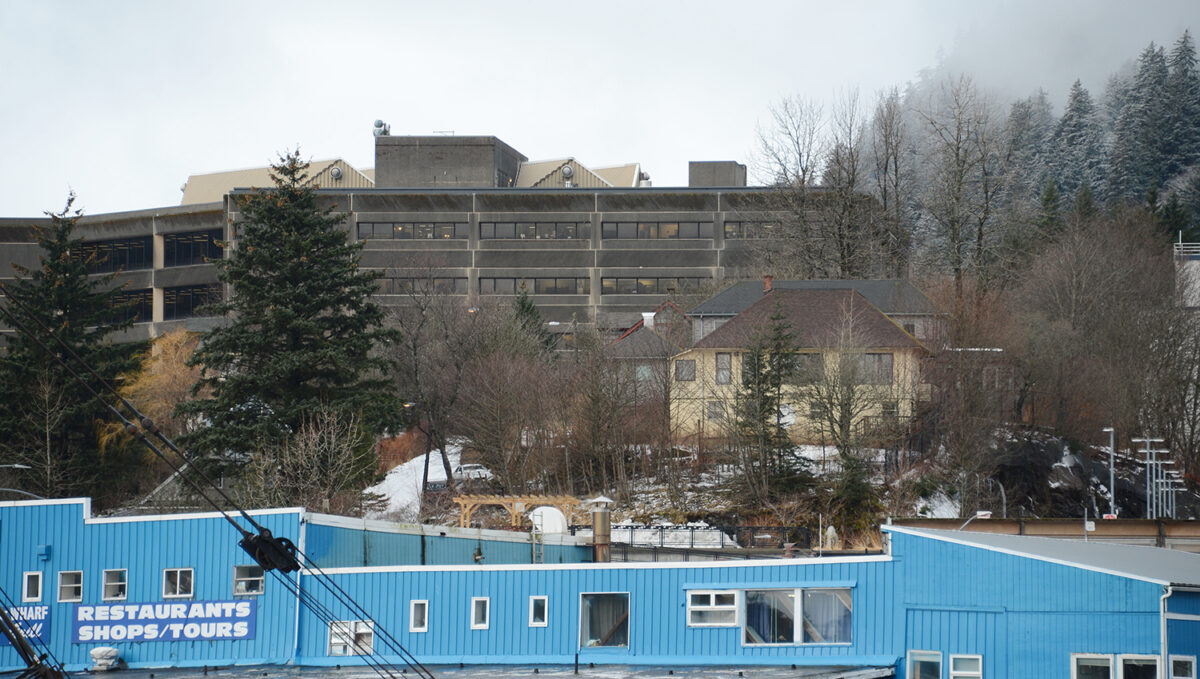
Juneau's Telephone Hill neighborhood is seen at center right, beneath the State Office Building, on Wednesday, Dec. 28, 2022. The neighborhood, owned by the state of Alaska, is being transferred to the City and Borough of Juneau. (Photo by James Brooks/Alaska Beacon)
Juneau’s Telephone Hill neighborhood is seen at center right, beneath the State Office Building, on Wednesday, Dec. 28, 2022. (Photo by James Brooks/Alaska Beacon)
CBJ- The Municipal Clerk has certified the proposed 1% Seasonal Sales Tax Initiative Petition as sufficient under the requirements of the CBJ Charter. The petitioners committee submitted petition books containing 3,231 signatures, and after review and verification by the Clerk’s Office, the petition met the required threshold of 2,566 certified signatures.
The Certification of Petition has been issued and is available on the CBJ Elections webpage. Pursuant to CBJ Charter Section 7.10(a), the Assembly has 45 days from the date of certification to adopt substantially similar legislation. If the Assembly does not adopt substantially similar legislation within that period, the initiative will be placed before the voters at the next regular election.
The Mill Rate Cap Change Charter Amendment Petition remains in circulation. Signature gathering is authorized through June 17, 2026, unless the petitioners committee submits the petition for certification sooner.
For petition documents, certification materials, and the latest petition status updates, visit juneau.org/clerk/elections or contact the Municipal Clerk’s Office at 907-586-5278 (Option 1).
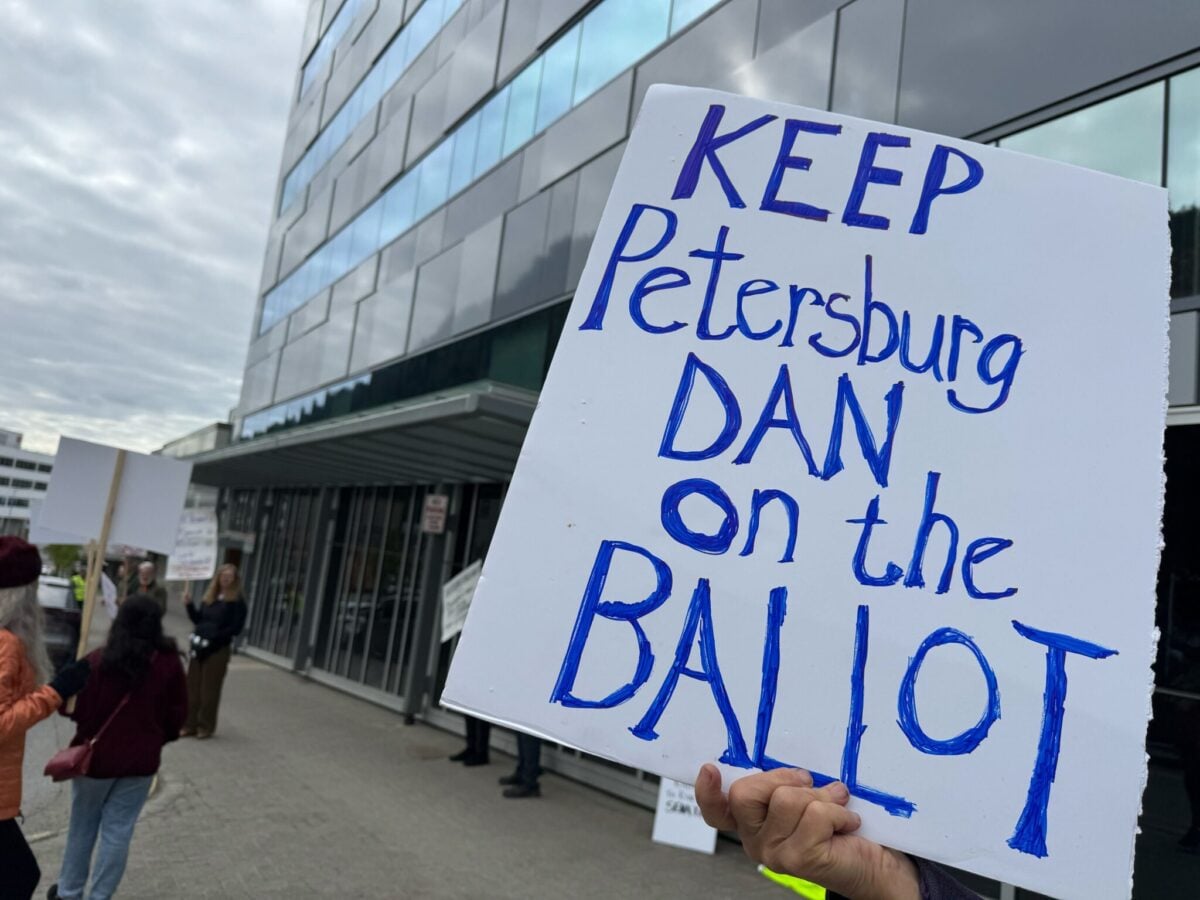
A demonstrator holds a protest sign in support of Dan J. Sullivan of Petersburg after the Alaska Division of Elections issued a preliminary decision to remove the candidate from the ballot on June 12, 2026. (Photo by James Brooks/Alaska Beacon)
The Alaska Division of Elections announced that the state intends to disqualify a Petersburg candidate from Alaska’s U.S. Senate race. Dan J. Sullivan has the same first and last name as the incumbent senator. The decision comes after complaints from the incumbent and Republican Party groups and eligibility concerns.
The decision is preliminary, and the division gave no timeline for a final decision.
Dan Sullivan of Petersburg announced his campaign for the U.S. Senate on May 29 to challenge incumbent U.S. Sen. Dan Sullivan. (Photo courtesy of Dan Sullivan)
Dan J. Sullivan, a retired teacher from Petersburg, announced his candidacy last month, along with 15 candidates challenging the Republican incumbent U.S. Sen. Dan S. Sullivan for the seat.
The incumbent Sen. Sullivan and Republican groups criticized him as a “sham candidate” and said his candidacy is illegitimate and aimed at confusing voters to the benefit of the Democratic candidate, Mary Peltola.
Sullivan from Petersburg has defended his candidacy as authentic, and said he has complied with filing rules and has the right to run for the seat. He declined to comment on the preliminary decision on Friday.
Carol Beecher, division director, issued a preliminary decision on Wednesday, writing to the Petersburg Sullivan that the division had determined “that a preponderance of evidence does not support your eligibility for the office of U.S. Senate.”
Beecher did not provide the evidence or give a specific reason. She said the candidate had until 5 p.m. Friday to respond, and the state would issue a final decision with or without his response. Her office did not respond to a request for comment about the reasoning behind the preliminary decision to disqualify Sullivan on Thursday.
Beecher cited two complaints brought against Sullivan, one by the Alaska Republican Party which accused the Petersburg Sullivan of misrepresenting himself as a Republican. The group said at the time of filing for the seat he was registered to vote as “undeclared.”
The Petersburg Sullivan said he was affiliated with the Alaska Independence Party until it disbanded last year, then filed for the seat as a Republican.
The state’s filing form gives an option for candidates to change registered parties in a note under party affiliation.
Dan J. Sullivan declared his candidacy for the U.S. Senate on May 29, 2026 as a Republican. The form notes an option for candidates to change registered parties. (Screenshot of declaration of candidacy)
The preliminary announcement to disqualify Sullivan came just hours after the candidate responded to questions by a deadline issued by the Lt. Gov. Nancy Dahlstrom’s office, which launched an investigation into the candidate on Monday.
Dahlstrom, a Republican, asked the candidate about his affiliation with the Republican Party, names he has used to register to vote, design decisions on his campaign website and logo and whether he has coordinated with the Democratic Party. The lieutenant governor said false statements could carry the penalty of perjury. She questioned whether Sullivan was running with “the deliberate intent to confuse voters.”
Sullivan denied the allegations, saying he was running under his lawful name as a Republican, and denied any affiliation with outside groups.
On Thursday evening, he issued a statement criticizing Dahlstrom’s actions and the message they send to voters.
“I am a qualified candidate who followed the rules and filed to run for office under my legal name. Yet, unsupported accusations have been given credibility while political operatives continue their effort to keep me off the ballot. Alaskans have every reason to ask whether this process is being driven by politics rather than by a fair application of the law,” he wrote.
A spokesperson for the Peltola campaign denied any connection to the candidate on Friday. “Our campaign has no involvement with either Sullivan campaign,” said Harry Child by email. The Alaska Democratic Party also denied involvement with the candidate.
The National Republican Senatorial Committee, which works to elect Republicans, filed a complaint with the Federal Election Commission that accused the candidate of violating federal law, and said he was working with political strategist, Amber Lee, to misrepresent his campaign. Sullivan said he was working with Lee, but denied the claims.
Sen. Sullivan’s campaign did not respond to a request for comment on the state’s preliminary decision to remove Sullivan from the ballot on Friday.
Demonstrators in Juneau took to the street Friday morning, protesting outside the Alaska Division of Elections office in support of Sullivan.
Demonstrators protest in front of the Alaska Division of Elections office in Juneau following a preliminary decision to cancel the candidacy of Dan J. Sullivan of Petersburg for U.S. Senate on June 12, 2026. (Photo by James Brooks/Alaska Beacon)
Anjuli Grantham with the grassroots advocacy group Juneau for Democracy said she doesn’t know Sullivan personally, but was out protesting in support. She said he meets qualifications for candidates under Alaska law, including being over 30 years old, a U.S. citizen and a resident of the state.
“And so what this actually is, it’s a sign of authoritarian slippage on the part of the state of Alaska,” she said. “In dictatorships, they control elections by deciding who will be on the ballot. And so we’re out here because it’s our constitutional right to run for office.”
Grantham also pointed to the division’s decision to share confidential voter information with the U.S. Department of Justice, a choice that some fear will be used to scrub Alaska voters from the rolls. Civil rights groups have filed a lawsuit against the Division of Elections saying it was a violation of voters’ privacy rights.
“That was very likely in violation of our state constitutional rights to privacy,” she said. “And so what we’re seeing now is another what seems to be anti-constitutional action on the part of the Division of Elections, so we’re here as democracy defenders and as people who are standing up to authoritarianism,” Grantham said.
Protesters gather in front of the Alaska Division of Elections office in Juneau after a preliminary decision to cancel the candidacy of Dan J. Sullivan of Petersburg for U.S. Senate on June 12, 2026. (Photo by James Brooks/Alaska Beacon)
Rep. Ted Eischeid, D-Anchorage, talks with Rep. Carolyn Hall, D-Anchorage, as Rep. Bill Elam, R-Kenai, looks on Friday June 12, 2026, at the Alaska State Capitol in Juneau. (James Brooks photo/Alaska Beacon)
By: James Brooks, Alaska Beacon
Rep. Ted Eischeid, D-Anchorage, talks with Rep. Carolyn Hall, D-Anchorage, as Rep. Bill Elam, R-Kenai, looks on Friday June 12, 2026, at the Alaska State Capitol in Juneau. (James Brooks photo/Alaska Beacon)
The Alaska House of Representatives has voted to advance a multibillion-dollar tax break for the proposed trans-Alaska natural gas pipeline project.
The House’s 34-5 action sends the tax break to the state Senate, which is expected to take up the issue next week. Legislators are in a 30-day special session devoted to the issue, and the session ends June 19.
House Bill 381, containing the tax break, doesn’t guarantee pipeline construction, but project skeptics and advocates alike say that without the change, the pipeline is uneconomic.
“I’m very proud of us getting this bill to where we are today and giving this project a fighting chance,” said Rep. Calvin Schrage, I-Anchorage, “so that Alaskans and hopefully the world can benefit from the gas reserves that we have here in the state.”
If enacted, the bill would replace the state’s 2% petroleum property tax with a tax on gas shipped through the pipeline.
Proceeds from the petroleum property tax are split between boroughs and the state. If the pipeline is built, those governments would collectively forego about $800 million per year, said Rep. Andy Josephson, D-Anchorage.
The state would still collect royalties, corporate income taxes, production taxes and other fees, said Rep. Chuck Kopp, R-Anchorage. Those are expected to net the state between $600 million and $700 million in new revenue per year.
HB 381 also contains a rate cap to mandate that pipeline developers provide natural gas to Southcentral Alaska residents at a price that’s lower than the predicted price of imported gas.
Currently, Southcentral Alaska relies on natural gas from fields beneath Cook Inlet. Available supplies are running low.
“I think everyone’s been asking: What is the benefit to Alaska?” said Rep. Sarah Vance, R-Homer. “The benefit, if you could summarize it into one thing, and that’s reliable energy.”
Other parts of the bill mandate an impact fund to compensate local governments for the effects of construction, and send money to a rural power fund to pay for energy projects away from the pipeline.
“Every region of Alaska will get a share of this project one way or the other, and there’s real protections for Alaska ratepayers,” Kopp said.
Gov. Mike Dunleavy and Glenfarne, the multinational firm developing the pipeline, issued written statements after the vote, praising lawmakers’ action.
“This project has the potential to transform Alaska’s economy for decades,” the governor said in part. “I look forward to working with the Senate to get this important legislation across the finish line.”
As currently planned, the Alaska LNG project would be built in two phases. The first phase would include a pipeline from the North Slope to Cook Inlet, with limited processing plants needed to deliver gas to Southcentral Alaska for domestic use.
Glenfarne expects to begin operating the first phase by 2029.
The second phase would involve building a large facility on the North Slope and another on the Kenai Peninsula, allowing the pipeline to ship larger volumes of gas for export overseas.
Glenfarne expects the second phase of construction to be done in 2033 and that both phases will cost between $44.5 billion and $54.5 billion altogether.
Exports would subsidize the cost of gas for in-state use, with Glenfarne projections suggesting that if the pipeline reaches full capacity, the cost of gas in Southcentral could be half of what it is today.
That’s still hypothetical. Estimates from the Alaska Department of Revenue suggest the pipeline project’s economics are marginal. Even if the tax break is adopted, the cost of exported gas may not be competitive on global markets with gas from other sources around the world.
“We cannot control global economics, and the passage of this bill does not guarantee a pipeline will be built. I think that’s important to recognize,” said Rep. Zack Fields, D-Anchorage. “This bill absolutely increases the likelihood that the project can progress.”
Under the terms of HB 381, pipeline developers would pay no gas tax for the first five years of the project, or until gas volume reaches a certain, export-level threshold.
After that point, the new tax would kick in.
Because boroughs are forgoing so much revenue, HB 381 requires the pipeline developer to pay $80 million into an impact fund that would be distributed to boroughs — including Anchorage — along the route.
That money might be used to pay for extra street repairs, additional police or other services needed to address the needs of thousands of extra workers who would be building the pipeline.
Rep. Dan Saddler, R-Eagle River, said he’s heard from Alaskans who think HB 381 is a giveaway and that the state could pull in hundreds of millions more if it simply left the property tax alone.
“I shake my head and tsk just a little bit,” he said, “because a high tax on no pipeline gets you no money; a lower tax on a real pipeline gets you money.”
Rep. Robyn Frier, D-Utqiagvik, speaks Friday, June 12, 2026, on the floor of the Alaska House of Representatives. (James Brooks photo/Alaska Beacon)
Rep. Robin Frier, D-Utqiagvik, opposed the final version of HB 381. She represents the North Slope Borough, which relies heavily on the petroleum property tax for local needs. The borough would forego hundreds of millions of dollars in prospective revenue under a switch to a gas tax.
Before Friday’s final vote, she offered a pair of amendments that would have reduced the impact on the North Slope. Both were defeated by wide margins.
Rep. Donna Mears, D-Anchorage, was excused absent from Friday’s vote because of travel problems that kept her from reaching Juneau.
By text message, she said that had she been present, she would have voted against the bill.
“This legislation will push costs down onto communities and lock us into tax breaks we won’t be able to re-evaluate for decades,” she said.
Rep. Sara Hannan, D-Juneau, also voted against the bill, saying her constituents raised climate change concerns. Burning natural gas releases greenhouse gases, which contributes to climate change.
Rep. Jeremy Bynum, R-Ketchikan, offered a different perspective, saying that he believes cheap natural gas will displace diesel fuel, thus leading to an overall reduction in greenhouse gas emissions because gas is cleaner burning than fuel oil.
Fairbanks Democratic Rep. Ashley Carrick borrowed a term from public health and said that natural gas is an issue of “harm reduction.” In her district, many people heat their homes with fuel oil at $6 per gallon. When oil isn’t available — or is unaffordable — people burn wood.
“Fairbanks has some of the worst air quality in the nation, in the world, because of those fuel sources. Natural gas is harm reduction. I believe in that, and while I do share the frustration and concern from many, I believe this is a step in the right direction towards more sustainable energy, available energy and affordable energy for our communities,” she said.
Saddler, who is retiring from the Legislature this year, said he hopes lawmakers “can bring an end to that old joke that a natural gas pipeline is Alaska’s future and it always will be. I hope you never hear that joke again.”
NOTN- A new program aimed at helping youth in crisis is launching in Juneau through a partnership between the Shéiyi Xaat Hít Youth Shelter, Tlingit and Haida, first responders and local businesses.
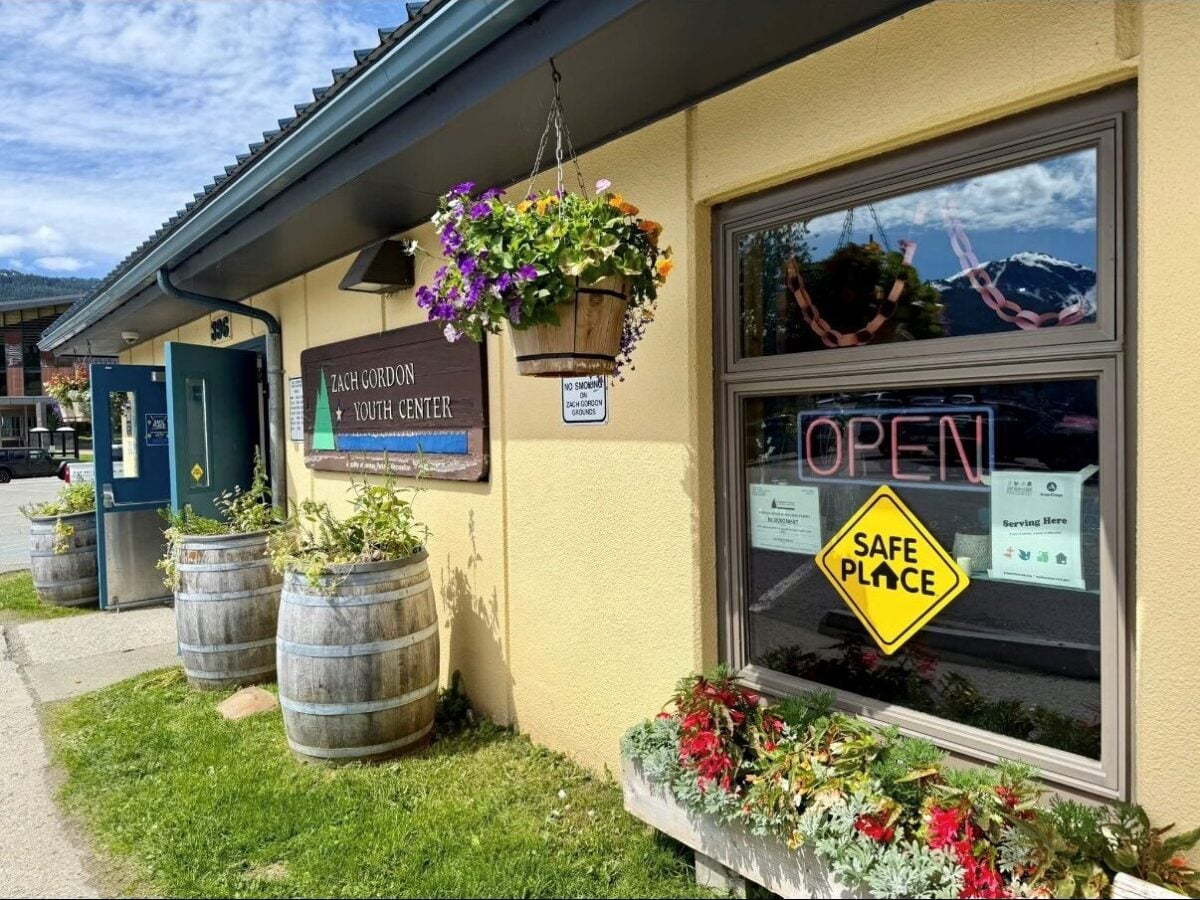
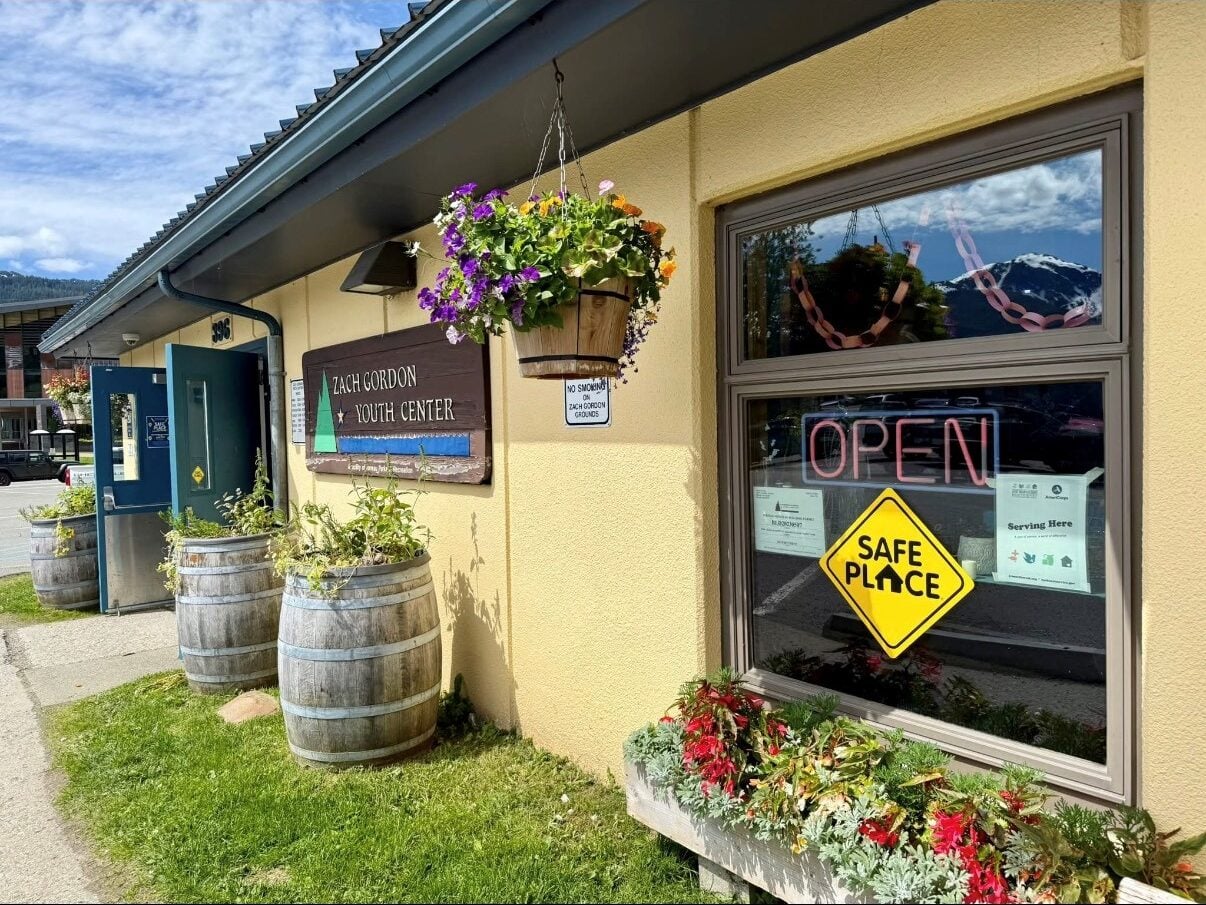
The Safe Place program provides immediate help for young people ages 10 to 17 who need safety or support. Participating businesses and organizations display a black-and-yellow Safe Place sign, letting youth know they can come inside and ask for help.
Employees will contact staff at the Shéiyi Xaat Hít Youth Shelter, who will respond within 30 minutes to provide crisis support and connect youth with needed resources.
Organizers say the program expands the safety net for vulnerable youth, including those who are homeless, have run away, or are at risk of doing so.
“Although we’ve served a record number of youth at the shelter over the last year, we know that there’s many more who need help. Safe Place is a great way for us to expand the safety net of support for youth in Juneau,” shares Hannah Jenkins, Outreach Coordinator at Shéiyi Xaat Hít.
Initial Safe Place locations include Juneau fire stations, the Juneau Police Department, the Zach Gordon Youth Center, the Southeast Alaska Food Bank, Glacier Cinemas, Kindred Post, Dimond Park Aquatic Center, and Augustus Brown swimming pool.
Youth can find a Safe Place by looking for the black and yellow signs on businesses, searching the list of current Safe Places at bit.ly/SheiyiXaatHit, or texting their location and the word “safe” to TXT-4-HELP (44357).
A community launch party was held at the Zach Gordon Youth Center on Friday.
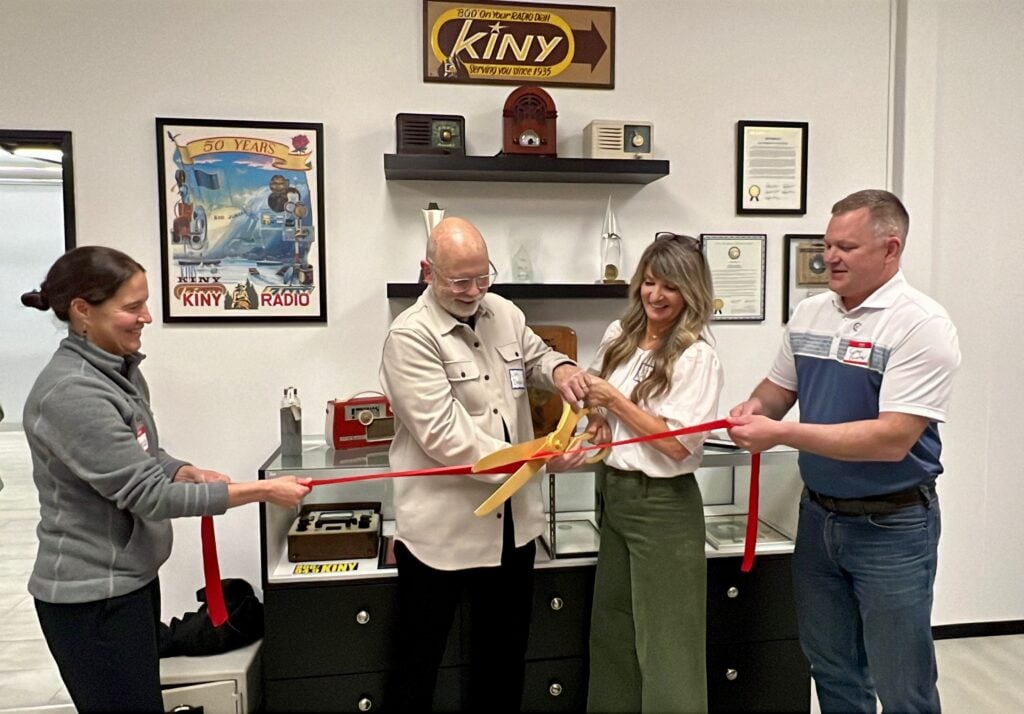
Ribbon cutting ceremony for the new Juneau Media Center at Mendenhall Mall.
Thursday night, the Juneau Chamber of Commerce hosted a ribbon-cutting ceremony at the new address of a local tradition, the Juneau Media Center (formerly known as the Radio Center on Channel Drive). Now, six new studio spaces, including a dedicated newsroom, a recording studio, and an open-air office space, are housed in the annex section of the Mendenhall Mall.
Chamber Executive Director Becca Parks, Cliff Dumas, Lisa Dumas, and Chamber President Corey Baxter.
Under the ownership of Juneau’s own Cliff and Lisa Dumas, the move marks a renewed investment in local radio, local news, and the communities served by Alaska First Media across Southeast Alaska.
Juneau Chamber of Commerce Board of Directors.
For Cliff Dumas, the transition represents both a continuation and a new chapter. Dumas has been part of the Juneau radio scene for eight years, hosting the TAKU 105 morning show under the previous ownership group. His broader career includes recognition as a Radio Personality of the Year winner from the Country Music Association, the Academy of Country Music and the Canadian Country Music Association. He is also a Hall of Fame broadcaster with decades of experience as a radio host, and television writer and producer.
Alaska First Media Team- From left: Devon Stickler, Charlee Quintal, Justin Miller, Angel Montgomery, Cliff Dumas, Lisa Dumas, Brittany Rickard, Scott Mills, Jason Palmer
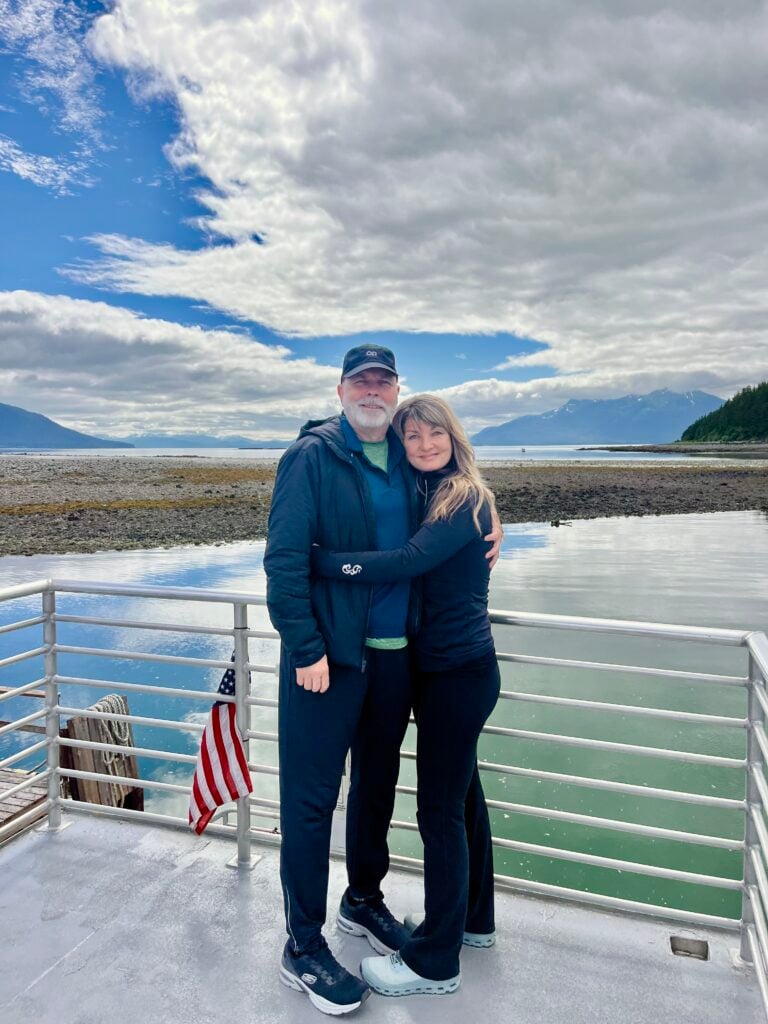
Lisa Dumas also brings an award-winning media background to the company, including her work as a host and television writer. Together, the couple, who met at a Toronto radio station thirty years ago, bring a deep understanding of broadcasting, storytelling, and community connection to the future of Alaska First Media. They instantly felt at home in Juneau, invested in a house on Douglas and quickly created community. When Lisa’s not on the radio, you might find her teaching a class at Auke Bay Yoga, or hiking a trail with friends she met through her work on the Juneau Symphony Board or the Glacier Valley Rotary Board.
Cliff and Lisa hosting the morning show at KRST in Albuquerque in the 90s.
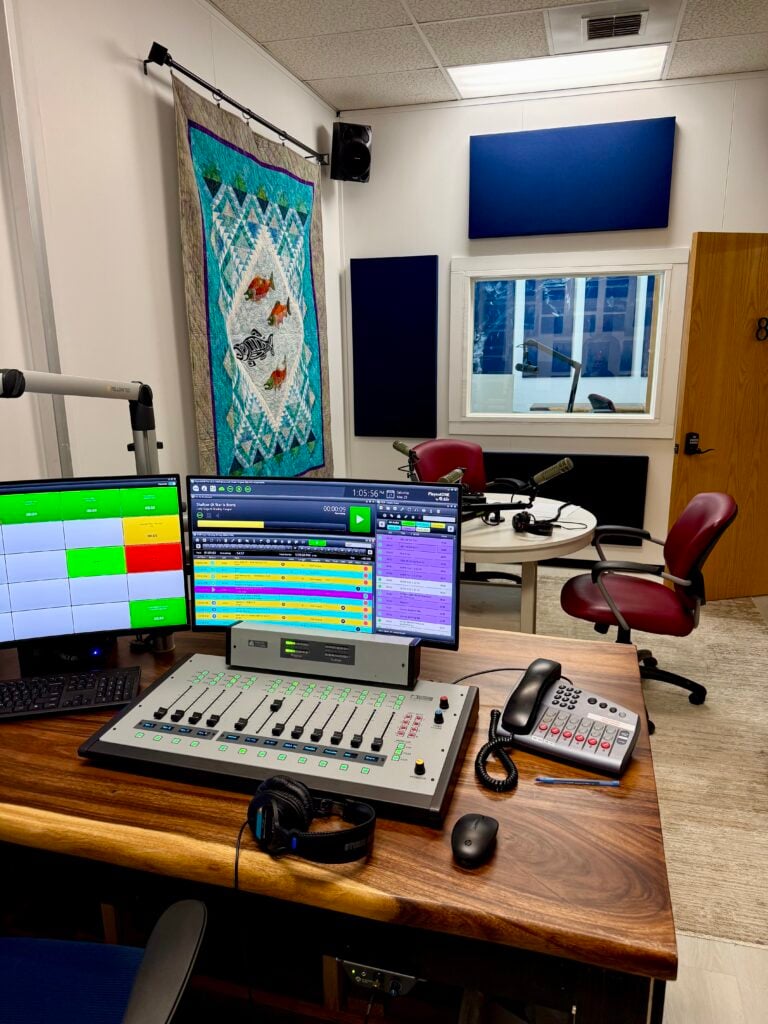
When the Dumas’ stepped into ownership roles, they recognized improvements needed to be made to ensure the sustainability of the product and to continue to serve Southeast Alaska in a meaningful way. The new location features brand new studios furnished with state-of-the-art broadcast equipment designed to improve sound quality, reliability, and daily operations for the company’s Juneau stations, including KINY, MIX 106, TAKU 105, KXJ, KJNO, and The Hawk-Juneau’s Sports Station.
Present day image of Cliff and Lisa.
The Dumas’ say the intention of the investment in new equipment and processes is to offer listeners a cleaner, more consistent sound and a commitment to local talent. The new space includes modern tools to support live interviews, local news, music programming, sports coverage, emergency information, and community service.
KINY Studio.
The relocation also includes the integration of brand-new robust music libraries across the company’s formats. From country and adult contemporary to classic hits, rock, news, talk and sports, each station is getting refreshed with updated music resources and programming tools designed to keep the stations current, familiar and connected to the community.
The investment extends beyond the studio walls.
Sales and meeting space.
Alaska First Media has improved its broadcast infrastructure, including new equipment and transmitter upgrades for TAKU 105, KINY, KJNO, and the HAWK, as well as other stations in the Juneau group. Additional improvements are underway across the company’s transmitter sites, including Douglas and Heintzleman Ridge, with continued upgrades at the company’s stations in Ketchikan and Sitka.
Board Room.
The Juneau Media Center’s new location creates a more visible and welcoming home for local radio. Cliff and Lisa hope it offers listeners, business owners, civic leaders, nonprofit organizations, coaches, athletes, musicians, and community voices a place to be part of the conversation.
MIX 106 Studio.
At a time when many media companies are cutting, Alaska First Media is investing in studios, equipment, music, transmitters, and most importantly, the people who make up their local team.
Cliff and Lisa say that last night’s New Location Celebration was a chance to open the doors and share a vision that has finally come to fruition. They hope it is a feel-good home for local radio, where a valued and talented team of local professionals work hard to support local businesses, non-profit organizations and community events and share a commitment to Southeast Alaska and a broadcast center designed for the future.