







Categories
Alaska News Featured Juneau News juneau Juneau Local Juneau Local Ketchikan Local News Feeds Sitka Local

Juneau assembly votes on Eaglecrest and View Drive Buyout program

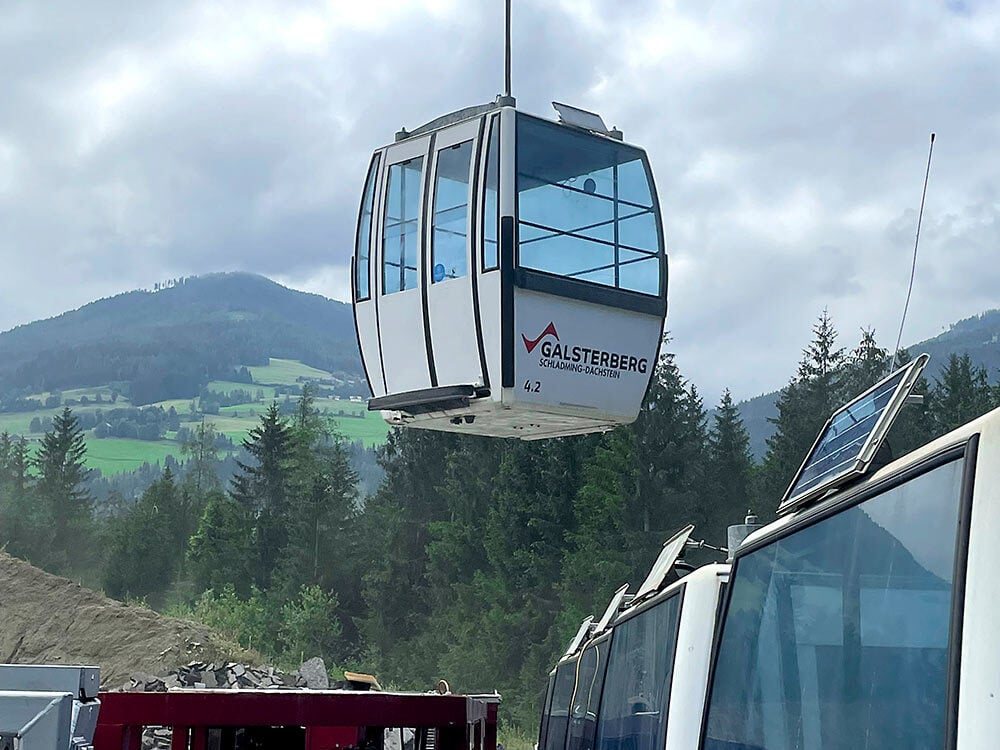
NOTN- The Juneau Assembly has voted to unwind its controversial gondola deal at Eaglecrest at tonight’s assembly meeting.

Members approved the ordinance to enter negotiations to terminate the revised revenue sharing agreement with Goldbelt and stop the mounting 7% interest charges on the gondola investment.

A follow-up measure, appropriates $12.2 million to repay Goldbelt’s $10 million, plus interest. Both votes passed 8-1, with Assembly Member Nano Brooks in opposition.

Finance Director Christine Woll argued that continuing to delay would only add nearly another $1 million in interest.

“I think we’ve been over where we are with the project and why we can no longer afford to move forward.” She said, “I think we should continue to talk to Goldbelt about the future of Eaglecrest. I think there’s plenty of things that we’ve discussed that could be mutually beneficial in a future partnership, but there is a lot to figure out if that goes forward, and I don’t know why we would do that while there is interest continuing to accumulate. By my math, it would be almost another million dollars if we were to spend a year going down that road, and we would be doing it under duress, because we want to do it quickly.”

The Assembly also took a major step toward buying out the repeatedly flooded homes along View Drive in the Mendenhall Valley.

Members approved $558,000 from the general fund to plan a buyout program with the U.S. Department of Agriculture’s Natural Resources Conservation Service. The money will pay for backdated appraisals and cost estimates to demolish homes and restore the land to a natural state.

“Each individual homeowner would have a decision to make as to whether or not they would participate in the buyout program.” Said Deputy City Manager Robert Barr, “There would be a real estate transaction that would occur, NRCs would pay 75% of that appraised value of the house. They will also pay 75% It’s a little bit more complicated than that, but in general, they would also pay 75% of the project costs to demolish and return those properties to that natural state.”

Residents could also publicly testify, using their time to warn city leaders against deep cuts to recreation and to question the future of Telephone Hill development.

Public testimony in the hour prior to the passage of terminating the gondola deal, focused on Eaglecrest and the city’s budget shortfall. Supporters called Eaglecrest a cornerstone of Juneau’s livability and a key reason families stay.

“I came to Juneau in 1971 when I was 23. I learned to ski and met my husband at Third Cabin before Eaglecrest. When we had children, skiing became something of a family thing we did on Sundays, because it was much cheaper on Sundays. And Eaglecrest has always been more affordable than any area down south. Our kids grew up skiing, and I really attribute those years at Eaglecrest with helping our children grow up with grit, a love for the outdoors, learning time management when they started traveling with the ski team, and having a sport that helped to create healthy adults.” Said longtime skier and testifier Sharon Denton, “I honestly can’t imagine a winter in Juneau without Eaglecrest. I thank you for funding to keep it going next year, but we have to look further.”

Several speakers also challenged the city’s approach to Telephone Hill.

Larry Talley and Mary Alice McKeen cited the city’s own market analysis, arguing the proposed housing project would require tens of millions in subsidies and a per-unit funding gap far above Juneau’s normal affordable housing support.

“From what I know, the proposed development on Telephone Hill of 155 units with 25 affordable is not financially feasible. The first question in the City Manager’s Telephone FAQ was, ‘why is CBJ moving forward with evictions and building demolition without a developer in place?’ And the answer was, quote, ‘Telephone Hill has been carefully analyzed through the market analysis, and the Assembly has chosen to develop the property.’ She did not cite any specific numbers or pages from that market analysis.” Said McKeen, asking of the RFQ, “How many units will be built if the development plan goes forward as proposed? How many units will be affordable? And the most important question, How much public subsidy will be required? The maximum subsidy in the Juneau Affordable Housing Fund is $50,000 If the gap for this project is greater than $50,000 the project should not go forward.”

Separately, the city is actively working to craft next year’s budget, as well as Eaglcrest’s budget.

The city must finalize the budget by June 15, there will be another opportunity for public testimony on June 8.
Categories
Featured Juneau News juneau Juneau Local Juneau Local Ketchikan Local News Feeds Sitka Local

Tough choices ahead on federal buyout for flood‑prone View Drive

NOTN- Juneau officials are weighing whether to move forward with a federal buyout program for homes on flood‑prone View Drive, after most residents said they can’t afford the required local cost share.

The Natural Resources Conservation Service has identified View Drive as a candidate for its Emergency Watershed Protection buyout program. A preliminary estimate puts the total project cost at about $25 million.

Under the program, the federal government would cover 75% of eligible costs. The remaining 25% must come from non‑federal sources, such as the city, homeowners or other partners. Juneau asked NRCS to waive that local share, but the request was denied.

“After the assembly had some additional discussion at the Finance Committee meeting, they directed staff to to do an informal poll, so it was non-binding, just to get a sense from the residents who live on that road, if they would be willing and interested to participate in this program, if they had to pay the 25% non federal cost share, or if they would not be interested in participating in the program.” Said Director of Engineering Denise Koch.

The city conducted that informal poll of 18 properties on View Drive. 14 responded.

Koch said most homeowners indicated they would not participate if they had to pay the full 25% themselves. Only two said they were interested.

“Most of the respondents said that they would not be interested in participating under those circumstances. There was one property owner that I had listed as unclear, they selected yes and no, and they indicated that they would need more information in order to make an informed decision.” Koch said, “Of the two yeses, one is a property that has been subject to severe and repetitive flooding, the other is a property that is on the high side and has not flooded.”

Because the two interested homes are far apart, Koch said it’s likely NRCS would only approve a buyout for the repeatedly flooded property. That would create an unusual, one‑house project in a program that typically buys out a group of homes.

“A major theme was real disappointment that CBJ would require individual property owners to pay a 25% cost share.” Said Koch, summarizing several responses from the informal ballot and in person conversations, “Some people said that they didn’t have the ability to pay for that 25% cost share. Or if they had that amount of money, they might use it in other ways to protect their homes versus participating in a buyout program.”

On top of the 25% share, the city would also face tens of thousands of dollars per property in non‑reimbursable project management costs, including permitting and technical work. Kocher said the city is already stretched thin and facing a tight federal timeline; participating homeowners would need to be out of their homes before the 2026 glacial outburst flood season.

“What we’re looking for from a staff perspective is to understand from the Assembly, if there’s additional information that that you need in order to help make a decision as to whether CBJ should participate in this program or not. We do have this, essentially, time is of the essence problem again, if we’re going to proceed with this project, we have to get people out of their homes before August of 2026, and that’s really not that that far away.” Koch said.

Assembly members said View Drive residents have found the program details “incredibly confusing,” with multiple meetings, memos, and evolving information about eligibility and costs.

“One of the frustrating things I think about this project is there probably is a solution out there, you could bring partners together, you know, city homeowners, our community, the state nonprofits, there are lots of folks who may want to see this come to fruition, but we don’t have time.” Said Assembly member Christine Woll.

Kocher acknowledged that city staff are “learning as we go” while simultaneously working on other flood mitigation and long‑term enduring solution efforts, including the now‑uncertain lake tap alternative that, if built, was expected to protect all homes along View Drive.

For now, the Assembly has directed staff to hold another neighborhood meeting with View Drive residents, along with a small number of Assembly members. The goal is to explain the program more clearly, answer questions and find out whether there’s enough interest to justify moving ahead with the buyout option at all.