It’s beginning to feel like “Midnight Sun” diplomacy.The Latest News from the UK and Around the World | Sky News
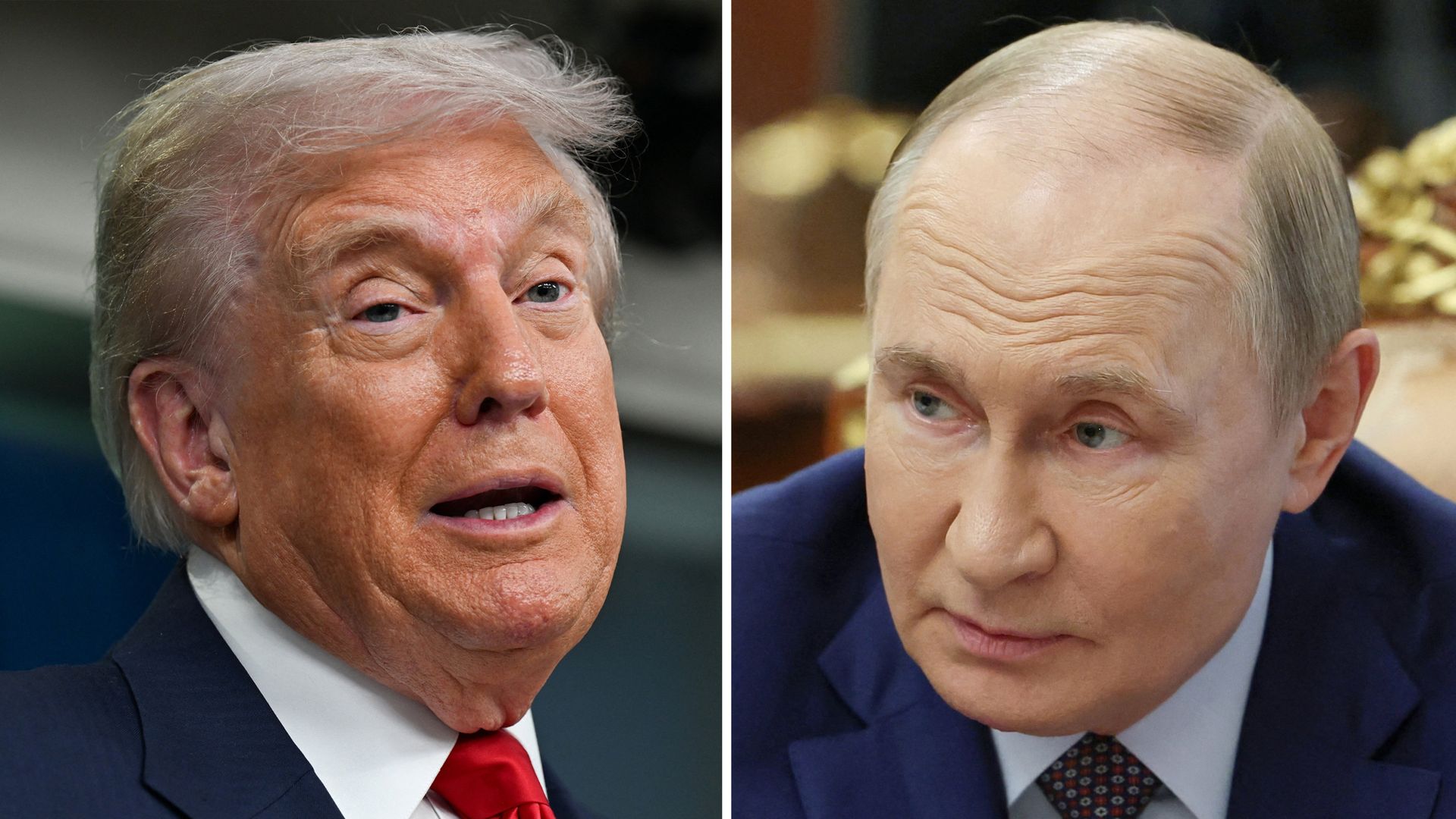








It’s beginning to feel like “Midnight Sun” diplomacy.The Latest News from the UK and Around the World | Sky News

NOTN- Local officials are warning residents of imminent flooding, with the river crest now predicted to occur earlier than previously anticipated, potentially before noon tomorrow.
Sabrina Grubitz, Tlingit and Haida Public Safety Manager and incident commander for the 2025 flood response, announced this evening that the National Weather Service has moved up the flooding timeline by four to six hours. Flooding could begin as early as 8 AM.
“Tomorrow we are looking somewhere before noon, and certainly, if individuals have not evacuated the flood zone at this point in time, they’re highly encouraged to evacuate immediately and get out of out of that area.” Said Grubitz, “We could see flooding as as early as eight or so, so making sure that individuals are prepped and ready before they go to sleep tonight.”
The situation is developing rapidly, and officials stress the importance of taking immediate precautions to ensure personal safety.


AP- Residents in some parts of Juneau prepared to evacuate ahead of what could be a record surge of flooding as rainwater and snowmelt in a huge basin dammed by Alaska’s Mendenhall Glacier started to flow downstream toward the capital city.
Officials in recent days have been warning people in the flood zone to be ready to evacuate. On Tuesday morning they confirmed water had started escaping the ice dam, with flooding expected late Tuesday and on Wednesday. They advised people in the city’s flood zone to leave.
The Mendenhall Glacier is about 12 miles (19 kilometers) from Juneau and is a popular tourist attraction due to its proximity to Alaska’s capital city and easy access on walking trails. Homes on the city’s outskirts are within miles of Mendenhall Lake, which sits below the glacier, and many front the Mendenhall River.
The water that’s being released in the glacial outburst is flowing into the river, putting homes that are closest to the river at risk. The National Weather Service said it expected flooding to peak at 4 p.m. local time Wednesday.
“This will be a new record, based on all of the information that we have,” Nicole Ferrin, a weather service meteorologist, told a news conference Tuesday.
Flooding from the basin has become an annual concern, and in recent years has swept away houses and swamped hundreds of homes. Government agencies installed temporary barriers this year in hopes of protecting several hundred homes in the inundation area from widespread damage.
The thinning, retreating glacier in southeast Alaska acts as a dam for Suicide Basin, which fills each spring and summer with rainwater and snowmelt. The basin itself was left behind when a smaller glacier nearby retreated.
When the water in the basin builds up enough pressure, it forces its way under or around the ice dam, entering Mendenhall Lake and eventually the Mendenhall River.
Before the basin reached the limit of its capacity and began overtopping, the water level was rising rapidly — as much as 4 feet (1.22 meters) per day during especially sunny or rainy days, according to the National Weather Service.
The threat of so-called glacier outburst flooding has troubled parts of Juneau since 2011. In some years, there has been limited flooding of streets or properties near the lake or river.
But 2023 and 2024 marked successive years of record flooding, with the river last August cresting at 15.99 feet (4.9 meters), about 1 foot (0.3 meters) over the prior record set a year earlier, and flooding extending farther into the Mendenhall Valley. This year’s flooding was predicted to crest at between 16.3 and 16.8 feet (4.96 to 5.12 meters).
Last year, nearly 300 residences were damaged.
A large outburst can release some 15 billion gallons of water, according to the University of Alaska Southeast and Alaska Climate Adaptation Science Center. That’s the equivalent of nearly 23,000 Olympic-size swimming pools. During last year’s flood, the flow rate in the rushing Mendenhall River was about half that of Niagara Falls, the researchers say.
City officials responded to concerns from property owners this year by working with state, federal and tribal entities to install a temporary levee along roughly 2.5 miles of riverbank in an attempt to guard against widespread flooding. The installation of about 10,000, four-foot (1.2-meter) tall barriers is intended to protect more than 460 properties from flood levels similar to last year, said Nate Rumsey, deputy director with the city’s engineering and public works department.
The U.S. Army Corps of Engineers is at the start of what’s expected to be a yearslong process of studying conditions in the region and examining options for a more permanent solution. The timeline has angered some residents, who say it’s unreasonable.
Outburst floods are expected to continue as long as the Mendenhall Glacier acts as an ice dam to seal off the basin, which could span another 25 to 60 years, according to the university and science center researchers.

NOTN- Water has begun spilling from Suicide Basin, prompting a flood warning for the Mendenhall Lake and River.
The National Weather Service confirmed the release began at about 9:30 a.m. after coordinating with science partners monitoring the basin.
“As of this morning, we noticed that the totals for the basin were starting to drop a lot more, very exponentially. So we looked into the Mendenhall Lake as well as the laser gage, and we sent someone up there to ground truth it in a helicopter.” Said the National Weather Service, “As of the past hour, we have decided to call it and send out the warning for the glacial release.”
Suicide Basin, a side basin of the Mendenhall Glacier, has produced annual glacial lake outburst floods since 2011, including a record event on Aug. 6, 2024. The most recent release before this week occurred Oct. 20, 2024.
“Now that it’s releasing, it’s going to release a lot more right off the bat, and then kind of level out more as it gets less full.” Said a National Weather Service representative, “The crest height is expected to be around Wednesday afternoon, and because of all the rainfall that we’ve had recently, we are expecting to have either near record levels or record levels.”
Residents in flood-prone areas are urged to follow the latest advisories from local officials and the National Weather Service.


NOTN-Juneau’s Unified Command is preparing residents for the anticipated , Suicide Basin release that could cause flooding along the Mendenhall River.
Once water begins to spill from the basin, the National Weather Service will issue a flood warning, and the Unified Command will send evacuation advisories through multiple channels.
City and school district officials are preparing for possible closures affecting all Juneau schools, even though only three are located along the river. The district said closures could last as long as the evacuation advisory remains in effect.
Juneau Mayor Beth Weldon says they are moving through the evacuation as if the HESCO Barriers – which are placed along Mendenhall river – aren’t there.
“We’re assuming that they will work.” Said Mayor Weldon “We did this all with the Army Corps of Engineers, they were quite excited about them working, and we’re hopeful that things will be much better than last year. But again, it’s still a flood area, so we are asking people evacuate.”
If the advisory is issued before the school day begins, classes will be canceled. If flooding is expected during the day, at-risk schools may release students early or relocate them to safe sites for parent reunification. Guardians and emergency contacts must provide photo ID to pick up students.
In some cases, bus riders who live in the evacuation area but attend schools elsewhere may be taken to a central pickup point outside the flood zone rather than back into affected neighborhoods.
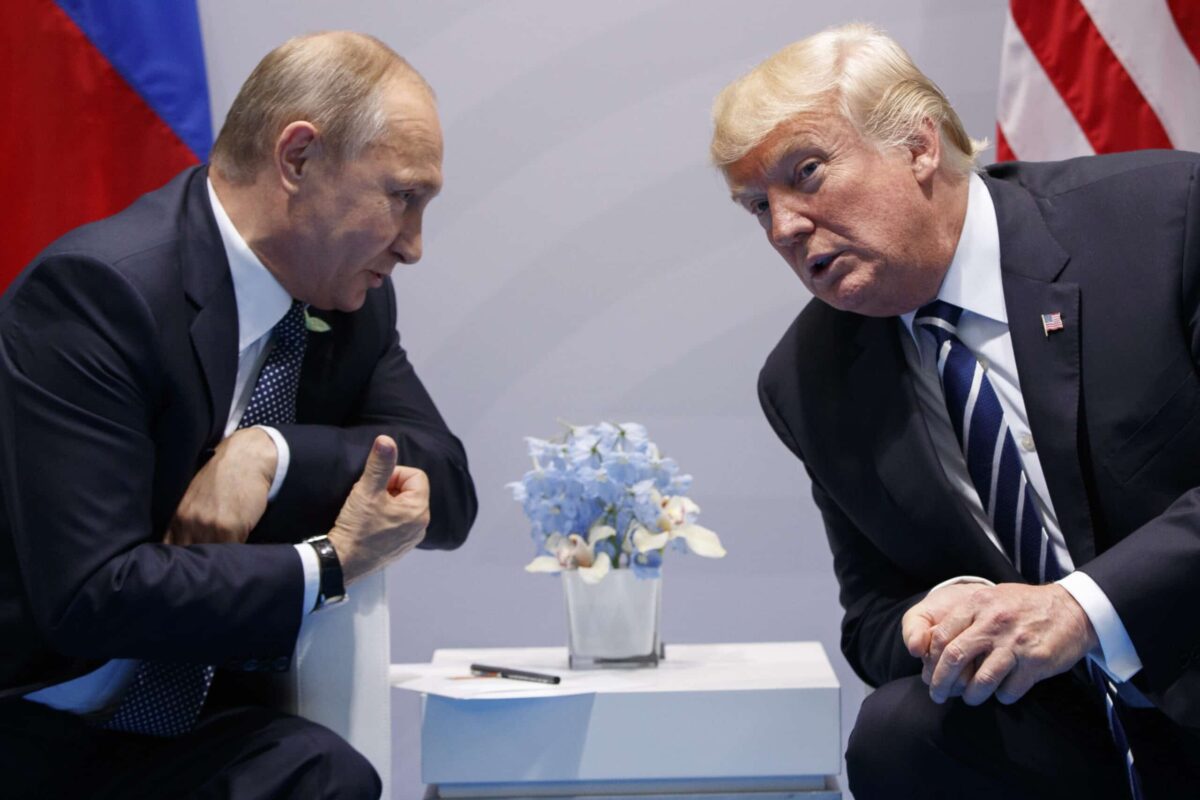

AP- The U.S.-Russia summit in Alaska is happening at a site where East meets West — quite literally — in a place familiar to both countries as a Cold War front line of missile defense, radar outposts and intelligence gathering.
Whether it can lead to a deal to produce peace in Ukraine more than 3 1/2 years after Moscow’s invasion remains to be seen.
Here’s what to know about the meeting between Russian President Vladimir Putin and U.S. President Donald Trump, the first summit in four years:
The summit will take place Friday in Alaska, although where in the state is still unknown.
It will be Putin’s first trip to the United States since 2015, for the U.N. General Assembly in New York. Since the U.S. is not a member of the International Criminal Court, which in 2023 issued a warrant for Putin on war crimes accusations, it is under no obligation to arrest him.
Both countries confirmed a meeting between only Putin and Trump, even though there were initial suggestions that Ukrainian President Volodymyr Zelenskyy might be part of it. But the Kremlin has long pushed back against Putin meeting Zelenskyy -– at least until a peace deal is reached by Russia and Ukraine and was ready to be signed.
Putin said last week he wasn’t against meeting Zelenskyy “but certain conditions need to be created” for it to happen and were “still a long way off.”
That raised fears about excluding Ukraine from negotiations. Ukrainian officials last week talked with European allies, who stressed that peace cannot be achieved without Kyiv’s involvement.
It will be the first visit by a Russian leader to Alaska, even though it was part of the czarist empire until 1867, the state news agency Tass said.
Alaska was colonized by Russia starting from the 18th century until Czar Alexander II sold it to the United States in 1867 for $7.2 million. When it was found to contain vast resources, it was seen as a naïve deal that generated remorse and self-reproach.
After the USSR’s collapse, Alaska was a subject of nostalgia and jokes for Russians. One popular song in the 1990s went: “Don’t play the fool, America … give back our dear Alaska land.”
Sam Greene of King’s College London said on X the symbolism of Alaska as the site of a summit about Ukraine was “horrendous — as though designed to demonstrate that borders can change, land can be bought and sold.”
Trump has appeared increasingly exasperated with Putin over Russia’s refusal to halt the bombardment of Ukrainian cities. Kyiv has agreed to a ceasefire, insisting on a truce as a first step toward peace.
Moscow presented ceasefire conditions that are nonstarters for Zelenskyy, such as withdrawing troops from the four regions Russia illegally annexed in 2022, halting mobilization efforts, or freezing Western arms deliveries. For a broader peace, Putin demands Kyiv cede the annexed regions, even though Russia doesn’t fully control them, and Crimea, renounce a bid to join NATO, limit the size of its armed forces and recognize Russian as an official language along with Ukrainian.
Zelenskyy insists any peace deals must include robust security guarantees for Ukraine to protect it from future Russian aggression.
Putin has warned Ukraine it will face tougher conditions for peace as Russian troops forge into other regions to build what he described as a “buffer zone.” Some observers suggested Russia could trade those recent gains for territory still under Ukrainian control in the four annexed regions annexed by Moscow.
Zelenskyy said Saturday that “Ukrainians will not give their land to the occupier.”
But Trump said Monday: “There’ll be some land swapping going on. I know that through Russia and through conversations with everybody. To the good, for the good of Ukraine. Good stuff, not bad stuff. Also, some bad stuff for both.”
Putin sees a meeting with Trump as a chance to cement Russia’s territorial gains, keep Ukraine out of NATO and prevent it from hosting any Western troops so Moscow can gradually pull the country back into its orbit.
He believes time is on his side as Ukrainian forces are struggling to stem Russian advances along the front line amid swarms of Moscow’s missiles and drones battering the country.
The meeting is a diplomatic coup for Putin, isolated since the invasion. The Kremlin sought to portray renewed U.S. contacts as two superpowers looking to resolve various global problems, with Ukraine being just one.
Ukraine and its European allies are concerned a summit without Kyiv could allow Putin to get Trump on his side and force Ukraine into concessions.
“Any decisions that are without Ukraine are at the same time decisions against peace,” Zelenskyy said. “They will not bring anything. These are dead decisions. They will never work.”
European officials echoed that.
“As we work towards a sustainable and just peace, international law is clear: All temporarily occupied territories belong to Ukraine,” European Union foreign policy chief Kaja Kallas said. “A sustainable peace also means that aggression cannot be rewarded.”
NATO Secretary General Mark Rutte said Sunday he believed Trump was “making sure that Putin is serious, and if he is not, then it will stop there.”
“If he is serious, then from Friday onwards, the process will continue. Ukraine getting involved, the Europeans being involved,” Rutte added.
Since last week, Putin spoke to Chinese leader Xi Jinping, Indian Prime Minister Narendra Modi, Brazilian President Luiz Inácio Lula da Silva, as well as the leaders of South Africa, Kazakhstan, Uzbekistan, Belarus and Kyrgyzstan, the Kremlin said.
That suggested Putin perhaps wanted to brief Russia’s most important allies about a potential settlement, said pro-Kremlin analyst Sergei Markov.

A hastily arranged summit between President Donald Trump and Russian President Vladimir Putin is set for Aug. 15, 2025, in Alaska, where the two leaders will discuss a peace deal between Russia and Ukraine. Ukrainian President Volodymyr Zelenskyy will not attend, barring a last-minute change. The Conversation’s politics editor Naomi Schalit interviewed longtime diplomat Donald Heflin, now teaching at Tufts University’s Fletcher School, to get his perspective on the unconventional meeting and why it’s likely to produce, as he says, a photograph and a statement, but not a peace deal.
How do wars end?
Wars end for three reasons. One is that both sides get exhausted and decide to make peace. The second, which is more common: One side gets exhausted and raises its hand and says, “Yeah, we’re ready to come to the peace table.”
And then the third is – we’ve seen this happen in the Mideast – outside forces like the U.S. or Europe come in and say, “That’s enough. We’re imposing our will from the outside. You guys stop this.”
What we’ve seen in the Russia-Ukraine situation is neither side has shown a real willingness to go to the conference table and give up territory.
So the fighting continues. And the role that Trump and his administration are playing right now is that third possibility, an outside power comes in and says, “Enough.”
Now you have to look at Russia. Russia is maybe a former superpower, but a power, and it’s got nuclear arms and it’s got a big army. This is not some small, Middle Eastern country that the United States can completely dominate. They’re nearly a peer. So can you really impose your will on them and get them to come to the conference table in seriousness if they don’t want to? I kind of doubt it.

How does this upcoming Trump-Putin meeting fit into the history of peace negotiations?
The analogy a lot of people are using is the Munich Conference in 1938, where Great Britain met with Hitler’s Germany. I don’t like to make comparisons to Nazism or Hitler’s Germany. Those guys started World War II and perpetrated the Holocaust and killed 30 or 40 million people. It’s hard to compare anything to that.
But in diplomatic terms, we go back to 1938. Germany said, “Listen, we have all these German citizens living in this new country of Czechoslovakia. They’re not being treated right. We want them to become part of Germany.” And they were poised to invade.
The prime minister of Great Britain, Neville Chamberlain, went and met with Hitler in Munich and came up with an agreement by which the German parts of Czechoslovakia would become part of Germany. And that would be it. That would be all that Germany would ask for, and the West gave some kind of light security guarantees.
Czechoslovakia wasn’t there. This was a peace imposed on them.
And sure enough, you know, within a year or two, Germany was saying, “No, we want all of Czechoslovakia. And, P.S., we want Poland.” And thus World War II started.

Can you spell out the comparisons further?
Czechoslovakia wasn’t at the table. Ukraine’s not at the table.
Again, I’m not sure I want to compare Putin to Hitler, but he is a strongman authoritarian president with a big military.
Security guarantees were given to Czechoslavakia and not honored. The West gave Ukraine security guarantees when that country gave up its nuclear weapons in 1994. We told them, “If you’re going to be brave and give up your nuclear weapons, we’ll make sure you’re never invaded.” And they’ve been invaded twice since then, in 2014 and 2022. The West didn’t step up.
So history would tell us that the possibilities for a lasting peace coming out of this summit are pretty low.
What kind of expertise is required in negotiating a peace deal?
Here’s what usually happens in most countries that have a big foreign policy or national security establishment, and even in some smaller countries.
The political leaders come up with their policy goal, what they want to achieve.
And then they tell the career civil servants and foreign service officers and military people, “This is what we want to get at the negotiating table. How do we do that?”
And then the experts say, “Oh, we do this and we do that, and we’ll assign staff to work it out. We’ll work with our Russian counterparts and try to narrow the issues down, and we’ll come up with numbers and maps.”
With all the replacement of personnel since the inauguration, the U.S. not only has a new group of political appointees – including some, like Marco Rubio, who, generally speaking, know what they’re doing in terms of national security – but also many who don’t know what they’re doing. They’ve also fired the senior level of civil servants and foreign service officers, and a lot of the mid-levels are leaving, so that expertise isn’t there.
That’s a real problem. The U.S. national security establishment is increasingly being run by the B team – at best.
How will this be a problem when Trump meets Putin?
You have two leaders of two big countries like this, they usually don’t meet on a few days’ notice. It would have to be a real crisis.
This meeting could happen two or three weeks from now as easily as it could this week.
And if that happened, you would have a chance to prepare. You’d have a chance to get all kinds of documents in front of the American participants. You would meet with your Russian counterparts. You’d meet with Ukrainian counterparts, maybe some of the Western European countries. And when the two sides sat down at the table, it would be very professional.
They would have very similar briefing papers in front of them. The issues would be narrowed down.
None of that’s going to happen in Alaska. It’s going to be two political leaders meeting and deciding things, often driven by political considerations, but without any real idea of whether they can really be implemented or how they could be implemented.
Could a peace deal possibly be enforced?
Again, the situation is kind of haunted by the West never enforcing security guarantees promised in 1994. So I’m not sure how well this could be enforced.
Historically, Russia and Ukraine were always linked up, and that’s the problem. What’s Putin’s bottom line? Would he give up Crimea? No. Would he give up the part of eastern Ukraine that de facto had been taken over by Russia before this war even started? Probably not. Would he give up what they’ve gained since then? OK, maybe.
Then let’s put ourselves in Ukraine’s shoes. Will they want to give up Crimea? They say, “No.” Do they want to give up any of the eastern part of the country? They say, “No.”
I’m curious what your colleagues in the diplomatic world are saying about this upcoming meeting.
People who understand the process of diplomacy think that this is very amateurish and is unlikely to yield real results that are enforceable. It will yield some kind of statement and a photo of Trump and Putin shaking hands. There will be people who believe that this will solve the problem. It won’t.

Donald Heflin does not work for, consult, own shares in or receive funding from any company or organization that would benefit from this article, and has disclosed no relevant affiliations beyond their academic appointment.
Politics + Society – The Conversation
Reading Time: 3 minutes
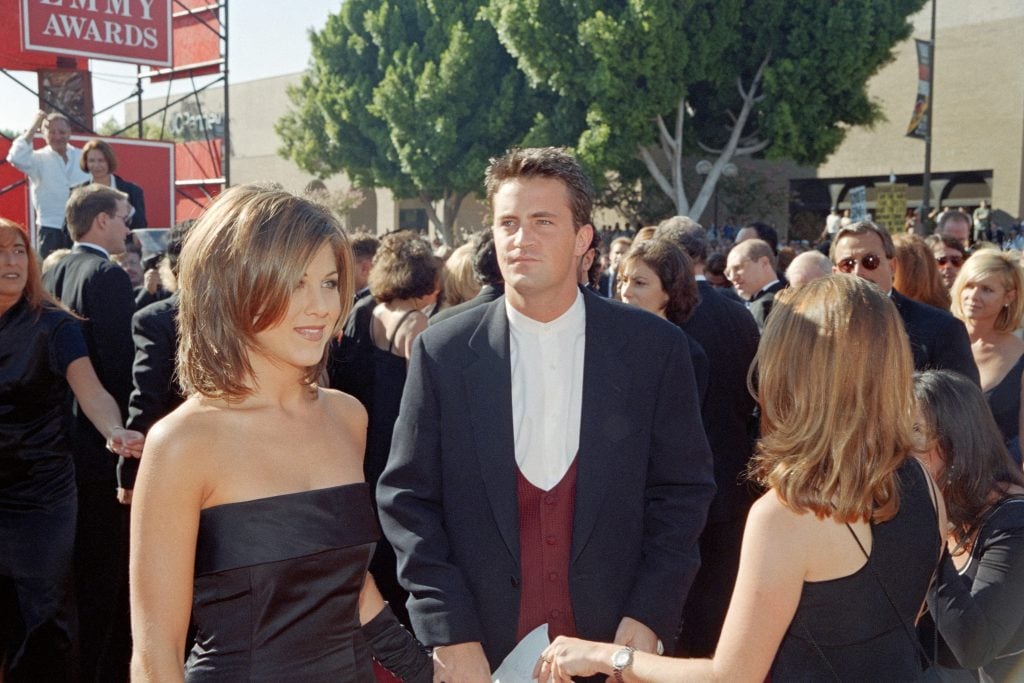
It’s been nearly two years since Matthew Perry passed away.
And one of the TV legend’s most famous co-stars is now offering new insights into his tragically short life.
Some of Jennifer Aniston’s remarks might prove controversial — but they’re sure to be relatable to anyone who’s watched a loved one lose their battle with addiction or chronic illness.
In a new interview with Vanity Fair, Aniston opened up about her feelings about her friend’s passing, two years on.
“It almost felt like we’d been mourning Matthew for a long time because his battle with that disease was a really hard one for him to fight,” she revealed.
“We did everything we could when we could,” Aniston added, likely referring to her Friends costars, Courteney Cox, David Schwimmer, Matt LeBlanc, and Lisa Kudrow.
Aniston made the painful admission that Perry’s death might have been preferable to the continued agony of his struggle to get sober.

“As hard as it was for all of us and for the fans, there’s a part of me that thinks this is better,” the actress said. “I’m glad he’s out of that pain.”
While Aniston has paid tribute to Perry several times in the past, she has never before spoken so candidly about his tragic passing.
Perry died of a ketamine overdose in October of 2023. Five individuals have been charged in connection with his death, including two doctors who recently pleaded guilty to distributing ketamine.
In a 2022 interview, Perry estimated that he’d spent “$9 million or something [on] trying to get sober” after struggling with substance abuse since his adolescent years.
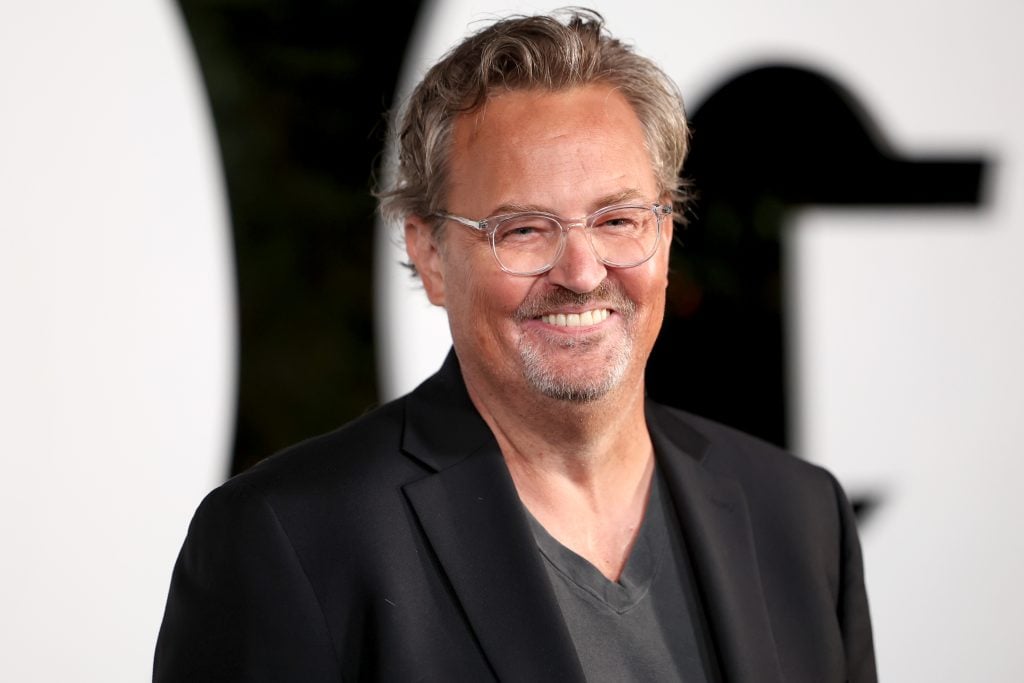
“Having to say goodbye to our Matty has been an insane wave of emotions that I’ve never experienced before,” Aniston wrote on her Instagram page following Perry’s death.
“We all experience loss at some point in our lives. Loss of life or loss of love. Being able to really SIT in this grief allows you to feel the moments of joy and gratitude for having loved someone that deep. And we loved him deeply,” she continued, adding:
“He was such a part of our DNA. We were always the 6 of us. This was a chosen family that forever changed the course of who we were and what our path was going to be.”
Matthew Perry brought joy to millions over the course of his tragically brief life. Sadly, in the end, his own pain proved to be unendurable.
Our thoughts go out to Perry’s loved ones as they continue to mourn the comedy legend.
Jennifer Aniston Breaks Silence on Death of Matthew Perry: ‘Part of Me Thinks This … was originally published on The Hollywood Gossip.
The Hollywood Gossip

Reading Time: 3 minutes
Is Cash Warren dating a Jessica Alba lookalike?
Whether she is a “lookalike” of his ex-wife is contentious. And it’s probably subjective
But the young woman with whom he was photographed is gorgeous. She is also 21 years younger than he is.
Right on the heels of Alba dating a hot younger actor, it looks like Warren’s taking a cue from her.
On Thursday, August 7, 46-year-old Cash Warren and 25-year-old Hana Sun Doerr enjoyed a late dinner out, Hello Magazine reports.
After, the two awaited the valet and headed off in a BMW.
There was even a photo, as you can see in the video below.
Cash Warren, whose estranged wife Jessica Alba filed for divorce in February, went to dinner with model Hana Sun Doerr in Los Angeles Aug. 7. https://t.co/FmPLuLBCxL pic.twitter.com/CLLEPdaHtN
— E! News (@enews) August 9, 2025
We of course do not know the status of what, if any, relationship they might have.
Warren has “liked” several of Doerr’s Instagram posts, but that generally means very little.
Except, of course, when it means everything.
Warren had previously stated that he was single, but that may have changed since then.
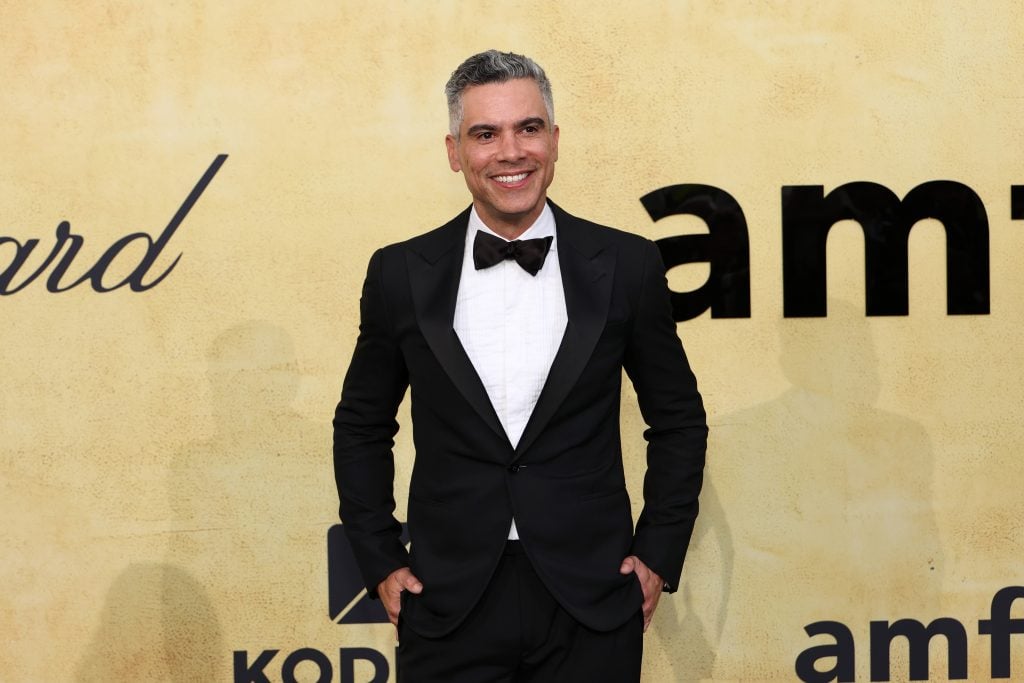
Last month, we reported that Jessica Alba was dating the hot, younger actor, Danny Ramirez.
They, too, have an age gap — albeit closer to half Warren and Doerr’s.
Of course, most would not realize that Alba is older, given that the legendary beauty does appear to know about aging.
Doerr is known for her extensive modeling work. She was also in Minx (2022).
As we also reported, Warren weighed in on his ex-wife’s new relationship.
“I’m happy for her,” he told TMZ in July, though admitting that he has not met the hunky MCU actor.
When it came to whether Warren himself was dating, he replied:
“No, let me know if you’ve got anybody.”

A lot of people immediately characterized Doerr as a Jessica Alba lookalike, which at the very least would imply that Cash Warren has a type.
Truth be told, Alba and Doerr are both very pretty women with … faces and hair and stuff.
They do not really resemble each other in any meaningful way, except that they are pretty and slender human women with prominent lips and more-than-decent eyebrows.
However, we are aware that facial recognition can vary widely from person to person.
Some of the people labeling Doerr a “lookalike” probably perceive the two women as looking very similar.
Cash Warren Steps Out With Jessica Alba Lookalike: Who is Hana Sun Doerr? was originally published on The Hollywood Gossip.
The Hollywood Gossip

Reading Time: 3 minutes
Lil Tay is on par with Sydney Sweeney and Sabrina Carpenter, to hear her tell it.
In 2016, she rose to fame as a tween, boasting about her alleged wealth. And, in 2023, she shocked the world with a death hoax.
About two weeks ago, the once-viral shockfluencer turned 18 years old.
She immediately applied to become an OnlyFans creator — and, according to her, has eclipsed Bhad Bhabie’s record and gained over $1 million in her first 24 hours on the platform.
According to Lil Tay, she raked in over $1 million within the first few hours on OnlyFans.
She turned 18 on January 29, and of course did not get greenlit until the platform verified her age.
We have to emphasize that we cannot confirm her numbers. The adult media subscription platform does not disclose that sort of thing.
Also, Lil Tay — who was born Claire Eileen Qi Hope and is now named Tay Tian (Tian being her mother’s surname) — has a long history of inflammatory falsehoods.
Especially where it concerns money. Genuinely, it is how she became famous.

“Not bad for 3 hours,” Tay tweeted on August 3.
“We broke the f–k out of that onlyfans record,” she declared.
Accompanying these words was a photograph of what appeared to be an OnlyFans payout totalling over $1 million.
Lil Tay, who has compared herself to Sydney Sweeney and to Sabrina Carpenter (likening herself to their child), claims to have usurped Bhad Bhabie’s day-one subscription crown.
It allegedly took the rapper twice as long on OnlyFans to make $1 million.
She, too, joined immediately after turning 18.
We of course cannot verify these numbers. Lil Tay also has a longstanding beef with Bhabie. But then, who doesn’t?
By the way, loath as many may be to admit it, but Tay cooked with “Stuck In July.” It is, we fear, a bop.
Unfortunately, reactionaries and twisted opportunists — including some on the political Left, where you’d normally expect to find people supporting basic human rights — are trying to use Tay’s success to rail against OnlyFans, or to raise the minimum age for online sex work.
Folks, are adult men who count down the days until a minor turns 18 absolute creeps? Of course. But even they aren’t committing a crime by signing up for an adult’s OnlyFans.
These reactionaries are talking about effectively punishing adult women by no longer allowing them to make money from creeps. And they’re playing right into Project 2025’s hands.
Anyway, while Lil Tay comparing herself to Sydney Sweeney and Sabrina Carpenter may be a bit of a stretch, they are all blonde women. And, now, they’re all successful.
Tay has come a long way since she was a tween posing in homes that she did not own, pretending to flaunt her wealth.
Now she (allegedly) has actual bragging rights.
Lil Tay Likens OnlyFans Success to Sydney Sweeney, Sabrina Carpenter After (Allegedly) … was originally published on The Hollywood Gossip.
The Hollywood Gossip