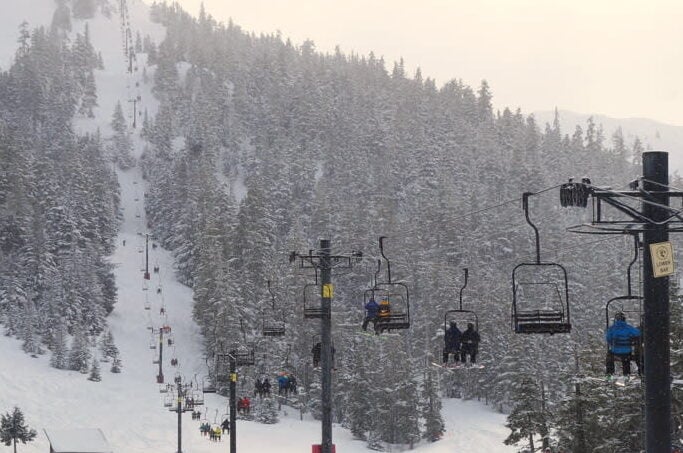
NOTN- The Eaglecrest Board will hold a special meeting this afternoon to consider the lone finalist for the ski area’s next general manager.
The meeting will run from 12:30 to 1:30 p.m. and will be held online only through Zoom, with the agenda available on the City and Borough of Juneau’s Civic Clerk webpage.
The finalist? Former Eaglecrest manager Julie Jackson Piper.
Piper previously worked at Eaglecrest from 2009 to 2015 and later managed Juneau’s public pools before becoming recreation manager for Richland, Washington. She was also a finalist for the position in 2024, finishing as the runner-up.
Her potential hiring comes during a challenging period for Eaglecrest, which has faced financial losses, equipment failures and closure uncertainty after the city canceled plans for a new gondola project because of soaring costs.
Currently the City and Goldbelt are discussing a potential partnership such as a long term lease.
Additional information on the meeting and other public meetings is available through the CBJ public meetings calendar.
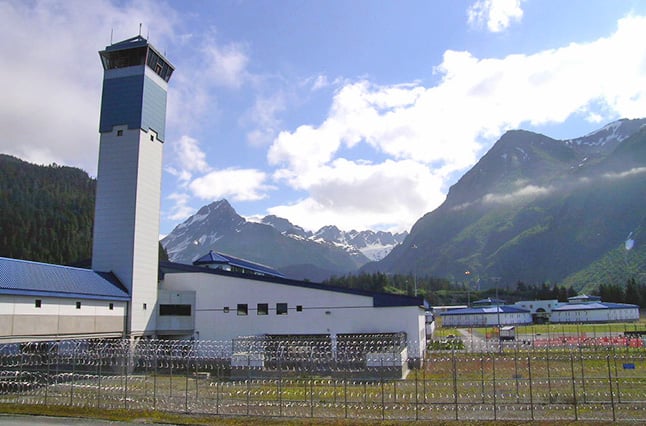
Spring Creek Correctional Center is seen in an undated photo. (Photo courtesy of Alaska Department of Corrections)
Alaskans who have been wrongfully convicted can now apply to claim Alaska Permanent Fund dividends that were withheld while they were incarcerated, under a new law.
The Alaska Legislature passed Senate Bill 167 by a combined vote of 58 to 2, and Gov. Mike Dunleavy allowed the bill to pass into law without his signature last month.
Under current Alaska law, those who are incarcerated or sentenced as a result of a felony or certain combination of misdemeanor convictions are ineligible for the Permanent Fund dividend. The amount equivalent to those dividends is deposited into a restorative justice fund each year.
Under the new law, past dividends will be granted to people whose convictions were vacated or reversed, or those who had charges against them dismissed. People who were found not guilty after their case was retried are also eligible. Individuals whose charges were dropped as part of a plea agreement in another criminal case would not be eligible.
Exonerees have two years after a dismissal or not guilty finding — or two years after the bill’s effective date — to apply for the past dividends through the Permanent Fund dividend office with the Alaska Department of Revenue. The bill is set to take effect on September 16.
Sen. Scott Kawasaki, D-Fairbanks, speaks Friday, Feb. 7, 2025, on the floor of the Alaska Senate. (Photo by James Brooks/Alaska Beacon)
Sen. Scott Kawasaki, D-Fairbanks, sponsored the bill and told lawmakers at a May hearing that the state has a responsibility to those the justice system has failed.
“When an Alaskan has been wrongfully convicted, and then later has had their judgment vacated or reversed, then the state must go beyond merely unlocking the cell,” he said. “We have a duty to make amends for those who have endured an injustice under our laws.”
Prior to the law’s passage, Alaska was one of 12 states that did not provide compensation for wrongful convictions, according to a sponsor statement prepared by Kawasaki’s office. Many states provide financial compensation, or college tuition or job training assistance for exonerees.
Kawasaki said it’s a small step to restore dividend payments. “These funds represent a loss of personal property during that period of time,” he said. “(The bill) is about restoration and not compensation, because really the amount of time that a person has been behind bars can just never be repaid.”
The bill was supported by the Tanana Chiefs Conference and non-profit advocacy groups, including the Alaska Innocence Project and After Innocence, a national advocacy non-profit that provides post-release assistance for those wrongfully convicted.
Jon Eldan, the executive director of After Innocence, said in an interview Monday that the restored PFD money is helpful.
“Because people who have been incarcerated for crimes they didn’t commit typically face a wide range of barriers to rebuilding their lives after that horrible experience, and money helps,” he said. “And so not only is it good because it’s something that is due to them, but also because every dollar matters when you are trying to come back from having your liberty taken away.”
The number of Alaskans who have been wrongfully convicted, or who may be innocent and are in the process of fighting their prior conviction to be overturned is unknown.
The National Registry of Exonerations is a national database of false convictions compiled by Michigan State College of Law, University of Michigan Law and University of California Irvine Newkirk Center for Science and Society. The registry lists over 4,300 wrongful convictions since 1989 nationwide, including nine known cases in Alaska. Those nine cases represent a total of 76 years of incarceration.
“How many more people in Alaska who are incarcerated are factually innocent? And the difficult part is we don’t know,” Eldan said. “Except when these cases resolve in a systemic finding that their conviction needs to be overturned, and have the charges dismissed, etc. and so we don’t know what we don’t know.”
The most infamous cases of wrongful conviction in Alaska are known as the Fairbanks Four — when Marvin Roberts, Eugene Vent, George Frese and Kevin Pease were wrongfully convicted for the killing of a teenager, John Hartman, in 1997. The four Alaska Native men served 18 years in prison each, and were exonerated in 2015 when another man confessed to the killing.
Researchers with the National Registry of Exonerations point to a variety of factors that contribute to wrongful convictions, including police and prosecutorial misconduct, like concealing evidence and witness tampering, false or misleading forensic science, eyewitness testimony or confessions, or inadequate legal defense.GET THE MORNING HEADLINES.SUBSCRIBE
Black and Indigenous people are disproportionately arrested and incarcerated nationwide. Researchers with the National Registry of Exonerations estimate Black Americans are seven times more likely than white Americans to be falsely convicted of crimes.
In Alaska, while Alaska Native people make up less than 20% of the state’s population, they made up 40% of the prison population last year.
“We see an over-representation in our prisons of people of color and minority groups,” Eldan said. “So I wouldn’t be surprised at all — although the numbers are quite small in Alaska, so far, in terms of identified wrongful conviction or innocence cases — to find an over-representation of minority groups, including Alaska Natives.”
A selection of comments filed with state land managers on a proposed lease of Alaska public lands for a data center project on the North Slope. (Image from Nathaniel Herz/Anchorage Press)
Opposition is pouring in against a large data center and power plant proposed for Alaska’s North Slope, as Gov. Mike Dunleavy’s administration considers whether to approve a 50-year lease of state land to the project’s developer.
More than 500 public comments were received before a preliminary deadline set by the Alaska Department of Natural Resources, according to copies of the messages released by the agency.
Fewer than a dozen comments endorsed the project. The vast majority were opposed, often in harsh or strident terms — with subject lines like “HELL NO! To ANY DATA CENTERS” and “NO AI”. One commenter noted explicitly that their message had been written “with my own brain and fingers typing,” rather than generated by artificial intelligence.
“Please incorporate some AI (Alaskan intelligence) into making this decision,” wrote one commenter, who described data centers as “the abandonment of both nature and humanity.”
Comments were initially due to the department’s Division of Oil and Gas in mid-June; the agency has since extended the deadline an extra month, to July 17, due to “the volume of comments received, public interest and requests for extension,” spokesperson Sean Clifton wrote in an email.
Once the deadline passes, the agency will assess the comments before it makes a final decision on the proposed land lease, Clifton said.
An official with Stak Energy, the Anchorage-based company that applied for the lease, said in an emailed statement that the business “is committed to being a responsible steward of the land entrusted to us” and has proposed the lease in an area “far removed from any local communities.”
“Our initial assessment is that the vast majority of the comments are form letters lacking substance other than reflecting an individual’s point of view,” said the official, John Boyle, Stak’s chief strategy officer, who previously served as commissioner of Alaska’s natural resources department from 2023 to 2025. Boyle added: “Some of the comments are more substantive and will be addressed in due course.”
The natural resources department released copies of the comments to the Anchorage Press/Northern Journal after it also released them to Stak, though the agency redacted names and other identifying information.
The company is planning a major development that would use abundant natural gas from nearby North Slope oil fields to run power plants that could support artificial intelligence and cloud computing, according to documents it submitted to the state.
The project, which Boyle said would cost more than $10 billion, would occupy roughly one square mile just off the Dalton Highway, some 25 miles south of the North Slope oil hub of Deadhorse. Its generators could produce a gigawatt or more of power, which is some 30% more than the peak demand of urban Alaska’s entire grid.
Boyle, in his message, stressed that Stak would be focused on generating power and selling it to large-scale computing companies known as “hyperscalers” — and would not operate data centers itself.
“And while we anticipate hyperscalers providing the commercial foundation for our power plant build, Stak will be able to provide power to any entity interested in purchasing it,” he said.
Stak’s project, if built, would be the first large data center development in Alaska. In its lease-related documents, the company said its plans were drafted to avoid the backlash against the industry that’s erupted in other states — where advocates have increasingly protested projects’ land use, pollution and water consumption.
Average annual temperatures at the proposed project site, according to Stak, are 12 F, meaning that the development is expected to need 10% or less of the amount of water that typical data centers use for cooling. There are also no cities or villages within 50 miles of the proposed development except for Deadhorse — an industrial center populated by oil industry employees who live in work camps during multi-day shifts, then fly home.
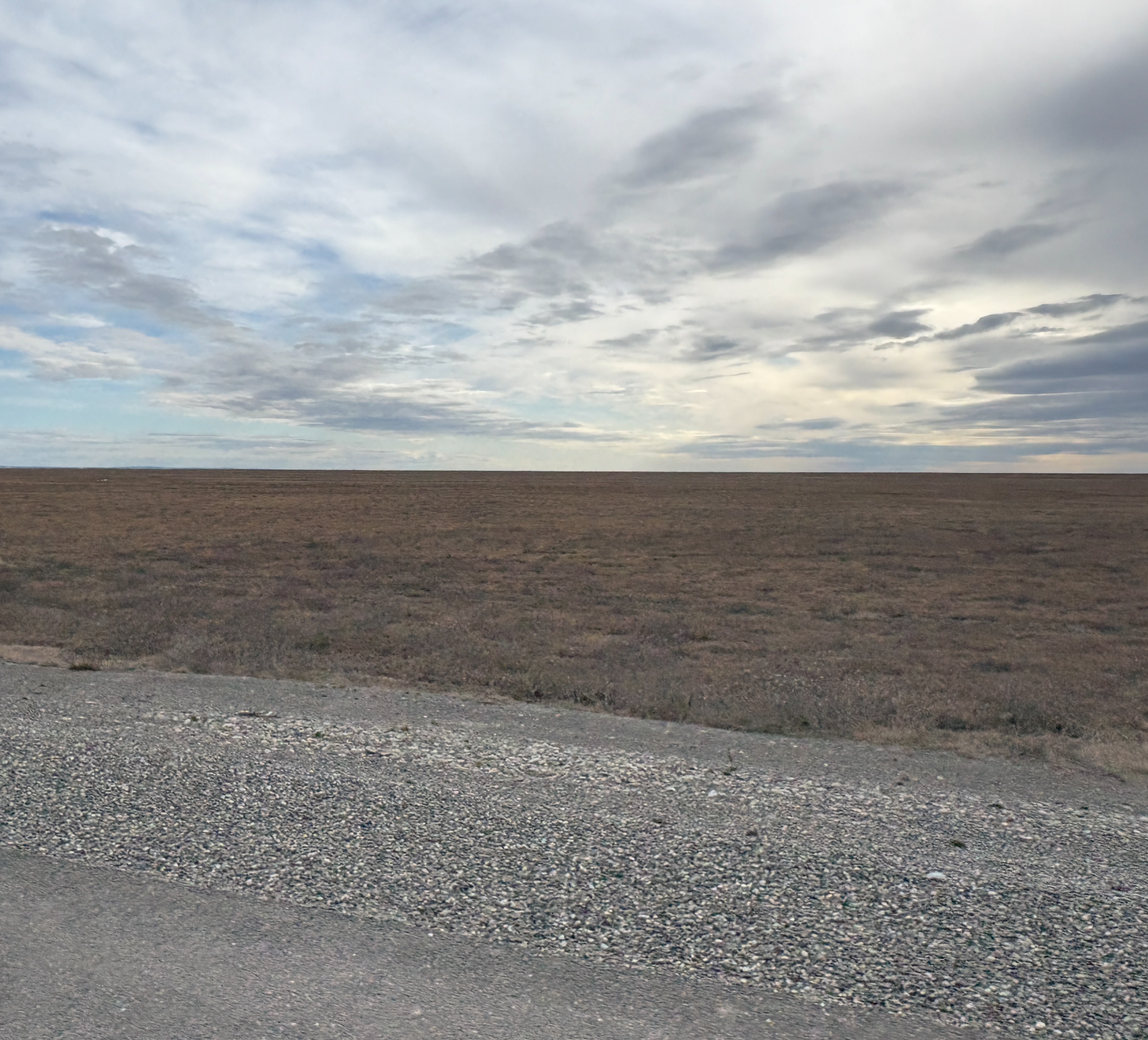
Stak Energy is proposing to lease an area near this stretch of tundra, on Alaska’s North Slope near the Dalton Highway, to operate natural gas generators that would power a large data center. (Nathaniel Herz/Anchorage Press)
The few positive comments made some of those points. “The location pretty well leaves NIMBY out of the equation,” one commenter said. “I’m all for this application and this project.”
Other comments against the development used identical language and appeared to stem from templates distributed by opponents. Formal opposition or messages of concern also came in from groups including the Northern Alaska Environmental Center, the Alaska Public Interest Research Group and the Alaska chapter of a sportsman’s group called Backcountry Hunters and Anglers.
But many other messages objecting to the project were unique and written by individuals from across the state — from Kodiak and Kotzebue to Seward, Valdez and the North Slope village of Nuiqsut. Those critics were not sold on Stak’s pitch, and expressed themselves in terms ranging from reasoned and factual to strident and misinformed.
Some commenters, for example, argued that Stak’s project and natural gas consumption would have the effect of raising electricity prices for other Alaskans — many of whom also get their power from natural gas plants.
But the North Slope oil fields are hundreds of miles from urban Alaska and disconnected from the state’s power grid, meaning that sales of fuel to Stak would have no direct impact on city-dwellers’ electricity prices.
Others, meanwhile, made factually supported assertions — among them that data centers running on fossil fuels would accelerate climate change, and that the pad that Stak plans to build on the tundra would require huge quantities of gravel, a scarce resource on the North Slope that’s also used by villages and oil developers.
Still others kept their objections short and succinct — and sometimes cheeky.
“No,” was one commenter’s full message, though they added a postscript: “You may build one in Canada though.”
Nathaniel Herz welcomes tips at natherz@gmail.com or (907) 793-0312. This article was originally published in Northern Journal, a newsletter from Herz. Subscribe at this link.
FILE - The Ruby Princess is docked in San Francisco, Thursday, Jan. 6, 2021. (AP Photo/Eric Risberg, File)
FILE – The Ruby Princess is docked in San Francisco, Thursday, Jan. 6, 2021. (AP Photo/Eric Risberg, File)
AP- More than 120 passengers and crew members on a Princess Cruises ship that docked in San Francisco on Thursday were infected with a stomach virus while on their voyage, federal health officials said.
The Ruby Princess was on a 20-day round trip journey from San Francisco to Canada and Alaska when 102 passengers and 23 crew members were stricken by norovirus, the U.S. Centers for Disease Control and Prevention said.
Norovirus is highly contagious, often spread by food or on surfaces, particularly in crowded conditions. It is a short-lived illness for many people, but can be dangerous for people with underlying health conditions, young children and those aged 65 and older.
Symptoms include sudden onset of vomiting, diarrhea and stomach pain that can last three days, according to the CDC.
The outbreak on the Ruby Princess, which set sail on June 12, was reported to the CDC on Saturday, officials said, adding that not all the infected people were sick at the same time or when the ship arrived or left port.
There were 3,032 passengers and 1,144 crew members on the Ruby Princess voyage, the CDC said.
Princess Cruises said in a statement that the ship’s crew responded promptly and implemented “enhanced sanitation protocols across the ship.”
The ship will be thoroughly cleaned and disinfected before departing on its next trip later Thursday, the company said.
So far this year, there have been seven illness outbreaks reported on cruise ships in the CDC’s jurisdiction, mostly from norovirus, health officials said.
Most norovirus outbreaks occur when people who are already infected spread the virus to others by direct means, such as through sharing food or utensils. Outbreaks can also be spread through food, water or contaminated surfaces.
Washing hands frequently is key to preventing a norovirus infection, especially after using the bathroom or before eating and drinking. It is best to use soap and water, scrubbing and washing for at least 20 seconds. Hand sanitizer alone doesn’t work well against norovirus, the CDC said.
Steller Sea lions rest on a rocky ledge in Kenai Fjords National Park on July 31, 2013. The western population of Steller sea lions is listed as endangered, and fishery managers have imposed protection to limit the impacts to the animals from commercial seafood harvest. (Photo by Kaitlin Thoresen/National Park Service)
Federal regulators plan to reevaluate fishing closure boundaries established to protect endangered Steller sea lions in Alaska, part of a national Trump administration push to cut regulation of U.S. commercial seafood harvests.
The Steller sea lion protections are among a series of rules that the administration is seeking to relax or change to carry out a mandate from President Donald Trump to increase catches, reduce regulation and ensure that the nation is “the world’s dominant seafood leader.”
The recommended changes were released on Thursday by the National Oceanic and Atmospheric Administration’s Fisheries service and are in response to Trump’s 2025 executive order titled “Restoring American Seafood Competitiveness.” They could affect oceans from New England and the Caribbean to the tropical Pacific and the Bering Sea.
Several months of public consultations resulted in a list of recommendations that “we believe will reduce burdens on domestic fishing, increase production, stabilize markets, improve access, and enhance economic profitability,” NOAA Fisheries Assistant Administrator Eugenio Piñeiro Soler said in a statement.
Steller sea lions in Alaska have suffered a population decline that extended over several decades.
The no-fishing zones intended to protect them are established around sea lion rookeries, places where the animals gather to mate and raise their pups, and major haul-out sites. There are also transit restrictions in areas where the sea lions gather, as well as seasonal harvest limits on fish that are known to be Steller sea lion food: Atka mackerel, Pacific cod and pollock.
Named for naturalist Georg Wilhelm Steller, who sailed to Alaska with explorer Vitus Bering in the 18th century, Steller sea lions are the largest of the “eared seals,” a category that includes all sea lions and fur seals.
A Steller sea lion is seen in 2013 in Alaska. (Photo provided by NOAA Fisheries)
The entire population, which ranges from Japan to California but is concentrated in Alaska, was listed as threatened in 1990. Seven years later, the population was divided; the western population from Prince William Sound to the Aleutians, which has had the most dramatic losses, was listed as endangered while the eastern population remained classified as threatened. By 2013 the eastern population had recovered sufficiently to warrant de-listing, but the western population remains classified as threatened and continues to face threats, according to NOAA Fisheries.
After Trump issued the executive order in April of 2015, NOAA Fisheries solicited comments from the regional fishery management councils and other organizations, as well as the general public.
The North Pacific Fishery Management Council, which manages harvests in federal waters off Alaska, responded to the solicitation with 20 recommended regulatory changes. Those included some changes to harvest timing, some changes to allocations among quota holders and some new allowances for record-keeping. A change to Steller sea lion protections was not on the list.
To Oceana, an environmental group focused on marine issues, the language in the NOAA list of recommendations was a bit vague, but any review of Steller sea lion conservation measures “must be grounded in the law and the best available science,” said Lauren Hynes, a marine scientist who is the organization’s North Pacific campaign manager.
“The western distinct population of Steller sea lions remains endangered, and recovery goals have not been met. If anything, more must be done to conserve and recover this vulnerable population and to protect their habitat and prey,” Hynes said by email.
Other Alaska-focused changes in the list of recommendations released Thursday by NOAA Fisheries were some tweaks to sablefish rules.
Trump has already taken other actions that overturn environmental protections to enable more commercial fishing in U.S. waters.
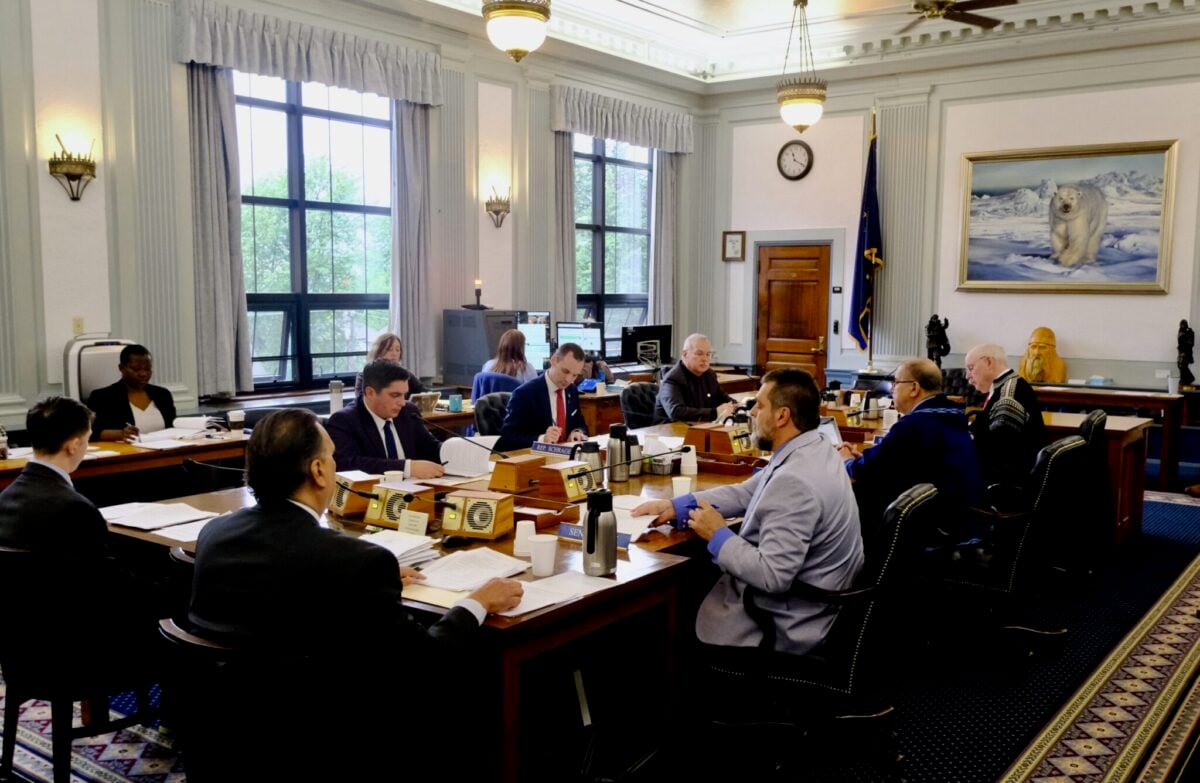
Conference committee members include House Speaker Rep. Bryce Edgmon, I-Dillingham, Reps. Calvin Schrage, I-Anchorage, Justin Ruffridge, R-Soldotna, and Sens. Bert Stedman, R-Sitka, Lyman Hoffman, D-Bethel, and Mike Cronk, R-Tok, who unveiled a draft compromise bill for the proposed AKLNG gas line project on July 2, 2026. (Photo by Corinne Smith/Alaska Beacon)
House and Senate conference committee members unveiled a draft compromise bill on Thursday for the proposed Alaska LNG gas line project, pledging that debate, input and revisions will continue on the state tax break legislation up until a floor vote scheduled for July 16.
“We know we have more work to do,” said House Speaker Rep. Bryce Edgmon, I-Dillingham, following the committee hearing. “It’s a complex topic, and our goal today was to first get through the working draft that had, we thought, a lot of areas of compromise between, you know, sort of all the partners involved in crafting the bill.”
The six member conference committee is tasked with negotiating a compromise bill from the versions of House Bill 381, which was passed by the House and Senate in a special session in June.
Amid high political pressure, lawmakers are now in a second special session called by Gov. Mike Dunleavy to hammer out a state tax proposal that is workable for both the state and the project developer, Glenfarne, which owns 75% of the project. Glenfarne executives say the multibillion dollar tax break is essential to the project’s economics — and that it must come before the company determines a final investment decision with investors.GET THE MORNING HEADLINES.SUBSCRIBE
Dunleavy and members of the House and Senate have taken decidedly different approaches to the size and scope of the state tax break for the proposed project. The project would be built in two phases — first, an 807-mile gas line from the North Slope to Cook Inlet, then gas treatment facilities on the North Slope and on the Kenai Peninsula to export gas internationally.
One of the most fiercely debated provisions in the draft compromise is a proposal to apply the state’s corporate income tax to privately-owned oil and gas companies that currently do not pay them. The provision is favored by some lawmakers and was included in the version of the bill passed by the Senate. But Dunleavy has called the tax a “poison pill” and pledged to veto any bill that includes it. Legislative leaders say they will revisit the topic and expect to make changes to the draft.
Edmon called the corporate tax provision the “elephant in the room” and said further negotiation will continue after the holiday weekend. “I’m really looking forward to after this period of what I would call percolation that we come back and make further changes to the bill,” he said.
Rep. Calvin Schrage, I-Anchorage, who chairs the conference committee, said its members will continue hearing input on the draft bill from relevant groups, and many provisions will be further debated and revised.
“We’re going to continue that work, see how far apart the goal posts are, and do what it takes to try and bring those together,” he said. “And again, ultimately arrive with a bill on the floor that we think can be successful, and give this project a chance.”
House Speaker Rep. Bryce Edgmon, I-Dillingham, speaks during conference committee discussions on a new draft compromise bill for the proposed AKLNG gas line on July 2, 2026. (Photo by Corinne Smith/Alaska Beacon)
A spokesperson for Dunleavy said his office is reviewing the new draft bill, called a committee substitute, or CS, and repeated the governor’s objections to the corporate income tax provision, known as the S corporation tax, which was included in the draft bill on Thursday.
“Our initial take on the CS is that while it appears to address several of the harmful provisions for the gasline, it still contains the S corp tax that the governor and the developer have said will hurt the project’s ability to secure financing,” said Jeff Turner, Dunleavy’s communications director in an email.
In the draft compromise bill unveiled Thursday, legislators are offering a significant tax break that would replace the state’s property tax with a volumetric tax on the gas flowing through the gas line after five years, or when the gas flow reaches 500 million cubic feet per day, whichever comes first. The plan includes gradual tax increases over time as gas flows from the North Slope.
Lawmakers have proposed extending a deadline for construction to be completed on the gas line and phase one from 2032 to December 31, 2034. The provision allows the Commissioner of Revenue to review the tax deal if there are unforeseen delays outside of the developer’s control like severe weather or litigation.
The draft bill requires the gas price cap for Alaskans to rise with inflation at the national inflation rate, rather than Alaskan inflation rate, and the increase may not exceed 3% annually. It requires a variety of reporting requirements for labor agreements, filings with federal oversight agencies and construction updates on a public dashboard.
Another provision requires Glenfarne and developers to disclose their investment agreements with foreign companies investing in the project. It requires notice of any “significant changes” in the project’s ownership structure, defined as changes in entities holding more than 5% ownership interest of the gas line or 10% of the gas treatment plants.
“We’d like transparency and forthright information on who’s involved in this project and who owns a piece of that pipeline that’s dividing our state down the middle,” Schrage said.
The draft also contains a provision that prohibits the project developer from seeking payment from the state if the project is abandoned, and requires the developer to return all shares and assets to the state within six months in such a case. The issue was spotlighted by reporting on a confidential draft agreement between Glenfarne and the Alaska Gasline Development Corp. that under some conditions, the state could be ordered to pay in order to take the project back.
“It’s very important that if the state is going to offer tax concessions, that those concessions not then be leveraged against the state for a payout to the project developer,” Schrage said. “In the event that this project goes awry and the developer tries to exit, we don’t want to pay them for our concessions.”
Rep. Justin Ruffridge, R-Soldotna, raises concerns about the local contribution provision for municipalities and required payments for school districts during discussions on the draft tax bill for the proposed AKLNG gas line project on July 2, 2026. (Photo by Corinne Smith/Alaska Beacon)
Rep. Justin Ruffridge, R-Soldotna, raised questions and objections to a provision around how much municipalities’ gas line tax revenue would apply to their school funding formula, known as the local contribution. According to a legislative memo, the Kenai Peninsula would be required to contribute millions more to its school district beginning in 2034.
Ruffridge, a member of the all-Republican House minority caucus, said it was one of several provisions he objects to and cautioned the committee against “putting additional barriers” up for the project.
“We’re seeking maximum government take. I think in here we’ve asked the question, ‘How much can we extract from this project?’ And I think we’ve missed the fact that we are asking potentially to put on the line jobs, cheap energy and potentially a boon to Alaska’s economy in the form of revenue,” he said.
He said the proposal needs more work.
Several members of the House Republican minority flew down to Juneau this week to raise objections to the conference committee process and urge swift action on the bill. A full vote on a compromise bill was tentatively scheduled for Wednesday, but postponed. Technical House floor sessions were canceled on Wednesday and Thursday, to avoid what House Speaker Edgmon called “political hijinks or theatrics.”
House Minority Leader Rep. DeLena Johnson, R-Palmer, and Reps. Dan Saddler, R-Eagle River, and Garrett Nelson, R-Sutton, were among the Republican minority members that traveled to Juneau to encourage urgency on the bill, and attended the conference committee hearing on July 2, 2026. (Photo by Corinne Smith/Alaska Beacon)
“There’s no time for games, and as the presiding officer, I’m not going to play games like this,” he said.
Edgmon said the committee has been deliberating with legislative attorneys, finance officials, various related departments and project developers in a process that would normally take years.
Rep. Donna Mears, D-Anchorage and a member of the House Resources Committee, also attended the conference committee hearing on Thursday and said rushing the process is not in the best interest of the Legislature or Alaskans. She said hammering out a compromise bill that will be approved by a majority of legislators and by the governor is an enormous task.
“Trying to rush through is not feasible. We’re making a lot of big changes, and the details matter,” she said. “And the process today wasn’t obstructionist, it was moving along and making progress, and even without big huge policy decisions, there’s a lot of little things that need to get ironed out.”
Lawmakers said they are tentatively planning for the compromise bill to go before the House and Senate for a full vote on Thursday, July 16. The special session is scheduled to end on July 19.
Student backpacks seen on the first day of school at Harborview Elementary School in Juneau on Aug. 15, 2025 (Photo by Corinne Smith/Alaska Beacon)
Content warning: This story contains references to sexual violence and abuse of children.
A new statewide initiative aims to prevent and reduce Alaska’s pervasively high rates of child sexual abuse.
The statewide prevention plan is led by the Alaska Children’s Trust, a non-profit advocacy group focused on supporting children and families and preventing child abuse and neglect.
Trevor Storrs, the president and CEO of the Alaska Children’s Trust, said a coordinated effort among state and community groups, service providers, schools, caregivers and youth is needed to make serious strides in intervening and preventing abuse.
“We should not expect children to fight off these predators. We want them equipped with the tools, but it’s our job, not just as adults, but as a community and society, to make sure kids are safe,” he said.
If you or someone you know has experienced sexual abuse or are healing from a crisis, resources are available:
The StrongHearts Native Helpline: Confidential 24/7 confidential helpline for Native Americans and Alaska Natives dealing with domestic and sexual violence. Call 1-844-762-8483 or use the chat feature.
Child sexual abuse prevention resources provided by the Alaska Children’s Trust can be found here.
AWARE’s list of resources, including housing, medical and financial resources
The plan was developed last year with a variety of statewide groups, including representatives from Child Advocacy Centers, the Alaska Department of Education and Early Development, the Office of Children’s Services, which runs the state’s foster care system, law enforcement, Tribes, health care providers, lived experience experts, faith communities, and the Alaska Network on Domestic Violence and Sexual Assault.
Storrs said the plan focuses on education and raising awareness, as well as preventing harm by developing and strengthening institutions so that questionable behavior is identified and stopped.
“If we don’t keep strong boundaries established, that’s when we start opening the door and predators see their opportunity,” he said. “If we keep those strong and not have those potential openings, it actually prevents the predators from ever accessing, or anybody who’s had even a slight inclination — they’re not being tempted to even try — and that is what our job is.”
The group launched the plan earlier this month and is providing an initial $100,000 in grant funding for prevention work in the three priority areas outlined by the initiative. Nonprofit organizations, tribes, local or state governments, schools and regional attendance areas are invited to apply by July 17.
Alaska has some of the highest rates of sexual violence and rates of child abuse, neglect, and child sexual abuse, in the nation. Many victims delay or never report abuse. A U.S. Department of Health and Human Services’ Child Maltreatment report published this year noted reports of child abuse and neglect have declined somewhat since 2020, but Alaska rates in 2024 were 80% above the nationwide average.
Nationwide, American Indian and Alaska Native children have the highest rates of victimization, and in Alaska national data from the maltreatment report shows rates of abuse among American Indian or Alaska Native children are nearly three times higher than the overall statewide average.
The Alaska Children’s Trust cites a national survey by the U.S. Centers for Disease Control and Prevention from 2013 to 2015 that showed on average one in five Alaska children experience sexual abuse. A 2023 report from the Alaska Children’s Justice Act Task Force showed that an estimated one in seven children will experience an allegation of sexual abuse before their 12th birthday.
“The majority of child abuse and neglect cases that are substantiated are neglect, then it’s physical, and then it’s a small fraction of child sexual abuse,” Storrs said. But sexual abuse can have severe impacts on a child’s development, according to the CDC, with short and long term effects, including chronic health conditions, mental health issues and even post-traumatic stress disorder, or PTSD.
Child sexual abuse is defined as any sexual activity between a child and adult or a child and another child that the child does not fully understand, does not consent to or is not developmentally prepared for and therefore cannot consent to. In Alaska, lawmakers this year changed the law to raise the age of consent to 18 years old.
An estimated 90% of child sexual abuse is perpetrated by someone known to the child or the child’s family, according to the CDC.
Perpetrators can exploit what Storrs calls “natural trust” to get close to a child, including people in positions like a coach, teacher, religious leader or friend of the family, in a pattern of behavior called grooming.
“Grooming is developing that relationship, developing a trust with the family that the child can be left alone with them,” Storrs said. “The trust with the child where their interactions may feel awkward, but are okay. The trust that it’s okay to keep secrets. They really build that trust and build that relationship that then allows them to abuse the child, to do what they do. And you see that in story after story when you talk to a survivor of child sexual abuse, they talk about the relationship.”
Storrs says addressing the stigma to intervene when behavior is inappropriate, also means implementing proper protocols for adults interacting with kids. He said for example, coaches should not text youth individually, but include parents in all communications.
That extends to online safety, he said. Nationally, there are increasing rates of predatory behavior and “sextortion,” a form of blackmail where perpetrators threaten to disclose information or images unless the victims make specific demands. Storrs said caregivers should talk with children and youth about what is and isn’t appropriate, in person and online.
“It’s also making sure that your child understands what the expectations and rules are, as well, of what it’s like to interact with an adult, and what are those boundaries,” he said.
Storrs said in raising awareness of potentially predatory behavior, it’s also important to trust children when they disclose inappropriate behavior.
“A lot of kids don’t disclose that X is happening, what they start disclosing is, ‘I don’t feel comfortable, I don’t want to go. I don’t like hanging out with this person anymore.’ They don’t feel connected,” he said. “That’s a sign.”
The statewide prevention plan likens preventing child sexual abuse to wildfire prevention. That means reducing risks, setting safety codes, educating communities and monitoring high risk situations — to prevent harm.
Three approaches to prevention
The statewide prevention plan has a three-pronged approach: educate and mobilize, cultivate safer environments and act early to prevent harm.
Storrs says all three involve children, families, and community-wide efforts, and the plan calls for local advocacy groups, service providers, schools and governments to gather community input and develop their own child sexual abuse prevention programs and resources best fit around cultural values. The initiative calls for local communities to develop and strengthen systems for children to safely report harm without fear of punishment and family disruption.
The first prong focuses on education: increasing awareness and reducing stigma, and increasing the number of people able to take action proactively. That means training for youth-focused employees like teachers and coaches, and building in protocols for reporting and addressing inappropriate behavior. It also involves providing educational resources for parents and caregivers on healthy boundaries, warning signs, and how to respond to concerns.
The plan calls for education and resources for children and youth on what’s appropriate. Storrs says the plan suggests children receive human development education, not necessarily sex education, so that children develop an understanding of consent, their body anatomy and healthy relationships.
“When you talk to a child about something, it does not give a child permission to engage in something or to act inappropriately,” he said, adding that teaching kids about sex does not give them permission to have it in the same way that teaching kids about car accidents doesn’t give them permission to drive recklessly.
Education is aimed at empowering children to identify when physical boundaries have been violated, Storrs said. “So when a kid needs to talk about any of their private areas or someone is trying to talk about it or touch it, they’re able to know what’s appropriate and what’s not appropriate,” he said.
Similarly, reducing shame and stigma can empower children to talk with an adult or caregiver when they’ve experienced or seen adults behaving inappropriately. Children should know that adults should never ask them to keep secrets, Storrs said, and when inappropriate behavior has occurred they can get help to stop it from continuing.
The second prong, “cultivating safer environments,” calls for state and local governments, Tribes and service organizations to support programs and policies that help families meet essential basic needs to address conditions that put children at risk for sexual abuse.
Storrs noted that children and families with unstable housing, inadequate child care or health care can create circumstances that put children at higher risk.
“Our safety net plays a critical part in keeping kids safe, not just of child sexual abuse, but child abuse in general,” he said. “We know when families have stable housing, food security, all those things, it puts less stress on the family.”
The plan calls for increasing safety of physical and digital spaces where youth spend time, and local community organizations to hold listening sessions in communities to identify risk factors and best prevention strategies.
The third prong aims to prevent harm by increasing access to resources to respond to harmful sexual attitudes or behaviors. That includes addressing people who have harmed or are at risk of harming children.
“I truly believe there’s more gray in our world ever than there is black and white,” Storrs said. “And there are definitely individuals who are 100% predators, and it’s very clear. Then you have individuals that may have some thoughts, but don’t act on it, or it’s controlled internally by themselves and by within the society they are.”
The approach includes responding to harmful and problematic sexual behavior among youth. Storrs said with youth having access to graphic sexual material online, problematic behaviors and attitudes may arise. The plan aims to expand treatment and support services for youth to address harmful behaviors.
“We’re seeing that kids are sexually maturing faster or becoming more hypersexual at a much younger age without the knowledge, skills, supports and resources to then deal with it or understand it,” Storrs said. “And if kids do not have an adult to talk to, or have learned this information, it starts creating hyper sexual experiences, which then can lead to this harmful sexual behavior.”
Alaska has unique challenges with rural and remote communities having less access to services, Storrs said, as well as grappling with legacies of trauma and adversity. He said the initiative aims to push a statewide focus and investment in policies and programs that support children and families that can help prevent harm. The plan is a collaborative effort, he said, and in the first year advocates with the Alaska Children’s Trust will visit communities to discuss the plan, help raise awareness, identify gaps and strengthen protocols and safer environments to prevent abuse.
“What we want to create that’s very clear in our community, in our state, that we as a community are watching and will not stand for any type of inappropriate behavior with our kids,” Storrs said. “And we will say something, we will step in, and you won’t be allowed.”
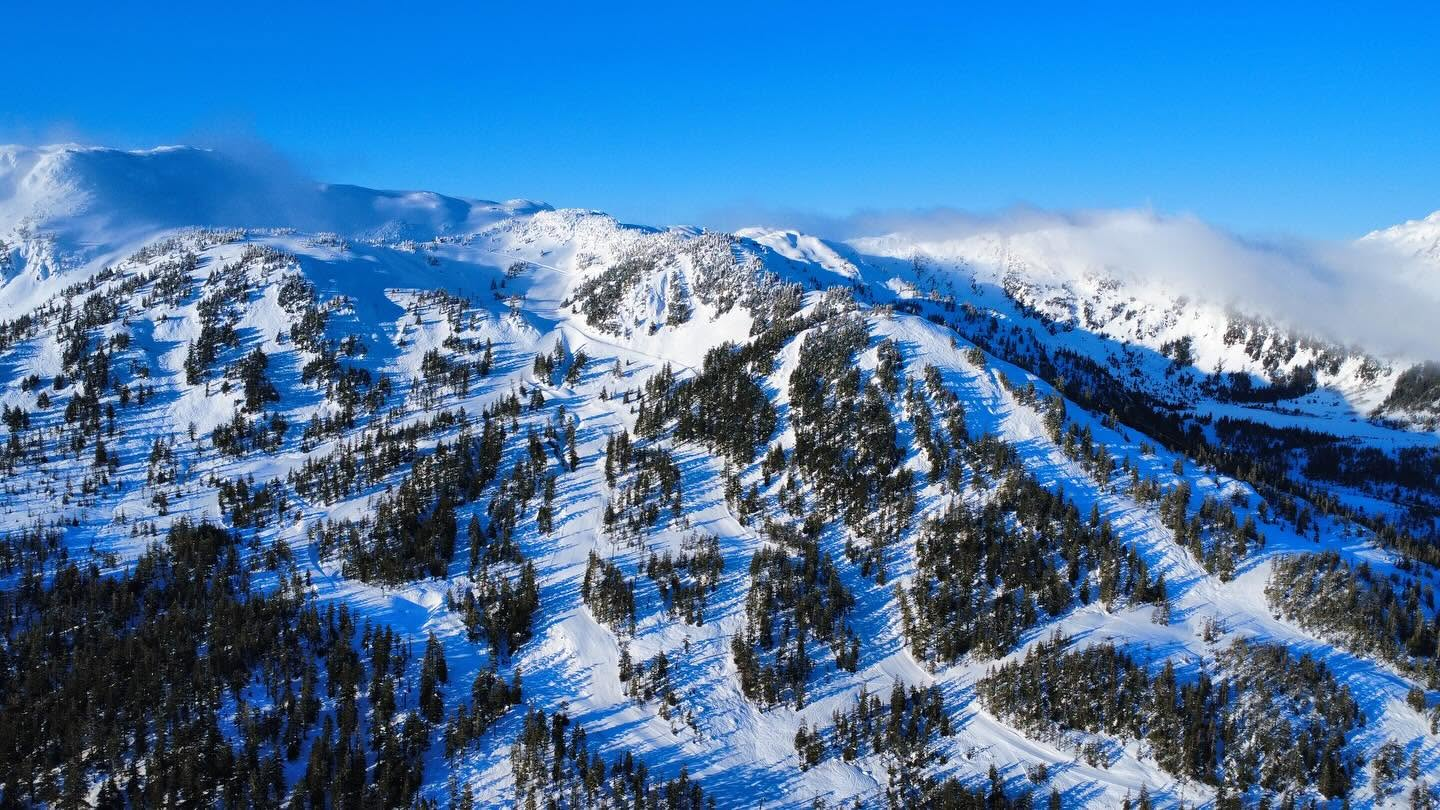
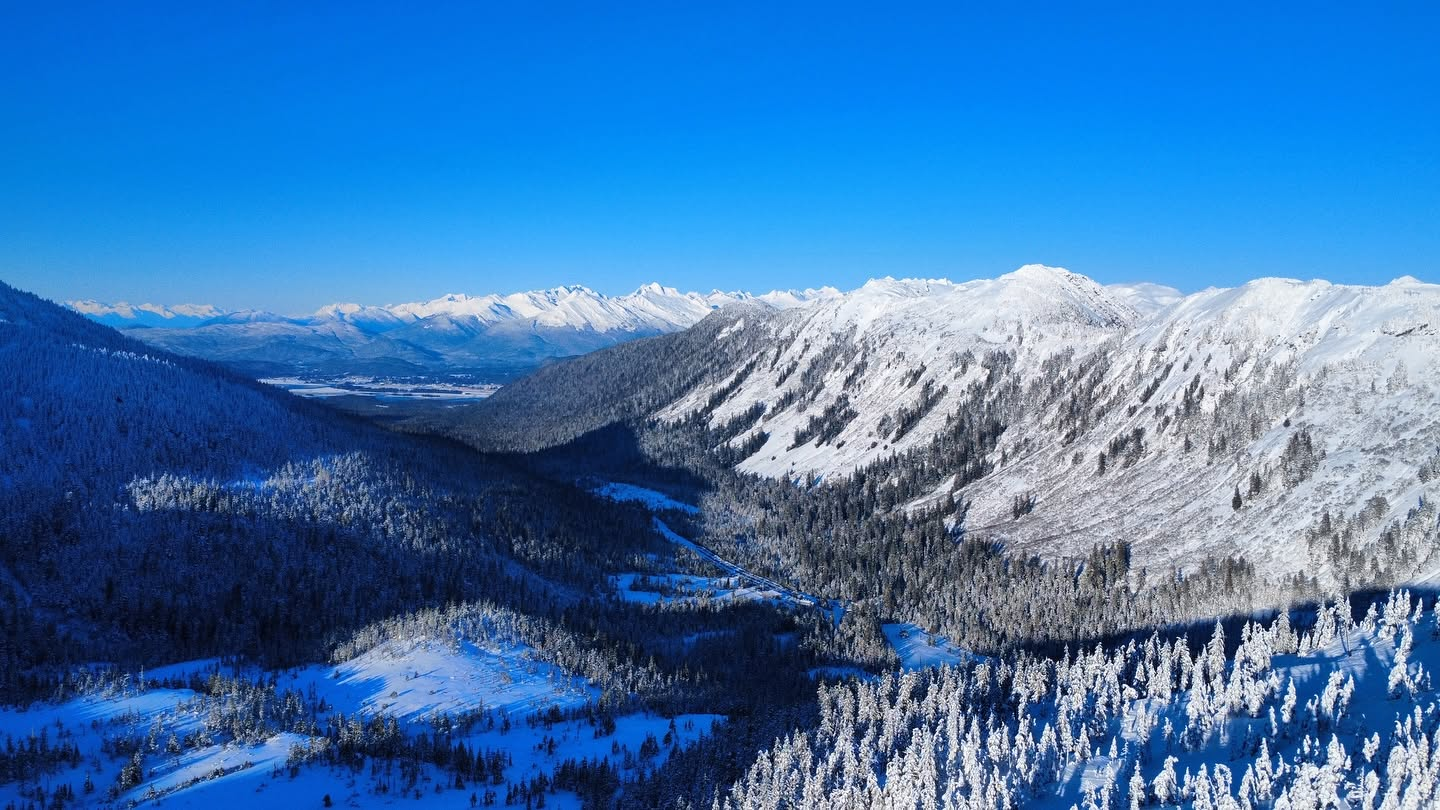
Eaglecrest, located on Juneau’s Douglas Island, rises above the Inside Passage. (Nathaniel Herz/Northern Journal)
Last winter’s first big storm came in December. Then came another. And another. By New Year’s Day, four feet of fresh snow blanketed the city of Juneau.
For many locals, it was a crisis: Roofs collapsed; boats sank in the harbor.
For Juneau’s fervent alpine skiers and snowboarders, it could have been a godsend.
Except they had nowhere to ski.
During one of Juneau’s snowiest months on record, the city’s only ski area, a beloved, municipally-run mountain called Eaglecrest, was barely operating.
It’s one of Alaska’s biggest ski areas and a reminder that Juneau, a city defined largely by cruise tourism and the state Capitol, is a mountain town, too.
But just after the season started last December, mechanical issues forced a closure of Eaglecrest’s main chairlift. And a water line broke, leaving its two lodges without running water. Aside from a few beginner slopes, the mountain was closed.
“Pretty much anything that could have gone wrong went wrong,” the chair of the ski area’s public board, Hannah Shively, said at a meeting in early January.
The infrastructure failures came after years of deferred maintenance, staff turnover and accusations of mismanagement and underinvestment. And, though the ski area was fully opened by mid-January, its early-season woes may have been an omen: The next time it snows 80 inches in a month in Juneau, Eaglecrest might not exist at all.
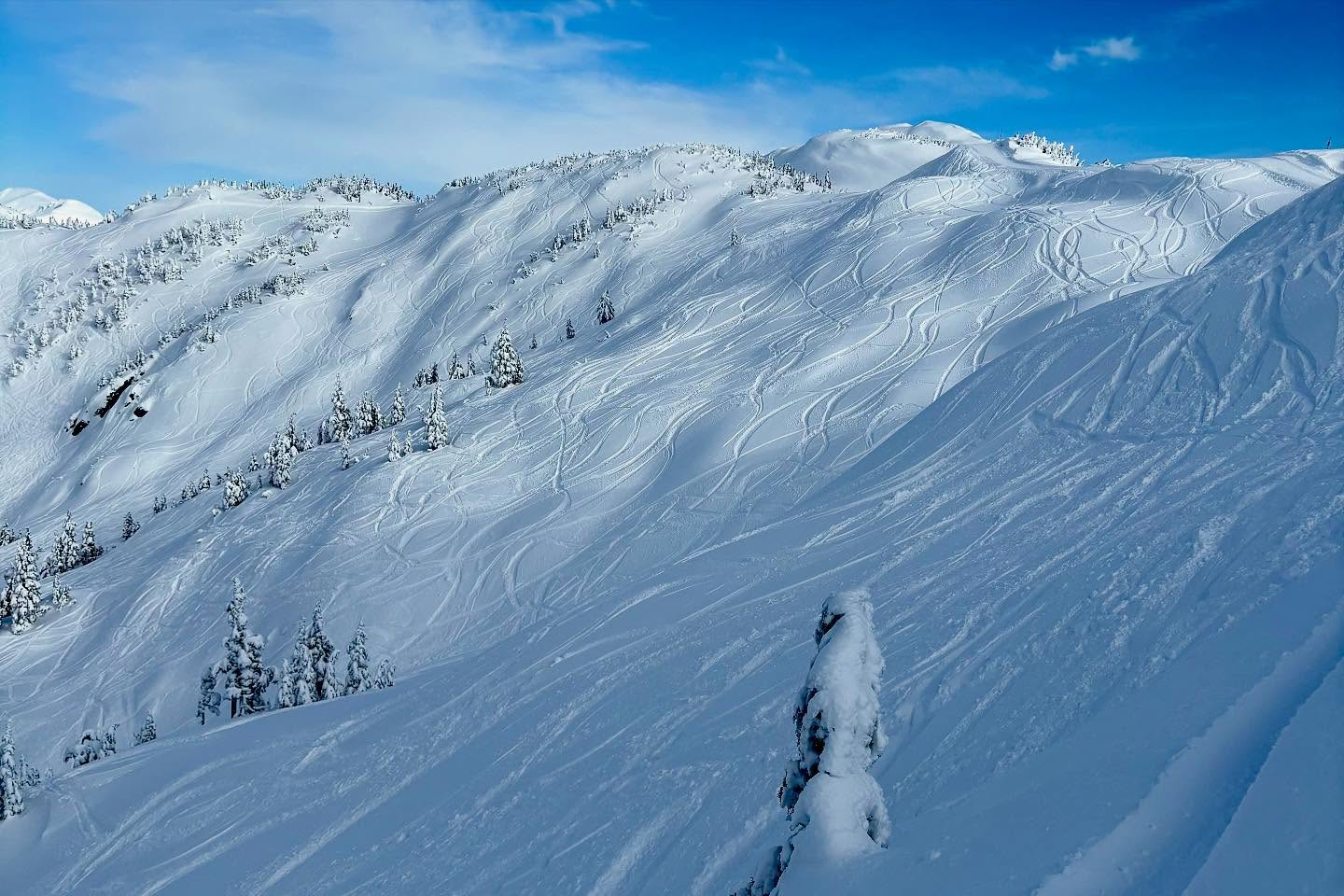
Ski tracks crisscross alpine terrain at Eaglecrest, one of Alaska’s most beloved ski areas. (Eaglecrest Ski Area)
The mountain has operated in the red each of the past four years, with losses totaling some $3 million. Now, it’s at the center of a fierce debate over local government spending, with implications not only for the future of skiing in Juneau, but for the town’s identity.
Some residents say the ski area provides a crucial outlet for outdoor recreation during Juneau’s notoriously gloomy winters, and deserves public funding. Others say the government has effectively run the place into the ground and that the mountain should be privatized.
The Juneau Assembly, which oversees Eaglecrest’s budget, voted this spring to keep the ski area open next season. But it’s allocating $1 million less than what Eaglecrest’s management requested, forcing layoffs and sustaining operations at an “absolute minimum.”
That decision came right after a long-term plan to turn around the mountain’s finances fell through.
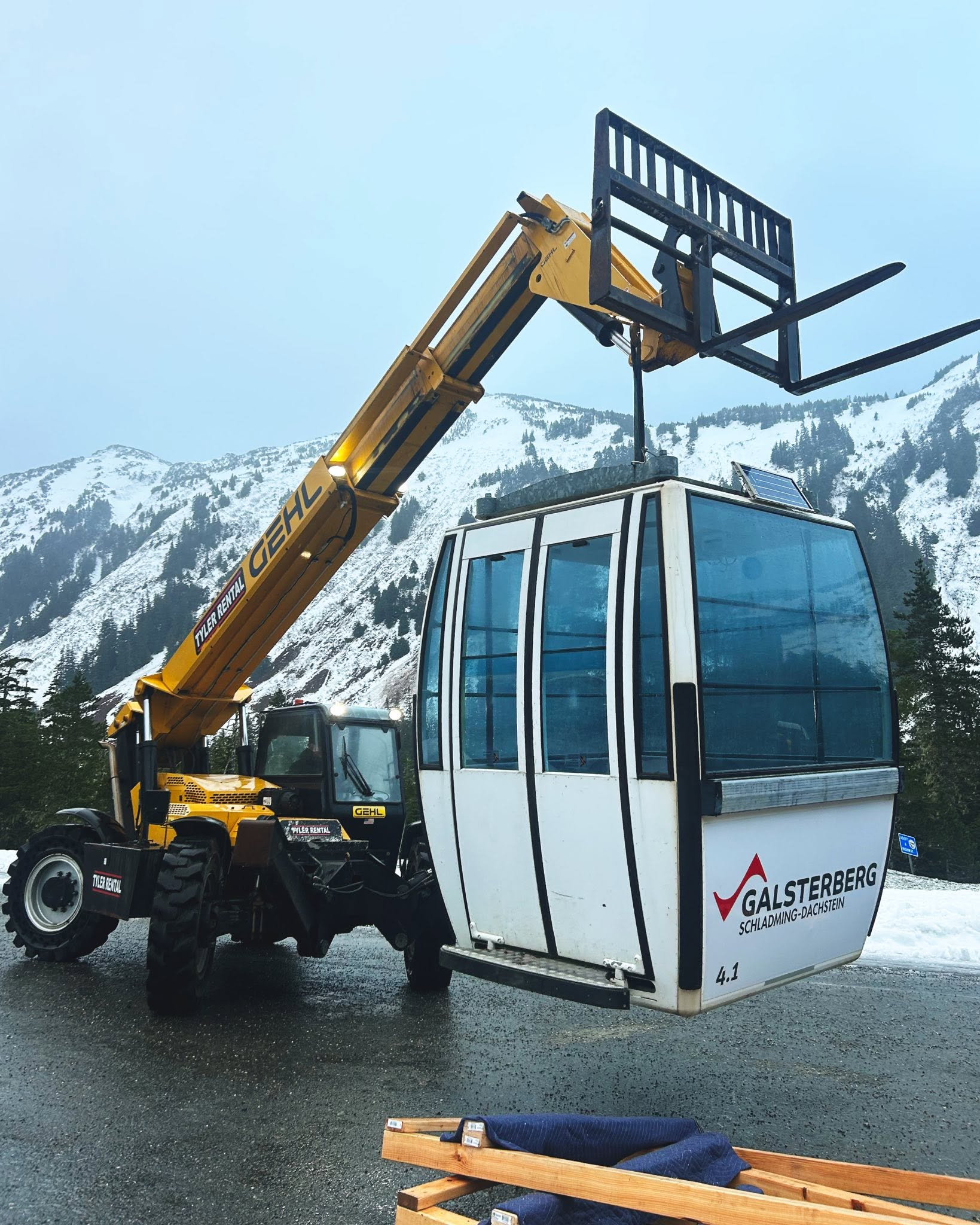
Four years ago, the city bought a used gondola, aiming to install it at Eaglecrest to boost summer tourism and generate enough new revenue to make the mountain profitable.
But after construction delays and a staggering cost increase, officials abandoned the project in May, setting the municipality back millions of dollars. They have yet to present an alternative path forward for the mountain, and there’s no certainty that Eaglecrest will stay open beyond next year.
It’s at the most precarious point in its 50-year history.
“We’re definitely at a threshold, or a turning point,” said Jim Calvin, a longtime Juneau skier and member of Eaglecrest’s board. “It’s an existential issue.”
What “separates” Juneau
One reason Alaska skiers love Eaglecrest is that it’s not a typical ski resort. In fact, it’s not a resort at all, but more like a public park.
Nearly all the big ski areas in North America are for-profit businesses. Some — Vail, Whistler, Park City — are owned by the same big, publicly traded corporation. Others, like Steamboat and Mammoth, are owned by private equity and investment firms.
Eaglecrest, meanwhile, is owned by the City and Borough of Juneau, meaning local taxpayers have been contributing about $1 million to operations annually. That’s about 0.6% of the city’s general operating budget.
This helps the mountain keep prices low: An adult season pass last winter cost $802, or $630 if bought before July. At Alyeska, the state’s largest ski area, in Girdwood, prices were nearly double that: $1,599 for a regular season pass, or $1,049 with an early-bird discount.
Public ownership also has helped Eaglecrest stay oriented around recreation and community rather than luxury hotels and real estate development. There is no Four Seasons on the mountain — nor any hotel, for that matter.
“It’s the one nice thing we have that separates us,” said Sandy Hussain, a Juneau resident who frequents the ski area with her husband and son. “Most cities have libraries. They have pools. They don’t have Eaglecrest.”
Eaglecrest is perched at the top of a dead-end road in the mountains of Douglas Island, a 20-minute drive from downtown Juneau. It was established by Juneau’s ski club in the mid-1970s. Over the years, local taxpayers have approved spending on mountain infrastructure projects through sales tax increases and bonds.
Spread across 640 acres, Eaglecrest has three operating chairlifts and two day lodges. From the parking lot, where skiers tailgate on sunny days, you can ride a lift named Ptarmigan through a spruce-and-hemlock forest to an alpine hut with ocean views. There are groomed runs for beginners, and there’s tree skiing for more advanced skiers. Cliff-lined backcountry areas beckon for experts.
Eaglecrest is known for its diverse terrain. (Eaglecrest Ski Area)
While it’s small, with fewer trails and only half the vertical drop of Alyeska, Eaglecrest is known for its powder days (albeit rain days, too), ocean views and diverse terrain, including “tons of pillows and little spine features,” said Ryland Bell, a professional snowboarder based in Haines, a small town up Lynn Canal from Juneau.
Eaglecrest’s terrain and community vibes stand out internationally, said Bell, who has snowboarded all over the world.
“You’re looking down at the ocean, on all sides, and then all the peaks and fjords and canals. It’s an incredible place,” Bell said. “The town absolutely needs it.”
Juneau residents describe the ski area as a favorite winter gathering spot. People bump into friends in the parking lot; parents catch up at the base lodges while kids take ski lessons.
“There was nothing like that in Juneau that we had found yet,” said Hussain, who moved to the town three years ago in part because of Eaglecrest. “It felt like a very welcoming space, even if you’re not the best skier in the world.”
Her family would move away if the mountain were to close, Hussain said. “That would not be a question.”
Eaglecrest’s woes
Ask Juneau residents about the cause of Eaglecrest’s woes, and you’ll get a range of answers, some entirely contradictory.
One local skier said the dysfunction is mostly the fault of the ski area’s former general manager.
Another said the same general manager was one of the greatest things ever to happen to Eaglecrest and said the ski area declined after his firing.
A third skier: “Everyone in town thinks they’re the general manager of Eaglecrest.”
There is, however, broad agreement on a key cause of the ski area’s struggles: economics. There just aren’t enough skiers in Juneau, with a population of about 30,000, to cover all of the mountain’s costs through lift ticket sales and concessions.
And those costs are going up. Officials have substantially boosted employee pay, which was below Alaska’s minimum wage a few years ago. Plus, maintenance needs are growing as Eaglecrest’s infrastructure ages. Management decommissioned one of the main chairlifts, Black Bear, last year; the other, Ptarmigan, is the one that broke down in December.
“It’s an old ski area, and there are a lot of gremlins in there,” said Bruce Griggs, a longtime Juneau skier.
To offset rising costs, Eaglecrest officials hatched a plan four years ago: The city would buy a used gondola from a resort in the Austrian Alps, ship it to Juneau and set it up on the mountain.
Summer cruise tourists — numbering more than 1 million in Juneau each summer — could ride the gondola to the summit to soak in views or launch hikes.
Ticket sales, in turn, would generate new revenue for Eaglecrest. Goldbelt, the Alaska Native-owned corporation for Juneau and a major player in the local tourism industry, would loan the city $10 million in return for a share of the revenue.
Juneau officials bet that buying a used gondola would save the mountain. The plan fell through this spring. (Eaglecrest Ski Area)
The Juneau Assembly, in a 5-4 vote, approved a plan to buy the gondola for $2 million. Projections at the time showed it would generate enough cash to make Eaglecrest profitable. Supporters said the ski area’s future depended on it.
“This is going to be a true game-changer,” Eaglecrest’s general manager, Dave Scanlan, said in 2023.
Then the plan imploded.
Budget debate, identity crisis
Earlier this year, Jim Calvin, the Eaglecrest board member, made a bombshell announcement at a public meeting: Installing the gondola would cost $27 million, pushing the overall price tag to some $37 million, more than triple early estimates.
“That’s a pretty big gulp factor,” Calvin said at the meeting.
Construction would be more expensive than expected. The gondola needed more parts. And the city would have to pay tariffs on some of those parts, since they’d be coming from Austria.
In response to the cost increase, city officials had to decide whether to scrap the project or find new investors to cover the higher price tag.
At the same time, they were looking for ways to slash spending.
Last fall, Juneau voters passed two ballot initiatives to cut taxes, producing an estimated shortfall of $10 to $12 million — a roughly 8% reduction in the city’s general fund revenue, according to officials.
Among dozens of budget cuts under consideration by the Juneau Assembly this spring was money for public pools, a field house, an ice rink, the city’s library and Eaglecrest.
“We’re trying to make all these big decisions on the city budget, and it makes it really difficult to have the bandwidth to think rationally about the longer term of what we do with Eaglecrest,” Juneau Assembly member Neil Steininger, a former state budget director, said in a May interview.
Without the funds to pay for the gondola project at its new price, officials decided to abandon it. The city now must repay Goldbelt’s original loan, plus interest, costing taxpayers some $9 million.
The project’s failure was “a hit in the public eye” for Eaglecrest and has made it harder for Juneau officials to justify further investment in the ski area, said Christine Woll, a Juneau Assembly member and chair of its finance committee.
Looking out from Eaglecrest over Douglas Island. (Eaglecrest Ski Area)
A growing contingent of Juneau residents now think the solution is to hand the mountain over to a private investor who, in theory, could spend tens of millions of dollars to upgrade ailing infrastructure and develop summer tourism.
Among those residents is Dave Hanna, a local skier and longtime Eaglecrest supporter. He has lost faith in city ownership because critical maintenance on the mountain has lagged recently, he said — and officials, in his view, botched the gondola project.
“It’s been steadily going downhill the last couple years,” Hanna said.
He thinks boosting summer tourism — by developing a gondola and other attractions — is likely “the only thing that’s going to sustain Eaglecrest.”
Hanna supports privatizing Eaglecrest, but only if it can remain affordable for local residents, he said.
“I think there’s a lot of folks that have always believed the city could afford to maintain the area,” Hanna added. “And, finally, they’re waking up and smelling the coffee.”
Hanna is affiliated with the group, Affordable Juneau Coalition, that pushed the tax cuts last year, and he’s been on the opposite side of the broader fiscal debate from Juneau Assembly members like Woll.
He thinks the Assembly is looking in the wrong places to cut spending. Eaglecrest’s future, in his view, is contingent less on the city’s current budget than on its management of the mountain.
For Woll, though, the budget issue has created a real challenge for Eaglecrest.
In her ideal world, the city would keep funding the ski area along with other services facing cuts, she said.
But given the city’s fiscal realities, it’s “hard to justify” spending on Eaglecrest at the level it needs right now, in contrast with “essential services” like housing, Woll said.
Woll isn’t sure about a long-term solution. “I want the answer very badly,” she said.
While officials try to figure out a path forward, the ski area is raising lift ticket prices to help offset losses. A season pass will be about 10% more expensive next year, but still considerably less than at many other U.S. ski resorts.
Calvin, the Eaglecrest board member, said ski area officials will be looking for investors but will continue to ask city leaders for funding until Eaglecrest can “wean” itself off municipal support.
“It will just take time,” he said.
In the meantime — for another year, at least — Juneau’s skiers will still have a place in winter to zoom downhill and hang out with friends. Assuming, of course, nothing breaks before the next big storm.
Northern Journal contributor Max Graham can be reached at max@northernjournal.com. He’s interested in any and all mining related stories, as well as introductory meetings with people in and around the industry.
This article was originally published in Northern Journal, a newsletter from Nathaniel Herz. Subscribe at this link.
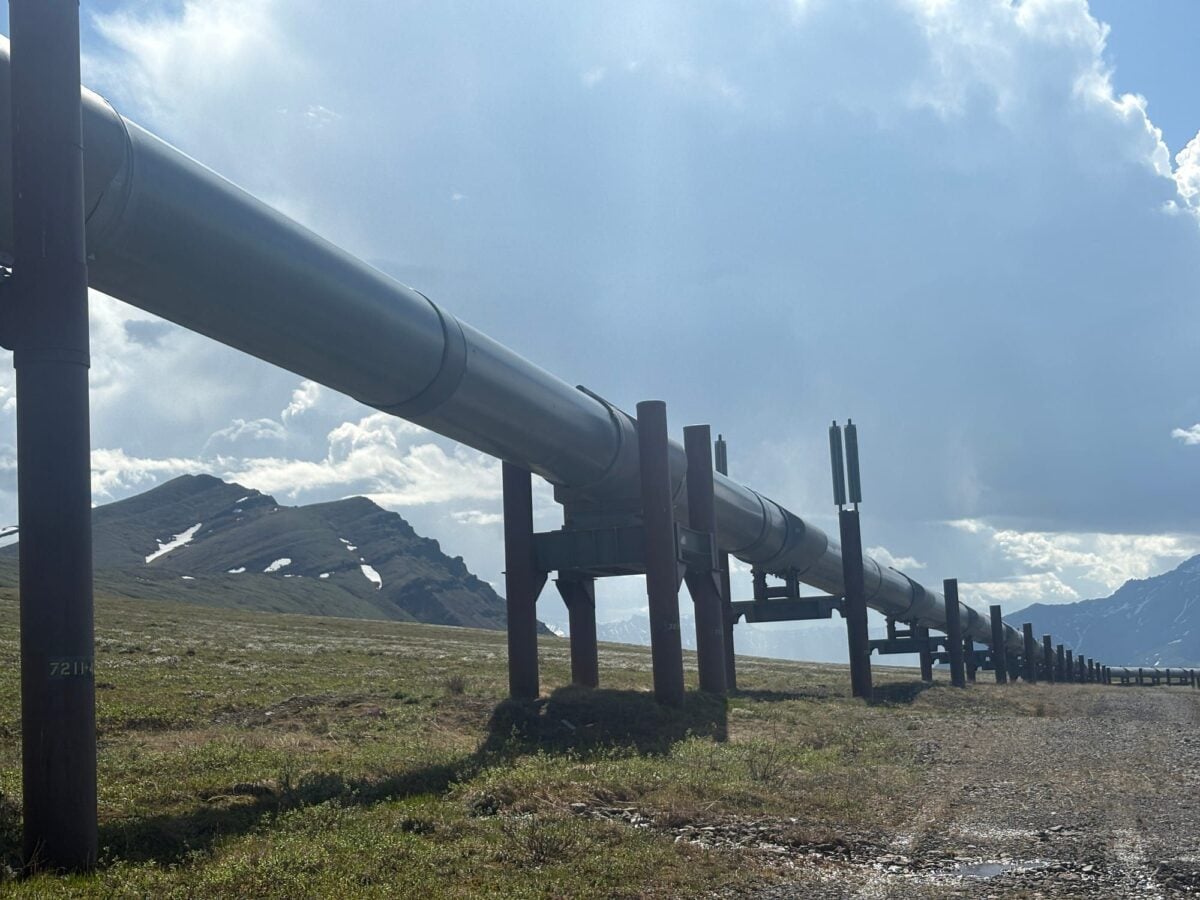
The trans-Alaska pipeline passes through the Brooks Range above the Arctic Circle. (Nathaniel Herz/Northern Journal)
This is a short update to an ongoing story about a dispute over the taxable value of the trans-Alaska pipeline system. The previous story, with more context, by Northern Journal is here.
A high-stakes feud between Alaska’s major oil companies and three municipalities that collect taxes from those companies is now headed to court.
The fight is over the value of the trans-Alaska pipeline — a calculation that determines how much the companies owe in property taxes each year. Tens of millions of dollars are at stake.
In May, a state tax board set the pipeline’s value at $13 billion. Both the oil companies and the municipalities then filed appeals to the Alaska Superior Court this month.
The municipalities say the taxable value is much higher — about $20 billion. The oil companies say the pipeline’s value is significantly lower — some $2 billion.
Both parties appealed an initial $10 billion assessment by Gov. Mike Dunleavy’s administration. Then, the tax board raised the value by $3 billion.
The municipalities think the value was “improperly determined” by the board and is “considerably higher,” Robin Brena, an Alaska attorney who has long represented the municipalities in pipeline property tax matters, said in a brief phone interview last week.
In its 18-page appeal, lawyers for Alyeska Pipeline Service Co., which is owned by affiliates of the state’s three biggest oil companies and operates the pipeline, also said the state board erred, but for different reasons.
The board’s determination and the Dunleavy administration’s earlier decision were “excessive” and “grossly overstate” the pipeline’s value, the appeal said.
Northern Journal contributor Max Graham can be reached at max@northernjournal.com.
This article was originally published in Northern Journal, a newsletter from Nathaniel Herz. Subscribe at this link. Northern Journal is merging with the Anchorage Press! Read our announcement and other information here, and support us with a subscription here.
A polling place sign at the State Office Building in Juneau on Aug. 15, 2022. (Photo by Lisa Phu/Alaska Beacon)
The Alaska Supreme Court on Monday ordered the Alaska Division of Elections to include Dan J. Sullivan of Petersburg on the primary ballot as a candidate for U.S. Senate.
The ruling upholding a lower court’s decision came just hours after oral arguments in a fast-tracked case ahead of the division’s deadline to certify and print primary election ballots at noon on Tuesday.
The Alaska Supreme Court considered oral arguments in a fast-tracked case appealing a lower court’s ruling Dan J. Sullivan is eligible to run for U.S. Senate on June 29, 2026. (Screenshot of Gavel livestream)
A full opinion on the case will be issued at a later date, the court said.
The decision ends a weekslong saga between the state and the challenger with the same name Republican incumbent Sen. Dan Sullivan. The two Sullivans are among 16 primary candidates for the seat, including former Democratic U.S House Rep. Mary Peltola.
The primary election is Aug. 18. The general election in November determines who will hold the seat for a six-year term.
On Friday, an Anchorage Superior Court ruled that the division’s decision to strike Sullivan from the ballot was unlawful. The judge determined that the division did not have the authority to add additional requirements for candidates beyond what is outlined in the U.S. Constitution. He ruled Sullivan, a retired teacher from Petersburg, is eligible to run for U.S. Senate.
The state appealed that ruling, and the case went before the Alaska Supreme Court on Monday.
Reached by phone Monday afternoon, Sullivan of Petersburg expressed relief. “I’m glad it’s over. It was pretty stressful. I’ve got to admit that,” he said.
Dan Sullivan of Petersburg announced his campaign for the U.S. Senate on May 29 to challenge incumbent U.S. Sen. Dan Sullivan. (Photo courtesy of Dan Sullivan)
On the criticisms and questions about his campaign, Sullivan said they were “challenging” to hear.
“It’s all because of my name, and you know, there’s nothing I can do about my name,” he said. “I was frustrated, I felt it’s time for a change, and so I wanted to jump into the race and make my feelings and my thoughts known. So there’s not a whole lot more to it than that. They tried to make it more than that, and you know, that’s their prerogative.”
Sullivan said he would agree to be listed as “Dan J. Sullivan” on the ballot. He said he now plans to regroup and make plans to visit Alaskan communities, hear from voters, and continue the campaign for Senate.
Nate Adams, a spokesperson for Sen. Sullivan, said they were disappointed in the court ruling but encouraged by the fact that the division director can “use her expertise” to distinguish the candidates on the ballot in an emailed statement on Monday.
In the decision, the justices wrote the division will determine how the candidates will appear on the ballot.
“This matter is remanded for the Division of Elections to determine, in the first instance, how appellee Sullivan shall be listed as a candidate within the confines of existing Alaska ballot design law,” they wrote.
An official with the Alaska Department of Law on behalf of the division did not immediately respond to a question about how the two candidates would appear on the ballot.
“The State appreciates the court’s quick ruling and will work to implement the order,” said Sam Curtis with the Department of Law.
Alaska Supreme Court hears oral arguments
Sullivan from Petersburg appealed the division’s unprecedented June 15 decision to disqualify him from the U.S. Senate ballot. The Alaska Division of Elections cited complaints filed by the incumbent and Republican groups that his similar name, Republican party affiliation and campaign materials were evidence he was running in “bad faith” and mimicking the Republican incumbent, U.S. Sen. Dan S. Sullivan.
Challenger Dan. J. Sullivan has defended his campaign as authentic and genuine. In court, his attorney argued that he met all the constitutional requirements for candidacy, and the division had unlawfully added a subjective criteria.
In oral arguments before the Alaska Supreme Court on Monday, attorney Chris Murray argued on behalf of the division and its appeal of the lower court’s decision. He argued that the authority to administer the manner of elections includes disqualifying the challenger, as they deemed his intention in filing was to “frustrate the purpose” of the election and confuse voters.
Justices questioned that authority cited by the state. “A lot of the times people run for office for different reasons, to highlight an issue, to see what the process is like, and maybe start garnering support over time,” said Justice Aimee Oravec. “These are not necessarily candidates that are seeking office so much as attention for other reasons that are not necessarily bad faith, and there’s no limiting principle.”
“It seems amorphous, frankly,” said Justice Jennifer Henderson. “A broad, amorphous concept of what a candidate’s intent needs to be. So it seems like it’s very appropriate for us to worry about what is encompassed by that.”
Murray argued that the division has the authority, under current state regulations, and a duty to protect voters from confusion. “Because again, what’s the division trying to do? Protect the right to vote,” he said. “The division’s job is to make sure that people who want to vote for one candidate actually get to vote for that candidate, and their intent is reflected on the ballot.”
Justice Oravec questioned that position when the division has the authority to administer and design the ballot in a way that reduces confusion.
“You control the ballot,” she said. “So I think you’re conflating the potential for confusion when you have the authority to mitigate the confusion.”
State statute already prescribes how candidates with identical names should appear on the ballot. Candidate’s middle initials would be included — in this case “Dan J. Sullivan” for the candidate from Petersburg, and “Dan S. Sullivan” for the incumbent senator.
But in the state’s appeal filed over the weekend, Alaska Acting Attorney General Cori Mills requested that if the court upholds the ruling restoring the Petersburg Sullivan to the ballot, then the division could list him as “nonpartisan” instead of Republican like the incumbent senator.
Justices questioned whether that affiliation would be within the division’s authority. Jeffrey Robinson, arguing on behalf of Sullivan on Monday, objected to that listing. “There’s no authority for the proposition that in order to avoid confusion the director can change the party affiliation,” he said.
Robinson argued that the division adding unwritten, subjective criteria for candidates is unlawful. He again cited the case where the Alaska Democratic Party sought to remove Eric Hafner, a U.S. House candidate imprisoned out of state, and the division did not investigate his motives but found he met the qualifications to run for office.
“When would there be a better time to question the motives of someone’s intent to run for office than a convicted felon living out of state who has no potential to come back, or virtually no potential to come back and serve?” Robinson said.
The division has argued that there was no complaint filed against Hafner’s candidacy, and so no reason to investigate him.
Justice Oravec asked Robinson whether Sullivan and his legal team also dispute the division’s findings in their decision to disqualify him from the ballot. Robinson said the division’s points were “unconstitutional and frivolous” and they did not have the authority to make those findings.
In an unusual move, 14 Republican controlled states filed an amicus brief, or “friends of the court” brief, with the state Supreme Court expressing support for the division and its authority to remove Sullivan from the ballot.