Juneau police are investigating after human remains were discovered Sunday evening at a residence in the 6500 block of Glacier Highway. Officers responded after someone cleaning out the property of a deceased family member reported finding what appeared to be human remains inside a chest freezer in a locked outbuilding.
Below is the full press release.
JPD/CBJ- On Sunday, July 19, 2026, at approximately 7:59 p.m., the Juneau Police Department responded to a residence in the 6500 block of Glacier Highway following a report of possible human remains discovered on the property.
The reporting party advised officers they had been cleaning out the residence following the death of a family member when they located what appeared to be human remains inside a chest freezer in a locked outbuilding on the property.
Officers responded and confirmed the presence of deceased human remains. A preliminary identification has been made, and investigators believe the remains may be those of an adult male family member. Next of kin has been notified. Positive identification is pending confirmation by the State Medical Examiner’s Office.
The length of time the remains have been in the freezer is unknown. Investigators have determined that no missing person’s report related to the deceased was ever filed with the Juneau Police Department.
The remains have been transported to the State Medical Examiner’s Office, where an autopsy will be conducted to confirm the identity of the deceased and determine the cause and manner of death.
At this stage of the investigation, there is no known threat to the public. The investigation remains active and ongoing.
Anyone with information that may assist investigators is encouraged to contact the Juneau Police Department at (907) 586-0600. Those wishing to remain anonymous may submit tips through Juneau Crime Line at www.juneaucrimeline.com.
NOTN- Eaglecrest Ski Area is off the mountain tonight with a new “Christmas in July” event downtown.
Director of Snow Sports Erin Lupro said the event will run this evening from 4–7 p.m. at Deckhand Dave’s food truck area, featuring live music from Steady Goin’ from 5–7 p.m., festive decorations and on-site season pass sales.
“If you do buy your pass at the event, we will give you an ornament to put into a box of your choice to win a Christmas present, and if you buy your season pass at the event, you have an option to pick a present that you might like. It varies from some Eaglecrest swag, of course, all the way up to, we might have a helicopter ride in one of those boxes.”
July is the only month Eaglecrest offers a payment plan for season passes, with installments stretching through October.
On the operations side, Lupro said the ski area is coming out of a “rough budget cycle” but has now begun winter hiring for lift operators, rental shop staff and instructors, with many returning employees retained.
Opening day is set for Dec. 12, with 87 operating days planned, “pretty much a copy-paste” of last winter, she said.
“The beginning of last season was a little rough, both for the community and for the staff because we want the same thing as the community. We want to be able to provide what is so much fun for all of us. So this winter, I know it’s the big elephant in the room. What will Eaglecrest be doing? We were able to work through the budget, and the only change is we have a small window in February where we’re open from 9:00 until 3:00 a little bit longer, and then switch to 4:00. So that’s the only difference that we made to the calendar for this operational season.” Lupro said.
Former Eaglecrest staffer Julie Jackson Piper will return as general manager on Aug. 31.
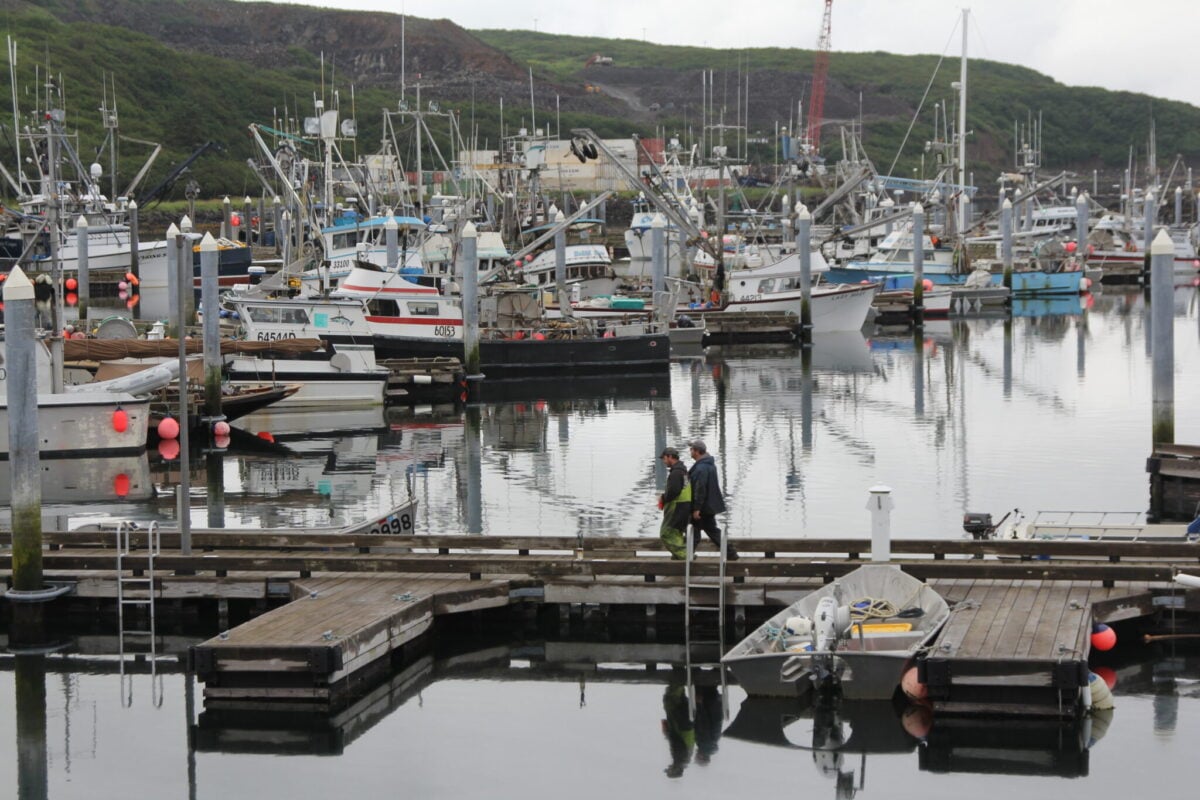
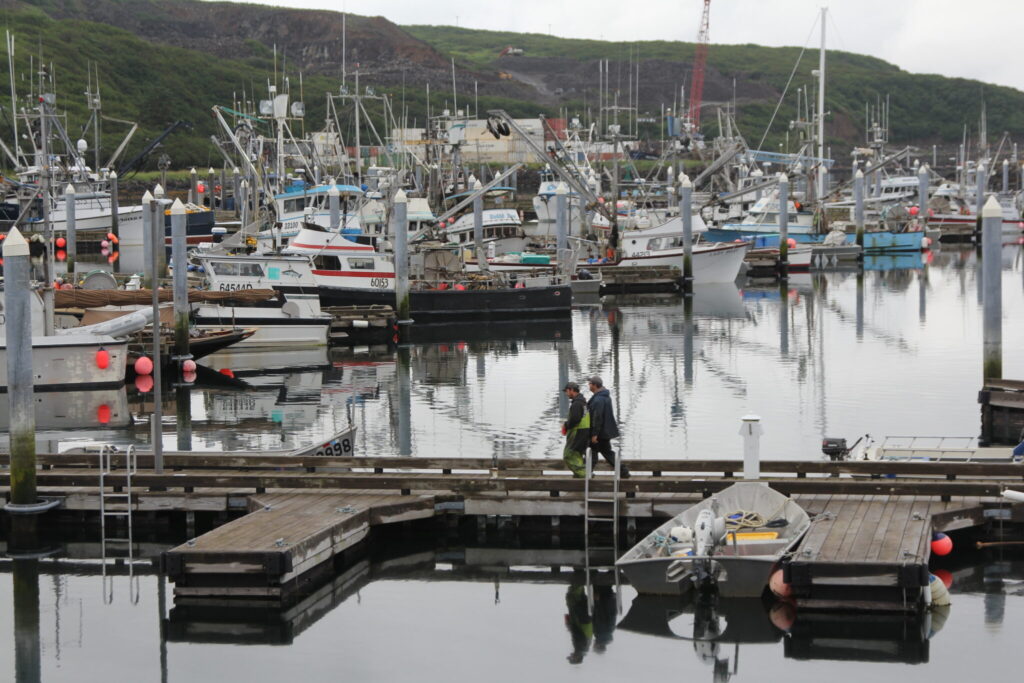
Fishing boats in the Robert E. Galovin Small Boat Harbor in Sand Point are seen on Aug 7, 2025, before heading out to the Area M fishery. (Photo by Theo Greenly)
A legislative audit committee instructed the state auditor to investigate the past three years of process and legal compliance of the board tasked with developing policy and managing Alaska’s fisheries.
Rep. Louise Stutes, R-Kodiak and chair of the House Fisheries Committee, made the request for the special audit of the Alaska Board of Fisheries. The bicameral Legislative Audit and Budget Committee approved it at a hearing on Thursday.
Rep. Louise Stutes, R-Kodiak, speaks on the House floor on the last day of the regular legislative session on May 20, 2026. (Photo by Corinne Smith/Alaska Beacon)
“The breadth and frequency of stakeholder complaints about the Board’s process make it clear the Board has lost the public’s trust. As Chair of the House Fisheries Committee, I am compelled to act,” Stutes wrote.
She said the board has been “increasingly characterized as lacking transparency, unethical, and/or unlawful.”
The seven-member Board of Fisheries is appointed by Gov. Mike Dunleavy and confirmed by the Legislature. Each member serves a three year term. The legislative audit committee authorized an examination of the board’s activity from an Oct 12, 2023 meeting through July 1 of this year.
In a letter requesting the audit, Stutes cited concern that board members have “ethical impairments,” and pointed to recent action by the Acting Attorney General Cori Mills overruling the board’s decision to implement some fishing restrictions in an Aleutian Island fishery, Area M, as evidence.
In an unusual move, Mills stepped in and voided the regulations passed by the Board of Fish in February that implemented restrictions on the Area M fishery to allow more salmon to pass through to Western Alaska spawning streams. Area M has been the center of years of fierce debate and growing concerns from subsistence and Tribal communities in Western Alaska, where salmon runs have reached crisis lows.
Following the board’s February action, Aleutian fishing groups, local and Tribal governments filed ethics complaints against several board members citing conflicts of interest, then a lawsuit challenging the board’s action. The acting attorney general voided the decision in May. In response to that action — and in support of Western Alaska subsistence and Tribal communities — advocates filed a motion to reconsider that challenged the Attorney General’s authority to void the regulation changes and asked a court to review the decision. A judge denied the request.
The Board of Fish’s chair did not respond to a request for comment on the audit on Monday.
On Monday, a spokesperson for the Alaska Department of Law said that following the Attorney General’s disapproval memo, the board has an opportunity to reconsider the regulations to the Area M fishery “as long as they conform to the proper process.”
“In general, disapproval memos are rare as we are normally able to work with the respective state agencies throughout the regulations process and ensure the regulations comply with all necessary statutory requirements,” said Sam Curtis, a public information officer with the department. “In this case, the Department of Law took action pursuant to the Ethics Act and those proceedings are confidential by law. We cannot disclose any further information.”
Legislative committee approves the audit request
In the hearing on Thursday, Sen. Scott Kawaki, D-Fairbanks questioned the motives of the special audit request. He said claims that the board actions lacked transparency or were unethical were “rather inflammatory.”
“I want to make sure that the request is targeted at the board process and whether the processes are being adhered to, and so it’s not an opinion,” he said. “If there’s a disagreement, you can litigate and you can go to Superior Court, and that seems like that process should be separate.”
Stutes told the twelve House and Senate committee members present that the audit would focus on the board’s process and procedures only, not actions taken by the board.
“We’re not addressing any decisions that have been made by the Board of Fish. Our intent through this audit is to address the process in which these decisions are being made,” Stutes said.
Kris Curtis, a Legislative Auditor for the state and that leads the Division of Legislative Audit told lawmakers at the hearing that her office has extensive experience auditing state boards — including the Board of Fish and the Board of Game — and that the state audit would adhere to the criteria outlined in the request. That includes compliance with fisheries regulations and statutes, public notice and comment requirements and compliance with the Administrative Procedure Act and Executive Branch Ethics Act.
“We conduct all of our audits in accordance with auditing standards that require that we maintain our independence, both in fact and appearance. I have no concerns about that,” Curtis said. “To be able to address these objectives using objective criteria, we will gather sufficient, appropriate evidence, like we always do for every performance audit we issue, and we will come back to the committee with an independent, objective report.”
Curtis replied to lawmakers’ questions about the Attorney General’s decision by saying it would be evaluated by auditors.
“The answer is absolutely,” she said. “It’s informative. It’s factual. If we didn’t, we would be deficient. We will also be collecting other evidence. We will be having interviews. We’ll be reaching out to stakeholders. We’ll be examining meeting meetings. We’ll be looking at meeting minutes. We’ll be looking at the process. We’ll be doing all kinds of audit procedures.”
Sen. Bill Wielechowski, D-Anchorage, asked her what would happen if auditors found the Attorney General acted improperly.
Curtis said her office would assess the case law cited in the decision. “If I found the Attorney General acted inappropriately, I would have to probably consult legislative, legal or outside counsel, depending on the subject and whatever we’re looking at, to inform us, the legislative audit team, about what decision they made. It’s not uncommon to seek additional legal advice when evaluating something,” she said.
House Speaker Bryce Edgmon, I-Dillingham, and a former commercial fisherman, acknowledged that the Board of Fish has often drawn criticism and controversy.
“You’ve audited just about every moving thing out there, if I recall, as a long-term legislator, and this issue is always going to be controversial,” he said. “There is a lot of concern out there on a number of fronts about the Board of Fisheries, as there always is.”
Edgmon noted that the auditors’ recommendations can be taken up by the Legislature if needed.
Curtis said auditors will work closely with the Board of Fish, who will have an opportunity to respond to the audits’ findings and recommendations. With the committee’s approval, Curtis said her office will likely begin the audit investigation in August and complete its work in four to six months.
For decades, federal wildlife officials have protected old-growth forests as critical habitat for northern spotted owls. But a new interpretation of the Endangered Species Act issued by the Trump administration removes protections for wildlife habitat. (Photo by Tom Kogut/U.S. Forest Service via U.S. Fish and Wildlife Service on Flickr)
The Trump administration is removing protections from the key places where endangered species live, saying states can keep the areas safe.
But experts say states aren’t equipped for the task.
Earlier this month, the Trump administration finalized a major change to the Endangered Species Act, rolling back protections for the forests, wetlands, deserts and other critical habitats that many plants and animals rely on.
The new rule will open many landscapes to development, logging, mining and oil and gas drilling. Wildlife officials — in both conservative and liberal states — had expressed strong concerns about the proposal, saying it would threaten their plans to safeguard endangered species.
But federal officials framed the decision as a move to give “freedom” to state leaders to manage wildlife without burdensome federal regulations.
States that wish to continue protecting habitats can do so under state law, the Interior Department and other federal agencies wrote in their lengthy new regulations.
But legal experts and wildlife veterans say that almost no states have endangered species laws on the books that allow state officials to prevent habitat destruction in the name of saving wildlife.
While many states have laws to stop poaching and direct killing of wildlife, the protection of nesting trees, spawning streams and other resources has long fallen to the federal Endangered Species Act and the agencies that enforce it.
“It’s not going to be a situation where the states can easily just jump in here and fill the void,” said Robert Anderson, who served as solicitor for the Department of the Interior during the Biden administration. “It’s not going to help states, and it’s going to make it worse for the species.”
Many wildlife experts also noted that state wildlife agencies are already underfunded as it is. Taking on the massive regulatory system that prevents developers and extractive industries from destroying critical habitat would require far more resources than those agencies have available.
A coalition of environmental groups and tribal nations have filed lawsuits challenging the federal rollback.
The ‘harm’ rule
On July 10, the federal departments of Interior and Commerce announced they had finalized a rule rescinding the longstanding definition of “harm” under the Endangered Species Act.
For decades, federal officials have scrutinized logging projects that would cut old-growth trees where owls build their nests, and agriculture operations that diverted water from streams where salmon return to spawn.
But now, the feds are pivoting to a much more limited definition of “harm.” Only actions that directly injure or kill the animals themselves will be considered a violation of endangered species law.
“You can destroy the resources a species requires as long as you don’t do it when the species is at home,” said Karrigan Börk, a law professor and director of the Center for Watershed Sciences at the UC Davis Institute of the Environment. “If you drain a salmon river during the summer when the salmon aren’t in it, ultimately it has the same impact of killing off that whole species.”
In its announcement, the Trump administration framed the move as restoring the “original intent” of the Endangered Species Act and reducing regulations that punished people for “indirect or speculative impacts” to wildlife.
The Interior Department did not respond to a Stateline interview request.
A 2019 study published in Conservation Science and Practice of species added to the list of endangered species from 1975 to 2017 found that only 17% of them faced threats from direct killing, while 81% faced habitat loss.
“It’s common sense that we can’t save a species unless we save the places that they live,” said Jane Davenport, senior attorney at Defenders of Wildlife, a nonprofit conservation group that is planning to sue the federal government over the change. “This is an attempted death blow to the Endangered Species Act.”
Some industry groups praised the move. The American Petroleum Institute and other oil and gas groups said in public comments that they supported the effort to limit habitat protections, but expressed concern that the Trump administration’s move to rescind the “harm” definition without issuing a new interpretation could allow a future president or the courts to issue a more expansive reading of the law.
The groups cited Supreme Court Justice Antonin Scalia’s dissenting opinion in a landmark 1995 case that upheld habitat protections under the Endangered Species Act.
“‘Harm’ must involve a direct injury to a particular animal,” the groups wrote, arguing that it “cannot result indirectly from habitat modification nor can the term apply to a population of animals.”
States’ role
In public comments after the rule was initially proposed, wildlife agency leaders from both liberal and conservative states said the change would be a blow to their conservation efforts.
The proposed rule would have “dire consequences,” wrote Bruce Kreft, chief of the conservation and communications division with the North Dakota Game and Fish Department. “Eliminating habitat protection will lead to further population declines and, ultimately, an increase in the number of species needing (Endangered Species Act) protection.”
Wildlife officials in Arizona, Georgia, Louisiana, New Mexico, New Jersey, Vermont and Wyoming also expressed concern about the loss of habitat protections, as did the Association of Fish & Wildlife Agencies, a nonprofit that represents state wildlife managers.
Of the public comments reviewed by Stateline, only Alaska’s wildlife agency leader offered wholehearted support for the change.
In response to those concerns, federal officials wrote in their rulemaking decision that the change “does not alter the ability of States to implement their own conservation programs or to regulate habitat impacts under State law.”
But wildlife experts say states cannot replicate the habitat protections that federal law provided. Although most states have their own state-level endangered species laws, they’re largely focused on poaching or direct killing of animals.
“The state-level endangered species acts are wildly variable in what they’re supposed to cover and are uniformly under-resourced and under-enforced, because the federal Endangered Species Act has been the real baseline since the 1970s,” said Börk, the UC Davis professor.
Chris Servheen, who served as grizzly bear recovery coordinator for the U.S. Fish and Wildlife Service for 35 years, worked closely with state wildlife agencies in that position.
“It’s really disingenuous to say if states want to protect habitat, they can do so,” he said. “That’s not their role, that’s not what they do. States manage the take (killing) of the animals directly related to hunting or trapping or something like that. The federal agencies manage the land base.”
According to a 2024 analysis from the National Caucus of Environmental Legislators, only eight states plus Puerto Rico require the designation of critical habitats under their laws to protect endangered species.
California appears to be the only state with a process under state law to account for damage to wildlife habitat and require developers to offset those impacts, such as funding a restoration project nearby, said Becca Madsen, restoration economy director with the Environmental Policy Innovation Center.
“(States) don’t have this layer of federal regulations and staff and the consistency of how it’s been regulated for decades,” she said. “Now they’ve got to create their own processes and permitting and data and guidance. It’s a lot.”
Even if states were to pass laws and invest in programs to protect wildlife habitat, they would be unable to enforce those measures on federal land. Across the West, federal public lands cover vast swaths of many states and provide critical habitat for many species. If the U.S. Forest Service were to permit a logging operation on old-growth forest under the new “harm” definition, state wildlife officials could do nothing to stop it.
Meanwhile, some advocates are doubtful that state lawmakers have an appetite to take on the regulatory role once handled by the feds.
“Most state legislatures are pretty strongly captured by development and real estate interests,” said Kate Groetzinger, communications director with the Center for Western Priorities, a conservation group. “The political bar to putting something like this in place at the state level is a lot higher than it was when the Endangered Species Act was passed.”
Going to court
Last week, a coalition of environmental groups filed a lawsuit challenging the “harm” rule. A pair of tribes in Washington state filed their own lawsuit, asserting that the decision will infringe on tribal fisheries that the federal government is obligated to protect under treaty agreements.
Some legal experts expect a flood of lawsuits over specific proposed projects.
“Courts are going to have to figure out on a case-by-case basis what’s covered and what’s not covered,” said Börk, the UC Davis professor. “It’s going to lead to widespread confusion over the next decades over what’s illegal or legal, and it’s going to make it harder for developers and landowners to know whether they have liability or not.”
Some advocates expressed concern that the lawsuits challenging the Trump administration could make it to the conservative Supreme Court, which could then permanently enshrine an interpretation of the Endangered Species Act that fails to protect habitat. That would leave a future administration powerless to undo the change, unless Congress were to rewrite the law.
But some see no real alternatives.
“I’d be worried if it got to the Supreme Court, but the alternative is just acquiescence, which I don’t think is a good idea,” said Anderson, the former Interior solicitor.
Editor’s note: This story was updated to correct the spelling of Chris Servheen’s name.Stateline reporter Alex Brown can be reached at abrown@stateline.org.
This story was originally produced by Stateline, which is part of States Newsroom, a nonprofit news network which includes Alaska Beacon, and is supported by grants and a coalition of donors as a 501c(3) public charity.
JPD- A 36-year-old Juneau man suffered life-threatening injuries after being struck by a vehicle late Sunday night near the Douglas Bridge, below is Juneau Police Department’s press release on the situation.
At approximately 11:05 p.m. on Sunday, July 19, 2026, the Juneau Police Department responded to the intersection of 10th Street and Egan Drive following a report of a vehicle-versus-pedestrian collision.
The preliminary investigation indicates that a 36-year-old Juneau man was riding a skateboard over the Juneau-Douglas Bridge toward 10th Street when he entered the intersection at 10th Street and Egan Drive against a red traffic signal and was struck by a black 2025 Toyota RAV4 traveling inbound on Egan Drive.
The skateboarder sustained life-threatening injuries and was transported by Capital City Fire/Rescue to Bartlett Regional Hospital for treatment.
The driver of the Toyota RAV4 remained at the scene and cooperated with the investigation.
The Juneau Police Department’s Major Accident Response Team (MART) responded to assist with the investigation.
This investigation remains ongoing. The preliminary findings are based on the evidence currently available and may change as additional information is obtained. No charges have been filed at this time.
Anyone who witnessed the collision or has additional information and has not yet spoken with investigators is encouraged to contact the Juneau Police Department at 907-586-0600 and reference this incident. Anonymous tips can also be submitted through JuneauCrimeLine.com.
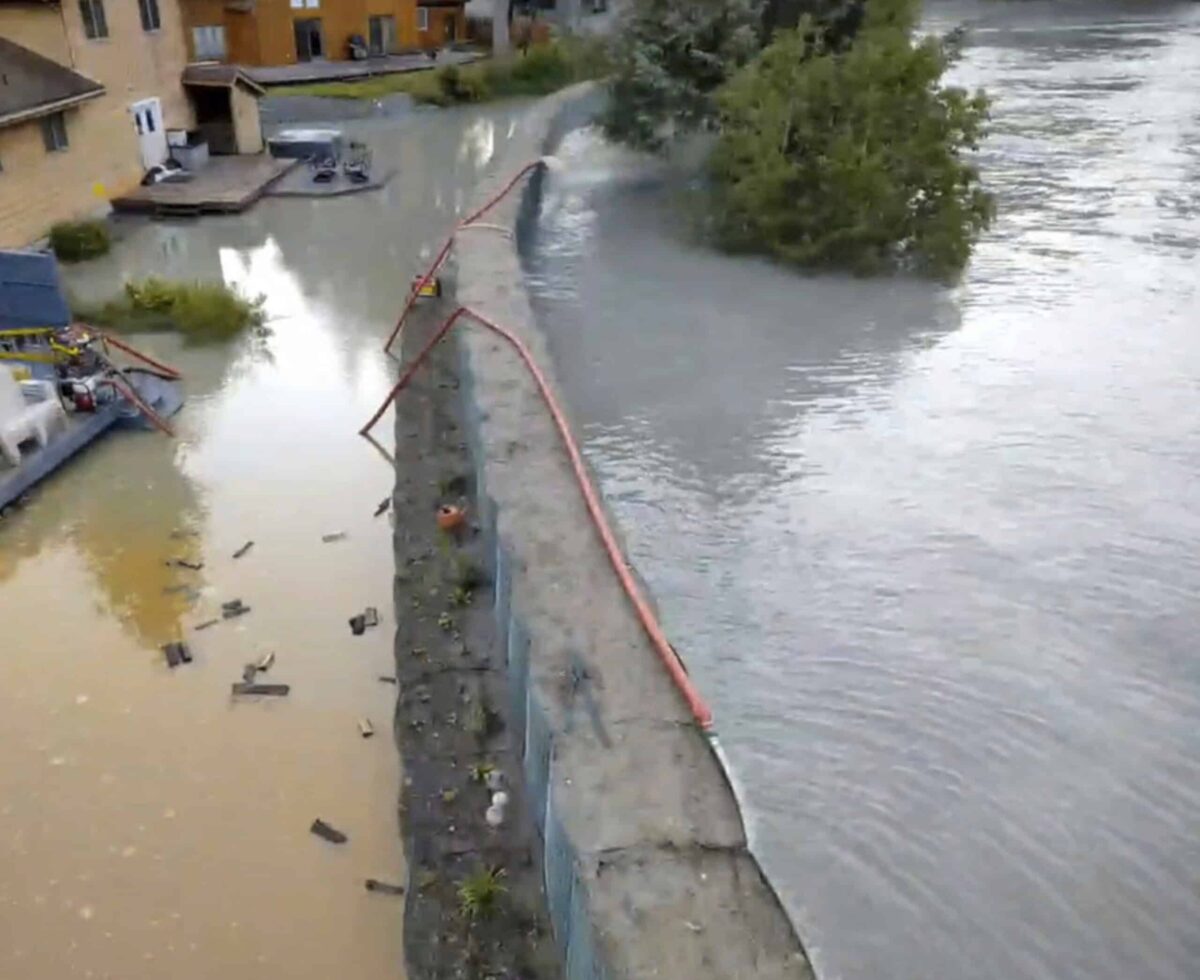
This drone image provided by the City and Borough of Juneau shows flooding from a release of water and snowmelt at Mendenhall Glacier covered some roads and threatened homes along the Mendenhall River in Juneau, Alaska on Wednesday, Aug. 13, 2025. (City and Borough of Juneau via AP)
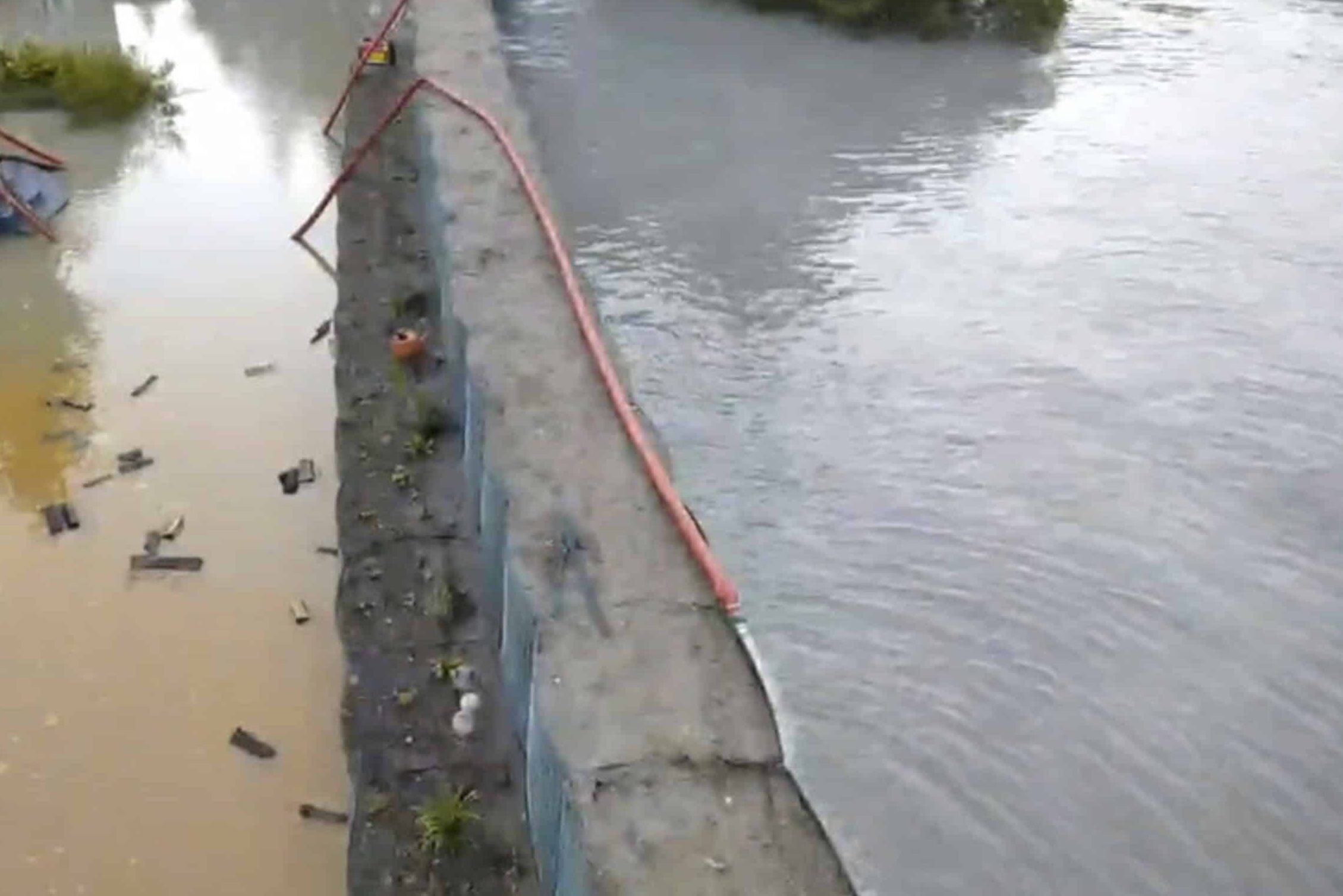
This drone image provided by the City and Borough of Juneau shows flooding from a release of water and snowmelt at Mendenhall Glacier covered some roads and threatened homes along the Mendenhall River in Juneau, Alaska on Wednesday, Aug. 13, 2025. (City and Borough of Juneau via AP)
CBJ- The City and Borough of Juneau (CBJ) Assembly Committee of the Whole (COW) Worksession scheduled for Monday, July 20 at the Andrew Hope Building has been cancelled for both topical and timing reasons. CBJ will move the planned agenda topics to a future COW worksession after the 2026 glacial lake outburst flood (GLOF).
The Special COW meeting was originally scheduled to provide updates and allow for assembly discussion on topics related to the annual threat of glacial lake outburst flooding events. The meeting included an update from the U.S. Army Corps of Engineers, a discussion of flood protection costs and potential funding mechanisms, and flood preparedness updates from the CBJ Emergency Management and Tlingit & Haida Public Safety offices.
“With a 2026 GLOF just days to weeks away, all three of our agencies (USACE, Tlingit & Haida and CBJ) are talking with residents daily about mitigation, preparation and how they can stay safe,” shared City Manager, Katie Koester. “We understand that our flood vulnerable neighbors are dedicating their focus and time to the flood just ahead of us, and realized there was nothing in the planned meeting agenda that couldn’t wait until after the waters have receded and residents have more capacity to tune in and share their input.”
The July 20 COW was scheduled to take place in the Council Chambers of the Central Council of the Tlingit & Haida Indian Tribes of Alaska in the Andrew Hope Building.
“We are honored that President Peterson and the Central Council invited the Assembly to conduct our meeting in their Executive Council Chambers showcasing the strong spirit of collaboration between our two governments,” said CBJ Deputy Mayor Greg Smith. “We are already looking for the next opportunity to meet and discuss these critical issues that impact Juneau’s residents, including tribal citizens in their Chambers.”
Updates regarding GLOF mitigation solutions and flood preparedness are regularly shared on the CBJ, USACE and Tlingit & Haida social media pages. Flood planning resources, including evacuation maps, are available at bit.ly/juneaufloodready. CBJ is also hosting sandbag distribution events tomorrow (July 18) and on all subsequent Saturdays until the 2026 GLOF.
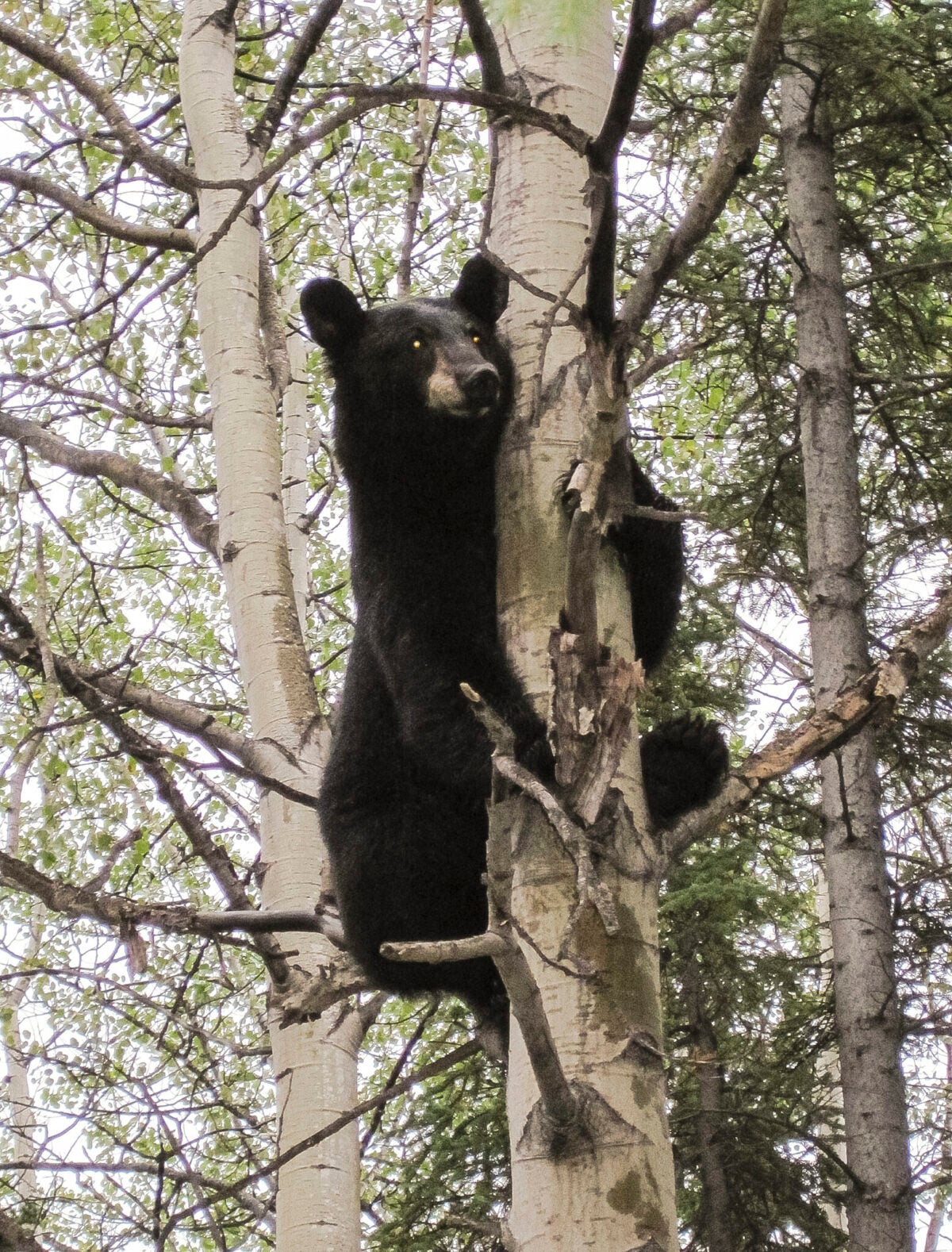
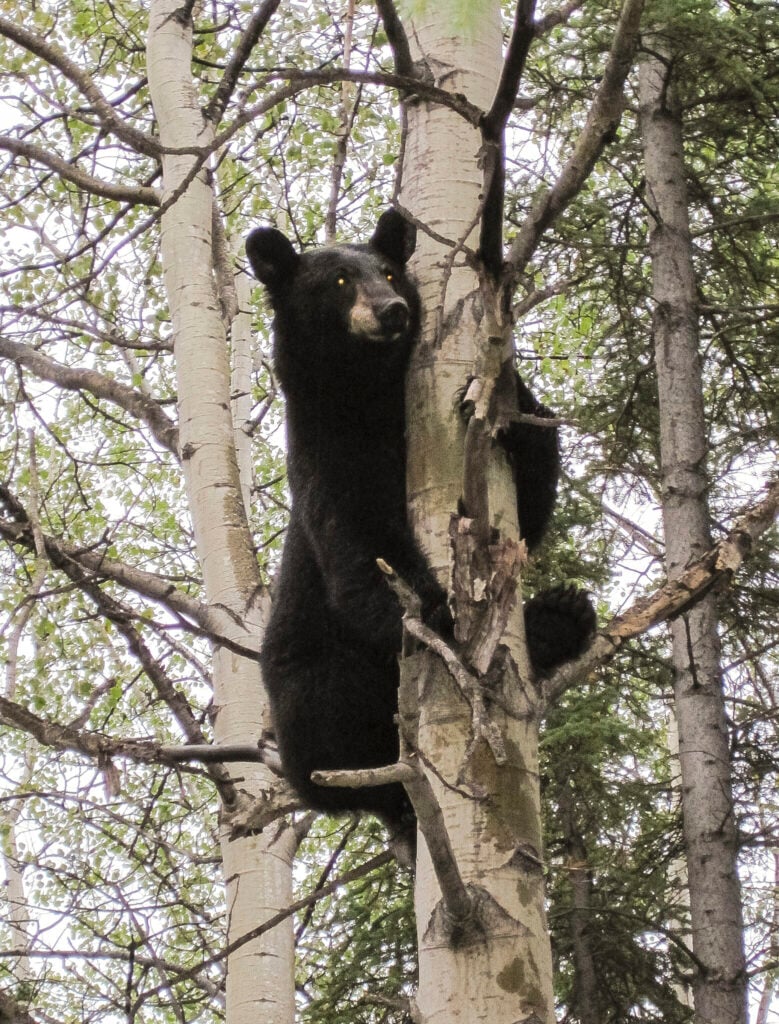
A black bear clings to a tree trunk in Wrangell-St. Elias National Park and Preserve in this undated photo. (Photo provided by the National Park Service)
Rep. Garret Nelson, R-Sutton, chased a black bear away from Rep. Julie Coulombe, R-Anchorage, in front of the Alaska State Capitol during a late-night encounter this week.
“It was a real safari night,” Nelson said on social media.
According to Coulombe, she was walking toward the Assembly Building, home to apartments used by legislators, when she saw the bear approaching her on Wednesday night.
“I am not good with bears. They freak me out,” she said by phone on Friday.
Nelson, who had just climbed in a ride-sharing car, asked the driver to stop, got out of the car and bluff-charged the bear, holding his cellphone in front of him to film the encounter.
Nelson posted the video on social media afterward, jokingly writing, “Just attack the bear first! You can get your free life advice with me whenever you want. It might end up with a serious injury (maybe death)….yes. But as my brother Geremy says, if you come out with a good story, it’s worth it.”
His ride-sharing driver posted a separate, similar video that corroborated the event.
Asked about the incident by phone, Nelson confirmed that he isn’t encouraging people to run at bears.
“I’m not advising people to randomly charge bears. I just weighed the risk and figured that one I outweighed that bear by probably 150 pounds, and he was already on his way out,” Nelson said.
Bear sightings are common in downtown Juneau during the spring, summer and fall, including near the state Capitol. Earlier this month, a downtown Juneau resident shot a bear out of a tree, injuring it. The Alaska Department of Fish and Game later killed the animal.
The department recommends that people who encounter a bear in the wild should “avoid it and give the bear every opportunity to avoid you.”
Coulombe said the bear was trotting toward her before Nelson got out of the car, started filming and chased the animal away.
“All I could think of was I was just going to run back into the Capitol because, I mean, I had really nowhere else to go,” she said.
Afterward, Coulombe said, “I was like, ‘My hero.’ He was so proud of himself. ‘You know, I saved you, Julie. I say I saved you,’ and he did.”
Nelson said that while the situation worked out for him, his tactics shouldn’t be repeated.
“Don’t charge bears. This is a do as I say, not as I do situation,” he said.
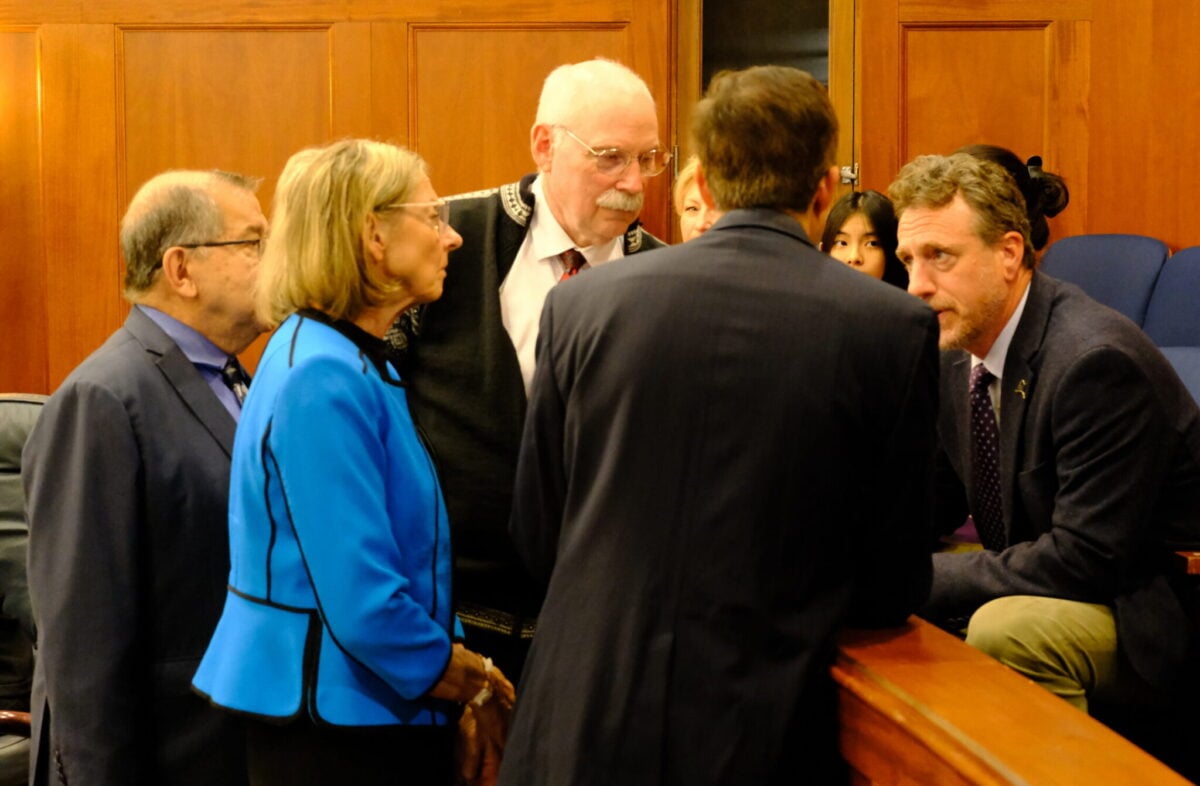
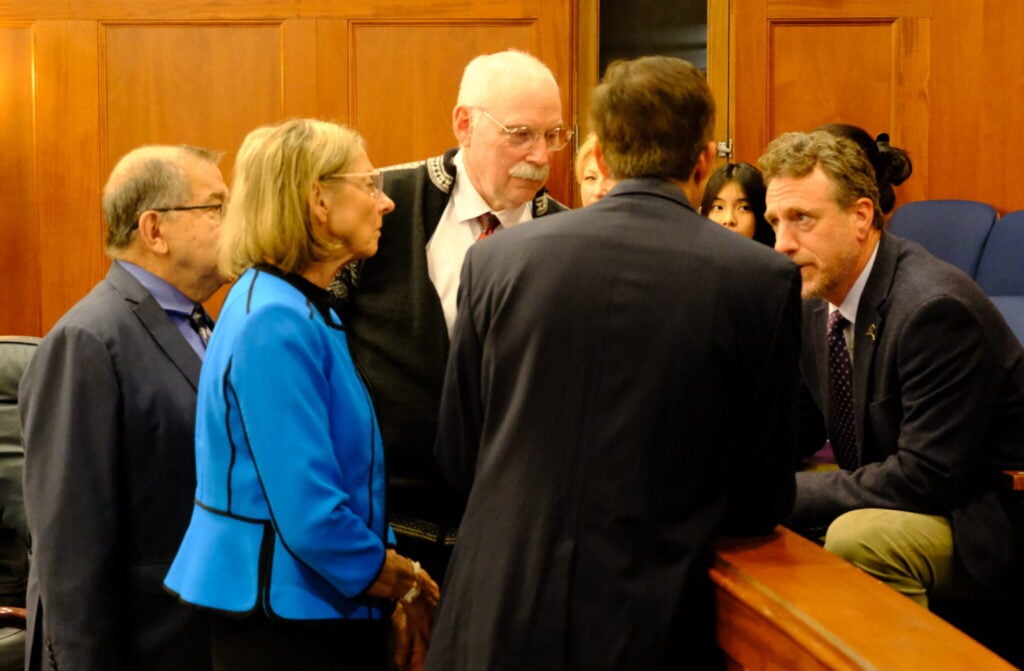
State senators crowd around Matt Kissinger, commercial director of the Alaska Gasline Development Corp., shortly before lawmakers voted Thursday, July 16, 2026, on a compromise version of a tax break intended to benefit the trans-Alaska natural gas pipeline. (Corinne Smith photo/Alaska Beacon
On Wednesday, one day before the Alaska Legislature voted on a multibillion-dollar tax break for the proposed trans-Alaska gas pipeline, Rep. Calvin Schrage, I-Anchorage, gave the pipeline’s lead developer a sneak preview of the bill.
For weeks, Schrage had been in charge of negotiating a compromise version of the tax break that could get approval from the state House, Senate and Gov. Mike Dunleavy.
He walked Glenfarne Alaska President Adam Prestidge through the compromise, explaining section by section how skeptics in the state Senate had given ground on labor issues and project timing. Skeptics also were no longer insisting that the pipeline be subject to a revised tax on privately held oil and gas firms.
Given those changes, Schrage asked: Could Glenfarne support the bill?
According to Schrage, Prestidge said it could, and Glenfarne would publish a news release to that effect.
Glenfarne disputes Schrage’s account, and that difference in perspectives appears to have contributed to a failed vote on Thursday that killed the bill — and possibly with it, the current version of the gas pipeline project.
“The governor’s probably in a bad mood,” said Sen. Bert Stedman, R-Sitka, “but he was definitely told on several occasions when we were negotiating this bill that this is our last and final offer. The bill goes down, it’s dead. There’s no playing around.”
Glenfarne has repeatedly said that changes to the state’s petroleum property tax are needed in order to get financing for the pipeline project, which is expected to cost as much as $54.5 billion.
The bill wouldn’t have guaranteed a pipeline, but as Rep. Will Stapp, R-Fairbanks, said earlier this year, the lack of a bill would guarantee not having a pipeline.
The tax break would require the state and local governments to forgo more than $10 billion in revenue over 30 years, and some legislators are skeptical of the proposal. Getting their votes required a compromise.
A tax revision, variously called an “S Corp tax” or “pass-through entities tax” would apply certain income taxes to some companies that don’t currently pay them. It was included in the pipeline bill to win the votes of skeptical lawmakers, but prior versions of the tax have drawn opposition and led to an impasse.
On Thursday, after Schrage told fellow lawmakers that Glenfarne supported the new version, a bipartisan, bicameral committee voted 4-2 to advance it to the full House and Senate.
No news release came, and Schrage talked to Prestidge again.
Hilcorp, an oil and gas firm owned by billionaire businessman Jeffery Hildebrand, is the operator of the Prudhoe Bay and Point Thompson oil and gas units on the North Slope. Those units would supply gas for the pipeline that Glenfarne intends to build.
Hilcorp is also the company that would be most affected by the revised tax.
“What I heard from Glenfarne is that Hilcorp told them that if they came out in support of the bill, that they would make all their contractual negotiations impossible for them, and essentially threatened to use their future negotiations, which they knew they would have to enter into, to leverage them and and make things incredibly difficult,” Schrage said.
After Thursday’s committee vote, pro-development groups issued a statement asking legislators to vote down the revised bill, citing the tax revision and its potential effect on natural gas prices in the state.
“When you tax entities that are providing you with a commodity, it will increase the end cost of said commodity,” said Steve Wackowski, president and CEO of the Alaska Oil and Gas Association, a trade group that signed the statement.
Before the state Senate voted on Thursday afternoon, lawmakers there learned that Glenfarne and the Alaska Gasline Development Corp. — a state-owned firm developing the pipeline with Glenfarne — might have issues with the S Corp provision after all.
AGDC owns 25% of the gas line project, while Glenfarne owns 75%.
They called for a brief break in order to talk with Prestidge and Matt Kissinger, the commercial director of AGDC, in private.
Kissinger told senators that AGDC was fine with gasline-related provisions of the bill but had no comment on the pass-through provision because AGDC isn’t a tax-paying entity.
“They wouldn’t touch that with a 10-foot pole because they answer to the (governor),” said Sen. Bert Stedman, R-Sitka on Friday.
By phone to senators on Thursday, Prestidge said Glenfarne opposed the S Corp provision.
Members of the 14-person Senate majority caucus left that meeting with no agreement on whether or not to pass the bill. It ultimately passed the Senate by a single vote after Sen. Matt Claman, D-Anchorage, changed from “no” to “yes.”
Before the House could vote, Gov. Mike Dunleavy issued a statement saying he opposed the latest version of the bill and would veto it if it passed the House.
No veto was needed: Only 19 members of the House voted for the bill, two short of what was needed to advance it.
Only one of the House’s 21 Republicans — Rep. Louise Stutes, R-Kodiak — voted for the bill; all of the House’s Democrats and independents voted for it. That flipped a vote on a prior version, when opposition came from a handful of Democrats and independents.
Several Republicans who voted against the bill said they did so because it would affect companies that are drilling for oil and gas in Cook Inlet — Hilcorp, as well as HEX and Furie. Armstrong Oil and Gas, a firm active on the North Slope, would also be affected.
Partially because of corporate secrecy and partially because of the haste with which the compromise advanced, there was no information on how much each company would pay.
In addition, members of the all-Republican House minority caucus were excluded from the closed-door negotiating that led to the compromise bill. The exact text of the final version came as a surprise to them.
“All of a sudden, we would have a tax on our three most important companies, which would be Hilcorp, HEX, and Armstrong,” said Rep. Kevin McCabe, R-Big Lake. “I think (voting no) was the right thing to do, and my whole caucus apparently agrees, as well as the Senate minority.”
Schrage, who voted for the bill, disagreed.
“The bill worked for Glenfarne and would have allowed them to keep moving the project forward and given them a shot. They were happy and pleased with the work product. I don’t think they ever loved the S Corp provision, but it didn’t harm them. And it was only when Hillcorp came in to essentially leverage the parties at play that everything fell apart,” Schrage said afterward.
Glenfarne disputes Schrage’s account of what occurred, calling it “misleading and incorrect.”
“Glenfarne didn’t take a position on a bill we hadn’t seen, and once we saw the bill we immediately opposed it, including our June 19 statement to the media. This tax increases commercial and economic uncertainty in Alaska for the whole industry working together to support this project and bring energy relief. A $16 project energy price cap and tax-driven cost increases make project economics increasingly challenged,” said spokesman Tim Fitzpatrick by email.
Fitzpatrick’s statement refers to a clause in the gas pipeline bill that caps the price of natural gas for Alaskans. If taxes rise on Hilcorp, it could then raise the price of North Slope gas it sells into the pipeline, making it difficult for Glenfarne to meet the required price, said those familiar with the issue.
“It’s frustrating that Hillcorp has so much influence over the state of Alaska,” said Sen. Lyman Hoffman, D-Bethel on Friday. “Glenfarne or the governor wouldn’t stand up to them for the better interests of the state of Alaska.”
Schrage says he has phone records and text messages to back up his account.
“I think the evidence is pretty clear,” Schrage said. “The governor, Glenfarne and minority Republicans all indicated support for the bill passed out of the conference committee minus the closure of the passthrough entity tax loophole which the entire AKLNG project was exempted from. Given that exemption and the support for the rest of the bill, what possible reason would Glenfarne have to oppose the bill other than pressure from Hilcorp?”
Sen. Bill Wielechowski, D-Anchorage, took to social media on Thursday to accuse Dunleavy of working for “a Texas billionaire,” the owner of Hilcorp.
“Yeah, that’s bulls**t. OK, that’s bulls**t. He’s just — and you could quote me, that’s bulls**t. OK, he’s a bulls**tter,” Dunleavy said of Wielechowski, speaking to reporters after a news conference on Thursday evening. “He is one of a handful in the Senate and the Democrats that are going to try and kill this gas line for the very people they purport to represent — poor people, single moms with kids — that their bills are going through the roof. Why doesn’t he give a rip about them? Why doesn’t he care about them?”
“Why is he insisting on an S Corp in this bill?” Dunleavy asked.
Because Dunleavy would veto a standalone bill, Wielechowski said afterward.
“The reason that it hasn’t been passed is because he’s threatened to veto it, and you need 45 votes to override that, and there’s zero chance we’re going to get it,” Wielechowski said.
Alaska is facing a long-term deficit, with spending on services and the Permanent Fund dividend expected to greatly exceed the amount of available revenue. Legislators have been trying since 2017 to pass a bill containing the S Corp provision.
Dunleavy has vetoed numerous standalone tax bills, saying repeatedly that he will not approve any that are not part of a comprehensive plan to bring state expenses and revenue into line over the long term.
“He’s killed all of the new revenue bills that we’ve offered,” said Sen. Cathy Giessel, R-Anchorage.
“This is a huge gap in our revenue stream. It is an inequality in our tax structure,” she said, noting that other oil companies pay the tax that Hilcorp would pay. “How is it that Conoco and Exxon have been able to pay this tax and still continue to explore on the North Slope?”
Dunleavy said insisting on an S Corp provision in the gas pipeline bill amounts to hostage-taking.
“So you can’t get an S corp bill passed that’s unvetted, that nobody really knows what it does, unless you hold the people hostage with a gas bill? Well, that’s a representative for you. That’s a senator for you. That’s pretty sad, to be perfectly honest with you,” he said. “Pretty sad.”
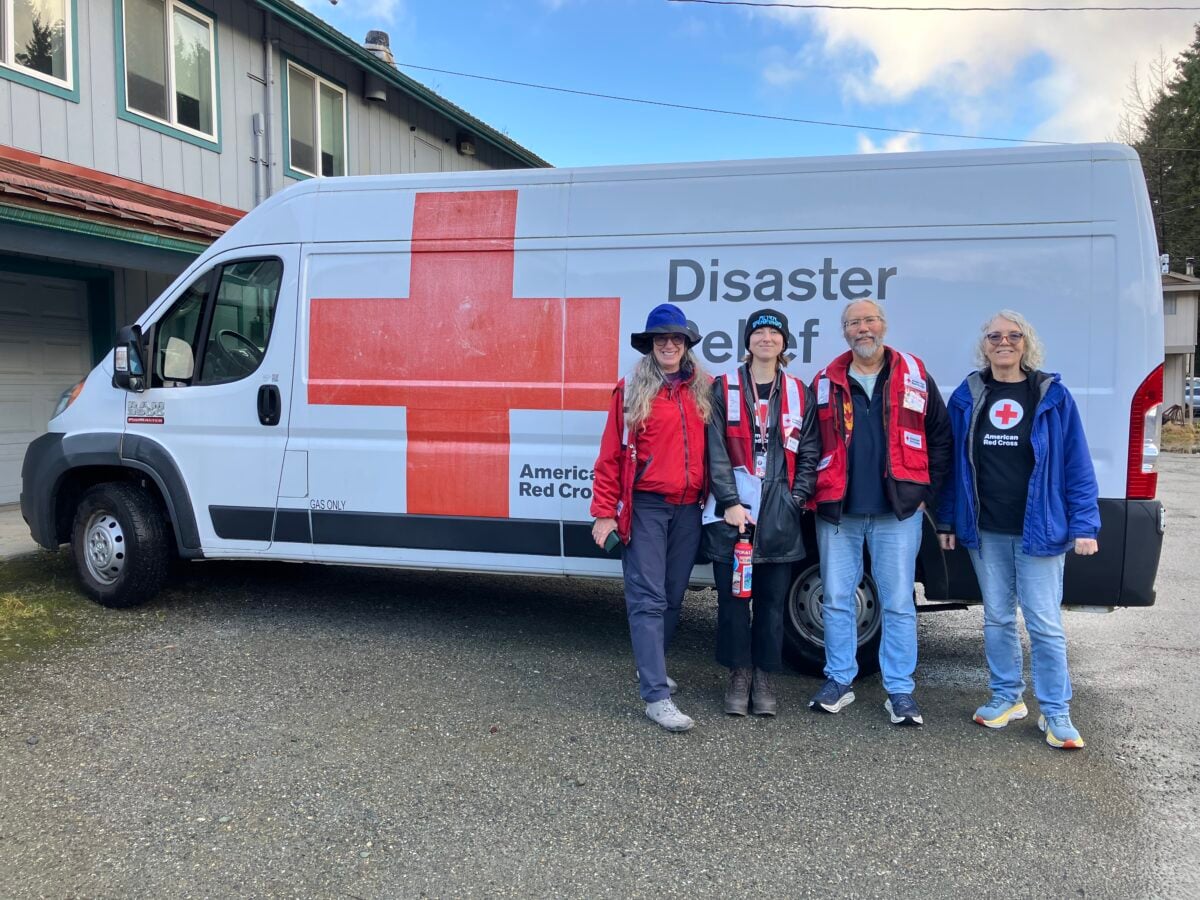
CBJ-The American Red Cross will host a free workshop and resource fair on Sunday, July 19 at the Mendenhall Valley Library. The event is designed to help older adults, individuals with access or functional needs, and medically fragile persons prepare for emergencies.
The event begins at 12 p.m. with a presentation, available both in-person and online, followed by a planning workshop and resource fair from 1 to 3 p.m.
Attendees will have the opportunity to build an individualized disaster plan, complete an emergency contact card, learn how and where to safely store important documents and more.
Registration is free and available online at bit.ly/4vZJlPL. Information for virtual attendance will be provided upon registration
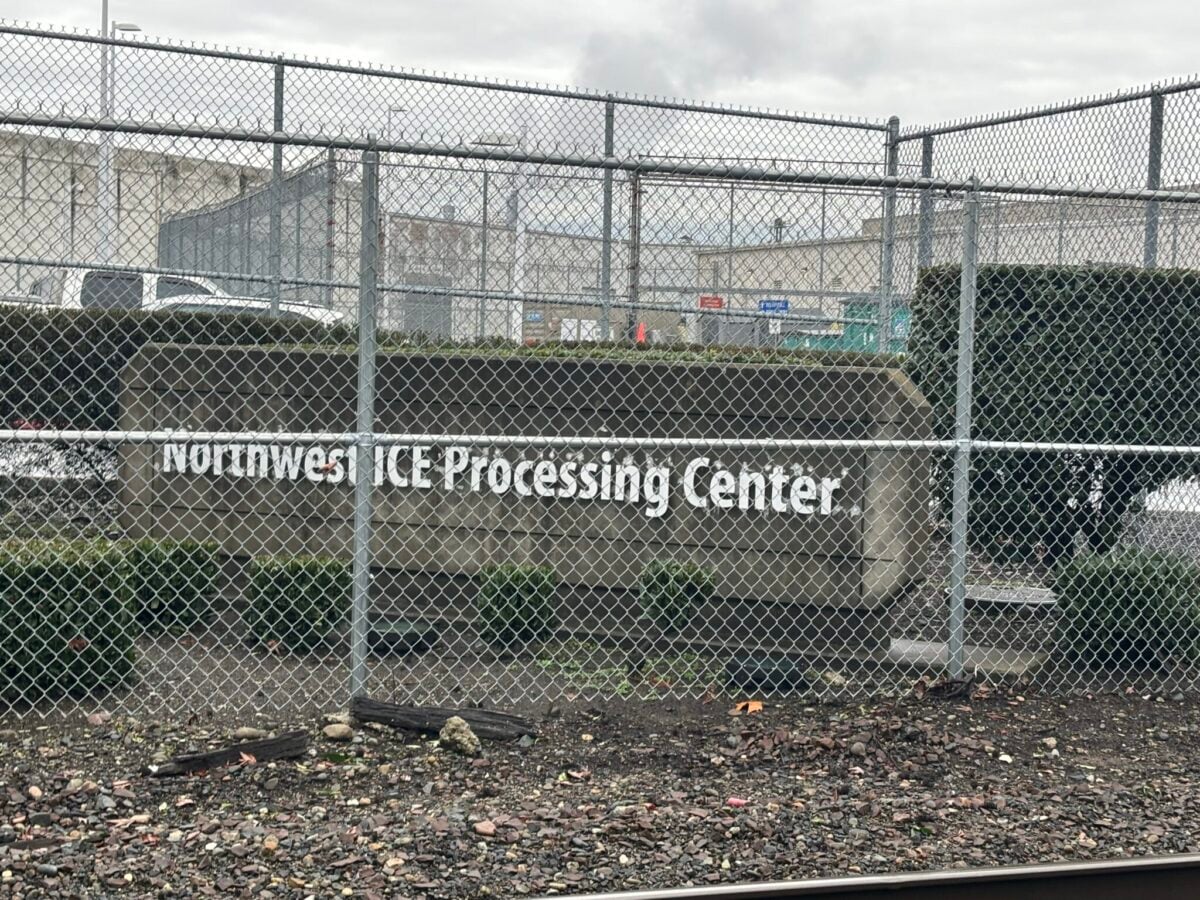
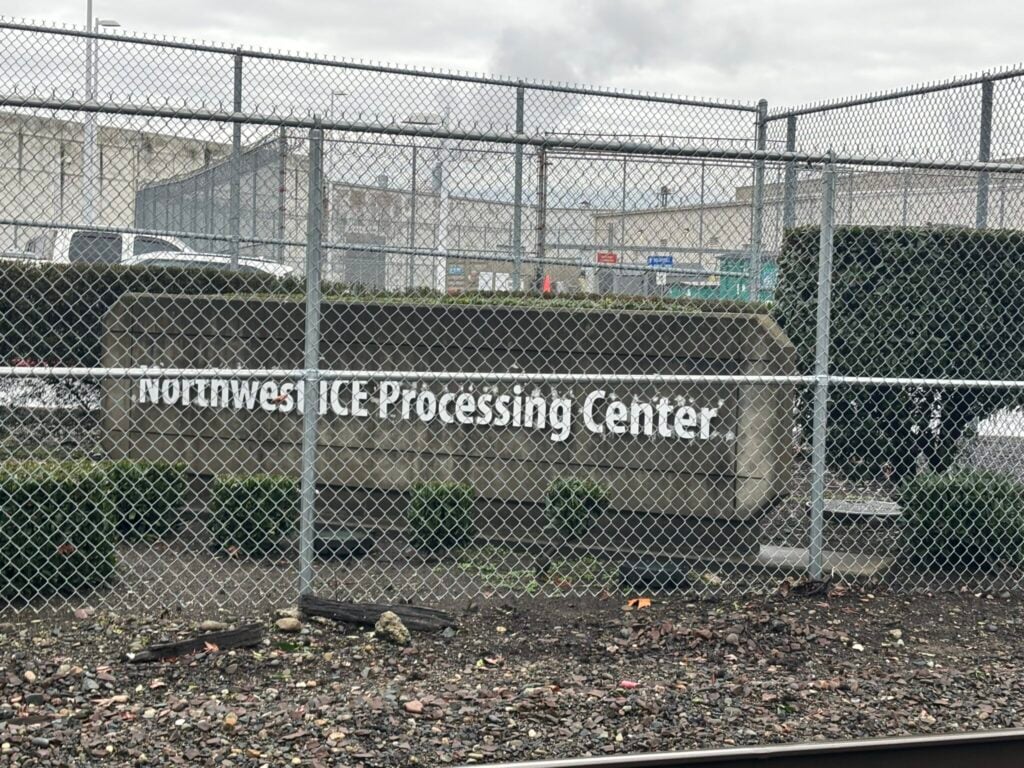
The Northwest ICE Processing Center in Tacoma, which is one of the largest immigrant detention facilities in the western U.S. (Grace Deng/Washington State Standard)
U.S. Immigration and Customs Enforcement arrested an Alaska state attorney in Anchorage and is holding him in an ICE detention facility in Washington state, according to an agency spokesperson.
Shucheng Yang, a 32-year-old Chinese national, was arrested in Anchorage on July 10.
“Yang violated the terms of his admission and is a deportable alien,” said Jason Chudy, an ICE Public Affairs officer, by email on Thursday. He said Yang is currently detained in the Northwest ICE Processing Center in Tacoma, Washington, pending immigration proceedings.
Yang is an attorney with the Alaska Department of Law’s labor, business and corporations section, according to the state employee database. Yang was admitted to the Alaska Bar Association and licensed to practice law in the state in June 2025. A spokesperson for the department declined to respond to questions about his immigration status, employment status or work authorization when hired, saying the department does not comment on personnel matters.
Chudy declined to say how Yang violated the terms of admission into the country. “To be clear, work authorization does NOT confer legal status in the United States,” he said in the email.
He referred further questions about Yang’s work authorization to the U.S. Citizenship and Immigration Services. A spokesperson for USCIS referred the question back to ICE, and said the agency does not comment on individual immigration cases.
The state requires applicants to self-disclose their employment eligibility and work authorization through the I-9 verification process during hiring, according to the Alaska Department of Administration, as reported by Alaska News Source.
There are no state criminal charges against Yang, according to court records. Yang pleaded no contest on June 26 for a speeding citation.
A spokesperson for the Municipality of Anchorage confirmed the Anchorage Police Department issued the traffic ticket on April 25. “They have had no other interaction with Mr. Yang since April,” said Nora Morse, communications director for the municipality, by email on Thursday.
“The Anchorage Police Department does not ask for someone’s immigration status as part of a routine traffic stop,” Morse said.
A spokesperson for the ACLU of Alaska said they were trying to get in touch with Yang’s attorney, and had no other information on his case.
The Alaska Department of Corrections contracts with ICE to hold detainees in Alaska under an agreement with the U.S. Marshals. A spokesperson confirmed that Yang was detained in Alaska for two days after his arrest until he was transferred on July 12.
DOC has held 17 people arrested by ICE since June 1, and 73 people since the beginning of the calendar year, according to spokesperson Betsy Holley on Thursday.