Categories
Alaska News Featured Juneau News juneau Juneau Local Juneau Local Ketchikan Local News Feeds Sitka Local

Federal ‘SAVE Act’ risks denying thousands of Alaskans the ability to vote, Murkowski says

By: James Brooks, Alaska Beacon

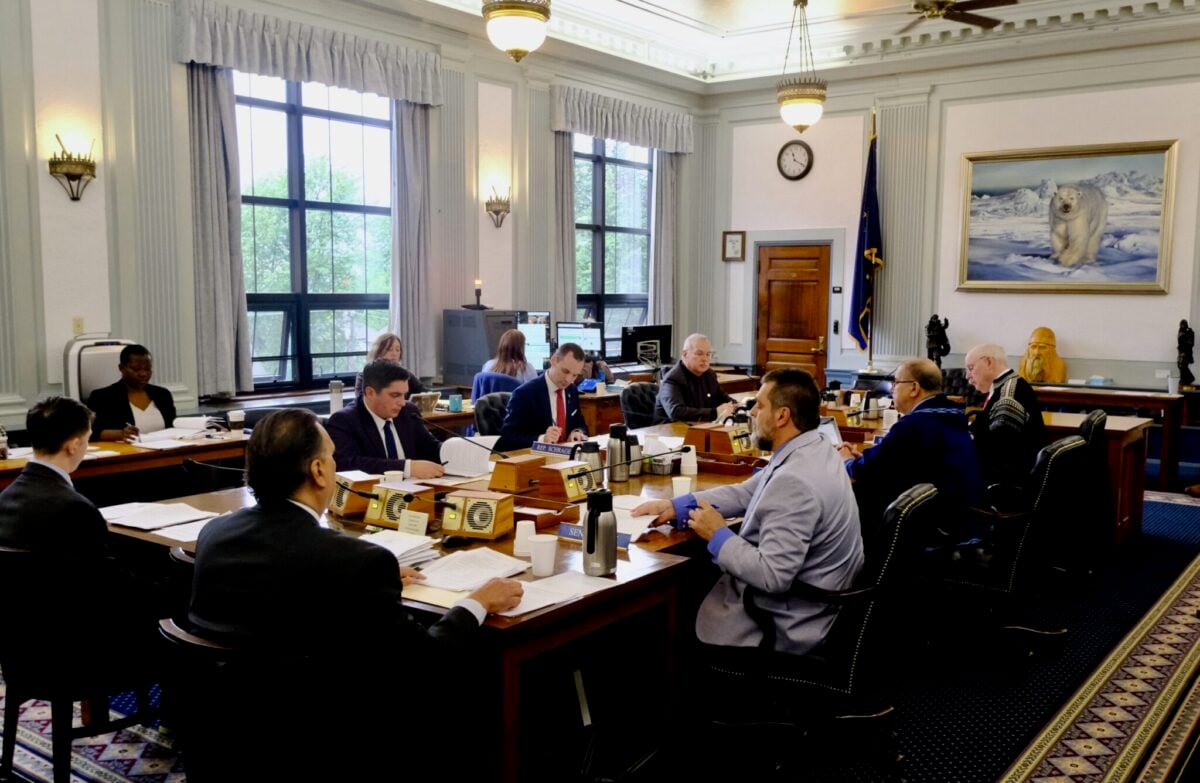
U.S. Sen. Lisa Murkowski, R-Alaska, speaks Thursday, March 19, 2026, on the floor of the U.S. Senate, in this screenshot of a video broadcast by the Senate. (Screenshot)

An elections bill being debated by the U.S. Senate could cost thousands of Alaskans the ability to vote in this year’s elections, Sen. Lisa Murkowski said Thursday in a lengthy speech on Capitol Hill.

The SAVE America Act, supported by President Donald Trump and most congressional Republicans, is ostensibly intended to prevent noncitizens from voting in American elections, but its implementation could prevent many Americans from being able to vote. 

“While disenfranchisement may not be the intent of the SAVE America Act … I think that we will see that. In fact, I fully expect it to be an outcome of this,” Murkowski said.

The act would require that voters present photo ID when they vote, and that people present documentary proof of citizenship when they register to vote. That would mean presenting proof of citizenship in person at an elections office or other specially licensed state license.

“This would be a major, major departure from how most Alaskans currently register to vote,” Murkowski said. 

In 2024, about 29,000 Alaskans registered to vote. Most of those — 25,000 or so — would have run into problems if the current bill had been law at that time, she said.

Most of Alaska’s voter registrations are done online or through the state’s motor-voter or PFD voter process. The bill could allow citizenship verification, but it’s not clear how that would happen, Murkowski.

Mandating in-person registration would have big effects in Alaska. 

The state has only six in-person elections offices, mostly on the Railbelt, and fewer than a dozen DMV offices where residents could present proof of citizenship. 

Some other state agencies might also be able to accept that proof, but the bill’s requirements take effect immediately, and it contains no funding for states to make changes that would allow remote offices to verify ID.

In practice, that means the bill would require rural residents to fly to urban Alaska, Murkowski said.

In addition, anyone seeking to register would have to have either a passport — roughly 50% of Alaskans don’t have one, Murkowski said — or some other form of appropriate ID. 

Alaska driver’s licenses wouldn’t be good enough to register to vote, nor would most tribal IDs, because they don’t specifically label someone as a citizen or not.

The bill allows someone to self-certify their citizenship if they sign an affidavit, but that clause only applies if the person has already made “reasonable efforts” to obtain a copy of a valid ID.

It isn’t clear what that means, Murkowski said.

The bill also would end Alaska’s practice of allowing anyone to cast an absentee ballot for any reason. It would restrict absentee voting to a subset of specifically identified voters, including people living out of the state where they are registered to vote.

Murkowski said she hasn’t seen evidence that these kinds of measures are needed to address a small-scale problem.

Voting by noncitizens is rare in Alaska. A report obtained by the Alaska Beacon through a public records request showed 70 possible cases since 2015. At least 11 people on that list have been charged in state court. 

“That’s basically seven a year,” Murkowski said.

“You look at what we’re trying to chase here with this balance — with disenfranchising so many who would be faced with almost insurmountable challenges in order to register or vote — I look at this and on balance, it doesn’t weigh,” she said.

Earlier this year, Rep. Nick Begich III, R-Alaska, voted in support of the bill as it passed out of the House, saying afterward that he doesn’t think it will be hard to comply with the bill.

Sen. Dan Sullivan, R-Alaska, has said he supports the act despite its ramifications for the state.

“I do think that having the ability to show an ID and proof of citizenship to keep elections safe is important, and it’s supported by the vast majority of Americans,” he said in response to a question during a February forum hosted by the Juneau Chamber of Commerce.

At that forum, he was confronted by an angry attendee who questioned how he could speak on Elizabeth Peratrovich Day, a state holiday honoring an Alaska Native civil rights leader, and support a bill that would have detrimental effects on Alaska Native voters.

“I have a very, very, very strong record as it relates to the franchise for our people, in particular, the Alaska Native community,” he said, referring to actions he took during the 2010 Alaska election, when he served as attorney general. 

“I think voting, in my view, should be easy, but cheating on voting should not be,” Sullivan said.

While Sullivan has said he supports the bill, he also told reporters last month that he doesn’t support overriding the Senate’s filibuster to pass it.

In practice, the filibuster means that the bill would require 60 votes, not 50 and the vice president, to advance through the Senate.

With all of the Senate’s Democrats and Murkowski opposed to the SAVE Act, the bill — at least as of Friday — lacks the support it needs to become law.

Categories
Alaska News Featured Juneau News juneau Juneau Local Juneau Local Ketchikan Local News Feeds Sitka Local Uncategorized

Alaska disability advocates praise progress and push for more at state Capitol

By: Corinne Smith, Alaska Beacon
Judy and Eric Edwards pose for a photo at a ribbon cutting ceremony for a new universal changing station installed on the first floor of the Alaska State Capitol on Mar. 19, 2026. (Photo by Corinne Smith/Alaska Beacon)

Judy Edwards and her son Eric traveled from Palmer to advocate for people with disabilities at the Alaska State Capitol in Juneau this week, and now one part of that process is a bit easier.

A newly installed universal changing station on the first floor of the Capitol is a clean, safe space for people who need assistance when using the restroom. The changing station is adult-size and adjustable, for people who use adult diapers and need help changing them. This is an upgrade for Eric, who is 18-years-old and has quadriplegic cerebral palsy with dystonia and uses a power wheelchair. 

Previously he and his mother would have had to use the floor. 

“This will make life easier for everybody,” Judy said. “Parents, especially younger parents, they just deal with things, but they shouldn’t have to. You know, parents hurt themselves because they’re trying to lift from the floor.”

At a ribbon cutting ceremony on Thursday, lawmakers and advocates with the Key Coalition — a group of people with disabilities, their caregivers, service providers and supporters — gathered to applaud the new installation. 

Judy and Eric Edwards gather with Reps. Sara Hannan, D-Juneau and Ashley Carrick, D-Fairbanks, and Capitol facilities manager Serge Lesh for a ribbon cutting ceremony for the installation of a new universal changing station at the Alaska State Capitol on Mar. 20, 2026. (Photo by Corinne Smith/Alaska Beacon)

“I am so sorry that you’ve had to advocate for this and that those of us who are able bodied don’t automatically think about it,” said Rep. Sara Hannan, D-Juneau, who oversees a committee that runs maintenance in the Capitol. 

Hannan said the universal changing station cost the state less than $20,000 total, including the cost of the device, shipping and electrical costs for installation. She said the committee is in the process of reviewing and making accessibility upgrades around the Capitol, including plans to widen the door frame and install an automatic door opener for the first floor accessible restrooms.  

The Edwards family travel often for medical care. They are among the advocates who have been raising concern and pushing for more changing stations around the state. A new bill now introduced in the legislature, House Bill 141, would require at least one universal changing station be included in construction or renovation of all state or local government owned public buildings. 

Rep. Ashley Carrick, D-Fairbanks, sponsored the bill.

“We’re looking at different ways to approach the issue, whether just on a funding level or policy, but ultimately, the goal is to just have types of changing facilities across the state,” Carrick said in an interview. “As legislators, the more we can do to just help all Alaskans have their basic needs met — that’s really where the motivation for this bill came from, and the awareness around this being a major challenge is so important.”

Advocates and lawmakers are focusing first on Alaska airports. The Edwards family was involved in raising awareness around access, resulting in a new universal changing station being installed at the Ted Stevens Anchorage International Airport in 2024. 

There is also a changing station at the Mat Su Health Foundation, and a temporary station was installed last summer at the fairgrounds of the Alaska State Fair. Edwards said she also wants to see one installed at Providence Alaska Medical Center hospital in Anchorage. 

Advocates with the Key Coalition flew to Juneau for an advocacy day on Wednesday, when they held a march and rally in front of the Capitol and met with lawmakers urging policy changes to increase access and services.

Demonstrators with the Key Coalition march through downtown Juneau to rally at the Alaska State Capitol for disability rights and increased services on Mar. 18, 2026. (Photo by Corinne Smith/Alaska Beacon)
Demonstrators with the Key Coalition rally at the Alaska State Capitol calling for disability rights and increased services on Mar. 18, 2026. (Photo by Corinne Smith/Alaska Beacon)

“Having a disability could happen to any one of us,” said Michele Girault, board president for the Key Coalition. “So we’re creating communities where accessibility is at the top of the leaderboard, access to housing and good workforce and all the things that you might need to be supported, are available when you need it.” 

Advocates are pushing for the state to eliminate the waitlist for people with disabilities applying for Medicaid services. Girault said they also want to reduce wait times for reimbursements for service providers.

“So that people who provide the service to people with disabilities and elders across the state are reimbursed at a rate that keeps them in business,” Girault said. “Some people have left the state because they were tired of waiting for services, and some families are opting not to even put their names on the wait list.” 

Girault said the Key Coalition is continuing to support increased funding and expanded access for infant learning programs and early intervention services for youth experiencing developmental delays, which support families and children from infancy to age three.

Last year, Gov. Mike Dunleavy vetoed a bill to provide $5.7 million to increase funding for the state’s 17 infant learning programs. But lawmakers are trying again this year, with Senate Bill 178, sponsored by the Senate Health and Social Services Committee, to expand eligibility for the programs and increase funding. 

A bill to update the state’s guardianship statutes is also supported by the Key Coalition. Girault said Senate Bill 190 would strengthen protections for people involved in the state guardianship system, including for medical guardians, partial guardians and in conservatorship. They’re also pushing for  improvements to access to public transportation.

Sara Kveum speaks to the crowd rallying at the Alaska State Capital for disability rights and increased services on Mar 18, 2026. She is beside Michele Girault, director of the Key Coalition of Alaska, which organized the rally as part of an annual legislative fly-in, and includes people with disabilities, their families, service providers, educators and advocates. (Photo by Corinne Smith/Alaska Beacon)

“Transportation is in the top five barriers for people with disabilities. When you think about all the snow we’ve had this winter, how do you get to the bus stop? Once you’re at the bus stop, is the bus stop cleared?” Girault said. The Key Coalition is supporting House Bill 26, which would require a new state transportation plan to include access for people with disabilities. 

“This transportation bill requires the state to create a plan that actually thinks about all of the points of access for people across the state of Alaska, not just in major cities, but in rural areas as well,” Girault said.

More than 1 in 4 adults in the U.S. have some type of disability, including mobility, hearing, vision or cognition disabilities, and advocates say they want to see improvements across Alaska to expand access, care and dignity for all. 

For the Edwards family, and many advocates and families with disabilities, flying to Juneau isn’t easy, but Judy Edwards said it’s worthwhile — and she wants to see more changes to increase access across Alaska.

“I’m 67, but when I was a kid, you didn’t see people with disabilities out in public, really, much,” Edwards said. “And so today, it’s like, why not? I mean, we’ve come such a far way. Why not? We need to keep going.”

Categories
Alaska News Featured Juneau News juneau Juneau Local Juneau Local Ketchikan Local News Feeds Sitka Local

Alaska lawmakers try to broker budget funding compromise amid war-driven funding dispute

By: James Brooks, Alaska Beacon

Members of the Alaska House minority talk strategy during a break in the Wednesday, March 18, 2026, session of the Alaska House of Representatives. (James Brooks photo/Alaska Beacon)

Alaska legislators have sidetracked a bill originally intended for the legislative fast track.

In a pair of votes Wednesday, the Alaska House and Senate voted to send House Bill 289, the state’s supplemental budget bill, to a conference committee empowered to iron out differences between two different versions respectively enacted by the House and Senate.

Lawmakers took that unusual action after the House failed to approve a Senate-passed plan to pay for the bill with more than $373 million from the state’s principal savings account, the Constitutional Budget Reserve.

The committee is scheduled to hold its first meeting at 3:45 p.m. Thursday.

HB 289 is intended to fund expenses in the current state fiscal year that were incurred after lawmakers adjourned last year’s legislative session. 

That includes money needed to respond to last summer’s wildfires and ex-Typhoon Halong, which devastated Western Alaska in the fall.

One key item in the bill — $70.2 million intended to unlock federal construction grants — is time sensitive. For months, the state’s construction industry has been lobbying for fast action on that money, saying that without surety on federal grants, they cannot make hiring and purchasing decisions for this summer’s construction season.

In February, the House passed a version of HB 289 with more than $500 million in expenses and proposed to pay for it by spending from the reserve. 

It takes 30 votes in the House and 15 votes in the Senate to unlock the reserve. This month, in order to meet the threshold in the Senate, lawmakers there cut the bill to slightly over $373 million.

That earned unanimous support in the Senatebut not in the House, which is controlled by a 21-person multipartisan majority coalition. Meeting the 30-vote threshold would require some support from the 19-person, all-Republican House minority caucus.

For more than a week, that caucus has been united in opposition to spending from savings, saying that a forecast boon to state finances — caused by higher oil prices amid the Iran war — should be enough to pay for the extra spending.

Members of the House majority, meanwhile, have been just as adamant in their position that it is unwise to rely on war-driven oil prices.

Sens. Lyman Hoffman, D-Bethel; Bert Stedman, R-Sitka; and Mike Cronk, R-Tok, were appointed to represent the Senate on the committee. Reps. Andy Josephson, D-Anchorage; Calvin Schrage, I-Anchorage; and Will Stapp, R-Fairbanks; will represent the House.

Cronk and Stapp are members of their respective minority caucuses; the other four lawmakers are representing their respective majority caucuses.

Additional meetings are expected after Thursday’s initial organizational hearing.

Categories
Alaska News Featured Juneau News juneau Juneau Local Juneau Local Ketchikan Local News Feeds Sitka Local

Lawmakers propose crackdown on AI-generated child exploitation material

By: Grace Dumas, News of the North

Senator Jesse Kiehl presenting SB 247 to the Senate Community and Regional Affairs Committee on Tuesday March 17, Photo courtesy of Gavel Alaska

Lawmakers are considering legislation that would expand criminal penalties for child sexual abuse material to include images generated using artificial intelligence and other digital tools.

Senate Bill 247, Sponsored by Juneau Sen. Jesse Kiehl, would create new crimes for the possession and distribution of “generated” child sexual abuse material, also known as CSAM, including images that appear to depict minors but may not involve real children.

Under the bill, distributing such material would be a felony, with harsher penalties for repeat offenders. Possession of generated CSAM would also be a felony offense.

Distribution under this bill is relatively broad and includes sharing or posting such content online.

United Nations, just this January released a warning on escalating AI threats to children.

The staggering amount of harmful AI-generated online content has prompted an urgent call from across the UN system for a raft of measures to protect children from abuse, exploitation and mental trauma.

This is a new form of sexual exploitation, the rapid progression of AI means lawmakers are struggling to craft legislation to prevent such harm from happening.

“Artificial intelligence is leading to the ability to generate images, generate videos, generate vast amounts of content, and that ability is growing fast, unfortunately, along with the ability to modify or create your own cute cat videos, some people use these technologies to terrible effect.” Said Kiehl, ” Senate Bill 247 addresses computer generated or otherwise generated Child Sexual Abuse materials. It amends Alaska law to create parity between generated Child Sexual Abuse materials and non generated Child Sexual Abuse materials, what we think of as photos or videos that have not been modified of real children. We know that artificial intelligence is, when it comes to images, a highly sophisticated collage machine, and that those images are made ultimately from things that are real, those are the data sources of millions, often billions, of real images on which these large language models, these artificial intelligences, are trained. The bill sets the punishments for generated Child Sexual Abuse materials on par with, and equal to non-generated CSAM that avoids overburdening bogging down law enforcement resources, court system resources, with the difficulty of proving that an amalgamated image has a real child under the age of 18 in it.”

The proposal also updates existing laws to include manipulated or altered images of real minors, even if the material was digitally created or modified.

In addition to criminal penalties, the bill would require the permanent revocation of teaching certificates for individuals convicted of certain sex offenses involving minors, including those tied to generated materials. It would also prohibit people convicted of those crimes from obtaining school bus driver licenses.

“The real prevalence of child sexual abuse is not known because so many victims do not disclose or report their abuse. However, adult representative or retrospective studies by the CDC has shown that one in four women and one in six men were sexually abused before the age of 18, and we know Alaska has one of the highest rates per capita of child sexual abuse in the nation.” Said Trevor Storrs, the President and CEO of the Alaska Children’s Trust, “Ai generated CSAM represents one of the most urgent and fast moving threats facing children today. In 2023 the National Center for Missing Exploited Children, received 4700 reports of AI related CSAM, by 2024 that number had grown to 67,000 and in the first half of 2025 alone, they received more than 400,000 such reports, an average of over 2000 every single day. At the same time, extortion, where offenders use real or AI generated images to blackmail children, continues to surge.”

Lawmakers say the bill is part of a broader effort to modernize Alaska law while technology continues to evolve, it’s one of several bills currently making their way through the legislature meant to strengthen protections for children.

SB 247 is set to be heard again in the legislature on Thursday.

Categories
Alaska News Featured Juneau News juneau Juneau Local Juneau Local Ketchikan Local News Feeds Sitka Local

Oil markets are second most uncertain on record, economist tells Alaska legislators

By: James Brooks, Alaska Beacon

Economist Dan Stickel talks to the Alaska House Finance Committee on Monday, March 16, 2026. (James Brooks photo/Alaska Beacon)

The U.S.-Israeli war against Iran has left oil markets more uncertain than they were during the Great Recession, a state expert told the Alaska Legislature on Monday.

In a pair of hearings, Alaska Department of Revenue economist Dan Stickel told state legislators that the volatility of global oil markets is the second-highest on record, leaving future forecasts particularly unreliable.

“The level of uncertainty around future prices in the oil markets now is higher than during the peaks of the Great Recession in 2008-2009 and it’s higher than the Russian invasion of Ukraine, and it’s higher than any of the COVID spikes other than the initial April 2020 spike,” he said during a Monday morning hearing of the Senate Finance Committee.

“The message here is to plan for the possibility that revenue doesn’t come in exactly at what we forecast for the next couple of years,” Stickel said. 

Oil is the second-largest source of general-purpose revenue for the Alaska state budget, and Stickel’s testimony came days after the department released a new Alaska revenue forecast showing $545 million more in current-year revenue than projected in the fall. Most of that higher prediction is due to the price of oil.

That forecast has snarled relations in the Alaska House of Representatives, which has repeatedly postponed discussion of a bill that would fund a variety of amendments to the fiscal year 2026 budget passed by lawmakers and Gov. Mike Dunleavy last spring. 

On Monday, after more than two hours of acrimonious debate, House legislators again declined to take up the bill.

Soon after the House adjourned its floor session, Stickel testified in front of the House Finance Committee, and told lawmakers that “the level of certainty that we will hit our exact forecast is low.”

As he spoke, on the other end of the Capitol’s fifth floor, the Senate Finance Committee was simultaneously hearing from Office of Management and Budget director Lacey Sanders, who said the governor’s office was requesting another $18 million in spending for the current fiscal year.

Altogether, the governor has requested almost $427 million in additions to the budget. Add in additional spending proposed by lawmakers, and there’s only about a $30 million difference between the new revenue forecast and the additions proposed by the governor and legislators.

At the latest forecast prices, said Rep. Calvin Schrage, I-Anchorage, a $2 change in the average price of a barrel of North Slope oil is worth $30 million.

He asked Stickel what the odds were that the forecast misses low by more than $2.

“Roughly a slightly less than 50% chance that we come in more than $2 below the forecast,” Stickel said, then alluded to the fact that there’s a similar chance of coming in above the forecast.

“The level of certainty that we will hit our exact forecast is low in either direction,” he said.

Currently, members of the House majority are advocating that legislators unlock the state’s principal savings account to provide surety for some of those budget additions.

Doing so would avoid problems if oil prices turn out to be lower than forecast.

But spending from the Constitutional Budget Reserve, the state’s principal savings account, requires 30 votes in the House and 15 votes in the Senate. 

The House’s multipartisan coalition majority has 21 members, which means they need support from the all-Republican House minority caucus.

Members of that group have been arguing against unlocking the budget reserve right now, saying that the new forecast and the current balance of the state’s general-purpose accounts demonstrate it isn’t needed.

In addition, as currently written, the supplemental budget bill in the House would allow spending from savings regardless of the price of oil. That could allow the majority to dictate extra spending even if prices stay high. 

The Senate has already approved spending from the Constitutional Budget Reserve, and on Monday morning, Sen. Bert Stedman, R-Sitka and co-chair of the Senate Finance Committee, said a draw from the reserve would act as a “safety net.” 

Sen. Lyman Hoffman, D-Bethel, said senators don’t intend to spend dollars from savings unless it is needed. 

“If they are not needed, they will stay in the CBR,” he said, adding that without permission to spend from savings, there’s a chance that lawmakers would need to return in August to fix budget problems in a special session.

Categories
Alaska News Featured Juneau News juneau Juneau Local Juneau Local Ketchikan Local News Feeds Sitka Local

Alaska Rep. Nick Begich proposes federal tax exemption for Permanent Fund dividends

By: James Brooks, Alaska Beacon

U.S. Rep. Nick Begich III, R-Alaska, speaks to a joint session of the Alaska Legislature on Tuesday, March 10, 2026. (James Brooks photo/Alaska Beacon)

The filing deadline for this year’s Alaska Permanent Fund dividend is March 31, and if Rep. Nick Begich III has his way, this year’s dividend will be tax free.

On March 3, Alaska’s lone member of the U.S. House introduced a bill that would exempt the dividend from federal taxes. 

When Begich mentioned it during his address to state lawmakers this week, it garnered a standing ovation in the state Capitol. 

Begich said afterward that passing the bill into law “is going to be a lift,” but in his first year as a Representative, Begich has found an unusual amount of success. On the day he introduced the tax-free dividend measure, he had a sixth prime-sponsored bill pass the U.S. Senate and advance to President Donald Trump. 

Those six bills include two Congressional Review Act resolutions that repealed regulations adopted by the administration of President Joe Biden.

When members of Alaska’s Congressional delegation speak to the Legislature, it’s usually a platform to talk about their recent accomplishments, and Begich had plenty to talk about this year.

The number of bills he passed through Congress in his first year is a record, his office said.

According to the Center for Effective Lawmaking, when Begich’s sixth bill becomes law, he will tie former Rep. Rick Renzi, R-Arizona, for the most bills that became law in a freshman term.

The 119th Congress still has several months to run, and if Begich manages a seventh, he would set the record.

“No other House freshman in our data (going back to 1973) had six or more,” said Colin Achilles, the center’s associate director, by email.  

At least some of Begich’s success is attributable to groundwork laid by his immediate predecessors, Democratic Rep. Mary Peltola and Republican Rep. Don Young.

His first two passed bills were handed over by Peltola after she lost to Begich in the 2024 elections. 

He’s also received help from Alaska’s two senators, Republicans Lisa Murkowski and Dan Sullivan, who have been able to guide his legislation through the Senate after passing the House.

Begich’s House-and-Senate passed bills to date include:

  • A legal change making it easier for disabled Alaska Natives to qualify for some federal aid programs;
  • measure repealing Biden-era limits on oil and gas leasing within the Arctic National Wildlife Refuge;
  • Another measure that repealed a Biden-era land-use plan for Interior Alaska;
  • A law that distributes extra land to Alaska Native village corporations by eliminating an inactive trust;
  • A bill granting land to the Alaska Native village corporation for Saxman, in Southeast Alaska;
  • And a bill extending the amount of time that Alaska Native Vietnam War veterans or their families have to pick grants of federal land.

While the measures repealing Biden-era actions advanced along party lines, taking advantage of Republican control of the House, Senate and Presidency, Begich’s other bills have gotten unanimous support in the House, from Democrats and Republicans alike.

Speaking to the Alaska Legislature, Begich said that “not every bill is a touchdown pass, but every bill puts (points) on the board. We are getting points on the board for the state of Alaska, and we will continue to look for opportunities to do that.”

After his speech, he acknowledged that the dividend bill is something closer to a deep pass than a short run down the middle, but it helps to be ready for an opportunity.

“You have to have these bills in existence in order for them to have an opportunity to pass. And sometimes a must-pass piece of legislation will show up, and you’ll have an opportunity to attach a priority for your district,” he said. “In our case … we wanted to make sure that we had this in the clip ready to go. When that opportunity arrives, sometimes it happens faster than you think it will. Sometimes it takes a while, but you have to have the legislative text ready to go for the moment that arrives, and that’s what we’re doing on that bill.”

Categories
Alaska News Featured Juneau News juneau Juneau Local Juneau Local Ketchikan Local News Feeds Sitka Local

On eve of Arctic Alaska oil lease sale, critics ask for delays

By: Yereth Rosen, Alaska Beacon

 Surface pools on the edge of West Long Lake in the Teshekpuk Lake Special Use Area of the National Petroleum Reserve in Alaska are seen in this undated photo. The pools are formed by permafrost. Summer melt creates pools of water on the surface, creating thousands of sites that support wildlife. The Teshekpuk Lake area is important to subsistence harvests and had been protected from development for decades, but the Trump admininistration is now trying to sell oil leases there. (Photo by Laura McDuffie/U.S. Geological Survey Alaska Science Center)

Just six days before the Trump administration is set to open bids in the first of several oil and gas lease sales for federal territory in Arctic Alaska, critics were in court on Thursday trying to win injunctions to temporarily block some or all of the sale.

In one case, a Native organization called Grandmothers Growing Goodness and an environmental organization, The Wilderness Society, are seeking to fully prevent the scheduled March 18 sale in the National Petroleum Reserve in Alaska, a federal land unit stretching across Alaska’s western North Slope. The sale is offering 5.5 million acres, a larger geographic scope than most of the NPR-A lease sales held since 1999.

The Grandmothers Growing Goodness-Wilderness Society lawsuit is also seeking to overturn a new Trump administration management plan that opens 82% of the Indiana-sized reserve to oil development. Previously, only about half of the reserve was available for leasing, and several areas had protective status. Among those areas was Teshekpuk Lake and its adjacent wetlands and tundra, which provide key habitat for a caribou herd, numerous species of migratory birds, fish and other Arctic animals.

The other case, filed by an organization representing residents of Nuiqsut, is narrower.

Nuiqsut is the North Slope Inupiat village closest to existing NPR-A development. The Nuiqsut lawsuit is seeking to reinstate a program that protects an environmentally sensitive portion of the reserve that had been off-limits to oil development until the Trump administration jettisoned those protections.

The Nuiqsut lawsuit concerns a right-of-way agreement struck with the Biden administration and Nuiqsut Trilateral Inc., an organization formed by Nuiqsut’s city and tribal governments and its village for-profit Native corporation. The agreement, made final in 2024, protects about 1 million acres in the area of Teshekpuk Lake by barring leasing and other development not approved by Nuiqsut Trilateral.

In December, the Trump administration abruptly canceled that agreement, citing the potential for oil in the right-of-way area.

That cancellation, which was announced without any consultation or advance warning to the villagers, caused immediate harm, said Travis Annatoyn, an attorney for the Nuiqsut plaintiffs.

“From the moment Interior canceled the right of way, it advertised its intent to grant competing property rights on top of the subject acreage. That is an invitation to administrative and judicial chaos down the road,” Annatoyn told U.S. District Court Judge Sharon Gleason during the day’s second hearing. “This court should foreclose that chaos by issuing a narrow injunction and stay for just the area of the right of way. We are not seeking relief across the reserve. We are not seeking relief sale-wide.”

Gleason stated her intention to issue rulings before bids are unsealed on Wednesday, Mar. 18.

She said Nuiqsut plaintiffs presented a more compelling case for a temporary injunction. That case concerns property rights, not just “more esoteric” environmental and subsistence protections.

A caribou from the Teshekpuk herd grazes on June 27, 2014, in the National Petroleum Reserve in Alaska. (Photo by Bob Wick/U.S. Bureau of Land Management)
A caribou from the Teshekpuk herd grazes on June 27, 2014, in the National Petroleum Reserve in Alaska. The herd is named for the lake, the largest on the North Slope. The herd uses the tundra adjacent to the lake for calving. (Photo by Bob Wick/U.S. Bureau of Land Management)

“I do see that there are far greater reasons for injunction as to this preliminarily, until the merits can be fully fleshed out,” she told U.S. Justice Department attorney Paul Turcke, who argued on behalf of the Department of the Interior at both hearings.

If the Teshekpuk-area leases are sold and the case is later decided in Nuiqsut Trilateral Inc.’s favor, that could create challenges for numerous parties, Gleason said.

The right-of-way agreement stemmed from environmental and subsistence stipulations in the Biden administration’s 2023 approval of ConocoPhillips’ giant Willow project, and it was a condition of Nuiqsut residents’ endorsement of that project. Willow is set to become the North Slope’s westernmost producing oil field. Conoco Phillips expects production to start in 2029, with an eventual peak of 180,000 barrels per day.

The right-of-way agreement focused on the Teshekpuk Lake area because it is important to Inupiat subsistence food-gatherers.

Under Trump administration terms, Teshekpuk-area protections that had been in place for decades no longer exist. That auction offers some areas at Teshekpuk Lake that have never previously been open to leasing, including parts of the lake itself.

Turcke argued at Thursday’s hearing that the federal government already protects subsistence rights diligently and does not need the right-of-way agreement to do so.

He also argued that Congress has already effectively struck down the restrictions imposed by the right-of-way agreement.

That happened last year, when Congress passed the sweeping budget and tax bill called the “One Big Beautiful Bill Act,” he said. The bill mandated a series of at least five NPR-A lease sales to be conducted over 10 years under terms of management plan proposed by the first Trump administration.

Turcke also disputed the idea that including the Teshekpuk area in the lease sale would cause irreparable harm to the Nuiqsut plaintiffs.

“It sounds concerning when they say that their property rights could be impacted, but again, the whole property right that they’re really talking about is the ability to just leave it the way it is right now. And that’s not going to change whether leases are issued or not,” he said.

But Annatoyn said Nuiqsut residents are already suffering impacts from the administration’s actions.

“They wake up every day. They see and smell and hear the trucks going to Willow,” he said.

Both lawsuits were originally filed in U.S. District Court in the District of Columbia but transferred last month to federal court in Alaska.

Categories
Alaska News Featured Juneau News juneau Juneau Local Juneau Local Ketchikan Local News Feeds Sitka Local

In Alaska’s topsy-turvy House, legislators are at odds over how much to bank on the Iran war

By: Corinne Smith and James Brooks, Alaska Beacon

The Alaska State Capitol is seen on Wednesday, March 4, 2026. (James Brooks photo/Alaska Beacon)

A potential $500 million windfall is giving the Alaska House of Representatives a headache. 

On Friday, the Alaska Department of Revenue released a forecast predicting that the state of Alaska will collect hundreds of millions of dollars more oil revenue by June 30 than previously expected.

That forecast landed in the middle of an ongoing debate over whether or not to spend from savings to cover almost $530 million in extra expenses, largely added by Gov. Mike Dunleavy, to the state budget since last spring.

The Senate approved a proposal to pay for roughly three-quarters of those expenses and it is now in the state House, awaiting a vote that could come as soon as Monday. 

Tensions rose on Friday, with no agreement among House lawmakers on how to pay for the proposal. 

The House is led by a 21-person multipartisan coalition whose members have been urging fast action on the issue. They say it is particularly important to fund $70 million for the state’s transportation projects to unlock more than $630 million in additional federal funding.

Without sure money, majority lawmakers say projects can’t go out to bid and construction firms can’t make purchasing and hiring decisions. 

The construction industry has been lobbying heavily on the issue since before the legislative session began.

The majority wants to use the state’s Constitutional Budget Reserve, a savings account, to provide guaranteed funding.

The majority can pass a bill on its own, but it can’t spend from savings on its own. It takes 30 members of the House and 15 from the Senate to approve spending from the Constitutional Budget Reserve, the state’s principal savings account. 

The Senate has already given that approval, but in the House, at least nine members of the 19-person, all-Republican House minority would have to support the majority, and so far, they’re not willing to do that.

Part of that reluctance is because as currently written, the supplemental budget bill allows lawmakers to spend up to $373.6 million from the reserve regardless of whether or not the war-caused bonus becomes real.

If oil prices stay high and the reserve money isn’t needed, the majority could spend it on other things without further input from the minority. That’s because it takes only 21 votes to advance a budget bill.

In a Saturday post to Substack, Rep. Kevin McCabe, R-Big Lake, expressed worries about that prospect.

The money would return to the reserve only if it was unspent at the end of the fiscal year.

If lawmakers don’t spend from savings and the Iran war ends unexpectedly quickly, causing oil prices to fall, the minority could vote to spend from savings later to fill the gap. 

The result is an ironic set of circumstances — Trump has said that the war will be short, but minority House Republicans’ action is effectively a bet on a long war.

Minority members say they’re being fiscally responsible. So do members of the majority, who add that there’s an opportunity cost for any delay — Alaska construction companies can’t make plans for the summer until they know what projects they’ll need to build.

Majority members also expressed frustration that the supplemental budget was largely requested by the governor, who they say has been absent in negotiations.

In addition, legislators and Gov. Dunleavy could also find themselves with a problem if oil prices fall after legislators have adjourned for the summer.

Legislators typically write budgets based on forecasts from the Department of Revenue, but this year’s forecast is especially uncertain, the department said.

Rep. Calvin Schrage, D-Anchorage, co-chair of the House Finance Committee and a member of the majority, said he’s skeptical of banking on the forecast.

“I have a lot of concern over budgeting based on that forecast, because that’s all it is. It’s a forecast. It’s not realized money, it’s not money in hand,” he said Friday. 

“Even with this optimistic forecast, you are just barely, maybe able to balance the budget — if everything goes perfect. We still don’t have additional supplementals,” he said, referring to more budget amendments that could be requested by the governor.

Schrage said lawmakers will be scrutinizing the forecast in the coming days and weeks, and he said there’s still the possibility the Legislature may need to draw from savings.

But minority Republicans said they considered drawing from savings fiscally irresponsible.

“Taking a draw from our savings account to put into the general fund to fund things that were, by all accounts and purposes, able to be funded without it would have been irresponsible,” said Rep. Justin Ruffridge, R-Soldotna, on Friday. 

House Minority Leader DeLena Johnson, R-Anchorage, said she’s confident in the forecast projections. “There’s some actuals there too. So I’m very comfortable with actuals, and I also know, if there’s changes, we can come in and we can come in and make them, and make a different vote. I’m not as worried about that.”

Speaker of the House Bryce Edgmon, I-Dillingham, expressed frustration at the delay.

“This is pure politics. We should have had the supplemental budget funded. A long time ago,” he said. “The House Majority coalition prioritized the funding of the entire package that was proposed by the governor. Every single item came from the governor. And so here we are, you know, in a really precarious state, because we’re at the point where every week that goes by gets us a week closer to that federal match not being achieved for the summer construction season.”

Edgmon and other majority legislators have voiced frustration about “moving goal posts” on the budget bill. While there are more than $530 million in proposed additions, the bill in front of House lawmakers contains only three-quarters of that amount because majority members wanted to attract members of the minority for the savings vote.

The remainder will still have to be addressed later, regardless of what happens in the upcoming vote.

Edgmon said it’s not clear to him what the Republican minority wants in exchange for a budget reserve vote.

“We don’t know what the ask is,” he said. “But it’s all about leverage, and unfortunately, it’s falling on the shoulders of a lot of smaller contractors around the state.”

As of Friday afternoon, it appeared as if the budget bill was on course to pass, but without approval to spend from savings. 

If that occurs, the state of Alaska will be in the awkward position of hoping for a war long and difficult enough to keep oil prices high for months.

Categories
Alaska News Featured Juneau News juneau Juneau Local Juneau Local Ketchikan Local News Feeds Sitka Local

Alaska legislators have few firm facts as they consider a proposed trans-Alaska natural gas pipeline

By: James Brooks, Alaska Beacon

Rep. Nick Begich III, R-Alaska, shakes hands with state Rep. Ky Holland, I-Anchorage, as he leaves a joint session of the Alaska Legislature on Tuesday, March 10, 2026. (James Brooks photo/Alaska Beacon)

In a speech to the Alaska Legislature this week, Alaska Rep. Nick Begich III urged state lawmakers to boost the development of a proposed trans-Alaska natural gas pipeline.

“The federal path is largely cleared, but investors also need state level clarity, fiscal predictability and simplicity,” Begich said. “Scrutinize it carefully, model it thoroughly. But my request to you is not to become a roadblock.”

But legislators who are dealing with the pipeline on a daily basis say they don’t have answers to basic questions, including how much the pipeline will cost and whether the gas it carries will be affordable to Alaskans.

“I have not seen any figures,” said Sen. Cathy Giessel, R-Anchorage and chair of the Senate Resources Committee. 

Senate President Gary Stevens, R-Kodiak, said legislators are not going to be a roadblock.

“We’re not going to throw sand in the works. Everybody wants a pipeline. We all hope that it comes about, but it’s got to be done properly and make sure that we know what’s going on.”

Sen. Bill Wielechowski, D-Anchorage, said he has heard “from very credible sources” that the price of gas through the pipeline could be $50 per million cubic feet by 2046. 

The current cost of gas from Cook Inlet for Southcentral Alaska is about $10 per MCF. 

“Just imagine if you have utilities locked into 30-year contracts for gas at $50 an MCF. That would be catastrophic,” Wielechowski said. “That’s the sort of thing that we’re trying to protect Alaskan consumers all up and down the Railbelt from — an absolute catastrophe to our economic system.”

As currently proposed, the pipeline project consists of two phases. The first phase includes an 807-mile pipeline from the North Slope to the west side of Cook Inlet, with a tie-in to existing natural gas infrastructure around Anchorage.

The second phase would extend the pipeline to the Kenai Peninsula, where an export terminal would be built. The second phase would also include a processing plant on the North Slope.

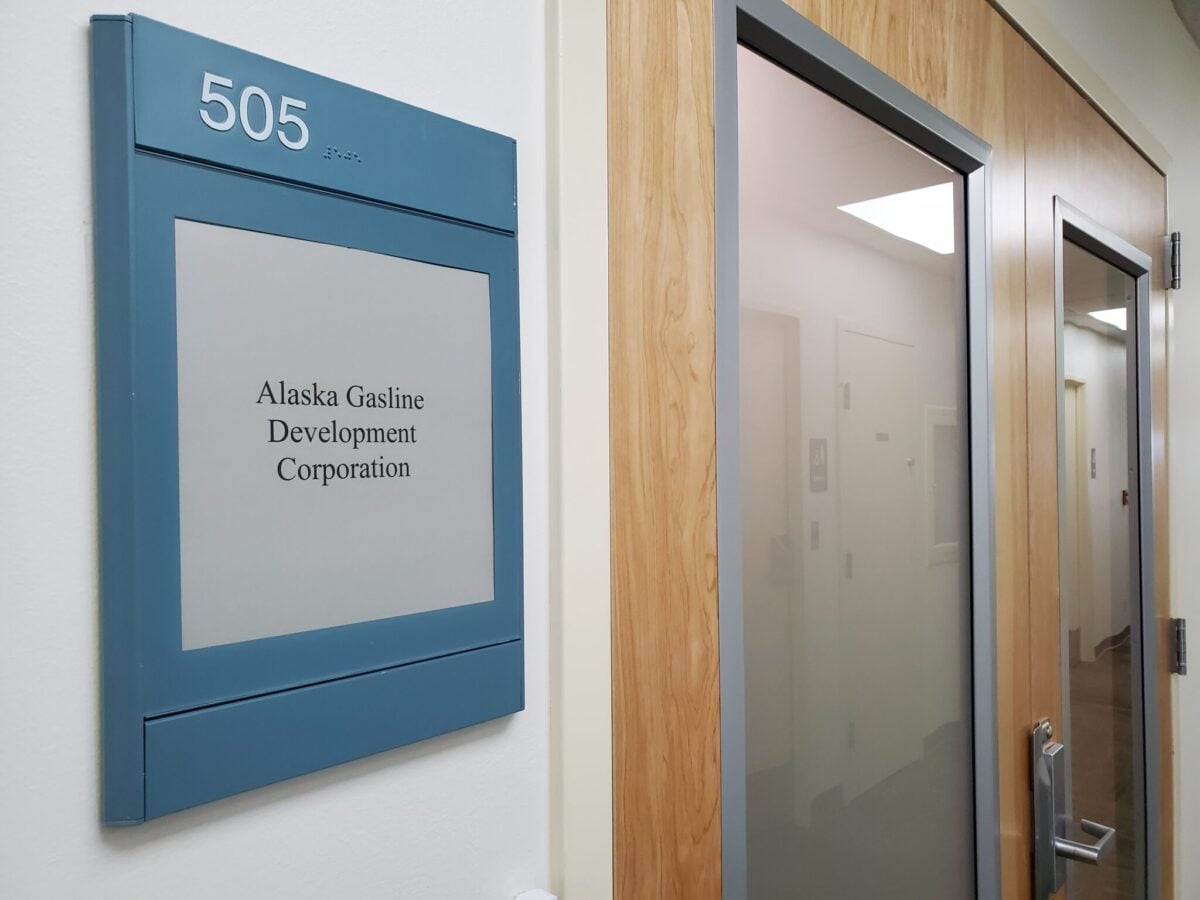
One year ago, the state-owned Alaska Gasline Development Corporation sold 75% of the trans-Alaska natural gas pipeline project to Glenfarne, an international developer.

Since the acquisition, Glenfarne has signed a number of nonbinding agreements with potential gas purchasers and gas sellers, but it has not disclosed estimates for the project’s cost, and it hasn’t disclosed what it expects the cost of gas to be.

Last year, company officials said they expected to make an investment decision by the end of 2025. In a subsequent filing with the Federal Energy Regulatory Commission, they said they would make the decision in February. A new timeline hasn’t been made public.

The lack of data is particularly problematic because legislators are considering whether to offer a property tax break to pipeline developers.

Those taxes are significant. Because Alaska does not have a statewide income tax or sales tax, its state budget suffers when people move into the state. More people means more demand for things like schools, parks and roads, but no increased revenue to pay for those things.

Economists have called that the “Alaska disconnect.”

Alaska has a 2% property tax on oil and gas infrastructure. Most of that money is passed on to municipalities, which use it for local needs.

In December, Alaska Gov. Mike Dunleavy said he was considering a proposal to cap that property tax at 0.2% for the natural gas pipeline, creating a payment in lieu of taxes system.

“That bill should be next week,” Dunleavy said during a Thursday news conference with U.S. Interior Secretary Doug Burgum, confirming the 0.2% rate will be part of the new legislation.

“Last couple weeks, we’ve been working with municipalities, getting their input as to what this should look like before (we) put the bill out,” he said. “So look forward to probably next week on that PILT bill, so that we can look at the economics of this line and also ways to ensure that municipalities benefit from this directly.”

This week, Begich expressed some support for a lower property tax rate, saying it could encourage people to invest in the pipeline.

“The classic 2% tax burden that would apply, say, to a $50 billion asset, would be a billion dollars in cash flow early in the project’s life cycle,” Begich said. “If that cash flow coming out of the project lowers the rate of return for investors, they’re not going to show up and invest. And so we need to make sure that our tax policy is A, doing what’s right for Alaskans. B, is not impeding the ability for the project to move forward. And I think we can do both of those things with some creative thinking and conversations with the industry.”

While a lower tax rate would benefit pipeline developers, it has the potential to harm residents who live near the pipeline. 

If pipeline construction and operation mean more people moving to Alaska and municipalities are unable to raise revenue to meet the resulting demand for services, local governments could be forced to raise taxes or cut basic services in order to pay for the pipeline subsidy.

Last week, the Senate Resources Committee introduced Senate Bill 275, which imposes some transparency requirements on the pipeline project, eliminates a tax exemption relevant to the project, and imposes a new surcharge on gas processing plants. 

That bill was introduced just days before Begich urged lawmakers not to be a “roadblock.”

Giessel, who chairs the resources committee, said she didn’t think Begich’s comments were directed at her or her committee’s bill.

“We’re not being a roadblock. We’re doing exactly what we’re supposed to do according to our constitution,” she said.

Asked whether he was thinking of Giessel’s bill during his speech, Begich said, “It was not my direct intention. No, I think it’s always worth having the conversation about the tax structure, about the incentive structure, though that’s an ongoing discussion that happens at the state legislature in Alaska. I think it’s important that when we have those conversations, they’re done in a way that is going to encourage, rather than discourage, industry from coming in and saying, ‘Yes, this is a good place for us to invest in.’”

Speaking to reporters after his speech, Begich said the state would benefit by getting more information from Glenfarne.

“I welcome more information,” Begich said. “I recognize that they’ve got certain restraints on what they can share. But look, I’d like to see more information shared. I’d like to see more of the economics of the project shared so we can understand what the full potential is and what’s on the table. I believe that’s going to come with time, but more information is better.”

Categories
Alaska News Featured Juneau News juneau Juneau Local Juneau Local Ketchikan Local News Feeds Sitka Local

Lawmakers review major elections reform bill

“I voted” stickers are seen on display in the headquarters offices of the Alaska Division of Elections in Juneau on Tuesday, Nov. 12, 2024. (Photo by James Brooks/Alaska Beacon)

NOTN- Alaska lawmakers considered a wide-ranging elections bill today that supporters say would expand voter access and strengthening election security.

The House Finance Committee scheduled hearings on Monday as well as this morning on Senate Bill 64, a measure covering a broad range of election policies, including voter registration, campaign rules and election administration.

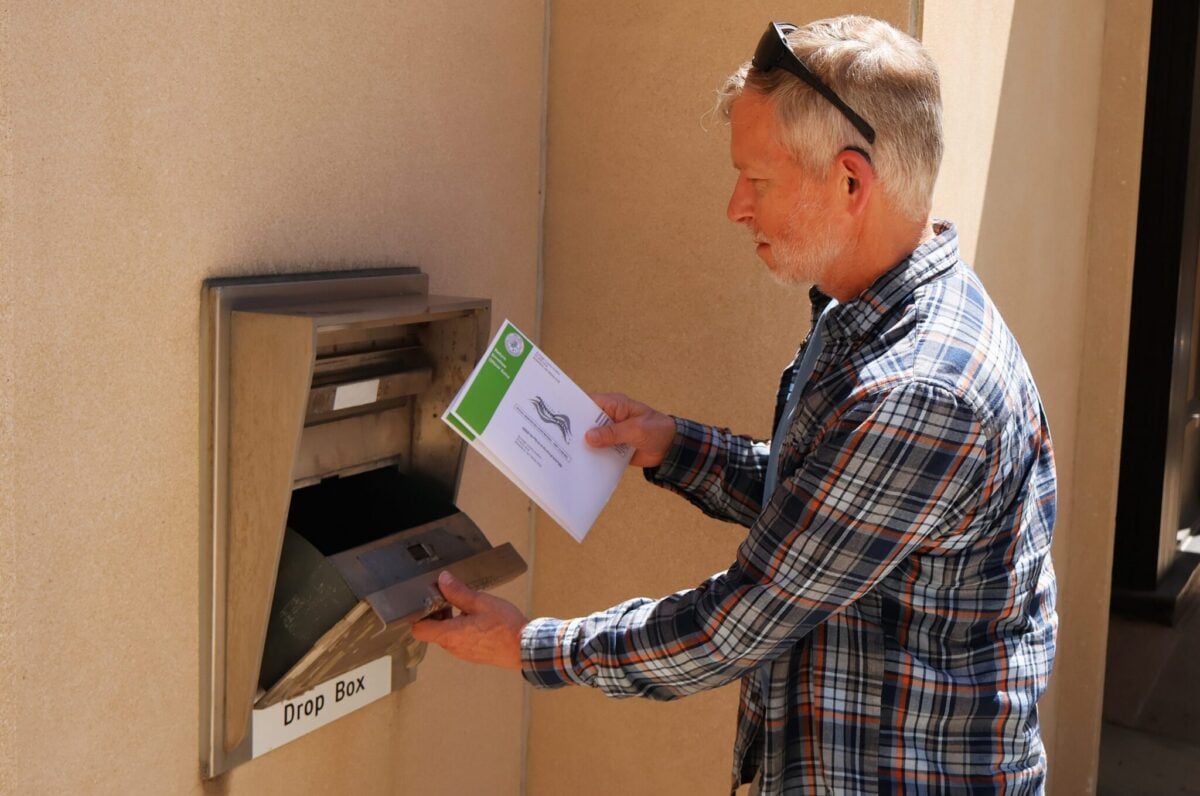
The bill would create a ballot curing process which would allow absentee voters to fix mistakes like missing signatures.

According to testimony submitted to lawmakers, more than 1,300 ballots were rejected in 2024, many due to correctable issues like improper witness signatures.

The proposed bill would also require the state to create an online ballot-tracking system so voters can see when their ballot is sent, received and counted. The bill includes prepaid postage for absentee ballots to improve access for voters, especially for voters in rural communities.

The bill also calls for a rural community liaison within the Division of Elections to work with tribes and municipalities to improve early and absentee voting access in remote areas.

Supporters, including the League of Women Voters of Alaska, Alaska Voter Hub and the Alaska Federation of Natives say the reforms are necessary because of Alaska’s geography and the challenges rural voters face with mail service, staffing shortages and limited polling locations.