The U.S. Capitol in Washington, D.C., on Oct. 1, 2025. (Photo by Jennifer Shutt/States Newsroom)
Alaska was awarded more federal money than any state besides Texas for a federal rural health initiative, the Centers for Medicare & Medicaid Services announced on Monday.
The money will come from the Rural Health Transformation Fund, a $50 billion program set up as part of the One Big Beautiful Bill Act and intended to counteract the effects of its sweeping Medicaid cuts in rural areas.
Alaska’s congressional delegation and state officials lauded the federal investment, which will be upwards of $272 million in Alaska in 2026.
At a Wednesday news conference in Anchorage, Sen. Dan Sullivan, R-Alaska, said the $1.36 billion the state is slated to receive over the next five years is the biggest investment from the federal government to Alaska’s health care system in state history.
“This is a generational opportunity for our state,” he said.
Heidi Hedberg, commissioner of the state’s health department said a major goal is to rework the state’s “fragmented” health system.
She said the agency will release more information about its plan for the money in the coming days, but pointed to the state’s application to the program, which outlines six priorities: maternal and child health, access to services, preventative care, a strengthened workforce, financial sustainability and updated technology and data systems.
Emily Ricci, the agency’s deputy commissioner, said that core to the state’s application was the question of how to support services that already exist in the state.
“Part of our focus was making sure that the tribal communities could see some of the ways that they want to sustain their programs and evolve or build their programs out further into something that provides more access and sustainable costs,” she said. “So I would say that those opportunities are written in each one of the initiatives.”
She did not immediately supply specific examples.
The state’s application also commits to adherence to several policies favored by the Trump administration, including a pledge to join licensure compacts and prohibit the use of federal Supplemental Nutrition Assistance Program funds to buy soda pop by 2027.
Several of those commitments require the approval of the state’s legislature or medical board.
Hedberg said her agency will work with those decision makers to follow through on the commitments the state made in its application.
In a virtual meeting with reporters after the state’s news conference, Sen. Lisa Murkowski, R-Alaska, challenged the state administration and legislators to take on the question of rebuilding the state’s health care system as a major issue.
In response to a reporter’s question, she said she was worried about the reliability of the funding because the state could fail to make the most of the opportunity or because the federal government could pause or cancel the funding.
“I know that we’re going into an election year next year. I know that the Permanent Fund always takes up space. I know we’re going to be talking about the gas line,” she said. “But we must, we must absolutely be talking about this health care opportunity that we have in front of us now.”
NOTN- Upwards of 3 feet of snow has fallen since the winter storm began Friday night, with more expected today.
Winter storm warnings have been extended until 6 am tomorrow.
The National Weather Service said significant precipitation amounts will persist through the weekend, with hazardous travel conditions possible due to snow accumulation.
Looking ahead, precipitation is expected to become lighter during the latter half of the week. Temperatures are forecast to drop again as colder air moves in from the north.
Flood watches and advisories remain in effect for parts of central and southern Southeast Alaska, where heavy rain and runoff may lead to localized flooding, particularly in low-lying and poor drainage areas. Forecasters urge residents use caution when travelling and stay updated on the latest advisories and warnings.
Alaska Gov. Mike Dunleavy greets a child during the governor’s annual holiday open house on Tuesday, Dec. 12, 2022 at the Governor’s Mansion in Juneau. (Photo by James Brooks / Alaska Beacon)
Framed by the fireplace in Alaska’s governor’s mansion earlier this month, Gov. Mike Dunleavy shook hands and posed for pictures in the final holiday open house of his two terms as Alaska’s top elected official.
Dunleavy is prohibited from running for another term, and 14 candidates have already signed up to run for his office in the 2026 elections. One of those candidates, Lt. Gov. Nancy Dahlstrom, stood next to Dunleavy at the open house, smiling alongside her husband.
“It started what I think is going to be a real pipeline,” Dunleavy said. “It’s something that the state has dreamed about for decades, ever since the trans-Alaska oil pipeline came into being.”
Since January, when Glenfarne announced it was buying into the long-pursued Alaska LNG pipeline project, it’s announced a series of preliminary agreements from international companies interested in buying gas.
To date, it doesn’t have firm deals for either buying or selling, and it is expected to make a go/no-go decision on the first phase of the project — a pipeline from the North Slope to Southcentral Alaska for in-state use — within the next month.
“I think in January there’s going to be some major announcements that will solidify that this pipeline as a go,” Dunleavy said.
Dunleavy said he’s also been pleased with rising forecasts for Alaska North Slope oil. In November, the federal Energy Information Administration predicted that North Slope production would grow 13% in 2026, reaching levels that haven’t been seen since 2018.
“That’s good for Alaska as well,” Dunleavy said, “because of the renaissance on the Slope.”
The state’s unemployment rate is holding below 5%, he noted.
“When you look at the turmoil across the country and you look at the turmoil across the world, I think Alaska is in pretty good shape. … We have a lot of resources here, and I think we have a lot of great people,” he said.
Asked for the lowest point of the year on a statewide basis, Dunleavy said: “You’re always dealing with disasters. Under my tenure, there’s been 73 declared disasters … we had the issue out in Western Alaska, and so we have to add now a typhoon to our mix of volcanoes, earthquakes and so forth.”
Dunleavy himself was affected by the recent Matanuska-Susitna Borough windstorm disaster, and his wife couldn’t attend the holiday open house as a result.
“We lost some of our roofing on a building or two out there, and the heat went out,” he said.
While disasters are part of living in Alaska, he said Typhoon Halong was something extra.
“I would say that whenever a disaster impacts people at the visceral level, at the local level, at their household level — we got hit hard with that typhoon,” he said.
For much of the year, as in his conversation with reporters, the governor preferred to focus on the positives.
Earlier this year, Dunleavy said the arrival of the Trump administration was “like Christmas every morning” for Alaska.
Since Trump was sworn into office, his administration has relaxed restrictions on oil and gas drilling on the North Slope. It has advanced the Ambler Access Project, which promises to open a large mining area in Northwest Alaska.
The Interior Department has also pushed forward the road between Cold Bay and King Cove and proposals to explore for oil in the coastal plain of the Arctic National Wildlife Refuge.
The Dunleavy administration has been enthusiastic in its support of those actions, but most have been tied up in federal court and will be for months or years.
The ANWR drilling issue, for example, won’t even come before a federal judge until late 2026, according to a status update published this month in the U.S. District Court for the District of Alaska.
The Trump-backed Big Beautiful Bill Act passed by Congress this year will deliver millions of dollars in construction projects to the state, and other legislation will provide millions more, but other projects — particularly those involving renewable energy and projects intended to deal with climate change — were eliminated.
“Christmas every morning” entailed other metaphorical bits of coal for Alaska this year: The extended government shutdown left thousands of Alaskans unpaid for over a month, and the cuts instituted by the Elon Musk-led Department of Government Efficiency caused significant amounts of uncertainty.
In the long run, DOGE doesn’t appear to have significantly affected the number of federal jobs here: The latest available figures show more federal employees in the state than there were at the start of the year.
While some federal grants targeted by DOGE have since been restored, many were not. Public radio stations and arts organizations laid off staff and curtailed their work.
Tariffs, visa issues and a prolonged dispute with Canada threatened the summer tourist season, but a feared Yukon boycott never appeared, and the number of cruise ship passengers traveling to Alaska increased slightly, to a new record high of more than 1.7 million.
At the holiday open house, Dunleavy said there’s plenty to look forward to in the coming year and in the years once he leaves office.
“There’s just a whole host of things — the possibility of data farms, artificial intelligence, and how that’s gonna revolutionize not just the world, but here in Alaska, I think we could become a data transportation center because of our proximity on the globe. So I think you’re going to see a number of announcements throughout the year that I think will set the stage for a great several decades going forward,” he said.
The Stikine River Flats area in the Tongass National Forest is viewed from a helicopter on July 19, 2021. The Stikine River flows from British Columbia to Southeast Alaska. It is one of the major transboundary rivers impacted by mines in British Columbia. Alaska tribes and communities are seeking some new protection to avoid downstream impacts. (Photo by Alicia Stearns/U.S. Forest Service)
By: Max Graham, Northern Journal
This story is co-published by the Wrangell Sentinel and Northern Journal.
An Indigenous community is locked in a debate about the pros and cons of a major new mine on their traditional lands — and a big cash payment promised by the developer.
There is strong support, and fierce opposition. A lot of money to be made, and a wild river to protect. The community faces a pivotal choice.
Though this story sounds like it could be unfolding in rural Alaska, a version of it has actually been playing out just across the border with Canada, in northwest British Columbia. Still, it has implications for the Alaskans who live downstream from the proposed mine site.
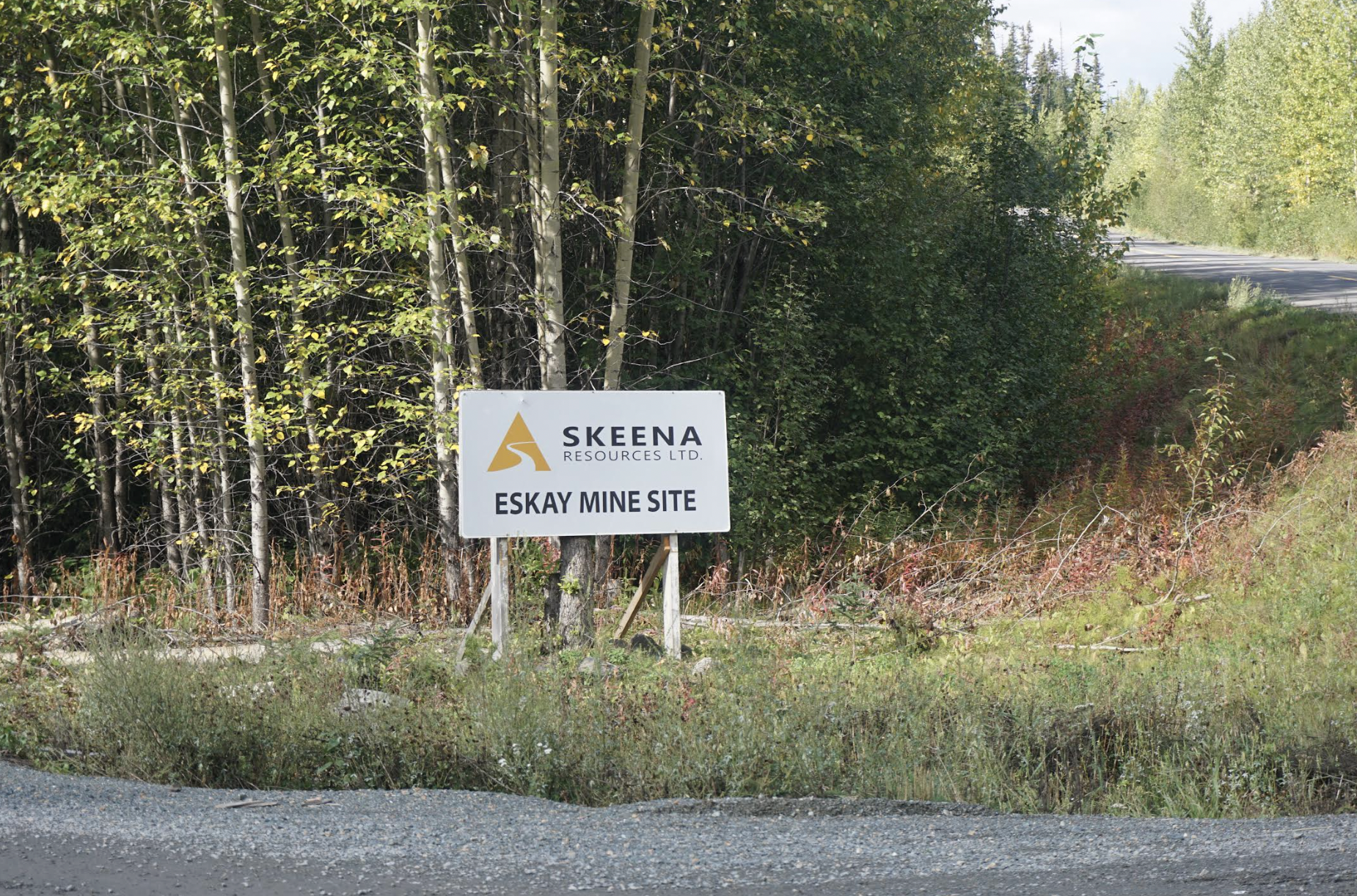
In a referendum after weeks of heated debate, members of the Tahltan Nation earlier this month voted overwhelmingly to approve a deal with a Canadian mining company that hopes to revive a huge gold and silver mine, called Eskay Creek, which stopped producing in 2008. The project is located above the Unuk River, which flows into Alaska near Ketchikan.
The Tahltans’ backing is a major step forward for the project, and it comes as the Canada and B.C. governments intensify efforts to build more mines in the name of national security and economic growth. Several of the projects are near the border with Alaska, where state and federal elected officials are separately pushing mines that could help wean the U.S. off a foreign supply of minerals used in energy, electronics and weapons.
Just one day after the Tahltan vote, Canada’s federal government announced that it had approved a merger between two multinational mining firms with a condition that calls for advancing two other proposed mines in Tahltan territory. Both projects sit above tributaries of the Stikine River, a major, salmon-bearing waterway that straddles Canada and the U.S. and empties into the ocean near the small Southeast Alaska town of Wrangell.
Louie Wagner Jr., a Tsimshian and Tlingit resident of Metlakatla, a Native community at the southern tip of Alaska’s panhandle, said he’s concerned about the health of the Unuk River and its future with mines in its watershed.
Wagner and his family have fished and hunted moose along the Unuk for generations.
“That little river cannot handle it,” Wagner said in a recent phone interview. The Unuk is notable, he added, for its abundance of eulachon, a small, oily fish also known as hooligan that’s a staple for Indigenous communities in Southeast Alaska.
Though rarely discussed in Alaska circles, the Tahltan Nation’s approach to mining has major implications for the industry’s future in the transboundary region. A top U.S. Department of Interior official visited the region last year to learn more about models for how Indigenous nations can partner with mining companies.
There are more than a dozen early-stage mining projects in Tahltan territory, many above rivers that flow into Alaska. And the Eskay Creek vote could serve as a preview of future deals between the Tahltan government and the for-profit mining companies promoting development.
For months, members of the First Nation debated whether to approve a deal, known as an impact benefit agreement, that Tahltan elected leaders had negotiated with Vancouver-based Skeena Resources, the company pushing Eskay Creek.
The Eskay Creek mine is accessible off British Columbia’s Stewart-Cassiar Highway. (Photo by Max Graham/Northern Journal)
The specifics of the agreement have not been made public. But Tahltan officials have said it guarantees benefits worth more than $1 billion over the life of the mine, mostly in cash but also in contracts and wages.
The deal also calls for an upfront payment from Skeena, intended to be distributed to individual Tahltan members — to the tune of $7,250 each, according to Tahltan officials. And the agreement reportedly gives the First Nation government some environmental oversight over the mine.
The nation backed the deal with support from more than 77% of the roughly 1,750 Tahltans who voted, according to the Tahltan Central Government. Payments are expected to go out to members in 2026.
“Tahltan Central Government is not standing on the sidelines,” Tahltan president Kerry Carlick said in a statement after the vote. “We are embedding ourselves directly into the governance of environmental protection.”
Tahltan leaders have long worked to navigate political tensions between an expanding mining industry and efforts to protect traditional lands and wildlife.
The Tahltan government has entered into a number of agreements with mining companies. But it also has opposed efforts to mine coal and drill for natural gas near the headwaters of major rivers in the region.
And some Tahltan members have been outspoken critics of the Eskay Creek project and the company promoting it.
In the leadup to the recent vote, arguments erupted on social media, and relationships among community members grew strained, some Eskay Creek opponents said in interviews.
“This is causing internal conflicts,” said Tamara Quock, a Tahltan member who lives in northern B.C. some 350 miles east of the mine site.
Quock said she thinks the promise of the direct payments “enticed” some people to vote in favor of the agreement. Debate over the project, she added, grew more intense after that condition was added to the deal.
Quock said she feels Skeena is “using the Tahltan people” to generate its own profits.
She and other critics have voiced concerns about a perceived lack of transparency and potential conflicts of interest within the First Nation’s government. They also say they are worried about possible environmental impacts from the project, which would involve digging two open pits and storing millions of tons of mining waste above the Unuk River.
Skeena didn’t respond to requests for comment.
Alaska Native leaders, fishermen and environmental advocates who live downstream, in Southeast Alaska, for years have expressed concerns about Eskay Creek and other proposed mines in the region, saying they don’t trust Canadian regulators to safeguard Alaskan interests.
“You can’t cut these watersheds in half and expect to adequately protect them,” said Guy Archibald, executive director of the tribally led Southeast Alaska Indigenous Transboundary Commission. “Right now they’re cutting the baby in half and ignoring the effects on the Alaska side of the border.”
The commission last month filed a legal challenge in B.C. court, asserting that regulators had failed to consult Alaska tribes on several proposed mines in the region, including Eskay Creek.
Meanwhile, after a major spill last year at a Canadian gold mine in the Yukon River watershed, Alaska’s congressional delegation called for more oversight of Canadian mines near transboundary rivers like the Unuk and Stikine. The statement from the delegation — which has strongly supported mine development in Alaska — called for “binding protections, financial assurances, and strong transboundary governance.”
“As British Columbia seeks to advance numerous mines just upstream from Alaska, we are still asking them to fully remediate legacy sites and firmly commit to binding protections for Alaska interests,” Joe Plesha, a spokesperson for U.S. Sen. Lisa Murkowski, said in a recent statement. “Senator Murkowski is actively considering new ways to make our B.C. neighbors take Alaskans’ concerns seriously.”
U.S. Sen. Lisa Murkowski’s office says she’s pushing the British Columbia provincial government on protections for Alaska interests as Canada advances mining projects in transboundary watersheds. (Photo by Nathaniel Herz/Northern Journal)
Ottawa and B.C.’s provincial government, meanwhile, are funding new infrastructure projects and prioritizing permitting for energy and resource development projects, including Eskay Creek and the expansion of a huge copper and gold mine in the Stikine watershed, called Red Chris.
Canadian officials say existing regulations are geared to minimize impacts in the shared watersheds. Major projects undergo thorough environmental assessments before they’re approved, a spokesperson with the B.C. agency that leads those reviews, the Environmental Assessment Office, said in an email.
“Making sure large-scale projects are properly assessed is critical to making sure development is sustainable — to ensure good jobs and economic growth while also protecting the environment and wildlife, and keeping communities healthy and safe,” said the spokesperson, Sarah Plank.
Tahltan officials declined an interview request and did not respond to questions about Alaskans’ concerns or the First Nation’s agreement with Skeena.
Supporters of Eskay Creek say it could be transformational for the Tahltan Nation. Among proponents of the deal is Chad Norman Day, a former Tahltan president who has worked in the mining industry and now runs a consulting firm that does mining-related business.
“The benefits which flow to the Tahltan Nation from here will empower the people and territory unlike anything we have ever seen,” Day said in a statement after the vote.
Many Tahltan people work in mining, and the First Nation already generates revenue from Red Chris and another large operating mine, Brucejack, which started producing gold in 2017.
In 2019, Tahltan citizens voted in favor of an agreement with a different mining company pushing another, much bigger proposed mine partially in the Unuk watershed, called KSM. The outcome of that vote was nearly identical to the recent Eskay one, with about the same percentage in favor.
The first nation also, in the past five years, has entered into two joint decisionmaking agreements with the B.C. government for regulatory reviews of mining projects, including Eskay Creek.
Before it can start producing, Eskay Creek needs an environmental approval from the provincial government. A decision is expected early next year.
NOTN- At about 1:30 PM, the Juneau Police Department received a 911 call regarding a motor vehicle collision in the area of Auke Lake, on Glacier Highway.
Initial reports indicated that two vehicles were involved in the collision, and some of the occupants were pinned inside the vehicles, a young child passenger was also unconscious.
Emergency services responded to the crash and extricated multiple people from the collision site.
The unconscious passenger, a 7-year-old child, was transported to the hospital. Police have since confirmed the child has died.
The initial investigation showed that a black 2000 Jeep Cherokee was travelling inbound on Glacier Highway at Pederson Hill, when it lost control and travelled into the oncoming lane of traffic, and struck a white 2015 Dodge Ram travelling outbound on Glacier Highway.
The Jeep was being operated by a 17-year-old female, and there was a 7-year-old female passenger inside. Both occupants of the Jeep were pinned inside the vehicle after the crash, which caused the vehicle to roll onto the driver side in the ditch. The Jeep sustained totaling damages. The Dodge was operated by a 25-year-old male, and there was a 3-year-old male passenger. The Dodge sustained significant damages to the front end.
The 7-year-old female was pronounced deceased at the hospital. Next of kin has been notified. No other significant injuries were reported during the initial investigation of the crash.
The cause of the crash remains under investigation
NOTN- Juneau set yet another record low temperature this December, making it 5 days this month that the Juneau Airport has seen daily lows below zero.
On December 23 Juneau Airport set a new record low of -10 degrees, and according to the National Weather service in Juneau, the airport has had more days below zero in the last two weeks than its had in the last 16 years combined.
Southeast Alaska is also facing a stretch of dangerously cold weather followed by a shift toward snow and mixed precipitation as the week progresses, according to the National Weather Service.
Forecasters say the region is currently in the grip of very cold, dry air bringing frigid temperatures and hazardous wind chills that are expected to persist through today.
Christmas day will bring a pattern change, as clouds increase and snow chances ramp up across the panhandle. By Friday night and into the weekend, a stronger weather system moving in from the Gulf of Alaska could bring moderate to heavy snow to parts of the region.
Residents are urged to monitor updated forecasts and prepare for rapidly changing weather conditions, especially during the holiday travel period.
The National Weather Service said additional advisories and warnings may be issued as the system develops.
Strips of sockeye salmon harvested from the Kuskokwim River are seen on July 19, 2017. Sockeye salmon, also known as red salmon, is among the species harvested for subsistence. (Photo provided by U.S. Fish and Wildlife Service)
The U.S. Department of the Interior is considering whether to change Alaska’s unique system of hunting and fishing, which gives rural residents priority on federal land in Alaska.
According to a notice published Dec. 15 in the Federal Register, the Interior Department is conducting “a targeted review” of the program mandated by the Alaska National Interest Lands Conservation Act.
While no specific changes were identified in the notice, it prompted the Alaska Federation of Natives to react with concern.
In a message to members, it called the new proposal “a serious threat and a major step backward” in fish and game management within Alaska, according to a report Tuesday by the Anchorage Daily News.
Federal law requires rural residents to receive a priority when subsistence hunting and fishing, but because Alaska’s constitution prohibits the state from operating a system that gives one resident priority over another, the federal government uses one set of rules for hunting and fishing on federally controlled waters and lands, and the state uses another set for state-controlled water and land.
That has frequently led to conflicts between the state and federal government over management, and several lawsuits over the issue are currently in progress in federal court.
The Daily News reported that the suggestion to revise the two-tiered program came from Safari Club International, a large sport-hunting organization that has frequently sided with the state in lawsuits against the federal government.
Information posted online by the Interior Department indicates that the agency may consider:
Changing the makeup of the board that regulates subsistence hunting and fishing on federal land;
Reconsidering the rules that determine what parts of the state are “rural” and thus eligible for preferential treatment;
And the role of the Alaska Department of Fish and Game in the program.
NORAD- 24 hours a day, 365 days a year, NORAD tracks everything that flies in and around North America in defense of our homelands. On Dec. 24, they have the very special mission of also tracking Santa.
NORAD has been tracking Santa since 1955 when a young child accidently dialed the unlisted phone number of the Continental Air Defense Command (CONAD) Operations Center in Colorado Springs, Colorado, believing she was calling Santa Claus after seeing a promotion in a local newspaper.
The commander on duty that night, was quick to realize a mistake had been made, and assured the youngster that CONAD would guarantee Santa a safe journey from the North Pole.
Thus a tradition was born that rolled over to NORAD when it was formed in 1958. Each year since, NORAD has reported Santa’s location on Dec. 24 to millions across the globe.
Thanks to the services and resources generously provided by numerous corporate contributors and volunteers, NORAD Tracks Santa has persevered for more than 60 years.
Each year, the NORAD Tracks Santa Web Site receives nearly fifteen million unique visitors from more than 200 countries and territories around the world. Volunteers receive more than 130,000 calls to the NORAD Tracks Santa hotline from children around the globe.
Children and the young-at-heart are able to track Santa through Facebook, Twitter, YouTube and Instagram.
Commercial fishing and recreational vessels are docked in the Homer harbor on Oct. 23, 2025. The commercial fishing industry endured a series of challenges over the year, some of them imposed by the new Trump administration. (Photo by Yereth Rosen/Alaska Beacon)
For Alaska’s fishing industry and fishing-dependent communities, 2025 was a year of turmoil and uncertainty, much of it imposed by ideological pursuits from the new Trump administration.
The short-lived agency called the Department of Government Efficiency hacked away at federal funding for science across the board. The National Oceanic and Atmospheric Administration in particular was in its crosshairs; the Heritage Institute’s Project 2025 blueprint for the second Trump administration heaped scorn on NOAA, saying its National Weather Service, National Marine Fisheries Service and other agencies “form a colossal operation that has become one of the main drivers of the climate change alarm industry and, as such, is harmful to future U.S. prosperity.” The NMFS’ Alaska Fisheries Science Center, which does the bulk of the research on which fishery managers depend, was among the agencies that suffered deep budget and staffing cuts.
The prospect of more cuts is unsettling, some officials said. “I guess now we’re getting to a point that I’m getting really concerned and almost freaked out about how much data that we’re potentially losing that we’re used to having,” Anne Vanderhoeven, a member of the North Pacific Fishery Management Council, said on Dec. 4 during that body’s December meeting.
Even as the Trump administration cuts the support fishery management, it is demanding that the industry harvest more fish, in line with an administrative order issued by the president on April 17.
The federal government shutdown created more problems for fisheries managers, but the North Pacific Fishery Management Council used data from last year to set next year’s harvest limits for Alaska pollock — the nation’s top-volume commercial seafood — and other groundfish in the Bering Sea and Gulf of Alaska.
Hannah Scholosstein, international marketing and grants manager for the Alaska Seafood Marketing Institute, works in her office in Juneau on May 22, 2025, amid promotional materials. A legislative task force has recommended boosted funding and support for ASMI, among other actions. (Photo by Yereth Rosen/Alaska Beacon)
Alaska’s seafood industry continues to endure a variety of economic challenges — competition in markets that are glutted, rising costs, declines of some important fish stock and labor shortages, among them. There are fewer people harvesting seafood commercially in Alaska than at any time on record.
Alaska legislators have tried to address some of those woes. A legislative task force made numerous recommendations about financial systems, marketing, industry diversification, workforce development and other subjects. Those recommendations produced a series of bills. Two of them passed during the 2025 session, gaining unanimous support, but Gov. Mike Dunleavy vetoed one of them, which would have shored up the Alaska Commercial Fishing and Agriculture Bank. The Legislature has the opportunity to address the subject again in the coming session.
The Dunleavy administration ran into trouble with two of its other fishery-related efforts. The governor introduced a bill that would legalize salmon farming, which is widely disdained in the state. The bill went nowhere. The administration is also continuing to try to overturn federal subsistence management on federal sections of the Kuskokwim River, but it has lost in court so far.
There were some notable improvements in 2025.
Bering Sea snow crab stocks are starting to rebound after a massive crash that closed harvests for two years, the first. However, there has been a puzzling boom in the number of snow-tanner crab hybrids. The Alaska Department of Fish and Game is treating the hybrids as snow crabs for harvest-management purposes.
The overall salmon harvest was much bigger and more lucrative than last year’s dismal totals. Bristol Bay reds were not as small as last year’s record tiny fish, and the region also had a bigger run than predicted. However, salmon runs in the Yukon River continue to be poor.
But trouble is brewing in the marine and freshwater environments that support fish.
In areas of thawing permafrost, particularly Northwestern Alaska, a phenomenon called “rusting rivers,” has released such high levels of metals that conditions at times are toxic for fish. The thaw creates acid rock drainage, similar to the type of pollution that can come from hardrock mining. Iron and other metals that are freed through the process turn clear waters orange or red. The problem is serious enough to have merited a chapter in this year’s Arctic Report Card, issued on Dec. 16 by NOAA.
A member of a multi-organization team combatting the spread of invasive European green crabs holds one of the crabs trapped in Southeast Alaska in the summer of 2023. The invasive crabs were first discovered in Alaska in 2022. The Metlakatla Indian Community is leading the effort to combat their spread, and this year workers in the program trapped more than 40,000 of the crabs. (Photo by Ginny Eckert/Alaska Sea Grant)
Alaska scientists have also confirmed that invasive northern pike, a bane to native salmon runs in Southcentral Alaska, can swim across Cook Inlet to colonize new territory. The freshwater pike, which gobble up salmon fry and other fish, are too entrenched in the Matanuska-Susitna Borough to be eradicated from waterways there. Biologists have been working to keep Kenai Peninsula pike-free and believed they were successful in 2018, until scientists discovered that pike are able to survive the relatively short swim through the inlet’s saltwater into new freshwater sites. The eradication work has continued, and state biologists believe the peninsula is again pike-free.
Another looming threat comes from the south. Resource managers with the Metlakatla Indian Community, the tribal government in Alaska’s most southeastern spot, have been battling what its officials term an “explosion” of invasive European green crabs. The first Alaska discovery of the invasive crabs, which can devastate native fish stocks, was in 2022 in the Metlakatla area. At first, there were only a few shells. But this year, workers in the tribal program trapped more than 40,000 of the crabs, which have been steadily expanding north.
“I voted” stickers are seen on display at a polling station in Juneau’s Mendenhall Valley on Tuesday, Aug. 16, 2022. (Photo by James Brooks/Alaska Beacon)
One of Rep. Nick Begich III’s uncles is endorsing his main Democratic opponent, Matt Schultz, in next year’s election. Tom Begich’s name was atop a list released to the Alaska Beacon by Schultz’s campaign this month.
Begich’s endorsement of his nephew’s opponent won’t surprise people familiar with Alaska politics — he’s a longtime figure in the state’s Democratic scene, has been publicly critical of his nephew’s actions and is running as a Democrat in the governor’s election — but Schultz’s list and a similar list of endorsements by Republicans for Begich III shows how the state’s political establishment is settling on a two-person race for U.S. House, unlike the crowded contest for governor.
“It will be awkward. It’s always awkward,” Tom Begich said of the endorsement, “ but my mom taught us to learn to live with disagreement, to move beyond it. It doesn’t change the fact that I love my nephew. Just, I’m not supporting him in this election.”
Tom Begich is among 14 people — 12 Republicans and two Democrats — who have registered to run for governor in next year’s election.
Incumbent Gov. Mike Dunleavy is term-limited and unable to run.
While there are plenty of candidates for the governor’s seat, the number of people running for federal office is tiny. Incumbent U.S. Sen. Dan Sullivan, a Republican, doesn’t have a well-known challenger yet. Former U.S. Rep. Mary Peltola, a Democrat, has been rumored as a possible opponent but has yet to file.
The same is true on the Democratic side, where support for Schultz appears almost entirely united.
“I’m very pleased to support him and glad he’s running,” said state Sen. Matt Claman, D-Anchorage and the other Democratic candidate in the governor’s race.
“I think he’s more connected with the general, broad spectrum of values in Alaska, more connected with some of the challenges we’re facing. He’s really looking carefully at how we’re dealing with homelessness, and I think he’s concerned about some of the affordability issues that are particularly a challenge in rural Alaska,” Claman said of Schultz.
Among the other people endorsing Schultz are independent state Rep. Alyse Galvin, who ran unsuccessfully for U.S. House in 2020 and 2018, and Forrest Dunbar, a Democratic state senator who ran unsuccessfully for House in 2014.
One notable absence is Peltola, who held Alaska’s U.S. House seat for one term before Begich III defeated her in the 2024 election.
Also missing is longtime Democrat Mark Begich, the incumbent Republican’s other uncle and Alaska’s U.S. senator from 2009 to 2015.
“There’s definitely been a lot of support from Democrats all around the state, and I’m very grateful for that. It seems to be a lot of coalescing support,” Schultz said by phone.
A pastor in Anchorage, Schultz spoke on the day that the U.S. House announced that it would not vote to renew subsidies for health insurance policies purchased on the federal marketplace.
Without those subsidies, the prices of many policies will spike with the start of the year.
“That’s really, really sad and disturbing,” Schultz said. “It seems like it should be a no-brainer that you start out by making sure that people can afford their lifesaving medicine.”
Schultz said that as he’s gone around seeking early support for his campaign, he’s found joy and excitement among people who want to find a common good.
“It really is this wonderful excitement to say — just like we pulled together as a nation to go to the moon, we can pull together as a state to provide food and health care to people. It’s a goal that matters so much and is so basically good at its heart that people can’t wait to start working for it,” he said. “I think there’s a hope out there that has felt absent in the last decade or so.”