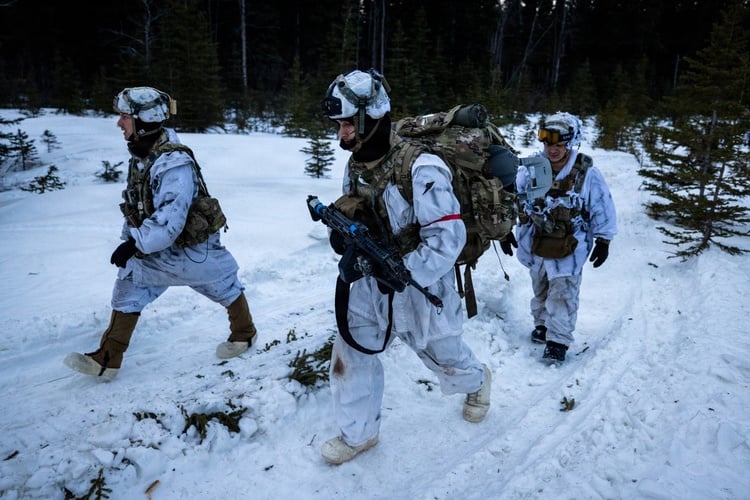
U.S. Army Soldiers with the 11th Airborne Division, load Air Force C-130 Hercules aircraft in preparation for deployment into the Joint Pacific Multinational Readiness Center’s 25-02 training exercise, Fairbanks, Alaska, Jan. 23, 2025. (U.S. Army Photo by Master Sgt. Justin P. Morelli)
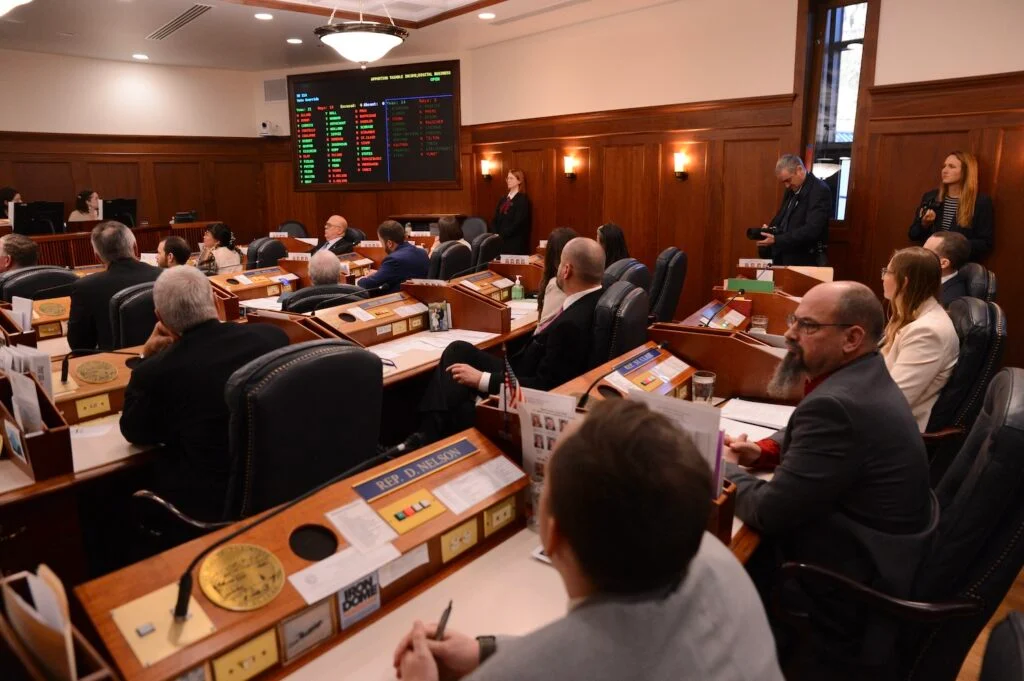
A Democratic state lawmaker from Anchorage loudly denounced the actions of U.S. Immigration and Customs Enforcement’s surge in Minnesota while speaking on the Alaska House floor on Friday.
Rep. Andrew Gray, D-Anchorage, is a military veteran and co-chair of the Legislature’s Joint Armed Services Committee.
“The facts are that our government is out of control. Norms have been broken at an alarming rate, and the world is watching us in shock,” he said.
Gray’s remarks were met by loud desk-thumping — a form of applause — and came on a day when thousands of Minnesotans marched in subzero weather and held a general strike to show their opposition to ICE efforts in their state.
Tensions are particularly high after several shootings by federal officers, including one in which an officer killed a mother of three.
The remarks came one day before federal agents fatally shot another Minneapolis resident on Saturday, prompting nationwide protests throughout the weekend.
Up to 1,500 active-duty troops of the U.S. Army’s 11th Airborne Division, based in Anchorage, have been ordered to stand by for possible deployment to Minneapolis — Minnesota’s largest city — according to National Public Radio.
In those letters, Gray and Kawasaki say they are receiving “enquiries … from the Alaskan people” and pose a series of questions.
How long will the 11th Airborne be in Minnesota? How does a deployment fit in the division’s mission to defend the United States against foreign threats? Could soldiers be detaining suspected undocumented people? Would the 11th Airborne fight the Minnesota National Guard if Gov. Tim Walz activates it to defend protesters?
“Fifteen hundred active-duty soldiers may be sent from Alaska to Minnesota to protect ICE agents as they continue their efforts to arrest and detain suspected undocumented immigrants,” Gray said, “But who really needs the protection? Is it the ICE agents, or is it the folks who are terrified to leave their homes, to go to work, to pick their kids up from school or to actually show up at their immigration appointments?”
While Gray’s comments appeared to have the support of many legislators in the chamber — judging by the desk-pounding applause — there was at least one dissenting voice.
Rep. Jamie Allard, R-Eagle River, is a veteran, the spouse of a veteran, and a Latina, she said, explaining that she had also sent a letter to Gen. Cogbill, but her letter was to remind him that he is not legally obligated to answer the Legislature’s questions or testify in the Capitol.
Allard said she has been deployed overseas with the military and with the U.S. State Department.
“I experienced things when I worked for the US State Department, of women being abused, hit — watched them get their teeth knocked in, where I had to stand by and couldn’t do anything,” she said.
“We have a lot going on in our country, dividing, saying we’re this or we’re that. We’re all Americans, but it doesn’t mean that it’s okay to have riots across our country. If the military and the federal government and the Department of War and the 11th Airborne Division decide that it’s best to go to Minnesota, that’s what we need to do,” she said.
Allard’s comments were met by quieter but noticeable desk-pounding, with the loudest coming from Rep. Kevin McCabe, R-Big Lake.
He said afterward that he thinks Gray incorrectly described some aspects of ICE’s work in Minnesota. For example, Gray said ICE detained a five-year-old in Minnesota.
“There’s a little bit more to the story, McCabe said.
“We shouldn’t be messing around in another branch of the government in their bailiwick,” he said. “The worst people in Alaska to manage the National Guard is probably the state Legislature.”
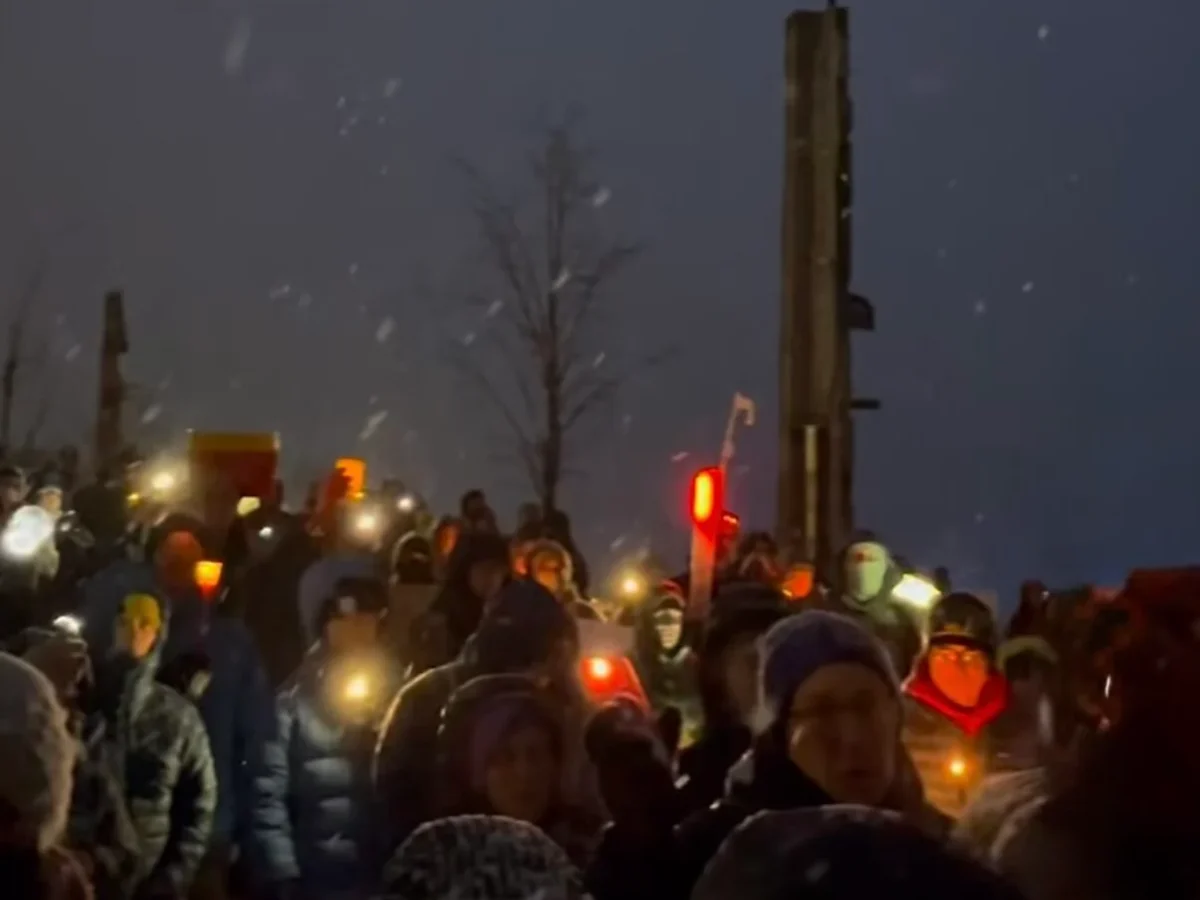
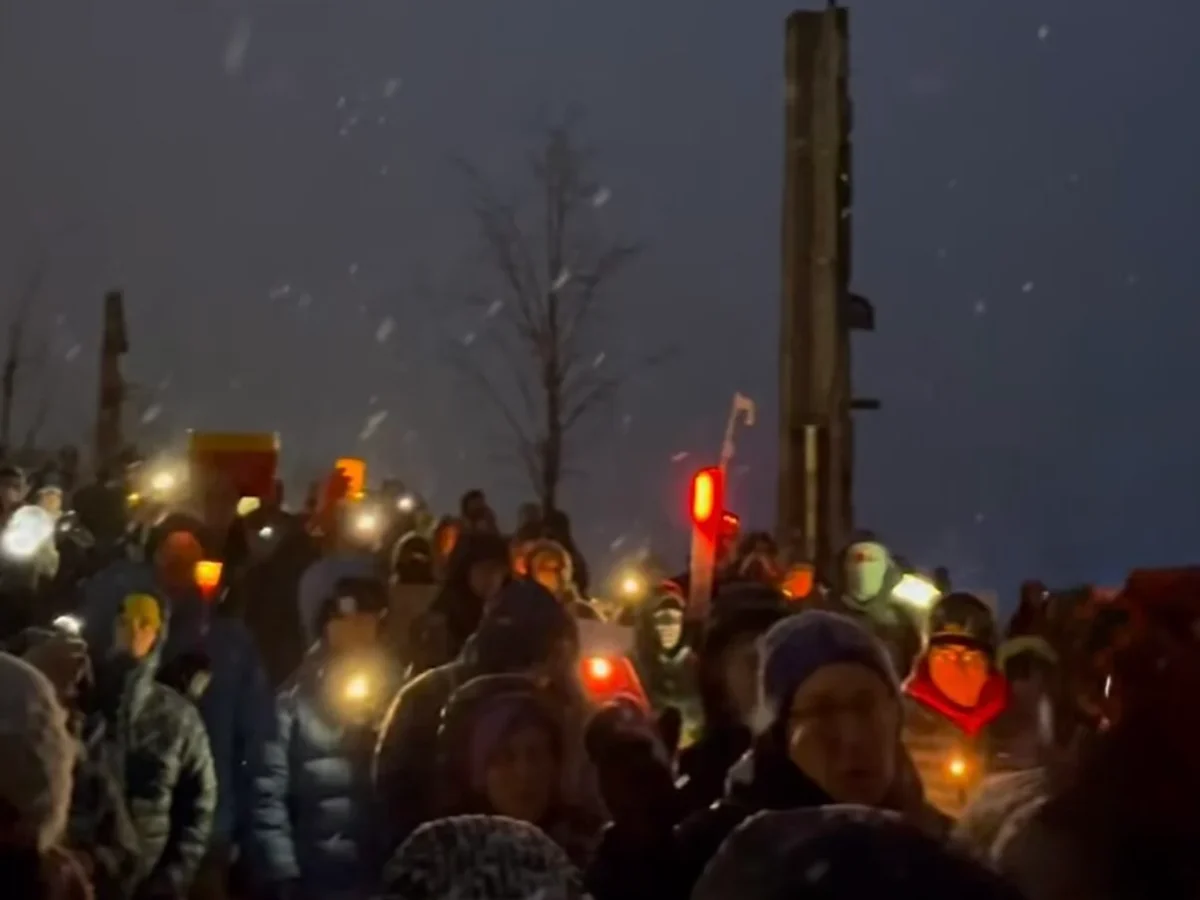
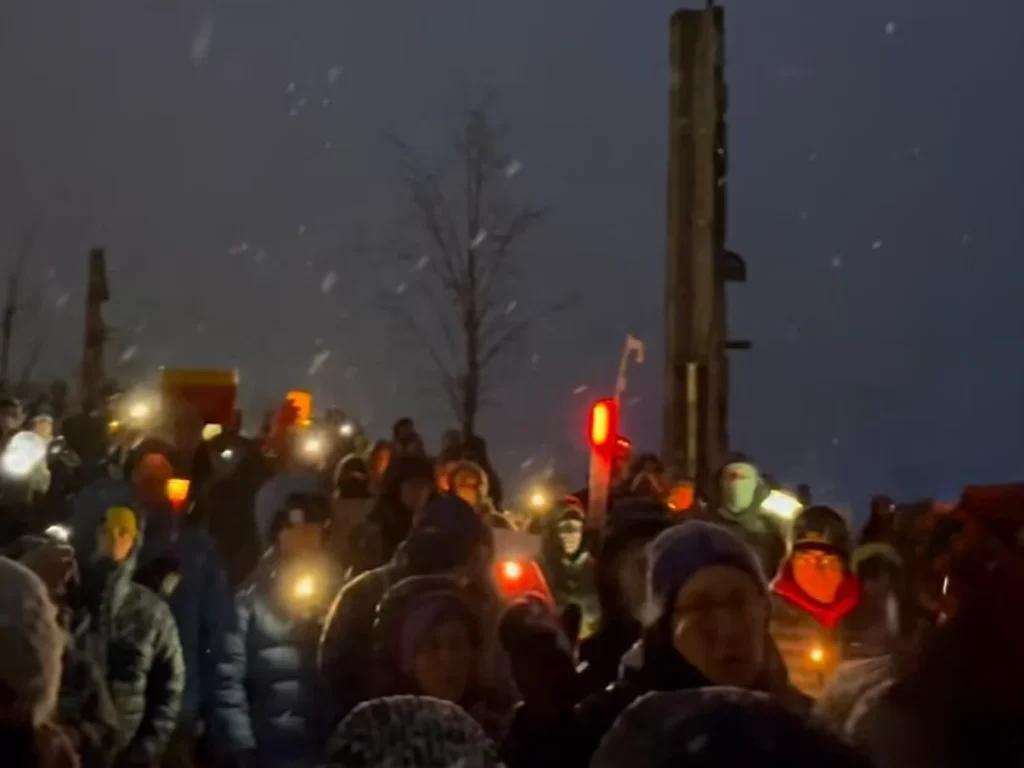
NOTN- Juneau for Democracy and the ReSisters held a peaceful pop-up protest in Juneau yesterday evening in solidarity with nationwide demonstrations which are being held due to recent federal immigration enforcement actions.
Juneau for Democracy invited residents to gather at The Whale for what the group called a candlelight vigil, to show support for people protesting Immigration and Customs Enforcement (ICE) agents across the country.
The event is part of a wave of protests that have followed several shootings and lethal confrontations with ICE agents, particularly in Minneapolis.
Protestors sang “This Little Light of Mine” in the lightly falling snow, posting on their social media to bring songs, poems, love and determination to share.
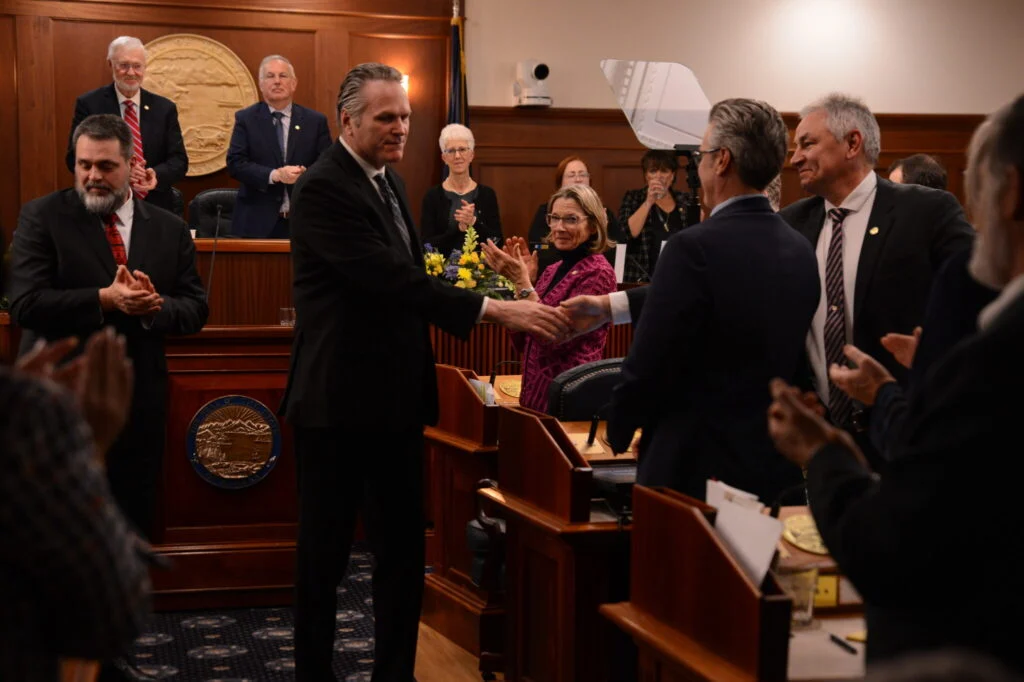
Gov. Mike Dunleavy shakes hands with Rep. Frank Tomaszewski, R-Fairbanks, as he exits the House chambers after his State of the State address on Jan. 23, 2026. (Photo by Claire Stremple/Alaska Beacon)
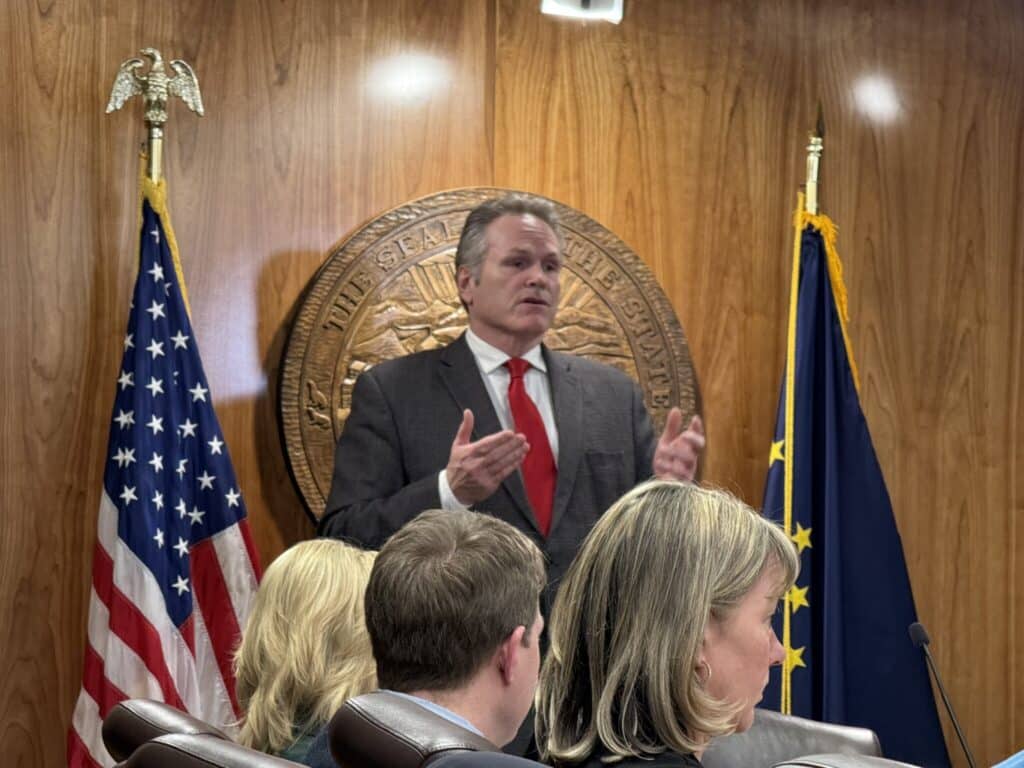
Alaska Gov. Mike Dunleavy delivered his eighth and final State of the State address on Thursday to a joint session of the Alaska State Legislature, touting the accomplishments of his term and promising continued momentum, particularly for large-scale resource development.
“Even though it’s my last year, there is no slowing down,” he said, and promised to work with legislators to advance policies in the spirit of Alaska’s independence and resilience.
In a nearly 80 minute speech, Dunleavy gave wide-ranging remarks on his administration’s initiatives over the last seven years, from reducing crime to improving reading scores. He touched on economic and workforce development, as well as the advancement of mining, oil and gas projects, like the proposed Alaska LNG gas pipeline project from the North Slope to Cook Inlet.
On Thursday, Dunleavy shared only a few details on a promised new state fiscal plan to help balance declining state oil revenues and pay for his proposed $7.75 billion draft budget this year. He said he plans to introduce a fiscal package in the next week, as well as bills focused on job training, child care and affordable housing.
Lawmakers with the House and Senate majorities expressed interest and some skepticism about his new fiscal plan after the speech, and concern around the lack of details for potential new tax proposals as the session gets underway.
“Honestly, that’s a tremendous amount of things he said he wants us to get through, so we have to do things properly and slowly and rightly and correctly,” said Senate President Gary Stevens, R-Kodiak. “And everything does take more time than you think, but we’re willing to work with the governor, and anxious to see what the specifics are of his fiscal plan.”
House Speaker Bryce Edgmon, I-Dillingham, said he is not optimistic for a fiscal plan this year.
“This is the eighth year that the governor has put a budget in front of the legislature with an over billion dollar deficit,” he said. “Yet to be contrasted this session with a fiscal plan that is going to be very controversial that none of us have seen yet.”
Dunleavy began the speech by applauding the state’s disaster relief efforts, most recently the response this fall in the devastating aftermath of ex-Typhoon Halong in Western Alaska. He noted the state has experienced 85 state and federal disaster declarations during his term, an average of one per month.
“We can’t control natural disasters. But we can control how we respond,” Dunleavy said. “I couldn’t be prouder of how we’ve responded to these events thanks to the brave men and women that I have the honor to serve as Governor.”
Dunleavy thanked the Trump administration throughout the speech, particularly for its focus on boosting Alaska resource development, which was outlined in the president’s executive order that promised to develop the state’s resources “to the fullest extent possible.”
He praised the Trump administration for re-opening offshore drilling and federal lands in the Arctic for oil and gas development, as well as for the millions promised for health care through the Rural Health Transformation Program.
“Alaska is benefitting greatly thanks to President Trump, and his administration. We need to do all we can to work with our federal partners over the next three years,” he said. “We may never get this opportunity again.”
Television cameras capture Gov. Mike Dunleavy’s State of the State speech on Jan. 22, 2026. (Photo by Corinne Smith/Alaska Beacon)
Dunleavy touted dropping crime rates and a declining unemployment rate, citing a growing economy and state population.
“I know there’s a feeling that things can be better, and of course they can, but our economy has been getting stronger and stronger every year of my administration,” he said.
Dunleavy said his administration will continue to work on reducing crime, in part by focusing on a new partnership with the municipality of Anchorage to combat crime there.
“Public safety has been my No. 1 priority and it will continue to be so until the end of my term,” he said.
Support of the proposed AK LNG pipeline featured prominently in his speech, though the financing and budget ask from the legislature remains uncertain. Dunleavy applauded the gas line developer, Glenfarne, a private energy developer that owns 75% of the project while the state of Alaska owns a 25% share.
Glenfarne Group CEO and founder Brendan Duval and Alaska LNG President Adam Prestidge stand while Gov. Mike Dunleavy recognizes their work in his State of the State address on Jan. 22, 2026. (Photo by Corinne Smith/Alaska Beacon)
Glenfarne executives were in the House chamber as Dunleavy praised the company’s most recent announcement: that they had signed new gas sales and contractor agreements and are headed into final investment negotiations to begin construction.
“This will be the single most transformative project in Alaska since the Trans-Alaska Pipeline,” he said.
While education was a major priority of the governor and legislature last year, Dunleavy only briefly touched on the topic. He said he would like to see legislators take action on bills he’s already introduced to expand charter schools, create open enrollment, address teacher retention and expand tribal compacting, which would allow schools to be run by local Alaska Native tribes.
Lawmakers react to the governor’s state of the state address
Republican lawmakers praised the speech and its scope.
“I thought it was a great address,” said Senate Minority Leader Mike Cronk, R-Tok, who was especially excited about movement towards a new gas pipeline. “He tried to cover everything that he possibly could, you know, still holding that optimism of getting things done that we need to get done.
“It was good to hear his overall enthusiasm going into his last year,” said House Minority Leader Rep. DeLena Johnson, R-Anchorage. “We do need to evaluate our revenue and our expenses and to really take a good look and be good stewards going forward. So I’m interested in seeing what he will promote.”
Members of the House and Senate majority caucuses echoed the interest in more details on the AK LNG pipeline proposal.
“I come from a district where people are not opposed to resource development, but we’re definitely skeptical,” said Rep. Ashley Carrick, D-Fairbanks. “We want to be practical, and we want to be critical, not to the point of stopping projects, but to the point of just understanding and having fair and reasonable oversight on projects.”
Senate President Gary Stevens, R-Kodiak, answers press questions following Gov. Mike Dunleavy’s State of the State address on Jan. 22, 2025, while Sen. Bill Wielechowski, D-Anchorage, Senate Majority Leader Cathy Giessel, R-Anchorage, and Bert Stedman, R-Sitka, look on. (Photo by Corinne Smith/Alaska Beacon)
Others, like Sen. Bill Wielechowski, D-Anchorage, were more skeptical about the project. “Do they have gas purchase agreements? Not that we’re aware. Do they have gas sales agreements? Not that we’re aware. Do they have financing for the project? Not that we’re aware,” he said. “So they’re talking a lot about the project, and it feels like progress, but do they have any firm commitments on any of those things? Not that I’m aware.”
“We applaud his efforts. We all want a gas line. We’re all excited that we’re as close as we are,” Edgmon said. “But there are other sorts of existential issues that we’re not dealing with here in the legislature.”
The speech failed to address fisheries for the second year in a row. Sen. Bert Stedman, R-Sitka, praised the governor’s optimism, especially around other resources, but noted the fisheries omission on Thursday.
“It is one of our largest employers in the state, and they’re still having significant problems after the turn down a couple years ago. So we’ll continue to have discussions with the administration and see what help we can put forward for the industry guys,” he said.
Rep. Calvin Schrage, I-Anchorage, said most of his constituents would like to see an improvement in the level or quality of state services. “The governor did a good job of highlighting some of the achievements from his administration, but I think in many cases, he missed the mark on the reality felt on the ground,” he said.
“With closing small businesses, we have a summer construction season that’s not funded — for the first time in state history. We have to address that,” said Rep. Zack Fields, D-Anchorage. “We have a stressed fishing industry. So just a big difference between a sort of a glossy speech and the much more challenging reality on the ground that we have to address.”
But Dunleavy noted in his speech that he’s still got some time to get work done — and he’s not running down the clock.
“Contrary to what you may have heard, my time is not up until noon on December 7th, 2026,” he said. “And our time here together in this last regular session isn’t up until midnight on May 20th.”
Members of the Alaska House of Representatives and Alaska Senate watch as the final vote on Gov. Mike Dunleavy’s veto of Senate Bill 113 is displayed on the voting board in the House on Thursday, Jan. 22, 2026. (Photo by James Brooks/Alaska Beacon)
Republicans in the Alaska Legislature voted down a new funding source for public school programs Thursday as they sustained Gov. Mike Dunleavy’s veto of Senate Bill 113.
The vote on overriding the governor was 35-25, 10 votes short of the 45 needed for an override. All of the “no” votes came from Republicans in the House and Senate minority caucuses. Those voting no included some legislators, such as Sen. Rob Yundt, R-Wasilla, who had strongly supported the bill last year.
If SB 113 had been enacted, the bill would have shifted some corporate income tax payments from other states to Alaska.
The result was expected to be between $25 million and $65 million per year in new revenue for the state treasury, and the bill called for much of that money to go to programs that help young children learn how to read and to career-technical education programs that teach Alaskans non-college trades.
Dunleavy vetoed the bill last fall, saying he was unwilling to approve any tax measure that was not part of a comprehensive, long-term plan intended to balance state revenue and expenses.
Under the Alaska Constitution, the veto needed to be taken up during the first five days of the regular session if lawmakers wanted to override it.
NOTN- What began as a simple solution to an overcrowded online buy-and-sell page has grown into one of Juneau’s most influential community forums.
The Juneau Community Collective, founded in March of 2014 by local resident Dan DeBartolo, now counts nearly 30,000 members and serves as a central hub for sharing information, asking for help and staying connected during emergencies and everyday life.
“So many people wanted to post all kinds of information about the community that wasn’t strictly about selling and buying.” Said DeBartolo, “So I just decided, we need to start up something else, initially, the page was called Juneau Community Concern, and that was early 2014, so we’ve been up for about 12 years now, but after a while, we switched to Juneau Community Collective, because it wasn’t just about people airing their concerns.”
Over the years, it has become a go-to resource during major events such as glacier outburst flooding, the recent winter storms and infrastructure disruptions, even a source for your local news outlets.
Members frequently use the page to report road conditions, locate lost pets or belongings and coordinate help during emergencies.
Reminiscing on favorite community posts and stories, DeBartolo said, “Somebody had a pet cat that had climbed up a tree, the cat did not want to come down, was up there for multiple days, the fire department was having a challenge getting involved. It became this big community interest piece where people had suggestions, people wanted to help these individuals just get their poor cat out of the tree. We were able to follow a story of somebody, in a town that really loves their pets, have their cat finally get rescued, and all the community support. I remember just feeling really good about having a space where people could discuss that and see it.”
Moderation has become an important part of maintaining the group, DeBartolo said.
As online discourse has grown more polarized, the Collective adopted clearer rules and more active moderation to keep discussions constructive.
“As the online space became more contentious, we needed to set very clear boundaries.” DeBartolo said, “By and large, the majority really appreciated that we spelled out what you could and couldn’t do on our page. We have those who feel it’s a little too strict sometimes, but it’s supposed to be as broad an appeal as possible, where people feel they can come in, air their concerns, or ask for help, ask questions and get those things solved.”
While the page is private to reduce spam and fake accounts, DeBartolo said membership is open to current residents, former Juneauites and those planning to move to the area, provided they follow the group’s guidelines.
Facebook’s attribution tools now clearly identify the Collective’s administrators, DeBartolo said this helps distinguish the official page from imitation groups.
“Imitation is the best form of flattery. I don’t know if the intention is flattery there, but I will tell you that if folks are worried that they’re in the authentic space that we have tried to create for this community, Facebook has allowed us to do something called attribution. So now, when you go look for Juneau Community Collective Official, which is at the back end, my name is actually on the page, and you can click on my name, and it tells you that the page has existed since 2014, you can see the authentic individual who’s actually responsible for the content on this page.” DeBartolo said, “What we see in a lot of other spaces, they don’t actually identify their moderators, or they use fake profiles. It’s very intentional. I will be transparent. My moderators will be transparent. So if you’re looking for a source you can trust, we want to be that.”
As the Collective continues to grow, DeBartolo says it’s mission remains focused on fostering connection rather than division.
“I don’t want our page to be about how people feel about national events. I want this to continue to be a place where you feel connected to Southeast Alaska, Feel connected to the Juneau community when you can’t get out and see them every day, when we have these situations like weather events that cut you off from in person communication.” DeBartolo said, “We want to be a source where you can have these discussions and feel that people are willing to help.”
Alaska Gov. Mike Dunleavy speaks during a cabinet meeting on Wednesday, Jan. 21, 2026. (Photo byJames Brooks/Alaska Beacon)
Alaska Gov. Mike Dunleavy is expected this evening to detail his plans for a long-term plan to balance Alaska’s expenses and revenue.
“There will be a temporary, seasonal sales tax concept put forward for discussion with the legislature,” Dunleavy said Wednesday during a cabinet meeting open to reporters.
Will state lawmakers approve that idea?
“I don’t have the answer to that until we start having discussions,” he said.
Since 2015, Alaska’s annual budget process has frequently been snarled by low oil prices that have made it difficult for legislators and governors to balance the state’s books without spending from savings.
Alaska relies on oil revenue for almost a third of its general-purpose revenue, and for most of the past decade, the price of North Slope crude has been relatively low.
Alaska has never had a statewide sales tax, and it hasn’t had a statewide income tax since 1980.
Since 2018, the state’s No. 1 source of general-purpose revenue has been the proceeds of the Alaska Permanent Fund, followed by oil.
Dunleavy’s proposal will mark a major shift for the governor, who is term-limited and in the final year of his second term. For his first seven years in office, the governor has attempted to resolve the long-term imbalance in state finances by cutting services and spending.
On the rare occasions that legislators have passed new tax measures, Dunleavy has vetoed them, saying he will accept no tax bills that are not part of a complete fiscal solution.
The governor is expected to unveil his proposal for a complete solution on Thursday. He said he views any tax measures as a temporary “bridge” until the North Slope begins producing more oil and a proposed trans-Alaska natural gas pipeline comes to fruition.
“The proposal and the fiscal plan has multiple components, and basically what it is, it’s a road map to inject stability, especially over the next five years when revenue is not quite what will be in the out-years,” he said.
In addition to proposing a statewide sales tax, the governor is expected to propose bills changing oil taxes and the Permanent Fund dividend.
“There’s always room for negotiation, but there’s two sides. That (goes) both ways,” he said.
Dunleavy’s remarks came during a Wednesday cabinet meeting that saw the leaders of state departments praise Dunleavy and point to ways in which the state’s position has improved since he entered office.
Crime is down, commissioners said, statewide employment is expected to reach a new historic high this year, and the state’s gross domestic product is also up.
Alaska remains near the bottom of national rankings in educational performance and violent crime, but Dunleavy said he wanted to emphasize that many of the state’s problems are improving.
“We wanted to make sure that people in Alaska know that … there’s a lot happening. These people are working hard. State employees are working hard. There’s a lot going on,” Dunleavy said. “It is a safer place. Is it the safest place in the country? No. That’s a motivator to keep going. We are creating more jobs. Can we, should we, do better? Absolutely. Keep going.”
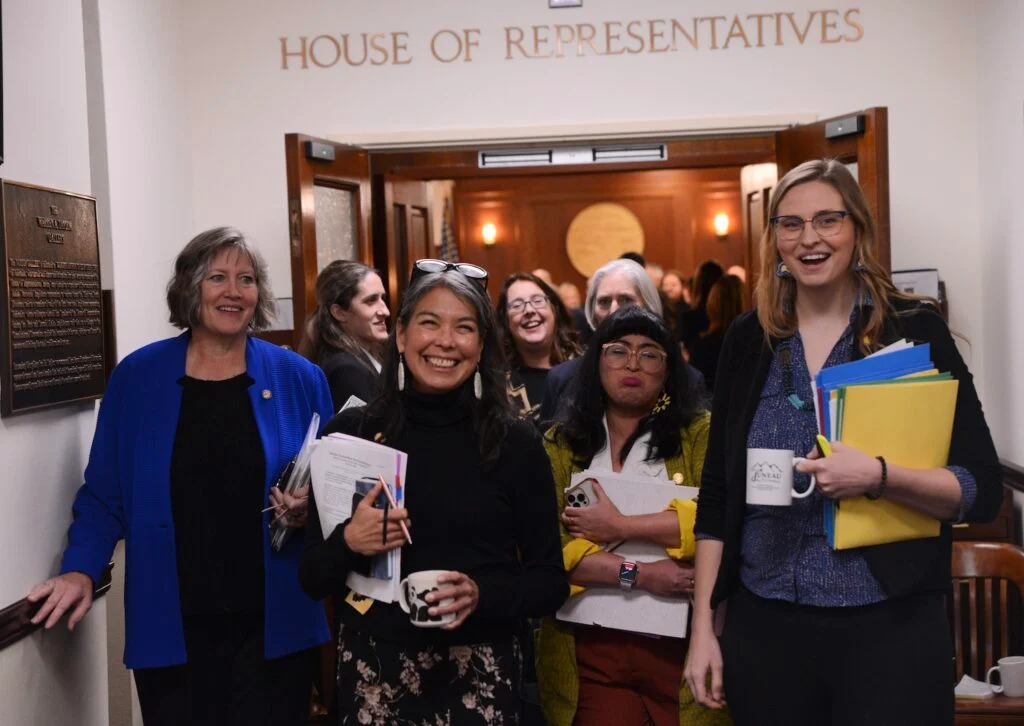
Members of the Alaska House of Representatives leave their chambers on Tuesday, Jan. 20, 2026, the first day of the second session of the 34th Alaska State Legislature. (Photo by James Brooks/Alaska Beacon)
Alaska lawmakers opened the second year of their regular legislative session on Tuesday with an ambitious agenda but low expectations amid a tight budget that appears likely to draw the lion’s share of legislators’ attention.
“It’s one big log jam,” said Sen. Bert Stedman, R-Sitka.
The Alaska Legislature operates on a two-year cycle between elections; bills are carried over from the first year to the second, but if they don’t pass the Legislature by the end of the second year, they expire and must start all over again.
Speaking Tuesday, members of the coalitions in charge of the House and Senate said they hope to address pensions for public employees, the proposed trans-Alaska natural gas pipeline, a long-term plan to balance state expenses and revenue, elections legislation and a handful of other major topics — all while dealing with an annual state budget that’s tightly constrained by the price of oil and a reluctance to enact legislation that will raise revenue.
On top of that, there are two newly appointed members of the state House, two members of the House who switched to the Senate, and new leaders in both the House and Senate’s minority caucuses.
The regular session is scheduled to end May 20.
Topic No. 1 is the state’s annual budgetary balancing act
“I think the big topic always is the budget,” said Speaker of the House Bryce Edgmon, I-Dillingham.
In December, Alaska Gov. Mike Dunleavy proposed a $7.75 billion state budget for the fiscal year that starts July 1 plus additional spending in the current fiscal year.
Alaska lacks the revenue to pay for that spending, so the governor has proposed spending $1.8 billion from savings.
Sen. Lyman Hoffman, D-Bethel and co-chair of the Senate Finance Committee, noted that the governor’s budget proposal calls for a large Permanent Fund dividend.
Reduce the governor’s proposal to $1,000 per recipient, and the deficit disappears — but only if you don’t include additional expenses that the governor left out of his budget, Hoffman said.
The Legislature could use savings to balance the budget, but members of the Senate majority believe the state’s Constitutional Budget Reserve — the state’s primary savings account — shouldn’t be used for recurring expenses.
“I’ve said it a couple of times, we shouldn’t be spending those dollars on one-time items,” Hoffman said.
If that position holds, the governor’s budget will need to undergo major changes before becoming final.
It takes 45 votes — 30 in the House and 15 in the Senate — in the 60-person Legislature to spend from the Constitutional Budget Reserve.
Getting those votes has historically been a challenge because it will require members of the majority caucuses to compromise with members of the minority caucuses.
In prior years, the Legislature has deadlocked over the issue, driving the state to the brink of a government shutdown.
“The budget is in an environment that’s fiscally constrained, and it’s going to be challenged by additional expenses that we’re going to see in the supplemental measure. That’s our top priority,” Edgmon said.
Governor’s veto of transportation projects looms large
One of the “additional expenses” that has legislators worried the most is funding for the state’s annual transportation construction budget.
Last year, Dunleavy vetoed a chunk of that budget because lawmakers intended to pay for it by diverting money from previously funded projects. Legislators did not take up a veto override during their August special session.
That’s left a hole of about $70 million needed to unlock ten times that amount of federal money.
Filling the hole will likely require spending from the Constitutional Budget Reserve, which needs a supermajority in the House and Senate.
“There are businesses that are going to close if the next construction year is not funded, and so I’m pretty concerned about it,” said Sen. Cathy Giessel, R-Anchorage.
Stedman called it a “significant issue.”
“We do have a deficit in this current fiscal year, and it is very difficult to deal with the three-quarter vote. … So we’ll wait and see what the governor’s proposal is to fix the mess he created,” Stedman said.
More than 20 groups representing a variety of organizations across the state have been urging lawmakers to act on the issue, going so far as to launch a statewide ad campaign that asks Alaskans to also join the lobbying effort.
Without quick action, the groups say, there will not be enough time to put money to work during the summer construction season.
Members of the Alaska House’s all-Republican minority caucus pose for photographs on Tuesday, Jan. 20, 2026, the first day of the second session of the 34th Alaska State Legislature. (Photo by James Brooks/Alaska Beacon)
Governor expected to reveal fiscal plan during State of the State
Shortly after opening their session on Tuesday, lawmakers formally invited Dunleavy to deliver his annual State of the State address at 7 p.m. Thursday.
That’s unusually early, but Dunleavy is expected to use the speech — his final State of the State before leaving office in December — to unveil a comprehensive plan to bring state expenses and revenue into alignment over the long term.
That’s likely to require significant new taxes or major budget cuts: A 10-year plan published by the governor’s office in December showed that the state will need to raise as much as $1.6 billion in additional money per year to keep state services at current levels in 2035.
Since oil prices plunged in 2015, state legislators and governors have been unable to fully resolve a fiscal gap that has bedeviled the state.
“It’s something that’s been on the docket for a long time, but it comes with a certain level of controversy, angst and maybe outright resistance,” Edgmon said.
Senate President Gary Stevens, R-Kodiak, said lawmakers initially expected the governor to propose a handful of bills, “but now there’s going to be an omnibus bill that has all of the issues in it,” he said.
House and Senate leaders were briefed on the outline of the governor’s plan earlier this week without receiving details.
Stevens, Edgmon and other legislators reserved comment on the governor’s ideas until they see the full text.
“It’s impossible to opine on it at this point without seeing the bills, without seeing what he’s truly putting forward,” Edgmon said.
Newly confirmed Sen. Cathy Tilton, R-Wasilla, shakes the hand of Senate President Gary Stevens, R-Kodiak, on the first day of the session at Jan. 20, 2026 (Photo by Corinne Smith/Alaska Beacon)
Veto override vote possible on Thursday
Hours before the governor talks about a comprehensive fiscal plan, legislators will vote on an incremental bill that would provide funding for education programs across the state.
The House and Senate passed Senate Bill 113 last year but Dunleavy vetoed it. If lawmakers override the governor, online companies would be required to pay corporate income taxes in Alaska for services delivered in Alaska.
Current law allows them to pay those taxes at the site of their server farms or other physical offices.
“I think Senate Bill 113, quite frankly, is a litmus test for where we’re going to go with the fiscal plan,” Edgmon said.
Pension bill awaits attention in the Senate
On Friday, the Senate Labor and Commerce Committee will begin hearing a bill that would re-establish a pension plan for state employees and teachers.
The House passed the bill last year, leaving the issue in the hands of the Senate, which passed a similar bill in 2024. While Dunleavy has previously voiced opposition to the idea of a pension revival, a narrow majority of legislators appear favorable to the idea, saying it is important for Alaska to offer competitive benefits when hiring prospective workers.
Rep. Garrett Nelson, R-Sutton, introduces his wife and youngest daughter (standing at background) on Tuesday, Jan. 20, 2026, the first day of the second session of the 34th Alaska State Legislature. (Photo by James Brooks/Alaska Beacon)
New legislators and legislators take their seats
Last year, Sens. Mike Shower, R-Wasilla, and Shelley Hughes, R-Palmer, resigned from the Legislature to cover statewide office. Dunleavy appointed Reps. George Rauscher, R-Sutton, and Cathy Tilton, R-Wasilla, to fill those Senate seats.
Rauscher and Tilton sat as senators for the first time on Tuesday, while their replacements sat as representatives for the first time in the House — longtime legislative aide Steve St. Clair and Sutton Community Council member Garret Nelson.
Both are stalwart Republicans and aren’t expected to significantly change the mix in the state House, where they will sit in the 19-member, all-Republican House Minority caucus.
The House is controlled by a 21-person coalition of Democrats, independents and two Republicans.
The House’s Republican minority has a new leader this year — Rep. DeLena Johnson, R-Palmer, who replaced Rep. Mia Costello, R-Anchorage, during the legislative interim. Johnson gave up her position on the powerful House Finance Committee — a hurdle for any bill with a price tag — in order to take her role as the face of the minority.
Replacing Johnson on the finance committee is Rep. Elexie Moore, R-Wasilla.
Some members of the House minority were unhappy with Johnson’s election as leader in part because that vote took place before St. Clair and Nelson were appointed. Since then, Johnson has been confirmed with a second vote, and any division among members of the House has quieted.
In the Senate, Shower’s departure required the selection of a new leader for the six-person, all-Republican minority caucus there. Sen. Mike Cronk, R-Tok, was elected to that role by his fellow minority Republicans.
The Senate continues to be led by a 14-person coalition that includes nine Democrats and five Republicans.
Newly appointed House Minority Leader Rep. DeLena Johnson, R-Anchorage and House Minority Whip Rep. Justin Ruffridge speak with reporters on the first day of the second session of the 34th Legislature on Jan. 20, 2026 (Photo by Corinne Smith/Alaska Beacon)
Legislators prepare to take up natural gas pipeline issues
The proposed trans-Alaska natural gas pipeline will be the top priority of the Senate Resources Committee, Giessel said on Tuesday.
Developers of that project have said they intend to make a go/no-go decision on the pipeline’s first phase early this year, and Dunleavy has floated the idea of a large state property tax break in order to encourage the project.
On Tuesday, members of the Legislative Budget and Audit Committee voted to spend up to $250,000 to hire Pegasus Global to advise the Legislature on the pipeline project. The Legislature already has an advisory firm, GaffneyCline, on contract, but that firm’s parent company, Baker Hughes, plans to get involved with the pipeline project.
NOTN- The City and Borough of Juneau is asking residents to weigh in on what city services matter most as officials prepare for budget cuts in the coming fiscal year.
CBJ is asking Juneau residents to take the CBJ Community Compass Survey before mid-February. Community feedback collected through this survey will help inform the CBJ assembly’s budgeting process this spring.
“What we hope to achieve is basically gathering community input to have a deeper understanding and depth of knowledge of the community values and priorities.” Said Juneau Mayor Beth Weldon, “And the other thing that we’d like to do is just increase awareness of our budget process and how that all works.”
Following the passage of Proposition 2 , which expanded sales tax exemptions in the October 7, 2025 Regular Municipal Election, significant reductions in sales tax revenue are expected and will likely require service-level cuts to the city’s annual budget.
CBJ officials say they seek to better understand community funding priorities and values, including where residents are willing to make tradeoffs and which services are critical to quality of life.
This effort will include an online survey, in-person workshops, and Assembly listening sessions.
“We’re also looking for one broad community listening session where we’ll take public testimony on the budget.” Said Weldon, “That, in a nutshell, is what we’re trying to do for our public engagement through this process, trying to figure out what the public sees as important, and trying to figure out some kind of consensus on where the cuts are going to come from.”
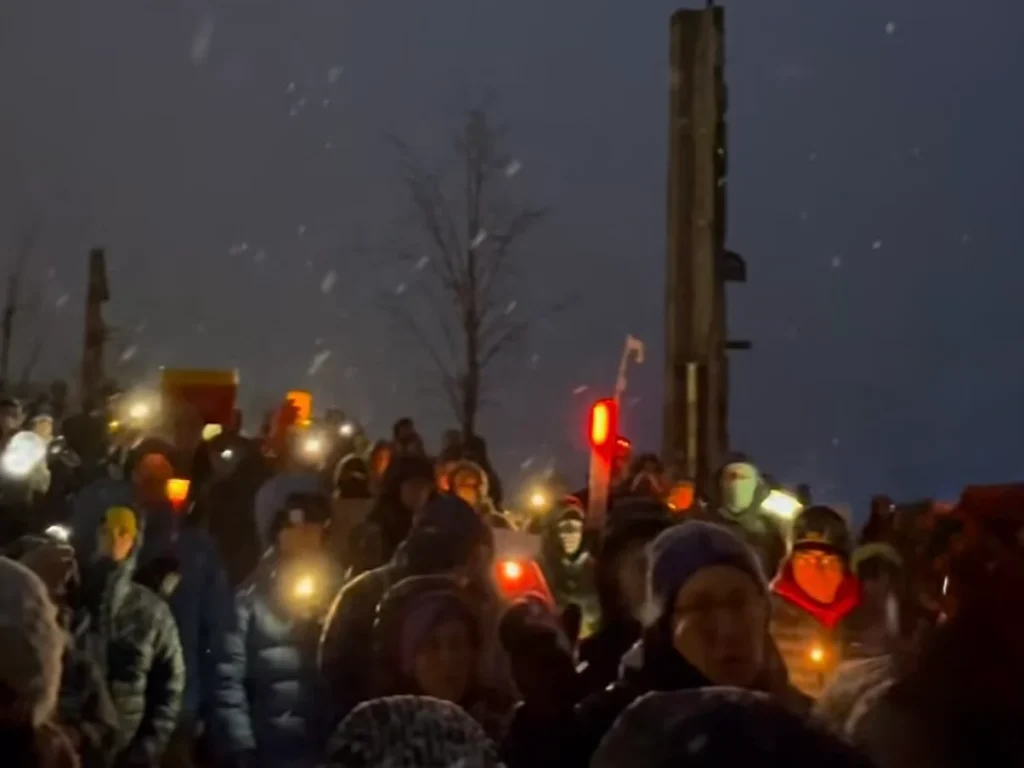
NOTN- Juneau for Democracy and the ReSisters held a peaceful pop-up protest in Juneau yesterday evening in solidarity with nationwide demonstrations which are being held due to recent federal immigration enforcement actions.
Juneau for Democracy invited residents to gather at The Whale for what the group called a candlelight vigil, to show support for people protesting Immigration and Customs Enforcement (ICE) agents across the country.
The event is part of a wave of protests that have followed several shootings and lethal confrontations with ICE agents, particularly in Minneapolis.
Protestors sang “This Little Light of Mine” in the lightly falling snow, posting on their social media to bring songs, poems, love and determination to share.
NOTN- Former U.S. Rep. Mary Peltola has launched a campaign to serve as Alaska’s next U.S. senator, and now she will be making a stop in Juneau this evening for a Meet and Greet at the Crystal Saloon.
Peltola announced her candidacy Jan. 12, saying Washington politicians are increasingly driven by special interests and national politics at the expense of Alaskans. She said her campaign will focus on affordability, infrastructure, fisheries and protecting Alaska’s way of life.
According to her campaign website, Peltola is holding a public meet-and-greet later tonight, meant to give supporters and undecided voters a chance to speak with her directly about her Senate run.
Peltola is a lifelong Alaskan who grew up along the Kuskokwim River, noting on her website, “I’m running for Senate because I’ve lived firsthand how government is failing Alaskans.”
She is a former member of the Alaska State Legislature and previously served in Congress, where she built a reputation for working with both Democrats and Republicans.