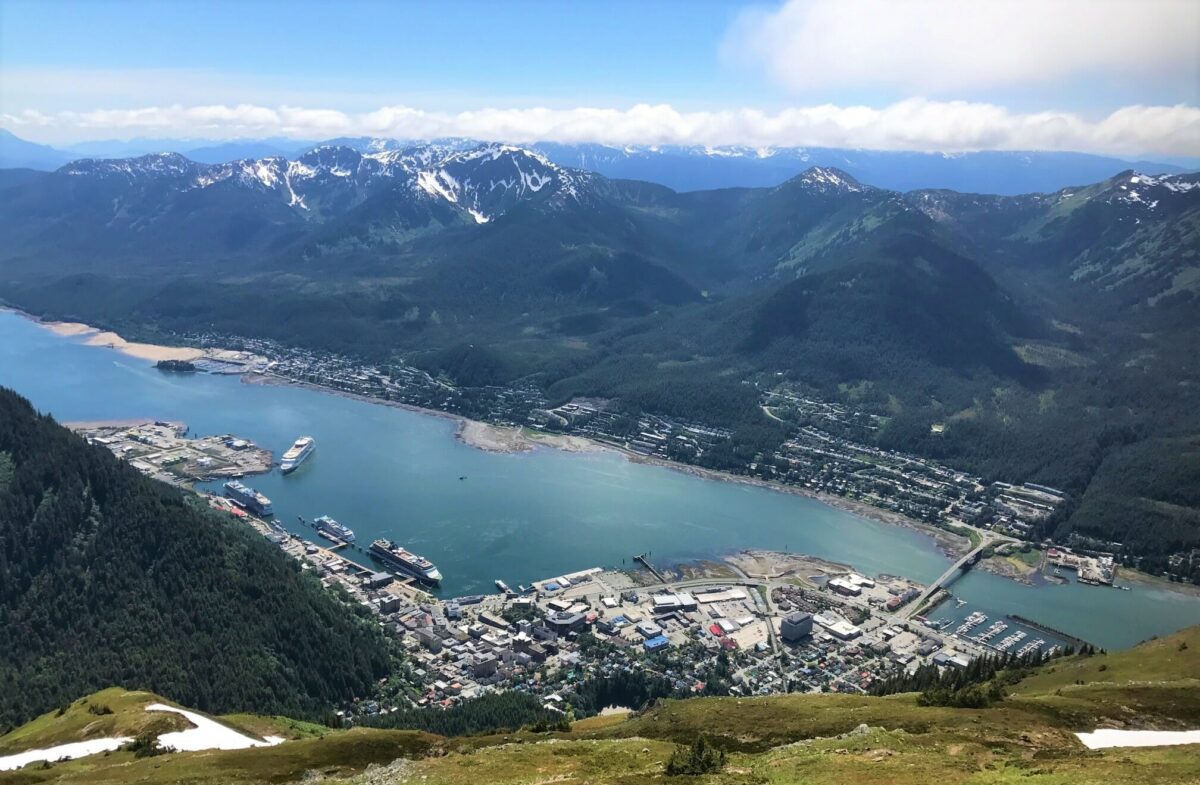
According to the proposed ordinance, when an officer-involved shooting occurs that causes death or serious injury to an officer or someone else, Juneau Police Department would release body-worn camera footage no later than 30 days after the incident. (Photo courtesy City & Borough of Juneau website)
(Photo courtesy City & Borough of Juneau website)
NOTN- The Alaska Department of Law’s Office of Special Prosecutions will not file criminal charges against former Juneau Police Officer Brandon LeBlanc for his use of force during a July 30 arrest that left a man unconscious and later medevaced out of Juneau for his injuries.
The decision follows a review of an Alaska State Troopers investigation into the incident, in which Officer LeBlanc took Christopher Williams Jr. to the ground during an arrest.
Williams struck his head on the pavement, was knocked unconscious, and was later medevaced to Anchorage for treatment.
Special Assistant Attorney General reviewed body camera footage, civilian video, officer interviews, and other evidence, and in a Statement from the office of Special Prosecutions, concluded that prosecutors could not prove beyond a reasonable doubt that LeBlanc’s use of force was unjustified under Alaska law.
While acknowledging that Williams was seriously injured, the Office of Special Prosecutions determined that LeBlanc’s actions did not constitute deadly force and that the takedown maneuver used was considered a “nondeadly control tactic in law enforcement”, The state found LeBlanc believed he needed to gain control of Williams, who according to the statement, appeared intoxicated and was actively resisting being handcuffed.
The report noted that although LeBlanc’s comments during the incident including a threat to “slam” Williams and a remark after the takedown, raised questions about his motivations, the totality of circumstances did not meet the legal threshold for criminal charges.
The letter also criticized the City and Borough of Juneau’s decision to publicly release body camera and in-car video footage of the incident before the investigation was complete, saying the release occurred “over the explicit objection” of both the Department of Public Safety and the Department of Law. Prosecutors warned that such releases could jeopardize future cases by affecting jury impartiality.
The Office of Special Prosecutions said its review was limited to whether LeBlanc’s actions violated criminal law and did not address possible policy or disciplinary issues within the Juneau Police Department.
The State’s letter concluded:
“The State will not file criminal charges against JPD Officer Brandon LeBlanc relating to the July 30, 2025, use of nondeadly force against Christopher Williams Jr. in Juneau, Alaska.”
NOTN- Power has been restored to Juneau after a citywide outage this afternoon that left much of the city in the dark for roughly an hour.
Alaska Electric Light & Power (AEL&P) reported just that the outage appeared to be impacting all areas of town, with crews immediately responding. AEL&P later confirmed that the disruption occurred on its transmission system.
“We have identified that the outage occurred on our transmission system and are currently flying and patrolling the line,” AEL&P said in an update on social media. “In the meantime we are restoring power with backup generation while we continue to investigate the cause.”
AEL&P announced later in a social media post that power had been restored across Juneau.
AEL&P added that short-term use of backup generation does not affect customers’ bills and that it has been years since the company needed to rely on extended backup power.
AEL&P said it would release further information as the investigation continues.
U.S. Coast Guard MH-60 Jayhawk helicopter aircrews conduct overflights of Kipnuk, Alaska, after coastal flooding impacted several western Alaska communities, Oct. 12, 2025. (U.S. Coast Guard photo courtesy of Air Station Kodiak)
Search and rescue efforts continued into Monday in the Kuskokwim River delta in the aftermath of devastating storm surge and hurricane-force winds brought by the remnants of Typhoon Halong. The storm tore homes from their foundations and sent them floating away.
One woman was found dead in Kwigillingok on Monday, according to Alaska State Troopers.
U.S. Coast Guard MH-60 Jayhawk helicopter aircrews conduct overflights of Kipnuk, Alaska, after coastal flooding impacted several western Alaska communities, Oct. 12, 2025. (U.S. Coast Guard photo courtesy of Air Station Kodiak)
The search for two more people unaccounted for in that community will continue, by boat and air, the state troopers said on a Facebook post. Search and rescue is being conducted by the U.S. Coast Guard, Alaska Army National Guard and Alaska Air National Guard, as well as state troopers.
The storm damaged boats, roads, airports, and power and sewer infrastructure over a vast region, and damage assessments were not immediately available as emergency rescue efforts entered a second day.
“We’re moving quickly. We’re moving as fast as we can,” said Gov. Mike Dunleavy at a news conference in Anchorage on Monday with state officials and the congressional delegation.
Fifty-one people and two dogs were rescued in Kwigillingok and Kipnuk on Sunday, Troopers said, located on the Bering Sea coast. Those predominantly Alaska Native coastal communities saw the most severe impacts of the storm, with a storm surge of up to 6.6 feet above normal and high winds that inundated communities.
“Preservation of life is our top priority,” said Capt. Christopher Culpepper, commander of U.S. Coast Guard Sector Western Alaska and U.S. Arctic.
“Several of these villages have been completely devastated,” Culpepper said. “Absolutely flooded, several feet deep, and so this took homes off of foundations. This put people in peril, where folks were swimming, floating, trying to find debris to hold on to in the cover of darkness, at nighttime.”
U.S. Coast Guard Sector Western Alaska and U.S. Arctic Commanding Officer Captain Christopher Culpepper speaks at an Oct. 13, 2025, news conference about rescue work and the response to Typhoon Halong damages in Western Alaska. Behind him and also participating in the news conference held in Gov. Mike Dunleavy’s Anchorage office, is David Kramer, a meterologist with the National Weather Service. (Photo by Yereth Rosen/Alaska Beacon)
“And so as the sun broke on the first day, devastation became more and more apparent,” Culpepper said, referring to Sunday as the storm lifted. “Coast Guard helicopter crews, along with Army National Guard and Air National crews, particularly two pairs of rescue jumpers that also assisted … picked people up off their homes,” he said, and were taken to higher ground. Several people were medically evacuated to Bethel.
Some people trapped in floating homes early Sunday used their cellphones to call for help. Some of those calls reached the State Emergency Operations Center, said incident commander Mark Roberts.
“The folks that were in houses that were floating and didn’t know where they were, was one of the most tragic things our folks in the state EOC have ever faced,” Roberts said. “And some of them called into the state EOC, and we just stayed on the phone with them to talk.”
Members of the Alaska National Guard and Alaska State Defense Forces living in western Alaska, up to 80 personnel, have been activated, said Maj. Gen. Torrence Saxe, commissioner of the Alaska Department of Military and Veterans Affairs, which oversees the Alaska National Guard.
“This may end up being the largest off-the-road-system response for the National Guard in about 45 years,” Saxe said.
Over 50 airports were impacted by the storm but largely cleared as of Monday to allow planes to land with emergency supplies and personnel. The coastal communities throughout the region are only accessible by small plane or boat. “There also have been numerous reports to us of roadway damage, boardwalk damage – boardwalks are the roads in this region – and then also the various power outages and lighting problems throughout the region,” said Ryan Anderson, commissioner of the Alaska Department of Transportation.
More than 1,000 people were displaced from their homes across the region, according to estimates from the Yukon-Kuskokwim Health Corporation, the region’s largest healthcare provider.
Roughly 400 people are sheltering in the local school in Kwigillingok, and 680 people in Kipnuk are at the school there, they said. Thirty seven homes in Kwigillingok were destroyed.
Emergency supplies, including water, food, hygiene products, baby formula and bedding are being flown into coastal communities, according to a statement on Monday by YKHC. “The need is great,” they said. The response effort is coordinated between YKHC, Alaska Native Tribal Health Consortium (ANTHC), the Association of Village Council Presidents and the state of Alaska, to assess and respond to community needs.
Medical providers and prescription medications were being sent to Kwigillingok, Kipnuk, Tuntutuliak and Chefornak, they said, and plans were underway to evacuate about 40 people, including elders and pregnant women, to Bethel.
Alaska State Sen. Lyman Hoffman, D-Bethel, said over 1,000 emergency meals had been delivered already to coastal villages, but those supplies would run out.
State Sen. Lyman Hoffman, D-Bethel, speaks at an Oct. 13, 2015, news conference about the impacts of Typhoon Halong’s to Western Alaska. Behind him and also speaking at the news conference, which was held at Gov. Mike Dunleavy’s Anchorage office, are National Weather Service meteorologist David Kreamer, U.S. Coast Guard Sector Western Alaska and U.S. Arctic Commanding Officer Captain Christopher Culpepper and Ryan Anderson, commissioner of the Alaska Department of Transportation and Public Facilities. (Photo by Yereth Rosen/Alaska Beacon)
“They need additional food supplies, and it’s difficult to get people out there,” he said.
He said Kipnuk’s runway was still damaged, and planes could not land there. Power is still out there as well. “There has to be a short-term assessment done of those homes that are out there, whether they are livable or not livable … and needs to be made as quickly as possible,” Hoffman said. “Winter is coming.”
The state of Alaska has activated a multi-agency emergency response, and with the governor’s extended disaster relief declaration, residents and communities are eligible for recovery assistance, including temporary housing assistance.
“We’ve had a few injuries; we’re moving into a higher-level care as needed, and then we’re moving right on in to support sheltering, and then right on into the next to support the ability for people to live in a safe, warm place through the winter,” Roberts said.
U.S. Sen. Dan Sullivan, R-Alaska, said he was communicating with officials with the Federal Emergency Management Agency, who would provide assistance.
“FEMA right now is in direct contact with our state and local officials and has an incident management team on the ground and a FEMA search and rescue group pre-positioned on standby,” Sullivan said. “As we move into the recovery phase – and we’re not there yet – the federal agencies need to act very quickly. We’re going to be seeing freeze-up and very cold weather, probably quite soon. So they have committed to being very ready to move into that phase of operations once we get there.”
Sen. Lisa Murkowski, R-Alaska, underscored the trauma residents are experiencing from this disaster. “When the waters subside, when the analysis is complete — we have many, many families (and) we have communities that are in trauma, that will be in shock over the loss and so, making sure that we have trauma specialists, if you will, that are culturally in tune with the region and with the people there is something that I think we all need to be challenged to think about,” she said.
While the Trump administration has recently cut or frozen significant amounts of federal funding for rural Alaska, like for infrastructure and climate resilience initiatives, Murkowski said she will continue to push officials for federal support.
“I think this disaster that we are seeing is yet one more reason why the delegation needs to lean in and make sure that the administration fully understands the value of what it means to to have a level of preparedness, to have a level of resilience in an area that is so exposed on our western flank,” she said.
This week’s disaster came as the remnants of Typhoon Halong battered the region Saturday night into Sunday, sweeping north across the western Alaska coast. The National Weather Service reported hurricane-force winds up to 107 mph in the Kusilvak Census Area, 100 mph in Toksook Bay and 98 mph in the island of St. George in the Bering Sea.
The storm has now weakened over Canada and is moving east, said meteorologist David Kramer, but flood warnings are still in effect for the Kuskokwim Delta and western and northwest Arctic coasts through Tuesday.
Another storm is forecasted for the Kuskokwim River delta region early on Wednesday morning, with winds gusting up to 40 mph from the southeast, and water levels from one to three feet.
“From the records that we set recently, over six feet, this is significantly less impact,” Kramer said. “The main concerns are high water levels, rough surf and the potential for some coastal erosion.”
A gray seal surveys its surroundings, Tuesday, Sept. 30, 2025, off the coast of Brunswick, Maine. (AP Photo/Robert F. Bukaty)
AP- Republican lawmakers are targeting one of the U.S.’s longest standing pieces of environmental legislation, credited with helping save rare whales from extinction.
Conservative leaders feel they now have the political will to remove key pieces of the Marine Mammal Protection Act, enacted in 1972 to protect whales, seals, polar bears and other sea animals. The law also places restrictions on commercial fishermen, shippers and other marine industries.
A GOP-led bill in the works has support from fishermen in Maine who say the law makes lobster fishing more difficult, lobbyists for big-money species such as tuna in Hawaii and crab in Alaska, and marine manufacturers who see the law as antiquated.
Conservation groups adamantly oppose the changes and say weakening the law will erase years of hard-won gains for jeopardized species such as the vanishing North Atlantic right whale, of which there are less than 400, and is vulnerable to entanglement in fishing gear.
Here’s what to know about the protection act and the proposed changes.
Why does the 1970s law still matter
“The Marine Mammal Protection Act is important because it’s one of our bedrock laws that help us to base conservation measures on the best available science,” said Kathleen Collins, senior marine campaign manager with International Fund for Animal Welfare. “Species on the brink of extinction have been brought back.”
It was enacted the year before the Endangered Species Act, at a time when the movement to save whales from extinction was growing. Scientist Roger Payne had discovered that whales could sing in the late 1960s, and their voices soon appeared on record albums and throughout popular culture.
The law protects all marine mammals, and prohibits capturing or killing them in U.S. waters or by U.S. citizens on the high seas. It allowed for preventative measures to stop commercial fishing ships and other businesses from accidentally harming animals such as whales and seals. The animals can be harmed by entanglement in fishing gear, collisions with ships and other hazards at sea.
The law also prevents the hunting of marine mammals, including polar bears, with exceptions for Indigenous groups. Some of those animals can be legally hunted in other countries.
Changes to oil and gas operations — and whale safety
Republican Rep. Nick Begich of Alaska, a state with a large fishing industry, submitted a bill draft this summer that would roll back aspects of the law. The bill says the act has “unduly and unnecessarily constrained government, tribes and the regulated community” since its inception.
The proposal states that it would make changes such as lowering population goals for marine mammals from “maximum productivity” to the level needed to “support continued survival.” It would also ease rules on what constitutes harm to marine mammals.
For example, the law currently prevents harassment of sea mammals such as whales, and defines harassment as activities that have “the potential to injure a marine mammal.” The proposed changes would limit the definition to only activities that actually injure the animals. That change could have major implications for industries such as oil and gas exploration where rare whales live.
That poses an existential threat to the Rice’s whale, which numbers only in the dozens and lives in the Gulf of Mexico, conservationists said. And the proposal takes specific aim at the North Atlantic right whale protections with a clause that would delay rules designed to protect that declining whale population until 2035.
Begich and his staff did not return calls for comment on the bill, and his staff declined to provide an update about where it stands in Congress. Begich has said he wants “a bill that protects marine mammals and also works for the people who live and work alongside them, especially in Alaska.”
Fishing groups want restrictions loosened
A coalition of fishing groups from both coasts has come out in support of the proposed changes. Some of the same groups lauded a previous effort by the Trump administration to reduce regulatory burdens on commercial fishing.
The groups said in a July letter to House members that they feel Begich’s changes reflect “a positive and necessary step” for American fisheries’ success.
Restrictions imposed on lobster fishermen of Maine are designed to protect the right whale, but they often provide little protection for the animals while limiting one of America’s signature fisheries, Virginia Olsen, political director of the Maine Lobstering Union, said. The restrictions stipulate where lobstermen can fish and what kinds of gear they can use. The whales are vulnerable to lethal entanglement in heavy fishing rope.
Gathering more accurate data about right whales while revising the original law would help protect the animals, Olsen said.
“We do not want to see marine mammals harmed; we need a healthy, vibrant ocean and a plentiful marine habitat to continue Maine’s heritage fishery,” Olsen said.
Some members of other maritime industries have also called on Congress to update the law. The National Marine Manufacturers Association said in a statement that the rules have not kept pace with advancements in the marine industry, making innovation in the business difficult.
Environmentalists fight back
Numerous environmental groups have vowed to fight to save the protection act. They characterized the proposed changes as part of the Trump administration’s assault on environmental protections.
The act was instrumental in protecting the humpback whale, one of the species most beloved by whale watchers, said Gib Brogan, senior campaign director with Oceana. Along with other sea mammals, humpbacks would be in jeopardy without it, he said.
“The Marine Mammal Protection Act is flexible. It works. It’s effective. We don’t need to overhaul this law at this point,” Brogan said.
What does this mean for seafood imports
The original law makes it illegal to import marine mammal products without a permit, and allows the U.S. to impose import prohibitions on seafood products from foreign fisheries that don’t meet U.S. standards.
The import embargoes are a major sticking point because they punish American businesses, said Gavin Gibbons, chief strategy officer of the National Fisheries Institute, a Virginia-based seafood industry trade group. It’s critical to source seafood globally to be able to meet American demand for seafood, he said.
The National Fisheries Institute and a coalition of industry groups sued the federal government Thursday over what they described as unlawful implementation of the protection act. Gibbons said the groups don’t oppose the act, but want to see it responsibly implemented.
“Our fisheries are well regulated and appropriately fished to their maximum sustainable yield,” Gibbons said. “The men and women who work our waters are iconic and responsible. They can’t be expected to just fish more here to make up a deficit while jeopardizing the sustainability they’ve worked so hard to maintain.”
Some environmental groups said the Republican lawmakers’ proposed changes could weaken American seafood competitiveness by allowing imports from poorly regulated foreign fisheries.
Alaska Lt. Gov. Nancy Dahlstrom (Photo by Greg Knight/News of the North)
NOTN- Lt. Gov. Nancy Dahlstrom announced last week that she is officially running for governor, saying she hopes to lead Alaska toward “a stronger, more self-sufficient future” built on resource development, job creation and a focus on public safety.
In an interview with News of the North on Tuesday, Dahlstrom said she was motivated to launch her campaign because she wants to “make Alaska a place where families can put down roots, businesses can grow, and communities can thrive.”
“I decided to step up and run for Governor because I believe in Alaska’s future.” Said Dahlstrom, “I want our kids and grandkids to be able to stay here and have successful lives. And I know that we have some challenges, but we have many, many opportunities right in front of us, and I think I’m the person that can help bring some of these things to fruition.”
Dahlstrom, who has served as lieutenant governor since 2022 under Gov. Mike Dunleavy, previously served in the Alaska House of Representatives and as the state’s corrections commissioner. She says these experiences have shaped her vision for Alaska.
“Serving in the legislature, I was able to craft legislation that really tightened crime laws and made Alaska safer for everyone.” Dahlstrom said, “I feel confident the experience I have is going to be beneficial for Alaska.”
Dahlstrom said her top priorities include lowering energy costs, expanding resource development, and supporting job creation as a way to improve both economic and mental health across the state.
“Having a job is probably the one thing you need to help have good mental health. When people have a job, they feel successful about themselves, and they’re moving forward, their mental health is better.” Said Dahlstrom, “We’re high on mental health and substance use issues, and we need to be working towards fixing that.”
Dahlstrom also called for “unleashing Alaska’s resources,” including mining and drilling.
“I’m going to continue helping the government, the State, the President and others in Alaska in unleashing our resources, so we are able to mine and drill to get the wonderful things we have in this State, there’s going to be jobs everywhere, and it’s going to be a wonderful situation.”
If elected, Dahlstrom said her first 100 days in office would focus on meeting with legislative leaders and reviewing department budgets.
Dahlstrom, who moved to Alaska as a teenager and said she “fell in love with the state.”
“I came here when I was 18 for a vacation, and I just never wanted to leave,” she said.
Dahlstrom joins a crowded republican race for governor, following term-limited Mike Dunleavy.
NOTN- Sealaska Heritage Institute held a public ceremony yesterday to officially open new Indigenous Science Building and dedicate a newly carved totem pole that will take its place on Juneau’s waterfront.
The event, held on Indigenous People’s Day included the formal naming of the facility, the dedication of a Sukteeneidí kootéeyaa (totem pole), and cultural performances at Heritage Plaza next to the Walter Soboleff Building.
SHI President Rosita Worl said the four-story building will serve as a hub for education programs that center Indigenous knowledge, languages and values while incorporating modern science and technology.
“The Indigenous Science Building will offer learning experiences that showcase the traditional knowledge of Tlingit, Haida and Tsimshian peoples that has existed for thousands of years. By bringing Indigenous knowledge that integrates Western science into the classroom, we will empower youth and community members with critical thinking skills that will strengthen regional economies and deepen our knowledge of the environment,” Worl Said.
The building will feature a traditional foods kitchen, digital media lab, Indigenous science research lab, and fabrication and makerspace facilities. It will host K–12 and community programs, after-school and weekend classes, and summer workshops for students from Alaska and beyond.
The façade features a monumental art installation based on an original piece by the renowned Haida artist Robert Davidson, whose work also inspired the facades of the institute’s Walter Soboleff Building and Atnané Hít, the Sealaska Heritage Arts Campus building, which SHI opened in 2015 and 2022 respectively. During the ceremony, the facility will officially be given the name Indigenous Science Building.
During Monday’s ceremony, the new totem pole was dedicated as part of SHI’s Kootéeyaa Deiyí (Totem Pole Trail) project in downtown Juneau. The pole was carved in Ketchikan by Haida artist Lee Wallace and five apprentices.
Stryder Greenhalgh, 17, serves a latte he made on Oct. 9, 2025. Greenhalgh works at Black Cup, a coffee shop in Midtown Anchorage. The population of Alaskans of prime working age has diminished; teens and seniors now account for bigger percentages of the state’s workforce. (Photo by Yereth Rosen/Alaska Beacon)
As Alaska’s population of working-age adults shrinks, according to economists, other demographic groups have become bigger segments of the labor force: seniors and teenagers.
Residents who are 65 and older made up 6.2% of the Alaska worker population in 2023 after steadily increasing over two decades, according to an analysis by the state Department of Labor and Workforce Development. In 2003, that age group made up just 1.8% of all working Alaskans, according to the data.
For teenagers, the two-decade trend has been different. In 2003, teenagers 14 to 17 years old made up 4.4% of Alaska’s resident workers, but that percentage dropped in subsequent years – reflecting national trends — until it bottomed out at 2.7% during the COVID-19 pandemic year of 2020. Since then, the percentage of teens in Alaska’s workforce rebounded, and it hit 3.7% in 2023.
The information is detailed in a pair of articles in the current issue of Alaska Economic Trends, the department’s monthly magazine published by the department’s research section.
The analysis of senior workers was written by state labor economist Karinne Wiebold; labor economist Rob Kreiger reported on the labor trends among teenagers.
A big difference between older and younger workers is the degree of the male-female pay gap, Wiebold’s analysis showed.
For workers 65 and older, the gap is wide. Men in that age group had average annual earnings of $54,835, compared to average earnings of$38,797 for women 65 and older.
In dollar terms, older women in Alaska earned 71 cents for every $1 earned by men 65 and older.
The gap widens with age, the analysis found. The gap existed even in the highest-paid job category, the analysis found. Top male executives who were at least 65 years old earned $112,799 a year on average in 2024, while top female executives in the same age group earned an average of $87,514.
Statewide, across all age groups, women earn 73 cents for every $1 earned by men, her article said.
Wiebold said numerous factors contribute to the wage gap and the way it widens with age. Those might include historic discrimination, but other factors are work experience, training, education, hours worked, job and industry choice and time out of the workforce for reasons like childcare and elder care, she said.
“All of these choices and conditions are amplified with age,” she said by email.
In contrast, the male-female pay gap among teens aged 14 to 17 was very small, Kreiger’s analysis showed. On average, girls in that age group earned 96 cents for every $1 earned by boys in 2023, the statistics showed.
For the most part, teenaged boys and girls worked in similar jobs. Accommodation and food-service jobs accounted for more than a third of employment, while retail jobs accounted for 18.4%.
By working mostly in similar industries and at similarly entry-level positions, the teens “haven’t had time for other factors to influence the wage gap,” Weibold said.
There are multiple and interplaying causes, said Dan Robinson, research chief for the Department of Labor and Workforce Development.
Part of the reason is net outmigration – with more people moving away from Alaska than moving to the state. Another factor is the aging of Alaska’s population, he said.
There are also numerous responses to the loss of Alaskans of prime working age residents. One has been more employment of nonresident workers, he said.
Nonresident hire hit a new record in 2023, the department said earlier this year.
Increased workforce participation by teens and seniors is part of the multifaceted picture, he said.
“For teens, it’s because a higher percentage of them have been working since the pandemic, and for seniors there are simply more of them,” Robinson said by email. “It could be that seniors are postponing retirement as a result of the worker shortage, and for teens they are likely lured into the labor force by recent wage growth in low wage jobs,”
State officials and employers have also taken actions to entice more seniors and teens into the workforce.
Last month, the state marked an official “Employ Older Workers Week,” with a Sept. 21 gubernatorial proclamation noting that “older workers play an increasingly important role in maintaining Alaska’s economy and leadership in the global marketplace, adding depth in perspective, social networks, and talent.”
The proclamation mentioned the Department of Labor and Workforce Development’s Mature Alaskans Seeking Skills Training program, which trains people 55 and older who might have encountered barriers to employment in the past, such as disabilities.
As for the young Alaskans, the Legislature this spring passed a bill allowing workers as young as 18 to serve alcohol at restaurants. Key support for the bill came from the Alaska Cabaret, Hotel, Restaurant, and Retailers Association, which cited a labor shortage as one of the significant challenges facing its members.
However, that labor shortage might not continue.
“There are early signs that the labor shortage is easing and we’re returning to a more normal balance between job openings and job seekers, but we’re still gathering and thinking about that data,” Robinson said.
A school bus passes in front of the Alaska Capitol on Tuesday, Feb. 6, 2024. (Photo by James Brooks/Alaska Beacon)
By: Corinne Smith, Alaska Beacon
A school bus passes in front of the Alaska Capitol on Tuesday, Feb. 6, 2024. (Photo by James Brooks/Alaska Beacon)
Officials with the Alaska Department of Education and Early Development have walked back a proposal to limit local governments’ funding for public schools, instead asking the State Board of Education to take no action on the item this week.
The State Board of Education was set to vote this week on a controversial measure that many school officials and education advocates say would bar local municipalities from providing much-needed funding and support services to local schools.
Instead the board voted unanimously on Thursday, at a DEED official’s request, to take no action and return the proposal to the department for further development.
A screenshot of the Alaska State Board of Education during their quarterly meeting, where Education Commissioner Deena Bishop addresses the proposed regulation change to local contributions on Oct. 8, 2025 (Screenshot)
“As a result of the feedback we received, the department will be recommending that the state board take no action on this item, return the proposed regulation to the board or to the department for further collaboration and input with key stakeholders,” said Heather Heineken, the division director for finance and support services for the department, to the board Wednesday, the first day of a two-day meeting.
The proposal came under sharp criticism and public alarm beginning in June, when DEED introduced the measure as an emergency regulation change. Officials said the move was intended to redefine the amount local municipalities provide for schools — called the local contribution — to include “services provided at no charge to a district by the city or borough.”
At the time, DEED officials said it was a way to address the balance of funding for schools ↣— in Alaska’s complex school funding formula which includes local, state and federal funding — and avoid failing a federal disparity test.
The disparity test is required by the U.S. Department of Education to regulate the spread between the highest and lowest funded districts, because of the way the state uses some federal funding, called impact aid. The state failed the test earlier this year, but is in the process of appealing the ruling.
Education Commissioner Deena Bishop, however, reversed that argument and told board members further discussion was needed with districts and financial offices to clarify what “in-kind” contributions are being made and how they were accounted for. She said that was needed to align with state law and standards for equity between districts.
“We’re not reacting to the federal government. What we are (doing) is trying to meet the state statute that calls for that equitable funding,” Bishop told the board on Wednesday.
Public raises alarm at unclear change to local contributions
State board members received more than 600 public comments, mostly opposing the measure, in June and July when the regulation was introduced, calling the proposed change vague and potentially limiting vital municipal funding for schools.
During public comment on Thursday, several district officials expressed opposition and concern.
Valdez School District Superintendent Jason Weber said the change could jeopardize essential city funding, including for transportation and school meals.
“Our Food Service Program is also at a breaking point. Even after raising lunch prices by $1 per meal last year, we’re still operating at a deficit. Every dollar cut from food service funding is $1 taken away from the plates of kids, these regulations would directly reduce the food we can provide for our students, something no community should have to accept,” he said.
“Each Alaskan community has unique needs and challenges the decisions about how to support and operate schools should be made by those who live and work closest to them, not through a one size fits all mandate from the state level, undermining local authority threatens the very foundation of community supported education in Alaska,” Weber said.
Juneau School District Superintendent Frank Hauser pointed to the state’s own appeal of the federal disparity test as evidence the change is unnecessary.
“According to DEED’s July 14 letter, the state would meet the disparity standard, not with a regulation change, which isn’t even mentioned, but by a different accounting method,” Hauser said.
Hauser asked board members to vote the regulation down.
“I am terrified of version 3.0 of this regulation. Each subsequent attempt at this regulation change has had exponentially more negative impacts, impacts beyond what the department realizes, even to REAAS, home school and correspondence students, instead of enacting the oft quoted definition of insanity, doing the same thing over and over and expecting different results, I ask you today to take a different direction and ask the department to stop with this effort altogether,” he said.
During public comment, district officials also raised concerns at a recent DEED Facebook post, which shared a statement over an image of a burning dumpster fire, calling several Anchorage officials’ out by name, saying that their information was “inaccurate” and saying DEED no longer was pushing the proposal. Commenters called the social media post “unprofessional” and not “positive or proactive communication.”
Anchorage officials had penned an op-ed in the Anchorage Daily News, opposing the regulation change, saying it could “gut” the district and strip $15 million in municipal funding, including for school buses and school resource officers.
State board members vote to return proposal to DEED
Before the vote, several state board members questioned whether the proposal should come back to the board.
“I guess I’m questioning now, is it really an issue, or is that needs to be addressed, or does it just need to go away?” asked board member Pamela Dupras on Thursday.
Bishop responded that DEED will gather more feedback, and work with districts to adhere to state law and requirements for equitability. She also pointed to the new Legislative Task Force on Education Funding that may take up the issue and recommend new legislation to define local contributions.
Bishop said DEED would work with district officials and finance departments to further clarify the requirements. “I’m glad that you’re pulling this back,” she said.
She also acknowledged the frustration of districts. “Every two weeks from August until now, I’ve been sharing the same message that, yes, we do not want to put this forward. So I understand the frustration with what was in writing, certainly superintendents that attended all those meetings knew the intent,” she said.
“I think just the stress about school funding, a lot of trust isn’t there,” Bishop added. “The Department wants to earn that trust back and continue with the work.”
An early voting station is set up in the atrium of the State Office Building in Juneau, Alaska on Monday, Aug. 5, 2024, the first day of early voting for the 2024 Alaska primary election. (Photo by James Brooks/Alaska Beacon)
An early voting station is set up in the atrium of the State Office Building in Juneau, Alaska on Monday, Aug. 5, 2024, the first day of early voting for the 2024 Alaska primary election. (Photo by James Brooks/Alaska Beacon)
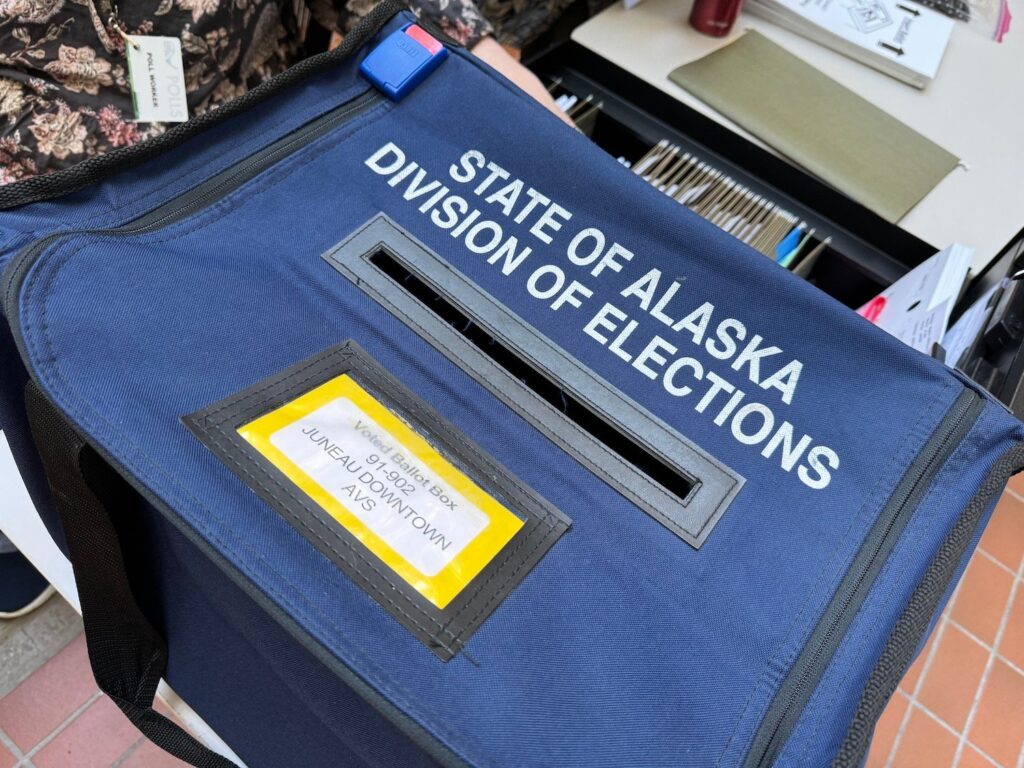
NOTN- Juneau voters are set to approve two tax-cutting measures according to unofficial results from the City and Borough of Juneau’s municipal election released Friday.
Early results show challenger Nathaniel “Nano” Brooks leading incumbent Wade Bryson 4,652 votes to 4,242 in the city’s only contested Assembly race.
Greg Smith and Ella Adkison, both running unopposed, secured their seats for District 1 and the areawide Assembly positions, respectively.
In the race for the Board of Education, Steve Whitney leads, followed by Melissa Cullum, Jenny Thomas, Jeremy “JJJ” Johnson and Deedie Sorensen.
Speaking Wednesday morning, Weldon said due to high voter turnout, preliminary numbers for Ballot propositions 1 through 3 won’t likely change.
“Ballot Proposition 2, taking the sales tax off food, that’s not going to change. The seasonal sales tax is not going to change. Proposition 1 has a possibility of changing, but is likely going to stay that way.” Weldon Said.
Proposition 1, which would lower the city’s property tax cap from 12 to 9 mills, is ahead with 5,002 votes in favor and 4,807 opposed.
Proposition 2, which exempts food and residential utilities from sales tax, passed by a wide margin 6,842 votes to 2,995 .
Proposition 3, which would have created a seasonal sales tax aimed at shifting more of the burden to tourists, was rejected 5,681 to 4,174.
The updated totals include all ballots received and verified through Thursday. Additional mail-in ballots postmarked by Election Day are still being processed, with final certification expected on Oct. 21.
“We’ll just evaluate and figure out where we can fill the hole with cutting services a bit and other things, the biggest hit to the budget was taking sales tax off food without filling that hole. So that’s, you know, somewhere around $8 million.” Weldon said, “It’s easy to cut $8 million one time, but it’s a little more difficult to cut it year after year after year. But we’ll just go back to work and our finance means will be pretty interesting.” She said.
The Gates of the Arctic National Park and Preserve, where the Ambler Road project would pass through, is visible from Ambler, Alaska, Sunday, Sept. 28, 2025. (AP Photo/Annika Hammerschlag)
Senators voted 50-46 Thursday to repeal a land management plan for a large swath of Alaska that was adopted in the final weeks of Democratic President Joe Biden’s administration. Lawmakers voted to roll back similar plans for land in Montana and North Dakota earlier this week.
The timing of Biden’s actions made the plans vulnerable to the Congressional Review Act, which allows Congress to terminate rules that are finalized near the end of a president’s term. The resolutions require a simple majority in each chamber and take effect upon the president’s signature.
Trump ordered approval of the Ambler Road project earlier this week, saying it will unlock access to copper, cobalt and other critical minerals that the United States needs to compete with China on artificial intelligence and other resource development. Copper is used in the production of cars, electronics and even renewable energy technologies such as wind turbines.
The road was approved in Trump’s first term, but was later blocked by Biden after an analysis determined the project would threaten caribou and other wildlife and harm Alaska Native tribes that rely on hunting and fishing.
The Biden-era restrictions also included a block on new mining leases in the nation’s most productive coal-producing region, the Powder River Basin in Montana and Wyoming. On Monday, the Trump administration held the biggest coal sale in that area in more than a decade, drawing a single bid of $186,000 for 167.5 million tons of coal, or about a tenth of a penny per ton.
Trump has largely cast aside Biden’s goal to reduce climate-warming emissions from the burning of coal and other fossil fuels extracted from federal land. Instead, he and congressional Republicans have moved to open more taxpayer-owned land to fossil fuel development, hoping to create more jobs and revenue. The Republican administration also has pushed to develop critical minerals, including copper, cobalt, gold and zinc.
A decision on whether to accept the recent bid from the Navajo Transitional Energy Co. is pending, and the lease cannot be issued until the Montana land plan is altered. The dirt-cheap value reflects dampened industry interest in coal despite Trump’s efforts. Many utilities have switched to cheaper natural gas or renewables such as wind and solar power.
Administration officials expressed disappointment that they did not receive “stronger participation” in the Montana sale. In a statement, Interior Department spokesperson Aubrie Spady blamed a “decades long war on coal” by Biden and former Democratic President Barack Obama.
Republican Sen. Tim Sheehy of Montana said the repeal of the land-management plan in his state was “putting an end to disastrous Biden-era regulations that put our resource economy on life support.”
Republican Sen. Dan Sullivan of Alaska called the Biden-era plan for 13 million acres in the central Yukon region “a clear case of federal overreach that locks up Alaska’s lands, ignores Alaska Native voices … and blocks access to critical energy, gravel & mineral resources.”
The GOP legislation “restores balance, strengthens U.S. energy & mineral security and upholds the law,” Sullivan said in a statement.
Democrats urged rejection of the repeals, arguing that Trump’s fossil fuel-friendly agenda is driving up energy prices because renewable sources are being sidelined even as the tech industry’s power demands soar for data centers and other projects.
“We are seeing dramatic increases in the price of energy for American consumers and businesses and the slashing of American jobs, so that Donald Trump can give an easy pass to the fossil fuel industry,” Democratic Sen. Tim Kaine of Virginia said Wednesday on the Senate floor.
Last week, the administration canceled almost $8 billion in grants for clean energy projects in 16 states that Democratic presidential candidate Kamala Harris won in the 2024 election.
Ashley Nunes, public lands specialist at the Center for Biological Diversity, an environmental group, said Republicans were unleashing “a wholesale assault on America’s public lands.” Using the Congressional Review Act to erase land management plans “will sow chaos across the country and turn our most cherished places into playgrounds for coal barons and industry polluters,” she said.