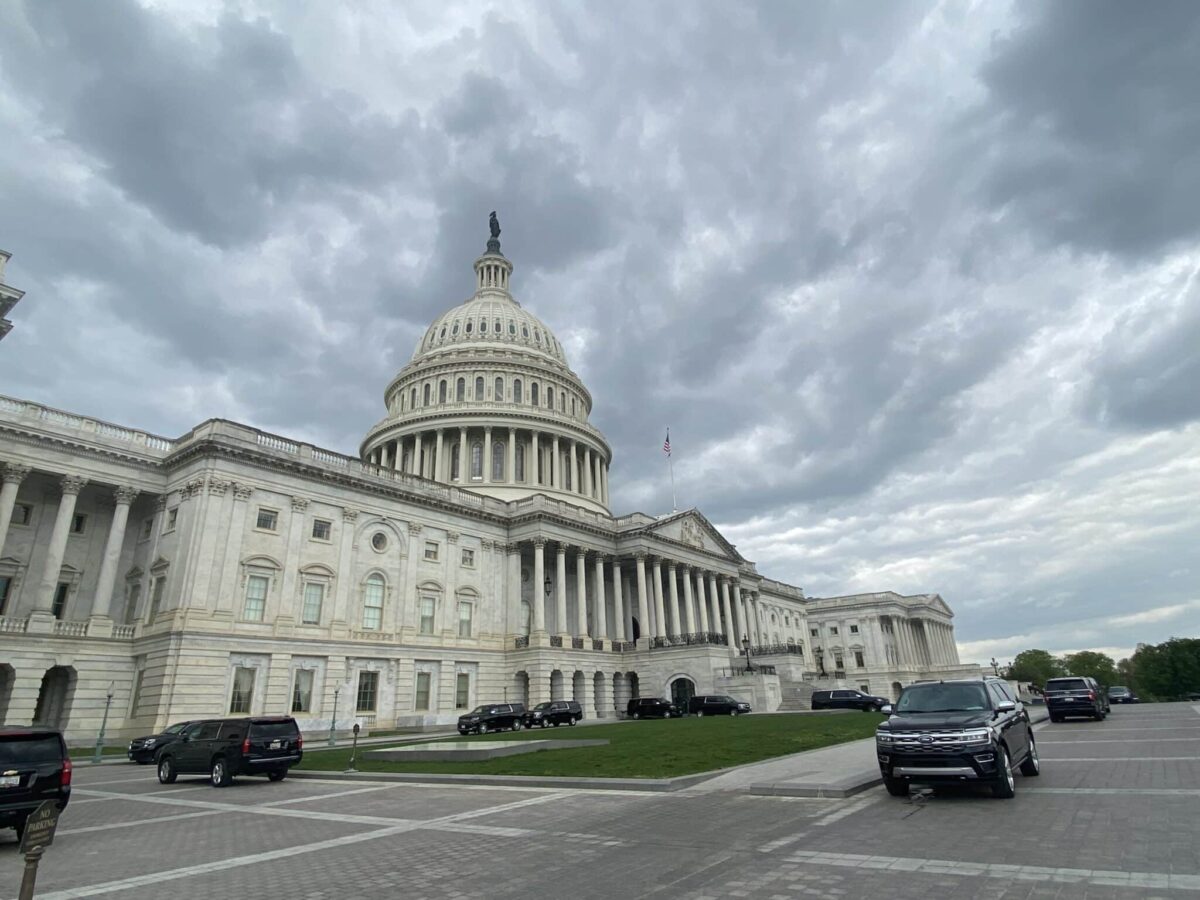
In a complaint filed Friday and a motion for summaryjudgment on Monday, the Legislature’s contracted attorney asks a Juneau Superior Court judge to decide whether or not a governor may issue an executive order during a special legislative session.
The lawsuit had been expected for months.
In August, Dunleavy issued an order seeking to create an Alaska Department of Agriculture, shortly before lawmakers convened for a special session called by the governor. Speaker of the House Bryce Edgmon, I-Dillingham, and Senate President Gary Stevens, R-Kodiak, rejected the validity of the order.
Representatives for the governor’s office said they believed the order was valid and that it would take effect unless lawmakers voted it down.
The leaders of the House and Senate said they did not want to take up the order, because doing so risked setting a precedent, effectively declaring that executive orders could be issued during a special session.
The question that could be decided in court is whether issuing an order in a special session is legal. And does it matter if the order is identical to one that’s already been issued and voted upon?
Alaska is one of two states without a cabinet-level Department of Agriculture, and creating one is seen as a key first step for boosting food production in Alaska.
“The parties require the court’s prompt assistance to resolve this legal dispute before January 1, 2026,” wrote attorney Kevin Cuddy. “Otherwise, there is a risk that the state will move forward with a Department of Agriculture that may have been unconstitutionally created, and thus without legal authority to act.”
The Alaska Department of Law, which will represent the governor in the case, has been served with the lawsuit but has not yet filed its reply.
Patty Sullivan, a spokeswoman for the Department of Law, said by email, “We are working on a briefing schedule with the counsel for the Legislature and the court. Our goal is to expedite the case and ensure that a decision is made before the legislative session begins.”
Alaska’s constitution forbids lawsuits by the executive branch against the legislative branch; the inverse is not true. Lawmakers have now sued Dunleavy four times since he took office in 2018.
UAS- Starting Fall 2026, the University of Alaska Southeast will offer in-state tuition to all undergraduate students–enabling more learners to access an education.
The new Alaska Unlocked initiative makes UAS financially accessible to students who currently don’t live in the state but want hands-on experience in fields such as marine biology, Indigenous arts and languages, aquaculture, outdoor studies, marine transportation, and environmental sciences.
“For students who dream of a once-in-a-lifetime adventure in Alaska, this is an unparalleled opportunity. We are thrilled to invite students from all over the country to bring their unique backgrounds to UAS and add to the remarkable communities we have in Southeast Alaska,” said Chancellor Aparna Palmer.
The university is known for its immersive learning opportunities that go beyond the classroom. With Alaska Unlocked, these can take place in person, online, or in a hybrid format. In-state tuition applies to all undergraduate courses of study, including bachelor’s, associate’s, certificate, and technical programs.
The application period for the Fall 2026 semester is now open. Prospective students interested in receiving in-state tuition through this program can find out more at Alaska Unlocked.
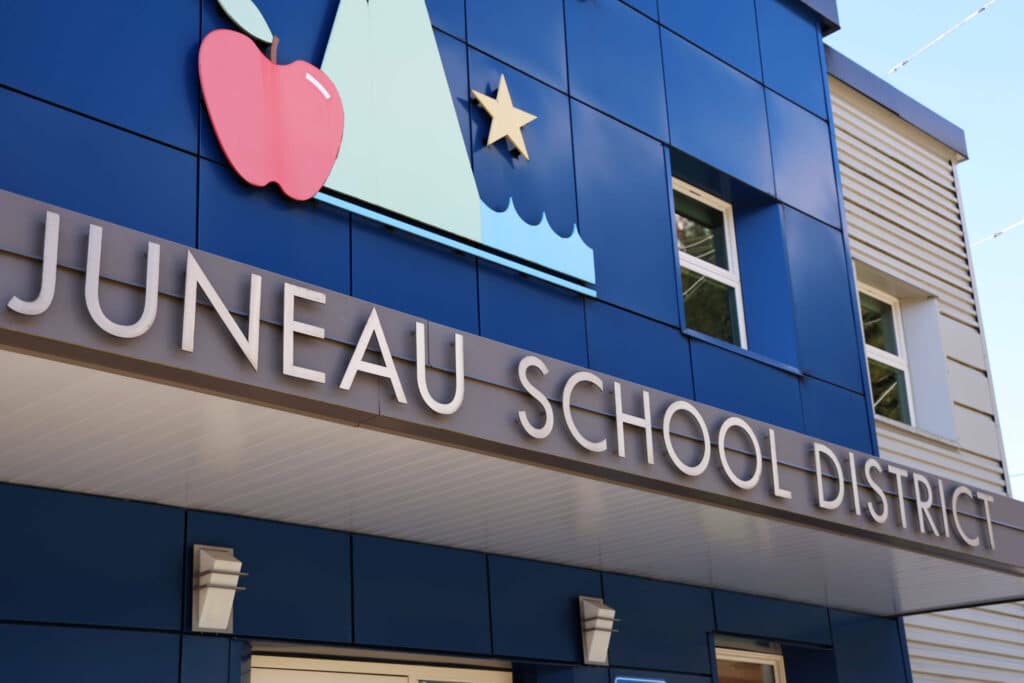
NOTN- The Juneau School District has launched a “Buy a Brick” campaign to help fund playground equipment at the Dzantik’i Heeni campus, where several of the city’s programs were relocated after school consolidation.
“Through the consolidation the year before last at the Juneau School District, our optional programs were moved to the Dzantik’i Heeni campus, which had previously been a middle school.” Said Juneau school district Director of Operations Kristy Germain, so we now have Montessori Borealis, which has pre-K and kindergarten through eighth grade, and we also have the Juneau Community Charter School, which is kindergarten through eighth grade, and additionally our Yaakoosge Daakahidi alternative high school, but the playground is primarily for our elementary program.”
While the playground will primarily serve elementary students, it will also be open to children in the surrounding Lemon Creek and Switzer neighborhoods, Germain says the school district partnered with the city engineering department for public design and safety concerns.
“The cost is substantial,” Germain said “We have received funding from the City Assembly, they authorized an ordinance to put $735,000 specifically toward the site preparation and the concrete base and the safety surfacing for the playground, and that’s just the safety surfacing. So the equipment is an additional cost. So the Juneau school district is taking the lead on fundraising for the actual playground equipment.”
The Buy a Brick fundraiser allows residents and businesses to purchase engraved bricks that will be installed at the site.
“We are partnering with Brick Markers, and they’re a company that has worked with other organizations in Juneau, I think notably, Rotary Park and the 911 Memorial use the same company.” Germain said, “Those bricks are holding up, so that’s a good testament to them. But we have established various levels so that individuals and community members are able to purchase a brick, and we’re also looking to our business community to support this endeavor.”
Proceeds will go toward the cost of equipment, which Germain said could push the project’s total cost beyond $1 million once installation, shipping, and materials are factored in.
The district plans to launch an online portal for the fundraiser within the week, with brick sales running through December. Officials hope to purchase and receive equipment in time for installation next summer.
“We are running into some timelines for purchasing the equipment in time for it to arrive to be installed this summer. So that is why we have a tight timeline.” Said Germain.
Community support has already begun. Juneau’s Rotary clubs recently donated $30,000 toward musical play equipment and are organizing volunteer work parties to help install it.
For those unable to buy a brick, Germain said there will be other ways to contribute, including volunteering at fundraising booths or helping with community outreach.
Alaska pollock, shown here from a harvest, make up the nation’s top-volume single-species commercial seafood catch. Alaska pollock, harvested mostly in the Bering Sea but also in the Gulf of Alaska, are processed into fish sticks, fish burgers, imitation crab meat and other common fish products. (Photo provided by NOAA)
For the organization that oversees commercial fisheries in federal waters off Alaska, the most significant impact of the federal government shutdown might materialize in December.
That is when the North Pacific Fishery Management Council is scheduled to issue harvest limits for Alaska pollock – the nation’s top-volume commercial harvested species – and other types of groundfish harvested in the Bering Sea and Gulf of Alaska, such as Pacific cod and sablefish.
The Bering Sea and Gulf of Alaska pollock harvests start in January.
To set the groundfish harvest levels, the council relies on federal scientists’ analysis of fish stocks in the ocean, work that is based in large part on scientific surveys conducted over the summer.
But during the shutdown, most National Marine Fisheries Service employees, including the scientists who analyze survey data to assess the conditions of commercially targeted fish stocks, are furloughed.
On Wednesday, the last day of the council’s October meeting, the members considered how to deal with scientific uncertainty if the government shutdown prevents completion of the detailed analysis that is usually provided in time for the December meeting.
Council member Nicole Kimball referred to a warning issued eight days prior by Bob Foy, director of the NMFS Alaska Fisheries Science Center, the organization that does the stock assessments. Foy said then that a shutdown lasting more than five days would compromise the ability to complete stock assessments and that a shutdown beyond 15 working days would “dramatically impact” those assessments.
The 15-day threshold is not too far away, Kimball said.
“How does the council and the public understand what to expect in December, in between the October and December meeting, relative to stock assessments?” she asked.
Diana Evans, the council’s deputy director, said impacts are yet to be determined, but the public will be notified of them as soon as possible.
“We don’t think we can answer that until we have a better sense of exactly where we land and how many days of work are remaining between the time that government workers are back and able to resume that work and the meeting,” she said.
Advocates with environmental organizations said they worry about shutdown effects on scientific information needed for harvest decisions, which would add to the effects of mass firings and retirements at NMFS and other agencies.
“I’m terrified at the prospect of flying blind into the next fishing season, especially as the Trump administration has decimated the ranks of scientists who monitor the health of our oceans,” Cooper Freeman, Alaska director of the Center for Biological DIversity, said by email. “I’m especially worried about fisheries like the massive pollock trawl fleet that has been harvesting millions of tons annually at the expense of the larger ecosystem.”
“The first challenge with this shutdown is the instant level of uncertainty it creates. Normal processes face delays that can easily impact or inhibit active fisheries. Potential staff losses will exacerbate that,” Michelle Stratton, executive director of the Alaska Marine Conservation Council, said by email.
“But beyond the concern for continuing day to day services, are those major efforts — like stock assessments and (total allowable catch) setting — that rely on substantial NMFS staff input, data processing and expert analysis. If this continues to the point where we are unable to set catch limits for the start of the 2026 seasons, we’ll be in seriously uncharted territory, and could well see massive economic impacts to our fishing communities and fleets,” she said.
The shutdown forced the council to rearrange its October meeting because federal representatives were unavailable to present information.
One major agenda item was postponed: review of a work plan for assessing essential fish habitat. Other items on the agenda were abbreviated.
The shutdown has already affected fishery management operations to some degree, said council member Jon Kurland. As Alaska regional director for NMFS, Kurland is one of a small group of agency employees remaining at work during the shutdown.
Kurland, in comments last week at the start of the meeting, said some services have been unavailable during the shutdown, such as the processing of harvest quota transfers.
NMFS is still doing basic management of ongoing fisheries, monitoring and closing them as needed, and is supported by contractors, he said. But that level of work has its limits, he said.
“If there are significant unforeseen problems, we will have limited ability to address those. Fingers crossed,” he said then.
Election materials are seen at the Alaska Division of Elections headquarters in Juneau. (Photo by James Brooks/Alaska Beacon)
NOTN- Juneau Mayor Beth Weldon says city officials are already preparing for possible spending cuts following Tuesday’s municipal election, where early results show voters favoring two tax-limiting propositions that could significantly reduce city revenue and potentially the cost of living for residents.
“If you’re looking at our website to see the election results, just hit the tab the button that says election, and then you’ll see preliminary results.” Said Weldon, “Up at the top it says 21% Well, that’s 21% of our registered voters. So typically we end up with somewhere between 9 to 10%, this is a little bit of a bigger ballot, so we might get as much as 12,000 votes. So it’s not 21% of the vote. I would say it’s somewhere between 40 to 50%.”
Speaking Wednesday morning, Weldon said due to high voter turnout, preliminary numbers for Ballot propositions 1 through 3 won’t likely change.
“Ballot Proposition 2, taking the sales tax off food, that’s not going to change. The seasonal sales tax is not going to change. Proposition 1 has a possibility of changing, but is likely going to stay that way.” Weldon Said.
She noted that while full election results won’t be certified until mid-October, most races appear decided. Only the tight Assembly District 2 race between incumbent Wade Bryson and challenger Nathaniel “Nano” Brooks, separated by three votes in preliminary results on Wednesday remains too close to call.
Weldon said the city had anticipated either outcome and began planning for both scenarios before the election. “We’ll just evaluate and figure out where we can fill the hole with cutting services a bit and other things, the biggest hit to the budget was taking sales tax off food without filling that hole. So that’s, you know, somewhere around $8 million.” Weldon said, “It’s easy to cut $8 million one time, but it’s a little more difficult to cut it year after year after year. But we’ll just go back to work and our finance means will be pretty interesting.”She said.
The City and Borough of Juneau’s next update on unofficial election results is expected Friday. Certification is scheduled later this month.
U.S. Sen. Dan Sullivan, R-Alaska, speaks to the Alaska Legislature on Thursday, March 20, 2025. (Photo by James Brooks/Alaska Beacon)
The FBI searched the cellphone records of Republican Alaska Sen. Dan Sullivan and seven other U.S. senators and a member of the U.S. House as part of its investigation into the Jan. 6, 2021 insurrection at the U.S. Capitol, a newly released document shows.
The call logs cover several days during and around the insurrection, when rioters stormed the Capitol in an attempt to support then-incumbent President Donald Trump, who falsely claimed to have won reelection in 2020.
The logs do not show that the FBI obtained phone call recordings, only that an investigating agent was interested in who the senators were talking to, when they talked, how long they talked, and where the callers were. The document, released this week by the U.S. Senate Judiciary Committee, does not say why those senators were identified in particular and it does not say whether any investigative leads resulted from the records.
According to a news release from the committee, the FBI sought and obtained data about the senators’ phone use in the days before, on and after the Jan. 6 insurrection, from Jan. 4 through Jan. 7, 2021.
The U.S. Department of Justice indicted Trump in 2023 for allegedly conspiring to overturn the results of the 2020 presidential election, but the special prosecutor in charge of the investigation abandoned that case after Trump was re-elected in 2024. Department policy says that sitting presidents cannot face criminal prosecution, and after the 2021 insurrection, the U.S. Supreme Court issued a decision limiting a president’s liability for conduct while in office.
Asked whether Sullivan had any contact with people who participated in or organized the riot at the U.S. Capitol, Devyn Shea, a spokesperson for Sullivan, said, “absolutely not.”
In a written statement, Sullivan called the FBI investigation “an absolute outrage.”
“We’ve just learned the Biden FBI was engaged in what appears to be an unprecedented fishing expedition against at least nine sitting Republican members of Congress — none of whom were under any type of investigation — surveilling our personal cell phone calls with family members, staff and colleagues. This is a new low in the political weaponization of the Justice Department,” Sullivan’s statement said.
The other seven senators were Cynthia Lummis (R-Wyo.), Lindsey Graham (R-S.C.), Josh Hawley (R-Mo.), Tommy Tuberville (R-Ala.), Ron Johnson (R-Wis.), Marsha Blackburn (R-Tenn.), and Bill Hagerty (R-Tenn.). Rep. Mike Kelly (R-Pa.) was also on the FBI list.
Some senators, including Hawley and Tuberville, voted to object to the certification of the electoral results of the 2020 election.
Sullivan voted to support the certification of the election, and in a statement the day after the Jan. 6 violence at the Capitol, he called the event “sad” and “dispiriting.”
All have been supporters of Trump and his policies; in office, Sullivan has been a reliable vote for the president and his agenda.
The interior of the borough’s ballot processing center.
NOTN- Juneau voters appear poised to approve two cost-cutting tax measures while rejecting the third that would have shifted more of the city’s tax burden onto tourists, according to preliminary results from Tuesday’s municipal election.
Early results show Proposition 2 , which would exempt food and residential utilities from city sales tax, passing by a wide margin, with roughly 70% of voters in favor.
Proposition 1, which would reduce the city’s mill rate cap from 12 to 9 mills, is also leading narrowly with 3,104 yes votes to 2,920 no’s. Proposition 3, a proposed seasonal sales tax that would have raised summer rates while lowering winter ones, is trailing with 2,534 no votes to 2,514 yes.
Both Propositions 1 and 2 were placed on the ballot through signature drives by the Affordable Juneau Coalition.
City officials have warned that the two propositions could reduce annual revenue by as much as $10 million to $12 million, potentially forcing budget cuts or limits on the city’s ability to respond to emergencies.
The seasonal sales tax proposal, which the Assembly placed on the ballot, was intended to offset those losses by collecting more from visitors during the summer tourism season.
In the Assembly races, Greg Smith secured the District 1 seat with 4,092 votes, while Ella Adkison ran unopposed for the areawide seat.
The tightest contest came in District 2, where Nathaniel “Nano” Brooks led incumbent Wade Bryson by just three votes, 2,743 to 2,740.
Steve Whitney leads in the race for the Board of Education with 3,197 votes, followed by Melissa Cullum with 2,428, Jeremy “JJJ” Johnson with 2,366, and Jenny Thomas with 2,302. Board President Deedie Sorensen, received 1,317 votes.
A total of 6,073 ballots were tallied as of late Tuesday night about 21.7% of the 28,017 mailed to registered voters.
The City and Borough of Juneau said additional ballots cast at vote centers, drop boxes, or mailed by Election Day are still being processed.
Updated unofficial results are expected Friday, Oct. 10. The election is scheduled to be certified Oct. 21.
City & Borough of Juneau Municipal Clerk Breckan Hendricks at the borough’s ballot processing center near Thane Road. (Photos by Greg Knight/News of the North)
Before and after the polls closed at eight o’clock Tuesday night, city officials worked to ensure the ballot count was accurate and complied with election integrity regulations put in place by the CBJ.
Ballots from Juneau’s five drop boxes and two vote centers were securely delivered to the city’s Ballot Processing Center on Thane Road. That center has been in operation since 2022.
Once ballots were inside, teams of two verified voter signatures, separated secrecy sleeves, and fed the ballots into high-speed scanners, all under strict chain-of-custody rules. Each envelope and unique barcodes were cross-checked to prevent double counting.
CBJ Municipal Clerk Breckan Hendricks says that election integrity is taken seriously by the borough.
“We need to make sure that we’re transparent, that everybody has faith in our system,” Hendricks said. “A lot of people don’t understand it. We have our election rules and procedures online now, on our juneau.org elections page, and we’re trying to get more PSAs out there, trying to make people hopefully understand the process a little better to give them more faith in our system. I know that there’s a lot of hesitancy with by-mail ballots, and we really are following all the rules and regulations to make sure that there’s no gaps.”
The interior of the borough’s ballot processing center.
One thing to note is that mailed ballots postmarked on Tuesday and those needing signature fixes can be counted through October 21.
In the end, Hendricks told News of the North that patience is key, and that accuracy comes before speed in Juneau’s current vote-by-mail system.
In this screenshot from a White House news conference, Interior Secretary Doug Burgum points to a map of Alaska on Monday, Oct. 6, 2025, as he announces the Trump administration’s decision to reverse a Biden administration action that canceled a right-of-way permit for the Ambler Road. (Screenshot)
The action removes a major hurdle for the project, but developers would still need to overcome lawsuits and opposition from environmental and tribal groups. They would also need approval from NANA and Doyon Ltd., two Alaska Native regional corporations who own land in the road’s path.
Ambler Road, planned by the state of Alaska’s development bank and supported by state officials and Alaska’s congressional delegation, would link the Dalton Highway with a mineral-rich region of northwest Alaska, providing access to the mining of rare minerals needed for batteries and high-technology manufacturing.
“It’s an economic gold mine, so to speak. I signed this years ago, and Biden un-signed it for me,” Trump told reporters on Monday at the White House.
Last year, the U.S. Bureau of Land Management concluded that the road would have a litany of negative impacts, and the Biden administration issued a record of decision saying that the best route for the project was no route at all.
The Alaska Industrial Development and Export Authority, Alaska’s state-owned investment bank and the road’s developer, sued the Biden administration, seeking a reversal.
U.S. Interior Secretary Doug Burgum, speaking at the White House on Monday, said the state of Alaska requested an appeal of that decision, and that under federal law, President Trump has the executive authority to make decisions on land use.
The appeal in question was filed by AIDEA under Section 1106 of the Alaska National Interest Lands Conservation Act of 1980.
“This opens up a wealth of resources,” Burgum said, adding that the federal government will also take partial ownership of Trilogy Metals, one of several firms exploring for minerals in northwest Alaska.
As currently planned, the road would consist of a gravel strip stretching from the Dalton Highway almost to Kotzebue. It is envisioned as a toll road, with no public access, and the cost of construction would be paid for via fees levied on users, similar to the way the AIDEA-funded DeLong Mountain Transportation System provides a port for lead and zinc exported from the Red Dog Mine in northwest Alaska.
In a special late-September meeting, AIDEA’s board voted to authorize limited negotiations with landowners in the road’s path.
The road is expected to cross more than 10 miles of land owned by Doyon Ltd., the regional Alaska Native corporation for Interior Alaska.
To date, that corporation hasn’t expressed official support or opposition for the road. Sarah Obed, senior vice president of external affairs for Doyon, said by email that Monday’s announcement was “not a surprise to Doyon” because of a different executive order signed earlier this year.
NANA Regional Corp. owns more than 20 miles of land in the path of the road. In a written statement, NANA President and CEO John Lincoln said the company “appreciates the Trump Administration and Governor Dunleavy’s support for economic development in Alaska and their work towards stabilizing the federal permitting process” but he declined to express support for the road.
Lincoln said that still stands: “Our position on the Ambler Access Project has not changed and will only be reconsidered if and when our established criteria are satisfied, in consultation with shareholders, local communities, and other stakeholders.”
Trump’s action on Monday restores a federal right-of-way grant issued in 2021, at the end of the first Trump administration. It also requires federal agencies to issue clean-water permits and other approvals needed for the road.
A lawsuit challenging the 2021 right-of-way grant remains open in the U.S. District Court in Anchorage. Attorney Bridget Psarianos, with the nonprofit law firm Trustees for Alaska, is one of the attorneys challenging that right-of-way.
By phone, she said she hasn’t ever seen a president use the authority that Trump did on Monday.
“He’s wielding this presidential power like a cudgel, including to overturn decisions that his own agencies have made and provided good reasons for,” she said.
The Tanana Chiefs Conference, a group of 39 Interior villages and 37 federally recognized tribes, opposes the road. In a statement Monday, it said it was “deeply disappointed by the decision.”
“This decision is a direct affront to the voices of Alaska Native people,” said Chief/Chairman Brian Ridley in a written statement. He added that TCC will continue to fight the project.
Psarianos, by phone, said that the BLM opposed the project in 2024 “because they found that there would be significant impacts to subsistence and to communities and their health along the road corridor.”
Athan Manuel, director of the environmental nonprofit Sierra Club’s Lands Protection Program, offered similar thoughts in a written statement. “This order ignores those voices in favor of corporate polluters. The Ambler Road will lead to significant harm to fragile Alaskan landscapes and the local communities and wildlife that rely on them,” he said.
Most of the road’s path is on land owned or controlled by the state of Alaska; an easement allowing the road remains under consideration by the Alaska Department of Natural Resources, but approval is expected.
In a statement published after Trump’s announcement on Monday, Gov. Mike Dunleavy thanked the president for his action, saying, “this decision will unleash development opportunities, create new jobs for Alaskans and secure access to strategic minerals.”
Similarly, all three members of Alaska’s congressional delegation expressed support for Trump’s decision.
“By advancing this access, we are creating new opportunities for Alaskans while strengthening America’s supply chain and reducing dependence on foreign adversaries for our critical mineral needs,” said U.S. Rep. Nick Begich, R-Alaska. “I applaud the President’s decision to support this appeal, and I look forward to working with the Administration, state leaders, and Alaska Native communities to ensure this project moves forward in a way that benefits all Alaskans.”
U.S. Republican Sens. Lisa Murkowski and Dan Sullivan also thanked the president for his action.
“The President’s re-approval will unlock a world-class mining district, deliver quality-of-life benefits for communities in the region, and help grow Alaska’s economy. It will also improve our national security by strengthening our mineral security and enabling us to produce more of our most important resources here at home,” Murkowski said.
Sullivan said, “I’m glad to see another critically important project for our state’s economy and working families being put back on track.”
(AP) — President Donald Trump said Monday that he’d be open to striking a deal with Democrats on the health care subsidies they’ve made central to the shutdown fight, cracking the door slightly to negotiations that Republicans have said should only happen after the government reopens.
But Trump also said “billions and billions” are being wasted, nodding to arguments from conservatives who do not want the health subsidies extended to lessen the cost of plans offered under the Affordable Care Act, commonly referred to as Obamacare.
“We have a negotiation going on right now with the Democrats that could lead to very good things,” Trump said. “And I’m talking about good things with regard to health care.”
Trump’s comments were one of the few hopeful signs Monday as the government shutdown hit its sixth day. Negotiations between the two parties have been virtually nonexistent since the start of the shutdown despite the impact on federal services. Democrats have urged that Trump get involved, saying no deal will be possible without the president’s approval.
The two Democratic leaders in Congress, Sen. Chuck Schumer and Rep. Hakeem Jeffries, both denied there are any negotiations with Trump. Jeffries said the White House “has gone radio silent” since a meeting in the Oval Office last week.
“Trump’s claim isn’t true, but if he’s finally ready to work with Democrats, we’ll be at the table,” Schumer said.
Senate Majority Leader John Thune told reporters “there may be a path forward” on ACA subsidies, but stressed, “I think a lot of it would come down to where the White House lands on that.”
More doomed Senate votes
The president’s comments came shortly before the Senate took another doomed pair of votes Monday on funding the federal government. Neither the Republican measure nor the Democratic proposal came close to gaining the 60 votes needed to advance.
Both parties used much of the day to ramp up the pressure on the other to end the impasse.
Thune said a critical food aid program for women, infants and children was starting to run low on funds, blaming Democrats and saying “now it’s the American people who are suffering the consequences.”
Schumer said his side was ready to work with Republicans to “reopen the government and end the health care crisis that faces tens of millions of Americans.”
“But it takes two sides to have a negotiation,” Schumer said.
Earlier in the day, the two sides dug in. House Speaker Mike Johnson said “there’s nothing for us to negotiate” while Jeffries declared the “time is now” to work out a deal on health care.
Johnson, R-La., told reporters they could stop asking why he wasn’t negotiating an end to the impasse. It was up to a handful of Democrats to “stop the madness” and pass a stopgap spending bill that had earlier passed the House, he said.
“We did the job to keep the government open, and now it’s on the Senate Democrats,” Johnson said.
The House is not expected to be in session this week, focusing attention on the Senate to take the lead on any deal in the Republican-led Congress. Yet even with House lawmakers away, the Republican and Democratic leaders have been holding almost daily briefings as they frame their arguments and seek to shift blame for the shutdown.
Democrats are insisting on renewing subsidies to cover health insurance costs for millions of households, but Republicans have insisted that can be dealt with later. They say the subsidies are a separate debate than the one on keeping the government funded for a few weeks while the two sides work out their differences on a full-year spending package.
While some Democratic senators said they viewed Trump’s comments about the status of negotiations as positive, there was also skepticism from members on both sides of the political aisle about whether they represented much of a breakthrough.
“The discussion can’t happen until we reopen the government. The Democrats want to have these talks. The president has just signaled he wants to talk, but reopen the government,” said Sen. Markwayne Mullin, R-Okla.
“I have a hard time taking it seriously,” said Sen Richard Blumenthal, D-Conn. “Because Johnson and Thune as well as Trump are all saying ‘we won’t talk until you open up the government.’”
Turmoil for the economy
The stalemate comes at a moment of troubling economic uncertainty. While the U.S. economy has continued to grow this year, hiring has slowed and inflation remains elevated as the Republican president’s import taxes have created a series of disruptions for businesses and hurt confidence in his leadership. At the same time, there is a recognition that the nearly $2 trillion annual budget deficit is financially unsustainable.
Trump had seemingly suggested Sunday night that layoffs were already taking place, but White House press secretary Karoline Leavitt said Trump was talking about furloughs. Under a furlough, workers cannot report to work, but they will return to their job and get paid retroactively after the shutdown ends. She said layoffs were still planned if the shutdown continues.
The talk of layoffs has escalated an already tense situation in which Washington lawmakers have struggled to find common ground and build mutual trust. Leaders in both parties are betting that public sentiment has swung their way, putting pressure on the other side to cave.