Categories
Featured Juneau News Juneau Local Juneau Local News Feeds

Alaska Legislature fails to override Dunleavy’s veto of a tax bill intended to help education

By: James Brooks, Alaska Beacon

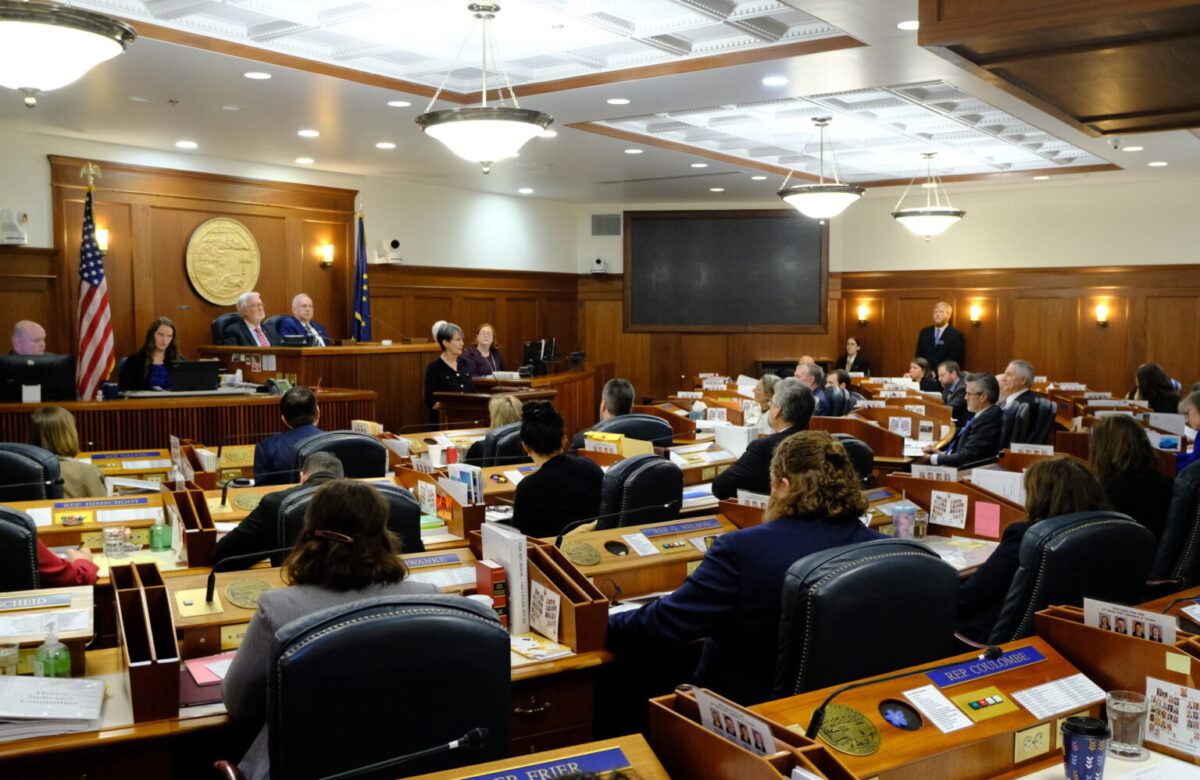
Members of the Alaska House of Representatives and Alaska Senate watch as the final vote on Gov. Mike Dunleavy’s veto of Senate Bill 113 is displayed on the voting board in the House on Thursday, Jan. 22, 2026. (Photo by James Brooks/Alaska Beacon)

Republicans in the Alaska Legislature voted down a new funding source for public school programs Thursday as they sustained Gov. Mike Dunleavy’s veto of Senate Bill 113.

The vote on overriding the governor was 35-25, 10 votes short of the 45 needed for an override. All of the “no” votes came from Republicans in the House and Senate minority caucuses. Those voting no included some legislators, such as Sen. Rob Yundt, R-Wasilla, who had strongly supported the bill last year.

If SB 113 had been enacted, the bill would have shifted some corporate income tax payments from other states to Alaska. 

The result was expected to be between $25 million and $65 million per year in new revenue for the state treasury, and the bill called for much of that money to go to programs that help young children learn how to read and to career-technical education programs that teach Alaskans non-college trades. 

Dunleavy vetoed the bill last fall, saying he was unwilling to approve any tax measure that was not part of a comprehensive, long-term plan intended to balance state revenue and expenses.

Under the Alaska Constitution, the veto needed to be taken up during the first five days of the regular session if lawmakers wanted to override it.

This article will be updated.

Categories
Featured Juneau News Juneau Local Juneau Local News Feeds

From lost wallets to storm responses, The Juneau Community Collective keeps neighbors connected

NOTN- What began as a simple solution to an overcrowded online buy-and-sell page has grown into one of Juneau’s most influential community forums.

The Juneau Community Collective, founded in March of 2014 by local resident Dan DeBartolo, now counts nearly 30,000 members and serves as a central hub for sharing information, asking for help and staying connected during emergencies and everyday life.

“So many people wanted to post all kinds of information about the community that wasn’t strictly about selling and buying.” Said DeBartolo, “So I just decided, we need to start up something else, initially, the page was called Juneau Community Concern, and that was early 2014, so we’ve been up for about 12 years now, but after a while, we switched to Juneau Community Collective, because it wasn’t just about people airing their concerns.”

Over the years, it has become a go-to resource during major events such as glacier outburst flooding, the recent winter storms and infrastructure disruptions, even a source for your local news outlets.

Members frequently use the page to report road conditions, locate lost pets or belongings and coordinate help during emergencies.

Reminiscing on favorite community posts and stories, DeBartolo said, “Somebody had a pet cat that had climbed up a tree, the cat did not want to come down, was up there for multiple days, the fire department was having a challenge getting involved. It became this big community interest piece where people had suggestions, people wanted to help these individuals just get their poor cat out of the tree. We were able to follow a story of somebody, in a town that really loves their pets, have their cat finally get rescued, and all the community support. I remember just feeling really good about having a space where people could discuss that and see it.”

Moderation has become an important part of maintaining the group, DeBartolo said.

As online discourse has grown more polarized, the Collective adopted clearer rules and more active moderation to keep discussions constructive.

“As the online space became more contentious, we needed to set very clear boundaries.” DeBartolo said, “By and large, the majority really appreciated that we spelled out what you could and couldn’t do on our page. We have those who feel it’s a little too strict sometimes, but it’s supposed to be as broad an appeal as possible, where people feel they can come in, air their concerns, or ask for help, ask questions and get those things solved.”

While the page is private to reduce spam and fake accounts, DeBartolo said membership is open to current residents, former Juneauites and those planning to move to the area, provided they follow the group’s guidelines.

Facebook’s attribution tools now clearly identify the Collective’s administrators, DeBartolo said this helps distinguish the official page from imitation groups.

“Imitation is the best form of flattery. I don’t know if the intention is flattery there, but I will tell you that if folks are worried that they’re in the authentic space that we have tried to create for this community, Facebook has allowed us to do something called attribution. So now, when you go look for Juneau Community Collective Official, which is at the back end, my name is actually on the page, and you can click on my name, and it tells you that the page has existed since 2014, you can see the authentic individual who’s actually responsible for the content on this page.” DeBartolo said, “What we see in a lot of other spaces, they don’t actually identify their moderators, or they use fake profiles. It’s very intentional. I will be transparent. My moderators will be transparent. So if you’re looking for a source you can trust, we want to be that.”

As the Collective continues to grow, DeBartolo says it’s mission remains focused on fostering connection rather than division.

“I don’t want our page to be about how people feel about national events. I want this to continue to be a place where you feel connected to Southeast Alaska, Feel connected to the Juneau community when you can’t get out and see them every day, when we have these situations like weather events that cut you off from in person communication.” DeBartolo said, “We want to be a source where you can have these discussions and feel that people are willing to help.”

Categories
Featured Juneau News Juneau Local Juneau Local News Feeds

Dunleavy to propose ‘temporary, seasonal sales tax’ in final Alaska State of the State address

By: James Brooks, Alaska Beacon

Alaska Gov. Mike Dunleavy speaks during a cabinet meeting on Wednesday, Jan. 21, 2026. (Photo byJames Brooks/Alaska Beacon)

Alaska Gov. Mike Dunleavy is expected this evening to detail his plans for a long-term plan to balance Alaska’s expenses and revenue.

“There will be a temporary, seasonal sales tax concept put forward for discussion with the legislature,” Dunleavy said Wednesday during a cabinet meeting open to reporters. 

Will state lawmakers approve that idea?

“I don’t have the answer to that until we start having discussions,” he said.

Since 2015, Alaska’s annual budget process has frequently been snarled by low oil prices that have made it difficult for legislators and governors to balance the state’s books without spending from savings. 

Alaska relies on oil revenue for almost a third of its general-purpose revenue, and for most of the past decade, the price of North Slope crude has been relatively low. 

Alaska has never had a statewide sales tax, and it hasn’t had a statewide income tax since 1980

Since 2018, the state’s No. 1 source of general-purpose revenue has been the proceeds of the Alaska Permanent Fund, followed by oil. 

Dunleavy’s proposal will mark a major shift for the governor, who is term-limited and in the final year of his second term. For his first seven years in office, the governor has attempted to resolve the long-term imbalance in state finances by cutting services and spending. 

On the rare occasions that legislators have passed new tax measures, Dunleavy has vetoed them, saying he will accept no tax bills that are not part of a complete fiscal solution.

The governor is expected to unveil his proposal for a complete solution on Thursday. He said he views any tax measures as a temporary “bridge” until the North Slope begins producing more oil and a proposed trans-Alaska natural gas pipeline comes to fruition.

“The proposal and the fiscal plan has multiple components, and basically what it is, it’s a road map to inject stability, especially over the next five years when revenue is not quite what will be in the out-years,” he said.

In addition to proposing a statewide sales tax, the governor is expected to propose bills changing oil taxes and the Permanent Fund dividend.

“There’s always room for negotiation, but there’s two sides. That (goes) both ways,” he said.

Dunleavy’s remarks came during a Wednesday cabinet meeting that saw the leaders of state departments praise Dunleavy and point to ways in which the state’s position has improved since he entered office.

Crime is down, commissioners said, statewide employment is expected to reach a new historic high this year, and the state’s gross domestic product is also up.

Alaska remains near the bottom of national rankings in educational performance and violent crime, but Dunleavy said he wanted to emphasize that many of the state’s problems are improving.

“We wanted to make sure that people in Alaska know that … there’s a lot happening. These people are working hard. State employees are working hard. There’s a lot going on,” Dunleavy said. “It is a safer place. Is it the safest place in the country? No. That’s a motivator to keep going. We are creating more jobs. Can we, should we, do better? Absolutely. Keep going.”

Categories
Featured Juneau News Juneau Local Juneau Local News Feeds

Residents invited to take CBJ survey to share budget priorities

NOTN- The City and Borough of Juneau is asking residents to weigh in on what city services matter most as officials prepare for budget cuts in the coming fiscal year.

CBJ is asking Juneau residents to take the CBJ Community Compass Survey before mid-February. Community feedback collected through this survey will help inform the CBJ assembly’s budgeting process this spring. 

“What we hope to achieve is basically gathering community input to have a deeper understanding and depth of knowledge of the community values and priorities.” Said Juneau Mayor Beth Weldon, “And the other thing that we’d like to do is just increase awareness of our budget process and how that all works.”

Following the passage of Proposition 2  , which expanded sales tax exemptions in the October 7, 2025 Regular Municipal Election, significant reductions in sales tax revenue are expected and will likely require service-level cuts to the city’s annual budget.

CBJ officials say they seek to better understand community funding priorities and values, including where residents are willing to make tradeoffs and which services are critical to quality of life.

This effort will include an online survey, in-person workshops, and Assembly listening sessions.

“We’re also looking for one broad community listening session where we’ll take public testimony on the budget.” Said Weldon, “That, in a nutshell, is what we’re trying to do for our public engagement through this process, trying to figure out what the public sees as important, and trying to figure out some kind of consensus on where the cuts are going to come from.”

Categories
Featured Juneau News Juneau Local Juneau Local

Juneau for Democracy held peaceful vigil in solidarity with anti-ICE protests across the country

NOTN- Juneau for Democracy and the ReSisters held a peaceful pop-up protest in Juneau yesterday evening in solidarity with nationwide demonstrations which are being held due to recent federal immigration enforcement actions.

Juneau for Democracy invited residents to gather at The Whale for what the group called a candlelight vigil, to show support for people protesting Immigration and Customs Enforcement (ICE) agents across the country.

The event is part of a wave of protests that have followed several shootings and lethal confrontations with ICE agents, particularly in Minneapolis. 

Protestors sang “This Little Light of Mine” in the lightly falling snow, posting on their social media to bring songs, poems, love and determination to share.

Categories
Featured Juneau News Juneau Local Juneau Local News Feeds

Mary Peltola holding a meet and greet tonight at the Crystal Saloon

NOTN- Former U.S. Rep. Mary Peltola has launched a campaign to serve as Alaska’s next U.S. senator, and now she will be making a stop in Juneau this evening for a Meet and Greet at the Crystal Saloon.

Peltola announced her candidacy Jan. 12, saying Washington politicians are increasingly driven by special interests and national politics at the expense of Alaskans. She said her campaign will focus on affordability, infrastructure, fisheries and protecting Alaska’s way of life.

According to her campaign website, Peltola is holding a public meet-and-greet later tonight, meant to give supporters and undecided voters a chance to speak with her directly about her Senate run.

Peltola is a lifelong Alaskan who grew up along the Kuskokwim River, noting on her website, “I’m running for Senate because I’ve lived firsthand how government is failing Alaskans.”

She is a former member of the Alaska State Legislature and previously served in Congress, where she built a reputation for working with both Democrats and Republicans.

Categories
Featured Juneau News Juneau Local Juneau Local News Feeds

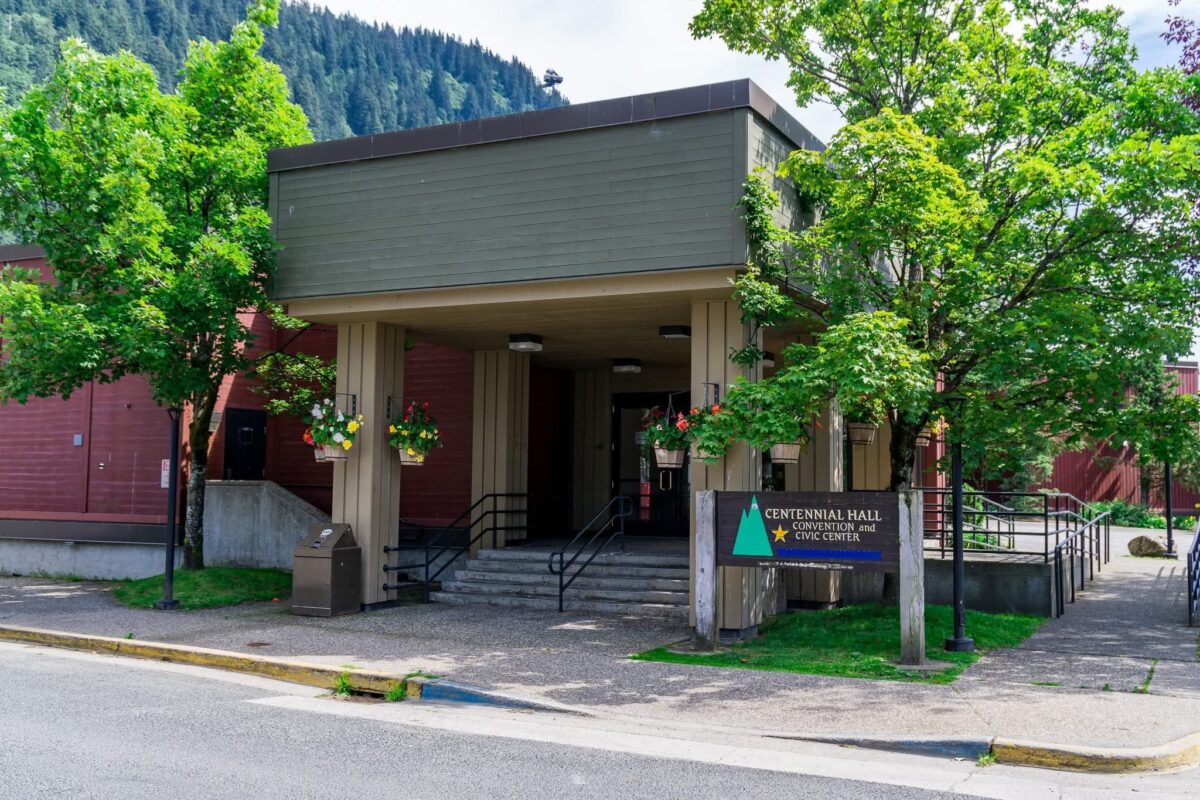
Legislative Welcome to take place at Centennial Hall

NOTN- Lawmakers, their families and members of the public are invited to gather today at Centennial Hall for the annual legislative welcome, marking the opening day of the Alaska Legislature.

The reception is hosted by the Alaska Committee with support from Travel Juneau, the City and Borough of Juneau and dozens of local businesses. Organizers say the event has been held for nearly three decades and is intended to offer a bipartisan welcome to legislators arriving in the state’s capital for the session.

“The Alaska committee was formed in 1995 and we’ve been doing the reception just about since the very beginning.” Said Wayne Jensen from the Alaska Committee, ”We want all the local community members to come and say hi and welcome to the Capital City. It’s their Capital City.”

According to Jensen, being the Capital City is both a privilege and a responsibility.

“’That responsibility is to be as friendly as we can, and as hospitable as we can and make everything work well for the legislators and the State government.” Said Jensen.

Travel Juneau, the city’s marketing organization, assists with coordination for the event, including catering and use of Centennial Hall, according to Liz Perry of Travel Juneau.

“What we do is, we’re your front and center alongside the Alaska committee, to help make those invitations for people to come down and visit the Capitol, take a look at the building itself. The building is historic, and have a chance to talk with their legislators, if they have not had the opportunity to do so in their hometowns, and promote this as a great Capital City.” Perry said.

 Organizers said the welcome also serves as an opportunity to promote in-state travel, noting that many Alaskans from other regions, even Anchorage and Fairbanks, have never visited Southeast Alaska or the Capitol.

Local businesses and organizations will contribute food, gift bags and promotional items for legislators and staff. The city also participates by providing passes to local amenities such as Eaglecrest Ski Area, city pools and public transit.

“We prepare a bag for each one of the offices, and it’s just a way to say welcome to Juneau.” Perry said, “So it can be anything from artwork to books to candy, or an offer of some kind. And we look forward just to saying thank you to our legislators.”

The event is free and open to the public.

Categories
Featured Juneau News Juneau Local Juneau Local News Feeds

Lawmakers eye continued education funding wins for 2026 session as Dunleavy drops policy push

By: Corinne Smith, Alaska Beacon

Snow falls around the Alaska State Capitol in Juneau on Dec. 31, 2025. (Photo by Claire Stremple/Alaska Beacon)

Alaska schools, students and education funding will continue to be in focus in the 2026 legislative session set to begin on Jan. 20, but early signs show they are unlikely to be at the center of the political spotlight as they were last year. 

Gov. Mike Dunleavy will not be pursuing education policy changes this year, according to a spokesperson with his office on Friday. Instead, he will focus on a state fiscal plan and the proposed development of the Alaska LNG gas pipeline, his office said. 

Those policy changes were at the heart of Dunleavy’s objection to increased education funding last year, and he said they were essential to boosting student achievement. He called a special session in August for lawmakers to address his policy items, but legislators took no action other than overriding two of his vetoes

One of those veto overrides was an historic win for education advocates: it restored a $700 increase to per student funding, known as the base student allocation, adding $50.6 million in education funding to the state’s budget.  

Yet many Alaska school districts continue to face steep budget deficits, and struggle to address the rising cost of operations, school maintenance, teacher retention and lost of federal funding. The Anchorage School District — the state’s largest district — is grappling with an $80 million shortfall, however the district and the union representing teachers reached a tentative agreement over the weekend on a new three-year contract. There may also be changes on the federal level because the Trump administration has promised to dismantle the U.S. Department of Education.

Sen. Löki Tobin, D-Anchorage, and chair of the Senate Education Committee, said it is still unclear whether lawmakers will again take action this year to increase education funding through the base student allocation. Tobin also co-chairs the special task force on education funding created this year. 

“It is difficult to know what the body is willing to do at this point in time,” Tobin said, as lawmakers are in transit back to Juneau this week, and caucuses are meeting to discuss policy priorities. 

But Tobin said she anticipates some kind of funding increase to help districts keep up with inflation. “Inflation continues to be a pressing issue in the state, and we don’t want the gains we made by increasing the basic allocation by $700 this last budget cycle to diminish because of inflation,” she said.

Rep. Andi Story, D-Juneau is co-chair of the House Education Committee and agreed an inflation adjustment is a major priority. “We don’t want to lose any ground,” she said in an interview Friday, pointing out the increase to the BSA only added $20 per student more than the year before.  

Dunleavy told reporters in December he hoped the legislature would pass a bill to launch a pilot program for schools run by Alaska Native tribes, known as tribal compacting, introduced last year. Tobin said the initiative is a priority, and said she supports tribal compacting statewide and wants to see greater tribal consultation and engagement throughout all districts. 

She said increasing funding for school maintenance will also be a major priority, as many rural districts grapple with deteriorating facilities and an estimated $800 million in deferred maintenance. 

Tobin said members of the task force recently made a visit to a school in Fairbanks with one of three boilers working — in subzero temperatures — and a plan to evacuate students if the last one failed. “That’s 726 students that will be displaced. It will be a huge hit to the Fairbanks education community,” she said. “It has the potential to really harm our students’ learning and what we need to do in Juneau, during this 34th legislature, to set us up for a long term solution on rebuilding our schools, is very much at the forefront of my mind.”

Tobin co-chairs the task force on education funding, which was established this spring to conduct an 18-month study and create policy recommendations for how the state funds schools. Members have expressed interest in a wide variety of policy initiatives: from revisiting the school funding formula, to investigating chronic absenteeism, to student performance and accountability measures, and policy changes sought by the governor like open enrollment and reading incentive programs. They are slated to deliver their recommendations at the start of the next legislative session in 2027. 

Tobin said task force members have made visits to schools in Fairbanks, the Matanuska-Susitna, Anchorage and Kenai Peninsula boroughs, and have plans to visit Skagway, Juneau, Bethel and Western Alaska. 

Republican leaders of the Senate and House minority caucuses did not respond to interview requests on their priorities for education. 

Veto override for additional education funding still in question

Lawmakers could also take up another veto override vote within the first five days of the session. Last year, lawmakers passed a corporate tax bill tied to online sales in Alaska that could generate up to $65 million in revenue that would go to fund career and technical education and K-12 reading improvement programs. Dunleavy vetoed it in September. 

Whether lawmakers will take up the override vote next week is unclear. At least 40 of 60 legislators are needed to override the governor’s veto within the first five days of the legislative session. 

In August, lawmakers narrowly overrode the governor’s budget veto of last year’s education funding increase by a vote of 45 to 14.

Tobin and Story, as education committee chairs, said the override vote and restoring additional education dollars is essential, especially for reading, and funding programs instituted by the Alaska Reads Act.  

House Speaker Rep. Bryce Edgmon, I-Dillingham, said via text that the Majority caucus is meeting to discuss legislative priorities this weekend. “Protecting education and public safety items in the budget along with other core services will be a priority in an environment that will be fiscally constrained,” he said. 

Edgmon did not confirm whether an override vote would take place, as of Thursday.

Categories
Featured Juneau News Juneau Local Juneau Local News Feeds

Army puts 1,500 soldiers based in Alaska on standby for possible Minnesota deployment

People gather near the post office during a protest, Sunday, Jan. 18, 2026, in Minneapolis. (AP Photo/Yuki Iwamura)

AP- The Pentagon has ordered about 1,500 active duty soldiers to be ready in case of a possible deployment to Minnesota, where federal authorities have been conducting a massive immigration enforcement operation, two defense officials said Sunday.

The officials, who spoke on condition of anonymity to discuss sensitive military plans, said two infantry battalions of the Army’s 11th Airborne Division have been given prepare-to-deploy orders. The unit is based in Alaska and specializes in operating in arctic conditions.

One defense official said the troops are standing by to deploy to Minnesota should President Donald Trump invoke the Insurrection Act, a rarely used 19th century law that would allow him to employ active duty troops as law enforcement.

The move comes just days after Trump threatened to do just that to quell protests against his administration’s immigration crackdown.

In an emailed statement, Pentagon chief spokesman Sean Parnell did not deny the orders were issued and said the military “is always prepared to execute the orders of the Commander-in-Chief if called upon.”

ABC News was the first to report the development.

On Thursday, Trump said in a social media post that he would invoke the 1807 law “if the corrupt politicians of Minnesota don’t obey the law and stop the professional agitators and insurrectionists from attacking the Patriots of I.C.E., who are only trying to do their job.”

He appeared to walk back the threat a day later, telling reporters at the White House that there wasn’t a reason to use it “right now.”

“If I needed it, I’d use it,” Trump said. “It’s very powerful.”

Trump has repeatedly threatened to invoke the Insurrection Act throughout both of his terms. In 2020 he threatened to use it to quell protests after George Floyd was killed by Minneapolis police, and in recent months he threatened to use it for immigration protests.

The law was most recently invoked by President George H.W. Bush in 1992 to end unrest in Los Angeles after the acquittal of four white police officers in the beating of Rodney King.

Minnesota Gov. Tim Walz, a Democrat and frequent target of Trump, has urged the president to refrain from sending in more troops.

“I’m making a direct appeal to the President: Let’s turn the temperature down. Stop this campaign of retribution. This is not who we are,” Walz said last week on social media.

Categories
Featured Juneau News Juneau Local Juneau Local News Feeds

Danish official says there’s a ‘fundamental disagreement’ with Trump, Murkowski supports Greenland’s sovereignty

From left, Greenland Foreign Minister Vivian Motzfeldt, Danish Foreign Minister Lars Løkke Rasmussen, Sen. Ruben Gallego, D-Ariz., Sen. Lisa Murkowski, R-Alaska, and Sen. Angus King, I-Maine, begin a meeting on Capitol Hill as officials from Denmark and Greenland meet with lawmakers from the Arctic Caucus, at the Capitol in Washington, Wednesday, Jan. 14, 2026. (AP Photo/J. Scott Applewhite)

Ap- A top Danish official said Wednesday that a “fundamental disagreement” over Greenland remains with President Donald Trump after holding highly anticipated White House talks with Vice President JD Vance and Secretary of State Marco Rubio.

The two sides, however, agreed to create a working group to discuss ways to work through differences as Trump continues to call for a U.S. takeover of the semiautonomous territory of NATO ally Denmark.

“The group, in our view, should focus on how to address the American security concerns, while at the same time respecting the red lines of the Kingdom of Denmark,” Danish Foreign Minister Lars Løkke Rasmussen told reporters after joining Greenland’s foreign minister, Vivian Motzfeldt, for the talks. He added that it remains “clear that the president has this wish of conquering over Greenland.”

Trump is trying to make the case that NATO should help the U.S. acquire the world’s largest island and says anything less than it being under American control is unacceptable.

Denmark, meanwhile, announced plans to boost the country’s military presence in the Arctic and North Atlantic as Trump tries to justify his calls for a U.S. takeover of the vast territory by repeatedly claiming that China and Russia have their designs on Greenland, which holds vast untapped reserves of critical minerals.

The president, who did not take part in Wednesday’s meeting, told reporters he remained committed to acquiring the territory.

“We need Greenland for national security,” Trump said. “We’ll see how it all works out. I think something will work out.”

Trump named Louisiana Gov. Jeff Landry as a special envoy to Greenland last month. Landry did not attend Wednesday’s meeting, but was scheduled to travel to Washington on Thursday and Friday for meetings that include the topic of Greenland, his spokesperson said.

Landry, following Trump’s latest comments, posted on X that Trump was “absolutely right” about acquiring Greenland and the territory “is a critical component of our nation’s national security portfolio.”

Before the meeting, Trump took to social media to make the case that “NATO should be leading the way” for the U.S. to acquire the territory. NATO Secretary General Mark Rutte has sought to keep an arms-length away from the dispute between the most important power and the other members of the 32-country alliance unnerved by the aggressive tack Trump has taken toward Denmark.

Both Løkke Rasmussen and Motzfeldt offered measured hope that the talks were beginning a conversation that would lead to Trump dropping his demand and create a path for tighter cooperation with the U.S.

“We have shown where our limits are and from there, I think that it will be very good to look forward,” Motzfeldt said.

Denmark bolstering presence in Arctic

In Copenhagen, Danish Defense Minister Troels Lund Poulsen announced a stepped-up military presence in the Arctic “in close cooperation with our allies,” a necessity in a security environment in which “no one can predict what will happen tomorrow.”

Several of the country’s allies, including Germany, France, Norway and Sweden, announced they were arriving in Greenland along with Danish personnel to take part in joint exercises or map out further military cooperation in the Arctic.

NATO is also looking at how members can collectively bolster the alliance’s presence in the Arctic, said a NATO official who was not authorized to comment publicly and spoke on condition of anonymity.

Greenlanders want the US to back off

Greenland is strategically important because, as climate change causes the ice to melt, it opens up the possibility of shorter trade routes to Asia. That also could make it easier to extract and transport untapped deposits of critical minerals which are needed for computers and phones.

Trump says Greenland is also “vital” to the United States’ Golden Dome missile defense program. He also has said Russia and China pose a threat in the region.

But experts and Greenlanders question that claim, and it has become a hot topic on the snow-covered main street in Greenland’s capital, where international journalists and camera crews have descended as Trump continues his takeover talk.

In interviews, Greenlanders said the outcome of the Washington talks didn’t exactly evince confidence that Trump can be persuaded.

“Trump is unpredictable,” said Geng Lastein, who immigrated to Greenland 18 years ago from the Philippines.

Maya Martinsen, 21, said she doesn’t buy Trump’s arguments that Greenland needs to be controlled by the U.S. for the sake maintaining a security edge in Arctic over China and Russia. Instead, Martinsen said, Trump is after the plentiful “oils and minerals that we have that are untouched.”

Greenland “has beautiful nature and lovely people,” Martinsen added. “It’s just home to me. I think the Americans just see some kind of business trade.”

Denmark has said the U.S., which already has a military presence, can boost its bases on Greenland. The U.S. is party to a 1951 treaty that gives it broad rights to set up military bases there with the consent of Denmark and Greenland.

Bipartisan concern from U.S. senators

Løkke Rasmussen and Motzfeldt also met with a bipartisan group senators from the Arctic Caucus. The senators said they were concerned Trump’s push to acquire Greenland could upend NATO and play into the hands of Russian President Vladimir Putin.

Republican Sen. Lisa Murkowski of Alaska, who has introduced legislation to try to block any U.S. action in Greenland, said it was “stunning” to her that they were even discussing the matter. “We are operating in times where we are having conversations about things that we never even thought possible,” Murkowski said.

Sen. Angus King, I-Maine, said it is “nonsense” to say that the U.S. needs to control Greenland to protect national security. The officials were “very open to additional national security assets in Greenland in order to meet whatever risks there are.”

A bipartisan delegation of U.S. lawmakers plans to show their solidarity by traveling to Copenhagen this week.