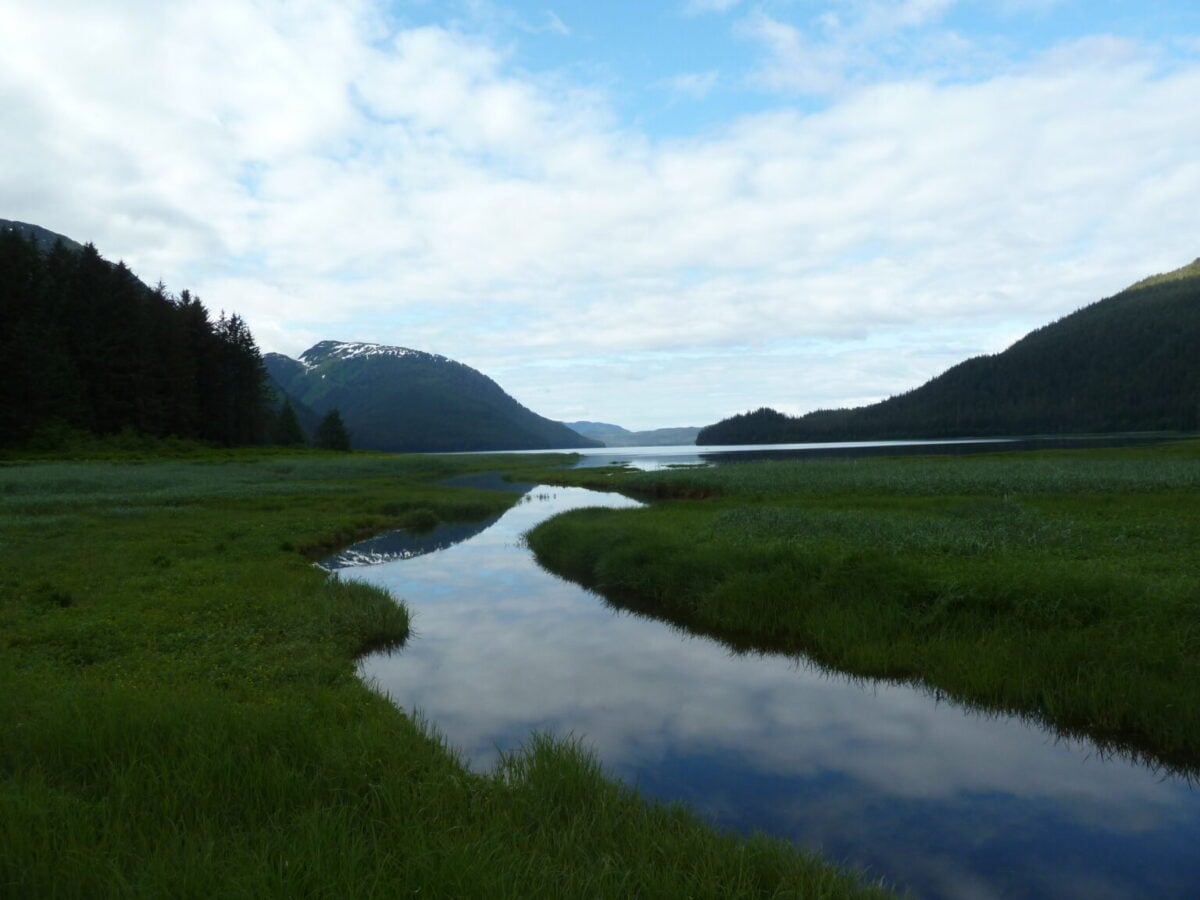
A stream reflects the clouds on June 20, 2011, in Kootznoowoo Wilderness, Admiralty Island National Monument, Tongass National Forest, Alaska. (Forest Service photo by Don MacDougall)
A federal judge in Alaska has rejected a lawsuit that sought to reinstate a management plan that would allow heavier logging in the world’s largest temperate old-growth rainforest.
The result leaves an Obama-era management plan in place, but it could be short-lived: The administration of President Donald Trump is already at work on a new plan that could allow more logging in Alaska’s Tongass National Forest.
In an order published Friday, Judge Sharon Gleason dismissed the lawsuit filed by Viking Lumber, Alcan Timber and the Alaska Forest Association.
The three groups sued the U.S. Department of Agriculture — the parent organization of the U.S. Forest Service — last year, alleging in part that the federal Tongass Timber Reform Act of 1990 required the Forest Service to offer enough timber sales to meet market demand.
Gleason ruled otherwise, finding that TTRA does not impose “a mandatory duty” on the Forest Service to ensure that market demand is met by Tongass timber sales.
“Whether the harvest levels are designed to actually meet market demand is a discretionary agency action, not a mandatory requirement imposed by the TTRA on the Forest Service,” she wrote.
Gleason also declined to take up plaintiffs’ argument about whether the Forest Service violated the Administrative Procedures Act, and she ruled that a 2021 announcement about Tongass strategy did not amount to formal rulemaking under law. She did not analyze whether it would have met legal standards if it had been a formal rulemaking process.
Plaintiffs were represented by Pacific Legal Foundation, which on Friday said that the Forest Service’s approach has been devastating to plaintiffs.
Kyle Griesinger, a spokesperson for the foundation, said that even with a new management plan in the works, the case isn’t moot because the old plan remains in effect until superceded.
“And, moreover, the Forest Service has not lived up to the 2016 plan so any new plan they may not live up to is no guarantee for our clients,” he said.
Marlee Goska, an attorney for the Center for Biological Diversity, agreed that last week’s ruling still has merit.
Goska was one of several attorneys who represented tribal, tourism, fishing and environmental groups that intervened on the side of the Department of Agriculture.
“I don’t think we have enough information yet to say the Forest Service is going to implement what the plaintiffs want. And certainly we’ll fight tooth and nail to stop that from happening,” she said of the upcoming plan change.
Goska added that last week’s ruling is important because it shows that the Forest Service does not have to meet market demand under existing law, and it shows that federal law doesn’t draw a distinction between old-growth harvests and new-growth ones.
“To the extent this administration and the Forest Service might be thinking about saying the TTRA mandates large old-growth timber sales to meet market demand, the court has already said that is incorrect,” she said.
Gleason published a final judgment on Friday. Plaintiffs have 30 days to file an appeal.
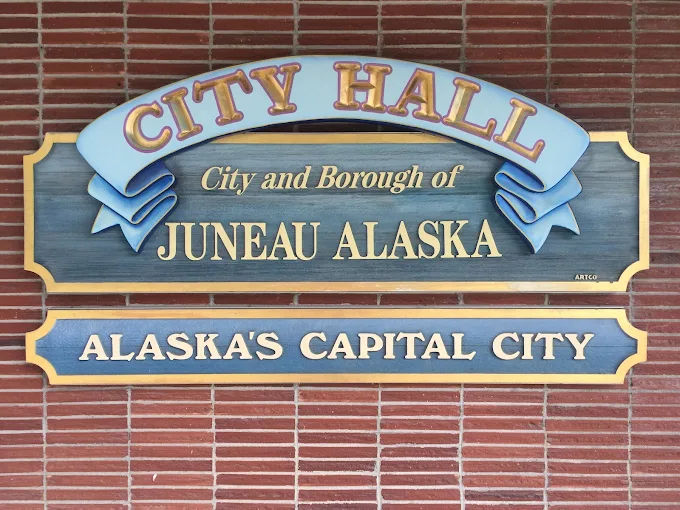
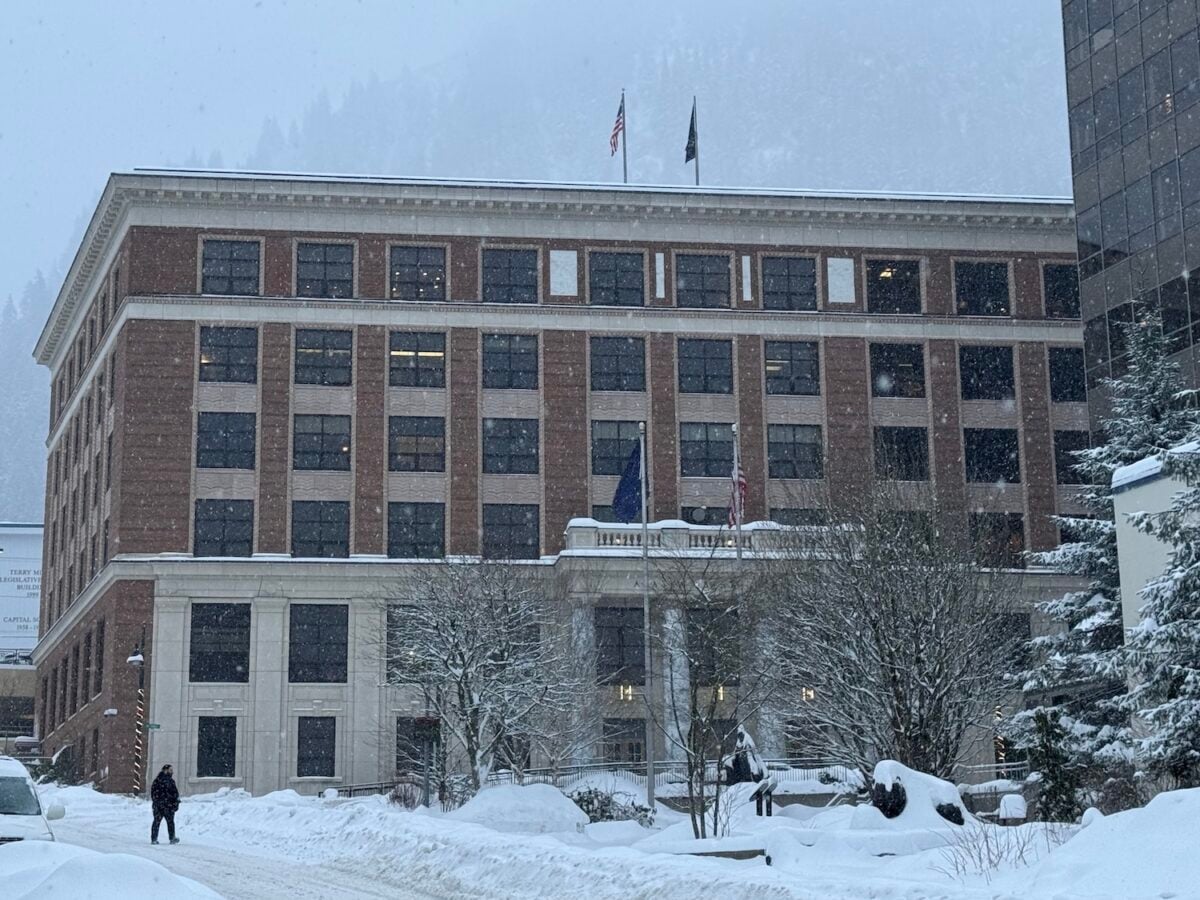
NOTN- The Assembly debated the future of 155 Heritage Way, the city’s current City Hall, and voted last night to send the ordinance to the full Assembly for public hearing and back to committee for further refinement.
City staff recommended selling the building by sealed bid with a $2.5 million minimum.
“The intent of bringing the disposal of City Hall to you well in advance of moving into the (new) municipal building or the Burns building, is we acknowledge that this conversation could take some time and even a sealed bid process, which is relatively straightforward, will take about nine months.” Said City Manager Katie Koester.
Members were split over whether to require an appraisal before sale, with some arguing an appraisal would provide necessary valuation confidence.
“To me, we have a duty. This project to move City Hall has been very expensive, more expensive than we would have ever wanted, and the public is not happy about it.” Said Christine Woll, “I do feel like we have a responsibility to get at least fair market value for this property. That being said, I don’t think we need to get the highest amount that we could get out of this, because I think that will come at an expense to our other goals. This is our downtown core and our waterfront, and we hear all the time from people who want to make sure this space stays year round in nature. So I think if we don’t design a process that allows us some control, not all the control in the world, but a bit more control to make sure that it goes somewhere that supports other community goals and is more year round in orientation.”
Others said it would add cost and delay.
“I would disagree with getting an appraiser, I think that’s spending money we don’t have to. If Huna Totem dock goes in, this is going to be a really valuable piece of property, and I think 2.5 will be nothing to what we can get for it.” Said Mayor Beth Weldon, “I probably have a couple minor little conditions to put on it, but not major ones. And my minor would be, just to give people food for thought, no jewelry stores, and a portion of the building would have to be year round. But everybody has to keep in mind that we can sell it like this, and then that person who bought it could turn around and sell it and have no conditions on it. So we just want to be careful. And I, like Ms. Woll, would like to get as much money as we can from the building.”
Several members urged sale conditions to protect downtown character, which is most commonly a requirement for year‑round occupancy of some portion of the site.
“Thank you, Mr. Chair. I also would resonate that I’m not particularly interested in doing the assessment, but it’s for a different reason.” said Nano Brooks, “Just a few years ago, we spent a lot of taxpayer money doing a campaign on why we need the new building, and plenty of data and figures came out from that campaign that this building was worth around $3 to $5 million and needed 14 million in deferred maintenance, therefore rendering it worthless. We all know that the land is extremely valuable, extremely desirable, but to say we’re selling a building I think, isn’t the most transparent and upfront, and we already did spend a lot of money figuring that information out that we put out there to the public. We need to find money where it can be found. But doing what’s right by the public takes the precedence too. So as far as the stipulations or requirements, I think, like the others were saying, having a preference for someone interested in year round operations, and then, if possible, having preference for a local purchase or two.”
Staff told the committee the $2.5 million minimum was set after consulting the assessor, and estimated a commercial appraisal would cost roughly $15,000–$20,000 if the Assembly opted for one.
Officials said the city will return with options on sale method, minimums and possible conditions at the next assembly meeting where the issue of City Hall will be brought to the public.
A stream reflects the clouds on June 20, 2011, in Kootznoowoo Wilderness, Admiralty Island National Monument, Tongass National Forest, Alaska. (Forest Service photo by Don MacDougall)
A federal judge in Alaska has rejected a lawsuit that sought to reinstate a management plan that would allow heavier logging in the world’s largest temperate old-growth rainforest.
The result leaves an Obama-era management plan in place, but it could be short-lived: The administration of President Donald Trump is already at work on a new plan that could allow more logging in Alaska’s Tongass National Forest.
In an order published Friday, Judge Sharon Gleason dismissed the lawsuit filed by Viking Lumber, Alcan Timber and the Alaska Forest Association.
The three groups sued the U.S. Department of Agriculture — the parent organization of the U.S. Forest Service — last year, alleging in part that the federal Tongass Timber Reform Act of 1990 required the Forest Service to offer enough timber sales to meet market demand.
Gleason ruled otherwise, finding that TTRA does not impose “a mandatory duty” on the Forest Service to ensure that market demand is met by Tongass timber sales.
“Whether the harvest levels are designed to actually meet market demand is a discretionary agency action, not a mandatory requirement imposed by the TTRA on the Forest Service,” she wrote.
Gleason also declined to take up plaintiffs’ argument about whether the Forest Service violated the Administrative Procedures Act, and she ruled that a 2021 announcement about Tongass strategy did not amount to formal rulemaking under law. She did not analyze whether it would have met legal standards if it had been a formal rulemaking process.
Plaintiffs were represented by Pacific Legal Foundation, which on Friday said that the Forest Service’s approach has been devastating to plaintiffs.
Kyle Griesinger, a spokesperson for the foundation, said that even with a new management plan in the works, the case isn’t moot because the old plan remains in effect until superceded.
“And, moreover, the Forest Service has not lived up to the 2016 plan so any new plan they may not live up to is no guarantee for our clients,” he said.
Marlee Goska, an attorney for the Center for Biological Diversity, agreed that last week’s ruling still has merit.
Goska was one of several attorneys who represented tribal, tourism, fishing and environmental groups that intervened on the side of the Department of Agriculture.
“I don’t think we have enough information yet to say the Forest Service is going to implement what the plaintiffs want. And certainly we’ll fight tooth and nail to stop that from happening,” she said of the upcoming plan change.
Goska added that last week’s ruling is important because it shows that the Forest Service does not have to meet market demand under existing law, and it shows that federal law doesn’t draw a distinction between old-growth harvests and new-growth ones.
“To the extent this administration and the Forest Service might be thinking about saying the TTRA mandates large old-growth timber sales to meet market demand, the court has already said that is incorrect,” she said.
Gleason published a final judgment on Friday. Plaintiffs have 30 days to file an appeal.
A regional airline is adding a temporary fuel surcharge to the cost of tickets in response to the war in the Middle East impacting jet fuel prices.
Beginning Friday, Alaska Seaplanes and Island Air Express will add a 6% surcharge added to customer fares, the company announced Monday in a media release. That surcharge will not apply to freight customers.
Company spokesperson Andy Hedden said that, to his knowledge, the company hasn’t put this type of surcharge in place before.
“The word ‘unprecedented’ keeps coming up,” he said.
He said the company gets its jet fuel rates weekly, on Mondays, and during the first two weeks in March, those rates jumped 38%.
“Just today it went up an additional 4 percent,” he said. “That’s over 40% for the first month of March.”
Currently, a one way flight from Haines can be purchased online for $179, meaning the surcharge will add nearly $10.80 to the overall cost of the flight.
Hedden said the company is not trying to make a profit off higher fuel prices, but wants to avoid taking a loss.
Airlines outside of the U.S. have been raising prices for several days.
Air New Zealand was among the first, announcing March 10 that its ticket prices would go up. Cathay Pacific Airways in Hong Kong announced an increase in fuel surcharges to go into place March 18. That airline cited a doubling of jet fuel prices since the beginning of the month. Scandinavian Airlines also put a temporary price increase into place March 10.
A female caribou runs near Teshekpuk Lake in the National Petroleum Reserve in Alaska on June 12, 2022. The Teshekpuk Caribou Herd gives birth to its calves in the land around the vast lake, the largest on the North Slope. On Monday, a federal issued a preliminary injunction that reinstates protections for the Teshekpuk caribou and other resources, likely affecing a pending oil and gas lease sale that was structured to include territory by and in the lake. (Photo by Ashley Sabatino/ U.S. Bureau of Land Management)
An agreement that protected about a million acres of sensitive Arctic territory is back in effect, meaning that this week’s oil and gas lease sale in the National Petroleum Reserve in Alaska will likely be smaller than the Trump administration had planned.
U.S. District Court Judge Sharon Gleason’s ruling, issued Monday, ensures that a Native coalition’s land agreement, known as the Nuiqsut Trilateral right of way, “shall remain in full force and effect,” at least temporarily.
The agreement is a conservation pact that gave Nuiqsut residents some control over oil development in about a million acres in the Teshekpuk Lake area. The Trump administration’s Department of the Interior canceled that right-of-way agreement in December, prompting a January lawsuit from the Nuiqsut parties.
As a result of Gleason’s ruling, the Trump administration’s National Petroleum Reserve lease sale likely cannot include acreage within the Nuiqsut right of way. That sale was originally planned to span 5.5 million acres, including most of the right-of-way territory. Bids are to be opened by the U.S. Bureau of Land Management on Wednesday.
Exactly how the BLM will change the lease sale or handle submitted bids was yet to be determined Monday afternoon. The Department of the Interior has not yet commented.
Gleason’s ruling granted an injunction sought by plaintiffs in one of two lawsuits that challenged the way the BLM is managing the National Petroleum Reserve and the upcoming lease sale conducted under that Trump administration management system.
The lawsuit over the right-of-way agreement was filed by Nuiqsut Trilateral Inc., comprising Nuiqsut’s city and tribal governments and Kuukpik Corp., the village’s for-profit Native corporation.
An Inupiat village of about 500, Nuiqsut is the community located closest to existing and planned development in the petroleum reserve.
The second lawsuit was filed by Grandmothers Growing Goodness and The Wilderness Society, and it challenged the entire Trump administration management plan for the petroleum reserve and the lease sale that was structured under that system. The Trump administration plan opened 82% of the reserve to oil leasing.
Plaintiffs in both the cases were in Gleason’s courtroom on Thursday arguing in separate hearings for injunctions that would bar previously protected acreage from being included in this week’s lease sale. The Nuiqsut plaintiffs argued specifically about the acreage within the right of way, while the Grandmothers Giving Goodness-Wilderness Society plaintiffs argued for blocking right-of-way acreage plus other acreage in the general area that had previously been off-limits to development.
A map shows the tracts within the National Petroleum Reserve in Alaska that are at issue in two lawsuits targeting the Trump administration’s management of the land unit. The orange tracts are in previously protected areas that were off-limits to leasing. Some tracts are within the Nuisuit Trialateral Inc. right of way and the subject of that organization’s lawsuit. A lawsuit filed by the Native organization Grandmothers Growing Goodness and The Wilderness Society is seeking to prevent leasing in all of the tracts colored orange. (Map provided by Layla Hughes, one of the plaintiff attorneys)
The Nuiqsut Trilateral Inc. right-of-way agreement protects about 1 million acres in the Teshekpuk Lake area, shown in thish map. The agreement, as signed in 2024, was to be in place for the entire lifetime of the Willow project, a period expected to last for decades. (Map provided by the U.S. Bureau of Land Management)
In her Nuiqsut ruling, Gleason said the right-of-way agreement conveyed a property right that appears to have been violated by the Trump administration’s cancellation of the right-of-way agreement, so that is enough irreparable harm to justify a preliminary injunction. The plaintiffs do not need to demonstrate any irreparable harm from the sale of oil leases, she said.
That makes this case different from past cases in which environmental and Native plaintiffs claimed irreparable harm from leases yet to be sold and developed, Gleason said in her ruling.
“Here, by contrast, the injury is the loss of Plaintiff’s real property rights— a harm that Plaintiff has already experienced and continues to experience,” she said in her ruling.
Additionally, the Nuiqsut plaintiffs have presented compelling arguments that the Trump administration acted illegally when it abruptly canceled the right-of-way agreement, Gleason said. The Nuiqsuit plaintiffs raised “serious questions” about public notice, agency responsibilities and other issues, the judge said, suggesting that they have a chance of winning their full case on legal merits.
Gleason had not ruled as of Monday afternoon on the injunction sought in the second lawsuit.
As planned by the Trump administration, this week’s lease sale offered territory in and near Teshekpuk Lake that has never before been put up for auction, as well as some territory that had been protected since 2012. In all, the geographic size of this week’s lease sale is bigger than most of the National Petroleum Reserve sales held since 1999.
A government attorney referenced last year’s sweeping tax and budget bill passed by Congress in their defense of the Department of the Interior’s decision to cancel the right-of-way agreement and put up new territory for oil and gas leasing.
The “One Big Beautiful Bill Act” overturned protections in the petroleum reserve and mandated a series of lease sales to be held under the Trump management plan, Justice Department attorney Paul Turcke told Gleason during the Nuiqsut hearing on Thursday.
The Nuiqsut right-of-way agreement was announced by the Biden administration in 2024. Originally conceived by Kuukpik, it was negotiated in exchange for support from Nuiqsut entities and leaders for the Willow project. The Biden administration approved Willow in 2023, although with protective stipulations that included provisions from which the Nuiqsut right-of-way agreement stemmed.
Teshekpuk Lake, the biggest lake on the North Slope, and the surrounding lands support a caribou herd that bears the lake’s name, as well as hundreds of thousands of birds that migrate from as far away as Antarctica, along with other Arctic wildlife.
U.S. Rep. Nick Begich III, R-Alaska, speaks to a joint session of the Alaska Legislature on Tuesday, March 10, 2026. (James Brooks photo/Alaska Beacon)
By: James Brooks, Alaska Beacon
U.S. Rep. Nick Begich III, R-Alaska, speaks to a joint session of the Alaska Legislature on Tuesday, March 10, 2026. (James Brooks photo/Alaska Beacon)
The filing deadline for this year’s Alaska Permanent Fund dividend is March 31, and if Rep. Nick Begich III has his way, this year’s dividend will be tax free.
On March 3, Alaska’s lone member of the U.S. House introduced a bill that would exempt the dividend from federal taxes.
When Begich mentioned it during his address to state lawmakers this week, it garnered a standing ovation in the state Capitol.
Begich said afterward that passing the bill into law “is going to be a lift,” but in his first year as a Representative, Begich has found an unusual amount of success. On the day he introduced the tax-free dividend measure, he had a sixth prime-sponsored bill pass the U.S. Senate and advance to President Donald Trump.
Those six bills include two Congressional Review Act resolutions that repealed regulations adopted by the administration of President Joe Biden.
When members of Alaska’s Congressional delegation speak to the Legislature, it’s usually a platform to talk about their recent accomplishments, and Begich had plenty to talk about this year.
The number of bills he passed through Congress in his first year is a record, his office said.
According to the Center for Effective Lawmaking, when Begich’s sixth bill becomes law, he will tie former Rep. Rick Renzi, R-Arizona, for the most bills that became law in a freshman term.
The 119th Congress still has several months to run, and if Begich manages a seventh, he would set the record.
“No other House freshman in our data (going back to 1973) had six or more,” said Colin Achilles, the center’s associate director, by email.
At least some of Begich’s success is attributable to groundwork laid by his immediate predecessors, Democratic Rep. Mary Peltola and Republican Rep. Don Young.
He’s also received help from Alaska’s two senators, Republicans Lisa Murkowski and Dan Sullivan, who have been able to guide his legislation through the Senate after passing the House.
Begich’s House-and-Senate passed bills to date include:
A legal change making it easier for disabled Alaska Natives to qualify for some federal aid programs;
A measure repealing Biden-era limits on oil and gas leasing within the Arctic National Wildlife Refuge;
A law that distributes extra land to Alaska Native village corporations by eliminating an inactive trust;
A bill granting land to the Alaska Native village corporation for Saxman, in Southeast Alaska;
And a bill extending the amount of time that Alaska Native Vietnam War veterans or their families have to pick grants of federal land.
While the measures repealing Biden-era actions advanced along party lines, taking advantage of Republican control of the House, Senate and Presidency, Begich’s other bills have gotten unanimous support in the House, from Democrats and Republicans alike.
Speaking to the Alaska Legislature, Begich said that “not every bill is a touchdown pass, but every bill puts (points) on the board. We are getting points on the board for the state of Alaska, and we will continue to look for opportunities to do that.”
After his speech, he acknowledged that the dividend bill is something closer to a deep pass than a short run down the middle, but it helps to be ready for an opportunity.
“You have to have these bills in existence in order for them to have an opportunity to pass. And sometimes a must-pass piece of legislation will show up, and you’ll have an opportunity to attach a priority for your district,” he said. “In our case … we wanted to make sure that we had this in the clip ready to go. When that opportunity arrives, sometimes it happens faster than you think it will. Sometimes it takes a while, but you have to have the legislative text ready to go for the moment that arrives, and that’s what we’re doing on that bill.”
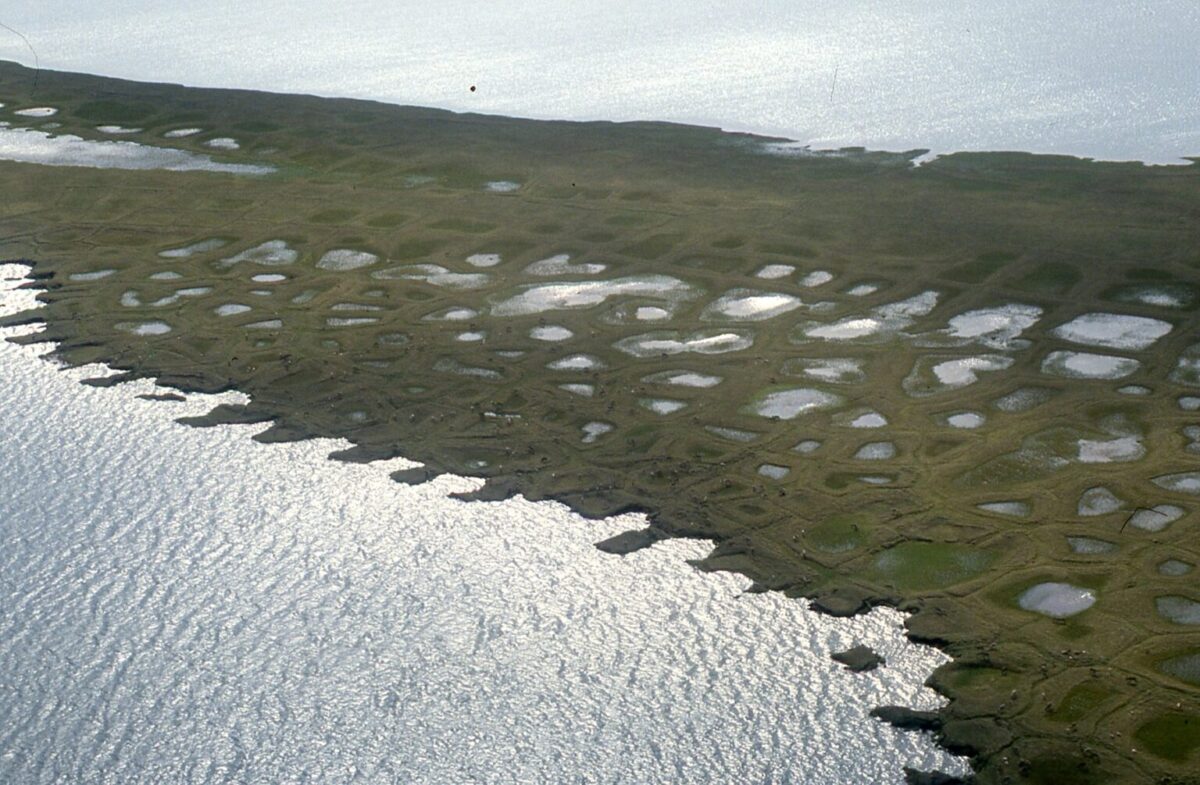
Surface pools on the edge of West Long Lake in the Teshekpuk Lake Special Use Area of the National Petroleum Reserve in Alaska are seen in this undated photo. The pools are formed by permafrost. Summer melt creates pools of water on the surface, creating thousands of sites that support wildlife. The Teshekpuk Lake area is important to subsistence harvests and had been protected from development for decades, but the Trump admininistration is now trying to sell oil leases there. (Photo by Laura McDuffie/U.S. Geological Survey Alaska Science Center)
Just six days before the Trump administration is set to open bids in the first of several oil and gas lease sales for federal territory in Arctic Alaska, critics were in court on Thursday trying to win injunctions to temporarily block some or all of the sale.
In one case, a Native organization called Grandmothers Growing Goodness and an environmental organization, The Wilderness Society, are seeking to fully prevent the scheduled March 18 sale in the National Petroleum Reserve in Alaska, a federal land unit stretching across Alaska’s western North Slope. The sale is offering 5.5 million acres, a larger geographic scope than most of the NPR-A lease sales held since 1999.
The Grandmothers Growing Goodness-Wilderness Society lawsuit is also seeking to overturn a new Trump administration management plan that opens 82% of the Indiana-sized reserve to oil development. Previously, only about half of the reserve was available for leasing, and several areas had protective status. Among those areas was Teshekpuk Lake and its adjacent wetlands and tundra, which provide key habitat for a caribou herd, numerous species of migratory birds, fish and other Arctic animals.
The other case, filed by an organization representing residents of Nuiqsut, is narrower.
Nuiqsut is the North Slope Inupiat village closest to existing NPR-A development. The Nuiqsut lawsuit is seeking to reinstate a program that protects an environmentally sensitive portion of the reserve that had been off-limits to oil development until the Trump administration jettisoned those protections.
The Nuiqsut lawsuit concerns a right-of-way agreement struck with the Biden administration and Nuiqsut Trilateral Inc., an organization formed by Nuiqsut’s city and tribal governments and its village for-profit Native corporation. The agreement, made final in 2024, protects about 1 million acres in the area of Teshekpuk Lake by barring leasing and other development not approved by Nuiqsut Trilateral.
In December, the Trump administration abruptly canceled that agreement, citing the potential for oil in the right-of-way area.
That cancellation, which was announced without any consultation or advance warning to the villagers, caused immediate harm, said Travis Annatoyn, an attorney for the Nuiqsut plaintiffs.
“From the moment Interior canceled the right of way, it advertised its intent to grant competing property rights on top of the subject acreage. That is an invitation to administrative and judicial chaos down the road,” Annatoyn told U.S. District Court Judge Sharon Gleason during the day’s second hearing. “This court should foreclose that chaos by issuing a narrow injunction and stay for just the area of the right of way. We are not seeking relief across the reserve. We are not seeking relief sale-wide.”
Gleason stated her intention to issue rulings before bids are unsealed on Wednesday, Mar. 18.
She said Nuiqsut plaintiffs presented a more compelling case for a temporary injunction. That case concerns property rights, not just “more esoteric” environmental and subsistence protections.
A caribou from the Teshekpuk herd grazes on June 27, 2014, in the National Petroleum Reserve in Alaska. The herd is named for the lake, the largest on the North Slope. The herd uses the tundra adjacent to the lake for calving. (Photo by Bob Wick/U.S. Bureau of Land Management)
“I do see that there are far greater reasons for injunction as to this preliminarily, until the merits can be fully fleshed out,” she told U.S. Justice Department attorney Paul Turcke, who argued on behalf of the Department of the Interior at both hearings.
If the Teshekpuk-area leases are sold and the case is later decided in Nuiqsut Trilateral Inc.’s favor, that could create challenges for numerous parties, Gleason said.
The right-of-way agreement stemmed from environmental and subsistence stipulations in the Biden administration’s 2023 approval of ConocoPhillips’ giant Willow project, and it was a condition of Nuiqsut residents’ endorsement of that project. Willow is set to become the North Slope’s westernmost producing oil field. Conoco Phillips expects production to start in 2029, with an eventual peak of 180,000 barrels per day.
The right-of-way agreement focused on the Teshekpuk Lake area because it is important to Inupiat subsistence food-gatherers.
Under Trump administration terms, Teshekpuk-area protections that had been in place for decades no longer exist. That auction offers some areas at Teshekpuk Lake that have never previously been open to leasing, including parts of the lake itself.
Turcke argued at Thursday’s hearing that the federal government already protects subsistence rights diligently and does not need the right-of-way agreement to do so.
He also argued that Congress has already effectively struck down the restrictions imposed by the right-of-way agreement.
That happened last year, when Congress passed the sweeping budget and tax bill called the “One Big Beautiful Bill Act,” he said. The bill mandated a series of at least five NPR-A lease sales to be conducted over 10 years under terms of management plan proposed by the first Trump administration.
Turcke also disputed the idea that including the Teshekpuk area in the lease sale would cause irreparable harm to the Nuiqsut plaintiffs.
“It sounds concerning when they say that their property rights could be impacted, but again, the whole property right that they’re really talking about is the ability to just leave it the way it is right now. And that’s not going to change whether leases are issued or not,” he said.
But Annatoyn said Nuiqsut residents are already suffering impacts from the administration’s actions.
“They wake up every day. They see and smell and hear the trucks going to Willow,” he said.
Both lawsuits were originally filed in U.S. District Court in the District of Columbia but transferred last month to federal court in Alaska.
Surface pools on the edge of West Long Lake in the Teshekpuk Lake Special Use Area of the National Petroleum Reserve in Alaska are seen in this undated photo. The pools are formed by permafrost. Summer melt creates pools of water on the surface, creating thousands of sites that support wildlife. The Teshekpuk Lake area is important to subsistence harvests and had been protected from development for decades, but the Trump admininistration is now trying to sell oil leases there. (Photo by Laura McDuffie/U.S. Geological Survey Alaska Science Center)
Just six days before the Trump administration is set to open bids in the first of several oil and gas lease sales for federal territory in Arctic Alaska, critics were in court on Thursday trying to win injunctions to temporarily block some of the sale.
In one case, a Native organization called Grandmothers Growing Goodness and an environmental organization, The Wilderness Society, are seeking to fully prevent the scheduled March 18 sale in the National Petroleum Reserve in Alaska, a federal land unit stretching across Alaska’s western North Slope. The sale is offering 5.5 million acres, a larger geographic scope than most of the NPR-A lease sales held since 1999.
The Grandmothers Growing Goodness-Wilderness Society lawsuit is also seeking to overturn a new Trump administration management plan that opens 82% of the Indiana-sized reserve to oil development. Previously, only about half of the reserve was available for leasing, and several areas had protective status. Among those areas was Teshekpuk Lake and its adjacent wetlands and tundra, which provide key habitat for a caribou herd, numerous species of migratory birds, fish and other Arctic animals.
For now, those plaintiffs are seeking an injunction to bar the sale of leases in previously protected areas.
The other case, filed by an organization representing residents of Nuiqsut, is narrower.
Nuiqsut is the North Slope Inupiat village closest to existing NPR-A development. The Nuiqsut lawsuit is seeking to reinstate a program that protects an environmentally sensitive portion of the reserve that had been off-limits to oil development until the Trump administration jettisoned those protections.
The Nuiqsut lawsuit concerns a right-of-way agreement struck with the Biden administration and Nuiqsut Trilateral Inc., an organization formed by Nuiqsut’s city and tribal governments and its village for-profit Native corporation. The agreement, made final in 2024, protects about 1 million acres in the area of Teshekpuk Lake by barring leasing and other development not approved by Nuiqsut Trilateral.
In December, the Trump administration abruptly canceled that agreement, citing the potential for oil in the right-of-way area.
That cancellation, which was announced without any consultation or advance warning to the villagers, caused immediate harm, said Travis Annatoyn, anattorney for the Nuiqsut plaintiffs.
“From the moment Interior canceled the right of way, it advertised its intent to grant competing property rights on top of the subject acreage. That is an invitation to administrative and judicial chaos down the road,” Annatoyn told U.S. District Court Judge Sharon Gleason during the day’s second hearing. “This court should foreclose that chaos by issuing a narrow injunction and stay for just the area of the right of way. We are not seeking relief across the reserve. We are not seeking relief sale-wide.”
Gleason stated her intention to issue rulings before bids are unsealed on Wednesday, Mar. 18.
She said Nuiqsut plaintiffs presented a more compelling case for a temporary injunction. That case concerns property rights, not just “more esoteric” environmental and subsistence protections.
A caribou from the Teshekpuk herd grazes on June 27, 2014, in the National Petroleum Reserve in Alaska. The herd is named for the lake, the largest on the North Slope. The herd uses the tundra adjacent to the lake for calving. (Photo by Bob Wick/U.S. Bureau of Land Management)
“I do see that there are far greater reasons for injunction as to this preliminarily, until the merits can be fully fleshed out,” she told U.S. Justice Department attorney Paul Turcke, who argued on behalf of the Department of the Interior at both hearings.
If the Teshekpuk-area leases are sold and the case is later decided in Nuiqsut Trilateral Inc.’s favor, that could create challenges for numerous parties, Gleason said.
The right-of-way agreement stemmed from environmental and subsistence stipulations in the Biden administration’s 2023 approval of ConocoPhillips’ giant Willow project, and it was a condition of Nuiqsut residents’ endorsement of that project. Willow is set to become the North Slope’s westernmost producing oil field. Conoco Phillips expects production to start in 2029, with an eventual peak of 180,000 barrels per day.
The right-of-way agreement focused on the Teshekpuk Lake area because it is important to Inupiat subsistence food-gatherers.
Under Trump administration terms, Teshekpuk-area protections that had been in place for decades no longer exist. That auction offers some areas at Teshekpuk Lake that have never previously been open to leasing, including parts of the lake itself.
Turcke argued at Thursday’s hearing that the federal government already protects subsistence rights diligently and does not need the right-of-way agreement to do so.
He also argued that Congress has already effectively struck down the restrictions imposed by the right-of-way agreement.
That happened last year, when Congress passed the sweeping budget and tax bill called the “One Big Beautiful Bill Act,” he said. The bill mandated a series of at least five NPR-A lease sales to be conducted over 10 years under terms of management plan proposed by the first Trump administration.
Turcke also disputed the idea that including the Teshekpuk area in the lease sale would cause irreparable harm to the Nuiqsut plaintiffs.
“It sounds concerning when they say that their property rights could be impacted, but again, the whole property right that they’re really talking about is the ability to just leave it the way it is right now. And that’s not going to change whether leases are issued or not,” he said.
But Annatoyn said Nuiqsut residents are already suffering impacts from the administration’s actions.
“They wake up every day. They see and smell and hear the trucks going to Willow,” he said.
Both lawsuits were originally filed in U.S. District Court in the District of Columbia but transferred last month to federal court in Alaska.
Correction: The story has been corrected to reflect that the temporary injunctions sought by plaintiffs in both lawsuits concern only part of the lease sale.
The Alaska State Capitol is seen on Wednesday, March 4, 2026. (James Brooks photo/Alaska Beacon)
By: Corinne Smith and James Brooks, Alaska Beacon
The Alaska State Capitol is seen on Wednesday, March 4, 2026. (James Brooks photo/Alaska Beacon)
A potential $500 million windfall is giving the Alaska House of Representatives a headache.
On Friday, the Alaska Department of Revenue released a forecast predicting that the state of Alaska will collect hundreds of millions of dollars more oil revenue by June 30 than previously expected.
That forecast landed in the middle of an ongoing debate over whether or not to spend from savings to cover almost $530 million in extra expenses, largely added by Gov. Mike Dunleavy, to the state budget since last spring.
The Senate approved a proposal to pay for roughly three-quarters of those expenses and it is now in the state House, awaiting a vote that could come as soon as Monday.
Tensions rose on Friday, with no agreement among House lawmakers on how to pay for the proposal.
The House is led by a 21-person multipartisan coalition whose members have been urging fast action on the issue. They say it is particularly important to fund $70 million for the state’s transportation projects to unlock more than $630 million in additional federal funding.
Without sure money, majority lawmakers say projects can’t go out to bid and construction firms can’t make purchasing and hiring decisions.
The majority wants to use the state’s Constitutional Budget Reserve, a savings account, to provide guaranteed funding.
The majority can pass a bill on its own, but it can’t spend from savings on its own. It takes 30 members of the House and 15 from the Senate to approve spending from the Constitutional Budget Reserve, the state’s principal savings account.
The Senate has already given that approval, but in the House, at least nine members of the 19-person, all-Republican House minority would have to support the majority, and so far, they’re not willing to do that.
Part of that reluctance is because as currently written, the supplemental budget bill allows lawmakers to spend up to $373.6 million from the reserve regardless of whether or not the war-caused bonus becomes real.
If oil prices stay high and the reserve money isn’t needed, the majority could spend it on other things without further input from the minority. That’s because it takes only 21 votes to advance a budget bill.
The money would return to the reserve only if it was unspent at the end of the fiscal year.
If lawmakers don’t spend from savings and the Iran war ends unexpectedly quickly, causing oil prices to fall, the minority could vote to spend from savings later to fill the gap.
The result is an ironic set of circumstances — Trump has said that the war will be short, but minority House Republicans’ action is effectively a bet on a long war.
Minority members say they’re being fiscally responsible. So do members of the majority, who add that there’s an opportunity cost for any delay — Alaska construction companies can’t make plans for the summer until they know what projects they’ll need to build.
Majority members also expressed frustration that the supplemental budget was largely requested by the governor, who they say has been absent in negotiations.
In addition, legislators and Gov. Dunleavy could also find themselves with a problem if oil prices fall after legislators have adjourned for the summer.
Legislators typically write budgets based on forecasts from the Department of Revenue, but this year’s forecast is especially uncertain, the department said.
Rep. Calvin Schrage, D-Anchorage, co-chair of the House Finance Committee and a member of the majority, said he’s skeptical of banking on the forecast.
“I have a lot of concern over budgeting based on that forecast, because that’s all it is. It’s a forecast. It’s not realized money, it’s not money in hand,” he said Friday.
“Even with this optimistic forecast, you are just barely, maybe able to balance the budget — if everything goes perfect. We still don’t have additional supplementals,” he said, referring to more budget amendments that could be requested by the governor.
Schrage said lawmakers will be scrutinizing the forecast in the coming days and weeks, and he said there’s still the possibility the Legislature may need to draw from savings.
But minority Republicans said they considered drawing from savings fiscally irresponsible.
“Taking a draw from our savings account to put into the general fund to fund things that were, by all accounts and purposes, able to be funded without it would have been irresponsible,” said Rep. Justin Ruffridge, R-Soldotna, on Friday.
House Minority Leader DeLena Johnson, R-Anchorage, said she’s confident in the forecast projections. “There’s some actuals there too. So I’m very comfortable with actuals, and I also know, if there’s changes, we can come in and we can come in and make them, and make a different vote. I’m not as worried about that.”
Speaker of the House Bryce Edgmon, I-Dillingham, expressed frustration at the delay.
“This is pure politics. We should have had the supplemental budget funded. A long time ago,” he said. “The House Majority coalition prioritized the funding of the entire package that was proposed by the governor. Every single item came from the governor. And so here we are, you know, in a really precarious state, because we’re at the point where every week that goes by gets us a week closer to that federal match not being achieved for the summer construction season.”
Edgmon and other majority legislators have voiced frustration about “moving goal posts” on the budget bill. While there are more than $530 million in proposed additions, the bill in front of House lawmakers contains only three-quarters of that amount because majority members wanted to attract members of the minority for the savings vote.
The remainder will still have to be addressed later, regardless of what happens in the upcoming vote.
Edgmon said it’s not clear to him what the Republican minority wants in exchange for a budget reserve vote.
“We don’t know what the ask is,” he said. “But it’s all about leverage, and unfortunately, it’s falling on the shoulders of a lot of smaller contractors around the state.”
As of Friday afternoon, it appeared as if the budget bill was on course to pass, but without approval to spend from savings.
If that occurs, the state of Alaska will be in the awkward position of hoping for a war long and difficult enough to keep oil prices high for months.
U.S. Rep. Nick Begich III, R-Alaska, speaks to a joint session of the Alaska Legislature on Tuesday, March 10, 2026. (James Brooks photo/Alaska Beacon)
The filing deadline for this year’s Alaska Permanent Fund dividend is March 31, and if Rep. Nick Begich III has his way, this year’s dividend will be tax free.
On March 3, Alaska’s lone member of the U.S. House introduced a bill that would exempt the dividend from federal taxes.
When Begich mentioned it during his address to state lawmakers this week, it garnered a standing ovation in the state Capitol.
Begich said afterward that passing the bill into law “is going to be a lift,” but in his first year as a Representative, Begich has found an unusual amount of success. On the day he introduced the tax-free dividend measure, he had a sixth prime-sponsored bill pass the U.S. Senate and advance to President Donald Trump.
Those six bills include two Congressional Review Act resolutions that repealed regulations adopted by the administration of President Joe Biden.
When members of Alaska’s Congressional delegation speak to the Legislature, it’s usually a platform to talk about their recent accomplishments, and Begich had plenty to talk about this year.
The number of bills he passed through Congress in his first year is a record, his office said.
According to the Center for Effective Lawmaking, when Begich’s sixth bill becomes law, he will tie former Rep. Rick Renzi, R-Arizona, for the most bills that became law in a freshman term.
The 119th Congress still has several months to run, and if Begich manages a seventh, he would set the record.
“No other House freshman in our data (going back to 1973) had six or more,” said Colin Achilles, the center’s associate director, by email.
At least some of Begich’s success is attributable to groundwork laid by his immediate predecessors, Democratic Rep. Mary Peltola and Republican Rep. Don Young.
He’s also received help from Alaska’s two senators, Republicans Lisa Murkowski and Dan Sullivan, who have been able to guide his legislation through the Senate after passing the House.
Begich’s House-and-Senate passed bills to date include:
A legal change making it easier for disabled Alaska Natives to qualify for some federal aid programs;
A measure repealing Biden-era limits on oil and gas leasing within the Arctic National Wildlife Refuge;
A law that distributes extra land to Alaska Native village corporations by eliminating an inactive trust;
A bill granting land to the Alaska Native village corporation for Saxman, in Southeast Alaska;
And a bill extending the amount of time that Alaska Native Vietnam War veterans or their families have to pick grants of federal land.
While the measures repealing Biden-era actions advanced along party lines, taking advantage of Republican control of the House, Senate and Presidency, Begich’s other bills have gotten unanimous support in the House, from Democrats and Republicans alike.
Speaking to the Alaska Legislature, Begich said that “not every bill is a touchdown pass, but every bill puts (points) on the board. We are getting points on the board for the state of Alaska, and we will continue to look for opportunities to do that.”
After his speech, he acknowledged that the dividend bill is something closer to a deep pass than a short run down the middle, but it helps to be ready for an opportunity.
“You have to have these bills in existence in order for them to have an opportunity to pass. And sometimes a must-pass piece of legislation will show up, and you’ll have an opportunity to attach a priority for your district,” he said. “In our case … we wanted to make sure that we had this in the clip ready to go. When that opportunity arrives, sometimes it happens faster than you think it will. Sometimes it takes a while, but you have to have the legislative text ready to go for the moment that arrives, and that’s what we’re doing on that bill.”