Categories
Featured Juneau News Juneau Local Ketchikan Local News Feeds Sitka Local

High wind warnings disrupting cruise schedules

NOTN- A High Wind Warning in Southeast Alaska is disrupting cruise ship schedules in Juneau for tomorrow.

The National Weather Service says winds of 25 to 35 miles per hour with gusts up to 60 are expected through Wednesday evening for the outer coast and islands, including Prince of Wales, Annette, Baranof, Chichagof and Western Kupreanof.

“Over the next 24 hours we are going to see storm-force low along our coast. For the inner channels, we are going to see gale-force to strong gales push up through the inner channels overnight Tuesday into Wednesday.” Said Andrew Park from the National Weather Service Juneau in a social media post.

The Caribbean Princess has extended its stay in Juneau, while the Ruby Princess and Sapphire Princess canceled Wednesday port calls due to the weather.

Categories
Featured Juneau News Juneau Local Ketchikan Local News Feeds Sitka Local

Alaska lawmakers prepare to file suit against Gov. Dunleavy over executive order

By: James Brooks, Alaska Beacon

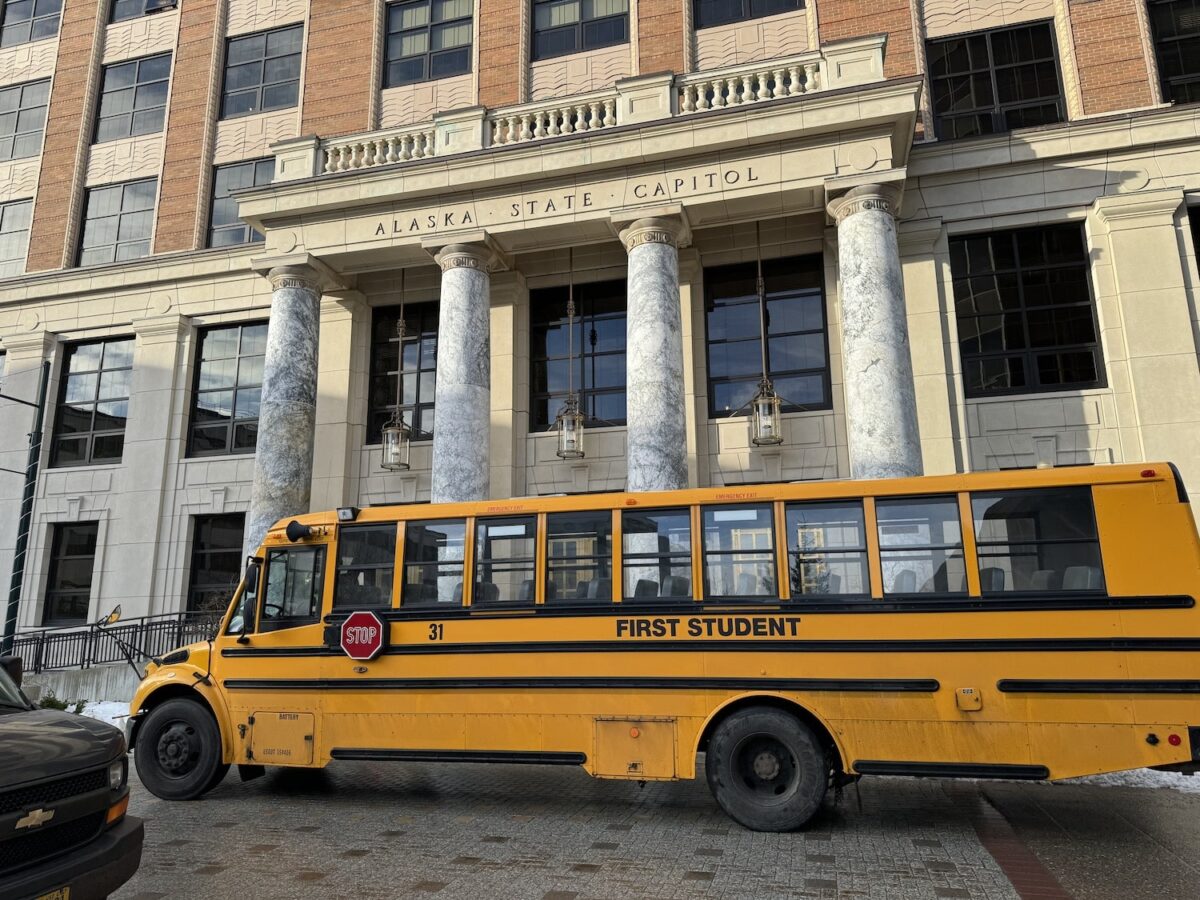
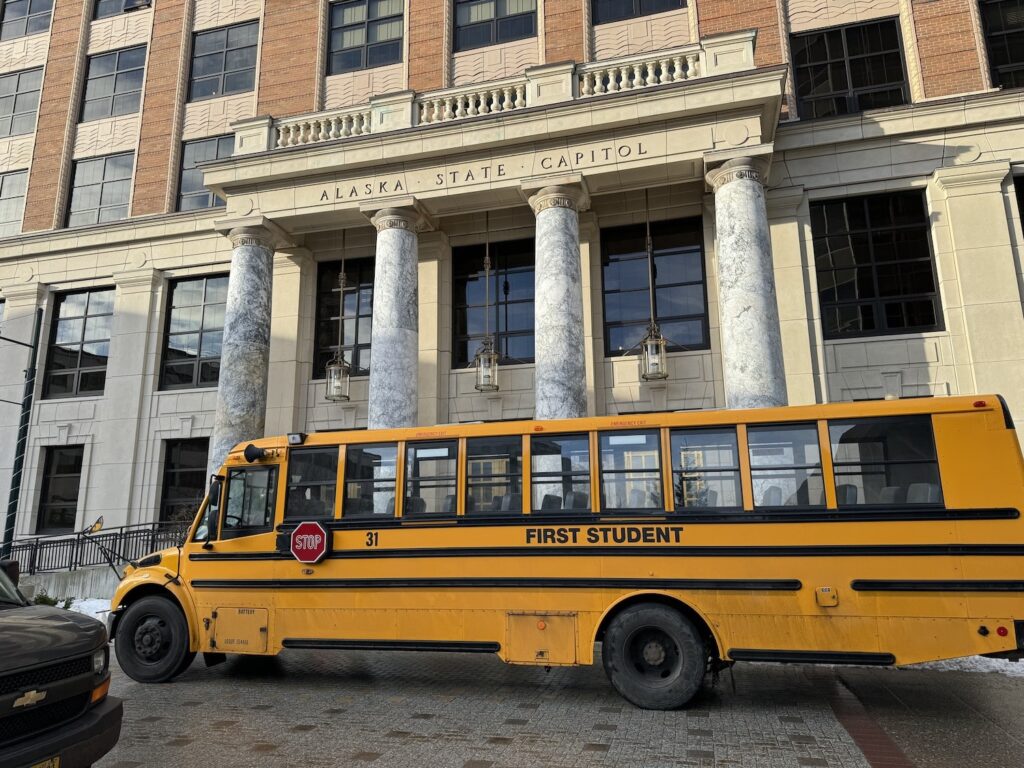
The Alaska State Capitol in downtown Juneau. (Photo by Greg Knight/News of the North)

A panel of state lawmakers voted 9-2 on Wednesday to approve spending up to $100,000 on a lawsuit against Gov. Mike Dunleavy.

The lawsuit, if filed, would challenge the governor’s decision to press ahead with plans to create a cabinet-level Alaska Department of Agriculture via executive order.

The governor issued an executive order in January, but lawmakers rejected it in a 32-28 vote in March, saying they preferred to create it through legislation instead. Creating the department through legislation, legislative leaders said, would allow lawmakers to debate and structure the department how they wish, instead of relying on the governor’s plans alone.

Dunleavy disagrees with that approach and in August filed a new executive order during a 30-day special session.

The leaders of the House and Senate refused to accept the filing, saying that it was not within the governor’s power to issue an executive order during a special session, or to reintroduce an already-rejected order.

The governor’s office has said that lawmakers’ failure to vote down the new order means that it will take effect and allow the executive branch to create the cabinet-level department at the start of 2026.

Why does the Legislature’s failure to vote on the executive order matter?

Article III, section 23 of the Alaska Constitution says that executive orders automatically take effect “unless disapproved by resolution concurred in by a majority of the members in joint session.”

The question that could be decided in court is whether lawmakers need to take that vote if an order is issued during a special session. Is issuing an order in a special session even legal? And does it matter if the order is identical to one that’s already been issued and voted upon?

Under Article III, section 23 of the Alaska Constitution, the “legislature shall have sixty days of a regular session, or a full session if of shorter duration, to disapprove” executive orders that would make a change to the functions of the executive branch.

For almost two hours on Wednesday, members of the joint House-Senate Legislative Council — a committee that makes decisions for the Legislature when it is out of session — heard about the dispute behind closed doors, then debated it briefly in open session before voting.

“It’s a disagreement between the Legislature and the governor about whether or not the governor has the authority under the Alaska Constitution to introduce an executive order during a special session,” said Emily Nauman, director of Legislative Legal Services, the legal department for Alaska’s legislative branch.

Because the House and Senate’s presiding officers returned the order to the governor without taking action, “the governor is asserting that he will give effect to the executive order because it was not specifically rejected or disapproved by the legislature, thus causing a conflict in the interpretation of the Constitution between the Legislature and executive branch.”

Rep. Louise Stutes, R-Kodiak, voted in favor of authorizing the Legislature to prepare and, if necessary, file a pre-emptive lawsuit to keep the governor from enacting the executive order.

“It’s just a question, to me, of, we said, ‘No. Don’t you understand what no means?’”

Rep. Calvin Schrage, I-Anchorage, also voted in favor of moving forward with a lawsuit. He said that while there is still time for the governor to back away from his position, “I really see it as our prerogative to protect ourselves procedurally, and for us to do that, I believe we need to file litigation.”

The two votes against Wednesday’s proposal came from Reps. Chuck Kopp, R-Anchorage, and Mike Prax, R-North Pole.

Prax said he feels as if it could set a precedent that could allow lawmakers to disapprove of a future governor’s actions in a “more urgent” situation by simply not taking action.

“We would establish a precedent that the Legislature can do something by doing nothing, and that just does not seem like a very good practice to have established for any organization,” Prax said.

Sen. Jesse Kiehl, D-Juneau, said he doesn’t think that’s a correct interpretation of the lawsuit.

“With great respect to Representative Prax, no one is asserting here that the Legislature may act by inaction. What is before us is the question of whether the second shot at an executive order came in a way that the Constitution allows. I am convinced it did not.”

Kopp said he believes the governor may be prepared to change course on his executive action, and he’s reluctant to approve a lawsuit unless the governor attempts to take action and actually create the department.

“I would like to see us not initiate this until there’s some overt action by the administration that clearly indicates their intent to move unilaterally on this issue outside of the legislative process,” he said.

As of Friday, there was no estimate as to when a lawsuit might be filed.

Under the Alaska Constitution, the executive branch may not sue the legislative branch. Lawsuits by the Legislature against the governor are rare; this would be the fourth against Dunleavy during his two terms in office beginning in 2018. 

In 2019, lawmakers sued the governor over a school funding issue. The governor won that case in the Alaska Supreme Court. The following year, legislators sued Dunleavy over their failure to consider some of his appointees during the COVID-19 pandemic emergency. The Alaska Supreme Court again ruled in Dunleavy’s favor.

In 2022, lawmakers filed a ‘friendly’ lawsuit against the governor in a dispute over the proper handling of oil and gas tax settlements. That dispute, which dates to the administration of Gov. Bill Walker, has yet to be decided by the Alaska Supreme Court.

Categories
Featured Juneau News Juneau Local Ketchikan Local News Feeds Sitka Local

Trump administration terminates University of Alaska grants for Alaska Native, Indigenous students

By: Corinne Smith, Alaska Beacon

 The sign at the entrance to the University of Alaska Fairbanks campus welcomes students on Sept. 20, 2023. (Photo by Yereth Rosen/Alaska Beacon)

The U.S. Department of Education has terminated grant funding for universities’ Alaska Native and Native-Hawaiian-serving programs and support services, an act that University of Alaska Fairbanks Chancellor Mike Sfraga said “will have a substantial and negative impact on a large number of Alaskans, including our Alaska Native students.”

Sfraga announced the federal decision in a campus-wide email on Thursday.

Mike Sfraga spoke at an Alaska Senate hearing in April. (Photo by James Brooks/Alaska Beacon)
Mike Sfraga spoke at an Alaska Senate hearing in April 2025. (Photo by James Brooks/Alaska Beacon)

Sfraga said the funding cut for UAF is estimated at $2.9 million, and the full effects are still under review. More than 20%, or an estimated 1,450 students at UAF are Indigenous, Sfraga noted. 

The full extent of the grant funding freeze across the University of Alaska system is still being analyzed, said Jonathon Taylor, UA director of public affairs, by email on Friday.

UA President Pat Pitney said in an emailed statement on Friday that the university will continue to create a welcoming environment for all students. 

“We are evaluating the impact these changes will have on our services to Alaska Native students, and are communicating directly with students, staff, and faculty who may be affected,” Pitney said. “A significant part of UA’s identity is our commitment to Alaska Native culture, language, art, heritage, business, and tribal management and governance; that remains unchanged. We proudly embrace our global leadership in Alaska Native and Indigenous studies, and will continue to sustain a welcoming environment where all – including our Alaska Native and Indigenous students – can thrive and succeed.”

Taylor said the University of Alaska Southeast has at least one grant-funded program on the Sitka campus aimed at improving student services, and university officials are waiting to hear whether it will be eliminated. Taylor said the University of Alaska Anchorage does not have any programs funded by this federal grant.

As of fall 2024, there were 3,254 students enrolled at the University of Alaska that identified as Alaska Native or American Indian, and 266 that identified as Hawaiian Native or Pacific Islander, according to the university, and 19,629 students total across the UA system. 

The University of Alaska announcements came after the Trump administration said Wednesday it will withhold an estimated $350 million of congressionally-approved funding for minority serving colleges and universities, saying the money will be allocated elsewhere. The measure continues President Donald Trump’s initiative to eliminate programs that focus on diversity, equity and inclusion. 

Sfraga said the federal government is allowing up to a year to close out the programs. UAF has multiple grants which fall under the program, Sfraga said, and most are under the College of Indigenous Studies and the UAF Community and Technical College.

Sfraga said the grant program does not fund student aid, but it does support degree programs and support services like student advising and recruiting, workforce development and student success initiatives across campuses. 

University officials report that to date, the Trump administration has cancelled $6.6 million in research grants and almost $45 million has been frozen.

Each year, the university receives an estimated $250 million in federal research funds, Taylor said, adding that “95% of the university’s broad research portfolio remains intact. UA has experienced only minor disruptions as a result of the rapidly shifting policy picture in Washington, D.C., and we are closely monitoring developments as they evolve.”

Categories
Featured Juneau News Juneau Local Ketchikan Local News Feeds Sitka Local

From rain-drenched mountains to Arctic permafrost, Alaska landslides pose hazards

By: Yereth Rosen, Alaska Beacon

default

From the Southeast rainforest to the Arctic tundra, warming conditions are creating a variety of Alaska landslide hazards, some of them posing extreme hazards to human safety and others creating expensive problems for important infrastructure.

Just how many hazardous sites are out there? Bretwood “Hig” Higman, a geologist based in the Kenai Peninsula town of Seldovia, has done a basic inventory.

From 2012 to early this year, there have been more than 1,000 slow-moving slides of different varieties, with triggers that include receding glaciers, thawing permafrost, extreme weather or combinations of those factors, according to his calculations.

A Ketchikan landslide covers the Tongass Highway at a spot called Wolfe Point on March 20, 2025. The slide closed that part of the highway for days after, but there were no injuries that resulted from it. (Photo provided by the Alaska Department of Transportation and Public Facilities)

In a state where people contend with earthquakes, floods, wildfires and erupting volcanoes, it may be difficult to add another type of natural disaster to the public’s list of worries, Higman said. But elevating landslide awareness and preparedness is necessary as events increase, he said.

“It is vastly more risky than most things we deal with,” said Higman, a partner in an Alaska landslide science program created by the Massachusetts-based Woodwell Climate Research Center.

Shallow, sudden slides triggered by rain

The lesson has been learned in Southeast Alaska, where catastrophic slope failures triggered by extreme rains have proved deadly. Since 2015, 12 people have been killed by landslides in Sitka, Haines, Wrangell and Ketchikan. Victims included an entire family of five killed by a sudden slide in Wrangell in late 2023.

In Southeast Alaska, steep mountains that were created through tectonic processes rise from the water’s edge, and rain is frequent. It is naturally susceptible to landslides.

A rainstorm-caused landslide in Haines is seen on Dec. 3, 2020. Extreme rainfall caused several slides in that Southeast Alaska town, including one that killed two people. (Photo by Lt. Erick Oredson/U.S. Coast Guard)

“One of the primary processes that sculps the landscape in southeast Alaska is landslides and glaciers and rivers,” said Dennis Staley, a U.S. Geological Survey scientist and Alaska landslide program leader. “When you combine rapid uplift with steep slopes with junky rock and lots of rainfall, you have all of the key ingredients for landslides.”

Southeast Alaska landslides are classified as shallow slides because they involve the soil, trees and other materials atop the bedrock rather than the rock itself. Those slides are numerous; the USGS recorded 162 news-reported slides in Southeast Alaska from 1990 to 2024. They are longstanding threats. A 1936 landslide in Juneau, for example, killed 15 people.

Now climate change is compounding the threat by creating more extreme rainfall events, driven by atmospheric rivers, as well as bringing more winter rain that, in other years, would be snowfall.

That means efforts to monitor landslide risks extend not just to topography studies but also the details about precipitation. Whether it is rain or snow – or rain-on-snow – has implications for slope stability, and the multiagency team studying landslide risks in Southeast Alaska has developed a prototype monitoring station to record precise qualities of the precipitation, as well as wind and temperature.

Dennis Staley, the U.S. Geological Survey's Alaska landslide team leader, stands in the agency's Anchorage warehouse on Aug. 20, 2025, by a prototype of a monitoring device that scientists hope to use in Southeast Alaska. The device has instruments to measure wind, precipitation and discern whether precipitation is rain or snow. (Photo by Yereth Rosen/Alaska Beacon)
Dennis Staley, the U.S. Geological Survey’s Alaska landslide team leader, stands in the agency’s Anchorage warehouse on Aug. 20, 2025, by a prototype of a monitoring device that scientists hope to use in Southeast Alaska. The device has instruments to measure wind, precipitation and discern whether precipitation is rain or snow. (Photo by Yereth Rosen/Alaska Beacon)

Beyond federal and state agencies’ work and that of university organizations like the Alaska Earthquake Center at the University of Alaska Fairbanks, there is focused work by tribal governments and community organizations.

The Sitka Sound Science Center, previously known for its fisheries and ocean science work, now has one of the most well-developed landslide programs. The center’s landslide program was launched in 2015, after a slide there killed three. The center now maintains a local landslide hazards dashboard, and it participates in and coordinates a variety of research projects and educational programs.

One is the Kutí project, a partnership with the Central Council of the Tlingit & Haida Indian Tribes of Alaska and other tribal partners. Named for the Lingit word meaning “weather,” the program is funded by a National Science Foundation grant awarded in 2022. The purpose is development of a more regional Southeast Alaska monitoring, warning and educational system.

The Sitka center’s work has been hampered by Trump administration budget cuts and policies. A landslide conference that the center was set to host last spring was canceled because Trump administration policies prevented federal partners from attending.

Permafrost thaw and frozen lobes

A sign seen on May 5, 2023, advises travelers that the road through Denali National Park is closed at about its midway point because of the landslide at Pretty Rocks. (Photo by Yereth Rosen/Alaska Beacon)

Farther north, slopes are shifting and creeping as permafrost thaws, creating hazards for infrastructure. The best-known case may be in Interior Alaska at Denali National Park and Preserve, where one of the more than 140 detected landslides along the park’s sole road interfered with travel.

That slide, at a site called Pretty Rocks at the midpoint of the 92-mile road, had been ongoing for years, creating maintenance headaches for park staffers trying to keep the road open. In 2021, it finally made the road impassable there.

project is underway to create a bridge over the slide area, but it is proving more complicated than originally envisioned. Early on, it was estimated to cost a bit under $100 million and expected to be completed by the 2025 tourist season. Since then, the completion date has been pushed back, with full road access expected to resume in 2027. The cost is now estimated at $150 million, a figure that does not include potential work at other landslide sites along the park’s road.

More than infrastructure at risk from Interior landslides. Last summer, when a guided rafting expedition encountered a landslide on the Nenana River just outside the park, a woman in the party was killed.

A frozen debris lobe in Gates of the Arctic National Park and Preserve is seen in 2020. This lobe of frozen material was stable and nearly completely vegetated until about 2005, when it began to thaw and move downslope. (Photo provided by the National Park Service)

Yet farther north, masses of frozen material are working their way down to the corridor that holds the trans-Alaska pipeline. University of Alaska Fairbanks and state scientists have identified more than 200 of them in the Brooks Range. As of last year, said UAF’s Margaret Darrow, there were 99 identified along the Dalton Highway, the road that parallels the trans-Alaska pipeline and the sole land route to the Prudhoe Bay oil complex.

The conglomeration of moving ice, water, crumbling rock and vegetation have their own descriptive name: “frozen debris lobes.” Darrow, the principal investigator on various UAF projects, began studying them in 2011, when she drove up the Dalton Highway for a two-family camping trip with a colleague.

The lobes, which move more quickly than thawing permafrost but are not causing sudden collapse, proved enough of a threat to the highway that the Alaska Department of Transportation and Public Facilities rerouted a section in 2018, part of a $25 million project that addressed thaw problems along the highway.

The reconfiguration proved necessary. The leftover section of highway was left in place as a test site, and the frozen debris lobe continued to flow. By late 2023, it had shoved the leftover highway section about a foot to the side, according to research led by Darrow.

Margaret Darrow, in her University of Alaska Fairbanks office on Oct. 10, 2024, holds a piece of thin, brittle slate retrieved from a far-north site where thawing lobes of ice, rock, soil and vegetation are creeping down mountain slopes. The geology in those areas contributes to the slides. Darrow leads the UAF team studying the frozen debris lobes along the Dalton Highway and elsewhere in the Brooks Range. (Photo by Yereth Rosen/Alaska Beacon)

In the Arctic, in Alaska and elsewhere, permafrost thaw caused by warming temperatures has triggered widespread landslides known as retrogressive thaw slumps.

Among the affected sites is the Noatak Valley in mountainous Gates of the Arctic National Park and Preserve, considered a hotpot for such slides. In that remote region, the safety of people and property is not much of an issue, but water quality can be. Numerous retrogressive thaw slumps have dumped tens of thousands of cubic meters of sediment into a single creek, according to the National Park Service.

Keeping abreast of the hazards from all types of unstable slopes in Alaska requires coordination by agencies at all levels of government, universities and other entities, said Jillian Nicolazzo, a geologist who leads the state’s landslide hazards program.

“At the moment, we can’t do it all,” said Nicolazzo, a geologist who leads the landslide program at the Alaska Division of Geological and Geophysical Surveys. “Everyone pitches in a little bit, because it is just too much for any one agency.”

A retrogressive thaw slump in the Noatak National Preserve is seen in this photograph. The escarpment on the top is about 10 feet tall. (Photo provided by the National Park Service)

Addressing federal uncertainty

The state program gets funding from the USGS, and a big boost for U.S. landslide monitoring has been provided by the National Landslide Preparedness Act signed into law in 2021. Through that act, Congress in 2021 appropriated $4 million specifically to landslide hazards in Prince William Sound.

But the law, which authorized federal funding for landslide programs, expired in 2024.

Legislation is pending in Congress to reauthorize it, with sponsors from Alaska and Washington, states with deadly slides in recent years. One bill is sponsored by U.S. Sen. Lisa Murkowski, R-Alaska, and U.S. Sen. Maria Cantwell, D-Washington. Another is sponsored by U.S. Rep. Suzan DelBene, D-Washington.

Without reauthorization, prospects for future funding are clouded.

The Trump administration’s proposed budget for the coming fiscal year would cut funding for USGS natural hazards work – which includes landslide hazards – by about a quarter, from $203 million to $157 million, according to a Congressional Research Service report.

As with the canceled Sitka conference, Trump administration policy interrupted landslide work last spring in Prince William Sound. Massive federal layoff and spending freezes prevented some planned maintenance work at the Barry Arm landslide site.

If federal support for Alaska landslide monitoring becomes spotty, there is a potential backstop: citizen science.

Sen. Lisa Murkowski, R-Alaska, speaks on April 22, 2025, at the Alaska Infrastructure Development Symposium in Anchorage. (Photo by Yereth Rosen/Alaska Beacon)
Sen. Lisa Murkowski, R-Alaska, speaks on April 22, 2025, at the Alaska Infrastructure Development Symposium in Anchorage. Murkowski and Sen. Maria Cantwell, D-Washington, are sponsoring a bill to reauthorize the National Landslide Preparedness Act. A similar bill is pending in the U.S. House. (Photo by Yereth Rosen/Alaska Beacon)

The Division of Geological and Geophysical Surveys earlier this year launched an online app through which members of the public can report the landslide risks they encounter. Those could be actual slides, small rockfalls, cracks or anything unusual, and the division encourages people to submit photographs.

The hope is that important information will be gathered “if people are out hunting and fishing and recreating, especially if they see a lot of landslides that we don’t,” Nicolazzo said.

Without help from the public, scientists like her have to rely a lot on things like satellite imagery, she said. “I mostly sit at a computer and look at Google Earth. The images can be years old,” she said.

So far, the Alaska Landslide Reporter app has not been promoted or used much. But Nidolazzo is hopeful about its eventual utility.

Public awareness is, for now, the prime solution to the landslide problem in a place as big, mountainous, wild and fast-changing as Alaska, Nicolazzo said.

“I think educating people about the risk is the best we can do at this point. Because the area is so large and people are everywhere,” she said.

Categories
Featured Juneau News Juneau Local Ketchikan Local News Feeds Sitka Local

A day of remembrance: Juneau pays tribute to 9/11 victims and first responders

By: Greg Knight, News of the North

9/11 Memorial ceremony at Glacier Valley Rotary Park, Photo by Greg Knight/NOTN

September 11, 2025, 24 years after the day the world changed forever. 9/11.

Across the State of Alaska, remembrances were held in many boroughs and communities. In Juneau, one of the largest remembrances in the state was held at Riverside Rotary Park in the Capital City.

Capital City Fire Rescue Chief Rich Etheridge spoke to why the day of remembrance is so important, even more than two decades later.

“So many people gave their lives, had lives taken, and it was the one moment in our history that I was aware of where we all came together, not just as a nation, but as a world, to stand up and look out for each other.” Ethridge said, “It was a moment in time that lasted for a little bit, and it started to fade. And so, you know, we’ve all promised never to forget that day and those events and really live up to what it was and celebrate the heroes that charged in, even though they knew that it was a one way trip.”

Alaska Representative Andi Story, whose District 3 seat ranges from Juneau north, attended the event.

“So many people lost their lives that day, and we need to let the families know that we care for them.” Story said, “We haven’t forgotten so many people went and served and tried to move our country more towards peace. And their efforts are admirable, and they suffered for it, and we need to stand with them.”

We remember. But what does it mean to remember now, after two decades, a new generation, and the scars that never fully heal? The story of 9/11 isn’t just about history; it’s a living question.

How do we keep honoring the past without being chained to it?

We never forget.

Categories
Featured Juneau News Juneau Local Ketchikan Local News Feeds Sitka Local

Trump administration wants to cancel Biden-era rule that made conservation a ‘use’ of public land

FILE – Interior Secretary Doug Burgum listens as President Donald Trump speaks with reporters in the James Brady Press Briefing Room at the White House, Monday, Aug. 11, 2025, in Washington. (AP Photo/Mark Schiefelbein, File)

AP-Interior Secretary Doug Burgum on Wednesday proposed canceling a public land management rule that put conservation on equal footing with development, as President Donald Trump’s administration seeks to open more taxpayer-owned tracts to drilling, logging, mining and grazing.

The rule was a key part of efforts under former President Joe Biden to refocus the Interior Department’s Bureau of Land Management, which oversees about 10% of land in the U.S. Adopted last year, it allowed public property to be leased for restoration in the same way that oil companies lease land for drilling.

Industry and agriculture groups were bitterly opposed to the Biden rule and lobbied Republicans to reverse it. States including North Dakota, where Burgum served as governor before joining Trump’s Cabinet, pursued a lawsuit hoping to block the rule.

Wednesday’s announcement comes amid a flurry of actions since Trump took office aimed at boosting energy production from the federal government’s vast land holdings, which are concentrated in Western states including Alaska, California, Nevada, New Mexico, Utah and Wyoming.

Interior officials said the Biden rule had sidelined people who depend on public lands for their livelihoods and imposed unneeded restrictions.

Burgum said in a statement that it would have prevented thousands of acres from being used for energy and mineral productions, grazing and recreation. Overturning it “protects our American way of life and gives our communities a voice in the land that they depend on,” Burgum said.

“The previous administration’s Public Lands Rule had the potential to block access to hundreds of thousands of acres of multiple-use land – preventing energy and mineral production, timber management, grazing and recreation across the West,” Burgum said.

Environmentalists had largely embraced the rule that was finalized in April 2024. Supporters argued that conservation was a long-neglected facet of the land bureau’s mission under the 1976 Federal Lands Policy Management Act.

“The administration cannot simply overthrow that statutory authority because they would prefer to let drilling and mining companies call the shots,” said Alison Flint, senior legal director at The Wilderness Society.

While the bureau previously issued leases for conservation purposes in limited cases, it never had a dedicated program for it.

Critics said the change under Biden violated the “multiple use” mandate for Interior Department lands, by catapulting the “non-use” of federal lands — meaning restoration leases — to a position of prominence.

National Mining Association CEO Rich Nolan said Burgum’s proposal would ensure the nation’s natural resources are available to address rising energy demands and supply important minerals.

“This is a welcome change from the prior clear disregard for the legal obligation to balance multiple uses on federal lands,” Nolan said.

The rule also promoted the designation of more “areas of critical environmental concern” — a special status that can restrict development. It’s given to land with historic or cultural significance or that’s important for wildlife conservation.

In addition to its surface land holdings, the land bureau regulates publicly-owned underground mineral reserves — such as coal for power plants and lithium for renewable energy — across more than 1 million square miles (2.5 million square kilometers). The bureau has a history of industry-friendly policies and for more than a century has sold grazing permits and oil and gas leases.

The pending publication of Burgum’s proposal will kick off a 60-day public comment period.

House Republicans last week repealed land management plans adopted in the closing days of former President Joe Biden’s administration that restricted development in large areas of Alaska, Montana and North Dakota. Interior officials also announced a proposal aimed at increasing mining and drilling in Western states with populations of greater sage grouse. Biden administration officials proposed limits on development and prohibitions against mining to help protect the grouse.

Categories
Featured Juneau News Juneau Local Ketchikan Local News Feeds Sitka Local

Another bust year for Yukon River king salmon returns, sonar counters show

By: James Brooks, Alaska Beacon

 Whole troll-caught king salmon offered for sale is seen on June 23 at New Sagaya Market in Anchorage. (Photo by Yereth Rosen/Alaska Beacon)

Last year, Alaska and Canada set a new, lower goal for the number of king salmon returning up the Yukon River and into Canada’s Yukon Territory. 

Now, fish counters show 2025 returns have again failed to meet that lower target after missing in 2024 as well.

Through Aug. 28, when officials at the Alaska Department of Fish and Game stopped counting, an estimated 23,806 Chinook salmon — informally known as kings — had been counted by workers at the sonar site at Eagle, just west of the Yukon border.

Under international agreements, the United States is supposed to allow a minimum number of fish to travel upriver and into the Yukon to maintain the king salmon run and allow fishing in the territory.

Last year, following years of poor returns, officials in Alaska and Canada agreed to restrict king salmon fishing, including Indigenous subsistence fishing, of king salmon on the river until escapement — the number of king salmon crossing into Canada — exceeds 42,500 fish.

The ultimate goal of the agreement is to rebuild the number of king salmon returning until 71,000 kings reach Canada each summer. 

This year’s figures are slightly lower than they were last year, when 24,183 kings reached Canada, but are nearly double the low of 2022, when only an estimated 12,025 kings returned.

King salmon returns on the Yukon River have steadily declined since 2017, when 73,313 fish passed the sonar at Eagle. 

Attention now falls on the Yukon River’s much larger chum salmon run, which is also expected to fail international treaty obligations. As of Sept. 7, ADF&G estimates 276,000 fall chums in the Yukon River, less than a third of the historical run size.

“A run size below 300,000 fall chum salmon is not anticipated to be large enough to meet U.S. tributary goals or Canadian treaty objectives for fall chum salmon,” the department said in an estimate published Tuesday.

As a result of the shortfall, subsistence fishing for chum salmon, a vital part of Alaska Native traditional culture, continues to be suspended. 

Changes in deep-ocean conditions caused by climate change, warming river conditions caused by climate change, commercial fishing, and endemic disease have all been cited as possible reasons for the declining salmon runs.

Categories
Featured Juneau News Juneau Local Ketchikan Local News Feeds Sitka Local

Cruise ship passenger killed, and car plunges into Ketchikan Creek

NOTN- A 57-year-old woman visiting Alaska on a cruise was killed Thursday morning when a car accelerated through a guard rail, struck her and plunged into Ketchikan Creek, city officials said.

The woman, from Auburn, Indiana, was pronounced dead at the scene. Her husband, also a cruise passenger, was with her on her trip.

The city said the family has been notified.

Three other people, including the driver, were taken to the island’s hospital. One remained in critical condition Thursday afternoon, while the other two were released with minor injuries.

The crash happened around 8:40 a.m. at the Centennial parking lot near Historic Creek Street, a popular downtown destination for tourists. The vehicle went through a wooden fence and dropped about 10 feet into the creek below, damaging a nearby walkway.

The cause of the crash remains under investigation.

Categories
Featured Juneau News Juneau Local Ketchikan Local News Feeds Sitka Local

Man missing after falling into ice hole on Mendenhall Glacier

NOTN- An Italian man is missing after falling into a rushing stream on Mendenhall Glacier and being swept into a narrow opening in the ice, authorities said.

Alaska Wildlife Troopers said they received a report around 1:45 p.m. Tuesday that the man had slipped into the water and disappeared into a roughly 2-foot-wide vertical hole. The two people traveling with him told officials they could no longer see him once he fell inside.

Juneau Mountain Rescue deployed a technical ice rescue team, which determined the hole was filled with fast-moving water and too dangerous to search.

Authorities said efforts are ongoing to notify the man’s next of kin in Italy.

Categories
Featured Juneau News Juneau Local Ketchikan Local News Feeds Sitka Local

No ‘murder hornets’ in Alaska, but officials say report invasive species sightings, even if they turn out native

Pictured above, the Asian Giant hornet, or Murder Hornet, and pictured below is the Native Yellow Horned Horntail.

NOTN- online speculation on Facebook about Murder hornets, also known as Asian giant hornets, in Juneau, Alaska Department of Fish and Game Officials are clearing things up.

While Asian giant hornets, often dubbed murder hornets, are a federal species of concern because of their threat to native pollinators, no positive reports have been confirmed in Alaska, said Tammy Davis, invasive species program coordinator for the state Department of Fish and Game.

“We would rather get 100 reports of something that ends up being native than miss one report of an invasive,” Davis said. “If you see something suspicious, report it.”

Davis says individuals may frequently confuse the invasive hornet with native insects such as the yellow-horned horntail. Though large and equipped with what looks like a stinger, the insect’s rear appendage is actually an ovipositor used to lay eggs in dead or dying trees.

“The commonly misidentified native species is a yellow-horned horntail, it has a long abdomen, they also have what is called an ovipositor, but it looks like it might be a stinger, and it’s used for laying eggs.” Said Davis
“They don’t sting, and they’re a natural part of our forest ecology, and they’re really important for recycling in the forest environment.
The female wasp uses that ovipositor, and she plunges that under the bark of dead and dying trees so that she can lay her eggs, so something that seems like a really scary Murder hornet turns into a really sweet Wasp that’s trying to help our forest.

Residents can report invasive species by calling the state hotline at 1-877-INVASIV or by filing a report online through the Alaska Department of Fish and Game. Reports are shared with state, federal, and local partners through the Alaska Invasive Species Partnership.

In addition to insects, state biologists are monitoring threats such as European green crabs, recently detected in Ketchikan with the University of Alaska Southeast “It was on the last day during our last survey that one of the professors found a tiny, little green crab, and then one of the students found another one.” said Davis in the next couple weeks, everybody was looking for green crab and finding them, and the map drastically changed.”

according to NOAA, The green crab is considered one of the most invasive species in the marine environment. It has few predators, aggressively hunts and eats its prey, destroys seagrass, and outcompetes local species for food and habitat.

“Information is power, and good information is even more powerful,” Davis said.