Categories
Featured Juneau News Juneau Local Ketchikan Local News Feeds Sitka Local

Suicide Basin is overtopping, no release yet

NOTN- Suicide Basin has begun overtopping and could release floodwaters within one to six days, officials say.

The City and Borough of Juneau, the Central Council of the Tlingit & Haida, and local weather agencies are monitoring the basin closely and will issue an alert when the release begins.

Residents in potential inundation zones are urged to finish last-minute preparations, confirm evacuation plans, and assemble go-bags.

Forecast data is available at JuneauFlood.com, and residents can sign up for emergency alerts by texting CBJ to 38276.

Categories
Featured Juneau News Juneau Local Ketchikan Local News Feeds Sitka Local

Governor Dunleavy Issues Disaster Declaration in Response to Imminent Glacial Flood Threat in Juneau

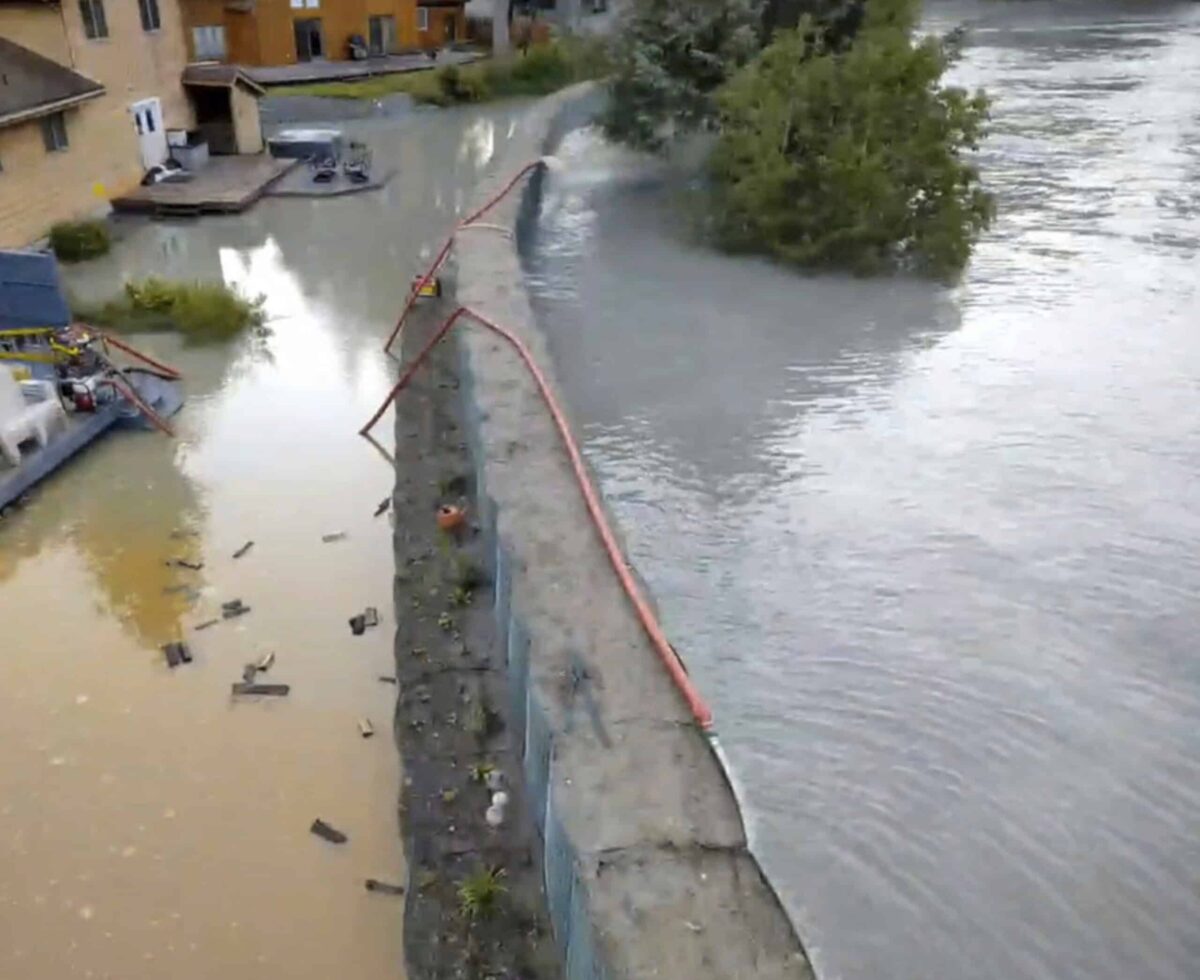
Last years Glacial Outburst flood

Alaska Gov. Mike Dunleavy has issued a state disaster declaration in response to the imminent threat of flooding from a glacier lake outburst at Suicide Basin..

The declaration follows a joint disaster declaration and request for assistance from the City and Borough of Juneau and the Central Council of the Tlingit & Haida.

Hydrologists with the National Weather Service and the U.S. Geological Survey said the amount of water held in Suicide Basin has reached or exceeded levels seen in past flood-of-record events. A release could happen at any time, potentially flooding the Mendenhall River and surrounding neighborhoods in the Mendenhall Valley.

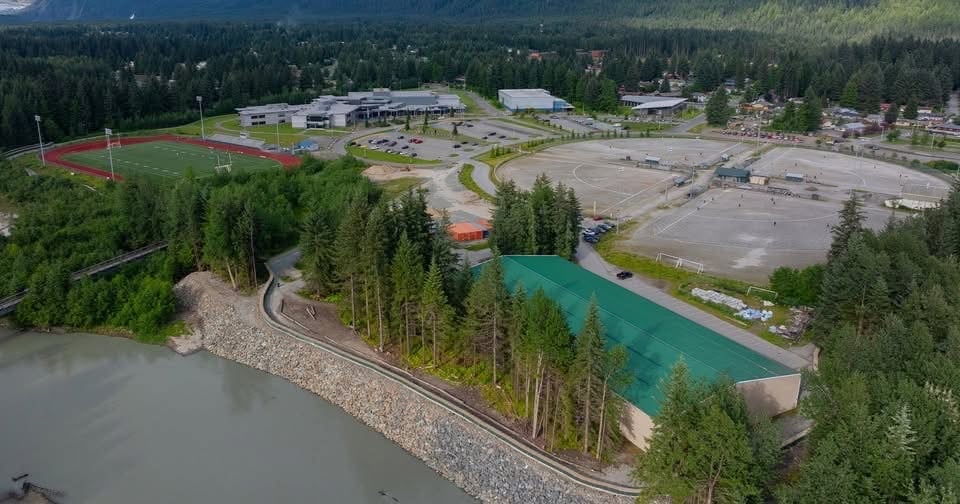
The area has faced severe flooding for two consecutive years, including a 2024 event that damaged homes, utilities and public infrastructure and led to state and federal disaster declarations. Flood control barriers have since been installed along more than two miles of the Mendenhall River.

“By issuing this declaration before the flood occurs, we can position state resources and personnel in advance to support local and tribal governments in their efforts to protect lives, homes, and essential services,” said Governor Dunleavy. “Our goal is to act early to reduce impacts and preserve community safety.”

The State Emergency Operations Center is supporting local and tribal efforts with interagency coordination, emergency permitting, public messaging and preparations for protective actions.

Categories
Featured Juneau News Juneau Local Ketchikan Local News Feeds Sitka Local

Suicide Basin may fill around August 12

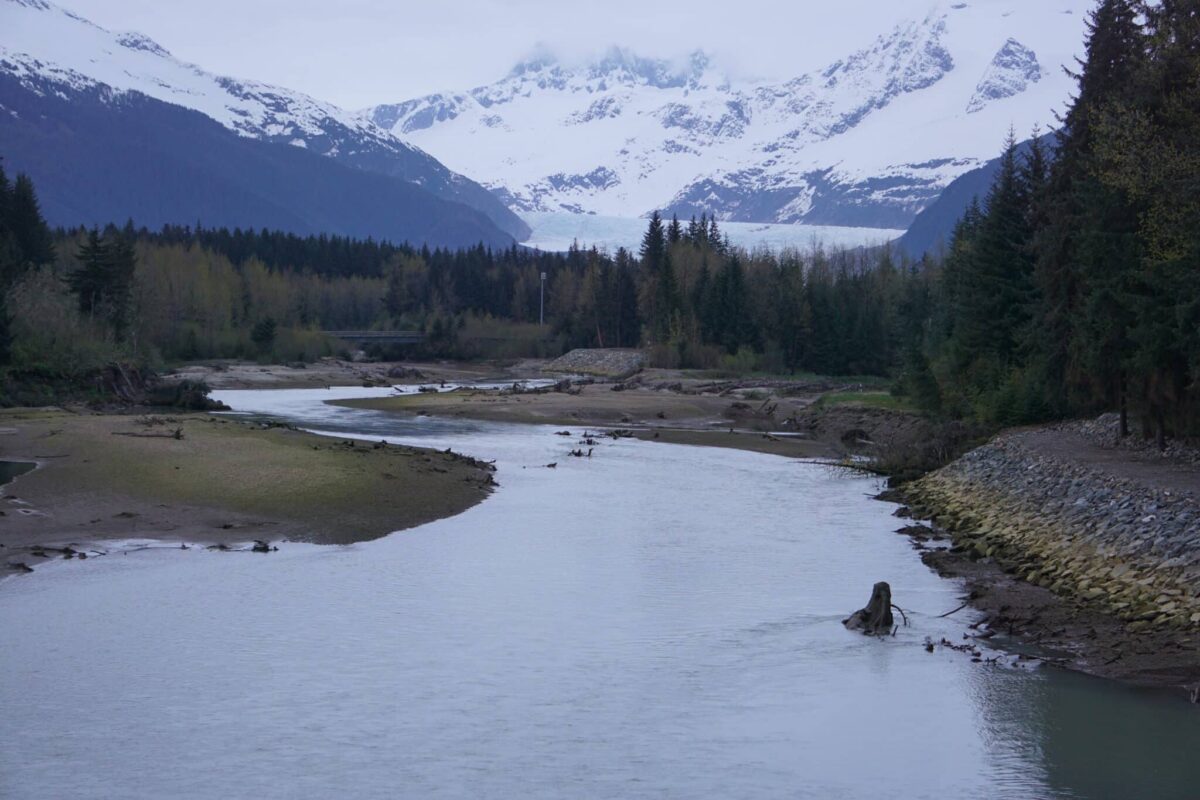
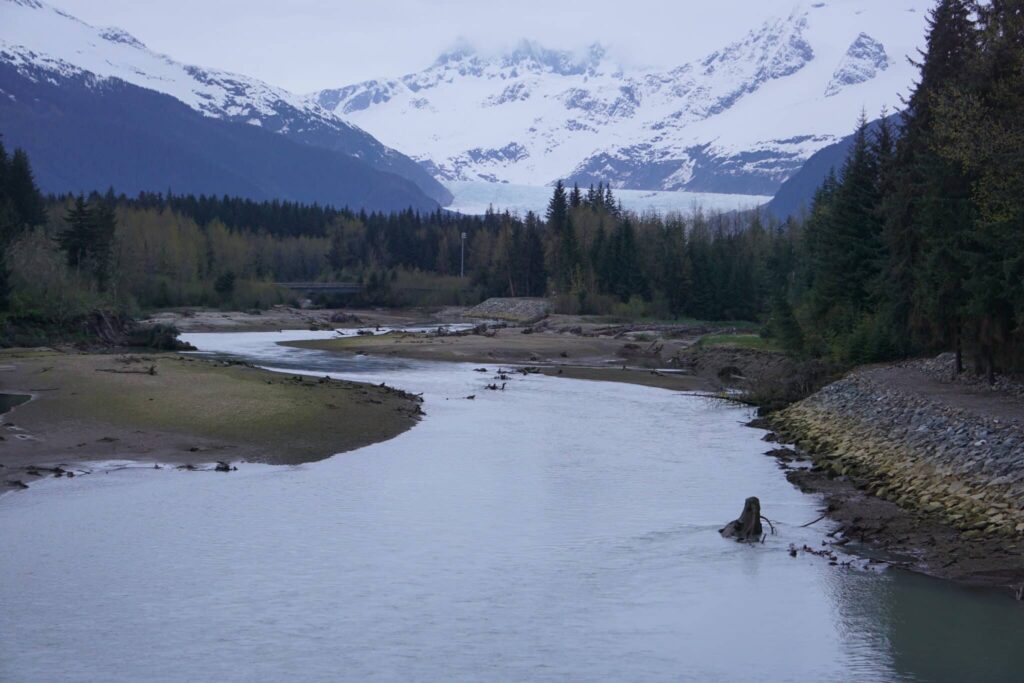
The Mendenhall River, which flows out of Mendenhall Glacier, is seen on May 14, 2025. (Photo by Yereth Rosen/Alaska Beacon)

Suicide Basin, the glacier-dammed side basin above the Mendenhall Glacier, may reach capacity around August 12 according to the National Weather Service.

The basin, which has released annual floods into Mendenhall Lake and River since 2011, has risen 20 feet in the past week and currently sits at 1,350 feet, according to a status update released Wednesday.

The most damaging flood occurred one year ago yesterday, August 6, 2024, causing record damage in Juneau.

Once the basin reaches its estimated capacity of 1,368 feet, it typically takes 4 to 6 days before an outburst begins, according to officials.

Officials are urging residents to stay informed and monitor updates from the National Weather Service and local emergency management.

The City and Borough of Juneau has plentiful resources, including emergency alerts, vehicle registration and Mendenhall inundation maps.

The most recent flood event from the basin occurred on October 20, 2024.

More information and updates will be shared as conditions change.

Categories
Featured Juneau News Juneau Local Ketchikan Local News Feeds Sitka Local

Alaskans work to analyze and reduce risks of glacial outburst flooding

By: Yereth Rosen, Alaska Beacon

The Mendenhall River, which flows out of Mendenhall Glacier, is seen on May 14, 2025. (Photo by Yereth Rosen/Alaska Beacon)

When water from melting glacier inundated her Juneau neighborhood last August, Danielle Lindoff made a hasty escape through a front window in her living room, her two unhappy cats in tow. She climbed onto a boat mobilized by her husband, and as he steered, she held a flashlight to scout in the dark for submerged mailboxes that they might bump on their way to safety.

Danille Lindoff, a resident of Juneau's Mendenhall Valley, points on March 13, 2025, to her front door to show the level that water reached during the record 2024 outburst flood from Mendenhall Glacier. (Photo by Yereth Rosen/Alaska Beacon)
 Danille Lindoff, a resident of Juneau’s Mendenhall Valley, points on March 13, 2025, to her front door to show the level that water reached during the record 2024 outburst flood from Mendenhall Glacier. (Photo by Yereth Rosen/Alaska Beacon)
Danielle Lindoff, standing in front of her Mendenhall Valley house on March 13, 2025, shows how high water rose during the record glacial outburst flood of August 2024. On that night, as her husband steered the boat they used to escape, Lindoff held out a flashlight to look for submerged mailboxes so they could avoid bumping into them. (Photo by Yereth Rosen/Alaska Beacon)
 Danielle Lindoff, standing in front of her Mendenhall Valley house on March 13, 2025, shows how high water rose during the record glacial outburst flood of August 2024. On that night, as her husband steered the boat they used to escape, Lindoff held out a flashlight to look for submerged mailboxes so they could avoid bumping into them. (Photo by Yereth Rosen/Alaska Beacon)

Though the Mendenhall River flowing by their backyard had been swollen with floodwaters in past years – and though the Lindoffs had taken precautions last summer like sealing doorways and stacking sandbags – the Aug. 5-6, 2024, event was the biggest Mendenhall Glacier outburst flood ever measured. The water that rushed out of a breached glacial ice dam brought the river to a record crest of 15.99 feet, inundating about 290 homes and stunning much of the community.

A drone image shows widespread flooding in the Mendenhall Valley in Juneau on Aug. 6, 2024. The flood was from an outburst at Suicide Basin, part of the Mendenhall Glacier complex. A similar glacial outburst flood struck the same area in 2023. (Image courtesy of Rich Ross)
 A drone image shows widespread flooding in the Mendenhall Valley in Juneau on Aug. 6, 2024. The flood was from an outburst at Suicide Basin, part of the Mendenhall Glacier complex. A similar glacial outburst flood struck the same area in 2023. (Image courtesy of Rich Ross)
The streamflow at Mendenhall Lake during two glacial outburst floods is shown. The previous record-high outburst flood, in 2023, is shown in blue. The new record flood, in2024, is slown in orange. (Graph provided by the National Oceanic and Atmospheric Administration, based on data from the U.S. Geological Survey)
 The streamflow at Mendenhall Lake during two glacial outburst floods is shown. The previous record-high outburst flood, in 2023, is shown in blue. The new record flood, in2024, is shown in orange. (Graph provided by the National Oceanic and Atmospheric Administration, based on data from the U.S. Geological Survey)

“No one expected it to be this big,” Lindoff said months later in an interview at her freshly repaired and refurbished house.

The community is no longer likely to be caught by surprise.

“It’s probably likely that the floods could get larger in the future,” said Eran Hood, an environmental science professor and glacier specialist at the University of Alaska Southeast.

Hood is part of a broad effort mounted by scientists, government agencies, the local Tribal government, nonprofit community groups and individuals to limit the damage that may result from future floods.

Residents of the Mendenhall Valley shovel and load sand at a sandbag distribution event held on July 26, 2025, by the City and Borough of Juneau and the Central Council of Tlingit and Haida Indian Tribes of Alaska. By 1 p.m. that day, more than 100 cars had checked in at the Dimond Park Field House, according to city officials. Each household was allowed to fill 75 sandbags. The event, one of several held by municipal and Tribe officials, was in anticipation of another glacial outburst flood. (Photo by Corrine Smith/Alaska Beacon)
 Residents of the Mendenhall Valley shovel and load sand at a sandbag distribution event held on July 26, 2025, by the City and Borough of Juneau and the Central Council of Tlingit and Haida Indian Tribes of Alaska. By 1 p.m. that day, more than 100 cars had checked in at the Dimond Park Field House, according to city officials. Each household was allowed to fill 75 sandbags. The event, one of several held by municipal and Tribe officials, was in anticipation of another glacial outburst flood. (Photo by Corrine Smith/Alaska Beacon)

A first step is ensuring that the public knows the risks. To that end, Hood and others at UAS and partner organizations have created an online resource, the Juneau Glacial Flood Dashboardlaunched in May.

Though the floods glaciers produce can happen quickly, there can be early warnings of water releases. The Juneau Glacial Flood Dashboard gives real-time information on water levels pooled above the ice dam that forms each year at one of the glacier’s basins. It has weather data, aerial images and other up-to-the-minute information. One of the most important features is a detailed flood-inundation map; users can type in their addresses and get predictions for flood impacts, depending on river-level scenarios and other conditions.

The dashboard idea came up as an answer to a basic question, Hood said: “What are the best ways to communicate hazards?”

Lawmakers consider an only-in-Alaska flood insurance programWork by Hood and his colleagues is supported by a National Science Foundation grant. The foundation funded a project to do detailed studies of Mendenhall Glacier and the flood risks it poses, hone systems for predictions and warnings and apply those tools to other flood-prone glaciers in Alaska and possibly beyond.

Outburst flooding is a natural phenomenon in glaciated areas, sometimes referred to by an Icelandic name: jökulhlaup. They occur from the Andes to the Arctic. Their suddenness can make them dangerous to people in certain parts of the world, like the Himalayas; overall, about 15 million people in the world are at risk of such floods, according to a 2023 study published in the journal Nature.

The risks are increasing with climate change and glacial melt, studies have shown. Globally, glacial lake volume increased by 48% between 1990 and 2018, according to a 2020 study by Canadian, U.S. and British scientists who used satellite imagery to make the calculations.

Alaska outburst floods

Glacial outburst floods are also natural in Alaska, though the trends are a bit different.

There were 1,150 of these outbursts released from 106 ice-dammed lakes between 1985 and 2020, according to a study published in 2023 by scientists from Colorado State University, the University of Alaska Fairbanks and other institutions. The frequency of such events was unchanged over that period, they found. But there was a big change in timing, with most of the sites flooding earlier in the year, likely the result of warming temperatures and faster melt, the study found. Rapid changes in glaciers’ structures also means that new water-filled dams — and new flood risks — are emerging at individual sites, the study said.

A chunk of ice that calved from Mendenhall Glacier floats in Mendenhall Lake on May 14, 202., (Photo by Yereth Rosen/Alaska Beacon)
 A chunk of ice that calved from Mendenhall Glacier floats in Mendenhall Lake on May 14, 2025. Melt is causing ice chunks to drop from the glacier, including into Suicide Basin. (Photo by Yereth Rosen/Alaska Beacon)

Alaska’s glaciers are melting faster than those elsewhere in the world. The melt has varied and sometimes contradictory impacts on outburst floods, the 2023 study explains. Less ice overall has meant a reduced supply of meltwater. But accelerated melt can also increase the size of glaciers’ basins and weaken the ice dams that hold their meltwater. Rapid melt can also cause huge chunks of ice to calve away from higher elevations into the basins, boosting volume quickly.

The terminus of Exit Glacier, seen here on July 5, 2022, has slipped well uphill from where it was in 2010 -- and farther away from the end of the hiking trail. (Photo by Yereth Rosen/Alaska Beacon}
 The terminus of Exit Glacier, seen here on July 5, 2022, has slipped well uphill from where it was in 2010 — and farther away from the end of the hiking trail. The glacier, in Kenai Fjords National Park, is one of the most visited in the state and an example of Alaska’s rapid glacial melt. (Photo by Yereth Rosen/Alaska Beacon}

Most of Alaska’s outburst floods have occurred in remote areas where there are no immediate threats to communities, like parts of sprawling Wrangell St-Elias National Park.

The Mendenhall Valley, however, is not remote.

The broad valley was carved into the landscape over millennia by its namesake glacier. It is a major suburb of Alaska’s capital city, home to about 12,000 of Juneau’s 31,200 residents. It holds neat neighborhoods where houses are more spacious than in the city’s upscale but tightly packed downtown district. It also holds abundant parks and trails, scenic views of mountains, meadows and coastline; and conveniences like shopping malls and commuter bus service. And, within the Tongass National Forest that surrounds the city, the valley is known for the big glacier that looms over it and draws hundreds of thousands of tourists each year.

Mendenhall Glacier has ebbed and flowed over thousands of years, but it has been in retreat ever since the Little Ice Age ended in the mid-1700s. As the climate has warmed — a trend amplified in far-north latitudes — the retreat has accelerated. That is the case not just for Mendenhall but for the other glaciers connected to the vast Juneau Ice Field that caps the mountains spanning Southeast Alaska and adjacent parts of Canada. The Juneau Ice Field lost a tenth of its glacier area from 2005 to 2019, according to NASA.

This melt created a relatively new gap within Mendenhall’s ice called Suicide Basin, reportedly named after the drop that ice above the basin would experience. Retreat of the smaller Suicide Glacier, which had been connected to Mendenhall, created the gap.

As glacial ice melts over each summer, the basin fills with water. As the water within the basin rises, it breaks through the ice dam and rushes down into Mendenhall Lake, Mendenhall River and, sometimes, over the riverbanks. The process is repeated year-to-year as ice dams are formed and then breached, though water amounts and speed of releases can vary.

Had modern technology and alertness existed in the past, the risk to the Mendenhall Valley could have been identified many years ago, Hood said.

Ice, bedrock and surface debris at the Gilkey Glacier interact in 2017. The glacier is part of the Juneau Icefield. (Photo provided by the U.S. Geological Survey)
 Ice, bedrock and surface debris at the Gilkey Glacier interact in 2017. The glacier, like Mendenhall Glacier, is part of the Juneau Icefield. From 2005 to 2019, the icefield lost 10% of its glacier area, according to NASA. (Photo provided by the U.S. Geological Survey)

“Twenty years ago, someone could have looked at Mendenhall and looked at the side basins and said there could definitely be a problem in the future. Nobody did that,” he said.

The first Suicide Basin outburst flood was in 2011. “That pretty much caught people by surprise, although in hindsight, it shouldn’t have,” said Jason Amundson, a UAS geophysics professor and the principal investigator for the National Science Foundation-funded project.

Since then, floods have occurred almost annually, though at varying levels and intensities. Recent floods were big. A record 2023 flood, with a maximum crest of the Mendenhall River measured at 14.97 feet, was followed by the even-bigger 2024 flood.

Though it caused more damage, last year’s flood came and went quickly. “The whole thing lasted maybe 12 hours,” Amundson said..

Jason Amundson, a professor of geophysics at the University of Alaska Southeast, stands outside his office on March 11, 2025. He is leading a research project to better understand outburst floods at Mendenhall Glacier and elsehere. (Photo by Yereth Rosen/Alaska Beacon)
 Jason Amundson, a professor of geophysics at the University of Alaska Southeast, stands outside his office on March 11, 2025. He is leading a research project to better understand outburst floods at Mendenhall Glacier and elsehere. (Photo by Yereth Rosen/Alaska Beacon)
Jason Amundson, a professor of geophysics at the University of Alaska Southeast, pulls up the Juneau Glacial Flood Dashboard at his office on March 11, 2025. The dashboard, still in development at the time, shows how far floods waters would reach into neighborhoods, depending on different scenarios. The dashboard went online in May. (Photo by Yereth Rosen/Alaska Beacon)
 Jason Amundson, a professor of geophysics at the University of Alaska Southeast, pulls up the Juneau Glacial Flood Dashboard at his office on March 11, 2025. The dashboard, still in development at the time, shows how far floods waters would reach into neighborhoods, depending on different scenarios. The dashboard went online in May. (Photo by Yereth Rosen/Alaska Beacon)

There is not yet enough data to identify a clear pattern, making predictions difficult for now, Hood and Amundson said. But there is a good chance that Suicide Basin will continue emptying out huge amounts of water.

“If we keep having full drainage like we did last year, then I would expect that we would keep having big floods,” Amundson said.

Local officials, meanwhile, are looking beyond Suicide Basin as they consider future risks, said Robert Barr, Juneau’s assistant city manager.

“There very well could be other basins behind Suicide that will form as Mendenhall Glacier retreats,” he said.

Holding waters back

The municipal government, a partner in the flood dashboard, has embarked on another short-term response to the flood risk.

A military-grade barrier, seen May 14, 2025, lines the Mendenhall River in the neighborhood inundated by the record 2024 outburst flood from Mendenhall Glacier. The barrier, from a company called HESCO, was recommended by the U.S. Army Corps of Engineers as a temporary protection for the Juneau suburb. (Photo by Yereth Rosen/Alaska Beacon)
 A military-grade barrier, seen May 14, 2025, lines the Mendenhall River in the neighborhood inundated by the record 2024 outburst flood from Mendenhall Glacier. The barrier, from a company called HESCO, was recommended by the U.S. Army Corps of Engineers as a temporary protection for the Juneau suburb. (Photo by Yereth Rosen/Alaska Beacon)
A military-grade barrier, seen May 14, 2025, lines the Mendenhall River in the neighborhood inundated by the record 2024 outburst flood from Mendenhall Glacier. The barrier, from a company called HESCO, was recommended by the U.S. Army Corps of Engineers as a temporary protection for the Juneau suburb. (Photo by Yereth Rosen/Alaska Beacon)
 A military-grade barrier, seen May 14, 2025, lines the Mendenhall River in the neighborhood inundated by the record 2024 outburst flood from Mendenhall Glacier. The barrier, from a company called HESCO, was recommended by the U.S. Army Corps of Engineers as a temporary protection for the Juneau suburb. (Photo by Yereth Rosen/Alaska Beacon)

It spent nearly $8 million on a flood barrier erected this year along the Mendenhall River. The barrier, a stout sandbag structure originally designed for military use, was recommended by the U.S. Army Corps of Engineers as a short-term fix. To recoup part of the cost, the local government is assessing a fee on the 466 property owners in the river area. The fee, about $6,300 per household, is to be paid over 10 years.

The Lindoff home is among those behind the new barrier, which bears the brand name HESCO. Danielle Lindoff, who has watched river waters rise and churn over the years, eroding the far bank and felling huge trees, said she is grateful for the protection. But her feelings are mixed.

“We bought this house because of the view,” she said. “Now we won’t even be able to see it.”

Barr, at the City and Borough of Juneau, concedes the barriers are not particularly pretty. But he said most homeowners accept their presence.

“I wouldn’t say the question was, ‘Do you find the HESCO barriers attractive or not?’” he said. “But they are our best effort, in consultation with the Army Corps and all the other experts that we’re talking with, to keep water in the river.”

Robert Barr, deputy city manager for City and Borough of Juneau, pulls up a screen on May 13,2025, to show plans for HESCO flood barrier in along the Mendenhall River to protect against glacial outburst flood.(Photo by Yereth Rosen/Alaska Beacon)
 Robert Barr, deputy city manager for City and Borough of Juneau, pulls up a screen on May 13,2025, to show plans for HESCO flood barrier in along the Mendenhall River to protect against glacial outburst flood. (Photo by Yereth Rosen/Alaska Beacon)

The barriers are temporary, Barr said.

For the longer term, the Army Corps of Engineers might design a bigger flood-control system, he said. That could be something as substantial as the diversion project installed in Fairbanks after a devastating 1967 flood. The Fairbanks system is large, subject to ongoing maintenance, and has cost $220 million to date. The Corps has already embarked on a technical study for the Mendenhall Valley, a project supported by $4.75 million in federal funds.

A sign at the Fairbanks North Star Borough office, seen on Feb. 5, 2025, shows how high water rose during that city's devastaing 1967 flood. (Photo by Yereth Rosen/Alaska Beacon)
 A sign at the Fairbanks North Star Borough office, seen on Feb. 5, 2025, shows how high water rose during that city’s devastating 1967 flood. In the aftermath, the U.S. Army Corps of Engineers created a major project to protect the city from future Chena River floods. It is possible that the Corps will create something similar for Juneau’s Mendenhall Valley. (Photo by Yereth Rosen/Alaska Beacon)

Whatever is done will depend on scientific research.

The University of Alaska Southeast-led team, which also includes scientists from the University of Alaska Fairbanks and Carnegie Mellon University, is using field and remote-sensing data to better understand how the glacier has changed in the past and to create models for how it will change in the future. Technologies used include LiDAR, which measures elevations and features through light beams; radar, which employs soundwaves to measure the thickness of glacial ice over bedrock; and drones, which capture aerial images that can be compared over time.Weather and tide data is important, too. The record 2024 outburst flood came on a night after a gloriously sunny and warm summer day. Things could be much worse if an outburst flood happens during a rainstorm or when tides in the adjacent Gastineau Channel are exceptionally high, experts say.

Beyond Juneau

The Mendenhall work being led by Amundson is about more than Juneau’s famous glacier. The risk-analysis systems the team develops for Mendenhall are intended to be applied to other glaciers in Alaska.

Beyond Mendenhall, Hood said, the second-highest priority for risk analysis is probably Snow Glacier on the Kenai Peninsula south of Anchorage and just north of the coastal town of Seward.

The glacier-fed Snow River, seen on June 21, 2025, flows under a highway bridge north of Seward. (Photo by Yereth Rosen/Alaska Beacon)
 The glacier-fed Snow River, seen on June 21, 2025, flows under a highway bridge north of Seward. The Alaska Department of Transportation and Public Facilities and the Alaska Railroad are making changes to protect the Seward Highway and the rail line against future Snow Glacier outburst floods. (Photo by Yereth Rosen/Alaska Beacon)

Though the Snow Glacier’s periodic floods have not reached communities beyond a popular campground and a smattering of nearby houses, they do threaten infrastructure. The Seward Highway, a major state thoroughfare, and the Alaska Railroad run right along that flood zone. The railroad is planning to raise the elevation of a bridge at the trouble site, and the Alaska Department of Transportation plans a related elevation rise to the highway. The estimated cost of the road project alone is $20 million.

A resident carrying groceries and wearing rubber rain boots wades through floodwaters covering the road to the Primrose Campground north of Seward on Aug. 24, 2019. A glacial outburst flood on the Snow Glacier innundated Kenai Lake and the Primrose campground in the Chugach National Forest. The annual Lost Lake Race, which starts at the Primrose campground, was to have been held that day but was canceled because of wildfire smoke and glacial flooding. (Photo by Yereth Rosen/Alaska Beacon)
 A resident carrying groceries and wearing rubber rain boots wades through floodwaters covering the road to the Primrose Campground north of Seward on Aug. 24, 2019. A glacial outburst flood on the Snow Glacier innundated Kenai Lake and the Primrose campground in the Chugach National Forest. The annual Lost Lake Race, which starts at the Primrose campground, was to have been held that day but was canceled because of wildfire smoke and glacial flooding. (Photo by Yereth Rosen/Alaska Beacon)

Hood and Amundson pointed out another spot where glacial outburst floods are threats: the Prince William Sound port town of Valdez, home to 3,900 people and site of the terminal where oil that passes through the Trans Alaska Pipeline System is shipped out.

In the mountains outside of town, the Valdez Glacier has been damming and releasing meltwater every year or two. Some years, releases are relatively slow and small; some years’ releases cause problems. An outburst flood in 2018 inundated part of Valdez.

Weakened federal partners?

Continued work to understand glacial outburst floods and the risks they pose to Alaskans depends on partnerships with academic institutions and agencies at various levels of government.

But federal agencies that are important partners have been weakened by deep budget cuts and abrupt firings that could hollow out scientific programs.

One partner is the U.S. Geological Survey, a branch of the Department of the Interior that has been doing both long-term monitoring of Mendenhall Glacier’s changes and collecting day-to-day data and imagery from Suicide Basin. The Trump administration is proposing slashing total USGS spending by nearly 40%, including an approximately 30% cut to the agency’s natural disaster programs.

The National Oceanic and Atmospheric Administration, which houses the National Weather Service, is another key partner that has already been targeted for deep cuts and likely faces more. The administration’s budget for the coming fiscal years proposes eliminating all funding for NOAA research.

The U.S. Forest Service is another partner. It manages the Tongass National Forest, which covers most of Southeast Alaska, and Southcentral Alaska’s Chugach National Forest. Both are heavily glaciated.

Tourists view Mendenhall Glacier from the U.S. Forest Service visitor center on May 14, 2025. (Photo by Yereth Rosen/Alaska Beacon)
 Tourists view Mendenhall Glacier from the U.S. Forest Service visitor center on May 14, 2025. (Photo by Yereth Rosen/Alaska Beacon)
Tourists take in the view at the Mendenhall Glacier visitor center on May 14, 2025. (Photo by Yereth Rosen/Alaska Beacon)
 Tourists take in the view at the Mendenhall Glacier visitor center on May 14, 2025. (Photo by Yereth Rosen/Alaska Beacon)

Among the Forest Service duties in Juneau is delivery of warnings and, at times, evacuation notices to tourists and campers at the Mendenhall Glacier Visitor Center. Mass firings by the Trump administration left the visitor center nearly unmanned earlier in the year, with only two employees still on the payroll there in February. Several workers have been rehired since, but staffing levels remain uncertain.

Barr said Juneau officials worry about losses at the Federal Emergency Management Agency, an important partner even though its general definition of flood zones does not consider glacial outburst floods.

The agency in April canceled its Building Resilient Infrastructure and Communities grant program, and halted work on all pending grant applications, even though the program has won praise for helping communities reduce costs of disaster emergencies.

Several states are pushing back against the program’s termination; 20 filed a lawsuit in mid-July challenging the administration’s decision.

“We are potentially concerned about hazard-mitigation grants and those going away,” Barr said. And along with loss of financial aid is the concern about “losing expertise” as veteran emergency and risk-assessment experts are pushed out of the agency, he said.

Uncertainty also affects the National Science Foundation, which is funding the Mendenhall research project. The Trump administration is proposing a 55 percent cut for the coming fiscal year.

The grant money was already paid, and so far, the project has remained intact, Amundson said. “As far as I know, everything is going forward,” he said.

Suicide Basin is seen on July 31, 2025, with rising meltwater and ice chunks. The image, provided by the U.S. Geological Survey, was among the real-time information provided by a new online dashboard that alerts residents to pending risks from Mendenhall Glacier outburst floods. (Image from Juneau Glacial Flood Dashboard)
 Suicide Basin is seen on July 31, 2025, with rising meltwater and ice chunks. The image, provided by the U.S. Geological Survey, was among the real-time information provided by a new online dashboard that alerts residents to pending risks from Mendenhall Glacier outburst floods. (Image from Juneau Glacial Flood Dashboard)

This story has been supported by the Solutions Journalism Network, a nonprofit organization dedicated to rigorous and compelling reporting about responses to social problems, http://solutionsjournalism.org.

Categories
Featured Juneau News Juneau Local Ketchikan Local News Feeds Sitka Local

Lawmakers consider an only-in-Alaska flood insurance program

By: Yereth Rosen, Alaska Beacon

Sen. Bert Stedman, R-Sitka, stands in the Senate Finance Committee room on April 24, 2025. Stedman is sponsoring a bill that would create an Alaska flood insurance system that would be an alternate to the Federal Emergency Management Agency’s national insurance program. (Photo by Yereth Rosen/Alaska Beacon)

As the Trump administration shrinks and even considers eliminating the Federal Emergency Management Agency, the Alaska Legislature is considering a substitute for one of the agency’s key functions.

bill introduced by Sen. Bert Stedman, a Republican from the Southeast city of Sitka, would establish an Alaska flood authority and an Alaska flood insurance fund. As far as he knows, it would make Alaska the only state with its own flood insurance, Stedman said.

The veteran state lawmaker said his measure, Senate Bill 11, stems from his dissatisfaction with FEMA and its flood policies, feelings that predated the agency’s possible demise in the Trump era.

The federal agency is, for now, the only source of flood insurance in Alaska, as private carriers that offer policies elsewhere in the country do not operate in the state’s small market, Stedman said.

But Alaskans overall pay much more into the FEMA insurance pool that they receive, he said.

“There’s a cost factor involved here, with Alaska residents subsidizing the Mississippi Delta and the Gulf Coast and East Coast and all that compared to our losses,” Stedman said.

FEMA’s rules about insurance and assistance, which are aimed at flood-prone flat Lower 48 areas, are another source of irritation for Stedman. In Lower 48 areas, FEMA encourages communities to avoid building along coastlines, but in Southeast Alaska, where steep mountains rise from the water’s edge, there are few options for moving inland, he said. An only-in-Alaska flood program could consider local conditions and local governments’ zoning rules rather than FEMA national guidelines, he said.

The Trump administration’s antipathy toward FEMA and its mission has given his bill more urgency, he said.

“It’s reasonably likely that there’ll be significant changes to FEMA coming out of Washington, from restructuring to possibly elimination, so the timing of this bill might be, by happenstance, timely,” he said.

The bill moved through committees this year and is due for more work next year’s session, including an examination of funding options. If a system is established, Stedman said, it could potentially be expanded to another type of disaster that is occurring with increasing frequency in warming Alaska: landslides. There is no specific landslide insurance available in Alaska, Stedman noted.

That may be of interest to Jason Amundson and Eran Hood, University of Alaska Southeast scientists who are focused on glacial outburst flood risks. Though immersed in their project at Mendenhall Glacier, they do not live in the path of the meltwater. Rather, both live in the city’s downtown area, which clings to the lower slopes of steep mountains. There, avalanches and landslides pose the most serious risks.

“There’s hazards everywhere in Juneau,” Hood said.

This story has been supported by the Solutions Journalism Network, a nonprofit organization dedicated to rigorous and compelling reporting about responses to social problems, http://solutionsjournalism.org.

Categories
Featured Juneau News Juneau Local Ketchikan Local News Feeds Sitka Local

Local leaders, Army Corps coordinate on long-term flood solutions

Photo provided by CBJ following the installation of the HESCO barrier project

NOTN- Deputy Mayor Greg Smith joined KINY’s morning show on Thursday to recap Wednesday’s joint flood initiative meeting, discussing long-term solutions for flooding caused by the Mendenhall Glacier’s Suicide Basin.

In the short term, HESCO barriers remain the primary line of defense for vulnerable neighborhoods.

“We’re approaching historical release times” said Smith, “I mean, of course, everyone is crossing their fingers and just hoping for the best possible outcome.”

The Army Corps emphasized that a more permanent solution—such as a levee around Mendenhall Lake, is likely necessary. But planning and engineering such infrastructure takes time.

“they’re doing studies, but they need to know, you know, what is the risk from Suicide basin, in 5 years, what’s the risk in 50 years? There are more basins back up behind the glacier, and they need to know what those situations could be.” He said, “There’s a lot of factors that go into it. So for them to engineer a viable, long-term solution that will not fail, it does take time. We’ve heard them say it’s probably the top issue for the Army Corps in the state of Alaska.”

A federally funded technical study is underway, and officials hope that data from current modeling and previous floods will help shorten the usual multi-year timeline.

Still, even an expedited timeline might take seven years or more, but Smith says he’s optimistic about that timeline.

“The fact that we just got federal money to do this technical study is tremendous.” Said Smith.

With the Alaska Legislature back in town for the special session, Smith urged residents to take the opportunity to raise the issue with state lawmakers.

“I think some of the takeaways for people, is letting our congressional staff or congressional delegation know the importance.”

Categories
Featured Juneau News Juneau Local Ketchikan Local News Feeds Sitka Local

Juneau officials will host public meeting on Mendenhall flood study and preparedness tonight

Image from last years glacial lake outburst flood

Representatives from the U.S. Army Corps of Engineers Alaska District and the City and Borough of Juneau (CBJ) will host a public information session today on a technical study aimed at reducing flood risk in the Mendenhall Valley.

The event is scheduled from 6 to 8 p.m. Alaska Standard Time at Thunder Mountain Middle School. USACE officials will present the latest findings from an ongoing $4.75 million federally funded study of glacial lake outburst floods before holding a question-and-answer session.

The study is focused on assessing hydrology, hydraulics, geology and economic conditions to determine potential long-term solutions for mitigating flooding in the valley, one of Juneau’s most densely populated areas.

Representatives from CBJ, Tlingit & Haida, the National Weather Service, the American Red Cross and the University of Alaska Southeast will also provide information and flood preparedness resources.

As Juneau enters its glacial lake outburst flood season, CBJ officials urged residents to sign up for the city’s emergency alert system at bit.ly/CBJAlerts

Officials outlined the city’s “Ready, Set, Go” alert process:

  • READY: (We are here.) The best way to stay informed with the latest flood preparedness tips, news and updates is by signing up for CBJ Emergency Alerts
  • SET: Once the US National Weather Service Juneau Alaska determines the Basin is full, CBJ and our partners will issue evacuation advisories via SMS text (push notification, no opt-in required). Alerts with evacuation instructions will also go out via email, social media, website and printed door hangars in the forecasted flood area. A flood information hotline will be available
  • GO: once the Basin begins to release, a FLOOD WARNING will be issued by the National Weather Service. CBJ, Tlingit & Haida, Alaska Division of Homeland Security and Emergency Management Alaska Department of Transportation & Public Facilities and partner agencies will push out evacuation advisories through all available channels
  • ALL CLEAR: Once floodwaters recede and the area is deemed safe, CBJ will issue an “All Clear” message.

Categories
Featured Juneau News Juneau Local Ketchikan Local News Feeds Sitka Local

New Joint Flood Initiative Prepares Juneau for 2025 Glacial Lake Outburst

In preparation for a possible glacial lake outburst flood (GLOF) this summer, local, tribal, and state agencies have formed a joint communications initiative aimed at improving public safety and emergency response in Juneau.

The City and Borough of Juneau (CBJ), Central Council of the Tlingit & Haida Indian Tribes of Alaska (Tlingit & Haida), and the Alaska Department of Transportation & Public Facilities (DOT&PF) are coordinating with several federal and state partners to streamline flood messaging and improve community readiness.

The collaborative effort stems from increased awareness of the growing risks posed by the Mendenhall Glacier’s Suicide Basin and recent flood events that have affected homes, infrastructure, and traditional lands. With the basin approaching capacity, agencies are taking proactive steps to minimize confusion, provide timely updates, and improve response coordination in the event of a flood.

The new effort, called the Joint Information Center (JIC), was established under the Incident Command System and includes coordination from the National Weather Service, U.S. Coast Guard, Alaska Division of Homeland Security & Emergency Management, and the Alaska Department of Environmental Conservation.

“This partnership will allow us to pool our resources to make sure our residents receive accurate, timely information—especially during high-stress situations like a flood,” said CBJ City Manager Katie Koester.

The JIC will provide consistent emergency alerts, preparedness tips, and flood status updates through email, social media, media briefings, and partner websites. The group will release email updates twice a week and near-daily social media posts to help keep the public informed.

“Community emergencies such as flood events do not recognize jurisdictional boundaries,” said Tlingit & Haida President Chalyee Éesh Richard J. Peterson. “That’s why collaboration between tribal, municipal, state, and federal partners is critical as we prepare our community, pool our resources, knowledge and coordinate response. Together, we are building a framework that prioritizes public safety and ensures that no one is left behind when it matters most.”

Key Ways Residents Can Stay Informed:

  1. Sign up for emergency alerts at bit.ly/CBJAlerts
  2. Check in with the Juneau Flood Ready website at bit.ly/JuneauFloodReady
  3. View road closure leading up to and during an event at 511.Alaska.gov
  4. Stay tuned to the National Weather Service Suicide Basin monitoring page (link)
    5 Review the interactive flood inundation maps available at JuneauFlood.com.
  5. Follow partner agencies on social media.
Categories
Featured Juneau News Juneau Local Ketchikan Local News Feeds Sitka Local

Public invited to information session on Mendenhall Valley glacial outburst study

Photo provided by CBJ following the installation of the HESCO barrier project

Representatives from the U.S. Army Corps of Engineers (USACE) Alaska District and the City and Borough of Juneau (CBJ) will host a public information session on Wednesday, July 30, to share updates on a technical study focused on long-term flood mitigation in the Mendenhall Valley.

The session will take place from 6 to 8 p.m. at Thunder Mountain Middle School in Juneau. The event is open to the public and intended for anyone interested in learning more about ongoing efforts to address the risk of glacial lake outburst flooding from the Mendenhall Glacier.

The evening will include a brief presentation by USACE’s Civil Works Branch, which is leading the technical study, followed by a public question-and-answer session. The Corps’ Emergency Management Program will not be in attendance.

Representatives from CBJ, Tlingit & Haida, the National Weather Service, the American Red Cross, and the University of Alaska Southeast will also be on hand to provide technical information and resources related to flood preparedness.

The $4.75 million study is fully funded by the federal government and aims to evaluate long-term options for reducing flood risks in the Mendenhall Valley.

The Mendenhall Valley is one of the city’s most densely populated residential areas, current water levels as of July 21 are sitting at 1,290 feet. That’s 81 feet below the basin’s overflow point, which experts expect to reach by mid-August if the current pace continues.

Water levels tend to rise more quickly during warm weather and rain events, and the USGS warns that large iceberg movement may cause data spikes.

Categories
Featured Juneau News Juneau Local Ketchikan Local News Feeds Sitka Local

Sandbag Distribution Event to be held in preparation for potential flooding

Sandbag filling and distribution, photo generously provided by CBJ

The City and Borough of Juneau and Tlingit & Haida will hold sandbag distribution events on Saturday, July 19 and Saturday, July 26, from 11 a.m. to 3 p.m. at the Dimond Park Field House parking lot in preparation for another glacial outburst flood.

With the summer heat rising and water levels climbing in Suicide Basin, emergency officials, city officials and the National Weather Service are closely monitoring the threat of another glacial lake outburst flood (GLOF) in the Mendenhall River Valley. This threat follows a record flood event on August 6, 2024, which swept through neighborhoods, damaged property, and reshaped how Juneau prepares for these recurring flooding events.

Suicide Basin, located above the Mendenhall Glacier, has released floodwaters nearly every year since 2011. These events occur when meltwater trapped behind the glacier breaks through ice dams, sending torrents into Mendenhall Lake and River below.

As of Saturday, July 12, water levels in the basin are around 1,263 feet, about 108 feet below the spillway level. That’s slightly lower than this time last year, due to a colder spring and early summer.

At the current rate, or around 4 feet per day, the basin could reach full capacity by August 8.

Sand, bags, and shovels will be available for residents to fill on site. Households in the 18-foot flood risk zone may collect up to 75 sandbags total, including from earlier events.

For flood prep info, visit juneauflood.com or bit.ly/JuneauFloodReady, and sign up for alerts at bit.ly/CBJAlerts.