Categories
Featured Juneau News Juneau Local Ketchikan Local News Feeds Sitka Local

Winter Snow Removal Tips and Guidelines from CBJ Streets & Fleets

CBJ-With snow coming to Juneau, CBJ Streets & Fleet Maintenance would like to share information about winter snow removal in Juneau.  

CBJ Streets crews clear snow from the streets in order of the following priorities: 

  1. Clear access for emergency vehicles, public transit, commercial routes, and high-traffic streets. 
  2. Residential areas. 
  3. Low-traffic areas, including dead-end streets and cul-de-sacs. 

Snow berms: Operators make every effort to minimize snow accumulation on private property. However, berms and windrows are unavoidable. Crews do not clear snow—including berms—from driveways.  

Sidewalks and driveways: Property owners, landlords, and tenants are responsible for clearing snow and ice from sidewalks and driveways. Snow or ice may not be placed on any sidewalk, street, roadway, or parking area per CBJ 72.24.075

Garbage cans: Please place garbage cans at least five feet from the edge of the street to prevent them from being damaged during snow removal. 

Heavy snowfall brings challenges to both snow removal crews and property owners alike. CBJ Streets crews appreciate the work that you are doing to keep your home accessible, as well as your understanding of what our crews are able to accomplish. 

For more detailed information about snow removal on CBJ-owned streets, please visit juneau.org/engineering-public-works/streets/winter-maintenance-information.  

For information about snow removal priorities on DOT highways, please visit dot.alaska.gov/stwdmno/wintermap

Categories
Featured Juneau News Juneau Local Ketchikan Local News Feeds Sitka Local

Child support comes first when considering debts owed in foreclosure, Alaska Supreme Court rules

By: James Brooks, Alaska Beacon
 Students swing on a playground at Meadow Lakes Head Start in Wasilla, Alaska. It closed in 2024 due to funding and staffing challenges. (Image by Lela Seiler, courtesy of CCS Early Learning)

The Alaska Supreme Court has ruled that the state’s child support system has first priority when a foreclosed property is sold to pay multiple debts.

The court issued its opinion on Nov. 28, resolving a long-running lawsuit brought by Global Federal Credit Union (formerly Alaska USA) against the state and several other defendants.

“This is a pretty important case from my client’s perspective,” said Jonathan Clement, a senior assistant attorney general who represented Alaska’s child support system.

“This is the first time that a court has actually decided that child support gets priority over all other judgment lien holders, even liens recorded earlier, when there’s surplus funds at issue,” he said.

The case decided by the court involved property in Eagle River that was mortgaged by Wells Fargo. In 2017, Global levied a lien against the property for unpaid debt. Shortly afterward, the state’s child support division recorded another lien against the property for unpaid debt.

Typically, liens are repaid in chronological order: First filed, first paid.

In 2018, a law firm sold the property through foreclosure and paid off the remaining Wells Fargo mortgage. There was money left over, but not enough to pay both Global and the state.

The state protested the law firm’s plans to pay Global first, and the firm complied with a state order that required it to pay the state first. 

Global sued in state court, but a district court judge and a superior court judge each ruled against the credit union before it appealed to the supreme court.

Writing on behalf of the court, Justice Jude Pate concluded, “Our interpretation of (state law) provides an effective priority for CSSD liens over competing judgment liens.”

Alaska’s Child Support Services Division (CSSD) is now known as the Child Support Enforcement Division (CSCD).

That priority doesn’t put the state above a bank holding a mortgage or “deed of trust” but it does give the state priority over other liens on the property.

 “The important thing for this case is that it gives CSCD another tool where they can try to collect money that’s owed by the obligors,” Clement said.

“I would say of all the cases I’ve worked on, this is the one that will have the most impact in my career going forward,” he said.

An attorney representing Global declined comment on behalf of the credit union. 

In a footnote attached to the case, Pate wrote that the court’s ruling could cause people to behave differently during foreclosure auctions.

He suggested that if the Legislature disagrees with the court’s interpretation, it might want to pass a law clarifying two conflicting statutes interpreted by the court.

“If our interpretation is contrary to the legislature’s intent,” he wrote, “amendments to the relevant child support statutes could clarify the interaction between child support liens, other liens, and mortgages.”

Categories
Featured Juneau News Juneau Local Ketchikan Local News Feeds Sitka Local

Magnitude-7.0 earthquake hits along Alaska-Canada border

Hubbard Glacier, located near Yakutat, Alaska, is seen on Aug. 1, 2024. (AP Photo/Mark Thiessen)

AP- A powerful, magnitude-7.0 earthquake struck in a remote area near the border between Alaska and the Canadian territory of Yukon on Saturday. There was no tsunami warning, and officials said there were no immediate reports of damage or injury.

The U.S. Geological Survey said it struck about 230 miles (370 kilometers) northwest of Juneau, Alaska, and 155 miles (250 kilometers) west of Whitehorse, Yukon.

In Whitehorse, Royal Canadian Mounted Police Sgt. Calista MacLeod said the detachment received two 911 calls about the earthquake.

“It definitely was felt,” MacLeod said. “There are a lot of people on social media, people felt it.”

Alison Bird, a seismologist with Natural Resources Canada, said the part of Yukon most affected by the temblor is mountainous and has few people.

“Mostly people have reported things falling off shelves and walls,” Bird said. “It doesn’t seem like we’ve seen anything in terms of structural damage.”

The Canadian community nearest to the epicenter is Haines Junction, Bird said, about 80 miles (130 kilometers) away. The Yukon Bureau of Statistics lists its population count for 2022 as 1,018.

The quake was also about 56 miles (91 kilometers) from Yakutat, Alaska, which the USGS said has 662 residents.

It struck at a depth of about 6 miles (10 kilometers) and was followed by multiple smaller aftershocks.

Categories
Featured Juneau News Juneau Local Ketchikan Local News Feeds Sitka Local

Juneau City Museum prepares for Gallery Walk with new ‘Art Scraps’ exhibit, holiday workshops

By: Grace Dumas, News of the North

Art Scraps features by Bo Anderson and Kathleen Harper, photos courtesy of Juneau Douglas City Museum

The Juneau-Douglas City Museum is gearing up for Gallery Walk tonight, featuring the opening of a new exhibition, “Art Scraps.”

Museum Director Beth Weigel said the annual downtown celebration will include a trolley stop at the Capitol, making it easy for visitors to drop into the museum and explore the new show by Juneau artists Bo Anderson and Kathleen Harper.

“It’s just so fun and whimsical.” She said, “There’s lots of pieces for sale, and it’s just going to be a super fun exhibit and opportunity at the City Museum.”

Anderson and Harper, partners in life as well as in art, said the exhibit grew out of both artists’ shared love of repurposing found materials.

“I will have piles of random things sitting in my house and go, what if I did this, with this material, and turn it into something completely different and new.” Said Harper.

Anderson and Harper met at Perseverance Theater.

“We met 21 years ago, Kathleen was a props master and a stage manager, and I was a young carpenter,” Anderson said.

Bo Anderson is known for his works that gained a local following through the museum’s free little art gallery.

“He was very famous in our free little art gallery for a long time. He kind of took that on as one of his passions during covid.” said Weigel, “So people have come to know his little sketches.”

The museum will also serve as a drop-off site for the Southeast Alaska Food Bank during Gallery Walk. Visitors are encouraged to bring canned goods and other nonperishable items.

“We’ve got some milk crates there, and you can bring in cans of food.” Weigel said, “It’ll be easy just to carry that along in your purse on the trolley when you come up and drop that into the containers, and then we send that off to the Southeast Alaska Food Bank, because everybody’s wanting to make sure that we get everybody fed this holiday season.”

Along with Art Scraps, both artists will lead workshops in December. Anderson will host a drop-in “sketch with Bo” session on Dec. 6, and Harper will teach participants how to craft roses from coffee filters on Dec. 20.

Gallery Walk festivities at the museum run from 4:30 to 7 p.m. tonight.

Parking will also be easier in the downtown core this evening, paid parking downtown will not be enforced and enforcement will end at 3 p.m. for the evening.

On-street parking will not be limited to two hours, and free parking will be offered at the Shopper’s Lot, the North Franklin Lot, the Downtown Transportation Center Garage, the Marine Parking Garage, the Whittier Lot and the South Franklin Docks & Harbors lots.

Categories
Featured Juneau News Juneau Local Ketchikan Local News Feeds Sitka Local

Planned fiber-optic cable will add backup for Alaska’s phone and high-speed internet network

By: James Brooks, Alaska Beacon

A commercial bowpicker is seen headed out of the Cordova harbor for a salmon fishing opener in June 2024 (Photo by Corinne Smith)

One of Alaska’s smallest telecommunications companies is about to provide a critical backup for the entire state.

On Wednesday, Cordova Telecom Cooperative and GCI announced a partnership to lay an undersea fiber optic cable from Juneau to Cordova and a second cable from Cordova to Seward.

When open for service in fall 2027, the two cables will provide high-speed internet to small communities in Prince William Sound and northern Southeast Alaska. 

The development matters to the rest of the state as well, because when combined, they will provide a route for internet traffic between the Railbelt and Outside. Currently, four undersea cables through the Gulf of Alaska are the principal routes for internet and phone traffic between Alaska and the rest of the world. 

Matanuska Telecom Association opened the state’s first overland fiber connection in 2020 as an alternative, and the new route will give the state another redundant option, said Cordova Telecom CEO Jeremiah Beckett.

“With what we’ve built out, scalability wise, we could put all the current Alaska traffic on our network if needed,” Beckett said. 

This map, provided by Cordova Telecom Cooperative, shows the route of the proposed FISH in SEAK cable that will come online in fall 2027. Cordova's existing fiber route is shown in green. (Image courtesy Cordova Telecom Cooperative)
This map, provided by Cordova Telecom Cooperative, shows the route of the proposed FISH in SEAK cable that will come online in fall 2027. Cordova’s existing fiber route is shown in green. (Image courtesy Cordova Telecom Cooperative)

While satellite internet services like Starlink have transformed life in rural Alaska, ground-based fiber internet remains the backbone of worldwide telecommunications, delivering service faster and in volumes that satellites can’t provide. 

“It’s kind of like rural communities that don’t have the ferry,” Beckett said. “Places without fiber don’t have the same access that folks with fiber do. So this is really to help connect those rural areas and give them the same access to the digital economy and marketplace as the rest of the world.”

Despite their advantages, fiber-optic cables can be vulnerable.

“Up north, it’s ice scouring … and in our area, it’s typically ship anchors and earthquakes,” Beckett said. 

Alaskans have become intimately familiar with the consequences of broken cables in recent years.

Northern and northwest Alaska are particularly familiar: Quintillion’s fiber-optic cable has been severed three times in two years. The latest break wasn’t fixed for more than seven months because sea ice precluded repairs. That caused widespread problems in areas served by the cable.

In March, a break in a subsea cable left the Alaska Legislature to do business on paper for a day and knocked out both cellphone and internet service for much of Juneau. Juneau had alternatives; a temporary fix was in place within days.

When the cable leading to Sitka broke in 2024, it took weeks to repair. People canceled surgeries and businesses went cash-only until internet service was restored.

Adding a backup fiber route reduces the odds of blackouts like those. Currently, Cordova is served by a single undersea fiber line through Prince William Sound to Valdez.

When the project is complete, internet and phone traffic will have three possible routes: north, west, and east. 

The two cables will cost roughly $88 million combined, according to figures provided by Beckett, and the project is principally funded through two federal grants. Cordova Telecom is paying for part of the project, as is GCI, which will be what Beckett calls an “anchor tenant and partner.”

“It was a good matchup for both of our long-term goals,” he said.

In a prepared statement, GCI senior vice president Billy Wailand praised the plan, which is formally known as Fiber Internet Serving Homes in Southeast Alaska, or FISH in SEAK. 

“Critical state services require network diversity,” he said. “GCI turned up the first subsea cable to Alaska in 1999 and landed a second diverse fiber in 2008. We are thrilled to partner with CTC on its FISH in SEAK project, which includes a next-generation cable that ensures Alaska and its capital city continue to benefit from the newest technologies and adds another crucial layer of redundancy to the network.”

Communities along the cable route will see huge changes, Beckett said. Residents of Pelican on Chichagof Island in Southeast Alaska, who use boardwalks instead of roads and four-wheelers instead of cars, will be able to get fiber internet access directly to their homes.

The island village of Chenega in Prince William Sound, which has about 50 year-round residents, likewise will have new access to fiber internet. 

Alaska’s Lost Coast, between Glacier Bay and Yakutat, could be dotted with cellphone towers. 

Beckett, who grew up in Cordova, returned to the town with his spouse 12 years ago, “basically when Cordova got its subsea fiber,” he said. “We were both teleworkers, and that created the opportunity for us to move back to Alaska, essentially.”

Since then, he’s seen internet service improve and has become head of his local telecom, which has just 20 employees. 

Because it’s a cooperative, it’s run as a nonprofit, he said. That means the telecom’s goal is to deliver faster service and low rates, not necessarily generate a profit.

In Yakutat, “a few years ago, you couldn’t get cell service anywhere,” Beckett said. 

“We’ve upgraded the cell service there to 4G and outside of the fishermen complaining because their wives can get hold of them, it was a huge boost for the community,” he said.

“If someone gets hurt, they can call the paramedics and not have to drive 20 miles before they get to service. … It’s giving people reasons to think about moving home, because it’s one less inhibitor to be back in Alaska,” Beckett said. 

“Yakutat actually got a new clinic a couple years ago, and then with this, I think they’re going to see some good growth. Everyone likes core services, right?”

Categories
Featured Juneau News Juneau Local Ketchikan Local News Feeds Sitka Local

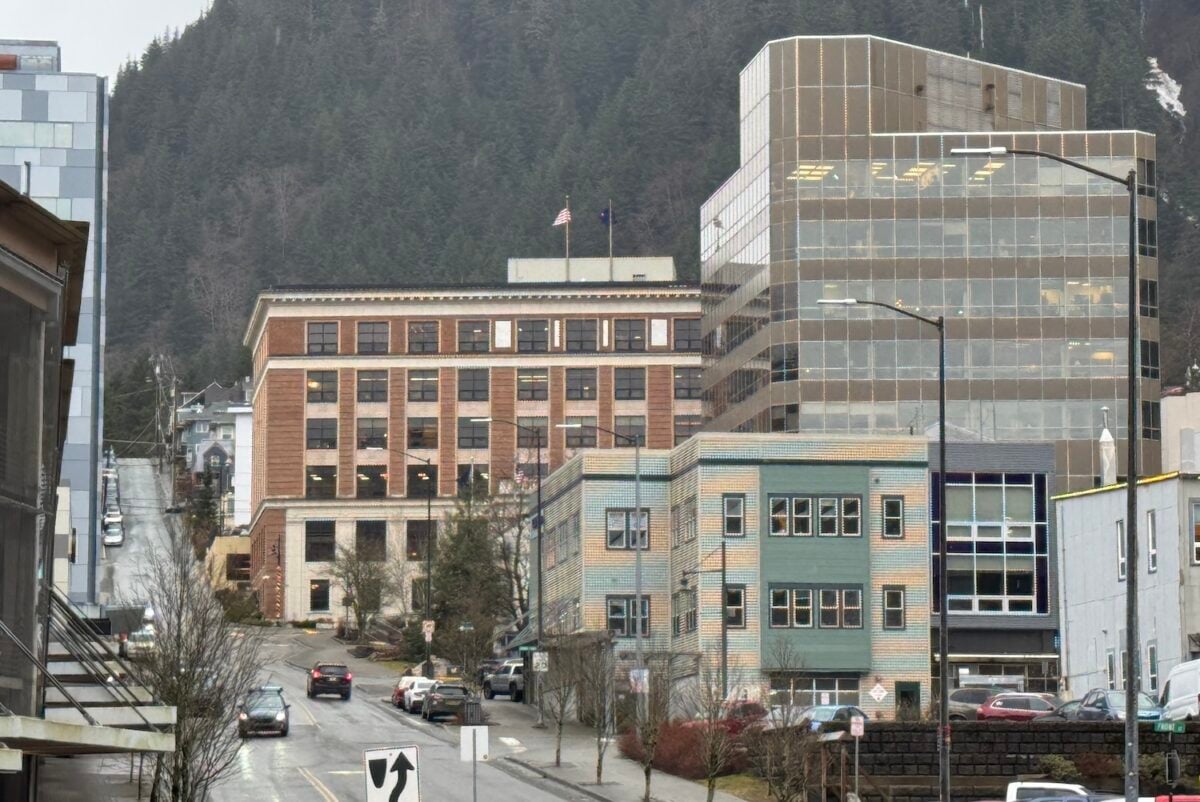
Juneau finalizing legislative priority list as open house takes place at the Capitol

The Alaska State Capitol in downtown Juneau. (Photo by Greg Knight/News of the North)
The Alaska State Capitol in downtown Juneau.
(Photo by Greg Knight/News of the North)

NOTN- Juneau Mayor Beth Weldon said the city is finalizing its annual list of legislative funding priorities, shaped by months of committee work, public input and recommendations from numerous city boards and commissions.

“The planning commission, Systemic Racism Review Committee, General Commission on Sustainability, Utilities Advisory Board, Docks and harbours, Eagle Crest, Parks and Rec Advisory Committee, Historic Resources Committee, General School District and the General Commission on Aging, lots of hands have touched this list.” Weldon said.

The list, which guides Juneau’s requests to state lawmakers and Alaska’s congressional delegation, will be introduced to the full Assembly on Dec. 15 and is scheduled for a public hearing in January.

“What this list is, is it’s our priorities that we’re looking at, so it’s not all of our capital priorities by any stretch of imagination, but this is the list that we send to the State Delegation and the Federal Delegation in the hopes that there’s some money, either state money, which we know there’s not much of, or federal, that we can get help with. So again, this is not our complete list.” Weldon said.

The top projects on Juneau’s 2025 legislative priority list are; Mendenhall Glacier outburst flood response, North Douglas crossing, Mendenhall Wastewater Treatment Plant upgrades, Peterson Hill housing development, Juneau School District security and safety upgrades, Gold Creek flood control rehabilitation, prompted by flume failures, Bartlett Regional Hospital emergency department renovation, Statter Harbor wave attenuator project and Telephone Hill redevelopment.

Weldon said Juneau hopes to secure funding for even a portion of its top five projects. “We’ll be shocked to get any money on the top five. But you got to have a list for people to look at to help support you.” She said, “So this is to help our state delegates, who are having an open house today.”

The mayor encouraged residents to take advantage of the opportunity to speak with lawmakers during their open house at the state Capitol today.

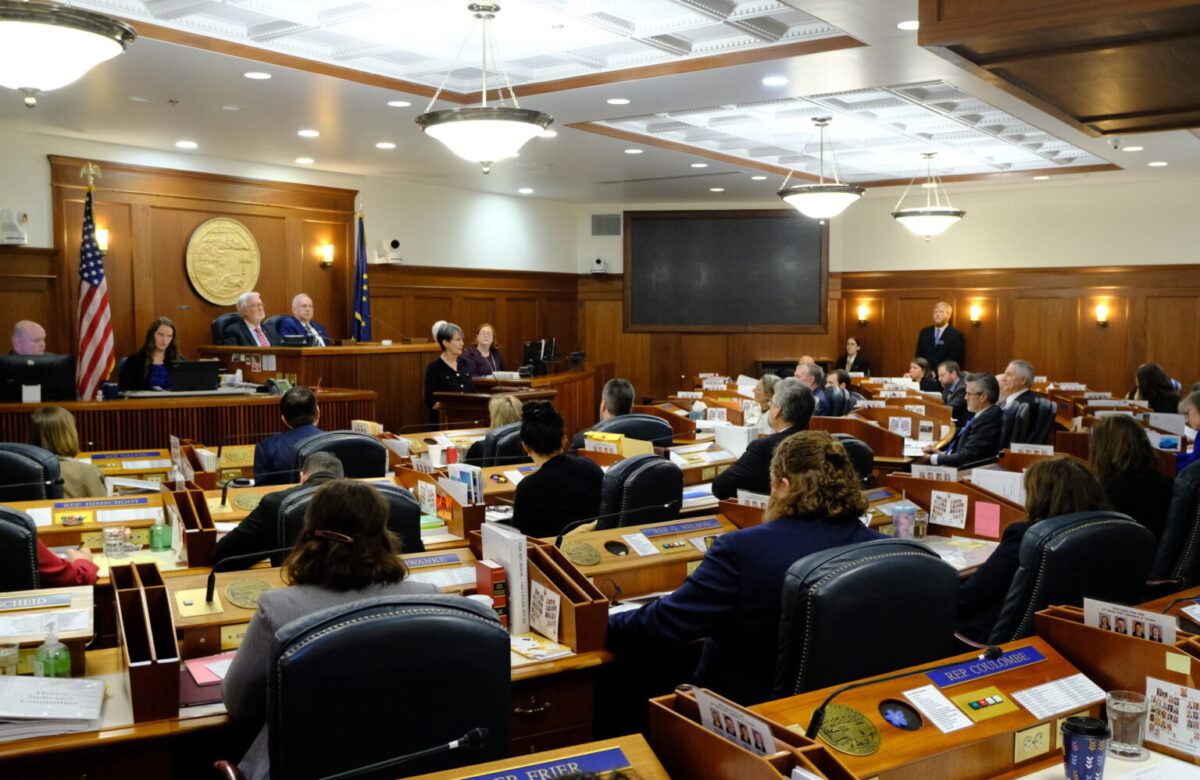
Juneau Senator Jessie Kiehl added, “We’re opening up our offices from 11:30 to 1:00 today. We’ll have some snacks, some beverages, and good cheer.” He said, “Come on by the Capitol, just say hi. We don’t have an agenda, we don’t have a presentation, but we want to talk to you.”

Categories
Featured Juneau News Juneau Local Ketchikan Local News Feeds Sitka Local

Alaska Court of Appeals upholds 1995 murder conviction despite key witness reversing testimony

By: James Brooks, Alaska Beacon

The scales of justice are seen in an undated photo. (Getty Images)

The Alaska Court of Appeals has rejected an appeal from a man who received one of the highest prison sentences ever given in Alaska to a juvenile convicted of murder.

In an order published Friday, the court concluded that the recantation of a key witness is not enough to warrant a retrial for Brian Hall, who was 17 at the time. In 1995, Hall was sentenced to 159 years in prison for the killing of two men in Anchorage, Mickey Dinsmore and Stanley Honeycutt. 

Despite the rejection, wrote Judge Marjorie Allard on behalf of the court, Hall is eligible for resentencing as part of a wave of juvenile punishments being reconsidered by state courts.

“At sentencing, the court sentenced Hall to 159 years to serve, one of the highest sentences — if not the highest sentence — that a juvenile tried as an adult in Alaska has ever received,” she wrote. “As a juvenile sentenced in 1995 to a de facto life without parole sentence, Hall has been granted the opportunity for a resentencing in which his youth and the unique attributes of youth will be appropriately considered.”

In 2012, the U.S. Supreme Court ruled that the Eighth Amendment prohibits courts from sentencing children to life in prison without the possibility of parole, except in homicide cases.

Two years ago, the state appeals court said the Alaska Constitution imposes further limits in addition to those provided by the U.S. Constitution.

Since then, Alaska courts have resentenced several former juveniles who were sentenced to long terms in prison. In September, Alaska’s youngest convicted female murderer was released from prison on parole after 40 years behind bars. 

Hall, who has been in prison for 30 years, could receive similar treatment.

At the time of his trial, Hall claimed he acted in self-defense and that he believed, based on a statement from then-15-year-old Monica Shelton, that Dinsmore and Honeycutt — the people he killed — were armed.

At trial, Shelton denied telling Hall that the two were armed. Hall was convicted and sentenced with that testimony.

While in prison, Hall married Angela Diaz (now Angela Hall), and Angela hired a defense investigator who got in contact with Shelton. In a recorded interview, Shelton said she was scared at trial and lied in her testimony.

In an interview with the Anchorage Daily News, Hall said he is full of remorse about his crime and isn’t the same person he was at 17.

Years of legal arguments followed the investigator’s interview as Hall first requested a new trial, then asked for post-conviction relief. 

Superior Court Judge Adolf Zeman dismissed that request, siding with state prosecutors who had raised procedural errors, including the idea that Hall’s filings were too late. 

He also concluded that Hall failed to show that Shelton’s recantation would “probably result in an acquittal,” the standard that applies to timely filings for post-conviction relief.

Allard, writing on behalf of the appeals court, overruled Zeman on the procedural elements of Hall’s argument but concluded that even with the recanted testimony, it wasn’t clear that a new trial would result in a new outcome.

“The problem that Hall still faces, notwithstanding Shelton’s recantation, is that the rest of the evidence from trial indicates that Hall’s mistaken belief that he had to use deadly force … was not objectively reasonable,” she wrote.

“Hall was required to show that, viewing all the well-pleaded facts in the light most favorable to Hall, it is “highly probable” that Shelton’s recantation would result in an acquittal at any retrial,” Allard said.

“But while Shelton’s recantation constitutes important new evidence that sheds more light on Hall’s motivations and the reasons for his subjective fear, it does not alter the fact that his actions in shooting both men still appear overly impulsive and objectively unreasonable under the circumstances.”

Even with that finding, Hall is eligible for resentencing, Allard said.

“As part of that resentencing, the court should take into account Shelton’s recantation and the effect of that recantation on Hall’s level of culpability.”

Categories
Featured Juneau News Juneau Local Ketchikan Local News Feeds Sitka Local

U.S. Department of Energy lab, active in Alaska, drops ‘renewable’ from name

By: Yereth Rosen, Alaska Beacon

Solar panels at the Cold Climate Housing Research Center campus in Fairbanks are seen on June 5, 2025. The Cold Climate House Research Center, which became part of the National Renewable Energy Labortory system in 2020, is focused on designing sustainable and energy efficient housing that is resilient to climate change in the far north. (Photo by Yereth Rosen/Alaska Beacon)

The federal government research organization that has been devoted for half a century to renewable energy development has had the word “renewable” stripped from its name.

The Trump administration, which broadly opposes renewable energy projects, changed the name of the Colorado-based National Renewable Energy Laboratory to “National Laboratory of the Rockies.”

The U.S. Department of Energy announced the name change on Monday, effective immediately.

“The energy crisis we face today is unlike the crisis that gave rise to NREL,” Assistant Secretary of Energy Audrey Robertson said in a statement. “We are no longer picking and choosing energy sources. Our highest priority is to invest in the scientific capabilities that will restore American manufacturing, drive down costs, and help this country meet its soaring energy demand. The National Laboratory of the Rockies will play a vital role in those efforts.”

NREL has a prominent presence in Alaska. The agency in 2020 joined into a partnership with the Cold Climate Housing Research Center at the University of Alaska Fairbanks. The UAF facility is one of four NREL centers; two campuses are in Colorado and there is an office in Washington, D.C.

Jud Virden, the laboratory’s director, said the new name “embraces a broader applied energy mission entrusted to us by the Department of Energy to deliver a more affordable and secure energy future for all,” according to the statement.

However, the name change is a troubling sign to one Alaska organization involved in projects promoting renewable energy and energy affordability.

“Removing ‘Renewable’ and ‘Energy’ from NREL’s name raises concerns. Renewables are key to affordable, secure energy and deliver long-term economic benefits, especially for rural communities,” Bridget Shaughnessy Smith, communications director for the Alaska Public Interest Research Group, a non-profit consumer advocacy group, said by email.

“While it’s not yet clear if this name change signals a broad mission shift, any refocus cannot come at the expense of renewable energy or by prioritizing already well-funded fossil fuel industries. Remote microgrid communities in Alaska are working with NREL to innovate toward affordable, reliable energy, and this name change must not disrupt that critical work,” Shaughnessy Smith continued.

NREL’s history started in 1974, when the organization was established as the Solar Energy Research Institute. In 1991, President George H.W. Bush elevated it to national lab status and changed the name to the National Renewable Energy Laboratory.

The Cold Climate Housing Research Center was established in 1999 with a mission of improving housing and building conditions in Alaska’s extreme climate. The center has focused on renewable energy, along with energy efficiency, structural integrity for buildings on permafrost, indoor air quality and designs that are sustainable in the far north. The center headquarters is the world’s farthest-north building with a platinum rating, the highest possible, bestowed by the U.S. Green Building Council Leadership in Energy and Environmental Design.

The NREL-Cold Climate Housing Research Center partnership has participated in numerous recent energy and environmental innovations, including the development of non-plastic housing insulation made from a fungi-wood pulp blend.

The NREL name change adds to a list of government agencies and geographic sites changed by the Trump administration this year to align with the president’s agenda.

On the day he was inaugurated for his second term, President Trump issued an executive order directing that the Gulf of Mexico be renamed “Gulf of America” and that Denali, North America’s tallest peak, revert to its previous federal name, Mount McKinley.

The Denali name comes from the traditional name for the Alaska peak used by the Koyukon people, the region’s Indigenous residents. The name, which translates to “the high one,” has been the official state of Alaska name since the 1970s. The McKinley name, for former president and Ohioan William McKinley, has been widely panned in Alaska, and state lawmakers passed a resolution asking for the Denali name to be restored for federal government use.

In September, Trump issued an executive order directing that the U.S Department of Defense be renamed “Department of War.” That resurrected a department name that was dropped in 1947.

Categories
Featured Juneau News Juneau Local Ketchikan Local News Feeds Sitka Local

CBJ accepting public proposals for how to use marine passenger fees 

A cruise ship emerges from a fog bank Monday, Aug. 28, 2023, in Juneau. (Photo by James Brooks/Alaska Beacon)

CBJ- The City and Borough of Juneau (CBJ) invites the public to submit proposals for how proceeds from the 2026 Marine Passenger Fee (MPF) are used. Proposals can be made via webform from December 1 to December 31, 2025. This annual process ensures that all members of the community can have a say in how fees from the cruise ship industry are reinvested in local business and services. 

Various fees and taxes make up a $13 total fee per cruise ship passenger. These fees are designated to fund projects directly related to the visitor industry which enhance the tourism experience in Juneau and offset community impacts created by the cruise ship industry.  

The use of these fees is constitutionally restricted. CBJ and Cruise Lines International Association (CLIA) settled a lawsuit in 2019 with an agreement that governs how and where CBJ spends the fees. CBJ therefore encourages project proposals that benefit cruise ship passengers as well as Juneau residents. For a full description of project eligibility, please see CBJ 69.20.120

Exciting examples of past projects funded in part through the MPF include the Downtown Seawalk project, growing pedestrian access to Juneau’s waterfront, and improvements to Juneau’s wastewater systems, increasing utility effectiveness and efficiency for all of Juneau’s residents and visitors. For more details, please see the full list of FY26 projects & associated funding totals. 

After the proposal period has ended, the City Manager will develop a draft recommendation list followed by a 30-day comment period that can be found on the Marine Passenger Fee Program website. All materials will then be submitted to the Assembly Finance Committee for review, and then to the Assembly for consideration during the upcoming budget cycle. 

Proposals must be submitted by December 31 on the webform or the City Manager’s Office, attention Alexandra Pierce, 155 Heritage Way, Juneau, Alaska 99801. 

For more information, contact CBJ Visitor Industry Director Alexandra Pierce at alexandra.pierce@juneau.gov or visit the Marine Passenger Fee Program website

Categories
Featured Juneau News Juneau Local Ketchikan Local News Feeds Sitka Local

Fliers without a compliant ID will have to pay TSA $45 next year

Alaska Airlines planes are shown parked at gates with Mount Rainier in the background on March 1, 2021, at Seattle-Tacoma International Airport in Seattle. (AP Photo/Ted S. Warren, File)

AP- Air travelers in the U.S. without a REAL ID will be charged a $45 fee beginning in February, the Transportation Security Administration announced Monday.

The updated ID has been required since May, but passengers without it have so far been allowed to clear security with additional screening and a warning. The Department of Homeland Security says 94% of passengers are already compliant and that the new fee is intended to encourage travelers to obtain the ID.

REAL ID is a federally compliant state-issued license or identification card that meets enhanced requirements mandated in the aftermath of the Sept. 11, 2001, terrorist attacks.

Obtaining the ID — indicated by a white star in a yellow circle in most states — means taking more documents to the motor vehicle agency than most states require for regular IDs. It was supposed to be rolled out in 2008 but the implementation had been repeatedly delayed.

Beginning Feb. 1, travelers 18 and older flying domestically without a REAL ID and who don’t have another accepted form of ID on them, such as a passport, will pay the non-refundable fee to verify their identity through TSA’s alternative “Confirm.ID” system.

One Tech Tip: iPhone users can now add US passport info to their digital wallets

TSA officials said that paying the fee does not guarantee verification, and travelers whose identities cannot be verified may be turned away. If approved, however, the verification covers a 10-day travel period.

The fee can be paid online before arriving at the airport. Travelers can also pay online at the airport before entering the security line, but officials said the process may take up to 30 minutes.

The TSA initially proposed an $18 charge for passengers without a REAL ID, but officials said Monday they raised it after realizing the alternative identification program would cost more than anticipated.

Other acceptable forms of ID include military IDs, permanent resident cards and photo IDs from federally recognized tribal nations. TSA also accepts digital IDs through platforms such as Apple Wallet, Google Wallet and Samsung Wallet at more than 250 airports in the U.S.