Categories
Alaska News Featured Juneau News juneau Juneau Local Juneau Local Ketchikan Local News Feeds Sitka Local

On eve of Arctic Alaska oil lease sale, critics ask for delays

By: Yereth Rosen, Alaska Beacon

 Surface pools on the edge of West Long Lake in the Teshekpuk Lake Special Use Area of the National Petroleum Reserve in Alaska are seen in this undated photo. The pools are formed by permafrost. Summer melt creates pools of water on the surface, creating thousands of sites that support wildlife. The Teshekpuk Lake area is important to subsistence harvests and had been protected from development for decades, but the Trump admininistration is now trying to sell oil leases there. (Photo by Laura McDuffie/U.S. Geological Survey Alaska Science Center)

Just six days before the Trump administration is set to open bids in the first of several oil and gas lease sales for federal territory in Arctic Alaska, critics were in court on Thursday trying to win injunctions to temporarily block some or all of the sale.

In one case, a Native organization called Grandmothers Growing Goodness and an environmental organization, The Wilderness Society, are seeking to fully prevent the scheduled March 18 sale in the National Petroleum Reserve in Alaska, a federal land unit stretching across Alaska’s western North Slope. The sale is offering 5.5 million acres, a larger geographic scope than most of the NPR-A lease sales held since 1999.

The Grandmothers Growing Goodness-Wilderness Society lawsuit is also seeking to overturn a new Trump administration management plan that opens 82% of the Indiana-sized reserve to oil development. Previously, only about half of the reserve was available for leasing, and several areas had protective status. Among those areas was Teshekpuk Lake and its adjacent wetlands and tundra, which provide key habitat for a caribou herd, numerous species of migratory birds, fish and other Arctic animals.

The other case, filed by an organization representing residents of Nuiqsut, is narrower.

Nuiqsut is the North Slope Inupiat village closest to existing NPR-A development. The Nuiqsut lawsuit is seeking to reinstate a program that protects an environmentally sensitive portion of the reserve that had been off-limits to oil development until the Trump administration jettisoned those protections.

The Nuiqsut lawsuit concerns a right-of-way agreement struck with the Biden administration and Nuiqsut Trilateral Inc., an organization formed by Nuiqsut’s city and tribal governments and its village for-profit Native corporation. The agreement, made final in 2024, protects about 1 million acres in the area of Teshekpuk Lake by barring leasing and other development not approved by Nuiqsut Trilateral.

In December, the Trump administration abruptly canceled that agreement, citing the potential for oil in the right-of-way area.

That cancellation, which was announced without any consultation or advance warning to the villagers, caused immediate harm, said Travis Annatoyn, an attorney for the Nuiqsut plaintiffs.

“From the moment Interior canceled the right of way, it advertised its intent to grant competing property rights on top of the subject acreage. That is an invitation to administrative and judicial chaos down the road,” Annatoyn told U.S. District Court Judge Sharon Gleason during the day’s second hearing. “This court should foreclose that chaos by issuing a narrow injunction and stay for just the area of the right of way. We are not seeking relief across the reserve. We are not seeking relief sale-wide.”

Gleason stated her intention to issue rulings before bids are unsealed on Wednesday, Mar. 18.

She said Nuiqsut plaintiffs presented a more compelling case for a temporary injunction. That case concerns property rights, not just “more esoteric” environmental and subsistence protections.

A caribou from the Teshekpuk herd grazes on June 27, 2014, in the National Petroleum Reserve in Alaska. (Photo by Bob Wick/U.S. Bureau of Land Management)
A caribou from the Teshekpuk herd grazes on June 27, 2014, in the National Petroleum Reserve in Alaska. The herd is named for the lake, the largest on the North Slope. The herd uses the tundra adjacent to the lake for calving. (Photo by Bob Wick/U.S. Bureau of Land Management)

“I do see that there are far greater reasons for injunction as to this preliminarily, until the merits can be fully fleshed out,” she told U.S. Justice Department attorney Paul Turcke, who argued on behalf of the Department of the Interior at both hearings.

If the Teshekpuk-area leases are sold and the case is later decided in Nuiqsut Trilateral Inc.’s favor, that could create challenges for numerous parties, Gleason said.

The right-of-way agreement stemmed from environmental and subsistence stipulations in the Biden administration’s 2023 approval of ConocoPhillips’ giant Willow project, and it was a condition of Nuiqsut residents’ endorsement of that project. Willow is set to become the North Slope’s westernmost producing oil field. Conoco Phillips expects production to start in 2029, with an eventual peak of 180,000 barrels per day.

The right-of-way agreement focused on the Teshekpuk Lake area because it is important to Inupiat subsistence food-gatherers.

Under Trump administration terms, Teshekpuk-area protections that had been in place for decades no longer exist. That auction offers some areas at Teshekpuk Lake that have never previously been open to leasing, including parts of the lake itself.

Turcke argued at Thursday’s hearing that the federal government already protects subsistence rights diligently and does not need the right-of-way agreement to do so.

He also argued that Congress has already effectively struck down the restrictions imposed by the right-of-way agreement.

That happened last year, when Congress passed the sweeping budget and tax bill called the “One Big Beautiful Bill Act,” he said. The bill mandated a series of at least five NPR-A lease sales to be conducted over 10 years under terms of management plan proposed by the first Trump administration.

Turcke also disputed the idea that including the Teshekpuk area in the lease sale would cause irreparable harm to the Nuiqsut plaintiffs.

“It sounds concerning when they say that their property rights could be impacted, but again, the whole property right that they’re really talking about is the ability to just leave it the way it is right now. And that’s not going to change whether leases are issued or not,” he said.

But Annatoyn said Nuiqsut residents are already suffering impacts from the administration’s actions.

“They wake up every day. They see and smell and hear the trucks going to Willow,” he said.

Both lawsuits were originally filed in U.S. District Court in the District of Columbia but transferred last month to federal court in Alaska.

Categories
Alaska News Featured Juneau News juneau Juneau Local Juneau Local Ketchikan Local News Feeds Sitka Local

In Alaska’s topsy-turvy House, legislators are at odds over how much to bank on the Iran war

By: Corinne Smith and James Brooks, Alaska Beacon

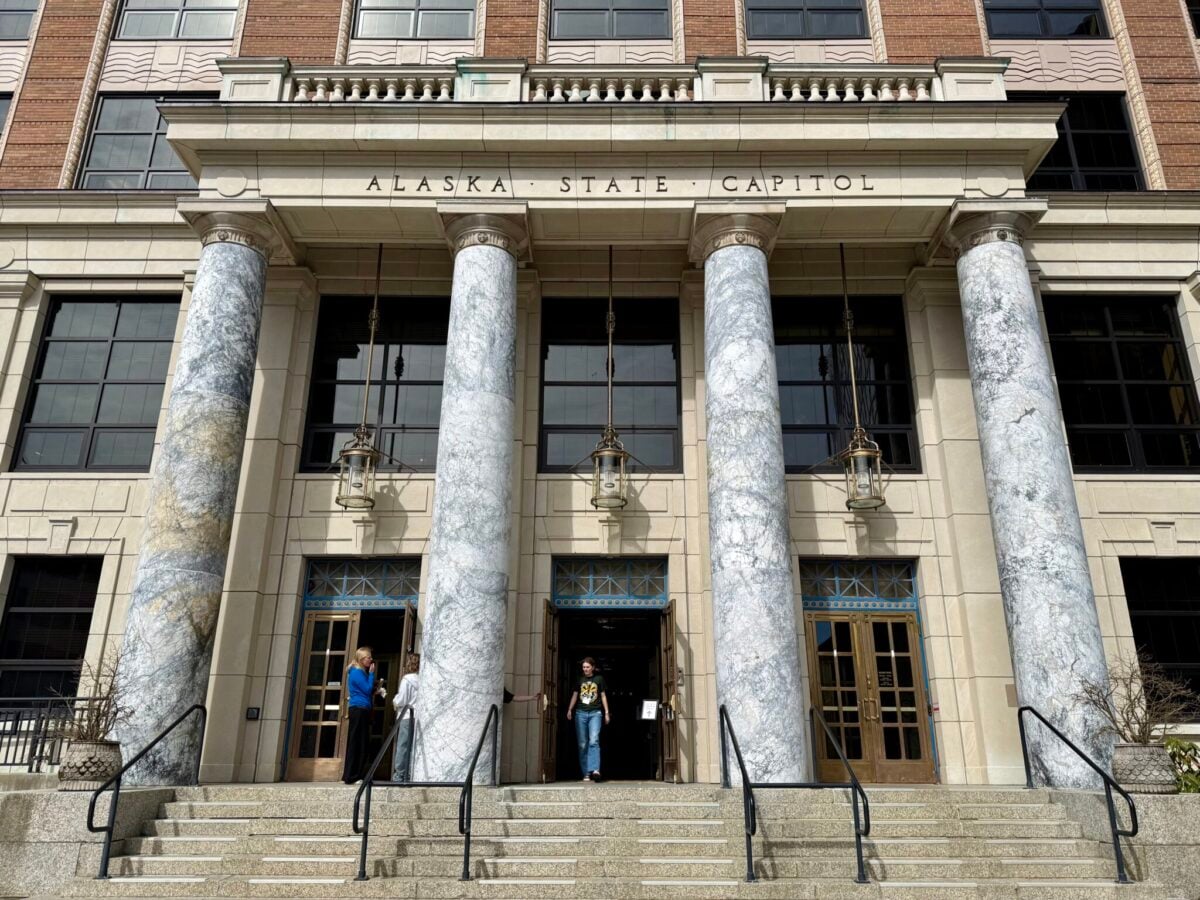
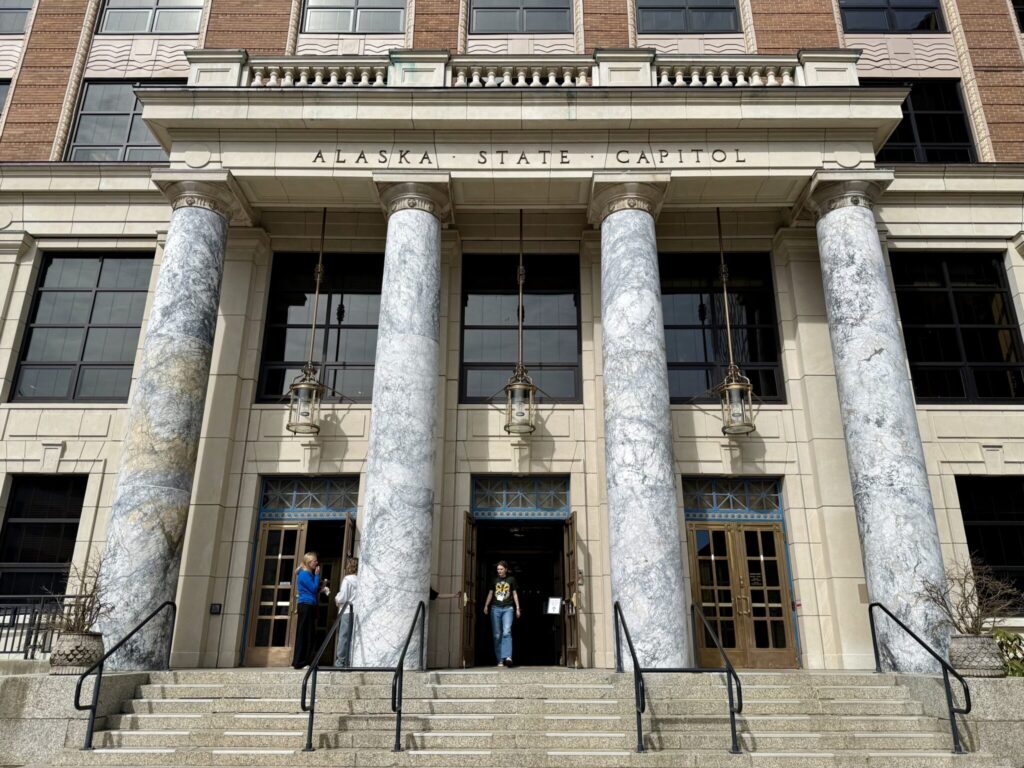
The Alaska State Capitol is seen on Wednesday, March 4, 2026. (James Brooks photo/Alaska Beacon)

A potential $500 million windfall is giving the Alaska House of Representatives a headache. 

On Friday, the Alaska Department of Revenue released a forecast predicting that the state of Alaska will collect hundreds of millions of dollars more oil revenue by June 30 than previously expected.

That forecast landed in the middle of an ongoing debate over whether or not to spend from savings to cover almost $530 million in extra expenses, largely added by Gov. Mike Dunleavy, to the state budget since last spring.

The Senate approved a proposal to pay for roughly three-quarters of those expenses and it is now in the state House, awaiting a vote that could come as soon as Monday. 

Tensions rose on Friday, with no agreement among House lawmakers on how to pay for the proposal. 

The House is led by a 21-person multipartisan coalition whose members have been urging fast action on the issue. They say it is particularly important to fund $70 million for the state’s transportation projects to unlock more than $630 million in additional federal funding.

Without sure money, majority lawmakers say projects can’t go out to bid and construction firms can’t make purchasing and hiring decisions. 

The construction industry has been lobbying heavily on the issue since before the legislative session began.

The majority wants to use the state’s Constitutional Budget Reserve, a savings account, to provide guaranteed funding.

The majority can pass a bill on its own, but it can’t spend from savings on its own. It takes 30 members of the House and 15 from the Senate to approve spending from the Constitutional Budget Reserve, the state’s principal savings account. 

The Senate has already given that approval, but in the House, at least nine members of the 19-person, all-Republican House minority would have to support the majority, and so far, they’re not willing to do that.

Part of that reluctance is because as currently written, the supplemental budget bill allows lawmakers to spend up to $373.6 million from the reserve regardless of whether or not the war-caused bonus becomes real.

If oil prices stay high and the reserve money isn’t needed, the majority could spend it on other things without further input from the minority. That’s because it takes only 21 votes to advance a budget bill.

In a Saturday post to Substack, Rep. Kevin McCabe, R-Big Lake, expressed worries about that prospect.

The money would return to the reserve only if it was unspent at the end of the fiscal year.

If lawmakers don’t spend from savings and the Iran war ends unexpectedly quickly, causing oil prices to fall, the minority could vote to spend from savings later to fill the gap. 

The result is an ironic set of circumstances — Trump has said that the war will be short, but minority House Republicans’ action is effectively a bet on a long war.

Minority members say they’re being fiscally responsible. So do members of the majority, who add that there’s an opportunity cost for any delay — Alaska construction companies can’t make plans for the summer until they know what projects they’ll need to build.

Majority members also expressed frustration that the supplemental budget was largely requested by the governor, who they say has been absent in negotiations.

In addition, legislators and Gov. Dunleavy could also find themselves with a problem if oil prices fall after legislators have adjourned for the summer.

Legislators typically write budgets based on forecasts from the Department of Revenue, but this year’s forecast is especially uncertain, the department said.

Rep. Calvin Schrage, D-Anchorage, co-chair of the House Finance Committee and a member of the majority, said he’s skeptical of banking on the forecast.

“I have a lot of concern over budgeting based on that forecast, because that’s all it is. It’s a forecast. It’s not realized money, it’s not money in hand,” he said Friday. 

“Even with this optimistic forecast, you are just barely, maybe able to balance the budget — if everything goes perfect. We still don’t have additional supplementals,” he said, referring to more budget amendments that could be requested by the governor.

Schrage said lawmakers will be scrutinizing the forecast in the coming days and weeks, and he said there’s still the possibility the Legislature may need to draw from savings.

But minority Republicans said they considered drawing from savings fiscally irresponsible.

“Taking a draw from our savings account to put into the general fund to fund things that were, by all accounts and purposes, able to be funded without it would have been irresponsible,” said Rep. Justin Ruffridge, R-Soldotna, on Friday. 

House Minority Leader DeLena Johnson, R-Anchorage, said she’s confident in the forecast projections. “There’s some actuals there too. So I’m very comfortable with actuals, and I also know, if there’s changes, we can come in and we can come in and make them, and make a different vote. I’m not as worried about that.”

Speaker of the House Bryce Edgmon, I-Dillingham, expressed frustration at the delay.

“This is pure politics. We should have had the supplemental budget funded. A long time ago,” he said. “The House Majority coalition prioritized the funding of the entire package that was proposed by the governor. Every single item came from the governor. And so here we are, you know, in a really precarious state, because we’re at the point where every week that goes by gets us a week closer to that federal match not being achieved for the summer construction season.”

Edgmon and other majority legislators have voiced frustration about “moving goal posts” on the budget bill. While there are more than $530 million in proposed additions, the bill in front of House lawmakers contains only three-quarters of that amount because majority members wanted to attract members of the minority for the savings vote.

The remainder will still have to be addressed later, regardless of what happens in the upcoming vote.

Edgmon said it’s not clear to him what the Republican minority wants in exchange for a budget reserve vote.

“We don’t know what the ask is,” he said. “But it’s all about leverage, and unfortunately, it’s falling on the shoulders of a lot of smaller contractors around the state.”

As of Friday afternoon, it appeared as if the budget bill was on course to pass, but without approval to spend from savings. 

If that occurs, the state of Alaska will be in the awkward position of hoping for a war long and difficult enough to keep oil prices high for months.

Categories
Alaska News Featured Juneau News juneau Juneau Local Juneau Local Ketchikan Local News Feeds Sitka Local

Alaska legislators have few firm facts as they consider a proposed trans-Alaska natural gas pipeline

By: James Brooks, Alaska Beacon
Rep. Nick Begich III, R-Alaska, shakes hands with state Rep. Ky Holland, I-Anchorage, as he leaves a joint session of the Alaska Legislature on Tuesday, March 10, 2026. (James Brooks photo/Alaska Beacon)

In a speech to the Alaska Legislature this week, Alaska Rep. Nick Begich III urged state lawmakers to boost the development of a proposed trans-Alaska natural gas pipeline.

“The federal path is largely cleared, but investors also need state level clarity, fiscal predictability and simplicity,” Begich said. “Scrutinize it carefully, model it thoroughly. But my request to you is not to become a roadblock.”

But legislators who are dealing with the pipeline on a daily basis say they don’t have answers to basic questions, including how much the pipeline will cost and whether the gas it carries will be affordable to Alaskans.

“I have not seen any figures,” said Sen. Cathy Giessel, R-Anchorage and chair of the Senate Resources Committee. 

Senate President Gary Stevens, R-Kodiak, said legislators are not going to be a roadblock.

“We’re not going to throw sand in the works. Everybody wants a pipeline. We all hope that it comes about, but it’s got to be done properly and make sure that we know what’s going on.”

Sen. Bill Wielechowski, D-Anchorage, said he has heard “from very credible sources” that the price of gas through the pipeline could be $50 per million cubic feet by 2046. 

The current cost of gas from Cook Inlet for Southcentral Alaska is about $10 per MCF. 

“Just imagine if you have utilities locked into 30-year contracts for gas at $50 an MCF. That would be catastrophic,” Wielechowski said. “That’s the sort of thing that we’re trying to protect Alaskan consumers all up and down the Railbelt from — an absolute catastrophe to our economic system.”

As currently proposed, the pipeline project consists of two phases. The first phase includes an 807-mile pipeline from the North Slope to the west side of Cook Inlet, with a tie-in to existing natural gas infrastructure around Anchorage.

The second phase would extend the pipeline to the Kenai Peninsula, where an export terminal would be built. The second phase would also include a processing plant on the North Slope.

One year ago, the state-owned Alaska Gasline Development Corporation sold 75% of the trans-Alaska natural gas pipeline project to Glenfarne, an international developer.

Since the acquisition, Glenfarne has signed a number of nonbinding agreements with potential gas purchasers and gas sellers, but it has not disclosed estimates for the project’s cost, and it hasn’t disclosed what it expects the cost of gas to be.

Last year, company officials said they expected to make an investment decision by the end of 2025. In a subsequent filing with the Federal Energy Regulatory Commission, they said they would make the decision in February. A new timeline hasn’t been made public.

The lack of data is particularly problematic because legislators are considering whether to offer a property tax break to pipeline developers.

Those taxes are significant. Because Alaska does not have a statewide income tax or sales tax, its state budget suffers when people move into the state. More people means more demand for things like schools, parks and roads, but no increased revenue to pay for those things.

Economists have called that the “Alaska disconnect.”

Alaska has a 2% property tax on oil and gas infrastructure. Most of that money is passed on to municipalities, which use it for local needs.

In December, Alaska Gov. Mike Dunleavy said he was considering a proposal to cap that property tax at 0.2% for the natural gas pipeline, creating a payment in lieu of taxes system.

“That bill should be next week,” Dunleavy said during a Thursday news conference with U.S. Interior Secretary Doug Burgum, confirming the 0.2% rate will be part of the new legislation.

“Last couple weeks, we’ve been working with municipalities, getting their input as to what this should look like before (we) put the bill out,” he said. “So look forward to probably next week on that PILT bill, so that we can look at the economics of this line and also ways to ensure that municipalities benefit from this directly.”

This week, Begich expressed some support for a lower property tax rate, saying it could encourage people to invest in the pipeline.

“The classic 2% tax burden that would apply, say, to a $50 billion asset, would be a billion dollars in cash flow early in the project’s life cycle,” Begich said. “If that cash flow coming out of the project lowers the rate of return for investors, they’re not going to show up and invest. And so we need to make sure that our tax policy is A, doing what’s right for Alaskans. B, is not impeding the ability for the project to move forward. And I think we can do both of those things with some creative thinking and conversations with the industry.”

While a lower tax rate would benefit pipeline developers, it has the potential to harm residents who live near the pipeline. 

If pipeline construction and operation mean more people moving to Alaska and municipalities are unable to raise revenue to meet the resulting demand for services, local governments could be forced to raise taxes or cut basic services in order to pay for the pipeline subsidy.

Last week, the Senate Resources Committee introduced Senate Bill 275, which imposes some transparency requirements on the pipeline project, eliminates a tax exemption relevant to the project, and imposes a new surcharge on gas processing plants. 

That bill was introduced just days before Begich urged lawmakers not to be a “roadblock.”

Giessel, who chairs the resources committee, said she didn’t think Begich’s comments were directed at her or her committee’s bill.

“We’re not being a roadblock. We’re doing exactly what we’re supposed to do according to our constitution,” she said.

Asked whether he was thinking of Giessel’s bill during his speech, Begich said, “It was not my direct intention. No, I think it’s always worth having the conversation about the tax structure, about the incentive structure, though that’s an ongoing discussion that happens at the state legislature in Alaska. I think it’s important that when we have those conversations, they’re done in a way that is going to encourage, rather than discourage, industry from coming in and saying, ‘Yes, this is a good place for us to invest in.’”

Speaking to reporters after his speech, Begich said the state would benefit by getting more information from Glenfarne.

“I welcome more information,” Begich said. “I recognize that they’ve got certain restraints on what they can share. But look, I’d like to see more information shared. I’d like to see more of the economics of the project shared so we can understand what the full potential is and what’s on the table. I believe that’s going to come with time, but more information is better.”

Categories
Alaska News Featured Juneau News juneau Juneau Local Juneau Local Ketchikan Local News Feeds Sitka Local

Lawmakers review major elections reform bill

“I voted” stickers are seen on display in the headquarters offices of the Alaska Division of Elections in Juneau on Tuesday, Nov. 12, 2024. (Photo by James Brooks/Alaska Beacon)

NOTN- Alaska lawmakers considered a wide-ranging elections bill today that supporters say would expand voter access and strengthening election security.

The House Finance Committee scheduled hearings on Monday as well as this morning on Senate Bill 64, a measure covering a broad range of election policies, including voter registration, campaign rules and election administration.

The bill would create a ballot curing process which would allow absentee voters to fix mistakes like missing signatures.

According to testimony submitted to lawmakers, more than 1,300 ballots were rejected in 2024, many due to correctable issues like improper witness signatures.

The proposed bill would also require the state to create an online ballot-tracking system so voters can see when their ballot is sent, received and counted. The bill includes prepaid postage for absentee ballots to improve access for voters, especially for voters in rural communities.

The bill also calls for a rural community liaison within the Division of Elections to work with tribes and municipalities to improve early and absentee voting access in remote areas.

Supporters, including the League of Women Voters of Alaska, Alaska Voter Hub and the Alaska Federation of Natives say the reforms are necessary because of Alaska’s geography and the challenges rural voters face with mail service, staffing shortages and limited polling locations.

Categories
Alaska News Featured Juneau News juneau Juneau Local Juneau Local Ketchikan Local News Feeds Sitka Local

Alaska National Guard says planned deployment to Washington DC pushed to May

By: Corinne Smith, Alaska Beacon

Members of the Alaska Organized Militia board an Alaska Army National Guard CH-47 Chinook helicopter, assigned to the 207th Aviation Troop Command, while traveling from Bethel to Tuntutuliak, Alaska, during storm response operations after Typhoon Halong on Oct. 23, 2025. (Courtesy photo)

Officials with the Alaska National Guard said plans to deploy a trained rapid response force this month to support federal authorities in Washington D.C. has been pushed back to May. 

Gov. Mike Dunleavy in November approved the U.S. Secretary of the Army’s request for 100 service members to deploy to the nation’s capital as part of a joint federal task force this month. The effort is part of a national directive by the Pentagon to all 50 states to prepare National Guard service members to train for “civil disturbance operations.”

By email on Tuesday, a spokesperson for the Alaska National Guard said the timeline has been extended.

“The Alaska National Guard remains in contact with the Pentagon, through the National Guard Bureau, and continues to move through the established processes to support Joint Task Force-District of Columbia,” said Dana Rosso, a public affairs officer with the Alaska Department of Military and Veterans Affairs, which houses the Army and Air National Guard divisions. 

“The current activation timeline has been refined to May 2026,” he wrote. 

As of January, there were roughly 2,700 National Guard members stationed in Washington D.C., which the Trump administration has said is to help drive down crime. Service members are expected to be stationed there through the end of the year. On Tuesday, an additional District of Columbia Army National Guard brigade was activated “to coordinate military support to civil authorities and protect critical infrastructure in the nation’s capital.”

A spokesperson for Dunleavy’s office declined to comment on the extended timeline on Wednesday.

Torrence Saxe, commissioner of the Alaska Department of Military and Veterans Affairs, speaks at an Oct. 13, 2015, news conference about the impacts of Typhoon Halong's to Western Alaska and the response there. Behind him and also speaking at the news conference, which was held at Gov. Mike Dunleavy's Anchorage office, is National Weather Service meterologist David Kramer, U.S. Coast Guard Sector Western Alaska and U.S. Arctic Commanding Officer Captain Christopher Culpepper and Ryan Anderson, commissioner of the Alaska Department of Transportation and Public Facilities. (Photo by Yereth Rosen/Alaska Beacon)
Torrence Saxe, commissioner of the Alaska Department of Military and Veterans Affairs, speaks at an Oct. 13, 2015, news conference about the impacts of Typhoon Halong’s to Western Alaska and the response there. Behind him and also speaking at the news conference, which was held at Gov. Mike Dunleavy’s Anchorage office, is National Weather Service meterologist David Kramer, U.S. Coast Guard Sector Western Alaska and U.S. Arctic Commanding Officer Captain Christopher Culpepper and Ryan Anderson, commissioner of the Alaska Department of Transportation and Public Facilities. (Photo by Yereth Rosen/Alaska Beacon)

At the time the request was announced, Maj. Gen. Torrence Saxe, Adjutant General of the Alaska National Guard and Commissioner of the Alaska Department of Military and Veterans Affairs, said in a letter to lawmakers that 100 service members were in training for the mission to be “aligned with nation-level requirements.”

“The team will consist of Alaska Army and Air National Guard personnel trained in mission sets that may include site security, roadblocks and checkpoints, civil disturbance control, critical infrastructure protection, and personnel security,” Saxe wrote.  

But the process for how the deployment was requested and approved still isn’t clear.

Dunleavy’s office could not find a copy of the U.S. Secretary of Defense that requested the deployment, a spokesperson for the governor’s office said Wednesday. When asked if the request was made verbally, Jeff Turner, Dunleavy’s director of communications, referred the question back to the Alaska Department of Military and Veterans Affairs.  

The division did not answer a request for comment on Wednesday. 

Rep. Andrew Gray, D-Anchorage and co-chair of the Joint Armed Services Committee, is a veteran of the Alaska National Guard and was among lawmakers that raised concerns in November when the announcement was made. He questioned the legality of the directive in an interview on Wednesday.

“Until they get something in writing, then there’s no actual deployment to prepare for,” Gray said.

“I think it’s a big misuse of the American taxpayer dollar to fly any soldiers from Alaska to D.C. for what we know is a trash pickup mission in many ways, and it’s a waste,” he added. “It’s just a waste of taxpayer dollars. So I hope that it continues to get pushed off indefinitely and that it never happens.”

Categories
Alaska News Featured Juneau News juneau Juneau Local Juneau Local Ketchikan Local News Feeds Sitka Local

Alaska Senate approves fast-track budget bill to cover disasters, transportation projects

By: James Brooks, Alaska Beacon

The Alaska State Capitol is seen on Monday, March 9, 2026. (James Brooks photo/Alaska Beacon)

The Alaska Senate voted unanimously Wednesday to spend more than $300 million from savings and reverse some of Gov. Mike Dunleavy’s most recent budget vetoes.

In a pair of 20-0 votes, the Senate approved a bill that would spend $373.5 million from the Constitutional Budget Reserve to pay for a variety of expenses and fill a deficit in the current budget year. 

“This is money to fund the budget that was passed last year for things that the governor already spent on,” said Sen. Bill Wielechowski, D-Anchorage.

The bill now goes to the House, which failed last month to approve the needed spending from the budget reserve.

Among the expenses in the new supplemental budget bill is $70.2 million needed to unlock federal transportation grants. Dunleavy vetoed that funding last year amid a dispute with the Legislature about the proper source of the money. 

Also in the bill is $98.7 million for the state’s wildfire response fund and up to $75 million for the disaster relief fund. That latter figure is dependent upon negotiations with the federal government about who will pay for the response after ex-Typhoon Halong devastated southwest Alaska last year.

The largest single item in the bill is $129.6 million needed to refill the state’s higher education investment fund, which was used to cover expenses due to a separate veto-involved dispute between the Legislature and governor.

That fund covers scholarships paid to Alaska high school students who meet academic standards and attend in-state schools.

The Senate-passed bill is significantly smaller than a $531 million version that had been previously considered. It shrank at the urging of the Senate’s six-person, all-Republican minority caucus.

It takes three-quarters of the House and three-quarters of the Senate — 30 Representatives and 15 senators, respectively — to spend from the budget reserve. 

That’s a high hurdle, particularly because the Senate’s bipartisan majority caucus has just 14 members and the House’s multipartisan majority has just 21 members.

In both cases, compromises with the all-Republican House and Senate majorities are needed to spend from the reserve.

On Monday, the Senate pulled the supplemental budget bill from its schedule with no advance notice. Sen. Lyman Hoffman, D-Bethel, said at the time that the Senate Majority had unexpectedly lost a minority vote it needed to spend from the reserve.

That spurred hours of closed-doors negotiations between the Senate minority and members of the majority.

Since the United States and Israel started bombing Iran on Feb. 28, the price of oil — and, in turn, Alaska’s potential oil revenue — has risen, giving legislators another way to erase a looming deficit.

“We went over and talked with (the Senate Finance Committee) co-chairs and just said, ‘Hey, obviously, the price of oil is changing,’” said Senate Minority Leader Mike Cronk, R-Tok. 

At the minority’s urging, the co-chairs removed almost $150 million from the bill — extra spending for state prisons, money for Medicaid, and millions in backup “headroom” for unforeseen expenses, among other items.

Cronk said the items removed during the compromise discussions could come back later, in the state’s regular budget bill, and the goal was to create “a real supplemental fast track” bill.

According to figures provided by staff for Hoffman, if Alaska North Slope oil prices average roughly $75 per barrel between now and June 30, the end of the state’s fiscal year, the state will earn enough oil revenue to pay for the removed items without spending from savings.

Since the start of the legislative session, construction companies have been lobbying for quick passage of a supplemental budget bill because they fear losing hundreds of millions of dollars’ worth of federally funded construction projects scheduled to take place as soon as this summer. 

The Alaska Department of Transportation and Public Facilities has disputed the need for early funding, and on Wednesday, Sen. George Rauscher, R-Sutton, attempted to strike that item from the supplemental budget.

He withdrew his proposed amendment after encountering opposition, saying he was satisfied with the smaller bill on the floor.

“We’ve come down a long way from $500 million,” he said.

After the Senate voted on Wednesday morning, members of the House majority attempted to call a vote to confirm the Senate’s changes. 

Members of the House minority objected, and the vote is now scheduled later, at 2:30 p.m. Thursday.

House Minority Leader DeLena Johnson, R-Palmer, said members of the minority wanted to wait until Friday, when a new state revenue forecast is expected.

“We’re talking about a $300 million draw. We may not need to take that full amount out of savings when we have money coming in,” she said, referring to the way the price of oil has surged during the Iran war.

Asked whether the new, lower draw from the reserve is more acceptable to members of the minority, Johnson said she wasn’t sure yet.

“There’s probably a number that’s better than others, but I mean, as low as possible is our number,” she said.

Categories
Alaska News Featured Juneau News juneau Juneau Local Juneau Local Ketchikan Local News Feeds Sitka Local Uncategorized

Alaska accuses crowdfunding websites of violating law, using charities’ names without their consent

By: James Brooks, Alaska Beacon

Wooden gavel with books in background.

The state of Alaska filed civil lawsuits Tuesday against six crowdfunding websites, accusing them of illegally soliciting donations for thousands of Alaska charities without consent.

In complaints filed at Anchorage Superior Court, the consumer protection unit of the Alaska Department of Law said GoFundMe, PayPal, Charity Navigator, Pledgling Technologies, JustGiving and Network For Good each violated the Alaska Charitable Solicitations Act thousands of times. 

That act, in place since 1993, requires state registration for anyone who seeks donations on behalf of a charity. 

The suits ask a judge to order the sites shut down the pages devoted to Alaska nonprofits and immediately disburse any donations to those nonprofits. It also asks for “separate civil penalties … of not less than $1,000 and not more than $25,000 per violation.”

According to the complaints, the six crowdfunding sites scraped IRS data to obtain the information of thousands of Alaska nonprofits, then set up donation pages for each of those nonprofits without their consent.

That scraping was part of a nationwide campaign that encompassed almost a million and a half federally registered organizations.

In some cases, the sites charged fees or encouraged “tips” to themselves during the donation process. In many cases, they poured donations into a third-party account and only released donations to charities who stepped forward to claim them, according to the complaints.

Attorney General-designee Stephen Cox said the state became aware of the issue after California reporters and state officials began investigating why GoFundMe created donation pages for 1.4 million nonprofits without their consent or knowledge.

GoFundMe later took down many of those pages, but other crowdfunding websites did not. On Tuesday morning, donation pages were still visible on Charity Navigator, one of the defendants named in the new Alaska lawsuits.

Earlier this week, almost two dozen state attorney generals sent a letter to GoFundMe, demanding answers to questions about its policies.

Alaska did not sign that letter, in part because officials here believed the response was too weak.

In a prepared statement, Cox said, “Alaska law is clear: if you’re going to raise money in a charity’s name, you must first get the charity’s consent. These lawsuits are about protecting donors, protecting nonprofits, and preserving the public trust that makes charitable giving possible.”

Laurie Wolf is President and CEO of the Foraker Group, which advises Alaska nonprofits and provides them with administrative support.

The Foraker Group has been issuing warnings about the issue for months, and Wolf filed an affidavit in support of the lawsuit, as did a representative of the Bethel Community Services Foundation and Bread Line Inc., which operates a food bank in Fairbanks.

By phone on Tuesday, Wolf said the issue is a matter of consent: “They are impersonating 1.2 million nonprofits across this country, they’re impersonating them without their consent or even their knowledge.”

She said the issue became particularly important last fall, when people across the United States and the world became aware of the devastation caused by ex-Typhoon Halong in Western Alaska.

Many people, not knowing local Alaska charities, simply donated via links they found on internet searches. Some of those donations may have never reached their intended recipients.

If a crowdfunding website operates independently of the charity it intends to benefit, it might interfere with the charity’s own fundraising, she explained.

Someone might never be recognized for their gift and become angry, hurting the charity’s long-term relationship with their community.

“They take away the ability for the organization to make choices for itself about how it wants to build trust and relationships with its donors, and how it wants to put its brand and its mission out in the public sphere. They’ve taken away all of our choices about that,” she said.

In addition, donations may be subject to fees or never reach a charity at all, particularly if the charity is unaware that a crowdfunding website is holding money for it to collect.

The Foraker Group went so far as to conduct an experiment and had an employee donate to the group through several of the defendants’ platforms. In multiple cases, it took weeks before the donation reached its intended recipient, and in some cases, the donor’s identity was concealed, making it impossible for the charity to properly thank them.

GoFundMe was the only defendant to respond to emailed inquiries before the Beacon’s reporting deadline on Tuesday.

“GoFundMe’s mission is to help people help each other by making it easier for donors to discover and support the causes they care about. We are committed to helping nonprofits reach new supporters by connecting them with the millions of people on our platform who want to make a difference. Nonprofit Pages were created using publicly available information to help people support nonprofit organizations, with donations going to the intended nonprofit,” said Jeff Platt, communications manager for GoFundMe. 

“After hearing feedback from nonprofit leaders in October, we acted quickly to make Nonprofit Pages fully opt-in, removed and de-indexed unclaimed pages, and turned off search engine optimization by default. The immediate changes we made directly addressed the concerns of the nonprofit community, and reflect our continued commitment to transparency, accountability, and partnership with the nonprofit sector,” he said.

This week’s lawsuits in state court rely in large part on the 1993 Alaska Charitable Solicitations Act

That bill passed the Alaska Legislature amid a surge of concern about telemarketers soliciting donations by phone. 

Then-Rep. Ron Larson, a Democrat from the Matanuska-Susitna Borough, sponsored the act and told fellow lawmakers at the time that “lookalike organizations” were “ripping off” legitimate charities.

The act made no mention of donations by internet, and in state law, it’s still labeled as “Telephonic solicitations,” but it goes on to state that under any circumstances it is unlawful to use a charity’s name or symbol without their permission.

“Alaskans are generous people. But generosity depends on trust,” Cox said in his prepared statements. “GoFundMe and similar platforms used nonprofits’ good names to solicit donations without coordinating with the organizations actually doing the charitable work. That means some Alaskans may have donated thinking they were supporting a specific charity, when the charity never authorized the page and may never have received the donation — or may have received less than donors intended because of fees.”

Categories
Featured Juneau News juneau Juneau Local Juneau Local News Feeds

Juneau School District names Shawn Arnold as superintendent

NOTN- The Juneau School Board has selected Shawn Arnold as the next superintendent of the Juneau School District, according to an announcement.

Arnold currently serves as principal of Thunder Mountain Middle School and previously led Thunder Mountain High School. He has also worked as the district’s director of student services.

Before coming to Juneau in 2021, Arnold served as superintendent of both the Valdez City School District and Nome Public Schools.

In a statement, Arnold said he was honored to be chosen for the role.

“Juneau is my home, and I care deeply about this community, our students and the staff who serve them every day,” Arnold said. “Together, we will focus on supporting our staff, strengthening relationships and ensuring that Juneau’s schools remain a source of pride in our community.”

The selection follows a three-month search process led by the Juneau School Board with assistance from national recruiting firm McPherson and Jacobson. The process included community surveys, meetings with stakeholders and public candidate forums.

Arnold was selected from a group of finalists that also included Dr. Carlee Simon and Kevin Shipley.

Categories
Alaska News Featured Juneau News juneau Juneau Local Juneau Local Ketchikan Local News Feeds Sitka Local

City Assembly meeting packed with tense testimony on Budget, Flooding and Telephone Hill

Monday night’s assembly meeting, as seen on CBJ’s livestream

NOTN- Packed public testimony at a Juneau Assembly meeting Monday showcased public tensions over the city’s budget, flooding, and looming cuts.

The public comment period stretched nearly 2 hours before the assembly could continue its regular agenda.

While much of the evenings testimony focused on budget pressures and big upcoming projects, one resident voiced their gratitude to the assembly for holding public comment saying, “I wanted to take the opportunity to say thank you to the assembly and to say that, you look at any scale of global events, down to national events, down to local events, there’s a lot to be fearful of and a lot to be anxious about. That being said, it’s too easy to displace that on, what you can yell at your local assembly.” Testifiers said social media can further exacerbate tensions, “Huge thanks to you guys, I know you have tons of stuff on your plate, and I know that it seems like you can’t catch a break, because I feel like, if it’s not one thing, it’s another.”

Multiple residents demanded the city halt or delay demolition of historic homes on city owned Telephone Hill, which the city hopes to redevelop for potentially, over 150 housing units.

“The CBJ is facing a $10 to $12 million budget shortfall. This will affect everyone in Juneau. It doesn’t make sense to spend $5.5 million on the discretionary demolition of Telephone Hill when there are so many pressing municipal needs.” Said Maureen Conerton, “Many Juneau residents have valid concerns and have testified against this project. including a former administrator, judge, an architect, a retired project manager, in addition to the more than 1000 Juneau residents who signed the Stop the Bulldozers Petition that was presented to you last fall.”

Juneau currently has a housing shortage. In an assembly meeting at the end of February, Finance Chair Christine Woll noted that demand is sure to rise with the arrival of Coast Guard personnel in the coming years.

Some speakers said they support building more housing in Juneau, especially downtown, but oppose the current Telephone Hill plan.

Others voiced concern for escalating cost estimates for the gondola project at Eaglecrest Ski Area, saying the price has ballooned far beyond early figures.

“I disagree with what’s been said about social media, I mean, that is the way a lot of people on short notice communicate.” Said Shannan Greene, she mentioned comments in articles by KTOO and the Juneau Independent and encouraged the Assembly to view them as public testimony as well, “This is an example of informal but honest public testimony from your everyday citizens. These are the people who are growing increasingly frustrated with your decisions.”

Residents spoke on flooding in the Mendenhall Valley and said the city has been too slow to address recurring flooding and erosion.

“Residents in the valley are left dealing with flooding, higher costs and the feeling that our concerns are always pushed down the list.” Said Amy Miller, “It isn’t frustrating, it’s driving people away. I’ll be honest with you, myself and many of my friends and neighbors are actively planning to leave Juneau as soon as we can, not because we don’t love this community we do, but because we no longer feel like the city is working for the people who live here, if the city continues to treat the valley’s flooding as a problem to study instead of a problem to solve.”

The Army Corps of Engineers recently, and without explicit reason, pulled back from pursuing the Lake Tap enduring solution, which had its own federal timeline.

The project was endorsed by Tlingit and Haida, the USDA Forest Service and Alaska’s Delegation, city leaders have been ‘Deeply concerned’ about the Army Corp’s shift in priorities.

City Manager Katie Koester said new federal discussions later this month could reshape the city’s strategy.

“We are very much committed to an enduring solution and committed to working on developing and furthering the lake tap.” She said, “We have received great news that Secretary Adam Telle and a large delegation of his high up staff will be traveling to Juneau at the end of this month, and as part of that, we anticipate new information and new strategy.”

Assembly Member Alicia Hughes-Skandijs said because Assembly rules limit speakers to two minutes and do not allow any back-and-forth, some of the most productive conversations happen informally. “You pour out your heart for two minutes, which is a very short time, or you’re trying to identify to someone you’re upset. When we’re in that process, we can ask clarifying questions, but we don’t engage. So the best follow up steps are the conversations that happen in the room, in between, on the breaks, things like that. So I was able to get some contact information and follow up with some folks and I think that happens pretty commonly, that it’s those one on one interactions.”

Concern also came from social service providers, who said potential cuts of up to 30% to city‑supported grants would shrink or shutter essential programs.

Leaders from the Southeast Alaska Food Bank, school counseling programs, the Glory Hall shelter and housing project, youth and senior services, mental health organizations and Alaska Legal Services all reported record demand and rising costs.

“I want to first off, take this opportunity to thank the assembly for the investment that they have made in our organization over the last couple of years. But with that in mind, I want remind you all that we work as social service organizations, many of which are present in the room tonight in partnership with the city. And we’re concerned to hear that the assembly is considering a reduction of investment in the social services block grant, what that would amount to is a reduction in services.” Said Dan Parks, speaking for the Southeast Alaska Food Bank, “I can only speak for our organization, but demand is at record highs. A couple of years ago, when I started with the food bank, we were serving about 300 individuals a week. Now we’re serving about 500 through our public pantry. We’re seeing more and more people slip from what used to be called the middle class into poverty. We also know that hunger doesn’t exist in a vacuum. It’s an indicator, a canary in the coal mine, if you will, of other social ills.”

They told the Assembly that fewer local dollars would mean fewer meals, beds, and legal and mental health services, pushing more people toward homelessness, emergency rooms and law enforcement.

Hughes-Skandijs said the Assembly welcomes the surge in civic participation, even when emotions run high.

“We welcome, public engagement. We always want more of that.” She said, “We want people to come and talk to their local officials, and we want to know how people are feeling. A room charged with emotion is sometimes going to be because there’s just so much happening. If someone’s brave enough, and we want them to be brave enough,this is where they should be. It’s their local government. And so we want them to get involved.”

This article has been edited to correct the spelling of Shannan Greene’s name and to adjust misleading language on Social Media in early testimony.

Categories
Alaska News Featured Juneau News juneau Juneau Local Juneau Local Ketchikan Local News Feeds Sitka Local

Alaska lawmakers advance all-time high $523M Department of Corrections budget

By: Corinne Smith, Alaska Beacon

Spring Creek Correctional Center is seen in an undated photo. (Photo courtesy of Alaska Department of Corrections)


The Dunleavy administration has proposed a $523 million budget for the Alaska Department of Corrections for the next fiscal year, which House lawmakers with a finance subcommittee advanced without substantial changes last week. 

It’s the largest corrections budget proposal to date, according to state data. It includes just over $514 million requested in state funding, $475.5 million of which is unrestricted general funds for the agency’s 13 state prisons and jails and estimated 2,127 employees. DOC officials expect an additional $9.3 million in federal funding for inmates held on federal charges.

The Department of Corrections has become one of the state’s most expensive departments in recent years. This year the Department of Health, which has requested $1.1 billion in unrestricted general funds, and the Department of Education and Early Development, which has requested $1.4 billion, would spend more. The Permanent Fund dividend could also be a bigger expense — if the state pays out a $1,000 dividend like last year, it would cost the state $660 million. 

While the number of people in Alaska’s prisons and jails has remained relatively consistent, costs are soaring. Last year, DOC officials reported that state corrections booked nearly 26,000 people and just over 16,000 unique individuals, so roughly 9,000 people were repeat offenders. DOC also held nearly 450 people in involuntary commitments, which is for those who are deemed a danger to themself or others, or gravely disabled as a result of mental illness. The state cost for incarcerating an individual is an average of $223 per day. 

Initially, corrections officials submitted a $500 million budget request, but later added an additional request for $20 million for staffing and inmate transportation, and $3.3 million for healthcare and medical staffing. 

The proposed budget breaks down to roughly 60% for state prison institutions, lawmakers heard on Feb. 24. Roughly 20% is for health and rehabilitation, 10% for pretrial, probation and parole, 4% for administration, 3% for maintenance and operations and just 0.4% to administer the Board of Parole.  

Costs to staffing Alaska’s prisons have ballooned in recent years, along with healthcare costs for an aging inmate population and increasing health needs, DOC officials told members of a House finance subcommittee for corrections. 

“Staffing being the first, and then the second being our medical costs,” Jen Winkelman, corrections commissioner, told lawmakers. “The fees for medical in Alaska is through the roof, and every single individual that’s coming to us — that we don’t know we’re going to be getting — have significant medical issues.”

DOC has a 11.5% staff vacancy rate statewide, according to a spokesperson in February. DOC officials told lawmakers that recruitment and retention is an ongoing challenge, especially because prisons must be staffed 24/7.

DOC reports staffing and decade of ‘policy changes’ as major cost drivers

April Wilkerson, deputy commissioner for the department, told lawmakers in a presentation on Feb. 24 that DOC officials analyzed the budget over the last ten years, and saw a total increase of an estimated $182 million for operational costs in that time. She said roughly one third of cost increases since fiscal year 2016 were driven by employee contracts, salary and benefit increases.

April Wilkerson, deputy DOC commissioner, and Kevin Worley, DOC administrative services director answer questions from lawmakers on the department’s budget on Feb 12, 2026. Jen Winkelman, DOC commissioner is seen in the audience. (Photo by Corinne Smith/Alaska Beacon)

“Collective bargaining agreements, salary adjustments and health insurance changes — that makes up over 30% of the growth of the general funds within the department’s budget, which is outside of the department’s control,” Wilkerson said. 

Wilkerson said an estimated 40% of cost increases have been due to “policy changes” from the Legislature. She pointed to the repeal of Senate Bill 91 enacted in 2020, when lawmakers increased prison sentences for most felonies and misdemeanors, and increased penalties for violating conditions of release. She also pointed to the state’s increased contributions to employees’ retirement benefits in 2022. 

Lawmakers asked DOC officials for policy recommendations to curb costs across the department. Rep. Donna Mears, D-Anchorage, also asked the commissioner to address the problem of the department spending over its allocated budget. 

“Funds allocated to DOC last year included cuts that the department just said, ‘Nope, we can’t do that.’ I think on a larger basis, there needs to be more discussions about that,” Mears said. “There’s this tension between the executive branch and requests for the department to make cuts, and that’s not happening.”

DOC officials reported all 13 state prisons spending over budget for the fiscal year ending in June, resulting in the department requesting an additional $20 million from the legislature to cover personnel costs, plus an estimated $3 million to cover health care costs.

Winkelman said the department had to partially make up for legislative cuts in their budget last year. A department spokesperson confirmed the supplemental budget request makes up for a $13.8 million reduction made by lawmakers last year. 

Winkelman told lawmakers the department has not been able to fill its vacancies, which has resulted in high overtime costs. She said DOC has had to manage a legislative directive to cut costs by closing a housing unit at Spring Creek Correctional Center in Seward. “We were tasked with closing a housing unit, and we did that, and it is not achieving the savings, and as a matter of fact, it’s bottlenecked some of our population management,” she said.  

Winkelman also pointed to unexpected health care costs for inmates as a driver of the department’s increased budget need. “We just recently had an inmate leave us that was with us for a year, that cost us over a million dollars in medical. We didn’t plan for that. We didn’t know that she was going to have that much of a cost associated. So going back to your question, and not being able to achieve some of these,” she said, referring to state budget allocations. “Because we don’t know what’s going to come through the back door.”

Winkelman recommended the creation of a new task force to tackle the question of how to curtail and manage the corrections budget.

“We were going to need some sort of a task force with other agencies, with the legislature, with law enforcement,” Winkelman said. “Some sort of a group to take a look at the broader system to figure out which policy changes are going to make that difference in order for us to be able to stay within our means.” 

Rep. Ky Holland, D-Anchorage, said he found the proposal concerning: “If a task force is needed, why aren’t all the folks that are doing these jobs coming together and doing the work of a task force? Why do we have to somehow create that and then fund it?” 

Holland said it was difficult for him to see that lawmakers are required to pay increasing budgets for DOC because of legal staffing requirements and said he wished the state’s education system had the same safeguards. “I wish we could tell our teachers that they had a maximum class size of the number of students that they had in a classroom because we had a standards council that had the force of law,” he said. 

Winkelman said DOC officials are trying to address the budget challenges. “We are constantly at the table trying to figure out how to solve this, if you will,” she said.

She then walked back the task force idea, and said hiring a consultant could be another option. “I think our recommendation is to maybe hire a consultant, hire an expert in this world, to kind of take all the pieces together,” she said.

Winkelman acknowledged Holland’s concerns about the state’s financial pressure with competing budget priorities, and said she understands the corrections budget is eating into funding for schools.

“Right now, above working for the Department of Corrections for 25 years and fighting this battle, I’m a mom with two kids in school, and that’s most important,” she said. “I’m fighting this battle every day of how expensive Corrections is, and I know it is taking from our school systems.” 

House members with the finance subcommittee for corrections heard several weeks of presentations about the department’s budget and asked questions of DOC officials. Rep. Mike Prax, R-North Pole, introduced several amendments to the budget, proposing millions in cuts until the department could provide further explanation on how the items would be spent and fulfill the department’s goals. But the committee voted them down before advancing the budget proposal without changes. 

The corrections budget now moves to the full House Finance Committee for further consideration.