Categories
Alaska News Featured Juneau News juneau Juneau Local Juneau Local Ketchikan Local News Feeds Sitka Local

Report used to justify reinstatement of Alaska Republican governor candidate appears flawed

By Corinne Smith and James Brooks
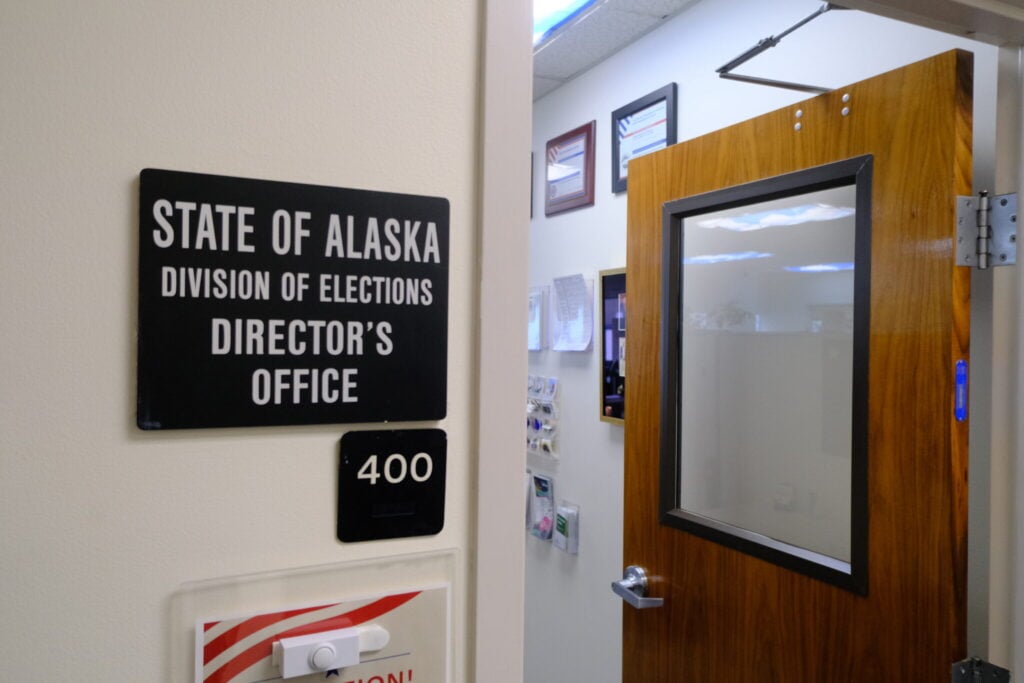
The Alaska Division of Elections director’s office in Downtown Juneau is seen on Aug. 26, 2026. (Photo by Corinne Smith/Alaska Beacon)

Rep. Andrew Gray of Anchorage is not a Swiss businessman. Speaker of the House Bryce Edgmon is not selling fire sprinkler systems. Lieutenant governor candidate Zac Johnson isn’t running an equestrian fox-hunting club in Indiana.

Days after the Alaska Department of Law said it found possible gaps in dozens of political candidates’ financial disclosure forms, a review by the Alaska Beacon and interviews with the affected candidates found many of the problems identified by the department either don’t exist, rely on old information, or amount to minor errors. 

“I’ve talked to probably 10 legislators, and probably eight of them had something on that list that was just bogus,” said Rep. Julie Coulombe, R-Anchorage and one of the candidates in the report, “property they don’t even own anymore, businesses they don’t own, and yet they’re on the list.”

The department’s errors matter because Lt. Gov. Nancy Dahlstrom, who administers the state’s elections, used the Department of Law report on Sept. 4 as justification to restore Republican governor candidate Treg Taylor and state House candidate Jose Tagle to Alaska’s general election ballot. 

“On the basis of that additional information, the Lieutenant Governor will certify the two candidates,” said a statement released by Dahlstrom’s office at the time. 

That restoration reversed one Dahlstrom took just five days before. On Aug. 31, Dahlstrom followed recommendations from the Alaska Public Offices Commission and disqualified Taylor and Tagle based on the fact that they had not submitted full Public Official Financial Disclosure forms within a 30-day deadline set by state law.

Former Attorney General Treg Taylor speaks at a Sept. 8, 2026, gubernatorial candidate forum held by the Last Frontier Republican Club at the Petroleum Club of Anchorage. (Photo by Yereth Rosen/Alaska Beacon)

Taylor, a former attorney general who used to lead the Department of Law, had been asked in 2025 to provide a list of tenants at his rental properties in Anchorage. He did not provide a partial list until late July, about three weeks before the primary election.

“My biggest issue is that APOC never reached out to me with any discrepancies when I filed the disclosure,” Coulombe said. “And so the difference with Treg (Taylor) is that he knew that there was an issue and chose not to change it.”

The Department of Law’s review was extraordinary. When they register to run for office, candidates are required to submit a form listing their personal finances from the previous year. If they don’t submit one, they cannot run. Normally, any gaps in a disclosure only come to light when someone files a complaint with the commission.

Officials with the Department of Law said at a Monday news conference with Dahlstrom and Gov. Mike Dunleavy that they initiated their review last week, expediting it ahead of ballot printing deadlines.

Rachel Witty, director of the civil division of the Department of Law, said the review was done in the course of a day and a half. 

“So I can’t emphasize enough that this is a preliminary review. We didn’t have time to contact candidates. We didn’t have time to verify every apparent match. Nor is it our role to do that. There might be mistaken identities. It was not conducted with the kind of due diligence that APOC would do before making a determination that someone had violated the law.”  

Witty said paralegals, not attorneys, conducted a search by reviewing business licensing databases, property records, and a large national database called TLOXP. 

It’s unclear whether APOC, the agency that regulates financial and political disclosures, will follow up with candidates or take any enforcement actions. 

Among the candidates flagged for review were all four lieutenant governor candidates and all four candidates for governor.

Republican candidates Dave Bronson and Democrat Jonathan Kreiss-Tomkins, through a campaign spokesperson, denied the department’s findings, and defended their financial disclosures. Kreiss-Tomkins immediately corrected one error that was identified.

Taylor and Republican Bernadette Wilson did not respond to requests for comment. 

“This is getting more absurd by the moment,” said Edgmon when informed by the Beacon that the Department of Law had identified him as director and president of Inland Empire Fire Protection, a fire sprinkler company in Spokane, Washington.

That company is a subsidiary of Choggiung, Ltd., an Alaska Native corporation based in Dillingham. 

Until 2017, Edgmon served as chairman of the board for Choggiung, but he hasn’t been in that role for almost a decade. 

“I’ve never had a personal relationship with them,” he said of the fire sprinkler company.

The Department of Law report also said Edgmon failed to properly disclose some rental properties in Dillingham — they’re listed, but in the “debts” section of the report, rather than under “interests.”

The Department of Law flagged Rep. Will Stapp, R-Fairbanks, as possibly being the owner of William B Stapp LLC but also noted that the firm was dissolved in 2015, five years before Stapp first ran for office.

“I’m not actually sure why they even flagged me,” Stapp said on Friday.

Rep. Andrew Gray, D-Anchorage, published a video on social media after the report listed him as owning a business in Switzerland. Gray said he’s both never been to Switzerland and never owned a business. 

In a comment posted by Fairbanks writer Dermot Cole, independent state House candidate Joy Beth Cottle of Fairbanks said that the Department of Law review incorrectly flagged her as having an out-of-date disclosure form. 

Cottle filed to run for office in 2025, a year ahead of the deadline, and thus filed a form covering the 2024 tax year. State law doesn’t require an updated POFD in that case. Several other candidates were dinged for the same reason. 

Cottle also noted that she was linked to a property she “sold in 2013 and has since burnt to the ground and changed owners several times. I drove by and took a picture of it — it’s a vacant lot.”

In Anchorage, Coulombe said she was faulted for not listing her husband’s last name. After 40-plus years of marriage, she said, she thought it would be assumed that they had the same last name.

She was also faulted for listing only the zip code of a rental property. She’s since submitted a revised form to fix the problem.

“If a mistake or something happened, then OK, email me and I’ll fix it,” Coulombe said. “But you know, the whole idea of putting this big list out like we’re all hiding something is just — I have no words for that.”

Coulombe and other legislators named in the report said they are suspicious of the way the Department of Law and Gov. Mike Dunleavy’s administration handled it.

Anchorage Republican Sen. Cathy Giessel was surprised to hear she was flagged by the review. The department said she failed to disclose being a director of Anchorage Community Mental Health Services, Inc., but that is the old name of Anchorage Behavioral Health which was changed in 2020. Giessel is president of the board, which is listed on her disclosure report. 

“Well, see, the Department of Law is going after anyone that is not a staunch radical right Republican,” she said. “So that is really immaterial to me.”

The list of candidates in the department’s review include 24 Democrats, 49 Republicans and 17 independents.

“I have huge concerns about what the Dunleavy administration is doing with the departments under its control,” she said. “This is unbelievable — the overreach that’s happening, the inappropriate behavior, the obvious interference in elections. It’s no wonder, many of my constituents, as I knock door-to-door, don’t trust this election system because they’re seeing all of this, very — I’ll call it ‘very unusual’ in quotes — behavior by state government and the federal government.”

Witty responded to Giessel’s comment by email on Friday.

“I have worked for the Department of Law for 20 years, through five administrations, and I can tell you unequivocally, that what occurred last week was not motivated by politics. The informal review was done completely internally by line level staff who only want to do good work for the people of Alaska,” she said. “The list includes candidates from all party affiliations and does not target one political party over another. By its nature, it had to be done on an extremely expedited timeline and could not be as thorough as anyone would have wanted it to be. We have been very open that the list likely contained errors and we have consistently messaged this to the candidates and to the public. However, the preliminary findings contained enough potential discrepancies to raise questions about whether the law was being applied fairly across the field of candidates. The bottom line is that candidates were added back onto the ballot and the field remains broad — allowing voters to have the final say.”

Categories
Alaska News Featured Juneau News juneau Juneau Local Juneau Local News Feeds

Sales tax exemptions for non-profits to be discussed at Monday Assembly Meeting  

NOTN- The Juneau Assembly will consider changes to sales tax exemptions for nonprofit organizations during its regular meeting Monday at 6 p.m.

Ordinance 2026-32(b) would require qualifying nonprofits to collect and remit sales tax on most sales, services and rentals. Exceptions would include direct social services for vulnerable or disadvantaged people, such as food, housing and disability assistance.

The ordinance would also preserve exemptions for intermittent fundraising events, including auctions, bake sales and temporary markets. Those events could last no more than 14 consecutive days and happen no more than four times a year.

Below is the announcement released by CBJ.

Currently, sales, services, and rentals made by qualifying 501(c)(3), 501(c)(4), and 501(c)(19) organizations are broadly exempt from sales tax. At Monday’s meeting, the Assembly will take public testimony on ordinance 2026-32(b), which would narrow sales tax exemptions in the following ways: 

  • When a non-profit is selling items or services or providing rentals, they will need to collect and remit sales tax from their customers unless they fall into the two categories below: 
  1. Sales of social services provided by a qualifying non-profit, defined as direct services to vulnerable, disadvantaged, or distressed individuals to meet basic life needs (food assistance, housing assistance, disability support, day services, senior and assisted living support). 
  2. Sales of goods, services, and rentals tied to intermittent fundraising events, defined as a discrete campaign, gala, auction, bake sale, or temporary market drive lasting no more than 14 consecutive days and occurring no more than four times per calendar year. 

A non-profit that purchases items, services or rentals may continue to procure those items without paying sales tax with a sales-exempt card from CBJ. Non-profits with ongoing or regular sales activity that fall outside of these three categories would need to collect and remit sales tax. The existing sales tax exemption on essential food and utilities would continue to apply to non-profit sales of SNAP-eligible foods.  

Ordinance 2026-32(b), if adopted, would take effect January 1, 2027. 

Residents who want to provide testimony on this ordinance or any other topics may email BoroughAssembly@juneau.gov on or before September 14. They can also sign up for in-person testimony before the meeting in the Assembly Chambers, or testify remotely by calling the City Clerk’s Office at 907-586-5278 before 4 p.m. on the day of the meeting. 

For questions, contact communications@juneau.gov.   

Categories
Alaska News Featured Juneau News juneau Juneau Local Juneau Local Ketchikan Local News Feeds Sitka Local

US marks 25 years since the Sept. 11 attacks

People attend a memorial on the 25th anniversary of the September 11, 2001, terrorist attacks, Friday, Sept. 11, 2026, in New York. (AP Photo/Pamela Smith)

AP- Americans commemorated the 25th anniversary of 9/11 on Friday, remembering the shock, the dead and the sweeping consequences of the al-Qaida attacks on symbols of U.S. might and prosperity.

The milestone anniversary brought memorial rituals — wreath-laying, flag-flying, moments of silence, vigils and readings of victims’ names — and volunteer projects in tribute to a day that about half of U.S. adults remember as the most historic event of their lifetime, according to a new poll. On Sept. 11, 2001, al-Qaida extremists hijacked four commercial jets and crashed them into New York’s World Trade Center, the Pentagon and a field near Shanksville, Pennsylvania, killing nearly 3,000 people.

Elsie Caldwell carried a photograph of her son Kenny Caldwell to the trade center to hear his name and all the others read aloud Friday morning. She last spoke to him that morning a quarter-century ago.

“Mom, I just want to let you know that I love you,” her son told her in a final phone call, she recalled. His remains, like those of many other victims, have never been recovered.

Trump attends Pentagon observance

The attacks brought down the World Trade Center’s twin towers — icons of U.S. economic power, and among the tallest buildings on Earth — and blew a hole in the Pentagon, the U.S. military’s fortress-like headquarters near Washington. The fourth plane was headed for Washington, officials concluded, but the aircraft went down in Pennsylvania after passengers and crew members stormed the cockpit and fought the hijackers.

“Sept. 11 reminded us of the terrible power of hate,” President Donald Trump said Friday at the Pentagon’s anniversary ceremony.

“The 25 years since have shown us the even greater power of the American spirit to endure and prevail, and to win,” added the Republican, who was in his native New York on 9/11.

Former President George W. Bush, who was in office on 9/11, attended the observance at the National Sept. 11 Memorial in New York, along with former Presidents Bill Clinton, Barack Obama and Joe Biden, and current Vice President JD Vance. Commerce Secretary Howard Lutnick wiped away a tear as he revisited the place where the attacks killed 658 of his colleagues — including his brother, Gary Lutnick — at the investment firm Cantor Fitzgerald.

Interior Secretary Doug Burgum laid a wreath at the Flight 93 National Memorial in Pennsylvania after hailing the courage of the plane’s passengers and crew: “The actions they took should inspire us all.”

At ground zero, a new tribute to those who fell ill

For Angilic Casalduc, attending the New York commemoration “helps to show you’re not alone.” She lost her mother, Vivian Casalduc.

“There’s no timeline for grief, and unfortunately, no one can say how you can grieve, but coming here once a year makes it feel just a little bit better,” she said.

Traditionally, there are no political speeches at the ground zero commemoration, where victims’ relatives read aloud the long list of names and added personal messages. They thanked first responders and the military, invoked religious faith, appealed for national unity and touched on the U.S. relationship with Saudi Arabia. The kingdom was the homeland of most of the hijackers but denied any involvement in the attacks.

Mostly, relatives spoke of, and to, loved ones — whom some were too young to remember.

“You dreamed my whole life for me, and you only got eight months of it,” said Trisha Pakka, who lost her mother, Deepa Pakkala.

Kiersten Haub, who was 16 months old when the attacks killed her father, firefighter Michael Helmut Haub, said: “I carry you through every milestone.”

Besides moments of silence at key points in the attack timeline, this year’s ceremony added another moment to honor people who were exposed to the clouds of toxic dust released by the twin towers’ fiery collapse and have since died of cancer and other illnesses. Questions remain about how many people developed health problems linked to the dust.

The impact of 9/11 endures

It’s a reminder of how the attacks’ long shadow has reached into many corners of life in the U.S. and beyond.

The U.S.-led global war on terrorism included invasions of Iraq and Afghanistan — the latter Washington’s longest war — and detentions and harsh interrogation of terror suspects in an international network of secret CIA prisons. The U.S. found and killed al-Qaida leader Osama bin Laden in Pakistan in 2011, but the accused 9/11 mastermind Khalid Sheikh Mohammed still awaits a trial 23 years after his capture.

The attacks changed U.S. air travel, led to the creation of the Department of Homeland Security, prompted new federal surveillance and intelligence-gathering powers and banking regulations and generated ongoing debate over the balance between security and freedom.

Sept. 11 engendered a culture of individual vigilance summed up by the slogan, “ If you see something, say something,” while a wave of patriotism propelled some Americans to join the military, fire departments and police forces.

Casey Kloepfer was 4 when his father, police Officer Ronald Kloepfer, was killed at the trade center. The son became an officer himself this June, wearing his dad’s badge number.

“It’s big footsteps to fill, but it’s definitely something that I take very seriously and want to continue to honor him and be the best police officer I can,” he said by phone this week.

New York’s mayor comes under scrutiny

Amid the post-9/11 calls to service and appeals for national unity, the attacks also fanned mistrust, prejudice and hate crimes directed at Muslims.

In the quarter-century since, Muslim Americans have played a growing role in public life from statehouses to Congress to New York City Hall, where Zohran Mamdani is the city’s first Muslim mayor. Yet he faced some criticism for attending the anniversary ceremony at ground zero.

Republican ex-Gov. George Pataki and 9/11 victims’ relatives cited, among other things, past remarks that some of Mamdani’s political associates have made about the attacks. Former Mayor Rudy Giuliani, a Republican, also opposed Mamdani’s attendance, though the two shook hands there Friday.

Mamdani, a Democrat, said this week he loves the city and country and that he wanted the anniversary to focus on victims’ families, first responders and New Yorkers who helped one another after the attacks, which he called a “horrific act of terror.” The 34-year-old mayor was an elementary school student in New York on 9/11.

One victim’s son and namesake, Michael Massaroli, used his time at the podium Friday to deplore people “using this tragedy to spread hate” against Muslims and others.

“That’s wrong, and that does no honor to the victims here,” he said.

Times Square billboards pause advertisements

Remembrances extended far from the attack sites, including beams of light projected from New Hampshire’s Mount Washington, a stair climb at Mississippi State University’s football stadium and a ceremony at Honolulu’s 9/11 memorial.

Sept. 11 isn’t a federal holiday, but Congress has designated it both Patriot Day and a National Day of Service and Remembrance.

“One appropriate way to remember is by serving,” said Jay Winuk, who lost his brother Glenn Winuk and then co-founded the organization 9/11 Day with friend David Paine. The group coordinates volunteer opportunities and this year arranged for dozens of Times Square billboards to pause their advertising at 9:11 a.m. Friday.

Instead, they simply displayed the time.

Categories
Alaska News Featured Juneau News juneau Juneau Local Juneau Local Ketchikan Local News Feeds Sitka Local

NAMI Juneau hosts suicide prevention night for parents and trusted adults

Community outreach, photo courtesy of NAMI Juneau

This story mentions suicide, if you or someone you know is struggling, please call Alaska’s crisis and suicide prevention lifeline at 988, help is available today.

NOTN- NAMI Juneau is inviting parents, caregivers and other trusted adults to a community event next week aimed at helping them recognize and respond to youth struggling with suicidal thoughts and ideations.

Charity Anderson with the National Alliance on Mental Illness said many young people hide their distress, even as their behavior changes.

“It’s really easy for people to mask how they’re feeling. You know, they’ll put on a smile, pretend everything is fine. In the background, maybe they are isolating a lot more, maybe they aren’t reaching out to friends as much, if somebody is sleeping a lot less or sleeping a lot more, if they are withholding food or eating too much, those could all be warning signs that somebody might be struggling.” Anderson said.

Anderson said warning signs of depression are showing up in younger and younger children, noting recent Alaska data on youth mental health is especially troubling.

As mentioned in a story by the Alaska Beacon, ‘The suicide-death rate for young Alaskans hit a 10-year high last year and the rate of suicide attempts has increased over the past decade.’

The free presentation, “Signs of Suicide,” will be held Sept. 17 from 5 to 6:30 p.m. at Floyd Dryden. Anderson said it is geared toward parents, caregivers, coaches and any adults who regularly interact with youth.

The program is built around the message ‘ACT’ acknowledge that something is wrong, show the person you care, and tell a trusted adult or help them connect with support.

Anderson said it is important for adults to share their own experiences with mental health struggles when appropriate, to normalize those feelings and show youth they are not alone. She also encouraged people to ask directly if they are worried someone may be suicidal, calling the common fear that the question might “put the idea in their head” a myth.

“Let that person know that you are a safe place to talk to. Sometimes people just need to know that they have somebody there.” She said.

The event will include food, youth activities and supervised childcare so adults can focus on the presentation.

Categories
Alaska News Featured Juneau News juneau Juneau Local Juneau Local Ketchikan Local News Feeds Sitka Local

Trump indicates Department of Justice may bring case against Petersburg’s Dan Sullivan

By: James Brooks, Alaska Beacon

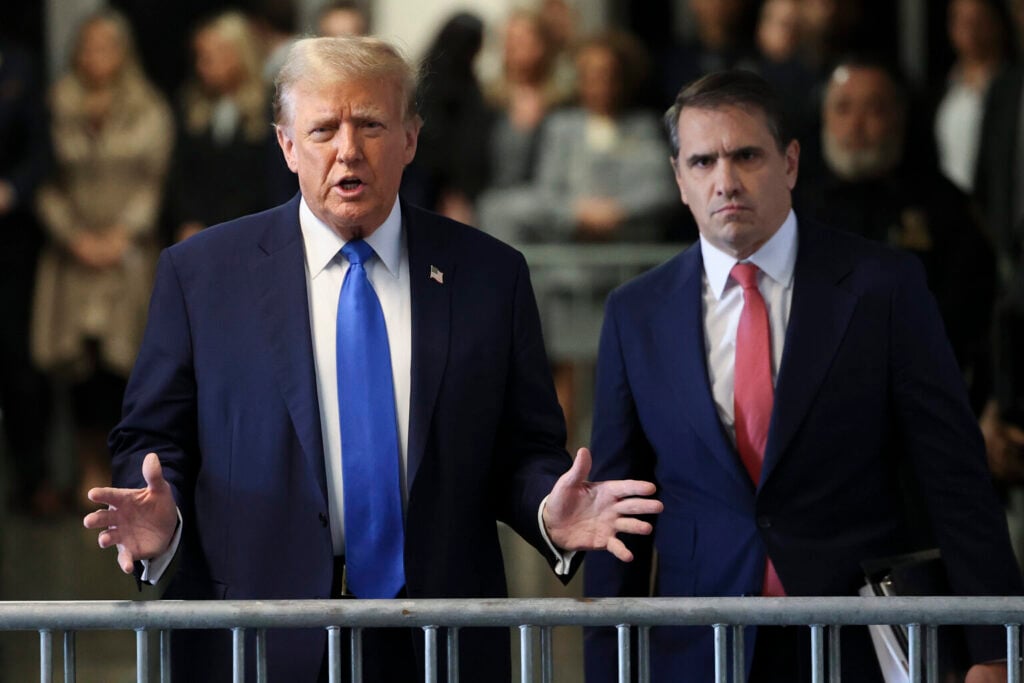
 President Donald Trump speaks to the media as he arrives with his then-personal attorney Todd Blanche in court for opening statements in his trial for allegedly covering up hush money payments at Manhattan Criminal Court on April 22, 2024, in New York City. Trump was convicted of falsifying business records in the first of his criminal cases to go to trial. Since his election, he’s nominated Blanche to be attorney general of the United States. (Photo by Yuki Iwamura-Pool/Courtesy of Alaska Beacon, Getty Images)

During a lengthy, meandering series of remarks last week, President Donald Trump offered another hint that his administration may seek to disrupt Alaska’s U.S. Senate election.

Fairbanks political writer Dermot Cole first noted Trump’s remarks.

On Aug. 18, NBC News — relying on unnamed sources — reported that the U.S. Department of Justice had issued grand jury subpoenas as it sought to investigate the campaign of Republican candidate Dan J. Sullivan of Petersburg. 

The Alaska Beacon has been unable to verify that reporting, but on Sept. 2, Trump alluded to a possible investigation.

Dan J. Sullivan has repeatedly said his campaign was inspired by his dissatisfaction with incumbent Republican U.S. Sen. Dan S. Sullivan, and that he did not work with officials from Democratic candidate Mary Peltola’s campaign on his initial run for office.

Despite that, Trump and Dan S. Sullivan have repeatedly claimed — without providing evidence — that Dan J. Sullivan is a fraudulent candidate. 

On Sept. 2, speaking to reporters in the Oval Office, Trump said he would travel to Alaska before the Nov. 3 general election in order to campaign for Dan S. Sullivan. 

Hours later, talking with Republican lawmakers at a dinner in the Rose Garden, Trump again brought up the Alaska race.

“I’m going to go up to Alaska for Dan Sullivan. Think of it,” Trump said. “They have a man named Dan Sullivan running against him, the Democrats.”

“I think, Todd, you have a legal case on that,” the President said, referring to Attorney General Todd Blanche.

The U.S. Senate confirmed Blanche by a 50-49 margin on Aug. 8. Sen. Dan S. Sullivan was one of the decisive votes in favor of confirmation.

In the August primary election, Democratic candidate Mary Peltola had 49.5% of the vote, Dan S. Sullivan had 41.4%, and Dan J. Sullivan had 2.5% of the vote.

Under Alaska’s election system, the top four candidates advance to the November general election. The fourth-place finisher in the primary, Democratic candidate David Leslie, withdrew after the results were finalized, which advanced the fifth-place finisher, Gerald Heikes, who had 1.1% of the vote.

Trump, speaking on Sept. 2, said that even though Dan J. Sullivan had only 2.5% of the vote, his appearance on the November ballot could be decisive in a close contest between Peltola and Dan J. Sullivan.

“Let’s say he takes two or three points away. That’s the difference between winning and losing. It should be illegal. I don’t know how the judges are ruling (on) it, but it really is terrible,” Trump said.

Dan J. Sullivan did not immediately respond to an inquiry from the Beacon about the President’s remarks, but after the publication of this article, he answered by email: “I will not let President Trump’s threats of retribution force me out of this race. I’m running to give a voice to the Alaskans who voted for me and to honor the intent of our ranked choice voting system.”

Editor’s note: This article was updated on Sept. 9, 2026, at 9:03 a.m. with a response from Dan J. Sullivan.

Categories
Alaska News Featured Juneau News juneau Juneau Local Juneau Local Ketchikan Local News Feeds Sitka Local

Alaska Department of Law says it found dozens of potential gaps in candidates’ financial disclosures

By: James Brooks, Alaska Beacon

Gov. Mike Dunleavy, Lt. Gov. Nancy Dahlstrom and Stephen Cox, general counsel to Dunleavy, speak at a news conference on Sep. 7, 2026 defending the decision to re-certify Treg Taylor as a candidate for governor on the general election ballot, citing issues with multiple candidates’ financial disclosure reports and litigation risks if he were disqualified. (Photo by Wil Courtney)

A decision that reversed Alaska Republican governor candidate Treg Taylor’s disqualification was motivated in part by a review that found 91 possible disclosure problems among 121 state-office candidates, Lt. Gov. Nancy Dahlstrom said Monday.

“My decision, I believe, was necessary for the integrity and the orderly administration of the election, and I believe this decision serves the public,” she told reporters during a news conference in Anchorage.

“There’s going to be a lot of people that think there were nefarious things going on. We don’t think so,” said Gov. Mike Dunleavy.

[GET MORE: What possible gaps were found in filings by Alaska’s four governor and lieutenant governor candidates?]

It wasn’t immediately clear whether any of the disclosure problems put candidates at risk of violating state law or if the state would require candidates to fix those problems.

Dahlstrom disqualified Treg Taylor and an Anchorage state House candidate on Aug. 31, following the recommendations of the Alaska Public Offices Commission, which cited flaws in their Public Official Financial Disclosure forms.

APOC is a regulatory agency of the Alaska Department of Administration that oversees campaigns and public officials’ financial disclosures, as well as lobbying activities.

Elected officials, members of state boards and commissions, and the governor’s cabinet, are required to use the POFD to disclose all business dealings worth more than $1,000 in order to discourage corruption. 

Taylor, Dunleavy’s former attorney general, and Republican state House candidate Jose Tagle failed to file complete forms within 30 days after they registered as candidates, causing APOC to recommend that they be disqualified from advancing past the August primary.

Dahlstrom followed that recommendation but then reversed herself four days later, restoring Taylor and Tagle to the ballot on Sept. 4.

Rachel Witty, the top civil attorney for the Alaska Department of Law, said during Monday’s news conference that the department had conducted a “limited and expedited” review of other candidates’ POFDs after Taylor’s disqualification in order to judge whether Dahlstrom’s action was legally defensible.

“This was done over the course of a day and a half. So I can’t emphasize enough that this is a preliminary review. We didn’t have time to contact candidates,” she said.

The resulting review found dozens of potential problems, including some with every other finalist candidate for governor — Democratic candidate Jonathan Kreiss-Tomkins, Republican Bernadette Wilson and Republican Dave Bronson.

Wilson and Kreiss-Tomkins’ lieutenant governor candidate, Zac Johnson, were the subject of APOC complaints on Friday about their disclosures, according to the Anchorage Daily News. 

APOC had not published the complaints as of Monday evening.

Dahlstrom said she was not aware of those complaints before making the decision to restore Taylor’s candidacy.

Candidates appeared to be surprised by Monday’s disclosure. None of the four candidates for governor responded to questions on Monday afternoon and evening about the issues raised by the Department of Law. 

“And just because there are potential discrepancies, that doesn’t mean that those candidates violated the law,” said Stephen Cox, attorney to Gov. Dunleavy.

Cox was appointed as attorney general following Taylor’s departure, but was rejected by the Alaska State Legislature in May.

Cox said he worked with Witty and the Department of Law on the review; the extent of his involvement wasn’t immediately clear. 

The Department of Law’s investigation is unusual, if not unprecedented. APOC typically operates on a complaint-based system, with most actions taken when a member of the public alerts the commission to a potential problem. 

The agency is chronically underfunded and understaffed. Ten years ago, it had 13 staff; today it has nine, and APOC has struggled at times to fill those positions.

Until last year, Taylor served as attorney general, head of the Department of Law. He’s now running as a Republican for governor, and the decision to both disqualify him and restore him came from a Republican elected official.

Witty said that “unequivocally,” the review “was completely an initiative of the Department of Law as we assess litigation risk.”

When asked whether candidates will be fined or required to correct the potential discrepancies before the general election, Witty said that’s within the jurisdiction of APOC to investigate. 

“We don’t know what APOC is going to do,” she said. “If  they find there’s reason to believe there is a violation, they can refer that to the APOC commission to take action on, and at that point, we’re talking about different fines and in the form of penalties.”

Moving forward, Dunleavy said, he intends to recommend that the next governor and next Legislature review APOC laws and regulations with a group of former elected officials.

“That’s something that I’ve been thinking about quite honestly for some time, and this just kind of hits home that it’s long overdue,” he said.  

Categories
Alaska News Featured Juneau News juneau Juneau Local Juneau Local Ketchikan Local News Feeds Sitka Local

Suicide deaths and attempts among Alaska youth continue at high rates, report shows

By: Yereth Rosen, Alaska Beacon

A flier seen Wednesday on a bulletin board at the University of Alaska Anchorage campus publicizes the 988 Suicide and Crisis Lifeline established in 2022. The 988 hotline is one of many programs aimed at preventing suicide. (Photo by Yereth Rosen/Alaska Beacon)

The suicide-death rate for young Alaskans hit a 10-year high last year and the rate of suicide attempts has increased over the past decade, state health officials reported.

From 2016 to 2025, there were 174 suicide deaths among Alaska youths under the age of 18 and 4,101 documented suicide attempts, according to a bulletin released by the Alaska Department of Health’s epidemiology section. The median age of those who died was 16, the bulletin said. The fatality rate, 19.2 per 100,000 children aged 10 to 18, was the highest rate since 2016.

Overall, Alaska’s youth suicide rate is nearly six times the nation average, the bulletin said.

Boys were victims in the vast majority of youth suicides over the 10-year period, accounting for 81% of the deaths, and most used firearms. Girls accounted for about three-quarters of the documented suicide attempts, according to the bulletin.

Those statistics point to “the need to prioritize timely follow-up and intervention following attempts among females and efforts to reduce access to highly lethal means (particularly firearms) among males during periods of crisis,” the bulletin siad..

For Alaska Native youths, the statistics are especially grim. Over the decade-long period, the suicide fatality rate among Alaska Natives aged 10 to 18 was 47 per 100,000 children, more than twice the state rate. The rate of documented suicide attempts was 1,098 per 100,000 children, also more than twice the state rate, according to the bulletin.

Special care should be used to address the problem among Indigenous youth, the bulletin said.

“The disproportionate burden of suicide among Alaska Native youth underscores the need for prevention strategies that are culturally responsive and community informed,” the bulletin said.

Statistics cited in the bulletin come from the Alaska Violent Death Reporting System and the Alaska Health Facilities Data Reporting system. The bulletin noted that statistics on suicide attempts likely understate the numbers because some attempts do not result in encounters with the healthcare system and therefore probably go unreported.

Suicide is also a major threat for adults in Alaska, state records show.

A graph shows suicide fatality and attempt rates per 100,000 people in Alaska from 2016 to 2025. (Graph provided by Alaska Division of Public Health epidemiology section)

It was the sixth leading cause of death in the state across all age groups, according to the most recent Department of Health status report in the Healthy Alaskans program. In comparison, suicide ranks 11th among causes of death nationally, according to the report.

There are some prevention programs in place in the state.

One is the national 988 crisis line, which in 2025 alone received nearly 44,000 calls from Alaskans.

Other programs are tailored to Alaska Native communities. One of those was designed for the rural Yukon-Kuskokwim region in Western Alaska by the Center for Alaska Native Health Research at the University of Alaska Fairbanks. And the Indian Health Service has a national program called the Zero Suicide Initative.

While suicides have been inching up over time, that “doesn’t necessarily mean that prevention strategies haven’t been successful,” Ashley Hannigan, a state epidemiologist who helped write the bulletin, said by email.

“It’s difficult or impossible to pin down the number of suicide attempts prevented by programming like the careline/988 or the Zero Suicide initiative,” Hannigan said. “The peak we see in 2025 for youth and adolescent suicide does emphasize the need to focus on youth-specific, and culturally tailored suicide prevention strategies, however.”

One idea for preventing youth suicide emerged this year in the Alaska State Legislature, but it was rejected by the governor.

Lawmakers passed a measure, Senate Bill 41, that would have established mental health guidelines for public schools. Sen. Elvi Gray-Jackson, D-Anchorage, the bill’s prime sponsor, described youth suicide as “a crisis that impacts every community in our state,” and said the bill would expand mental health services to children who need them but might otherwise lack access. 

Gov. Mike Dunleavy vetoed the bill on June 18. In his veto message, he said student mental health was important but that the bill would place the state “in the role of imposing upon school districts to mandate the development of mental health education at a time when districts are already working to meet existing requirements.”

Lawmakers attempted the next day to override the veto but fell short of votes to do so.

Categories
Alaska News Featured Juneau News juneau Juneau Local Juneau Local Ketchikan Local News Feeds Sitka Local

Alaska schools set to receive $115M in war-driven oil revenue bonus, state announces

By: Corinne Smith, Alaska Beacon

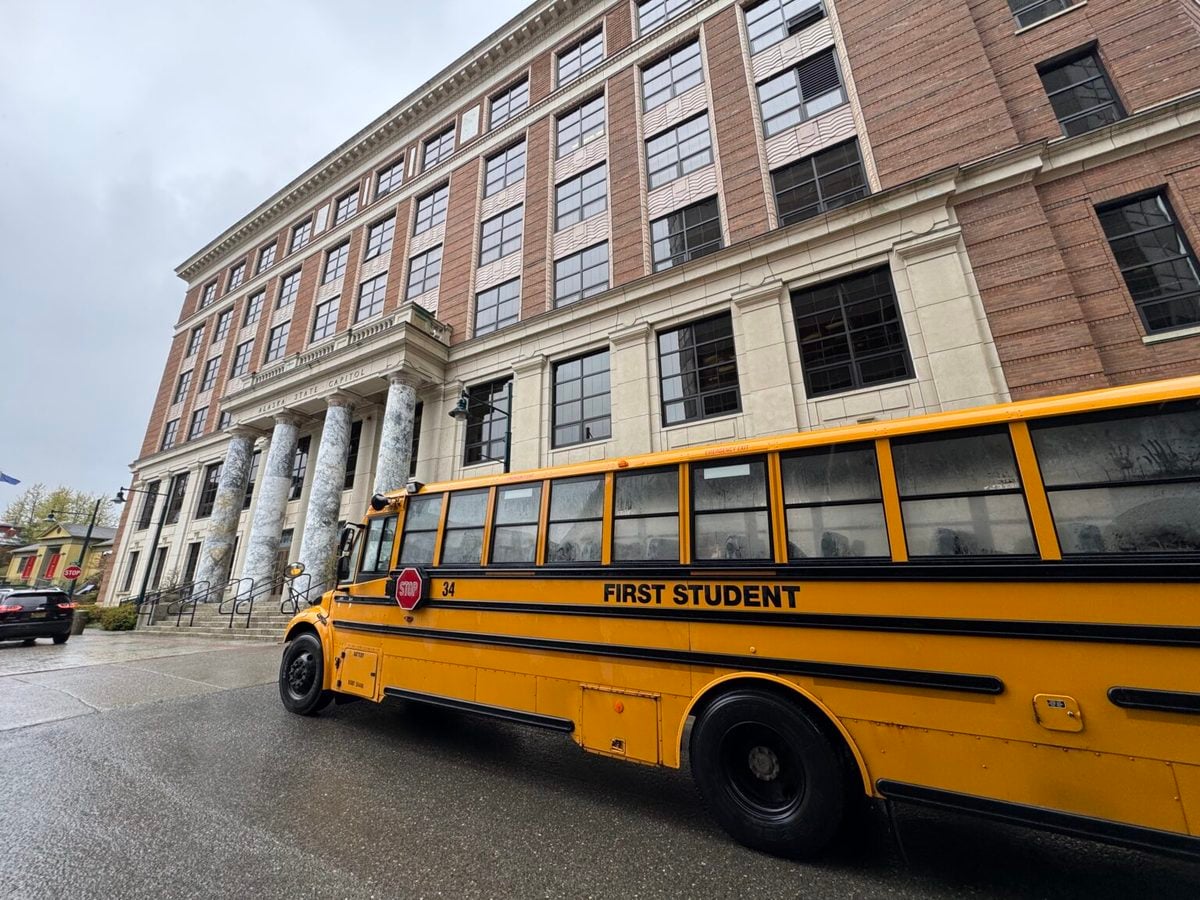
A school bus passes in front of the Alaska State Capitol on Wednesday, May 20, 2026. (James Brooks photo/Alaska Beacon)

The Alaska Department of Revenue announced on Monday that Alaska’s K-12 public schools will receive an additional $115 million in state funding this year, prompted by a boost in oil revenues driven by the U.S. war on Iran.

Legislators earmarked the additional oil revenue for schools as part of the state budget approved by Gov. Mike Dunleavy in June. 

The additional funding is a relief to school districts statewide. Many districts have faced severe budget shortfalls in recent years due to funding not keeping pace with rising costs. This year, a record 12 elementary and middle schools closed across the state.

Following the announcement, Luke Meinert, superintendent of the Fairbanks North Star Borough School District — the state’s third-largest district by student count — welcomed the news, and said the district is appreciative of the Legislature for making it a priority.  

“(We’re) very excited that the projected numbers came through and that we will see a sizable increase in funding for our school district through the one-time funds that are being allocated,” he said in an interview Tuesday. 

Officials with the Department of Revenue announced the state had collected sufficient revenue funds to meet the special appropriation of nearly $600 million. 

Lawmakers designated funding for four priorities areas, in sequential order: nearly $128 million to the Permanent Fund to allocate one-time energy relief payments of $200 per eligible Alaskan along with dividend checks; $115 million to K-12 schools through the Alaska Department of Education and Early Development; $15 million to the bulk fuel loan program; and $341 million to the state’s budget reserve account.

According to the announcement, the Monday revenue estimates are expected to be revised and finalized this fall. The revenue amounts are expected to “change slightly,” impacting the exact amount that will land in the budget reserve fund, the state’s savings account, officials said. 

The $115 million will be distributed to school districts according to the state’s education funding formula, which is based on student enrollment counts in October.  

For Fairbanks, that’s estimated to be roughly $10.2 million this year. Meinert said the district designed its budget this year anticipating about half of that amount, and the additional funding will go toward teachers and staff, as the district is currently in union contract negotiations are ongoing, and other areas. “So that will help us in our negotiation discussions for this school year,” he said. 

“Student activities have been an area that’s been cut pretty hard over the past several years,” he continued. “So potentially adding some funding there to ensure that families aren’t having to pick up a bigger burden of paying for student activities. And then, additionally, I think there may be some smaller investments for teacher mentoring, teacher coaching, and possibly some funding in our nutrition services department.”

School board members with Fairbanks and Anchorage called on the state in June to release estimates earlier, ahead of the school year — “the earliest practical information available,” they wrote in an op-ed for the Anchorage Daily News. They asked the state to announce whether “funding is likely, unlikely or still uncertain,” to help districts plan, particularly for hiring teachers. 

But the Department of Revenue did not change its scheduled announcement.

Lisa Parady, executive director of the Alaska Council of School Administrators, said they were “elated” and “grateful” at the announcement. But she said it underscores Alaska schools’ needs for prior notice and consistent state funding. 

“We do have to get to the place where we have predictable, reliable funds in advance of needing to extend contracts. That’s the biggest issue,” she said Tuesday. 

“Because we’re in the greatest education shortage in the history of Alaska and in the nation, it allows for the recruitment and retention of quality educators and that ability to lock in those contracts sooner,” she said.

Among the state’s largest districts, the Anchorage School District is expected to get $32 million. The Matanuska Susitna Borough School District is expecting $16.1 million, the Kenai Peninsula School District is expecting $7.6 million. Both districts closed schools this year. 

Parady said it’s difficult to say if the additional funding earlier in the year would have prevented school closures.

Districts cited surging costs of operations, as well as declining enrollment as more families opting for homeschool programs or leaving the state. 

“Each school district is in their own unique place in terms of overall education funding in their budgets,” Parady said. “Having a long term fiscal plan that allows for timely, reliable, and predictable revenue for schools … is the only way that school boards and our school district leaders can have the tools they need to make the best decisions as they’re managing their budgets. And school closures are obviously a piece of that, and so I can’t say for sure that it could have changed an outcome, but it’s certainly possible.”

Anchorage Democrat Sen. Löki Tobin, who chairs the Senate Education Committee expressed her reaction Tuesday as “mixed.” “We know that our schools are in desperate need of resources,” she said. 

“We have nonpartisan financial memos from our Division of Legislative Finance that says to adequately address the years that inflation has eroded the purchasing power of our base in funding, we need to appropriate significant financial resources per student to our schools, and while $115 million is a significant amount of dollars, it’s clearly not enough. And one-time funds do not create stability nor predictability.”

Tobin also acknowledged the moral dilemma of the upswing of Alaska oil revenues and state funding driven by the U.S. war on Iran. 

“It is gut-wrenching to know the reason that Alaska has been able to receive these resources,” Tobin said. “It is not without contemplation or thought that I have been thinking about the children that were bombed in these recent years in a place that is very far away from us, but is no less important and nor no less critical for the health and well-being of all of our kids, and how those choices are driving the record increases in the price of a per barrel of oil.”

With the boost in state revenues, Tobin also credited the efforts of lawmakers across political divides in designating funding for schools. “Folks who work to get this funding into our budget not only crossed the aisle but also were bicameral in nature, and that is absolutely critical,” she said.

Lawmakers allocated roughly $144 million in one-time additional funding for K-12 schools, plus $148 million for school repairs and construction this year to address an extensive maintenance backlog. They approved $29 million to offset districts’ rising energy costs beginning in 2028 and subject to future lawmakers approving the funding.

Categories
Alaska News Featured Juneau News juneau Juneau Local Juneau Local Ketchikan Local News Feeds Sitka Local

City discusses unknowns and big price tag for long‑term GLOF fix

This photo is from the 2024 GLOF

NOTN- After another glacial outburst flood on the Mendenhall River, Juneau officials are turning their focus to how the city will pay for long‑term protection of flood‑prone neighborhoods.

City Manager Katie Koester told the Assembly that the U.S. Army Corps of Engineers is moving ahead with an industry led solution, which could move on a faster time-line than one directed by the Army Corp.

The project would be designed to Suicide basin below 1,100 feet and hold future events to minor flood levels.

While final designs and costs are still unknown, Koester said the overall price tag could reach hundreds of millions of dollars, leaving Juneau responsible for an estimated $40 million to $100 million depending on the federal cost share, 10 to 25 percent.

According to Koester, after speaking with Alaska Senator Dan Sullivan’s office, Alaska’s congressional delegation is now working to change federal law so Juneau can receive the same 90-10 cost share available for Army Corps projects on tribal lands under the conventional process.

“I do think our state having some participation in the funding of an enduring solution is important… we have local government, federal government, tribal government, and state government all working together.” Koester said.

The city has already spent nearly $10 million in local funds on HESCO barriers and related work over recent flood seasons, and staff time has been pulled away from other core capital projects such as water, wastewater and facilities maintenance. Koester said engineering, public works and emergency management have been “absorbing” much of the response workload, and warned that can’t continue indefinitely without tradeoffs or added staff.

“We have spent a little under $10 million of CBJ taxpayer money, and that is thanks to grants and partnerships. Army Corps has spent significantly more more than that.” Koester said, “There will be maintenance responsibilities that we’ll be in charge of, including inspection, unfortunately protecting against vandalism. We’ve already seen the barrier slashed. We’ve already seen warming fires being built right up against the barriers.”

Assembly members are weighing a mix of options, including a special service area tax for roughly 1,800 homes in and around the flood zone currently protected by HESCOs, bonds backed by area‑wide taxpayers, and potential contributions from the state. A one‑mill levy in a HESCO service area would likely raise less than $1 million a year, meaning the general fund would still play a major role.

The Assembly is also debating whether to compensate homeowners who host HESCO barriers on their land through temporary easements, and whether to limit new development in the flood corridor while it asks voters to help finance a permanent solution. A small Assembly “strike team” will work with staff to refine funding options before they return to the full body for public debate.

Categories
Alaska News Featured Juneau News juneau Juneau Local Juneau Local Ketchikan Local Music News Feeds Sitka Local

Primary election results indicate Alaska House, Senate coalition majorities are likely in 2027

By: James Brooks, Alaska Beacon

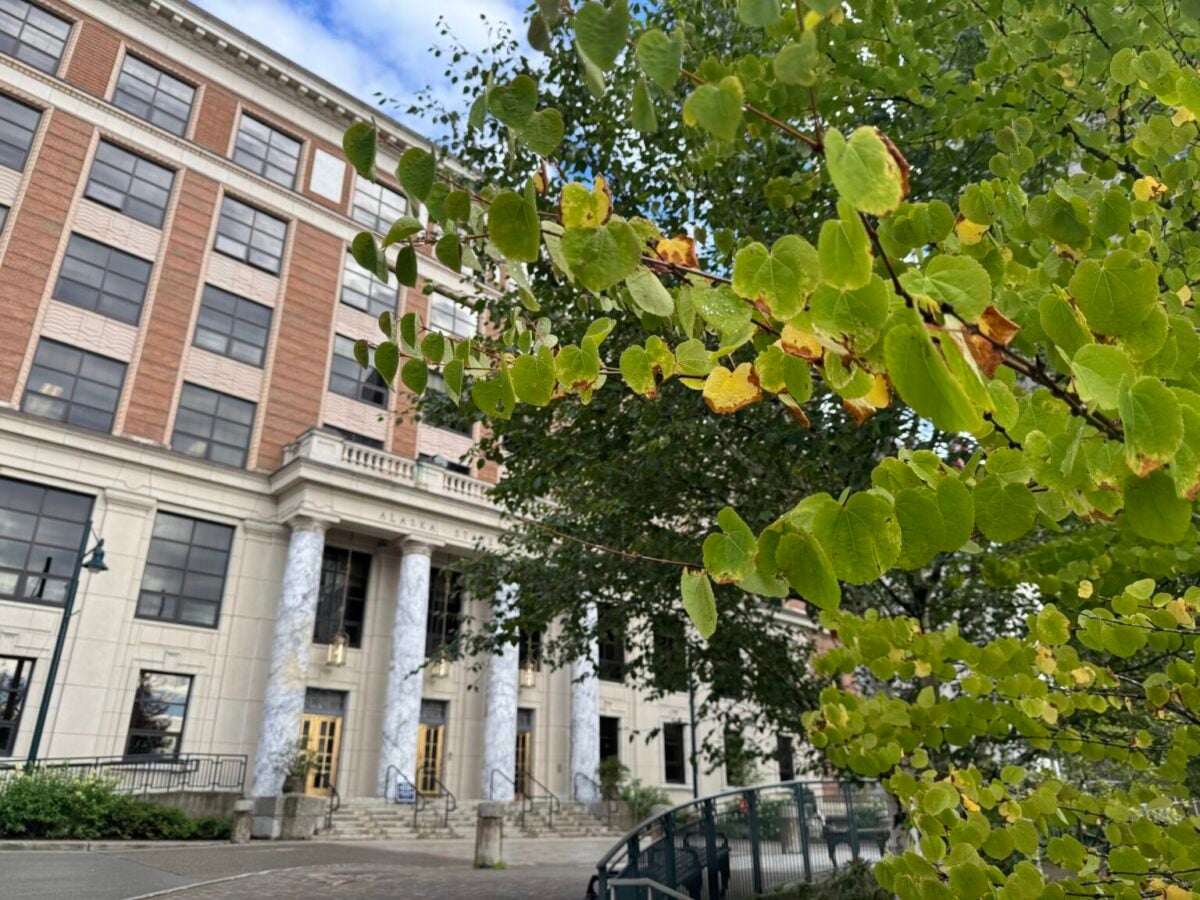
The first leaves begin to take their fall colors on the trees in front of the Alaska State Capitol on Tuesday, Sept. 1, 2026. (James Brooks photo/Alaska Beacon)

Final results from Alaska’s August primary election indicate existing coalition majorities in the state House and Senate are likely to continue after November’s general election and could even grow.

Alaska is the only state in the country where the state House and Senate are both controlled by coalitions of Democrats, independents and Republicans, something that forces bipartisan and multipartisan negotiations and compromises. 

In Monday’s certified primary results, coalition-leaning candidates led 24 of 40 state House races. The current coalition majority includes 21 lawmakers — two Republicans, 16 Democrats and three independents. 

In the state Senate, 10 of 20 seats are up for election this year. Coalition members or coalition-inclined candidates lead in seven of those races. Seven other coalition members are not up for election this year. 

“I think you have a chance for one of the strongest coalitions in a very long time,” said Andrew Halcro, a former state legislator and moderate Republican who commentates on Alaska politics via a popular podcast. 

Any majority group that controls the House and Senate dictates the agenda — who chairs committees, what bills advance and which ones do not. 

In the 34th Alaska State Legislature, conflicts between the coalition-led Legislature and Gov. Mike Dunleavy, a conservative Republican, led to a record number of vetoes and a lack of resolution on major issues, including a proposed trans-Alaska natural gas pipeline, increases in education funding and a long-term plan to balance state expenses and revenue. 

Senate District S – Southwest Alaska

Sen. Lyman Hoffman, D-Bethel, is retiring this year as the longest-serving member of the Alaska Legislature in state history. 

Five people signed up to replace him, including current Speaker of the House Bryce Edgmon, I-Dillingham. Edgmon was the top finisher in the primary, with 37.9% of the vote.

The other finalists in November’s election will be Republican Darren Deacon (23.9%), Democrat Wassilie Guy (18.9%), and nonpartisan Richard Robb (11.5%). None filed withdrawal paperwork before Monday’s deadline.

The fifth-place finisher was undeclared candidate Wayne Morgan (7.9%). He is eliminated and will not advance to November. 

This year, 4,184 people voted in the district, and turnout was up significantly from two years ago, when 2,899 people voted in the primary. 

In 2022, during a primary that coincided with a special general election, 4,257 people voted in the district and Hoffman earned 66.2% of the vote in a two-way race against Veterans Party candidate Willy Keppel. 

House District 37 – Bristol Bay and the Aleutian Islands

Edgmon’s decision to run for Senate means there is no incumbent in the race to represent House District 37, which covers Bristol Bay and the Aleutians. 

Seven candidates registered for the primary, the most of any state House race in Alaska. 

The district is a tossup politically — two years ago, 50.8% of participating voters picked Republican Donald Trump for President, but 52.9% voted for Democratic U.S. House candidate Mary Peltola and 72.5% went for Edgmon for U.S. House. 

Four years ago, the district went for Peltola and Republican U.S. Sen. Lisa Murkowski in the general election.

In the August primary, Republican Brenda Wilson of King Cove had 22.6% of the vote, the most among the seven candidates for state House.

The other three finalists are Democratic candidate Evelynn Trefon (19.8%), nonpartisan Mark Smith (17.5%) and nonpartisan Cade Woods (9.2%).

Democratic candidate Dennis Robinson had 15.1% of the vote but withdrew before Monday’s deadline, as did undeclared candidate Kimberly Johnson, who had 10.7% of the vote. Their withdrawals cleared the way for Woods to be promoted into the fourth spot. 

As a result, there will be one Democrat, one Republican and two independents to pick from in November. 

House District 23 – Eagle River

Incumbent Republican Rep. Jamie Allard was the top vote-getter in a five-way primary election for the state House seat representing half of Eagle River, earning 39.8% of the vote in a strongly Republican district.

Democratic candidate Jim Arlington advanced to the November election with 31.9% of the vote, followed by Republican Ruby Jones (13.9%) and Democrat Lee Hammermeister (5.8%).

Republican Nick Capozzi finished ahead of Hammermeister with 8.6% of the vote but withdrew before Monday’s deadline. In a statement on Facebook, he said he was withdrawing to fulfill a pre-election pledge to stop his campaign if he was “soundly defeated” in the primary. 

Capozzi said he is not endorsing Allard and believes there is “growing dissatisfaction” with her in the district.

“While I sincerely hope District 23 is well represented, I believe the Republican Party should carefully evaluate who is best positioned to earn and maintain the confidence of District 23 voters in future elections,” he wrote.

Hammermeister, though registered as a Democratic candidate, does not have the party’s support. 

House District 29 – Eastern Mat-Su

Incumbent Republican Rep. Garret Nelson of Sutton was appointed by Gov. Mike Dunleavy to represent the district after Dunleavy appointed its former representative, Republican George Rauscher, to the state Senate.

In the August primary, Nelson finished second, behind Republican Steve Menard, who had 39.4% of the vote in a six-way race that was the second most crowded among legislative contests last month.

Nelson had 23.2% of the vote, just ahead of Democratic candidate Kimberly Slone, who had 23.1% of the vote as the sole Democrat in a strongly Republican district.

Nonpartisan candidate Jessica Kusner-Kalarchik was fourth, with 8%. 

Libertarian candidate Candice Frisby (4.2%) and undeclared candidate Amber Hansen (2%) were eliminated after finishing fifth and sixth, respectively. 

House District 30 – Big Lake

A five-way race for the state House district representing Big Lake, the Denali Borough and the western Matanuska-Susitna Borough resulted in just three candidates advancing to the November election after the two lowest finishers withdrew ahead of Monday’s deadline.

Incumbent Republican Rep. Kevin McCabe had 32.4% of the vote in the heavily Republican district, followed by Democratic candidate Sandra Loomis with 29.2%.

Republican challenger Doug Massie was third, with 20.6%. 

Withdrawals leave two more candidates running unopposed

Among Alaska’s 40 state House elections, four incumbents ran unopposed in August and will be unopposed in November, except for write-ins.

After one candidate was disqualified and another withdrew on Monday, two more races will also have candidates running unopposed.

Lt. Gov. Nancy Dahlstrom, a Republican, disqualified Republican House District 22 candidate Jose Roel Tagle after the Alaska Public Offices Commission said he had violated state law by failing to disclose his personal finances on time.

Tagle’s disqualification leaves Democratic incumbent Ted Eischeid as the only candidate for the Anchorage district.

Elsewhere in Anchorage, former Anchorage Assembly member Felix Rivera quit the House District 13 race ahead of Monday’s deadline.

That district is currently represented by Democrat Andy Josephson, who is retiring and isn’t seeking re-election. Rivera’s departure leaves Democrat Lisa Keller as the only option on the ballot in November.

The other four unopposed state House legislators are Reps. Sara Hannan, D-Juneau; Chuck Kopp, R-Anchorage; Genevieve Mina, D-Anchorage; and Will Stapp, R-Fairbanks. 

In the Senate, three of 10 races are unopposed: Sens. Bert Stedman, R-Sitka; Löki Tobin, D-Anchorage; and Bill Wielechowski, D-Anchorage, all remain on track to return to the Capitol in January. 

In open districts, conservative Republican candidates tended to trail

While Republican candidate Brenda Wilson led all challengers in the primary for House District 37, her performance wasn’t repeated by all Republicans in open state House and Senate seats

In Senate District C, which covers Kodiak, Cordova and parts of the southern Kenai Peninsula, Rep. Louise Stutes, R-Kodiak, earned 49.4% of the vote to replace Sen. Gary Stevens, R-Kodiak. 

Stevens is retiring, and the seat has no incumbent. Stutes is a moderate, one of two Republican members of the House’s coalition majority, and is expected to replace Stevens in the Senate’s coalition majority if elected.

Two more conservative Republicans, Heath Smith of Homer (37.8%) and Carrie Harris of Anchor Point (12.9%) finished behind Stutes in second and third. 

In Stutes’ House District 5 in Kodiak, nonpartisan candidate Kathy Simpler had 61.4% of the vote against Republican challenger Sheldon Prout in a head-to-head race. 

In Anchorage, where Democratic candidate Cliff Groh is attempting a return to the state House in the district covering Government Hill and Joint Base Elmendorf-Richardson, he had 67.2% of the vote against Republican challenger Dan Sager. The seat is currently held by Republican Rep. David Nelson, who is not seeking re-election.

Farther north, in Eagle River, Republican Rep. Dan Saddler is retiring. Republican Ken McCarty, a former legislator himself, led a three-way race to replace Saddler, earning 46.8% of the vote.

One of the other candidates in the race, former Rep. Sharon Jackson, withdrew ahead of Monday’s deadline. That leaves Republican Gina Wall, who earned 33.8% of the primary vote, as McCarty’s sole challenger.

In Fairbanks, Republican Rep. Frank Tomaszewski is running for the state Senate seat being vacated by Republican Robert Myers. Primary results showed him with 60.9% of the vote in a head-to-head race against Democratic challenger William Hunt. 

Four incumbents trail in primary, but outcomes could change in November

In Anchorage’s Sand Lake neighborhood, Democratic candidate Denny Wells had 52.7% of the vote in a head-to-head race against Republican incumbent Rep. Mia Costello.

That’s a reversal of the general-election result two years ago, when Costello had 51.5% of the vote in a race against Wells and perennial candidate Dustin Darden, running as a Democrat. 

The district has a slight Republican lean — it went for Trump two years ago, but the Republican candidate had less than 50% of the district’s vote for president. 

In Homer, Republican Rep. Sarah Vance finished the primary more than 13 percentage points behind nonpartisan challenger Brent Johnson, who earned 56.9% of the vote in a head-to-head race.

Vance has been in office since 2019 and has governed as a Christian conservative, but she appeared to alienate some conservative Republicans this year when she worked across party lines on a bipartisan election reform bill.

Gov. Mike Dunleavy vetoed that bill, and lawmakers sustained his veto after two Republicans — both from southeast Alaska — switched from supporting the bill to opposing it. 

In Fairbanks, Rep. Tomaszewski’s wife, Harmony, is the lone Republican candidate in the strongly Republican district being vacated by Tomaszewski. But in final primary election results, Harmony trailed nonpartisan candidate Joy Beth Cottle by 6 percentage points. 

The two will appear on the ballot again in November. 

In Western Alaska, Rep. Nellie Unangiq Jimmie was the only incumbent Democrat who didn’t finish first in the primary. 

With 29% of the vote, she finished second to former Democratic Rep. CJ McCormick, whom she defeated in 2024.  

Republican Willy Keppel was third with 24.3% of the vote, followed by nonpartisan candidate Joseph Amik, with 14.7%. 

Turnout in the Democratic-leaning district was low by comparison with the rest of the state — fewer than 16% of eligible voters cast ballots in the primary. 

Primary success isn’t a guarantee of success in November, even in head-to-head contests: Two years ago, Sen. Scott Kawasaki, D-Fairbanks, received fewer votes in the August primary than his Republican challenger, Leslie Hajdukovich. 

Just three months later, Kawasaki reversed that result and remains a member of the Senate today.