By: Corinne Smith, Alaska Beacon
With affordability top of mind this election, Alaska candidates for governor offered varying perspectives on how their administrations would support working families and cap the ongoing tide of outmigration from the state, if elected.
Alaska has seen a steady exodus of people leaving the state. Last year, state demographers reported more people left than moved to Alaska — the 13th consecutive year of net outmigration. The median household income in 2024 was nearly $94,000 according to the U.S. Census Bureau. And a recent study by the non-profit United Way estimates nearly 40% of Alaskans do not earn enough to cover basic expenses like for food, housing, child care and healthcare.
Coupled with fuel prices at a record high this year, driven by the U.S. war on Iran, Alaskans have seen rising costs of groceries and transportation, as well as housing, healthcare, and child care. Families and officials also point to school districts facing severe budget shortfalls forcing cuts, larger class sizes and some closures as a driver of families leaving the state.
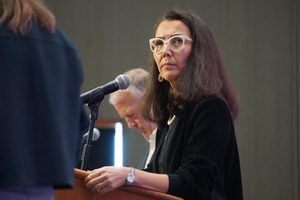
Three of the four candidates — Democrat Jonathan Kreiss-Tomkins and Republicans Dave Bronson and Treg Taylor — participated in an online forum on Monday with the Alaska Children’s Trust, a non-profit advocacy group that focuses on supporting children and families and preventing child abuse and neglect.

The fourth candidate in the running for governor, Republican Bernadette Wilson, did not participate due to a scheduling conflict, organizers said.
Trevor Storrs, executive director of the Alaska Children’s Trust, moderated the forum and noted that Alaska’s economy “depends on families, not just resource development” and asked the candidates how they would support working families and stem the tide of outmigration.
Kreiss-Tomkins said his priority would be the supply side, and boosting state investments across sectors. “There should just be more housing, more abundant energy, more availability of childcare,” he said. “And the scarcity of all of those things is driving up costs in a big way in Alaska, and around the country, and it’s working families that feel that squeeze.”
On housing, Kreiss-Tomkins said his administration would focus on accelerating construction: finding appropriate state lands to make available, and reducing permitting and regulations for all types of housing. Similarly for child care providers, he said he would seek to reduce state regulations hindering new facilities and available space.
Taylor said he also supports reducing regulations on new housing projects and on childcare providers. He said his main focus in reducing costs for families and businesses would be reducing the cost of energy.
“It’s all about energy,” he said. “I would pursue an all of the above approach to energy, (and) reducing energy costs. Whether it be dams, whether it be solar, whether it be the AKLNG line, which I think is absolutely critical for Alaskans to reduce long-term costs for Alaskan families.”2026 Voter Guide
The candidates, the ballot measures, and the tools you need to cast your vote.
He said he would also pursue making more state lands available for housing development and reducing regulations in order to build. “I also want to do a modern day Homestead Act where families are able to build a home and create an environment where they can grow and grow their families,” he said.
Bronson said he would work to reduce costs by opposing tax increases on families and businesses. “Adding those on is an expense burden to the people of Alaska. That’s not how you move forward,” he said.
He said he also opposes imposing family and medical leave as an “interruption to the private enterprise process.”
Widening gap between need and access to Medicaid and SNAP
Candidates were asked how they would address delays and errors in state public assistance programs, including Medicaid and the Supplemental Nutritional Assistance Program, or SNAP.
Nearly 60,000 Alaskans have lost Medicaid coverage since Jan. 2025, including over 20,000 children according to data collected by the Georgetown University Center for Children and Families. Some of those children lost coverage due to paperwork rather than ineligibility, Storrs noted. Thousands more are expected to lose coverage with new eligibility requirements enacted by the Trump administration’s Big Beautiful Bill Act that go into effect in January.
Alaska also has had the highest SNAP error rate in the country for four consecutive years, and some residents face months-long delays in food assistance. But state officials say modernization efforts to improve administration of the program and processing times are underway.
All three candidates agreed the state assistance programs have major problems that need more state investment and focused attention. Kreiss-Tomkins and Taylor said they would publish the backlog numbers so that the public can monitor the progress to reduce it, and hold officials accountable.
“It’s going to be brutal at the beginning because those numbers are going to be ugly as all heck, but it needs to be out there, and then the numbers need to go in the right direction,” Kreiss-Tomkins said.
Taylor cited his experience as attorney general working on reducing the backlog in processing sexual assault examination kits. He called the SNAP backlog “unacceptable” and pledged to fund technology improvements for the system and improve access to benefits. “This should not be happening,” he said.
Bronson said he would boost pay for state workers in the Division of Public Assistance to help reduce the backlog in SNAP and Medicaid processing. “We don’t have enough people because we don’t pay enough. I’m a fiscal conservative, a strident fiscal conservative, and I just look at it this way: if we’re going to do certain things in government, if we decide we’re going to do them, we better do them well,” he said.
He criticized Dunleavy for underfunding the state’s social assistance programs and said he supports boosting funding for social services. “We have to smartly, efficiently and economically add money to the pot because if not, this failing is just going to keep going on,” he said.
All three candidates said they support increased funding for the state’s foster care system, run by the Office of Children’s Services, which has been a focus of lawsuits and legislative scrutiny after an audit showed the agency has failed to implement reforms.
“Some of that may be resources, I think there’s also potentially a management leadership restructuring question,” Kreiss-Tomkins said.
Youth mental health and suicide prevention
The candidates presented varying approaches to supporting youth mental health and suicide prevention. Last year, Alaska youth suicides hit a 10-year high — a rate that is six times higher than the national average.
Kreiss-Tomkins said he supports expanding access to mental health providers, including through telehealth and easing licensing requirements. He noted that supporting Native cultural activities, particularly in rural Alaska, can help support a sense of cultural identity and belonging, including subsistence activities and language learning.
Taylor said he would “supercharge” the Alaska Mental Health Trust Authority, a state corporation that manages roughly one million acres of state lands and a trust that generates revenue for mental health services each year.
“Right now they feel like just handing out a few checks every year to charities is what their duty is. No, their duty is to create a comprehensive system of mental health in the state of Alaska,” Taylor said.
He said he would also seek to improve the K-12 education system to create more opportunities and pathways for viable jobs for youth: “You have to have economic opportunity for these kids, and they need a sense of purpose, they need a sense of opportunity, they need a sense of hope, and they need a sense of pride.”
Bronson agreed the state needs more mental health providers. He described meeting a woman who is working on suicide prevention in communities along the Yukon River, where salmon runs have crashed dramatically altering residents’ ways of life.
“That’s a trigger,” Bronson said. “And in the immediate, you’ve got to have someone right there in front of them, whether it’s a hotline or a person, so they can call and get to help in the immediate. But then, long term, systemically, you’re going to have to spend money to deal with this. We just are.”
All three candidates expressed support for boosting state spending on K-12 schools, which has been a major topic of discussion this election season.
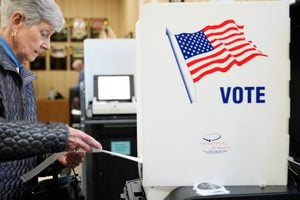
Early voting is underway in Alaska, and continues through Election Day at 8 p.m. on Nov. 3.