Categories
Alaska News Featured Juneau News juneau Juneau Local Juneau Local Ketchikan Local News Feeds Sitka Local

Alaska Senate committee unveils crime bill package in final weeks of the legislative session

By: Corinne Smith, Alaska Beacon

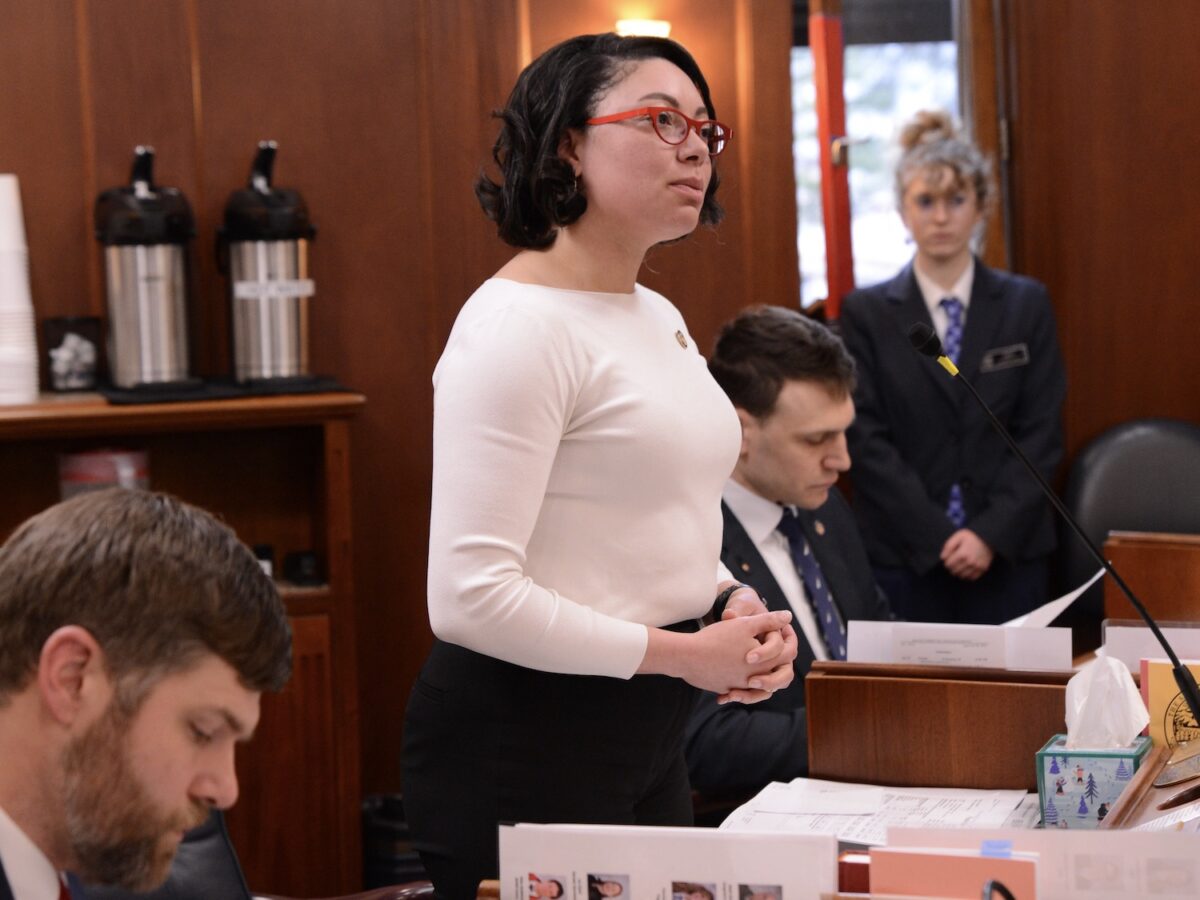
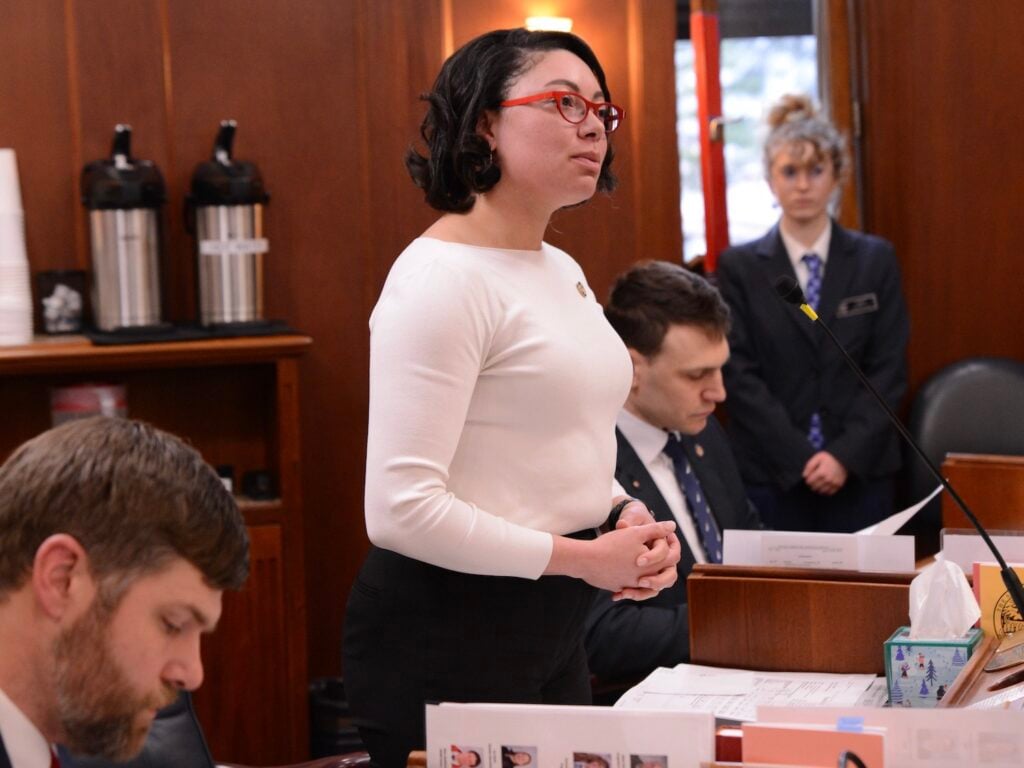
Sen. Matt Claman, D-Anchorage, speaks Wednesday, April 23, 2025, on the floor of the Alaska Senate. (Photo by James Brooks/Alaska Beacon)

With only four weeks left of the legislative session, the Senate Judiciary Committee has merged several bills into a wide-ranging omnibus crime bill. Even with the tight timeline, some lawmakers are optimistic about its chances for passage before the end of the session.  

The new draft omnibus crime package combines ten bills ranging from raising the age of consent to increasing criminal penalties for AI-generated child sexual abuse material into one large bill supporters hope will have the momentum to pass both the House and the Senate in the next 28 days. 

The Senate Judiciary Committee chair Sen. Matt Claman, D-Anchorage, introduced the 55-page omnibus bill on Friday, saying the bills have a stronger prospect as a package.

“I think that increases the likelihood we’ll be able to pass it,” he said in an interview on Monday. 

With one month to go in the second year of the two-year legislative cycle, this is the last opportunity for bills to be passed by the 34th Legislature. 

The draft omnibus crime bill was added to House Bill 239, sponsored by House Majority Leader Rep. Chuck Kopp, R-Anchorage, who spoke in support at the hearing on Friday.

“This bill has grown, it’s gone from the sports car to the school bus” he said. “Policies I all support as a bill sponsor.”

Gov. Mike Dunleavy sponsored two bills included in the omnibus package, but did not respond to a request for comment on Tuesday. 

The bills included are in various stages. Some have passed the House, while others are being considered by various committees in the House and Senate. Several lawmakers who sponsored bills now included in the omnibus package agreed that politically it could increase chances of passage by May 20. 

Rep. Sarah Vance, R-Homer, sponsored a bill that would create state felony penalties for AI-generated child sexual abuse material. It unanimously passed the House last month.

“I’m excited that it’s included in the omnibus bill, because that shows intent by the Senate to pass the bill,” Vance said on Monday. “So I have great confidence that it will cross the finish line.”

But Claman, who is running for governor, has drawn public criticism for the process of how the omnibus crime bill was put together this session. 

Advocates for raising the age of consent — along with the Anchorage Daily News editorial board — criticized Claman for holding a bill to raise the age of consent to 18 in the Senate Judiciary Committee, which passed unanimously by the House last year, in order to be included in the omnibus bill. Critics urged Claman and the committee to pass the bill and allow it to move forward as a stand alone bill toward a full Senate vote and final passage.

Claman has argued that despite limited time left in the session, the bills included have been vetted and the combination package will garner more support among legislators and the governor to pass in the last few weeks of the session. 

“I’ve been in the Legislature now since 2015, and so in the last 11 years, we’ve passed 11 different bills relating to public safety,” he said. “So I think there are ten different measures that we put into the bill, and if we tried to do them all individually, probably wouldn’t get them all passed.”

Claman pointed to an omnibus crime bill, House Bill 66, enacted in 2024, with support from Gov. Mike Dunleavy and across political affiliations. “That’s certainly, I think, the best example,” he said. “So I do have confidence we’ll get it passed.”

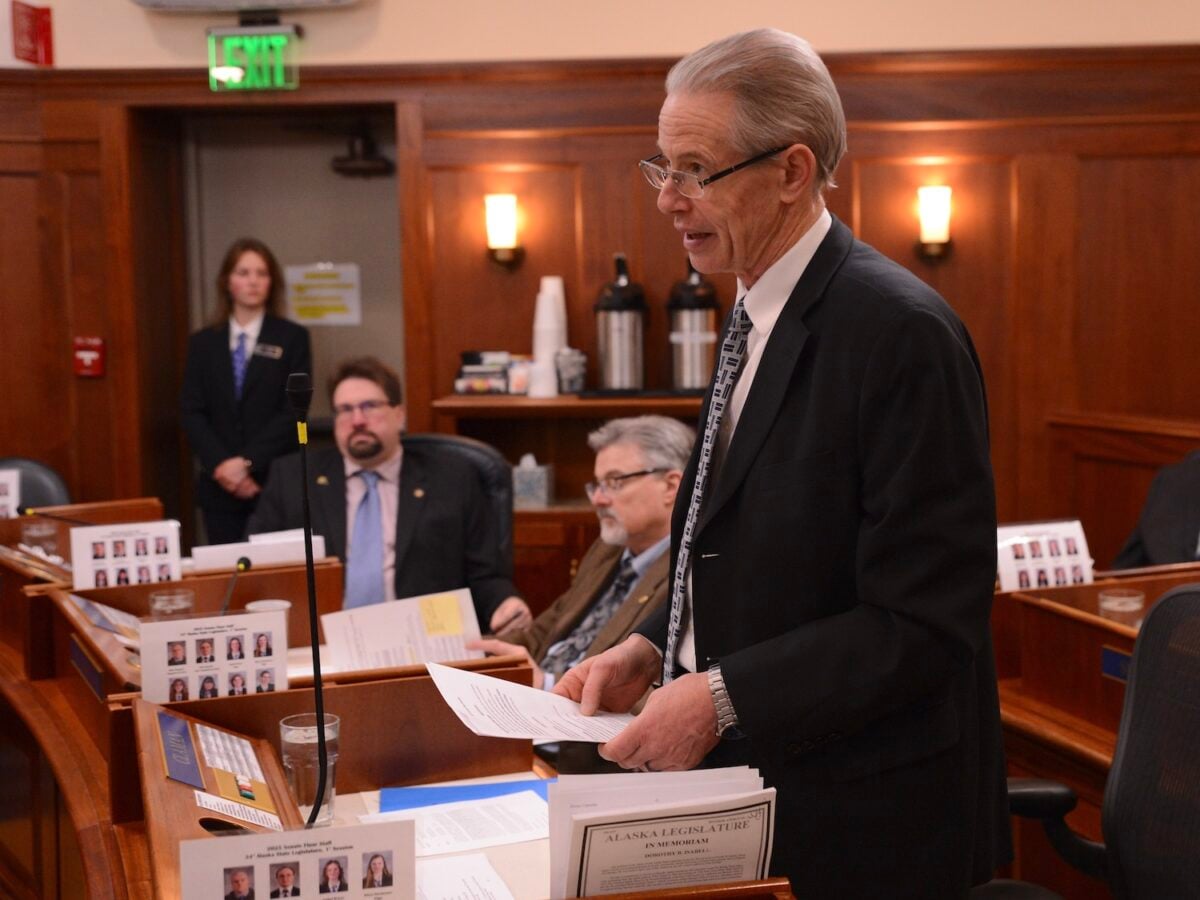
Rep. Andrew Gray, D-Anchorage, speaks Friday, April 26, 2024, on the floor of the Alaska House of Representatives. (Photo by James Brooks/Alaska Beacon)

Rep. Andrew Gray, D-Anchorage, sponsored House Bill 101, the bill that would raise the age of consent from 16 to 18 years old. Backed by advocates for sexual violence prevention, he said the change in law is essential for protecting teens from sexual exploitation and abuse. Under current law, it’s legal for an adult to have sex with a 16 or 17 year old. But when they are assaulted, teens must prove that they did not consent. 

Despite previous disagreement and pushing for a stand alone bill, Gray said Monday he will back the omnibus crime bill in order to see the law changed. 

“If that happens, inside an omnibus crime package that has other bills that are also worthy of passage, I’m fine with that,” he said. “I just want the policy to change.”

The draft omnibus crime bill now contains ten bills that previously stood alone:

  • House Bill 239 — would increase criminal penalties for hit and run incidents so that drivers that cause a death and knowingly failing to stop and render assistance, and establishes mandatory sentencing of four to seven years for a first hit and run felony conviction
  • House Bill 101 — would raise the age of consent from 16 to 18 years old, with provisions to allow consent to sex with someone up to six years older than them. The draft bill also allows 16 and 17 year olds to consensually exchange sexual or explicit messages within the six year close-in-age gap without penalties.
  • Senate Bill 247 — would create state criminal penalties for creating AI-generated images or video that depicts sexually explicit or obscene content involving anyone under 18 years old
  • House Bill 62 — Sponsored by Gov. Mike Dunleavy, the bill would establish a statewide tracking system for sexual assault examination kits, expedite processing times, and ensure that survivors can privately monitor the status of their own kit. 
  • Senate Bill 100 — Also sponsored by the governor, and would establish the crime of organized theft, including mail theft and medical record theft
  • House Bill 242 — would redefine criminal law to prohibit any sexual contact or assault by a health care worker during professional treatment, changing the current law which only applies to patients being unaware of sexual contact or assault for criminal charges to apply. 
  • Senate Bill 17 — would establish the crime of airbag fraud for knowingly selling, installing or manufacturing a counterfeit airbag in a vehicle 
  • House Bill 81 — would establish minor marijuana related convictions to remain confidential on individuals personal records, under certain criteria
  • House Bill 384 —  would expand confidentiality agreements between victims and service providers by updating the definition of “victim counseling center” to include tribal organizations
  • Senate Bill 233 — would reassign the Controlled Substances Advisory Committee from being administered by the Department of Law to the Department of Commerce, Community and Economic Development. 

The new version of Vance’s bill focused on AI-generated child sexual abuse material included in the bill is closer to her initial proposal. Social media controls for minors added by the House were stripped out of the Senate version. Vance said she supports the amended version given First Amendment protections around social media. 

“I think that was a wise decision right now, because Alaskans are very mixed on how they feel that we should address social media,” Vance said. 

Rep. Sara Hannan, D-Juneau, is the sponsor of House Bill 242, and said she supports her bill being included in the Senate omnibus, but she is still pushing to advance her standalone bill in the House.

Rep. Sara Hannan, D-Juneau, speaks on the House floor on Apr. 13, 2026. (Photo by Corinne Smith/Alaska Beacon)

“I need people who didn’t serve on the two committees that heard it in the House to understand it,” she said, as the Senate draft will come back to the House for a concurrence vote. “It still helps to educate on the issue.”

Hannan’s legislation follows a high profile case in Juneau last year where the court dropped several charges against a chiropractor because under current law part of the legal definition of sexual assault by a medical provider requires the alleged victim to be unaware the assault is happening. 

“Right now, the victim needs to be unaware, and the perpetrator needs to know that they are unaware,” Hannan said Tuesday. “So to change that in statute, I think is an important policy statement for us to make.”

Hannan said significant policy bills typically take several years to get through the Legislature, with public input, debate and support gathering. But she expressed confidence in the support for the omnibus crime bill in the weeks ahead. 

“We’re running the clock down,” she added. “The only downside, from my perspective, is the advocates and the victims that were directly involved in the case that inspired this bill. You know, they get more acknowledgement when it’s the standalone bill… But in the end, if the goal is to change the policy, there’s no downside to it.”

The Senate Judiciary Committee will continue to hold hearings on the crime bill this week and its members have until Friday to introduce amendments before it advances to the Senate floor for a vote. Claman said he expects that to be in the last week of April. 

Categories
Alaska News

Alaska Senate committee unveils crime bill package in final weeks of the legislative session

Sen. Matt Claman, D-Anchorage, speaks Wednesday, April 23, 2025, on the floor of the Alaska Senate. (Photo by James Brooks/Alaska Beacon)

Sen. Matt Claman, D-Anchorage, speaks Wednesday, April 23, 2025, on the floor of the Alaska Senate. (Photo by James Brooks/Alaska Beacon)

With only four weeks left of the legislative session, the Senate Judiciary Committee has merged several bills into a wide-ranging omnibus crime bill. Even with the tight timeline, some lawmakers are optimistic about its chances for passage before the end of the session.  

The new draft omnibus crime package combines ten bills ranging from raising the age of consent to increasing criminal penalties for AI-generated child sexual abuse material into one large bill supporters hope will have the momentum to pass both the House and the Senate in the next 28 days. 

The Senate Judiciary Committee chair Sen. Matt Claman, D-Anchorage, introduced the 55-page omnibus bill on Friday, saying the bills have a stronger prospect as a package.

“I think that increases the likelihood we’ll be able to pass it,” he said in an interview on Monday. 

With one month to go in the second year of the two-year legislative cycle, this is the last opportunity for bills to be passed by the 34th Legislature. 

The draft omnibus crime bill was added to House Bill 239, sponsored by House Majority Leader Rep. Chuck Kopp, R-Anchorage, who spoke in support at the hearing on Friday.

“This bill has grown, it’s gone from the sports car to the school bus” he said. “Policies I all support as a bill sponsor.”

Gov. Mike Dunleavy sponsored two bills included in the omnibus package, but did not respond to a request for comment on Tuesday. 

The bills included are in various stages. Some have passed the House, while others are being considered by various committees in the House and Senate. Several lawmakers who sponsored bills now included in the omnibus package agreed that politically it could increase chances of passage by May 20. 

Rep. Sarah Vance, R-Homer, sponsored a bill that would create state felony penalties for AI-generated child sexual abuse material. It unanimously passed the House last month.

“I’m excited that it’s included in the omnibus bill, because that shows intent by the Senate to pass the bill,” Vance said on Monday. “So I have great confidence that it will cross the finish line.”

But Claman, who is running for governor, has drawn public criticism for the process of how the omnibus crime bill was put together this session. 

Advocates for raising the age of consent — along with the Anchorage Daily News editorial board — criticized Claman for holding a bill to raise the age of consent to 18 in the Senate Judiciary Committee, which passed unanimously by the House last year, in order to be included in the omnibus bill. Critics urged Claman and the committee to pass the bill and allow it to move forward as a stand alone bill toward a full Senate vote and final passage.

Claman has argued that despite limited time left in the session, the bills included have been vetted and the combination package will garner more support among legislators and the governor to pass in the last few weeks of the session. 

“I’ve been in the Legislature now since 2015, and so in the last 11 years, we’ve passed 11 different bills relating to public safety,” he said. “So I think there are ten different measures that we put into the bill, and if we tried to do them all individually, probably wouldn’t get them all passed.”

Claman pointed to an omnibus crime bill, House Bill 66, enacted in 2024, with support from Gov. Mike Dunleavy and across political affiliations. “That’s certainly, I think, the best example,” he said. “So I do have confidence we’ll get it passed.”

Rep. Andrew Gray, D-Anchorage, speaks Friday, April 26, 2024, on the floor of the Alaska House of Representatives. (Photo by James Brooks/Alaska Beacon)

Rep. Andrew Gray, D-Anchorage, sponsored House Bill 101, the bill that would raise the age of consent from 16 to 18 years old. Backed by advocates for sexual violence prevention, he said the change in law is essential for protecting teens from sexual exploitation and abuse. Under current law, it’s legal for an adult to have sex with a 16 or 17 year old. But when they are assaulted, teens must prove that they did not consent. 

Despite previous disagreement and pushing for a stand alone bill, Gray said Monday he will back the omnibus crime bill in order to see the law changed. 

“If that happens, inside an omnibus crime package that has other bills that are also worthy of passage, I’m fine with that,” he said. “I just want the policy to change.”

The draft omnibus crime bill now contains ten bills that previously stood alone:

  • House Bill 239 — would increase criminal penalties for hit and run incidents so that drivers that cause a death and knowingly failing to stop and render assistance, and establishes mandatory sentencing of four to seven years for a first hit and run felony conviction
  • House Bill 101 — would raise the age of consent from 16 to 18 years old, with provisions to allow consent to sex with someone up to six years older than them. The draft bill also allows 16 and 17 year olds to consensually exchange sexual or explicit messages within the six year close-in-age gap without penalties.
  • Senate Bill 247 — would create state criminal penalties for creating AI-generated images or video that depicts sexually explicit or obscene content involving anyone under 18 years old
  • House Bill 62 — Sponsored by Gov. Mike Dunleavy, the bill would establish a statewide tracking system for sexual assault examination kits, expedite processing times, and ensure that survivors can privately monitor the status of their own kit. 
  • Senate Bill 100 — Also sponsored by the governor, and would establish the crime of organized theft, including mail theft and medical record theft
  • House Bill 242 — would redefine criminal law to prohibit any sexual contact or assault by a health care worker during professional treatment, changing the current law which only applies to patients being unaware of sexual contact or assault for criminal charges to apply. 
  • Senate Bill 17 — would establish the crime of airbag fraud for knowingly selling, installing or manufacturing a counterfeit airbag in a vehicle 
  • House Bill 81 — would establish minor marijuana related convictions to remain confidential on individuals personal records, under certain criteria
  • House Bill 384 —  would expand confidentiality agreements between victims and service providers by updating the definition of “victim counseling center” to include tribal organizations
  • Senate Bill 233 — would reassign the Controlled Substances Advisory Committee from being administered by the Department of Law to the Department of Commerce, Community and Economic Development. 

The new version of Vance’s bill focused on AI-generated child sexual abuse material included in the bill is closer to her initial proposal. Social media controls for minors added by the House were stripped out of the Senate version. Vance said she supports the amended version given First Amendment protections around social media. 

“I think that was a wise decision right now, because Alaskans are very mixed on how they feel that we should address social media,” Vance said. 

Rep. Sara Hannan, D-Juneau, is the sponsor of House Bill 242, and said she supports her bill being included in the Senate omnibus, but she is still pushing to advance her standalone bill in the House.

Rep. Sara Hannan, D-Juneau, speaks on the House floor on Apr. 13, 2026. (Photo by Corinne Smith/Alaska Beacon)

“I need people who didn’t serve on the two committees that heard it in the House to understand it,” she said, as the Senate draft will come back to the House for a concurrence vote. “It still helps to educate on the issue.”

Hannan’s legislation follows a high profile case in Juneau last year where the court dropped several charges against a chiropractor because under current law part of the legal definition of sexual assault by a medical provider requires the alleged victim to be unaware the assault is happening. 

“Right now, the victim needs to be unaware, and the perpetrator needs to know that they are unaware,” Hannan said Tuesday. “So to change that in statute, I think is an important policy statement for us to make.”

Hannan said significant policy bills typically take several years to get through the Legislature, with public input, debate and support gathering. But she expressed confidence in the support for the omnibus crime bill in the weeks ahead. 

“We’re running the clock down,” she added. “The only downside, from my perspective, is the advocates and the victims that were directly involved in the case that inspired this bill. You know, they get more acknowledgement when it’s the standalone bill… But in the end, if the goal is to change the policy, there’s no downside to it.”

The Senate Judiciary Committee will continue to hold hearings on the crime bill this week and its members have until Friday to introduce amendments before it advances to the Senate floor for a vote. Claman said he expects that to be in the last week of April. 

SUPPORT: YOU MAKE OUR WORK POSSIBLE

Categories
Alaska News

Alaska House advances bill restricting polystyrene containers from restaurants

Rep. Andy Josephson, D-Anchorage and co-chair of the House Finance Committee which drafted the operating budget, speaks to what's included in the budget on the House floor on Apr. 13, 2026. (Photo by Corinne Smith/Alaska Beacon)

Rep. Andy Josephson, D-Anchorage and co-chair of the House Finance Committee which drafted the operating budget, speaks to what’s included in the budget on the House floor on Apr. 13, 2026. (Photo by Corinne Smith/Alaska Beacon)

The Alaska House of Representatives passed a bill Wednesday banning restaurants from providing food in polystyrene foam containers.

Representative Andy Josephson, D-Anchorage, introduced the bill to address what he called an “alarming problem” of plastic pollution.

Josephson cited a statistic from the ​Ocean Conservancy, an environmental advocacy nonprofit, that found polystyrene foam is found in 22% of food takeout containers in the U.S.

Polystyrene foam is a non-biodegradable plastic that is used to make insulated and disposable plates, cups and takeout containers. It contains chemicals that can be harmful when heated and contributes to environmental pollution. Styrofoam is a form of expanded polystyrene foam.

The Ocean Conservancy estimates that Americans use 5.6 billion pieces of plastic foam annually. 

“There’s enough foam produced every year to fill the Dallas Cowboys stadium five times. That’s what’s at issue here,” Josephson said.

If the bill makes it into law, Alaska will become the thirteenth state to ban polystyrene containers. The Alaska municipalities of Bethel, Cordova and Seward enacted bans on polystyrene food containers.

The proposed restrictions would not apply to food prepared outside of Alaska or to areas affected by a disaster emergency. Restaurants would be able to apply to the state’s Department of Environmental Conservation for exemptions.

The bill would prohibit the state from using or purchasing polystyrene foam disposable food service ware and instructs the Alaska Department of Environmental Conservation to recommend that restaurants reuse food service ware instead of using disposable containers.

Green Alaska Solutions LLC, Alaska Community Action on Toxics and Oceana, an advocacy organization focused on ocean conservation, supported the bill.

Opponents of the bill included the Foodservice Packaging Institute, the Alaska Chamber, the Plastics Industry Association and the Alaska Cabaret, Hotel, Restaurant, and Retailers Association, or CHARR.

Kati Capozzi, president and CEO of the Alaska Chamber, wrote that the bill would impose financial burdens on Alaska’s businesses and Sarah Oates Harlow, president and CEO of Alaska CHARR, said that the bill would decrease restaurant profit margins, with both expressing concerns that the bill would negatively impact small businesses.

“By requiring restaurants to use more expensive alternatives that may not perform as well—especially for hot or cold foods—this bill threatens to increase operating costs for businesses already struggling with narrow margins. The unintended consequence could be higher costs for consumers and additional strain on small businesses,” Capozzi stated in a letter to legislators.

The bill passed with 25 yes votes and 15 no votes in the House of Representatives.

Rep. Dan Saddler, R-Eagle River, said that he opposed the bill vehemently.

“This is using the power of government to force people to do things that the government believes are best for you…the government seldom knows best on these kinds of things.”

Rep. Sara Hannan, D-Juneau, supported the bill and spoke to its environmental impact.

“It (polystyrene foam) never goes away. It just breaks down into smaller and smaller and smaller particles and finds its way into our diverse ecosystem, primarily waterways.”

She also said that legislators should not only consider the cost of alternative disposable food service ware, but the cost of landfills and Alaskans’ health.

Rep. Ashley Carrick, D-Fairbanks, voted in support of the bill and compared the ban to seat belt laws and the establishment of smoke free workplaces. She told legislators that the long term benefits to public health and the environment outweigh the short term costs.

Lawmakers’ efforts to expand the bill failed in a lengthy amendment process. There were attempts to ban paper straws, to ban polystyrene packaged outside the state, to allow municipalities to allow restaurants to provide prepared food in polystyrene foam disposable food service ware, and to create a telephone line to report violations.

SUBSCRIBE: GET THE MORNING HEADLINES DELIVERED TO YOUR INBOX

Categories
Alaska News

Alaska’s embattled economic development agency approves $700,000 PR budget

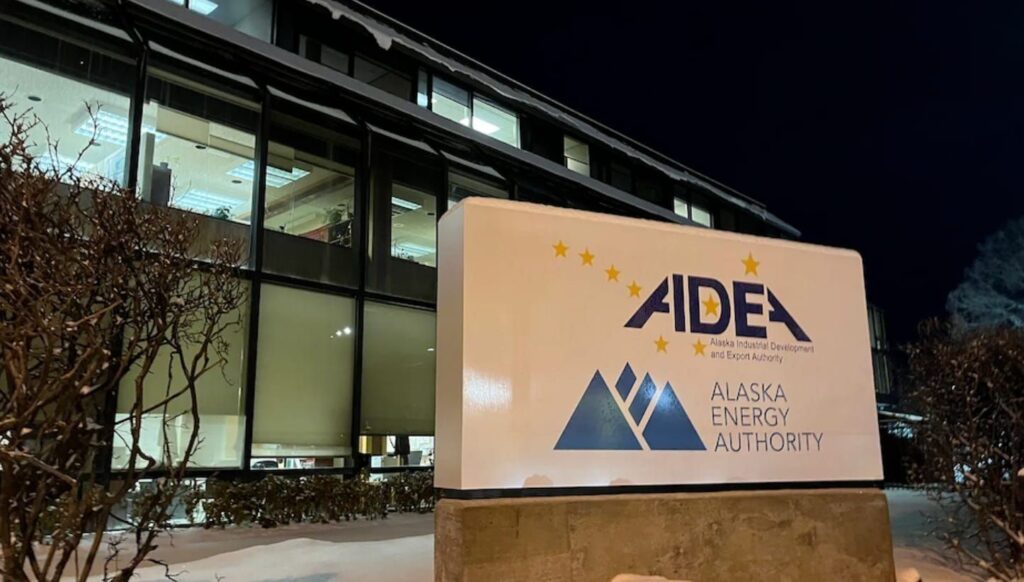
The Alaska Industrial Development and Export Authority, whose headquarters are pictured here, is leading state efforts to develop oil leases in the Arctic National Wildlife Refuge and to build roads to mining deposit in the Mat-Su and Northwest Alaska. (Courtesy/Nathaniel Herz/Northern Journal)

The state agency leading some of Alaska’s most polarizing development projects has approved a new communications budget, saying it needs to do a better job telling its own story amid attacks from critics.

The state-owned Alaska Industrial Development and Export Authority is run by a former chief of staff to Gov. Mike Dunleavy and is charged with promoting economic growth and expanding natural resource extraction and exports.

A screengrab from an anti-AIDEA ad campaign from the 907 Initiative advocacy group.

It is leading work to develop state-owned oil leases in the Arctic National Wildlife Refuge and also hopes to build two controversial new roads to access mining prospects in Northwest Alaska and outside of Anchorage.

Those projects have drawn sharp opposition from conservation organizations and other critics, including lawsuits, critical op-eds and campaigns that have labeled the agency “Bad AIDEA” and caricatured its leaders.

At a meeting in Ketchikan this month, board members, with no public discussion, authorized AIDEA’s staff to spend up to $700,000 a year on a new communications budget — formalizing a plan that the agency says was previously budgeted inconsistently through spending on individual projects.

The new communications plan, the agency said in its formal resolution authorizing the spending, will “ensure proper public engagement, transparency, and stewardship of the authority’s mission.” The money could go toward trade shows and conferences, responding to media inquiries and “other communications-related needs,” according to the resolution.

The agency’s executive director, Randy Ruaro, referred questions about the plan to Dave Stieren, an AIDEA employee who ran an advertising agency and hosted a conservative talk radio show before joining the Dunleavy administration.

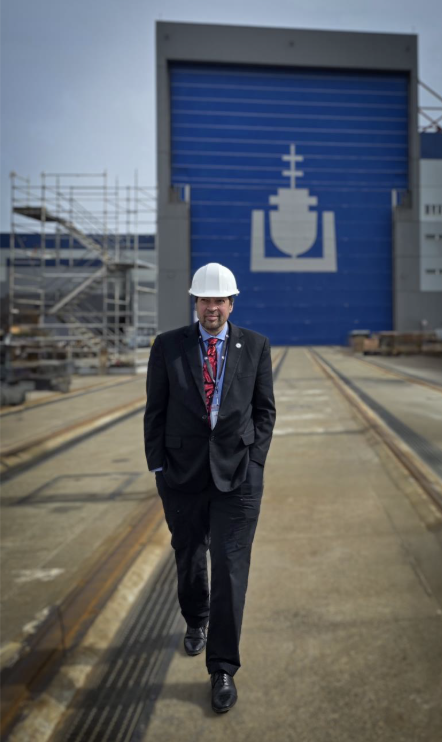
Randy Ruaro, AIDEA’s executive director, toured a state-owned shipyard when his agency’s board met in Ketchikan earlier this month. (Alaska Industrial Development and Export Authority)

Stieren said he could not provide exact figures on AIDEA’s past communications spending, but he acknowledged that the new plan should allow the agency to meaningfully boost its public profile.

The $700,000 a year, he added, is a limit, and the agency will set a final budget through a request for proposals process.

“Mothership AIDEA has done, frankly, little to nothing on a consistent basis to tell our story,” Stieren said in an email — particularly when it comes to its loan programs that have helped finance tourism and hospitality businesses, like the Alaska Club fitness chain and Anchorage’s Bear Tooth pizza restaurant and theater.

“We’re far more than roads,” Stieren said. “But since we’ve really not promoted or showcased our efforts in traditional finance areas, I understand the narrative or lack thereof that folks may have.”

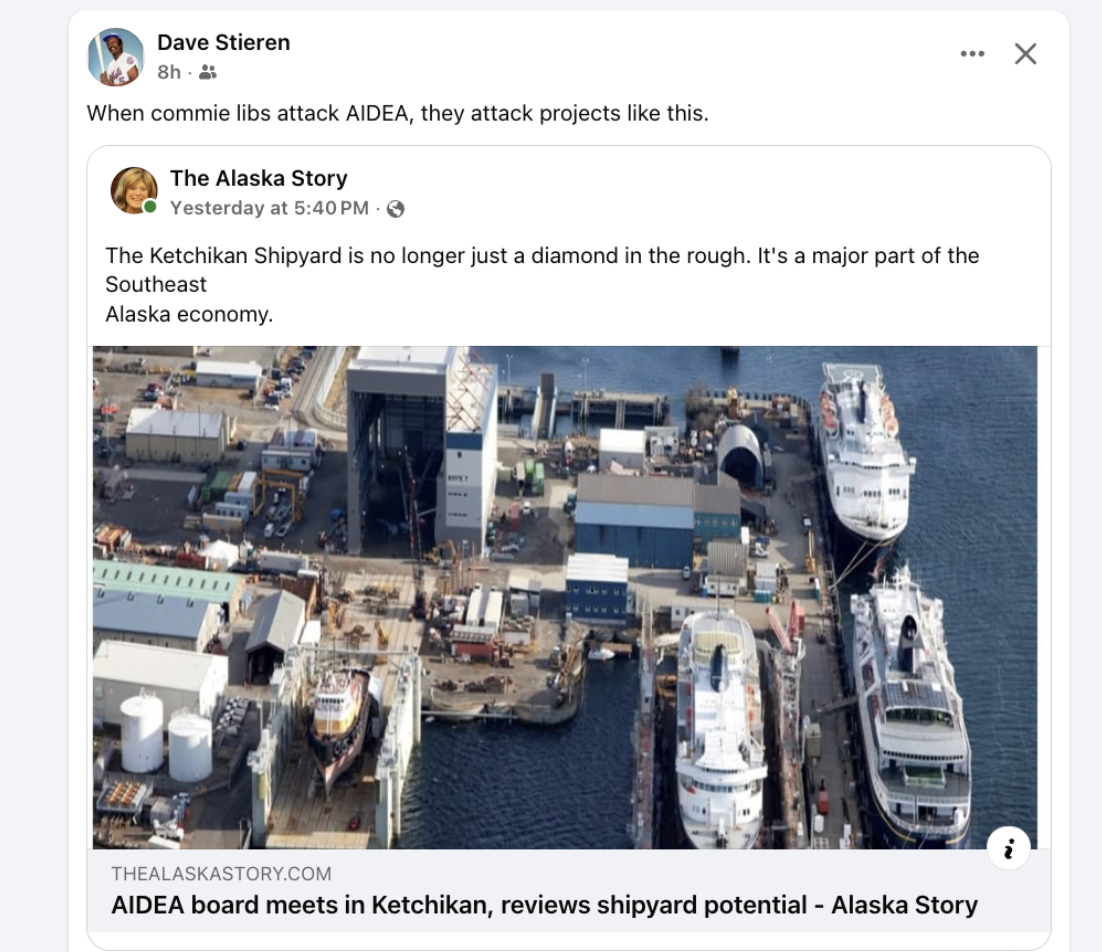
Stieren has also personally defended AIDEA on social media, including over the weekend — when he posted a conservative news website’s positive story about an agency-owned shipyard and said that “when commie libs attack AIDEA, they attack projects like this.”

AIDEA’s board chair, Bill Kendig, declined to answer questions about approval of the new communications budget when reached by phone.

At the Ketchikan meeting, one AIDEA critic, Melis Coady, credited the agency with formalizing communications spending as a “step toward accountability.” But she said that the plan doesn’t “deliver the transparency it describes” because it gives Ruaro, the executive director, authority to approve communications spending, and only requires that he report it to the board if asked.

“The authorization is broad, the dollar amount is undefined, and expenditures are approved solely by the executive director,” said Coady, who leads a conservation group called the Susitna River Coalition.

Ruaro, in an email, said AIDEA will issue reports on communications to board members “whether requested or not.”

Stieren’s social media post

AIDEA’s board chair, Bill Kendig, declined to answer questions about approval of the new communications budget when reached by phone.

At the Ketchikan meeting, one AIDEA critic, Melis Coady, credited the agency with formalizing communications spending as a “step toward accountability.” But she said that the plan doesn’t “deliver the transparency it describes” because it gives Ruaro, the executive director, authority to approve communications spending, and only requires that he report it to the board if asked.

“The authorization is broad, the dollar amount is undefined, and expenditures are approved solely by the executive director,” said Coady, who leads a conservation group called the Susitna River Coalition.

Ruaro, in an email, said AIDEA will issue reports on communications to board members “whether requested or not.”

Reporting like this takes time and money. Northern Journal’s primary revenue source is contributions from readers. If you’re already a member, thank you. If not, we’d be grateful if you’d consider a voluntary subscription.

The post Alaska’s embattled economic development agency approves $700,000 PR budget appeared first on Chilkat Valley News.

Categories
Alaska News

Trump’s DOJ sued over campaign to amass data on millions of voters

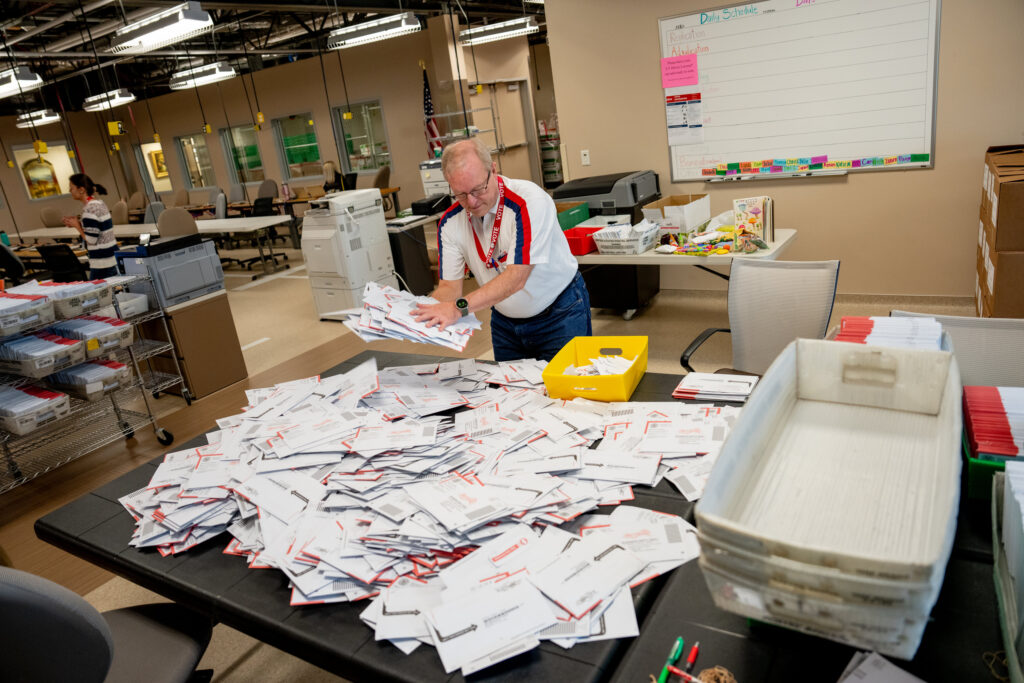
Election workers process ballots at the Davis County Administrative Building in Farmington, Utah, on Election Day, Tuesday, Nov. 5, 2024. (Courtesy/Spenser Heaps for Utah News Dispatch)

Voting rights groups launched a legal challenge Tuesday against the Trump administration’s effort to sweep up sensitive data on millions of Americans with the aim of identifying noncitizen voters, arguing that the U.S. Department of Justice is building a dangerous centralized national voter list ahead of the midterm elections in November.

The federal lawsuit, filed in the District of Columbia by the voting rights and civic group Common Cause with help from other organizations, seeks to block the Justice Department from obtaining and analyzing unredacted state voter lists that include driver’s license and partial Social Security numbers. 

The DOJ plans to share the data with the Department of Homeland Security, which operates a powerful computer program that can verify U.S. citizenship. Democratic election officials say the program has wrongly flagged Americans as possible noncitizen voters and could erode faith in election results.

“This is a blatant, partisan power grab designed to cast doubt on the validity of our elections and whose vote should be counted,” Virginia Kase Solomón, Common Cause president and CEO, said in a statement.

The Justice Department has sued 30 states and the District of Columbia for the data. But at least a dozen other states have provided the data, handing the Trump administration information on millions of registered voters. 

The latest lawsuit by Common Cause, with legal representation by the American Civil Liberties Union, Citizens for Responsibility and Ethics in Washington and other voting rights groups, opens a new front in the legal fight against the Trump administration’s campaign for the data. It represents an attempt to halt the administration from using the voter information it’s already obtained — and stop it from collecting more.

The suit asks a court to order the Justice Department to halt any actions to compile, use or disclose sensitive voter data. The groups also wants the DOJ to delete the data already in its possession.

Alaska, Arkansas, Indiana, Louisiana, Mississippi, Nebraska, Ohio, Oklahoma, South Dakota, Tennessee, Texas, and Wyoming have voluntarily provided, or will turn over, their sensitive voter data, according to the Brennan Center for Justice at New York University, which has been tracking the Justice Department’s efforts.

Federalization of elections

Since taking office last year, President Donald Trump has moved to assert presidential power over federal elections, which under the U.S. Constitution are run by the states. The president and his allies have framed his moves as necessary to ensure the security of elections by purging noncitizen voters.

Trump issued an executive order a year ago that attempted to impose a nationwide requirement that voters must produce documents proving their citizenship. Federal courts blocked the order. He is also pressuring Congress to pass legislation, the SAVE America Act, containing a similar requirement.

Late last month, Trump signed another executive order clamping down on mail ballots. It directs the U.S. Postal Service to restrict the delivery of ballots and instructs Homeland Security to compile lists of voting-age U.S. citizens in each state, effectively building a national database of voters and would-be voters. Several active lawsuits are challenging the order.

“By attempting to interrogate and exploit voter data for political purposes, President Trump’s DOJ isn’t just threatening the privacy of every American—they are building a system designed to imprison the ballot box and silence millions of eligible voters,” Kase Solomón said. “We won’t stand by while Americans’ rights to privacy and voting are under attack.” 

The Justice Department didn’t immediately respond to a request for comment.

In other lawsuits, Justice Department lawyers have argued the agency is entitled to voter data under the 1960 Civil Rights Act, a federal law to combat voting discrimination. DOJ lawyers have also denied that the agency is building a nationwide voter list — but they have acknowledged voter data will be sent to Homeland Security for analysis by SAVE, an online tool short for Systematic Alien Verification for Entitlements.

SAVE was previously used for one-off searches of individual immigrants to check whether they were eligible for government benefits. The Trump administration last year refashioned it into a program capable of checking the citizenship of voters. Some GOP states have begun voluntarily using SAVE to scan their state voter rolls for potential noncitizens.

“That’s how we are going to ensure that they have the proper identification as to each and every voter,” Justice Department Voting Section acting Chief Eric Neff said in federal court in Rhode Island in March, according to a transcript.

DOJ losing streak

Federal judges have so far uniformly ruled against the Justice Department’s efforts to force states to turn over voter data. Federal judges in five states — California, Massachusetts, Michigan, Oregon and Rhode Island — have dismissed the DOJ’s lawsuits.

The Justice Department has appealed some of the rulings. Oral arguments in those cases are set for mid-May.

The DOJ’s most recent court loss came last week in Rhode Island from Judge Mary McElroy, a Trump appointee. In a 14-page order, she ruled that federal voting laws — including the National Voter Registration Act, the Help America Vote Act and the Civil Rights Act — don’t empower the Justice Department to demand state voter data.

“Neither the NVRA nor HAVA authorize DOJ to conduct the kind of fishing expedition it seeks here,” McElroy wrote.

The post Trump’s DOJ sued over campaign to amass data on millions of voters appeared first on Chilkat Valley News.

Categories
Alaska News

Ground-breaking brown bear research holds great promise

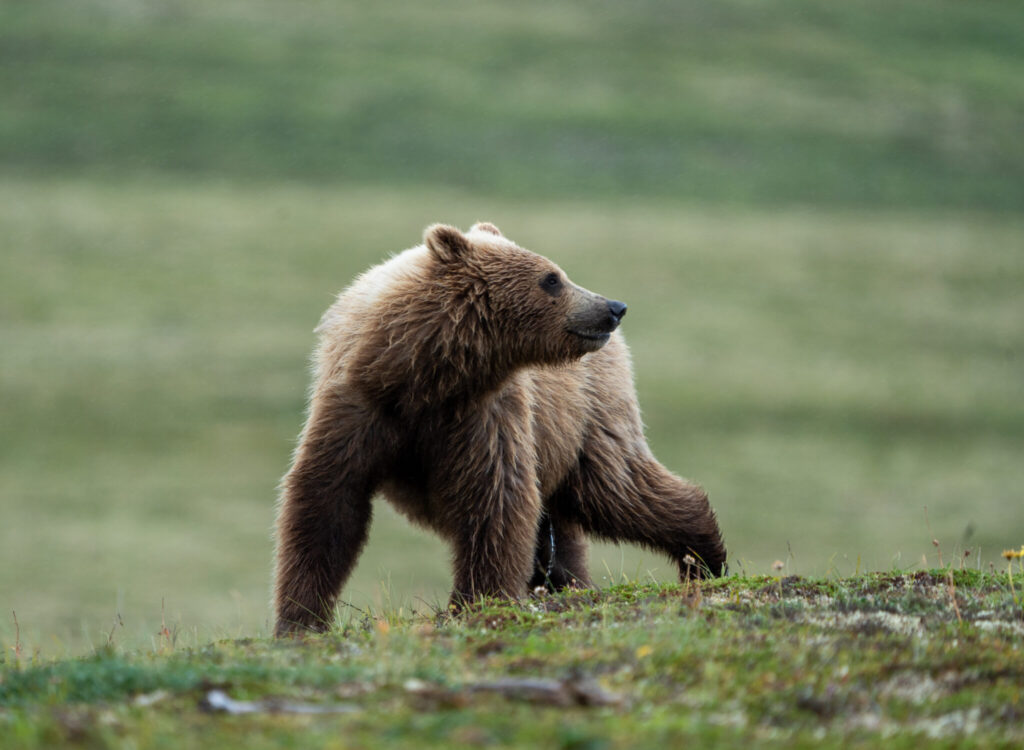
A brown bear walks on the tundra in Katmai National Park and Preserve on Aug. 11, 2023. (Courtesy/ F. Jimenez/National Park Service)

Time and again, colleagues told bear biologist Beth Rosenberg that her quest to develop a new and less invasive way of identifying and studying Alaska’s brown bears was a futile one. There were simply too many obstacles, too many unknowns, to overcome. 

“It just won’t work,” she heard repeatedly.

Inspired by her hero, the acclaimed primatologist Jane Goodall, Rosenberg stubbornly pushed ahead, just as Goodall had done decades earlier in the face of great skepticism. 

While working at Alaska’s famed McNeil River brown bear sanctuary, Rosenberg had quickly learned that by paying close attention, she, like others on the sanctuary staff, could over time identify the “regulars” among the bears who fished at McNeil Falls, especially mature males.

It’s true the sample size was small. But if people could learn to recognize individual bears among the dozens that pass through McNeil River each summer — and do so repeatedly, despite dramatic changes in their seasonal appearance — wouldn’t it be possible to do the same thing at greater scale, using new, state-of-the-art technologies?

Rosenberg began to build a photo database of McNeil’s most recognizable bears, just as others on staff had done before her. And when promoted to assistant manager in 2016, she made expanding that database a priority. Over the next several years, she enlarged it to nearly 73,000 images, representing 109 individual bears.

Joined by Nathan Wolf, her advisor at Alaska Pacific University — and an enthusiastic supporter of her work — Rosenberg then went looking for computer and technology whizzes who could assist her in this quest. 

The two eventually found such a group at the École Polytechnique Fédérale de Lausanne in Switzerland, led by Alexander Mathis. 

One of the keys to clinching the partnership was Rosenberg’s immense file of McNeil bear images, which Wolf — eventually her research colleague as well as mentor — describes as “a data set that’s unique in the world; there’s nothing else like it.” Another key was Mathis and Rosenberg’s shared excitement about the possibilities their collaboration might open up.

Combining their expertise, a team composed of Alaska biologists and Swiss computer scientists was able to develop an artificial intelligence — or, as Rosenberg prefers to say, “deep learning”— system that they call PoseSwin. 

“Trained” on the dataset of nearly 73,000 McNeil River images, PoseSwin has proved capable of recognizing individual bears across seasons — and even years — despite major changes in the animals’ body size, fur condition, position, and also seasonal and environmental variations, such as light and weather conditions.

Importantly, the researchers emphasize, their work demonstrates it’s possible to accurately — and repeatedly — identify individual bears across space and time using photographs alone, what Rosenberg calls “photo ID.” 

This means there’s no need to physically handle and mark the animals, for instance with collars or tags, or to retrieve fur or blood samples, as routinely done in conventional population studies and other research. That in turn opens all sorts of new possibilities for the study, management, and conservation of brown bears — and other species — in Alaska and beyond.

Adding greatly to the credibility of their work, the Alaska-Swiss team produced an article describing their research and findings: “Individual identification of brown bears using pose-aware metric learning” was published in the February 2026 issue of the prestigious, peer-reviewed scientific journal, “Current Biology.”

While it’s not possible to get into the details of their work in a commentary of this length, I can share several important takeaways.

In developing their new research tool, the team started with this simple fact: brown bears are “unpatterned” animals without distinctive markings — as opposed to zebras, leopards and humpback whales, for instance. Besides that, the appearance of any single bear can change dramatically over time, not only from year to year, but even from spring to fall.

Thus the initial challenge for the scientists and their computer modeling was to determine what characteristics, if any, would allow the AI program to reliably identify individual animals. Rosenberg prefers the term ”computer vision,” rather than AI. It turned out that certain characteristics of the bears’ heads and skull structures were key, because they change little over time, for instance the shape of the muzzle and pattern of “bumps” atop it; the angle of the forehead, called the “brow bone” in the study; the placement of the ears and scarring on the face and head.

Figuring out those few essential characteristics proved  indispensable to the PoseSwin’s successful development.

In its testing of the new photo-ID program, the team showed it is able to not only recognize previously identified bears, but also unknown bears, a key to population studies. And, using images from McNeil River and some donated from Katmai National Preserve, PoseSwin proved capable of tracking the long-distance movements — nearly 50 miles — of individual bears using photographs alone, a historic first.

The team’s initial research also has suggested that citizen science could greatly expand the application of their Photo ID modeling, by using images taken by ordinary bear watchers photographing the animals at popular tourism spots like Katmai’s Brooks Falls and then entering those images into a central data base.

There’s plenty more, but the bottom line, say Rosenberg and Wolf, is that the low-impact, hands-off PoseSwin/Photo ID program promises to revolutionize the way bears are studied and understood by “adding a new tool to our toolbox,” as Wolf puts it. And a greatly advanced tool at that.

The Alaska-Swiss team plans to keep expanding its database and refining its PoseSwin program. All of this will lead to an increased understanding of bears’ individual and collective behavior, their movements across the landscape, and interactions with each other and other species, including — and especially — humans. 

That knowledge in turn promises to lead to more informed, fact-based management of both the animals and the habitat that is essential to their well-being, which can only benefit their conservation, not only in Alaska, but anywhere bears inhabit the landscape. 

Eventually, members of the PoseSwin team are confident, scientists studying other unpatterned species will likely apply this new research tool to their own studies.

Both Rosenberg and Wolf emphasize that PoseSwin and Photo ID technology is not intended to replace other, more conventional research methods, for instance those based on radio-collaring and genetics, but to supplement them with a powerful new tool that, more than anything, figures to benefit the bears.

Here I’ll leave the science arena and move into an area where Rosenberg, Wolf, and the rest of the PoseSwin team prefer not to tread: wildlife politics.

In Alaska, the state’s Department of Fish and Game has long depended on population estimates that many wildlife advocates, including myself, regard as suspect. That’s not so much because the research methods are faulty, but rather because the information is outdated and/or withheld from the public.

This is especially true for predators such as bears and wolves, and “intensive management” programs intended to control their numbers. The recent — and ongoing — Mulchatna bear kill program in Southwest Alaska is a prime example.

Over the past three years, ADF&G has killed close to 200 bears, the great majority of them brown bears, ostensibly to help the Mulchatna Caribou Herd recover from a steep decline that the state’s own biologists have shown has nothing to do with bear predation, without any good idea of the region’s overall bear population. This is a major reason that two superior court judges ordered the department to stop its Mulchatna bear-kill effort in 2025.

State game managers continue to insist that their intensive management programs are based on what they call good science, but remain unwilling to share the specifics of what that science shows or how it’s been done. And they apparently plan to resume the bear killing this spring — no matter the paucity of population data they have — and the lack of evidence that this will benefit the caribou herd.

It may be asking too much for the state’s current wildlife managers to welcome, let alone embrace, the revolutionary research methods promised by PoseSwin and photo ID. Maybe with a change in Alaska’s leadership following this year’s gubernatorial election, a more open and progressive state-run wildlife management program will be put in place, whose leaders recognize the benefits of a new research system truly grounded in fact-based scientific methods.

The post Ground-breaking brown bear research holds great promise appeared first on Chilkat Valley News.

Categories
Alaska News

Ground-breaking brown bear research holds great promise

A brown bear walks on the tundra in Katmai National Park and Preserve on Aug. 11, 2023. (Photo by F. Jimenez/National Park Service)

A brown bear walks on the tundra in Katmai National Park and Preserve on Aug. 11, 2023. (Photo by F. Jimenez/National Park Service)

Time and again, colleagues told bear biologist Beth Rosenberg that her quest to develop a new and less invasive way of identifying and studying Alaska’s brown bears was a futile one. There were simply too many obstacles, too many unknowns, to overcome. 

“It just won’t work,” she heard repeatedly.

Inspired by her hero, the acclaimed primatologist Jane Goodall, Rosenberg stubbornly pushed ahead, just as Goodall had done decades earlier in the face of great skepticism. 

While working at Alaska’s famed McNeil River brown bear sanctuary, Rosenberg had quickly learned that by paying close attention, she, like others on the sanctuary staff, could over time identify the “regulars” among the bears who fished at McNeil Falls, especially mature males.

It’s true the sample size was small. But if people could learn to recognize individual bears among the dozens that pass through McNeil River each summer — and do so repeatedly, despite dramatic changes in their seasonal appearance — wouldn’t it be possible to do the same thing at greater scale, using new, state-of-the-art technologies?

Rosenberg began to build a photo database of McNeil’s most recognizable bears, just as others on staff had done before her. And when promoted to assistant manager in 2016, she made expanding that database a priority. Over the next several years, she enlarged it to nearly 73,000 images, representing 109 individual bears.

Joined by Nathan Wolf, her advisor at Alaska Pacific University — and an enthusiastic supporter of her work — Rosenberg then went looking for computer and technology whizzes who could assist her in this quest. 

The two eventually found such a group at the École Polytechnique Fédérale de Lausanne in Switzerland, led by Alexander Mathis. 

One of the keys to clinching the partnership was Rosenberg’s immense file of McNeil bear images, which Wolf — eventually her research colleague as well as mentor — describes as “a data set that’s unique in the world; there’s nothing else like it.” Another key was Mathis and Rosenberg’s shared excitement about the possibilities their collaboration might open up.

Combining their expertise, a team composed of Alaska biologists and Swiss computer scientists was able to develop an artificial intelligence — or, as Rosenberg prefers to say, “deep learning”— system that they call PoseSwin. 

“Trained” on the dataset of nearly 73,000 McNeil River images, PoseSwin has proved capable of recognizing individual bears across seasons — and even years — despite major changes in the animals’ body size, fur condition, position, and also seasonal and environmental variations, such as light and weather conditions.

Importantly, the researchers emphasize, their work demonstrates it’s possible to accurately — and repeatedly — identify individual bears across space and time using photographs alone, what Rosenberg calls “photo ID.” 

This means there’s no need to physically handle and mark the animals, for instance with collars or tags, or to retrieve fur or blood samples, as routinely done in conventional population studies and other research. That in turn opens all sorts of new possibilities for the study, management, and conservation of brown bears — and other species — in Alaska and beyond.

Adding greatly to the credibility of their work, the Alaska-Swiss team produced an article describing their research and findings: “Individual identification of brown bears using pose-aware metric learning” was published in the February 2026 issue of the prestigious, peer-reviewed scientific journal, “Current Biology.”

While it’s not possible to get into the details of their work in a commentary of this length, I can share several important takeaways.

In developing their new research tool, the team started with this simple fact: brown bears are “unpatterned” animals without distinctive markings — as opposed to zebras, leopards and humpback whales, for instance. Besides that, the appearance of any single bear can change dramatically over time, not only from year to year, but even from spring to fall.

Thus the initial challenge for the scientists and their computer modeling was to determine what characteristics, if any, would allow the AI program to reliably identify individual animals. Rosenberg prefers the term ”computer vision,” rather than AI. It turned out that certain characteristics of the bears’ heads and skull structures were key, because they change little over time, for instance the shape of the muzzle and pattern of “bumps” atop it; the angle of the forehead, called the “brow bone” in the study; the placement of the ears and scarring on the face and head.

Figuring out those few essential characteristics proved  indispensable to the PoseSwin’s successful development.

In its testing of the new photo-ID program, the team showed it is able to not only recognize previously identified bears, but also unknown bears, a key to population studies. And, using images from McNeil River and some donated from Katmai National Preserve, PoseSwin proved capable of tracking the long-distance movements — nearly 50 miles — of individual bears using photographs alone, a historic first.

The team’s initial research also has suggested that citizen science could greatly expand the application of their Photo ID modeling, by using images taken by ordinary bear watchers photographing the animals at popular tourism spots like Katmai’s Brooks Falls and then entering those images into a central data base.

There’s plenty more, but the bottom line, say Rosenberg and Wolf, is that the low-impact, hands-off PoseSwin/Photo ID program promises to revolutionize the way bears are studied and understood by “adding a new tool to our toolbox,” as Wolf puts it. And a greatly advanced tool at that.

The Alaska-Swiss team plans to keep expanding its database and refining its PoseSwin program. All of this will lead to an increased understanding of bears’ individual and collective behavior, their movements across the landscape, and interactions with each other and other species, including — and especially — humans. 

That knowledge in turn promises to lead to more informed, fact-based management of both the animals and the habitat that is essential to their well-being, which can only benefit their conservation, not only in Alaska, but anywhere bears inhabit the landscape. 

Eventually, members of the PoseSwin team are confident, scientists studying other unpatterned species will likely apply this new research tool to their own studies.

Both Rosenberg and Wolf emphasize that PoseSwin and Photo ID technology is not intended to replace other, more conventional research methods, for instance those based on radio-collaring and genetics, but to supplement them with a powerful new tool that, more than anything, figures to benefit the bears.

Here I’ll leave the science arena and move into an area where Rosenberg, Wolf, and the rest of the PoseSwin team prefer not to tread: wildlife politics.

In Alaska, the state’s Department of Fish and Game has long depended on population estimates that many wildlife advocates, including myself, regard as suspect. That’s not so much because the research methods are faulty, but rather because the information is outdated and/or withheld from the public.

This is especially true for predators such as bears and wolves, and “intensive management” programs intended to control their numbers. The recent — and ongoing — Mulchatna bear kill program in Southwest Alaska is a prime example.

Over the past three years, ADF&G has killed close to 200 bears, the great majority of them brown bears, ostensibly to help the Mulchatna Caribou Herd recover from a steep decline that the state’s own biologists have shown has nothing to do with bear predation, without any good idea of the region’s overall bear population. This is a major reason that two superior court judges ordered the department to stop its Mulchatna bear-kill effort in 2025.

State game managers continue to insist that their intensive management programs are based on what they call good science, but remain unwilling to share the specifics of what that science shows or how it’s been done. And they apparently plan to resume the bear killing this spring — no matter the paucity of population data they have — and the lack of evidence that this will benefit the caribou herd.

It may be asking too much for the state’s current wildlife managers to welcome, let alone embrace, the revolutionary research methods promised by PoseSwin and photo ID. Maybe with a change in Alaska’s leadership following this year’s gubernatorial election, a more open and progressive state-run wildlife management program will be put in place, whose leaders recognize the benefits of a new research system truly grounded in fact-based scientific methods.

SUBSCRIBE: GET THE MORNING HEADLINES DELIVERED TO YOUR INBOX

Categories
Alaska News

Alaska’s embattled economic development agency approves $700,000 PR budget

The Alaska Industrial Development and Export Authority, whose headquarters are pictured here, is leading state efforts to develop oil leases in the Arctic National Wildlife Refuge and to build roads to mining deposit in the Mat-Su and Northwest Alaska. (Photo by Nathaniel Herz/Northern Journal)

The state agency leading some of Alaska’s most polarizing development projects has approved a new communications budget, saying it needs to do a better job telling its own story amid attacks from critics.

The state-owned Alaska Industrial Development and Export Authority is run by a former chief of staff to Gov. Mike Dunleavy and is charged with promoting economic growth and expanding natural resource extraction and exports.

A screengrab from an anti-AIDEA ad campaign from the 907 Initiative advocacy group.

It is leading work to develop state-owned oil leases in the Arctic National Wildlife Refuge and also hopes to build two controversial new roads to access mining prospects in Northwest Alaska and outside of Anchorage.

Those projects have drawn sharp opposition from conservation organizations and other critics, including lawsuits, critical op-eds and campaigns that have labeled the agency “Bad AIDEA” and caricatured its leaders.

At a meeting in Ketchikan this month, board members, with no public discussion, authorized AIDEA’s staff to spend up to $700,000 a year on a new communications budget — formalizing a plan that the agency says was previously budgeted inconsistently through spending on individual projects.

The new communications plan, the agency said in its formal resolution authorizing the spending, will “ensure proper public engagement, transparency, and stewardship of the authority’s mission.” The money could go toward trade shows and conferences, responding to media inquiries and “other communications-related needs,” according to the resolution.

The agency’s executive director, Randy Ruaro, referred questions about the plan to Dave Stieren, an AIDEA employee who ran an advertising agency and hosted a conservative talk radio show before joining the Dunleavy administration.

Randy Ruaro, AIDEA’s executive director, toured a state-owned shipyard when his agency’s board met in Ketchikan earlier this month. (Alaska Industrial Development and Export Authority)

Stieren said he could not provide exact figures on AIDEA’s past communications spending, but he acknowledged that the new plan should allow the agency to meaningfully boost its public profile.

The $700,000 a year, he added, is a limit, and the agency will set a final budget through a request for proposals process.

“Mothership AIDEA has done, frankly, little to nothing on a consistent basis to tell our story,” Stieren said in an email — particularly when it comes to its loan programs that have helped finance tourism and hospitality businesses, like the Alaska Club fitness chain and Anchorage’s Bear Tooth pizza restaurant and theater.

“We’re far more than roads,” Stieren said. “But since we’ve really not promoted or showcased our efforts in traditional finance areas, I understand the narrative or lack thereof that folks may have.”

Stieren has also personally defended AIDEA on social media, including over the weekend — when he posted a conservative news website’s positive story about an agency-owned shipyard and said that “when commie libs attack AIDEA, they attack projects like this.”

AIDEA’s board chair, Bill Kendig, declined to answer questions about approval of the new communications budget when reached by phone.

At the Ketchikan meeting, one AIDEA critic, Melis Coady, credited the agency with formalizing communications spending as a “step toward accountability.” But she said that the plan doesn’t “deliver the transparency it describes” because it gives Ruaro, the executive director, authority to approve communications spending, and only requires that he report it to the board if asked.

“The authorization is broad, the dollar amount is undefined, and expenditures are approved solely by the executive director,” said Coady, who leads a conservation group called the Susitna River Coalition.

Ruaro, in an email, said AIDEA will issue reports on communications to board members “whether requested or not.”

Stieren’s social media post

SUBSCRIBE: GET THE MORNING HEADLINES DELIVERED TO YOUR INBOX

Categories
Alaska News Featured Juneau News juneau Juneau Local Juneau Local Ketchikan Local News Feeds Sitka Local

Alaska Senate advances bill to ban certain food dyes in school meals

By: Haley Lehman, Alaska Beacon

 Children pick up their school lunches. (Photo by Amanda Mills/Centers for Disease Control and Prevention)

The Alaska Senate passed a bill Monday that would ban public schools in Alaska from serving certain food dyes in school breakfasts or lunches.

Lawmakers expressed concerns that certain petroleum-based food dyes in processed foods have unhealthy side effects on children.

Sen. Bill Wielechowski, D-Anchorage, the sponsor of Senate Bill 187, said Monday, “We like to sell our petroleum to fuel our cars and generate our power plants, not to feed our kids.”

Wielechowski pointed to studies that suggested that artificial dyes are linked to increased hyperactivity, inattentiveness and allergic reactions in children.

The bill would ban red dyes Nov. 3 and No. 40, yellow dyes No. 5 and No. 6, blue dyes No. 1 and No. 2 and green dye No. 3.

The U.S. Department of Health and Human Services and the U.S. Food and Drug Administration announced a campaign in April 2025 to eliminate synthetic dyes from the U.S. food supply by the end of 2027 and to authorize natural color alternatives. Alaska proposes banning the same food dye in schools that HHS and the FDA are working with the food industry to eliminate.

The bill received strong support from Alaska Community Action on Toxics and opposition from the International Association of Color Manufacturers, which maintains that synthetic dyes are safe for consumers.

Carlee Johnson McIntosh, Petersburg School District food service director, wrote in a letter to legislators that the bill aligns with work the school district is already doing to remove synthetic dyes from school meal programs. She said the bill would not create a significant burden for the school district.

“Schools should be environments where students are set up for success, and access to nutritious meals plays an important role in that success,” Johnson McIntosh wrote. “Establishing these standards in state law would demonstrate Alaska’s ongoing commitment to student health, regardless of potential shifts at the federal level.”

The bill passed the Senate with 19 yes votes. Sen. Donny Olson, D-Golovin, was excused absent. 

If it passes the House and becomes law, it would go into effect in January 2028. Alaska would join states including Arizona, California, Delaware, Louisiana, Virginia and West Virginia in banning artificial food dyes in schools.

Categories
Alaska News Featured Juneau News juneau Juneau Local Juneau Local Ketchikan Local News Feeds Sitka Local

Alaska Senate advances resolution asking federal policymakers to protect visa programs

By: Haley Lehman, Alaska Beacon

Sen. Loki Tobin, D-Anchorage, speaks in the Alaska Senate on Monday, April 28, 2025. (Photo by James Brooks/Alaska Beacon)

The Alaska Senate advanced a resolution Monday to preserve three work visas to support Alaska’s economic security.

Alaska relies on J-1 visas to fill teacher positions, H-1B visas for highly skilled workers and the H-2B program for temporary nonagricultural workers in tourism, health care and seafood processing industries and for teachers.

Sen. Löki Tobin, D-Anchorage, said that Senate Joint Resolution 28, “puts Alaska on the record in support of these programs to fill jobs here in our state.”

The Trump administration raised the fee for highly skilled worker visas from $5,000 to $100,000 in September 2025.

Tobin said Monday that school districts in Alaska cannot absorb those costs and utilize the H-1B visa program to hire international teachers.

The Alaska House of Representatives passed a resolution in March urging the Trump administration to waive the $100,000 visa fee for international teachers. It was sponsored by Rep. Alyse Galvin, I-Anchorage.

According to Jennifer Schmitz, director of the Alaska Educator Retention and Recruitment Center, 20 school districts in Alaska employed 232 educators with J-1 visas and 341 educators with H-1B visas in 2025.

Alaska’s senior U.S. Senator, Republican Lisa Murkowski, introduced legislation in March that would exempt teachers from non-processing related fees for H-1B visas. U.S. Republican U.S. Sen. Dan Sullivan is a cosponsor. 

The visa programs support other jobs, too. Marilyn Usibelli, owner of Black Diamond Resort Co. in Healy, wrote to legislators in March that J-1 visa holders play an essential role in staffing seasonal jobs in Alaska with lawful, reliable temporary workers.

“Despite extensive local recruitment, the small year-round population in the Denali Borough simply cannot meet the seasonal demand. J-1 participants fill critical roles that allow us to maintain safe, high-quality operations, support other local businesses, and contribute to the broader Denali-area economy,” Usibelli wrote.

The resolution passed the Senate with 19 yes votes with Sen. Donny Olson, D-Golovin, absent