Categories
Alaska News

In court, Pebble developer says 27 salmon stand in the massive mine’s way

The Bristol Bay region, pictured here in 2011, is home to the Pebble mining deposit. It’s also the site of the largest wild sockeye salmon run in the world. (U.S. Environmental Protection Agency)

No mining proposal in recent Alaska history has generated more concern for the state’s salmon runs than the Pebble project.

The huge copper and gold deposit extends into multiple salmon-bearing watersheds, and sits upstream from Alaska’s most lucrative salmon fishery.

But now, in a new court filing, Pebble’s developer says just a tiny number of salmon are blocking the mine’s construction — 27 fish, to be exact, and all one species.

Federal regulators, who halted the project in 2023, are “preserving” 27 coho salmon “at the cost of $800 billion” in minerals, lawyers for Pebble Limited Partnership wrote in a recent brief filed in Alaska’s federal district court.

The remarkably specific fish figure aligns with the number of spawning salmon counted years ago in a stream directly within the proposed mine site.

But Pebble’s opponents say it’s a gross mischaracterization: They’ve long worried that mining could harm the prolific Bristol Bay salmon runs downstream.

“I don’t think it’s a valid number,” said Daniel Cheyette, an executive at Bristol Bay’s Indigenous-owned regional corporation, which is opposed to the mine.

“It’s well documented in the administrative record that the mine is going to have very specific impacts to the mine site itself — and lots of impacts to the habitat below the mine site,” Cheyette added.

Pebble’s lawyers acknowledge that salmon at various life stages have been observed in streams near the mineral deposit. But they cite the specific number of spawning coho eight times across the 66 pages of their recent legal brief.

The figure has taken on a life of its own online, where it sparked outrage among Pebble advocates and stockholders who see those fish as an obstacle to huge profits.

“27 SALMON DUDE WTFFFFFFF,” one mine booster recently posted on X. She added, in a YouTube video: “Tell me where they are. I’ll kill them all right now, with my bare hands.”

The 27-fish-versus-800-billion-dollars narrative comes as part of the latest attempt by Pebble’s owner, Vancouver-based Northern Dynasty Minerals, to overturn a 2023 decision by the federal government that effectively quashed the development.

And it’s further evidence that Pebble is committed to a long-term effort to save the embattled project, which would tap into one of the world’s largest copper, gold and molybdenum deposits.

Pebble lacks key approvals, and its efforts to obtain them have been tied up in litigation and bureaucratic processes for years. But its owners continue to spend millions of dollars each year on legal fees and administrative expenses.

The project is still attracting investment because of its enormous size — and because global demand for copper is rising, according to David Hammond, a Colorado-based mineral economist with decades of industry experience.

“These investors, the ones that really provide the money, have to have a very long-term horizon on their investment strategy. And by long term, I don’t mean five years, I mean two decades,” Hammond said.

“Their feeling is, this is going to eventually go into production,” he added.

Pebble expects to spend some $14 million this fiscal year, primarily on litigation, according to a recent corporate disclosure with Canadian securities regulators.

Pebble has fueled debate across the Bristol Bay region and the state for years.

Supporters, including the Dunleavy administration and two local Indigenous-owned corporations, say building the mine would boost the rural region’s economy and create much-needed jobs.

But opponents, including a broad coalition of commercial fishermen, conservation groups and Alaska Native organizations, say the mine’s benefits are not worth the risk it poses to Bristol Bay’s salmon runs.

Pebble’s recent legal brief was filed by a Colorado-based lawyer at a high-powered international firm. It responds to a move by the Trump administration earlier this year to defend the Biden-era project veto.

In a statement shared with Northern Journal, Pebble’s chief executive, John Shively, said the company reiterates its view that the U.S. Environmental Protection Agency’s actions against the project contradicted an earlier federal environmental review, “which clearly states that the project can be done without harm to the salmon fishery in Bristol Bay.”

Pebble’s boosters have long argued that the mine’s impacts would be minimal and that it could coexist with a fishery that generates hundreds of millions of dollars a year. They note that many Bristol Bay salmon spawn in watersheds other than those where the mine is located.

But mine skeptics note that the project is expected to result in the loss of more than eight miles of anadromous fish streams and 91 miles of streams that support anadromous fish habitat. Federal regulators also say mining could affect downstream ecosystems through changes in flow — and opponents fear a failure at Pebble’s proposed waste disposal site could cause an environmental disaster.

Pebble’s lawyers, in their recent filing, point to a federal finding six years ago that the mine likely would not have a measurable impact on the Bristol Bay fishery, and they say the streams at the mine site “are especially low in salmon.”

“Only 27 have been observed spawning, in only one reach, and from only one species,” the lawyers wrote. Those fish “naturally might disappear in any given year anyway,” the brief said.

A Pebble spokesperson could not immediately confirm the source of the 27-salmon figure, though it corresponds with data from Pebble’s fish counts conducted nearly two decades ago.

Those data were published in a 2020 federal environmental review of the proposed mine. The document also says that surveys found juvenile salmon in streams within the mine’s proposed footprint, and that those streams support rearing habitat not just for coho but also king salmon.

The Trump administration’s lawyers, in their court brief earlier this spring, said that Pebble’s fish surveys were limited, and likely undercounts.

Northern Journal contributor Max Graham can be reached at max@northernjournal.com. He’s interested in any and all mining related stories, as well as introductory meetings with people in and around the industry.

This article was originally published in Northern Journal, a newsletter from Nathaniel Herz. Subscribe at this link.

SUBSCRIBE: GET THE MORNING HEADLINES DELIVERED TO YOUR INBOX

Categories
Alaska News

America doesn’t depend on the Strait of Hormuz — but rural Alaska does

The city of Unalaska, with the museum and the Aleut Corp. building, is seen in the winter of 2004. Unlaska, a seafood-industry center with about 4,000 residents, is the part of the Aleutians West Census Area and is the largest community in the Aleutians. (Photo provided by the Alaska Division of Community and Regional Affairs)

The city of Unalaska, with the museum and the Aleut Corp. building, is seen in the winter of 2004. Unlaska, a seafood-industry center with about 4,000 residents, is the part of the Aleutians West Census Area and is the largest community in the Aleutians. (Photo provided by the Alaska Division of Community and Regional Affairs)

All over the world, nations are grappling with the ripple effects of the war in Iran and the blockade of the Strait of Hormuz, a critical artery for the global oil market. In the United States, however, President Donald Trump has emphasized that the country imports little oil through the strait, arguing that it “doesn’t need it.”

At a national level, that’s largely true. The United States consumes roughly 20 million barrels of oil per day and imports only a small fraction through that chokepoint. But for diesel-reliant communities in Western Alaska, the story looks very different. The supply chains that vendors rely on are often tied to refineries in Asia, and those routes are deeply exposed to disruptions in and around the Strait of Hormuz.

It may come as a surprise that much of the fuel consumed in rural Alaska is not from Alaska. This reflects both the state’s limited refining capacity and the constraints of global shipping routes and tanker availability. There are some exceptions. Yukon River communities, for example, receive fuel sourced from the Petro Star refinery and delivered by companies like Ruby Marine, providing a more stable and predictable supply. Much of Southeast Alaska, meanwhile, is supplied from refineries in Canada.

But in much of Western Alaska — including the Aleutians, Alaska Peninsula, and Bering Sea coast — nearly all fuel has, at least in the recent past, been refined in Asia and shipped thousands of miles to reach its final destination, often on voyages that can take more than 40 days. These deliveries must occur within a narrow summer window, when sea ice retreats just long enough to allow access.

And planning for those shipments is happening now.

At a recent community meeting in Kotzebue, fuel suppliers laid out a sobering reality due to the recent market turmoil. Voluntary export controls in Japan and South Korea have introduced significant uncertainty into the availability of fuel for Western Alaska — regardless of price. 

Vendors like Crowley are now pivoting to Canadian suppliers, but those markets are under strain as well. Tom Atkinson, the chief executive of Kotzebue Electric Association, said that fuel quotes for the cooperative are roughly double what they were last year. Fuel is by far the largest cost driver in rural electric systems, and when it rises, everything else follows.

Even so, Mr. Atkinson expects he will be able to secure supply for the cooperative. Prices will be high, but the fuel should arrive. He is far more concerned about smaller, upriver communities with fewer resources and even less flexibility. Their costs will almost certainly be much higher.

State programs like the Bulk Fuel Revolving Loan Fund can help communities finance fuel purchases, but they do little to shield them from the underlying volatility of global markets.

Even more concerning is the cost of heating oil. In Kotzebue, Atkinson said residents are already paying around $8 a gallon — a price that is quickly becoming untenable for many households.

In more remote areas, such as the Kusilvak Census Area further south along the coast, households spent on average about 16 percent of their income on electricity alone even before this impending crisis. When heating oil is included — essential in a region with few trees or other options for heating — that share can rise to as much as 45 percent. That is among the highest energy burdens anywhere in the United States. And that was last year.

At the same time that residents are bracing for a sharp increase in costs, the Trump administration has proposed, in its latest budget plan, eliminating funding for the federal Low Income Home Energy Assistance Program, or LIHEAP, which helps offset heating costs for low-income households. For many communities in Western Alaska, that support is not supplemental — it is essential. 

But the more troubling possibility is not just higher prices or the loss of assistance — it is supply itself. If deliveries are delayed or fall short, some communities could face shortages in the depths of winter, when a fuel shortage would become a true emergency. 

This is not the first time rural Alaska has been disproportionately exposed to global events.

Consider the war in Ukraine. For years, fuel deliveries to Western Alaska quietly depended on a surprising player: Russia.

Shipping routes serving Western Alaska often fall under the International Maritime Organization’s Polar Code, which establishes safety and environmental requirements for vessels operating in Arctic waters. Depending on the route and conditions, this can include ice-class design, specialized equipment and additional crew training. These requirements add cost to already expensive supply chains, particularly in remote regions with limited shipping options. Compounding the challenge, ice-strengthened tankers are relatively scarce worldwide, with Russia maintaining one of the largest fleets.

As a result, fuel bound for Western or northern Alaska communities was often carried on Russian-built or Russian-operated vessels, sometimes under foreign flags, traveling from Asian refineries to the Alaskan coast. The system was largely invisible, but it worked. In 2012, for example, the Russian ice-capable tanker Renda, escorted by the U.S. Coast Guard cutter Healy, delivered an emergency winter fuel shipment to Nome after early sea ice and fall storms cut off the community — an event that made the national news.

That system began to unravel after Russia’s invasion of Ukraine. Sanctions sharply curtailed access to Russian-linked vessels, and almost overnight, the availability of Polar Code-compliant tankers tightened. Shipping costs rose dramatically. And that additional cost is not limited to transporting fuel to Western Alaska. These vessels are often stationed offshore for extended periods, effectively serving as floating tank farms while smaller barges shuttle fuel to individual communities along the coast and river systems. The expense is therefore not just delivery, but time — standby charges of many thousands of dollars a day that accumulate quickly and are ultimately passed on to customers. Those costs rose several-fold after the invasion and they have not come back down.

This is what energy insecurity looks like in America.

If there is a lesson here, it is not simply that global events matter. It is that Alaska is not insulated from them — especially in the places that can least afford it.

We have built an energy system in rural Alaska that depends on long, fragile supply chains stretching across oceans and geopolitical fault lines. For decades, this system has held together. But it is becoming more expensive, more uncertain and more exposed with each passing year.

This reality should shape how we think about energy policy in this state. Reducing fuel use, diversifying local energy systems and maintaining the programs that help households afford basic energy services are not abstract goals — they are essential to keeping communities viable in the long run.

In the short term, there are also practical steps the state can take: increasing the loan cap in the Bulk Fuel Revolving Loan Fund, ensuring adequate support for the Alaska Heating Assistance Program and preparing for potential shortfalls in the Power Cost Equalization program. 

These steps are not precautionary — they are necessary. When global systems falter, it is not the Lower 48 — or even more urban places in Alaska — that feels it first or most acutely. It is communities like Kotzebue, Emmonak, and Hooper Bay. 

The lesson is not simply that global events matter. It is that our energy system is far more interconnected — and far more unequal in how it distributes risk and cost — than we tend to acknowledge. 

SUPPORT: YOU MAKE OUR WORK POSSIBLE

Categories
Alaska News Featured Juneau News juneau Juneau Local Juneau Local Ketchikan Local News Feeds Sitka Local

Groups sue Alaska election officials, allege the sharing of voter data with DOJ was unconstitutional

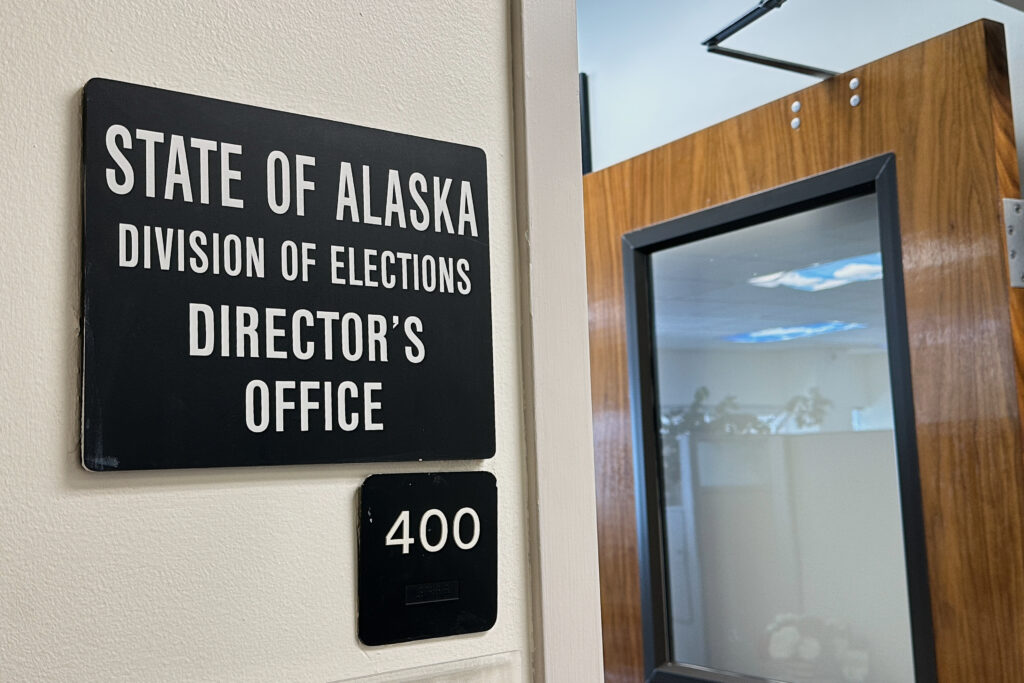
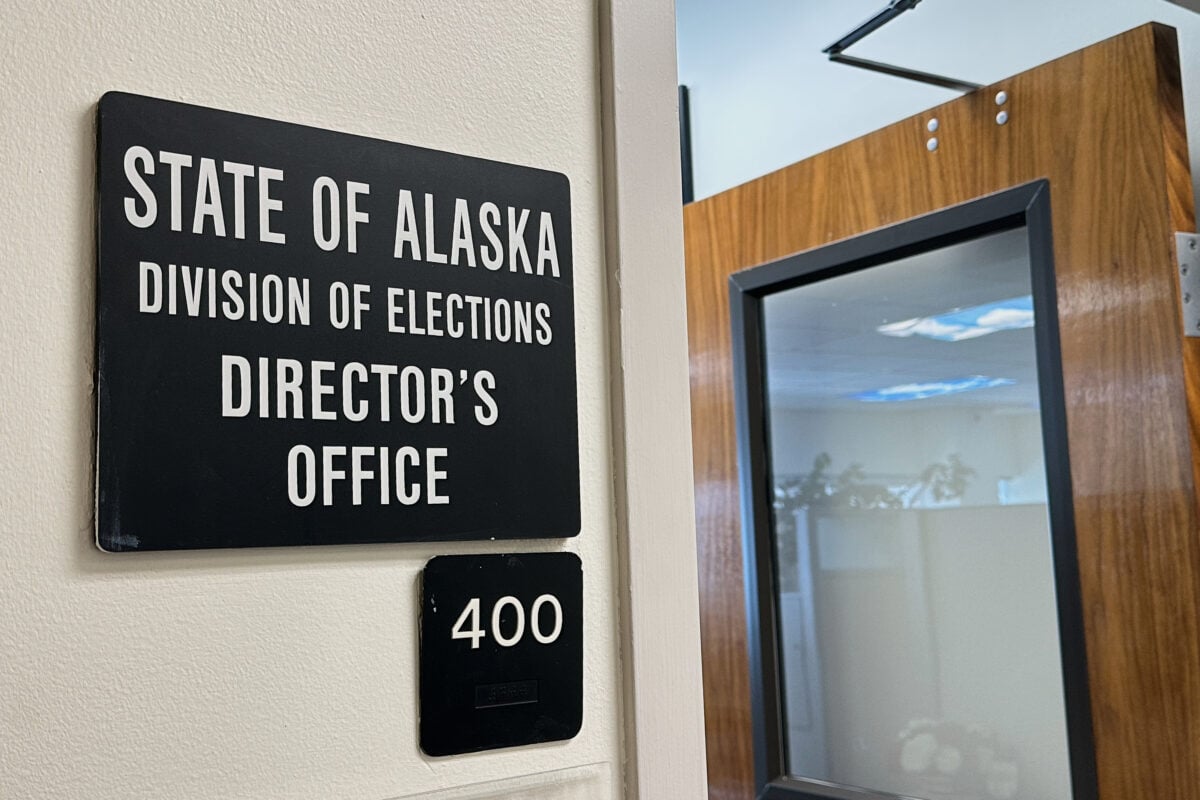
FILE – A sign hangs outside the director’s office of the Alaska Division of Elections, March 19. 2026, in Juneau, Alaska. (AP Photo/Becky Bohrer, File)

AP-Voting and civil rights groups sued Alaska elections officials Wednesday, alleging that their sharing of the state’s full voter registration list with the U.S. Department of Justice violates the state constitution.

Alaska is one of at least 12 states that has provided or said it would provide detailed information about its voters — including date of birth, driver’s license number or partial Social Security number — to the Trump administration, according to the Brennan Center. Alaska and Texas also signed agreements when they shared data in which the department outlined plans for its own analysis of voter files, its plans to flag voter list issues and directions for removing voters deemed ineligible.

Several other states provided the data, but refused those agreements, as part of a wide-ranging effort by the Justice Department to obtain detailed voter data from every state. Some elections officials have expressed concern the information being sought could be used by the Trump administration to search for possible noncitizens.

The Alaska lawsuit was filed in state court against state Division of Elections officials by the League of Women Voters of Alaska and Alaska Black Caucus. It alleges the handing over of personal data on the voter list violates the right to privacy under the state constitution. It also says the memorandum of understanding violates due process by allowing the Justice Department to flag voters for removal “without any apparent notice or process for impacted voters to challenge those decisions.”

The lawsuit names as defendants Republican Lt. Gov. Nancy Dahlstrom, who oversees the division, and division Director Carol Beecher.

Sam Curtis, a spokesperson with the state Department of Law, said by email that it would be premature to comment on specific claims raised in the lawsuit. But Curtis said the department has previously explained in public hearings that state law “expressly permits the sharing of this information for authorized governmental purposes. That statute is on the books, and we will defend it.”

“Alaska statutes contain numerous provisions that allow the sharing of otherwise non-public or confidential information with law enforcement,” Curtis said.

The plaintiffs are represented by the American Civil Liberties Union of Alaska, ACLU Voting Rights Project and the Electronic Privacy Information Center.

The Justice Department has sued at least 30 states and the District of Columbia to try to force the release of the data, according to a tally by the Brennan Center. Judges have rejected those efforts in California, Massachusetts, Michigan, Oregon and most recently, Rhode Island. A judge in Georgia dismissed a Justice Department lawsuit after ruling it had been filed in the wrong city. It was subsequently refiled.

In the Rhode Island case, Justice Department attorneys acknowledged the department was seeking unredacted voter information so it could be shared with the Department of Homeland Security to check citizenship status.

In addition to the state court lawsuit in Alaska, at least four federal lawsuits have been filed around the U.S. seeking to stop the Justice Department from collecting information from unredacted voter registration files or to prevent states from taking steps to cancel or suspend people’s voter registrations based on the federal project.

During a legislative hearing in Alaska last month, Rachel Witty, an attorney with the state Department of Law, told lawmakers the state had a “compelling interest” to comply with the federal request.

“To ensure the integrity of elections, there was a mutual interest in maintaining voters rolls that were accurate and current,” she said.

The Alaska lawsuit describes the process under state law for maintaining voter rolls and states that there are only limited circumstances under which a voter’s registration can be promptly canceled — “upon death or conviction of a felony involving moral turpitude.” It says that while elections officials have said they will only remove voters “to the extent allowed by state and federal law,” that interpretation is “irreconcilable with the plain language” of the agreement signed with the Justice Department.

The plaintiffs are asking a judge to void the agreement and require the elections division to make “reasonable efforts” to ensure the immediate destruction by the Justice Department of any hard copies and electronic versions of the list that was shared.

“Rather than fiercely defending the rights of Alaska’s voters, our Division of Elections acceded to federal overreach,” Eric Glatt, legal director for the ACLU of Alaska, said in a statement. “Now, we are asking the court to step in and ensure that DOE upholds its constitutional and legal obligations to Alaskans.”

Categories
Alaska News Featured Juneau News juneau Juneau Local Juneau Local Ketchikan Local News Feeds Sitka Local

Alaska House advances bill addressing the treatment of minors in psychiatric facilities

By: Haley Lehman, Alaska Beacon

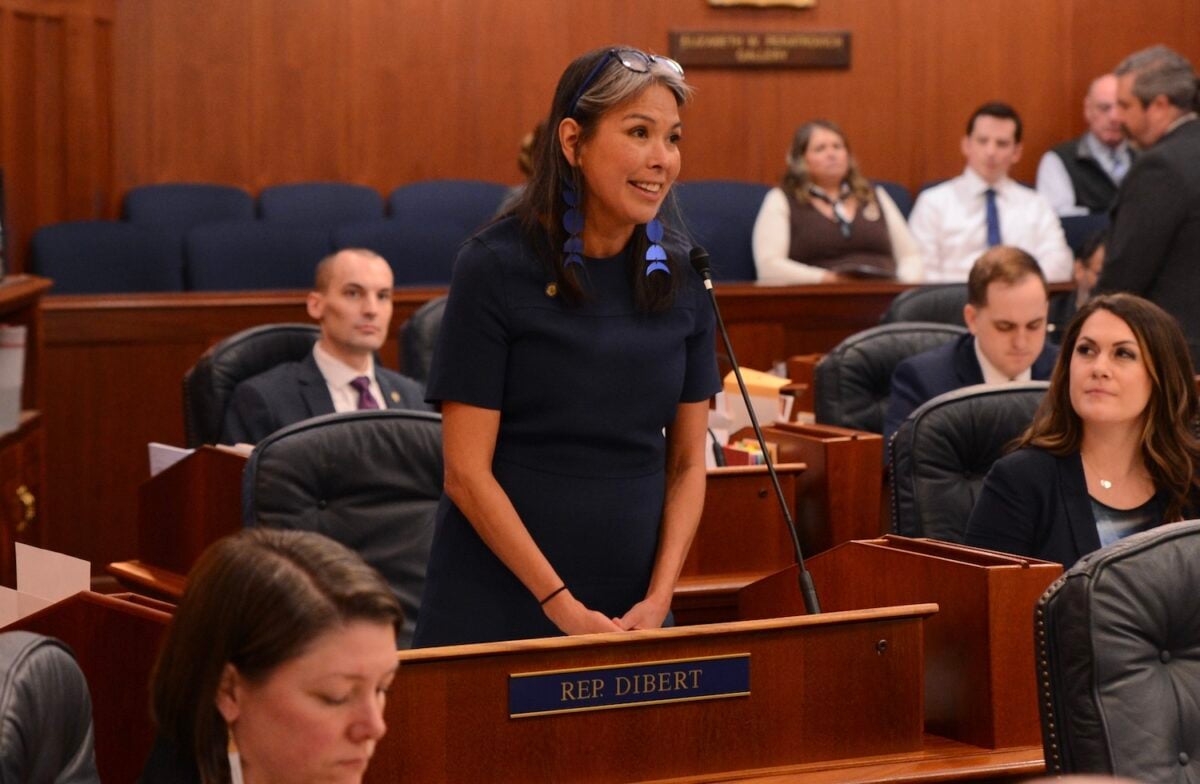
Rep. Maxine Dibert, D-Fairbanks, speaks Monday, Jan. 27, 2025, on the floor of the Alaska House of Representatives. (Photo by James Brooks/Alaska Beacon)

The Alaska House of Representatives advanced a bill Wednesday that aims to address a lack of oversight for minors treated at psychiatric facilities in Alaska. The bill would mandate an annual report on conditions and treatment at such facilities from the state’s Health Department, as well as unannounced biannual inspections.

Rep. Maxine Dibert, D-Fairbanks and the bill’s sponsor, said the measure is a necessary step to increase accountability around the treatment of minors in psychiatric hospitals in the state, amid constituent concerns. 

“These are not sweeping mandates, they are basic expectations of transparency, of communication and accountability of our youth here in Alaska,” she said on Wednesday.

The bill passed the House of Representatives with 37 yes votes. Three legislators were absent. It has been transmitted to the Senate for consideration.

The bill would also guarantee patients confidential telephone or video communication with a parent or guardian for two hours per week and require the Department of Health to notify a patient’s parent or legal guardian when seclusion or restraint is used within 72 hours. 

The annual report would include information about the total uses of seclusion or restraint, findings of facility inspections and data on the number of minors who received residential care at psychiatric hospitals.

Dibert cited a 2004 investigation by the Disability Law Center of Alaska that found 261 episodes of seclusion and restraint over three months in psychiatric institutions, which the organization called “quite high.”

The United States Department of Justice issued a report in December 2022 that found that Alaskan youth are institutionalized in psychiatric hospitals and psychiatric residential treatment facilities at higher rates and for longer periods than minors in other states as a result of a lack of available and accessible community-based mental health services, violating the Americans with Disabilities Act. 

Rep. Genevieve Mina, D-Anchorage and Chair of the House Health and Social Services Committee, voiced her support for the bill and drew attention to a finding by the DOJ that identified gaps in community-based services in Alaska.

Community-based services include home-based family treatment for early intervention services, intensive case management and crisis services, according to the DOJ.

“We have to face the reality that many of these kids are in these institutionalized settings because we have underinvested in our home and community based services in this broader continuum of care,” Mina said. 

“The dearth of community-based services in Alaska is so pronounced and widespread that institutional placement has become, for many behavioral health service providers in the state, the default option to which they refer children with long-term behavioral health need,” DOJ investigators wrote in 2022.

According to the DOJ, more than 800 Alaskan children received behavioral health services in a psychiatric institution in 2020. Approximately a third of the patients were Alaska Native and parents reported to the DOJ concerns about separating their children from their culture while in residential treatment. In addition to four psychiatric residential treatment facilities in Alaska, the state sends children to 17 out of state psychiatric residential treatment facilities. 

Rep. Justin Ruffridge, R-Soldotna, told legislators that the bill provides oversight and accountability that legislators are expected to institute.

The bill received support from the Alaska Federation of Natives, Lives in the Balance, a nonprofit that advocates for the fair treatment of children, Dot Lake Village, Citizens Commission on Human Rights, an organization that aims to eradicate abuse in mental health settings, and Aleutian Pribilof Islands Association.

The Department of Health estimated in a fiscal note that it would cost approximately $222,800 annually for a full-time nurse consultant to perform inspections, conduct interviews with patients and conduct investigations and for two nurse consultants to attend trauma informed care and cultural awareness training.

Categories
Alaska News

Alaska House advances bill addressing the treatment of minors in psychiatric facilities

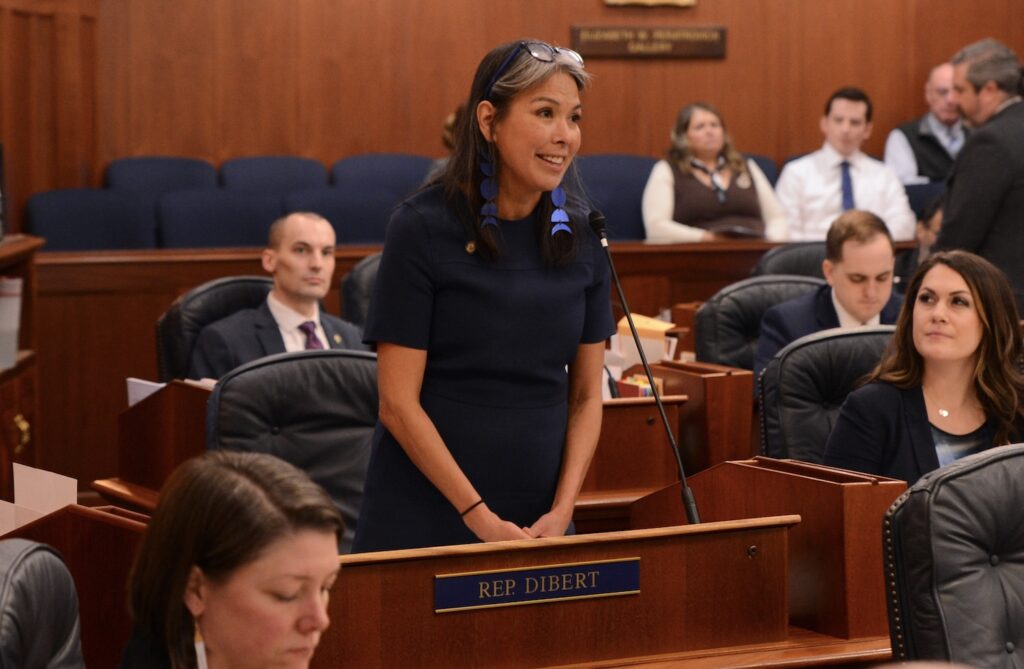
Rep. Maxine Dibert, D-Fairbanks, speaks Monday, Jan. 27, 2025, on the floor of the Alaska House of Representatives. (Photo by James Brooks/Alaska Beacon)

The Alaska House of Representatives advanced a bill Wednesday that aims to address a lack of oversight for minors treated at psychiatric facilities in Alaska. The bill would mandate an annual report on conditions and treatment at such facilities from the state’s Health Department, as well as unannounced biannual inspections.

Rep. Maxine Dibert, D-Fairbanks and the bill’s sponsor, said the measure is a necessary step to increase accountability around the treatment of minors in psychiatric hospitals in the state, amid constituent concerns. 

“These are not sweeping mandates, they are basic expectations of transparency, of communication and accountability of our youth here in Alaska,” she said on Wednesday.

The bill passed the House of Representatives with 37 yes votes. Three legislators were absent. It has been transmitted to the Senate for consideration.

The bill would also guarantee patients confidential telephone or video communication with a parent or guardian for two hours per week and require the Department of Health to notify a patient’s parent or legal guardian when seclusion or restraint is used within 72 hours. 

The annual report would include information about the total uses of seclusion or restraint, findings of facility inspections and data on the number of minors who received residential care at psychiatric hospitals.

Dibert cited a 2004 investigation by the Disability Law Center of Alaska that found 261 episodes of seclusion and restraint over three months in psychiatric institutions, which the organization called “quite high.”

The United States Department of Justice issued a report in December 2022 that found that Alaskan youth are institutionalized in psychiatric hospitals and psychiatric residential treatment facilities at higher rates and for longer periods than minors in other states as a result of a lack of available and accessible community-based mental health services, violating the Americans with Disabilities Act. 

Rep. Genevieve Mina, D-Anchorage and Chair of the House Health and Social Services Committee, voiced her support for the bill and drew attention to a finding by the DOJ that identified gaps in community-based services in Alaska.

Community-based services include home-based family treatment for early intervention services, intensive case management and crisis services, according to the DOJ.

“We have to face the reality that many of these kids are in these institutionalized settings because we have underinvested in our home and community based services in this broader continuum of care,” Mina said. 

“The dearth of community-based services in Alaska is so pronounced and widespread that institutional placement has become, for many behavioral health service providers in the state, the default option to which they refer children with long-term behavioral health need,” DOJ investigators wrote in 2022.

According to the DOJ, more than 800 Alaskan children received behavioral health services in a psychiatric institution in 2020. Approximately a third of the patients were Alaska Native and parents reported to the DOJ concerns about separating their children from their culture while in residential treatment. In addition to four psychiatric residential treatment facilities in Alaska, the state sends children to 17 out of state psychiatric residential treatment facilities. 

Rep. Justin Ruffridge, R-Soldotna, told legislators that the bill provides oversight and accountability that legislators are expected to institute.

The bill received support from the Alaska Federation of Natives, Lives in the Balance, a nonprofit that advocates for the fair treatment of children, Dot Lake Village, Citizens Commission on Human Rights, an organization that aims to eradicate abuse in mental health settings, and Aleutian Pribilof Islands Association.

The Department of Health estimated in a fiscal note that it would cost approximately $222,800 annually for a full-time nurse consultant to perform inspections, conduct interviews with patients and conduct investigations and for two nurse consultants to attend trauma informed care and cultural awareness training.

SUPPORT: YOU MAKE OUR WORK POSSIBLE

Categories
Alaska News

Cruise ship environmental compliance funds budgeted for port infrastructure

Capital budget proposals from both the governor and state legislature propose redirecting cruise ship inspection money toward electrical hookups at cruise ship docks in Juneau and Ketchikan.

It’s been two decades since Alaska voters approved the Ocean Ranger program, placing state environmental observers on large cruise ships and creating a tax to fund the program. The tax charges a $4 per-passenger berth fee on all large-commercial passenger vessels in state waters.

The program, however, has been dead for the past five years

The ingredients are still there: the program remains written into state law, and the fee continues to bring in revenue each year — between $7 million and $9 million. But since 2019, the money hasn’t paid for any Ocean Ranger staff.

Under Alaska statute, funding sources like the per-berth fee can’t be restricted to a specific use, outside of a few exceptions. So while voters approved an intention to use funds for cruise-ship environmental regulatory compliance, the state’s budget process requires legislators to make the spending decision each time they write their annual plan.

That gives the governor, who holds the power to veto any item in the legislature’s budget, a significant lever of control. In 2019, governor Mike Dunleavy used his veto to block the legislature’s Ocean Ranger appropriation, eliminating the program’s roughly $3 million operating budget, if not its statutory authority.

That shifted oversight duties away from the 22 marine engineers contracted by the program to a smaller number of Department of Environmental Conservation employees.

In materials submitted to the legislature in 2020, the governor’s office called the program “costly for its outcomes” and said it subjected the cruise industry to a uniquely burdensome level of oversight.

At the time, the Haines Borough Assembly passed a resolution opposing the governor’s veto and expressing support for the Ocean Ranger program.

But still the berth-tax revenue continues to flow in, and redirecting it elsewhere poses a challenge. Federal regulations on taxing interstate transportation mean the funds can only be used to “offset costs of compliance programs and to provide facilities associated with handling vessels and passengers,” the legislature’s finance division says.

With the per-berth fee still charged on each cruise ship, money in the account has accumulated, up to a projected $26 million at the end of the fiscal year in June.

Now, the governor and the legislature appear to have agreed on a new destination for the funds.

Last year’s state capital budget directed just over $6 million in Ocean Ranger funds to port electrification in Whittier, allowing large ships there to draw from shore power while docked rather than running their engines for electricity, thereby reducing air emissions.

Both a Senate Finance Committee budget draft last week and the governor’s draft from December would continue down that path, spending down the fund’s balance on additional port electrification projects.

Senate Finance’s capital budget draft, released last week, would put a total of $18.3 million toward port electrification at the Juneau and Ketchikan cruise ship terminals. An earlier Governor’s draft for the capital budget proposed $15.3 million to port electrification, without specifying which ports would receive the funding.

It’s unlikely Haines will see any benefit from state spending on port electrification — at least for the foreseeable future. Adding a cruise ship to Haines’ existing power demand would exceed the area’s maximum electricity output, said borough harbormaster Henry Pollan.

The proposed spending on Juneau and Ketchikan’s terminals would empty most, but not all, of the account balance. Some of the Ocean Ranger revenue will likely go to the state’s current compliance program, the replacement for the Ocean Ranger observers.

Both the governor and the House proposed operating budgets that pull a little over $2 million in Ocean Ranger revenue for that purpose, mirroring spending from last year.
The roughly $2.2 million budget for the compliance program is a drop-off from the Ocean Ranger-era compliance funding, even as the number of cruise ship passengers in the state has risen significantly, over 30% since 2018, according to industry data.

Decreased funding has translated to fewer total compliance checks, state records show. Last season, DEC staff conducted 76 total inspections on large cruise ships, the majority of which came while cruise ships were in port.

Meanwhile, in 2018, the last year of the Ocean Ranger program, the program’s marine engineers filed 1,580 daily reports.

The changes have resulted in a greater reliance on cruise-ship industry self-reporting, and at times, cruise ship companies have denied state inspectors access to wastewater data, claiming they don’t have the same statutory authority as Ocean Ranger observers, KHNS’ Avery Ellfeldt reported earlier this month.

Last year, the department recorded 21 instances of cruise ships failing to meet wastewater regulations. In 2018, Ocean Ranger observers reported 56 wastewater violations, as well as a range of other violations, including 40 reports of oil pollution.

Former commissioner Jason Brune, however, in the 2020 hearing, said that 264 reported wastewater violations in 12 years of the Ocean Ranger program only resulted in six official notices of violation. Many of the observers’ reports of violation “had insufficient info to make the determination or were under other jurisdictions, like federal jurisdiction,” Brune told legislators at the time, adding that many of the reports “were quickly resolved” before an official notice of violation was issued.

Though the shape of the compliance program has changed in practice, Dunleavy’s attempts in recent years to officially take the Ocean Ranger program and per-berth tax out of state statute have failed to advance through the legislature, suggesting some amount of legislative support for keeping the program on life support.

Because of that, particularly given the end of Dunleavy’s term this fall, the program will remain an open possibility for future governors and legislators — or just a source for more port infrastructure improvements.

The post Cruise ship environmental compliance funds budgeted for port infrastructure appeared first on Chilkat Valley News.

Categories
Alaska News

SEABA rescues snowmachine rider caught in avalanche

An injured snowmachiner caught in an avalanche near the border was picked up by a Southeast Alaska Backcountry Adventure helicopter Wednesday evening and brought into Haines for medical treatment.

SEABA founder Nick Trimble said a group with the injured person contacted SEABA directly for help, which is not unusual, but rarely happens.

“We’ve done a number of rescues over the years, bear maulings, cliff falls. When we’re here, we’re a resource,” he said. “It’s rare, thank goodness. I’d say maybe five calls in 12 years.”

Trimble said the extraction happened right on the border between the U.S. and Canada.

“Right on the boundary. We’ll have to review that, and just in case, we called state troopers and the RCMP,” he said. “It’ll get sorted.”

He didn’t know when the call came in and said everything unfolded quickly when they received the call.

“It was getting pretty dark, so it was a real fast thing. It’s really hard for the helicopter pilot to see when the light gets flat,” he said.

“It was probably like 5-5:30, something like that.”

An ambulance crew from the volunteer fire department was waiting when the helicopter arrived in Haines.

Haines fire chief Zak Overmyer said first responders took the person to the SEARHC clinic, where they are being treated for a leg injury.

Overmyer said responders followed procedures for treating injured skiers that were developed with each heliski operator at the beginning of the season.

Trimble said the ambulance crew who showed up to pick up the injured person were “incredible.” “Those guys are serious.”

Snowmachine traffic in the upper Chilkat Valley has increased this year, according to Trimble.

He said the snow conditions have drawn many visitors from other parts of the state. Many have moved into the pass.

As the weather warms up, the snow conditions at lower elevations are changing rapidly.

“Even though I think those guys were pretty good at what they do, they got snuck on,” he said. “Be careful out there.”

The post SEABA rescues snowmachine rider caught in avalanche appeared first on Chilkat Valley News.

Categories
Alaska News

Firefighters save Fort Seward home

Firefighters saved a Fort Seward home Saturday, putting out a basement fire before it could reach the structure above.

The fire started just after 11 a.m. when a spark from a wood stove ignited flammable material nearby, both homeowner Fred Shields and Haines fire chief Zak Overmyer said.

The first fire crews into the basement reported heavy smoke but were able to contain the fire within roughly ten minutes using handheld, water-filled fire extinguishers, Overmyer said.

Shields this week was still working to sort through burnt ash and debris in the basement. Damage around the basement wood-stove includes burns on walls and ceilings and broken windows. While his home and art-gallery above were undamaged, they will have to be professionally cleaned due to smoke, he said.

Shields expects insurance to cover repairs to the basement; likely the more difficult cost will be personal possessions. Many of them, badly charred, Shields took one last look at while cleaning this week, before tossing them finally into the stove that had started the fire.

“There’s an emotional piece to it,” Shields said Tuesday.

Both he and Overmyer commended the effectiveness of the fire crews that responded, which totalled 14 firefighters from the Haines Volunteer Fire Department and eight from the Klehini Valley Fire Department.

“Without the quick response time and the professionalism of the fire department, the outcome may have been very different,” Shields said.

The firehouse was empty when the fire was reported, with an on-duty fire-captain and EMT out on an ambulance call. Nevertheless, firefighters responding from home had the first truck out of the station, crewed by four firefighters, four minutes after first report of the fire, Overmyer said.

Speed was of particular concern given the old fort home, which Overmyer said poses a particular risk, given old, dry wood, potential lack of firebreaks between floors, and studs running from basement to attic.

The post Firefighters save Fort Seward home appeared first on Chilkat Valley News.

Categories
Alaska News

Alaska House votes to add additional state court judge in Palmer

Rep. Andrew Gray, D-Anchorage, speaks in favor of the veto override for House Bill 69, the education formula funding increase, on Tuesday, April 22, 2025. (Photo by James Brooks/Alaska Beacon)

Rep. Andrew Gray, D-Anchorage, speaks in favor of the veto override for House Bill 69, the education formula funding increase, on Tuesday, April 22, 2025. (Photo by James Brooks/Alaska Beacon)

The Alaska House of Representatives advanced a bill Wednesday to add a fifth superior court judge in the third judicial district in an effort to lower judge’s caseloads and provide justice to Alaskans in the state’s busiest court.

If the bill becomes law, the number of superior court judges statewide would increase from 45 to 46. It would bring the number of superior court judges in the third judicial district to 29. The third judicial district includes Anchorage, Cordova, Dillingham, Glennallen, Homer, Kenai, Kodiak, Naknek, Palmer, Sand Point, St. Paul Island, Seward, Unalaska and Valdez.

Alaska Court System General Counsel Nancy Meade wrote to legislators in January with the request from the Alaska Supreme Court for one new superior court judge to handle a mix of civil and criminal cases in Palmer.

Meade called the current workload of the four superior court judges in Palmer unsustainable, citing that each judge is assigned 225 cases more than the state average of 458 cases per superior court judge.

The population of the Matanuska-Susitna Borough has increased by 40% and the number of cases filed in the Palmer superior court has increased by 55% since the last time a judge was added in 2006, according to Meade.

Rep. Andrew Gray, D-Anchorage and Chair of the House Judiciary Committee, said Wednesday: “We need to fix this problem so that we can better provide basic justice to all Alaskans.”

According to a fiscal note, the additional judge will cost the state $268,000 annually.

The bill passed with 37 yes votes in the House of Representatives. Three legislators were absent. It has been transmitted to the Senate for consideration.

SUBSCRIBE: GET THE MORNING HEADLINES DELIVERED TO YOUR INBOX
Categories
Alaska News

At Alaska forums, U.S. senators warn Greenland tensions are straining Arctic alliances 

U.S. Senator Lisa Murkowski sits on a panel at the Arctic Encounter Summit in Anchorage, Friday, April 17, 2026. (Photo by Jenni Monet/Alaska Beacon)

On Friday afternoon in downtown Anchorage, Sen. Lisa Murkowski, R-Alaska, arrived at the Arctic Encounter Summit at the Dena’ina Convention Center, an annual gathering of policymakers, business leaders and international officials focused on Arctic strategy.

 A day after welcoming news that two additional U.S. Coast Guard icebreakers would be homeported in the state — a development she has sought for decades – Murkowski struck a tempered tone.

“We got what we wanted,” she told an audience at a luncheon. “But not in the way that we wanted it.” 

From this ballroom, not far from where polar ice melt is outpacing earlier scientific expectations, Alaska’s senior senator rattled off a litany of concerns — from repeated Russian incursions in the U.S. airspace to President Donald Trump’s musing about leaving NATO. Murkowski also pointed to tensions over Greenland, which have strained relations between the U.S. and its Arctic allies, troubling a region long recognized as a “zone of peace.” 

Attendees at the Arctic Encounter Summer held at the Dena’ina Convention Center, Friday, April 17, 2026, in downtown Anchorage. (Photo by Jenni Monet/Alaska Beacon)

Since taking office, President Trump has pushed for the United States to take control of the semi-autonomous Inuit island under the Kingdom of Denmark, at times suggesting it could be acquired by force, despite repeated rejections from Greenlandic and Danish officials. Last week, Greenland Prime Minister Jens-Frederik Nielsen told NBC News that many Greenlanders “don’t feel safe” amid Trump’s repeated rhetoric to claim the territory.

As these tensions test alliances, new questions were raised at the conference about U.S. strategy in the Far North. Senator Murkowski, arguably the leading congressional voice for establishing U.S. Arctic power, has cast a steady light on the Greenland crisis alongside what she sees as the Trump Administration’s imbalanced Arctic strategy. Despite the administration’s historic investments that are closing the gap on U.S. Arctic engagement — mostly in the form of military and Coast Guard spending — Murkowski expressed concern. “We’re all in on defense,” she said, “But we haven’t prioritized what we need to do with the diplomacy side of things, or the science and research side.”

In January, Murkowski led a bipartisan congressional delegation to Denmark with Sen. Angus King, an independent from Maine, followed by a visit to Greenland the next month. The effort to ease rising Arctic tensions would typically fall to the U.S. Ambassador-at-Large for Arctic Affairs. But for more than a year, the position has remained vacant.  

Meanwhile, changes within the U.S. Arctic Research Commission, including the recent appointment of Alaska Gov. Mike Dunleavy, reflect a broader shift in federal priorities as the agency pivots from its longtime focus on environmental science toward greater emphasis on military and commerce. This shift is one of many now testing the concept of “Arctic exceptionalism,” the region’s long-standing norm of peaceful cooperation, which some speakers at the Anchorage summit say may already be unraveling.

For 13 years, former Murkowski staffers have organized the Arctic Encounter Summit, branded as “North America’s premier Arctic policy and business convening.” Drawing on a network of high-profile colleagues — Sen. Joe Manchin, D-West Virginia, attended in 2022 — Murkowski has used the annual gathering to advance U.S. Arctic policy, share the stage with international leaders and offer updates from Congress. She has even taken attendees to Utqiaġvik, the nation’s northernmost community and hub for Arctic research and strategy. More broadly, the summit reflects a policy legacy she has carried forward from Alaska’s past — building on the work of previous Alaska Republican Senators like her father, former Sen. Frank Murkowski, and the late Sen. Ted Stevens. Both helped elevate U.S. Arctic interests through science, research and maritime policy.

U.S. Senator James Welch speaking at the Arctic Encounter Summit in Anchorage, Friday, April 17, 2026. (Photo by Jenni Monet/Alaska Beacon)

This year, Senator Peter Welch, a Democrat from Vermont who traveled to Denmark with Murkowski, joined an international group of Arctic parliamentarians. Together they huddled with the Alaska senator for an afternoon of panel discussions on the last day of the Arctic Encounter.

For months, Murkowski has worked mostly with congressional Democrats like Welch to push back on the president’s Greenland bid in an effort to preserve stability in the Arctic. As a founding member and co-chair of the Senate Arctic Caucus formed in 2015, she has also noted that neither the White House nor the State Department has sought the group’s input on the issue.

“I think that is a disadvantage to them because we do have a level of connection through the Arctic Caucus,” she said at the luncheon. “I think we should be viewed as a valued asset.”

Welch is a member of the Arctic Caucus and also the Senate Finance Committee. Recently, he pushed back on Trump administration tariffs, including those threatened against NATO allies that sent troops to Greenland in a symbolic show of support for its sovereignty, last January. After his trip to Denmark, he introduced a resolution to block the tariffs targeting the eight Arctic nations. The effort, while not formally passed, helped prompt the administration to back down.

“What’s so disturbing to me is that even many of our NATO allies are internalizing that they can’t count on the United States, and that’s upsetting to me, because we have been so benefited by that level of cooperation,” said Sen. Welch at the conference. “What Russia is doing now in Ukraine is just so violent and vicious and terrible that we can’t afford to be having any friction that is self-made amongst allies who have a shared interest in standing up for the independence of a sovereign nation.” 

At the same time, Welch is co-sponsoring the Arctic Refuge Protection Act of 2025 which directly challenges Sen. Murkowski’s long-game ambitions to open the Alaska National Wildlife Refuge’s Coastal Plain to oil drilling. To her, the effort represents the “Holy Grail of Alaska politics.” But supporters of the bill describe the extraction plan as a “fictional financial windfall,” citing weak lease sales in 2021 and 2025.

Despite those differences, the two senators united at the summit in their support for maintaining Arctic cooperation and strengthening alliances — a bipartisan approach Murkowski is known for. Days later, they appeared again in Fairbanks for talks hosted by the Conference of Parliamentarians of the Arctic Region, a biennial forum of eight Arctic nations. Murkowski serves as vice chair of its standing committee, while Welch attended as part of the U.S. congressional delegation.

In Fairbanks, Murkowski stopped short of declaring an end to Arctic exceptionalism, instead broadening the definition of security in a changing North — even as she promotes recent military investments for Alaska, like the future commissioning of the U.S.S. Ted Stevens, a missile destroyer. “Security isn’t just military,” she said, pointing to what she described as other forms of security critical to the Arctic: food, family, education and environmental and energy stability.

Native dancers perform at Inuit Night, hosted by Inuit Circumpolar Council, as part of the Arctic Encounter Summit in Anchorage, Thursday, April 16, 2026. (Photo by Jenni Monet/Alaska Beacon)

A key voice for Welch in that discussion was the Inuit Circumpolar Council, an international organization representing about 180,000 Inuit across Alaska, Canada, Greenland and Chukotka, Russia. At the summit, its Alaska branch released an Arctic Strategy outlining priorities for Indigenous self-determination and governance in the region.  Murkowski also invited ICC Alaska delegates to take part in the high-level talks in Fairbanks.

“Their whole culture couldn’t survive without a basic consensus‑oriented and cooperative approach,” Welch said, arguing that Indigenous perspectives must remain central to Arctic governance. And he warned against any agenda that sidelines the Inuit. “There’s an immense amount of anxiety about the new interest in the Arctic where the interests and the values of the Indigenous peoples and everyday Alaskans can be imperiled.”

Murkowski echoed that view, aligning with Welch on the importance of Indigenous leadership in shaping the Arctic’s future.

“Right now, we’re not talking to Russia,” said Murkowski, explaining the impasse as a symptom of the ongoing assault on Ukraine. But she drew attention to how the ICC is still able to maintain dialogue with Chukotka, the Russian region home to the Inuit diaspora there. “They are the only entity that is able to keep a connection with people in Russia – Indigenous people at that level. This is noteworthy,” she said.

Though Murkowski often draws criticism for her middle-way approach in balancing environmental priorities with support for military spending and resource development – a contrast reflected by the League of Conservation Voters, which gives Welch a lifetime score of 95% against Murkowski’s 20% – the senator, nonetheless, described his colleague as an important bridge between Alaska’s old Arctic power brokers and a new generation of leaders. “Your father, Ted Stevens — there’s a real through line,” Welch said.

Across their conversations, the lawmakers seemed to imply that a more assertive congressional role — through funding, diplomatic appointments and Arctic engagement — will be key to restoring stability in the Arctic after the Greenland crisis and shaping whether the region will be governed by cooperation or coercion. That includes the Ambassador-at-large for Arctic Affairs, a position Murkowski codified in the 2026 National Defense Authorization Act, elevating it to a permanent diplomatic post.

“The role of Congress has to be much more aggressive, assertive and independent,” said Sen. Welch. “What we need is more Lisa Murkowskis who are pushing actively through the appropriations process to do something.”

SUPPORT: YOU MAKE OUR WORK POSSIBLE