Categories
Alaska News

A whole-garden approach for the Victory Garden

A Southeast Alaska garden does its best work when it is designed as a set of connected systems rather than a single plot of vegetables. Our climate — cool, wet, and long on daylight — is generous in some ways and challenging in others.  A healthy garden here tends to be one that works with those conditions instead of fighting them. The Victory Garden plan is built around four interconnected pieces: a water feature that doubles as pest control, a pollinator strategy centered on native flora, active soil stewardship, and a long-term investment in perennial, shelf-stable food.

Pollinators: native flora for yields and pest control 

Southeast Alaska’s wild pollinators — bumblebees, native solitary bees, hoverflies, and several moth and butterfly species — already do most of the pollinating work in our gardens. Inviting more of them produces two payoffs: better yields on crops that depend on pollination (squash, beans, berries, tree fruit) and better pest control, because many pollinator-friendly flowers also attract predatory and parasitic insects that eat aphids, caterpillars, and other garden pests.

Rather than relying only on imported ornamentals, we are building pollinator support around native and near-native flora that already thrives here. Adjacent fireweed, lupine and cow parsnip attract bumblebees and long-tongued bees, as do our seeded annual flowers like nasturtium and calendula.

Garden herbs allowed to flower, like chives, oregano, thyme, and cilantro benefit pollinators and beneficial predators throughout the season.

Pollinators need water as well as food, but in Southeast we must hydrate them without adding to the mosquito population. This year we are using bee cups which are small, shallow ceramic or glass dishes tucked among flowers offering safe drinking surfaces that are too shallow for mosquitoes to complete a breeding cycle, even when refilled every day or two.

Soil health: testing, rotation, and managing club root 

Soil is where most of Southeast Alaska’s gardening challenges begin and end. Our native soils are typically acidic, often low in available nutrients due to high rainfall leaching and sometimes compacted or poorly drained. Formal soil tests are a must and tell us pH and the levels of nitrogen, phosphorus, potassium, and key minerals so we can amend specifically rather than broadly.

One issue we encountered last year is club root, a soil-borne pathogen that attacks the brassica family (cabbage, broccoli, cauliflower, kale, turnips, radishes, kohlrabi) and thrives in exactly the conditions we have plenty of: cool, wet, acidic soils. Club-root spores can persist in soil for up to 20 years, and replanting brassicas into infected ground simply feeds the problem.

Our strategy this season is disciplined rotation. The main bed will be planted primarily with non-brassica crops — roots, alliums, legumes, greens, and solanaceae (nightshades) under protection — with an isolated section given over to brassicas. Over time, additional tactics will support the rotation:

• Raising soil pH toward neutral with lime, which suppresses club root activity.

• Improving drainage with compost, raised beds, and cover crops to keep roots from sitting in saturated soil.

• Sanitation — cleaning tools between beds and avoiding moving soil from infected areas into clean ones.

Long-term food stability 

Annual vegetables feed us for a season; perennials and shelf-stable crops feed us for years. A major focus of the Victory Garden’s plan is building that longer time horizon into the landscape.

We are investing effort in annual crops that store for months without a freezer or canner. Root crops like potatoes, carrots, beets, onions can all be stored in a root cellar and can last until it’s time to start seeds the following spring. Winter squash varieties like kuri, hubbard and long pie pumpkins can mature in a hoop house or in a field in a very warm, sheltered spot. Once cured, they store for months on a pantry shelf without any processing.

Water and the swale

In Southeast Alaska, rain is rarely the problem — managing where it goes is. A well-placed swale (a shallow contour channel that slows and spreads runoff) turns abundant rainfall into an asset. It captures water high in the garden, lets it soak in gradually, and supplies moisture through the occasional summer dry stretches when our usually damp soils can surprise us by drying out. Beyond irrigation, the swale is a habitat feature. A little standing or slow-moving water pulls in the organisms that handle pest control for us. Toads are perhaps the single most effective slug predator we can invite in besides ducks. One boreal or western toad can eat hundreds of slugs in a season, and they need moist, sheltered places to breed and rest.

Systems that support each other 

What ties these strategies together is that each one quietly solves more than one problem. The swale is irrigation and pest control. Native flora is pollination and beneficial insect habitat. Bee cups hydrate pollinators while avoiding mosquito risk. Soil testing and rotation protect crops and guard the soil for the next decade.

A Southeast Alaska garden, designed this way, starts to look less like a patch of vegetables and more like a small, deliberate ecosystem — one that uses our rain, our light, and our native life to keep producing, season after season.

The post A whole-garden approach for the Victory Garden appeared first on Chilkat Valley News.

Categories
Alaska News

How to keep the garden blooming all season – succession planting with flowers

Succession planting usually refers to a vegetable gardening technique used to maximize yield and ensure a continuous harvest throughout the season by reseeding or planting crops in sequence.

This rewarding gardening practice can also be applied to herbaceous perennial flower and shade gardens. 

Herbaceous refers to plants that lack a woody stem and die back after flowering. This includes many flowers and ferns, but not shrubs or trees. Perennial means plants that live longer than one season.

In gardening, perennials typically refer to herbaceous plants that emerge in spring, grow, develop a flower, die back in the winter, and commonly re-emerge the following spring to begin the same cycle. 

Great, right? Plant once and get flowers year after year after year? Well, there is a caveat to that.

Annual flowers bloom continuously all-season before completing their life cycle and cannot be reused after one season (commonly the ones we see in hanging baskets, planters, and windowsill boxes). Perennials go through an entire growth and reproduction cycle in one gardening season. As a result, their bloom time is often limited, averaging two to six weeks, depending on the variety and location.

If you plant your flower bed with beautiful tulips, lupines and arctic iris, you will have a bare space by the end of July. 

The solution is simple — don’t put all your eggs in one basket. Instead, mix multiple varieties with staggered flowering times to enjoy a full season of color and gain an entire season of pollinators.

For example, once your beautiful globeflowers fade, allium varieties are coming on, followed by aconitum (also known as monkshood), and eventually rudbeckia will decorate your flower bed until the first frost.

Here is a little cheat sheet I created to help guide your planning. Undoubtedly, I forgot a flower type or two.

Keep in mind we all have unique microclimates in our gardens; therefore, some varieties may vary in bloom times in your garden beds. So, use this as a flexible guide — cut it out, scribble on it, stick it to the fridge, bring it with you to a plant sale, or simply use it now to dream about all the fun flowers yet to come this season.

Lastly, the easiest way to extend our gardening season is with a little effort in October. Plant fall bulbs into the ground for lush colors the following spring. Crocus and scilla often peek through the melting snow just when our eyes need some inspiration after too much white.

Happy gardening!

The post How to keep the garden blooming all season – succession planting with flowers appeared first on Chilkat Valley News.

Categories
Alaska News

Some of my favorite tips and tricks from 30 years of gardening in the Chilkat Valley

On garden planning

I wish I learned years ago when starting a garden to make your beds a uniform size, so you can use the same row covers, trellis, hoops, or whatever additions to your beds. It is so much easier when they’re all the same size. 

In our climate, it is advantageous to grow on upright trellises. Because we have so many problems with mold and rot after August, anything lying on the ground or crowded is prone to mold. 

Growing them up on a trellis helps with this problem. My favorite trellis is the 6-inch, square fencing panels some people call hog wire. This works for pole beans, cucumbers, peas and nasturtiums . I’ve even seen some varieties of squash growing vertically. Old fishing nets work for trellising, but it moves more than I like. 

Seed starting & early plant care

Many of you have seedlings growing now. Make sure they stay watered, but don’t pamper them too much. Tougher seedlings make stronger plants. Use a gentle blowing fan on them for a few hours each day to strengthen their stems. If you have the option, growing them in cooler temperatures will make transplant shock less. Many seeds need warmth to sprout, but they like growing in cooler temperatures. 

I have recently started planting my onion transplants into small soil blocks or into small plastic cells. Put the transplants or sets into dirt, and get those roots starting to grow. After three weeks or so, you can put them outside and they will already have their roots established and will start growing immediately, giving them a longer growing season to produce a bigger bulb of onion.  The more onion leaves you have, the bigger your onion will grow. 

Transplanting & self-seeding strategies

Several plants will come from each beet seed you plant. With enough room, those beets will grow beautifully left  in a clump close to each other. 

However, if you like a neat orderly garden with rows, you can transplant those little baby plants growing very close to each other into whatever place you want them. 

Don’t try this with carrots, as they do not transplant well. 

If you are a self-identified lazy gardener, you may want to use plants that like to self-seed. Many, especially flowers, include calendula, alyssum, pansies, yarrows, kale and arugula, too. 

Let the seeds fall on the soil in the fall season. Once the baby plant is growing in the spring, you can dig it out and transplant to where you want it to grow. For some this is easier than starting the plants inside. 

Crop specific growing tips

Brussels sprouts

Do your Brussels sprouts only produce leaves and not sprouts? Try starting them earlier, like in early March, before your other brassicas. Brussels sprouts need a longer growing season than other brassicas such as broccoli and cauliflower. 

Fava Beans

I am learning that fava beans are one of the most reliable beans you can grow here. They tolerate our cold climate very well. If you have not tried eating fresh fava beans, I suggest you do. I have found planting them in my 4-foot wide beds intensely 3-4 inches apart in rows 10-12 inches apart works well. However, they need support, or they will fall over once they get 4-5 feet tall. 

After planting, place a panel of the 6-by-6” hardware wire horizontally over the bed on stakes about 2 feet above the surface. Make it solidly stable with stakes/posts. The fava beans will grow through this fencing, which will give the plants the support they need. The beans are ready when the pods start to show the shape of beans inside by looking lumpy. They freeze beautifully. 

Spinach

If you have problems growing spinach here, don’t be discouraged. In 30 years, I have only once been successful growing a good spinach crop any time other than April and May. This plant responds to the light we have here. It seems that we should be able to get a fall crop when our light wanes again, but in my garden, I can’t seem to make that happen. Keep trying in those early-season months because spinach likes coolness.

Zucchini

My greenhouse space is prime real estate, so I grow my zucchinis outside and have almost always had great success with them when I cover the ground with clear plastic. This seems to give roots enough heat to be consistently successful. Now, if we have a lot of rain or windy conditions when the pollinators are out, you may get pointy-looking squash because of poor pollination. A solution to this problem is to help them pollinate by rubbing the pollen from the male flower onto the female flowers every few days. 

Happy gardening! Remember, you can put extra produce you have this summer into the freezer to save money and eat year-round from your garden. 

The post Some of my favorite tips and tricks from 30 years of gardening in the Chilkat Valley appeared first on Chilkat Valley News.

Categories
Alaska News

Our Favorite Tools and Resources at Henderson Community Farm

In my experience, there are no secrets when it comes to growing food in Alaska. Whether growing at home or growing to make a living, the transparency, support, and cheerleading among agriculturalists in this state is outstanding and truly unique. While we are a new project, the contributors of Henderson Community Farm have decades of experience they are eager to share.

To pay that forward, here are some of our favorite tools and resources that are easy on the wallet and body:

Broadfork:

If you haven’t seen one before, a broadfork is like a double-wide hard-tined fork. It has two handles and requires much less stooping. We use broadforks to break up compacted soil, aerate it, and to harvest root crops like potatoes and carrots. Our forks were handmade in Fairbanks, but Treadlite has been recommended as extremely durable with cheap shipping.

Stirrup hoe:

Another back saver! The stirrup hoe is long-handled with a hinged scraper (looks like a stirrup) on the bottom, used for shallow weeding. They are typically four to six-inches wide and used to scrape the surface of the soil in between rows without bending over. Try this on a sunny day and watch those weeds wilt!

Flame weeder:

Available at the hardware store, the flame weeder attaches to a small propane tank to torch weeds, weed seeds, and even slugs. This can bring out the wild pyro in all of us, so please use responsibly and contact the Haines Volunteer Fire Department for a burn permit and best practices.

Soil blocker:

We start most of our plants indoors and transplant once the outdoor soil temperature warms. Instead of planting in those flimsy plastic cups, we use soil blockers. By filling the press tightly with soil, they create firm cubes, perfect for planting. Soil blocks prevent seedlings from becoming root bound, reduce transplant stress, and take up less space. Soil blockers come in many sizes and have stand-up models.

Biochar:

Those black, porous chunks of unburned firewood in your stove may be the cheapest gift to give your garden or compost. Charcoal has an extraordinary amount of surface area, creating a sort of high-density apartment building for beneficial microorganisms. The “bio” part comes from “charging” the charcoal with a living substance like compost, kombucha or kimchi juice. Once crushed up to rice-sized pieces, charged biochar can be directly added to your garden bed. Kelpie Wilson is the true expert and can convert any skeptic.

Korean Natural Farming:

Korean Natural Farming leans heavily on fermentation and cultivating “indigenous microorganisms” to give your soil exactly what it needs. Dr. Cho’s Global Natural Farming is a great recipe book for homemade soil amendments and is available free online. Many of his ingredients are endemic to tropical climates, but innovators have been successful subbing in wild locals such as nettles, comfrey and seaweed. 

Ditches and swales:

A lot of water moves through the Henderson field. In some zones, we embrace the wet by planting things that can handle soggy feet. In others, we dug ditches to divert water and swales to hold it. A swale is a wide, shallow depression that holds water and also slows its descent when situated on a hill. If located above crops, this can create an auto-irrigating system, keeping downhill soil moister while water in the swale seeps out.

Community:

Do you really want to save your back? Share the load. More than any tool in our shed, community support is our greatest resource. Our small team couldn’t manage these thousands of plants without volunteers. Team up with friends at your home garden and see how much easier (and more fun!) the work can be. Plant a little extra and surprise your garden-less neighbor – that feels pretty good too. Try a Victory Garden or Henderson Community Farm work party. Get a plot at the community garden at the fairgrounds. Sharing the bounty makes everyone wealthy.

The post Our Favorite Tools and Resources at Henderson Community Farm appeared first on Chilkat Valley News.

Categories
Alaska News Featured Juneau News juneau Juneau Local Juneau Local Ketchikan Local News Feeds Sitka Local

Nominee for Alaska Police Standards Council defends conspiracy theories

Corinne Smith, Alaska Beacon

An Alaska State Trooper’s shoulder patch is seen on Thursday, Jan. 25, 2024. (Photo by James Brooks/Alaska Beacon)

Members of the Senate Judiciary committee put questions to a governor’s nominee for the Alaska Police Standards Council about her social media posts during a confirmation hearing Wednesday. 

Veronica Lambertsen defended conspiracy theories around the Holocaust, blood-harvesting from children and the Jan. 6 insurrection at the U.S. Capitol.

Lambertsen has been nominated by Gov. Mike Dunleavy to serve a three-year term representing one of four public seats on the 13-member Alaska Police Standards Council, which oversees law enforcement standards across the state.

Lambertsen has served on the council since being nominated in August, but her name was removed from the council’s website Thursday afternoon, following the hearing and media coverage of the posts.

Dunleavy’s office did not respond to a request for comment about her nomination, her social media posts and the removal of her name from the website on Thursday. 

Lambertsen is the owner and operator of a motel in Birch Creek, a small neighborhood in Turnagain Arm that is part of the municipality of Anchorage. She also serves as a voluntary member of the local Turnagain Arm Community Council, according to her resume.

Lawmakers in the House expressed skepticism in a hearing earlier this month and questioned Lambertsen’s experience, connections with law enforcement and eligibility for the seat.

Sens. Matt Claman, D-Anchorage, and Löki Tobin, D-Achorage, are seen in a Senate Judiciary Committee hearing on Apr. 20, 2026. (Photo by Corinne Smith/Alaska Beacon)

In a second confirmation hearing on Wednesday, following questions about her background, chair Sen. Matt Claman, D-Anchorage, asked about several social media posts going back many years. 

“One of the postings that I saw was a posting that you didn’t believe the Holocaust was real,” Claman said. “Do you believe the Holocaust occurred during World War II?”

Lambertsen said it was a tragedy, but that she has questions. “Do I believe something happened at the Holocaust, and a tragedy and a lot of people died?” she said. “Yes, I believe that actually happened. Are we being told the true story about it all? No, I don’t believe we’re being told the true story about it all.”

“What do you believe is the true story?” Claman asked.

“That I don’t know yet,” she replied. 

The Alaska Police Standards Council is charged with setting and enforcing standards for law enforcement, including police, probation, parole and correctional officers. They’re also tasked with reviewing regulation and investigating misconduct, like officer discipline and use of force. 

A zip drive of selected posts from Lambertsen’s public Facebook page compiled by legislative staff and reviewed by the Alaska Beacon includes posts going back to 2021 related to a variety of conspiracy theories — questioning the shape of the Earth, the moon landing, the 2020 election results and the Jan. 6 insurrection, as well as posts related to the far-right internet conspiracy theory movement QAnon.

Claman asked about a QAnon claim that children are being harvested for a chemical called adrenochrome from their blood. 

After a long pause, Lambertsen responded similarly that she had questions. “From information I have seen and documentation that was provided the question that should be asked,” she said.

Claman said in an interview Thursday that he found the hearing troubling. “For this position, which really means you’re providing some degree of supervision and regulation of our public safety officers, I just have a lot of concerns, given her perspective,” he said. 

Lambertsen did not respond to a request for comment on Thursday. She told the Juneau Independent that what she posts on social media is separate from what’s involved in serving on the council.

Sen. Löki Tobin, D-Anchorage, raised the issue that Lambertsen may not be eligible to serve on a seat reserved for a member of the public from a rural district. Two of the four public seats are reserved for members representing communities with a population of 2,500 people or less.

“I think this is unfortunately a situation of where Ms. Lambertsen has been put into a seat that she is not qualified to hold based on statute and practice,” she said. “I would encourage Ms. Lambertsen to consider withdrawing her own name, as she is, in my estimation and read of the statute, not legal to sit in the seat.”

The Senate Judiciary Committee forwarded Lambertsen’s nomination on Wednesday to a vote by a joint session of the Legislature. But whether she will be considered is uncertain, as her name is no longer listed on the state website describing the council. 

A joint session for state appointments to boards and commissions, including for Attorney General Stephen Cox, is scheduled for May 7. 

Categories
Alaska News Featured Juneau News juneau Juneau Local Juneau Local Ketchikan Local News Feeds Sitka Local

Alaska Senate proposes draft operating budget with a $1K PFD plus a $150 energy relief payment

By: Corinne Smith, Alaska Beacon

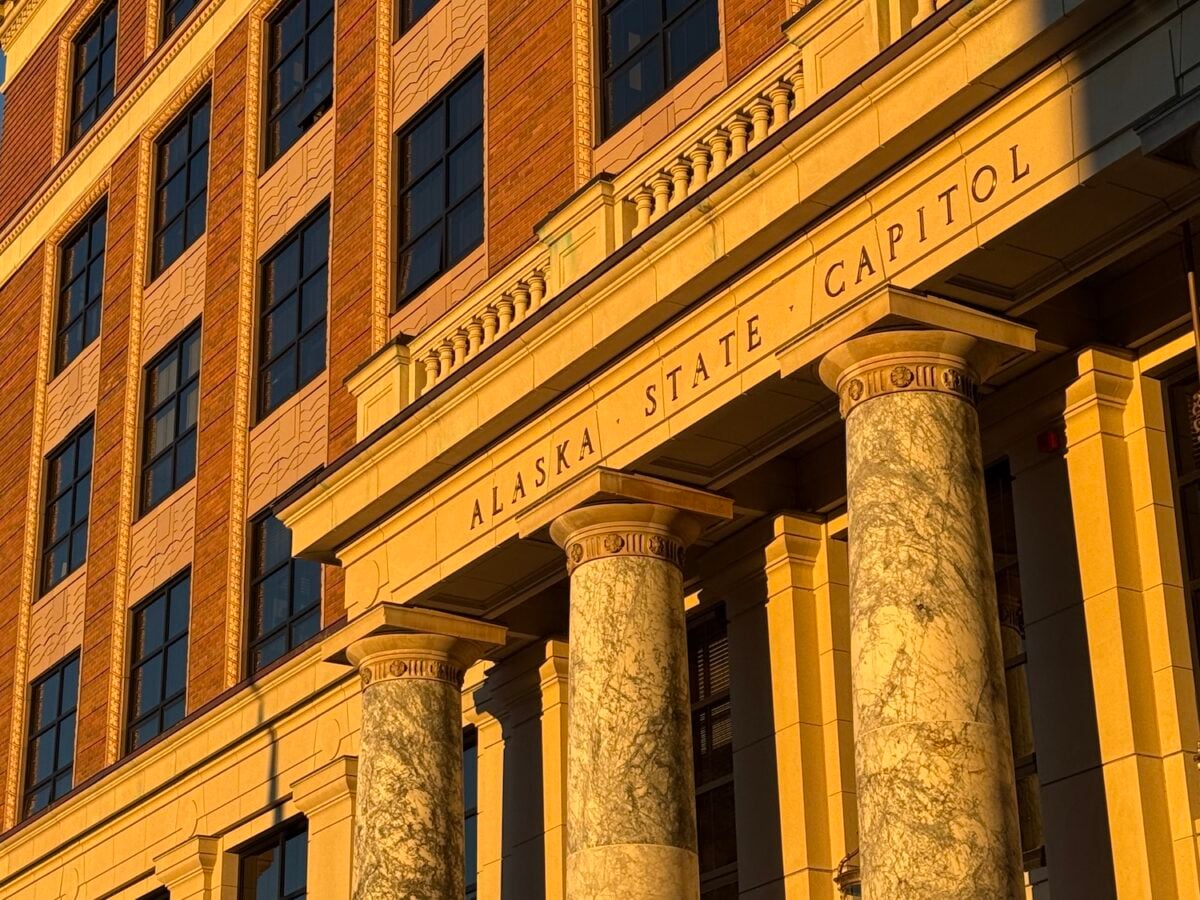
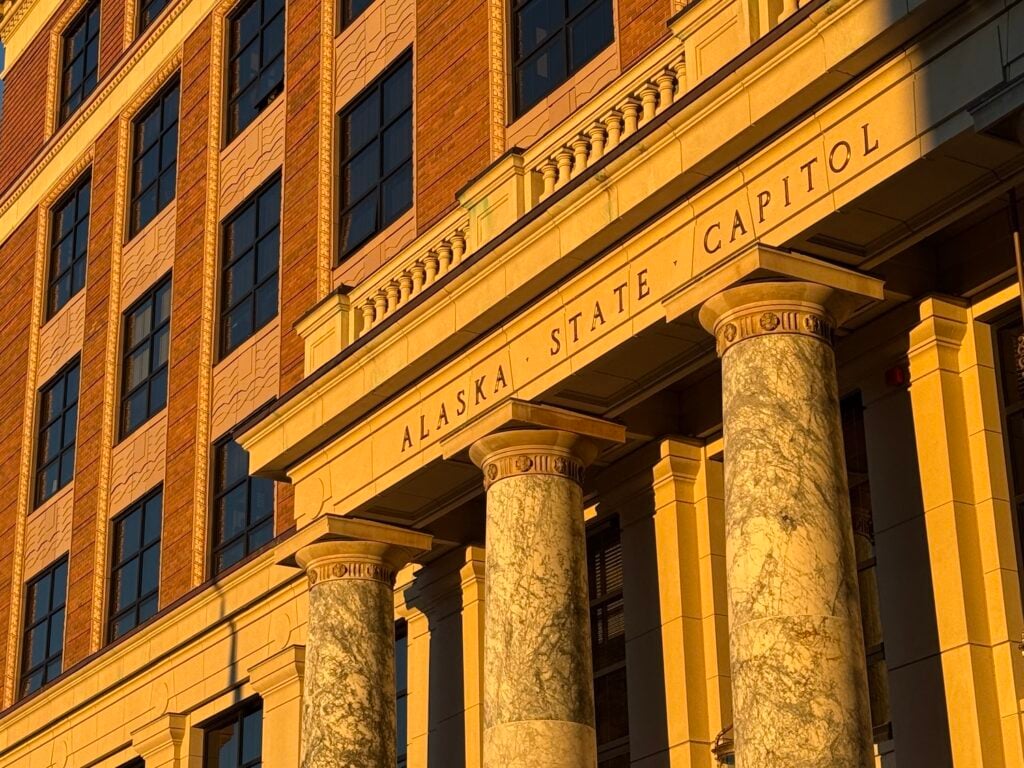
The Alaska State Capitol is illuminated by the rising sun on the morning of Friday, Jan. 23, 2026. (James Brooks photo/Alaska Beacon)

The Senate Finance Committee on Wednesday proposed an operating budget for the next fiscal year, with a $1,000 Alaska Permanent Fund dividend plus $150 energy relief payment per eligible Alaskan. 

The committee’s draft budget takes a more conservative approach to uncertainty around the state’s revenue forecast for next year — driven by rising oil prices due to the Iran war – than the proposed budget passed by the Alaska House passed earlier this month, and eliminates the deficit.

State forecasters have projected a $500 million boost in state revenues, and senators have expressed caution around state spending and a willingness to focus funds to tackle aging infrastructure and deferred maintenance, particularly upgrading school facilities. 

“The most fundamental thing we have to remember is that the state doesn’t have the resources to do all the things we need to do and that Alaskans need us to do,” said Sen. Jesse Kiehl, D-Juneau, a member of the finance committee on Thursday. He said the greatest challenge for the Legislature is prioritizing. 

“And so I think we did that effectively,” Kiehl said. “I think it makes a few really crucial, really targeted investments.”

The Senate’s draft budget removed the House’s proposed $158 million one-time education funding boost, and instead appropriates up to $100 million for K-12 schools subject to oil revenues averaging $95 per barrel for the rest of this fiscal year ending on June 30.

Alaska has no personal income or state sales tax, and so roughly 60% of state funds for the general purpose budget comes from the Alaska Permanent Fund, the state’s sovereign wealth fund currently valued at $86.3 billion, and roughly 30% comes from state oil revenues. 

The draft Senate operating budget is based on an average of $73 per barrel for the next fiscal year starting in July, whereas the House draft budget is based on an average $75 per barrel projection. 

The draft budget contains some changes to the House version and additions across departments. It would double funding for disaster relief to $48 million, and increase fire suppression funding from $47.5 million to nearly $61 million. It funds an additional $29 million for school districts and $20 million for communities to offset rising fuel and energy costs; $30 million for community assistance programs; $5.3 million toward a renewable energy fund; $3.5 million for the Alaska Marine Highway system’s ferry maintenance and staff salary increases. It also boosts funds for public employees retirement from $75 million to $106 million, and increases funds for teachers’ retirement system from $157 million to $164 million, among others. 

The budget also contains $650,000 for a state audit of the Alaska Department of Corrections to evaluate cost drivers, as the department’s budget has ballooned in recent years.

Kiehl said while he’d like to see more investment in services like in the state’s foster care system, homelessness programs, energy and schools, he said the state can’t bank on unknown revenues.

“We have to be careful not to treat a temporary boost in the price of oil, which will probably last more than a year as though it were permanent, increase. That’s not responsible,” he said.

Senate Minority Leader Sen. Mike Cronk, R-Tok and a member of the finance committee, said he’d like to see a more conservative budget, but he also wants to avoid a large supplemental budget as seen this year. He said he supports the budget based on an average $73 per barrel estimate. 

“I’m pretty comfortable with that number. I just don’t want to be back in that same position as we have this year, where we are $500 million upside down for supplemental,” he said.

Cronk said he supports targeted funding for renewable energy projects, education and deferred maintenance for schools, rather than expanding state department budgets. “I just think we should focus on making sure we have a fiscally responsible budget all around and not adding money to programs that continue in future budgets.”

The budget also includes a number of supplemental items, or costs incurred this year outside the budget. Those include $5.2 million for Alaska Pioneer Homes, $1.25 million for Village Public Safety Officer operations, $1.5 million for the Department of Law’s criminal division, $543,000 for court settlements and $4 million to defend a lawsuit challenging the state’s health care system for inmates in the corrections system. 

Cronk said while he would like to see a maximum Permanent Fund dividend, it’s not possible within the state’s current financial picture. 

“The whole PFD issue is very controversial, no matter which way we go on it,” he said. “We should be paying a full PFD, but the budget, the numbers, don’t allow that right now.”

The Senate’s draft budget overall cuts nearly $450 million from the operating budget, compared to the House draft version. However, the Senate’s proposal leaves $50 million of headroom for additional expenses next year, but that’s after accounting for a $360 million capital budget for state infrastructure projects. The Senate passed a nearly $250 million capital budget on Tuesday, which is now being debated in the House where likely additional projects will be added. 

The proposed budget, unveiled as amendments to House Bill 263 will continue to be debated in the Senate Finance Committee and further amendments are due by Friday, before going before the full Senate for a vote. 

Categories
Alaska News

Alaska Senate proposes draft operating budget with a $1K PFD plus a $150 energy relief payment

The Alaska State Capitol is illuminated by the rising sun on the morning of Friday, Jan. 23, 2026. (James Brooks photo/Alaska Beacon)

The Alaska State Capitol is illuminated by the rising sun on the morning of Friday, Jan. 23, 2026. (James Brooks photo/Alaska Beacon)

The Senate Finance Committee on Wednesday proposed an operating budget for the next fiscal year, with a $1,000 Alaska Permanent Fund dividend plus $150 energy relief payment per eligible Alaskan. 

The committee’s draft budget takes a more conservative approach to uncertainty around the state’s revenue forecast for next year — driven by rising oil prices due to the Iran war – than the proposed budget passed by the Alaska House passed earlier this month, and eliminates the deficit.

State forecasters have projected a $500 million boost in state revenues, and senators have expressed caution around state spending and a willingness to focus funds to tackle aging infrastructure and deferred maintenance, particularly upgrading school facilities. 

“The most fundamental thing we have to remember is that the state doesn’t have the resources to do all the things we need to do and that Alaskans need us to do,” said Sen. Jesse Kiehl, D-Juneau, a member of the finance committee on Thursday. He said the greatest challenge for the Legislature is prioritizing. 

“And so I think we did that effectively,” Kiehl said. “I think it makes a few really crucial, really targeted investments.”

The Senate’s draft budget removed the House’s proposed $158 million one-time education funding boost, and instead appropriates up to $100 million for K-12 schools subject to oil revenues averaging $95 per barrel for the rest of this fiscal year ending on June 30.

Alaska has no personal income or state sales tax, and so roughly 60% of state funds for the general purpose budget comes from the Alaska Permanent Fund, the state’s sovereign wealth fund currently valued at $86.3 billion, and roughly 30% comes from state oil revenues. 

The draft Senate operating budget is based on an average of $73 per barrel for the next fiscal year starting in July, whereas the House draft budget is based on an average $75 per barrel projection. 

The draft budget contains some changes to the House version and additions across departments. It would double funding for disaster relief to $48 million, and increase fire suppression funding from $47.5 million to nearly $61 million. It funds an additional $29 million for school districts and $20 million for communities to offset rising fuel and energy costs; $30 million for community assistance programs; $5.3 million toward a renewable energy fund; $3.5 million for the Alaska Marine Highway system’s ferry maintenance and staff salary increases. It also boosts funds for public employees retirement from $75 million to $106 million, and increases funds for teachers’ retirement system from $157 million to $164 million, among others. 

The budget also contains $650,000 for a state audit of the Alaska Department of Corrections to evaluate cost drivers, as the department’s budget has ballooned in recent years.

Kiehl said while he’d like to see more investment in services like in the state’s foster care system, homelessness programs, energy and schools, he said the state can’t bank on unknown revenues.

“We have to be careful not to treat a temporary boost in the price of oil, which will probably last more than a year as though it were permanent, increase. That’s not responsible,” he said.

Senate Minority Leader Sen. Mike Cronk, R-Tok and a member of the finance committee, said he’d like to see a more conservative budget, but he also wants to avoid a large supplemental budget as seen this year. He said he supports the budget based on an average $73 per barrel estimate. 

“I’m pretty comfortable with that number. I just don’t want to be back in that same position as we have this year, where we are $500 million upside down for supplemental,” he said.

Cronk said he supports targeted funding for renewable energy projects, education and deferred maintenance for schools, rather than expanding state department budgets. “I just think we should focus on making sure we have a fiscally responsible budget all around and not adding money to programs that continue in future budgets.”

The budget also includes a number of supplemental items, or costs incurred this year outside the budget. Those include $5.2 million for Alaska Pioneer Homes, $1.25 million for Village Public Safety Officer operations, $1.5 million for the Department of Law’s criminal division, $543,000 for court settlements and $4 million to defend a lawsuit challenging the state’s health care system for inmates in the corrections system. 

Cronk said while he would like to see a maximum Permanent Fund dividend, it’s not possible within the state’s current financial picture. 

“The whole PFD issue is very controversial, no matter which way we go on it,” he said. “We should be paying a full PFD, but the budget, the numbers, don’t allow that right now.”

The Senate’s draft budget overall cuts nearly $450 million from the operating budget, compared to the House draft version. However, the Senate’s proposal leaves $50 million of headroom for additional expenses next year, but that’s after accounting for a $360 million capital budget for state infrastructure projects. The Senate passed a nearly $250 million capital budget on Tuesday, which is now being debated in the House where likely additional projects will be added. 

The proposed budget, unveiled as amendments to House Bill 263 will continue to be debated in the Senate Finance Committee and further amendments are due by Friday, before going before the full Senate for a vote. 

Categories
Alaska News

Chilkat Valley News lands seven journalism awards

Chilkat Valley News staff brought home several awards from Alaska Press Club last weekend, including Best Picture Story for the second year in a row. 

Here’s more about what led to each award-winning piece.

“A weekend restoring Eldred Rock”

First Place – Best Picture Story 

A lot of the time with news photos you have too much to photograph and too little time. Not so with this one: I had 72 hours on Eldred Rock which is, well, a rock, with no way to leave save for the boat that was anchored off shore and out of reach. And it just so happened to be the most beautiful 72 hours of summer. We spent the time lifting windows, eating applesauce, and watching the ferries and summer light drift past.

The biggest challenge for me was trying to capture the very different scales of being confined to such a small, stationary vantage point amid such a large landscape. On the one hand, you go up to the top of the lighthouse and you could spend a lifetime counting the peaks and little coves that stretch from the rock to the horizon. 

On the other hand, if you spend enough time out there you learn just how much history the lighthouse. And you can see it in the small details of the construction, assuming you have people like Dan Humphrey walking you through it all. 

So hopefully, in the photos, there’s a sense of both of those ways of looking around. 

“Haines’ landslide maps unused, what comes next?”

Second Place – Best Public Safety Reporting 

The question of planning for the future with landslides is complicated. It’s hard for a layperson like me to understand the complex science, and the science itself has plenty of uncertainty baked in — the nature of a weather phenomenon with so many different risk factors. There’s the issue of what a government as small and as busy as the Haines Borough can do with that science. 

But walking around neighborhoods and knocking on doors, I got a sense for some of the human factors too: the lives people have built in specific places, the own personal risk calculations everyone makes. That’s something you don’t necessarily get from just looking at government documents and statistics. 

So while a lot of the word count in the article is spent on the landslide maps in a more abstract sense,  I wanted to bookend it with stories from the people who actually live every day on the ground described by those maps. And I’m grateful to everyone who took the time to do just that, answering their doors on cold days and taking time to talk. 

“Haines man finds long lost father in Scotland”

First Place – Best Profile 

I forget exactly where this story came from, but at some point someone told us we needed to talk to Mike and get his story. Apparently, they said, he had met his long-lost father, who turned out to be a movie star. 

I reached out to Thompson, and after a couple hours talking to him, I had the story. 

If you ever get a chance to talk to him, you should: a guy that has seen and done a whole lot of different things — kind of incredible things — and knows how to tell a good story. 

Even so, it’s unusual that you’d write any story with only one source or one voice, especially as a journalist. We’re supposed to verify from multiple sources and get all the perspectives involved. With this one, I couldn’t talk to the other main characters: I wasn’t able to reach his brother, and just as I was reporting the story, Thompson’s  father died. 

I tried to work around that by talking about Thompson as a character himself, and not just the narrator: what he was like recounting the story, how he walked me through the evidence from various parts of his story — photos, text chains, and so on. I wanted to situate the story in his kitchen, interviewing him specifically in the aftermath of the events he was describing. That’s an interesting question to me: not just the crazy discovery, but how you think through what comes after.

The article benefitted hugely from former CVN reporter Francisco Martinezcuello’s editing, including his advice to flip the beginning and end of the story. Everyone should get themselves a narrative expert on speed dial who happens to be very generous with their time. 

“Stuck in traffic? Here’s what everyone else is doing”

Second Place – Best Travel Reporting

This story idea came from the paper’s Duly Noted columnist Chuck Jones, which I think you can tell if you read the article and know her. I try to be more like her as a reporter: she spends so much time outside, going where people actually are, and telling the story of what people are actually talking about. I’m pretty confident that’s her not-so-secret secret to getting such a good Duly Noted column every week.

So for this article, I just got to spend the entire afternoon out in the sun on the side of the highway. Pretty great work day. 

What I like about this article, and about what Jones does with Duly Noted, is giving a sort of simultaneous window into a whole bunch of different, small worlds. It’s not news to me on its own that the mailman eats tortilla chips or someone else is counting butterflies. But all together, it’s nice knowing that given the exact same same part of a traffic stop, all these different neighbors and community members find their own, unique ways to get to the other side. 

Steinfeld was also named the best solo journalist in the state and won an award for a photo he took of a competitor in the Southeast Alaska State Fair. While editor Rashah McChesney also won an outdoor writing award for her piece on Tom McGuire who drowned in Chilkoot Lake last year. 

For the second year, the Chilkat Valley News was edged out of the competition for the best weekly newspaper in the state. That honor went to the Petersburg Pilot first, then the Wrangell Sentinel, and finally the Nome Nugget. 

Every story the Chilkat Valley News produces is a collaboration between the community, the journalist and the audience. The paper relies on questions, insights, tips, letters to the editor, and feedback from people who live in the region. 

We’ve also featured stories from former reporter Francisco Martínezcuello this year, former owner Kyle Clayton, obituaries from Heather Lende, editorial intern Chisel Triezenberg and had graphic design help from intern Robin Oaks. 

Much of our success should be attributed to our long-running business manager Jane Pascoe, advertising and salesperson Chuck Jones, and an army of proof readers including Nancy Nash, Bonnie Hedrick, Tripp Course, Angie Pappas, and Liz Heywood who have made each story shine.

The post Chilkat Valley News lands seven journalism awards appeared first on Chilkat Valley News.

Categories
Alaska News

Nominee for Alaska Police Standards Council defends conspiracy theories

An Alaska State Trooper’s shoulder patch is seen on Thursday, Jan. 25, 2024. (Photo by James Brooks/Alaska Beacon)

Members of the Senate Judiciary committee put questions to a governor’s nominee for the Alaska Police Standards Council about her social media posts during a confirmation hearing Wednesday. 

Veronica Lambertsen defended conspiracy theories around the Holocaust, blood-harvesting from children and the Jan. 6 insurrection at the U.S. Capitol.

Lambertsen has been nominated by Gov. Mike Dunleavy to serve a three-year term representing one of four public seats on the 13-member Alaska Police Standards Council, which oversees law enforcement standards across the state.

Lambertsen has served on the council since being nominated in August, but her name was removed from the council’s website Thursday afternoon, following the hearing and media coverage of the posts.

Dunleavy’s office did not respond to a request for comment about her nomination, her social media posts and the removal of her name from the website on Thursday. 

Lambertsen is the owner and operator of a motel in Birch Creek, a small neighborhood in Turnagain Arm that is part of the municipality of Anchorage. She also serves as a voluntary member of the local Turnagain Arm Community Council, according to her resume.

Lawmakers in the House expressed skepticism in a hearing earlier this month and questioned Lambertsen’s experience, connections with law enforcement and eligibility for the seat.

Sens. Matt Claman, D-Anchorage, and Löki Tobin, D-Achorage, are seen in a Senate Judiciary Committee hearing on Apr. 20, 2026. (Photo by Corinne Smith/Alaska Beacon)

In a second confirmation hearing on Wednesday, following questions about her background, chair Sen. Matt Claman, D-Anchorage, asked about several social media posts going back many years. 

“One of the postings that I saw was a posting that you didn’t believe the Holocaust was real,” Claman said. “Do you believe the Holocaust occurred during World War II?”

Lambertsen said it was a tragedy, but that she has questions. “Do I believe something happened at the Holocaust, and a tragedy and a lot of people died?” she said. “Yes, I believe that actually happened. Are we being told the true story about it all? No, I don’t believe we’re being told the true story about it all.”

“What do you believe is the true story?” Claman asked.

“That I don’t know yet,” she replied. 

The Alaska Police Standards Council is charged with setting and enforcing standards for law enforcement, including police, probation, parole and correctional officers. They’re also tasked with reviewing regulation and investigating misconduct, like officer discipline and use of force. 

A zip drive of selected posts from Lambertsen’s public Facebook page compiled by legislative staff and reviewed by the Alaska Beacon includes posts going back to 2021 related to a variety of conspiracy theories — questioning the shape of the Earth, the moon landing, the 2020 election results and the Jan. 6 insurrection, as well as posts related to the far-right internet conspiracy theory movement QAnon.

Claman asked about a QAnon claim that children are being harvested for a chemical called adrenochrome from their blood. 

After a long pause, Lambertsen responded similarly that she had questions. “From information I have seen and documentation that was provided the question that should be asked,” she said.

Claman said in an interview Thursday that he found the hearing troubling. “For this position, which really means you’re providing some degree of supervision and regulation of our public safety officers, I just have a lot of concerns, given her perspective,” he said. 

Lambertsen did not respond to a request for comment on Thursday. She told the Juneau Independent that what she posts on social media is separate from what’s involved in serving on the council.

Sen. Löki Tobin, D-Anchorage, raised the issue that Lambertsen may not be eligible to serve on a seat reserved for a member of the public from a rural district. Two of the four public seats are reserved for members representing communities with a population of 2,500 people or less.

“I think this is unfortunately a situation of where Ms. Lambertsen has been put into a seat that she is not qualified to hold based on statute and practice,” she said. “I would encourage Ms. Lambertsen to consider withdrawing her own name, as she is, in my estimation and read of the statute, not legal to sit in the seat.”

The Senate Judiciary Committee forwarded Lambertsen’s nomination on Wednesday to a vote by a joint session of the Legislature. But whether she will be considered is uncertain, as her name is no longer listed on the state website describing the council. 

A joint session for state appointments to boards and commissions, including for Attorney General Stephen Cox, is scheduled for May 7. 

SUPPORT: YOU MAKE OUR WORK POSSIBLE

Categories
Alaska News

Civil rights groups sue Alaska Division of Elections for sharing voter rolls with DOJ

Voters at Anchorage City Hall wait in line to cast their ballots on Nov. 4, 2024, the day before Election Day. City Hall, in downtown Anchorage, was one of the designated early voting sites in the state's largest city. (Photo by Yereth Rosen/Alaska Beacon)

Voters at Anchorage City Hall wait in line to cast their ballots on Nov. 4, 2024, the day before Election Day. City Hall, in downtown Anchorage, was one of the designated early voting sites in the state’s largest city. (Photo by Yereth Rosen/Alaska Beacon)

A group of state and national civil rights groups has filed a lawsuit against the Alaska Division of Elections challenging the decision to share Alaska’s voter rolls with the U.S. Department of Justice as unconstitutional.

The lawsuit filed on Wednesday charges the division with violating the right to privacy enshrined in the Alaska Constitution when officials complied with a Department of Justice’s request and turned over a copy of Alaska’s voter rolls, as well as signed a memorandum of understanding agreeing to remove voters the federal government identifies as ineligible. 

The lawsuit names Lieutenant Gov. Nancy Dahlstrom and Carol Beecher, director of the Division of Elections, in their official state capacities.

Alaska is one of 12 states that has complied or said it will comply with the DOJ demand issued last July. In August, Alaska shared a copy of voter rolls including previously confidential information — voters’ full names, dates of birth, residential addresses and drivers’ license numbers or partial social security numbers. 

The Alaska Beacon first reported on the state signing the agreement in February. The news prompted public alarm and debate around confidentiality of voter information, purpose of collecting voter data, and federal overreach in state elections. Lawmakers questioned state elections officials in legislative hearings. 

The lawsuit is filed in Anchorage Superior Court and brought by the League of Women Voters of Alaska, and the Alaska Black Caucus, non-profit membership voting and civil rights organizations. They are represented by the ACLU of Alaska, the ACLU national chapter, the Voting Rights Project and Electronic Privacy Information Center.

“The right to vote and our right to privacy are two core values held dear by Alaskans,” said Eric Glatt, legal director for the ACLU of Alaska, in a statement announcing the lawsuit. “Rather than fiercely defending the rights of Alaska’s voters, our Division of Elections acceded to federal overreach. Now, we are asking the court to step in and ensure that DOE upholds its constitutional and legal obligations to Alaskans.” 

The lawsuit highlights that the Department of Justice is sharing voter information with the U.S. Department of Homeland Security to search for noncitizens and to compile a national database.The lawsuit alleges that is in order to “conduct criminal and immigration investigations.” 

Plaintiffs argue the state’s agreement to remove voters the federal government has found to be ineligible and resubmit an updated list to DOJ within 45 days violates constitutional due process rights. They argue that “by giving DOJ the power to select which Alaskans have the right to vote and by obligating Defendants to purge voters from the voter list without any stated basis in law or process to challenge such an action.”

A spokesperson with the Alaska Department of Law, Sam Curtis, said the department had not yet been served, and so he declined to comment on its specific claims on Wednesday. Curtis said the issue has been addressed in public hearings and the state’s cooperation with the federal government complies with federal and state laws, in particular those allowing the state to share confidential information “for authorized government purposes.” 

In a Mar. 19 letter to members of the Legislature by Alaska Attorney General Designee Stephen Cox defended the state’s decision, saying the disclosure was authorized under the National Voter Registration Act and other state elections laws to permit sharing otherwise confidential voter information.

“The memorandum of understanding (“MOU”) with DOJ limits the use of the information to federal voting-rights enforcement and voter-list maintenance and imposes strict confidentiality and data-security requirements,” he wrote. 

“The division’s actions also reflect Alaska’s longstanding practice of cooperating with DOJ’s Civil Rights Division across administrations,” he added. 

The Trump administration has sued thirty states and Washington D.C. for refusing to comply, according to a tracker by the Brennan Center for Justice at NYU Law, a critic of the Trump administration’s requests. 

In the Alaska lawsuit, plaintiffs are asking the court to void the state’s agreement with the federal government, and beyond the scope of the defendants’ authority. 

They’re also asking the court to grant permanent injunctive relief and require the state to make “reasonable efforts” to ensure the Department of Justice immediately destroys all copies of Alaska’s voter rolls previously shared.

Anchorage Democratic Sen. Bill Wielechowski has been working on elections issues for several years and was a main driver of elections legislation passed this year that’s now on Gov. Mike Dunleavy’s desk awaiting a final decision. The bill aims to streamline the state’s voting process and update voter rolls. He said the lawsuit was appropriate.

“I support it. I think it’s a good thing,” Wielechowski said Wednesday. “I think the department should have never sent that information. They probably did violate the law.”

Wielechowski said there is discussion among state lawmakers about filing an amicus brief in support of the lawsuit. 

“The big concern was that there were going to be Alaskans who were taken off the voter rolls. And the division is turning over control and running of state elections to the federal government. And state elections have always been in the purview of the states,” he said. “So I think there’s tremendous concern in Alaska.”

SUPPORT: YOU MAKE OUR WORK POSSIBLE