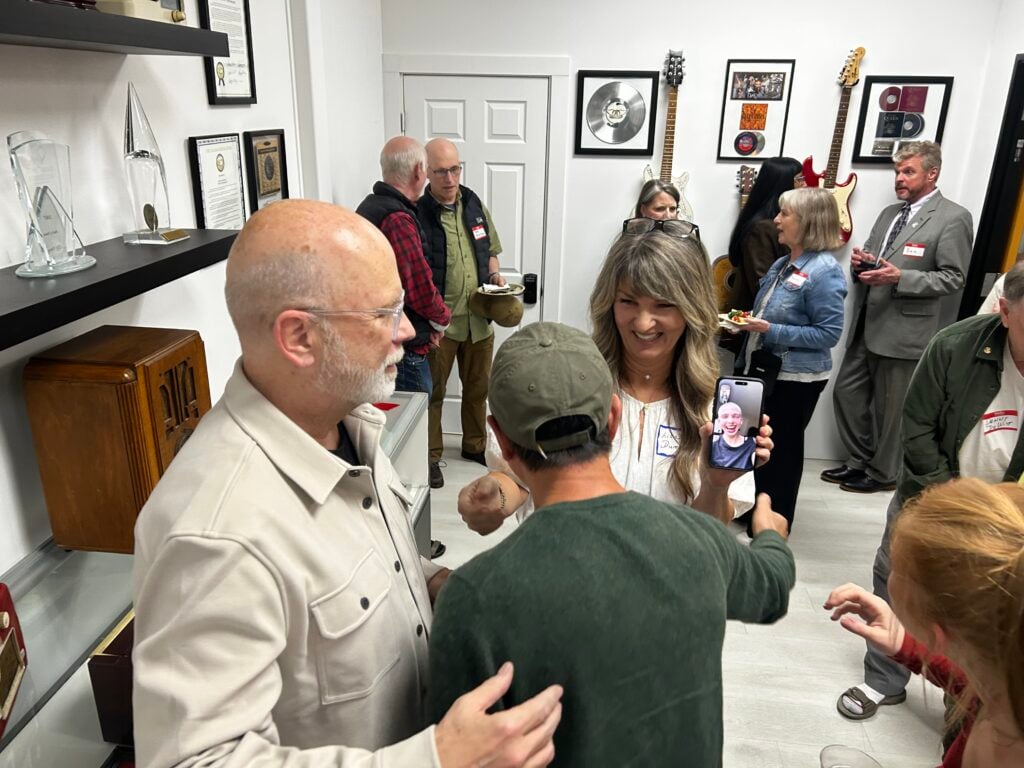
NOTN- A new program aimed at helping youth in crisis is launching in Juneau through a partnership between the Shéiyi Xaat Hít Youth Shelter, Tlingit and Haida, first responders and local businesses.
The Safe Place program provides immediate help for young people ages 10 to 17 who need safety or support. Participating businesses and organizations display a black-and-yellow Safe Place sign, letting youth know they can come inside and ask for help.
Employees will contact staff at the Shéiyi Xaat Hít Youth Shelter, who will respond within 30 minutes to provide crisis support and connect youth with needed resources.
Organizers say the program expands the safety net for vulnerable youth, including those who are homeless, have run away, or are at risk of doing so.
“Although we’ve served a record number of youth at the shelter over the last year, we know that there’s many more who need help. Safe Place is a great way for us to expand the safety net of support for youth in Juneau,” shares Hannah Jenkins, Outreach Coordinator at Shéiyi Xaat Hít.
Initial Safe Place locations include Juneau fire stations, the Juneau Police Department, the Zach Gordon Youth Center, the Southeast Alaska Food Bank, Glacier Cinemas, Kindred Post, Dimond Park Aquatic Center, and Augustus Brown swimming pool.
Youth can find a Safe Place by looking for the black and yellow signs on businesses, searching the list of current Safe Places at bit.ly/SheiyiXaatHit, or texting their location and the word “safe” to TXT-4-HELP (44357).
A community launch party was held at the Zach Gordon Youth Center on Friday.
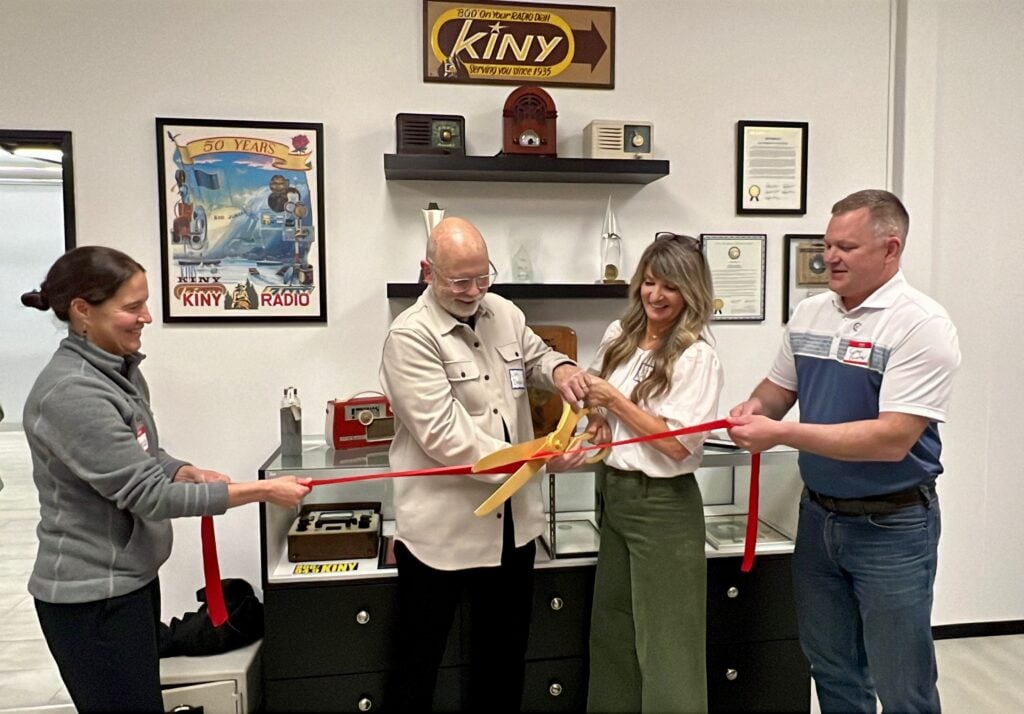
Ribbon cutting ceremony for the new Juneau Media Center at Mendenhall Mall.
Thursday night, the Juneau Chamber of Commerce hosted a ribbon-cutting ceremony at the new address of a local tradition, the Juneau Media Center (formerly known as the Radio Center on Channel Drive). Now, six new studio spaces, including a dedicated newsroom, a recording studio, and an open-air office space, are housed in the annex section of the Mendenhall Mall.
Chamber Executive Director Becca Parks, Cliff Dumas, Lisa Dumas, and Chamber President Corey Baxter.
Under the ownership of Juneau’s own Cliff and Lisa Dumas, the move marks a renewed investment in local radio, local news, and the communities served by Alaska First Media across Southeast Alaska.
Juneau Chamber of Commerce Board of Directors.
For Cliff Dumas, the transition represents both a continuation and a new chapter. Dumas has been part of the Juneau radio scene for eight years, hosting the TAKU 105 morning show under the previous ownership group. His broader career includes recognition as a Radio Personality of the Year winner from the Country Music Association, the Academy of Country Music and the Canadian Country Music Association. He is also a Hall of Fame broadcaster with decades of experience as a radio host, and television writer and producer.
Alaska First Media Team- From left: Devon Stickler, Charlee Quintal, Justin Miller, Angel Montgomery, Cliff Dumas, Lisa Dumas, Brittany Rickard, Scott Mills, Jason Palmer
Lisa Dumas also brings an award-winning media background to the company, including her work as a host and television writer. Together, the couple, who met at a Toronto radio station thirty years ago, bring a deep understanding of broadcasting, storytelling, and community connection to the future of Alaska First Media. They instantly felt at home in Juneau, invested in a house on Douglas and quickly created community. When Lisa’s not on the radio, you might find her teaching a class at Auke Bay Yoga, or hiking a trail with friends she met through her work on the Juneau Symphony Board or the Glacier Valley Rotary Board.
Cliff and Lisa hosting the morning show at KRST in Albuquerque in the 90s.
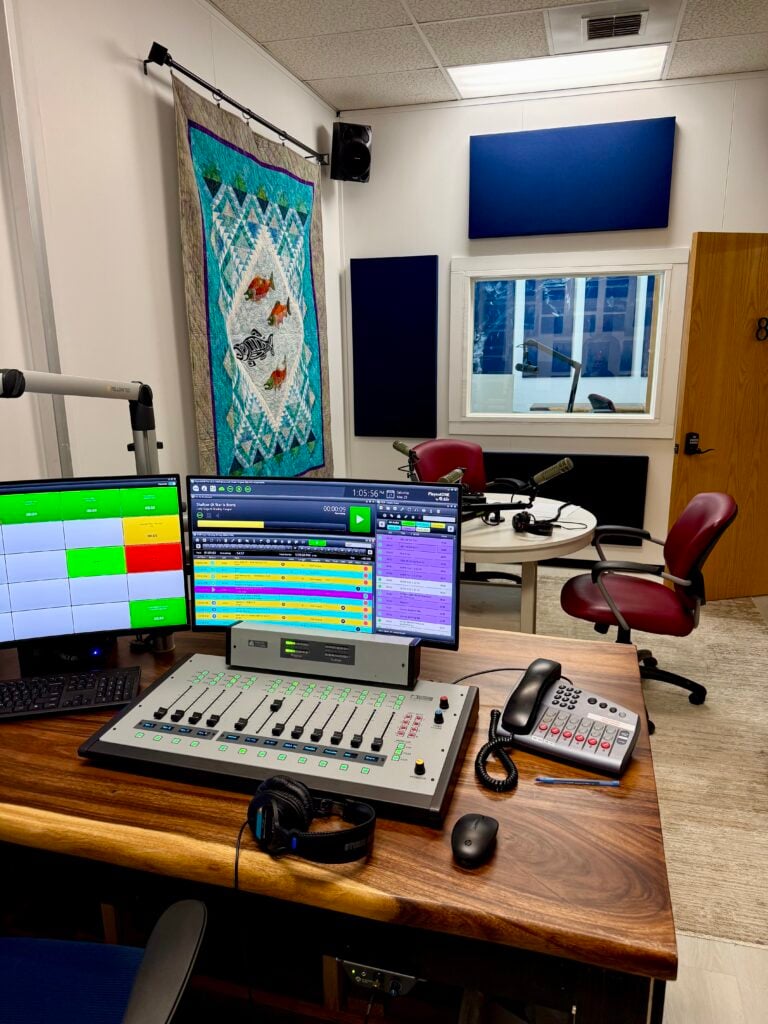
When the Dumas’ stepped into ownership roles, they recognized improvements needed to be made to ensure the sustainability of the product and to continue to serve Southeast Alaska in a meaningful way. The new location features brand new studios furnished with state-of-the-art broadcast equipment designed to improve sound quality, reliability, and daily operations for the company’s Juneau stations, including KINY, MIX 106, TAKU 105, KXJ, KJNO, and The Hawk-Juneau’s Sports Station.
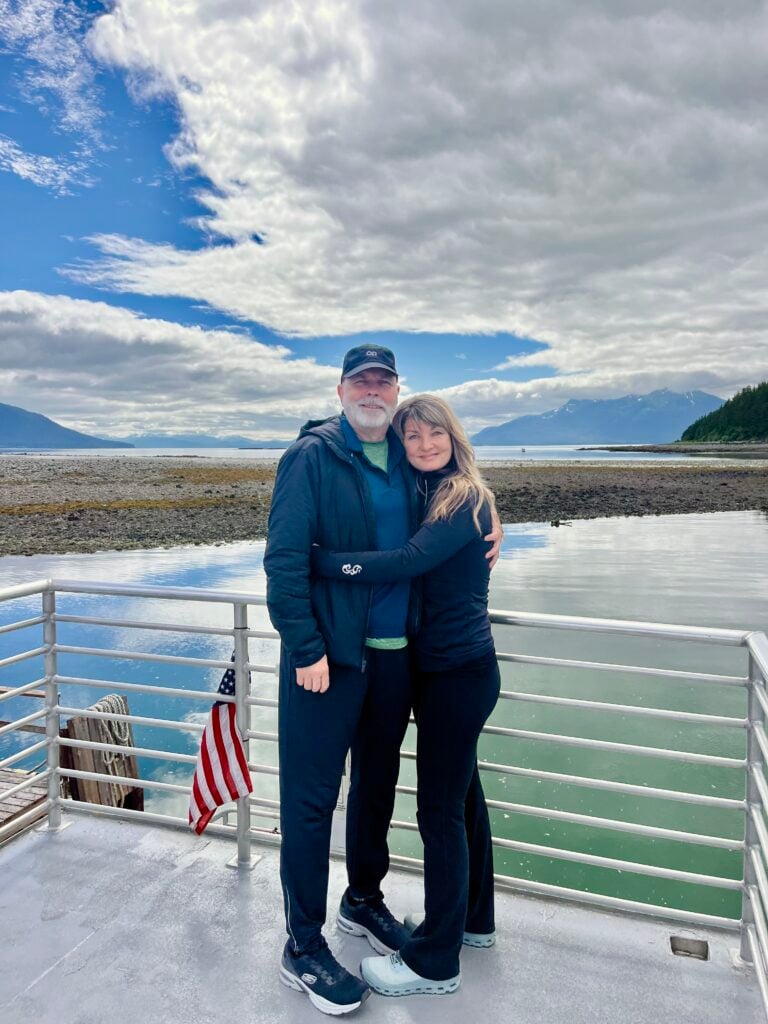
Present day image of Cliff and Lisa.
The Dumas’ say the intention of the investment in new equipment and processes is to offer listeners a cleaner, more consistent sound and a commitment to local talent. The new space includes modern tools to support live interviews, local news, music programming, sports coverage, emergency information, and community service.
KINY Studio.
The relocation also includes the integration of brand-new robust music libraries across the company’s formats. From country and adult contemporary to classic hits, rock, news, talk and sports, each station is getting refreshed with updated music resources and programming tools designed to keep the stations current, familiar and connected to the community.
The investment extends beyond the studio walls.
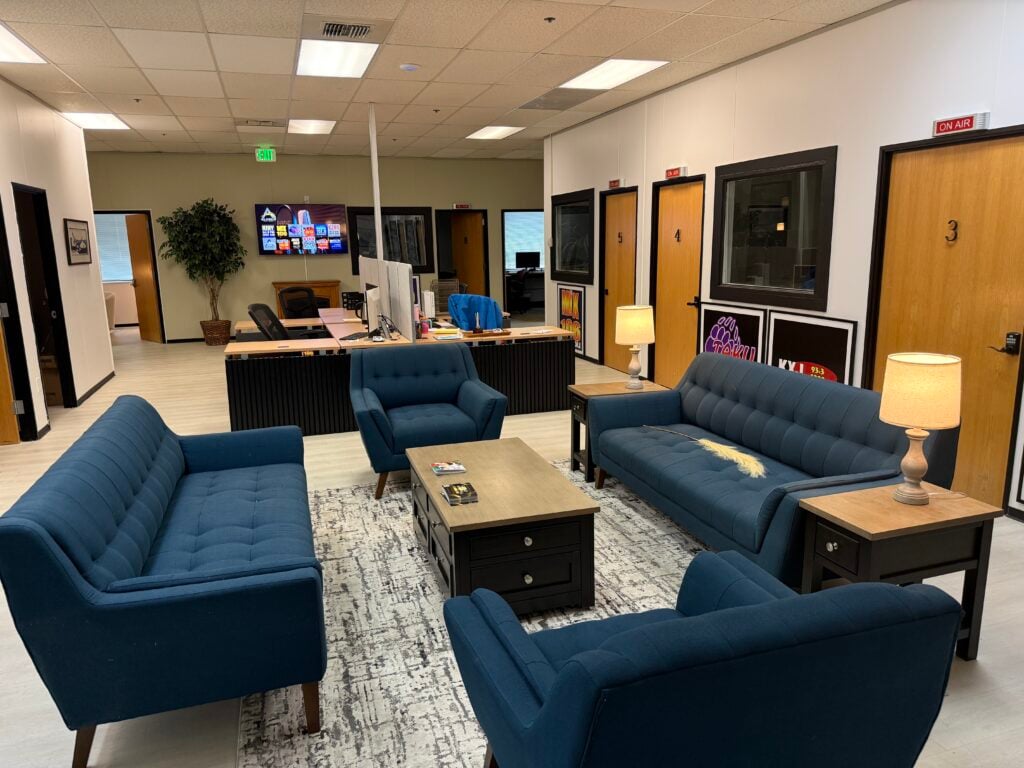
Sales and meeting space.
Alaska First Media has improved its broadcast infrastructure, including new equipment and transmitter upgrades for TAKU 105, KINY, KJNO, and the HAWK, as well as other stations in the Juneau group. Additional improvements are underway across the company’s transmitter sites, including Douglas and Heintzleman Ridge, with continued upgrades at the company’s stations in Ketchikan and Sitka.
Board Room.
The Juneau Media Center’s new location creates a more visible and welcoming home for local radio. Cliff and Lisa hope it offers listeners, business owners, civic leaders, nonprofit organizations, coaches, athletes, musicians, and community voices a place to be part of the conversation.
MIX 106 Studio.
At a time when many media companies are cutting, Alaska First Media is investing in studios, equipment, music, transmitters, and most importantly, the people who make up their local team.
Cliff and Lisa say that last night’s New Location Celebration was a chance to open the doors and share a vision that has finally come to fruition. They hope it is a feel-good home for local radio, where a valued and talented team of local professionals work hard to support local businesses, non-profit organizations and community events and share a commitment to Southeast Alaska and a broadcast center designed for the future.
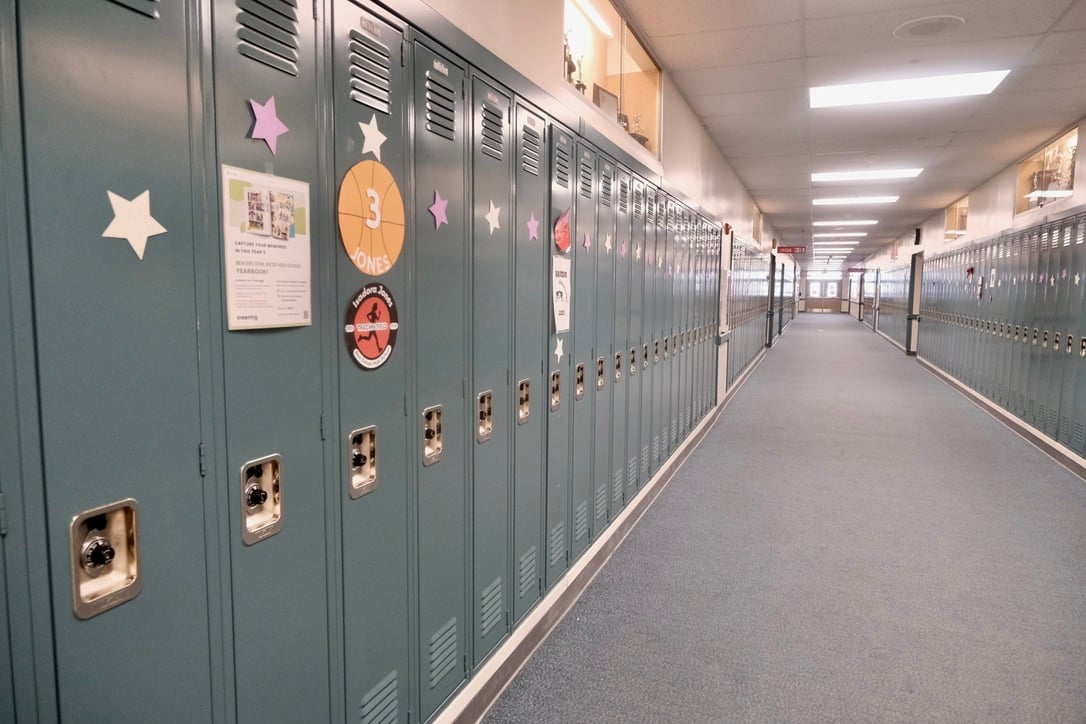
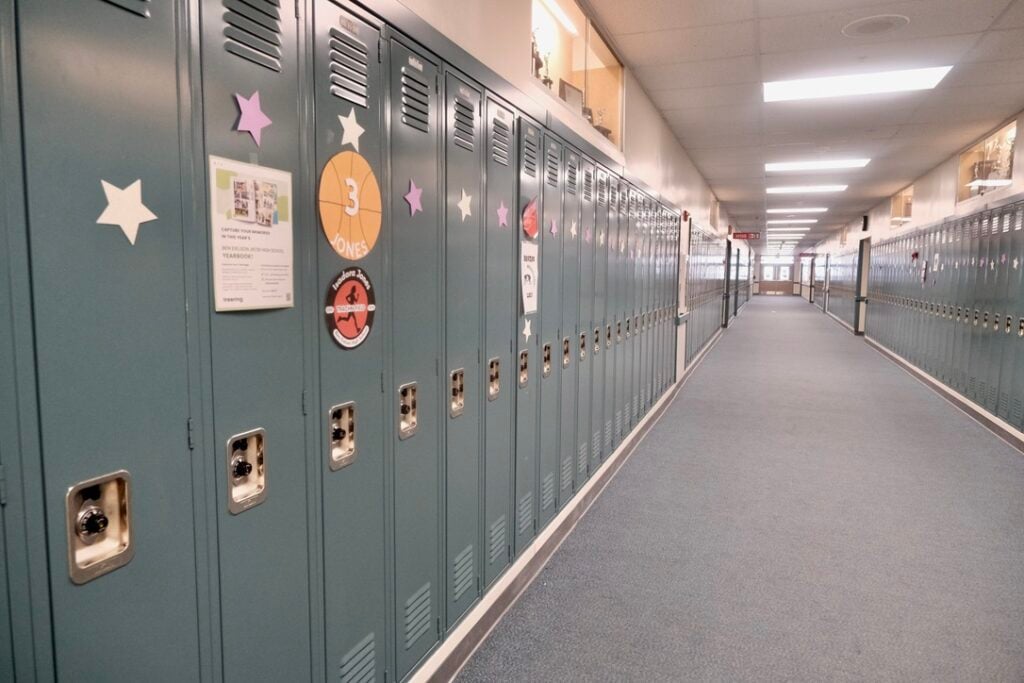
Lockers line the halls of Ben Eielson Junior Senior High School on April 22, 2024. (Photo by Claire Stremple/Alaska Beacon)
Alaska school districts that have grown to rely on international teacher hires are likely to do without them this year, even after a federal judge blocked the Trump administration’s fee hikes for highly skilled worker visas on Monday.
The Trump administration raised the fee from $5,000 to $100,000 last September, which put Alaska school districts’ international teacher hiring on hold. Districts have increasingly relied on international hiring to fill an ongoing teacher shortage across the state, particularly in rural and remote districts. The nearly 2,000% cost increase put the visas out of reach for districts that are already facing severe budget deficits and school closures.
Lisa Parady, executive director of the Alaska Council of School Administrators, a non-profit leadership and advocacy group that supports districts in hiring, said the court ruling was welcome news. However, she said there is concern the federal government could appeal and reinstate the fee.
“So that puts us in a really hard place. We are thrilled because we believe this is the right interpretation of the law, and we really hope that it will be sustained, and that the government will not be able to get a stay or would lose in an appeal, but in the meantime we’re still a little bit in limbo,” she said.
She said that school districts are unlikely to hire through the H-1B visa program now, due to the risk of losing tens of thousands of dollars of application processing fees if the federal government appeals the court decision successfully.
“The chance of taking a risk of losing those fees, if they could submit now, is just a risk. And I think our districts are largely risk averse because they don’t have those kinds of funds to take risks with,” she said.
Jennifer Schmitz, director of the Alaska Educator Recruitment and Retention Center, a division of the Alaska Council of School Administration, said some districts previously lost processing fees and even new international hires from the Philippines when the Trump administration enacted the increased visa fee last fall.
“Most districts are going to want to wait and watch over the next month or two and see what happens, and then maybe move forward,” she said.
The H-1B visa is valid for six years. As those Alaska-based teachers’ visas expire in the next several years, Parady said Alaska schools will reach a crisis point for hiring.
“We’re going to be in a full-blown crisis, because we don’t have people standing in line to fill those positions,” she said. “We have been operating in the largest crisis and educator shortage in America, and at the local level in Alaska’s the worst crisis we’ve ever seen. And so while we aren’t feeling the full effect of those not being available to districts, we’re going to. Unless this terrain changes.”
The Alaska Legislature unanimously passed a resolution in May that urges the Trump administration to waive the steep visa fee to allow the continued recruitment and hiring of international teachers.
Last year, Republican U.S. Sen. Lisa Murkowski introduced legislation to create an educator exemption from the increased fee. After the Monday ruling, her office said she will continue to work with the U.S. Secretary of the Department of Homeland Security, Markwayne Mullin to create an administrative waiver from the fee to help bring teachers to Alaska.
“I will continue working to eliminate this fee permanently so that Alaska’s students are receiving the best education possible, regardless of the outcome of future legal challenges,” she said in a social media post on Monday.
NOTN- A Juneau woman has died following a single-vehicle crash on North Douglas Highway. The full information release by the Juneau Police Department can be found below.
Juneau Police Information release
On June 10, 2026, at approximately 12:45 p.m., officers with the Juneau Police Department responded to a report of a single-vehicle collision in the 4300 block of North Douglas Highway.
The preliminary investigation determined that a sport utility vehicle was traveling outbound on North Douglas Highway when it left the roadway, entered a ditch, and struck a tree. The vehicle was occupied by a 62-year-old female driver and an 89-year-old female passenger.
Officers, along with personnel from Capital City Fire/Rescue, provided emergency assistance at the scene. Both occupants were transported to Bartlett Regional Hospital for treatment of injuries sustained in the collision.
On June 11, 2026, the 89-year-old female passenger died as a result of injuries sustained in the crash.
The collision remains under investigation. Anyone who witnessed the crash or has information related to the incident is encouraged to contact the Juneau Police Department at (907) 586-0600 and reference the case number associated with this investigation.
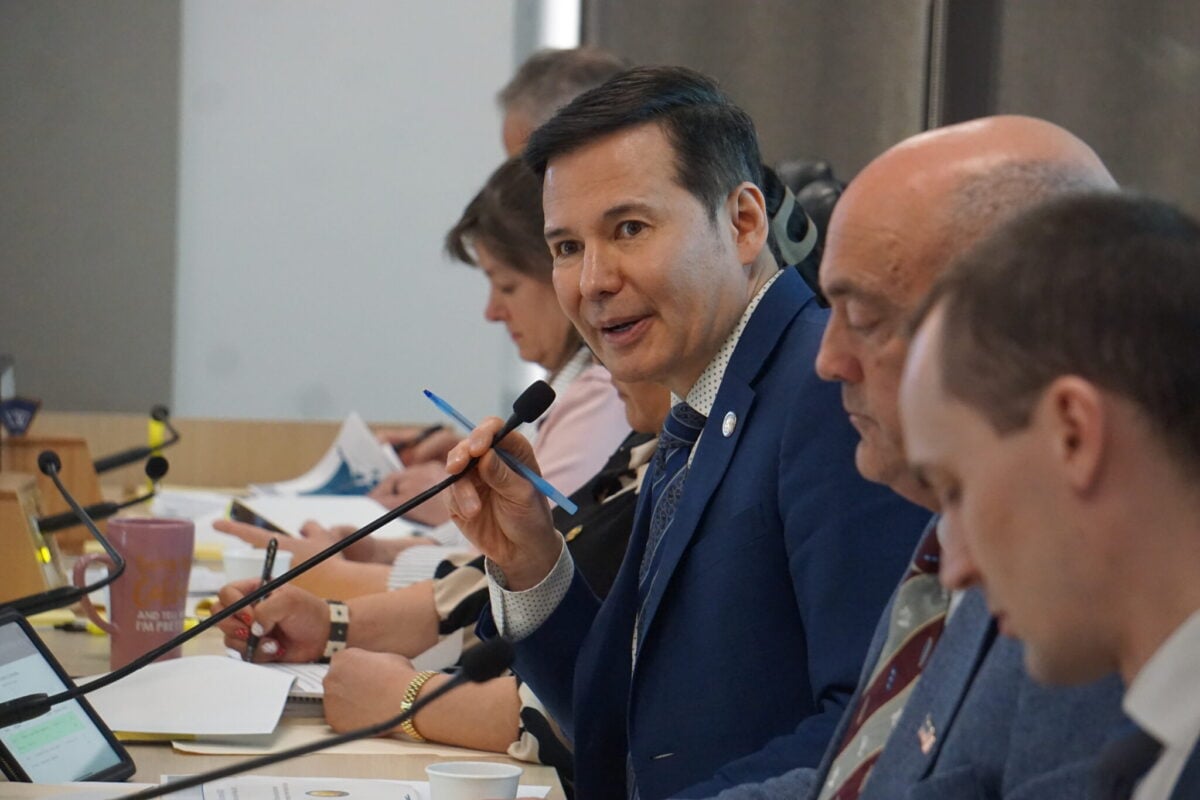
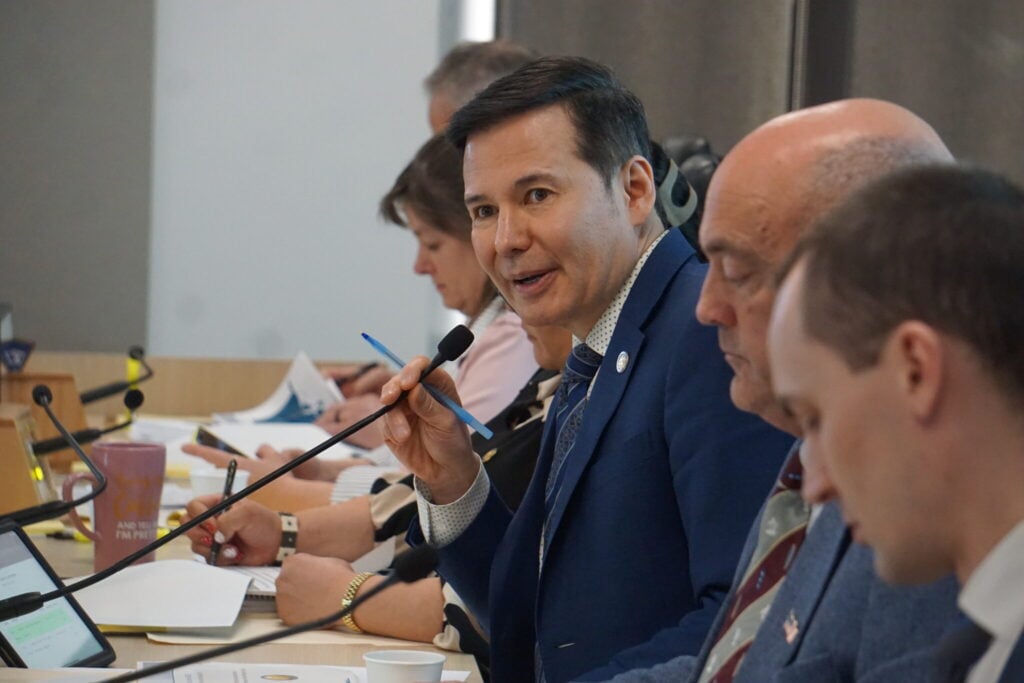
Rep. Neal Foster, D-Nome and co-chair of the House Finance Committee, asks a question during a May 27, 2026, hearing in Anchorage. Shown with Foster are other members of the committee: Rep. Alyse Galvin, I-Anchorage, Rep. Andy Josephson, D-Anchorage, and Rep. Calvin Schrage, I-Anchorage. The committe on Wedneday approved a version of a tax bill intended to encourage development of a natural gas pipeline. Lawmakers have been considering the bill during a special session called by Gov. Mike Dunleavy. (Photo by Yereth Rosen/Alaska Beacon)
Alaska lawmakers, meeting in a special session, advanced a bill intended to spur construction of a long-desired pipeline carrying natural gas from the North Slope to markets.
The legislature’s House Finance Committee approved the bill, House Bill 381, which would largely eliminate state and municipal property taxes on project-related infrastructure, replacing those revenues with money from gas flowing through the system.
The bill now heads to the House floor for consideration. For the bill to become law, it must be approved by the House and then reviewed and approved by the Senate before the special session ends on June 19. If the Senate makes changes to the bill, the House must vote to concur with them.
The Senate has its own version of the bill, Senate Bill 2001, which is currently under review in that body’s finance committee.
The House bill has been a top priority of Gov. Mike Dunleavy, who called the special session, and the Glenfarne Group LLC, a private asset manager and developer leading the current plan to commercialize long-stranded North Slope natural gas. They argue that property taxes are the major impediment to the project’s construction.
The Glenfarne project, which is in partnership with the state-owned Alaska Gasline Development Corp. proposes an approximately 800-mile pipeline from Prudhoe Bay to tidewater at Cook Inlet, where gas would be liquefied. Glenfarne became involved in the project last year, acquiring a 75% share from the Alaska Gasline Development Corp.
In comments just before their vote to move the bill, some House Finance Committee members said they had high hopes the measure will result in a pipeline project.
Rep. Frank Tomaszewski, R-Fairbanks, said the project will be as important as the trans-Alaska oil pipeline that his father helped build in the 1970s.
“I’m just humbled and honored right now to be able to be working on this legislation that is going to bring that next step, that gas pipeline, because 40, 50 years ago, that was what we were talking about,” Tomaszewski said at the hearing. “I’m looking forward to the groundbreaking ceremony for this project, because it will be transformational for the state, not only with lower gas prices and affordable energy but also tremendous amount of revenue for the state and local communities.”
Rep. Will Stapp, R-Fairbanks, had similar comments.
“Generally, at the end of the day, I think the vast majority of us and Alaskans really want to see the best chance possible to be provided to move forward with this transformational project,” Stapp said.
The bill went through numerous amendments, many of which were aimed at protecting local governments dependent on property taxes.
Dan Sullivan of Petersburg announced his campaign for the U.S. Senate on May 29 to challenge incumbent U.S. Sen. Dan Sullivan. (Photo courtesy of Dan Sullivan)
The Alaska lieutenant governor’s office, which oversees state elections, announced an investigation into the validity of a U.S. Senate candidate from Petersburg following complaints from Alaska’s incumbent senator with the same name, Dan Sullivan.
Dan J. Sullivan of Petersburg formally responded to the state’s challenge on Wednesday, calling it an affront to his rights. He maintains his candidacy for U.S. Senate is authentic, and said he’s running to challenge the Republican incumbent U.S. Sen. Dan S. Sullivan to represent Alaskans.
On Monday Lt. Gov. Nancy Dahlstrom, a Republican, announced the investigation into the candidacy of Sullivan of Petersburg and sent him a list of questions to answer under sworn affidavit. She noted that false statements carry the penalty of perjury. She said the results of the investigation would determine whether he may appear on the August 18 primary ballot.
Republican incumbent Sen. Sullivan has served two terms in the U.S. Senate. The two Sullivans are among 16 candidates for the U.S. Senate for a six-year term.
Sen. Sullivan has complained that Sullivan from Petersburg is a “sham candidate” and says his challenger is intentionally misleading voters to benefit a ranked-choice vote for Democratic candidate and former Alaska U.S. House Representative, Mary Peltola. The Alaska seat is the focus of both Republicans and Democrats nationally, as it could be key for Democrats to win back control of the U.S Senate this November.
In a prepared statement announcing the investigation, Dahlstrom questioned Sullivan’s candidacy and said there are “credible allegations” that the Petersburg Sullivan filed to run with the same name and party affiliation as the incumbent “with the deliberate intent to confuse voters.”
Lt. Gov. Nancy Dahlstrom speaks after being sworn into office in Dec. 2022. Dahlstrom is a former state lawmaker who served as the Dunleavy administration’s commissioner of corrections before joining the gubernatorial ticket. (Photo by Yereth Rosen/Alaska Beacon)
Dahlstrom said the Alaska Division of Elections has a responsibility to protect the integrity of elections. “Serious allegations have been raised concerning this filing in the race for U.S. Senate, and the people of Alaska deserve a thorough and transparent investigation to ensure that the election is carried out properly and without deception,” she wrote.
Dahlstrom and officials with her office declined interview requests on Tuesday and Wednesday. In response to a request that the lieutenant governor’s office explain the legal basis for Dahlstrom’s actions, her chief of staff said officials in the office were unable to comment because the issue remains under active investigation.
A spokesperson with the Alaska Division of Elections declined to comment, referring questions back to Dahlstrom’s office. A spokesperson for the state’s Department of Law declined to say which law Sullivan may have violated with his candidacy, citing the ongoing civil matter of the inquiry. The spokesperson pointed to Alaska criminal law regarding perjury — where the state must prove beyond a reasonable doubt that a person knowingly made a false sworn statement — which is a class B felony.
Dan J. Sullivan, a retired teacher and resident of Petersburg for nearly 50 years, announced his candidacy for the U.S. Senate on May 29, sparking national interest, questions, and criticism from the incumbent. He said he’s running to benefit Alaskans, that he was surprised at the incumbent’s criticisms and the state’s announcement, which he learned about via a text from a reporter on Monday evening.
“My name is my name. The ballot belongs to the people and not to the incumbent,” he said in an interview Tuesday.
“Our names would be listed on the ballot different, our websites — I don’t look like the senator, he doesn’t look like me — they’re not identical,” he said. “I’m not sure how that would fool someone. If you went to my website and thought that I was the senator, that would be rather absurd.”
Dahlstrom gave Sullivan a deadline of noon on Wednesday to respond to a series of questions regarding his affiliation with the Republican Party, names he has used to register to vote, design decisions on his campaign website and logo and whether he has coordinated with the Democratic Party.
Alaska Democratic Party executive director Jenny-Marie Stryker said by email Tuesday her organization “is in no way affiliated with either Dan Sullivan.” A spokesperson for the Peltola campaign did not respond to a request for comment.
Dahlstrom also asked Sullivan if he would object to his name appearing on the ballot at “Sullivan, Daniel James Jr. (non-incumbent)” and without a Republican party designation.
Sen. Sullivan’s campaign applauded the state’s action. “We welcome the Lieutenant Governor’s investigation and have full confidence the facts will speak for themselves. Alaskans deserve to know exactly how this candidacy came about — who recruited it, who’s paying for it, and who benefits from it. The answer to that last question is Mary Peltola,” said Sullivan’s campaign manager Billy Mackey, by email on Wednesday.
Sen. Sullivan and the National Republican Senatorial Committee, which works to elect Republicans to the U.S. Senate, have spoken out against the Petersburg Sullivan’s candidacy.
U.S. Sen. Dan Sullivan, R-Alaska, speaks to the Anchorage Chamber of Commerce on Nov. 24, 2025. (Photo by Yereth Rosen/Alaska Beacon)
It isn’t clear why the lieutenant governor is investigating Sullivan of Petersburg. Candidates in other races have had similar iconography and names. In 2022, Republican state House candidate Forrest Wolfe used iconography and advertising similar to that used by Democratic U.S. House candidate Forrest Dunbar, drawing complaints from progressives.
Two years ago, Democrats in some legislative races said they believed candidates registered as Democratic under false pretenses in order to take votes away from coalition-minded Republicans. No investigations took place at that time.
It also isn’t clear why Dahlstrom is suggesting a different listing on the ballot for Sullivan Petersburg. State regulation already prescribes what should happen if two identically named candidates appear on the same ballot. “For example, under the ‘S’ placement, ‘Smith, John A.’ will appear before ‘Smith, Walter W.’ and ‘Smith, John A.’ will appear before ‘Smith, John L.’,” it states.
Sullivan, from Petersburg, said he will continue to defend his candidacy, and submitted a strongly-worded letter responding to the Lt. Gov. on Wednesday.
“The law forbids your office from denying me access to the ballot just because Senator Sullivan and the NRSC would prefer I not be allowed to run. This investigation by your office – and coordination of it with the press – is an unprecedented affront to my rights as a candidate and the rights of Alaska voters to select their own representation in the U.S. Senate,” he wrote.
In an interview Tuesday, he said he’s confident in Alaska voters, and doesn’t think the similar names will cause confusion.
“I would hope that everyone who enters the voting booth knows who’s running for office and knows why they want to vote for someone,” he said.
Sullivan said he was a life-long registered Independent, but since the Alaska Independence Party disbanded last year, he registered as a Republican. He said he considered himself a centrist, an old school Republican like his father and grandfather, and one who can work across party lines for the benefit of Alaskans, like U.S. Sen. Lisa Murkowksi.
Sullivan said he’s seen quality of life decline in his home town of Petersburg, with a lack of improvements in ferries, healthcare, housing, schools and cost of living rising — and decided to run to attempt to improve those things for Alaskans. He said his name gives him an “instant megaphone” and said Sen. Sullivan is part of the problems he sees at home.
“He’s been there 12 years, and what do we have to show for it? And if we elect him again, that’s for another six more years, 18 years of stagnation. So that’s where I thought the problem was, and that’s where I figured I might as well make my stand,” he said.
He said he’s disappointed in the senator’s response and had expected Sullivan to run his incumbent campaign based on his own record and merits.
“It’s really as simple as if there’s enough people out there that, you know, feel the same way as I do, they’re going to vote for me, and if there’re people who feel like the senator is doing a great job, then they’ll vote for him,” he said.
Mackey, campaign manager for Sen. Sullivan, said the candidate is entitled to his views.
“Senator Sullivan is happy to debate his record of delivering for Alaska: record infrastructure investment, energy projects, and support for our fisheries and military communities — against anyone, anywhere in the state,” he said. “What Alaskans won’t tolerate is a scheme designed to confuse voters and manipulate the outcome of a Senate election. If this candidacy is as authentic as he claims, the investigation should be welcome news to him too.”
Sullivan from Petersburg said he’ll comply with the state’s investigation and continue to defend his candidacy. He said if the state decides he’s not qualified he can go back to fishing, but he’s going to stick with it as long as he can.
“I think it’s really important, not even just for me, but for future elections that they don’t limit people just because an incumbent senator is concerned that I’m going to eat into his vote count, that’s really absurd,” he said. “It kind of boggles my mind, so you know, we’ll see where it goes.”
James Brooks contributed to this story from Juneau.
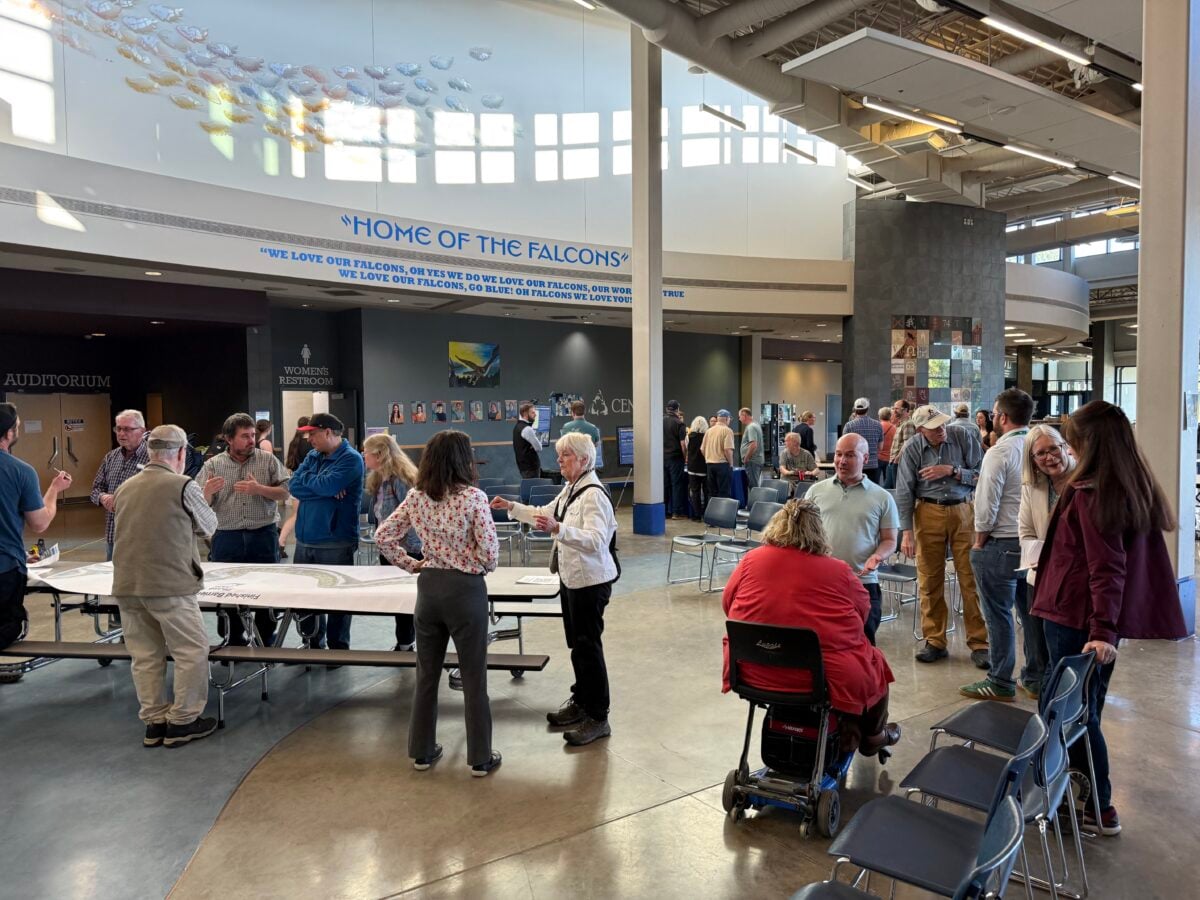
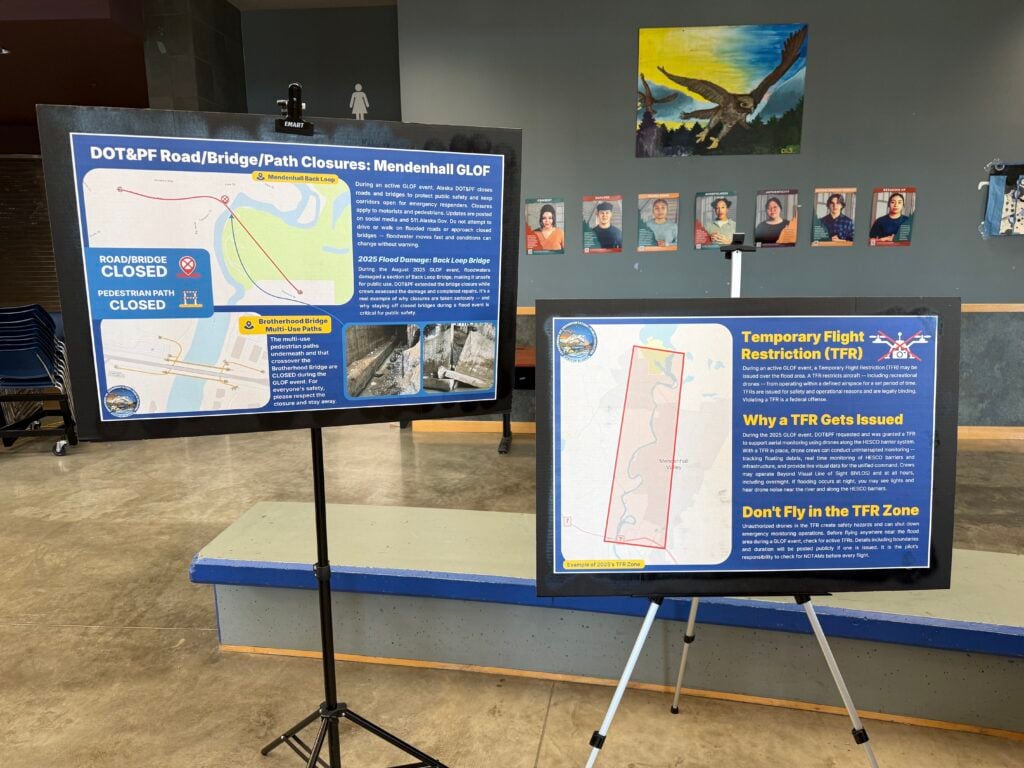
Flood Preparedness open house at Thunder Mountain Middle School on June 9. Photo by News of the North.
NOTN- Juneau residents had the opportunity to learn more about preparing for this year’s glacial lake outburst flood at a community open house last night.
The City and Borough of Juneau, along with emergency response partners, hosted the event at Thunder Mountain Middle School. Representatives from local, state and federal agencies were on hand to answer questions about flood preparedness, response efforts, volunteer opportunities and available resources.
“We’re grateful for our partners and everyone who came out.” Said CBJ Emergency Programs Manager Ryan O’Shaughnessy, “I think the message that I’d like to share with everyone is that it’s never too early to start preparing for these kinds of events. Suicide Basin, the last several years has become totally full before its release. It’s important to remember that we can go from ready to go and totally skip a step at any point, so we’d like to encourage folks to have a plan, have a go bag, and know what their emergency response plan looks like for themselves.”
Participating organizations included Tlingit and Haida, the U.S. Army Corps of Engineers, the National Weather Service, the Alaska Department of Environmental Conservation, the American Red Cross and the University of Alaska Southeast.
“We’ll have more events on July 11th over at the Diamond Park Field House, that’ll be from 11 to 3, and we’ll be doing community training on how to fill sandbags, how to stack your sandbags, and we’ll also be working with some community partners to distribute and pass out filled sandbags for folks that might need that level of assistance.” O’Shaughnessy said, “We’ll have more sandbag filling opportunities on the 18th and 25th, but we’re really looking forward to that July 11th meeting where people can hear from more experts, and also get those sandbag resources.”
Residents who could not attend can find more information online, by email, or through the city’s ongoing flood preparedness updates found at #ReportfromtheRiver.
Children’s bicycles are parked outside of the Interior Alaska Center for Non-Violent Living in Fairbanks, Alaska on September 14, 2023. (Photo by Claire Stremple for the Alaska Beacon)
Alaska dropped seven places to rank 47th in the nation in overall child well-being, according to a nationally recognized survey by the Annie E. Casey Foundation. Advocates say the decline is troubling and reflects years of declining investment in Alaska children and families.
The scoring system is part of Kids Count data book, an analysis of all 50 states to gauge how children are faring across 16 indicators in four areas — economic well-being, education, health, and family and community. The latest score reflects outcomes over a five-year period from 2019 to 2024, to compare between states and against the baseline of 2019, before the COVID-19 pandemic. Alaska received an overall score of 385 out of 1,000.
Alaska’s overall score dropped 41 points since 2019, among the largest decline of any state in the nation.
“Dropping seven spots in a single year is not a data point — it’s a warning,” said Trevor Storrs, president and CEO of Alaska Children’s Trust, in a statement highlighting the survey. The non-profit advocacy group focuses on supporting Alaska children and families and preventing child abuse and neglect.
“We have been seeing year after year the overall trend of Alaska’s investment in children and families going down, and that is automatically going to result in less success or less thriving children and families,” Storrs said in an interview Monday. “So us not doing as well as other states is not a surprise, and dropping to 47th is a major step backwards.”
Alaska saw the steepest decline in education, where the state ranked 49th in the nation, just above New Mexico. In 2024, 78% of Alaska fourth graders were not proficient in reading, and 78% of eighth graders were not proficient in math, several points worse than 2019 levels. In the five year period, 64% of young children — ages 3 and 4 — were not in school. Among high schoolers, 22% did not graduate on time in 2024.
Alaska’s Kids Count index score produced by the Annie E. Casey Foundation from 2015 to 2026. The score includes 16 indicators across four domains: economic well-being, education, health, and family and community. (Screenshot of graphic by the Alaska Children’s Trust)
In economic well-being, Alaska ranked 48th in the nation. Thirteen percent of children were living in poverty in 2024, with no change since 2019. Roughly one third, or 34% of children’s parents lacked stable employment, up from 29% in 2019. Eleven percent of teens were not working and not in school.
In the health and family and community sectors, Alaskans fared slightly better — ranking 38th and 30th respectively. However, 31% of children and teens were overweight or obese, and 9% of children had no health insurance. Teen birth rates improved slightly to 15 per 100,000, but infant mortality rates and child death rates worsened over the five year period.
Alaska continues to have among the highest rate of youth suicide in the nation. In 2024, teen deaths by accident, homicide or suicide were nearly double the national average at a rate of 70 per 100,000.
Nationwide, challenges and progress were reflected across all states: 29 states saw overall declines, 15 states saw improvements and six states were stable, across the scoring system. Education outcomes remain the most concerning across the board, according to the Kids Count analysis – nearly every state, or 47 in total, saw declines in education since 2019, highlighting the pervasive impacts of the COVID-10 pandemic.
Storrs and Alaska education advocates across the state say state funding has failed to keep up with Alaska school districts’ needs, as costs increase and budget deficits have ballooned, resulting in severe budget cuts and the closure of 12 schools statewide this year.
“Our education isn’t doing poorly because of not the right teachers or not the right system, it is literally being strangled and deprived of the options that it needs to survive, and that is the funding,” Storrs said.
Storrs said that greater investments in Alaska’s schools alone won’t improve educational outcomes, as health and socio-economic factors greatly impact how a child shows up at school.
“Children and families live in an ecosystem, and we need to make sure all aspects are well maintained, because if one goes bad, it can and will impact. And we’re definitely seeing that the educational side is not doing so well, that’s definitely impacting so many areas of our state,” he said.
Storrs said despite the decline, recent policy investments in child care and broadened access and funding for the Supplemental Nutrition Assistance Program has been beneficial, Storrs said, as well as legislation that passed this year to expand paid parental leave, increase funding for early intervention programs, and establish a mental health curriculum in schools.
An analysis by the Alaska Children’s Trust found that the state last year reduced funding levels for services and programs to specifically support Alaska children, youth and families by an estimated 21% compared to average funding levels from FY2014–2017, adjusted for inflation.
Storrs said the group is advocating for more funding “upstream” for support services, rather than “downstream” funding for things like corrections. Storrs pointed to the all-time high budget approved for the Alaska Department of Corrections this year.
He said the organization is also urging serious consideration and development of new state revenue measures that would provide funding for social services and support for families.
“It’s a warning that if we continue to do this, our numbers are only going to get worse,” Storrs said. “Our children and families are going to suffer, and we’re going to continue to see trends, not just in the sense of poor outcomes, but people leaving our state.”
As Alaska is headed into a major election year, set to vote on a new governor, U.S. Senator, U.S. House Representative and dozens of Alaska House and Senate members, Storrs said he hopes Alaskans will ask questions and push candidates to consider these complex issues, and investing in children and families.
“Kids make up about 25% of our population, but 100% of our future,” Storrs said.
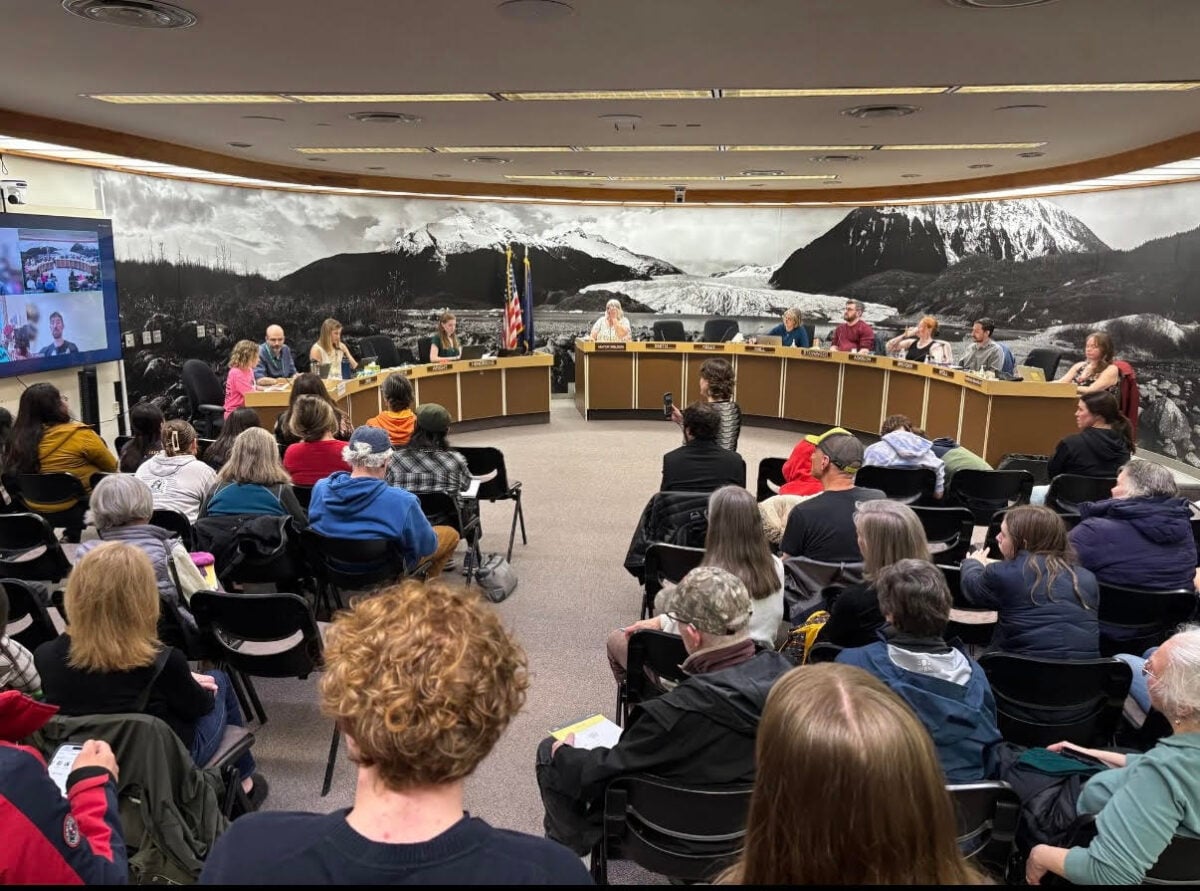
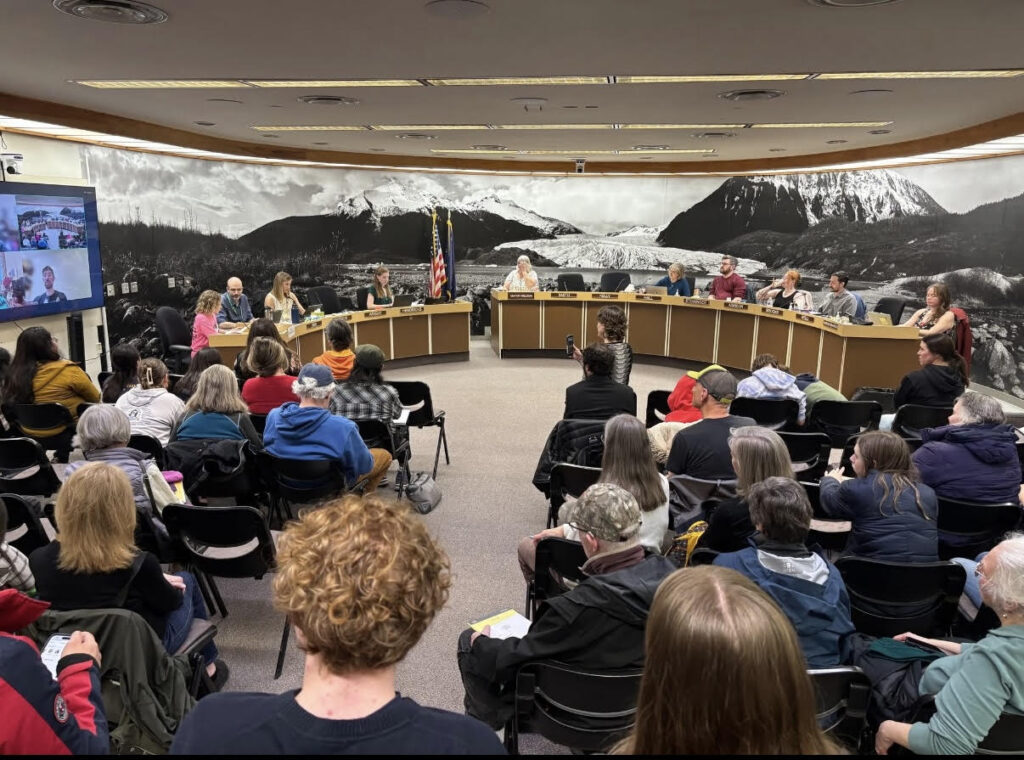
City Hall packed with Juneau residents ready to testify on the FY27 budget, courtesy of CBJ
NOTN- The Juneau Assembly held an extensive meeting last night on the FY27 budget, it was also the last opportunity for public testimony.
During the meeting, city leaders moved ahead with a strained city budget that still trims popular services, including reduced funding for the Juneau Douglas City Museum, the closure of Mount Jumbo Gym, reduced funding for Travel Juneau and Jensen Olsen Arboretum.
It does however preserve both pools, the Diamond Park Fieldhouse and the Douglas Fire station.
Early in the evening officials approved a major change to the city’s sales tax code, raising the cap on single-item purchases to $50,000.
The final version also keeps a lower effective cap in place for most vehicle purchases.
“The situation that we find ourselves in is drastic.” Said Finance Chair Christine Woll, “If we pass the budget that we have put forward tonight, we will have passed a balanced budget, but only because we have eliminated all of our savings to do so. And next year we will look at a $7 million deficit that we will have not have savings to fill.”
Woll warned that without new revenue, the city could be forced to consider closing pools, Eaglecrest Ski Area, the city museum and other services next year.
The Assembly also passed separate measures to tax more onboard cruise ship sales, end a $30 online filing credit for businesses, and advanced debate on repealing a sales tax exemption for travel agent commissions, which small tour operators say would amount to double taxation.
Public testimony earlier in the meeting again targeted the planned $9 million demolition of Telephone Hill, with residents urging the Assembly to redirect that money to schools, housing and cultural institutions instead.
“I urge the assembly to take the $9 million that has been earmarked for the demolition and site work of Telephone Hill and diverted into something that the people want and need, that money belongs to the people of Juneau, and we should get a say in how it is used.” Said Joshua Adams.
Before passage of the FY 2027 budget, residents turned out in force to defend the Juneau‑Douglas City Museum.
“At a time when indigenous land acknowledgements are being removed from public places across the country, this assembly chooses to read one at the start of every meeting. By doing so, you honor a vital part of Juneau’s history, but we must ask ourselves, are we just talking the talk, or are we willing to walk the walk? Just as families cherish their history through heirlooms and photos, our community preserves our identity through the Juneau Douglas City Museum.” Said testifier Jean Mcbride.
Residents warned that deep staff cuts would “devastate” programs, erode public trust and jeopardize thousands of volunteer hours and donated artifacts.
“We’ve all been to the City Museum, and we all love the City Museum. Why in the dickens are you cutting half of its operating budget?” One testifier, Chuck Cohen said, “It doesn’t make any sense. It’s a very small percentage of a very large budget, and we have to get rid of the main director of the museum and the person responsible for public participation, that’s public participation by our children and by ourselves. I think you folks are very short-sighted.”
An effort to fully restore museum funding failed.
“I know that it’s not a large amount. I don’t know how much of an impact it will have, but I don’t feel right asking the community to give up so much.” Said Assembly Member Nano Brooks.
Members “begrudgingly” as Woll put it, passed the roughly $545 million budget, but they still did not meet their goal to cut $2 million in costs.
“I don’t want to make this cut. I don’t, I believe everything everyone said about what the impact will be long term for the museum, even if we want to live in a world where we get to bring the City Museum back, the same thing’s going to happen with Travel Juneau and Eaglecrest, they are going to suffer for the cuts that we are, right now, planning on making to them.” Woll said, “Our fund balance right now is one bad sales tax quarter away from having no funds to deal with our expenses, let alone a major natural disaster or other disaster, and we live in an uncertain world, and that’s what our fund balance is for.”
In a separate 5-4 vote, the Assembly also rejected a to shift $360,000 in marine passenger fees away from security and restroom costs at two private cruise docks and into a seawalk expansion project.
Some members argued cruise companies already collect enough in dock fees to cover those services and said residents don’t understand why the city isn’t “getting more benefit from the industry”
The Assembly moved ahead with a lower property tax rate, the long-term capital improvement plan, and several flood and wastewater projects backed by state revolving fund loans.
“This ordinance sets the mill rate at 9.29” Said City Manager Katie Koester.
With flood season approaching, officials are inviting residents to a public flood preparedness open house tonight, as they weigh costly long‑term protections for riverfront neighborhoods.
Representatives from the U.S. Army Corps of Engineers, the City and Borough of Juneau, the National Weather Service and the Central Council of the Tlingit & Haida Indian Tribes of Alaska will meet with residents at 6 p.m. at Thunder Mountain Middle School to discuss risks and answer questions.
Officials said they are moving ahead on a “midterm solution” while reinforcing existing defenses this year, but warned that conditions and plans continue to shift.
The city expects annual maintenance for temporary Hesco barriers could run $6 million to $12 million, a cost that could drop if sheet piling is installed as a stronger, permanent river reinforcement.
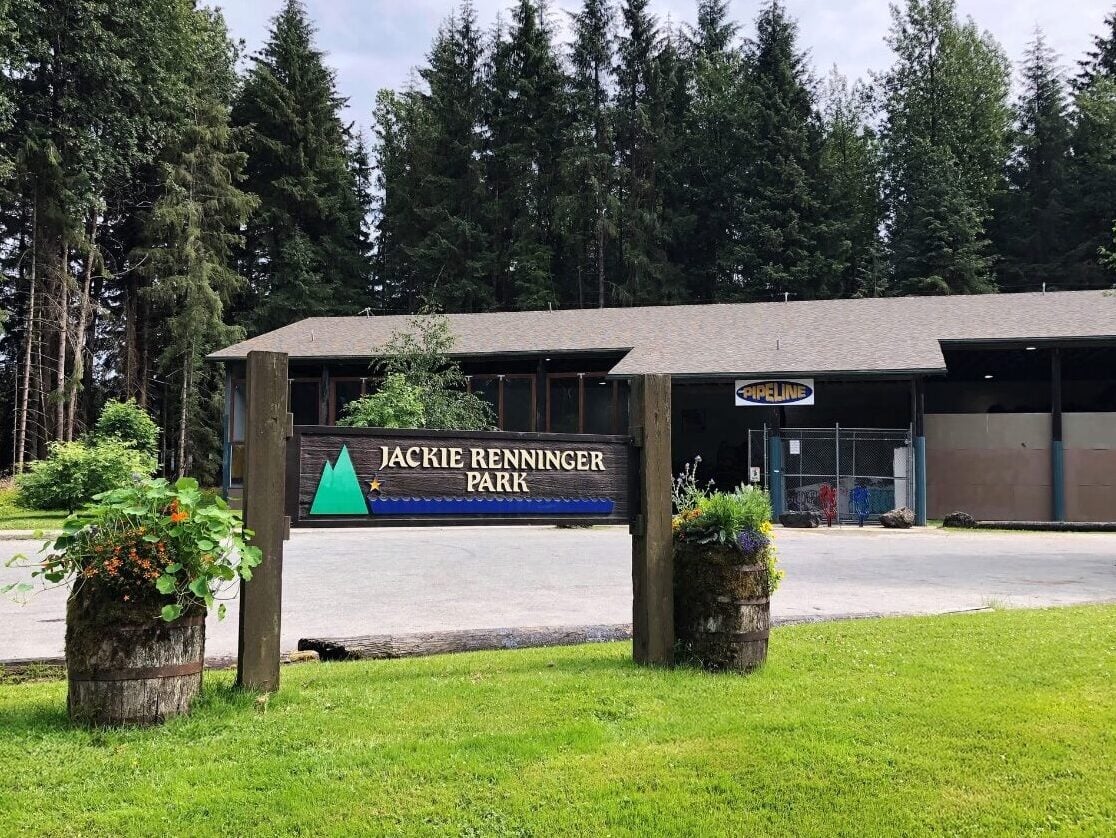
NOTN- City officials unveiled plans for the Jackie Renninger Park and invited the public to a Park Day over the weekend to review the design and give feedback.
Parks and Recreation Director Mark and Chris of Corvus Design say the plan fits many features into about five acres: eight pickleball courts, a covered street‑style skate park to replace an aging pipeline structure, the city’s first covered playground, a dog park, restrooms, a community gathering space for food carts and events, a loop fitness trail, a small multi‑use court, and disc golf.
“We’ve actually been working on the park design for about three years, starting off with a master planning effort and a pretty robust public involvement process. It’s a lot going into a five-acre park.” Said Chris.
Saturday’s open house, community barbecue and comment period aimed to explain the importance of recreation opportunities in what Mark called an underserved area of Juneau.
“It’s really big for quality of life for all of us here in Juneau to have those recreation spaces, those park spaces, but it’s also great for property values.” Mark said, “Getting people active and involved is better for health and better for the economy in lots of ways. When we look at the whole of Juneau, it’s pretty underserved in terms of parks, so we really want to spread parks all around our community.”
Pro skaters Kanten Russell and Brandon Turner also attended, leading an open skate and skate competition.
Chris and Mark say skilled concrete work and securing funding are the biggest challenges ahead.