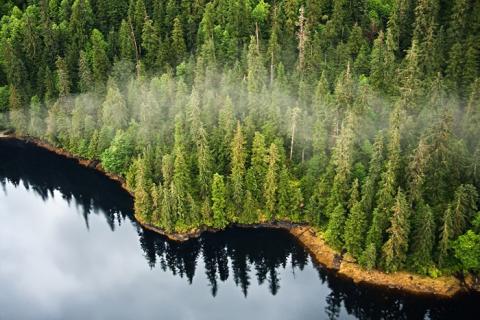
As the federal government advances plans to roll back Roadless Rule protections on 58 million acres of national forests, Southeast Alaska conservation advocates are racing to mobilize public opposition, warning that repealing the Roadless Rule could open the Tongass National Forest to expanded clear-cut logging and place subsistence, fisheries and tourism in peril.
Nathan Newcomer, Southeast Alaska Conservation Council (SEACC) Tongass Campaigner, said the current administration has signaled from “day one” that it intends to eliminate the federal Roadless Rule, a regulation that limits road-building and industrial development on certain undeveloped national forest lands.
“They signed an executive order to try to get rid of the Roadless Rule. The Secretary of Agriculture, Brooke Rollins, also issued a statement intending to rescind the Roadless Rule nationwide.”
Despite the administration’s push, the conservation group says public sentiment has been overwhelmingly in favor of keeping the rule.
A Notice of Intent, the first step in the rulemaking process, opened a 21-day public comment period nationwide. During that brief window, the public submitted more than 627,000 comments Newcomer said.
“Over half a million people submitted public comments. There’s a group called the Center for Western Priorities that did an analysis of those public comments, and they found that 99% of the public comments were in favor of keeping the roadless rule in place. When do you see 99% of American citizens agreeing on something? That just goes to show you that people really like the Roadless Rule.”
In 2001 when the Rule was enacted by the Clinton Administration, more than 600 public hearings were held around the nation, and the public provided more than 1.6 million comments on the Rule, more comments than any other rule in the nation’s history.
Now, Newcomer says, the government is trying to unwind those protections without holding any comparable meetings.
“They’re not holding any public meetings anywhere, not only for Alaska, but nothing down south either. So that’s why we’re organizing these public hearings, not just in Juneau, but throughout southeast.” Said Newcomer.
Juneau’s hearing was scheduled for yesterday evening at the JACC downtown.
The event featured a panel discussion with President Mike Jones of the Organized Village of Kasaan, Atagan Hood, Vice President of Alaska Youth for Environmental Action, Jamalea Martelle of Artemis National Wildlife Federation and Nicole Weston, Owner of NW Photography.
A moderator guided the conversation, about why roadless protections matter in their communities. The event then shifted into a public hearing where attendees offered testimony themselves.
“We’re going to have several videographers on hand that are going to document everything, record everybody’s public testimony, then we’re going to transcribe that testimony, and then we’re going to officially submit it to the public record once the public comment period for the draft EIS (Environmental Impact Statement) is open.”
If the roadless rule is repealed, Newcomer warned, “If you get rid of protections for federal public lands, you’re talking about more large scale clear cut logging, that’s the main threat. And of course, when you start to clear cut, it’s going to have huge impacts on the wildlife, on our subsistence ways of life here in the Tongass, on the tourism, recreation economy. How many people came up on cruise ships to Juneau last year?”
Despite the scale of public opposition documented in the comment record, Newcomer said he does not believe the federal government, under current leadership, is likely to change course.
“But that doesn’t mean that we shouldn’t make our voices heard and make a lot of noise and make sure that we’re all on the record saying that we don’t want this. Because there are also other elections that happen, right? And so power can shift, so it’s about demonstrating that the people care about these things, and that’s just kind of the work that I have to do, and that’s the work that we’re doing to make sure that the public’s voice is heard.”
He said he’s seen community organizing make a difference over longer timelines, even when initial decisions seemed foregone.
“Historically, Americans have said we would like to keep the Roadless Rule in place, and now this administration is trying to ram a policy through that the vast majority of us don’t want to see happen. That’s not the role of government.” Newcomer said, “Government needs to be by the people for the people. I think highlighting that is really critical, so that people understand that they have agency, Because there’s a lot going on in the world, right? And it’s really easy to get overwhelmed and to become apathetic, but you really do have agency. I’ve seen it time and time again in my life, where you might feel like the the clouds are closing in on you, and it’s getting dark and gloomy, but really, when you stand together and you speak in a solid voice in unity, it can have really powerful change. It might not happen today or tomorrow, but it could make a huge difference.”
Fishing vessels are seen in Homer’s harbor on Oct. 22, 2025. A resolution passed by state lawmakers urges federal officials to extend the ban on Russian seafood imports. Russian fish competes for market share with Alaska’s fish. (Photo by Yereth Rosen/Alaska Beacon)
A legislative resolution urging a continued and better-enforced ban on Russian seafood in the United States is headed to Gov. Mike Dunleavy.
Part of a series of actions by Alaska lawmakers to try to shore up the state’s ailing seafood industry, House Joint Resolution 29 won final passage last week and was transferred to the governor on Monday.
The resolution calls for continuation of the ban on Russian seafood imports imposed in 2022, after that country’s invasion of Ukraine. The ban was expanded in 2023 to cover imports of Russian seafood to the U.S. through a third-party country, usually China, where fish are processed.
The import ban is set to expire later this year. That makes the resolution timely, supporters aid.
Among the supporters is Jeremy Woodrow, executive director of the Alaska Seafood Marketing Institute.
Woodrow, in testimony to the Senate Resources Committee on Feb. 27, said a stockpile of Russian fish that was in the U.S. before the ban went into full effect is just now being depleted.
“We need more time to really capture the U.S. marketplace. Our industry has not recovered yet,” Woodrow said. Even though last year’s fishing season was better, it was still one of the worst years in the last 20 years, he said.
“This is one measure that will help our fishermen. We’re starting to see the fruits of this ban coming into play, but we need more time to provide stability to our industry. We need more time to see it come to fruition,” he told the committee.
In addition to seeking an extension of the import ban, the resolution calls for stronger monitoring and enforcement to “ensure fair trade, protect the state’s seafood industry, and promote sustainable and ethical seafood production.”
Legislative resolutions do not have the power of law, but they can influence actions by Congress, the federal executive branch or other institutions.
The Russian seafood import ban resolution was not among the measures introduced by the Joint Legislative Task Force Evaluating Alaska’s Seafood Industry, formed in 2024. However, it addresses an aspect of international trade, one of the issues raised by the task force. The task force’s report recommended an update to a Russia-focused resolution passed by the legislature in 2022, Senate Joint Resolution 16.
Russian king crab is displayed at a Costco in Anchorage on Nov. 14, 2022. The crab, from the Barent Sea, was distributed by Arctic Seafoods of San Francisco, and was part of inventory stockpiled before the U.S. government banned fish imports from Russia. (Photo by Yereth Rosen/Alaska Beacon)
The eight-member task force, comprising Senate and House members from fishery-dependent districts, issued its recommendation report in January 2025, at the start of last year’s session. Recommendations for action resulted in the introduction of a series of bills intended to help the industry, which has struggled with low fish prices, glutted international markets, high costs and other challenges.
Other bills focus on tax credits and revenues
One of the task force’s bills, aimed at encouraging seafood product development and diversification, is headed for a vote in the Senate this week.
That measure, Senate Bill 130, concerns the state’s fisheries product development tax credit system. Currently, seafood companies are allowed to deduct the cost of new equipment used to develop value-added products from salmon, herring, pollock, sablefish and Pacific cod. The bill would expand that to all fish species, including shellfish. That is in line with the recommendation in the task force report, which identifies arrowtooth flounder, fish meal and crab shells as examples of some underused or discarded products that could be processed into something marketable.
The bill, in the amended form before the Senate, also seeks to expand the range of technology for which investment would qualify for credits, and it would extend the sunset date for the credit to 2037. Currently, the tax credit is due to expire next year.
The revenue impact of the bill, if it wins final passage, is difficult to determine because there are several unknown variables, said the fiscal note prepared by the state Alaska Department of Revenue. Estimated annual revenues losses to the state would range from $1 million to nearly $4 million, according to the fiscal note.
Another task force bill, aimed at helping fishery-dependent local governments, had not moved out of the Senate Finance Committee as of Tuesday. That measure, Senate Bill 135, would allow municipalities to increase their share of fisheries business tax and fishery resource landing tax revenues. Currently, the state and local governments split those tax revenues equally. The bill would allow local governments to get up to 75% of the tax revenues.
The legislature passed two seafood task force bills last year, each of which had wide support. However, Dunleavy vetoed one of the bills.
The bill that escaped the governor’s veto, House Bill 116, allows for the formation and operation of member-owned commercial fishing insurance cooperatives. Such cooperativesexist in other states and were used by some Alaska fishers. The bill passed unanimously.
The vetoed bill, Senate Bill 156, would have transferred $3.69 million from a defunct state loan fund to the Alaska Commercial Fishing and Agriculture Bank. The state-owned bank needed the boost to keep serving the seafood industry, bill supporters argued. But Dunleavy argued that the cost of the action was too great for the state budget to bear.
Members of the House and Senate voted to sustain Gov. Mike Dunleavy’s veto of SB 113, a corporate income tax bill tied to education funding by a vote of 45 to 16. 46 votes were needed to override the veto on Jan. 22, 2026 (Photo by Corinne Smith/Alaska Beacon)
The Alaska Senate on Tuesday advanced a constitutional amendment that would lower the threshold for veto overrides of spending decisions.
The Alaska Constitution currently has two thresholds to override a governor’s vetoes: it takes two-thirds of legislators to override a veto of a policy bill and three-quarters of lawmakers to override a budget veto or a veto of legislation that spends money.
Anchorage Democratic Sen. Matt Claman’s proposed the constitutional amendment that would reduce vetoes of spending decisions to the same two-thirds threshold.
Sen. Matt Claman, D-Anchorage, speaks at a March 19, 2024, news conference held by the Senate majority caucus. (Photo by Yereth Rosen/Alaska Beacon)
Claman’s resolution passed the Senate along caucus lines on a 14-6 vote. All 14 members of the bipartisan Senate majority voted for the resolution while each member of the all-Republican Senate minority voted no.
At least 14 of Alaska’s 20 Senators are needed to reach the two-thirds threshold to advance a constitutional amendment. Twenty-seven of the 40 House members would need to approve Claman’s resolution for the proposed amendment to appear on November’s ballot.
The last time the Alaska Constitution was amended was in 2004.
Claman, a Democratic candidate for governor, said the drafters of the Alaska Constitution intended to create a strong executive branch. But the high hurdle to override a veto on spending decisions had “undermined the balance of power between the Legislature and the executive,” he said.
Alaska is the only state with a three-quarter veto override threshold for spending decisions.
In a statement following the vote on Tuesday, minority Senate Republicans said the governor’s veto power was one of few tools to curb the Legislature’s wide-reaching power. Members of the caucus stated that Gov. Mike Dunleavy had used that authority to veto tax bills, among other measures.
“The framers of our Constitution saw the wisdom in giving the governor considerable power to reduce state spending,” said Tok Republican Sen. Mike Cronk, the Senate minority leader. “The fiscal override threshold is high for a reason.”
While the Legislature has voted to override a governor on 40 occasions for policy bills since statehood, veto overrides for spending decisions have only occurred five times, Claman said.
The most recent override of a spending veto occurred last August in a special session Lawmakers voted to reject Dunleavy’s veto of more than $50 million in public school funding. The vote was 45-14, the minimum number of lawmakers needed to override a budget veto.
If approved by the House, the constitutional amendment would appear on the ballot at the Nov. 3 election. If approved by a majority of voters, the constitutional threshold for budget vetoes would then be lowered starting in 2027, also the beginning of a new governor’s term.
Unlike legislation, an Alaska governor cannot veto a constitutional amendment.
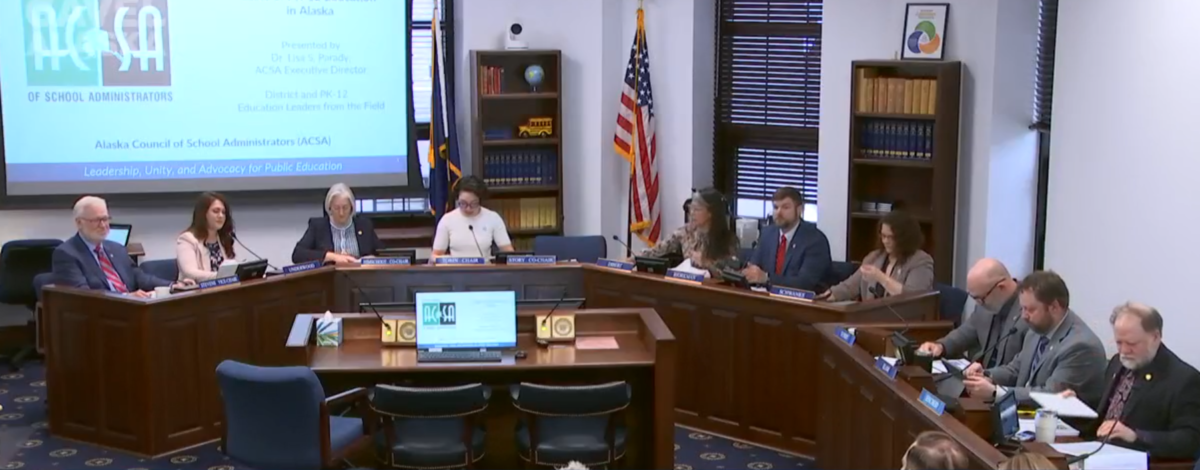
Joint Education Committee Hearing, March 30 2026, courtesy of Gavel Alaska
Alaska education leaders told lawmakers Monday, that the state’s public schools are in a “crisis” due to rising vacancies, high teacher and principle turnover and growing student needs, all while enrollment declines.
Testifying before the joint education committee, meaning both the House and the Senate, superintendents, principals, special education directors and recruitment experts described the education system as strained by flat funding.
They stressed housing and visa barriers for teachers, and a growing share of students needing intensive support.
Jennifer Schmitz, director of the Alaska Educator Retention and Recruitment Center, said Alaska’s annual turnover has reached about 30% for teachers and 35% for principals.
“We are in a crisis time right now with teacher turnover and principal turnover,” Schmitz said.
Districts are also depending on hundreds of international teachers and emergency teaching certificates to staff classrooms.
In many districts, she said, international teachers have become deeply rooted in communities and students rely on them for stability.
But new federal visa costs and restrictions, including a potential $100,000 price tag for some H‑1B visas, threaten those positions, especially for rural schools.
“We are in an educational crisis, and we are doing harm to the children of Alaska. An urgent response is needed to address the dire vacancy rates and the need for in person educators and support personnel across Alaskan schools.” Said David Nogg, principle of Goldenview Middle school.
In a separate Senate Labor and Commerce Committee hearing, lawmakers heard similar testimony when discussing Senate Joint Resolution 28, warning that steep federal fee hikes and new placement limits on visa programs are not only worsening worker shortages in schools but tourism and other key industries across the state as well.
“Visa workers are vital to filling Alaska’s diverse workforce. Foreign worker visa programs are extremely useful for highly seasonal industries such as tourism. Alaska has the largest seasonal employment swing in the country, this is not a marginal fluctuation, it is a structural feature of our economy.” Said Mike Mason, legislative assistant to Senator Löki Tobin.
Education leaders also pointed the Base Student Allocation (BSA), saying, even after last year’s increase, inflation has eroded its value.
“All boats rise and fall on the same tide, and for Alaska school districts, that tide is the BSA,” Randy Trani, Superintendent of the Mat-Su district said, calling for “timely, reliable, predictable” funding so districts can plan and focus on academics instead of annual cuts.
School finance officials also stressed that most dollars already go directly to students and there are funding needs beyond the classroom that districts are struggling to meet.
Anchorage budget director and Alaska Association of School Business Officials president Katie Parrott said about 75% of districts’ operating spending in FY2025 went to instruction, while only 2% went to district-level administration and 5% to administrative support like payroll and HR.
“There are a lot of competing priorities eating into these slices of the pie.” She said, “It’s truly imperative that the state does increase and inflation proof funding for pupil transportation as one of the key strategies to address chronic absenteeism, make sure kids are getting to school that they have equitable access.”
Throughout the hearing, educators said they remain committed to students and to Alaska, but warned that constant uncertainty is pushing many out of the profession or out of the state, saying, “when you starve a system, you see the impacts of that.”
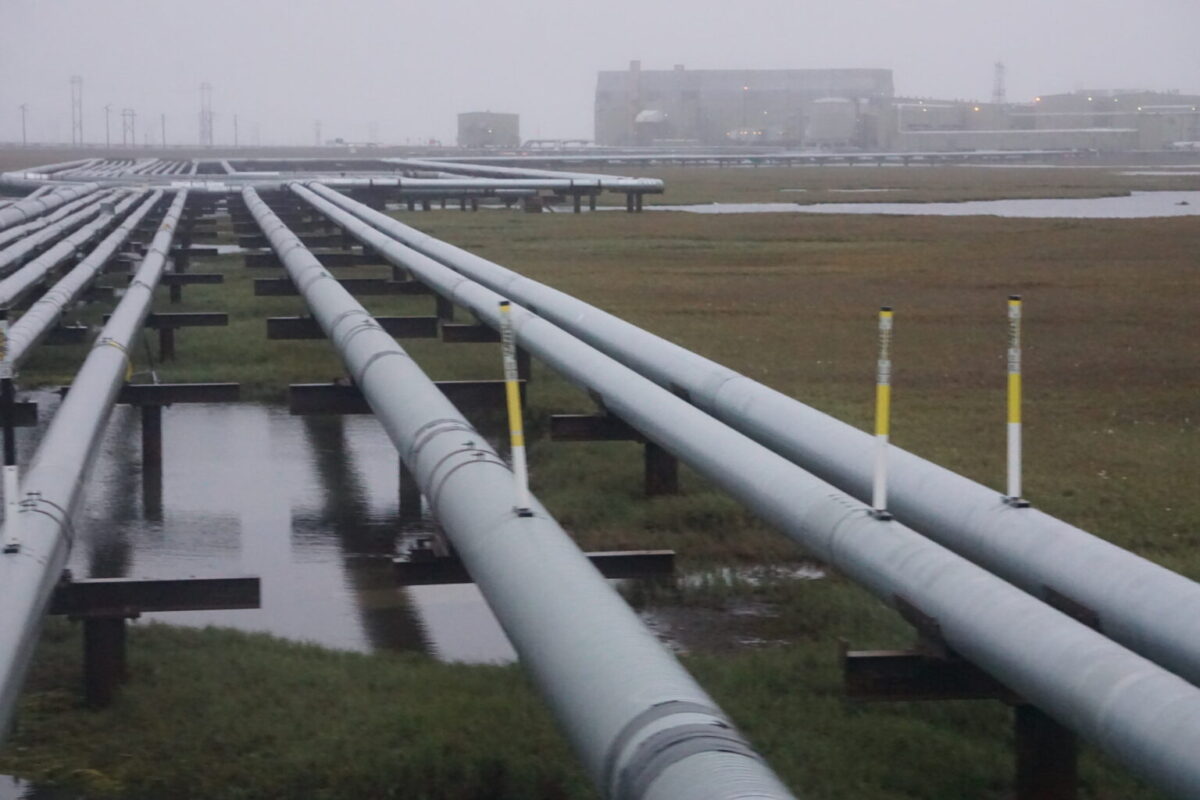
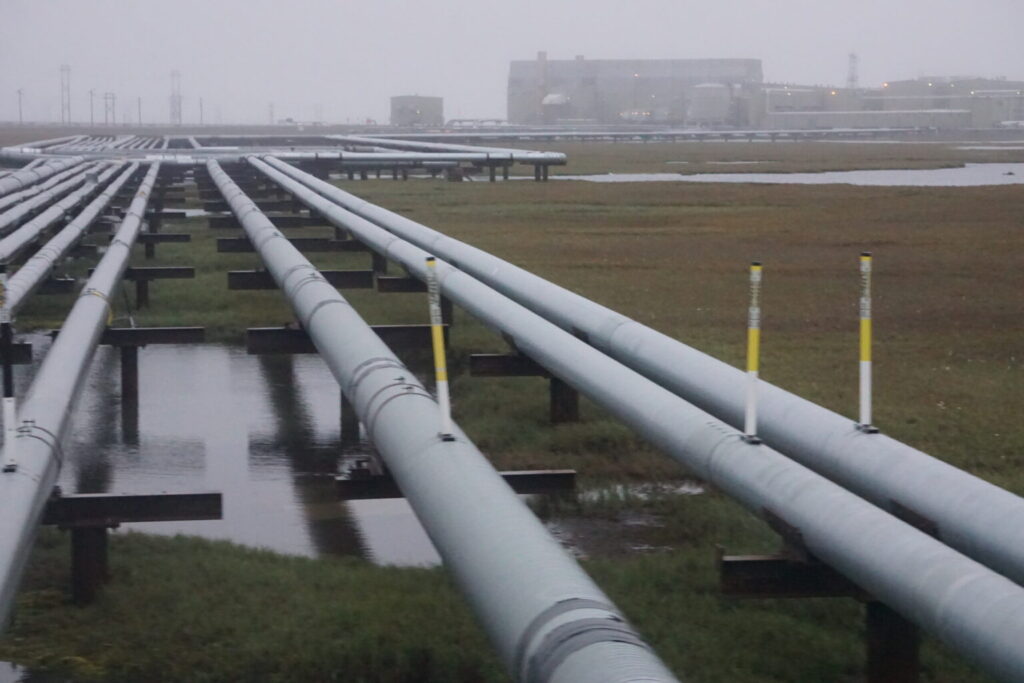
A network of pipelines, seen on Aug. 23, 2018, snakes through a portion of the Greater Prudhoe Bay Unit on Alaska’s North Slope. (Photo by Yereth Rosen/Alaska Beacon)
Five Alaska mayors voiced concerns about how a proposed tax break for the Alaska LNG gas line project would impact their communities.
Republican Alaska Gov. Mike Dunleavy has proposed eliminating property taxes and other local taxes for the $46 billion megaproject. Instead, his bill would impose a volume-based tax when substantial quantities of gas are delivered from the North Slope.
The Alaska Department of Revenue estimated Dunleavy’s bill would equate to a roughly 90% reduction in property tax revenue, once the pipeline is at full capacity. The state agency has said the pipeline will not move forward without cutting property taxes for Glenfarne, the New York-based developer of the proposed pipeline and export facilities.
Five Alaska mayors on Friday testified to the Senate Resources Committee in support of the 800-mile pipeline, which is set to run from the North Slope to Cook Inlet. But the municipal leaders also expressed concerns about the potential loss of revenue from the governor’s tax break and the impacts on municipal services.
‘Bottom offer’
Peter Micciche is mayor of the Kenai Peninsula Borough, one of Alaska’s largest with roughly 62,000 residents. He said a liquefaction facility, equating to 43.5% of the total project, is set to be located in the coastal region.
Micciche said the project would have tens of millions of dollars of impact annually for the Kenai Peninsula, with costs set to be borne by local communities under Dunleavy’s bill. He said the proposed elimination of all local taxes for Alaska LNG is “cutting deep into the fabric of how our communities work. And that worries me.”
He cited concerns about Dunleavy’s proposed tax rate rising by 1% annually. He said the borough’s budget increases on average by 2.5% each year, meaning that would leave the Kenai Peninsula “underwater.”
“Costs have shifted from the state to the municipalities. But we simply cannot afford additional costs,” he said to lawmakers Friday.
Micciche, a former long-time oil and gas executive, emphasized that he is excited by the project, but he considers the governor’s tax break to be “a bottom offer.”
Adam Prestidge, president of Glenfarne Alaska LNG, on Monday told the Senate Resources Committee that the company recognizes there will be impacts to municipalities from the project. He said discussions are ongoing with municipal leaders about how the company will cover some costs to ensure communities feel comfortable they “will be taken care of.”
Senate President Peter Micciche, R-Soldotna, listens to questions from senators during a break in Alaska Senate proceedings on Tuesday, May 3, 2022 at the Alaska State Capitol in Juneau. (James Brooks / Alaska Beacon)
Micciche, a former Republican Alaska Senate president, framed the scale of the challenge of negotiating acceptable legislation for communities and Glenfarne with less than half of the legislative session left until adjournment. “This bill needs a lot of work,” he said.
“We’re ready to sit down and pen a deal that works for everyone — the developers, our community, Alaskans — and I hope to God that comes along with affordable gas,” Micciche said.
‘Once-in-a-lifetime project’
Supporters remain bullish on the gas line’s potential to be an economic boon for Alaska. Former Democratic U.S. Sen. Mark Begich has been hired by the Dunleavy administration to boost the pipeline. He told the Senate Resource Committee on Monday that it was “a once-in-a-lifetime project.”
Glenfarne owns 75% of the project while the Alaska Gasline Development Corp., a state agency, owns the remaining 25%.
Begich and Prestidge declined to answer some questions in detail about the proposed tax break and whether it was at an appropriate rate, citing the need for confidentiality in commercial agreements. Begich implored lawmakers to hold a session behind closed doors to discuss revenue questions with Glenfarne.
Under Dunleavy’s bill, the long-sought gas pipeline is expected to raise over $22.5 billion in new revenue for the state of Alaska. But over the next 36 years, it would also cost roughly $13 billion for local communities compared to current law, according to state projections.
Instead of property taxes, the governor’s bill would impose a volume-based tax of 6 cents on every thousand cubic feet of gas, which would increase by 1% annually. The tax would only be imposed once the pipeline delivers an average of 1 billion cubic feet of gas per day or 10 years after gas starts being produced.
Edna DeVries is mayor of the Matanuska-Susitna Borough, home to around 117,000 people. She said the Mat-Su Assembly believes those thresholds are “far too high” and that they should be lowered so the borough could collect revenue sooner.
DeVries cited a concern common to all five mayors along the proposed corridor for Alaska LNG: the impacts of constructing the pipeline on municipal budgets.
Mayor Chris Noel of Denali Borough, home to 1,600 residents, said that construction would see added costs for waste management, fire and rescue and housing, which would likely be borne by the local community. Denali Borough does not currently collect property tax. But it would get “limited benefits” from the pipeline with no local offtake planned for the borough, Noel said.
“The bottom-line is we cannot subsidize increased costs. We need certainty via an impact payment program during construction that actual costs will be covered by the project,” he said.
Another potential concern: education funding. Alaska’s complicated education funding formula means that as a local community’s total assessed property tax value increases, state contribution for schools is reduced.
Concerned at the ‘precedent’
Mayor Josiah Patkotak of the North Slope Borough said he was concerned at the “precedent” set by eliminating property taxes for oil and gas projects before a final investment decision is reached. Patkotak, also a former member of the Alaska House of Representatives, cited a recent record North Slope lease sale and said oil developers could seek similar tax relief.
Rep. Louise Stutes, R-Kodiak, talks with Rep. Josiah Patkotak, I-Utqiagvik, on Tuesday, Jan. 17, 2023, as the Alaska House of Representatives convenes at the state Capitol in Juneau. (Photo by James Brooks/Alaska Beacon)
The North Slope Borough, based out of Utqiaġvik with 10,500 residents, has a long history of fiercely defending its authority to levy property taxes on oil and gas companies, he added.
Patkotak estimated Dunleavy’s proposed tax break means the borough would collect $12 billion less in revenue compared to current law. He said property tax revenue has been critical for the borough, which funds schools, fire and rescue services, airports and waste management.
Prestidge declined to tell the Senate Resources Committee whether the proposed tax break would be make-or-break for the project. But he said if the bill failed to pass, “It makes it more difficult because it makes the gas more expensive.”
“It creates an incredible amount of uncertainty around the project,” he added.
Patkotak noted that the North Slope would not get any of the gas delivered through the pipeline with no offtake planned for the remote region.
That has long been a concern for Fairbanks, which has a population of 97,000 people. The borough has advocated for a $180 million spur to deliver gas to the Interior city.
“We need to make sure we’re getting Alaskans’ gas to Alaskans,” said Mayor Grier Hopkins of the Fairbanks North Star Borough.
Hopkins said there are currently “no concrete” plans to build a gas offtake for Fairbanks, but discussions are ongoing with Glenfarne.
Members of the Senate Resources Committee hear testimony by phone from borough mayors on Gov. Mike Dunleavy’s tax break proposal for the Alaska LNG gas line project on Mar. 27, 2026. (Photo by Corinne Smith/Alaska Beacon)
Forrest Wolfe is seen in an undated campaign photo for his run for the Alaska House of Representatives for District 21, in East Anchorage, in 2022. (Campaign photo provided by Wolfe)
A legislative aide to Alaska Gov. Mike Dunleavy, and a former candidate for the Alaska House of Representatives, was arrested and charged with driving under the influence of alcohol on Thursday in Juneau.
Forrest Wolfe, 40, was pulled over by Juneau Police at about 10:30 p.m. on Mar. 26, according to court documents, after driving erratically through a busy area of downtown Juneau. Wolfe was the sole occupant of the vehicle, a red Chevrolet Tahoe, when he was pulled over on Franklin Street.
Wolfe exhibited a strong odor of alcohol and gave conflicting stories of his previous activities, then stopped answering questions, according to the police report. Wolfe failed a field sobriety test and then later a chemical test for alcohol, showing his breath alcohol level at 0.10, which is above the legal limit of 0.08. He was arrested and charged with a criminal misdemeanor.
Wolfe serves as deputy legislative director for Dunleavy, a role he began in January, according to his public LinkedIn profile.
A spokesperson for Dunleavy’s office declined to comment on the arrest or any penalties by his employer on Monday, citing privacy as a personnel matter.
Wolfe ran for the Alaska House in 2022 as a Republican representing District 21 in East Anchorage, and narrowly lost to Rep. Donna Mears, D-Anchorage, by just 150 votes.
Prior to serving in the governor’s office, Wolfe served as a legislative liaison for the Alaska Department of Administration for about a year, in 2025. He worked as legislative staff for more than a decade, since 2012, for various Republican representatives.
Wolfe posted a $500 bail and was released from Lemon Creek Correctional Center on Friday morning, according to Alaska Public Media.
Wolfe has had previous run-ins with Juneau Police for minor infractions, and was arrested and convicted for drunk driving in 2011.
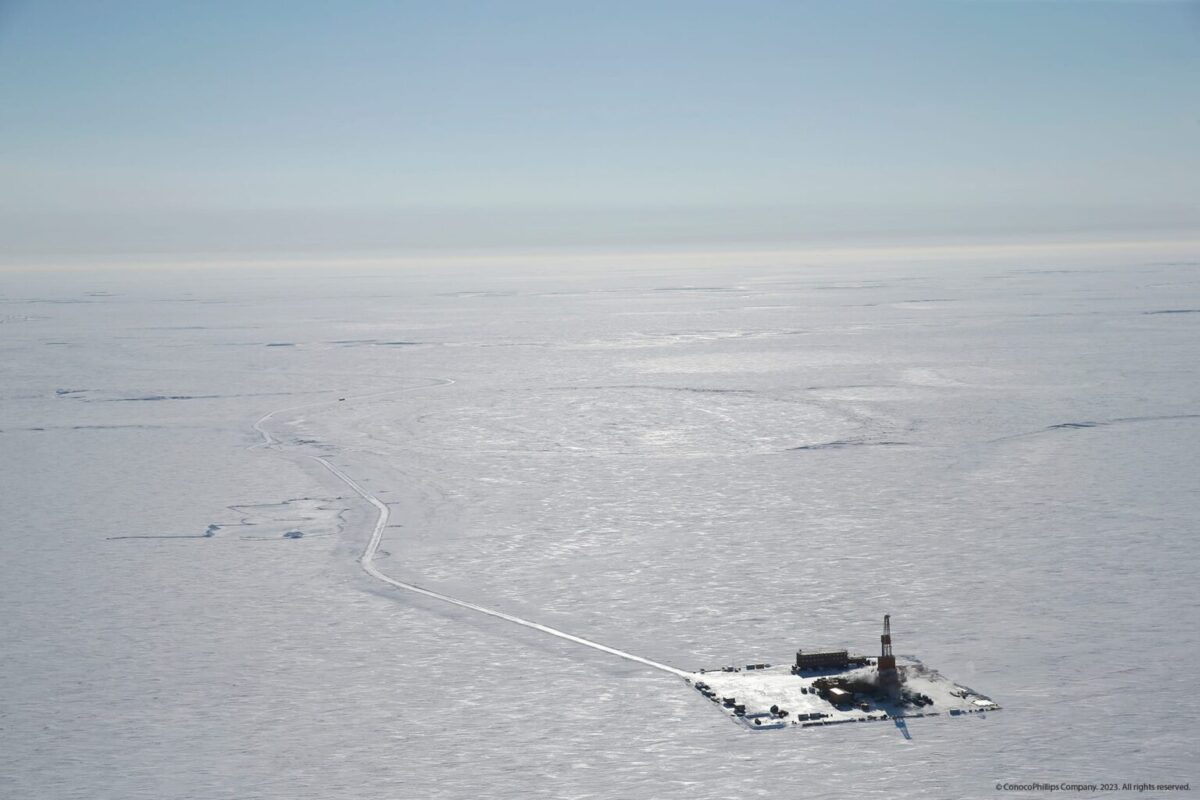
The vast National Petroleum Reserve-Alaska extends west of ConocoPhillips’ massive Willow oil project. (ConocoPhillips)
Global energy leaders have convened here this week, spiffed up in dark suits and polished shoes, to discuss the industry’s most pressing issues: war in the Middle East, Venezuela, artificial intelligence.
But behind the scenes at this annual conference of industry executives — known formally as CERAWeek by S&P Global but nicknamed the “Super Bowl of energy” — a big story about Alaska oil is unfolding.
It involves a massive lease sale in the Arctic, a remarkable show of interest from global oil giants that had faded from Alaska’s frontlines and an emerging race to find deposits potentially worth billions of dollars. Industry proponents say a flood of crude from the largely undeveloped western Arctic, if companies can locate and produce it, could open a new era for the state’s industry.
In what was by far the highest-value federal lease sale in the vast National Petroleum Reserve–Alaska in more than two decades, oil companies last week snatched up more than 1 million acres across the western Arctic.
The scale of interest, with 11 companies participating and a record $163 million spent on bids, was itself notable. But so were the identities of some of the bidders. Two, in particular, surprised even industry insiders: ExxonMobil and Shell.
Both supermajors have a history in Alaska.
ExxonMobil still owns shares of existing Arctic oil fields and the trans-Alaska pipeline. But Shell no longer operates in the state and hasn’t drilled a well in Alaska since its failed offshore exploration campaign more than a decade ago. And ExxonMobil hadn’t bid on leases in years.
Energy historian Dan Yergin, left, speaks with Wael Sawan, chief executive of Shell, at the CERAWeek oil industry conference in Houston this week. (Grant Miller Photography/CERAWeek by S&P Global)
Their renewed interest — along with continued investment from established players like ConocoPhillips and Colorado-based wildcatter Bill Armstrong — accelerates an industry revival that was already playing out on the North Slope.
Just a few years ago, new production and investment in the region lagged as some companies struggled to raise money and even pulled out of Alaska amid successful advocacy campaigns against Arctic drilling.
But major geologic discoveries by Armstrong — and a pair of big new oil fields now under construction — have made the North Slope a more attractive investment. And the industry also has political tailwinds coming from a Trump administration keen to boost resource extraction in Alaska.
“This sale absolutely shows the world the potential for Alaska,” Armstrong, one of the primary bidders, said in an interview at CERAWeek. “This could be a game-changer for the state.”
Bill Armstrong (Max Graham/Northern Journal)
The region still faces obstacles to development, like high costs and competition from other basins where drilling is cheaper.
And the lease sale is just a preliminary step, far from an assurance of future production: No new wells have been drilled yet, and companies often spend years doing exploratory work before deciding whether to start pumping oil.
Conservation groups, meanwhile, continue to fight the industry’s expansion in the reserve — where, they note, federal law instructs policymakers to not only to oversee oil development but also to protect the environment and cultural values. Multiplelawsuits are challenging the Trump administration’s oil-friendly policies in the Arctic, and advocates have asked a judge to invalidate leases set to be awarded after last week’s sale.
Four small lakes sit on the northwestern side of Teshekpuk Lake, a key wildlife habitat within the National Petroleum Reserve – Alaska that’s also seen interest from oil companies. (Craig McCaa/U.S. Bureau of Land Management)
“What we saw last week were companies pushing into some of the most sensitive areas of the reserve,” said Suzanne Bostrom, an attorney with a conservation-focused Anchorage law firm, Trustees for Alaska, that represents some of the organizations suing the administration. “We and the groups that we work with are going to continue to fight for this area, and fight for the protections that it deserves,” Bostrom added.
But even amid the pending legal questions, the sale’s results are still a step toward new development; further investment and competition in the petroleum reserve are likely to follow, conference participants told Northern Journal in Houston this week.
A surprising sale
Leading up to the sale, there were signs that oil companies could show up in force.
It was the first auction in NPR-A in seven years, and more acreage was up for grabs than in many previous sales. The offerings included large swaths of tundra and wetlands that Democratic administrations had designated off-limits to drilling.
And after years of comparatively tepid industry interest, recent oil discoveries have expanded the known resources on the North Slope, said Bob Fryklund, a top oil and gas analyst at S&P Global Energy, a research firm.
“It’s kind of been a sleeper basin,” he said.
This map of Alaska’s North Slope shows the National Petroleum Reserve – Alaska and the Arctic National Wildlife Refuge. Two oil companies are building large developments near the reserve’s eastern edge, and a major lease sale recently auctioned off land deeper into the reserve. Prudhoe Bay is the hub of existing North Slope development.
A decade ago, the petroleum reserve was beyond the western edge of the North Slope’s oil infrastructure, making it more expensive to bring in equipment and drill.
But the industry has been moving in its direction: Construction is now underway at two big new oil fields in the area — ConocoPhillips’ Willow project and Santos’ Pikka project. Both will tap into a long-overlooked oil-rich geologic formation, known as the Nanushuk, that Armstrong initially discovered near the reserve’s eastern boundary.
It was no surprise, then, that ConocoPhillips, Santos and Armstrong all showed up at the recent auction, analysts said.
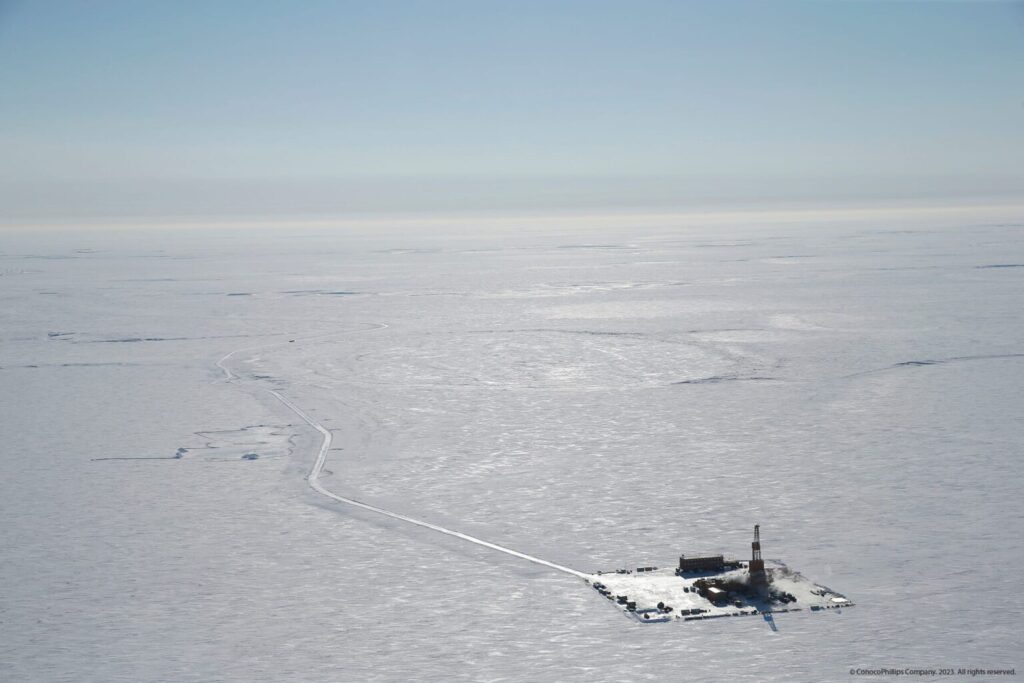
An exploration rig drills for oil at ConocoPhillips’ Willow prospect in the National Petroleum Reserve – Alaska. (ConocoPhillips)
Few people, however, predicted that so many other companies would put in bids, or that major corporations like ExxonMobil and Shell would participate.
ExxonMobil, committing more than $7 million on some 138,000 acres, came as a particularly big surprise.
That company, headquartered in Houston, owns shares in the existing Point Thomson and Prudhoe Bay oil fields on the North Slope. But it doesn’t manage either field, and the company has not been active in exploration and new development in the state: Until last week, ExxonMobil had not bid on a federal or state oil and gas lease in Alaska in more than a decade, according to data provided by Welligence, an industry research firm.
Meanwhile, Shell, in a partnership with a Spanish company, Repsol, submitted some of the highest bids. The two companies offered more than $2 million on many individual tracts, and committed more than $90 million in total.
A map produced by the U.S. Bureau of Land Management shows winning bids from last week’s lease sale.
Experts said the return of those players was likely influenced by the ongoing development in the area.
Although neither the Willow nor Pikka project is producing yet, the multibillion-dollar investments by ConocoPhillips and Santos may have given other companies more faith in the surrounding geology and the ability to pump oil in the area, analysts said.
“What you saw Shell do, and even Exxon, was validation of the work done by other players on the North Slope in recent years,” an oil company executive said in Houston, speaking on the condition of anonymity because he was not authorized to speak publicly.
Industry headwinds subside
Shell’s interest represents a reversal from its announcement a decade ago that it was pulling out of Alaska. The company had spent some $7 billion on its failed effort to drill for oil offshore in the Chukchi Sea, citing Obama administration policies and high costs when it departed the state.
In 2020, another major, BP, also pulled out of Alaska, selling its assets to Hilcorp, a privately owned Texas business.
Those decisions both seemed like signals of the industry’s decline in the state, as the daily flow through the trans-Alaska pipeline shrank to 500,000 barrels from a high of 2 million decades earlier. An era of oil giants spending freely on big new projects was giving way to one of smaller companies wringing the last drops of crude out of aging fields.
An oil and gas rig drills at a Hilcorp development in the Cook Inlet basin in Southcentral Alaska. (Nathaniel Herz/Northern Journal)
At the time, companies were contending not only with the usual impediments to drilling in Alaska, like high costs and opposition from environmental groups, but also with growing political pressure from climate-minded shareholders and activists opposed to expanding fossil fuel production. Even oil executives acknowledged that advocacy against the oil industry, which is a major driver of climate change, was deterring investment in Alaska.
But even as the burning of fossil fuels continues to warm the planet, global demand for oil remains high — and industry confidence in the North Slope’s potential appears only to be growing.
The newly discovered oil deposits there “have proven that Alaska is not over,” Fryklund said.
ConocoPhillips, ExxonMobil and Santos declined to make officials available for on-record interviews. Shell did not respond to a request for comment.
“This marks an important step in our continued commitment to responsible energy development in Alaska and the U.S.,” an Exxon spokesperson said in an emailed statement.
Once the company’s leases are finalized, ExxonMobil will work with the state and local communities as it evaluates “potential next steps for the area,” the statement said.
“I wish I were 30 years younger”
For those who work in the oil industry, the central plank of Alaska’s economy, the sale stirred excitement, and some relief: New activity in the federal reserve could bring more gigs for contractors that have long wondered if there would be enough development on the North Slope to sustain their businesses.
“We’ve all had this little worry of, ‘Well, what’s next?’” said Greg Miller, vice president of operations at Cruz Construction, a Palmer-based company with oil-related contracts on the Slope. “Now, there’s a little bit of reason to be a little bit more hopeful and positive about the next 10, 20 years.”
The sale won’t lead to immediate growth for Miller’s business, he said. But new exploration activity, if and when it happens, will create jobs: A single project can provide a year’s worth of wages for as many as 100 employees at Cruz, Miller added.
For the president of another Alaska oil services company, Kevin Durling, the hype around the petroleum reserve is reminiscent of the boom days when oil started flowing through the trans-Alaska pipeline, in the 1970s and 1980s.
The trans-Alaska oil pipeline pumps some 500,000 barrels a day. (Nathaniel Herz/Northern Journal)
“I wish I was 30 years younger,” he said.
The state’s conservation community, meanwhile, has reacted with disappointment, and concern for the western Arctic ecosystem.
The vast, largely undeveloped region contains important habitat for migratory birds, and it sustains tens of thousands of caribou, some of which calve around Teshekpuk Lake, a major water body in the northern part of the petroleum reserve.
“I’ve had better weeks at work. No question about that,” said Andy Moderow, senior policy director at Alaska Wilderness League, one of the environmental groups suing the Trump administration. But, he added: “The war is still well in front of us.”
One potential hurdle for development is a legally disputed conservation area around Teshekpuk Lake. The protections, across about 1 million acres, were set aside by the Biden administration for the nearby Iñupiaq village of Nuiqsut, where many people still depend on caribou and other wildlife for food.
The Trump administration canceled the protections late last year, touting the area’s oil and gas potential and aiming to authorize leasing there. Nuiqsut’s leaders then sued, saying the move violated a prior agreement and threatened the village’s subsistence traditions.
Two days before the lease sale results were announced, a federal judge restored the Teshekpuk protections while the lawsuit played out.
But the area still attracted bids from a few companies — including ExxonMobil.
The administration has not said whether it plans to award leases in the disputed area to high bidders — or how, exactly, it intends to navigate the apparent conflict between the sale results and the court ruling.
Nathaniel Herz contributed reporting from Anchorage.
Northern Journal contributor Max Graham can be reached at max@northernjournal.com. He’s interested in any and all mining related stories, as well as introductory meetings with people in and around the industry.
This article was originally published in Northern Journal, a newsletter from Nathaniel Herz. Subscribe at this link.
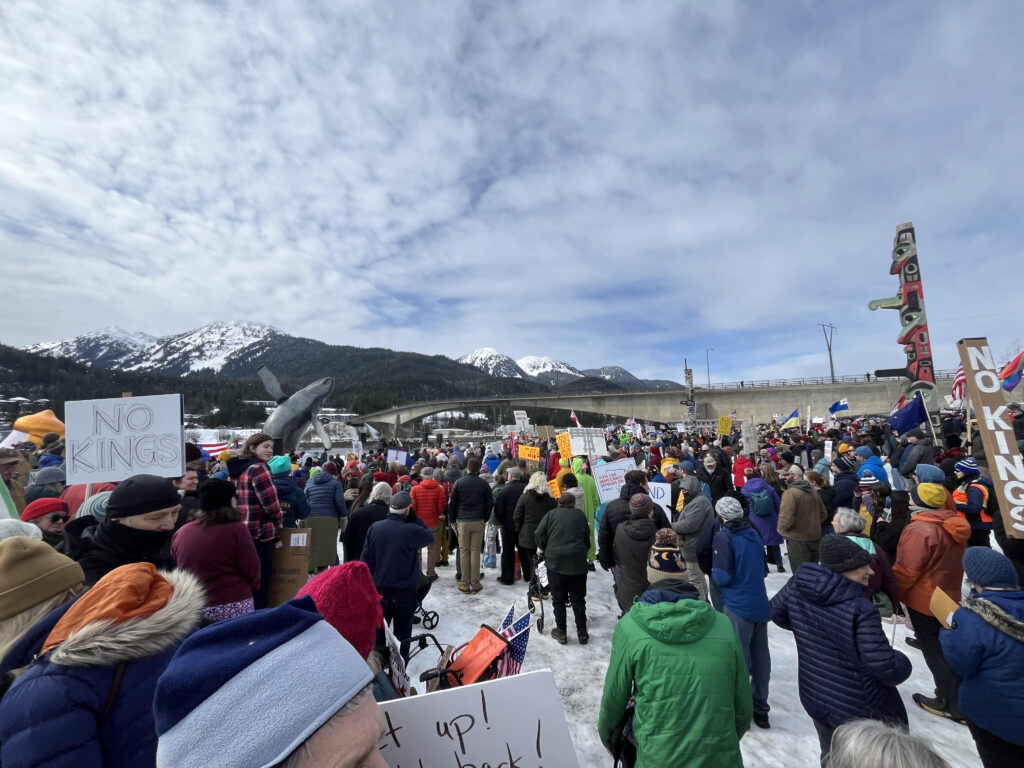
The No Kings movement returned for a third nationwide day of action today at Overstreet Park.
‘No Kings’ Juneau is just one of more than 3,000 events across the United States, including roughly 23 in Alaska alone, according to Anjuli Grantham From Juneau for Democracy, who has organized this protest alongside the Re-Sisters and Juneau Indivisible.
The demonstrations are aimed at denouncing what participants see as a slide toward authoritarianism and demanding the protection of democratic institutions.
“The first (No Kings Rally) was one of the largest protests in American history.” Grantham said, “The second was as well. The statement, ‘No Kings’ means that we refuse to live in tyranny, and we refuse to live in a society in which the rule of law is not being upheld, and so by saying ‘No Kings’, we’re reminding everyone that we are indeed a democracy. We are not a dictatorship. And that’s a fundamental value of what it is to be an American.”
This year, participants are demanding no war, no more funding for ICE, and protection of the Constitution and the rule of law.
“This really is a community that cares, and also, because we’re the capital, we’re also a community that understands the value of government and of of good governance. Because since we’re the capital, we also experience the effects of bad governance pretty rapidly.” Said Grantham, “So much of what’s happening right now can feel very isolating, and there’s so much about what it is to be alive today which is isolating in general, but then to be living under this growing authoritarian regime…isolation is one of the tactics of authoritarianism. So by coming together, we show one another that we are not alone.”
Grantham also emphasized that the rally is only one part of a broader strategy.
Beginning next week, Juneau groups will host a weeklong series of workshops under the banner “How We Resist,” aimed at training community members in nonviolent resistance and democratic engagement. The Workshops will include information on general strike preparedness, noncooperation tactics like boycotts and sit-ins, and an ACLU Alaska immigration bystander training watch party and Q&A.
For those skeptical that their presence at a rally or workshop makes any difference, organizers argue civic participation is essential.
“We need to practice the muscle of democracy. By showing up, we are practicing what it means to be democratic citizens. That matters greatly.” Grantham said, “We have these rights, and we will have these rights as long as we practice them, as long as we use them. That’s what the scholars and the experts tell us, we have to use all the tools that we have available to us as long as we have them, because those tools become whittled away by authoritarianism, so when we show up together to put into practice, number one, our First Amendment rights and our ability to petition the government when we are dissatisfied with it, we are living our democracy.”
Protests, she says, strengthen organizational skills and help sustain networks that can respond to future crises.
If there is one message Grantham hopes people take away from the Juneau rally, it’s – “I hope people feel that by taking part in an event like this and by doing these other actions as well, that we are living our values, and we are going to be able to tell our grandchildren in confidence that we had an important role to play in preserving American democracy. Action is the antidote to despair. It’s really easy to feel overwhelmed and depressed right now, but for me, when I show up and I do things, those feelings go away.”
Photo Courtesy of UAS, from their Alaska Native Arts, Language and Studies program.
NOTN- The Central Council of the Tlingit & Haida Indian Tribes of Alaska and the University of Alaska Southeast are launching a collaborative effort to develop a School of Indigenous Studies in Southeast Alaska.
Leaders from both organizations signed a memorandum of understanding at the Andrew Hope Building in downtown Juneau this morning, marking what officials describe as an initial step toward building a new academic program grounded in Indigenous knowledge.
This is only the biggening of the collaboration.
The agreement signed, outlines a shared vision between Tlingit and Haida and UAS, of an education model that reflects Indigenous languages, traditions and values, that supports workforce development, research and economic opportunities.
“We are really excited to have a formal relationship with the tribe to create a school of Indigenous Studies at UAS.” Said UAS Chancellor Aparna Palmer, “This is one of the few times where a university has worked with a tribe to co-create a vision for this school, and the school is so important and transformative and amazing because it will honor the values of the tribe, while at the same time giving us a chance to bring together all of the disciplines that we already offer.”
As part of the effort, a working group, with representatives from both Tlingit & Haida and the university will be formed to develop a roadmap for the School of Indigenous Studies.
“We already offer classes on the language and the culture and the history of the indigenous peoples of Southeast Alaska, and now they will be housed at a school that is specific and integrated within UAS.”
Members of the Alaska House of Representatives convene on the first day of the second session of the 34th Alaska State Legislature on Jan. 20, 2026 (Photo by Corinne Smith/Alaska Beacon)
The Alaska Legislature on Wednesday approved a stopgap budget bill amid an ongoing debate among lawmakers around war-driven oil revenues and whether to draw from state savings.
The stopgap budget bill contains $449.6 million in state spending including for disaster relief, construction, education, correctional officer overtime and some public assistance programs — expenses accrued since the Legislature and Gov. Mike Dunleavy adopted the state budget last year.
But the question of how and when all the items will be funded is still uncertain. Lawmakers chose to rely on anticipated oil revenue to fund the bill rather than drawing from savings.
The Alaska Senate passed the budget bill by a 19 to 1 vote on Wednesday, with Sen. Robert Meyers, R-North Pole opposing. The bill was quickly transferred to the Alaska House where it passed unanimously by all 40 members. The bill now moves to the governor’s desk for his consideration.
The Legislature created a select bicameral conference committee to hammer out differences between House and Senate versions of the budget bill over the last week.
The final bill includes $75 million for disaster relief to cover the state’s response to the Western Alaska storms last fall, and almost $100 million for fire suppression. It contains $20 million for the Alaska Department of Corrections for overtime spending, as well as $34.4 million for Medicaid and $12.8 million for other public assistance programs through the Alaska Department of Health. The bill allocates nearly $130 million toward the Alaska Higher Education Fund which provides grants and scholarships to students.
The spending bill also includes a time-sensitive appropriation for Alaska’s construction industry. It contains $70.2 million in state dollars to unlock roughly $630 million in federal grant funding that industry groups have said is essential for the summer construction season.
But how the nearly $450 million budget bill is funded is still in question.
Legislators have been closely watching oil prices since the start of the Iran war, which state forecasters have projected could potentially generate hundreds of millions in state revenue for Alaska.
Lawmakers agreed that if oil-driven state revenues from now until June 30, the end of the fiscal year, are not sufficient to cover the stopgap budget, then the Legislature will draw from state savings. That roughly pencils out to an average of $74 per barrel of oil through June to cover state spending, according to data provided by the House Finance Committee.
But that vote to confirm drawing from savings again failed in the House on Wednesday — the fourth vote held in the House this year. To draw from Alaska’s main $3 billion savings account requires support from three-quarters of the House and Senate.
The Senate approved the immediate draw from savings on Wednesday by a 16 to 4 vote, but it failed to pass the House by a vote of 22 to 18. It takes 30 votes in the House to spend from the savings reserve.
On Thursday, House Speaker Rep. Bryce Edgmon, I-Dillingham, expressed concern at sending the budget bill to the governor with what he said was no “backstop” funding from savings.
“So if the price of oil goes down, the governor may not have the money ultimately, to finish up or to pay for operations,” he said for this fiscal year.
Edgmon said he is concerned with banking on future oil prices to pay the state’s bills.
“It’s the first time, I think maybe perhaps in Alaska’s history, we’ve ever done it this way,” he said. “It’s going to be very interesting to see how this plays out, because oil prices can certainly go up as well, but they can also go down. And it’s not the way that I like to operate in terms of being fiscally responsible.”
Members of the Republican House minority caucus in opposition from drawing from savings expressed confidence in oil revenues providing enough funding to cover state expenses.
“Everything in this bill the state currently projects enough revenues to fund,” said Rep. Will Stapp, R-Fairbanks on Wednesday. “We still have many days in session, happy to revisit in the event oil price changes and we need to structure something in order to meet our obligations. That is not a requirement at this moment.”
The stopgap budget bill now moves to Dunleavy who can sign or veto the bill or let it pass into law without his signature.