Categories
Featured Juneau News Juneau Local Ketchikan Local News Feeds Sitka Local

On budget vote, Murkowski says she was ‘hung out to dry’ and stuck between two bad options

By: James Brooks, Alaska Beacon
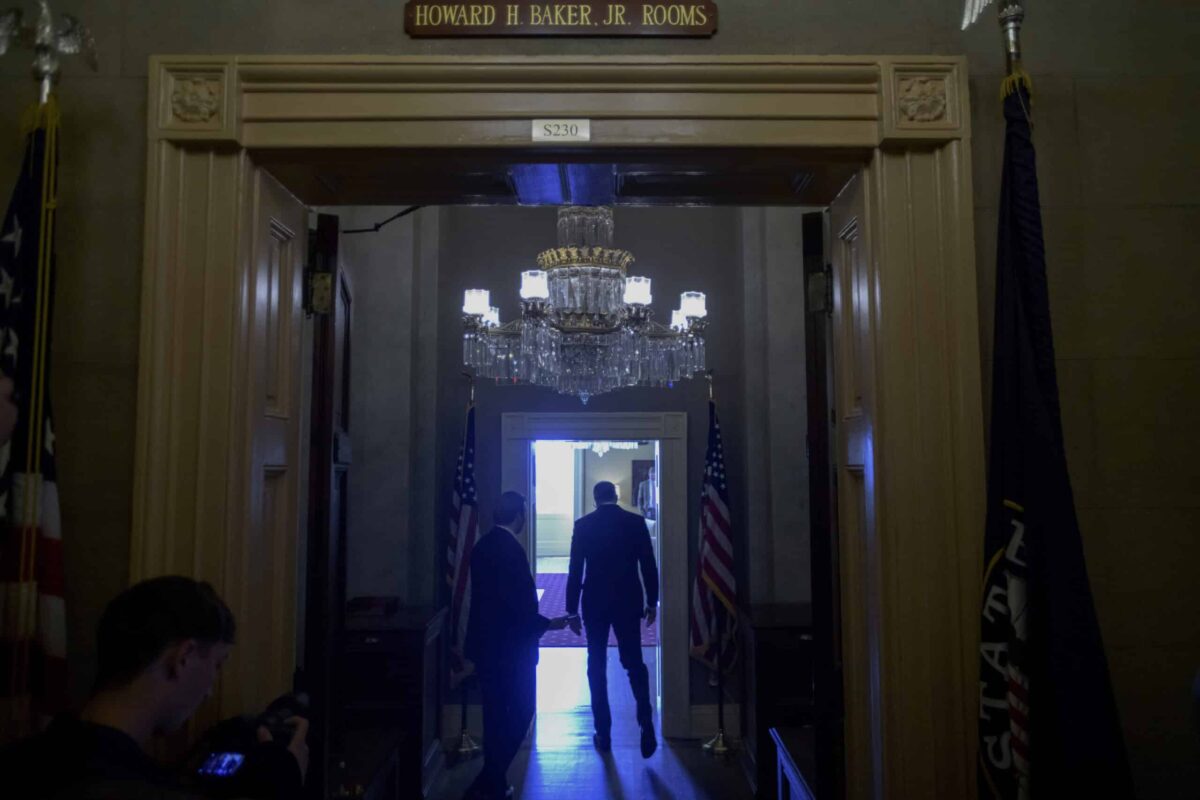
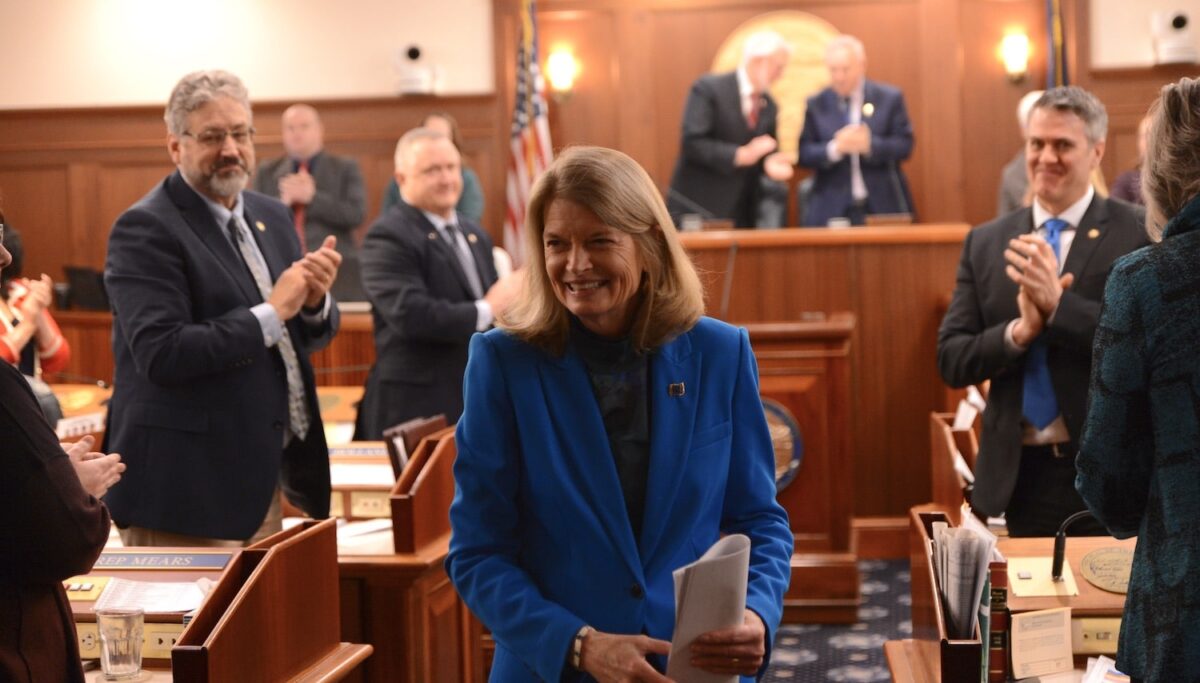
Sen. Lisa Murkowski, R-Alaska, smiles on Tuesday, March 18, 2025, as she exits the Alaska House of Representatives following her annual address to the Alaska Legislature. (Photo by James Brooks/Alaska Beacon)

Speaking in an interview on Friday, Alaska Sen. Lisa Murkowski said President Donald Trump’s health care-cutting budget plan was destined to pass Congress, and her decisive vote on the package last month represented the best of a bad pair of options.

In a new analysis published Monday by the nonpartisan Congressional Budget Office, Republicans’ “big, beautiful” law is estimated to add almost $3.4 trillion to the federal debt over the next decade and cause 10 million Americans to lose access to health insurance. 

Murkowski said she believes that had she opposed the law, Republican senators would instead have sought a 50th vote from Kentucky Republican Sen. Rand Paul, and the result would have been deeper cuts to the federal budget, including to health care.

“What he was looking for was dramatically more cuts to Medicaid, dramatically greater reductions in spending,” Murkowski said. “And so it was no secret that the bill was going to pass. It was just a question of whether or not it was going to pass with Senator Paul’s vote, or with Senator Murkowski’s vote.”

In a column published July 3 by the Louisville Courier-Journal, Paul wrote, “They could have had my vote and saved money but instead chose more spending and tax and welfare changes targeted at Alaska at the cost of the fiscal sanity of our country.”

Murkowski, echoing comments made previously by Alaska Sen. Dan Sullivan, who also voted for the proposal, said she was disappointed that several provisions benefiting Alaska were stricken by the Senate parliamentarian after objections from Senate Democrats.

Those included large subsidies for the state’s Medicaid program and a new split of oil revenue from federal land on the North Slope, with 90% going to the state and 10% to the federal government. 

Voting on the budget package began before the parliamentarian ruled on all aspects of it.

“And so we didn’t know what was in and we didn’t know what was not in,” Murkowski said.

During the process, the 90-10 split dropped to 70-30, and state-specific benefits for Alaska disappeared.

Afterward, one provision that survived — a concession for wind and solar projects — was quashed by executive orders issued by President Trump. 

Speaking to the Anchorage Daily News on Friday, Murkowski said she feels “cheated” by the maneuver.

Speaking to the Alaska Beacon, she said, “I have been criticized. I have been hung out to dry. But you know what? At the end of the day, I fought for my constituents as best I knew how, and I should never, and I will never, apologize for doing the best that I can by them.”

In her last three Alaska U.S. Senate elections, Murkowski defeated more socially conservative candidates with the support of Democrats and independents.

On social media, after her vote in favor of the Republican budget plan, many of those voters voiced their disapproval.

Asked about that disappointment, Murkowski said she understands and hears that criticism.

“I get the fact that they want me to be principled on this. But if it costs Alaskans — which it would have — then how is that doing my job for them? … At the end of the day, I couldn’t kill it, and I understand that people might not believe that, but again, what I set out to do was try to make improvements to a measure that started out in a place that would have … made it very challenging for too many Alaskans.”

Murkowski said she expects the Trump administration to propose more retroactive budget cuts akin to the one that passed last week involving foreign aid and the Corporation for Public Broadcasting.

Sullivan voted in favor of the cut; Murkowski opposed it.

Afterward, Trump budget director Russ Vought said he wants congressional Republicans to get more partisan in the budget process and that lawmakers should expect more “rescission” votes like last week’s.

Murkowski said she hopes other Republicans will join her in rejecting that call.

“I would like to think that it’s comments like that, that would galvanize us as appropriators, galvanize us as Republicans and Democrats in the United States Senate,” she said. “Our oath is to the Constitution. We would say we’ve got our job to do here, and we know that in order to do it and have it be enduring, it takes 60 votes, and so we need to be more bipartisan and not more partisan. To me, it was absolutely offensive, his statement, and so arrogant.”

Categories
Featured Juneau News Juneau Local Ketchikan Local News Feeds Sitka Local

Juneau Mayor comments on ICE agent rumors in the Capital city

Juneau from above, CBJ file

NOTN- After social media posts have circulated claiming 7 ICE agents checked into hotels in downtown Juneau, Mayor Beth Weldon joined KINY to discuss some of those rumors.

“So far, we haven’t been able to substantiate any of those rumors,” She said, “so, no presence or activity that we are aware of, however, maybe this is where the rumors are coming from, TSA is in town, and they will have a visual intermodal Presence Prevention and Response Team present.”

TSA will be conducting high visibility patrols on cruise ship docks, and they’ll be doing that all this week.

“So if you see lots of uniforms down there, that’s what’s happening.” Said Mayor Weldon “it’s no concern. It’s an annual activity. CBJ is not involved, and we’ve been doing this since 2021.”

While ICE agents may not be in the Capital, recently, the Alaska Department of Corrections has been holding dozens of immigration detainees in Anchorage under conditions that violate federal standards for humane treatment, according to Alaska Public Media, three immigration lawyers said the men were denied phone access to their attorneys and consulates, held in lockdown for long periods and, in one incident, subjected to pepper spray.

Immigration and Customs Enforcement is playing a key role in the Trump administration’s plans to crack down on illegal immigration.

ICE teams are continuing to carry out enforcement operations. And officials have said targeting criminals is a priority, but a key issue to watch is how the term “criminal” is defined. White House spokeswoman Karoline Leavitt said that the administration sees all undocumented immigrants as criminals.

Categories
Featured Juneau News Juneau Local Ketchikan Local News Feeds Sitka Local

Alaska US senators split votes on cuts to public broadcasting, foreign aid

By Corinne Smith, Alaska Beacon

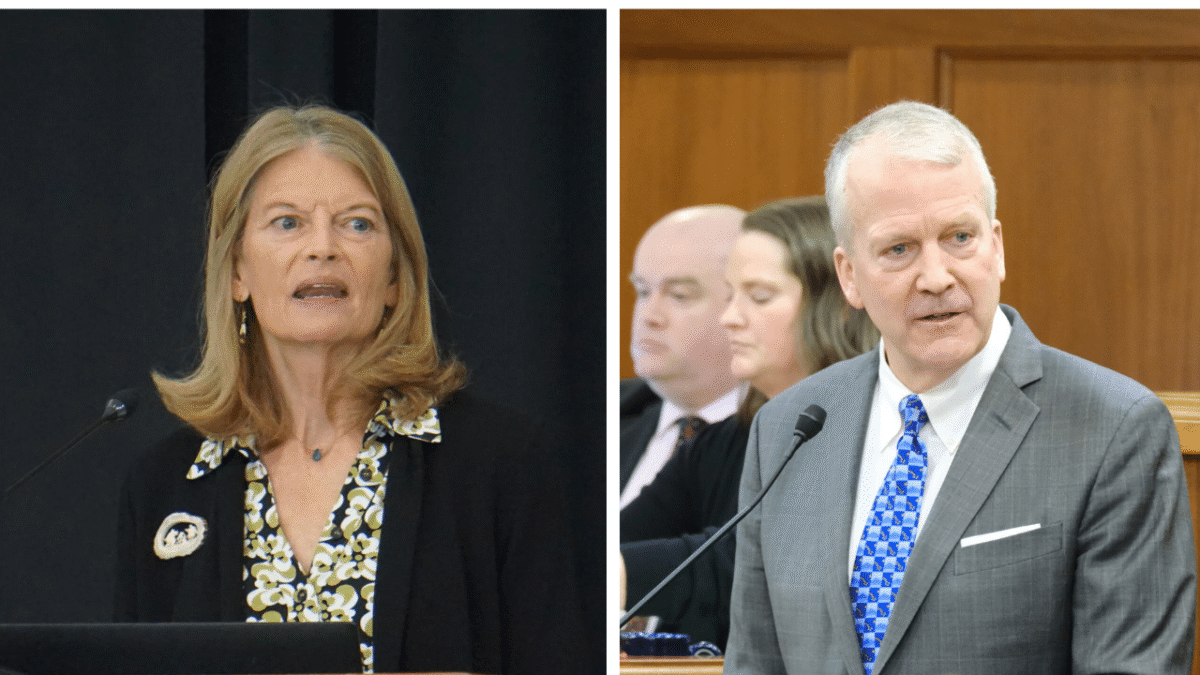
Alaska Republican U.S. Sens. Lisa Murkowski and Dan Sullivan (Alaska Beacon file photos)

Alaska’s two U.S. senators voted differently on a bill requested by President Donald Trump to block federal funding for foreign aid and public broadcasting. 

The cuts include $1.1 billion for public broadcasting over two years, with more than $20 million in funding for Alaska’s 27 public radio and television stations. The measure is known as a rescission package, because it claws back funding that Congress had already approved earlier this year.

The overall bill includes $9 billion in cuts, with most in foreign aid.

The bill passed 51 to 48, with Alaska’s Republican senators voted differently: U.S. Sen. Dan Sullivan voted for the rescission, and U.S. Sen. Lisa Murkowski voted against. 

Sullivan spokesperson Amanda Coyne sent a statement by email on Thursday repeating the senator’s position that he had warned public media, NPR and the Corporation for Public Broadcasting for years about their “biased reporting” that “would eventually jeopardize federal support for both national and local radio stations,” she said.

However, Coyne added, Sullivan has advocated for rural stations and has been working with other senators and White House officials on alternative sources of funding to keep rural stations on the air, particularly Native stations in Alaska.

“Currently, there is approximately $10 million available for tribal and Native stations in the country. Alaska has 11 Native stations. Going forward, Senator Sullivan will continue working to provide resources to support as many Alaska rural radio stations as possible. He was discussing this funding issue with a senior administration official this morning,” Coyne said.

Coyne did not respond to questions on how much would be available for Alaska stations, when, or what stations would be eligible. 

Murkowski was outspoken and critical of the rescission bill, voting no.

In a statement on Thursday, she first cited a lack of clarity by the Trump administration for what programs and amounts would be rescinded, especially for global health programs. “We still lack necessary details, including which ones will be zeroed out. There is no way to determine the implications for lifesaving care and vital resources for women and children abroad,” she said.

“I also strongly oppose the rescission of funding for the Corporation for Public Broadcasting. My colleagues are targeting NPR but will wind up hurting – and, over time, closing down – local radio stations that provide essential news, alerts, and educational programming in Alaska and across the country,” she said. 

Murkowski introduced an amendment on the Senate floor late Wednesday night to protect CPB funding, and it was voted down 51 to 47. 

Murkowski told reporters on Thursday afternoon in an audio recording shared with the Alaska Beacon, when asked about the fate of rural stations in Alaska, that her office was also looking into funding for stations from federal tribal grants.

“Some of them, about a dozen, will be able to access these tribal grants,” she told the reporters.

“But that’s less than half of the Alaska stations. So what happens to KUCB going forward?” she said, referring to the public radio station in Unalaska that broadcast a tsunami warning and emergency evacuation order for remote Aleutian Island communities following a magnitude 7.3 earthquake the day before.  

“So what we’re trying to do is kind of identify how perilously close are many of these small stations to being in a shut down mode. How much do they have to carry them forward?” she said.

In her statement, Murkowski emphasized her opposition to the rescission process, driven by the White House Office of Management and Budget, as undermining Congress’ authority. 

“Finally, and most importantly, approving this package in this manner further shifts the balance of power over the federal budget to the executive branch. Congress, not OMB, holds the power of the purse under the Constitution. To the extent that certain appropriations are not necessary to comply with the laws passed by Congress, we can best address that through the annual budgeting process, where we routinely rescind funds every year.”

The rescission bill now advances back to the U.S. House, which passed an earlier version of the measure. As of Thursday evening it had not been taken up for a vote.

Categories
Featured Juneau News Juneau Local Ketchikan Local News Feeds Sitka Local

Searching for pennies: With the cut in federal funding public broadcasters are looking to cope

Elayna Cunningham, a college student interning at Koahnic Broadcast Corp., records a program on July 10, 2025, at the Anchorage, Alaska, studios of KNBA, the flagship station for National Native News. (AP Photo/Mark Thiessen)

AP- Lauren Adams, general manager for KUCB public radio in Unalaska, Alaska, didn’t have much time to reflect on Congress, 4,000 miles away, stripping federal funding for public media this week. She’s been too busy working.

Sirens blared in the Aleutian Islands community Wednesday warning of a potential tsunami, with a voice over public loudspeakers urging the community’s 4,100 residents to seek higher ground immediately and tune into the radio — to Adams’ station.

At the same time in Washington, the Senate was voting on a measure that would eliminate nearly $1.1 billion that had already been appropriated for NPR and PBS — a process that didn’t end until early Thursday morning. The House is expected to complete the process in time for President Donald Trump to sign it before a Friday deadline.

Trump had called for the cuts, saying public media’s news programming was biased against him and fellow Republicans, and threatened GOP members of Congress with primary challenges if they didn’t fall in line.

Adams, her news director, a reporter and an intern kept broadcasting and updating KUCB’s social media feed until the danger passed. Then she made time for one more task — texting U.S. Sen. Lisa Murkowski and urging her to vote against the bill. Murkowski was one of two Republican senators, along with Susan Collins of Maine, to publicly dissent.

“I thought that it was such a telling story of why her constituents have a different relationship to public radio than maybe some other regions of the United States,” Adams said.

Hard decisions ahead for stations across the country

The federal money is appropriated to the Corporation for Public Broadcasting, which distributes it to NPR and PBS. Roughly 70% of the money goes directly to the 330 PBS and 246 NPR stations across the country, although that’s only a shorthand way to describe its potential impact.

The cuts are expected to weigh most heavily on smaller public media outlets away from big cities, and it’s likely some won’t survive. Katherine Maher, NPR’s president and CEO, estimated as many as 80 NPR stations may face closure in the next year. Some stations are already fielding offers from commercial entities to buy their broadcast licenses, she said.

“Many of our stations which provide access to free unique local programming and emergency alerts will now be forced to make hard decisions in the weeks and months ahead,” said Paula Kerger, PBS president and CEO. “There is nothing more American than PBS. Despite today’s setback, we are determined to keep fighting to preserve the essential services we provide to the American public.”

The measure will cost PBS and NPR stations in Mississippi roughly $2 million, about 15% of the budget, said Royal Aills, executive director of Mississippi Public Broadcasting.

Already, Mississippi Public Broadcasting has decided to eliminate a streaming channel that airs children’s programming like “Caillou” and “Daniel Tiger’s Neighborhood” to the state’s youngsters 24 hours a day, said Taiwo Gaynor, the system’s chief content officer.

“This is important for families, to have access to content that they don’t have to pay for,” Gaynor said. “That is a sad thought, to think that we … might not be able to provide that for a generation of children.”

Maine’s public media system is looking at a hit of $2.5 million, or about 12% of its budget, for the next fiscal year, said Rick Schneider, president and chief executive officer of Maine Public. He said he’s not ready to identify specific cuts, but the system is preparing to reinvent itself to make certain it continues serving the state’s residents.

Maine’s rural residents rely heavily on public media for weather updates and disaster alerts, said Molly Curren Rowles, executive director of ACLU of Maine. Rowles said public media was a “lifeline” to her growing up off the grid.

Bracing for trouble at stations that take pride in music discovery

NPR’s Maher fears what the cuts might mean for the system’s journalism, not just in rural areas where local news can be hard to come by, but in telling the rest of the country what is going on there. Less funding will also mean less support for popular television and radio programming, although it’s too soon to tell which programs will be affected.

NPR stations also use millions of dollars in federal money to pay music licensing fees. Now many will have to renegotiate these deals, which could mean less music, or a more limited variety of music, on outlets where music discovery is a big part of their identity. For example, Maher estimates that some 96% of all classical music broadcast in the United States is on NPR stations. “That is essentially taking an entire art form out of public access,” she said.

The affair transcends violins and piccolos. NPR received support Thursday from the heavy metal band Gwar, whose lead singer Blothar the Berserker posted a call on social media for fans to pay attention to what is going on with public media.

Already, public media is seeing an increase in donations from reader and viewers to support its mission, and stations are actively sounding the alarm. In a plea to listeners on its website Thursday, Philadelphia’s WXPN radio pointed to its legacy in helping people discover new music. “The most important thing you can do is support WXPN and the public media system in a way that is meaningful to you,” the station urged on its website.

But donations aren’t going to fill the hole left by the loss in federal funding, Maher said. The public media leaders have already turned to lobbying Congress to restore some of the funding through the appropriations process for next year’s budget. They don’t know how much time they have; Maher said it would be inordinately costly, and perhaps prohibitive, to reopen a radio station that is forced to close.

Public media isn’t getting any help from states, either. At least five states have reduced their own outlays for public media this year, either for budget or political reasons.

Gov. Ron DeSantis, for example, vetoed nearly $6 million that Florida lawmakers had set aside for public broadcasters the day before the state’s budget took effect on July 1. “Done in Florida,” DeSantis responded on social media to a Trump post calling public broadcasting a “monstrosity” that should be defunded.

Meanwhile, back in Alaska …

Back in Alaska, KMXT public radio station’s general manager, Jared Griffin, called the Senate vote a “devastating gut punch.” He estimated that the cuts would amount to 22% of KMXT’s budget. Griffin said the station’s board has already agreed on a plan to furlough staff members one day a month, and he’s taking a 50% pay cut.

The station covers Kodiak Island, home to one of the nation’s largest U.S. Coast Guard bases.

“We have to dip into our savings while we figure out what KMXT is going to look like over the next six months, Griffin said. ”At least for the next year we’ll be fine but we’re probably going to have to look at leasing space in our building to other organizations to help fill that gap.”

Unalaska resident Nikki Whittern said KUCB plays a vital role in the community during emergencies like the tsunami warning.

“They broadcast everything, and they make sure that everybody knows and everybody’s safe,” said Whittern, a bartender. She spoke while preparing to open the Norwegian Rat Saloon — known to local fishermen simply as “the Rat” — on Thursday morning.

Categories
Featured Juneau News Juneau Local Ketchikan Local News Feeds Sitka Local

Public broadcasting faces major cuts while Alaska tsunami warning highlights its value

Senate Majority Leader John Thune, R-S.D., walks to his office from the Senate chamber as Senate Republicans vote on President Donald Trump’s request to cancel about $9 billion in foreign aid and public broadcasting spending, at the Capitol in Washington, Wednesday, July 16, 2025.(AP Photo/Rod Lamkey, Jr.)

AP- The Senate has passed about $9 billion in federal spending cuts requested by President Donald Trump, including deep reductions to public broadcasting and foreign aid, moving forward on one of the president’s top priorities despite concerns from several Republican senators.

The legislation, which now moves to the House, would have a tiny impact on the nation’s rising debt but could have major ramifications for the targeted spending, from the Corporation for Public Broadcasting to U.S. food aid programs abroad.

It also could complicate efforts to pass additional spending bills this year, as Democrats and even some Republicans have argued they are ceding congressional spending powers to Trump with little idea of how the White House Office of Management and Budget would apply the cuts.

The 51-48 vote came after 2 a.m. Thursday after Democrats sought to remove many of the proposed rescissions during 12 hours of amendment votes. None of the Democratic amendments were adopted.

Senate Majority Leader John Thune, R-S.D., said Republicans were using the president’s rescissions request to target wasteful spending. He said it is a “small but important step for fiscal sanity that we all should be able to agree is long overdue.”

But Senate Appropriations Committee Chairwoman Susan Collins, R-Maine, said the bill “has a big problem — nobody really knows what program reductions are in it.”

Collins and Sen. Lisa Murkowski, R-Alaska, joined Democrats in voting against the legislation. Kentucky Sen. Mitch McConnell, the former Republican leader, had voted against moving forward with the bill in a Tuesday procedural vote, saying he was concerned the Trump White House wanted a “blank check,” but he ultimately voted for final passage.

The effort to claw back a sliver of federal spending comes after Republicans also muscled Trump’s big tax and spending cut bill to approval without any Democratic support. The Congressional Budget Office has projected that measure will increase future federal deficits by about $3.3 trillion over the coming decade.

Lawmakers clash over cuts to public radio and TV stations

Along with Democrats, Collins and Murkowski both expressed concerns about the cuts to public broadcasting, saying they could affect important rural stations in their states.

Murkowski said in a speech on the Senate floor Tuesday that the stations are “not just your news — it is your tsunami alert, it is your landslide alert, it is your volcano alert.”

Less than a day later, as the Senate debated the bill, a 7.3 magnitude earthquake struck off the remote Alaska Peninsula, triggering tsunami warnings on local public broadcasting stations that advised people to get to higher ground.

The situation is “a reminder that when we hear people rant about how public broadcasting is nothing more than this radical, liberal effort to pollute people’s minds, I think they need to look at what some of the basic services are to communities,” Murkowski said.

The legislation would claw back nearly $1.1 billion from the Corporation for Public Broadcasting, which represents the full amount it’s due to receive during the next two budget years.

The corporation distributes more than 70% of the money to more than 1,500 locally operated public television and radio stations, with much of the remainder assigned to National Public Radio and the Public Broadcasting Service to support national programming.

Sen. Mike Rounds, R-S.D., said he secured a deal from the White House that some funding administered by the Interior Department would be repurposed to subsidize Native American public radio stations in about a dozen states.

But Kate Riley, president and CEO of America’s Public Television Stations, a network of locally owned and operated stations, said that deal was “at best a short-term, half-measure that will still result in cuts and reduced service at the stations it purports to save, while leaving behind all other stations, including many that serve Native populations.”

Republicans face a Friday deadline

Collins attempted to negotiate a last minute change to the package that would have reduced the cuts by about $2.5 billion and restored some of the public broadcasting and global health dollars, but she abandoned the effort after she didn’t have enough backing from her Republican colleagues in the Senate and the House.

The House has already shown its support for the president’s request with a mostly party line 214-212 vote, but since the Senate amended the bill, it will have to go back to the House for another vote.

The bill must be signed into law by midnight Friday for the proposed rescissions to kick in. If Congress doesn’t act by then, the spending stands.

Categories
Featured Juneau News Juneau Local Ketchikan Local News Feeds Sitka Local

GOP members of US Senate protest Trump freeze of $6.8B in school funding

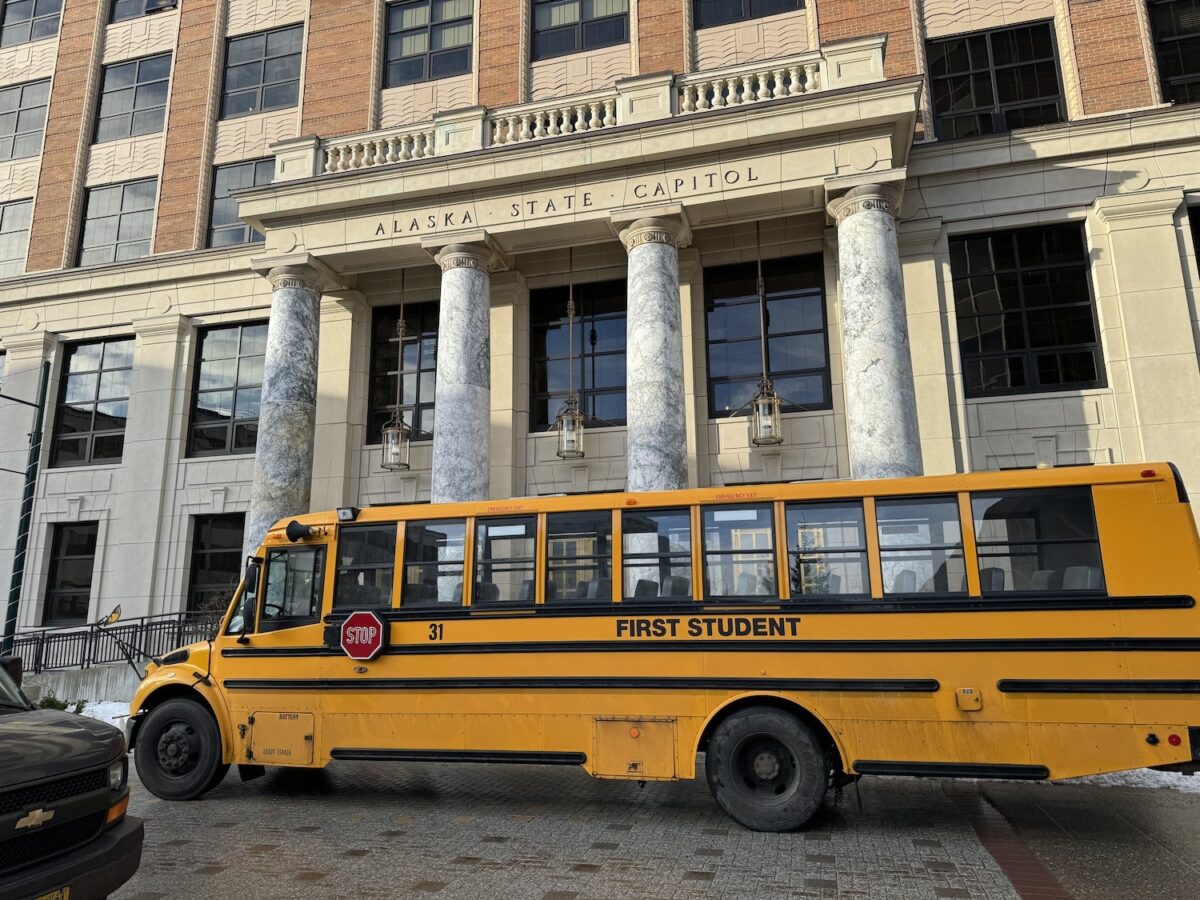
A school bus passes in front of the Alaska Capitol on Tuesday, Feb. 6, 2024. (Photo by James Brooks/Alaska Beacon)

By: Shauneen Miranda, States Newsroom

Republican members of the U.S. Senate called on Office of Management and Budget Director Russ Vought in a letter Wednesday to release the $6.8 billion in funds for K-12 schools that the Trump administration is withholding.

The letter marked a major friction point between President Donald Trump and influential lawmakers in his own party as his administration tests the limits of the executive branch’s authority in clawing back federal dollars Congress has already appropriated. Every state has millions in school funding held up as a result of the freeze.

Wednesday’s letter came after the Supreme Court temporarily cleared the way earlier this week for the administration to carry out mass layoffs and a plan to dramatically downsize the Department of Education that Trump ordered earlier this year.

Just a day ahead of the July 1 date when these funds are typically disbursed as educators plan for the coming school year, the Education Department informed states that it would be withholding funding for several programs, including before- and after-school programs, migrant education and English-language learning, among other initiatives.

“Withholding these funds will harm students, families, and local economies,” wrote the 10 GOP senators, many of them members of committees that make decisions on spending. Sen. Shelley Moore Capito, a West Virginia Republican and chair of the Senate Appropriations Subcommittee on Labor, Health and Human Services, Education, and Related Agencies, led the letter.

Sen. Susan Collins of Maine, chair of the broader Senate Appropriations Committee, also signed onto the letter, along with: Sens. Katie Britt of Alabama, Lisa Murkowski of Alaska, John Boozman of Arkansas, Mitch McConnell of Kentucky, Deb Fischer of Nebraska, John Hoeven of North Dakota, Mike Rounds of South Dakota and Jim Justice of West Virginia.

“The decision to withhold this funding is contrary to President Trump’s goal of returning K-12 education to the states,” the senators wrote. “This funding goes directly to states and local school districts, where local leaders decide how this funding is spent, because as we know, local communities know how to best serve students and families.”

States Newsroom has asked the Office of Management and Budget for comment on the letter.

Meanwhile, a slew of congressional Democrats and one independent — 32 senators and 150 House Democrats — urged Vought and Education Secretary Linda McMahon in two letters sent last week to immediately release the funds they say are being withheld “illegally.”

Democratic attorneys general and governors also pushed back on these withheld funds when a coalition of 24 states and the District of Columbia sued the administration earlier this week. 

Categories
Featured Juneau News Juneau Local Ketchikan Local News Feeds Sitka Local

Trump administration freeze of millions for adult education prompts layoffs, cuts for Alaska

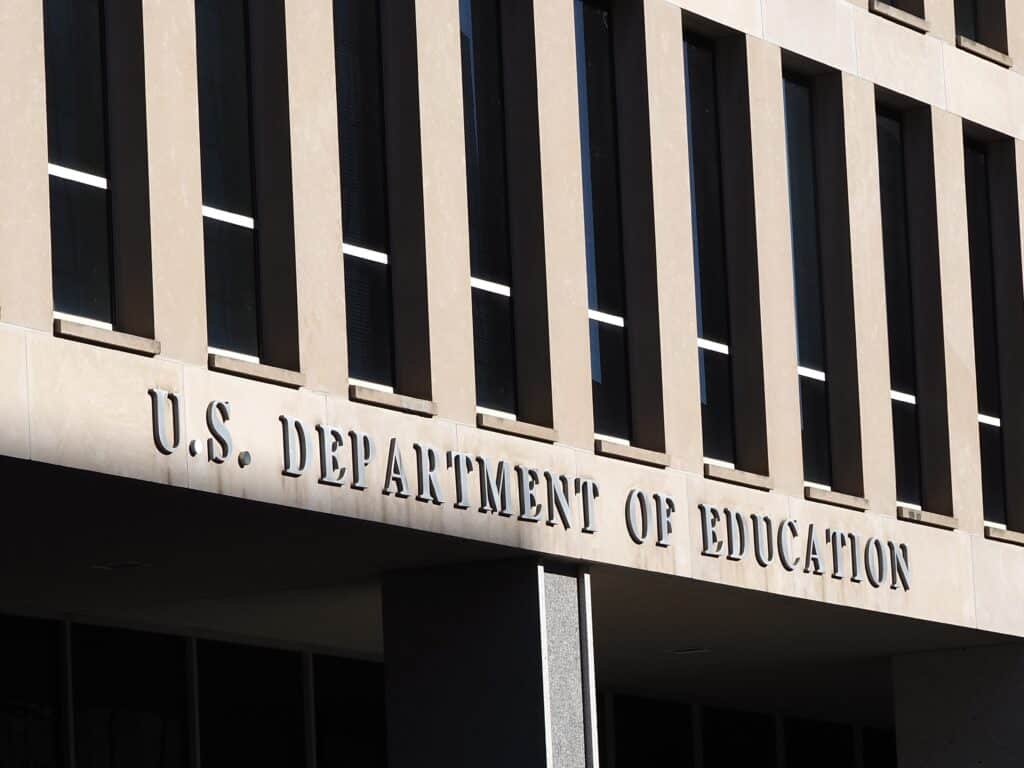
The Lyndon Baines Johnson Department of Education Building pictured on Nov. 25, 2024. (Photo by Shauneen Miranda/States Newsroom)

By: Corinne Smith, Alaska Beacon

Federal funds for adult education services were among those blocked by the Trump administration on July 1, causing immediate cuts to Alaska adult education and workforce development programs and staff layoffs.

The U.S. Department of Education has withheld more than $6 billion in congressionally approved grants for education, including over $629 million for adult education basic grants, and more than $85 million in adult integrated English literacy and civics education grants. The administration has said that it’s withholding the federal funding to review the grant programs to ensure they align with the Republican president’s priorities. 

Adult education can range from classes that help adults learn basic literacy to programs that assist students in gaining certificates equivalent to high school diplomas, and can teach skills that are essential to performing certain jobs. 

Alaska had over $1.1 million allocated as part of an adult education basic grant, according to the Alaska Department of Labor and Workforce Development, which administers the grants. A department spokesperson said on Tuesday the grant amounts for English literacy and civics education this year were not available, but the state received more than $99,600 last year. 

The withheld funds means immediate cuts to services for Alaska adult learners and staff layoffs, according to grant recipients.

“We were definitely blindsided,” said Lucie Magrath, executive director of the Literacy Council of Alaska, a Fairbanks-based nonprofit that provides adult education programs, including adult literacy, English language learning, civics and General Educational Development, or GED, preparation classes. 

Magrath said an estimated $180,000 in federal funding, or over half of their budget, was impounded, causing immediate cuts to services and staff layoffs. While the organization did not identify the number of layoffs in an interview last week, the Fairbanks Daily News-Miner has since reported that there were five layoffs. 

“So we are having to make some pretty drastic decisions with staffing and programming,” she said in a phone interview on Thursday. “We likely will not be able to serve nearly as many people this year, and we’re making staffing cuts right now.”

The organization provides in-person and virtual instruction and mentoring to adult learners in Fairbanks, as well as in villages in the Interior and Western Alaska, stretching from the Yukon Flats to the Yukon-Kuskokwim Delta. 

They also have a workforce development program, the Pathways Program, serving youths and young adults ages 16 to 24, and run the used bookstore Forget-Me-Not Books in Fairbanks, which provides revenues for its programs, jobs training and employment. 

Shelby Cooke is the assistant executive director of the Literacy Council of Alaska, and said it’s difficult to fill such a large funding gap, especially on such short notice, and Alaskans will be impacted. 

“The real detriment is to our students and Alaskans who need that GED credential to go to work, or maybe they’re a super-skilled person in their native tongue, but they need enough English to be able to navigate a job interview,” she said. “Those are the folks that are suffering, and in turn, our economy suffers too.”

Magrath said some programs will be suspended immediately. It’s possible that these suspensions will be temporary, as her organization figures out its next steps. “We’re looking at restructuring some of our programs just to be able to use the resources that we have to the maximum impact for our community and our students,” she said. “So we have a lot to figure out right now.”

Southeast Regional Resource Center, a nonprofit educational services agency that provides a variety of services statewide, including adult education, English language learning and workforce development programs. In addition, SERRC provides educational and business services to school districts, including special education programs, human resources and grant administration. 

“We do have some state funds, and so we’ve had to modify our budget just off what we know we have for funding — for state funds — and we are looking at having to reduce our staffing,” said Chris Reitan, its executive director, in a phone interview Thursday. He said the organization is looking at cutting at least two staff positions and a few part-time positions. “So we are concerned about the ability to have the same level of impact.”

Reitan said the federal funding freeze withheld over $86,600 for adult education programs in Southeast Alaska, and over $64,000 in the Aleutians region.

Chris Reitan, executive director, SERRC, said SERRC’s program served 112 students last year in the areas of GED support, English language learning and workforce development across the state. 

“Number one, adult education provides a kind of a lifeline for Alaskans seeking to improve their lives, and it also helps strengthen our state’s workforce,” he said, and will have an immediate impact on adult learners, “which then could immediately impact their ability in regards to getting good-paying jobs, their ability to provide for their families, their ability to contribute to their local communities.” 

He added: “I see this as being a significant impact across the state, in regards to our citizens being able to have the opportunity to better themselves.” 

SERRC and the Literacy Council of Alaska are two of 14 adult education programs across the state with grant funding administered by the Alaska Department of Labor and Workforce Development. A department spokesperson, Adam Weinert, said by email that the department has continued to award available state matching funds for the programs, totaling more than $1.9 million. 

“Sub-grantees were informed that we were moving forward at this time with state funding only,”  Weinert said of the programs. “Once federal funding is released, we will move forward with a budget modification to provide for the federal funding.”

The full impact of how the freeze will affect some programs in the long term remains unclear. 

The University of Alaska system has several adult education programs, funded in part by federal funds, as well as state and local funding. Jonathan Taylor, the university’s director of communications, said by email Monday that “discussions are ongoing” around funding but those programs are scheduled to continue.

Taylor said at the University of Alaska Fairbanks, the Bristol Bay Adult Education program will start up in August with funding from Bristol Bay Economic Development Corp.

Within the University of Alaska Anchorage, there are adult education programs at Kodiak College, serving the Kodiak Island Borough; Kenai Peninsula College, serving the Soldotna, Homer and Seward regions; and Prince William Sound College, serving the Valdez, Cordova and Copper Basin regions. 

“We have received assurances that all three will receive some sort of funding this year,” Taylor said. “To our knowledge, the state will initiate these awards using either state funding or federal funding it has access to. If additional Federal Funds become available, the state will amend the agreements to make up to the original intended funding amount. Currently, this is an active endeavor and ongoing discussion with the state.”

Categories
Featured Juneau News Juneau Local Ketchikan Local News Feeds Sitka Local

As Coast Guard receives billions in new Arctic funding, Alaska region gets new commander and name

RADM Bob Little, the new commander of the Coast Guard’s Arctic sector, smiles as he shakes hands with RADM Megan Dean, the departing commanding officer, during a change of command ceremony Friday, July 11, 2025, in Juneau. (Photo by James Brooks/Alaska Beacon)

By: James Brooks, Alaska Beacon

Last week, President Donald Trump signed a budget bill with almost $25 billion for new Coast Guard construction, including almost $9 billion for new icebreakers and $300 million for new Coast Guard facilities in Juneau.

On Friday, Rear Adm. Bob Little, the new commander of the Coast Guard in Alaska, said it remains to be seen how those new ships will be used and when they will arrive in the Arctic.

“What I hope is, regardless of where in the service that capacity ends up, is that it will overall increase the capacity for the Coast Guard and that the Arctic District can certainly benefit from that increased capacity,” he said.

Until last week, the Coast Guard’s Alaska force was known as District 17. As part of a nationwide renaming project, it’s now the Coast Guard Arctic District. In a ceremony held at Juneau, Little took command of the newly renamed district from Rear Adm. Megan Dean, who has been assigned to Coast Guard headquarters in Washington, D.C.

“It’s a change in name, but our missions, our priorities remain the same,” Little said.

Alaska has the largest commercial fishing fleet in the United States and produces more than half of the nation’s seafood. Key maritime trade routes between Asia and California run through Alaska waters, and cruise ships carry more than 1.5 million passengers through Southeast Alaska each year.

Altogether, the Coast Guard employs almost 2,500 people, including almost 2,000 active-duty Sentinels, as active-duty members are formally known.

 Vice Adm. Andrew Tiongson, commander of the Coast Guard in the Pacific Ocean, speaks during a change of command ceremony Friday, July 11, 2025, in Juneau. (Photo by James Brooks/Alaska Beacon)

Speaking at the ceremony, the head of the Coast Guard in the Pacific Ocean, Vice Adm. Andrew Tiongson, noted that it has been an extraordinarily busy year for the agency, which responded to fishing disasters, medical emergencies, foreign ships near American waters, and the recent sinking of a cargo ship carrying 3,000 cars.

Last year, the Coast Guard responded to 16 cases of foreign ships approaching the international border near Alaska, Tiongson said, calling it “the most significant foreign military presence in our waters near Alaska … in decades.”

Tiongson, who will retire later this month, said he expects the number of foreign ships near Alaska to grow.

Both China and Russia have sailed military ships through international waters near Alaska recently as part of freedom-of-navigation missions to demonstrate their right to travel through international waterways. The United States conducts similar missions near both countries.

Foreign fishing vessels frequently catch fish near the international boundary that marks the economic activity zone between Russia and the United States.

“We have an obligation to be present and to push back, to deter or deny malign activity anywhere that we have sovereign U.S. rights, and in the Arctic District, we have a lot of those and a lot of interest,” Little said.

Right now, the big budget bill isn’t expected to bring immediate help for the Coast Guard in dealing with those issues.

The Coast Guard’s Polar Security Cutter program, which received $4.3 billion under the federal budget bill, isn’t expected to deliver its first new ship until 2030 at the earliest.

When that ship, the Polar Sentinel, arrives in service, it likely will replace the Polar Star, which was commissioned in 1976 and is primarily used to keep open the sea lanes to American research stations in Antarctica.

Additional ships are expected in the following years.

The budget bill also contains $3.5 billion for a new Arctic Security Cutter program, which seeks to launch a lighter icebreaker within three years of a contract being awarded.

That ship, according to published specifications, would only be able to break ice up to 3 feet thick, less than the capability of the Coast Guard’s sole medium icebreaker, the Healy, and equivalent to a Class-5 icebreaker, second-lowest on the six-level international standards rankings.

The bill also contains $816 million to procure additional, unspecified light and medium icebreaking cutters. 

That could involve buying and converting commercial ships.

Next month, the Coast Guard is expected to commission the icebreaker Storis in Juneau. That ship was formerly the Arctic oil drilling support ship Aiviq but was purchased by the Coast Guard as an interim icebreaking solution.

Speaking Friday, Little confirmed that the Storis will be operating on a more limited basis until it undergoes a comprehensive refit.

“She’ll be transitioning from kind of an initial operating capability into what we’ll eventually consider full operational capability,” he said. “But that doesn’t diminish the fact that we’ll have a U.S. Coast Guard cutter, painted red with a Coast Guard stripe, operating in the region this summer.”

The budget bill includes $300 million to construct a new port and support facilities in Juneau to support the Storis, but Little said he didn’t have any information Friday on the timeline for construction and development.

For this summer, he said, the plan is to “limit the mission space” for the Storis until its crew and the Coast Guard are familiar with the ship.

“We’ll step into that very thoughtfully,” he said.

Friday’s ceremony didn’t include as much discussion of aviation. The budget bill includes $2.3 billion for up to 40 new MH-60 helicopters, the long-distance workhorses of Coast Guard heliborne aviation. 

It also allocates $1.1 billion for six new HC-130J fixed-wing aircraft. In Alaska, five of those aircraft are based at Kodiak and used for extremely long-range search-and-rescue missions, as well as “Arctic domain” flights that can involve flights along the American border in the Arctic Ocean.

The budget bill also contains $2.2 billion for new maintenance facilities nationally, $4.4 billion for shoreside facilities — including the $300 million for Juneau — and $266 million for long-range drone aircraft, an under-developed area for the Coast Guard.

Little said that kind of spending is a “fundamental change” for the Coast Guard, whose annual budget is only about $14 billion. 

Coming into his new job, he said he’s aware that as ship traffic increases in the Arctic Ocean and surrounding waters, there are “increased risks, increased commercial traffic, increased tourist traffic, cruise ships, and increased access to what were otherwise hard-to-access waters.”

The risk of a “no-notice incident that we might have to respond to — and it might be a large incident in a more remote area than we’re accustomed to operating, that would be the thing that would maybe keep you up at night.”

Categories
Featured Juneau News Juneau Local Ketchikan Local News Feeds Sitka Local

Alaska Gov. Dunleavy’s office says state has no plans to build ‘Bear Alcatraz’ to jail ICE detainees

Stock photo by Jose A. Bernat Bacete, Courtesy of Alaska Beacon

By: Corinne Smith, Alaska Beacon

After a Fox News interview raised the possibility of Alaska building a “Bear Alcatraz” Immigration and Customs Enforcement detention facility, the office of Gov. Mike Dunleavy said on Tuesday that the state has no such plans. 

The Dunleavy administration statement was prompted by an inaccurate story by Newsweek that summarized the interview, asserting that the state had suggested the idea.

“The story is false,” said Jeff Turner, Dunleavy’s director of communications by email. He said that he had demanded a correction from the Newsweek reporter. 

The Newsweek story referred to a July 1 interview on Fox News by host Laura Ingraham of Stephen Miller, the White House deputy chief of staff for pPolicy and homeland security adviser. Miller is known as the architect of the Trump administration’s immigration policies, and a vocal proponent of ramping up ICE arrests, detention and mass deportations.   

In the interview, Ingraham and Miller praised Florida for building a new ICE detention facility in the Everglades, dubbed “Alligator Alcatraz,” for its isolation and being surrounded by wildlife in the Big Cypress Natural Preserve in Ochopee, Florida. It was constructed in just eight days, and can hold up to 3,000 detainees before deportation, and opened last week. 

Miller said he had pitched all Republican governors to build similar ICE detention facilities. “We want every governor of a red state, and if you’re watching tonight, pick up the phone call, DHS, work with us to build facilities in your state,” Miller said.

Ingraham said Fox reached out to states, including Alaska, for comment. “Alaska told us that ‘we don’t have alligators, but we have lots of bears.’ However, they aren’t aware of any plans for an Alaska version,” she said. 

“Of, I said, ‘Bear Alcatraz,’” Ingraham added, chuckling.  

When asked to comment on Alaska’s response to Fox News, Turner repeated there were no state plans to build such a facility. 

“I am not aware of any response from the state to Mr. Miller for a facility like the one in Florida,” Turner said. “The governor’s office was asked by Fox News if there were any such plans and the answer was no.”

Last week, President Donald Trump signed his signature domestic policy bill, dubbed the “One Big Beautiful Bill,” which allocates a historic increase of $165 billion to the U.S. Department of Homeland Security, which administers ICE, through 2029. ICE’s budget is currently $10 billion.

The Department of Homeland Security said $165 billion includes $45 billion for new ICE detention facilities, $46 billion for border wall construction along the U.S.-Mexico border, $14 billion for deportation operations, and billions for hiring 6,000 new Customs and Border Patrol agents, and 10,000 new ICE agents. 

Categories
Featured Juneau News Juneau Local Ketchikan Local News Feeds Sitka Local

‘Big’ legislative package shifts more of SNAP’s costs to states, saving federal dollars but causing fewer Americans to get help paying for food

The House of Representatives side of the U.S. Capitol is seen on the morning of Election Day, Tuesday, Nov. 3, 2020, in Washington. (AP Photo/J. Scott Applewhite)

The Conversation is an independent and nonprofit source of news, analysis and commentary from academic experts

The legislative package that President Donald Trump signed into law on July 4, 2025, has several provisions that will shrink the safety net, including the Supplemental Nutrition Assistance Program, long known as food stamps. SNAP spending will decline by an estimated US$186 billion through 2034 as a result of several changes Congress made to the program that today helps roughly 42 million people buy groceries – an almost 20% reduction.

In my research on the history of food stamps, I’ve found that the program was meant to be widely available to most low-income people. The SNAP changes break that tradition in two ways.

The Congressional Budget Office estimates that about 3 million people are likely to be dropped from the program and lose their benefits. This decline will occur in part because more people will face time limits if they don’t meet work requirements. Even those who meet the requirements may lose benefits because of difficulty submitting the necessary documents.

And because states will soon have to take on more of the costs of the program, which totaled over $100 billion in 2024, they may eventually further restrict who gets help due to their own budgetary constraints.

Summing up SNAP’s origins

Inspired by the plight of unemployed coal miners whom John F. Kennedy met in Appalachia when he campaigned for the presidency in 1960, the early food stamps program was not limited to single parents with children, older people and people with disabilities, like many other safety net programs were at the time. It was supposed to help low-income people afford more and better food, regardless of their circumstances.

In response to national attention in the late 1960s to widespread hunger and malnutrition in other areas of the country, such as among tenant farmers in the rural South, a limited food stamps program was expanded. It reached every part of the country by 1974.

From the start, the states administered the program and covered some of its administrative costs and the federal government paid for the benefits in full. This arrangement encouraged states to enroll everyone who needed help without fearing the budgetary consequences.

Who could qualify and how much help they could get were set by uniform national standards, so that even the residents of the poorest states would be able to afford a budget-conscious but nutritionally adequate diet.

The federal government’s responsibility for the cost of benefits also allowed spending to automatically grow during economic downturns, when more people need assistance. These federal dollars helped families, retailers and local economies weather tough times.

The changes to the SNAP program included in the legislative package that Congress approved by narrow margins and Trump signed into law, however, will make it harder for the program to serve its original goals.

Restricting benefits

Since the early 1970s, most so-called able-bodied adults who were not caring for a child or an adult with disabilities had to meet a work requirement to get food stamps. Welfare reform legislation in 1996 made that requirement stricter for such adults between the ages of 18 and 50 by imposing a three-month time limit if they didn’t log 20 hours or more of employment or another approved activity, such as verified volunteering.

Budget legislation passed in 2023 expanded this rule to adults up to age 54. The 2025 law will further expand the time limit to adults up to age 64 and parents of children age 14 or over.

States can currently get permission from the federal government to waive work requirements in areas with insufficient jobs or unemployment above the national average. This flexibility to waive work requirements will now be significantly limited and available only where at least 1 in 10 workers are unemployed.

Concerned senators secured an exemption from the work requirements for most Native Americans and Native Alaskans, who are more likely to live in areas with limited job opportunities.

A 2023 budget deal exempted veterans, the homeless and young adults exiting the foster care system from work requirements because they can experience special challenges getting jobs. The 2025 law does not exempt them.

The new changes to SNAP policies will also deny benefits to many immigrants with authorization to be in the U.S., such as people granted political asylum or official refugee status. Immigrants without authorization to reside in the U.S. will continue to be ineligible for SNAP benefits.

Tracking ‘error rates’

Critics of food stamps have long argued that states lack incentives to carefully administer the program because the federal government is on the hook for the cost of benefits.

In the 1970s, as the number of Americans on the food stamp rolls soared, the U.S. Department of Agriculture, which oversees the program, developed a system for assessing if states were accurately determining whether applicants were eligible for benefits and how much they could get.

A state’s “payment error rate” estimates the share of benefits paid out that were more or less than an applicant was actually eligible for. The error rate was not then and is not today a measure of fraud. Typically, it just indicates the share of families who get a higher – or lower – amount of benefits than they are eligible for because of mistakes or confusion on the part of the applicant or the case worker who handles the application.

Congress tried to penalize states with error rates over 5% in the 1980s but ultimately suspended the effort under state pressure. After years of political wrangling, the USDA started to consistently enforce financial penalties on states with high error rates in the mid-1990s.

States responded by increasing their red tape. For example, they asked applicants to submit more documentation and made them go through more bureaucratic hoops, like having more frequent in-person interviews, to get – and continue receiving – SNAP benefits.

These demands hit low-wage workers hardest because their applications were more prone to mistakes. Low-income workers often don’t have consistent work hours and their pay can vary from week to week and month to month. The number of families getting benefits fell steeply.

The USDA tried to reverse this decline by offering states options to simplify the process for applying for and continuing to get SNAP benefits over the course of the presidencies of Bill Clinton, George W. Bush and Barack Obama. Enrollment grew steadily.

Penalizing high rates

Since 2008, states with error rates over 6% have had to develop a detailed plan to lower them.

Despite this requirement, the national average error rate jumped from 7.4% before the pandemic, to a record high of 11.7% in 2023. Rates rose as states struggled with a surge of people applying for benefits, a shortage of staff in state welfare agencies and procedural changes.

Republican leaders in Congress have responded to that increase by calling for more accountability.

Making states pay more

The big legislative package will increase states’ expenses in two ways.

It will reduce the federal government’s responsibility for half of the cost of administering the program to 25% beginning in the 2027 fiscal year.

And some states will have to pay a share of benefit costs for the first time in the program’s history, depending on their payment error rates. Beginning in the 2028 fiscal year, states with an error rate between 6-8% would be responsible for 5% of the cost of benefits. Those with an error rate between 8-10% would have to pay 10%, and states with an error rate over 10% would have to pay 15%. The federal government would continue to pay all benefits in states with error rates below 6%.

Republicans argue the changes will give states more “skin in the game” and ensure better administration of the program.

While the national payment error rate fell from 11.68% in the 2023 fiscal year to 10.93% a year later, 42 states still had rates in excess of 6% in 2024. Twenty states plus the District of Columbia had rates of 10% or higher.

At nearly 25%, Alaska has the highest payment error rate in the country. But Alaska won’t be in trouble right away. To ease passage in the Senate, where the vote of Sen. Lisa Murkowski, an Alaska Republican, was in doubt, a provision was added to the bill allowing several states with the highest error rates to avoid cost sharing for up to two years after it begins.

Democrats argue this may encourage states to actually increase their error rates in the short term.

The effect of the new law on the amount of help an eligible household gets is expected to be limited.

About 600,000 individuals and families will lose an average of $100 a month in benefits because of a change in the way utility costs are treated. The law also prevents future administrations from increasing benefits beyond the cost of living, as the Biden Administration did.

States cannot cut benefits below the national standards set in federal law.

But the shift of costs to financially strapped states will force them to make tough choices. They will either have to cut back spending on other programs, increase taxes, discourage people from getting SNAP benefits or drop the program altogether.

The changes will, in the end, make it even harder for Americans who can’t afford the bare necessities to get enough nutritious food to feed their families.