Leotis Phillips and Zoey Clark, Photo courtesy of Juneau Police Department
NOTN-News of the North would like to extend condolences to the families of the deceased.
On August 31, 2026, at approximately 2:25 p.m., missing juveniles Leotis Phillips, 16, and Zoey Clark, 16, were located deceased in a wooded area above the 6800 block of Glacier Highway.
Preliminary information indicates that both juveniles died from gunshot wounds. A firearm was located at the scene. Their bodies will be sent to the Alaska State Medical Examiner’s Office in Anchorage for autopsy.
Next of kin has been notified. The investigation remains ongoing, and no additional information is available at this time.
The Juneau School District plans to make support and counseling services available to students and staff affected by this tragedy.
The Juneau Police Department extends its condolences to the families, friends, classmates, and others affected by this loss.
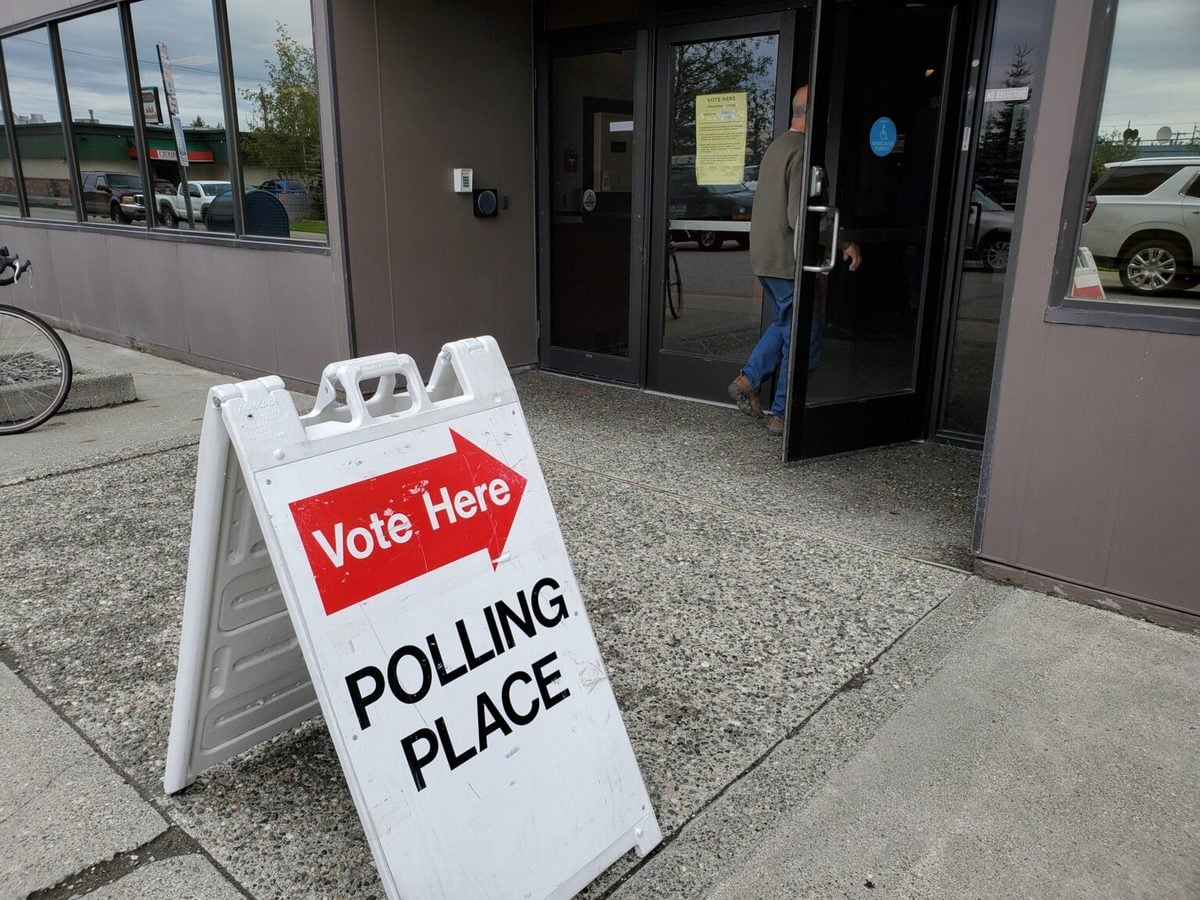
A voter joins a line of voters waiting to cast their ballots on Aug. 15, 2022, at the state Division of Elections office in Anchorage. (Photo by Yereth Rosen/Alaska Beacon)
The Alaska Supreme Court issued a fast-tracked ruling on Thursday, affirming a lower court’s decision that the Alaska Division of Elections’ language for an elections overhaul ballot measure is “true and impartial,” but ordered the division to make one additional change.
The Court issued the ruling days after hearing oral arguments from two groups of plaintiffs on opposing sides of the current ranked-choice voting system. The groups appealed a lower court’s ruling issued in June, challenging the language of Ballot Measure 2 as unclear, politically partisan and containing omissions they sought to change.
Ballot Measure 2, which will appear on the ballot as 24ESEG, would repeal the state’s current ranked choice voting and open primary systems, as well as repeal campaign disclosure rules enacted by voters in 2020.
The Supreme Court ruling Thursday affirmed a Superior Court’s finding that the Alaska Division of Elections’ fulfilled its legal duty in preparing the ballot measure title and summary in a “true and impartial” manner.
But the justices identified one omission: the division must add language that explains if the measure is approved, and nonpartisan, open primaries are eliminated, candidates for Governor and Lieutenant Governor would run for election separately.
Currently, candidates for Governor and Lieutenant Governor run together on a combined ticket in the primary election. The top-four vote getters in the open primary advance to the ranked choice general election.
A spokesperson for the Alaska Department of Law, which defended the division and its ballot measure language in court, said by email Friday they welcomed the ruling and would make the change.
“We are pleased that the Alaska Supreme Court rejected nearly all the challenges to the lieutenant governor’s true and impartial ballot summary,” said Sam Curtis, an information officer. He called the court’s directive a small change.
“The State had considered this a minor detail that did not need to be in a ballot summary, but the Court disagreed,” he said. “The Office of the Lieutenant Governor will issue a revised summary soon.”
The revised language is expected to be published by the division before a ballot printing deadline of Sep. 2.
Both groups of plaintiffs that filed appeals in court expressed mixed reactions, saying they were “disappointed” but “appreciated” the court’s decision.
One group of plaintiffs that also sponsored the ballot measure, called the “Repeal Now” campaign, filed a lawsuit challenging the language in court. Among a series of language changes requested, they had argued for language to explain the governor and lieutenant governor would run separately. Their attorney Julie Pack said by email Thursday they maintained concerns.
“We’re disappointed that the summary will continue to incorrectly state that open primaries would end with Ballot Measure 2,” Pack wrote. “Primaries would remain defaulted at open following Ballot Measure 2’s passage, just like they previously were.”
The group argued, in part, that if approved Alaskans would still vote in “open primaries.”
But the ballot measure language states “the act would get rid of open party primaries.” That’s because if voters approve the measure, the elections system would revert to a partisan primary system in which political parties establish rules governing which candidates may appear on their ballot and which voters may participate.
Voters in the primary would no longer be able to vote for candidates of any party running for statewide and federal offices, as they currently do.
The issue is of particular concern to another group of plaintiffs that filed suit in court, represented by attorney Scott Kendall, who was one of the primary sponsors of the 2020 ballot implementing the current ranked-choice voting system.
He argued the current language on the ballot measure related to how the primaries would change is incomplete.
“Our specific request was that it be made more clear that each political party will have the power to not only close their primaries, but to close them and make it unlawful for undeclareds and nonpartisans to vote,” Kendall said in an interview Friday. “There’s some language in the ballot measure that gestures at that, but I don’t think it really makes it clear.”
Overall Kendall said the group is grateful to the court and division for rejecting language proposed by Repeal Now he called “radical changes.”
“We’re very, very grateful that the court correctly rejected those baseless edits,” he said.
Kendall said the Supreme Court’s added change is “a good one.”
“It wasn’t so much about what’s good policy, bad policy. It was when a voter steps into the booth and picks up the pen, are they equipped with full knowledge of what their yes or no vote means?”
Ballot Measure 2 as currently proposed by the Alaska Division of Elections:
An Act Restoring Political Party Primaries, Ending Ranked Choice-General Elections, and Repealing Recent Campaign Finance Laws
This Act would get rid of open primary elections, where all candidates appear on one ballot. It would also get rid of ranked-choice general elections. It would bring back political party primaries and single-choice general elections. It would also repeal certain campaign finance rules that were added by a 2020 ballot measure.
Elections would occur as they did before open primaries and ranked choice elections. In the primary election, voters would choose a party’s ballot, unless prohibited by the party’s bylaws. They would only vote for candidates on that ballot. The winning candidates from each primary would be the party’s nominee. In the general election, voters would vote for only one candidate in each race. Party petitions, special runoff elections, and other processes would return.
This act would repeal campaign finance rules that were passed in 2020. It would remove the limits on donations to joint campaigns for governor and lieutenant governor. It would remove limits and disclosure rules under current law, including for digital ads, out-of-state donations, undisclosed donations and the true source of donations. It would change the meaning of a campaign expenditure and remove some fines.
Should this initiative become law?
Correction: This story has been updated to clarify that if approved, the ballot measure would enact a partisan primary system where political parties establish rules governing which candidates may appear on their ballot and which voters may participate.
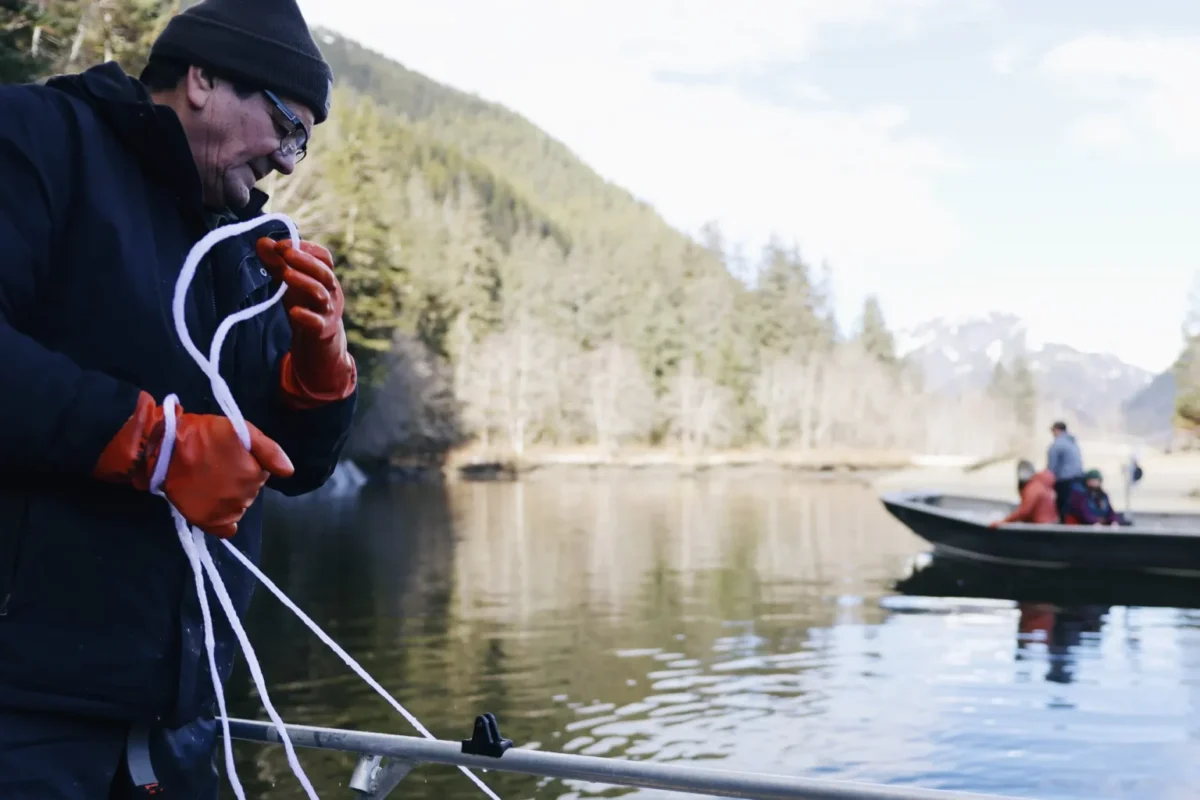
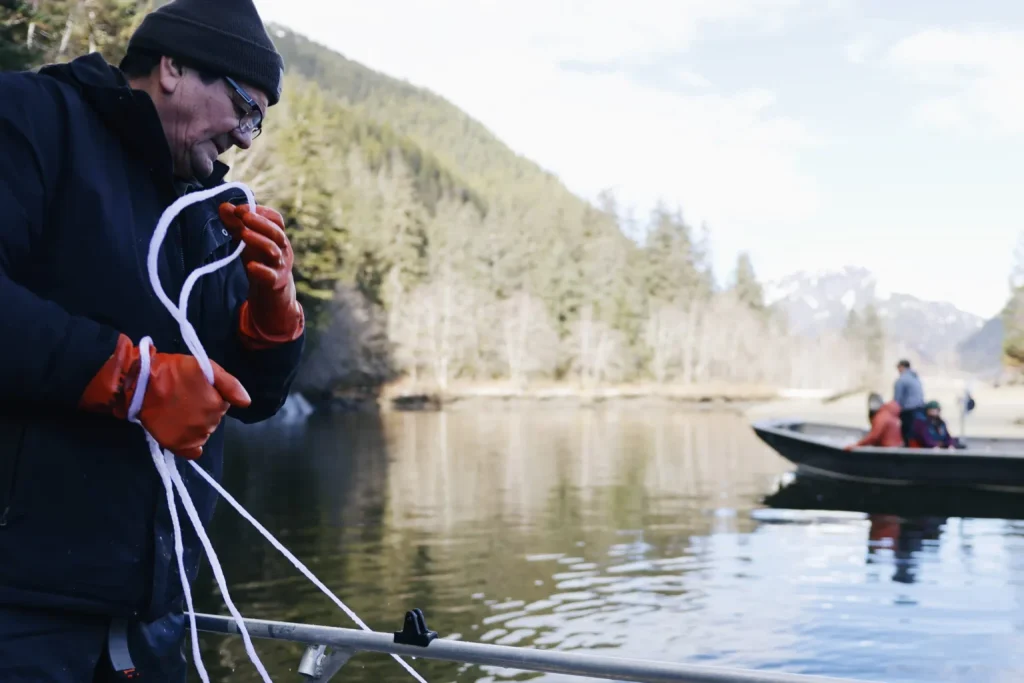
Louis Wagner Jr. pulls up ooligan nets on the Unuk River in southeastern Alaska in March 2024. He and his wife, Cindy Wagner, have fished in the area for years. (Photo by Sonia Luokkala/courtesy of the Southeast Alaska Indigenous Transboundary Commission)
The salmon and the ooligan that spawn in the Unuk and Stikine rivers have no say in the expansion of mining operations in British Columbia. Neither do the Alaskan tribes that live on the same rivers.
The power lies across the border in Canada, where the mining companies and the provincial, federal and Tahltan Nation authorities have joined forces in a modern-day gold rush to expand the Red Chris Mine at the headwaters of the Stikine River. Plans are also underway to restart the idled Eskay Creek Mine on the Unuk River.
The investment of a half-billion Canadian dollars supporting the expansion of the Red Chris mine by Prime Minister Mark Carney’s government has heightened an international conflict between the Native peoples and others in southeastern Alaska and the First Nations people in Canada who support the project.
A pictograph of the rising sun along the Unuk River is thousands of years old and reflects the influence of the Tèiḵwèidi Tlingit Clan of the Sàanyàa Ḵwáan, the people of the Unuk River, according to river advocates. (Photo by Sonia Luokkala/courtesy of the Southeast Alaska Indigenous Transboundary Commission)
Seven tribal nations could be affected by the Eskay Creek Mine, and the Red Chris expansions poses similar threats, according to officials with the Southeast Alaska Indigenous Transboundary Commission, or SEITC, a collective of 14 Haida, Tlingit and Tsimshian nations that have united to uphold stewardship over the lands, waters and sacred sites in their territories.
“The expansion of Red Chris means more risk in the headwaters of a river that has sustained our people since time immemorial, “ said SEITC President Esther Aaltseen Reese, Eagle Tsaagweidí (Killerwhale) from Ḵéex̱ʼ Kwáan (Kake), who lives down river of the Red Chris Mine.
“We are salmon people,” Reese told ICT. “The Stikine is part of who we are. We are already seeing contamination from Red Chris entering waters that feed the Stikine, yet British Columbia approved a major expansion without consulting the tribal nations downstream whose ways of life are on the line.”
The Tahltan Nation, which has agreements in place for both mining projects, did not respond to questions about the project posed by ICT via email.
In November 2025, the SEITC filed a judicial review in the British Columbia supreme court to force “meaningful consultation” with Alaskan tribes on mining projects in the headwaters of the Unuk, Stikine and Taku rivers.
“There is no legal or moral basis for B.C. to exclude our tribes who have deep ancestral ties and relationships to land and territory on both sides of the border,” Reese said in a statement issued at the time. “We deserve a seat at the table when decisions are made upstream that could obliterate our way of life.”
Canada’s Ministry of Environment and Parks responded to ICT questions in a written statement.
“We are not expediting projects at the expense of meeting our consultation obligations or compromising our high standards of environmental protection — we are finding opportunities that can do both in our processes,” according to the statement.
In regards to concerns from Alaskan tribes, officials said, “The matter of consultation with Alaska tribes for the environmental assessment of the Eskay Creek project near the B.C./Alaska border is currently before the courts, we are not able to comment.”
Eskay Creek Mine
The Unuk and Stikine rivers are part of the transboundary watershed, a collection of rivers, streams and tributaries that also include the Taku and Salmon rivers that flow south from British Columbia into Alaska and then on to the Pacific Ocean.
The watershed is crucial spawning grounds for salmon and other fish, and provides sustenance to Indigenous people and others along the rivers.
Cindy Wagner, Haida/Tsimshian, is concerned that the rapid expansion of mining in Canada will have significant environmental impacts on the transboundary watersheds in Alaska.
Louis Wagner Jr., rear left, delivers ooligan with his daughter Lee, center, and wife Cindy in this undated photo. (Photo courtesy of Cindy Wagner)
Wagner, assistant executive director of the SEITC, and her husband, Louis Wagner Jr., live downstream of the Eskay Creek Mine on the Annette Islands Reserve in Alaska on the Unuk River, where she has lived and fished all her life.
She has seen first hand the impact of mining on the Unuk.
The Eskay Creek Mine operated from 1994 to 2008, and the ooligan fishery on the river was closed in 2001. In recent years, ooligan, a small fish also known as eulachon, have begun to return, along with salmon and mackerel.
But she fears that could change with the reopening now underway of the Eskay Creek Mine on a much-larger scale. The mine received its Environmental Assessment Certificate in January.
“This is all for the Unuk River,” Wagner told ICT. “It’s a major salmon river, an ooligan spawning river, a mackerel spawning river, and vital to southeast Alaska.”
Ooligan, shown here, are small fish used in a variety of ways by Indigenous people and others in southeastern Alaska. (Photo by Sonia Luokkala/courtesy of the Southeast Alaska Indigenous Transboundary Commission)
Reese says her people are concerned about a possible overflow or dam breach at the tailings ponds that collect the mining byproducts. In 2014, a breach at the Mount Polley copper and gold mine tailings dam resulted in billions of liters of wastewater spilling into the waterways. The mine is owned by Imperial Metals, which also owns a share of the Red Chris mine.
“Contamination or a failure at Red Chris could travel downstream, across the border, and through one of the most intact salmon systems left in the world,” Reese said. “The cumulative impacts of multiple large mines only magnify that risk.”
A waterway in transition
Tribes on the American side of the border have been living with the impact of mining for decades and fighting, to no avail, to stop expansion, local officials said.
On June 19, however, the province of British Columbia approved the transition of the Red Chris mine from an open-pit mine to a block cave mine that would largely be underground. On July 2, the Canadian government approved the funding support.
The Tahltan Nation in British Columbia has signed on with Red Chris mine’s owners and operators, Newmont Corporation and Imperial Metals, according to a statement from the companies.
The outlook is not as rosy downstream. The Annette Islands Reserve of the Metlakatla Alaska Native Community is Alaska’s only reservation, with other Native lands transferred to Alaska Native Corporations under the Alaska Native Claims Settlement Act, or ANCSA.
The reserve sits on the pristine Alexander Archipelago about 250 miles south of Juneau.
The Tongass rainforest towers over the Unuk River in southeastern Alaska. (Photo by Sonia Luokkala/courtesy of the Southeast Alaska Indigenous Transboundary Commission)
Wagner has lived off the Unuk River for most of her life, and in recent years has been defending Alaska’s waterways against mining development in Canada.
“I have always been fishing, even as a child,” she said. “My parents brought us out, all four of us, on a little 35-foot boat … I met my husband. The first time I helped him was down on his brother’s boat. He was selling ooligan and he didn’t have anyone to help him, and so I helped him.”
Wagner and her husband have always watched the waters of the Unuk River, and taken note of how clean and deep they were, and how the fish changed in appearance and in number. Then, in 1999, after the Eskay Creek Mine began operating, they noticed that industrial waste was piling up in the low part of the river.
“We are way up this river,” Wagner said. “How does a rusted-up oil drum get this far? How does all this plastic and old tarps and old pallets get up here? This looks to be an important part where the moose stepped into the river to get across, and it’s blocked with junk.”
The fish noticed, too, she said.
“In about 2001, we started noticing the ooligan bypassing the Unuk River,” she said.
Ooligan are different from mackerel and salmon, which return to the waters where they were spawned. Ooligan go to where the water is best, she said.
Dramatic escalation
The Unuk River was beginning to recover after the Eskay Creek Mine shut down in 2008, Wagner said, when a mining boom began on the Canadian side, in an area in northwest British Columbia called the “Golden Triangle.”
By 2022, just two mines were in operation, BruceJack and Red Chris. But four mines were proposed, seven were under development and seven more exploration projects were underway, mostly to dig for gold, according to a provincial report on mines. The ore extracted from the ground is processed to pull out the valuable gold and copper that it can contain.
Guy Archibald, executive director of the transboundary commission and a self-described “reformed miner,” said the transition from an open-pit mine to a block cave mine at Red Chris will mean a dramatic escalation involving hydraulic fracturing, known as fracking, a controversial method also used for extracting natural gas.
Archibald said the SEITC member nations “upholding their sovereign rights and defending the transboundary Stikine, Taku and Unuk Rivers from rapidly expanding mining development occurring in the Canadian headwaters.”
An environmental chemist, Archibald has been with the commission since its inception in 2014. Before that, he worked in the uranium industry in southeastern Utah and the oil shale industry in western Colorado in the 1970s and 1980s, he said.
Archibald explained the process behind a block cave mine.
“They’ve mined out the ore body that’s closest to the surface, and in order to go deeper, they’re going to have to access it underground,” he said. “They’re going to drive a ramp underneath the ore body, and then … they’re going to fracture the ore body pretty much the same as they do hydraulic fracturing, fracking for natural gas.”
The crumbled ore falls into the ramp and is carted above ground, he said.
“They’re going to just start scooping it out from the bottom as this cavity, this cave, just naturally collapses in,” he said. “It’s just going to turn into a big crater in the earth, and that’s block cave mining.”
The practice is not new, but in the past, miners would use drilling. With this project, they’ll use fracking.
“Block cave mining has been around for a long time,” Archibald said. “The only difference I see with the way Red Chris is doing it is by doing the hydraulic fracturing from the surface, drilling down and then pumping high pressure water into the ore body to break it up.”
The introduction of fracking to the block cave operation is a major concern to the SEITC. Officials say the mine can’t contain its current tailings, which already end up in the groundwater.
“The studies have been showing the tailings dam leaks into the groundwater 26 percent of its volume every year,” Archibald said. “Those tailings have to be constantly covered with water so that they don’t oxidize and turn acidic. We already have downstream pollution problems in groundwater and surface water…Using more water to frack this ore body is not going to help that situation.”
‘A critical step’
The Red Chris mine operation is a joint venture partnership between the Newmont Corporation, which owns 70 percent, and Imperial Metals, which owns 30 percent.
The Red Chris was one of 18 major projects named by Canada’s Major Projects Office, the new federal department created by the Carney government to push forward his “Build Canada Strong” strategy. The half-billion-dollar investment may be just the beginning.
“With the authorizations granted by the province and the support of the Tahltan Nation, the stage has been set for the development of Red Chris into a Block Cave mine,” Imperial President Brian Kynoch said, following the approval of the British Columbia government. “These approvals are a critical step in advancing a final investment decision by the joint venture partnership.”
Newmont officials welcomed the news in a statement promising that the project would not only increase Canada’s copper production by an estimated 15 percent but that the infrastructure could be a hub for mining for decades.
“The project is expected to extend the life of the current Red Chris mine by approximately 14 years and sets the foundation for decades of potential additional mining,” Newmont stated. “It represents a significant opportunity to create long-term value for Newmont’s shareholders, strengthen critical mineral supply chains, and deliver long-term benefits for local communities, Indigenous partners, British Columbia, and Canada.”
Canada’s Major Projects office is promoting both production and Indigenous participation, stating that the project was “developed in close collaboration with the Tahltan Nation, whose Traditional Territory overlaps directly with the mine site” and that “the project supports reconciliation while strengthening Canada’s role as a reliable supplier of critical minerals.”
Provincial leaders have changed the laws, however, to eliminate participation of U.S. tribes when it comes to environmental impacts. The province passed Bill 15 in April to amend the dispute resolution processes in British Columbia’s Environmental Assessment Act to limit participation of tribes in the U.S. and exclude them as “participating Indigenous nations.”
Archibald says the moves have raised concerns for taxpayers as well.
“Subsidizing the Red Chris just furthers the privatization of profit while transferring the risk on to the taxpayer,” he said. “If Newmont and Imperial Metals can’t afford their own infrastructure, what assurance do we have that adequate funds will be available for long-term tailings management, closure, and cleanup to protect the Stikine River for hundreds of years into the future?”
The Eskay Creek Mine, owned by Skeena Gold + Silver, is an open-pit gold and silver mine that is being redeveloped with a projected 12-year mine life.
In approving the mine’s expansion, British Columbia Premier David Eby hailed the relationship with First Nations.
“Today marks success for yet another multibillion-dollar investment in our province that will deliver prosperity, jobs and stability for all British Columbians, achieved in true partnership with the Tahltan,” Eby said in a Jan. 27, 2026, press release. “Congratulations to all who were involved in this important work. Those who want to end our work with First Nations would not have delivered these thousands of jobs, period. Following their advice would leave us poorer, tied up in court and in a place of uncertainty.
Kerry Carlick, president of the Tahltan Central Government, issued a statement in the same press release.
“This is a hugely important day,” Carlick said. “TCG’s decision to consent to the Eskay Creek Project reflects a historic, precedent-setting process that affirms Tahltan Nation’s authority over development in our Territory, recognized by the Province and Skeena Gold + Silver.”
When asked to comment regarding concerns of Indigenous Alaskans about environmental concerns, a spokesperson for Skeena Gold + Silver responded that they had answered those concerns.
“We have already addressed many questions regarding concerns from the Alaskan groups, as we were going through our permitting process,” Galena Maleger, the vice president of investor relations told ICT in an email. “There is a significant amount of information available online as to how Eskay Creek is adhering to the highest standards in environmental management.”
Looking ahead
Downstream on the Unuk River, Wagner and her husband are already seeing more and more boats hauling material north to the dam site. They can only imagine the size of the massive project based on the garbage that piles up in the river.
Wagner has a message for the Tahltan Nation whose members will profit from the two mines.
“I think they should be more aware of what’s coming down the river, because it’s not staying up there on their territory,” Wagner said. “It’s coming down on my territory, my tribe’s territory, all southeast territory, and we have to deal with it.”
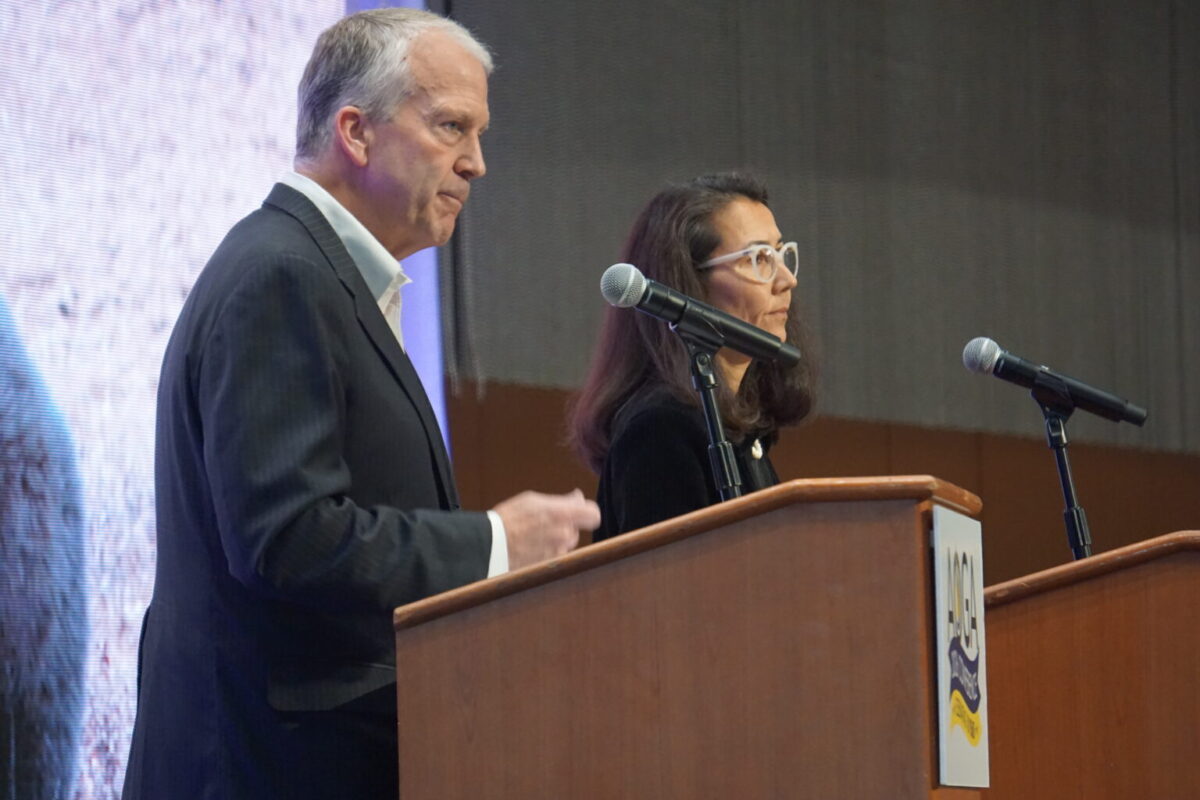
Sen. Dan Sullivan, R-Alaska, and former U.S. Rep. Mary Peltola, D-Alaska, listen to a question at a candidate forum held Aug. 27, 2026, by the Alaska Oil and Gas Association. The Alaska Senate race is considered critical to control of the body, which currently has a Republican majority. (Photo by Yereth Rosen/Alaska Beacon)
In their first faceoff since the Aug. 18 primary election, Republican U.S. Sen. Dan Sullivan used the term “Lower 48 liberal” or some variation of it 16 times to attack his opponent, Democrat Mary Peltola.
U.S. Sen. Dan Sullivan, R-Alaska, speaks at ae U.S. Senate candidate forum held Aug. 27, 2026, at the Alaska Oil and Gas Association Conference in Anchorage. (Photo by Yereth Rosen/Alaska Beacon)
Speaking at a candidate forum held Thursday at the Alaska Oil and Gas Association’s annual conference in Anchorage, Sullivan used nearly every question as an opportunity to tie Peltola, a former U.S. House member, to former Democratic President Joe Biden, whom he accused of maliciously trying to destroy Alaska’s economy.
“My opponents’ liberal Lower 48 anti-Alaska allies in the Congress and the White House were focused on completely shutting down Alaska oil and gas and killing thousands of jobs,” he said.
Sullivan and Peltola are the front-runners among four top vote-getters advancing to the general election. The winner will represent Alaska in the U.S. Senate for a six-year term.
Sullivan claimed Peltola “consistently voted with Lower 48 liberal allies of hers against our interests, and that is why this election is so important.”.
And he warned that a Peltola victory would allow Democrats and environmentalists to resume what he chacterized as deliberate attempts to harm Alaska. They would continue their efforts to block oil development in the Arctic National Wildlife Refuge and impose environmental restrictions on development elsewhere in Alaska, he said.
“If my opponents’ liberal Lower 48 allies get power again, the Democrats, if (Senate Minority Leader) Chuck Schumer is in charge again — she’s committed to supporting them — they will,” he said. “If elected, she would once again empower, vote with, and be beholden to the same far-left politicians who for decades have worked to crush our state.”
The primary election results indicate that Sullivan is facing headwinds as he runs for a third term in the Senate.
Former U.S. Rep. Mary Peltola, D-Alaska, speaks at the U.S. Senate candidate forum held Aug. 27, 2026, at the Alaska Oil and Gas Association Conference in Anchorage.
In the nonpartisan, open primary, Sullivan had about 41.4% of the total vote, 8 percentage points behind Peltola, who was at 49.5%, according to the most recent count, released on Friday.
The race is considered pivotal to control of the Senate, where Republicans currently hold the majority.
Peltola voices support for oil and gas development
At Thursday’s event, Peltola largely refrained from attacking Sullivan directly.
She described herself as pro-development and a champion for the oil industry.
Peltola was the first Alaska Native woman elected to U.S. Congress in 2022, and served a two-year term before being defeated by current U.S. Rep. Nick Begich III in 2024.
At the event, she took credit for winning approval for ConocoPhillips’ huge Willow project on the North Slope from a reluctant President Biden.
She is “proud of the work that I did within the Biden administration to talk about Willow in a way that they could understand,” she said. “And we moved Willow forward, thanks to me.”
Sullivan took issue with that statement, pointing out that Willow development had been approved in the first Trump administration, before Peltola was elected to the House. However, a court ruling in 2021 overturned that Trump approval, finding it to be based on flawed analysis that violated federal law. That left the decision about Willow approval up to the new Biden administration.
Peltola, in line with a message common among Alaska Republicans, used several remarks at the forum to criticize Lower 48 regulators whom she said do not understand Alaska conditions. Among those conditions are seasonal restrictions, she said.
“Our construction windows are so short in Alaska. They’re like nowhere else. Developing in the Arctic is so unique,” she said. “If we miss a barge, that can cause a year’s delay or two years’ delay. if we miss a shipping window that can have devastating effects for the life of the project.”
Overall, Peltola lauded the Alaska oil industry as critical to the state and its economy.
Mary Peltola listens to a question posed by moderator Michelle Egan at a candidate forum held by the Alaska Oii and Gas Association on Aug. 27, 2026. Next to Peltola is i Sen. Dan Sullivan. Peltola, a Democrat and former U.S. House member, is challenging Sullivan. (Photo by Yereth Rosen/Alaska Beacon)
“You know, over 80% of the oil revenues, of the revenues that state of Alaska operates with are generated by oil and gas and in large part the Trans Alaska Pipeline,” she said.
That percentage is outdated, however. Oil royalties, taxes and fees once provided as much as 90% of the money used for state government operations, that percentage has diminished over time. As of December, oil royalties, taxes and fees provided only about a quarter of the unrestricted general funds, according to the Alaska Department of Revenue. Investment earnings of the Alaska Permanent Fund, the state’s sovereign wealth fund that was established with oil revenues, actually provide the majority of unrestricted-use revenues, and that has been the case for several years.
In many of her remarks at the AOGA forum, Peltola had somewhat similar comments to those Sullivan made. She lobbed a bit of criticism at the Biden administration. Her specific target was former Interior Secretary Deb Haaland.
Peltola faulted Sullivan for voting to confirm Haaland, the first Native American to serve in that position. She claimed Haaland was “one of the biggest stumbling blocks Alaska has ever seen.”“We need to make sure that we’re confirming secretaries that are going to understand our mission and not be roadblocks and not be activists,” she said.
Haaland, a Laguna of Pueblo tribal member, is now running for governor in New Mexico. While serving as Interior Secretary, she visited Alaska and spoke at the Alaska Federation of Natives conventions and was celebrated by that organization.
Most of the AOGA event focused on issues directly related to the oil industry. High-profile issues like inflation, healthcare policy and the Iran war and their effects on Alaskans were not discussed.
Peltola did slip in a mention of fisheries issues, which have become a hot debate topic in this year’s election.
She said she worked to prevent an Endangered Species Act listing for Alaska Chinook salmon, and that such a listing would have had unintended ripple effects on other fisheries. Other species of salmon, such as sockeyes and chums, swim with Chinook salmon, she said. “If we preclude Alaskans from being able to harvest Chinook, that means we’re precluding them from harvesting just about everything during the summer,” she said.
Trump administration impacts
Peltola also voiced a specific criticism of the Trump administration.
The mass federal government firings carried out through the administration’s so-called Department of Government Efficiency, or DOGE, exacerbated staffing shortages that were already slowing needed federal services in Alaska – including permitting for development projects, she said.
Sen. Dan Sullivan, R-Alaska, and U.S. Energy Secretary Chris Wright confer during a panel discussion at the Alaska Oil and Gas Association annual convention iin Anchoroage on Aug 27, 2026. Photo by Yereth Rosen/Alaska Beacon)
“DOGE impacted Alaska more than any other state, and no other state is more impacted by our federal agencies and our federal employees in Alaska,” she said. “No other state is as dependent on the decisions and the work of our federal employees as Alaska is. We’ve got to fully staff all of our agencies from top to bottom.”
Sullivan has tied himself closely to the Trump administration, delivering effusive praise for the president and his cabinet members. As he has elsewhere, he spoke at the forum of his close relationship with Trump and said he has helped the president focus on pro-development Alaska policies.
“We were able to get the Trump administration, who issued an executive order on day one to unleash Alaska’s extraordinary resource potential,” he said, referring to an order that overturned Biden-era environmental protections around the state.
Trump administration cabinet members, in turn, have praised Sulivan in their recent visits to Alaska and described him as a close Trump ally.
One was U.S. Energy Secretary Chris Wright, a keynote speaker at the AOGA conference. In his speech to the industry audience on Thursday, he said Sullivan has been a staunch ally of oil developers and the Trump efforts to reverse past environmental policies and deemphasize renewable energy in favor of oil, natural gas and coal.
He said Sullivan and the other two members of Alaska’s all-Republican congressional delegation, with their defense of fossil fuel production, “have been there in a battle to try to roll back some of these choosing-expensive-energy policies that have so burdened Americans.”
Earlier in the month, at an airport stop during a tour of Alaska, U.S. Homeland Security Secretary Markwayne Mullin also praised the senator.
“No one advocates for Alaska and what is the need today and the future buildout of what it’s going to look like down the road than Dan does,” Mullin said during a brief airport news conference on Aug. 11 with Sullivan and the commandant of the U.S Coast Guard. “It’s amazing, because he’s got such a good relationship with the president, which, that’s vital to be able to get something done.”
But support among voters has declined. Recent polling puts Trump’s national approval rating below 40% and indicates that he has net disapproval in almost all states, including Alaska.
U.S. House candidates speak
Candidates in Alaska’s other federal race, the contest for the state’s sole U.S. House seat, met later in the day for what turned out to be a more congenial and low-key forum.
U.S. Rep. Nick Begich III, R-Alaska, listens to a question at an Anchorage candidate forum held Aug. 27, 2026, by the Alaska Oil and Gas Association. Next to him is his challenger, independent candidate Bill Hill. (Photo by Yereth Rosen/Alaska Beacon)
Incumbent Rep. Nick Begich III, R-Alaska, and independent challenger Bill Hill delivered largely similar messages on what they said was a need for regulatory certainty, development opportunity and the benefits of oil and gas production in the state.
Begich used the forum to talk about what he said were his successes during his first term in office. Begich has also aligned closely with President Trump and his administration.
“I’m only one member of the United States House out of 435, but we have delivered historic wins for our great state,” he said.
He cited numerous bills that mandate more oil drilling and other resource development on public lands in Alaska. Those successes, he said, included opening the Arctic National Wildlife Refuge to oil development and winning a higher share of future royalties from oil produced on federal land. Those victories “are 50-year objectives” that generations of Alaskans have tried to achieve, he said.
“I’m also proud to report that I’ve passed more legislation into law than any other member of Congress in the 119th Congress,” he said. “I’m also proud to report that we have passed more legislation, had more legislative wins than any freshman in House history.”
Begich, though a Republican and an ally of President Trump, is a member of a Democratic family active in Alaska politics. His grandfather, also named Nick Begich, was a Democratic U.S. House member who died in a plane crash in 1972. One of his uncles, Mark Begich, was Anchorage’s mayor and served one term as a Democratic U.S. senator. Another uncle, former state Sen. Tom Begich, is currently a Democratic candidate for governor.
Hill, a former teacher and school superintendent whom polls indicate is not well known among a wide swath of Alaska voters, used the forum to describe his biography.
He is a Dena’ina Athabascan from the Bristol Bay region and has fished commercially since he was 8 years old, he told the AOGA audience. He worked as a construction worker, spent 25 years working in education and is the owner of a small business, he said.
Hill said he is grateful for the benefits that oil development has brought to the state.
“As a young kid, I worried about the idea that I would have to fly out of my home community of Kokhanok to attend high school,” he said, naming the Iliamna Lake village where he grew up. “But then the oil and gas industry came to Alaska. It transformed Alaska. It transformed opportunities in Alaska.”
Independent candidate Bill Hill, a former teacher and school superintendent from Bristol Bya, speaks at a U.S. House candidate forum held Aug. 27, 2026, by the Alaska Oil and Gas Association. (Photo by Yereth Rosen/Alaska Beacon)
Oil revenues paid for schools, services like water and sewer systems and produced a Permanent Fund dividend program that has transformed Alaskans’ lives, he said.
“So I am a product of the oil and gas industry,” he said.
As an independent, he would be in position to work effectively if control of the administrative or legislative branches switched in the midterms or later, he said.
“We can weather the swings between administrations. Part of that requires having somebody who can work across party lines, and I would like to do that work for you,” he said.
The forum ended on a friendly note, with both candidates naming their preferred fish — red salmon for Begich, Bristol Bay salmon for Hill — and discussing their affinities for muktuk and pilot bread, two iconic Alaska food items.
But the morning after the forum, the National Republican Congressional Committee issued a news release attacking Hill as an anti-fossil fuel “radical” who wants Alaska to transition from its oil dependence.
“Liberal Bill Hill wants to bring back Biden’s failed energy policies and put D.C. Democrats ahead of Alaskans. Hill’s radical agenda would raise costs, crush Alaska’s economy, and kill jobs. Liberal Bill Hill will be resoundingly rejected this fall,” committee spokesperson Zach Bannon said in the statement.
As of Friday, Begich had 44.6% of the vote in the open primary, while Hill had 32.5%, according to the Division of Elections. Matt Schultz, a Democrat who suspended his campaign in July and threw his support to Hill, had 8.1%, according to the results. He has now officially withdrawn from the race. In third place is Eric Hafner, a Democrat currently serving a federal prison sentence in New York, with 3.8% of the vote. Democrat John Williams got 2.7% of the vote and fourth place, advancing to the general election in November.
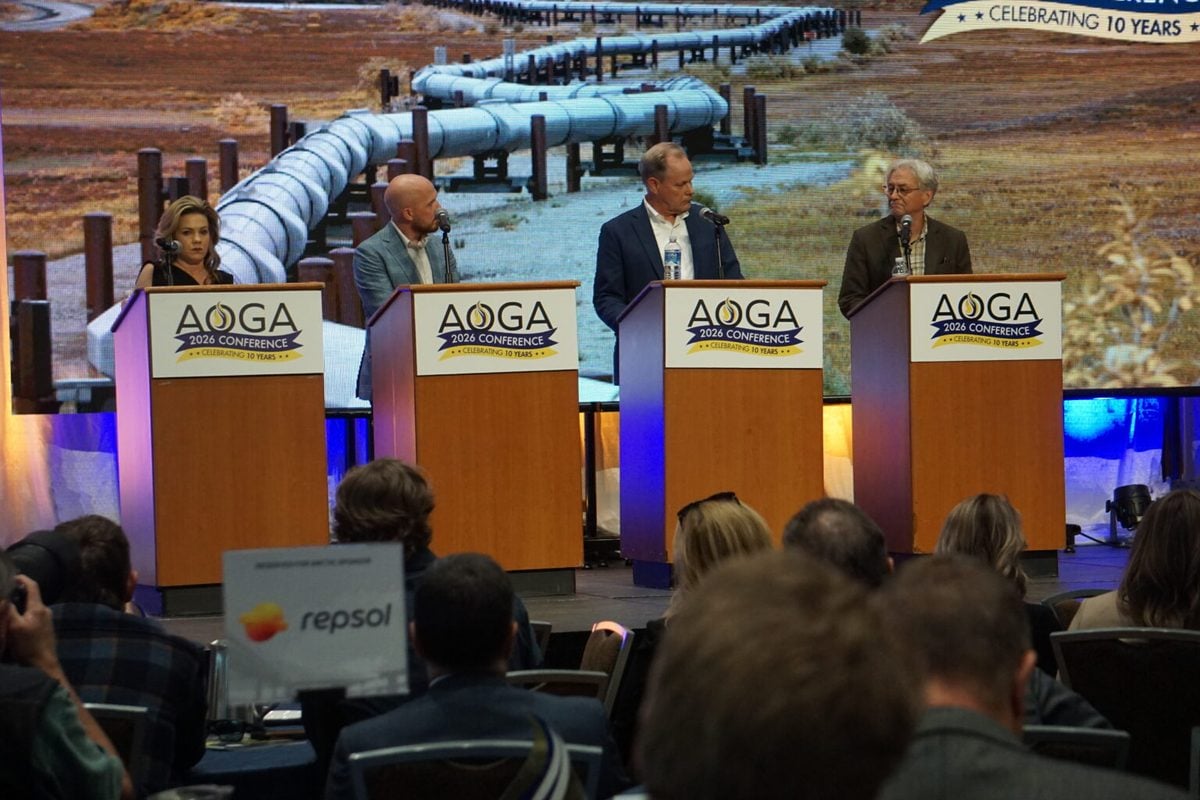
U.S. Sen. Dan Sullivan, R-Alaska, and his wife, Julie Fate Sullivan, listen to the U.S. House candidate forum held Aug. 27, 2026, by the Alaska Oil and Gas Association. On the stage are independent candidate Bill Hill, iincumbent U.S. Rep. Nick Begich, R-Alaska, and moderatoro Tara Sweeney. (Photo by Yereth Rosen/Alaska Beacon)
The four gubernatorial candidates emerging from Alaska’s open primary gathered on the stage on Aug. 26, 2026 at the annual conference held by the Alaska Oil and Gas Association. From left are Republican Bernadette Wilson, Democrat Jonathan Kreiss-Tompkins, Republican Dave Bronson and Democrat Tom Begich. (Photo by Yereth Rosen/Alaska Beacon)
At their first candidate forum since the Aug. 18 primary election, the four remaining gubernatorial hopefuls pitched visions for the state’s future that revealed sharp political divides.
Speaking at the event, held at the Alaska Oil and Gas Association’s annual conference in Anchorage, were Democrats Jonathan Kreiss-Tomkins and Tom Begich and Republicans Bernadette Wilson and Dave Bronson. Kreiss-Tomkins has been leading in the still-ongoing primary election vote count, with 22.2 %, followed by Begich at 20.5%, Wilson at 10.2% and Bronson at 8.2%.
The four emerged as the top vote-getters among 17 candidates for governor. Alaska’s election system uses open, non-partisan primaries and ranked choice voting in the general election.
Kreiss-Tomkins and Begich, both former state legislators, presented mostly similar positions. Wilson, a talk-show host, and Bronson, a former Anchorage mayor, also presented largely similar positions that contrasted with the Democrats’ views.
Oil and gas taxes figured prominently in the event.
Democrat Tom Begich speaks at an Aug. 26, 2026, forum held by the Alaska Oil and Gas Association. (Photo by Yereth Rosen/Alaska Beacon)
Both Democrats told the petroleum industry audience that they favored changes that would bring the state more revenues from oil producers. Their plans include a statewide corporate income tax on oil producers that are S corporations, also known as pass-through corporations, that currently do not pay them.
The main company affected by such a tax would be Hilcorp, a privately held company based in Texas that is a major Alaska producer. As of 2020, Hilcorp had acquired all of BP’s Alaska assets when that oil giant left the state, and now it operates Alaska’s largest oil field in Prudhoe Bay, among others. Unlike BP, Hilcorp pays no corporate income tax to the state. Legislative leaders have been pushing to change that.
Hilcorp is also a main sponsor of the AOGA conference.
Begich said a tax on S corporations and other changes to the state’s tax system would bring in an extra $400 million to the treasury each year.
He acknowledged that the oil industry crowd might not like those changes at first. But ultimately, “it will be forward-thinking for private investment,” he said. “If we have that revenue coming in, we can improve our education system. We can improve our economy in general and make our energy significantly more affordable up here. In doing that, you’re going to attract people to this state.”
Kreiss-Tomkins said all sectors, including the oil industry, will have to contribute taxes to correct a structural deficit problem in Alaska that, for now, threatens to wipe out the state’s savings.
“I am pro-math, and math just doesn’t lie. And balancing a budget is ultimately a math problem, and I think you have to be clear-eyed about where the state is,” he said. Compromises will be needed to address that, including compromises from the oil industry, he added.
Wilson and Bronson, in contrast, said they adamantly oppose tax changes that would wring more revenue out of the oil industry.
Wilson called for deep slashes to the state budget.
Former Anchorage Mayor Dave Bronson, a Republican who finished fourth in the open primary election, speaks at a gubernatorial candidate forum held on Aug. 26, 2026, by the Alaska Oil and Gas Association. Next to him is former state lawmaker Jonathan Kreiss-Tompkins, a Democratic candidate who received the most votes in the open primary. (Photo by Yereth Rosen/Alaska Beacon)
“We do not have a revenue problem in this state. We have a spending problem in this state,” she said.
“The reality is we need to come into this budget, and we need to DOGE the heck out of it,” she said, referring to the mass firings and cuts imposed by the Trump administration through the so-called Department of Government Efficiency, or DOGE.
Bronson said Alaska has made too many changes already to its oil and gas tax system, and that “changing the rules of the game and the tax structure midway through” scares off investment.
“The reality is we don’t have a whole lot of businesses that are lining up to do business with Alaska,” he said.
Both Wilson and Bronson accused the state legislature of blocking a proposed massive natural gas pipeline that would carry product from the North Slope about 800 miles to a yet-unbuilt liquefaction plant in Southcentral Alaska, known as the AKLNG project
There have been efforts over the past half century to build such a pipeline, but none have been economic. In pushing the latest version, Gov. Mike Dunleavy called the legislature into three special sessions this summer to try to get them to approve sweeping tax concessions for the investment company now involved with the project, the Glenfarne Group. Lawmakers ultimately rejected Dunleavy’s demands.
Wilson said the Glenfarne plan pushed by Dunleavy, unlike all other plans over the past half century, made economic sense, but lawmakers blocked it.
“You had a couple of legislators specifically that are hell bent on seeing Alaska fail. That’s why you don’t have a gas line,” she said.
Bronson drew a similar conclusion.
Bernadette Wilson, a Republican candidate for governor, listens to a question at an Aug. 26, 2026, forum held by the Alaska Oil and Gas Association. (Photo by Yereth Rosen/Alaska Beacon)
“We’ve got personal animosities in Juneau, and it comes down to just a few people that are shutting that project down,” he said.
Glenfarne, like Hilcorp, is a sponsor of the AOGA conference.
Kreiss-Tomkins and Begich, in turn, criticized Dunleavy, describing his policies as a major reason why Alaska has had more people leave the state than move to it for 13 consecutive years – the most ever recorded. They were particularly critical of his policies on education.
Under Dunleavy, they said, Alaska has stagnated.
“This governor has just set a record for the most number of vetoes by any governor in Alaska history since we became a state,” Kreiss-Tomkins said. “That is a sign of political failure, not political success.”
This year, Dunleavy set the record for the most vetoes by an Alaska governor in a single two-year Legislature, while the number of bills passed has also dropped significantly in recent years.
Candidates also discussed national politics at the forum. The two Republican candidates aligned themselves with President Donald Trump, and they portrayed themselves as hard-liners.
“I’m a hardcore conservative, and I’m proud of that,” said Bronson, who described the differences between candidates as stark.
“We’re at an inflection point in this country and in this state, in this election,” he said. “You can choose socialism. . .Or you can choose capitalism. That’s the choice in this race right now.
U.S. Rep. Nick Begich, R-Alaska, listens to gubernatorial candidates at an Aug. 26, 2026, forum held by the Alaska Oil and Gas Association. One of the candidate speaking was his uncle, former state Sen. Tom Begich, a Democrat. Tom Begich mentioned the family relationship during the forum. Nick Begich is running for re-election. (Photo by Yereth Rosen/Alaska Beacon)
Wilson said the biggest danger to the state came from two of the three men who shared the stage with her.
“The greatest policy threat is, God forbid, this state elect a Democrat to this governor’s office.” she said. Wilson said Democratic Party policies regarding oil and gas “are the greatest threat to this industry.” She urged the audience to stick with Republicans and take advantage of the next two years of the Trump administration.
In contrast, the two Democrats emphasized consensus-building.
“Beyond a doubt, I disagree with Bernadette,” Begich quipped in comments directly following those by Wilson.
More broadly, Begich spoke about his approach to governing. While the governor has a responsibility to “be an advocate for the state of Alaska at all times,” including pushing back against the federal government, if necessary, that does not mean unrelenting combativeness, he said.
“What I won’t do is use the state’s power to attack people that are not even living in our state. I think that’s ridiculous,” he said.
Kreiss-Tomkins took a similar tone. He spoke of his time serving in a bipartisan coalition in the legislature that “set aside the more fringe and polarizing issues that I think often bring government and the legislature to a standstill” and prevent progress.
“That is a North Star principle for me. . .trying to find compromise, trying to work from a common-sense, common-ground agenda and get things done to move the state forward,” he said.
Ballots are still being counted, but the top four candidates for governor are unlikely to change. The Division of Elections’ primary election schedule calls for all absentee and questioned ballots to be counted within 10 days of the primary, resulting in a deadline of Aug. 28. The results are to be certified on Aug. 31, which is also the deadline for candidates to drop out.
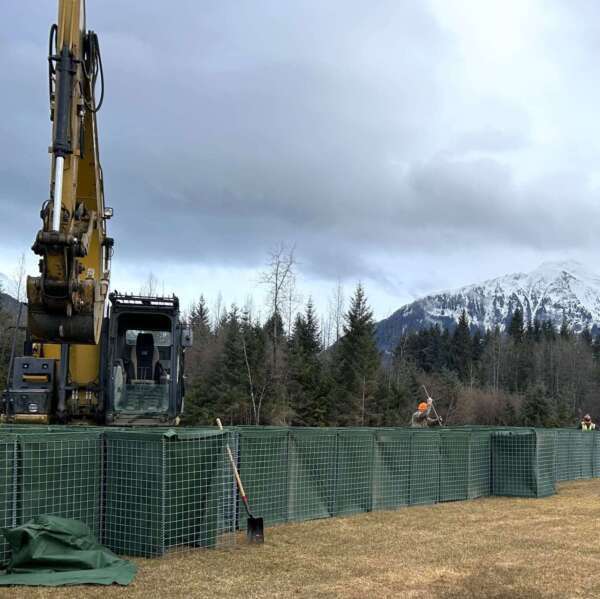
Photo provided by CBJ following the installation of the HESCO barrier project
Photo provided by CBJ following the installation of the HESCO barrier project
NOTN- A memo from City Manager Katie Koester says the city could be responsible for 25% of the cost of an accelerated Army Corps of Engineers project, rather than the 10% local share associated with previous proposals.
First reported by the Juneau Independent, Koester writes Juneau could establish a new service area and tax to help pay for ongoing flood protection and the city’s share of a permanent solution to the annual glacial lake outburst floods.
The Assembly Committee of the Whole will meet on Monday to discuss.
The city has spent millions of dollars on temporary flood protection, including HESCO barriers, while the U.S. Army Corps of Engineers pursues a permanent solution for annual flooding from Suicide Basin.
Koester said the Corps is seeking proposals from industry for an emergency water conveyance prototype capable of permanently addressing the floods. The goal is to keep water levels in Suicide Basin below 1,100 feet so any eventual release would be significantly smaller.
The project is being pursued under the federal Flood Control and Coastal Emergencies authority, which allows for a faster process but requires a 25% local share of construction costs for permanent flood control projects.
The city is working with Alaska’s congressional delegation to change that cost share to 10%, similar to the federal share available for projects involving tribal lands.
The total cost of a permanent project has not yet been determined, but the city expects it to exceed the amount currently available through the federal emergency account. The account receives about $40 million annually for flood control projects nationwide, meaning Juneau will need to advocate for additional federal funding.
Koester recommends the Assembly consider putting a bond or debt proposition before voters once the Corps provides a more reliable estimate of the project’s total cost.
In the meantime, Juneau is continuing to spend money on temporary protections. Nearly $50 million in federal, state and local funding was spent this summer on flood mitigation in the Mendenhall Valley, according to the memo.
Koester said the city expects to remain responsible for regular HESCO maintenance, including inspections, repairs from settling, responding to vandalism and refilling the barriers. The city also must continue coordinating with homeowners, maintaining property access and handling permitting.
She writes the work has also diverted city staff and resources from other projects, according to the memo.
One option under consideration is creating a service area with its own mill rate to fund flood protection and related services. The tax could apply either to properties within the protected area or citywide.
A service area would require approval by voters living within its boundaries. Koester said a citywide property or sales tax could also be appropriate because the annual floods have been characterized as an existential threat to Juneau as a whole, rather than a localized disaster affecting only the Mendenhall Valley.
Koester also recommended that the city push the Alaska Legislature to make construction of a lake emergency water conveyance prototype a state priority during the next legislative session, which begins in January.
CBJ- Capital City Fire Rescue and the Juneau Police Department are launching a new app designed to connect CPR-trained residents with people experiencing cardiac arrest.
The Capital City Fire Rescue and Juneau Police Department Communications Center is launching PulsePoint Respond in Juneau on Tuesday, September 1.
PulsePoint is a free mobile application designed to connect CPR-trained community members with people experiencing cardiac arrest before professional responders arrive on the scene.
“Our firefighters and paramedics are trained and equipped to provide advanced care, but there is an unavoidable period between the 9-1-1 call and our arrival,” said Andrew Pantiskas, Division Chief of Emergency Medical Services for Capital City Fire Rescue. “While our crews are responding, a nearby citizen can make a tremendous difference.”
Media and members of the public are invited to learn more about PulsePoint Respond at the launch event on Tuesday, September 1 at 9 a.m. in the Elizabeth Peratrovich Hall.
PulsePoint Respond alerts registered CPR-trained users when a cardiac arrest is reported near the user’s location. Users who receive an alert can:
Recognize that a cardiac arrest is occurring nearby.
Respond to the location when it is safe to do so.
Begin CPR until professional responders arrive.
Locate and retrieve a nearby automated external defibrillator (AED).
Provide potentially lifesaving assistance during the critical first minutes of a cardiac arrest.
PulsePoint does not replace calling 9-1-1 or professional emergency medical services. Members of the public should still call 9-1-1 and follow the instructions of the public safety dispatcher.
Why Bystander CPR Matters
Nationally, hundreds of thousands of out-of-hospital cardiac arrests occur each year. While less than 50% of cardiac arrest victims get help before emergency responders arrive, immediate bystander CPR can significantly improve a person’s chance of survival.
Pantiskas advises that the most important thing that can be done during a cardiac arrest is to start CPR and get a defibrillator to the patient as quickly as possible.
For Juneau, PulsePoint is another tool to help close the gap between the moment a cardiac arrest occurs and the arrival of professional responders.
How to Participate
Residents who are CPR-trained and willing to assist can download PulsePoint Respond through the Apple App Store or Google Play, follow their local emergency response agency (“Capital City FR” in Juneau), and indicate that they are CPR-trained and willing to respond to nearby cardiac arrest alerts.
Voters at Anchorage City Hall wait in line to cast their ballots on Nov. 4, 2024, the day before Election Day. City hall, in downtown Anchorage, was one of the designated early voting sites in the state’s largest city. (Photo by Yereth Rosen/Alaska Beacon)
The Alaska Supreme Court heard oral arguments on Tuesday on legal challenges brought by two groups on opposing sides of the state’s current ranked choice voting election system. The two groups of plaintiffs brought lawsuits against the Alaska Division of Elections challenging the language of a ballot measure, set to go before voters in November, abolishing the voting method along with other changes.
Ballot Measure 2, which will appear on the ballot as 24ESEG, would overhaul the state’s elections system via three major components: repeal ranked choice voting; rescind the nonpartisan, open primary system; and repeal campaign disclosure rules enacted by voters in 2020.
A Superior Court ruled in June that the state’s ballot summary was “true and impartial,” siding with the Alaska Division of Elections, overseen by Lt. Gov. Nancy Dahlstrom.
Plaintiffs have appealed that decision to the Alaska Supreme Court, which is expected to issue a fast-tracked ruling before a division deadline of Sept. 2 to print general election ballots.
The Alaska Supreme Court heard oral arguments in a case challenging the Alaska Division of Elections’ language of a ballot measure that would overhaul state elections on Aug. 25, 2026. (Screenshot of hearing via Gavel Alaska)
One group of plaintiffs are represented by attorney Scott Kendall, an author of the 2020 ballot measure implementing Alaska’s ranked choice voting and open primary system. They argued that the current ballot measure language is unclear, partisan and omits serious implications of the repeal effort.
The other group of plaintiffs, drafters of the measure, is called the “Repeal Now” campaign. The measure’s primary sponsors are Republican gubernatorial candidate Bernadette Wilson, along with former Anchorage library director Judy Eledge and former Alaska House Rep. Ken McCarty of Eagle River.
In court, attorneys representing Repeal Now argued against the lawsuits being combined and for a series of language changes, including changing of the term “repeal,” which they say is not easily understood by voters, and the term “true source” of campaign disclosures as “inflammatory partisan suasion.”
Under Alaska law, the division is required to prepare a ballot measure with a “true and impartial” summary of the proposed law. It must be “free from misleading tendency, whether the amplification, of omission, or of fallacy, and … must contain no partisan coloring.”
In the June ruling, a Superior Court judge found the division fulfilled its legal obligation and “if ballot summary language is true and impartial, the Court will not invalidate the language just because better language could be written.”
On Tuesday, the division, represented by attorney Laura Fox with the Alaska Department of Law, argued that the ballot language could be edited thousands of ways, but the division fulfilled its legal duty and prepared the ballot with a “true and impartial” summary and title.
“This case is not an editing exercise,” Fox argued. “We’re not assembled here as a big team of editors trying to polish a piece of writing by committee, as fun as that might be. Instead, the question here is just whether the summary clears the basic hurdle of being true and impartial. Because it does, the court should affirm.”
The Alaska Supreme Court justices will either uphold the lower court’s decision or order the division to revise the language. They’re expected to issue a ruling before Sept. 2 and then follow sometime later with an extended legal opinion.
Timeline of ballot measure and legal challenges
Alaska voters narrowly rejected a similar initiative to repeal ranked choice voting in 2024. Proponents quickly restarted the campaign in 2025, collecting more than 34,000 signatures to again place the question on the ballot in 2026. The division first published the ballot language last December.
A group of plaintiffs represented by Kendall filed a lawsuit challenging the ballot language in January. Plaintiffs include Anchorage Republican Sen. Cathy Giessel, AFL-CIO union president Joelle Hall, and former member of the Juneau Borough Assembly and vice president of Ocean Conservancy ‘Wáahlaal Gidaak Barbara Blake. They argued the ballot language was biased and inaccurate.
The division subsequently revised the ballot language in February with significant changes to the title and summary. The plaintiffs dropped the lawsuit without prejudice, according to court documents.
In mid-February, the Repeal Now group filed a lawsuit challenging the new language, arguing “opponents got their preferred language” adding the term “repeal” three times, and the summary was not “true and impartial.”
Giessel and fellow plaintiffs filed a new lawsuit, and the two suits were consolidated by the Superior Court judge in April.
Both groups of plaintiffs filed suggested ballot language with the court, and the state filed a motion defending their ballot language.
Court arguments
On Tuesday, Kendall argued before the Supreme Court that the ballot language should be a clear map for voters to understand what the measure does.
“But the state’s language here isn’t a map. It’s effectively an obstacle course where a voter can only understand Ballot Measure 2 by doing independent research outside the four corners of the ballot language. The state’s language is unclear, contains partisan suasion, and omits details that would give voters significant pause,” he said.
In particular, Kendall raised concerns the ballot measure does not clarify that if passed, nonpartisan or Independent voters would be excluded from voting in party primaries, unless registered with that party.
“It fails to make clear that Ballot Measure 2 specifically empowers political parties at the stroke of a pen to make it illegal for undeclared and nonpartisans to vote in the primary election,” he said. “I think voters need to be put on notice, especially the two-thirds of voters that don’t belong to either party, that you may not be able to vote in the primary election at all.”
Kendall also argued the language related to campaign finance disclosure rules was inadequate, and fails to give details of the implications.
If passed, the measure would repeal campaign disclosure rules and limits enacted by the ballot measure passed in 2020, including rules that individuals and entities who contribute more than $2,000 to candidates or campaigns must disclose the true source, as defined by law.
Attorney Julie Pack, representing the group of plaintiffs with the Repeal Now campaign and supporting the ballot measure, argued against the use of the term “repeal” because she said campaigners collecting signatures for the ballot measure found voters were not familiar with the term.
“Many people do not use that word on a daily basis. It’s not common parlance. It is for lawyers. It’s not for people who are not lawyers, and it’s not a term that is readily understood,” she said.
Justices pushed back, pointing out the term is in the name of their organization.
“My organization named itself before they canvassed, got all the signatures, talked to over 31,000 Alaskans, and understood that repeal is not a word that lots of people understand,” she replied. “So my client named itself before it learned that repeal is a term that’s mildly to moderately sophisticated.”
“There is no need to use words that are sophisticated,” she added. “When ‘redo,’ ‘remove,’ ‘undo,’ ‘get rid of’ are perfectly fine, and they would protect Alaskan voters’ right to know what they’re voting on.”
Pack also raised concerns with the term “true source” related to campaign finance disclosures, and argued the measure would maintain “open primaries.”
Arguing on behalf of the Division of Elections, Fox urged the justices to reject the plaintiffs arguments and affirm the lower court’s decision that the division met its legal obligations and should print the ballot measure as is.
Ballot Measure 2 as currently proposed by the Alaska Division of Elections:
An Act Restoring Political Party Primaries, Ending Ranked Choice-General Elections, and Repealing Recent Campaign Finance Laws
This Act would get rid of open primary elections, where all candidates appear on one ballot. It would also get rid of ranked-choice general elections. It would bring back political party primaries and single-choice general elections. It would also repeal certain campaign finance rules that were added by a 2020 ballot measure.
Elections would occur as they did before open primaries and ranked choice elections. In the primary election, voters would choose a party’s ballot, unless prohibited by the party’s bylaws. They would only vote for candidates on that ballot. The winning candidates from each primary would be the party’s nominee. In the general election, voters would vote for only one candidate in each race. Party petitions, special runoff elections, and other processes would return.
This act would repeal campaign finance rules that were passed in 2020. It would remove the limits on donations to joint campaigns for governor and lieutenant governor. It would remove limits and disclosure rules under current law, including for digital ads, out-of-state donations, undisclosed donations and the true source of donations. It would change the meaning of a campaign expenditure and remove some fines.
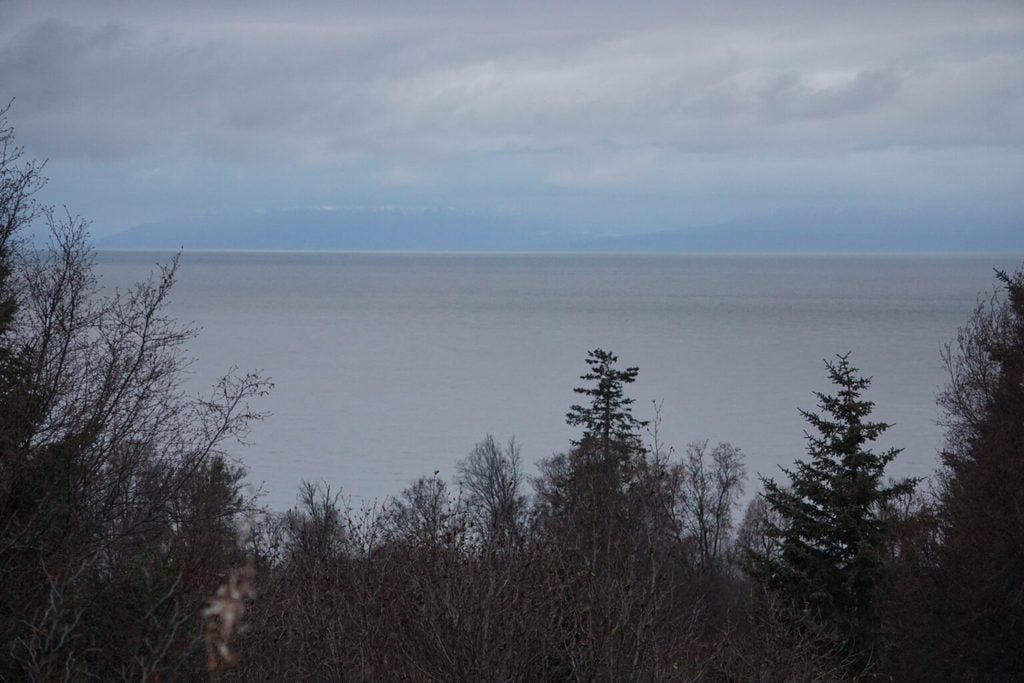
Cook Inlet near Clam Gulch is seen on Oct. 23, 2025. (Photo by Yereth Rosen/Alaska Beacon)
State and industry officials and the U.S. Coast Guard were responding on Tuesday to an unexplained oil spill roughly 60 miles southwest of Anchorage in Southcentral Alaska’s Cook Inlet.
The spill, which produced a long oil sheen on the water near the Trading Bay area on the western side of the inlet, was first spotted by a pilot on Monday. His report prompted a multiagency response.
The multiagency unified command is composed of the Alaska Department of Environmental Conservation, the U.S. Coast Guard and Hilcorp, the dominant oil and gas operator in Cook Inlet.
The sheen was seen near the idled Spark platform, one of 17 oil and gas platforms in the inlet. Six of those, including Spark, are now inactive. The Spark platform was acquired by Hilcorp as part of its 2012 purchase of Marathon Oil’s Cook Inlet assets. It has been inactive since 1992, said a statement issued by the unified command responding to the spill. The wells associated with the Spark platform were plugged and abandoned by a previous owner in 2009, the statement said.
As of Tuesday afternoon, however, the ongoing investigation has not pinpointed a source of the spill, its size or even the substance, DEC officials said.
An oil-response vessel sent by Hilcorp to the site arrived shortly after 2 a.m. on Tuesday, but its crew was not able to spot the sheen with infrared imaging technology, said the incident command statement. The spill-response vessel, the Endeavor, has been sailing in a grid pattern to search for the spilled material and its possible source, the statement said.
A closeup view of a 2022 Alaska Division of Oil and Gas map shows the pipelines and oil and gas platform locations in Cook Inlet. (Map provided by the Alaska Division of Oil and Gas)
There were no reports of impacts to fish or wildlife as of Tuesday afternoon, said a DEC situation report issued on Tuesday afternoon.
Fish could be potentially at risk, the situation report said. All five species of Pacific salmon swim in the affected waters, and coho and sockeye salmon were migrating through the area at the time the spill was reported, the situation report said.
Representatives of area environmental groups said Tuesday that the event was a warning about risks to the inlet.
Satchel Pondolfino, the clean water lead for Cook Inletkeeper, said she and others are concerned about the apparent association with the idled but still-standing Spark platform.
“It’s just another reason why it’s so important that Alaska use its authority to hold Hilcorp and every other operator accountable for dismantling the infrastructure,” she said.
Activists have called for the removal of such unused infrastructure from the inlet, but the state so far has not ordered any company to do that.
Cooper Freeman, Alaska director of the Center for Biological Diversity, said numerous natural resources continue to be at risk from the incident and others like it.
“It’s gut-wrenching to see the inlet’s beleaguered salmon and belugas take a hit they can’t afford from a miles-long oil spill,” he said in an emailed statement. “We need Cook Inlet’s fish and wildlife to recover, and we can’t keep treating their home like an industrial waste zone. This is yet another wake-up call that our over-reliance on fossil fuels imperils not just our region’s long-term energy stability, but the vitality of our environment for all future Alaskans.”
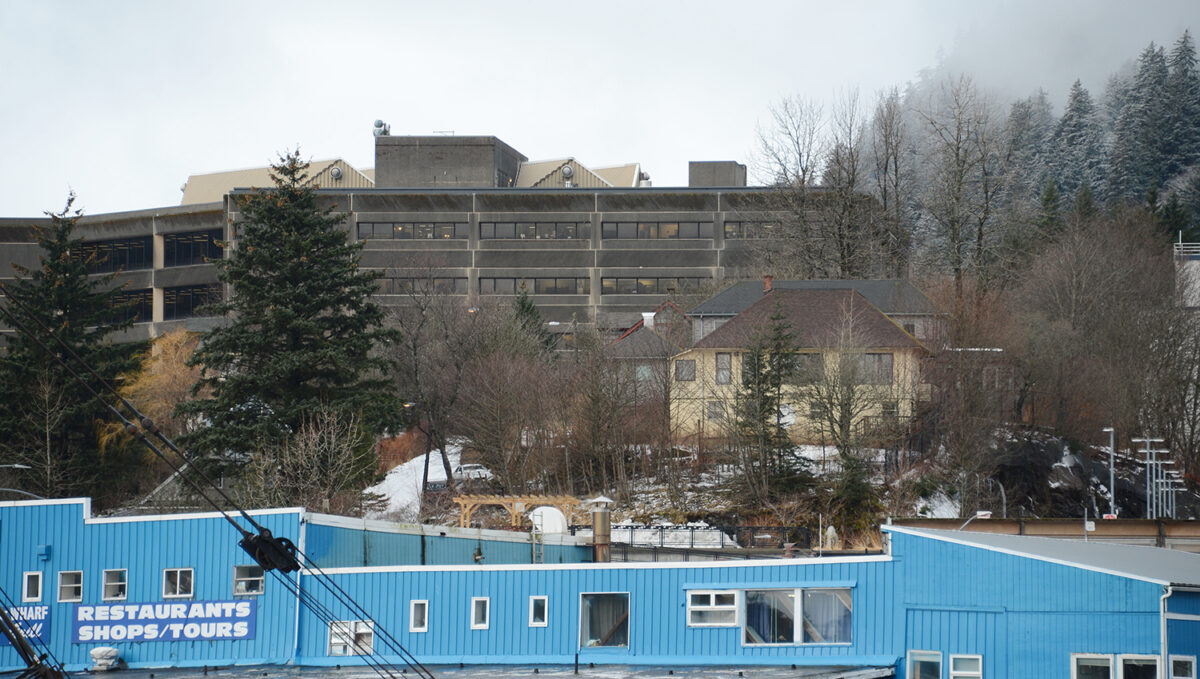
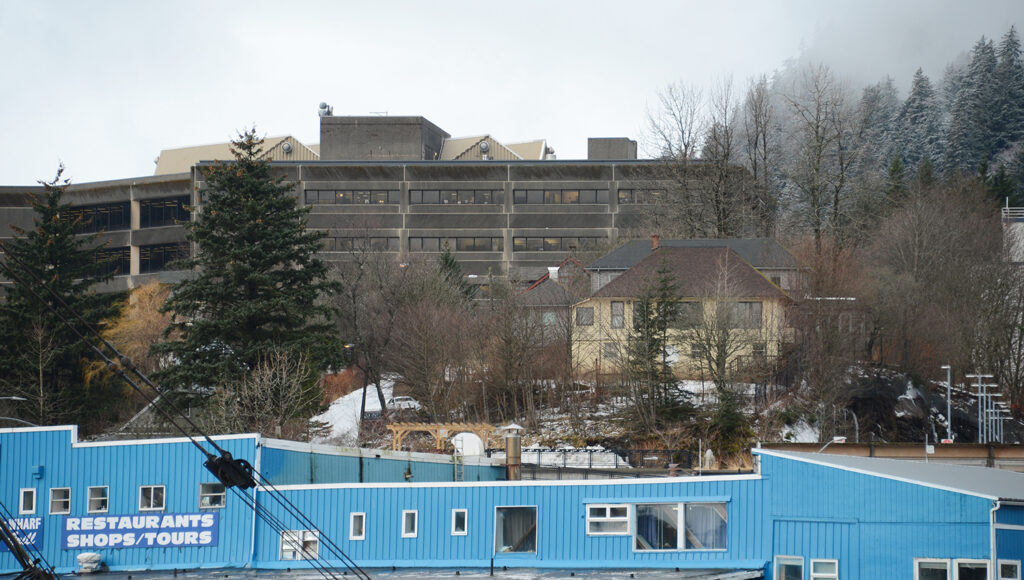
Juneau's Telephone Hill neighborhood is seen at center right, beneath the State Office Building, on Wednesday, Dec. 28, 2022. The neighborhood, owned by the state of Alaska, is being transferred to the City and Borough of Juneau. (Photo by James Brooks/Alaska Beacon)
Juneau’s Telephone Hill neighborhood is seen at center right, beneath the State Office Building, on Wednesday, Dec. 28, 2022. (Photo by James Brooks/Alaska Beacon)
NOTN- A Juneau judge heard arguments Tuesday in a lawsuit challenging the city’s plans to redevelop Telephone Hill.
Former residents are asking Superior Court Judge Amanda Browning to stop the city from demolishing seven residential structures and building higher-density housing on the site.
Browning said she will issue a ruling, but it may take over a week or two.
“What’s happening now is both attorneys put in motions to postpone.” Said Mayor Beth Weldon. The jury trial that had been scheduled for this week is now postponed while the judge considers the motions.