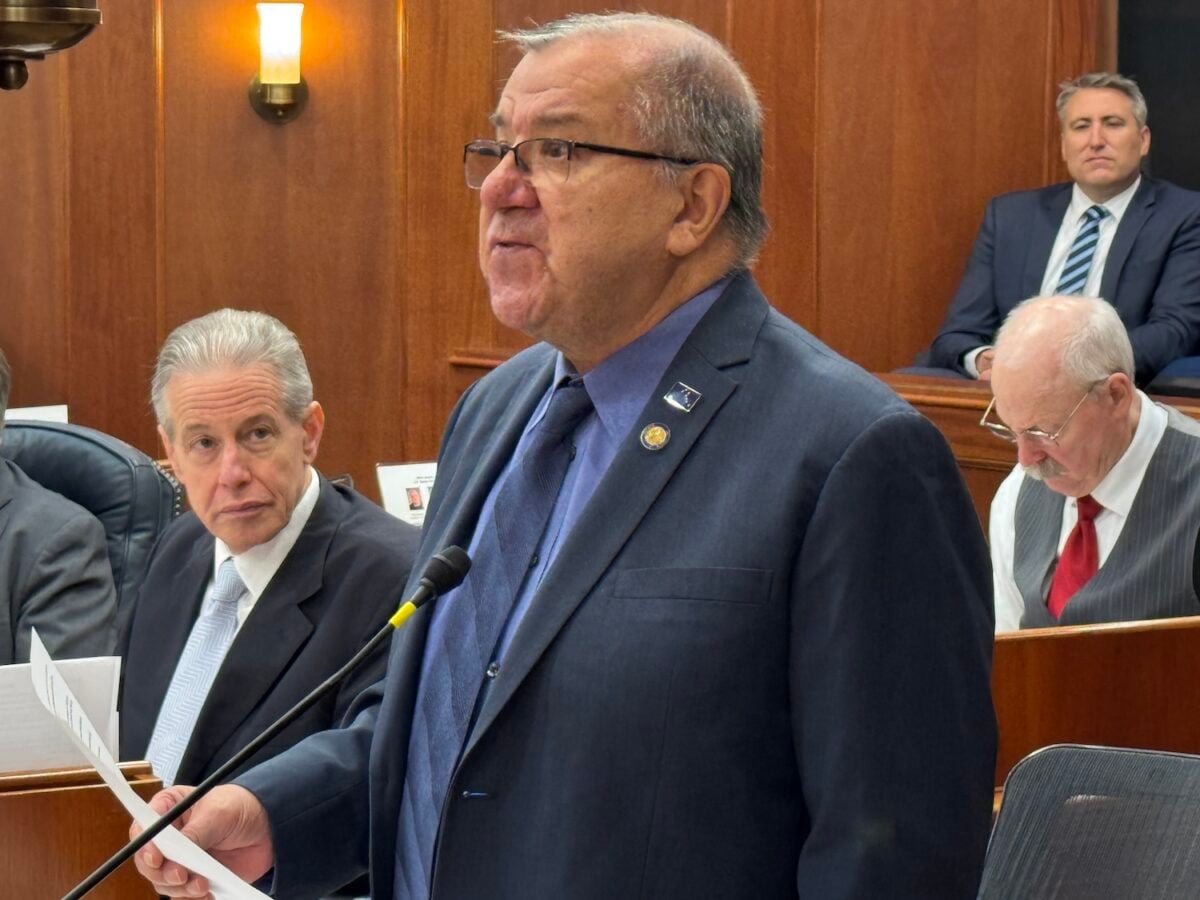
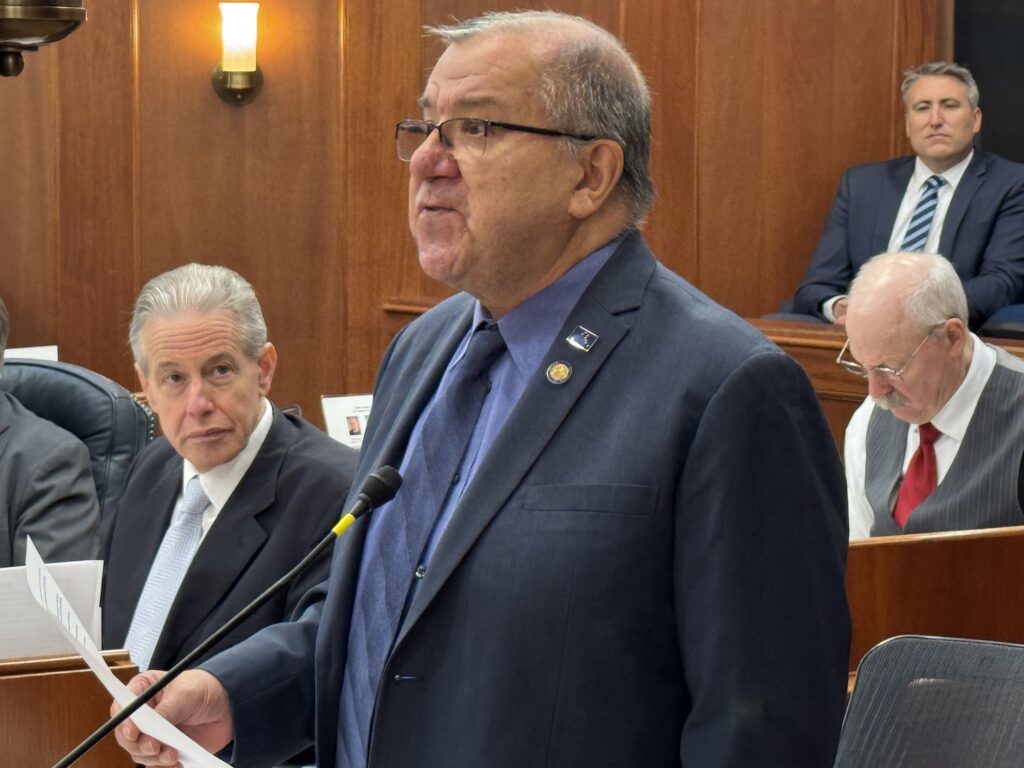
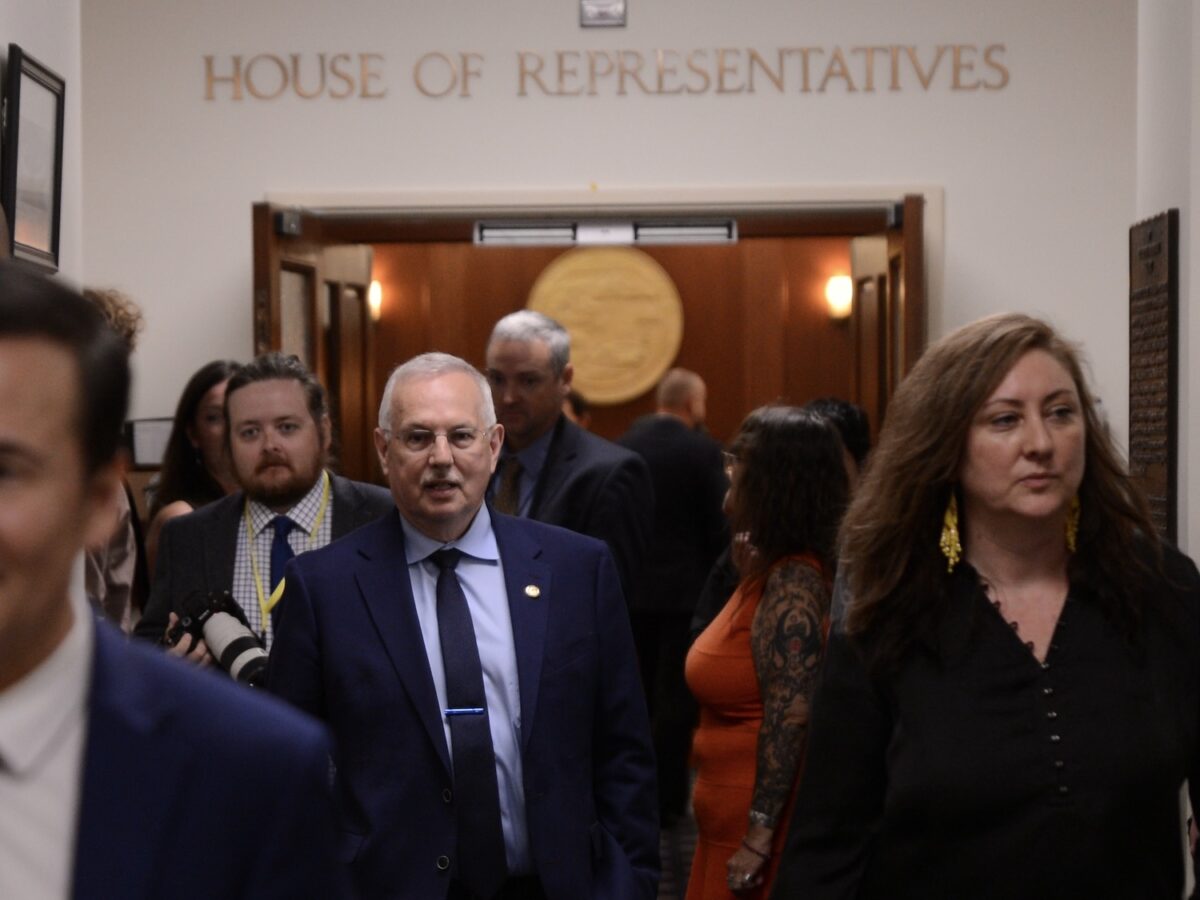
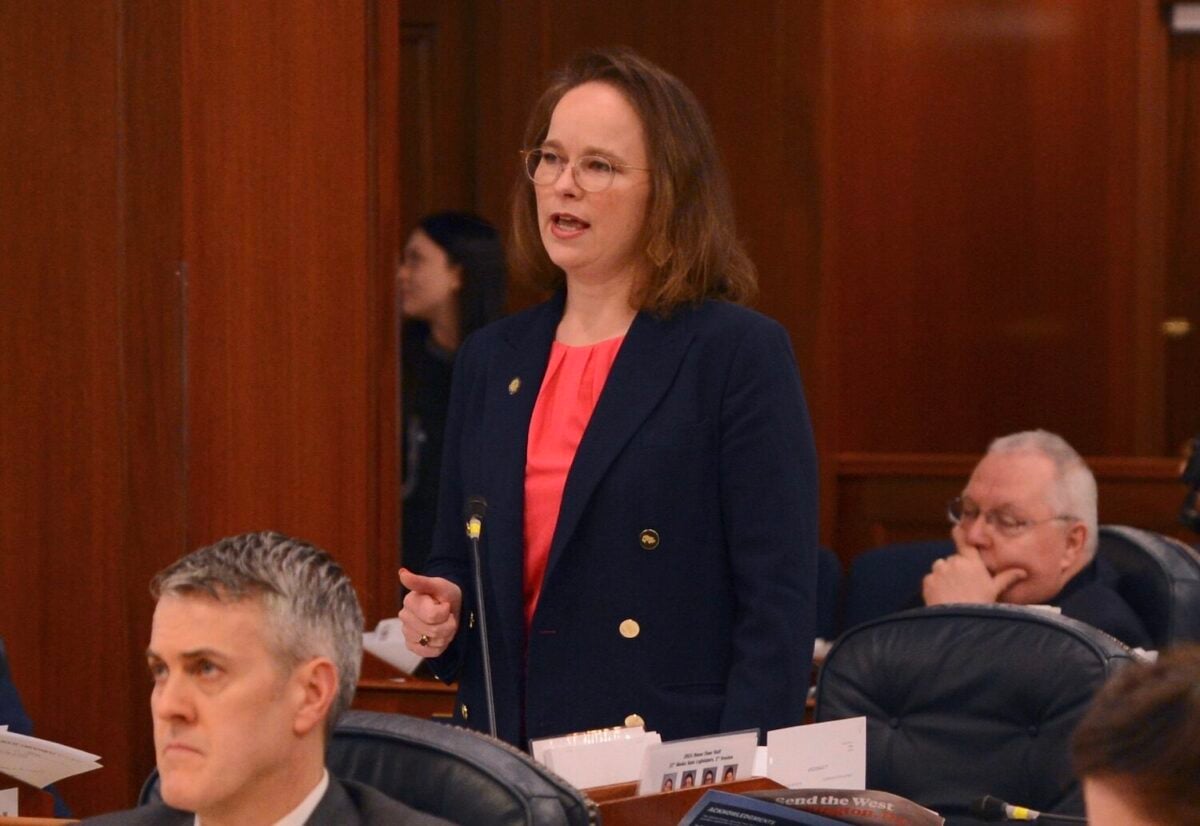
Sen. Lyman Hoffman, D-Bethel, speaks on the floor of the Alaska Senate on Monday, Feb. 9, 2026, in Juneau, Alaska. (James Brooks photo/Alaska Beacon)
By: James Brooks, Alaska Beacon
Sen. Lyman Hoffman, D-Bethel, speaks on the floor of the Alaska Senate on Monday, Feb. 9, 2026, in Juneau, Alaska. (James Brooks photo/Alaska Beacon)Sen. Lyman Hoffman, D-Bethel, speaks on the floor of the Alaska Senate on Monday, Feb. 9, 2026, in Juneau, Alaska. (James Brooks photo/Alaska Beacon)
The Alaska Legislature is expected to declare this week that parts of Western Alaska are still in a state of disaster following a major storm in October.
On Monday, the Alaska Senate voted 19-0 to extend a state of disaster until early March, retroactively extending a disaster declaration that expired Feb. 6.
“While there has been progress made, the impacts remain severe,” said Sen. Lyman Hoffman, D-Bethel, shortly before the vote.
The Alaska House of Representatives is expected to take up the resolution with the extension on Wednesday.
Under Alaska law, a governor may only declare a disaster for 30 days. Dunleavy declared a disaster starting Oct. 9, then asked for an extension in November.
Speaker of the House Bryce Edgmon, I-Dillingham, and Senate President Gary Stevens, R-Kodiak, unilaterally granted extensions in November, December and January, but when they attempted to approve an extension for February, legislative attorneys advised them that action by the entire Legislature is needed.
Part of that advice came because the governor updated the state’s disaster spending plan. On Jan. 28, Dunleavy requested permission to spend $20.5 million from the state’s disaster response fund, up $5.5 million from a prior plan.
Including federal money, the governor is requesting permission to spend $39.25 million.
State law requires a legislative vote for such a large additional draw from the disaster fund. It will have a balance of about $2.1 million after the draw, according to the governor’s letter to legislators.
More spending is expected. Last week, the director of the Alaska Division of Homeland Security and Emergency Management said that the Federal Emergency Management Agency has estimated at least $125 million in state and federal costs related to the storm disaster.
While the disaster fund is too small to cover that amount, Dunleavy has already requested that $40 million be taken from the state’s Constitutional Budget Reserve for the fund.
The House is expected to approve the disaster extension by a wide margin later this week, standing in contrast to its actions five years ago this month.
In 2021, legislative attorneys cautioned that legislative approval was needed to extend the state’s COVID-19 pandemic emergency disaster declaration, in place since 2020. They said that while it was possible for a governor to issue multiple, successive 30-day disaster declarations, that action might later be ruled illegal.
Student, Maddie Bass and school board member Steve Whitney testifying before the Joint Education Committee. Photo courtesy of Gavel Alaska.
By: Grace Dumas, News of the North
District leaders and student advocates from across Alaska testified this morning at a joint Education Committee hearing with both the House and the Senate.
One thing all districts had in common, despite the unique challenges facing schools from Fairbanks to Yakutat, was a call for reliable school funding.
Public schools are funded through Average Daily Membership or ADM, this is the count of enrolled students each year, it can take months to fully process, with an accurate count generally unavailable during budget making.
Testifiers say school funding is a “guessing game.” With districts often creating their budgets with no concrete data.
Some schools have classes that span multiple age groups, bloated class sizes that spread teachers thin, and testifiers say it’s, “costing the state excellence.”
Another commonality between all districts was concern for teacher turnover.
Testifiers said teachers are not compensated fairly to adjust for the rising cost of living in the state, and they are not provided an adequate retirement package which creates an incentive to stay in Alaska.
“I don’t know where the state is going to save all kinds of money by not giving our children the education they need.” said testifier Strong from Chatham school district.
15-year old Maddie Bass from Juneau described growing up in what she called an “underfunded district” where teachers routinely sent home lists of supplies so students could fully participate in class.
“I have never had the opportunity to learn in a classroom that was funded enough to have materials for everyone.” she said, “even with recent consolidations in my district, which caused the firing of multiple teachers, the cutting of programs and more, there is not enough.”
Bass, whose father taught in Alaska schools, said she has watched educators in her district work multiple jobs, struggle to secure adequate health care and has watched her father go to school sick because there were not enough substitute teachers.
She added that, as a teenager, she should not be missing class to “testify in front of legislators” to ask for funding so her teachers can afford to live and students can receive a full education.
“So I’m asking you, please do as much as you can for me, for my teachers, and so my little sister will not have to stand up here and testify when she goes to high school in four years,” she said.
Testifiers thanked legislators for the increase in the Base Student Allocation, but that recognition came with a plea for more stability moving forward.
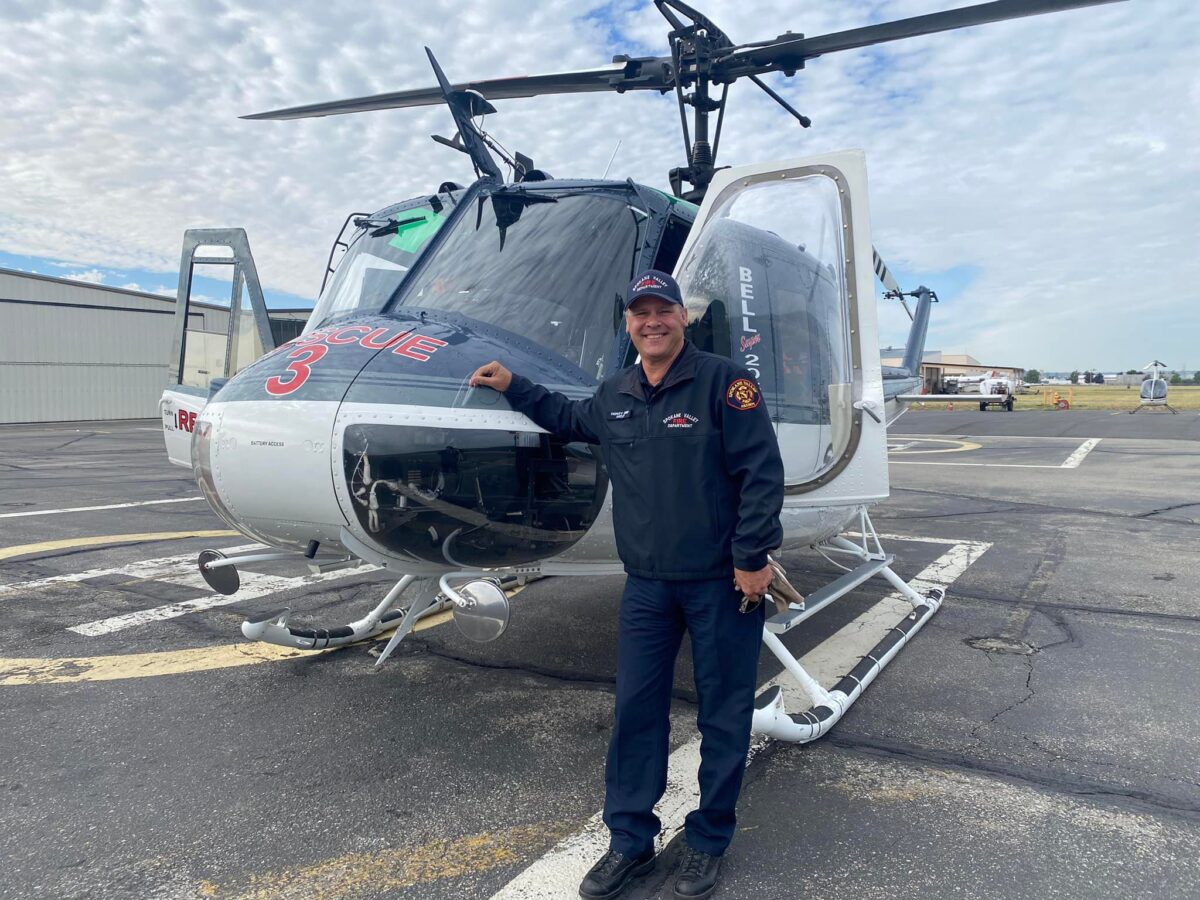
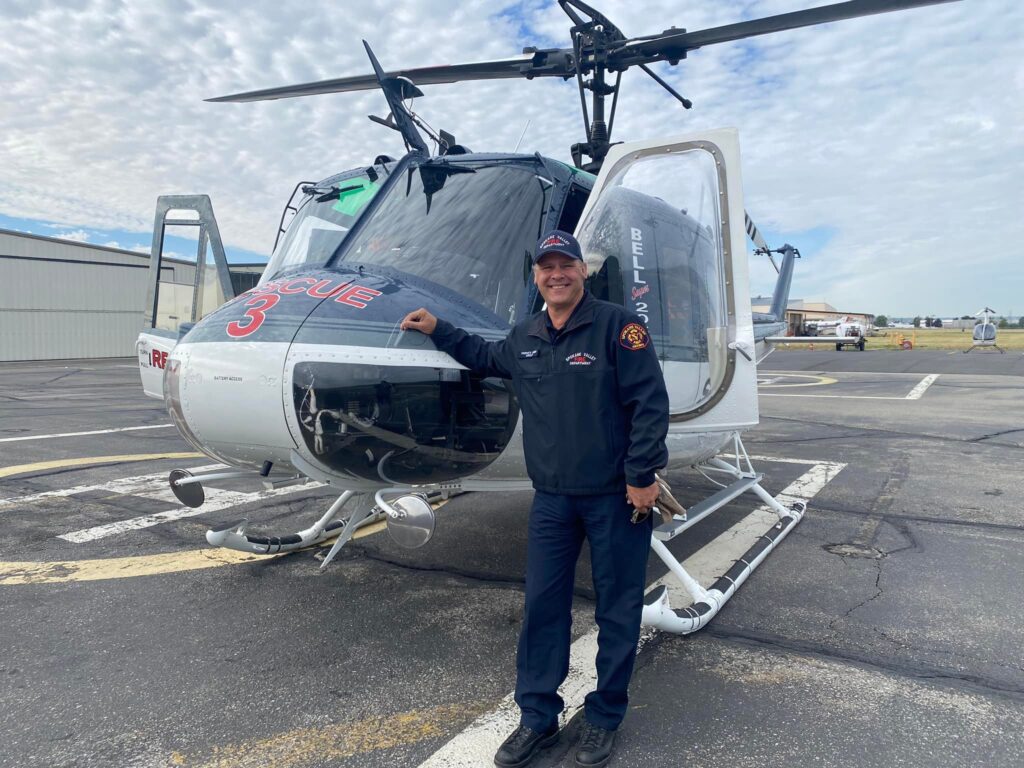
NOTN- The City and Borough of Juneau has appointed Thomas Hatley as the new fire chief for Capital City Fire Rescue, his role officially begins today.
City officials said Hatley’s three decades of experience across multiple fire agencies in the Northwest made him a strong fit for Juneau. He has held a range of leadership positions during his career, including fire chief, deputy fire chief, assistant chief and fire marshal.
“Fire chief is always tricky because there are lots of people that you have to please, including the public.” Said Mayor Beth Weldon, “Trying to bring things under control is difficult in an ever-changing world, being at a fire scene is chaotic at best. I know that the firefighters are looking forward to a new chief, so hopefully Chief Hatley will fit the build and also try to revive some of our volunteers.”
Hatley said he is looking forward to joining Capital City Fire Rescue and building on the work of his predecessor.
“I am honored to join the City and Borough of Juneau and the dedicated professionals of Capital City Fire Rescue,” shared Chief Hatley. “After more than three decades in the fire service, I have learned that the strongest departments are built on relationships, trust, and pride in serving the community.”
He also thanked retiring Fire Chief Rich Etheridge.
As fire chief, Hatley will serve as the administrative leader of Capital City Fire Rescue, overseeing emergency response and preparedness, fire prevention and community risk reduction, strategic planning, workforce development, interagency relations and community engagement.
Speaker of the House Bryce Edgmon, I-Dillingham, leaves the House chambers before the start of a special legislative session on Saturday, Aug. 2, 2025, at the Alaska Capitol in Juneau. (Photo by James Brooks/Alaska Beacon)
By: James Brooks, Alaska Beacon
Speaker of the House Bryce Edgmon, I-Dillingham, leaves the House chambers before the start of a special legislative session on Saturday, Aug. 2, 2025, at the Alaska Capitol in Juneau. (Photo by James Brooks/Alaska Beacon)Speaker of the House Bryce Edgmon, I-Dillingham, leaves the House chambers before the start of a special legislative session on Saturday, Aug. 2, 2025, at the Alaska Capitol in Juneau. (Photo by James Brooks/Alaska Beacon)
Leading members of the Alaska House of Representatives said Friday that Gov. Mike Dunleavy’s ambitious long-term state fiscal plan has almost no support among legislators and is almost certainly dead on arrival.
House leaders spoke with reporters Friday morning, a day after members of the House Finance Committee heard two hours of public testimony on the governor’s proposed statewide sales tax, the cornerstone of his multi-part proposal to bring state expenses and revenue into line over the next five years.
Every Alaskan who testified — almost 30 in total — was against the tax.
“This is just pure speculation on my part, but what you hear folks in the hall say is, if there’s a vote today on the sales tax, it could be a zero to 60 vote,” said Rep. Neal Foster, D-Nome and co-chair of the House Finance Committee.
House Minority Leader DeLena Johnson, R-Palmer, said there might be a handful of legislators who would still support the governor’s plan, but it’s pretty clear that it lacks the support it needs to become law.
“From the testimony that was taken last night in House Finance — when everyone who called in spoke in opposition — it certainly makes it hard to think there’s a lot of people that aren’t very cautious about saying they’re for the governor’s plan,” she said.
The governor’s plan calls for a seasonal statewide sales tax, changes to the state’s oil and corporate taxes, a constitutionally guaranteed Permanent Fund dividend formula, changes to the structure of the Alaska Permanent Fund and a tighter spending cap in state law.
Those changes are being proposed because oil and investment revenue can’t keep up with demand for services and dividends, and lawmakers are unwilling to cut services any more than they already have.
Since 2015, legislators and governors have cut state agencies’ budgets by 16.6%, after accounting for inflation. The state’s capital budget, which pays for new construction and maintenance, has been cut by more than 80%.
Every year since 2016, the Permanent Fund dividend has been cut below the amount called for in state law.
Dunleavy’s proposal would be a way to stanch the fiscal bleeding. The new taxes are intended to be temporary because the Dunleavy administration expects North Slope oil production to rise, boosting state revenue, and it expects that a proposed trans-Alaska natural gas pipeline will be built and generate more money for the state.
Even before this week’s presentations and public testimony, many legislators were skeptical of the plan, and saw the new taxes as merely a way to pay a larger Permanent Fund dividend.
“I’m a logic person,” said Senate Minority Leader Mike Cronk, R-Tok, on Jan. 28, one day after the governor debuted his plan.“We’re going to tax those people that are productive so everybody gets a check? That don’t work for me. … That’s just not logical to me,” he said.
Lawmakers analyzed the sales tax first, in a series of hearings this week, but because it received such a negative reaction in public testimony, legislators are now wondering if it’s worth considering any other part of the governor’s fiscal plan, given that they are all viewed as one package.
Foster said it doesn’t look like the governor’s proposal could be amended and improved enough to get sufficient support in the Capitol.
“Sometimes, you could say, ‘We’re kind of close on things, and there’s a lot of great areas that we can work on,’ but this one just seems to be — folks are just really, really unhappy,” he said.
There are costs to inaction as well. The Institute of Social and Economic Research recently estimated that the state has missed out on 2-3% of its gross domestic product over the past 10 years because of the lack of a fiscal plan. Without a long-term structure, legislators have gotten dragged into annual debates over the size of the Permanent Fund dividend, which has prevented them from discussing other pressing issues.
Some lawmakers have concerns beyond the sales tax. Johnson thinks the governor’s proposal for a revised fiscal cap is inadequate. Because it would be in state law, rather than in the constitution, future legislators could ignore it just as they do the current Permanent Fund dividend formula.
That’s why she calls it a “spending beanie,” instead of a spending cap.
“I personally think it’s rather small, and it would be easily overcome,” she said. “And for that reason, I think of it as a spending beanie.”
Speaker of the House Bryce Edgmon, I-Dillingham, said he’s skeptical of this proposal’s chances after years of other attempts to enact a fiscal plan.
“I won’t regale you with tales from years past, but on the Finance Committee, we have spent weeks and weeks going through a lot of this stuff, and it never got a compromise when it came to the floor. So that’s the issue at hand here,” he said.
Rep. Calvin Schrage, I-Anchorage and another Finance co-chair, said that after hearing Thursday’s public testimony, he’s not sure the governor’s proposal can be successful either. “There is so much education that still needs to take place and studying that needs to be done for us to be able to move it forward in a way that would get broad support,” he said.
“I think folks are just kind of waiting until next year before we, you know, really take a serious stab at some of those things, like the income tax,” Foster said.
“I have higher hopes for next year than I do this year. You know, a new executive leadership branch and the leadership there,” he said.
Later in the day, in a one-on-one interview with the Alaska Beacon, Dunleavy said lawmakers are going to be disappointed if they think that negotiating with a new governor will be any easier.
Dunleavy is term-limited and leaves office in December.
“A governor who goes in there and puts out a plan like this in their first or second year, they’re going to get the same thing we’re getting now,” Dunleavy said. “And that doesn’t work.”
When an Alaskan flies to Seattle and looks out the airplane window, they’ll see construction cranes dotting the skyline, Dunleavy said.
“Washington is a state that does not have an income tax. It’s a sales tax. Washington’s economy is actually pretty good,” he said.
He referred to a fiscal analysis performed by the Institute of Social and Economic Research at the University of Alaska Anchorage, which found that a seasonal sales tax with large exemptions would fall more on nonresidents than an income tax would.
“The sales tax is the best thing we could come up with,” he said, referring to that analysis.
Reducing the PFD to balance the budget — the Legislature’s preferred policy since 2016 — is the most regressive option, harming poor Alaskans more than rich ones, ISER found.
“Taking the PFD is the worst thing you can do for the average person,” Dunleavy said.
He appeared frustrated by legislators’ actions and the lack of an alternative plan coming from the House or Senate.
“I’ve never seen a fiscal plan introduced,” Dunleavy said. “The closest I’ve ever seen was the first fiscal working group just a couple years ago.”
In 2017, the Alaska House of Representatives approved a state income tax as part of a three-part fiscal plan, but it did not become law.
“A tax is not a fiscal plan,” Dunleavy said when asked about that history.
He said that with 120 days in the legislative session, lawmakers have time to work on the issue and figure things out.
“Here you go: My last year, there’s no political skin in the game. I’m not going to lose anything because I’m not running for anything. And here’s an opportunity for these guys, and out of the gate, they said, ‘There’s not enough time.’ So if there’s not enough time for this,” Dunleavy said, “What are they spending their time on?”
Independent Alaska governor candidate Jessica Faircloth is seen in a photo distributed by the candidate on Feb. 5, 2026. (Handout photo)
By: James Brooks, Alaska Beacon
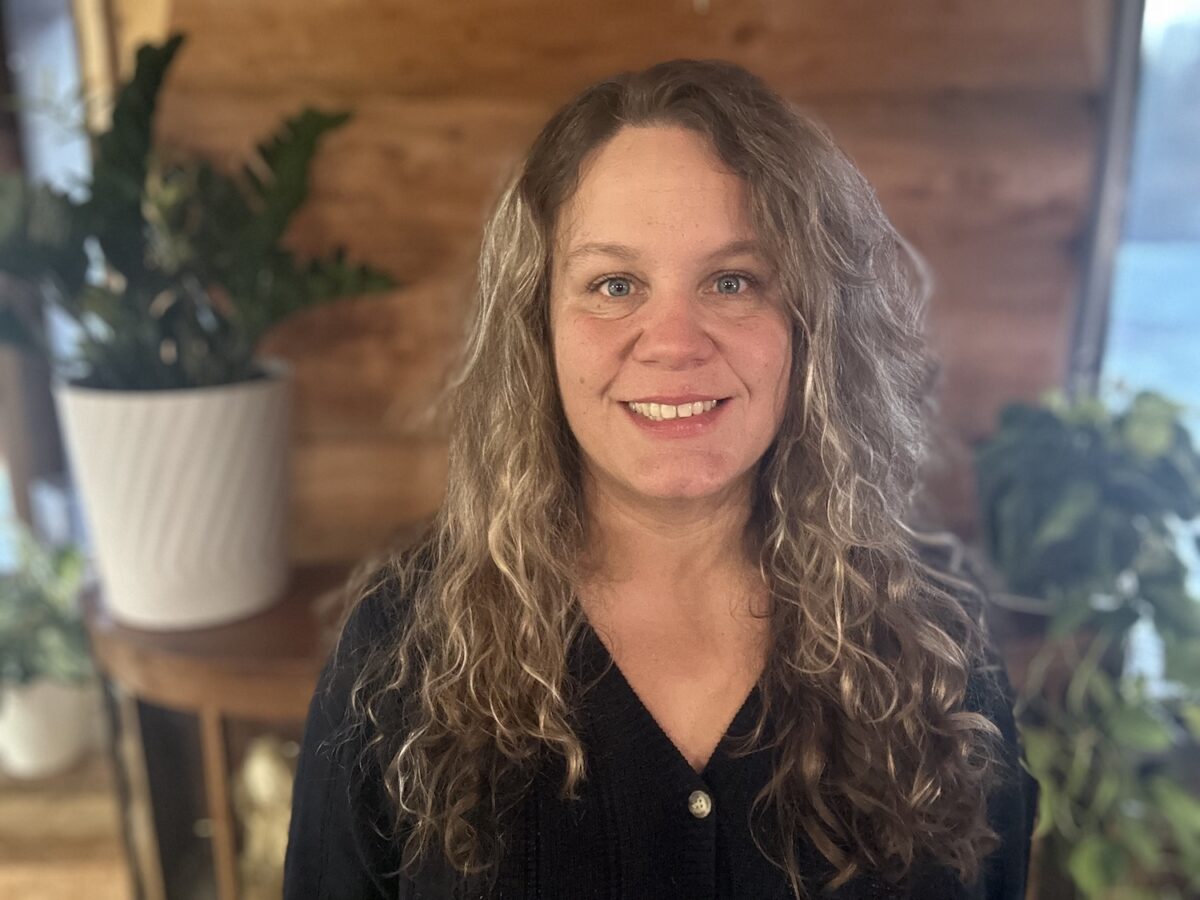
Independent Alaska governor candidate Jessica Faircloth is seen in a photo distributed by the candidate on Feb. 5, 2026. (Handout photo)
The first independent candidate in Alaska’s 2026 gubernatorial election is a single mother of five who says she’s frustrated with the condition of Alaska’s fisheries, its economy and the Permanent Fund dividend.
Jessica Faircloth filed her letter of intent in January, making her the 15th person to sign up for this year’s gubernatorial race. A 16th candidate announced his candidacy this week.
She’s from Kasilof, a rural community on the Kenai Peninsula.
Faircloth hasn’t held public office before, but she decided to run after one of her oldest children surprised her with the happy news that she’ll be a grandmother soon.
“I was overjoyed,” she said, “but then I started thinking. My kids are the fourth generation of my family to live in (our) house, and they didn’t get to grow up in the same Alaska I did.”
She recalls digging for clams, always having moose and caribou in the freezer — and then, there were the king salmon.
“We caught so many kings when I was a kid, we turned them loose if they were too small, or they didn’t fight hard enough, or we caught them too early in the day, or they were a little pink,” she said.
“I realized three of my five children have caught a king salmon, and only one of them was over 50 pounds, and they don’t remember digging clams,” she said.
As she was contemplating the future her first grandchild might experience, she said: “It’s like a light bulb went on, and I started to see that Alaska is not being managed for Alaskans.”
The Permanent Fund dividend needs to be guaranteed in the Alaska Constitution, she said.
Faircloth noted that some oil and gas companies have been able to use writeoffs and exemptions to reduce their taxes to zero.
“If you look at our oil and gas, the tax structure allows zero tax years … and our Legislature hasn’t done anything to fix them,” she said.
Fisheries are big in her mind, too.
“The whole West Coast doesn’t have any salmon. I don’t have any king salmon. I love them more than anything in the world,” she said.
“It doesn’t matter if it’s the PFD, our state budgeting — none of it, none of it, is being managed to benefit Alaskans. It’s benefiting outside corporate interests, mainly, and I am absolutely morally and ethically appalled and pissed off,” Faircloth said.
Faircloth was one of more than 19,000 Alaskans registered as members of the Alaskan Independence Party when it dissolved last year. Now, she’s registered as “undeclared” and campaigning independently of any party.
“I’m one of those people that doesn’t just sit back and complain … that’s the mentality I grew up with. You either do something or you stop complaining,” she said.
Independent Alaska candidate for governor Jessica Faircloth is seen with a king salmon in this undated photo provided by the candidate. Preserving salmon runs is a major priority for the candidate. (Campaign handout photo)
She supports a constitutional dividend, something Republicans in the Alaska Legislature tend to champion. She also wants to see more support for public school teachers, a position typically held by legislative Democrats.
“There’s no pension. There’s no benefits. It’s underfunded,” she said of the state’s public school system.
“I just — I’m watching my teacher friends, especially some of the younger ones, and they are so discouraged,” Faircloth said.
She’s a fan of the “Stop Alaskan Trawler Bycatch” Facebook page and supports anti-trawl appointees to the North Pacific Fishery Management Council and other fishery regulators.
“I understand that the governor actually has very little power (on fisheries), but the power that the governor does have is who they appoint as commissioners and on boards, and that is where the strength of Alaskan government comes from,” she said.
Eight years ago, she voted for current Gov. Mike Dunleavy, but she’s soured on him.
“I really believed, you know, that he was going to be able to get the dividend in the Constitution. And I just expected great things from him. And after eight years, I’m kind of let down,” she said.
Dunleavy is term-limited and unable to run for a third term, a fact that has encouraged a large number of candidates to enter the race.
So far, there are three Democrats, 12 Republicans and Faircloth.
The four candidates who receive the most votes in the August primary election will advance to the November general election.
“I’ve been a broke-ass single mom with a backbone and the ability to budget, and that is what our state needs right now,” she said. “Somebody to walk in there and say, ‘OK, listen, you’re not doing your job, and we’re all in this together. So I need everyone to step up and to do what they’re supposed to.’ I just think that Alaska should be managed for Alaskans first. And that’s not being done.”
NOTN- Despite a proposal from Governor Mike Dunleavy calling for a $3,600 permanent fund dividend, Alaska lawmakers say the numbers do not support an increase without new revenue.
State Senator Jesse Kiehl said the governor’s dividend proposal is not mathematically feasible under the current budget framework.
“The math just can’t work. There’s no way.” He said, “So one of the questions is going to be whether we can do any new revenues this year just to stabilize the PFD. I cannot see it going up.”
Without additional revenue, lawmakers are weighing whether to maintain a dividend similar to last year’s payment of about $1,000 or reduce it to a range closer to $600.
The final dividend amount is likely to remain unresolved until late in the legislative session, potentially stretching into mid-May, as lawmakers balance competing priorities for state spending.
CBJ-The City and Borough of Juneau (CBJ) invites Juneau residents to take a deeper dive and share their city budget priorities by participating in one of three in-person CBJ Community Compass Workshops offered this February and March. Workshops are open to all, however, space is limited, so residents must sign-up in advance at bit.ly/CBJWorkshop to reserve a spot.
At each CBJ Community Compass Workshop, participants will take a hands-on approach to providing input about the city’s upcoming budgeting process in the face of both challenges and opportunities. Participants will respond to different scenarios that impact the city budget in this collaborative activity and small group discussion. Workshops are expected to run 60 to 90 minutes and all input gathered will be shared with the Assembly.
Workshop Dates and Locations:
Wednesday, February 18 at 5:30 p.m. at Filipino Community Hall (251 South Franklin Street)
Tuesday, February 24 at 5:30 p.m. at Mendenhall Valley Public Library (3025 Dimond Park Loop)
Tuesday, March 3 at 5:30 p.m. at Douglas Public Library (1016 3rd Street)
The CBJ Community Compass Workshops are a part of CBJ’s effort to gather community feedback in support of the Assembly’s budgeting process this spring.
Not able to make it to a workshop? Learn more about additional ways provide your input by visiting juneau.org/community-compass or by emailing your comments to boroughassembly@juneau.gov.
For more information, contact the CBJ Communications & Engagement division at communications@juneau.gov.
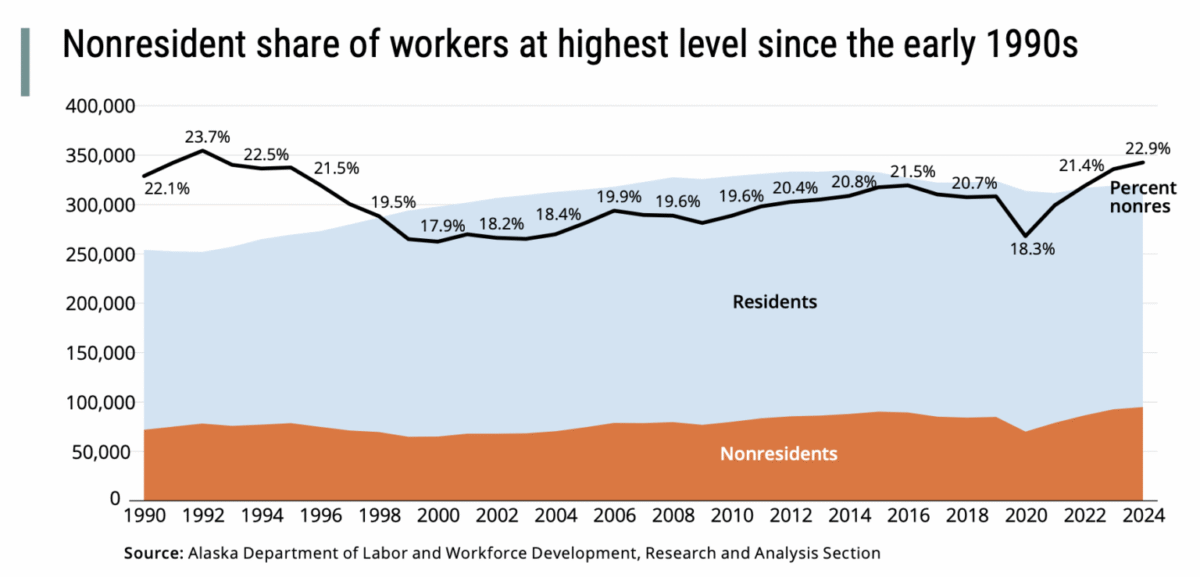
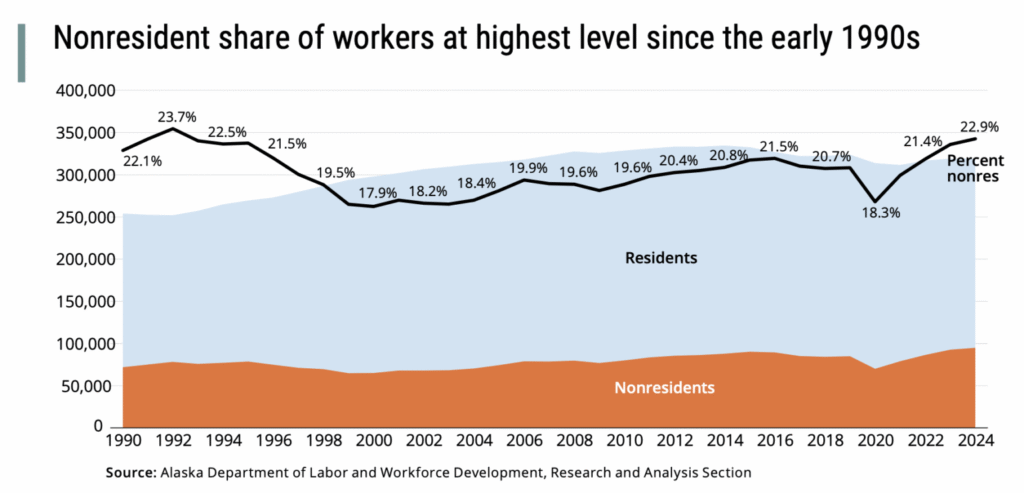
This chart from the February 2026 edition of Alaska Trends Magazine shows the growth in Alaska’s nonresident workforce since the COVID-19 pandemic emergency. (Alaska Department of Labor and Workforce Development chart)
The number of out-of-state workers in Alaska is continuing to rise and is near an all-time high, according to a new report published this week by the Alaska Department of Labor and Workforce Development.
In 2024, almost 23% of non-federal jobs in Alaska were held by someone who did not live in the state. Nonresidents earned roughly $3.8 billion, or about 17% of every dollar earned from a non-federal job.
In some industries, the proportion of nonresident workers was much higher: In 2024, more than four in five seafood processing workers were nonresidents. Among oil and gas workers, 40.5% were nonresidents. Among miners, nonresidents made up 44.2% of all workers, and nonresidents averaged higher wages than residents did.
The state has been collecting nonresident worker data since 1990, and the new figures are the second-highest on record, behind only 1992, which used a different job classification system. That year, 23.7% of Alaska workers were nonresidents.
The proportion of nonresident workers has been rising steadily since the COVID-19 pandemic emergency layoffs of 2020.
“It’s pretty clear that is kind of what’s contributing to what we’re seeing with employers having to rely heavily on nonresidents,” he said.
“Every industry now is starting to lean more heavily on nonresidents, including ones that have historically not. Even things like state government and local government, we’re starting to see more nonresidents,” Krieger said.
In most industries, nonresidents earned less than residents did because nonresidents tended to hold seasonal jobs.
Across the state, nonresidents averaged $16,302 in wages for any given quarter of the year. Residents averaged $16,531, indicating that nonresidents and residents were generally paid about the same.
Gunnar Schultz, a Department of Labor analyst who compiled this year’s report, said the numbers are based on unemployment insurance reports filed by employers with the state. Alaska requires employers and employees to pay into the state’s unemployment insurance fund.
Those numbers are then contrasted with Permanent Fund dividend applications.
“Did you apply for a 2024 PFD or 2025 PFD? If you applied for neither, you’re a nonresident,” he said.
Alaska had almost 15,500 federal workers in 2024; those aren’t included in the report, nor are members of the military and self-employed Alaskans.
That last category includes many commercial fishermen.
The report separately analyzed those jobs, and based on permit data and other information, “nonresidents were an estimated 49 percent of the harvesting workforce, which includes permit holders and their crew, and nonresidents took in 57 percent of gross harvesting earnings.”
NOTN- Juneau officials are watching state decisions closely as local government prepares for what could be a difficult budget season.
Christine Woll, chair of the City and Borough of Juneau Assembly’s Finance Committee, said the committee is preparing for the upcoming budget process.
“We’ve been going line by line, through what we typically fund, and asking a lot of questions. And so last night, we invited some of our partner agencies in to talk to us, and did a deep dive into their budget.” She said.
Those groups included Travel Juneau, which handles tourism marketing for the city, and the Juneau Community Foundation, which administers grant programs supporting local social services. The city typically provides about $1.5 million annually to each organization, Woll said.
“Given that, we’ll likely be thinking about cutting some services over the next few months, we want to make sure we understand what they’re up to and the impact of the dollars that we put in.” Woll said.
The committee also heard from the Small Business Development Center, which receives a smaller amount of city funding but provides coaching and support to local small businesses.
The Juneau Assembly has not taken a formal position on the proposed Cascade Point ferry terminal project, which is being considered by state lawmakers today.
“The assembly has not taken a position on Cascade Point. We probably don’t all agree on it is part of the reason. Obviously it’ll have an impact on our city, so we’re interested to see what happens.” Said Woll, “Personally, I’m not convinced that it’s the best use of state resources, especially because we do have a struggling ferry system, but the assembly has basically said, we know this matters, but if we’re not all going to be unanimous in our decision, we’ll wait and see how things play out.”
Questions about state spending priorities extend to Gov. Mike Dunleavy’s proposed fiscal plan, which includes a statewide sales tax. Woll said the Assembly is still deciding whether to take a specific position on the proposal.
“We’re still deciding whether we want to take a specific stance on his fiscal proposal around sales tax. We have taken a position in the past that I think is going to be presented to the Legislature today. We are figuring out how we fund our state budget; it is going to require a broad-based tax of some sort, and so we are supportive of that.” Said Woll, “I know there are folks with some concerns about if it is a sales tax, as proposed by the Governor, because, of course, the city has a sales tax, and that’s usually about 50% of our general income. The challenge is, if the state also has a sales tax that takes away some of our local control, we wouldn’t be able to decide who gets exemptions.”
Woll mentioned the Governor’s proposed sales tax might also make it harder for voters to approve future municipal taxes.
“Voters have to approve our local city sales tax. So if the state puts a tax on top of that, it just makes it less likely that the voters will support a city tax. So that definitely makes me a little nervous.” She said.
The Assembly is expected to continue its budget discussions in the coming weeks.
Rep. Sarah Vance, R-Homer, speaks Friday, April 26, 2024, on the floor of the Alaska House of Representatives. (Photo by James Brooks/Alaska Beacon)
By: Corinne Smith, Alaska Beacon
Rep. Sarah Vance, R-Homer, speaks Friday, April 26, 2024, on the floor of the Alaska House of Representatives. (Photo by James Brooks/Alaska Beacon)
Alaska lawmakers advanced a bill on Friday that would create new state felony charges for the crime of using artificial intelligence to generate child sexual abuse material.
The House Judiciary Committee unanimously passed House Bill 47, sponsored by Rep. Sarah Vance, R-Homer on Friday. CSAM, formerly referred to as child pornography, is any material that visually depicts sexually explicit or obscene conduct involving a child under the age of 18.
Vance told lawmakers that AI-generated CSAM is a growing problem that is already affecting Alaska communities. “AI-generated CSAM poses serious risk to children by enabling perpetrators to produce highly realistic virtual images of child abuse,” Vance said in a presentation to lawmakers ahead of the vote. “These images are often indistinguishable from real ones, complicating identification by experts and overwhelming law enforcement’s ability to identify real victims.”
Additionally, she said AI-generated images can be used as blackmail. “These realistic, synthetic images create new avenues for predators to exploit minors and their families through extortion and financial coercion, significantly escalating harm and trauma,” she said.
Vance said she introduced the legislation after an Army soldier stationed at Joint Base Elmendorf-Richardson was arrested for creating AI-generated CSAM in 2024.
Vance said the case revealed to her that Alaska law does not have a statute addressing AI-generated CSAM. “But that soldier was prosecuted under federal law, not state law,” Vance said. “Currently, Alaska must rely on federal prosecutions due to our lack of a statute addressing this issue.”
She said she has heard from constituents that the state’s lack of AI-specific CSAM laws is a concern.
“I also had some mothers in Homer contact me probably about a year and a half ago now that their 13-year-old daughters had been subject to the use of AI,” Vance added. “They went to law enforcement, and Homer Police Department said, ‘Alaska statutes do not address AI-generated use of images.’ And so this hit really close to home for me.”
Homer Police Department officials said they investigated the case and the Kenai District Attorney’s Office charged two middle school boys with exploitation of a minor after they created AI-generated nude images of classmates.
While there is no Alaska state law specifically addressing AI-generated CSAM, there are statutes that prohibit the viewing, possession or distribution of CSAM.
“Basically, any depiction of photograph, audio, video recording, drawing, anything like that, if it depicts children being involved in certain sexual simulations or exploitation, then that’s considered exploitation of a minor,” said Lt. Ryan Browning with the Homer Police Department. “We felt like that was enough to meet the probable cause for the statute.”
Statewide, the Alaska Department of Public Safety works with local and federal law enforcement agencies to investigate each CSAM case reported, said Austin McDaniel, director of communications for the agency.
McDaniel said the department does not have data available on the number of recent cases involving AI generated materials. By email, he said the department has received reports of AI-generated CSAM, but he said those reports are not “prevalent.”
He said a team of more than ten investigators work in a unit within the Alaska Bureau of Investigation focused solely on CSAM-related crimes.
“All that they do is child sexual abuse material investigations, or CSAM investigations, and they certainly and unfortunately, stay busy throughout the year,” he said. He noted a “vast number” of cases are reported to the Anchorage Police Department.
State public safety officials received 330 reports of alleged CSAM or child exploitation related crimes in 2024, the most recent year of publicly available data. “We go through and investigate those instances, refer charges to state prosecutors, or work very closely with our federal partners when it might be better to pursue federal charges against somebody versus state charges,” McDaniel said.
Sexual violence is prevalent across Alaska — and 51% of reported victims were minors in 2024. McDaniel noted the most common age of victims of sexual offenses is 13 years old.
“So between our CSAM investigations or child sexual abuse investigations, you know, we are certainly kept very busy,” he said. “And we are working across the state, around the clock to investigate those instances and to hold anyone that victimizes Alaska’s kids accountable for their actions.”
Angela Kemp, deputy attorney general for the criminal division of the Alaska Department of Law, said currently the state has to prove that an actual child was used to create the sexual abuse material to prosecute the case. She said investigators use digital forensic tools to determine if the material is AI-generated, or whether there is a child victim.
“For cases where we cannot prove an actual child was used, law enforcement works with our federal partners to determine whether the conduct can be prosecuted under federal law,” she said.
Vance said if the legislation is passed, it would criminalize all possession of AI-generated CSAM. “It’s hard to distinguish if there was a real victim involved, or if it is all generated through AI technology, this bill would allow them to say all of it is prosecutable,” she said.
The bill would also enact new sentencing guidelines for AI-generated CSAM, and depending on the charges and prior felony convictions, offenders could face two to 99 years in prison.
The bill has been referred to the House Rules Committee, which will determine whether it will go to the full House of Representatives for a vote. If passed, the bill would need to be considered and approved by the Senate to become law.